
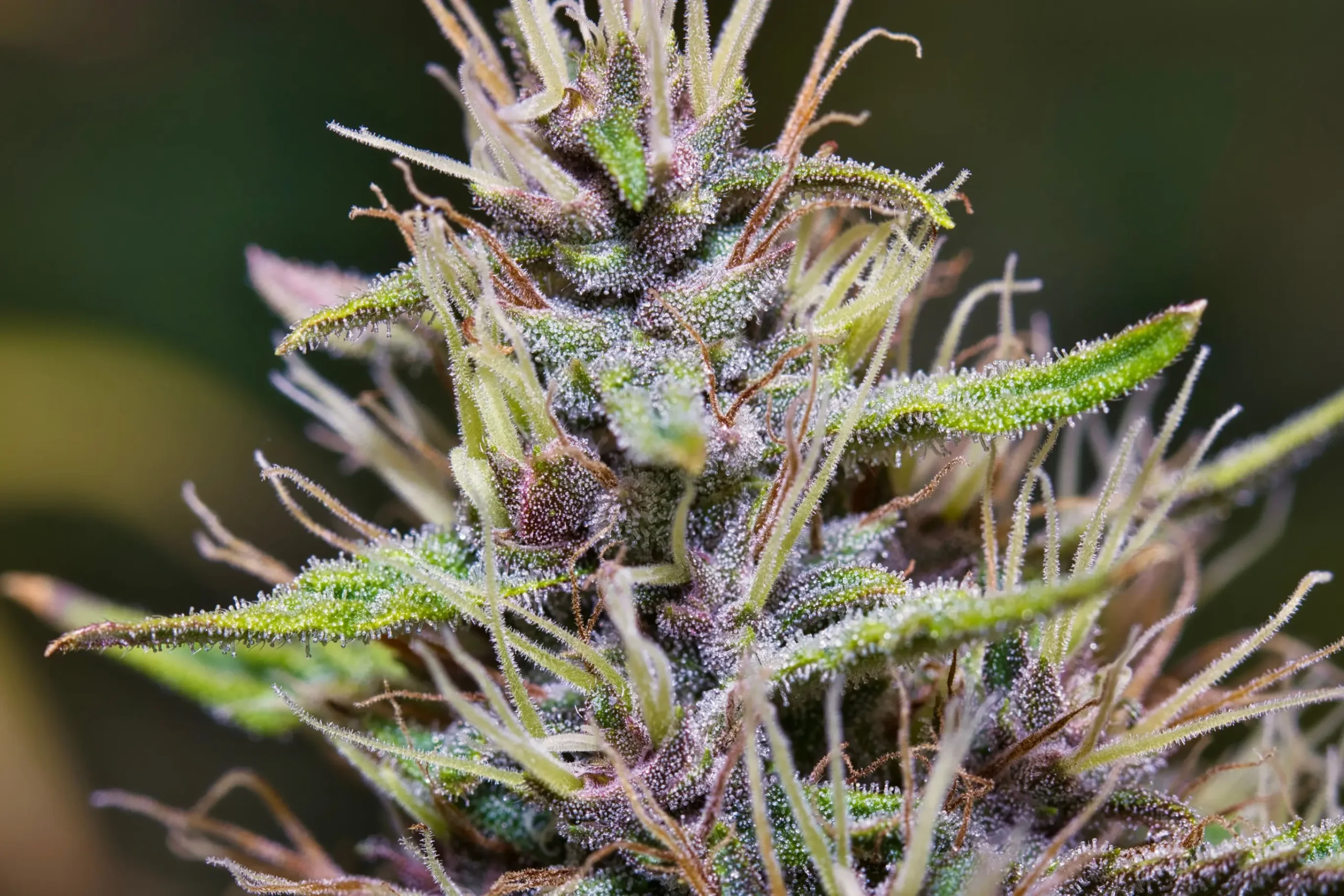
Ethiopia
Ethiopia is not a cultivar that becomes clear from a THC figure alone. Its real identity appears in the way it builds structure, enters flowering and allocates flower mass. It is 100% sativa East African landrace population with tall, vigorous and flexible with strong lateral branching, long internodes and a classic African tropical sativa silhouette. The defining cultivation problem is keeping a very tall, long-flowering African sativa warm, well lit and structurally controlled for 13-14 weeks without overfeeding it, oversizing the room or harvesting before the clean effect and fermented-citrus aroma are fully mature.
The quality target is equally specific: long, clean African sativa flowers with intact resin, strong wood-citrus-floral separation and a light daytime effect rather than dark green leafy buds. That target changes the way a serious grower should think about vegetative duration, branch count, root volume, support, feeding and post-harvest handling. A generic grow schedule may finish the plant, but it will not necessarily preserve the exact traits that make Ethiopia worth growing.
Reference data places the cultivar at 6-12% THC, below 0.05% CBD and 13-14 weeks indoors of indoor flowering. Those figures are planning ranges rather than promises. Seed-grown landrace and F1 populations can vary in height, chemistry, aroma and exact finish. For that reason, this profile treats phenotype observation as part of cultivation rather than a footnote.
Strain Fingerprint: Keeping a very tall, long-flowering african sativa warm, well lit and structurally controlled for 13-14 weeks without overfeeding it, oversizing the room or harvesting before the clean effect and fermented-citrus aroma are fully mature.
Strain Features
| Feature | Details |
|---|---|
| Type | 100% sativa East African landrace population |
| Genetics | third-generation preserved Ethiopian tropical sativa |
| Sativa / Indica | 100% sativa |
| THC | 6-12% |
| CBD | below 0.05% |
| CBG | about 0.6% |
| THCV | about 2% in published reference analysis |
| Indoor flowering | 13-14 weeks indoors |
| Outdoor harvest | around the third week of November |
| Yield | High under strong light and warm finishing conditions |
| Difficulty | Advanced indoors, Moderate outdoors in a warm climate |
| Plant architecture | tall, vigorous and flexible with strong lateral branching, long internodes and a classic African tropical sativa silhouette |
| Flowering stretch | high, especially during the early flowering transition |
| Feeding tendency | soft nutrient levels in vegetative growth, with a measured increase in phosphorus and potassium from about the third flowering week |
| Watering behavior | vigorous plants transpire strongly, but the root zone should still cycle back toward aeration instead of remaining continuously wet |
| Climate | warm tropical or subtropical conditions, with excellent resistance to humidity, botrytis, wind and heat |
| Resistance | very high botrytis resistance, high powdery mildew resistance and good tolerance of heat, wind and moisture |
| Aroma | earth, dry wood, flowers, musk and fermented citrus |
| Flavor | woody earth, fermented lemon peel, floral musk and dry African spice |
| Effect | clean, uplifting, kind and sociable daytime stimulation of moderate strength, with minimal body heaviness |
The most useful numbers in the table are the ones that change decisions. Flowering time determines how long the root system must stay healthy. Stretch determines flip height. Resistance determines how much environmental margin the grower has. Feeding tendency determines whether a common high-EC recipe will help or hurt. For Ethiopia, those traits matter more than repeating the strain category.
Bud quality should be evaluated against the plant’s natural architecture rather than against a universal picture of what cannabis should look like. The goal here is long, clean African sativa flowers with intact resin, strong wood-citrus-floral separation and a light daytime effect rather than dark green leafy buds. That is a more strain-specific standard than simply demanding maximum density or the darkest possible leaves.
Genetic Lineage
Ethiopia is based on third-generation preserved Ethiopian tropical sativa. That background explains the plant’s recurring combination of structure, climate behavior, aroma and effect. Genetics are most useful when they help the grower predict practical behavior rather than when they are treated as a pedigree list.
The population should still be understood as living variation rather than a clone. the population shows moderate genetic variability while remaining recognizably Ethiopian in long-node structure, strong branching, clean effect and earthy-woody citrus aroma. Keeping plants labeled through flowering, drying and cure is therefore part of the research process. Height and color at week four are not enough to identify the best keeper.
Landrace and landrace-derived material often shows traits that look unusual beside modern commercial hybrids. Longer internodes, softer stems, airy flowers, unusual cannabinoid ratios or a lighter green canopy can all be genetic. Correcting those traits as if they were deficiencies can make the plant less healthy rather than more productive.
A useful keeper should carry the whole identity: a workable structure, the defining aroma, stable flowering, good resin and an effect consistent with clean, uplifting, kind and sociable daytime stimulation of moderate strength, with minimal body heaviness. Selecting only the largest or most colorful plant can easily discard the more important sensory or agronomic traits.
Effect Breakdown
Opening phase
The onset is mentally clean and light. The first noticeable change is often improved engagement rather than overwhelming intensity.
At a restrained dose, the opening can feel more like increased willingness to engage than a dramatic rush. Larger amounts increase mental motion and duration without supplying much physical ballast, so sensitive users can pass the comfortable daytime window quietly.
Middle phase
The effect becomes more social, active and positive. It is usually described as focused enough for daytime activity while remaining clearly psychoactive.
The middle phase is most characteristic when it remains sociable and mobile. Fully mature flower gives the stimulation continuity; an early cut is more likely to feel short, angular or mentally busy without the cultivar’s kinder tone.
Late phase
The experience fades with little body drag. Sensitive users can still find the mental stimulation too active late in the day.
The light physical finish makes the comedown feel clean, but it does not make the cultivar neutral at night. Mental activity can outlast the obvious peak, especially after a large dose or an energetic setting.
The overall reference effect is clean, uplifting, kind and sociable daytime stimulation of moderate strength, with minimal body heaviness. Harvest timing can influence how that character is expressed. Premature flower often feels shorter or more nervous, while very late harvest can soften the brighter traits and increase heaviness.
The costly mistake to avoid with Ethiopia
Cannabis effects vary with dose, tolerance, physiology and setting. Named strains do not produce identical effects in every person.
Flavor & Aroma Profile
Late in flower, a healthy plant should move toward earth, dry wood, flowers, musk and fermented citrus. That smell is not the same as the finished jar because living flower still carries water, chlorophyll and fresh plant volatiles. After a careful dry, the target becomes woody earth, fermented lemon peel, floral musk and dry African spice.
Aromas disappear selectively. Bright fruit, floral, citrus and fresh-herb notes are usually more fragile than deep wood, earth, musk or resin. This matters because an overheated crop can still smell strong while losing the exact notes that made it distinctive.
For Ethiopia, quality means separation. The first aroma should not simply be ‘weed.’ The profile should reveal different layers as the flower is broken apart and consumed. A careful cure allows the volatile top notes to sit above the more durable base rather than being erased by it.
The grower’s job is not to manufacture flavor with additives. The plant already has a genetically constrained aromatic range. The practical work is to protect root health, late-flower temperature, resin heads and drying speed so that the existing chemistry survives.
Weedth Flavor Target: long, clean African sativa flowers with intact resin, strong wood-citrus-floral separation and a light daytime effect rather than dark green leafy buds
Dominant Terpenes
| Terpene / Evidence | Relative Level | Role in the Profile |
|---|---|---|
| Alpha-pinene | High | Creates the sharp green-pine edge and helps keep the aroma bright rather than muddy. |
| Beta-myrcene | Moderate | Adds herbal earth and rounds the dry wood base. |
| Trans-ocimene | Moderate | Supports airy floral and green-tropical notes. |
| Beta-pinene | Moderate | Adds dry wood, pine and fresh plant character. |
| Beta-caryophyllene | Main sesquiterpene | Provides the deeper peppery-woody background, with humulene and occasional nerolidol adding secondary depth. |
The reported terpene pattern helps explain the recognizable aroma of Ethiopia, but exact percentages can still change by phenotype, environment and maturity. Terpenes are volatile, so their value is tied directly to late-flower heat management and post-harvest handling.
Terpene discussion is most useful when it informs cultivation. A plant that smells less complex after a hot week is giving the grower feedback. A jar that loses its top notes after a three-day fast dry is also giving feedback. Those observations are more actionable than memorizing a terpene list.
Indoor vs. Outdoor Growing
| Aspect | Indoor | Outdoor |
|---|---|---|
| Structure | tall, vigorous and flexible with strong lateral branching, long internodes and a classic African tropical sativa silhouette | tall, vigorous and flexible with strong lateral branching, long internodes and a classic African tropical sativa silhouette with greater root and branch scale |
| Timing | 13-14 weeks indoors | around the third week of November |
| Main challenge | keeping a very tall, long-flowering African sativa warm, well lit and structurally controlled for 13-14 weeks without overfeeding it, oversizing the room or harvesting before the clean effect and fermented-citrus aroma are fully mature | season length, weather and support while preserving the same genetic behavior |
| Nutrition | soft nutrient levels in vegetative growth, with a measured increase in phosphorus and potassium from about the third flowering week | soft nutrient levels in vegetative growth, with a measured increase in phosphorus and potassium from about the third flowering week adjusted for soil fertility and rainfall |
| Climate control | Complete control of light, temperature, humidity and root-zone volume. | warm tropical or subtropical conditions, with excellent resistance to humidity, botrytis, wind and heat |
| Best advantage | Precise canopy shape and phenotype-specific harvest. | Sunlight, large roots and expression of regional climate adaptation. |
Indoors, the question is whether the grower can fit high, especially during the early flowering transition into the room while maintaining light across the productive canopy. Height control should be decided before the first dense flowers appear. Emergency bending in late flower is always more damaging than early planning.
Outdoors, warm tropical or subtropical conditions, with excellent resistance to humidity, botrytis, wind and heat. The larger root zone often makes the plant more forgiving of irrigation error, but the grower loses control of rain, night temperature and the date when the season truly ends.
Neither environment is automatically superior. Indoor growing offers precision. Outdoor growing offers scale and environmental expression. The better choice is the one that allows the cultivar’s defining weakness to be controlled consistently.
Strain-Specific Grow Guidance
The core problem is keeping a very tall, long-flowering African sativa warm, well lit and structurally controlled for 13-14 weeks without overfeeding it, oversizing the room or harvesting before the clean effect and fermented-citrus aroma are fully mature. Every major technique should be judged by whether it helps solve that problem without damaging aroma, resin or maturity.
Transition after a very short vegetative period
From seed, roughly two weeks of veg can already be enough indoors. Rooted clones also need very little vegetative time before flowering because the plant continues building structure after the flip.
The reason this matters for Ethiopia is bud quality. The decision should help produce long, clean African sativa flowers with intact resin, strong wood-citrus-floral separation and a light daytime effect rather than dark green leafy buds. If a technique adds complexity but does not improve light use, root stability, flower health or maturation, it is probably unnecessary.
Use 11/13 for flowering discipline
A slightly longer dark period can help an equatorial-type sativa commit to bloom and reduce excessive early stretch or unwanted reflowering.
The reason this matters for Ethiopia is bud quality. The decision should help produce long, clean African sativa flowers with intact resin, strong wood-citrus-floral separation and a light daytime effect rather than dark green leafy buds. If a technique adds complexity but does not improve light use, root stability, flower health or maturation, it is probably unnecessary.
Give the canopy real light
The long bloom only pays when flower sites receive strong usable light. A tall plant under weak light simply becomes taller and airier without converting the extra time into good flower.
The reason this matters for Ethiopia is bud quality. The decision should help produce long, clean African sativa flowers with intact resin, strong wood-citrus-floral separation and a light daytime effect rather than dark green leafy buds. If a technique adds complexity but does not improve light use, root stability, flower health or maturation, it is probably unnecessary.
Keep the room warm enough
This cultivar rewards warm conditions through its long flowering cycle. Chronic cool temperatures can slow metabolism and extend a crop that is already time-intensive.
The reason this matters for Ethiopia is bud quality. The decision should help produce long, clean African sativa flowers with intact resin, strong wood-citrus-floral separation and a light daytime effect rather than dark green leafy buds. If a technique adds complexity but does not improve light use, root stability, flower health or maturation, it is probably unnecessary.
Use pruning to redirect vigor, not to repeatedly reset it
The plant reacts strongly to pruning and works well in horizontal training. Make structural cuts early, then let productive branches settle into position.
The reason this matters for Ethiopia is bud quality. The decision should help produce long, clean African sativa flowers with intact resin, strong wood-citrus-floral separation and a light daytime effect rather than dark green leafy buds. If a technique adds complexity but does not improve light use, root stability, flower health or maturation, it is probably unnecessary.
Feed softly in veg
The plant does not need heavy nitrogen to show vigor. Excess nitrogen makes long internodes even harder to manage and keeps the flower zone too leafy.
The reason this matters for Ethiopia is bud quality. The decision should help produce long, clean African sativa flowers with intact resin, strong wood-citrus-floral separation and a light daytime effect rather than dark green leafy buds. If a technique adds complexity but does not improve light use, root stability, flower health or maturation, it is probably unnecessary.
Raise PK after the plant is truly flowering
A measured increase from around week three supports the heavier reproductive phase without front-loading salts during stretch.
The reason this matters for Ethiopia is bud quality. The decision should help produce long, clean African sativa flowers with intact resin, strong wood-citrus-floral separation and a light daytime effect rather than dark green leafy buds. If a technique adds complexity but does not improve light use, root stability, flower health or maturation, it is probably unnecessary.
Take advantage of exceptional mold resistance
Open flowers and very strong botrytis resistance make the plant forgiving in humid environments, but indoor leaf crowding can still create powdery mildew or stale microclimates.
The reason this matters for Ethiopia is bud quality. The decision should help produce long, clean African sativa flowers with intact resin, strong wood-citrus-floral separation and a light daytime effect rather than dark green leafy buds. If a technique adds complexity but does not improve light use, root stability, flower health or maturation, it is probably unnecessary.
Track THCV as chemistry, not as a visual trait
Published analysis has found meaningful THCV, but leaf shape, aroma or height cannot confirm a specific cannabinoid percentage. Testing is required if that chemistry matters.
The reason this matters for Ethiopia is bud quality. The decision should help produce long, clean African sativa flowers with intact resin, strong wood-citrus-floral separation and a light daytime effect rather than dark green leafy buds. If a technique adds complexity but does not improve light use, root stability, flower health or maturation, it is probably unnecessary.
Dry slowly enough for fermented citrus to appear
Fresh flowers can lean earthy and green. The more distinctive fermented-citrus and floral character becomes easier to separate after a careful dry and cure.
The reason this matters for Ethiopia is bud quality. The decision should help produce long, clean African sativa flowers with intact resin, strong wood-citrus-floral separation and a light daytime effect rather than dark green leafy buds. If a technique adds complexity but does not improve light use, root stability, flower health or maturation, it is probably unnecessary.
Canopy depth and lower flowers
Keep lower branches only when they can receive enough light to become real flowers. The cultivar’s natural flower distribution should guide cleanup rather than a fixed lollipopping height.
On a second run, change only one major variable at a time. Seed-grown populations already add biological variation, so simultaneous changes in nutrition, training, irrigation and temperature make learning difficult.
Irrigation rhythm
vigorous plants transpire strongly, but the root zone should still cycle back toward aeration instead of remaining continuously wet. Weigh or lift containers, observe dry-back and avoid using leaf posture alone as the watering signal.
On a second run, change only one major variable at a time. Seed-grown populations already add biological variation, so simultaneous changes in nutrition, training, irrigation and temperature make learning difficult.
Nutrient calibration
soft nutrient levels in vegetative growth, with a measured increase in phosphorus and potassium from about the third flowering week. Tip burn, clawing, overly dark leaves and delayed fade are stronger warnings than a feed chart is an instruction.
On a second run, change only one major variable at a time. Seed-grown populations already add biological variation, so simultaneous changes in nutrition, training, irrigation and temperature make learning difficult.
Late-flower humidity
As flowers gain mass, reduce stagnant pockets even on resistant genetics. Resistance protects against bad weather; it does not make trapped moisture beneficial.
On a second run, change only one major variable at a time. Seed-grown populations already add biological variation, so simultaneous changes in nutrition, training, irrigation and temperature make learning difficult.
Maturity mapping
let the bracts harden and the main resin field mature across the plant; early cutting protects schedule but sacrifices aromatic development and final flower weight. Check top, middle and lower flowers. Large or trained plants rarely mature with perfect uniformity.
On a second run, change only one major variable at a time. Seed-grown populations already add biological variation, so simultaneous changes in nutrition, training, irrigation and temperature make learning difficult.
Second-run records
Write down actual stretch ratio, first true flower date, peak aroma week, branch-support timing and final harvest date. Those five numbers are the beginning of a cultivar-specific recipe.
On a second run, change only one major variable at a time. Seed-grown populations already add biological variation, so simultaneous changes in nutrition, training, irrigation and temperature make learning difficult.
Master Advice: The best grow technique is the one that removes this cultivar’s specific limitation while leaving its natural strengths intact.
Weedth Bud Flavor Tips
Protect late-flower temperature
Terpenes can be lost before leaves look heat-damaged. The final weeks should prioritize aroma preservation rather than maximum metabolic speed.
The strain-specific reason is the aroma of earth, dry wood, flowers, musk and fermented citrus. The deeper base will survive abuse better than the delicate top notes, so poor handling can make the flower seem simpler than the plant really was.
Harvest by maturity, not color
let the bracts harden and the main resin field mature across the plant; early cutting protects schedule but sacrifices aromatic development and final flower weight.
Handle branches by stems
Avoid squeezing, piling or repeatedly moving flowers. Resin transferred to gloves is resin removed from the bud.
Match branch size to dry-room humidity
Large branches slow drying in an arid room. Smaller sections improve safety when humidity is high. The method should serve the environment.
Use indirect air movement
Move air around the room, not directly across flower surfaces. Direct fan blast creates fast outer drying and uneven internal moisture.
Let the cure reveal the profile
The target is woody earth, fermented lemon peel, floral musk and dry African spice. Some notes appear only after the fresh-green layer fades and moisture equalizes.
The strain-specific reason is the aroma of earth, dry wood, flowers, musk and fermented citrus. The deeper base will survive abuse better than the delicate top notes, so poor handling can make the flower seem simpler than the plant really was.
Store cool and dark
Repeated warmth, light and oxygen exposure gradually remove the most volatile part of the profile.
Pro Tip: Keep a small sealed reference jar from the best phenotype and open it rarely. Compare it with the daily-use jar after four weeks to see how much aroma repeated exposure removes.
Weedth Bud Boost Tips
For Weedth, a bud boost is successful only when it increases premium dry flower without lowering flavor, resin quality or flower health. Raw wet weight is not enough.
Match plant count to final footprint
Do not fill the room with seedlings and hope to train away crowding later. For Ethiopia, remember the central constraint: keeping a very tall, long-flowering African sativa warm, well lit and structurally controlled for 13-14 weeks without overfeeding it, oversizing the room or harvesting before the clean effect and fermented-citrus aroma are fully mature.
Judge the result after drying. A technique that creates bigger but leafier, wetter or less aromatic flowers should not automatically be repeated.
Build roots for the intended canopy
A long or heavy flowering cycle needs enough root volume to stabilize water and nutrient demand. For Ethiopia, remember the central constraint: keeping a very tall, long-flowering African sativa warm, well lit and structurally controlled for 13-14 weeks without overfeeding it, oversizing the room or harvesting before the clean effect and fermented-citrus aroma are fully mature.
Judge the result after drying. A technique that creates bigger but leafier, wetter or less aromatic flowers should not automatically be repeated.
Use training with a purpose
Choose SOG, SCROG, topping or bending based on the plant’s natural branch architecture, not because one technique is fashionable. For Ethiopia, remember the central constraint: keeping a very tall, long-flowering African sativa warm, well lit and structurally controlled for 13-14 weeks without overfeeding it, oversizing the room or harvesting before the clean effect and fermented-citrus aroma are fully mature.
Judge the result after drying. A technique that creates bigger but leafier, wetter or less aromatic flowers should not automatically be repeated.
Prioritize even usable light
More evenly lit productive sites usually outperform a few overpowered tops above a shaded interior. For Ethiopia, remember the central constraint: keeping a very tall, long-flowering African sativa warm, well lit and structurally controlled for 13-14 weeks without overfeeding it, oversizing the room or harvesting before the clean effect and fermented-citrus aroma are fully mature.
Judge the result after drying. A technique that creates bigger but leafier, wetter or less aromatic flowers should not automatically be repeated.
Remove permanently weak sites
After stretch, delete only growth that will never receive enough light to mature. For Ethiopia, remember the central constraint: keeping a very tall, long-flowering African sativa warm, well lit and structurally controlled for 13-14 weeks without overfeeding it, oversizing the room or harvesting before the clean effect and fermented-citrus aroma are fully mature.
Judge the result after drying. A technique that creates bigger but leafier, wetter or less aromatic flowers should not automatically be repeated.
Support before the weight arrives
Nets and stakes should be installed while stems are still easy to position. For Ethiopia, remember the central constraint: keeping a very tall, long-flowering African sativa warm, well lit and structurally controlled for 13-14 weeks without overfeeding it, oversizing the room or harvesting before the clean effect and fermented-citrus aroma are fully mature.
Judge the result after drying. A technique that creates bigger but leafier, wetter or less aromatic flowers should not automatically be repeated.
Add nutrients only when the plant can convert them
Light, roots, temperature and water demand must justify stronger feeding. For Ethiopia, remember the central constraint: keeping a very tall, long-flowering African sativa warm, well lit and structurally controlled for 13-14 weeks without overfeeding it, oversizing the room or harvesting before the clean effect and fermented-citrus aroma are fully mature.
Judge the result after drying. A technique that creates bigger but leafier, wetter or less aromatic flowers should not automatically be repeated.
Use late flower for ripening
The final weeks are not the time to force vegetative greenness or aggressive new growth. For Ethiopia, remember the central constraint: keeping a very tall, long-flowering African sativa warm, well lit and structurally controlled for 13-14 weeks without overfeeding it, oversizing the room or harvesting before the clean effect and fermented-citrus aroma are fully mature.
Judge the result after drying. A technique that creates bigger but leafier, wetter or less aromatic flowers should not automatically be repeated.
Medical Uses & Benefits
This section describes reported subjective effects and relevant cannabinoid information. It does not establish that a named strain treats a disease. Whole-flower chemistry varies and clinical evidence rarely exists for one specific cultivar.
Daytime Fatigue
The clean stimulating direction may be appealing when a consumer wants subjective energy rather than sedation.
Mood Support
Some users may value the light positive tone for temporary mood elevation, but a strain name is not a substitute for medical evidence.
Thcv Interest
Reference testing reports roughly 2% THCV, which makes the population chemically interesting, but this should not be converted into unsupported weight-loss or metabolic claims.
Anxiety Sensitivity
Even a friendly African sativa can feel too active for people sensitive to THC-related racing thoughts.
The reference effect is clean, uplifting, kind and sociable daytime stimulation of moderate strength, with minimal body heaviness. Consumers should match that direction to their own tolerance and needs. Strongly stimulating or long-lasting strains may be a poor fit for people who are sensitive to anxiety or sleep disruption.
Anyone using cannabis for a medical purpose, taking prescription medication, or managing psychiatric, cardiovascular or neurological conditions should consider professional medical guidance.
Ideal User Profile
Ethiopia makes the most sense for a consumer who wants clean, uplifting, kind and sociable daytime stimulation of moderate strength, with minimal body heaviness. That is more informative than choosing it because of the strain name or THC figure.
The moderate or clean effect profile may appeal to consumers who value function and character over maximum intoxication.
Flavor-focused users should look for woody earth, fermented lemon peel, floral musk and dry African spice. If the flower no longer shows those notes after cure, the sample may still be usable but it is not expressing the cultivar at its best.
The ideal grower is someone willing to label phenotypes, make structural decisions early and protect post-harvest quality. These strains reward observation more than a fixed calendar.
Grower Notes and Feedback
The most repeatable grower lesson is that Ethiopia becomes easier when its defining limitation is accepted early: keeping a very tall, long-flowering African sativa warm, well lit and structurally controlled for 13-14 weeks without overfeeding it, oversizing the room or harvesting before the clean effect and fermented-citrus aroma are fully mature. Most later problems are secondary consequences of ignoring that first issue.
Field note: Transition after a very short vegetative period
From seed, roughly two weeks of veg can already be enough indoors. Rooted clones also need very little vegetative time before flowering because the plant continues building structure after the flip.
Record the seedling or clone height at transition and the date stretch finally slows. That measured ratio prevents the next crop from receiving extra vegetative time simply because the starting plant looked delicate.
Field note: Use 11/13 for flowering discipline
A slightly longer dark period can help an equatorial-type sativa commit to bloom and reduce excessive early stretch or unwanted reflowering.
Treat 11/13 as a documented trial. Compare pistil commitment, reflowering and final yield with the previous schedule rather than assuming the extra dark hour is automatically beneficial for every Ethiopian phenotype.
Field note: Give the canopy real light
The long bloom only pays when flower sites receive strong usable light. A tall plant under weak light simply becomes taller and airier without converting the extra time into good flower.
Measure lower-canopy flower development before increasing intensity at the top. The useful light plan creates depth through the trained surface; bleaching the highest leaves will not rescue shaded laterals.
Field note: Keep the room warm enough
This cultivar rewards warm conditions through its long flowering cycle. Chronic cool temperatures can slow metabolism and extend a crop that is already time-intensive.
Log root-zone and canopy temperature through the dark period. A room that feels warm during lights-on can still lose enough heat every night to slow a fourteen-week crop cumulatively.
Field note: Use pruning to redirect vigor, not to repeatedly reset it
The plant reacts strongly to pruning and works well in horizontal training. Make structural cuts early, then let productive branches settle into position.
After early cuts, wait for two or three leaders to establish before deciding on further training. Repeated resets spend vigor on rebuilding joints instead of extending productive flower runs.
Field note: Feed softly in veg
The plant does not need heavy nitrogen to show vigor. Excess nitrogen makes long internodes even harder to manage and keeps the flower zone too leafy.
Use internode length and new-leaf texture to set the nitrogen ceiling. Dark, soft growth creates more vertical work and more leaf around future flowers without proving that the roots need a richer solution.
Field note: Raise PK after the plant is truly flowering
A measured increase from around week three supports the heavier reproductive phase without front-loading salts during stretch.
Mark the first week of stable bract stacking before shifting PK. If the plant is still producing mostly stem and pistil sites, a stronger bloom input is early regardless of the calendar date.
Phenotype separation is essential because the population shows moderate genetic variability while remaining recognizably Ethiopian in long-node structure, strong branching, clean effect and earthy-woody citrus aroma. The best-looking plant at harvest can lose to a less dramatic plant after four weeks of cure.
A compact grow diary should record stretch, feed tolerance, support needs, peak aroma, harvest date and dry time. Those six details reveal most of what a grower needs to improve the second run.
Weedth Experience
Designing patience into the room
Ethiopia would force me to make the long flowering calendar a physical part of the setup. I would leave service access, install support before it is needed and reserve enough vertical margin that week ten does not become a crisis. Patience is much easier when the room is not reminding me every day that I started with plants too large for it.
I would transition young plants quickly and spread the strongest laterals into a shallow, well-lit plane. The goal is not to make Ethiopia short. It is to convert its desire for height into exposed flower length. Early pruning can redirect vigor, but once the useful leaders are established I would stop resetting them and let the branch system settle.
Warmth accumulated across fourteen weeks
I would pay unusual attention to night temperature. A slightly cool room may not create a dramatic symptom, yet the repeated metabolic slowdown can extend an already long crop and weaken late aroma. Root-zone warmth, dry-back and morning posture would tell me more than the daytime maximum shown on a controller.
Feeding would remain soft through vegetative growth and stretch. When stable bract stacking is visible, I would introduce a measured PK increase rather than front-loading bloom salts in week one. Ethiopia’s vigor does not require dark leaves; excess nitrogen mainly lengthens internodes and builds more foliage around flowers that already need light and air.
Waiting for fermented citrus to become complete
The harvest window would be decided across several flower levels. I would wait for hardened bracts, slowing pistil production and mature resin on the actual flowers, not the first cloudy gland on an exposed sugar leaf. Cutting early saves calendar time but often removes the last development of flower weight and the fermented-citrus layer that separates this line from generic woody sativa flower.
During drying, I would protect the distinction between earth, dry wood, flowers, musk and fermented citrus. Open flowers can seem ready on the surface before the branch has equalized internally, so I would avoid trimming and jarring by day count alone. The jar should open in layers, not with one dry woody note.
My keeper would be the Ethiopian plant that makes the long commitment feel calm: manageable stretch, strong laterals, clean resin and an effect that remains kind, sociable and light on the body. When that plant cures with wood, flowers and citrus still separate, the months stop feeling like a delay and start feeling like the method required to preserve its identity.
Weedth Score
Growing Experience 8.1/10 How rewarding the cultivar is relative to its strain-specific demands.
Bud Structure & Visual Appeal 8.3/10 How well the mature flowers express the intended structure and resin.
Aroma Complexity 8.8/10 Depth, separation and distinctiveness of the aromatic profile.
Flavor & Smoothness 8.7/10 How clearly the flavor survives a proper dry and cure.
Effects & High Experience 9.0/10 How completely the effect delivers the cultivar’s identity.
Overall Satisfaction & Recommendation 8.8/10 Overall value for growers and consumers who understand its niche.
Overall average: 8.6/10. The score is not a universal ranking. It reflects how convincingly Ethiopia delivers its own identity when grown and finished well.
Personal Closer: Ethiopia earns its place through character. Grow it for what it is, not for how closely it can imitate a different strain.
FAQ
Is Ethiopia beginner-friendly?
The main difficulty is keeping a very tall, long-flowering African sativa warm, well lit and structurally controlled for 13-14 weeks without overfeeding it, oversizing the room or harvesting before the clean effect and fermented-citrus aroma are fully mature. A careful beginner can learn from it, but the cultivar becomes far easier when its stretch, feeding and season length are understood in advance.
How long does Ethiopia flower?
Indoor flowering is generally 13-14 weeks indoors. Outdoor maturity is around around the third week of November, with phenotype and latitude affecting the exact date.
How much does Ethiopia stretch?
The expected pattern is high, especially during the early flowering transition. Flip height and plant count should be based on final space, not on vegetative appearance.
How heavily should Ethiopia be fed?
The best reference is soft nutrient levels in vegetative growth, with a measured increase in phosphorus and potassium from about the third flowering week. Stronger feeding only helps when light, roots and plant demand justify it.
Is Ethiopia suitable outdoors?
Its climate profile is warm tropical or subtropical conditions, with excellent resistance to humidity, botrytis, wind and heat. The outdoor site still needs enough sun, drainage and season length.
What is the biggest grow mistake?
Keeping a very tall, long-flowering african sativa warm, well lit and structurally controlled for 13-14 weeks without overfeeding it, oversizing the room or harvesting before the clean effect and fermented-citrus aroma are fully mature.
When should Ethiopia be harvested?
let the bracts harden and the main resin field mature across the plant; early cutting protects schedule but sacrifices aromatic development and final flower weight.
What should the aroma and flavor be?
A healthy mature plant should show earth, dry wood, flowers, musk and fermented citrus. After cure, look for woody earth, fermented lemon peel, floral musk and dry African spice.
Does phenotype selection matter?
the population shows moderate genetic variability while remaining recognizably Ethiopian in long-node structure, strong branching, clean effect and earthy-woody citrus aroma.
Who is Ethiopia best for?
Consumers seeking clean, uplifting, kind and sociable daytime stimulation of moderate strength, with minimal body heaviness and growers willing to treat the cultivar as a distinct plant rather than a generic schedule.
Similar Strains
Honduras
a Central American counterpart with even larger lowland yield potential
Durban Poison
another African sativa known for daytime function and a clearer finish
Red Congolese
an African-sativa comparison with similarly bright mental direction
Congo
a faster hybridized African option with compactness from Pakistani genetics
Bangi Haze
a much quicker cold-tolerant African hybrid with energetic effects
Malawi Gold
another African sativa reference with a longer, more intense profile
Similar strains are most useful when the reader identifies the trait being compared. Genetics, effect, climate tolerance, flowering speed and flavor are separate dimensions, so no alternative is a complete substitute.
Second-Run Calibration
Transition after a very short vegetative period: on the next cycle, record when this decision was made, how the plant responded over the next three to five days, and whether the final dry flower improved. From seed, roughly two weeks of veg can already be enough indoors. Rooted clones also need very little vegetative time before flowering because the plant continues building structure after the flip. The purpose is to convert a general recommendation into a repeatable setting for this cultivar.
Use 11/13 for flowering discipline: on the next cycle, record when this decision was made, how the plant responded over the next three to five days, and whether the final dry flower improved. A slightly longer dark period can help an equatorial-type sativa commit to bloom and reduce excessive early stretch or unwanted reflowering. The purpose is to convert a general recommendation into a repeatable setting for this cultivar.
Give the canopy real light: on the next cycle, record when this decision was made, how the plant responded over the next three to five days, and whether the final dry flower improved. The long bloom only pays when flower sites receive strong usable light. A tall plant under weak light simply becomes taller and airier without converting the extra time into good flower. The purpose is to convert a general recommendation into a repeatable setting for this cultivar.
Keep the room warm enough: on the next cycle, record when this decision was made, how the plant responded over the next three to five days, and whether the final dry flower improved. This cultivar rewards warm conditions through its long flowering cycle. Chronic cool temperatures can slow metabolism and extend a crop that is already time-intensive. The purpose is to convert a general recommendation into a repeatable setting for this cultivar.
Use pruning to redirect vigor, not to repeatedly reset it: on the next cycle, record when this decision was made, how the plant responded over the next three to five days, and whether the final dry flower improved. The plant reacts strongly to pruning and works well in horizontal training. Make structural cuts early, then let productive branches settle into position. The purpose is to convert a general recommendation into a repeatable setting for this cultivar.
Feed softly in veg: on the next cycle, record when this decision was made, how the plant responded over the next three to five days, and whether the final dry flower improved. The plant does not need heavy nitrogen to show vigor. Excess nitrogen makes long internodes even harder to manage and keeps the flower zone too leafy. The purpose is to convert a general recommendation into a repeatable setting for this cultivar.
Raise PK after the plant is truly flowering: on the next cycle, record when this decision was made, how the plant responded over the next three to five days, and whether the final dry flower improved. A measured increase from around week three supports the heavier reproductive phase without front-loading salts during stretch. The purpose is to convert a general recommendation into a repeatable setting for this cultivar.
Take advantage of exceptional mold resistance: on the next cycle, record when this decision was made, how the plant responded over the next three to five days, and whether the final dry flower improved. Open flowers and very strong botrytis resistance make the plant forgiving in humid environments, but indoor leaf crowding can still create powdery mildew or stale microclimates. The purpose is to convert a general recommendation into a repeatable setting for this cultivar.
Track THCV as chemistry, not as a visual trait: on the next cycle, record when this decision was made, how the plant responded over the next three to five days, and whether the final dry flower improved. Published analysis has found meaningful THCV, but leaf shape, aroma or height cannot confirm a specific cannabinoid percentage. Testing is required if that chemistry matters. The purpose is to convert a general recommendation into a repeatable setting for this cultivar.
Dry slowly enough for fermented citrus to appear: on the next cycle, record when this decision was made, how the plant responded over the next three to five days, and whether the final dry flower improved. Fresh flowers can lean earthy and green. The more distinctive fermented-citrus and floral character becomes easier to separate after a careful dry and cure. The purpose is to convert a general recommendation into a repeatable setting for this cultivar.
Share this article
A quick overview of the topics covered in this article.
Follow us
Latest articles
September 9, 2026

September 9, 2026

September 9, 2026