
G13 Haze
WEEDTH STRAIN LIBRARY | CULTIVATION, BUD QUALITY & FLAVOR
G13 Haze is a classic example of a hybrid whose name sounds more compact than the plant behaves. Its genetic identity combines a G13-type broadleaf foundation with Haze ancestry, but many grown examples express the Haze side aggressively once flowering begins. Grower records repeatedly describe major vertical stretch, long productive side branches and enough phenotype variation that one plant can behave like a tall narrow-leaf sativa while a sibling remains noticeably shorter and bushier. That split is the first thing a serious grower should plan around.
The central cultivation problem is not simply height. It is the interaction between height, phenotype-dependent feeding and late branch weight. A tall expression can multiply its pre-flip height dramatically, sometimes reaching roughly three times its starting size in grow reports. At the same time, stronger-feeding assumptions can backfire on the more sativa-leaning plants. Once flowers begin stacking, the same long branches that caused the height problem can become an advantage because they carry substantial side buds, but they need support before the final swell pulls them out of position.
This makes G13 Haze a strain where a generic room recipe is especially weak. The grower should identify phenotype behavior early, reserve canopy space, train before stems harden and adjust feeding to leaf response rather than the strain name. A compact phenotype may tolerate a slightly stronger nutrient program and longer veg. A Haze-dominant plant often benefits from a shorter veg, lower nutrient concentration and more horizontal guidance. Treating those two plants identically can create either an underfed compact plant or an overfed sativa tower.
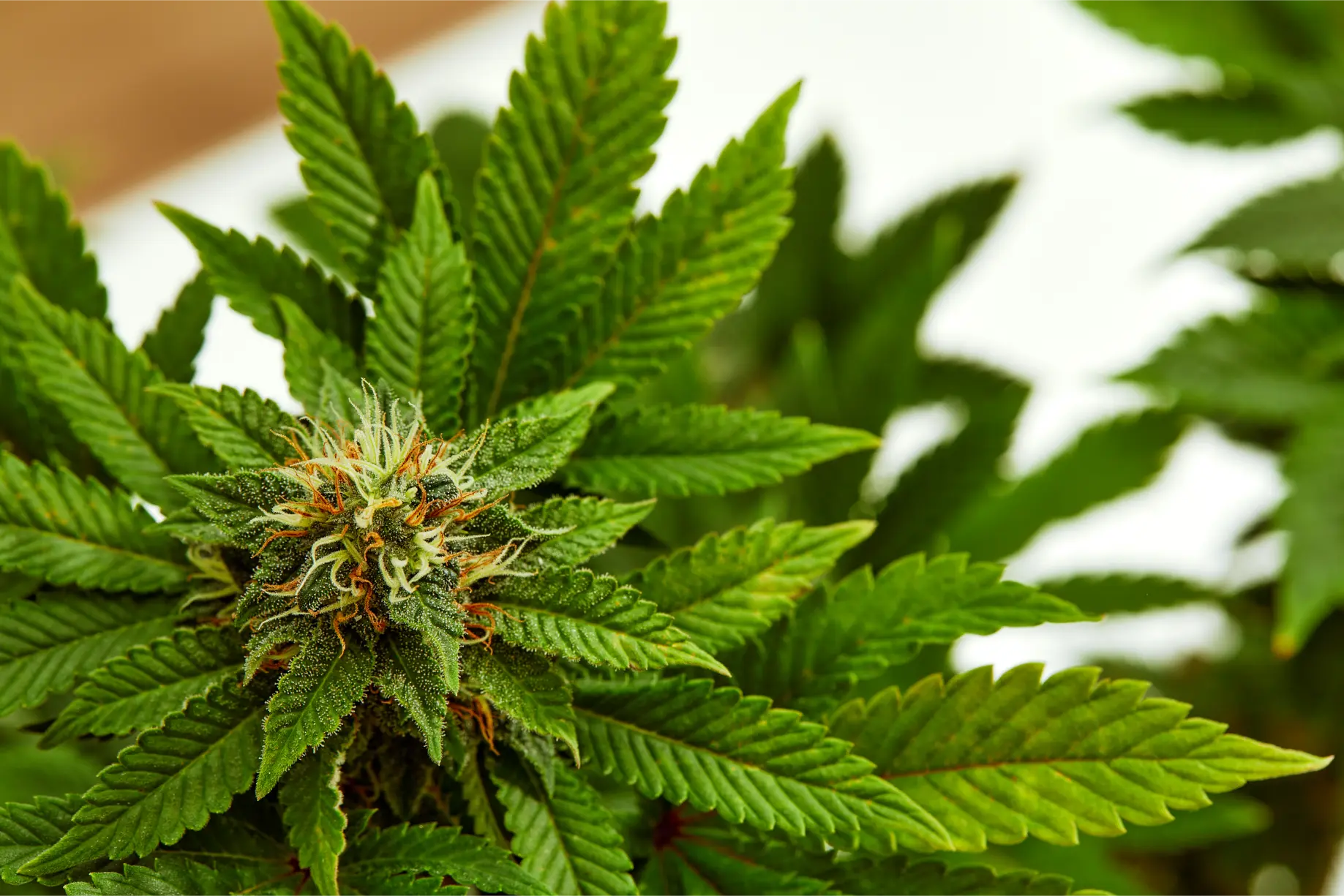
The finished flower is usually more complex than a simple 'Haze' description suggests. Pepper, pine and dry sage-like herb are common modern aroma markers, while older grow reports also describe citrus, tangerine, nectar, sweet wood and occasional vanilla-mint or incense-like nuances. Effects generally begin euphoric and mentally active, then settle into a substantial physical calm as the G13 side becomes more visible. The best flower keeps both sides of the cross recognizable: Haze lift without endless raciness, and body weight without immediate sedation.
Strain Features
| Feature | G13 Haze Profile |
|---|---|
| Strain Type | Sativa-leaning hybrid with clear G13 and Haze influence |
| Genetic Profile | G13-type broadleaf line x Haze family |
| THC | Commonly reported in the potent range; exact laboratory values vary by sample and phenotype |
| CBD | Usually low in modern psychoactive samples |
| Effect Character | Euphoric, mentally engaging and social at first, followed by deeper physical relaxation |
| Flavor / Aroma | Pepper, pine, dry sage/herb, citrus, sweet nectar and occasional incense or mint-like depth |
| Dominant Terpenes | Caryophyllene, limonene and myrcene commonly recur in modern samples |
| Flowering Time | Approximately 9-11 weeks; 10-11 weeks is common in Haze-leaning expressions |
| Stretch | High to very high; grower aggregates report examples around three times pre-flip height |
| Phenotype Variation | Meaningful: tall sativa-dominant plants versus shorter, bushier and denser expressions |
| Branching | Numerous long side branches with strong flower potential when well lit |
| Bud Structure | Medium-to-dense side flowers; compact phenotypes can become notably hard and heavy |
| Feeding Behavior | Phenotype-dependent; Haze-leaning plants are often less tolerant of aggressive nutrient concentration |
| Heat Response | Many grow reports describe good tolerance of warm conditions and temperature fluctuations, but heat still threatens aroma quality |
| Training Response | Topping, low-stress spreading, early supercropping and trellis support can all be useful when applied before late flower |
| Grow Difficulty | Moderate to advanced because the plant asks the grower to read phenotype rather than follow one fixed recipe |
| Main Grow Risk | Underestimating stretch, then compounding the problem with excessive feed and late emergency training |
| Best Grow Style | Short veg plus wide screen or carefully managed multi-branch indoor canopy; warm greenhouse/outdoor where season length permits |
Central grower question: How do I keep an extreme-stretch Haze phenotype within the room while feeding it gently enough to stay healthy, then support the same long branches once they become heavy with flower?
Genetic Lineage
The hybrid logic: G13 weight under a Haze frame
G13 Haze is most consistently described as a combination of G13-type genetics and Haze. The practical meaning is more important than any mythology attached to the G13 name. The G13 side is associated with broader leaves, stronger body effects, resin and denser floral development. Haze contributes length: longer internodes, extended flowering, more cerebral effects and the characteristic incense-citrus-spice aromatic territory.
When the two recombine well, the plant can carry Haze architecture without producing only thin flowers. Long side branches can stack surprisingly substantial buds, and the late body phase can be heavier than the plant's narrow-leaf appearance suggests.
Why phenotype variation is expected, not accidental
The parents represent very different structural tendencies, so segregation is biologically unsurprising. Some G13 Haze plants lean heavily toward the Haze side and become extremely tall after the flip. Others remain shorter, branch more densely and finish with harder flowers. Grower reports of different nutrient tolerance likely reflect that same segregation rather than random grower error alone.
A useful first run should therefore preserve individual identity. Measure pre-flip height and final stretch. Record when each plant stops vertical extension, how quickly flowers set, how dark the leaves remain at the same feed, and how branch angles change under late flower weight. Those observations are more valuable for a second run than any generic sativa percentage.
Aroma inheritance shows the same split
Haze-leaning plants often push citrus, pine, incense and sweet high-toned aromas. More grounded expressions can emphasize pepper, dry herbs and a heavier resin base. Modern samples often report caryophyllene, limonene and myrcene, a combination that makes sensory sense of pepper, citrus and earthy depth.
The most interesting phenotype is not necessarily the one with the most obvious Haze aroma. Some growers prefer a balanced plant where citrus and pine sit over a dense savory base, because that flower captures the hybrid rather than only one parent.
Selection criteria for a practical keeper
A keeper should be chosen after cure and should fit the actual room. For a low ceiling, a shorter plant with good side-bud density may be objectively better than an extraordinary tall Haze phenotype. In a tall room, the long plant may be worth keeping if its flavor and effect are clearly superior.
G13 Haze rewards selection on total system fit: stretch, feed tolerance, finish time, branch strength, aroma after cure and effect. Selecting on potency or frost alone leaves too many cultivation variables unresolved.
Effect Breakdown
The first phase: euphoria and mental expansion
G13 Haze commonly begins with an obvious cerebral lift. Mood can brighten quickly, conversation becomes easier and ordinary activities may feel more entertaining. Some users report giggliness, a quick flow of ideas or a pleasantly altered sense of attention. This is the Haze side at its most recognizable.
At a light dose, the body may remain relatively neutral, which makes the effect feel functional to experienced consumers. The word functional still does not mean unimpaired. Complex judgment, driving and safety-critical tasks remain inappropriate after THC use.
The peak: thought-provoking rather than purely speedy
At a moderate dose, the high can become more immersive. Music and visual detail may feel richer, and thought can move into introspection rather than simple stimulation. A well-balanced phenotype usually avoids the brittle, anxious edge of an extreme tropical sativa, but a Haze-dominant plant can still feel racy to THC-sensitive users.
This is also the stage where appetite may start to increase and physical tension can soften. The cross feels more hybrid as the session develops.
The G13 side arrives later
As the peak settles, many users notice a clear body phase. Muscles relax, sitting becomes more appealing and the mind slows without necessarily becoming dull. A larger dose can turn that calm into couch-oriented heaviness. The progression is one reason G13 Haze works better in late afternoon or evening for many people than its initial energy would suggest.
Compact, G13-leaning phenotypes may reach this phase sooner. Tall Haze expressions can remain mentally active for longer before the body weight catches up.
High dose and sensitivity
Too much can produce anxiety, dizziness, dry mouth, dry eyes and an uncomfortable awareness of heartbeat. The strong opening can encourage inexperienced users to underestimate how long the effect is still rising. Wait for the peak before adding more. A strain with Haze in the name should never be assumed to be gentle simply because the first minutes feel cheerful.
The late heavy phase can also be stronger than expected. Users choosing the cultivar specifically for daytime energy should test dose and phenotype in a low-pressure setting first.
Flavor & Aroma Profile
Pepper and pine create the structural base
The jar often opens with a dry, resinous combination of pine and pepper. The pine can range from fresh needles to warm wood, while caryophyllene-like spice gives the aroma a slightly savory bite. A sage-like or dry herbal note is also common in modern descriptions, making the profile feel more botanical than candy-oriented.
This base is relatively persistent. Even flowers that lose some citrus during drying often retain pepper, wood and herb, which is why a poor dry can still smell strong while being noticeably less complex.
Citrus, tangerine and nectar in brighter phenotypes
Haze-leaning expressions can add tangerine peel, sweet citrus, light nectar and a fresh top note over the pepper-pine base. Some older grow reports describe a blood-orange or sweet-fruit impression. These phenotypes often smell more expansive in the grinder than in the intact jar.
The citrus fraction is vulnerable to heat. A top that spent late flower too close to a hot fixture may remain potent and resinous but taste flatter than a cooler side branch from the same plant. That is a useful internal comparison for dialing the next run.
Incense, mint and sweet wood as secondary complexity
Not every plant displays these notes, but some expressions move into classic Haze incense, subtle mint or vanilla-like sweetness as the cure develops. Those nuances usually sit behind the dominant pine and spice rather than replacing them. The profile can therefore feel layered without becoming perfumed.
Phenotype documentation matters here because aroma differences can be larger than the name implies. Keep plants separated through cure if the first run is a selection cycle.
Consumption and aftertaste
On inhale, citrus and pine are easiest to perceive in well-finished flower. The mid-palate becomes herbal, and the exhale leaves pepper, resin and dry wood. A mature cure softens the sharp spice and allows a slightly sweet aftertaste to remain. Combustion emphasizes the savory base, while vapor tends to make the citrus and mint-like top more visible.
Harshness often comes from uneven drying or excess residual plant material rather than the strain's inherent flavor. Dense side buds can retain more internal moisture than their size suggests, especially when surrounded by resinous sugar leaf.
Dominant Terpenes
Modern tested examples commonly place caryophyllene, limonene and myrcene among the more prominent terpenes in G13 Haze. That combination aligns well with recurring pepper, citrus and earthy-herbal aroma. The exact order and concentration are not standardized under the cultivar name, so the table should be read as a recurring sensory pattern rather than a fixed certificate.
| Terpene / Pattern | Sensory Contribution | Practical Interpretation |
|---|---|---|
| Caryophyllene | Pepper, dry spice, warm wood | Frequently fits the first savory note in the jar. It has known CB2 receptor activity, but that does not establish cultivar-specific therapeutic efficacy. |
| Limonene | Citrus peel, tangerine, bright sweetness | Helps explain the high-toned fruit in Haze-leaning expressions. Its aromatic role is much more certain than claims that it guarantees a particular mood. |
| Myrcene | Earth, ripe herb, musky depth | Adds a lower herbal base and may be more noticeable in physically relaxing phenotypes. Concentration alone cannot predict couch-lock. |
| Variable pine / mint / incense compounds | Pine, fresh herb, mint, incense | Secondary terpenes and other volatiles can shift the aromatic direction by phenotype, especially in longer Haze expressions. |
The main quality lesson is that G13 Haze can retain a loud smell after losing its best top notes. Pepper and herb surviving does not mean citrus and incense were preserved. Compare upper and lower canopy flowers after cure to diagnose whether late heat or drying speed reduced complexity.
Indoor vs. Outdoor Growing
| Aspect | Indoor | Outdoor / Greenhouse |
|---|---|---|
| Stretch Control | The defining indoor task. Short veg, early topping, screen training and ceiling reserve are essential for tall phenotypes | Open space reduces the height problem, but large branches still need structural support and access |
| Phenotype Sorting | Easy to measure stretch and feed response under shared conditions | Weather can complicate comparisons, especially if late phenotypes face different autumn conditions |
| Feeding | Adjust by phenotype. Sativa-leaning plants often dislike the same high concentration that a compact sibling may tolerate | Rich ground can buffer nutrition, but excessive late fertility can prolong leafy growth |
| Flower Support | Trellis is highly useful because long side branches can carry dense buds | Stakes, cages or wide nets prevent branch collapse and storm contact |
| Heat | Reports suggest respectable tolerance, but indoor hot spots still flatten citrus and can drive stress foxtailing | Warm climates can suit the plant if water is adequate; prolonged extreme heat still reduces quality |
| Flowering Time | Approximately 9-11 weeks, with tall Haze phenotypes often later | Needs a sufficiently long autumn; protected greenhouse conditions improve reliability in marginal climates |
| Bud Density / Humidity | Dense side flowers need interior air movement even on an open sativa frame | Rain risk is concentrated in compact phenotypes and late heavy flower clusters |
| Best Fit | Experienced indoor grower who enjoys screens and phenotype-specific management | Warm long-season grower with support infrastructure and enough space for a large hybrid |
Indoor growing offers the strongest control over G13 Haze's contradictions. The grower can shorten veg for a tall plant, keep a compact sibling longer, lower feed for one and maintain a slightly stronger program for another. That individualized response is difficult in a large field where every plant may share irrigation and soil fertility.
Outdoors, the long branches and heat tolerance can become strengths rather than problems. The main constraint shifts from ceiling height to season length and support. A large plant can carry a surprising amount of side flower, but a storm arriving after those branches are loaded can undo the advantage. The strain is not difficult because it is weak. It is difficult because its vigor creates management obligations.
Strain-Specific Grow Guidance
Measure the first stretch instead of trusting a category
Record plant height at the flip and again at the end of the main stretch. Grower data describing roughly threefold expansion are useful as a warning, not a guarantee. One phenotype may approach that behavior while a shorter sibling remains far more manageable. Those measurements become the basis for future vegetative timing.
If the room has a low ceiling, flip earlier than feels visually necessary. Empty horizontal space can be filled by guided branches during transition. Empty vertical space cannot be created after a leader has reached the fixture.
Topping and early supercropping are architecture tools
One early topping is often valuable because it reduces a single dominant spear and gives long side branches more equal access to light. Low-stress ties should then spread those branches. If one leader still outruns the canopy during stretch, a carefully timed supercrop while the stem is flexible can redirect it horizontally.
Do not make repeated hard bends after flowers are well established. Mature long branches are carrying increasing leverage and a split becomes harder to repair cleanly. A second trellis layer or vertical supports are safer late solutions.
Use two-stage trellis thinking
The first support plane shapes the canopy. A second higher support layer, or strategically placed ties, can hold flower-bearing branches once they gain weight. This distinction matters because G13 Haze can begin as a height problem and end as a branch-support problem. One screen installed low may not solve both.
Keep branches separated enough that dense side flowers do not press against neighboring colas. Support should improve airflow and light exposure, not merely stop stems from falling.
Feeding must follow phenotype, especially on the sativa side
Historical grow information and grower reports repeatedly warn that different G13 Haze phenotypes can need different nutrient strength. The taller, more Haze-like plant is the one to watch for dark leaves, tip burn, clawing or stalled root uptake under an aggressive program. A compact plant may remain comfortable at the same concentration.
Start the shared room conservatively. It is easier to increase nutrition for a hungry compact phenotype than to recover a sensitive tall plant from salt stress during stretch. Use leaf condition, growth rate, runoff or root-zone data appropriate to the medium, and actual deficiency patterns rather than assuming all large plants are hungry.
Root-zone stability keeps the long flowering cycle on track
A ten-to-eleven-week flower gives small irrigation mistakes time to accumulate. Repeated saturation can reduce oxygen, while repeated severe drybacks can produce stress and irregular nutrient uptake. Use a medium with strong aeration and irrigate according to container demand. Tall phenotypes with more leaf area may dry faster than compact siblings.
If different phenotypes share one irrigation event, inspect individual pot weight or moisture before assuming they all need water. The same principle that applies to feeding applies to irrigation: the cultivar name does not make five root systems identical.
Open sativa structure does not eliminate late humidity risk
Long internodes create useful airflow, but individual side buds can become dense and hard. Once those flowers are mature, humidity risk is local rather than whole-plant. Air should move through the flower-bearing zone, especially where long branches cross or sit under a screen.
Selective defoliation after stretch can remove leaves trapped between bud sites, but avoid stripping the naturally open Haze phenotype simply because the compact sibling needs thinning. Dead and yellowing leaves should never remain embedded in a dense flower cluster.
Heat tolerance should not become a reason to run a hot room
Grow reports suggest that G13 Haze can tolerate warm conditions and temperature swings better than some delicate hybrids. That is useful resilience, not a flavor recommendation. Chronic high canopy temperature can still accelerate transpiration, increase light stress and flatten citrus or mint-like volatiles.
A plant staying alive under heat is a lower standard than producing premium flower. Judge temperature by leaf health, aroma and flower quality, not survival alone.
Flower stacking: side branches can become the yield engine
Once stretch slows, the long lateral branches begin to show why early canopy work matters. Well-lit branches can carry multiple substantial flowers rather than a single top and weak lower sites. Keep the productive branch length inside the strong light zone and remove shoots far below it that remain shaded.
Do not lollipop so aggressively that useful side-flower potential is lost. G13 Haze is not necessarily a one-cola plant. The correct cleanup preserves the branch sections that receive real light while removing interior growth that has no realistic path to quality.
Late flower: support before density surprises you
Tall sativa-looking branches can create the assumption that flowers will stay light. Some G13 Haze phenotypes contradict that assumption by hardening into dense side buds. Add support as soon as branch angles begin changing. Waiting until branches are horizontal means flowers have already lost light position and may be resting against neighbors.
Support also protects trichomes during routine work. A stable branch does not swing into adjacent flowers every time the grower waters or adjusts equipment.
Harvest each phenotype by its own mature flower
A compact plant may be ready before the tallest Haze expression. Watch representative mid-canopy and upper flowers for calyx swelling, reduction in fresh pistil production, mature resin and a fully developed aroma. Do not cut the entire room simply because the first phenotype reached day sixty-three.
Conversely, Haze-leaning foxtails can continue producing new tips under strong light after the main flower is mature. Evaluate older calyxes and whole-plant progression so stress growth does not trick the grower into endless extension.
Build support before the flowers demand it
G13 Haze changes management priorities during the run: stretch control dominates early flower, phenotype-specific feeding dominates the middle, and branch support plus local humidity dominate the finish.
Weedth Bud Flavor Tips
Keep the Haze top notes below the heat ceiling
Citrus, sweet nectar and mint-like freshness are the fragile part of the profile. Pepper and dry herb remain obvious even after a stressful finish, so a grower can mistake a loud jar for a complete jar. Compare flowers from different canopy zones. If cooler lower branches keep more tangerine than the hottest tops, the next run should reduce top-zone stress.
The same applies outdoors during heat waves. The plant may remain vigorous, but aromatic finesse can fall. Healthy shade leaves and adequate irrigation help protect flower temperature without resorting to late emergency stress.
Harvest window should preserve lift and body balance
An early harvest can emphasize a brighter, thinner cerebral experience and underdeveloped aroma. A very late harvest can deepen body weight while allowing fresh citrus to fade. The ideal window depends on the phenotype and desired use, but full calyx and resin maturity should come before a decision about 'more amber.'
Smell is part of the maturity check. When the flower has reached its characteristic pepper-pine-citrus profile and new floral growth has slowed, the grower has a more meaningful signal than calendar day alone.
Dry dense side buds as dense buds, not as Haze buds
The plant may look airy overall while individual flowers are hard. That creates a drying trap. Long branch spacing does not mean every cola dries quickly. Check the actual center of the largest buds and use gentle room circulation. Direct airflow can harden the outside while internal moisture remains high.
Separate unusually dense tops from smaller flowers if necessary. A uniform cure begins with a reasonably uniform drying endpoint.
Let pepper soften while citrus remains present
Early cured flower can feel sharp because pepper and green herb dominate. Over several weeks, those notes round out and citrus or sweet wood can become easier to perceive. A good cure does not eliminate spice; it integrates it so the inhale is clearer and the aftertaste feels less rough.
Once stable, store the flower cool, dark and airtight. Haze top notes are not improved by repeated warm oxygen exposure. Small working jars help preserve the main supply.
Indoor versus outdoor flavor
Indoor control makes it easier to protect citrus and compare phenotypes, especially when plants finish at different times. Outdoor sun can create rich resin and a broader herbal depth, but warm harvest conditions and large branch volume make immediate post-harvest handling more demanding.
Neither method wins automatically. The best flavor comes from the environment that can keep the preferred phenotype healthy through its full finish and then dry it without heat or moisture shortcuts.
Weedth Bud Boost Tips
Use measured stretch to set veg time
The first run should produce numbers: pre-flip height, post-stretch height and the canopy area occupied by each plant. On the second run, that data lets the grower shorten or extend veg precisely. A phenotype that triples in height may need very little vegetative size. A compact sibling may deserve more time to build branch count.
This is a more reliable yield strategy than copying a fixed four-week or six-week veg recommendation.
Convert vertical growth into side-bud surface
Topping, spreading and screen guidance work because the cultivar can produce long productive laterals. The objective is to keep more of that branch length within the strong light zone. A vertical branch that rises above the rest may have a powerful top but wastes the lower portion in shade; a horizontal branch can expose many sites evenly.
Do not create a perfectly flat canopy at the cost of repeated injury. A gently rolling, even surface is sufficient if fixture distance remains safe.
Feed for uninterrupted growth, not maximum concentration
The best yield comes from avoiding stalls. An overfed Haze phenotype that spends a week recovering during stretch can lose more production than it would ever gain from a stronger nutrient program. Start moderate, observe and increase only where the plant demonstrates demand.
Likewise, do not underfeed the compact phenotype merely because its tall sibling is sensitive. Individual irrigation or feed adjustment can be worth the complexity when plants differ clearly.
Preserve useful lateral flowers and remove true larf
Because side branches can be highly productive, a blanket rule to strip everything below the top is wasteful. After stretch, identify which branch segments receive direct useful light. Keep those. Remove deep interior shoots and weak lower growth that will never reach the productive zone.
This approach increases the premium percentage without erasing the cultivar's natural multi-branch yield advantage.
Support is a yield multiplier when branches are long
A branch that sags away from the light loses more than appearance. Its flowers shade one another, contact neighboring buds and become harder to ventilate. Trellis support keeps flower surfaces exposed during the final swell. Outdoors, cages or stakes perform the same role.
Install support before weight is obvious. Late tying requires more handling of mature trichomes and can snap already stressed junctions.
Environmental stability beats last-week tricks
G13 Haze does not need a dramatic finishing ritual. Claims that long darkness, severe drought or heavy late bloom additives automatically increase potency are not strong enough to justify risking a healthy plant. Maintain root function, sensible humidity and healthy light exposure until maturity.
If the goal is more resinous premium flower, the highest-leverage improvements are usually canopy geometry, phenotype choice, uninterrupted root health and correct harvest timing.
Medical Uses & Benefits
Reported mood and stress support
Users often report euphoria, laughter and a change in mental focus during the early phase. That can make stress feel less dominant and may help some people disengage from low mood for a period. A strong Haze phenotype can also become overstimulating, so the same category of symptom can improve at one dose and worsen at another.
There is no clinical evidence that a product called G13 Haze treats depression or anxiety as a disease. The most responsible language is reported subjective relief.
Physical tension and pain reports
The later body phase can make muscular tension or pain feel less intrusive for some users. THC is psychoactive and can alter pain perception, while terpenes such as caryophyllene are biologically active in experimental contexts. That still does not establish cultivar-specific medical efficacy.
People using cannabis medically should prioritize the tested cannabinoid profile of the actual batch, predictable dosing and appropriate professional advice over the strain name.
Appetite and evening use
Appetite may increase as the high settles, and a larger dose can become physically heavy enough to support an evening routine. For immediate sleep, however, the stimulating first phase may be inconvenient. A more sedating cultivar can be more predictable for users whose main goal is rapid bedtime drowsiness.
Who should be cautious
People prone to panic, racing thoughts or THC-related dizziness should be conservative. Haze-leaning phenotypes can be mentally strong, and the duration can make an uncomfortable dose feel long. Start low and wait for the full effect before increasing.
Ideal User Profile
The hybrid user who wants both lift and weight
G13 Haze fits someone who enjoys a pronounced cerebral opening but does not want the experience to remain weightless for the entire session. The ideal user appreciates pepper, pine and citrus rather than only sweet dessert flavors and has enough THC familiarity to manage a potentially strong peak.
Late afternoon and evening are natural windows because the user can enjoy the brighter first phase and allow the heavier finish to arrive without fighting the schedule.
The grower who likes adaptive management
This cultivar is a good match for a grower who enjoys reading individual plants. Screens, early training, branch support and phenotype-specific feeding are not burdens in that mindset; they are part of the project. A grower who wants one irrigation recipe and one height for every seed may find the line unnecessarily complicated.
A tall room helps, but good planning can make a medium-height room work. A very low ceiling is the least forgiving environment for an unknown Haze phenotype.
Less suitable
Users seeking minimal intoxication, immediate sedation or a very mild beginner experience should choose something else. Growers who must finish every plant in eight weeks or cannot provide structural support will also be working against the cultivar rather than with it.
Grower Notes and Feedback
Stretch numbers are memorable because they can be extreme
Grower aggregates include examples where flowering height increased to roughly three times the pre-flip size. Not every plant does that, but the reports are consistent enough to treat severe stretch as a design risk. Growers who flip early and use screens tend to describe the plant more positively than those who try to correct height after the fact.
The lesson is not a precise multiplier. The lesson is to preserve ceiling reserve until the phenotype proves how it behaves.
Feeding disagreements often reflect phenotype differences
Some growers describe a vigorous plant that eats well, while others warn strongly against high nutrient concentration. The contradiction becomes easier to understand when tall Haze and compact phenotypes are considered separately. A single average feeding label hides that variation.
The safest first run keeps nutrition moderate and allows individual plants to show demand.
The side branches can surprise growers with density
The plant can look open and sativa-like while still forming hard side buds. That combination creates a late support requirement that is easy to miss early. Growers who install a trellis only for height often discover it becomes equally valuable for holding flower weight.
Dense side buds also mean humidity should be evaluated locally inside the canopy rather than by the overall open silhouette.
Heat resilience is real but easy to overinterpret
Reports of good performance under warm conditions are encouraging. They suggest the cultivar may recover from temperature fluctuation better than fragile hybrids. They do not mean quality is unchanged at excessive heat. Citrus and sweet top notes can still be reduced, and very strong light plus heat can provoke foxtailing or leaf stress.
Growers who distinguish survival from premium expression make better use of the resilience.
Phenotype aroma can range wider than the strain page suggests
Pepper, pine and sage-like herb are common descriptors, but growers also report tangerine, sweet nectar, mint, incense and vanilla-like notes. Keeping flowers separate through cure is therefore worthwhile on a selection run. A phenotype that is only moderately loud in flower can become the most balanced jar after curing.
Visual frost should be recorded, but it should not replace post-cure flavor and effect in the final selection.
Weedth Editor's Note
The decision I would not postpone
I would approach G13 Haze as two different problems separated by time. Early flower is a geometry problem. I want the stretch under control before the branches become rigid. Late flower is a support and humidity problem. I want those same branches held apart once the buds become much heavier than the early sativa silhouette suggested.
The detail I would watch most carefully is feeding response by phenotype. If one tall plant is already dark and clawed while a compact sibling looks hungry, I would not try to find a compromise that makes neither plant happy. I would separate the management enough to learn what each expression actually wants.
I also would not use the cultivar's heat tolerance as permission to run the top of the canopy hot. The pepper and herb will survive a lot of abuse. The tangerine, nectar and finer Haze notes will not. If flavor matters, resilience is a safety margin, not a target environment.
A good G13 Haze run should make the long branches look intentional. The screen should be full but not tangled, side flowers should remain in the strong light zone, and the plant should reach the final weeks without emergency bends or burnt tips. That is where its high yield potential becomes quality yield.
I would recommend it to an intermediate or advanced grower who enjoys the feedback loop between phenotype and technique. The plant is not difficult because it refuses to grow. It is difficult because it grows enough to punish late planning.
Weedth Score
Growing Experience – 8.0/10
Vigorous and responsive, but extreme stretch and phenotype-dependent feeding demand active planning.
Bud Structure & Visual Appeal – 8.7/10
Long sativa architecture can finish with surprisingly dense resinous side flowers, creating strong visual contrast and substantial yield.
Aroma Complexity – 8.9/10
Pepper, pine, sage, citrus, nectar and occasional incense or mint give excellent depth across phenotypes.
Flavor & Smoothness – 8.6/10
Rich and layered when heat and drying are controlled; the bright Haze top is easier to lose than the savory base.
Effects & High Experience – 8.9/10
A compelling euphoric-to-relaxing progression with enough potency to satisfy experienced users, though Haze-sensitive users need caution.
Overall Satisfaction & Recommendation – 8.7/10
Excellent for growers who can manage stretch and want a productive old-school hybrid with real phenotype personality.
Personal closer: G13 Haze earns its space when the long branches finish supported, resinous and citrus-spiced instead of becoming a last-minute fight with the ceiling.
FAQ
How much can G13 Haze stretch?
A lot. Grower records include examples around three times pre-flip height, although phenotype and environment create wide variation. Treat that figure as a warning margin rather than a promise. Keep vertical reserve and flip unknown plants earlier than compact hybrids.
Why is one G13 Haze plant much taller than another?
The cross can segregate toward Haze-dominant and more compact G13-influenced phenotypes. Height, internodal spacing, finish time and feed tolerance can all vary. Record individual plants rather than assuming the shorter one is unhealthy.
Should I top G13 Haze?
Usually yes indoors when height is limited. One early topping followed by low-stress spreading helps distribute long lateral branches. Additional topping should depend on canopy space; repeated cuts can create more leaders than the screen can use.
Does it respond well to SCROG?
Very well when the plant is trained early. Long side branches can fill a screen and carry multiple substantial flowers. Leave empty screen space before flowering so stretch completes the canopy rather than overcrowding it.
Does G13 Haze need strong nutrients?
Not every phenotype. Haze-leaning plants are often reported as less tolerant of high nutrient concentration than compact siblings. Start moderate and increase only where growth and leaf condition show real demand.
Why are the side branches falling over late in flower?
Because some phenotypes form denser side buds than the early sativa structure suggests. Add trellis or stake support before the final swell. Keeping branches upright also improves light distribution and keeps flowers separated for airflow.
Is G13 Haze heat tolerant?
Grow reports suggest good resilience to warm conditions and temperature variation, but premium quality still declines under chronic excessive heat. Treat resilience as protection against occasional stress, not as an ideal hot-room target.
How long does it flower?
Approximately nine to eleven weeks is a realistic planning range. Compact phenotypes can finish earlier, while Haze-dominant expressions often need the longer end. Harvest the individual plant when its mature flower signals agree.
Why does my G13 Haze smell like pepper instead of citrus?
Pepper and dry herb are common parts of the profile. Phenotype, terpene balance, late-flower temperature and drying conditions can all shift which note dominates. Citrus-heavy expressions are not guaranteed.
Is it suitable for a small tent?
It can be done, but an unknown plant is risky in a very low ceiling. Use a short veg, early topping, aggressive horizontal planning and enough fixture clearance. A compact selected phenotype is far easier than untested seed-grown material.
Similar Strains
Super Silver Haze
Similar for Haze stretch, citrus-incense complexity and a long cerebral effect. Super Silver Haze is generally more consistently sativa in feel, while G13 Haze often delivers a stronger late body phase and denser side flowers.
G13
The direct broadleaf-side comparison. G13-type material usually offers a shorter, heavier and more physically relaxing experience. G13 Haze adds height, citrus-pine complexity and a more active opening.
Jack Herer
Comparable as an old-school hybrid that balances Haze-like mental lift with a more grounded body. Jack Herer is often easier to manage in height and can finish a little faster, while G13 Haze can produce more extreme stretch and heavier side branches.
Neville’s Haze
A stronger Haze-side alternative for growers who want even more stretch, incense and cerebral intensity. Neville’s Haze generally asks for more flowering time and less forgiveness, making G13 Haze the more balanced hybrid option.
Cannatonic
Historically connected through G13 Haze ancestry in one side of its family, but chemically very different in many selections because Cannatonic is known for CBD-rich phenotypes. It is a useful contrast for growers who like related aromatic structure but want much less intoxication in a CBD-selected plant.
Golden Tiger
Similar for growers who enjoy large sativa structure and a powerful long cerebral experience. Golden Tiger is more tropical and usually more extreme in flowering behavior, while G13 Haze adds a heavier body finish and denser hybrid flowers.
Share this article
A quick overview of the topics covered in this article.
Follow us
Latest articles
September 9, 2026
September 9, 2026
September 9, 2026