
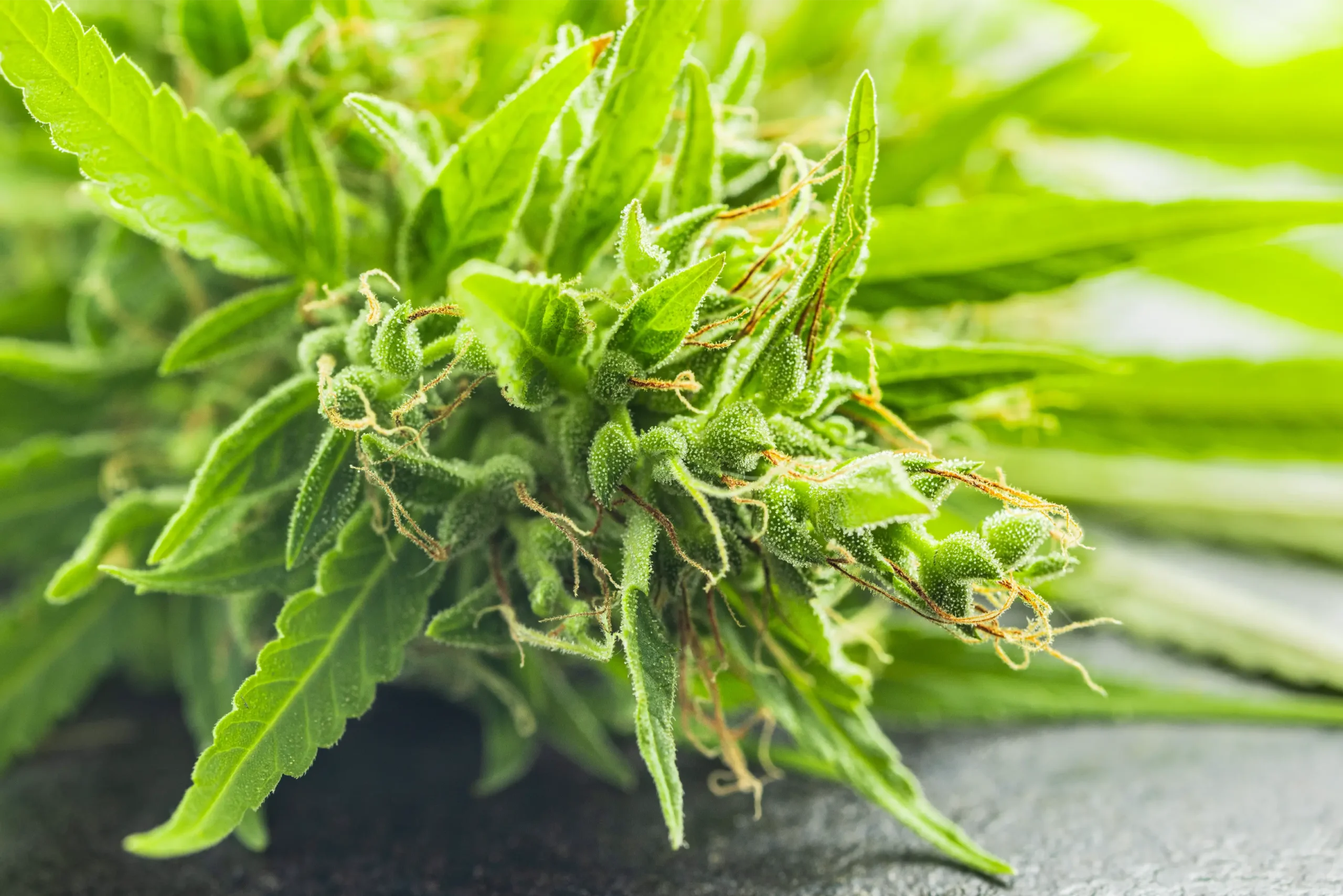
Garlic Juice
Garlic Juice – Strain Profile & Grow Guide
Garlic Juice is a collision between ripe tropical fruit and savory chem. Papaya supplies soft fruit, apricot, fermentation and a broad physical calm. GMO contributes garlic, onion, fuel, rubber and the kind of long-lasting pungency that can remain on tools after the plant has left the room. The best flower does not choose one parent and abandon the other. It begins with sweet fruit and ends with garlic, pepper and diesel, or it opens with savory funk and reveals papaya only after the flower is broken apart.
That aromatic contradiction is matched by the plant. Papaya-influenced expressions may remain compact, finish relatively quickly and form tight rounded flowers. GMO-leaning expressions can stretch more, carry longer branches and continue swelling later. Treating a mixed group as one uniform cultivar can produce an uneven canopy and an uneven harvest. The first run should therefore be used to identify which plants are compact fruit types, which are taller chem types and which combine both traits successfully.
Garlic Juice is often presented as a resin and potency cultivar, but the more demanding question is whether the flower keeps its tropical layer after drying. Garlic, pepper and fuel survive rough handling better than papaya, orange blossom and apricot. A batch can remain offensively loud while becoming less complete. The grower who cares about flavor must manage density, harvest maturity, trim timing and drying speed as carefully as canopy yield.
Strain Features
| Feature | Details |
|---|---|
| Strain Type | Indica-leaning hybrid |
| Genetic Profile | GMO x Papaya |
| THC | Frequently reported in the mid-to-high 20% range, with some higher laboratory results; potency varies by batch |
| CBD | Usually very low |
| Dominant Terpenes | Limonene, myrcene and beta-caryophyllene are commonly reported |
| Signature Aroma | Garlic, onion, diesel, ripe papaya, apricot, orange blossom, wood and pepper |
| Effect Character | Euphoric warmth followed by appetite, deep relaxation and possible sedation |
| Flowering Time | Commonly around 8 to 9.5 weeks; GMO-leaning cuts may need longer |
| Stretch | Low to moderate in Papaya-leaning plants; moderate to strong in GMO-leaning expressions |
| Plant Shape | Broad and branchy, with phenotype-dependent internode length |
| Flower Structure | Tight, sticky flowers with bright pistils and heavy resin |
| Resin Character | Thick and greasy, with strong potential for flavor-focused extraction |
| Odor Intensity | Extremely strong during late flower and drying |
| Feeding Behavior | Can support productive nutrition but becomes leafy and harsh when nitrogen or salts remain high |
| Main Grow Risk | Mixed phenotype timing and dense flowers that are difficult to dry evenly |
| Grow Difficulty | Intermediate |
Genetic Lineage
Garlic Juice combines GMO with Papaya. Both parents are already distinctive, and the cross does not soften either one completely. GMO is known for vigorous growth, chem intensity, garlic, onion, rubber and a long heavy effect. Papaya carries tropical fruit, fermentation, orange blossom, compact flower structure and a calmer, more obviously indica-like finish.
The strongest expression of the cross is not necessarily the one with the loudest garlic. A pure chem-leaning plant may be impressive but can resemble other GMO descendants. A fruit-dominant plant may smell beautiful but lack the depth and resin that define Garlic Juice. The most complete keeper usually carries a clear papaya or apricot layer through the cure while retaining garlic and diesel on the exhale.
The parents also create different structural possibilities. Papaya tends to shorten internodes and form compact flowers. GMO can lengthen the plant, increase stretch and produce branches that continue moving after the rest of the canopy appears settled. A seed-grown population may contain both extremes. Even clone-only material can be represented by different selected cuts in different markets, which explains conflicting descriptions of height and flowering time.
The lineage influences water demand as well. A compact Papaya-leaning plant may use less water once stretch ends because its leaf area and branch length remain limited. A GMO-leaning plant can continue drinking aggressively through mid-flower. One irrigation schedule for both types can leave the compact plants too wet and the taller plants too dry.
Keeper selection should include plant function, not only jar aroma. A spectacular Papaya phenotype that roots slowly, stalls after topping or forms excessively leafy flowers may be less useful than a slightly less sweet plant with stronger branches and cleaner calyx development. The opposite is also true. A high-yielding GMO expression can fill a room while producing a flavor too close to ordinary garlic chem. The valuable keeper combines manageable structure, clean flower formation and fruit that survives drying.
The cross may also reveal different bud-to-leaf ratios. Compact fruit plants can build round flowers surrounded by short resinous leaves. Tall chem plants may form longer spears with more open spacing between flower clusters. The first type is easier to keep short but harder to ventilate and trim. The second is easier to inspect from the side but may require additional support and a longer finish.
Aroma development often follows a predictable sequence. Early flower may smell sweet, green and lightly tropical. Garlic and rubber become stronger as resin increases. During late flower, the Papaya side may return as fermented fruit, apricot or orange blossom. After drying, the savory compounds dominate temporarily, then fruit can reappear during cure. This changing profile makes early phenotype selection unreliable.
Effect Breakdown
Moderate dose: warmth before weight
Garlic Juice usually begins with a noticeable emotional softening. The user may feel happier, more comfortable and less mentally guarded. The effect is not always immediately sleepy. A brief period of conversation, music appreciation or relaxed focus can occur before the body becomes heavy.
A tingling sensation often develops through the shoulders, arms and face. Appetite may rise quickly. The effect can feel physically immersive without becoming completely immobilizing at a moderate dose.
Higher dose: the GMO side becomes obvious
As dose increases, the experience becomes slower and more internal. Thoughts may repeat, time may feel stretched and motivation may drop. The body effect can become strongly sedating. This is the point where the cultivar moves from an evening hybrid into a sleep-oriented strain for many experienced users.
The onset can still be intense. Users who are sensitive to THC may feel dizziness, anxiety or an uncomfortable awareness of heart rate before the relaxing phase arrives. Dry mouth and dry eyes are common.
Batch differences matter
A fruit-forward batch may feel brighter and more euphoric. A chem-heavy batch often feels more physically dominant and mentally foggy. Harvest timing also influences the balance. Earlier flower can feel more active and sharp. Greater maturity strengthens appetite, body weight and sleepiness.
Because CBD is usually minimal, the strain should be approached conservatively by new users. The sweet Papaya fraction does not make the cannabinoid intensity mild.
Flavor & Aroma Profile
Garlic Juice can be understood as two aromatic systems sharing the same flower. The first is tropical and soft. Papaya, apricot, orange blossom, ripe melon and fermented fruit may appear. These notes can feel juicy or creamy in the intact jar.
The second system is savory and aggressive. Garlic, onion skin, diesel, wood, pepper, rubber and chemical gas emerge when the flower is broken apart. In some phenotypes, the savory layer arrives first and the fruit appears only after the jar has been open for several seconds.
The inhale can be surprisingly smooth when the flower is cured well. Sweet fruit, apricot and a faint citrus blossom may reach the front of the palate. The exhale is heavier, carrying garlic, pepper and fuel. A nutty or peanut-like note is sometimes reported, especially in flower where the Papaya and chem fractions are evenly balanced.
The aftertaste is long. Garlic and wood can remain on the tongue, while a faint fermented-fruit sweetness returns through the nose. This persistence is one reason the cultivar can be memorable even when the initial jar aroma is not conventionally pleasant.
Poorly finished Garlic Juice becomes one-dimensional. Warm drying removes papaya and apricot, while garlic and pepper remain. Excess late nutrition adds a hot mineral quality that can be confused with strong chem. The natural savory profile should feel aromatic, not salty or burnt.
Fresh flower may smell greener and sweeter than cured flower. During the first sealed stage, rubber and garlic can dominate. Several weeks later, fruit often becomes clearer. A grower who evaluates the jar after only a few days may incorrectly conclude that the Papaya side disappeared.
Dominant Terpenes
Garlic Juice is commonly associated with limonene, myrcene and beta-caryophyllene, but the garlic and fermented-fruit identity depends heavily on minor volatile compounds beyond the standard three-terpene description.
Limonene supports orange blossom, citrus brightness and the initial euphoric edge. It can lift the fruit without making the strain smell like lemon candy.
Myrcene contributes ripe tropical fruit, damp earth and the heavy physical finish. Higher-myrcene batches may feel slower and more sedating.
Beta-caryophyllene adds black pepper, dry spice and part of the warm savory base. It connects the garlic and wood to the body-centered effect.
Secondary sulfur compounds likely play a major role in garlic, onion and rubber. These compounds may be present in very small amounts yet dominate perception.
Fruit esters and minor terpenes contribute papaya, apricot and fermented sweetness. They are more vulnerable to heat and oxygen than the heavier savory notes.
The practical conclusion is simple: a standard terpene label may not explain why one batch smells like garlic and apricot while another smells like cheese, rubber and fuel. Phenotype and post-harvest handling shape the profile as much as the top three laboratory values.
Indoor vs. Outdoor Growing
| Decision Point | Indoor Growing | Outdoor Growing |
|---|---|---|
| Phenotype Management | Different plant types can be separated and trained individually | Large root volume can amplify the difference between compact and stretchy plants |
| Odor | Strong filtration is necessary in late flower and drying | Garlic and fuel can travel far and affect privacy |
| Flower Density | Humidity can be lowered before compact flowers harden | Rain and dew are dangerous inside thick late flowers |
| Flavor | Stable temperature protects papaya and apricot | Sun can deepen fruit, but hot harvest weather may leave mostly garlic and earth |
| Support | A net helps GMO-leaning branches and keeps colas separated | Cages or individual ties should be installed before bloom |
| Harvest Timing | Compact and tall phenotypes can be harvested separately | Weather may force one harvest date across plants that mature differently |
| Best Fit | Growers willing to map phenotype behavior and control drying | Warm, dry climates with privacy and a long enough finish |
Indoor cultivation is particularly useful when working with unverified Garlic Juice material. A compact fruit phenotype and a tall chem phenotype can be placed in different zones, flipped at different sizes or supported differently. The grower can also harvest them separately instead of compromising both.
Outdoor plants can become large and highly aromatic. Root freedom may exaggerate GMO-like stretch. The broad canopy should be opened early, and support should be installed before the flowers become sticky. A protected finish is valuable because dense tropical-chem flowers are not well suited to repeated autumn rain.
Outdoor flavor can be exceptional when days are warm but not extreme and nights are dry. Excessive late heat removes fruit. Persistent cool moisture creates a different problem by slowing internal drying and increasing rot risk.
Strain-Specific Grow Guidance
Start by identifying which parent is speaking
During vegetative growth, compare internode length, branch speed, leaf width and water use. A compact plant with broad leaves and short nodes is likely to require less canopy area and may finish earlier. A taller plant with more open branching may need an earlier flip and stronger support.
Do not discard one type automatically. The compact plant may preserve more Papaya. The taller one may produce greater yield and stronger garlic resin. The best keeper can exist between the extremes.
Training strategy should follow the phenotype
Compact plants often need only one topping and gentle branch spreading. Repeated topping can create a thick interior with too many short branches. Taller expressions can tolerate a wider screen and may benefit from an earlier top followed by longer recovery.
The screen should remain open at the flip. The exact amount of open space depends on the cut. A mixed group should not be forced into one flat height if that requires late bending of the taller plants or excessive vegetative time for the compact ones.
Manage the lower canopy before odor and resin distract you
Garlic Juice can make frosty lower flowers, and the strong smell may make them seem more mature than they are. Remove weak branches with no path to useful light before the end of stretch. This improves airflow and reduces the number of small dense buds that are difficult to dry evenly.
The compact phenotypes need special attention near the main stem. Short internodes can hide small shoots and leaves that trap moisture. A side view and an inspection from below reveal more than looking down at the canopy.
Reading the plant through the first six weeks of flower
During the first two weeks, the most important information is stretch. Mark or photograph branch height at the flip, then compare growth every few days. The compact plants often stop extending sooner and begin forming rounded clusters. GMO-leaning plants may continue reaching while the first pistils are already visible. This simple record prevents the taller plants from being mislabeled as overfed or light-starved when the difference is genetic.
By weeks three and four, flower geometry becomes more useful than leaf shape. Papaya-influenced plants usually close the spaces between calyxes earlier. GMO types may still look less finished but continue building length. The grower should resist the urge to add extra bloom products merely because one plant appears behind. Compare development to its own previous week, not to a faster sibling.
Weeks five and six are when odor and density can distract from plant health. Garlic may become powerful while the roots are beginning to slow. Check irrigation demand, leaf posture and inner-flower spacing. A plant that smells finished may still need several weeks, and a plant with heavy resin may still be carrying excess moisture around the stem.
Watering is phenotype-dependent
A GMO-leaning plant may drink heavily through transition and continue using water through mid-flower. A Papaya-leaning plant can slow earlier. Irrigation based on the thirstiest plant leaves the compact plant too wet.
Use container weight, leaf posture and time to dry rather than one schedule. If plants differ substantially, separate their irrigation zones or water individually. The strain is not difficult because every plant has unusual water needs. It is difficult because mixed expressions may not share the same needs.
Nutrition: do not confuse dark leaves with strength
More feed is not automatically more quality
The cultivar can support productive feeding, particularly during vigorous transition growth. However, excess nitrogen increases leaf mass and delays clean flower definition. Dark clawed leaves, slow drying containers and burnt tips are signs to reduce input.
Late salt accumulation is especially damaging to the flavor. Garlic and pepper are already intense. Mineral harshness can make the smoke unpleasant and hide papaya. A gradual reduction in feed strength as the plant finishes is safer than pushing the final weeks.
Climate and flower health
Dense flowers require declining humidity before they reach maximum size. The room should be prepared early rather than reacting after the colas feel hard. Air must pass through the canopy and around the stem-facing side of the flowers.
The aroma can complicate inspection. Fermented papaya, garlic and rubber may smell strange even when the flower is healthy. Use visual and tactile signs. Rot produces soft, discolored internal tissue, dead sugar leaves and a stale localized smell. Healthy funk remains distributed across the flower and the tissue stays firm.
Light management
Garlic Juice can handle strong productive light when roots and climate are stable. The top layer should not run hot. Excess intensity removes fruit and may create pale foxtailed tips on GMO-leaning expressions.
Uniformity is more valuable than a few overpowered tops. A mixed phenotype canopy may need risers, branch positioning or separate zones so compact plants are not shaded by taller ones.
Branch support
Compact plants may appear self-supporting until dense tops gain weight. Taller expressions often need a second net. Install support before resin production makes the flowers difficult to handle.
The purpose of support is also separation. Two garlic-heavy colas resting together create a humid contact zone that is hard to inspect because the strong aroma can mask the first warning signs.
Harvest each expression when it is ready
Common flowering estimates fall around eight to nine and a half weeks, but GMO-leaning cuts may need more time. The compact Papaya expression may finish first. Staged harvest is preferable to forcing every plant into one date.
Look for full calyx swelling, reduced fresh pistils, stable mature aroma and mostly cloudy trichomes on calyx tissue. Earlier harvest emphasizes fruit and euphoria. Greater maturity increases garlic, appetite and body sedation.
Weedth Bud Flavor Tips
Garlic Juice should not be dried as one uniform pile. Sort the harvest by flower size, plant phenotype and branch thickness. A compact Papaya top can contain more internal moisture than a longer GMO spear with a similar visible diameter.
Wet trimming should be limited. Removing every sugar leaf immediately can speed the outer dry and strip fruit. Large fan leaves can be removed at harvest, while resinous protective leaves may remain until the flower is closer to its final moisture state. In a humid room, more leaf material may need to be removed. The decision should follow the environment rather than a fixed philosophy.
Direct airflow is especially damaging to apricot and orange blossom. The room needs circulation, but the branches should not move constantly. Fans should exchange air around the harvest, not push it across the flowers.
The savory profile can create false confidence. Garlic and rubber remain loud even when the flower is over-dried. Judge the process by texture and flavor, not odor strength alone. A branch that smells powerful may already have lost the papaya layer.
Dense flowers should be checked at more than one point. The outer calyxes, the base of the bud near the branch and the small leaves folded into the flower can hold different amounts of moisture. A stem that bends is not automatically proof that the entire bud is too wet, and a small stem that snaps does not guarantee that the central flower is ready for sealed storage.
If one branch dries much faster than another, do not mix them to create an average. Remove the faster material, allow it to equalize separately and keep the slower tops in the drying space. Garlic Juice benefits from sorting because the Papaya and GMO structures can create different drying curves even on plants harvested the same day.
Cure the fruit and chem together. During the first weeks, open the containers only as needed to manage moisture. Constantly opening them to smell the flower removes the most volatile notes. Over time, garlic should soften enough for papaya, apricot or nutty sweetness to appear behind it.
For long-term storage, divide phenotypes. Do not mix a fruit-forward plant with a chem-heavy plant before selection. Their aromas can blend, making it difficult to judge which cut truly preserved its character.
Weedth Bud Boost Tips
The cultivar’s yield potential comes from selecting the right structure for each phenotype. Compact plants can be placed closer, but they need interior cleanup. Taller plants need more screen area and an earlier flip. One plant count for both types wastes space or creates crowding.
Indoors, use topping and low-stress training to create several strong branches. Keep the productive zone shallow. Lower resin is useful for processing, but premium flower should come from the well-lit upper canopy.
Outdoor plants benefit from large root volume, but only when the structure is prepared to carry the growth. Build a wide framework early, remove crossing branches and install support before the plant becomes difficult to access.
The plant can produce substantial resin without late stress techniques. Strong light, root health and full maturity are enough. Severe dryback or excessive ultraviolet exposure can reduce fruit and damage leaf function without guaranteeing better resin.
Nutrition should support flower development without leaving the plant dark and leafy. The final dry weight is often limited by incomplete light penetration and early harvest, not by insufficient bloom products.
Staged harvest can improve total usable quality. Take the mature compact tops first and allow later branches or taller phenotypes to finish. This avoids leaving ready flowers in a humid room while waiting for another plant.
Medical Uses & Benefits
Garlic Juice is commonly reported as relaxing, appetite-stimulating and physically heavy. Consumers may choose it for evening stress, difficulty settling down, low appetite or general discomfort. The early euphoria can improve mood before the body effect becomes dominant.
These reports do not prove that the strain treats pain, depression, insomnia, anxiety or any other condition. Whole-flower effects vary by dose, chemistry, tolerance and personal health.
The high THC potential creates meaningful risk. Dizziness, anxiety, cognitive slowing and excessive sedation are possible. Low CBD offers little buffering. People who have previously reacted poorly to strong THC products should be cautious.
The strain is usually better suited to evening use than daytime medical routines. Anyone using cannabis alongside prescribed medication should seek professional guidance.
Batch choice matters for users seeking a predictable outcome. A brighter Papaya-forward batch may begin with more mood lift, while a mature GMO-heavy batch can become sleepy much sooner. The label alone does not tell the user which version is present. Aroma, harvest maturity and a cautious first dose provide more useful information than an indica percentage.
Ideal User Profile
Garlic Juice suits experienced users who enjoy savory chem but still want a tropical fruit layer. It is appropriate for quiet evenings, appetite, music, familiar movies and sleep preparation when the dose is high.
Growers should choose it when phenotype selection is part of the interest. The plant offers more than one useful expression, but the room must be flexible enough to manage different stretch and harvest timing.
It is less suitable for low-odor gardens, rushed post-harvest spaces or users seeking a clear daytime effect. The cultivar is also a poor choice for anyone who dislikes savory flavors, because even the fruit-forward expressions normally retain garlic, earth or diesel.
Grower Notes and Feedback
Reports consistently agree on the lineage, savory intensity and heavy relaxation. They disagree more on plant height, difficulty and finish time. Those disagreements align with the parent contrast. Papaya can shorten and compact the plant. GMO can increase stretch and extend the finish.
The flowers are repeatedly described as tight, sticky and covered in thick resin. Orange pistils and bright green tissue are common, although darker expressions exist. Bud-to-leaf ratio varies. Compact plants may require more careful trimming because leaves are packed around the flower.
Odor control should be planned before the final month. Garlic and rubber can escape through small air leaks and remain noticeable during trimming. Replacing a tired filter or discovering a weak exhaust connection after harvest is too late, because the drying room may smell stronger than the flowering room.
Flavor reports include garlic, cheese, diesel, wood, pepper, papaya, apricot, orange blossom and peanut. The wide list is believable because the cultivar contains both sulfurous chem and tropical fruit. The best batches present several notes rather than one.
Growers should be cautious with potency claims. Some published numbers are exceptionally high and may not represent ordinary batches. The more reliable conclusion is that Garlic Juice is a strong THC-dominant cultivar intended for experienced users.
Outdoor reports suggest strong aroma and good resin, but dense flowers require a dry finish. The plant should not remain exposed to rain simply because the smell appears healthy.
Another repeated observation is that the plant can remain visually green and vigorous while the lower root zone is becoming too wet. The broad leaves make a slightly heavy posture look normal. Growers who lift containers, compare daily water use and inspect roots are less likely to respond with unnecessary nutrients.
Trim feedback is also divided. Some growers prefer aggressive wet trimming because the buds are dense and pungent. Others retain more sugar leaf and report better tropical flavor. The correct choice depends on room humidity and branch size. What remains consistent is that rapid surface drying reduces the fruit before it reduces garlic.
Weedth Editor's Note
How I would judge the finished flower
Garlic Juice reveals its quality most clearly when the harvest is divided before drying.
Consider a single plant with two nearly identical top branches. One branch is wet-trimmed heavily on harvest day. Fan leaves and nearly every visible sugar leaf are removed because the flower feels dense and the grower is worried about trapped moisture. The second branch loses only the large fan leaves. Smaller resinous leaves remain around the bud, and the branch is hung with more protective material.
The wet-trimmed branch looks cleaner immediately. It also dries faster. By the middle of the week, the outer calyxes feel firm and the garlic odor is extremely strong. The second branch still feels soft and smells more like ripe fruit mixed with garlic.
After cure, the difference becomes more important than appearance. The heavily trimmed branch may taste peppery, dry and savory. The branch that dried more slowly often retains papaya, apricot or orange blossom before the garlic arrives. It may require more careful monitoring, but the flavor is more complete.
My decision would not be to ban wet trimming. In a humid room, removing extra leaf can be necessary. The lesson is to match trim intensity to the drying environment and flower density. A dry room and a dense cultivar do not automatically require the most aggressive trim. Sometimes that choice solves a moisture risk that did not exist and creates a flavor problem instead.
I would also keep phenotypes separate through cure. A loud GMO-leaning plant can dominate the container and make a Papaya-forward plant seem less distinct. Selection should happen with separate jars, equal cure time and equal moisture.
In the grow room, the same principle applies. I would not force the compact and tall expressions into one irrigation or one harvest date. Garlic Juice becomes easier when the grower stops treating variation as inconsistency and begins using it as information.
My keeper would be the flower that still tastes tropical after the savory exhale. Garlic alone is powerful, but papaya behind garlic is the reason this cross is worth repeating.
Weedth Score
Growing Experience – 8.1/10: The plant can be vigorous and productive, but phenotype differences change spacing, irrigation and harvest timing.
Bud Structure & Visual Appeal – 9.1/10: Tight, sticky flowers with thick resin and bright pistils create premium bag appeal. Dense interiors require careful drying.
Aroma Complexity – 9.3/10: Garlic, onion, diesel, papaya, apricot, orange blossom and pepper create a rare savory-fruit profile.
Flavor & Smoothness – 8.5/10: Outstanding when the fruit survives. Warm drying or heavy late salts can make the smoke harsh and one-dimensional.
Effects & High Experience – 8.8/10: Euphoric warmth develops into appetite and deep relaxation. The potency is not forgiving for new users.
Overall Satisfaction & Recommendation – 8.8/10: A strong recommendation for experienced growers who enjoy phenotype work, resin and unusual flavor.
I would keep the cut that lets apricot appear before the garlic closes the door.
FAQ
What is Garlic Juice's lineage?
Garlic Juice is most consistently documented as GMO crossed with Papaya.
Is Garlic Juice indica or sativa?
It is generally described as indica-leaning, but GMO-influenced expressions can stretch and feel mentally intense during the onset.
How long does Garlic Juice flower?
A common range is approximately eight to nine and a half weeks. Taller GMO-leaning expressions may need additional time.
How much does Garlic Juice stretch?
Stretch is phenotype-dependent. Compact Papaya types may show limited movement, while GMO-dominant plants can stretch moderately to strongly.
Does Garlic Juice need heavy feeding?
Not necessarily. It can support productive nutrition, but excess nitrogen and salts increase leaf mass and harshness. Plant response should guide feeding.
Why does Garlic Juice smell like rubber or cheese?
Garlic, onion, rubber, cheese and diesel are legitimate chem-family notes. Minor sulfur compounds contribute strongly to the aroma.
How can a grower preserve the papaya flavor?
Control late heat, avoid direct drying airflow, trim according to the room and allow a gradual cure. Keep phenotypes separate during evaluation.
Is Garlic Juice prone to mold?
Dense flowers and compact phenotypes can trap moisture. Open the interior early, separate colas and lower humidity before maximum density.
When should Garlic Juice be harvested?
Harvest after full calyx swelling and mostly cloudy calyx trichomes. Choose the point where papaya and garlic are both mature. Earlier cuts feel brighter; later cuts feel heavier.
Is Garlic Juice suitable outdoors?
Yes in warm, dry conditions with strong airflow and privacy. The odor is intense, and late rain can threaten dense flowers.
Similar Strains
GMO: Shares garlic, chem, stretch and heavy effects. It usually flowers longer and carries less tropical fruit.
Papaya: Provides ripe tropical fruit and physical relaxation, but lacks the same sulfurous fuel intensity.
First Class Funk: Matches garlic, ammonia and cream, with a more modern candy-gas structure and often more moderate stretch.
Donny Burger: Offers deep savory funk and strong sedation, with more onion, meat and earthy gas.
Strawberry Guava: Shares fruit-rich resin and phenotype variation, but replaces garlic with strawberry, guava and papaya musk.
Share this article
A quick overview of the topics covered in this article.
Follow us
Latest articles
September 9, 2026
September 9, 2026
September 9, 2026