
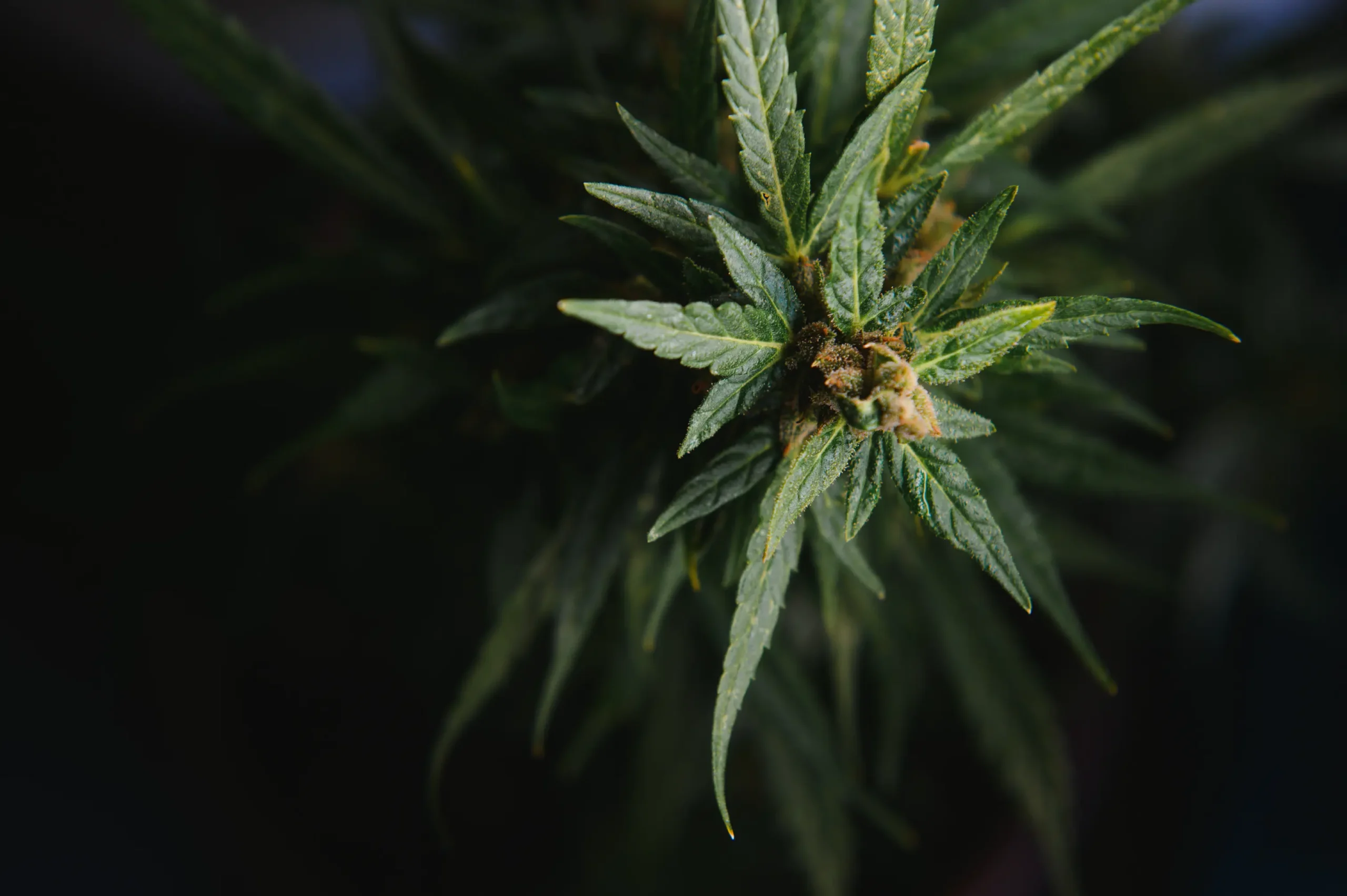
Ghost OG
Ghost OG is a quality-first cultivar. It can produce beautiful, resinous OG flower, but it asks the grower to solve two opposing problems in sequence: control the stretch early, then protect airflow around dense buds late. That single point explains why a useful profile of Ghost OG has to go beyond potency labels. The important questions are structural: how fast the plant occupies space, where it places flower mass, how its flowers react to humidity, how much training improves the final bud-to-leaf ratio, and which post-harvest mistakes erase the aroma that distinguishes the cultivar.
The available strain record is not perfectly clean. A selected OG Kush phenotype or clone line; exact historical parentage follows the broader OG Kush lineage debate. For growers, that uncertainty matters because a name that circulates through different clone lines or reproductions can produce real variation in stretch, finish time, aroma intensity and cannabinoid numbers. The most responsible way to use the data is therefore to treat the figures in this guide as working ranges and then read the actual plant in front of you.
What remains consistent is the practical identity: classic OG architecture with longer branch spacing than a squat indica, strong upward drive, relatively narrow branch angles and a need for deliberate support as flowers gain weight. Its flowers are best described as dense, glassy, resin-heavy flowers with swollen calyxes and an excellent bud-to-leaf ratio when the canopy receives uniform light. A successful run is less about forcing a generic recipe onto the plant and more about matching irrigation, canopy density, support, light distribution and harvest timing to those traits. This profile keeps that cultivation behavior, bud quality and flavor preservation at the center.
Strain Features
| Feature | Details |
|---|---|
| Genetic Profile | Indica-leaning hybrid / OG Kush cut |
| Lineage | A selected OG Kush phenotype or clone line; exact historical parentage follows the broader OG Kush lineage debate |
| THC | Often reported around the high teens to mid-20s depending on batch |
| CBD | Usually trace |
| Flowering Time | About 8–9 weeks indoors |
| Outdoor Finish | Early October is a common target in warm, dry finishing climates |
| Yield | Moderate; premium flower quality is more realistic than extreme biomass unless the canopy is carefully trained |
| Plant Height | Medium to tall with notable early-flower stretch |
| Grow Difficulty | Moderate to advanced |
| Aroma & Flavor | Bright citrus peel, pine resin, damp earth, fuel, Kush spice and a faint floral sweetness |
| Dominant Terpenes | Myrcene, Limonene, β-Caryophyllene |
| Primary Grow Risk | overstretch combined with late-flower density: the grow can begin as a height problem and finish as an airflow problem |
| Best Time of Use | late afternoon to evening |
| Best Grow Approach | early topping or bending, a support net before flip, and conservative lower cleanup after stretch; avoid crushing stems late when branches are already carrying resinous flowers |
The table is a practical synthesis rather than a certificate. The most reliable cultivation anchors are the plant's classic OG architecture with longer branch spacing than a squat indica, strong upward drive, relatively narrow branch angles and a need for deliberate support as flowers gain weight, its flowering behavior (moderate to high; the plant can gain substantial vertical space during the transition and benefits from being flowered before the room looks full), and the primary risk of overstretch combined with late-flower density: the grow can begin as a height problem and finish as an airflow problem. THC and yield values should always be read as phenotype- and environment-dependent ranges.
Genetic Lineage
The lineage most useful for identifying Ghost OG is A selected OG Kush phenotype or clone line; exact historical parentage follows the broader OG Kush lineage debate. Cannabis naming is not a formal cultivar-registration system, so the same commercial name can sometimes survive after genetics drift, or two unrelated lines can acquire a similar label. That is especially common in OG-derived families and older clone culture. For that reason, genetic lineage should be treated as a map of expected traits, not as proof that every flower sold under the name is genetically identical.
Ghost OG is better understood as a selected OG Kush cut than as a neatly documented two-parent hybrid. That makes phenotype language important. Growers who acquire a true or close Ghost-type cut generally describe the same family of traits: medium-to-tall OG structure, a substantial early stretch, citrus-pine-fuel aroma, swollen calyxes and greasy resin. Seed reproductions sold under the name may move away from that narrow cut identity, so morphology and aroma are useful confirmation tools.
The expected phenotype therefore makes sense: classic OG architecture with longer branch spacing than a squat indica, strong upward drive, relatively narrow branch angles and a need for deliberate support as flowers gain weight. The transition to flowering is characterized by moderate to high; the plant can gain substantial vertical space during the transition and benefits from being flowered before the room looks full. These genetic tendencies should guide plant spacing from the beginning. If a grower waits until flowers are already forming to decide how much horizontal area the plant needs, the corrective work becomes harder and usually costs either light efficiency or airflow.
One more point is worth separating from lineage: chemical phenotype is not fixed by the strain name. THC, minor cannabinoids and terpene percentages shift with genotype, light level, environment, nutrition, harvest maturity and post-harvest handling. A useful grow guide should therefore explain what the plant tends to do without pretending that every harvested batch will reproduce a single laboratory number.
Effect Breakdown
The effect arc of Ghost OG is best described as a clear, calm cerebral lift at first, then a durable body relaxation that becomes heavier with dose without always turning mentally foggy. The first ten to twenty minutes matter because they reveal the cultivar's mental direction before the body side becomes fully established. Potent batches should be approached conservatively, especially by users who do not already know their tolerance.
The opening phase usually feels like pressure leaving the day. Mood loosens, mental noise softens and the high becomes noticeable without immediately erasing awareness.
At the peak, the body begins to catch up with the head. Shoulders drop, movement slows and the effect becomes more physically obvious. Higher doses can turn a comfortable evening strain into a couch-centered one.
The late phase explains why late afternoon to evening is the most natural window. Harvest timing can shift the balance. mostly cloudy with a small amber fraction to preserve the citrus-fuel balance; later harvest creates a heavier OG finish. This does not transform the genetics into a different strain, but it can change how much of the session feels bright versus physically heavy.
Common side effects of THC-rich flower still apply: dry mouth, dry eyes, temporary short-term memory disruption, dizziness and anxiety in susceptible users. A strain reputation for relaxation does not guarantee that a large dose will feel relaxing to every person.
Flavor & Aroma Profile
A properly grown and cured jar of Ghost OG should not smell like a generic cannabis mix. The core profile is Bright citrus peel, pine resin, damp earth, fuel, Kush spice and a faint floral sweetness. The first aroma released from an unopened bud usually comes from the most volatile top notes; breaking the flower open reveals the heavier resin, spice, earth and fuel components beneath them.
The most fragile part of the profile is the bright citrus layer. Lemon, lime and mint-like notes are easy to lose if the drying room runs warm or if direct airflow strips the outside of the buds too quickly.
On inhalation, the flavor should begin with the cleaner, higher notes and then widen. On exhale, the heavier base becomes more obvious. The target for this cultivar is to preserve the high citrus note and greasy fuel character, which disappear first when drying is too warm or too fast. That is why flavor quality has to be planned during flowering, harvest and drying rather than treated as something that magically appears in the curing jar.
Bud structure also changes sensory quality. Dense flowers retain moisture longer internally and can dry unevenly, while airy sativa flowers can lose moisture very fast if exposed to strong air movement. The correct drying strategy therefore follows the physical flower, not just a universal calendar.
A good cure does not create terpenes that were lost earlier. It allows remaining aromatic compounds, moisture and plant material to settle into a smoother, more integrated profile. The best sign of progress is not a louder jar every day; it is a cleaner separation between top note, middle note and finish when the bud is broken and consumed.
Dominant Terpenes
| Terpene | Aroma / Flavor Role | How It Fits This Strain |
|---|---|---|
| Myrcene | earthy, herbal and musky | supports the deeper body-oriented aromatic base and is frequently associated with relaxing cultivar profiles |
| Limonene | citrus peel and bright lemon | lifts the top of the aroma and often makes OG-type fuel or earth smell sharper and cleaner |
| β-Caryophyllene | black pepper, dry wood and warm spice | adds the peppery middle and is pharmacologically notable because it can interact with CB2 receptors |
Terpene labels should be read as dominant tendencies rather than guaranteed percentages. Laboratory profiles can differ among phenotypes and cultivation environments, and post-harvest handling can materially change what remains in the dried flower.
Myrcene: Earthy, herbal and musky. In Ghost OG, this terpene supports the deeper body-oriented aromatic base and is frequently associated with relaxing cultivar profiles. It should be interpreted as one contributor inside a multi-compound aroma rather than as a single molecule that explains the entire effect.
Limonene: Citrus peel and bright lemon. In Ghost OG, this terpene lifts the top of the aroma and often makes OG-type fuel or earth smell sharper and cleaner. It should be interpreted as one contributor inside a multi-compound aroma rather than as a single molecule that explains the entire effect.
β-Caryophyllene: Black pepper, dry wood and warm spice. In Ghost OG, this terpene adds the peppery middle and is pharmacologically notable because it can interact with CB2 receptors. It should be interpreted as one contributor inside a multi-compound aroma rather than as a single molecule that explains the entire effect.
Together, these compounds help explain why Ghost OG reads as Bright citrus peel, pine resin, damp earth, fuel, Kush spice and a faint floral sweetness. Minor terpenes can change the impression significantly, which is one reason two plants carrying the same name can smell related without smelling identical.
Indoor vs. Outdoor Growing
| Aspect | Indoor | Outdoor |
|---|---|---|
| Plant control | Best advantage is control over moderate to high; the plant can gain substantial vertical space during the transition and benefits from being flowered before the room looks full and final humidity. Training can be timed precisely. | Root freedom can increase size dramatically. Space and seasonal length become more important than tent height. |
| Flowering | About 8–9 weeks indoors | Early October is a common target in warm, dry finishing climates |
| Yield | Moderate; premium flower quality is more realistic than extreme biomass unless the canopy is carefully trained | Potentially larger individual plants when climate, root volume and finish weather are favorable. |
| Main risk | overstretch combined with late-flower density: the grow can begin as a height problem and finish as an airflow problem | Weather adds rain, dew, wind, pests and season length to the same genetic risks. |
| Training | early topping or bending, a support net before flip, and conservative lower cleanup after stretch; avoid crushing stems late when branches are already carrying resinous flowers | Earlier structural pruning and branch support are preferable to repeated late corrections. |
| Flavor potential | High when light, leaf temperature and dry-room conditions are controlled around preserve the high citrus note and greasy fuel character, which disappear first when drying is too warm or too fast. | Excellent under strong sun, but heat near harvest and wet autumn conditions can reduce aromatic quality. |
Indoors, the defining advantage is the ability to control the exact problem that most threatens Ghost OG: overstretch combined with late-flower density: the grow can begin as a height problem and finish as an airflow problem. A good indoor plan is therefore not simply 'more light.' It is balanced light, canopy depth, air movement, irrigation and temperature. Scientific indoor cannabis work has repeatedly shown that increasing usable light can raise inflorescence yield, but the extra biomass is valuable only when the environment can support it.
Outdoors, Ghost OG can use root volume and sunlight to become much larger than an indoor plant. That advantage changes the training goal from squeezing maximum canopy into a fixed footprint to building a stable architecture that can carry weather and flower weight. The practical finish window is Early October is a common target in warm, dry finishing climates, but growers should harvest by plant maturity and forecast rather than date alone.
Neither environment is automatically superior for flavor. Indoor cultivation offers repeatable temperatures and a controlled dry; outdoor cultivation can produce extraordinary aromatic depth when sun, root volume and healthy soil biology align. The better choice is the environment in which the grower can actually finish the plant without heat damage, disease or a rushed harvest.
Strain-Specific Grow Guidance
Solve height before density arrives
Ghost OG often begins with an OG stretch problem and ends with a dense-bud humidity problem. Flip early enough that the canopy still has headroom, and use bending or a screen to keep main leaders at similar height. Emergency late supercropping works, but it is a sign the architecture was decided too late.
Keep the center simple
OG plants can carry enough leaf and secondary growth to create a shaded center. Remove weak lower branches and inward-facing shoots after the stretch. The purpose is to improve light distribution and reduce leaf-on-leaf humidity, not to create a bare stem sculpture.
Feed for steady color, not maximum color
Use steady moderate feeding with careful attention to calcium and magnesium balance in inert media; avoid chasing dark-green leaves as a sign of health. In coco or other inert media, monitor calcium-magnesium balance and runoff, but avoid treating every pale lower leaf as a deficiency late in bloom. Natural maturation is not the same as starvation.
Protect resin from physical damage
Ghost-type flowers become very sticky. Add support before the branches fold, handle tops by the stem rather than squeezing the flower and keep oscillating fans from blasting directly at trichome-rich surfaces.
Cut when citrus and fuel are both present
mostly cloudy with a small amber fraction to preserve the citrus-fuel balance; later harvest creates a heavier OG finish. If the citrus top note is already fading on the live plant while amber trichomes are rapidly increasing, the harvest window is probably closing.
Light distribution
Research on indoor cannabis shows that flower yield responds strongly to usable light, and more recent work on inter-canopy lighting reinforces a practical grower lesson: lower flowers become better when they receive enough light. For a home grower, that does not require lights everywhere. It means building a canopy shallow enough that the productive zone is actually illuminated and removing sites that will remain permanently shaded.
Climate stability
Keep temperature and humidity changes predictable. The main cultivar-specific threat is overstretch combined with late-flower density: the grow can begin as a height problem and finish as an airflow problem. Large day-night humidity spikes are especially risky late in bloom because cooling air can raise relative humidity around flowers even when the room looked safe earlier. Measure near the canopy and inspect the plant itself.
What I would avoid
Build support before the flowers demand it
Avoid combining every training technique in one run. Ghost OG does not need topping, mainlining, repeated supercropping, heavy defoliation and late lollipopping all at once. Pick the techniques that solve its real architecture: early topping or bending, a support net before flip, and conservative lower cleanup after stretch; avoid crushing stems late when branches are already carrying resinous flowers. More intervention is not automatically more yield.
Stage-by-stage grow priorities
Vegetative stage: build a root system that can support the planned canopy and use training early. The plant's natural structure is classic OG architecture with longer branch spacing than a squat indica, strong upward drive, relatively narrow branch angles and a need for deliberate support as flowers gain weight. Keep leaves healthy but do not chase excessive dark green color. The key decision before flowering is whether the available horizontal and vertical space still matches the expected stretch.
Transition weeks 1-3: expect that it moderate to high; the plant can gain substantial vertical space during the transition and benefits from being flowered before the room looks full. Continue only low-stress positioning until branches begin to set. Keep irrigation responsive to rapidly changing plant demand. This is also the best time to identify weak interior shoots that will never become productive tops.
Mid flower: once stretch settles, stop restructuring the plant and protect flower-building conditions. The buds develop as dense, glassy, resin-heavy flowers with swollen calyxes and an excellent bud-to-leaf ratio when the canopy receives uniform light. Maintain clean airflow pathways, inspect leaf undersides and bud junctions, and support branches before they sag.
Late flower: the priority shifts from growth to preservation. Avoid large nutrient or irrigation swings. The main concern remains overstretch combined with late-flower density: the grow can begin as a height problem and finish as an airflow problem. Begin repeated trichome observations on representative upper and mid-canopy flowers rather than on sugar leaves, which can mature earlier.
Keeper traits in a Ghost-style plant
The keeper I would want is not simply the tallest or loudest plant. I would look for controlled but vigorous stretch, strong branch attachment, swollen calyxes, greasy resin and a clear citrus-fuel nose before harvest. A plant that produces beautiful top colas but weak interior flower may still be valuable, but it needs a training style built around a shallow canopy.
Avoiding the OG late-flower trap
The classic trap is that the room feels under control once stretch ends, so the grower relaxes canopy maintenance just as flowers begin creating a new airflow problem. I continue checking leaf overlap and bud spacing through mid flower. Small corrections made before the buds harden are much easier than trying to separate sticky, heavy colas in the final two weeks.
Resin preservation during harvest
Ghost OG can become extremely tacky. I cut branches long enough to handle by stem, avoid stacking fresh branches in piles and keep harvest bins from crushing the outer trichome layer. The difference may look minor at harvest, but rough handling can dull the visual frost and leave resin on gloves, trays and scissors instead of on the flower.
Weedth Bud Flavor Tips
For Ghost OG, the flavor objective is simple to state and difficult to execute: preserve the high citrus note and greasy fuel character, which disappear first when drying is too warm or too fast. Most aroma loss happens because the grower treats post-harvest as a waiting period instead of as the final stage of cultivation.
Harvest into a cool, dark handling area whenever possible. Do not leave cut branches under intense grow lights or in hot sun. Volatile aromatic compounds are most vulnerable when plant tissue is freshly cut and still warm. Handle branches by stems and avoid repeatedly squeezing sticky flowers to 'check the smell.'
Because the flowers are dense, whole-plant or larger-branch drying can slow the process and improve evenness when room humidity is controlled. The tradeoff is that a too-humid room can hold moisture inside thick tops for too long. Use airflow in the room, not directly on the buds, and separate exceptionally large colas if they are drying much slower than the rest.
A practical dry is usually measured in days, not hours. The exact number depends on flower density, branch size and climate, but the objective is a slow approach to stable internal moisture. Buds that become brittle in only a few days usually lost more aromatic top notes than buds that dried gradually under cool conditions.
Once the flowers are evenly dry enough for curing, place them in clean airtight containers without packing them tightly. Monitor internal humidity rather than guessing. Early curing is about equalizing moisture and releasing excess humidity safely. If a container smells sharply of ammonia, damp grass or fermentation, remove the flowers and correct the moisture problem immediately.
The first two to four weeks of cure should make Bright citrus peel, pine resin, damp earth, fuel, Kush spice and a faint floral sweetness easier to separate, not merely stronger. Continue curing longer if the smoke remains green or sharp. For this cultivar, a four-to-eight-week cure is a useful quality window, especially when the goal is flavor rather than immediate consumption.
Long-term storage should be cool, dark, airtight and stable. Repeated opening, warm rooms and transparent containers in sunlight accelerate aroma loss. Store larger harvests in several smaller containers so the entire batch is not exposed every time a small amount is removed.
Outdoor flower deserves the same discipline. Harvest after surface moisture has dried, inspect carefully for insects or damaged tissue, and move the material into the controlled drying space promptly. Sun-grown terpene intensity can be excellent, but it can also disappear quickly if the cut plant sits warm in a vehicle, shed or direct sunlight.
Weedth Bud Boost Tips
The highest-yield strategy for Ghost OG is not to chase a generic grams-per-watt target. It is to match productive flower sites to the structure the cultivar naturally wants to build. The plant is described as classic OG architecture with longer branch spacing than a squat indica, strong upward drive, relatively narrow branch angles and a need for deliberate support as flowers gain weight, so canopy design should amplify that strength rather than fight it.
Training priority: early topping or bending, a support net before flip, and conservative lower cleanup after stretch; avoid crushing stems late when branches are already carrying resinous flowers. A productive top should have its own light lane and enough air around it to finish cleanly. If two tops are touching before flowers have even swollen, the canopy is already too crowded for a quality-first run.
Root volume sets the ceiling for plant volume. Use a container large enough for the planned vegetative period and irrigation method. An undersized root zone can produce fast dry-backs, nutrient swings and premature lower-leaf decline just when flowers are trying to gain final mass.
Feeding strategy should follow the cultivar's response: steady moderate feeding with careful attention to calcium and magnesium balance in inert media; avoid chasing dark-green leaves as a sign of health. Increase nutrient concentration only when growth, irrigation frequency and leaf appearance show the plant is actually using it. Excess salts do not become extra bud; they become osmotic stress, leaf burn and unnecessary correction work.
Light is one of the most reliable yield levers, but only up to the point where the rest of the environment can support it. Scientific indoor studies have shown strong yield responses to higher PPFD. The practical lesson is to increase light gradually, maintain adequate CO2 from normal ventilation or controlled enrichment where legal and safely managed, and monitor leaf temperature and plant response instead of assuming the maximum fixture setting is automatically optimal.
Canopy uniformity matters because top flowers and shaded lower flowers can differ in density and chemistry. Lollipopping should remove sites that clearly will not receive useful light, while moderate defoliation can improve penetration. The goal is not a naked plant. Keep enough healthy leaf area to power flower growth.
Late support is a yield tool because a leaning branch changes light angle, rubs flowers together and can create stagnant contact points. Use trellis or soft ties before the final swelling phase.
Do not use late stress tricks as a substitute for good horticulture. Extended darkness, intentional drought, ice-water flushing and aggressive last-week pruning have weak or inconsistent evidence compared with fundamentals such as strong light, healthy roots, stable climate, correct harvest timing and a careful dry.
For outdoor plants, yield comes from early root establishment, full sun, branch architecture and a finish period long enough for maturity. The expected outdoor window is Early October is a common target in warm, dry finishing climates. If local autumn weather usually becomes wet before that point, a smaller protected plant may outperform a huge exposed plant because more of its flowers actually finish cleanly.
Medical Uses & Benefits
Users commonly select Ghost OG for relaxation, sleepiness and relief from physical tension. These are user-reported patterns, not strain-specific clinical indications. Cannabis research does not support treating a named cultivar as a standardized medicine in the same way as a tested pharmaceutical product, because cannabinoid and terpene composition can vary substantially between batches.
The heavy body profile is often described by consumers as useful for evening stress, pain perception and difficulty winding down. Higher doses are much more likely to impair coordination, reaction time and short-term memory.
The dominant terpene tendency includes Myrcene, Limonene, β-Caryophyllene. These molecules have interesting pharmacology in isolation, but it is not scientifically responsible to promise that the terpene list will create a specific therapeutic outcome in a person. Effects depend on dose, tolerance, route of administration and the complete chemical profile.
Anyone using cannabis for a medical condition should discuss it with a qualified healthcare professional, especially when taking medications, managing a psychiatric condition, or dealing with cardiovascular risk. Do not drive or operate machinery while impaired.
Ideal User Profile
The best match for Ghost OG is a user who wants a clear, calm cerebral lift at first, then a durable body relaxation that becomes heavier with dose without always turning mentally foggy and who is comfortable with THC-rich flower. The natural use window is late afternoon to evening, although experienced users may shift that depending on dose and individual response.
It suits quiet evenings, food, films, music and the transition toward sleep better than demanding daytime work. People who want a crisp, high-energy daytime strain may find the body weight excessive.
For growers, the ideal profile is equally specific. A beginner can succeed if they are willing to watch canopy space and humidity, but the cultivar rewards the grower who checks plants daily and adjusts based on structure rather than following a rigid week-by-week recipe.
Flavor-focused users should look for flower that clearly expresses Bright citrus peel, pine resin, damp earth, fuel, Kush spice and a faint floral sweetness. If the jar smells only of hay, dry earth or generic sweetness, the batch probably did not preserve the character described in this profile.
Grower Notes and Feedback
The most common successful observation is that Ghost OG becomes easier once the grower recognizes its real structural problem: overstretch combined with late-flower density: the grow can begin as a height problem and finish as an airflow problem. Runs that struggle usually do not fail because the genetics are inherently fragile. They fail because a small early architecture issue compounds during flowering.
Growers also report that the strain's flowering behavior matches its visual structure. It is moderate to high; the plant can gain substantial vertical space during the transition and benefits from being flowered before the room looks full. That means flip timing is one of the highest-value decisions in the entire run. A plant that looks slightly small at flip can become perfectly sized three weeks later; a plant that already fills the space may become impossible to manage.
Another recurring lesson is feeding restraint. steady moderate feeding with careful attention to calcium and magnesium balance in inert media; avoid chasing dark-green leaves as a sign of health. Experienced growers tend to prefer steady, readable growth over dark green foliage and maximum EC. The best-looking leaves are not always attached to the best-tasting flower.
The harvest lesson is equally consistent: mostly cloudy with a small amber fraction to preserve the citrus-fuel balance; later harvest creates a heavier OG finish. Waiting for calendar day 63 or day 70 without checking the plant can miss the preferred window in either direction. Trichomes, calyx swelling, pistils and aroma should agree before the plant is cut.
After drying, the batches that stand out are the ones that retained preserve the high citrus note and greasy fuel character, which disappear first when drying is too warm or too fast. That points back to a basic Weedth principle: bud quality is not only the genetics and it is not only the grow room. The dry and cure are part of the phenotype the user ultimately experiences.
Weedth Editor's Note
The point where this plant reveals itself
I judge Ghost OG by the moment the plant stops looking like a promising grow and starts looking like finished flower. For me, that turning point is when the architecture, aroma and trichome coverage finally agree. On this cultivar, I pay closest attention to overstretch combined with late-flower density: the grow can begin as a height problem and finish as an airflow problem because that is the issue most likely to separate an average run from a memorable one.
The first time I work with an OG-style plant, I assume it will stretch more than the label says. That conservative assumption saves me from emergency bending under the light. Once the stretch stops, my attention flips completely: I stop worrying about height and start protecting airflow around the resin-heavy tops.
On feeding, I stay conservative enough that I can still read the plant. The working tendency is steady moderate feeding with careful attention to calcium and magnesium balance in inert media; avoid chasing dark-green leaves as a sign of health. I do not want leaves so dark that late maturation has to fight through excess nitrogen. A controlled fade is not a failure when the buds are still swelling and the plant remains hydrated.
Flavor is where I become patient. My target is to preserve the high citrus note and greasy fuel character, which disappear first when drying is too warm or too fast. I keep the dry cool and slow, I do not point fans at the buds and I handle the flowers by the stems. I would rather wait another week for a clean cure than smoke a powerful bud that tastes unfinished.
If I were running Ghost OG a second time, I would make the same three decisions earlier: finalize the canopy before the flip, install support before it looks necessary, and decide my preferred harvest effect before amber trichomes begin increasing quickly. Those small choices make the entire second half of the grow calmer.
When it is finished well, the reward is clear: Bright citrus peel, pine resin, damp earth, fuel, Kush spice and a faint floral sweetness, a structure that matches the genetic family, and an effect that develops as a clear, calm cerebral lift at first, then a durable body relaxation that becomes heavier with dose without always turning mentally foggy. That combination is why I think the strain earns a place in a serious grower's rotation rather than being remembered only for a name or THC number.
Weedth Score
Growing Experience 8.6/10 Rewarding once overstretch combined with late-flower density: the grow can begin as a height problem and finish as an airflow problem is planned for rather than corrected late.
Bud Structure & Visual Appeal 9.3/10 Dense, glassy, resin-heavy flowers with swollen calyxes and an excellent bud-to-leaf ratio when the canopy receives uniform light with strong cultivar-specific bag appeal.
Aroma Complexity 9.2/10 Layered profile of Bright citrus peel, pine resin, damp earth, fuel, Kush spice and a faint floral sweetness.
Flavor & Smoothness 9.1/10 Excellent when the grower manages to preserve the high citrus note and greasy fuel character, which disappear first when drying is too warm or too fast.
Effects & High Experience 9.2/10 Distinct progression: a clear, calm cerebral lift at first, then a durable body relaxation that becomes heavier with dose without always turning mentally foggy.
Overall Satisfaction & Recommendation 9.1/10 A strong cultivar for growers who value phenotype character, flower quality and a deliberate finish.
Personal closer: I would grow Ghost OG again for the combination of structure, aroma and a clearly defined harvest personality. It rewards attention without requiring gimmicks.
FAQ
Is Ghost OG easy to grow?
I would rate it moderate to advanced. The plant itself is reasonably vigorous, but the grower needs to manage overstretch combined with late-flower density: the grow can begin as a height problem and finish as an airflow problem. Success depends more on canopy and environmental decisions than on an exotic feeding program.
How long does Ghost OG flower?
A practical indoor range is About 8–9 weeks indoors. Treat that as a checkpoint, not a fixed harvest date. Trichome maturity, calyx swelling and aroma should confirm readiness.
How much does Ghost OG stretch?
The expected behavior is that it moderate to high; the plant can gain substantial vertical space during the transition and benefits from being flowered before the room looks full. Indoor growers should plan the final height before switching to flowering and leave enough vertical buffer for both plant growth and safe light distance.
What training works best for Ghost OG?
The most useful approach is early topping or bending, a support net before flip, and conservative lower cleanup after stretch; avoid crushing stems late when branches are already carrying resinous flowers. The objective is an even, breathable canopy with productive tops, not the maximum possible number of branches.
What is the biggest cultivation mistake with Ghost OG?
The biggest recurring mistake is overstretch combined with late-flower density: the grow can begin as a height problem and finish as an airflow problem. That problem can reduce yield, flavor and flower health at the same time, which is why it deserves attention before late bloom.
What should Ghost OG smell like?
Well-preserved flower should show Bright citrus peel, pine resin, damp earth, fuel, Kush spice and a faint floral sweetness. A flat hay smell or one-dimensional earth usually indicates immature flower, a poor dry, weak storage or a phenotype that is far from the expected expression.
When should I harvest Ghost OG for the best effect?
For the profile described here, mostly cloudy with a small amber fraction to preserve the citrus-fuel balance; later harvest creates a heavier OG finish. Harvest preference is subjective, so experienced growers may take test branches at different maturity points and compare them after cure.
Does Ghost OG need heavy nutrients?
Its general feeding behavior is: steady moderate feeding with careful attention to calcium and magnesium balance in inert media; avoid chasing dark-green leaves as a sign of health. Start moderate and increase only when plant growth and irrigation demand justify it. More fertilizer is not a direct route to more flower.
Is Ghost OG better indoors or outdoors?
Both can work. Indoors gives better control over overstretch combined with late-flower density: the grow can begin as a height problem and finish as an airflow problem; outdoors can produce larger plants if the season lasts until Early October is a common target in warm, dry finishing climates and the finish remains dry enough.
How long should Ghost OG cure?
A minimum of a few weeks is sensible, but four to eight weeks often gives a better view of the strain's full aromatic structure. Cure cannot recover terpenes that were lost during a hot or rushed dry.
Similar Strains
OG Kush: Shared og-family structure, pine-fuel-earth aroma and a similar head-to-body effect progression. It is not the same experience, but it gives a useful comparison point for growers or users trying to understand what makes Ghost OG distinct.
Tahoe OG: Og lineage, strong resin, pine-fuel flavor and a heavier evening effect. It is not the same experience, but it gives a useful comparison point for growers or users trying to understand what makes Ghost OG distinct.
Headband: Og-derived fuel, strong hybrid effects and a similar need for support and airflow. It is not the same experience, but it gives a useful comparison point for growers or users trying to understand what makes Ghost OG distinct.
Fire OG: Dense og flowers, sharp citrus-fuel aroma and a powerful evening profile. It is not the same experience, but it gives a useful comparison point for growers or users trying to understand what makes Ghost OG distinct.
Skywalker OG: Og-style resin and body relaxation with dense flowers that prefer a controlled climate. It is not the same experience, but it gives a useful comparison point for growers or users trying to understand what makes Ghost OG distinct.
Share this article
A quick overview of the topics covered in this article.
Follow us
Latest articles
September 9, 2026
September 9, 2026

September 9, 2026