

Ghost Train Haze
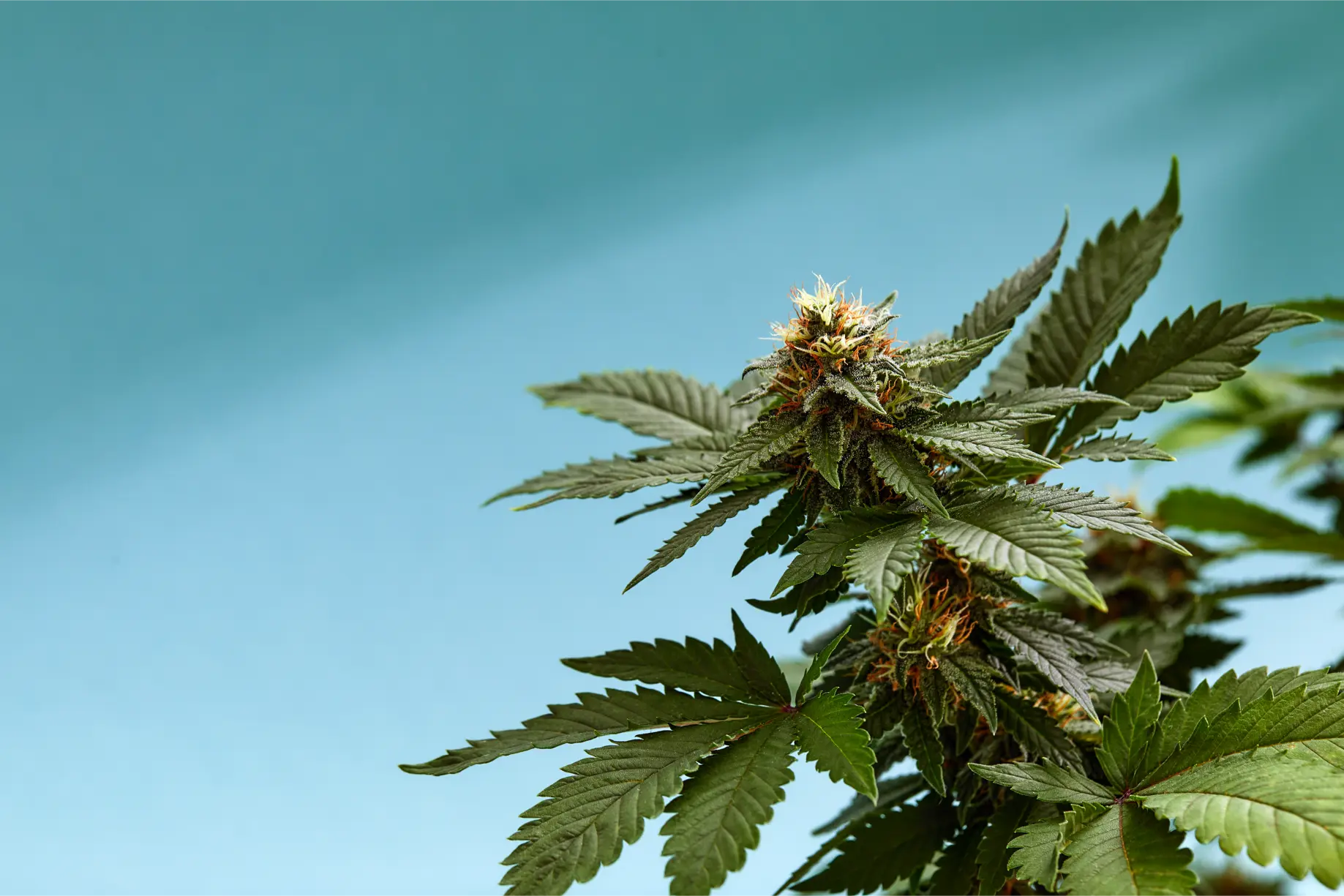
Ghost Train Haze is a sativa-dominant cultivar that combines two traits growers do not always expect to see together: aggressive Haze-style stretch and unusually dense, resin-heavy flowers. That combination makes it more complicated than a simple tall sativa. The plant needs vertical control early, then physical spacing and humidity control later when the flowering branches become much heavier than their early structure suggests.
The lineage is commonly described as Ghost OG crossed with Neville's Wreck. That pairing explains the contrast. Ghost OG contributes dense resin, fuel, pine, and structural weight, while the Haze-heavy side contributes longer transition growth, sour citrus, floral herbs, and a bright cerebral effect. Modern examples do not all finish at the same speed. Modern descriptions often place the crop around nine to eleven weeks, while some observed plants remain active near twelve weeks or beyond.
The central cultivation question is therefore: how can a grower convert Ghost Train Haze's long stretch into useful flowering surface without ending up with a tall, crowded canopy full of dense buds that mature unevenly? The solution is early topping, wide branch placement, a screen that remains open, careful lower-site selection, and patience through a flower cycle that can outlast ordinary hybrids.
Feeding reports also need restraint. Vigorous plants can drink and feed strongly, especially during transition, but a Haze reputation should not become permission to push a fixed high-strength recipe. Root volume, dryback, light level, and actual water use should decide whether the plant needs more.
Flavor quality is built around sour lemon, lime, sage-like herbs, floral notes, pine, fuel, and dry earth. The brighter citrus and floral layer is more fragile than the underlying resin and fuel. A crop can look frosty and smell strong while still losing much of its best identity to heat, late stress, or an aggressive dry.
Strain Features
| Feature | Details |
|---|---|
| Strain Type | Sativa-dominant Haze and OG hybrid |
| Genetic Profile | Ghost OG x Neville's Wreck |
| THC | Commonly strong to very strong; exact potency varies by batch |
| CBD | Usually low |
| Dominant Terpenes | Terpinolene, limonene, myrcene, beta-caryophyllene, and pinene commonly recur |
| Flavor / Aroma | Sour lemon, lime, sage-like herbs, floral notes, pine, fuel, earth |
| Effect Character | Focused and energetic at lower doses, increasingly hazy, euphoric, and intense as dose rises |
| Flowering Time | Often about 9 to 11 weeks; some phenotypes and modern lines may run close to 12 weeks or longer |
| Grow Difficulty | Moderate to advanced |
| Stretch | Strong; some plants continue meaningful extension beyond the first two weeks |
| Plant Architecture | Vigorous, tall, branchy, Haze-influenced with strong laterals |
| Bud Density | Denser than many classic sativas |
| Resin Production | High |
| Training Compatibility | Topping, LST, SCROG, selective pruning, branch support |
| Root Demand | Large vigorous plants benefit from enough root volume for the long cycle |
| Humidity Risk | Moderate because dense buds develop on a long-flowering plant |
| Odor Intensity | Strong in late flower |
| Best Time of Use | Daytime to early evening for experienced users |
Genetic Lineage
Ghost Train Haze combines Ghost OG with Neville's Wreck, placing it firmly between the OG and Haze worlds. The genetic story is useful because the plant expresses both sides visibly rather than behaving like a generic sativa hybrid.
The OG side contributes dense resinous flowers, pungent fuel, pine, and heavier physical weight on the branches. The Haze-heavy side contributes strong vertical movement, longer flowering, bright citrus-herbal aroma, and a more cerebral experience.
This combination is one reason flowering estimates vary. A faster OG-leaning expression may finish earlier, while a Haze-dominant plant can continue producing fresh pistils and calyx growth well beyond the point where a normal nine-week hybrid would be harvested.
Modern seed-derived versions should not automatically be treated as identical to an older selected cut. Height, flowering duration, terpene order, and exact bud shape can all shift while the core Ghost Train Haze identity remains recognizable.
For keeper selection, the best plant should preserve the sour-citrus Haze character while maintaining enough branch control and flower density to justify its room time. A very long plant should earn the extra weeks through better aroma, effect, or mature flower quality.
Effect Breakdown
At a restrained dose, Ghost Train Haze is commonly described as focused, energetic, and mentally bright. The user may feel more interested in detailed tasks, conversation, music, or movement without immediate body heaviness.
The strain becomes less predictable as dose rises. The clear headspace can shift into strong euphoria, sensory intensity, and a more obviously hazy mental state. Short-term memory may become less reliable even while the user still feels energetic.
This dose progression is central to the cultivar. A small amount can feel functional to an experienced user, while a larger amount can become far too intense for the same activity.
Physical relaxation exists but usually remains secondary to the mental effect until later. The OG side can add body weight as the session develops, especially in stronger or later-harvested flower.
Dry mouth and dry eyes are common. Anxiety, racing thoughts, or dizziness are more relevant concerns than with many heavy indicas because the high can remain mentally active.
The practical use window is therefore daytime or early evening for experienced users who already know how they respond to strong sativa-dominant THC. It is not a reliable productivity strain at any dose for every person.
The strain's reputation for focus is most credible at lower doses. As the amount increases, the same mental energy can shift toward distraction, sensory overload, or racing thought. This dose curve explains why experienced users can describe the cultivar as both productive and overwhelming.
Tolerance also changes the balance between Haze stimulation and OG body weight. A frequent user may notice the physical grounding later, while a lower-tolerance user can feel the full intensity much sooner.
Flavor & Aroma Profile
Ghost Train Haze should smell bright before it smells heavy. Sour lemon, lime peel, floral herbs, and sage-like green notes sit over pine, fuel, and dry earth.
Some phenotypes become more diesel-heavy, while others emphasize citrus and flowers. The best examples keep enough contrast that the jar does not collapse into ordinary fuel or ordinary Haze.
Grinding the bud often releases a sharper resinous side. Pine and gas become more obvious, while the citrus takes on a sour rind quality rather than candy sweetness.
On inhale, lemon-lime and herbs usually lead. The middle becomes floral or piney. The exhale can bring dry earth, fuel, pepper, and a slightly bitter citrus finish.
Because the flowers can become dense, poor drying can hide inside an otherwise loud jar. A strong fuel smell does not prove that the internal moisture moved evenly or that the brighter terpenes were preserved.
The highest-quality flower keeps a clean sour-citrus entrance through cure. When heat or excessive airflow strips that layer, the result can remain potent and resinous but lose much of the cultivar's complexity.
Dominant Terpenes
| Terpene | Aroma Role | Cultivar Relevance | Scientific Caution |
|---|---|---|---|
| Terpinolene | Herbal, floral, fresh pine, light fruit | Frequently associated with the cultivar's Haze-like brightness | Not dominant in every modern sample |
| Limonene | Lemon and lime peel | Supports the defining sour citrus layer | Does not guarantee stimulation or mood elevation |
| Myrcene | Earth, herbs, musk | Adds body to the earthy background | Does not independently determine sedation |
| Beta-caryophyllene | Pepper, dry spice, wood | Fits the peppery fuel finish | CB2 activity does not prove strain-specific medical benefits |
| Pinene | Pine resin | Can reinforce the Ghost OG side and fresh conifer edge | Concentration varies by phenotype and batch |
Ghost Train Haze terpene rankings vary across modern flower. The most defensible sensory center is sour citrus, floral herbs, pine, earth, and fuel rather than one universal chemical order.
The energetic or anxious effect should not be assigned to terpinolene or limonene alone. Cannabinoid concentration, dose, tolerance, and the entire volatile mixture influence the experience.
Indoor vs. Outdoor Growing
| Decision Point | Indoor | Outdoor |
|---|---|---|
| Primary Challenge | Managing strong stretch, long room time, and dense late buds in the same plant | Providing enough season length without exposing dense flowers to wet late weather |
| Stretch | Strong and often prolonged | Vertical freedom helps, but final branch weight still needs support |
| Training | Topping, LST, open SCROG, selective lower cleanup | Early topping and wide branch spacing are usually enough |
| Flowering Duration | Longer than ordinary hybrids; phenotype tracking matters | Requires a long warm autumn or protected finish |
| Bud Density | Dense for a sativa, increasing internal humidity risk | Rain and dew can become significant late |
| Root Volume | Generous root space improves long-cycle stability | Large containers or ground culture can support very large plants |
| Flavor Control | Stable late temperature protects sour citrus and floral notes | Hot dry harvest weather can flatten brightness |
| Best Fit | Growers comfortable with Haze stretch and patient finishing | Warm long-season climates with a relatively dry finish |
Indoor Ghost Train Haze is a vertical planning exercise during transition and a humidity planning exercise later. The room should be designed for the mature plant, not the compact seedling.
A screen is especially useful when it spreads the stretch sideways without encouraging a completely packed canopy. Dense flowers need open lanes between the leaders by the time swelling begins.
Outdoors, the plant can become very large and productive when root volume and season length are available. The risk is that a long-flowering phenotype may still be active when autumn humidity increases.
A greenhouse can extend the season but should not become a sealed humid shelter. Strong ventilation remains necessary because the buds are denser than classic tropical sativa flowers.
Strain-Specific Grow Guidance
Flip Before the Screen Looks Completely Full
Ghost Train Haze can continue significant stretch after the light cycle changes. A screen filled completely in veg is likely to become overcrowded once the Haze side expresses itself.
Leave deliberate open space and use the transition to finish the canopy. The exact reserve should be adjusted after the first run because phenotypes differ.
Top Early Enough for the New Leaders to Become Structural Branches
One or two early toppings can create a useful multi-leader plant. The final high-stress cut should happen early enough that the branches recover before the strongest stretch.
Once the framework exists, use LST to direct height rather than repeatedly cutting a plant that still has a long cycle ahead.
Expect Stretch to Continue After the First Two Weeks
Grow diaries repeatedly show Ghost Train Haze continuing substantial extension deeper into early flower than ordinary hybrids. Keep ties adjustable and light height flexible.
If a branch becomes dominant, lower it gradually. Emergency late supercropping can create weak points just before heavy dense buds begin adding leverage.
Keep the Screen Open Enough to Reach the Center
Long-flowering plants require months of inspection. A completely filled net may look efficient but becomes difficult when dead leaves, humidity pockets, or support problems appear deep in the canopy.
Leave access routes wherever possible. A slightly less full screen can deliver more usable premium flower because the crop remains serviceable.
Remove Lower Sites After the Stretch Reveals Their Real Potential
Do not strip every lower branch before transition because some vigorous laterals may rise into useful light. Wait until the main stretch shows which shoots remain trapped.
Remove weak interior sites and preserve strong edge branches that reach the canopy or receive side light.
Feed Strong Growth Only When the Roots and Water Use Support It
Ghost Train Haze can be a vigorous, thirsty plant, but aggressive feeding should follow consumption rather than reputation.
If the pot remains wet, tips burn, or foliage becomes excessively dark, stronger nutrition will not create faster Haze flowers. Root oxygen and environmental demand must come first.
Use Enough Root Volume for a Long, High-Metabolism Cycle
A large plant in too little root space can become difficult late, with rapid drybacks followed by high salt concentration. This instability is especially costly on a plant with several flowering weeks remaining.
Choose container volume based on intended canopy size. A wide trained Ghost Train Haze needs a root system capable of supporting that branch mass for the full finish.
Do Not Mistake Slow Early Flower Stacking for a Problem
Haze-influenced plants may spend more time stretching and initiating flowers before obvious bud mass appears. This can make the plant seem 'behind' compared with a faster hybrid.
Do not respond automatically with more bloom nutrients. If the plant is healthy and developing normally, the timing can simply be genetic.
Support the OG-Influenced Density Before Late Swelling
Ghost Train Haze is unusual because long sativa-style branches can end up carrying surprisingly dense flowers. A second support net or soft ties can become valuable late.
Support should maintain separation. Pulling several heavy Haze-OG colas together creates a moisture pocket and blocks side light.
Watch Heat at the Tallest Tops
The highest branches may approach the fixture during the long stretch, creating a warmer microclimate around the most aromatic flower.
If top flowers begin losing citrus, bleaching, or producing excessive new growth from heat, reduce the local stress instead of forcing maximum intensity through the finish.
Harvest Only When the Haze Flower Has Actually Finished
Flowering estimates range widely enough that a fixed day is unreliable. Some plants may be mature near ten weeks while others clearly need more time.
Use full calyx development, mature trichomes on the flower itself, slowing fresh pistils, and a complete sour-citrus-floral aroma. The grower's patience is part of this cultivar's quality.
Use the First Run to Measure Stretch Instead of Guessing It
Ghost Train Haze is one of the cultivars where a stretch percentage from a generic chart is less useful than the grower's own clone data. Record flip height, final canopy height, and how many days the main leaders continued moving. Those three observations make the next cycle far more predictable.
If one phenotype continues rising after its sisters have settled, treat that as keeper information. A taller plant is not automatically worse, but its extra room cost should be justified by flavor, resin, yield, or effect.
Do Not Let Long Flowering Turn Into Permanent Intervention
A plant that flowers for ten or eleven weeks does not need ten or eleven weeks of constant pruning. Complete major structural work during veg and transition, then shift toward maintenance.
Build support before the flowers demand it
Late flower should be dominated by support, irrigation observation, humidity control, and maturity assessment. Repeated branch bending or heavy defoliation around dense resinous buds adds handling risk without creating new productive structure.
The Productive Canopy Can Be Deeper Than a Compact Indica's
Long Haze-influenced branches can carry useful flowers farther down the stem when the leaders are well separated. A rigid lollipop line can remove productive sites if side light reaches them.
The correct lower cleanup should be based on actual light exposure after stretch. Remove permanently shaded shoots while preserving mid-level flower that receives a direct light path.
Watch the Difference Between Healthy Haze Foxtailing and Heat Stress
Some Haze-dominant plants continue producing fresh calyx stacks late in flower, creating a naturally extended shape. New growth alone does not prove that the canopy is too hot.
Heat-related growth is more concerning when it appears mainly on the hottest tops together with bleaching, leaf stress, loss of aroma, or unusually rapid pistil renewal. Compare the whole canopy before deciding the flower shape is a problem.
Long Cycles Need Stable Environmental Capacity
A room that barely controls humidity in week five may struggle more when the flowers become denser and the nights remain humid later in bloom. Dehumidification and air movement should be sized for the mature crop rather than the early canopy.
This is especially relevant because the plant combines long duration with denser flower than many classic sativas. The last weeks can carry more moisture load than the first half of bloom suggests.
Drying Capacity Should Match the Large Trained Canopy
A single well-trained plant can occupy a large footprint and produce a substantial wet harvest. The drying space should be ready before the plant is cut so branches do not end up stacked together after months of careful airflow management.
If the harvest includes both dense top flowers and lighter lower branches, their drying speed may differ. Separate or monitor them rather than forcing every branch through one identical timeline.
Weedth Bud Flavor Tips
Ghost Train Haze's sour citrus and floral herb layer is more fragile than its earth and fuel. Post-harvest strategy should protect brightness rather than simply preserve potency.
Do not harvest because exposed sugar leaves look mature. The flower itself should have completed swelling and aromatic development.
Dense tops may dry more slowly than the sativa appearance suggests. Separate oversized branches when necessary so internal moisture can leave evenly.
Avoid hot drying and direct fan air. Both strip lime, lemon, and floral notes while leaving the heavier resin smell behind.
During cure, the sour citrus should become cleaner and less green. Pine and fuel can deepen without smothering the herbal-floral layer.
Keep phenotypes separate. A diesel-heavy plant and a terpinolene-forward citrus plant may need different keeper decisions even if both are valid Ghost Train Haze expressions.
Store cool, dark, and airtight. Repeated oxygen and heat exposure flatten the bright Haze top notes quickly.
A sour-lemon phenotype should be evaluated after several weeks of cure, not only during late flower. The best plant keeps its citrus identity after the fresh green moisture has disappeared.
Very dense top flowers can hold more moisture than narrower lower buds. If their drying rates diverge, separate them into different hanging zones or container batches rather than risking an uneven cure.
Handle mature flowers as little as possible. The cultivar can carry a thick trichome layer, and repeated late repositioning leaves resin on hands and support material instead of on the final bud.
Weedth Bud Boost Tips
The biggest yield improvement is using stretch deliberately. Convert vertical extension into several evenly spaced flowering lanes rather than fighting every centimeter of height.
Do not maximize branch count. Dense late buds require space, and weak shaded sites add trim labor without premium quality.
A strong root system supports the long finish better than a late nutrient push. Root capacity and irrigation stability are major yield variables here.
Support long leaders before the flowers become too sticky to reposition safely.
Outdoors, season fit determines usable yield. A huge plant that cannot finish before wet weather is not a successful high-yield plant.
A phenotype that finishes slightly earlier while preserving the same sour-citrus Haze identity may be more efficient than the longest plant in the group.
Ghost Train Haze quality yield is mature dense resinous flower produced from controlled stretch, not the tallest canopy or the largest number of tops.
For a repeat clone run, compare premium flower per week of flowering rather than total grams alone. A slightly faster phenotype can be more valuable if it preserves the same sour-citrus identity and dense resin.
If the mid-canopy remains soft while the tops become excellent, reduce canopy depth on the next cycle before increasing light intensity. Structure is usually the limiting factor.
Outdoor plants should be selected partly for finish time. A very long phenotype can become less useful in a climate where late autumn humidity consistently threatens the final weeks.
Medical Uses & Benefits
Ghost Train Haze is commonly chosen by users seeking mood elevation, energy, focus, appetite support, and pain distraction. These are user-reported patterns rather than clinical proof that the cultivar treats a condition.
At lower doses, the bright cerebral effect may help some users feel more engaged with ordinary activity or less mentally preoccupied with discomfort.
The same stimulating profile can be a limitation. People prone to anxiety, racing thoughts, or panic may find larger doses uncomfortable.
Appetite can increase even though the strain feels energetic, which is one reason some users choose it earlier in the day rather than near bedtime.
Most flower is THC-dominant with little CBD and should not be treated as a low-intoxication medical option.
Anyone using cannabis for a diagnosed condition or alongside prescription medications should consult a qualified healthcare professional.
Ideal User Profile
Ghost Train Haze suits experienced sativa users who want strong sour-citrus Haze character with denser OG-style flower.
It fits creative work, music, social activity, outdoor movement, and focused hobbies at carefully controlled doses.
Flavor preference should lean toward lemon, lime, herbs, flowers, pine, and fuel rather than dessert sweetness.
For growers, it suits people with enough height control, root volume, and patience for a long flowering cycle.
It is a poor choice for a low tent, a fixed eight-week schedule, or a humid outdoor season that ends early.
Grower Notes and Feedback
Grow diaries repeatedly describe the stretch as substantial and sometimes surprisingly prolonged. This should be treated as one of the cultivar's strongest practical traits.
The plant can appear slower to build flower mass than hybrids while still being healthy. Haze-influenced timing often delays obvious stacking.
Dense trichome-rich buds are a consistent positive trait and separate Ghost Train Haze from airier old-school sativas.
Flowering time is genuinely variable. Modern descriptions range from roughly nine weeks to eleven or twelve, and actual clone behavior should take priority.
Sour lemon, lime, herbs, flowers, pine, fuel, and earth are stable aromatic markers even when terpene rankings change.
The best second run comes from recording flip height, final height, stretch duration, and the week when flower stacking accelerates. Those observations make the plant much easier to schedule.
Growers often report that the plant drinks heavily during strong stretch and then changes rhythm after the structure settles. Tracking dryback across those stages can prevent both late overwatering and unnecessary nutrient escalation.
Another recurring lesson is that the cultivar can look deceptively unfinished in week eight while still being completely normal. White pistils and active calyx growth late in the cycle should be interpreted in the context of phenotype rather than compared with a faster hybrid.
Phenotype notes should include the week when sour citrus becomes dominant over green plant aroma. That sensory milestone can be more useful for a repeat grow than a generic flowering estimate because it shows when the selected plant begins entering its real quality window.
A clone that repeatedly finishes with strong lower-canopy quality may justify keeping a deeper productive zone. A clone whose best character is concentrated only at the top should be simplified on the next run.
Weedth Editor's Note
How I would judge the finished flower
I would never flower Ghost Train Haze with a screen that already looked finished. I would leave obvious empty space and trust the stretch to earn it.
The second thing I would protect is root stability. A long vigorous plant in too little medium can turn the last month into constant irrigation correction, which is the opposite of the stable finish the flower needs.
I would not panic if bud stacking looked slow early. If the plant remained healthy, I would let the Haze timing play out rather than forcing stronger bloom inputs.
At harvest, I would wait for the sour citrus to smell complete and for the actual calyxes to finish. Frost alone would not convince me.
The keeper for me would be the phenotype that finishes with dense trichome-rich flower and a clear lemon-lime Haze profile without using so much room time that the structure becomes impractical.
I would use the first cycle to learn the plant's timeline rather than trying to force it into mine. Once I know when stretch really stops and when stacking accelerates, the second run becomes far more efficient.
I would also compare the cured tops with the cured mid-canopy. If the flavor is equally strong deeper in the plant, I would preserve that productive depth next time. If not, I would simplify the structure.
The cultivar is worth growing because it combines Haze effect with unusually dense flower. I would protect that difference instead of trying to make it behave like a faster, shorter hybrid.
Weedth Score
Growing Experience 7.4/10 Highly rewarding but strong stretch, long flowering, and dense late buds demand real planning.
Bud Structure & Visual Appeal 8.8/10 Dense, frosty flowers are unusually impressive for a Haze-dominant plant.
Aroma Complexity 9.1/10 Sour citrus, herbs, flowers, pine, fuel, and earth create a distinctive layered profile.
Flavor & Smoothness 8.8/10 Excellent when the bright Haze notes survive drying and cure.
Effects & High Experience 9.1/10 Strong, focused, energetic effects at lower doses can become intensely hazy as dose rises.
Overall Satisfaction & Recommendation 8.6/10 A standout long-cycle sativa hybrid for growers who can control stretch and wait for full maturity.
Personal closer: I would keep the Ghost Train Haze that gives me dense OG-like resin without losing the sour citrus and long clear Haze identity.
FAQ
What is Ghost Train Haze's lineage?
The most consistently reported lineage is Ghost OG crossed with Neville's Wreck.
How long does Ghost Train Haze flower?
Many modern plants finish around nine to eleven weeks, while some Haze-leaning expressions may run close to twelve weeks or longer.
How much does Ghost Train Haze stretch?
Strong stretch is normal and can continue deeper into early flower than ordinary hybrids.
Does Ghost Train Haze respond well to topping?
Yes. Early topping and LST are useful ways to convert height into a wider canopy.
Is SCROG good for Ghost Train Haze?
Yes, especially when the screen remains open and is not completely filled before the flip.
Why is my Ghost Train Haze slow to stack buds?
Haze-influenced plants can spend longer stretching and initiating flowers before obvious bud mass appears.
Is Ghost Train Haze a heavy feeder?
Vigorous plants can use substantial nutrition, but feeding should follow actual water use, root health, and leaf condition.
Does Ghost Train Haze need a large pot?
A large trained plant benefits from enough root volume to support a long flowering cycle and stable irrigation.
Is Ghost Train Haze prone to mold?
Dense flowers create moderate risk, particularly late in a long cycle or in humid outdoor conditions.
Does Ghost Train Haze need support?
Long branches can end up carrying dense heavy buds, so a second net or soft ties can help.
Why does Ghost Train Haze sometimes take 12 weeks?
Phenotype and line differences can push flowering beyond shorter published estimates. Harvest from maturity rather than a fixed calendar.
When should Ghost Train Haze be harvested?
Use calyx maturity, flower trichomes, slowing fresh pistils, and a complete sour-citrus-floral aroma.
Can Ghost Train Haze grow outdoors?
Yes in warm long-season climates with a dry enough finish.
Is Ghost Train Haze suitable for beginners?
A careful beginner can grow it, but strong stretch and long flowering make it better suited to growers with some canopy experience.
Is Ghost Train Haze good for daytime use?
Many experienced users describe lower doses as focused and energetic, while larger doses can become mentally intense.
Similar Strains
Super Silver Haze: Shares long Haze flowering and energetic effects, with a more incense-citrus profile.
Super Lemon Haze: A brighter lemon-focused Haze alternative with similarly strong stretch.
Headband: Adds more Diesel and OG body weight with a somewhat less Haze-dominant structure.
Jack Herer: A more manageable daytime sativa hybrid with pine-spice character.
Kali Mist: Offers an open long-flowering sativa structure with more floral spice and less OG density.
Sour Diesel: Shares sour fuel and energy, but usually with a different branch and terpene pattern.
Share this article
A quick overview of the topics covered in this article.
Follow us
Latest articles
September 9, 2026

September 9, 2026

September 9, 2026