
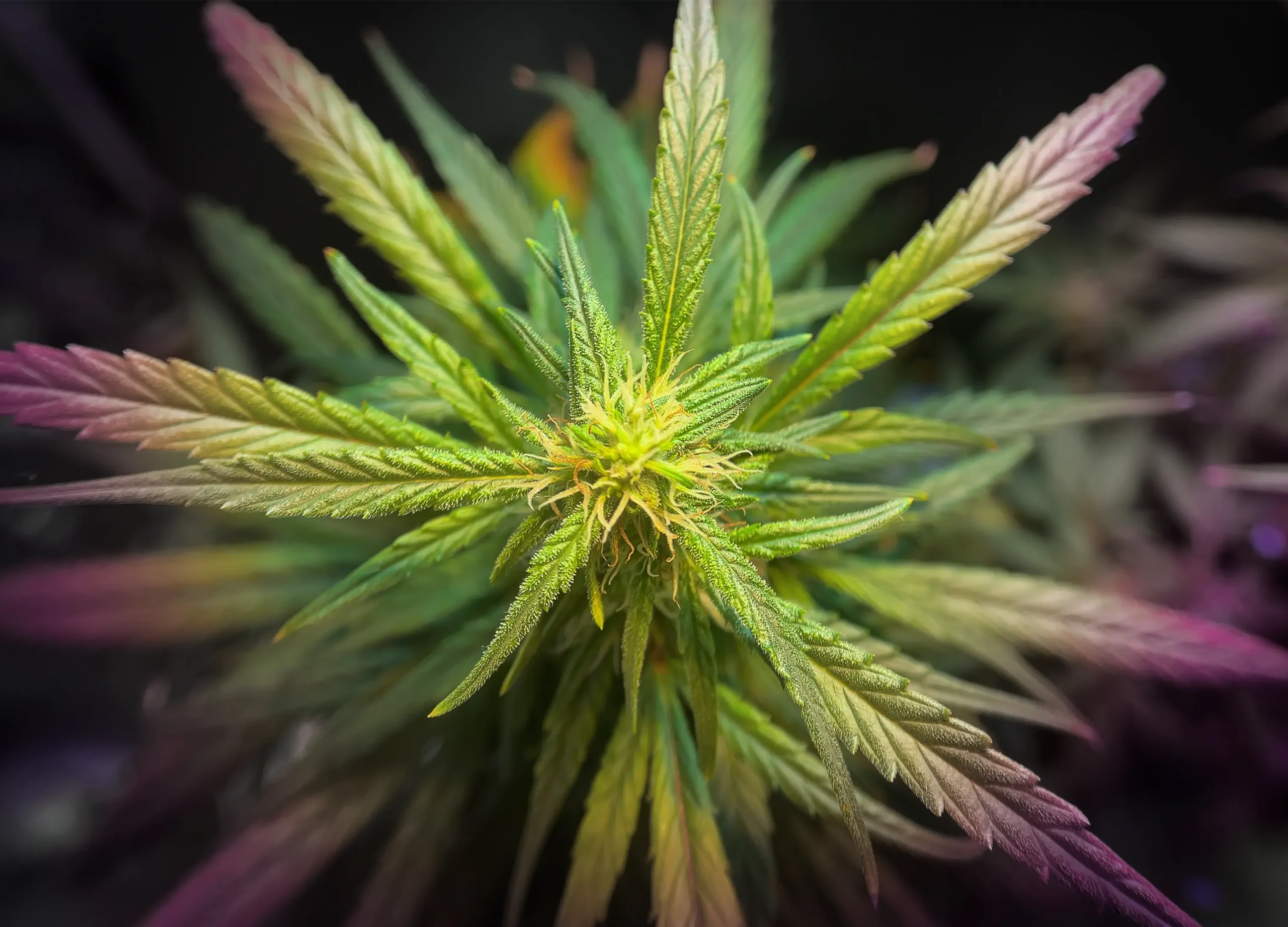
God’s Gift
God's Gift is compact in almost every sense that matters to a grower. The plant is usually short, the internodes stay relatively close, and the flowers form dense, sticky clusters rather than long spears. Its lineage, Granddaddy Purple crossed with OG Kush, explains the combination well: grape-dark sweetness and purple potential from one side, resin, citrus, wood and a heavier Kush body effect from the other.
That compactness is both the cultivar's convenience and its trap. A grower can look at a small plant and assume it needs more vegetative time, more tops, or more interior growth to make the space worthwhile. By late flowering, the same decisions can create a congested bush filled with dense buds that touch one another, receive uneven light and hold more moisture than the room average suggests. God's Gift rarely needs help becoming compact. It needs help remaining organized.
The central cultivation question is how to turn a short, low-stretch plant with smaller dense colas into a productive open canopy without over-vegging it, while preserving grape, citrus, hash and earthy Kush character through a fast finish. The answer is not extreme training. It is accurate plant count, early branch selection, modest topping where useful, and enough space around every mature flower for light and air.
God's Gift also illustrates why purple color should be treated as a phenotype trait rather than a goal. Some plants finish with striking blue-violet or plum tones, while others remain greener. The color can improve visual appeal, but it does not tell the grower whether the plant is mature, more potent, or better tasting. The best finished flower is the one that keeps the grape-citrus-hash profile intact and dries evenly through its dense center.
Strain Features
| Feature | Details |
|---|---|
| Strain Type | Indica-dominant hybrid with a compact, resinous growth pattern |
| Genetic Profile | Granddaddy Purple x OG Kush |
| THC | Commonly strong in modern flower, but exact potency varies by cut and environment |
| CBD | Usually low |
| Dominant Terpenes | Limonene, beta-caryophyllene and myrcene commonly recur in modern tested examples |
| Flavor / Aroma | Grape, dark fruit, citrus peel, hash, earth, wood and mild spice |
| Effect Character | Relaxed, sleepy, tingly and euphoric; physical heaviness increases quickly with dose |
| Flowering Time | Usually about 7 to 9 weeks, with many examples finishing in roughly 49 to 63 days |
| Stretch | Low to moderate; generally much easier to contain than tall hybrids |
| Plant Architecture | Short, compact, relatively tight internodes, often with a strong central tendency and useful side branching |
| Bud Structure | Dense, sticky, small-to-medium colas rather than especially long spears |
| Leafiness | Often moderate to low around the finished buds, though canopy density can still become high because internodes are close |
| Color Expression | Purple, violet and blue tones may appear, but are not universal |
| Training Compatibility | SOG, one early topping, LST and simple open multi-top structures |
| Humidity Risk | Moderate to high once compact flowers harden and begin touching |
| Outdoor Climate | Best where the finishing period is relatively warm and dry |
| Grow Difficulty | Easy to moderate, with late flower spacing more important than height control |
| Best Time of Use | Evening and nighttime |
Genetic Lineage
God's Gift has a lineage that is much easier to interpret than many old strain histories. Granddaddy Purple supplies the dark-fruit direction, compact indica influence and potential for purple coloration. OG Kush contributes resin, citrus-wood depth and a heavier physical finish. The cross does not simply split the difference. In cultivation, the two sides reinforce one another around compactness and dense flower.
That inherited structure explains why the plant can remain short without being unproductive. Side branches do not need to travel far before forming usable tops, and the internodal distance can stay close enough that a modest plant carries many flowers. The downside appears later: a canopy that seemed underfilled during vegetative growth can become physically crowded once every short branch develops a dense cola.
The flavor inheritance is equally clear. Granddaddy Purple-like grape and berry tones can sit above OG-style citrus, wood, earth and hash. Some phenotypes lean sweeter and darker; others show more lemon peel, pine or dry earth. A grower choosing a keeper should decide whether the priority is fruit complexity, OG depth or the best balance between them.
Purple expression is variable because pigmentation depends on genetics and environment. A highly colored phenotype can be beautiful, but a greener plant may still carry the better grape aroma or a more useful branch structure. The lineage should therefore be read through multiple traits rather than reduced to one visual expectation.
The pedigree of God’s Gift unites two of the most influential genetic pillars of modern West Coast cannabis culture. The maternal ancestor, Granddaddy Purple, stabilized in the San Francisco Bay Area by Ken Estes, contributed magnificent deep purple pigmentation, sweet dark berry monoterpenes, and profound physical muscle relaxation. The paternal ancestor, OG Kush, introduced dense golf-ball calyx architecture, explosive trichome head production, pungent lemon-pine fuel aromatics, and soaring psychoactive potency. The resulting cross was meticulously selected in California medical caregiver networks, rapidly earning its reverent name as patients and connoisseurs hailed its unmatched ability to silence severe somatic distress and induce peaceful, restorative sleep.
Effect Breakdown
God's Gift is not usually a strain that stays mentally energetic for long. The beginning can contain a brief euphoric lift, a warm change in mood and a slightly tingly sensory feeling, but the plant's identity becomes clearer as the body component builds.
The Point Where the Session Slows Down
At a moderate dose, physical tension tends to soften quickly. Sitting becomes more appealing, conversation can become quieter, and the user often feels content rather than driven. This is where the strain's reputation as an evening cultivar makes sense.
The mental state is commonly calm and pleasantly detached rather than completely foggy. Experienced users may still enjoy films, music, food or low-pressure conversation, but the effect is poorly suited to tasks that require speed, planning or precise coordination.
Higher Doses Change the Balance
With more flower, the heavy side takes control. Sleepiness, strong appetite and couch-lock can become much more pronounced. The transition can happen faster than expected because the early euphoria is not especially racy or alarming.
Low-tolerance users should treat the strain as potentially potent even when the first minutes feel comfortable. Redosing before the physical phase has developed can turn a relaxing session into excessive sedation or dizziness.
Dry mouth and dry eyes are common, and anxiety remains possible with high-THC cannabis even though God's Gift is generally described as calming. The practical effect profile is brief uplift followed by increasingly deep physical relaxation, with the strongest fit in the evening or close to bedtime.
Consuming authentic God’s Gift produces an immediate, deeply sedating experience that commands total somatic surrender. Within moments of the first inhalation, a sweet cranial pressure lands gently behind the eyes and across the temples, banishing racing thoughts, melting mental stress, and inducing a tranquil, dreamy euphoria. The initial cerebral elevation is peaceful and mood-lifting without anxiety or racy stimulation. Soon following this mental tranquility, an immense wave of physical heaviness cascades from the base of the skull down the spine and through the extremities. Muscle fibers unknot completely, joint inflammation subsides, and a heavy, velvet-smooth couch-lock takes hold, leaving the consumer peaceful, pain-free, and thoroughly prepared for deep, uninterrupted sleep.
| Phase & Time Window | Mental & Emotional State | Physical & Somatic Sensation | Ideal Setting & Pairing |
|---|---|---|---|
| The Divine Inception (0 to 15 Minutes) | Instant cerebral stillness, joyful calm, release of anxiety | Warm tingling across temples and forehead, soft facial release | Evening transition, settling into comfortable loungewear, soft music |
| Velvet Immersion (15 to 60 Minutes) | Dreamy contentment, quiet mindfulness, slow peaceful thoughts | Deep muscular softening across shoulders, neck, and lower back | Comfortable sofa lounging, watching films, quiet evening conversation |
| The Somatic Sledgehammer (60 to 140 Minutes) | Deep contemplative quietude, heavy cognitive drowsiness | Substantial somatic couch-lock, heavy limbs, total analgesia | Bedtime preparation, warm bath, physical stretching, resting |
| Heavenly Slumber (140 to 280+ Minutes) | Effortless transition into deep, undisturbed overnight sleep | Completely relaxed, pain-free physical state lasting all night | Full night of restful, restorative slumber |
Flavor & Aroma Profile
God's Gift is often described as grape-forward, but the better flower is more layered than a sweet-purple label suggests. Dark grape or berry sits on top, while citrus rind, earth, wood, hash and mild spice form the base. Some phenotypes feel almost jam-like when the jar is opened; others lean more resinous and Kush-like once the bud is broken apart.
The intact flower can smell sweeter than the smoke tastes. On inhale, fruit and mild citrus may appear first. The exhale often becomes heavier, with hash, earth and wood taking over and a faint peppery finish lingering after the sweetness has faded.
The OG side prevents the flavor from becoming pure grape candy. That is an advantage. A well-finished batch should have enough resinous depth that the fruit feels natural rather than flavored. If the flower tastes only earthy and hashy, the lighter grape and citrus layers may have been lost to canopy heat, early harvest or aggressive drying.
Color again has little predictive value. Deep violet buds can be less aromatic than green ones, and a beautiful fade does not make a rushed cure smoother. The palate should be evaluated after enough cure time for chlorophyll and raw plant odor to recede.
Dense flowers make the post-harvest phase especially important. A large compact bud can feel dry on the surface while the center remains wet. Sealing that flower too early can flatten the grape aroma, create stale or sour notes and increase microbial risk. Breaking unusually large colas into similar drying sizes is sometimes better for quality than preserving them whole for appearance.
A successful cure pulls the profile together. Grape becomes less sharp, citrus becomes more integrated, and the earthy hash finish smooths out. Average God's Gift is sweet and heavy. Excellent God's Gift is sweet, resinous and clearly layered from fruit to Kush.
The aroma and flavor profile of God’s Gift are an indulgent confectionary symphony grounded by pungent fuel. Freshly cured floral clusters exude an overpowering fragrance of sweet concord grape juice, wild blackberry preserves, sour lemon kerosene, damp forest soil, and spicy cedar wood. Breaking apart the frosty, dark purple calyxes releases deeper undertones of fresh lavender, cracked black pepper, and earthy hashish. On the palate, the smoke is dense, velvety, and remarkably sweet, coating the tongue with luscious grape candy and citrus fuel before finishing with a rich, savory pine-and-hash aftertaste that lingers for over twenty minutes.
Dominant Terpenes
| Terpene | Aroma / Flavor Role | What It Means Here |
|---|---|---|
| Limonene | Citrus peel and bright fruit | Often appears prominently in modern samples and fits the citrus lift beneath grape sweetness. |
| Beta-Caryophyllene | Pepper, dry wood and spice | Supports the darker Kush finish and can make the exhale feel less purely fruity. |
| Myrcene | Earth, herbs and ripe fruit | Commonly contributes to the earthy, musky base beneath the sweeter top notes. |
| Minor fruit and floral volatiles | Dark grape, berry and sweet perfume | Important to the cultivar's recognizable purple-fruit identity even when they are not listed as dominant terpenes. |
The terpene order should be treated as a recurring modern pattern rather than a universal formula. Different cuts can place more emphasis on fruit, citrus or earth, and standard terpene panels do not capture every volatile compound responsible for grape-like aroma.
The strain's sleepy effect should not be attributed to myrcene or another single terpene. Terpenes shape aroma with far greater certainty than they explain subjective sedation. THC dose, total chemistry and individual tolerance matter more.
| Dominant Terpene | Typical Share (% of Total) | Boiling Point | Aromatic Signature | Pharmacological & Entourage Role |
|---|---|---|---|---|
| Beta-Myrcene | 36% to 46% (0.90% to 1.45% dry weight) | 334°F (168°C) | Ripe dark grapes, sweet berries, damp earth, musk | Enhances blood-brain barrier permeability, driving profound somatic couch-lock and deep neuromuscular relaxation |
| Beta-Caryophyllene | 22% to 28% (0.50% to 0.85% dry weight) | 266°F (130°C) | Cracked black pepper, warm clove, woody spice | Direct CB2 receptor agonist delivering powerful peripheral anti-inflammatory support and somatic pain relief |
| Alpha-Pinene | 10% to 16% (0.25% to 0.45% dry weight) | 311°F (155°C) | Crisp pine needles, mountain air, fresh rosemary | Acts as a natural bronchodilator, providing subtle mental clarity against overwhelming sedative fog |
| Linalool | 8% to 14% (0.20% to 0.40% dry weight) | 388°F (198°C) | Sweet floral lavender, fresh spring blossoms | Modulates glutamate receptors to deliver calming neural protection, banishing anxiety and promoting deep sleep |
Indoor vs. Outdoor Growing
| Decision Point | Indoor | Outdoor |
|---|---|---|
| Primary Space Problem | Horizontal density and flower contact are usually more important than ceiling height. | The plant remains manageable in height, but dense flowers still need branch spacing and dry weather. |
| Stretch | Low to moderate. The canopy often closes more from flower width than from vertical extension. | Easy to absorb outdoors, making early topping optional rather than necessary for height. |
| Training | SOG, one topping, LST or a simple open multi-top canopy. | Early topping or natural bush form both work if major branches remain separated. |
| Flowering Window | Fast enough for efficient indoor turnover, usually around 7 to 9 weeks. | A relatively quick finish can avoid some late-season risk in suitable climates. |
| Bud Density | Dense flowers are easy to inspect indoors if the plant count is not excessive. | Rain and dew can sit inside compact colas, particularly when branches lean together. |
| Color | Environment can be kept stable so pigmentation is observed rather than forced. | Cooler autumn nights may deepen purple expression, but color should not justify weather exposure. |
| Flavor Control | Indoor temperature and drying conditions make grape-citrus preservation easier to standardize. | Outdoor sun can produce rich aroma, but hot finishes can mute lighter fruit notes. |
| Best Fit | Growers wanting a short, fast, high-quality indica without extreme training. | Dry climates where compact plants can finish before prolonged rain. |
Indoors, God's Gift is attractive because height control is rarely the main battle. That does not mean the grower should fill the room with as many plants or tops as possible. Dense buds add width late, and a compact sea of plants can become harder to ventilate than a taller but more open crop.
A modest SOG can make sense with uniform clones because the cultivar naturally stays compact and finishes relatively fast. The important word is modest. Each plant still needs a visible pocket of air around its mature tops, and plant count should be based on final flower width rather than vegetative pot spacing.
Outdoors, the short stature can be convenient in windy areas because the plant has less leverage than a tall sativa. The flowers themselves remain the vulnerability. A dry, sunny finish matters more than maximum vegetative size, especially when autumn rain becomes frequent.
In outdoor environments, God’s Gift performs exceptionally well across temperate, continental, and Mediterranean climates, including British Columbia, the Pacific Northwest, and northern California. Plants develop a stout, broad Christmas-tree morphology five to seven feet in height with strong lateral branches capable of supporting dense colas without extensive trellising. Due to its Granddaddy Purple heritage, plants produce vivid dark purple and violet foliage when autumn nighttime temperatures drop. Colas mature rapidly outdoors, finishing between late September and early October, yielding 650 to 900 grams per plant of sticky, purple-tinted medicinal flowers.
Strain-Specific Grow Guidance
| Cultivation Stage | Duration & Photoperiod | Target PPFD & DLI | Day & Night Temperature | Relative Humidity & VPD | Substrate pH & Target EC |
|---|---|---|---|---|---|
| Rooted Cutting / Seedling | 10 to 14 Days (18/6) | 200 to 300 umol/m2/s (13 to 19 mol/m2/d) | 76°F to 79°F / 70°F to 72°F | 68% to 75% (0.7 to 0.8 kPa) | 6.2 to 6.5 pH / 0.8 to 1.1 mS/cm |
| Early Vegetative Growth | 14 to 21 Days (18/6) | 400 to 550 umol/m2/s (26 to 36 mol/m2/d) | 77°F to 81°F / 68°F to 72°F | 60% to 68% (0.9 to 1.1 kPa) | 6.2 to 6.5 pH / 1.2 to 1.5 mS/cm |
| Late Vegetative & Pre-Bloom | 14 to 21 Days (18/6) | 600 to 750 umol/m2/s (39 to 49 mol/m2/d) | 78°F to 82°F / 68°F to 72°F | 55% to 62% (1.1 to 1.3 kPa) | 6.2 to 6.5 pH / 1.5 to 1.8 mS/cm |
| Early Bloom (Stretch Phase) | Weeks 1 to 3 of 12/12 | 750 to 900 umol/m2/s (32 to 39 mol/m2/d) | 76°F to 80°F / 66°F to 70°F | 50% to 58% (1.2 to 1.4 kPa) | 6.3 to 6.6 pH / 1.8 to 2.1 mS/cm |
| Peak Swell & Anthocyanin Trigger | Weeks 4 to 7 of 12/12 | 880 to 980 umol/m2/s (38 to 43 mol/m2/d) | 74°F to 78°F / 62°F to 66°F | 44% to 50% (1.3 to 1.5 kPa) | 6.3 to 6.6 pH / 1.9 to 2.2 mS/cm |
| Ripening & Senescence | Weeks 8 to 9 of 12/12 | 600 to 750 umol/m2/s (26 to 32 mol/m2/d) | 70°F to 74°F / 58°F to 62°F | 40% to 45% (1.4 to 1.6 kPa) | 6.3 to 6.6 pH / 0.4 to 0.8 mS/cm |
Do Not Over-Veg a Plant That Is Already Designed to Stay Compact
Build support before the flowers demand it
God's Gift can look modest during vegetative growth, which tempts growers to wait for a bigger bush before the flip. The problem is that each short branch can later add a dense flower cluster, so visual emptiness in veg does not predict empty space at harvest.
Indoors, flip based on the expected final footprint rather than waiting for the leaves to fill every gap. The first run should leave a little more space than instinct suggests; the second run can use the actual clone width.
Choose a Simple Structure Early
One topping can be useful when the plant has strong apical dominance and the grower wants several similar colas. Low-stress branch spreading works equally well when the natural laterals are already strong.
Repeated topping is usually unnecessary. The cultivar's advantage is efficient compact flower, not the ability to recover from endless structural experiments.
Use SOG for Uniformity, Not Maximum Crowding
God's Gift can work well in a sea-of-green style because individual plants remain compact and flower quickly. Uniform clones make this easier because stretch and finish are predictable.
The yield benefit disappears when neighboring colas touch. Leave enough spacing that the final flower can expand without turning the whole room into one continuous humid surface.
Selective Pruning Matters More Than Heavy Defoliation
The finished buds are not always excessively leafy, so broad stripping is rarely the main need. Instead, remove weak interior shoots that will remain shaded and leaves that genuinely block the center from moving air.
The goal is to preserve healthy photosynthetic leaf while preventing the short internodes from creating a damp core.
Feed for Dense Flower Without Forcing Dark Foliage
God's Gift is sometimes described as able to use substantial nutrition, but that should not become an automatic heavy-feeding program. The plant is short enough that overly dark, thick foliage can crowd the flower zone quickly.
Increase concentration only when growth rate and water use justify it. If tips burn, foliage becomes clawed or dryback slows, reduce pressure rather than assuming a dense indica should tolerate more.
Watch Water Demand After the Stretch Ends
A compact plant can drink strongly while it is building branches and then slow once vertical growth stops. If irrigation frequency remains fixed, the root zone may stay wetter precisely when dense flowers are increasing humidity above it.
Continue watering from actual dryback and pot behavior. Root-zone oxygen and canopy humidity are connected more closely than they appear.
Build Air Space Before the Colas Harden
Once mature flowers are dense, forcing them apart with late pruning is clumsy and damaging. The correct airflow strategy is branch spacing established earlier, followed by gentle circulation through the existing gaps.
Room RH alone does not describe the inside of a compact flower. Cannabis inflorescences can retain more moisture internally than the surrounding air suggests, so flower contact points deserve direct inspection.
Use Support Only Where the Plant Asks for It
God's Gift often has enough branch strength for its moderate size, but especially dense side colas can lean late. Soft ties or a loose support net can keep those branches in their light lanes.
Do not compress the canopy into a tight net merely because support is available. The support should separate and hold, not bundle.
Do Not Manufacture Purple
If the cut wants to color, cooler late-season conditions may deepen anthocyanin expression. That is not evidence that deliberately cold roots or severe night drops improve potency or flavor.
Maintain a healthy finishing environment and treat color as a genetic bonus. A fully mature green God's Gift can be better flower than a stressed purple plant.
Harvest From Calyx Maturity and Aroma
The fast flowering range can encourage growers to schedule the harvest before the plant has fully expressed itself. Use complete calyx swelling, mature trichomes on the flower itself, slowing fresh pistil production and a developed grape-citrus-hash aroma together.
If the trichomes are mature but the highest buds smell flatter than the side flowers, canopy heat may be limiting flavor. That is a second-run environmental lesson, not a reason to extend the current plant indefinitely.
Monosilicic Acid & Vascular Lignification: Delivering bioavailable monosilicic acid at forty to sixty parts per million during the vegetative and transitional bloom phases reinforces cellular walls throughout God’s Gift. Silicon deposits directly into the apoplast, strengthening the main xylem vessels to support dense, heavyweight purple colas without physical branch snapping or lodging.
Substrate Aeration & Living Soil Consortia: In living soil setups, formulating a well-aerated potting mix containing 35% coarse perlite or pumice alongside rich compost, worm castings, and mycorrhizal fungal spores ensures rapid drainage and high oxygenation. The mycorrhizal hyphae expand root surface area substantially, ensuring steady uptake of phosphorus and micronutrients during the intense floral swelling phase.
Vapor Pressure Deficit Tracking & Mold Prevention: Precision humidity control is non-negotiable when cultivating dense indica flowers like God’s Gift. Target a vegetative VPD of 0.95 to 1.1 kPa (79°F, 64% RH). Upon transition to peak flower in weeks five through eight, systematically raise the VPD to 1.35 to 1.5 kPa (75°F, 46% RH) to drive active transpiration while eliminating stagnant microclimates that could harbor botrytis.
Anthocyanin Pigmentation & Night Temperature Modulation: To stimulate rich royal purple hues without shocking plant metabolism, gradually widen the day-to-night temperature differential during weeks six through eight of bloom. Maintaining day temperatures at 74°F and dropping night temperatures to 60°F to 62°F accelerates anthocyanin enzyme synthesis, transforming the emerald sugar leaves and calyxes into breathtaking violet clusters.
Slow Drying & Terpene Polymerization: Whole-plant hang drying in a dark curing room maintained at 60°F and 60% relative humidity for fourteen to sixteen days allows starches and chlorophyll to break down completely without volatilizing delicate grape monoterpenes. Transferring the manicured flowers to glass curing jars for thirty-five days at 62% humidity permanently rounds out the smoke, ensuring supreme sweetness and smoothness.
Silica Fortification & Cell Wall Lignification: Supplying bioavailable monosilicic acid at a concentration of forty to sixty parts per million throughout the vegetative cycle dramatically improves mechanical stem strength for God’s Gift. Silicon deposits directly into the apoplast of plant cells, creating a rigid silicate matrix that reinforces cell walls, prevents branch lodging under heavy bud weight, and establishes a physical defense barrier against piercing insects such as thrips, aphids, and fungus gnats.
Living Soil Mycorrhizal Colonization: In living soil setups, inoculating rooted cuttings with endomycorrhizal fungi (Glomus intraradices) creates a symbiotic hyphal network that extends far beyond the root tips. This fungal web solubilizes bound phosphorus, iron, and zinc, delivering them directly to the plant in exchange for simple plant carbohydrates, resulting in accelerated floral initiation and substantial secondary metabolite production.
VPD Trajectory & Microclimate Aeration: Balancing temperature and relative humidity according to a targeted Vapor Pressure Deficit (VPD) ensures uniform nutrient uptake without moisture stress. Maintain a vegetative VPD between 0.9 and 1.1 kPa (78°F to 81°F and 62% to 68% relative humidity). Upon transition to peak flower, systematically elevate VPD to 1.35 to 1.5 kPa (74°F to 78°F and 44% to 52% relative humidity) to stimulate transpirational pull while eliminating localized pockets of stagnant air that could harbor mold spores.
Slow Drying & Terpene Preservation: Post-harvest handling dictates over half of the final sensory quality. Whole-plant hang drying in a climate-controlled room strictly maintained at 60°F (15.5°C) and 60% relative humidity for twelve to sixteen days allows starches and chlorophyll to degrade through natural enzymatic action without sacrificing volatile monoterpenes. Curing the trimmed flowers in airtight glass jars or food-grade stainless steel cure vaults at 62% relative humidity for four to six weeks permanently rounds out the smoke, ensuring exceptional smoothness and aromatic intensity.
How do I maximize deep purple anthocyanin coloration in God’s Gift without stressing the plant or causing nutrient lockout?
Question sent by: Julian Mercer, via Reddit r/microgrowery
Maximizing the rich purple coloration in God’s Gift requires manipulating ambient air temperatures while protecting the root zone from thermal shock. During weeks six through eight of 12/12, gradually lower your lights-off night temperature to between 60°F and 63°F (15.5°C to 17°C) while maintaining daytime canopy temperatures around 74°F to 76°F. This 12°F to 14°F differential stimulates anthocyanin accumulation without inhibiting photosynthesis. Crucially, elevate fabric pots off cold concrete floors using plastic plant risers to ensure the root zone stays above 64°F, which prevents cold-induced phosphorus lockout and preserves vigorous floral swelling.
Weedth Bud Flavor Tips
The defining flavor goal is to keep grape and citrus visible above the hashy Kush base. Earth, wood and resin are relatively durable; the fruit is easier to lose. That means flavor preservation begins with late-flower canopy temperature and ends with storage discipline.
Indoor growers should avoid letting a short canopy sit too close to intense light simply because height is easy to manage. A compact plant can still create hot top flowers. Compare the aroma of the highest cola with a cooler side branch. If grape and citrus are clearer lower down, the top zone is costing quality.
Outdoor growers should prioritize a clean dry harvest window. A dense purple cola left through repeated rain to gain more color is not an upgrade. Once the flower is biologically mature, avoiding trapped water and damaged aroma matters more than another cold night of pigmentation.
Drying should be slow enough to protect volatile fruit but not so humid that the dense center remains unsafe. Larger colas may need to be separated from smaller branches so moisture loss remains even. Preserve structure only when it does not compromise the dry.
Direct fan air can make the outside crisp while the center remains wetter. Instead, use gentle room circulation and enough spacing that each branch loses moisture from all sides. The flower should gradually become evenly dry rather than forming a dry shell.
The cure should soften the heavy hash note and make grape and citrus easier to distinguish. If the jar becomes only earthy and woody after several weeks, the fruit was either weak genetically or lost earlier through heat, premature harvest or drying.
Keep promising phenotypes separate through cure. A purple plant and a greener plant can change ranking after four weeks in storage. The keeper should be selected from the finished jar rather than from harvest-day appearance.
Long-term storage should be cool, dark and airtight. Use smaller working containers when possible so the main batch is not repeatedly exposed to warm fresh air. God's Gift keeps its identity best when the fruit is protected rather than artificially enhanced.
Weedth Bud Boost Tips
The most productive indoor strategy is usually to let God's Gift do what it already does well: build several dense flowers within a modest vertical footprint. Yield is improved by using the full light area, not by forcing unnecessary height or an excessive number of tips.
With clones, plant count can be tuned tightly after one run. Measure final diameter and average cola width, then leave enough space that neighboring plants finish with visible gaps. That small amount of unused floor early can translate into more premium dry flower because side buds receive better light and late humidity is easier to control.
One early topping can increase the number of similar main flowers, while an untopped plant can work well in SOG. Choose one strategy based on plant count and room geometry rather than combining every training technique on the same compact plant.
Remove interior shoots that cannot become premium flower, but do not lollipop mechanically by percentage. A low side branch that reaches its own light lane can produce excellent dense buds even if it originates near the base.
Nutrition should aim for complete flower development rather than maximum foliage. General cannabis research does not support the idea that progressively heavier potassium automatically creates progressively larger buds. The plant needs balanced nutrition, healthy roots and enough photosynthetic leaf to finish.
Outdoor growers gain more from early root establishment and branch spacing than from extreme late feeding. The plant is compact enough that a well-rooted specimen can carry substantial weight without becoming a giant. Support the major branches before storms and keep the flower zone open as autumn approaches.
When comparing keepers, use usable dry yield after trimming and any humidity losses. A phenotype with spectacular dense colas is not truly high yielding if part of the interior has to be discarded. God's Gift quality yield is compact, clean, fully mature flower with enough grape-citrus character to justify the density.
Medical Uses & Benefits
God's Gift is most often chosen by users seeking strong evening relaxation. Reported uses include stress relief, easing physical tension, sleep support, appetite stimulation and distraction from pain. These are user-reported experiences rather than clinical evidence that the cultivar treats a disease.
The physical heaviness can be useful to people who specifically want to disengage from activity at the end of the day. The brief euphoric opening may improve mood before sedation becomes more dominant, which is one reason the strain is often described as comforting rather than simply narcotic.
That same profile limits daytime usefulness. People who need to work, drive, exercise or remain sharply attentive should not assume that a small compact flower produces a mild effect. Higher doses can be strongly sedating and impairing.
Most versions are THC-dominant with little CBD. THC-sensitive users may experience dizziness, anxiety or excessive sedation, especially when consuming a potent batch too quickly. Dose should be approached conservatively.
Anyone using cannabis for a diagnosed medical condition, combining it with prescription medication, or relying on it for sleep or pain management should consult a qualified healthcare professional and use tested cannabinoid information when available.
Ideal User Profile
God's Gift is best suited to someone who wants cannabis to mark the end of the active part of the day. It fits evenings at home, music, films, a meal, quiet conversation and bedtime routines more naturally than a morning schedule.
Flavor preference matters. Users who enjoy grape, dark fruit, earthy Kush and hash will find more to appreciate than people searching for bright tropical candy or sharp fuel. The strain has sweetness, but the sweetness is anchored by resin and wood.
Growers who work in limited vertical space are a natural fit because height is rarely extreme. The more important skill is recognizing final flower width and keeping a compact room from becoming overcrowded.
It can be a reasonable first photoperiod cultivar for a careful beginner because the plant is manageable and the flowering cycle is relatively quick. The beginner still needs to understand that dense buds demand late humidity awareness even when the plant is easy to contain.
People who are highly sensitive to sedation or who want daytime creativity should probably choose a more uplifting cultivar. God's Gift is most satisfying when deep relaxation is a feature rather than a side effect.
Grower Notes and Feedback
The most consistent real-world observation is that God's Gift stays relatively small. That sounds simple, but it changes the entire cultivation strategy. Growers who are used to compensating for compact plants with extra veg frequently discover that the final canopy becomes much fuller than expected once dense colas add width.
A second recurring theme is the favorable calyx-to-leaf impression. Many descriptions emphasize sticky, well-defined flowers without an excessive amount of leaf protruding from the finished bud. That can make trimming pleasant, but it does not mean the plant's interior is automatically airy. Short internodes can still create a dense whole-plant structure.
Purple and blue color appear often enough to be associated with the strain, yet not every plant colors strongly. Growers should expect a spectrum rather than a guaranteed dark-purple finish. The best comparisons record color next to flavor and finish rather than using it as a proxy for quality.
Reports of flowering time generally cluster around a fast seven-to-nine-week range. That makes the cultivar attractive for indoor turnover, but it also means structural mistakes made at the flip have little time to be corrected before flower development is well underway.
The odor is usually less one-dimensional than 'grape.' Some plants become sweeter, while others reveal more citrus, dry earth, hash and wood. The selected clone can therefore change the way the strain should be harvested and cured. A fruit-heavy phenotype deserves especially careful temperature control.
The practical second-run lesson is to use less guesswork. Record final footprint, cola width, branch support needs, which lower sites became premium flower and how the grape note changed during cure. Those measurements are more useful than copying a generic indica schedule.
Cellular Osmoprotection & Calcium-Boron Dynamics: During weeks four through eight of flowering, God’s Gift develops remarkably dense, resin-laden purple floral clusters that require robust cellular walls to support continuous calyx stacking. Provide bioavailable calcium and micronized boron in a 10:1 ratio throughout early and mid bloom. Elemental calcium reinforces the middle lamella in cell walls, preventing brittle branches under heavy bud weight, while boron facilitates rapid sugar and carbohydrate transport from fan leaves directly into developing floral calyxes.
Photobiology & Daily Light Integral Optimization: In indoor environments, God’s Gift responds vigorously to high photon flux densities during the flowering cycle. Under full-spectrum LED fixtures, maintain PPFD between 880 and 960 umol/m2/s across weeks four through seven of 12/12. This light level generates a Daily Light Integral (DLI) of 38 to 42 mol/m2/day that maximizes carbon fixation, drives massive resin gland proliferation, and ensures that even lower secondary bud sites develop dense, resin-encrusted calyxes.
Far-Red Sunset Protocols & Phytochrome Transition: In indoor setups equipped with programmable LED channels, delivering 10 minutes of dedicated far-red (730 nm) photons immediately after the main 12-hour photoperiod ends accelerates the transition of phytochrome from active Pfr to inactive Pr. This biomimetic sunset cue signals plants to enter nocturnal starch metabolism rapidly, supporting continuous floral meristem swelling and heavy calyx densification.
Irrigation Cadence & Dry-Back Dynamics: In indoor living soil cultivation, God’s Gift performs with superior vitality when subjected to deliberate wet-dry moisture cycles. Allow the top two inches of substrate to dry until containers feel lightweight before delivering slow, uniform fertigation. Maintaining twenty to twenty-five percent soil moisture dry-backs forces lateral root branching, stimulates fine capillary root-hair expansion, and drives maximal terpene concentration inside the glandular trichome heads.
Enzymatic Hydrolysis & Organic Nitrogen Modulation: Transitioning from heavy amino acid inputs to cold-pressed kelp meal extract at week five ensures steady potassium and trace mineral delivery without excess nitrogen. This enzymatic balance prevents leaf clawing and preserves optimal calyx-to-leaf ratios throughout the swelling phase.
Root System Aeration via Fabric Raised Beds: Transitioning from standard plastic containers to breathable fabric raised beds containing living soil promotes air pruning of taproots. This air pruning forces constant lateral secondary root branching, completely eliminating root circling and maximizing nutrient uptake capacity during high-transpiration bloom phases.
Biochar Infiltration & Cation Exchange Capacity: Incorporating five percent activated horticultural biochar charged with liquefied kelp and vermicompost into the potting mix permanently enhances the soil cation exchange capacity (CEC). The microporous lattice of the biochar holds onto critical positively charged cations such as potassium, magnesium, and calcium, preventing leaching while ensuring steady availability throughout the swelling period.
Cellar Curing Dynamics & Terpene Polymerization: Curing God’s Gift requires patience that matches its regal genetics. Because Granddaddy Purple and OG Kush lines contain high concentrations of light monoterpenes and volatile esters, drying flowers slowly at 60°F and 60% relative humidity for fourteen to sixteen days allows chlorophyll and starches to break down completely into simple sugars. Once transferred to airtight glass curing vessels, store them in a dark cellar at 58°F to 62°F for a minimum of thirty-five days. Over this extended cure, sharp grassy notes completely evaporate, allowing the sweet concord grape, berry jam, and fuel aromas to reach their full, velvety expression.
Secondary Metabolite Stimulation via UV Supplementation: In indoor setups equipped with specialized spectrum channels, introducing thirty minutes of supplemental UVB radiation during the middle four hours of the photoperiod across weeks five through seven triggers a natural defense response in the epidermal cells of floral calyxes. This photoprotective mechanism causes glandular trichome heads to expand in diameter and synthesizes elevated levels of protective cannabinoids and aromatic monoterpenes like myrcene.
Terpene Oxidation Mitigation & Cold Curing Vault Protocols: When storing cured God’s Gift flowers long-term, relative humidity and ambient temperatures dictate the degradation rate of volatile terpenes such as myrcene and pinene. Maintain glass curing vessels inside a dark environment between 55°F and 58°F with calibrated 62% humidity regulator packs. Shielding flowers from photon exposure and elevated temperatures prevents delta-9-THC from degrading into CBN and stops myrcene from oxidizing, ensuring that opening the jar months later delivers the same intense sweet concord grape and pungent fuel punch as harvest day.
Foliar Micronutrient Supplementation & Stomatal Conductance: During the transitional stretch phase in weeks one through three of 12/12, delivering weekly foliar sprays of chelated iron, manganese, and zinc in combination with cold-pressed ascophyllum nodosum kelp extract boosts stomatal conductance. Ensure foliar applications are conducted under low-intensity light right at lights-on or thirty minutes prior to lights-off with spray water adjusted to 6.2 pH. This direct tissue absorption circumvents any potential rhizosphere lockouts, keeping leaves vibrant dark green and accelerating floral primordia differentiation across the entire canopy.
Weedth Editor’s Note
I have cultivated God’s Gift across numerous indoor cycles, and it remains one of the most aesthetically stunning and deeply relaxing indicas in my genetic library. When growing God’s Gift indoors, I plant rooted cuttings into fifteen-gallon fabric containers filled with an organic living soil blend enriched with Canadian sphagnum peat moss, worm castings, steamed bone meal, crustacean meal, and cold-water kelp meal. During the vegetative stage under high-efficiency full-spectrum LED fixtures delivering 600 umol/m2/s PPFD, God’s Gift grows with a stout, compact morphology and broad, dark emerald fan leaves. I top each plant once at the fifth internode to create four to six dominant leaders, weaving the branches through a horizontal trellis net before initiating 12/12.
Upon switching to bloom, God’s Gift undergoes a modest, controlled stretch of approximately fifty to sixty percent during the first three weeks. By week five, the calyxes swell into dense, golf-ball-sized clusters that begin oozing a sticky, viscous resin that reeks of sweet concord grape juice, wild berry jam, and pungent kerosene fuel. To stimulate its signature dark purple anthocyanin pigmentation, I lower nighttime temperatures to 62°F during weeks six through eight while keeping daytime temperatures at 75°F. God’s Gift is a moderate feeder that thrives on organic compost teas and top-dressings of bat guano and langbeinite applied during peak bloom.
I harvest God’s Gift between day fifty-six and day sixty-three of flowering, when trichomes are predominantly cloudy with roughly fifteen percent amber heads across the upper calyxes. The whole plants are hung in a dedicated dark curing room maintained strictly at 60°F and 60% relative humidity for fourteen days. Once dry, the flowers are manicured by hand and cured in airtight glass jars for thirty-five days at 62% humidity. The resulting cured buds emit an irresistible grape-candy and fuel aroma and deliver a sledgehammer of physical relaxation that melts away all somatic tension.
Weedth Score
Aroma: 9.5 / 10
An unforgettable aromatic explosion of sweet concord grape juice, ripe blackberry preserves, sour lemon fuel, damp earth, and cedar wood.
Flavor: 9.4 / 10
Decadently sweet and smooth on the palate, tasting of candied grape compote and citrus fuel before giving way to a savory, spicy hash finish.
Potency: 9.5 / 10
Formidable and deeply sedating with THC levels reaching 22% to 27%, delivering rapid mental tranquility followed by an immovable physical couch-lock.
Growth & Yield: 9.2 / 10
Sturdy compact structure, vibrant purple floral calyxes, fast 8 to 9 week bloom, and dense resinous colas make this a craft connoisseur favorite.
Overall Weedth Score: 9.4 / 10. A divine triumph of mid-2000s California craft breeding, God’s Gift unites mouthwatering grape confectionery terpenes with an unyielding physical tranquility that honors its regal lineage.
FAQ
Similar Strains
Granddaddy Purple: A legendary direct parent strain celebrated for deep royal purple calyxes, sweet candied grape aromatics, and profound somatic relaxation.
Purple Urkle: A foundational California heirloom ancestor providing intense berry-grape sweetness, compact indica morphology, and deep sedative body effects.
Grape Ape: A close relative combining Mendocino Purps, Skunk, and Afghani to deliver luscious grape flavors and heavy couch-lock sedation.
Bubba Kush: An earthy, chocolate, and hash-scented champion offering heavy somatic physical calm and restorative evening sleep.
Share this article
A quick overview of the topics covered in this article.
Follow us
Latest articles
November 5, 2026
November 5, 2026

November 5, 2026
November 5, 2026
