Golden Pineapple
Golden Pineapple is a tropical-leaning hybrid best understood through the tension between bright fruit aroma and surprisingly substantial flower density. Its commonly accepted lineage combines Golden Goat with Pineapple Kush, bringing together an energetic, aromatic side and a shorter, more grounded Kush-influenced side. The result is often a medium-sized plant that can be easier to contain than a true tropical sativa while still producing the pineapple, citrus, floral, and lightly spicy character growers expect from the name.
For cultivation, the main challenge is not simply making Golden Pineapple yield. It is preserving the part of the plant that makes the harvest recognizable after drying. The top notes associated with pineapple, citrus peel, tropical fruit, and sweet floral spice are among the first sensory details to flatten when the crop is kept too hot late in flower, harvested only by calendar, or dried too quickly. A plant can look excellent, weigh well, and still lose the feature that justified growing it.
Golden Pineapple therefore rewards a quality-first approach. The strongest run is usually the one with an even canopy, enough interior space for airflow, steady root-zone conditions, strong but controlled light, and a cool post-harvest process. It can be productive without needing extreme stress. The grower should focus on premium flower percentage, aroma retention, calyx development, resin quality, and uniform ripening rather than chasing the largest possible wet colas.
Strain Features
| Feature | Details |
|---|---|
| Type | Balanced to slightly sativa-leaning hybrid in many expressions |
| Common Lineage | Golden Goat x Pineapple Kush |
| THC | Commonly moderate to high, with significant variation by phenotype and cultivation |
| CBD | Usually low |
| Dominant Terpenes | Terpinolene, myrcene, pinene; limonene and caryophyllene may contribute |
| Aroma | Pineapple, tropical fruit, citrus, sweet floral notes, pine, light spice, soft skunk |
| Flavor | Juicy tropical sweetness with citrus-pine lift and a mildly earthy or spicy finish |
| Effects | Uplifted, energetic, happy, creative, social; more relaxing as dose increases |
| Flowering Time | Commonly about 8-9 weeks indoors, phenotype dependent |
| Indoor Structure | Short to medium, branchy, manageable with training |
| Outdoor Structure | Medium to large in long seasons with broad lateral development |
| Yield | Moderate to good when the canopy is efficiently filled |
| Grow Difficulty | Moderate; forgiving structure but flavor quality requires climate discipline |
| Training Response | Good response to topping, LST, selective defoliation, and SCROG |
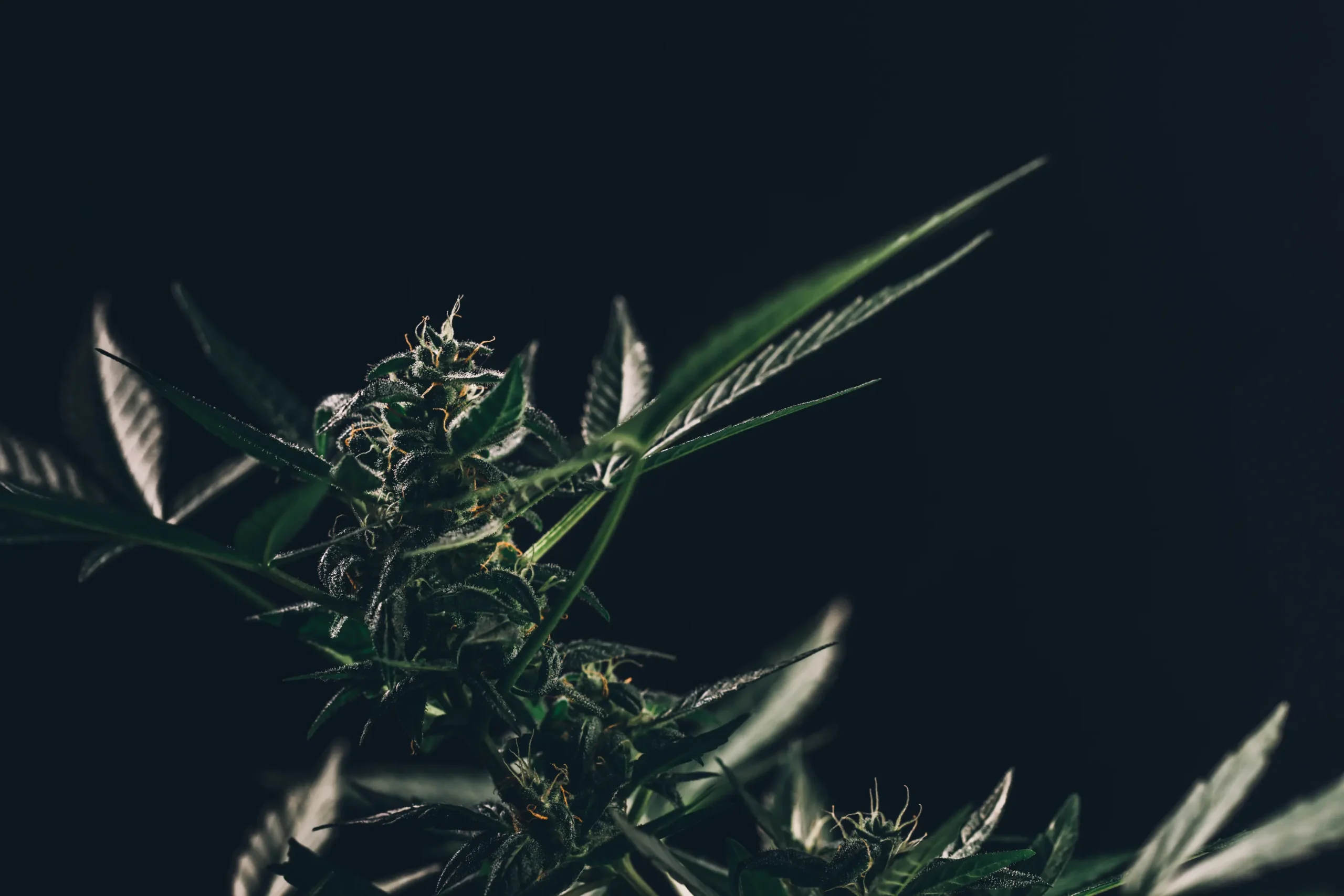
| Bud Structure | Resinous medium-to-dense flowers with orange pistils and strong calyx swelling |
| Main Grow Risk | Crowded interior growth, humidity in dense flowers, and uneven light if left untrained |
| Main Flavor Risk | Loss of volatile pineapple and citrus notes from heat, late over-ripening, or rapid drying |
| Best Environment | Controlled indoor room or sunny outdoor climate with dry finishing weather |
| Ideal User | Flavor-focused consumers seeking tropical brightness with an active, positive effect |
Golden Pineapple is most rewarding when the harvest still smells distinctly tropical after cure. Yield without that retained aromatic identity should be treated as an incomplete result.
Genetic Lineage
Golden Pineapple is commonly described as a cross between Golden Goat and Pineapple Kush. That pairing explains why the strain can feel more animated than its plant shape first suggests. Golden Goat contributes an aromatic, energetic side associated with tropical fruit, citrus, sweet spice, and a bright mental effect. Pineapple Kush contributes denser flower formation, a somewhat shorter frame, sweet fruit, and a more relaxing physical finish.
The practical grow lesson is that Golden Pineapple should not be managed as though it were a single-direction tropical sativa. Many plants remain compact enough for ordinary indoor spaces. At the same time, the Golden Goat side can show itself through vigorous lateral branching, a more active stretch, and terpinolene-rich aroma. Phenotypes can therefore differ meaningfully in height, internode spacing, finish time, and the balance between pineapple sweetness and pine or spice.
What Golden Goat can contribute
Golden Goat-influenced expressions often show more vertical enthusiasm and a brighter aromatic profile. They may carry pineapple, citrus, floral sweetness, tropical fruit, and a sharper herbal or spicy top note. These plants can make excellent daytime-leaning flower and may be the most attractive option for growers prioritizing aroma complexity.
They can also be the plants that need earlier height planning. A phenotype that appears modest in vegetative growth can still accelerate after flowering begins. The grower should record stretch rather than assuming every plant will remain short.
What Pineapple Kush can contribute
The Pineapple Kush side can tighten internodal spacing, increase flower density, and pull the effect toward a more relaxed physical direction. Its fruit expression may feel rounder and sweeter. Plants leaning this direction can be visually impressive because they stack chunky flowers on a manageable frame.
That density creates a tradeoff. Flowers that look attractive can retain moisture longer after irrigation, rain, or lights-off humidity rises. A compact phenotype may therefore require more deliberate interior cleanup than a taller, airier one.
Choosing the best expression
The best Golden Pineapple keeper is not automatically the shortest, tallest, purplest, or highest-yielding plant. For a Weedth-style quality grow, a keeper should combine:
- clear tropical aroma before harvest,
- aroma that survives drying,
- predictable stretch,
- strong enough branches for late flower,
- useful calyx-to-leaf ratio,
- acceptable resistance to the local humidity pattern,
- good flower density without excessive interior wetness,
- and an effect that matches the intended use.
A slightly smaller plant that cures with vivid pineapple and citrus can be more valuable than a larger plant that cures into generic sweetness and earth.
Effect Breakdown
Golden Pineapple is usually chosen for a bright, positive opening effect rather than an immediate heavy body stone. The experience can still change substantially with dose, tolerance, harvest maturity, and phenotype.
Initial onset: mood and mental lift
The first phase often feels cheerful and mentally open. Users commonly associate the strain with an uplift in mood, more interest in conversation, music, creative work, or light activity. A well-balanced dose may feel energetic without the sharp tension that some highly stimulating cultivars can create.
Terpinolene-rich expressions can feel particularly aromatic and mentally lively. The sensory experience itself contributes to the impression: tropical fruit and pine can make the first inhalations feel bright before the full cannabinoid effect develops.
Middle phase: creative but less urgent
As the initial lift settles, Golden Pineapple often moves into a stable hybrid middle. The mind may remain active while the body becomes easier and more comfortable. This is the phase that makes the strain appealing for creative hobbies, social afternoons, low-pressure work, gaming, music, or outdoor leisure.
The balanced nature matters. A pure energy-oriented experience can become tiring, while a heavy body strain can end activity too early. Golden Pineapple often occupies the useful space between those extremes.
Physical phase
At moderate doses the body effect tends to feel supportive rather than immobilizing. Tension may feel less noticeable, posture may loosen, and sitting becomes more comfortable without an immediate demand for sleep.
At higher doses, or with a later-harvested phenotype, that physical component can become much stronger. The same strain that feels functional after a small amount may become unfocused or sleepy when consumed heavily.
Emotional character
The strain is often described as happy, easygoing, sociable, and lightly euphoric. That does not mean it is universally anxiety-free. People sensitive to THC or stimulating cannabis can still experience discomfort if they take too much. The safest interpretation is that Golden Pineapple is commonly positive in tone, but dose remains the most important control.
Harvest maturity changes the experience
A grower interested in a brighter expression should pay close attention to trichome maturity rather than extending flowering automatically for maximum amber development. Allowing a plant to ripen far beyond its sensory peak can shift the finished effect toward greater heaviness while also reducing the freshness of the aromatic profile.
The ideal harvest window is where the desired mental effect and flavor intersect. For Golden Pineapple that often means harvesting when the flowers are fully swollen and resin mature but the tropical aroma still smells vivid rather than dull or overly earthy.
Flavor & Aroma Profile
Golden Pineapple earns its place in a strain library through aroma more than through raw potency. A high-quality flower should smell bright before it smells heavy.
Live plant aroma
During flowering, the most attractive expressions can develop a layered tropical smell. Pineapple is the obvious reference, but real plants may present it as fresh-cut fruit, pineapple candy, fermented tropical fruit, citrus peel, mango-like sweetness, or a floral nectar tone. Pine and spice can sit underneath, preventing the profile from becoming one-dimensional.
Some phenotypes add a light skunky or earthy base. That foundation can help the fruit feel more cannabis-like and less artificial. The goal is balance. If the base dominates completely, the plant may still be good flower but it is less representative of the strain's defining sensory identity.
Jar aroma after cure
A properly cured jar should reopen the tropical profile rather than bury it. The first impression may be pineapple or mixed fruit, followed by citrus, pine, floral sweetness, and a light spicy or earthy finish.
If the jar smells mainly of hay, dry leaf, or generic sweetness, drying was likely too fast or the flowers entered cure before moisture had equalized properly. If the jar smells mostly earthy and fuel-like while the living plant was strongly tropical, late heat or post-harvest loss may have removed the most volatile top notes.
Flavor on inhale
The inhale tends to be sweeter than the raw aroma suggests. Pineapple, citrus candy, tropical fruit, and soft floral sweetness can appear first. Vaporization at controlled temperatures often makes the fruit easier to separate than combustion.
Flavor on exhale
The finish usually reveals pine, mild earth, herbal spice, and sometimes a soft peppery note. That lower register matters because it gives the strain depth. A good sample should not taste like simple sugar. The fruit should sit over a clean resinous base.
The most vulnerable aroma notes
Pineapple and bright citrus are the notes I would treat as most vulnerable. They can fade quickly under:
- excessive canopy temperature late in flower,
- very warm drying rooms,
- direct fan exposure,
- over-drying before cure,
- repeated opening of storage containers,
- and long storage in light or heat.
The grower should preserve them rather than attempting to “add” fruit after harvest. No curing trick can recreate volatile compounds already lost from the flower.
Phenotype differences
Terpinolene-forward phenotypes may smell sharper, more herbal, piney, floral, and tropical. Myrcene-heavy expressions can feel rounder and muskier. Pinene can add fresh green sharpness. These differences are worth logging because the best grow strategy for one plant may not be the best selection for the next cycle.
Dominant Terpenes
Golden Pineapple is frequently associated with terpinolene, myrcene, and pinene, with limonene and caryophyllene often contributing to the overall profile. Exact proportions vary by phenotype and growing environment.
Terpinolene
Terpinolene is central to many bright Golden Pineapple expressions. It can smell floral, herbal, fresh, woody, piney, and slightly citrus-like at the same time. Rather than producing a single obvious note, it helps create the sparkling top layer that makes tropical strains smell complex.
From a cultivation perspective, terpinolene-rich material deserves careful temperature management. The grower should avoid interpreting heat stress as a harmless yield issue. High late-flower temperatures can reduce the sensory clarity that makes the phenotype special.
Myrcene
Myrcene contributes earthy, musky, herbal, and ripe-fruit depth. It helps connect the tropical top notes to the body of the aroma. In the effect profile it is often associated with the more physically relaxed side of the experience, although terpene effects in humans should not be treated as a simple one-terpene equation.
Pinene
Pinene contributes fresh pine, resin, and green sharpness. It can make pineapple sweetness feel cleaner and less syrupy. In a cured jar, a clear pine line underneath the fruit is usually a positive sign that the aromatic structure has remained intact.
Limonene
Limonene can add lemon peel, sweet citrus, and a sense of brightness. It may be more obvious in some phenotypes than others. If the plant has a strong lemon-pineapple aroma in late flower, protecting harvest temperature and drying speed becomes especially valuable.
Caryophyllene
Caryophyllene provides pepper, dry spice, and a warmer base note. It may become easier to detect on the exhale than in the open jar. This lower, less volatile character can remain even when fruitier top notes have been damaged, which is one reason poorly handled Golden Pineapple sometimes cures into a flatter spicy-earth profile.
Terpene interpretation for growers
The practical lesson is simple: do not judge terpene success only while the plant is alive. Record aroma at late flower, harvest, the end of drying, two weeks of cure, and four weeks of cure. The best phenotype is the one that keeps its character through the whole process.
Indoor vs. Outdoor Growing
Golden Pineapple can perform well indoors and outdoors, but the two environments create different quality risks.
Indoor cultivation
Indoors, the main advantage is control. The grower can keep canopy temperature stable, reduce late-flower humidity, maintain even light distribution, and dry the harvest in the same climate-controlled space.
The plant usually fits ordinary indoor rooms well. It can remain short to medium, but some phenotypes stretch enough that early canopy shaping is worthwhile. Topping and LST are generally more useful than allowing one dominant top to rise above the rest.
Indoor plants can produce high-quality dense flowers if air movement is distributed across and under the canopy. Do not point a strong fan continuously at one branch. The goal is air exchange, not wind damage.
Outdoor cultivation
Outdoors, Golden Pineapple can develop a broad, productive structure when given root space and full sun. Natural sunlight can produce excellent resin and complex aroma. The challenge is the finishing season.
A warm, dry autumn is ideal. Persistent rain or cool humid nights increase the risk inside dense flowers. A plant that was effortless through summer can become demanding in the final two weeks if dew remains trapped in the canopy every morning.
Outdoor structure
Give branches physical space early. A wide plant with multiple supported arms is safer than a thick central mass of branches touching one another. Strategic pruning before heavy flowering improves later inspection and drying after rain.
Indoor yield quality
The best indoor yield comes from canopy efficiency. Golden Pineapple does not require a huge plant to produce a useful harvest. Fill the horizontal space, remove weak lower growth, and keep the top layer at a similar height. This improves both flower size and maturity consistency.
Outdoor yield quality
Outdoors, more biomass does not automatically mean more premium buds. Inner shaded branches may create small flowers that add trimming work without adding much quality. Early structural pruning can reduce that low-value growth and improve the proportion of mature, well-lit flower.
Which environment is better for flavor?
Neither environment automatically wins. Indoor control is easier for preserving volatile tropical notes. Outdoor sun can create beautiful complexity when the finishing weather is dry and post-harvest handling is excellent. The better environment is the one that lets the grower maintain healthy leaves, dry flowers, moderate heat, and a slow cure.
Strain-Specific Grow Guidance
Golden Pineapple is not unusually difficult, but a quality run depends on reading the plant early and protecting its aroma late.
Vegetative morphology
Expect a plant that can be bushier than its energetic effect suggests. Many expressions form useful lateral branches rather than an extremely narrow central spear. Internodal spacing can range from fairly tight to moderate.
The first decision is whether the plant wants to build outward naturally. If side branches are vigorous, encourage them. If one main stem is dominating, topping can redistribute growth and make the later canopy easier to light evenly.
Topping
One early topping is usually enough to reveal the plant's branching potential. After recovery, choose the strongest new leaders and spread them horizontally. Repeated topping is possible, but it should serve a space-management purpose rather than becoming a ritual.
A plant that is already compact and highly branched may not benefit from repeated cuts. Excessive topping can create too many thin interior shoots and increase humidity management work later.
LST
Low-stress training is highly compatible with Golden Pineapple. Pull dominant branches outward and give secondary growth time to reach the light. This creates a broad canopy without the recovery cost of repeated high-stress events.
Start while stems are flexible. Once flowers begin stacking, stop forcing major bends unless necessary for safety.
SCROG
A screen works well when the phenotype has strong lateral vigor. Use the screen to distribute tops rather than to trap every branch. Fill most of the useful area before the stretch finishes, then allow flower sites to rise through the final layer.
The mistake is overfilling. A screen packed with too many shoots can look productive in week two and become a humid wall in week six. Quality SCROG depends on fewer strong tops with space around them.
Lower cleanup
Remove weak shoots that remain deeply shaded after the stretch. Golden Pineapple can form enough lateral growth that the lower center becomes crowded. Those sites rarely develop the same aroma, density, or maturity as the upper canopy.
Do not strip useful lower branches that receive real light. The goal is to remove low-value growth, not to create a bare trunk for appearance.
Defoliation
Selective defoliation is preferable to aggressive stripping. Remove leaves that overlap heavily, block important flower sites, or create persistent interior moisture. Keep the healthy leaves that are exposed to light and contributing to photosynthesis.
A major defoliation during late flowering can slow the plant when it should be ripening. Plan canopy access earlier.
Feeding response
More feed is not automatically more quality
Golden Pineapple generally performs well under moderate, steady nutrition. Avoid assuming that a productive plant needs maximum EC or constant bloom additives. Strong light and healthy roots create demand; fertilizer does not create demand by itself.
Watch leaf tips, color, and posture. If leaves become very dark and clawed, reduce nitrogen pressure rather than adding another supplement. In flower, transition away from vegetative nitrogen smoothly while maintaining enough nutrition to keep the canopy functional.
Root-zone management
Use a medium with reliable drainage and oxygen. Water deeply enough to wet the active root zone, then allow the medium to return toward an appropriate moisture level before irrigating again. The exact interval depends on container size, medium, temperature, and plant demand.
Do not keep compact phenotypes permanently wet. A bushy plant with dense foliage may look vigorous while the root zone is slowly losing oxygen.
Light intensity
Golden Pineapple can use strong flowering light when the rest of the environment supports it. Increase intensity gradually and watch the top leaves. Pale tops, tacoing, bleaching, or rapidly declining aroma are not signs that the plant needs to “adapt.” They are signs to correct heat or light stress.
A level, open canopy is more valuable than pushing extreme intensity into a few tops while lower branches remain shaded.
Temperature
Vegetative growth tolerates ordinary warm indoor conditions, but late flower should be kept controlled. The grower interested in pineapple aroma should avoid repeated high-temperature peaks around the flowers. Strong extraction and sensible light distance are more valuable than trying to force additional ripening with heat.
Humidity
The risk increases as flowers become denser. Reduce relative humidity progressively through flower and keep air moving through the plant, especially at lights-off when temperature falls and RH can rise quickly.
Inspect the densest flowers with your hands and eyes. Room RH is an average; the air trapped inside a cola can be more humid than the sensor suggests.
Weeks one to three: architecture
Expect the plant to stretch and reorganize its canopy. Continue gentle tucking, remove weak lower shoots, and identify any phenotype growing significantly faster than the rest. Do not wait until vertical growth is finished to solve height problems.
Weeks four to six: flower building
This is the phase where support and airflow become priorities. Flowers begin gaining density and resin. Aroma may become much more obvious. Record which plants develop pineapple, citrus, floral, pine, or spice most clearly.
Keep the root zone stable. Large swings from very dry to saturated can interrupt flower development and nutrient uptake.
Final weeks: protect rather than push
Once the flowers are structurally formed, the grower's job changes. Avoid late major pruning, excessive nitrogen, unnecessary sprays, and temperature spikes. Maintain a healthy leaf canopy while allowing natural senescence to develop.
Support branches that begin leaning. A split stem late in flower is avoidable if the structure is prepared earlier.
Harvest window
Do not use orange pistils alone. Judge calyx swelling, trichome maturity, aroma, and the plant's overall ripening pattern. A tropical phenotype can lose freshness if left far beyond maturity only to increase amber trichomes.
If different canopy zones mature unevenly, staged harvest is reasonable. Take mature tops and allow useful lower branches additional time rather than over-ripening the entire plant.
Phenotype logging
At minimum record:
- veg vigor,
- stretch ratio,
- branch strength,
- finish time,
- flower density,
- calyx-to-leaf ratio,
- pineapple intensity,
- pine/spice intensity,
- post-cure aroma,
- and effect.
The second run should be based on those records.
Weedth Bud Flavor Tips
Golden Pineapple is exactly the kind of strain where post-harvest technique can determine whether the final jar feels special or generic.
Harvest while the tropical profile is still vivid
The best flavor harvest is not necessarily the latest possible harvest. Smell the plant daily during the final window. If pineapple and citrus are at their clearest while trichomes are mature and flowers are fully swollen, delaying only for extra amber may trade freshness for heaviness.
Harvest during a cool period
If possible, harvest when the plant and room are cool rather than immediately after a hot light cycle or afternoon sun. Lower tissue temperature reduces unnecessary volatilization during handling.
Handle resin gently
Golden Pineapple can be resinous. Support branches while cutting and avoid piling flowers into deep containers. Compression damages trichomes and traps heat.
Slow drying
Use a dark, cool, gently ventilated drying space. A gradual dry generally protects the sensory profile better than a hot, rapid process. Do not point a fan directly at the flowers. Move room air around them.
The right endpoint is not a rigid number of days. Branch size, flower density, ambient humidity, and whether the plant is hung whole or in sections all affect drying time.
Whole-plant or branch drying
Whole-plant drying can slow moisture loss and work well in a dry environment. In a humid environment, large intact plants can retain too much moisture internally. Golden Pineapple growers should choose the method based on actual drying conditions and flower density, not ideology.
Preserve pineapple before cure
If the flowers become brittle on the outside within two or three days, the dry is probably moving too fast. Slow the room rather than attempting to rehydrate later with fruit peels. Adding organic material to jars creates contamination and mold risk and does not restore the original terpene profile.
Cure for clarity
Once flowers are evenly dry enough for curing, store them in airtight containers in a cool dark place and monitor internal humidity. Early cure should allow excess internal moisture to escape gradually. As the cure stabilizes, opening frequency can decrease.
Golden Pineapple often becomes smoother and more integrated over several weeks. The sharpest green notes fade while tropical sweetness, pine, and spice become easier to separate.
Storage
Keep cured flower cool, dark, and airtight. Use smaller containers for portions that will be opened frequently. Repeated exposure to warm air and oxygen slowly erodes the most delicate top notes.
Flavor diagnostic
If fruit was strong on the living plant but weak in the jar, review:
- final-week temperature,
- harvest handling,
- drying speed,
- direct airflow,
- cure humidity,
- storage heat and light.
That diagnostic is more useful than blaming genetics immediately.
Weedth Bud Boost Tips
The goal is not maximum raw biomass. It is maximum useful flower with retained tropical character.
Build an even canopy
Golden Pineapple responds well to early topping and LST because those techniques turn lateral vigor into multiple well-lit tops. An even canopy increases the number of flowers receiving productive light without requiring extreme intensity.
Control top count
More tops are not always more yield. A canopy with too many thin branches can create smaller flowers and poor airflow. Keep the branches that can support real colas and remove redundant interior shoots.
Use the screen for distribution
A trellis should create space between tops, not simply hold the plant upright. Spread branches into empty areas during stretch and stop tucking once flower sites are established.
Improve premium-bud percentage
Before the plant invests heavily in flowering, remove branches that will never reach strong light. This redirects management attention and plant resources toward higher-value zones.
Support early
Dense flowers can make lateral branches sag. Install stakes or netting before they are needed. Late emergency tying often crushes flowers together and reduces airflow.
Root volume
Give the plant enough root volume to support the intended canopy. Oversized containers are not automatically better, but root restriction in a long veg can reduce the plant's ability to maintain healthy leaves through late flower.
Light distribution before intensity
Improve uniformity first. A moderate, even canopy usually produces more premium flower than a room with extreme top intensity and weak lower zones. Stronger light only helps when temperature, CO2 availability, water, nutrients, and root health are aligned.
Do not chase UV as a shortcut
Resin quality depends on genetics and overall plant health. Supplemental ultraviolet light is not a replacement for stable cultivation, and controlled research has not shown a universal yield or cannabinoid benefit from simply adding UV. Avoid stressing the crop for a speculative trick.
Maintain late photosynthesis
Protect useful fan leaves through the final swelling stage. Do not force a dramatic fade with starvation. A natural late transition is different from deliberately depriving a plant while it is still building flower.
Environmental consistency
The easiest yield to lose is the yield spent recovering from stress. Avoid repeated drought, saturation, heat spikes, and strong pruning during flower. Golden Pineapple responds better to a steady run than to a sequence of “boosting” interventions.
Quality-yield metric
After harvest, separate true premium flower from small shaded buds and damaged material. Record the percentage. On the next run, adjust branch count and canopy depth to increase that percentage even if total wet weight changes little.
Medical Uses & Benefits
Golden Pineapple is often chosen by consumers seeking a cannabis experience that feels uplifting first and relaxing second. Medical use should always be discussed as individual symptom management rather than as proof that a strain treats a disease.
Stress and low mood
The positive, energetic onset may be appealing to people who use cannabis to unwind from stress without immediately becoming sleepy. Some users report that the strain makes routine activities, music, conversation, or creative work feel easier to engage with.
Fatigue and motivation
Small to moderate amounts may feel more functional than heavy indica-dominant strains. For people whose main problem is low motivation, this can be useful. Higher doses can reverse that advantage and become distracting or physically relaxing.
Mild physical discomfort
The later hybrid body effect may help some users feel less aware of ordinary soreness or tension. This should not be presented as a treatment for serious pain conditions. Individual response to THC-rich cannabis varies substantially.
Appetite
Like many THC-rich cultivars, Golden Pineapple may increase appetite in some users. Others may experience little change. Dose and personal biology matter more than the strain name alone.
Anxiety caution
Because the onset can be mentally stimulating, very THC-sensitive users should start low. A strain that feels cheerful and clear at a small dose can become mentally busy when overconsumed.
Medical-use summary
The best fit is usually someone seeking mood elevation, light functional relaxation, or relief from everyday tension while remaining engaged. It is not a guaranteed sleep strain, pain treatment, or anxiety therapy.
Ideal User Profile
Golden Pineapple suits consumers who care about flavor and activity rather than only maximum potency.
Best time of day
Late morning, afternoon, and early evening often make the most sense for experienced users. The strain can complement creative work, socializing, music, outdoor leisure, or low-pressure tasks.
Experience level
Intermediate users will generally find the dose easier to judge. Beginners can still enjoy it, but should start with a small amount because energetic THC effects can become uncomfortable when the dose rises too quickly.
Flavor-focused consumers
Anyone who enjoys pineapple, citrus, tropical fruit, pine, floral notes, and light spice is a strong candidate. People who prefer heavy fuel, garlic, or deeply earthy profiles may find it comparatively bright.
Grower profile
The ideal grower is willing to manage climate through the final weeks and drying period. A beginner can cultivate the plant successfully, but a quality-focused grower will gain more by keeping notes on aroma and harvest timing instead of judging success only by grams.
Who may prefer another strain
A person seeking immediate couch-lock or a strongly narcotic nighttime effect may prefer a heavier cultivar. A grower in a very humid outdoor autumn may also choose a looser-flowered plant if mold management options are limited.
Grower Notes and Feedback
The most consistent practical theme with Golden Pineapple is that its name creates a flavor expectation the grower must actively protect.
Manageable height can hide canopy density
Growers often expect an energetic hybrid to become tall and airy. Golden Pineapple can remain compact enough that the real issue is interior branching, not ceiling height. A dense bush needs selective opening even when vertical stretch is modest.
Training generally pays
Topping and LST tend to improve the plant's use of horizontal space. The best responses come when training begins early and then becomes gentler as flowering develops.
Odor can become substantial
The fruit profile is pleasant, but it is still strong cannabis odor. Indoor growers should plan odor control before late flower rather than assuming a pineapple-smelling plant will be discreet.
Dense flowers need inspection
The surface of a cola can look perfect while moisture is trapped deeper inside. Growers in humid rooms should physically inspect the densest flowers and monitor night humidity.
Pineapple intensity varies
Not every phenotype smells like a cut pineapple. Some lean citrus, pine, floral, or skunky. That is normal variation. Keeper selection should happen after cure.
A second run is usually better
Once the grower knows the exact stretch and ripening speed of a clone, veg duration and net height become easier to set. Aroma retention can also be improved because the best harvest window is no longer a guess.
Common mistakes
The mistakes I would watch most closely are:
- overfilling a SCROG,
- leaving weak interior shoots,
- pushing late nitrogen,
- allowing hot canopy conditions near harvest,
- drying too quickly,
- and selecting a keeper before tasting cured flower.
Weedth Editor's Note
The point where this plant reveals itself
I would grow Golden Pineapple for the jar, not for the photograph. The plant can look impressive enough, but what matters to me is whether the cured flower still has that bright tropical lift when I open the container a month later.
The first thing I would do is make the canopy wider early. I do not want one tall central top and a collection of small shaded branches. I would top once, pull the main branches outward, and keep only the secondary shoots that can realistically reach productive light. Golden Pineapple gives enough lateral growth that there is no reason to crowd the center just to increase the number of bud sites.
By the second week of flower I would already know which plant wants to stretch and which one wants to stay compact. I would write that down. The compact plants are not automatically easier because they can create more leaf overlap and smaller humid pockets inside the canopy. I would remove a few strategic leaves and weak shoots but keep the plant looking healthy, not stripped.
My real attention would increase around mid flower when the aroma becomes obvious. I would smell the plants individually instead of smelling the room. One might be pineapple candy, another more citrus-pine, another sweeter and slightly skunky. I would label those differences because that is exactly the information that gets forgotten by harvest day.
Late in flower, I would protect the aroma instead of trying to force the plant harder. I would rather lose a small amount of theoretical weight than run the canopy hot and watch the pineapple top note disappear. The plant should finish under stable conditions with enough healthy leaf area to support ripening.
I would also support branches before they lean. Golden Pineapple can build flowers dense enough that a branch that looked strong in week five is lying across another cola in week eight. Once flowers are touching, airflow gets worse and resin is damaged every time they rub together.
At harvest I would compare aroma and trichomes together. If the fruit is at its best and the resin is mature, I would not extend the plant just because the calendar says another few days are possible. This is a flavor strain. Harvest timing should respect that.
Drying is where I would be most conservative. Cool, dark, and gradual. No direct fan on the buds. No heater to finish faster. If I spent two months protecting a pineapple-terpinolene profile, I am not going to remove it in three days because I am impatient.
After four weeks of cure, I would make my keeper decision. The winner would be the plant that still opens with fruit, keeps enough pine and spice underneath to feel complex, smokes or vaporizes smoothly, and grows predictably enough that I can repeat the result.
That is what I like about Golden Pineapple. It is not a strain that forces the grower into extreme techniques. It rewards ordinary good cultivation done carefully. When it is handled well, the flower has a brightness that makes the whole cycle feel worth the effort.
Weedth Score
Growing Experience – 8.4/10
Manageable structure and good training response make the strain enjoyable, while dense interior growth and aroma-sensitive late flower keep it from being completely effortless.
Bud Structure & Visual Appeal – 8.6/10
Resinous, well-stacked flowers can have strong visual appeal. The best plants develop substantial calyx swelling without becoming excessively leafy.
Aroma Complexity – 9.2/10
This is the strongest category. Pineapple, mixed tropical fruit, citrus, pine, floral sweetness, spice, and soft earth can create a genuinely layered jar.
Flavor & Smoothness – 8.9/10
A cool, slow dry can produce a clean tropical inhale and a resinous pine-spice finish. Fast drying reduces this score quickly.
Effects & High Experience – 8.8/10
The upbeat, creative opening and comfortable later body effect give Golden Pineapple broad usefulness without making it feel generic.
Overall Satisfaction & Recommendation – 8.8/10
Golden Pineapple is easy to recommend to flavor-focused growers who can manage humidity and post-harvest conditions. It offers enough production to feel practical while still giving the grower something sensory to chase.
"I keep coming back to the jar for the pineapple-pine lift. When the dry is right, the flavor feels much brighter than the plant's compact structure suggests."
FAQ
Is Golden Pineapple easy to grow?
It is best described as moderate. The plant is usually manageable and responds well to training, but dense flowering zones need airflow and the tropical aroma is sensitive to heat and rapid drying. A beginner can succeed if environmental control is consistent.
How long does Golden Pineapple flower indoors?
Many expressions finish in roughly 8-9 weeks, although phenotype and environment can move the window. Use trichome maturity, calyx development, aroma, and overall plant ripeness rather than harvesting by day count alone.
Does Golden Pineapple stretch a lot?
Usually moderate, but phenotype variation matters. Golden Goat-leaning plants may stretch more actively than compact Kush-leaning plants. Record the first run so the second veg period can be planned accurately.
Is Golden Pineapple good for SCROG?
Yes, especially when the plant has strong lateral branching. The key is not overfilling the screen. Leave enough space between tops for airflow and light penetration.
Should Golden Pineapple be topped?
One early topping is often useful. It reduces central dominance and encourages a wider canopy. Repeated topping is optional and should depend on veg time, plant vigor, and available space.
Does Golden Pineapple need heavy feeding?
Not necessarily. Moderate, consistent nutrition is usually safer than aggressive feeding. Let actual plant demand and leaf response determine strength.
What humidity risk does it have?
Medium-to-dense flowers can trap moisture in late bloom, especially when the interior canopy is crowded. Night humidity and outdoor dew deserve special attention.
What does Golden Pineapple smell like?
The defining profile is tropical and sweet, often with pineapple, citrus, floral fruit, pine, and light spice. Some phenotypes carry more earth or skunk underneath.
How do I preserve the pineapple flavor?
Keep late-flower canopy temperature controlled, harvest within the sensory maturity window, handle flowers gently, dry slowly in a cool dark room, avoid direct airflow, and store cured flower cool and airtight.
Does purple color improve the flavor?
No. Color is not a reliable measure of terpene quality. Judge aroma, resin maturity, flower structure, and cured flavor separately.
Can Golden Pineapple grow outdoors?
Yes, particularly in sunny climates with a dry finishing season. In humid autumn regions, branch spacing, rain protection, and mold inspection become more important.
When should I choose a keeper phenotype?
After cure. Live-plant aroma is useful, but the best keeper is the plant that retains its tropical identity after drying and storage while also showing manageable structure and good flower quality.
Similar Strains
Golden Goat
The closest comparison through lineage. It tends to express more of the bright, energetic, tropical-spice side and can be useful for growers who want to move further toward an active sativa-style effect.
Pineapple Express
A natural comparison for consumers attracted to pineapple and tropical fruit. Its cultivation behavior and exact flavor are different, but both can reward careful preservation of bright volatile aromatics.
Clementine
A citrus-forward option for users who enjoy the energetic aromatic side of Golden Pineapple. Clementine pushes more strongly toward orange and citrus rather than creamy pineapple sweetness.
Tropicana Cookies
Suitable for growers who want vivid fruit, citrus, and strong visual flower quality. It can offer a more modern resinous expression while sharing the need for careful terpene preservation.
Tangie
A stronger step toward bright citrus and a more stimulating effect. Tangie generally emphasizes tangerine rather than pineapple but appeals to a similar daytime flavor-focused user.
Maui Wowie
A classic tropical comparison. It is generally more open and sativa-like in growth and effect, making it useful for growers who enjoy Golden Pineapple's tropical direction but want a more traditional warm-climate expression.
Share this article
A quick overview of the topics covered in this article.
Follow us
Latest articles
September 9, 2026
September 9, 2026
September 9, 2026