
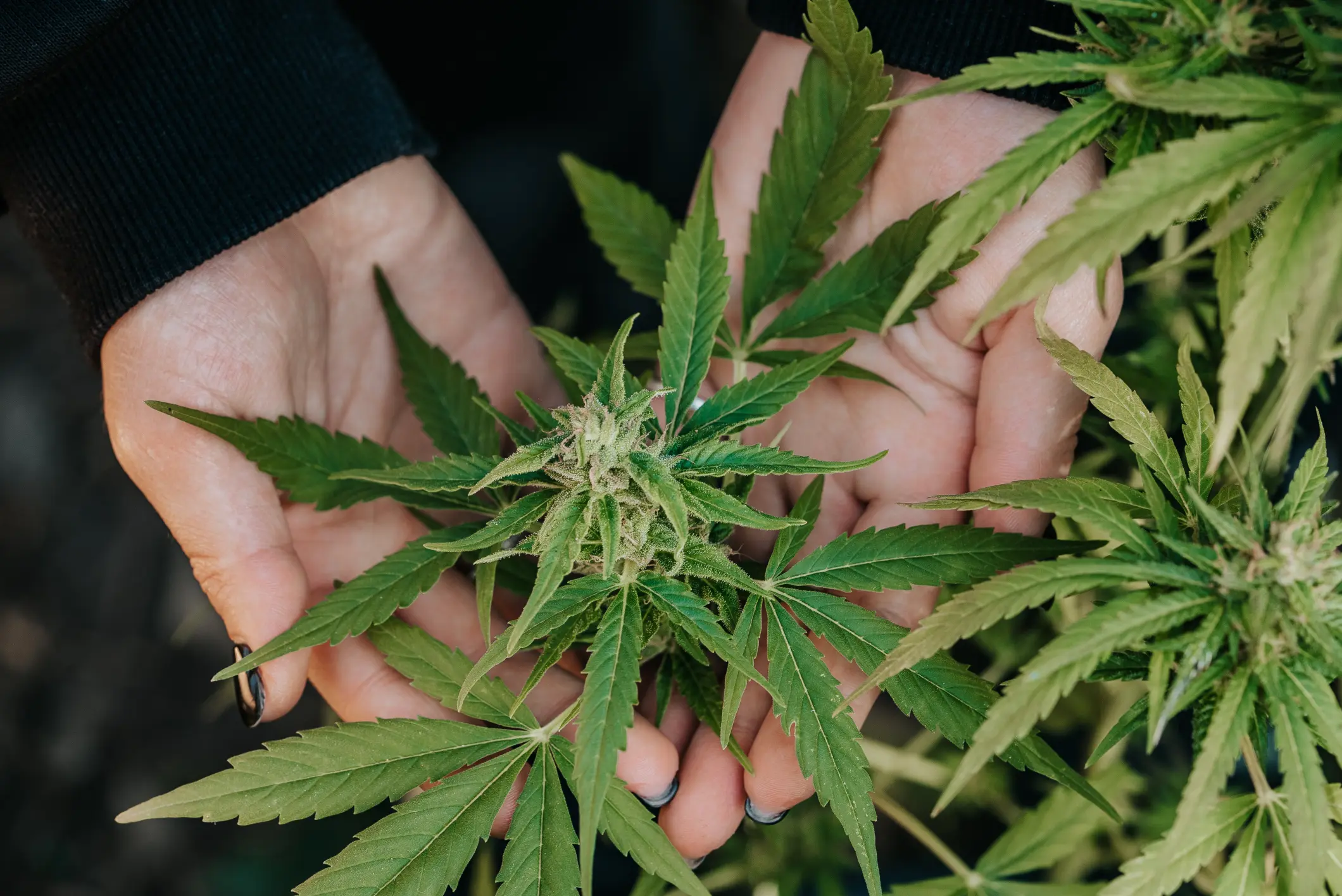
Golden Tiger
WEEDTH STRAIN LIBRARY | CULTIVATION, BUD QUALITY & FLAVOR
Golden Tiger is a long-flowering, pure-sativa hybrid built from tropical Thai and Malawi ancestry. It does not behave like a compact modern hybrid that can be vegetated for weeks, flipped to flower, and then expected to remain inside a predictable vertical envelope. Its defining cultivation trait is sustained tropical momentum. Branches keep searching for space, internodes remain active well into the transition, and some plants can attempt to resume vegetative-looking growth if the flowering signal is weak or inconsistent. The reward for managing that behavior is unusual: long, resinous floral formations with a surprisingly high flower-to-leaf ratio for a tropical sativa and a terpene profile that moves from lemon and floral spice toward resin, wood, and warm organic depth.
The current Golden Tiger population is best understood as a semi-stabilized Malawi and Thai combination rather than a single simple two-parent cross. The most consistently reported modern expression combines two Thai sources with two Malawi parental lines. That matters because the plant can show a spectrum of tropical traits. Some individuals lean toward longer Thai-influenced branching, brighter citrus-floral aroma, and a more electric mental effect. Others show more Malawi influence through denser floral stacking, heavier resin, a darker organic background, and a more forceful long-duration high. The differences are meaningful, but the central cultivation identity stays recognizable: strong vigor, long bloom, modest nitrogen demand, serious stretch, and excellent potential when the canopy is controlled early.
Golden Tiger is not a strain to grow by calendar alone. Its best flowers are usually produced when the grower reads the plant's developmental pace, keeps the root zone balanced, avoids pushing nitrogen, and gives the canopy enough light without allowing heat or drought to flatten its aromatic top notes. It also rewards patience after harvest. The lemon, floral, spicy, resinous profile can become surprisingly layered after a slow dry and an unhurried cure, while rushed drying can reduce the strain to a much more generic woody haze-like impression.
Strain Features
| Feature | Details |
|---|---|
| Type | 100% sativa, semi-stabilized tropical hybrid |
| Genetic Background | Multiple Malawi and Thai lines, with current expressions combining old and later-generation Malawi material with Koh Chang and Hmong Thai ancestry |
| Typical THC | Commonly reported in the mid-to-high 20% range, with some analyses around 25-30%; actual results vary by phenotype and cultivation |
| CBD | Usually very low, commonly below 0.5% |
| CBG | Often low but measurable, with some analyses around 1% or less |
| Indoor Flowering | Approximately 10-14 weeks, with phenotype and light schedule affecting finish time |
| Outdoor Finish | Late October into November in the Northern Hemisphere, best where autumn remains mild |
| Growth Habit | Very branchy, elegant, narrow-leaf sativa with medium-long internodes |
| Stretch | High to very high; early flowering can produce substantial vertical and lateral expansion |
| Yield Potential | High when space, light, support, and canopy training are managed well |
| Bud Structure | Long, overflowing flower clusters that can become surprisingly dense while retaining a favorable flower-to-leaf ratio |
| Aroma | Lemon, floral spice, resin, warm wood, organic and slightly incense-like depth |
| Dominant Terpene Direction | Usually myrcene-led, with limonene, linalool, ocimene, pinene and smaller amounts of other monoterpenes; nerolidol and caryophyllene add depth |
| Grow Difficulty | Advanced indoors, moderate-to-advanced outdoors in a suitable climate |
| Best Environment | Strong-light indoor rooms with height control, or tropical, subtropical and warm coastal outdoor climates |
| Main Grow Risk | Excess stretch or reflowering behavior caused by long veg, weak flowering signal, excessive nitrogen, or inconsistent light cycle |
| Best Quality Goal | Preserve bright lemon-floral Thai notes while allowing resinous Malawi depth to mature fully |
| User Profile | Experienced consumers who prefer intense, stimulating and long-lasting sativa effects |
The numbers in a strain table are starting points rather than guarantees. Golden Tiger is especially sensitive to phenotype selection because flowering length, stretch intensity, aroma emphasis, and final density can differ within the population. A grower should therefore treat the first run as a mapping exercise. The goal is not only to finish the plant, but to learn which expression is present and adjust training, feeding, and harvest timing around it.
Genetic Lineage
Golden Tiger combines tropical genetics from Malawi and Thailand, two regions associated with narrow-leaf cannabis populations that evolved under long seasons and strong solar exposure. The modern version is more complex than the simplified older description that circulated for years. Earlier material was often summarized as a powerful Malawi female crossed with a selected highland Thai male. More recent descriptions identify a broader composition that includes old Malawi material, a later-generation Malawi male, Koh Chang Thai, and Hmong Thai. That expanded background helps explain why modern plants can show both refined Thai aromatics and strong Malawi floral density.
The Malawi side contributes much of the strain's force. In Golden Tiger, that influence tends to appear as strong resin coverage, dense clusters for a sativa, a heavy organic or resinous aromatic base, and an effect that can feel more physically consequential than the word "sativa" suggests. It does not necessarily produce a sleepy body stone. Instead, the Malawi influence can make the mental experience feel dense, immersive, and difficult to ignore. From a cultivation perspective, it also helps explain why the finished buds can be more substantial than the loose, airy flowers many growers expect from tropical genetics.
The Thai side pulls the plant in a different direction. Thin leaves, flexible long branches, long internodal spacing, floral and citrus top notes, and a tendency toward extended transition are all consistent with Thai-dominant behavior. Some plants keep adding new floral tips late if the photoperiod is too generous or the night period is interrupted. This is one reason a strong and uninterrupted flowering signal matters. A tropical plant does not always interpret a standard indoor routine with the same decisiveness as a fast temperate hybrid.
The useful grower takeaway is that Golden Tiger should not be forced into the expectations of a compact indica-dominant cultivar. Its lineage wants space, uninterrupted darkness, strong light, and a relatively lean root zone. The hybridization has made it more manageable than a completely wild tropical landrace, but its original environmental logic is still visible. A grower who respects that logic usually gets a calmer canopy and a cleaner finish.
Phenotype differences deserve attention. A Thai-leaning plant may stretch longer, produce finer branching, show brighter lemon-floral or spicy notes, and need more patience before the calyxes fully swell. A Malawi-leaning plant may look more productive earlier, develop heavier resin and denser flowers, and carry a darker resinous aroma. Both can be excellent. The better choice depends on space, climate, and the desired sensory profile rather than a single definition of the "best" phenotype.
Effect Breakdown
Golden Tiger's effect is one of the reasons the strain needs a cautious, experienced user profile. Potency is not only about a laboratory THC number. The combination of high cannabinoid content, long duration, and intensely stimulating tropical character can make a moderate session feel much larger than expected. People who are comfortable with relaxing hybrids can still find this strain surprisingly demanding.
Early onset: acceleration before relaxation
The first phase is usually cerebral. Instead of a gradual warm body effect, Golden Tiger can increase mental speed, sensory attention, and internal activity quickly. Music may feel more detailed, conversations can become unusually absorbing, and visual or conceptual associations can arrive faster. For some users this feels creative and euphoric. For others, especially at an excessive dose, the same stimulation can become racing thought or unease.
The emotional direction often depends on setting. In a calm environment with a clear activity, the strain can feel expansive and adventurous. In a noisy, stressful, or socially demanding situation, its intensity may amplify too much input. That is why it is better suited to experienced users who already understand how they respond to powerful sativas.
Peak: dense, psychedelic and long-lasting
At peak intensity, Golden Tiger is not a simple "productive daytime" strain. It can become deeply immersive. The mental experience may feel layered, time perception can shift, and attention can lock onto music, art, nature, or a complex thought process. This is where the strain's reputation for a psychedelic-style sativa effect makes sense. The word should not be interpreted as a clinical hallucinogen claim, but it accurately describes how strongly perception and thought can feel altered for some users.
The body often remains mobile, yet the experience is not necessarily functional. High mental intensity can make routine tasks harder even when physical energy remains. A person may feel awake but too absorbed to work efficiently. That distinction is important for anyone choosing a strain based on the simplistic assumption that all sativas are ideal for daytime productivity.
Late phase: sustained clarity with residual weight
The comedown is usually gradual rather than abrupt. Mental stimulation can persist for a long time, while a subtle physical heaviness develops underneath. With a well-tolerated amount, this creates a satisfying transition from intense focus into calm reflection. With too much, the duration itself can become tiring. Golden Tiger is therefore a poor candidate for casual dose escalation. More is not automatically better.
For sensitive users, possible negative effects include dry mouth, dry eyes, dizziness, anxiety, racing thoughts, or an uncomfortable sense that the experience is lasting too long. These risks are especially relevant with highly potent phenotypes. A small amount and adequate time before consuming more is a more sensible approach than trying to match a usual dose from a lower-intensity hybrid.
Flavor & Aroma Profile
Golden Tiger's best aroma is not a single loud dessert note. Its identity comes from layering. The first impression from a properly cured jar can be bright and volatile: lemon peel, pale flowers, fresh spice, and a faint green-herbal lift. Beneath those top notes sits a warmer resinous body that can suggest polished wood, incense, dry plant resin, and an organic earthiness. Some phenotypes feel cleaner and more citrus-floral, while others are darker and more resinous.
The Thai influence is easiest to lose. Bright citrus, floral, and delicate spice compounds are more vulnerable to heat, prolonged exposure to moving dry air, repeated jar opening, and warm storage. If the flowers are dried too quickly, the strain may still smell strong but the profile becomes narrower. The sharp lemon-floral opening fades first, leaving wood, resin, and generic herbal notes. That is a major quality loss because the tension between the bright top and dark base is what makes the strain distinctive.
On inhalation, a high-quality sample often begins with lemon, green spice, and dry floral character. The exhale brings more resin and warm organic depth. The smoke can be expansive because the flowers are heavily resinous and the cannabinoid load can be high. Smoothness depends heavily on maturity and post-harvest handling. A plant cut too early can taste green and sharp. A plant pushed too far in hot conditions can lose brightness and become heavy. A slow dry followed by several weeks of cure usually improves integration between the citrus top notes and resinous finish.
Outdoor flowers grown under strong sun in a suitable warm climate may show a broad and expressive profile, but harvest timing becomes more complicated. Late-season heat can strip volatile notes, while late rain can force an early cut. The best outdoor Golden Tiger is therefore not simply the plant left outside longest. It is the plant that reaches genuine floral maturity while its aromatic quality is still intact.
Bud quality should be judged with more than density. Golden Tiger can produce elongated colas with substantial flower mass, low leaf content, and heavy trichome coverage. The ideal bud has visible calyx development rather than a mass of leafy growth. Resin should extend across the flower surface and into the smaller surrounding leaves. When the plant is mature, the flowers feel more finished and swollen, not merely long. This distinction helps prevent early harvest on a cultivar whose visual length can fool the grower into thinking the buds are complete before they have reached their best internal maturity.
Dominant Terpenes
Golden Tiger has one of the more clearly documented terpene directions among long-flowering tropical hybrids. Beta-myrcene is usually the dominant component, with a broader group of citrus, floral, green, and pine-related monoterpenes behind it. The profile is complex enough that phenotype and environment can change which notes become most obvious to the nose.
Beta-myrcene
Myrcene supplies an earthy, herbal and resinous base. In Golden Tiger it should not be imagined as a simple musky indica note. It supports the dense organic background under the brighter Thai aromas. Myrcene is volatile, so poor storage and high post-harvest temperatures can reduce the sense of freshness even when the flower still has plenty of visible resin.
Limonene
Limonene supports lemon peel and high citrus notes. Its contribution is central to the cleanest Golden Tiger phenotypes. When drying temperatures run high or the flowers are left exposed to air, the lemon character can disappear faster than heavier woody notes. Preserving limonene is therefore part of preserving the strain's identity, not merely an aesthetic bonus.
Linalool and ocimene
Linalool can reinforce soft floral character and a faint lavender-like sweetness, while ocimene can contribute fresh, green, sweet, and tropical lift. Neither should be treated as guaranteed dominance in every plant. Their value is in explaining why some phenotypes feel more perfumed and lively than a simple lemon-and-earth description suggests.
Pinene family and camphene
Alpha-pinene and beta-pinene can sharpen the profile with conifer, fresh wood, and herbal clarity. Camphene can add a dry, slightly pungent edge. These compounds work particularly well with the strain's spice and resin character. When the flower is cured properly, they help prevent the aroma from becoming flat or syrupy.
Nerolidol and beta-caryophyllene
Nerolidol is a heavier sesquiterpene that can add woody, floral and slightly green depth. Beta-caryophyllene contributes pepper, dry spice, and warmth. Because sesquiterpenes are generally less volatile than the brightest monoterpenes, the late-stage jar aroma may shift toward these deeper notes over time. That change can be pleasant, but the goal is to retain enough of the early citrus-floral fraction that the cure becomes more complex rather than simply darker.
Terpenes should not be used as a medical prediction tool by themselves. They help explain aroma and may contribute to the overall sensory and pharmacological experience, but individual response depends on the complete chemical profile, dose, tolerance, and context. For growers, the practical lesson is simpler: protect the volatile top notes and do not assume visible resin automatically means preserved flavor.
Indoor vs. Outdoor Growing
| Aspect | Indoor Growing | Outdoor Growing |
|---|---|---|
| Main Advantage | Full photoperiod and canopy control can restrain tropical stretch and reduce reflowering behavior | Strong sun and unrestricted root/branch space allow the genetics to express large lateral structure |
| Main Limitation | Height, long flowering time, heat buildup and electrical cost over a 10-14 week bloom | Requires a long, mild autumn; late rain or cold can arrive before full maturity |
| Structure | Best kept low and wide with early training, short veg and a support screen | Can become a large, highly branched plant with substantial late-season flower mass |
| Feeding | Low-to-moderate nitrogen and restrained overall fertility; do not chase dark leaves | Fertile soil is useful, but excessive nitrogen can keep the plant too vegetative late in season |
| Flowering Signal | Uninterrupted darkness is essential; a longer dark period can help decisive flowering indoors | Naturally decreasing day length usually provides the signal, but latitude and autumn timing matter |
| Mold Risk | Dense flowers require late-flower air movement even though the strain shows strong botrytis resistance | Good inherent resistance helps, but persistent rain inside mature colas is still a risk |
| Flavor Potential | Excellent when canopy temperature and drying are controlled | Excellent under strong sun if harvest avoids late heat, prolonged rain and forced early cutting |
| Best Training | Early topping, horizontal LST, SCROG or carefully managed SOG | Topping and structural spreading early, then support rather than late aggressive pruning |
Indoors, the biggest mistake is giving Golden Tiger the vegetative schedule used for a compact hybrid. A large root system and several weeks of unrestricted vegetative growth can create a plant that becomes difficult to manage as soon as flowering begins. A shorter vegetative period is often the more intelligent choice. The grower can build enough branch structure for a screen without allowing the plant to become tall before the transition has even started.
The flowering light cycle deserves special attention. A conventional 12/12 schedule can work, but tropical expressions may respond well to a slightly longer dark period when excessive stretch or reflowering tendencies are present. An 11-hour light and 13-hour dark schedule is one practical strategy used to strengthen the flowering signal. The exact choice should be made around plant response and the grower's energy/yield priorities rather than treated as an automatic rule.
Outdoors, the strain needs time more than it needs protection from ordinary summer heat. Warm coastal, subtropical, and tropical conditions allow the plant to keep developing into autumn. In climates with a short season, the problem is not vegetative growth. The problem is finishing the flowers before prolonged cold and rain. A grower at a cooler latitude should be realistic about that calendar before committing to a late tropical cultivar.
Strain-Specific Grow Guidance
Start by controlling shape, not by trying to maximize early size
Golden Tiger can produce abundant lateral branches, so the goal in vegetative growth is to establish a controlled framework. One early topping followed by low-stress training is often more useful than repeated topping. The plant already wants to branch. Too many high-stress interventions can create a crowded set of competing tops that becomes difficult to separate during stretch. The better structure is a low, open framework with selected leaders that can be spread across the available footprint.
A screen works especially well because Golden Tiger does not need to be forced into lateral growth. The plant supplies the lateral growth on its own. The screen simply gives the grower a way to distribute it. Install the screen early enough that branches can be guided during the transition instead of waiting until stems become woody and flower sites are fixed.
Expect the transition to last longer than a compact hybrid
The first two or three weeks after the flowering change should not be treated as the entire stretch period. Some expressions continue lengthening after a fast hybrid would already be building compact clusters. This is why vertical planning must include reserve space. If the light is already close to the canopy at the beginning of bloom, the grower has very little room to respond later.
Rather than repeatedly bending every new top, create an even canopy before flowering and continue gentle tucking as needed. Once clear flower formation is established, reduce manipulation. Late repeated bending can disturb floral orientation and create unnecessary stress on a plant that already has a long schedule ahead.
Nitrogen is the nutrient to watch most closely
Golden Tiger is not a strain that needs to look dark green to be healthy. Excess nitrogen can exaggerate stretch, delay clean floral development, increase leaf mass, and make the plant hold a lush vegetative appearance longer than desired. This is one of the strongest strain-specific feeding lessons. A slightly lighter green, actively growing plant can be in a better position than a glossy dark plant with clawing tips.
General cannabis nutrition research shows that yield response to nitrogen is cultivar and system dependent. That makes it unwise to copy a single ppm target from another cultivar. With Golden Tiger, the observational target is a plant that remains vigorous without showing nitrogen excess. Reduce nitrogen emphasis as flowering becomes established and avoid compensating for every natural late-cycle fade with more feed.
Phosphorus and potassium should also be handled rationally. The idea that more bloom booster automatically creates larger flowers is not supported by controlled research across all cultivars. Golden Tiger can benefit from adequate P and K during peak floral expansion, but the goal is sufficiency rather than excess. High salt concentration can reduce root-zone water uptake and work against the long healthy finish this strain needs.
Root-zone oxygen matters during a long flowering cycle
A 10-14 week flowering period gives root problems more time to damage quality. Use a medium that drains well and contains enough air space after repeated irrigation. Do not allow a large container to remain saturated simply because the upper surface looks dry. Golden Tiger's vigorous top growth can tempt a grower to water heavily, but the root system still needs oxygen between irrigations.
In soil, a balanced structure with aeration material helps maintain pore space. In coco or other soilless media, irrigation frequency should follow container size, root development and drainage rather than a fixed schedule. In hydroponics, dissolved oxygen and solution temperature become particularly important over a long cycle.
Light can be strong, but heat should not ride with it
Controlled cannabis research demonstrates that more light can increase yield when other resources are not limiting, yet that does not mean every plant should be driven at the highest possible intensity. Golden Tiger's tropical ancestry can handle strong light, but canopy temperature, carbon dioxide availability, root health and leaf response still define the useful ceiling. Gradual acclimation is better than suddenly pushing intensity.
The strain's flavor profile also creates a reason to separate light intensity from heat. Lemon, floral and fresh monoterpene notes are volatile. A hot canopy late in flower can reduce aromatic quality even if biomass continues to increase. The best balance is strong, evenly distributed light with leaf temperatures kept under control and no bleached tops.
Defoliation should be selective
Golden Tiger often develops a favorable flower-to-leaf ratio, so aggressive stripping is rarely necessary. Remove leaves that are damaged, trapped inside the canopy, or creating obvious humidity pockets. Thin weak interior shoots that will never reach useful light. Avoid stripping healthy exposed leaves simply because a calendar says it is "defoliation day."
The plant's open sativa architecture already supports air movement better than many compact hybrids. The main pruning target is branch congestion, not leaf count. Removing an entire weak inward-growing shoot can improve the canopy more than removing ten healthy fan leaves from productive branches.
Support arrives late, so install it early
Golden Tiger can surprise growers in the second half of flowering. Long branches that seemed light during early bloom can gain substantial mass as flowers stack and calyxes swell. A screen or secondary support layer prevents branches from leaning onto each other. Outdoor plants may need stakes or a broad support cage before late autumn storms.
Build support before the flowers demand it
Do not wait for a branch to crease before adding support. Once a heavy flower has bent, the repair creates a dense contact point where moisture can collect. Preventive support keeps the canopy separated and reduces the risk of damage during the most valuable weeks.
Harvest should follow floral maturity, not impatience
Long-flowering sativas are often cut early because the grower is tired of waiting. With Golden Tiger, that can sacrifice both effect depth and flavor integration. Look for broad evidence of maturity: slowed new white pistil production, fuller calyxes, resin head maturity across representative flowers, declining water demand, and a plant that appears to have shifted from building new architecture toward ripening existing flowers.
Trichomes should be checked on the calyxes rather than only on exposed sugar leaves, which can mature earlier. The desired effect also matters. A mostly cloudy profile with limited amber can preserve a brighter, more electric experience, while a later harvest may deepen the physical and resinous side. The grower should avoid turning this into a rigid percentage formula because microscope lighting, tissue location and phenotype can all distort simple counts.
Weedth Bud Flavor Tips
The most valuable Golden Tiger flavor work happens before harvest. A plant kept too hot, too salty or too nitrogen-heavy late in bloom cannot have those mistakes repaired by a perfect cure. The goal is to enter harvest with mature flowers, intact gland heads, a clean root zone, and the lemon-floral fraction still present.
Indoor flavor strategy
During the final weeks indoors, avoid unnecessary heat spikes. Strong light is useful, but if the top flowers are constantly hot, raise or dim the fixture rather than sacrificing volatile aroma for a small theoretical gain in biomass. Keep air moving through the canopy without blasting mature flowers directly with a fan. Constant high-speed airflow can accelerate surface drying and may increase physical trichome damage when flowers rub against each other.
Harvest handling should be gentle. Golden Tiger can carry large, exposed trichomes. Dragging branches across a floor, stacking them in piles, or compressing fresh flowers during transport removes resin before drying begins. Cut manageable branches and move them directly to the drying space.
A slow, dark dry is especially valuable. The target is not a magic number but a controlled rate that allows moisture to leave the center of the flowers without turning the exterior crisp in a day or two. Moderate temperature and humidity, gentle room circulation, and no fan pointed directly at the flowers give the best chance of retaining citrus and floral notes.
Outdoor flavor strategy
Outdoor Golden Tiger should be harvested during the coolest practical part of the day when weather allows. If rain is approaching, the decision becomes a balance between maturity and disease risk. A slightly early harvest with clean, aromatic flowers may be superior to leaving mature colas wet through several days of rain in pursuit of marginal extra ripening.
Inspect every large outdoor cola before hanging. Dense interior sections can hide damaged tissue. Remove suspect material rather than allowing it to enter a humid drying room with the rest of the crop. The strain has good inherent resistance to botrytis, but resistance does not mean immunity.
Cure for integration, not merely moisture equalization
After the flowers are dry enough for curing, use clean airtight containers and avoid repeated unnecessary opening. Early curing should equalize residual moisture gradually. As the flowers stabilize, the aroma often shifts from raw green lemon and resin toward a more unified blend of citrus, floral spice, wood and incense-like depth.
Golden Tiger is a strain where a longer cure can be worthwhile. Four weeks can produce a clear improvement, while eight weeks or more may deepen the resinous background and smooth the smoke further. Store whole flowers rather than pre-grinding. Research on cannabis storage shows that volatile terpenes decline over time under all conditions, and warm storage accelerates chemical change. Cool, dark, stable storage is therefore the practical priority.
Weedth Flavor Note: If the cured jar smells mainly woody and herbal but the live plant had bright lemon and flowers, the loss probably happened during late-flower heat or drying, not because the strain "cured into" a different profile.
Weedth Bud Boost Tips
Golden Tiger already has high yield potential, so bud boosting should mean improving the percentage of the canopy that becomes mature, resinous flower, not forcing the plant with excessive inputs. Its biggest yield losses are usually structural: an uncontrolled canopy, shaded lateral sites, broken branches, an early harvest, or a root zone that declines before the long flowering cycle is finished.
Use the plant's branching instead of fighting it
A wide horizontal canopy is the most efficient indoor strategy. One or two early structural cuts followed by branch spreading usually creates enough tops. If the grower keeps topping every branch, the plant can become a dense web with too many small leaders. Golden Tiger's natural lateral vigor means the yield ceiling is often improved by selection and spacing, not by multiplying tips indefinitely.
Fill a screen before full flower, not before the flip
With a compact hybrid, growers often fill most of the screen during veg. Golden Tiger can continue expanding after the switch, so filling every square early is risky. Leave open screen area for transition growth. The exact amount depends on phenotype, but the principle is consistent: reserve space for stretch. A slightly underfilled screen on day one of flowering can become a complete canopy two or three weeks later.
Make lower-site decisions early
Not every lower branch needs to be removed. Golden Tiger can produce useful lateral flowers if they receive real light. The correct question is whether a site is connected to the productive canopy, not whether it is physically low on the plant. Remove weak inner shoots that remain permanently shaded, while preserving laterals that can be guided outward into light.
This approach improves both yield and trim quality. Energy is concentrated into fewer useful sites, and harvest contains less immature larf. It also reduces humidity inside the middle of the plant without requiring heavy leaf stripping.
Keep environmental consistency through the long finish
A plant that flowers for three months accumulates more opportunities for equipment failure and environmental drift. Reservoir management, irrigation reliability, humidity control, and light timers should be checked before bloom begins. Preventive maintenance is a yield strategy with this strain. A week of root stress in week ten can erase gains made during months of good cultivation.
CO2 only makes sense in a genuinely controlled room
Supplemental carbon dioxide can increase photosynthetic capacity when light, temperature, nutrition and irrigation are already optimized, but it is not a shortcut for a poorly controlled canopy. Golden Tiger's long flowering time also means the cost and complexity persist for many weeks. For most home growers, uniform light distribution, healthy roots and correct canopy architecture offer a better return than adding CO2 to a room that still leaks heat or has uneven irrigation.
Do not use UV-B as a guaranteed resin booster
The idea that short-wave UV automatically increases cannabis potency is often repeated, but controlled research has not shown a dependable increase in inflorescence yield or cannabinoid concentration from UV-B exposure. Golden Tiger already produces heavy resin genetically. Protecting healthy photosynthetic tissue and avoiding light stress is a more reliable strategy than adding an aggressive UV treatment late in flower.
Let the final third of bloom do its work
Golden Tiger can continue adding flower mass late. Cutting at the first sign of abundant trichomes sacrifices the period when calyxes swell, clusters connect, and the flower-to-leaf ratio becomes especially impressive. Bud boosting therefore includes patience. The final weeks should be stable and boring: no major transplant, no experimental booster, no severe defoliation, no sudden light increase. Keep the plant healthy enough to finish the architecture it has already built.
Medical Uses & Benefits
Golden Tiger should be discussed cautiously in a medical context because its high-THC, strongly stimulating profile can be helpful for some adults and uncomfortable for others. It is not a neutral wellness cultivar. The same mental activation that one person experiences as improved mood or engagement can feel like anxiety or racing thought to another.
Some experienced consumers report choosing intense sativas for low mood, fatigue, lack of motivation, or situations where they want to feel mentally engaged rather than physically sedated. Golden Tiger's long-lasting stimulation may fit that preference. It may also create a temporary sense of distance from stress through absorption in music, creativity, conversation, or another focused activity.
That does not mean it should be presented as a treatment for depression, anxiety, attention disorders, or any other condition. High-THC cannabis can worsen anxiety, panic, dizziness, and cognitive impairment in susceptible people. Individuals with a history of panic reactions to cannabis or other strong psychoactive effects should be especially cautious.
The strain's terpene profile includes myrcene, limonene, linalool, pinene, nerolidol and caryophyllene, compounds that are widely studied for biological activity. Those laboratory and preclinical findings should not be converted into direct claims about what smoking a Golden Tiger flower will treat. The whole chemotype, route of administration, dose and individual physiology matter.
For medical cannabis patients, the practical priority is consistency. A semi-stabilized strain with phenotype variation can produce different cannabinoid and terpene results from one plant to another. When symptom management depends on predictable chemistry, laboratory-tested material and professional medical guidance are more reliable than choosing by strain name alone.
Ideal User Profile
Golden Tiger suits an experienced user who actively wants a powerful cerebral experience. It is most appropriate for someone who enjoys long sativas, understands personal THC tolerance, and does not expect every session to remain functional. A user who wants a gentle after-work hybrid, a predictable sleep aid, or a beginner-friendly social strain should look elsewhere.
The best setting is usually low pressure. Music listening, art, an outdoor walk in a safe familiar area, slow conversation, or a creative session can match the strain's tendency to amplify attention. Tasks that require rapid switching, driving, professional judgment, or public responsibility do not.
Time of day depends on tolerance, but the long duration argues against late use for people who have difficulty sleeping after stimulating cannabis. Even when the peak has faded, residual mental alertness can remain. Many users will find early afternoon or early evening more practical than immediately before bed.
Flavor-focused consumers are another strong match. Golden Tiger is interesting precisely because it is not a dessert profile. People who enjoy lemon, incense, resin, floral spice, wood and old-school tropical character will find more depth here than consumers searching for candy or cream.
Grower Notes and Feedback
Experienced sativa growers repeatedly describe Golden Tiger as vigorous rather than fragile. The difficulty comes from management, not weakness. A healthy plant can recover from topping and branch training quickly. The challenge is that every recovery can create more growth, so training without a plan can make the canopy more complicated instead of simpler.
One of the most common useful observations is that the plant does not need heavy feeding. Growers coming from hungry modern hybrids may initially interpret the lighter green color as deficiency and increase nitrogen. When the leaves darken, claw or the stretch becomes excessive, the correction takes time. A better first-run strategy is conservative feeding with gradual increases only when the plant clearly asks for more.
Growers also notice how late the flowers can change. Early bloom may look sparse compared with a fast hybrid, yet the final third can add substantial density and resin. This can create unnecessary anxiety in week five or six. The plant is not necessarily behind. It is following a longer developmental curve. Comparing it to an eight-week cultivar creates bad decisions.
Odor can intensify in layers rather than arriving as one single smell. Early flowers may lean green, lemon and floral. Mid bloom brings resin and spice. Late bloom can become deeper and more organic. Phenotype selection is worthwhile because the most refined plants can hold both bright and dark sides at once.
The strain's strong resistance to botrytis is valuable, especially because the flowers can become denser than expected. Still, growers should not use genetic resistance as an excuse for poor humidity control. Any dense mature inflorescence can develop localized problems if airflow stops and condensation persists.
A second run is usually much easier than the first. Once the grower knows the stretch ratio of a chosen clone or mother, vegetative time can be shortened precisely, the screen can be filled to the right percentage, and the light schedule can be selected around the plant's actual flowering response. Golden Tiger is a good example of why keeping notes matters more than chasing a universal recipe.
Weedth Editor's Note
What this cultivar asks from the room
What I respect most about Golden Tiger is that it forces good planning. I would never put it into flower with the same vertical margin I use for a compact hybrid. I want empty space above the canopy, open screen area beside the branches, and a root zone that is healthy enough to stay stable for a long finish. If those three things are in place, the strain becomes much more enjoyable to manage.
I also keep the nitrogen side deliberately conservative. With Golden Tiger, I would rather see a healthy medium green plant moving forward than a dark, glossy plant that looks impressive in vegetative growth but refuses to settle into flowering cleanly. The moment the plant starts building real clusters, my focus shifts from making more plant to keeping the existing framework illuminated and healthy.
Defoliation is another area where restraint pays. I do not want to strip a tropical sativa just to make it resemble a heavily manicured indoor hybrid. I remove crowded interior shoots and leaves that are clearly blocking airflow, but I keep productive leaf area. The plant's natural open architecture is already doing part of the work for me.
At harvest, I pay more attention to calyx swelling and the slowdown of fresh floral growth than to a single calendar date. Golden Tiger can look frosty before it is truly finished. I would rather wait for the flowers to feel complete than cut because the flowering week number has become psychologically uncomfortable.
The cure is where I judge whether the grow was actually successful. If the jar opens with lemon and flowers first, then gives way to spice, resin and wood, the post-harvest process preserved the strain's range. If all I get is dry wood and generic incense, something was lost. That is usually a temperature or drying-speed lesson, not a genetics lesson.
For a beginner, I would not choose Golden Tiger as a first indoor plant. For a grower who already understands canopy control and wants to learn how tropical genetics behave, it can be an excellent education. It rewards observation more than aggression, and that is exactly why a well-grown sample feels so distinctive.
Weedth Score
Growing Experience – 8.4/10: The plant is vigorous, resilient and highly rewarding, but the long bloom and large stretch demand real planning. It scores high because it responds well to training and can yield heavily, not because it is easy.
Bud Structure & Visual Appeal – 9.1/10: Long overflowing colas, low leaf content and heavy visible resin give Golden Tiger unusual visual quality for a tropical sativa. The best plants combine length with real density rather than producing wispy flowers.
Aroma Complexity – 9.4/10: Lemon, floral spice, resin, wood, green notes and organic depth create a profile that changes through the cure. It is complex without depending on sugary dessert aromas.
Flavor & Smoothness – 8.9/10: Excellent when matured and dried slowly. The main deduction comes from how easily the bright top notes can be lost through heat or fast drying.
Effects & High Experience – 9.3/10 for experienced sativa users: Dense, stimulating and exceptionally long lasting. The same intensity makes it a poor universal recommendation and lowers its accessibility for beginners.
Overall Satisfaction & Recommendation – 9.1/10: An outstanding choice for advanced growers and experienced consumers who specifically want tropical sativa character, long duration and a non-dessert terpene profile.
"I grow it for the moment lemon and flowers rise above the resin. When that balance survives the cure, the long flowering time makes sense."
FAQ
Is Golden Tiger difficult to grow indoors?
It is not especially fragile, but it is difficult to manage in a small room because the plant can stretch strongly and continue developing for 10-14 weeks of flowering. Indoor success depends on short vegetative time, early structural training, enough headroom, and an uninterrupted flowering signal. A grower who already knows how to use LST or a screen will find it much easier than someone relying on natural vertical growth.
How much does Golden Tiger stretch after flowering begins?
There is no single reliable multiplier for every phenotype, but stretch should be considered high to very high. The practical planning assumption is that the plant will need considerably more room than a compact hybrid. Leave both vertical and lateral reserve space and continue gentle canopy guidance through the early transition.
Does Golden Tiger need heavy feeding because it is a large plant?
No. Large size does not automatically mean a high nutrient concentration requirement. Golden Tiger is commonly described as performing best with low-to-moderate fertility, especially restrained nitrogen. Excess nitrogen can increase leafy growth and prolong stretch. Feed according to leaf color, growth rate, medium and root-zone EC rather than plant size alone.
Is 12/12 enough for flowering?
Many plants can finish under 12/12, but a slightly longer dark period can help tropical expressions enter and remain in flowering more decisively. An 11/13 schedule is one useful strategy when stretch or reflowering behavior is a concern. Any light schedule must be consistent, and the dark period should remain truly dark.
Is Golden Tiger suitable for SCROG?
Yes. It is particularly compatible with a screen because it produces vigorous lateral branches and responds strongly to pruning and horizontal training. The key is not to completely fill the screen during veg. Leave room for the extended flowering stretch.
Can Golden Tiger be grown with SOG?
It can work in a carefully managed SOG because the main cola can yield well, but plant count, local law, stretch and phenotype uniformity all matter. A short veg and early flowering are essential. For most home growers, a smaller number of trained plants in a screen is easier to control.
Does it resist mold?
Golden Tiger is known for strong resistance to botrytis compared with many dense-flowered cultivars. That is useful outdoors and during a long bloom, but it does not remove the need for airflow and humidity control. Large mature colas can still trap moisture under persistently wet conditions.
When should Golden Tiger be harvested for the best flavor?
Wait for complete floral maturity rather than cutting at the first heavy trichome coverage. Calyx swelling, slowed pistil production, mature gland heads and reduced new floral growth are stronger indicators than the week number alone. For flavor, avoid leaving fully mature flowers in excessive heat simply to increase amber trichomes.
Why does a cured sample sometimes lose the lemon note?
The bright lemon and floral compounds are among the more volatile parts of the profile. High canopy temperature, a fast dry, direct fan exposure, warm curing, or frequent oxygen exposure can reduce them. If the live flower was clearly citrus-forward and the cured flower is only woody, post-harvest conditions are the first place to investigate.
Is Golden Tiger beginner friendly for consumption?
Generally no. Potent phenotypes can produce an unusually intense and long-lasting cerebral experience. New users and people prone to anxiety should be cautious with any high-THC sativa, and Golden Tiger is particularly unsuitable for casual dose escalation.
Does a longer cure help?
Yes, provided the flower was dried correctly first. Several weeks of curing can integrate spice, resin and wood while smoothing the smoke. Longer curing does not recover terpenes that were already lost during a hot or fast dry, so the drying stage remains the priority.
Is the highest-yielding phenotype automatically the best keeper?
No. Golden Tiger is a strain where aroma refinement, flowering time, structure and effect quality may matter more than raw grams. A slightly lower-yielding plant with manageable stretch, strong resin and a vivid lemon-floral-resin profile may be more valuable for a personal garden than the largest plant in the group.
Similar Strains
Malawi: The most obvious comparison for users who want the dense, forceful African side of Golden Tiger. Malawi often emphasizes resinous intensity and long duration even more directly, with less of the Thai floral-citrus refinement.
Zamaldelica: Similar in its tropical sativa intensity and long flowering behavior, but its Zamal influence can bring sweeter carrot, mango, orange and floral notes. It tends to become extremely bushy rather than simply tall and branchy.
Destroyer: Another advanced pure-sativa option with Thai influence, strong stretch, low nitrogen preference and a clear, energetic effect. Destroyer often finishes somewhat faster and can show lavender, floral and fruity directions rather than Golden Tiger's darker Malawi resin background.
Neville's Haze: Comparable for growers who enjoy long flowering, high stretch and intense cerebral effects. Its aroma tends to lean more toward incense, haze, spice and citrus, while Golden Tiger carries a more obvious resinous tropical landrace character.
Super Silver Haze: Easier and generally faster than Golden Tiger, but relevant for consumers who want energetic, complex sativa effects with citrus and spice. The plant is more domesticated for indoor cultivation and usually less extreme in duration and stretch.
Panama: A useful comparison for a more manageable classic sativa architecture with strong resin and complex incense, lemon and red-fruit possibilities. It can deliver deep cerebral effects without requiring exactly the same Thai-Malawi management style.
Share this article
A quick overview of the topics covered in this article.
Follow us
Latest articles
September 9, 2026
September 9, 2026
September 9, 2026