
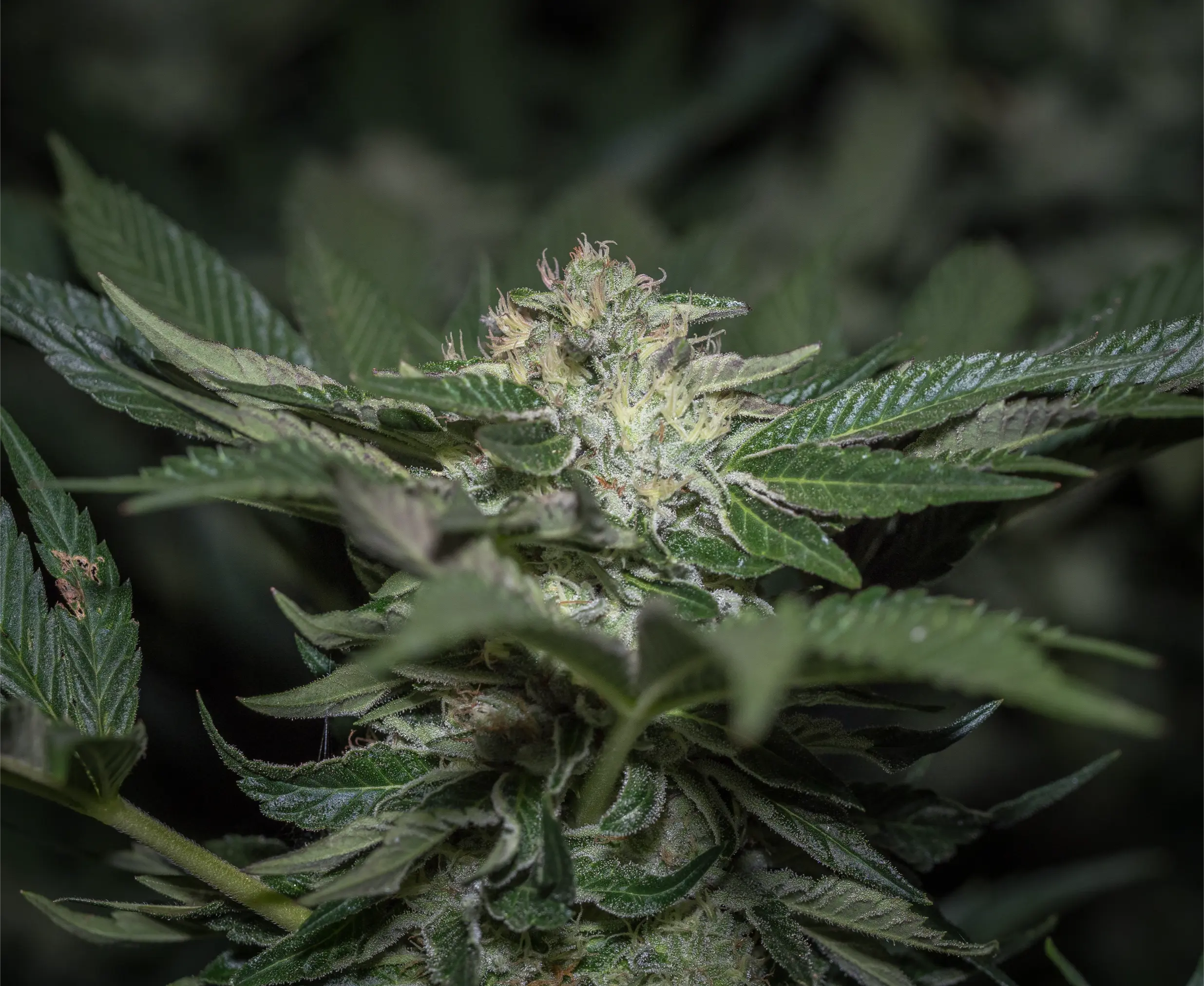
Himalayan Gold
WEEDTH STRAIN LIBRARY | CULTIVATION | BUD QUALITY | FLAVOR
Himalayan Gold combines two traits that do not always appear together: a plant capable of becoming genuinely large outdoors and a flowering schedule that can be surprisingly practical. The Nepalese and North Indian background shows up as vigor, resin, strong branching and a spicy mountain-cannabis aroma rather than as a single neat modern phenotype. Indoors, those traits need restraint. Outdoors, they need engineering. A plant with enough root space can become broad, tall and heavy, and the grower has to think about branch angles, access lanes, irrigation depth and late-season support long before the flowers become heavy. The cultivar's quality is easy to judge badly if size becomes the only goal. A huge plant that holds too many shaded inner shoots will create more small flower, more humidity pockets and more work at harvest. A better Himalayan Gold plant is architecturally simple: several powerful branches, a clean center, good sun exposure and a finish that preserves its pepper, menthol, herb and dark resin character.
Strain Features
| Feature | Details |
|---|---|
| Strain Type | Landrace-derived hybrid, commonly described as indica-leaning despite vigorous tall growth |
| Genetic Profile | Nepalese and North Indian regional cannabis lines |
| THC | Modern reports commonly fall around the high teens to low 20s; phenotype and batch dependent |
| CBD | Usually low |
| Flowering Time | Often about 8 weeks indoors in selected lines |
| Outdoor Harvest | Frequently described as a relatively early outdoor finisher for its size, around late September in suitable northern climates |
| Dominant Terpene Pattern | Pinene is frequently prominent, with terpinolene and myrcene recurring in tested samples |
| Flavor / Aroma | Spice cabinet, pepper, herbs, menthol, tree fruit, dark cocoa or coffee-like depth and occasional tarry resin |
| Effect Character | Bright and creative at first, then increasingly relaxing and potentially sleepy as dose rises |
| Grow Difficulty | Moderate; vigorous and forgiving, but size, branch weight and dense late flower require planning |
| Plant Height / Shape | Medium-tall indoors and potentially very large outdoors with unrestricted roots |
| Primary Grow Question | How do you let Himalayan Gold use its huge outdoor vigor without ending with an overbuilt plant whose interior flowers, support system and late-season moisture are impossible to manage? |
Genetic Lineage
The genetic description most consistently associated with Himalayan Gold is Nepalese and North Indian regional cannabis lines. That background explains much of the plant's behavior, but it should not be treated as a guarantee that every seed or clone carrying the name will express identically. Cannabis cultivars are living selections, and older lines in particular can show meaningful differences after years of reproduction and preservation.
In cultivation terms, the lineage matters because it helps explain the plant's recurring cultivation pattern. Vegetative growth can accelerate dramatically after establishment. The plant often makes strong laterals that become real production branches rather than decorative side shoots. Transition stretch is moderate to strong depending on phenotype. The main challenge is total plant volume, not only vertical height. The same ancestry also appears in the sensory profile: Spice cabinet, pepper, herbs, menthol, tree fruit, dark cocoa or coffee-like depth and occasional tarry resin. These are more useful inheritance clues than a simple indica-sativa percentage because they tell the grower what will actually need to be managed in the room or garden.
A sensible keeper-selection strategy for Himalayan Gold is therefore to compare plants by finish quality. Record branch strength, flowering pace, resin development, aroma after drying and the percentage of the plant that becomes premium flower. The phenotype with the largest leaf or tallest stem is not automatically the best representation of the cultivar.
Effect Breakdown
A Brighter Start Than Expected
Himalayan Gold often opens brighter than its indica-leaning descriptions suggest. The early period can feel euphoric, conversational and creatively engaged. This is the phase that makes the cultivar more versatile than a simple nighttime label would imply.
The Body Takes Over Gradually
As dose and time increase, the physical side becomes more obvious. Muscles feel looser, activity becomes less urgent and the mental energy rounds off. For many consumers this transition is the defining feature: a stimulating start that gradually hands control to a heavier body calm.
High-Dose Sedation
At higher doses the late phase can become sleepy. That does not mean every sample is sedating, because phenotype and tolerance matter, but it explains why the same cultivar can receive both daytime and nighttime reports. The user should choose dose according to the intended phase rather than expecting one fixed effect.
Who Should Dose Carefully
Dry mouth and heavy eyelids are more plausible late-session negatives than a highly racy finish, although any THC-rich flower can provoke discomfort in sensitive users. Start modestly if the purpose is functional mood lift rather than deep relaxation.
Flavor & Aroma Profile
Spice Cabinet Top Notes
The recognizable sensory target for Himalayan Gold is spice cabinet, pepper, herbs, menthol, tree fruit, dark cocoa or coffee-like depth and occasional tarry resin. The important point is separation between layers. Good flower should not smell like a generic mixture of earth and chlorophyll. It should present at least one clear top note before the heavier base aroma arrives.
Menthol, Resin and Dark Sweetness
When a cured flower is opened, the first volatile impression should still show the cultivar's defining aromatic identity. Preserve pepper, menthol and sweet herbal layers without letting the finish become only earthy hash. Slow drying and a patient cure reveal more of the dark cocoa-spice character. Breaking or grinding the flower increases the resin surface and usually exposes deeper spice, wood or fuel. A phenotype that smells expressive only when crushed may still be good, but the strongest aromatic keepers announce themselves before that step.
Inhale to Aftertaste
Himalayan Gold tends to open with dry herb and pepper rather than candy. A cooler menthol-like note can appear through the middle, while the exhale brings darker resin, wood and a faint fruit or cocoa impression in some expressions. The profile is broad rather than flashy. Its quality is easiest to recognize when those layers remain distinct instead of merging into one heavy earthy taste.
Cure Development
Himalayan Gold benefits from a cure that softens green mountain-herb sharpness without burying the pepper and cool menthol edge. Large flowers need time for internal moisture to equalize, so the jar should not be started merely because exposed leaf tips feel dry. When the process is right, the aroma becomes deeper and more resinous while retaining enough high spice to avoid a flat hash-only finish.
Dominant Terpenes
| Terpene | Flavor / Aroma Role | Interpretation |
|---|---|---|
| Pinene | pine needle, rosemary and fresh wood | strongly relevant to pine and herbal aroma; biological effects in cannabis remain less predictable than aroma |
| Myrcene | earthy herb, musk and ripe plant material | can deepen the earthy base; subjective sedation should not be assigned to myrcene alone |
| Terpinolene | fresh herbs, flowers, fruit peel and light pine | often helps explain a bright, complex top note in aromatic cultivars |
The recurring terpene picture for Himalayan Gold is best treated as a pattern rather than a fixed chemical recipe. Pinene is frequently prominent, with terpinolene and myrcene recurring in tested samples. Cannabis terpene ratios move with genotype, environment, harvest timing and post-harvest handling, so one laboratory sample should not be used to promise that every flower carrying the name will smell or feel the same.
Pinene-led and mixed herbal profiles help explain Himalayan Gold's recurring tree-resin, menthol and spice character, but terpene labels should not be used to predict one guaranteed effect. The cultivar's broader cannabinoid and phenotype variation matters. Aroma is the strongest evidence: a well-finished plant should smell layered and resinous, not merely strong.
For Himalayan Gold, terpene preservation is inseparable from finishing a very large plant cleanly. Heat trapped in an oversized center, wet flowers after autumn weather and a fast dry can all push the profile toward blunt earth. Open structure and gradual post-harvest moisture loss are what allow pepper, menthol and sweeter herb to remain visible in the cured flower.
Indoor vs. Outdoor Growing
| Aspect | Indoor Grow | Outdoor Grow |
|---|---|---|
| Plant architecture | Indoors, the plant should be treated as vigorous rather than compact. A shorter veg and planned horizontal structure keep its branch count useful instead of excessive. | Outdoors is where its mountain-derived vigor can become spectacular. Large root volume and full sun can produce a broad plant, but the framework has to be built early enough to carry late flower weight. |
| Transition and stretch | Indoors, moderate-to-strong transition growth adds both height and width. Flip before the room looks full, because side branches continue occupying new canopy area. | Outdoors, transition expands a plant that may already have a wide frame. Preserve distance between major arms so later flower weight does not pull the structure into a dense center. |
| Flower character | Indoor flowers can become substantial and fairly dense, so a shallow canopy and open center help the lower sides of each cola finish rather than remain shaded. | Outdoor flowers gain size under full sun and can become heavy enough to change branch angles. Post-rain inspection of the largest clusters becomes increasingly important near finish. |
| Root-zone demand | A vigorous indoor plant can outgrow a small container quickly. Enough root volume is useful, but a huge pot kept constantly wet works against oxygen and controllable canopy size. | Outdoor root space is one of Himalayan Gold's strengths. Deep irrigation can support a very large frame, then frequency should fall as late-season transpiration slows. |
| Primary risk | Indoors, excessive branch count creates a deep canopy and forces the grower to carry too much shaded material for the available light. | Outdoors, branch overload and hidden moisture are the larger risks. A giant healthy plant can still lose premium tops if arms fold or dense flowers stay wet after cool nights. |
| Best quality strategy | Top once or twice early and build a radial frame. Indoors, a broad screen or disciplined tie-down pattern is more useful than repeated high-stress work because it keeps the productive canopy shallow and evenly lit. | The quality-yield strategy is structural: give each major branch room, support it before it needs support and remove weak interior shoots before they become small humid flowers. |
The indoor-versus-outdoor decision for Himalayan Gold is not simply control versus free sunlight. The better environment depends on which trait the grower wants to exploit. Indoors, the plant should be treated as vigorous rather than compact. A shorter veg and planned horizontal structure keep its branch count useful instead of excessive. Outdoors is where its mountain-derived vigor can become spectacular. Large root volume and full sun can produce a broad plant, but the framework has to be built early enough to carry late flower weight.
Indoors, Himalayan Gold needs restraint because its natural urge is to build a bigger framework than most rooms can illuminate efficiently. I would top or bend early, keep only the laterals that can reach the light plane and flip before the plant looks 'finished' in veg. A smaller root volume and controlled branch count turn the cultivar into a manageable hybrid rather than a compressed outdoor tree.
Outdoors is where Himalayan Gold can show its scale. Deep root space and sun can produce a wide, heavily branched plant, but that potential creates engineering work. The center must remain accessible, major arms need support before they are heavy, and irrigation must follow changing transpiration rather than midsummer habit. Size is useful only while the plant can still be inspected and dried safely at harvest.
Strain-Specific Grow Guidance
The cultivation question that should guide the entire run is simple: How do you let Himalayan Gold use its huge outdoor vigor without ending with an overbuilt plant whose interior flowers, support system and late-season moisture are impossible to manage?
Read the plant before you train it
Vegetative growth can accelerate dramatically after establishment. The plant often makes strong laterals that become real production branches rather than decorative side shoots. The first useful decision is not which fashionable technique to apply. It is whether the plant is expressing strong apical dominance, strong laterals or a mixed frame. That observation determines how much topping is actually necessary. Top once or twice early and build a radial frame. Outdoors, cages or wide trellis support are often more valuable than complicated high-stress techniques.
Plan the flowering transition early
Transition stretch is moderate to strong depending on phenotype. The main challenge is total plant volume, not only vertical height. The correct flip point therefore depends on available height, branch count and how much horizontal space has already been filled. A crowded plant that enters flower with no empty canopy area has no place to put its transition growth.
Build a productive flower zone
Flowers can become substantial and resinous, with more density than a tropical sativa. That makes internal airflow and post-rain inspection important in the final weeks. The goal is a layer of branches that remain illuminated and accessible from the beginning of flower to harvest. Small inward shoots that never reach that layer should be removed before they become a permanent humidity and labor cost.
Root zone and irrigation
Large plants develop a large hydraulic demand. Outdoors, deep irrigation followed by oxygenated intervals is more useful than repeatedly wetting only the surface. Watering should follow plant demand, container mass, weather and root oxygen rather than a memorized calendar. Large leaves and fast transpiration do not justify keeping the medium permanently wet.
Nutrition without forcing the plant
More feed is not automatically more quality
It can support a productive feed program, but the goal is not maximum leaf mass. Keep nitrogen adequate through stretch, then let the plant shift toward flower without forcing a dark-green finish. Strong growth can tempt the grower to raise concentration repeatedly, but the best signal is balanced leaf color and uninterrupted flower development. If leaves become excessively dark, tips burn or clawing appears, adding more fertilizer is not a bud-boosting strategy.
Air movement must reach the vulnerable zone
Branch overload and hidden moisture are the practical risks. A giant healthy plant can still lose premium tops if branches fold or dense flowers stay wet after cool nights. Fans or outdoor wind moving only above the canopy do not guarantee that flower interiors are dry. Inspect the actual zone where large flowers touch leaves, support netting or neighboring branches.
Support before the plant asks for it
The quality-yield strategy is structural: give each major branch room, support it before it needs support and remove weak interior shoots before they become small humid flowers. Install support while branches are still easy to position. Late ties placed after a branch has already folded can damage resinous flowers and force neighboring tops into shade.
Harvest by maturity, not reputation
Watch for the spicy-green aroma becoming rounder and more resinous, accompanied by swollen bracts and mature trichomes. Color alone is not a maturity signal. Calendar estimates are planning tools, not harvest commands. Compare several flowers across the canopy and, when phenotype differences are obvious, be willing to harvest in stages.
What to change on the second run
A second Himalayan Gold run should focus on premium-flower percentage. Note which large arms produced dense aromatic flowers and which inner branches produced only shaded mass. Keep the successful architecture, reduce the unproductive center and install support at the branch angles that actually failed. The improvement should be a more efficient large plant, not simply a larger one.
Treat size as an engineering problem
A huge plant is only valuable when every major branch can be reached, supported and dried properly. Before flower, create walk-in access around the plant, remove weak inner shoots and make sure irrigation reaches the full root zone. Outdoor yield should not come at the cost of an inaccessible wet center.
Setting the Frame Before Flower
During the first part of flowering, Himalayan Gold should be judged by structure before flower size. Transition stretch is moderate to strong depending on phenotype. The main challenge is total plant volume, not only vertical height. The grower should keep positioning stems only while they remain flexible, then allow the selected tips to establish their final flower lanes. Remove weak interior shoots that have no realistic route to productive light. Heavy defoliation is unnecessary unless large leaves are physically sealing the center. The goal is to enter true flower formation with every retained branch assigned useful space.
Managing Mid-Cycle Branch Load
Mid-flower is when irrigation and support begin to matter more than additional training. Flowers can become substantial and resinous, with more density than a tropical sativa. That makes internal airflow and post-rain inspection important in the final weeks. Watch the relationship between branch angle and flower weight. If branches are already leaning before final swelling, add support now rather than waiting. Nutrition should remain consistent, with attention to tip burn, clawing and premature pale leaves. A healthy mid-cycle Himalayan Gold should be building resin and bract mass without producing a large amount of new leafy interior growth.
Reading the Final Swell
In the final weeks, the question changes from making the plant larger to finishing the flower already present. Watch for the spicy-green aroma becoming rounder and more resinous, accompanied by swollen bracts and mature trichomes. Color alone is not a maturity signal. Reduce unnecessary handling because mature resin heads are fragile. Keep airflow moving through the canopy rather than directly blasting the flowers. Irrigation may change as transpiration slows, so do not keep applying the same volume only because it was correct in mid-flower. Stable finishing conditions usually preserve more aroma than a last-minute stress experiment.
When Scale Creates Too Much Interior Flower
A healthy Himalayan Gold can create enormous biomass without converting all of it into premium flower. The problem appears when vigorous laterals overlap and the center becomes a second, shaded canopy. Those branches still consume water and nutrients, but their flowers remain softer and harder to inspect. The correction belongs early: choose the major arms, keep the center serviceable and allow the plant's outdoor scale to express through well-lit structure rather than through maximum branch count.
If Menthol and Spice Flatten
If Himalayan Gold smells excellent at chop but generic after a week of drying, suspect post-harvest environment before blaming genetics. Preserve pepper, menthol and sweet herbal layers without letting the finish become only earthy hash. Slow drying and a patient cure reveal more of the dark cocoa-spice character. Warm rooms, strong direct air and very low humidity strip volatile compounds fastest from the outside of the flower. Once that upper aromatic layer is gone, the remaining profile usually feels heavier and less distinctive. Slower drying in darkness and careful moisture equalization during cure protect the cultivar's identity more reliably than trying to alter finished flower.
Choosing the Best Large-Plant Expression
I would choose a Himalayan Gold keeper by the balance of scale, branch strength and cured complexity. Huge yield alone is not enough. The plant should carry its frame, finish without chronic internal moisture and retain pepper, menthol and resin after cure. A slightly smaller expression with cleaner premium flower can be a better keeper than the most enormous phenotype in the garden.
Building a More Efficient Second Run
The second Himalayan Gold run should simplify the frame. If the first plant required constant late staking, establish support earlier and retain fewer weak arms. If interior buds stayed soft, open the center before flower. If spice faded during drying, slow the post-harvest environment. These are direct responses to the plant, not generic yield tactics.
Engineering a Large Outdoor Frame
Himalayan Gold can use outdoor root volume so effectively that structural planning should begin before the plant looks large enough to need it. In open ground or a large container, I would create a limited number of strong primary arms early and give those arms room to widen. The mistake is allowing every vigorous interior shoot to remain simply because the plant has the energy to carry it. By late summer, that approach produces a wall of overlapping leaves and secondary branches. The plant may be huge, but a larger percentage of the flower is shaded, difficult to inspect and more exposed to moisture problems. A cleaner frame is easier to stake and easier to harvest. Supports should be installed while branches are still accessible rather than after dense flowers start leaning. The same principle applies to irrigation. A very large Himalayan Gold can drink heavily in warm sun, but the watering plan must change as days shorten and transpiration falls. Deep roots and a large medium volume can hold substantial moisture. The goal is a powerful root system with oxygen, not a permanently wet root ball. Outdoors, premium yield comes from making the plant's scale serviceable. The grower should be able to reach the center, follow every major branch and see air and light moving through the structure even when flower weight peaks.
Weedth Bud Flavor Tips
Harvest the aroma, not just the trichomes
Watch for the spicy-green aroma becoming rounder and more resinous, accompanied by swollen bracts and mature trichomes. Color alone is not a maturity signal. Resin maturity remains important, but flavor quality also depends on when the plant's volatile profile is most complete. If the defining aroma is already fading while the plant is being held solely for more amber trichomes, the grower is trading flavor for a heavier finish.
Indoor flavor preservation
Preserve pepper, menthol and sweet herbal layers without letting the finish become only earthy hash. Slow drying and a patient cure reveal more of the dark cocoa-spice character. Keep late-flower heat under control and avoid blasting flowers with direct fan airflow. The goal is healthy air exchange around flowers, not dehydration on the plant.
Outdoor flavor preservation
Because Himalayan Gold can make substantial flowers, I would avoid cutting immediately after rain or heavy dew when possible. Let surface moisture clear, then inspect the thickest flowers and branch junctions before harvest. Once cut, give the largest sections enough space to release internal moisture gradually. Strong fan pressure can make the outside feel safe while the center remains wet.
Drying speed matters more than a magic number
For Himalayan Gold, a gradual dry is especially valuable because its defining top notes are easier to lose than to recreate. Preserve pepper, menthol and sweet herbal layers without letting the finish become only earthy hash. Slow drying and a patient cure reveal more of the dark cocoa-spice character. A dry that races through the first days can make the exterior crisp while stems and dense flower interiors still hold moisture. That mismatch creates both flavor loss and uneven cure.
Cure for separation and smoothness
Himalayan Gold often becomes more interesting as cure separates its resinous base from pepper and menthol. I would expect the first green edge to decline before judging final flavor. Larger buds should be checked carefully because moisture can migrate back toward the surface after sealing. A stable cure is more valuable than an artificially dry jar that protects against mold by sacrificing aroma and smoothness.
Storage after the cure
Himalayan Gold stores best when the harvest is divided into manageable containers. Large outdoor crops tempt growers to keep everything together, but smaller units make moisture problems easier to isolate and reduce repeated oxygen exposure. Cool darkness also helps the menthol-spice layer remain visible rather than allowing the flower to age into a one-dimensional earthy profile.
From Sharp Herb to Menthol-Spice Cure
Himalayan Gold is worth curing for the way its aroma changes rather than for a single sweet top note. Freshly dried flower can feel sharp and herbal, with resin, pepper and green plant character close together. As moisture equalizes, better examples reveal a cooler menthol-like edge, dry spice, tree-fruit hints and darker resinous notes. A rushed dry tends to flatten that development. I would hang branches with enough space that the larger flowers can release internal moisture without the outer surface becoming crisp in the first days. Dense sections should be checked by feel and weight, not only by the dryness of exposed sugar leaves. During cure, the target is not to make the flower smell sweeter by adding anything to the container. The target is to let the harsh green layer fall away while preserving the volatile cool and spicy notes already present in the resin. If the finished jar smells only earthy, compare harvest timing and drying speed before changing nutrition on the next run. The cultivar's flavor is more interesting when the pepper, menthol and fruit remain distinct. Careful finishing turns a big, productive plant into flower with a recognizable Himalayan character rather than merely a high-yielding harvest.
Weedth Bud Boost Tips
Choose premium flower percentage over raw branch count
The quality-yield strategy is structural: give each major branch room, support it before it needs support and remove weak interior shoots before they become small humid flowers. A crowded canopy can increase the number of flower sites while decreasing the percentage that finish as dense, aromatic and easy-to-dry buds. Weedth's preferred metric is quality yield: usable premium flower per unit of space, not the largest possible wet number.
Use training that matches the architecture
Top once or twice early and build a radial frame. Outdoors, cages or wide trellis support are often more valuable than complicated high-stress techniques. If a technique creates more branch tips than the light or sun footprint can support, it has reduced efficiency rather than increased yield.
Keep the root system ahead of the canopy
Large plants develop a large hydraulic demand. Outdoors, deep irrigation followed by oxygenated intervals is more useful than repeatedly wetting only the surface. Root volume, drainage and oxygen determine how much canopy the plant can support without repeated wilt or saturation. Container size should be chosen from expected final plant size, not from a generic strain chart.
Feed for uninterrupted flower building
It can support a productive feed program, but the goal is not maximum leaf mass. Keep nitrogen adequate through stretch, then let the plant shift toward flower without forcing a dark-green finish. A stable moderate program usually beats cycles of deficiency followed by heavy correction. Avoid treating PK products, carbohydrates or any single additive as a genetic yield switch. Flower mass comes primarily from healthy photosynthesis, root function, light capture and time.
Support final swelling
Branch support is central to Himalayan Gold because a big frame creates leverage. A loaded arm that folds into the canopy can shade multiple flowers and trap moisture where branches touch. Support the major arms individually and preserve space between them. The purpose is not only preventing breakage; it is maintaining a harvestable, inspectable flower structure.
Second-run optimization
After the first Himalayan Gold harvest, separate flower by outer, middle and inner canopy zones. The distribution will show whether the plant was too deep. On the next run, keep the branches that produced premium flower and remove the ones that consumed space without returning quality. That exercise often improves the harvest more than increasing plant size or nutrient strength.
Medical Uses & Benefits
Reported effects suggest possible usefulness for stress, discomfort and evening relaxation. The later sedative phase is dose dependent and should not be treated as a guaranteed medical outcome. These patterns come primarily from user reports and from the overall cannabinoid-terpene profile, not from controlled clinical trials on Himalayan Gold itself.
Himalayan Gold may appeal to consumers who report wanting stress relief, physical ease or a transition toward evening relaxation, but cannabis effects are not medical guarantees. THC can reduce perceived discomfort for one person and create dizziness, anxiety or excessive sedation for another. The later body-heavy phase is especially dose-sensitive, so medical users should not assume that a familiar strain name predicts the same response every time.
The cultivar's pinene-led, herbal and spicy chemistry can be discussed confidently as aroma, while biological conclusions need more restraint. Individual terpenes have been studied in isolation, but a Himalayan Gold flower is a changing mixture of cannabinoids and volatile compounds. It is more accurate to say the chemistry may help shape the experience than to assign a specific medical benefit to one aromatic molecule.
Ideal User Profile
Good for growers who have space and want a vigorous old-world hybrid, and for consumers who enjoy spicy, resinous flavor with a high that moves from creative to physically calm. It is a better match for someone who values the cultivar's characteristic progression and flavor than for a shopper selecting only by THC percentage.
Himalayan Gold can begin brighter than its mountain-heavy name suggests, then develop more physical calm as the dose builds. Moderate use may suit late afternoon or evening activity; heavier sessions can become more relaxing. Consumers seeking only stimulation or only sedation may find the transition more important than the strain label.
Himalayan Gold makes most sense for growers who can give a vigorous plant real structural space. Outdoors, that means sun, root volume and access for staking. Indoors, it means willingness to limit veg and branch count. A cramped room can grow it, but the cultivar's natural strengths become harder to convert into premium flower.
Grower Notes and Feedback
Grower reports around Himalayan Gold are most useful when they describe behavior instead of just yield. Repeated observations include Nepalese/North Indian heritage, very large outdoor potential, fast finish relative to frame, strong branch production. Those traits explain why two gardens can report different weights while agreeing on the overall personality of the plant.
The most common first-run mistake is to react too late to structure. Transition stretch is moderate to strong depending on phenotype. The main challenge is total plant volume, not only vertical height. By the time a canopy looks obviously crowded, the plant may already have committed energy to branches that will remain shaded. Early simplification is less stressful than late correction.
Another recurring lesson is that finish quality matters more than early visual excitement. Watch for the spicy-green aroma becoming rounder and more resinous, accompanied by swollen bracts and mature trichomes. Color alone is not a maturity signal. Flowers can look large before they have completed resin and aroma development, and an early harvest often exaggerates green or sharp flavors.
Record Himalayan Gold phenotypes by frame, flowering speed, flower density and cured menthol-spice clarity. The type label may vary across sources, so actual plant behavior is more useful than arguing about a percentage. A grower's notes should reveal which expression fits the site and retains the flavor worth repeating.
A well-structured Himalayan Gold should reward trimming with substantial resinous flower and useful sugar leaf, not endless shaded interior material. If trim day is dominated by loose lower buds, the plant carried too much inner structure. Save resinous trim if desired, but use the ratio of premium flower to cleanup work as a practical score for the canopy plan.
Choosing Scale Without Sacrificing Premium Flower
Himalayan Gold makes it easy to confuse total biomass with useful yield. A very large outdoor plant can carry a remarkable amount of flower, yet the most meaningful number after trimming is the percentage that is dense, clean and aromatic enough to keep as premium bud. On a second run, I would compare the top, middle and interior zones separately. If the outer branches are excellent and the center is soft, the plant is telling you that the canopy was too deep, not that it needed more fertilizer. If lower branches are productive because the plant received open sun from several directions, keep them. If they remained shaded for most of the cycle, remove them earlier next time. I would also record which supports actually carried weight. Large Himalayan Gold arms can become leverage points in wind once flowers fill, so a support system should stabilize the branch without tying the canopy into one immovable mass. Finally, compare the early and later harvest windows. Some plants gain noticeable bract mass late, but another week is valuable only if aroma and flower health remain strong. The best second run is not automatically a bigger plant. It is a plant of similar vigor with fewer wasted branches, easier access and a larger fraction of finished flower worth curing carefully.
Weedth Editor's Note
The point where this plant reveals itself
I would treat Himalayan Gold as a structural project. My first goal would be to build a few strong arms that I can reach, support and inspect through the final weeks. I would not chase maximum height. The quality signal for me would be a large flower that still smells of pepper, menthol and resin after a slow cure, because that proves the plant was finished rather than merely grown big.
For flavor, I would protect the cultivar's defining aromatic layers rather than chase the last possible grams. Preserve pepper, menthol and sweet herbal layers without letting the finish become only earthy hash. Slow drying and a patient cure reveal more of the dark cocoa-spice character. I would rather give up a small amount of theoretical late weight than hold the plant in a hot room after the aroma has peaked. The same logic applies to drying. A slow, controlled finish is part of cultivation, not an afterthought.
On a second run, I would want the same vigor with less wasted interior growth. The first plant tells me where branch leverage becomes a problem and which zones actually receive enough sun. Using that information to simplify the frame is more satisfying than simply increasing the container or feeding rate.
Weedth Score
Growing Experience 8.4/10 The score reflects how naturally the plant's main challenge can be managed. How do you let Himalayan Gold use its huge outdoor vigor without ending with an overbuilt plant whose interior flowers, support system and late-season moisture are impossible to manage? It is rewarding, but the rating leaves room for the real work required by its architecture and finish.
Bud Structure & Visual Appeal 8.5/10 Well-grown flower should express the cultivar's natural architecture rather than an artificial density target. Flowers can become substantial and resinous, with more density than a tropical sativa. That makes internal airflow and post-rain inspection important in the final weeks. The deduction, where present, reflects phenotype variation or the fact that visual density is not always the cultivar's strongest quality metric.
Aroma Complexity 8.7/10 The aromatic ceiling is high when harvest and drying protect the cultivar's defining layers. Preserve pepper, menthol and sweet herbal layers without letting the finish become only earthy hash. Slow drying and a patient cure reveal more of the dark cocoa-spice character. Poor drying can flatten the profile, so this rating assumes careful post-harvest work rather than rushed finishing.
Flavor & Smoothness 8.5/10 The palate can show spice cabinet, pepper, herbs, menthol, tree fruit, dark cocoa or coffee-like depth and occasional tarry resin. Smoothness depends strongly on harvest maturity and moisture management, which is why the cultivar is not scored on genetics alone.
Effects & High Experience 8.6/10 The effect has a recognizable progression. Bright and creative at first, then increasingly relaxing and potentially sleepy as dose rises The score rewards that distinct character while recognizing that dose sensitivity can make the experience less universal.
Overall Satisfaction & Recommendation 8.6/10 Overall satisfaction balances cultivation usefulness, flower quality, flavor identity and the likelihood that a grower would want to run a selected keeper again. It is intentionally not inflated to a perfect score simply because the cultivar has history or strong fans.
For me, its strength is scale with character: a big resinous plant that is still worth growing for spice and finish quality, not only weight.
FAQ
Is Himalayan Gold actually easy to grow?
The answer is environment-dependent. Moderate; vigorous and forgiving, but size, branch weight and dense late flower require planning. The plant can be vigorous and healthy while still creating management work through height, branch count, flowering duration or late flower density. A beginner with the right space may do well, while an experienced grower in the wrong room can still struggle.
How much does Himalayan Gold stretch after flowering begins?
Transition stretch is moderate to strong depending on phenotype. The main challenge is total plant volume, not only vertical height. Treat that as a planning description rather than a guaranteed multiplier. Phenotype, light intensity, container size, veg duration and temperature all influence final stretch.
What flowering time should I plan for with Himalayan Gold?
A practical planning range is Often about 8 weeks indoors in selected lines. Do not use the first day of the estimate as an automatic harvest date. The plant is ready when flower structure, resin and aroma agree.
What is the biggest quality risk with Himalayan Gold?
Branch overload and hidden moisture are the practical risks. A giant healthy plant can still lose premium tops if branches fold or dense flowers stay wet after cool nights. That risk is more relevant than chasing a universal EC, PPFD or humidity number because it follows the cultivar's actual architecture.
Which training method suits Himalayan Gold best?
Top once or twice early and build a radial frame. Outdoors, cages or wide trellis support are often more valuable than complicated high-stress techniques. A screen is useful only when it improves light distribution or branch support. It should not be filled so densely that the cultivar's weak point becomes worse.
How should I feed Himalayan Gold?
It can support a productive feed program, but the goal is not maximum leaf mass. Keep nitrogen adequate through stretch, then let the plant shift toward flower without forcing a dark-green finish. Exact nutrient concentration should be adjusted to water quality, medium, light level and plant response. There is no strain-specific bottle dose that remains correct in every garden.
How do I get the best flavor from Himalayan Gold?
Preserve pepper, menthol and sweet herbal layers without letting the finish become only earthy hash. Slow drying and a patient cure reveal more of the dark cocoa-spice character. Harvest mature flower, avoid late heat, dry gradually in darkness and cure only after internal moisture has equalized. The defining top notes are easier to lose than to recreate.
Is Himalayan Gold better indoors or outdoors?
Indoors, the plant should be treated as vigorous rather than compact. A shorter veg and planned horizontal structure keep its branch count useful instead of excessive. Outdoors is where its mountain-derived vigor can become spectacular. Large root volume and full sun can produce a broad plant, but the framework has to be built early enough to carry late flower weight. The best choice is the environment that controls the cultivar's main limitation while still giving its strongest trait room to express.
Should I harvest Himalayan Gold in stages?
Staged harvest can be useful when upper flowers mature noticeably ahead of lower or interior sites. Watch for the spicy-green aroma becoming rounder and more resinous, accompanied by swollen bracts and mature trichomes. Color alone is not a maturity signal. If the canopy is uniform, one harvest is simpler; if maturity is clearly uneven, forcing everything onto one date can reduce either top quality or lower-flower maturity.
What should I change on a second run of Himalayan Gold?
For Himalayan Gold, record branch load, outer-versus-inner flower quality, late irrigation demand and cured spice. Use those notes to reduce weak arms and plan support. If the first plant was huge but only the perimeter produced premium jars, the next improvement is obvious: make the plant more open, not more aggressively fed.
Similar Strains
Himalayan Gold is most meaningfully compared with vigorous mountain-derived or resinous outdoor cultivars. The strains below may share scale, spice or body relaxation, but they differ in flowering duration, compactness and how much structure they demand from the grower.
Nepal Kush
Shares Himalayan heritage and resin character, but Nepal Kush is typically shorter and more purely indica in effect.
Mazar-I-Sharif
Both are mountain-associated resin plants; Mazar-I-Sharif is more population-like and Afghan in character.
Hash Plant
Similar resin-first appeal and earthy spice, but much more compact and straightforward indoors.
Afghan Kush
Offers related heavy resin and body relaxation, with less bright early mental lift.
Golden Tiger
Both can become substantial outdoor plants, but Golden Tiger is far more tropical-sativa in flowering length and effect.
Share this article
A quick overview of the topics covered in this article.
Follow us
Latest articles
September 29, 2026
September 29, 2026
September 29, 2026
September 29, 2026