
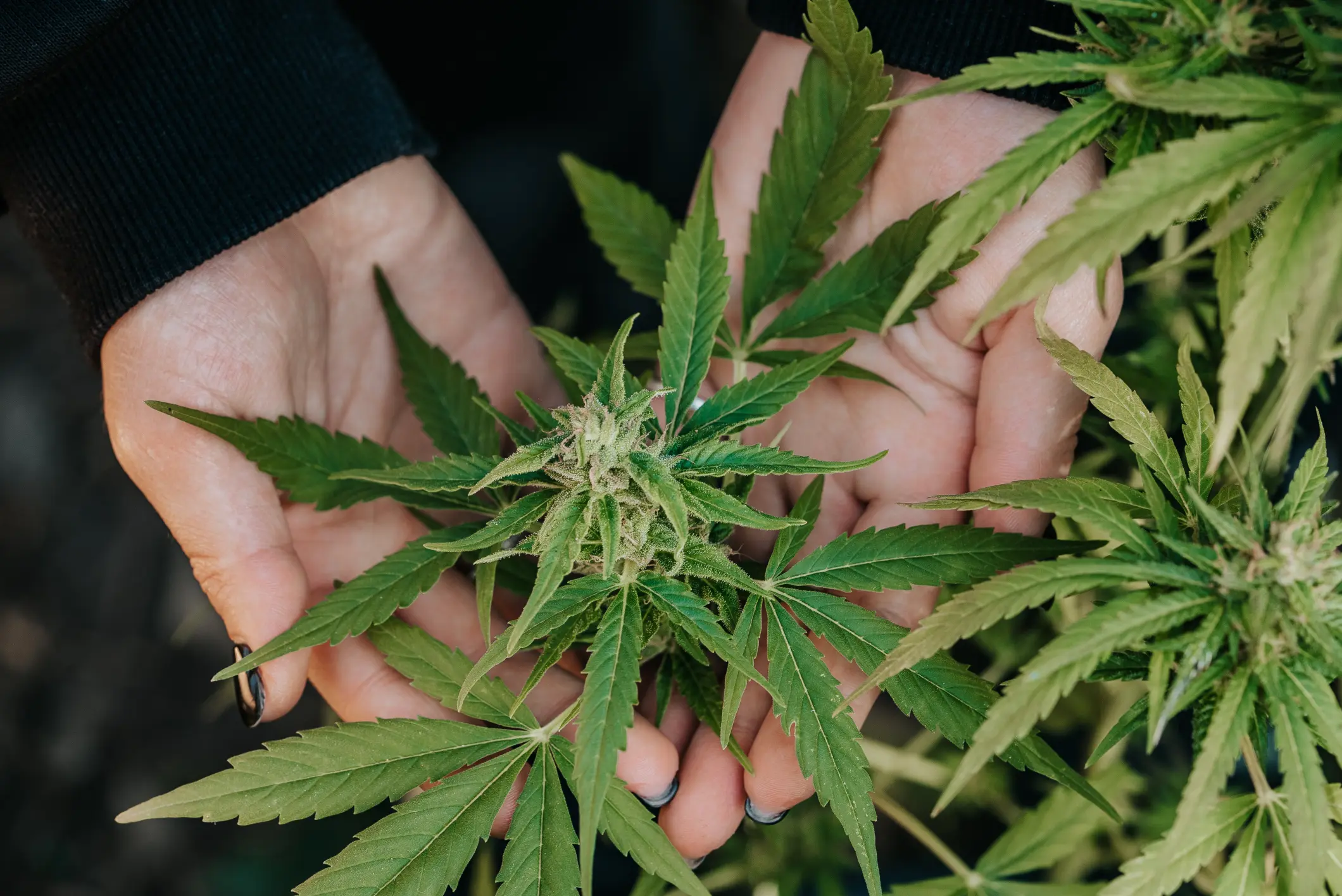
Kerala
Kerala is best understood through the way its regional genetics shape the entire grow. It is 100% sativa South Indian highland ganja landrace rooted in traditional Idukki and Western Ghats highland sativa from southern India. Its characteristic plant form is classic narrow-leaf highland sativa with heavy side branching, multiple bud sites and a comparatively moderate final height for such a long-flowering tropical line. That morphology creates one central cultivation question: finishing a 14-18 week South Indian highland sativa at full aromatic maturity without allowing excessive branch spread, late nitrogen, root fatigue or an impatient early harvest to flatten the mint-menthol-spice identity.
The target is not generic cannabis perfection. The target is fully mature narrow-leaf sativa flowers with clean resin, high bud-site exposure, deep mint-spice aroma and an energetic effect that is developed rather than thin or grassy. That difference matters because several of these traits would look unusual if compared with a modern dense hybrid. Open flowers, long internodes, lighter foliage or a long flowering cycle can be normal genetic behavior rather than problems to correct.
Reference timing and chemistry should be treated as planning ranges rather than guarantees. Indoor flowering commonly runs 14-18 weeks, while outdoor maturity in the traditional seasonal pattern can extend from late December into mid-January. Common reference material places many examples around 10-13% THC, although individual landrace accessions may differ. Seed-grown regional populations can vary enough that phenotype notes are part of cultivation, not optional record keeping.
Strain Fingerprint: Finishing a 14-18 week south indian highland sativa at full aromatic maturity without allowing excessive branch spread, late nitrogen, root fatigue or an impatient early harvest to flatten the mint-menthol-spice identity.
Strain Features
| Feature | Details |
|---|---|
| Type | 100% sativa South Indian highland ganja landrace |
| Genetic background | traditional Idukki and Western Ghats highland sativa from southern India |
| Sativa / Indica | 100% sativa |
| THC | Common reference material places many examples around 10-13%, though individual landrace accessions may differ |
| CBD | Not consistently standardized |
| CBG | Not consistently standardized |
| Indoor flowering | 14-18 weeks indoors |
| Outdoor harvest | Late December to mid-January in its traditional seasonal pattern |
| Yield | Medium-to-High with many side branches and multiple flower sites |
| Grow difficulty | Advanced indoors because of flowering duration and branch spread |
| Plant structure | classic narrow-leaf highland sativa with heavy side branching, multiple bud sites and a comparatively moderate final height for such a long-flowering tropical line |
| Typical height | Around 2 m is commonly reported for traditional highland examples, though environment and veg duration can change this substantially |
| Flowering stretch | moderate-to-high and prolonged, with branching continuing to create new flower sites deep into the early flowering phase |
| Feeding tendency | light-to-moderate nutrition is safer across the long bloom; excessive nitrogen can lengthen an already long finish |
| Watering behavior | steady moisture during active growth, with good root aeration and no chronic saturation during the extended flowering period |
| Climate | warm humid highland subtropical climate with significant seasonal rainfall and a very long autumn-to-winter finish |
| Resistance | landrace outdoor hardiness is useful, but the long cycle means root disease, leaf disease and pest monitoring must remain consistent for months |
| Aroma | mint, menthol, musk, spice, sweet pungency and tangy herbal notes |
| Flavor | minty herbal sweetness, menthol, dry spice, musk and a deep pungent finish that can become richer after cure |
| Effect | energetic, creative, focused and racy without necessarily producing the panic edge associated with some tropical sativas |
The table shows why Kerala needs a cultivar-specific method. Height and stretch dictate room geometry. Flowering duration dictates how long roots must remain healthy. Resistance defines environmental margin. Feeding tendency determines whether a modern high-EC recipe will improve flower mass or simply create excess leaf.
The most useful quality benchmark is fully mature narrow-leaf sativa flowers with clean resin, high bud-site exposure, deep mint-spice aroma and an energetic effect that is developed rather than thin or grassy. A grow that reaches that target is more successful than one that produces greater total biomass while losing aroma, resin integrity or mature flower texture.
Genetic Lineage
Kerala belongs to traditional Idukki and Western Ghats highland sativa from southern India. Regional cannabis populations are shaped by climate, farmer selection, local use and long-term open pollination. That history creates a broader genetic field than a single elite clone, which is why the same strain name can still contain meaningful plant-to-plant variation.
The recurring phenotype framework is: variation can appear in branch density, purple stalk coloration, mint intensity and exact finish timing, but the highland narrow-leaf identity remains dominant. These differences should be recorded instead of immediately corrected. A purple stem, narrow leaf, long internode or unusual flower shape may be genetic expression. The first question should be whether the plant is healthy, not whether it looks like a modern hybrid.
For keeper selection, one dramatic trait is not enough. The tallest plant may be too late. The most colorful plant may have weak aroma. The heaviest plant may cure flat. A useful keeper combines practical structure, stable flowering, resin, aroma persistence and an effect that represents the population.
The lineage also explains environmental behavior. warm humid highland subtropical climate with significant seasonal rainfall and a very long autumn-to-winter finish. That adaptation is a starting advantage, but controlled cultivation still improves quality when roots are oxygenated, branches are supported and late flowers stay dry enough to preserve resin.
Effect Breakdown
Initial phase
The onset is bright and active, often producing a quick sense of mental motion and creative engagement.
At a low dose, the opening can feel like mental acceleration without immediate confusion: ideas connect quickly and attention moves outward. The useful window narrows as dose rises. Too much flower can turn the same momentum into scattered attention, so Kerala is better approached by finding the smallest dose that reveals its clarity rather than testing its ceiling.
Peak phase
Focus and stimulation become more obvious. The best examples feel energetic without the jagged panic that can accompany less balanced tropical sativas.
At the peak, the distinction between energy and anxiety depends on both maturity and setting. Properly finished flower tends to feel continuous and purposeful; an early, thin harvest can feel shorter, sharper and less resolved. This is one reason Kerala’s long final weeks matter to the consumer experience rather than only to yield.
Late phase
The effect remains mostly cerebral and functional, with relatively little heavy body sedation unless the dose is high.
The late phase usually tapers instead of collapsing into a heavy indica finish. Physical fatigue can appear after a large dose, but the defining character remains mental. Consumers using it late in the day should not assume the absence of couch lock means it will be friendly to sleep.
Overall, the cultivar is associated with energetic, creative, focused and racy without necessarily producing the panic edge associated with some tropical sativas. Harvest maturity can shift the balance. Cutting too early often makes the first phase sharper and shorter. Letting an already mature plant run too long can soften the brighter side and increase physical weight.
The costly mistake to avoid with Kerala
Cannabis effects are individual. THC percentage alone does not predict whether a person will feel focused, anxious, relaxed, creative or sleepy.
Flavor & Aroma Profile
On the living plant, mature flowers should move toward mint, menthol, musk, spice, sweet pungency and tangy herbal notes. Fresh flower still contains water and green plant volatiles, so the final jar does not reveal itself completely until drying and curing remove that interference.
After cure, the flavor target is minty herbal sweetness, menthol, dry spice, musk and a deep pungent finish that can become richer after cure. The best samples show layers rather than one loud smell. Bright fruit, floral, mint, citrus or anise notes usually sit above deeper wood, resin, hash or spice. Those lighter top notes are also the first to disappear when late-flower temperatures are excessive or drying is too fast.
A practical flavor test begins before harvest. Smell the same flower site at similar times of day during the final two weeks. If the high notes disappear after a heat event, the plant is already showing the cost of the environment. That observation should influence the next run.
After drying, compare whole-bud aroma with the smell released after breaking the flower. Strong internal aroma suggests the resin and volatile chemistry survived inside the bud rather than existing only as a surface smell. That is one reason gentle handling matters.
Weedth Flavor Target: fully mature narrow-leaf sativa flowers with clean resin, high bud-site exposure, deep mint-spice aroma and an energetic effect that is developed rather than thin or grassy
Dominant Terpenes
| Terpene / Evidence | Status | Interpretation |
|---|---|---|
| Laboratory status | Not standardized | No reliable cultivar-wide terpene panel should be treated as definitive. |
| Mint / menthol layer | Strong sensory evidence | One of the most consistent reported signatures, but it may involve several volatiles rather than one simple terpene. |
| Spice and musk | Strong sensory evidence | Deepens the flavor and gives the cured flower a more serious, old-school character. |
| Possible pinene family contribution | Inference only | Herbal and pine-like freshness is plausible but not confirmed as a dominant percentage. |
| Possible limonene / terpinolene contribution | Inference only | Bright aromatic lift may involve these common sativa-associated terpenes, but the evidence is not sufficient for exact ranking. |
A precise terpene chart is not justified for this exact regional population. Sensory descriptions can be consistent without proving a laboratory percentage. The more accurate approach is to separate documented aroma from chemical inference.
Terpenes are horticulturally useful because they are volatile. A hot canopy, repeated drought stress or rapid drying can reduce aromatic quality without producing an obvious visual disaster. The grower can therefore use aroma as an additional late-flower quality signal.
For Kerala, the practical goal remains fully mature narrow-leaf sativa flowers with clean resin, high bud-site exposure, deep mint-spice aroma and an energetic effect that is developed rather than thin or grassy. If the final jar has lost the upper aromatic layers, the next run should examine temperature, harvest timing, dry speed and handling before changing genetics.
Indoor vs. Outdoor Growing
| Aspect | Indoor | Outdoor |
|---|---|---|
| Architecture | classic narrow-leaf highland sativa with heavy side branching, multiple bud sites and a comparatively moderate final height for such a long-flowering tropical line | classic narrow-leaf highland sativa with heavy side branching, multiple bud sites and a comparatively moderate final height for such a long-flowering tropical line with greater root volume and environmental expression |
| Flowering / season | 14-18 weeks indoors | Late December to mid-January in its traditional seasonal pattern |
| Main challenge | finishing a 14-18 week South Indian highland sativa at full aromatic maturity without allowing excessive branch spread, late nitrogen, root fatigue or an impatient early harvest to flatten the mint-menthol-spice identity | weather, season length, support and site access |
| Feeding | light-to-moderate nutrition is safer across the long bloom; excessive nitrogen can lengthen an already long finish | light-to-moderate nutrition is safer across the long bloom; excessive nitrogen can lengthen an already long finish adjusted for native soil fertility and rainfall |
| Climate control | High control over light, temperature, humidity and irrigation. | warm humid highland subtropical climate with significant seasonal rainfall and a very long autumn-to-winter finish |
| Best advantage | Phenotype-specific timing and precise canopy control. | Sunlight, root scale and expression of regional adaptation. |
Indoors, the main cost is geometry. The grower has to fit moderate-to-high and prolonged, with branching continuing to create new flower sites deep into the early flowering phase into a room while preserving enough horizontal space for air and light. That is why transition height is a cultivar-specific number rather than a universal rule.
Outdoors, the plant can use its natural scale, but the season becomes the hard limit. warm humid highland subtropical climate with significant seasonal rainfall and a very long autumn-to-winter finish. A site that receives morning sun and drains quickly after rain will use that adaptation better than a sheltered but stagnant corner.
Neither environment is automatically superior. Indoor gardens trade scale for control. Outdoor gardens trade control for root volume, sunlight and regional expression. The best choice is the environment in which the strain’s main limitation can be managed consistently.
Strain-Specific Grow Guidance
The central cultivation problem is finishing a 14-18 week South Indian highland sativa at full aromatic maturity without allowing excessive branch spread, late nitrogen, root fatigue or an impatient early harvest to flatten the mint-menthol-spice identity. The longest section of this profile is built around that issue because it influences plant count, flip timing, branch support, root volume, nutrient strength and harvest strategy.
Flip earlier than you think
Long flowering does not mean slow early stretch. Entering bloom with an oversized plant creates an exhausting four-month height problem.
For Kerala, the quality test is whether this decision improves the probability of producing fully mature narrow-leaf sativa flowers with clean resin, high bud-site exposure, deep mint-spice aroma and an energetic effect that is developed rather than thin or grassy. If a technique adds stress without improving light access, airflow, root stability or maturity, it is probably unnecessary.
On a second run, record the date of the adjustment and the plant response over the next three to five days. This turns a general recommendation into a cultivar-specific setting instead of relying on memory.
Use branch mapping instead of constant topping
Kerala naturally produces many side branches and multiple bud sites. Early bending and selective topping are more useful than repeatedly cutting every growing tip.
For Kerala, the quality test is whether this decision improves the probability of producing fully mature narrow-leaf sativa flowers with clean resin, high bud-site exposure, deep mint-spice aroma and an energetic effect that is developed rather than thin or grassy. If a technique adds stress without improving light access, airflow, root stability or maturity, it is probably unnecessary.
On a second run, record the date of the adjustment and the plant response over the next three to five days. This turns a general recommendation into a cultivar-specific setting instead of relying on memory.
Preserve the center as an air corridor
Heavy side branching can close the plant even when individual flowers remain relatively open. Keep the central structure ventilated and do not let branches cross into one another.
For Kerala, the quality test is whether this decision improves the probability of producing fully mature narrow-leaf sativa flowers with clean resin, high bud-site exposure, deep mint-spice aroma and an energetic effect that is developed rather than thin or grassy. If a technique adds stress without improving light access, airflow, root stability or maturity, it is probably unnecessary.
On a second run, record the date of the adjustment and the plant response over the next three to five days. This turns a general recommendation into a cultivar-specific setting instead of relying on memory.
Feed lightly through the long transition
A sativa that flowers for 14-18 weeks has plenty of time to reveal nutrient excess. Soft nitrogen and measured mineral strength help it move from stretch to reproduction cleanly.
For Kerala, the quality test is whether this decision improves the probability of producing fully mature narrow-leaf sativa flowers with clean resin, high bud-site exposure, deep mint-spice aroma and an energetic effect that is developed rather than thin or grassy. If a technique adds stress without improving light access, airflow, root stability or maturity, it is probably unnecessary.
On a second run, record the date of the adjustment and the plant response over the next three to five days. This turns a general recommendation into a cultivar-specific setting instead of relying on memory.
Do not confuse duration with hunger
A long crop needs sustained nutrition, not high concentration. The root zone has to remain healthy longer than the buds need to be heavily fed.
For Kerala, the quality test is whether this decision improves the probability of producing fully mature narrow-leaf sativa flowers with clean resin, high bud-site exposure, deep mint-spice aroma and an energetic effect that is developed rather than thin or grassy. If a technique adds stress without improving light access, airflow, root stability or maturity, it is probably unnecessary.
On a second run, record the date of the adjustment and the plant response over the next three to five days. This turns a general recommendation into a cultivar-specific setting instead of relying on memory.
Keep roots oxygenated for months
Chronic wetness compounds slowly in a long cycle. A media problem that would be tolerable for eight weeks can become serious by week fourteen.
For Kerala, the quality test is whether this decision improves the probability of producing fully mature narrow-leaf sativa flowers with clean resin, high bud-site exposure, deep mint-spice aroma and an energetic effect that is developed rather than thin or grassy. If a technique adds stress without improving light access, airflow, root stability or maturity, it is probably unnecessary.
On a second run, record the date of the adjustment and the plant response over the next three to five days. This turns a general recommendation into a cultivar-specific setting instead of relying on memory.
Protect the mint and menthol layer from heat
The unusual high notes are part of the cultivar’s identity and are more fragile than the deep musky base. Late-flower heat control matters.
For Kerala, the quality test is whether this decision improves the probability of producing fully mature narrow-leaf sativa flowers with clean resin, high bud-site exposure, deep mint-spice aroma and an energetic effect that is developed rather than thin or grassy. If a technique adds stress without improving light access, airflow, root stability or maturity, it is probably unnecessary.
On a second run, record the date of the adjustment and the plant response over the next three to five days. This turns a general recommendation into a cultivar-specific setting instead of relying on memory.
Watch for staggered branch maturity
A broad plant with many sites can finish unevenly. Sample trichomes from several well-lit branches instead of judging the entire room from one top.
For Kerala, the quality test is whether this decision improves the probability of producing fully mature narrow-leaf sativa flowers with clean resin, high bud-site exposure, deep mint-spice aroma and an energetic effect that is developed rather than thin or grassy. If a technique adds stress without improving light access, airflow, root stability or maturity, it is probably unnecessary.
On a second run, record the date of the adjustment and the plant response over the next three to five days. This turns a general recommendation into a cultivar-specific setting instead of relying on memory.
Do not chase brown color as a quality target
Traditional descriptions mention flowers curing to deep brown tones, but color alone says little about trichome maturity or post-harvest quality.
For Kerala, the quality test is whether this decision improves the probability of producing fully mature narrow-leaf sativa flowers with clean resin, high bud-site exposure, deep mint-spice aroma and an energetic effect that is developed rather than thin or grassy. If a technique adds stress without improving light access, airflow, root stability or maturity, it is probably unnecessary.
On a second run, record the date of the adjustment and the plant response over the next three to five days. This turns a general recommendation into a cultivar-specific setting instead of relying on memory.
Cure longer than a fast modern hybrid
Mint, musk and spice can feel disjointed immediately after drying. Several weeks of cure allow the profile to integrate and soften.
For Kerala, the quality test is whether this decision improves the probability of producing fully mature narrow-leaf sativa flowers with clean resin, high bud-site exposure, deep mint-spice aroma and an energetic effect that is developed rather than thin or grassy. If a technique adds stress without improving light access, airflow, root stability or maturity, it is probably unnecessary.
On a second run, record the date of the adjustment and the plant response over the next three to five days. This turns a general recommendation into a cultivar-specific setting instead of relying on memory.
Root-zone longevity
The crop may remain in flower for 14-18 weeks indoors. That means the root system has to stay oxygenated and biologically functional for much longer than a short commercial hybrid. Poor drainage that seems minor in week three can become a serious limitation by the end.
The second-run goal is repeatability. Change one major variable at a time and keep phenotype labels intact so the effect of the adjustment can actually be identified.
Canopy depth
Not every green branch deserves to stay. Keep sites that can receive enough light and air to become mature flowers. Remove permanently weak growth after the major stretch so energy and labor stay focused on useful positions.
The second-run goal is repeatability. Change one major variable at a time and keep phenotype labels intact so the effect of the adjustment can actually be identified.
Light distribution
The highest top is not the crop. Strong average light across the productive canopy usually produces a higher percentage of premium flower than a few overpowered tops above a dark interior.
The second-run goal is repeatability. Change one major variable at a time and keep phenotype labels intact so the effect of the adjustment can actually be identified.
Nutrient finish
The feeding reference is light-to-moderate nutrition is safer across the long bloom; excessive nitrogen can lengthen an already long finish. As harvest approaches, a clean metabolic finish is more useful than forcing dark green leaves. Excess late nitrogen often increases leaf, slows fade and weakens aroma separation.
The second-run goal is repeatability. Change one major variable at a time and keep phenotype labels intact so the effect of the adjustment can actually be identified.
Late humidity
Reference resistance is landrace outdoor hardiness is useful, but the long cycle means root disease, leaf disease and pest monitoring must remain consistent for months. That is an advantage, not immunity. Large flower clusters and overlapping branches can create local humidity pockets even in a resistant landrace.
The second-run goal is repeatability. Change one major variable at a time and keep phenotype labels intact so the effect of the adjustment can actually be identified.
Maturity mapping
Wait until bracts have hardened and resin maturity is consistent across the flower, even if the outer appearance has already turned darker or brownish from long maturation. Check several flowers at different canopy positions and do not let one convenient calendar date erase phenotype differences.
The second-run goal is repeatability. Change one major variable at a time and keep phenotype labels intact so the effect of the adjustment can actually be identified.
Master Advice: Do not force a regional landrace to imitate a modern commercial hybrid. Remove the limits that reduce quality, then let the cultivar keep the architecture and flower style that define it.
Weedth Bud Flavor Tips
Late-flower temperature
Protect volatile aroma during the last two weeks. A crop does not need visible heat burn to lose its most delicate citrus, floral, mint, berry or anise notes.
The strain-specific reason is mint, menthol, musk, spice, sweet pungency and tangy herbal notes. The deeper wood, resin or spice base generally survives rough handling better than the bright upper layer. A rushed dry can therefore make a complex cultivar taste deceptively simple.
Harvest timing
Wait until bracts have hardened and resin maturity is consistent across the flower, even if the outer appearance has already turned darker or brownish from long maturation.
Handling
Move branches by stems and avoid compressing wet flower. Trichome heads left on gloves are no longer on the bud.
Drying speed
Use darkness and indirect air exchange. Choose whole branches or smaller sections based on room humidity instead of using one method for every cultivar.
The strain-specific reason is mint, menthol, musk, spice, sweet pungency and tangy herbal notes. The deeper wood, resin or spice base generally survives rough handling better than the bright upper layer. A rushed dry can therefore make a complex cultivar taste deceptively simple.
Large-cola safety
If a flower remains wet internally, divide it. Preserving visual size is not worth mold or uneven drying.
Cure development
The target after cure is minty herbal sweetness, menthol, dry spice, musk and a deep pungent finish that can become richer after cure. Give the flower enough time for green plant odor to recede and moisture to equalize.
The strain-specific reason is mint, menthol, musk, spice, sweet pungency and tangy herbal notes. The deeper wood, resin or spice base generally survives rough handling better than the bright upper layer. A rushed dry can therefore make a complex cultivar taste deceptively simple.
Storage
Cool, dark, stable storage protects the volatile top notes better than repeated heat cycles, bright display jars or frequent long openings.
Pro Tip: Keep a small reference jar from the best-smelling phenotype and open it as rarely as possible. Compare it with a frequently opened jar after one month to see how handling and oxygen exposure change the aroma.
Weedth Bud Boost Tips
Bud boosting should mean more premium dried flower, not simply more wet biomass. The best strategy begins with the plant’s natural structure rather than a universal supplement list.
Plant count
Match the number of plants to mature footprint. Overcrowding is difficult to reverse after the stretch. With Kerala, keep the central constraint in mind: finishing a 14-18 week South Indian highland sativa at full aromatic maturity without allowing excessive branch spread, late nitrogen, root fatigue or an impatient early harvest to flatten the mint-menthol-spice identity.
Judge the technique after drying. If it increases trim, wetness or bland flower more than it increases premium buds, it is not a true improvement.
Root volume
Give the intended canopy enough root capacity to support water and mineral demand through the entire flowering period. With Kerala, keep the central constraint in mind: finishing a 14-18 week South Indian highland sativa at full aromatic maturity without allowing excessive branch spread, late nitrogen, root fatigue or an impatient early harvest to flatten the mint-menthol-spice identity.
Judge the technique after drying. If it increases trim, wetness or bland flower more than it increases premium buds, it is not a true improvement.
Training strategy
Use SOG, SCROG, topping or bending only when the method solves a structural issue specific to the cultivar. With Kerala, keep the central constraint in mind: finishing a 14-18 week South Indian highland sativa at full aromatic maturity without allowing excessive branch spread, late nitrogen, root fatigue or an impatient early harvest to flatten the mint-menthol-spice identity.
Judge the technique after drying. If it increases trim, wetness or bland flower more than it increases premium buds, it is not a true improvement.
Light before fertilizer
Increase usable light distribution before assuming low yield is a nutrient problem. With Kerala, keep the central constraint in mind: finishing a 14-18 week South Indian highland sativa at full aromatic maturity without allowing excessive branch spread, late nitrogen, root fatigue or an impatient early harvest to flatten the mint-menthol-spice identity.
Judge the technique after drying. If it increases trim, wetness or bland flower more than it increases premium buds, it is not a true improvement.
Selective cleanup
After stretch, remove permanently shaded shoots while preserving useful secondary flowers that still receive light. With Kerala, keep the central constraint in mind: finishing a 14-18 week South Indian highland sativa at full aromatic maturity without allowing excessive branch spread, late nitrogen, root fatigue or an impatient early harvest to flatten the mint-menthol-spice identity.
Judge the technique after drying. If it increases trim, wetness or bland flower more than it increases premium buds, it is not a true improvement.
Support early
Install trellis or stakes before flowers become heavy and resinous. With Kerala, keep the central constraint in mind: finishing a 14-18 week South Indian highland sativa at full aromatic maturity without allowing excessive branch spread, late nitrogen, root fatigue or an impatient early harvest to flatten the mint-menthol-spice identity.
Judge the technique after drying. If it increases trim, wetness or bland flower more than it increases premium buds, it is not a true improvement.
CO2 only in a balanced room
Supplemental carbon dioxide can increase photosynthetic potential only when light, roots, temperature and nutrition are already adequate. With Kerala, keep the central constraint in mind: finishing a 14-18 week South Indian highland sativa at full aromatic maturity without allowing excessive branch spread, late nitrogen, root fatigue or an impatient early harvest to flatten the mint-menthol-spice identity.
Judge the technique after drying. If it increases trim, wetness or bland flower more than it increases premium buds, it is not a true improvement.
Ripening restraint
The final weeks should be used for maturation, not for forcing new vegetative growth with aggressive nitrogen or unnecessary stimulators. With Kerala, keep the central constraint in mind: finishing a 14-18 week South Indian highland sativa at full aromatic maturity without allowing excessive branch spread, late nitrogen, root fatigue or an impatient early harvest to flatten the mint-menthol-spice identity.
Judge the technique after drying. If it increases trim, wetness or bland flower more than it increases premium buds, it is not a true improvement.
Remember: Yield and flavor are not enemies when the environment is balanced. The conflict usually appears when growers chase weight with more canopy, more salts or more late humidity than the strain can process cleanly.
Medical Uses & Benefits
This section is educational and conservative. A named strain is not a medicine with standardized composition. The same seed population can produce different cannabinoid ratios, and clinical research usually evaluates cannabinoids or formulations rather than one strain name.
Fatigue And Low Motivation
The energetic profile may appeal to consumers seeking subjective activation during the day.
Stress With Lethargy
Some users may prefer an uplifting effect when sedation is undesirable, but anxiety-prone users should begin with a low dose.
Focus And Creativity
Reported focus and creative engagement are subjective effects, not evidence for treating attention disorders.
Sleep Caution
The long-lasting stimulating character can be poorly suited to late-night use for sensitive consumers.
The reference effect is energetic, creative, focused and racy without necessarily producing the panic edge associated with some tropical sativas. Consumers should match that direction to their own tolerance, medications and goals. A stimulating cultivar can worsen anxiety or sleep problems. A heavy cultivar can impair daytime function.
Anyone using cannabis for a medical condition, taking prescription medication, pregnant or breastfeeding, or managing psychiatric, neurological or cardiovascular risk should discuss use with a qualified health professional.
Ideal User Profile
Kerala best suits a consumer who actually wants energetic, creative, focused and racy without necessarily producing the panic edge associated with some tropical sativas. Choosing by THC percentage alone misses the character that makes a landrace or heritage strain interesting.
Consumers looking for a clear or functional effect may appreciate the cultivar more than people seeking a heavy sedative experience.
Flavor-focused users should look for minty herbal sweetness, menthol, dry spice, musk and a deep pungent finish that can become richer after cure. A sample that no longer shows those defining notes may still be potent, but it is not expressing the cultivar at its highest quality.
The ideal grower is someone willing to label phenotypes, make structural decisions before flowering becomes crowded and protect the dry. These cultivars reward observation more than a rigid calendar.
Grower Notes and Feedback
The most repeatable grower lesson is that Kerala becomes easier once the main limitation is accepted early: finishing a 14-18 week South Indian highland sativa at full aromatic maturity without allowing excessive branch spread, late nitrogen, root fatigue or an impatient early harvest to flatten the mint-menthol-spice identity. Many secondary problems are simply consequences of ignoring that first issue.
Field note: Flip earlier than you think
Long flowering does not mean slow early stretch. Entering bloom with an oversized plant creates an exhausting four-month height problem.
Write down the actual flip height and the date vertical growth finally slows. With a 14-18 week flowering plant, that single observation prevents months of avoidable light-distance and branch-support problems on the next cycle.
Field note: Use branch mapping instead of constant topping
Kerala naturally produces many side branches and multiple bud sites. Early bending and selective topping are more useful than repeatedly cutting every growing tip.
Map the branches that reach the working canopy before deciding what to remove. Kerala’s yield is distributed across many laterals, so indiscriminate topping can replace useful architecture with a slower, denser tangle.
Field note: Preserve the center as an air corridor
Heavy side branching can close the plant even when individual flowers remain relatively open. Keep the central structure ventilated and do not let branches cross into one another.
Check the center from below while the lights are on. If stems overlap and the far leaves barely move, the corridor is already closing. Correct that geometry during stretch rather than waiting for resinous flowers to make access difficult.
Field note: Feed lightly through the long transition
A sativa that flowers for 14-18 weeks has plenty of time to reveal nutrient excess. Soft nitrogen and measured mineral strength help it move from stretch to reproduction cleanly.
Use color and tip posture as limits, not as targets. A healthy Kerala can remain lighter green than a compact hybrid. Darkening it for reassurance often buys extra leaf and a slower transition rather than more mature flower.
Field note: Do not confuse duration with hunger
A long crop needs sustained nutrition, not high concentration. The root zone has to remain healthy longer than the buds need to be heavily fed.
Separate concentration from continuity. The crop may need nutrition for many more weeks, but each irrigation can remain modest. Stable low-pressure feeding is easier on the root zone than alternating heavy inputs with corrective flushes.
Field note: Keep roots oxygenated for months
Chronic wetness compounds slowly in a long cycle. A media problem that would be tolerable for eight weeks can become serious by week fourteen.
Track dry-back time as the canopy ages. Transpiration can decline before the calendar says the plant is near harvest, and continuing an early-flower irrigation rhythm can leave the lower root zone wet for days.
Field note: Protect the mint and menthol layer from heat
The unusual high notes are part of the cultivar’s identity and are more fragile than the deep musky base. Late-flower heat control matters.
Smell the same tagged flower before and after warm days. When the menthol edge becomes noticeably quieter while the musky base remains, the plant is showing aromatic heat loss even if the leaves still look healthy.
Phenotype separation is especially useful because variation can appear in branch density, purple stalk coloration, mint intensity and exact finish timing, but the highland narrow-leaf identity remains dominant. Keep flowers separate through drying and at least the early cure. Appearance at harvest is not enough to decide which plant is the keeper.
A concise grow diary should record stretch ratio, feeding tolerance, support timing, peak aroma week, actual harvest date and dry duration. Those six observations explain a large share of second-run improvement.
Weedth Experience
A flowering room measured in months
Kerala changes the emotional rhythm of a grow. With an eight- or nine-week hybrid, a small mistake often feels temporary because harvest is already visible. Here, a poor decision at the flip can remain in front of me for another three or four months. I would only start the run after deciding that the room belongs to this plant for the full cycle, not until the date I become impatient.
I would flip smaller than instinct suggests and treat the first branch map as the foundation of the crop. Kerala already wants to produce numerous laterals. My work would be to spread those laterals into distinct lanes and keep the center breathable, not to manufacture dozens of new tips through repeated topping. Once the stretch reveals the useful branches, I would remove weak interior growth and then become conservative with the scissors.
Keeping a long run alive rather than force-feeding it
The challenge I would watch most closely is root fatigue. A 14-18 week bloom does not ask for an extreme nutrient concentration; it asks for an oxygenated medium and a feeding rhythm the plant can tolerate for a very long time. I would rather see a clean, slightly lighter canopy progressing every week than dark leaves that reassure me in the short term while delaying floral maturity.
I would also recalibrate irrigation as the plant ages. The large branch system can drink aggressively during stretch, then slow unevenly as the flowers mature. Pot weight and drain behavior would matter more to me than repeating a fixed volume. Chronic moisture at week twelve is not the same problem as one slow dry-back in early flower; it has had months to reduce root function quietly.
The aroma that tells me to keep waiting
Kerala interests me because its mint and menthol do not sit on top of a modern candy profile. They emerge through musk, spice and tangy herbal depth. I would begin smelling tagged flowers well before the expected harvest window and note when the aroma stops reading as green material and starts holding its shape through the day. If hot afternoons repeatedly erase the mint while leaving only musk, I would reduce canopy stress before reaching for another additive.
I would not harvest simply because the flowers have darkened during a long maturation. I would look for hardened bracts, consistent resin maturity and a real slowdown in fresh pistil production. Cutting this plant at week twelve because it resembles a finished hybrid would preserve the inconvenience of the long run while discarding the reason for accepting it.
After drying, my keeper decision would be sensory and structural at the same time. I would want a plant whose branch spread remained manageable, whose roots stayed active late, and whose jar still released a cold mint-menthol edge after the musk and spice settled. Kerala earns its space when that bright, sustained mental effect feels as complete as the months used to produce it. Anything thinner would make the long calendar difficult to justify.
Weedth Score
Growing Experience 7.9/10 Reward relative to the cultivar-specific work required.
Bud Structure & Visual Appeal 8.6/10 How well mature flowers express the natural structure and resin.
Aroma Complexity 9.5/10 Depth, separation and distinctiveness of the aromatic profile.
Flavor & Smoothness 9.3/10 How clearly flavor survives a controlled dry and cure.
Effects & High Experience 9.2/10 How completely the experience reflects the cultivar’s identity.
Overall Satisfaction & Recommendation 9.0/10 Overall value for growers and consumers who understand its niche.
Overall average: 8.9/10. This is not a universal ranking. The score reflects how completely Kerala delivers its own identity when grown and finished well.
Personal Closer: Kerala is worth growing when the goal is to preserve its character, not to make it resemble a different plant.
FAQ
Is Kerala beginner-friendly?
The main challenge is finishing a 14-18 week South Indian highland sativa at full aromatic maturity without allowing excessive branch spread, late nitrogen, root fatigue or an impatient early harvest to flatten the mint-menthol-spice identity. A careful beginner can learn from it, but growers with experience in canopy and irrigation management will reach consistency faster.
How long does Kerala flower?
Indoor flowering is 14-18 weeks indoors. Outdoor maturity is Late December to mid-January in its traditional seasonal pattern, with phenotype and latitude affecting the exact date.
How much does Kerala stretch?
The reference pattern is moderate-to-high and prolonged, with branching continuing to create new flower sites deep into the early flowering phase. Flip height should be planned from the final room, not from vegetative plant size.
How heavily should Kerala be fed?
Light-to-moderate nutrition is safer across the long bloom because excessive nitrogen can lengthen an already long finish. Increase strength only when roots, light and plant demand support it.
Is Kerala good outdoors?
Its climate profile is warm humid highland subtropical climate with significant seasonal rainfall and a very long autumn-to-winter finish. Outdoor success still depends on drainage, morning sun and enough season length.
What is the biggest grow mistake?
Finishing a 14-18 week south indian highland sativa at full aromatic maturity without allowing excessive branch spread, late nitrogen, root fatigue or an impatient early harvest to flatten the mint-menthol-spice identity.
When should Kerala be harvested?
Wait until bracts have hardened and resin maturity is consistent across the flower, even if the outer appearance has already turned darker or brownish from long maturation.
What should good flower smell like?
Expect mint, menthol, musk, spice, sweet pungency and tangy herbal notes. After cure, the target flavor is minty herbal sweetness, menthol, dry spice, musk and a deep pungent finish that can become richer after cure.
Does phenotype selection matter?
variation can appear in branch density, purple stalk coloration, mint intensity and exact finish timing, but the highland narrow-leaf identity remains dominant.
Who is Kerala best for?
Consumers seeking energetic, creative, focused and racy without necessarily producing the panic edge associated with some tropical sativas and growers willing to manage the cultivar on its own terms.
Similar Strains
Chocolate Thai
another long tropical sativa with old-school aroma and cerebral effect
Mama Thai
shares Southeast Asian-style duration and energetic effect
Manipuri
another South Asian long-flowering landrace with powerful branch development
Oldtimer’s Haze
a similarly long pure-sativa preservation with extreme flowering commitment
Destroyer
another long sativa that rewards early structure management
Utopia Haze
a long-running cerebral cultivar where maturity and canopy control matter
Similar strains are most useful when the reader knows what is being compared. Flowering speed, climate adaptation, aroma, genetics and psychoactive direction are separate dimensions. No alternative is a complete replacement.
Share this article
A quick overview of the topics covered in this article.
Follow us
Latest articles
September 29, 2026
September 29, 2026
September 29, 2026
September 29, 2026