
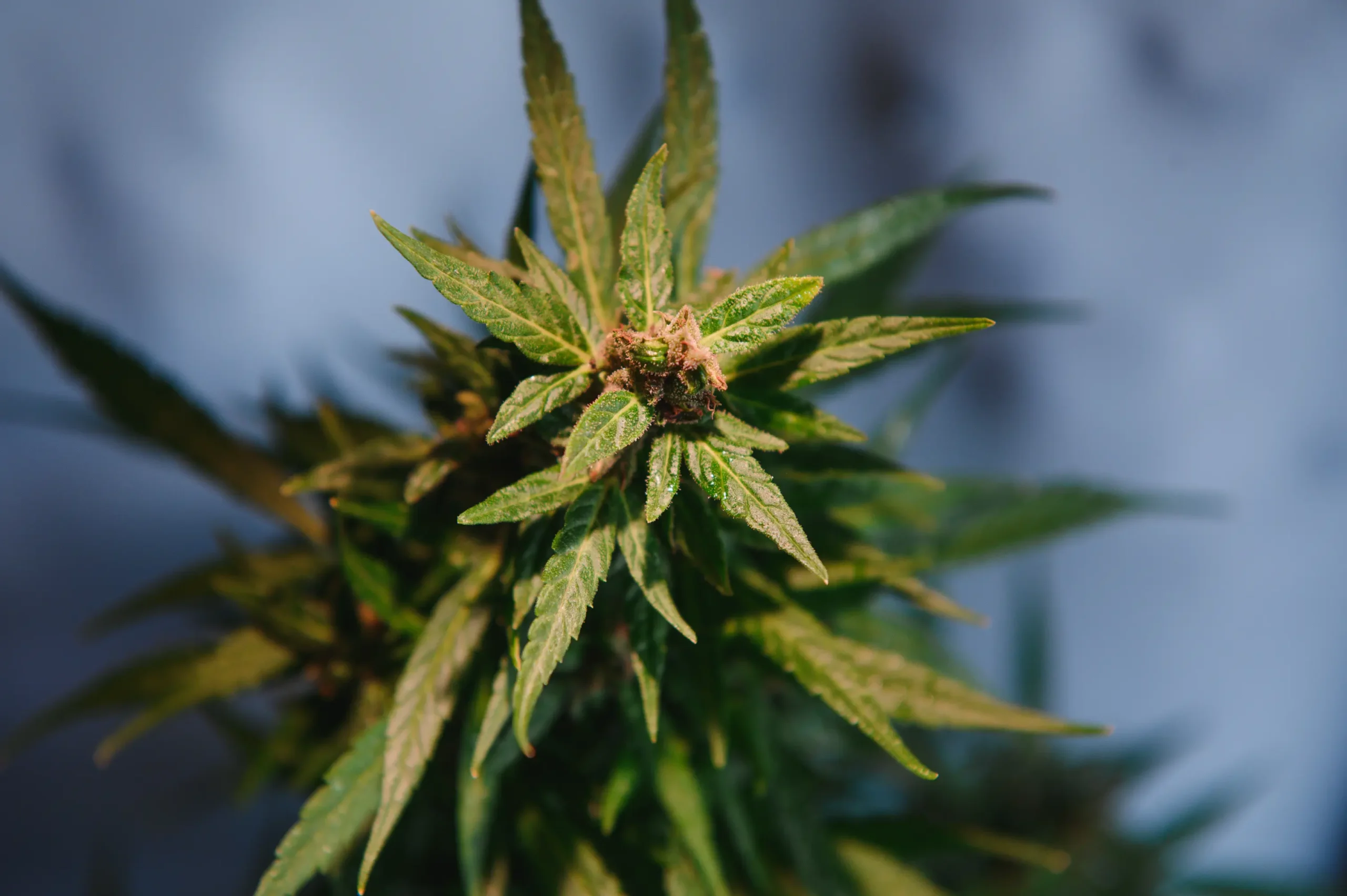
Malawi Gold
Malawi Gold is not a modern high-speed hybrid wearing a landrace name. At its most authentic, it is a tall East African sativa with a very long flowering cycle, narrow leaves, flexible branches, and long resinous flowers that can look open by modern indica standards. The plant's difficulty comes from duration and scale rather than fragility.
The cultivar originates in Malawi, where long warm seasons allowed plants to develop without the compressed schedule expected in temperate indoor gardens. Modern descriptions commonly place indoor flowering around sixteen weeks, and some lines can run longer. That makes Malawi Gold a planning problem before it is a feeding problem.
The central cultivation question is: how can a grower contain Malawi Gold's extreme vertical and temporal appetite while preserving the open architecture, mature resin, and clear energetic character that make the cultivar worth growing? The answer is an early flip, flexible branch redirection, restrained nutrition, generous root stability, and patience with flowers that mature slowly rather than suddenly.
The plant can tolerate difficult conditions in its native-style outdoor environment, but that should not be turned into a myth that it thrives under neglect. A sixteen-week flower cycle exposes the crop to far more opportunities for root drift, pests, light stress, irrigation mistakes, and late environmental changes than a nine-week hybrid.
Flavor ranges from floral herbs and wood to earth, tropical fruit, mint, tar-like resin, and dry spice. The aroma is usually less dessert-like than modern hybrids and can feel almost medicinal or incense-like. Quality depends on full maturity and gentle drying, because open sativa flowers can lose moisture faster than dense Kush buds.
Strain Features
| Feature | Details |
|---|---|
| Strain Type | East African landrace sativa |
| Origin | Malawi in southeastern Africa |
| Genetic Profile | Landrace population rather than a modern named-parent cross |
| THC | Often moderate to strong in preserved modern samples; exact potency varies widely |
| CBD | Usually low in THC-oriented selections |
| Dominant Terpenes | Myrcene, beta-caryophyllene, limonene, and other line-dependent terpenes |
| Flavor / Aroma | Floral herbs, earth, tropical fruit, mint, wood, spice, tar-like resin |
| Effect Character | Energetic, focused, creative, uplifting, long-lasting, mentally clear for many users |
| Flowering Time | Often around 16 weeks indoors; preservation-style phenotypes may run longer |
| Outdoor Finish | Can extend toward late November or early December in long-season climates |
| Grow Difficulty | Advanced indoors |
| Stretch | Very strong and prolonged |
| Plant Architecture | Very tall, narrow-leaf, flexible, long internodes, long lateral branches |
| Flower Structure | Long resinous spears with more open density than modern indica hybrids |
| Root Demand | Large long-cycle plants benefit from stable, well-aerated root volume |
| Training Compatibility | Early topping, LST, wide SCROG, repeated gentle branch redirection |
| Environmental Resilience | Often hardy outdoors, but long exposure time increases cumulative risk |
| Best Time of Use | Daytime |
Genetic Lineage
Malawi Gold is best understood as a regional landrace population rather than a modern strain created from two named parents. Its horticultural identity developed through repeated cultivation in Malawi over generations.
That origin explains the plant's long season and large stature. Near-equatorial and subtropical African environments do not create the same rapid seasonal photoperiod shift that many modern indoor cultivars have been selected to respond to.
Preservation lines can differ. Some are selected toward a somewhat more practical indoor finish, while others retain extremely long flowering and very tall morphology. The name alone should not be used to promise one exact number of weeks.
Red or purple stem coloration appears in some descriptions and phenotypes, but it is not an authenticity test. Plant structure, flowering rhythm, aroma, and effect are more useful than one visual marker.
Keeper selection should match the grower's purpose. A preservation project may prefer the most landrace-like long phenotype. An indoor grower may reasonably choose a shorter plant if it preserves the floral-tropical aroma and distinctive clear effect.
Effect Breakdown
Malawi Gold is usually described as mentally energizing rather than physically heavy. At a restrained dose, attention can feel sharp and ordinary activity can become more engaging.
Creative thought and social interest are common themes. Music, movement, conversation, outdoor activity, and detailed hobbies generally fit better than passive evening use.
At moderate doses, the effect can feel unusually long and mentally clean for a strong sativa. That clarity is still intoxication and should not be confused with unimpaired performance.
Higher doses can become intense. Racing thoughts, sensory amplification, and anxiety are possible, particularly for users accustomed to heavier body-focused hybrids.
Physical relaxation tends to remain secondary. Some users notice a light body warmth later, but the cultivar usually does not collapse into a strong sedating finish.
The best use window is daytime. Malawi Gold's identity is the extended mental lift rather than appetite, couch-lock, or sleep.
The long duration of the effect is part of Malawi Gold's reputation. Users may feel mentally engaged well after the initial peak, which can make dose stacking unnecessary and sometimes uncomfortable.
Because the body remains relatively light, users can underestimate impairment. Clear energy is still psychoactive, and complex decision-making can be affected even when the user does not feel physically slowed.
Flavor & Aroma Profile
Malawi Gold does not have one universal candy flavor. The most repeated profile is floral and herbal with wood, earth, spice, tropical fruit, mint, and a dark resinous or tar-like note.
Some phenotypes lean greener and more menthol-like. Others are sweeter, with ripe tropical fruit behind dry herbs. The mature aroma can feel incense-like without becoming the church-incense profile associated with some Haze lines.
Grinding the flower usually exposes darker resin, spice, and earth. The intact spear can smell softer and more floral than the broken interior.
On inhale, herbs and light tropical sweetness can lead. The middle becomes woody or minty. The exhale often carries earth, pepper, resin, and a dry almost medicinal finish.
Immaturity is especially damaging. A plant cut because the grower is tired of waiting can remain grassy and hollow even after a long cure.
The open flowers can also overdry faster than expected. Malawi Gold quality depends on finishing the long live plant fully and then refusing to rush the much shorter drying stage.
Dominant Terpenes
| Terpene | Aroma Role | Cultivar Relevance | Scientific Caution |
|---|---|---|---|
| Myrcene | Earth, herbs, ripe fruit | Often reported in modern samples and fits the grounded herbal base | Does not make this energetic landrace sedating by itself |
| Beta-caryophyllene | Pepper, dry spice, wood | Supports the resinous spicy finish | CB2 activity does not prove strain-specific medical effects |
| Limonene | Citrus and bright fruit | May contribute to lighter tropical or citrus phenotypes | Does not guarantee stimulation |
| Minor minty, floral and resinous volatiles | Mint, flowers, tar-like resin | Important to the old-school landrace sensory identity | Simple terpene panels may not explain the complete aroma |
A landrace population should not be given one rigid terpene hierarchy. Different preserved lines and individual plants can express meaningful chemical variation.
The energetic effect should be discussed separately from terpene marketing. Cannabinoid concentration, dose, tolerance, and the full chemotype matter more than one dominant aroma compound.
Indoor vs. Outdoor Growing
| Decision Point | Indoor | Outdoor |
|---|---|---|
| Primary Challenge | Containing very strong stretch and a roughly 16-week flowering cycle | Providing enough warm season for full maturity |
| Stretch | Very strong and prolonged | Vertical space is less limiting, but plant size can become enormous |
| Training | Early topping, LST, wide open SCROG, repeated gentle redirection | Early topping and perimeter support can organize large plants |
| Flower Duration | Extremely long compared with modern hybrids | Late finish may extend into early December |
| Bud Density | Open-to-medium flowers reduce some internal moisture pressure | Long seasonal exposure still increases cumulative weather risk |
| Root Volume | Needs stable root space for months without chronic saturation | Large containers or ground culture support very large plants |
| Feeding | Moderate long-term nutrition is safer than aggressive high-N programs | Native-style vigor does not require constant high concentration |
| Best Fit | Experienced growers deliberately seeking landrace behavior | Long warm climates with a dry late season |
Indoor Malawi Gold should be planned around future size, not current size. A small plant can transform dramatically after the flip and may continue stretching while a normal hybrid would already be building dense flowers.
A wide screen helps only when it remains open. The plant's narrow leaves and long spacing can deliver useful light deeper into the canopy, so crushing every branch into one packed surface removes a natural advantage.
Outdoors, the plant can express its full architecture more naturally. The real limitation is season length rather than summer vigor.
A protected outdoor or greenhouse finish can help in marginal climates, but the crop still needs ventilation and enough warmth for a plant that may remain biologically active very late.
Strain-Specific Grow Guidance
Flip Much Smaller Than a Modern Hybrid
Malawi Gold can continue adding height for weeks after the photoperiod change. Indoor plants should enter flower while they still look underfilled by ordinary hybrid standards.
Leaving empty room is intentional. The plant will use it through transition, and the second run can be tightened once the selected line's real stretch is known.
Track Days From Flip and Days From Real Flower Separately
Long equatorial-style plants may spend a meaningful period transitioning before obvious flower clusters appear.
Record the photoperiod change and the date of consistent pistil formation. This separates transition time from actual floral maturation and makes the next grow easier to schedule.
Use Flexible LST Throughout Early Flower
Long stems remain workable for a surprisingly long time. Gentle repeated redirection is safer than waiting until a branch has reached the light and then making one severe bend.
Ties should guide leaders into open lanes rather than forcing a perfectly flat geometric canopy.
Keep the Screen Open Enough for Months of Access
A plant flowering for four months requires repeated inspection. The grower should be able to reach the center without crawling through a net of stems.
Access lanes are not wasted yield space. They become airflow, side light, and room for later branch extension.
Preserve Productive Lower Branches
Narrow leaves and open internodes allow light to reach deeper than in a compact indica. Lower branches should be judged from real exposure after stretch, not removed automatically.
Weak interior shoots can still be cleaned out, but strong mid-level laterals may produce mature aromatic flower surprisingly far below the top.
Keep Nitrogen Moderate Over the Long Cycle
Excess nitrogen can exaggerate internode length and keep the plant too vegetative deep into transition.
A sixteen-week flowering period also magnifies small nutrient excesses. Stable moderate feeding is safer than repeated attempts to force faster flower development.
Choose Root Volume for Stability Rather Than Maximum Size
A root-bound plant can become extremely difficult late because water demand and salt concentration swing rapidly between irrigations.
At the same time, a huge wet container around a small plant can remain saturated. Match root volume to the intended final canopy and maintain strong aeration.
Do Not Expect Fast Bud Stacking
Malawi Gold can spend many weeks building long flowering spears before the crop looks visually heavy.
Do not respond by overfeeding phosphorus or potassium. If the plant is healthy, the slower rhythm is genetic rather than a nutrient deficiency.
Judge Open Flowers by Maturity, Not Hardness
Fully mature landrace-style flowers can remain more open than modern Kush or Cookies buds.
Trying to force rock-hard density through excessive nutrition, heat, or stress changes the grow without improving the cultivar's real quality.
Plan Pest Management for a Long Exposure Window
A long flowering cycle gives pests and pathogens far more time to establish. Small problems that would be tolerated for one remaining week can become serious with six or eight weeks left.
Inspect regularly, remove dead tissue, and keep the room clean rather than assuming landrace resilience equals immunity.
Harvest Only When the Long Flower Is Biologically Complete
The hardest maturity problem is grower fatigue. The crop can look 'old enough' long before it is finished.
Wait for completed calyx development, mature flower trichomes, slowing fresh pistils, and a fully developed floral-herbal-resin aroma. If outdoor weather becomes unsafe, prioritize clean usable flower over theoretical maximum maturity.
Use the First Run to Measure the Line Rather Than the Strain Name
Do not let the stretch make the decisions
A label that says Malawi Gold does not tell you exactly how many weeks a specific plant will stretch or flower. Preservation lines and modern reproductions can differ enough that the grower's first cycle should be treated as a measurement run.
Record flip height, maximum height, days to first real pistil clusters, days until stretch slows, and total days to harvest. Those numbers are far more useful for the second cycle than a generic catalog estimate.
Do Not Use a Huge Container Before the Plant Can Occupy It
Long-cycle plants eventually appreciate root volume, but putting a small seedling into an oversized saturated medium can slow oxygen exchange and make early irrigation difficult.
Increase root volume in proportion to the canopy plan. The final container should be large enough for months of stability without becoming a permanently wet reservoir during early growth.
Expect the Plant to Change Irrigation Rhythm Several Times
Water demand can rise sharply during aggressive stretch, then stabilize, then change again as flowers expand and the root zone fills completely.
A fixed watering interval is especially weak on a sixteen-week flowering plant. Follow actual dryback and plant demand through each phase.
Use Side Light Paths Rather Than Chasing a Perfect Flat Screen
Malawi Gold can carry flower along long branch sections. Slight height tiers can be productive when every leader has its own light lane.
A perfectly flat canopy is not the only goal. The better goal is controlled vertical distribution with enough space that light reaches several layers without one branch dominating.
Do Not Panic at Long Fresh-Pistil Production
Some landrace sativas continue producing fresh pistils and new calyxes late into flower. That can be normal if the entire plant remains healthy and the new growth is not concentrated only on overheated tops.
Compare the whole canopy before labeling late floral activity as foxtailing stress. True heat stress is more convincing when it coincides with bleaching, aroma loss, leaf stress, or localized abnormal growth.
Long Outdoor Plants Need a Weather Exit Strategy
A huge plant in late autumn can become impossible to protect suddenly. The grower should know in advance how much rain, cold, or wind the site can tolerate and what harvest compromise is acceptable.
If a line repeatedly cannot finish safely in the local climate, selecting an earlier phenotype is more useful than forcing the same late plant through bad weather every year.
Weedth Bud Flavor Tips
Malawi Gold's lighter floral, mint, and tropical notes are more fragile than earth and resin. Protect them during the final live-plant weeks and the dry.
Do not copy the drying duration used for dense indica colas. Open sativa flowers can lose moisture quickly even after an extremely long flowering cycle.
Monitor different branch densities separately. Thin spear tips may be ready before thicker junctions.
Avoid direct fan air. The open structure already releases moisture efficiently and can become brittle fast.
During cure, the raw green edge should fade while wood, mint, fruit, spice, and resin become easier to separate.
Keep unusually different phenotypes apart through cure, especially if one finished much earlier or carried a distinctly tropical aroma.
Cool airtight storage protects nuance in a cultivar that is layered rather than aggressively loud.
The resinous tar-like note can dominate if the flower is dried too warm. The more delicate mint, floral, and tropical layers should remain visible around the darker base.
If one phenotype carries a strong menthol or mint accent and another leans tropical, keep them separate long enough to judge storage stability. Those differences can disappear when mixed together.
A small evaluation jar is useful for long-term landrace projects. The main harvest can stay sealed while one portion is opened periodically to track how aroma develops.
Open flower structure can make stems feel dry before the thicker flower junctions are fully equalized. Judge moisture from the actual buds, not only from branch snap.
Weedth Bud Boost Tips
The first yield tool is simply learning the line's true stretch. Once final size is known, future runs can begin at a far more efficient flip height.
Do not maximize branch count. Long well-lit leaders already provide many flowering positions.
A deeper productive canopy is possible when the plant remains open, but preserve depth only where side light actually reaches.
Stable roots support the long cycle better than any late bloom additive. Root oxygen and manageable dryback are major production variables.
Indoor efficiency should be judged as premium dry flower per month of room time, not only total grams.
Outdoor phenotype selection should include finish date as a primary trait. A beautiful plant that never finishes cleanly in the local climate is not a practical keeper.
Malawi Gold quality yield is fully mature resinous sativa flower from a controlled long-cycle canopy, not maximum plant size or modern indica density.
For indoor efficiency, compare premium dry yield against total flowering-room occupancy. A slightly shorter phenotype can be more productive over a year even if a longer sister yields more per plant.
Do not remove every lower site automatically. If the open canopy allows a mid-level branch to produce mature resin and strong flavor, that depth is useful and should be preserved on the next run.
The best outdoor yield may come from a smaller supported plant that finishes cleanly rather than the tallest plant in the garden. Weather-adjusted usable yield is the more realistic metric.
Once a keeper clone is known, future runs can use much more precise veg time and plant spacing, turning a difficult landrace into a more repeatable system.
Medical Uses & Benefits
Malawi Gold is commonly chosen by users seeking daytime energy, mood elevation, focus, and pain distraction. These are user-reported patterns rather than clinical evidence that the cultivar treats a condition.
The clear mental character may appeal to people who dislike heavy body sedation during the day.
Larger doses can still increase anxiety, racing thoughts, or sensory intensity in sensitive users.
The lack of strong body heaviness does not make driving or safety-sensitive work appropriate while impaired.
Most modern preserved flower is THC-dominant and should not be presented as a low-intoxication medical option.
Anyone using cannabis for a diagnosed condition or alongside prescription medication should consult a qualified healthcare professional.
Ideal User Profile
Malawi Gold suits users who value classic landrace sativa energy, floral-herbal flavor, and a long clear effect.
It fits music, walking, creative work, social activity, and daytime hobbies at carefully controlled doses.
For growers, it is best for people who actively want a long African landrace project rather than fast room turnover.
It is a poor match for low ceilings, short flowering schedules, or outdoor climates with early cold and rain.
Preservation-minded growers may accept much longer phenotypes than production-oriented growers, and the keeper decision should reflect that goal.
Grower Notes and Feedback
Very tall growth, narrow leaves, long resinous flowers, and flowering near sixteen weeks are among the most consistent modern descriptions.
Some outdoor information places harvest around early December, reinforcing how much season length the cultivar can require.
The plant is often described as resilient, but a long crop still accumulates environmental exposure and should not be neglected.
Indoor SCROG can work when the screen is used to spread height rather than create a packed wall.
Floral herbs, earth, tropical fruit, mint, wood, and tar-like resin are recurring sensory markers even though exact terpene rankings vary.
A second run should record flip height, final height, days to first real flowers, and total days to harvest. Those four numbers are more useful than a generic strain estimate.
One of the biggest mindset shifts is learning that a long flowering plant does not need constant intervention. After the structure is organized, the crop often benefits from long periods of stable maintenance rather than weekly redesign.
Growers transitioning from modern hybrids may also overreact to open flowers. Mature landrace-style spears can look less dense while still carrying strong resin and flavor.
A first successful run should become a detailed reference. Photographs of whole branches at harvest can be more useful than macro trichome images alone because they preserve information about the plant's complete mature structure.
Another useful observation is the relationship between flower openness and drying speed. The same branch can contain a light spear tip and a thicker junction, so post-harvest handling may need to be adjusted by section rather than by whole-plant schedule.
When a long phenotype is kept, the grower should write down why. Exceptional effect, aroma, preservation value, or unusually productive lower flower can justify the extra weeks. Length alone should not become a virtue.
Malawi Gold also rewards environmental patience. Small temperature or irrigation changes that would be minor in a nine-week cultivar can accumulate across months, making consistency more valuable than constant optimization.
For a long-cycle keeper, room-time efficiency should be written into the notes rather than considered only after harvest. A phenotype that needs several additional weeks should deliver a clear gain in flavor, effect, resin quality, preservation value, or usable lower flower to justify that time.
Weedth Editor's Note
The decision I would not postpone
I would only grow Malawi Gold indoors if I genuinely wanted a long landrace experience. Trying to make it behave like a nine-week hybrid would remove the reason to grow it.
I would flip small, keep the branches flexible, and leave visible empty space. I would expect the plant to occupy that space slowly over many weeks.
I would feed for stability rather than speed. If the plant remains healthy, I would trust the flowering rhythm instead of pushing bloom nutrients because the buds look behind.
The most difficult part would be harvest patience. I would judge the flower's real maturity and aroma, not how tired I had become of the calendar.
The keeper for me would preserve the clear energetic effect and floral-tropical resin while finishing within a timeframe my actual room or climate can support.
On a second run, I would simplify any branch that never produced flower worth keeping. The point is not to preserve every sativa branch, only the ones that prove productive under my light.
I would also compare root volume with irrigation stability. If the final month requires constant rescue watering, the container was too small for the canopy I built.
Malawi Gold interests me most when it remains recognizably different from a modern hybrid. I would rather preserve the long clear effect and unusual flower structure than chase modern density and lose the identity.
I would keep one branch from the best harvest as a visual reference for future maturity. Long landrace flowers are easier to judge when I can compare complete spear structure, not just remember trichome color.
If I eventually found a clone that finishes a little earlier while retaining the same effect and aroma, I would consider that one of the most valuable possible improvements for indoor use.
Weedth Score
Growing Experience 6.8/10 A demanding indoor landrace because of extreme stretch, very long flowering, and room-time cost.
Bud Structure & Visual Appeal 8.1/10 Long resinous spears are distinctive and beautiful when judged by sativa standards.
Aroma Complexity 8.9/10 Floral herbs, tropical fruit, mint, wood, earth, spice, and resin create old-school depth.
Flavor & Smoothness 8.7/10 Excellent when fully mature and not overdried.
Effects & High Experience 9.2/10 Long energetic focus and creative clarity are the cultivar's strongest identity.
Overall Satisfaction & Recommendation 8.4/10 Highly rewarding for landrace enthusiasts, but inefficient for growers seeking short cycles.
Personal closer: I would keep the Malawi Gold that still behaves like a real long African sativa but finishes cleanly enough that the extra weeks create quality rather than only delay.
FAQ
Is Malawi Gold a landrace strain?
Yes. It is historically associated with cannabis cultivated in Malawi rather than a modern two-parent cross.
How long does Malawi Gold flower?
Around sixteen weeks is common in modern descriptions, and some preservation-style phenotypes may run longer.
How much does Malawi Gold stretch?
Very strongly. Prolonged stretch is one of the main indoor challenges.
Why is my Malawi Gold slow to form buds after the flip?
Long landrace sativas can spend substantial time transitioning before obvious flower stacking begins.
Does Malawi Gold respond well to topping?
Yes when topping is done early enough to redirect height without disrupting late flowering.
Is SCROG good for Malawi Gold?
Yes, especially a wide open screen used to spread long leaders rather than pack the canopy.
Should Malawi Gold be heavily defoliated?
Usually no. Narrow leaves already permit good light penetration, so remove only real blockers and dead or crowded tissue.
Is Malawi Gold a heavy feeder?
A long crop needs complete nutrition, but excessive concentration can exaggerate stretch and accumulate salts over many weeks.
Does Malawi Gold need a large pot?
Large trained plants benefit from enough root volume for a long cycle, provided the root zone remains well aerated.
Why are Malawi Gold buds airy?
More open flower structure is normal for landrace-style sativas and is not automatically a quality problem.
Is Malawi Gold mold resistant?
Open flowers can help, but the very long flowering period increases cumulative exposure to humidity and disease.
When should Malawi Gold be harvested?
Use completed flower development, mature trichomes, reduced new pistils, and a full floral-herbal-resin aroma rather than a fixed week.
Can Malawi Gold grow outdoors in a cool climate?
True long phenotypes are risky where autumn becomes cold or wet early.
Is Malawi Gold suitable for beginners?
It is better suited to growers already comfortable with height management, long-cycle irrigation, and sativa maturity.
Is Malawi Gold good for daytime use?
Many users describe it as energetic, focused, creative, and uplifting at moderate doses.
Similar Strains
Colombian Gold: Another long landrace-style sativa with strong stretch and a brighter citrus-skunk profile.
Durban Poison: A faster African sativa with easier indoor timing and more anise-spice character.
Lamb's Bread: A Jamaican landrace-style comparison with open structure and clear daytime effects.
Kali Mist: A long-flowering sativa hybrid with floral spice and similarly deep canopy potential.
Super Silver Haze: A more modern long sativa hybrid with denser flowers and stronger incense-citrus.
Acapulco Gold: A historic Latin American sativa with long-season behavior and warm spice-citrus character.
Share this article
A quick overview of the topics covered in this article.
Follow us
Latest articles
September 9, 2026
September 9, 2026
September 9, 2026