
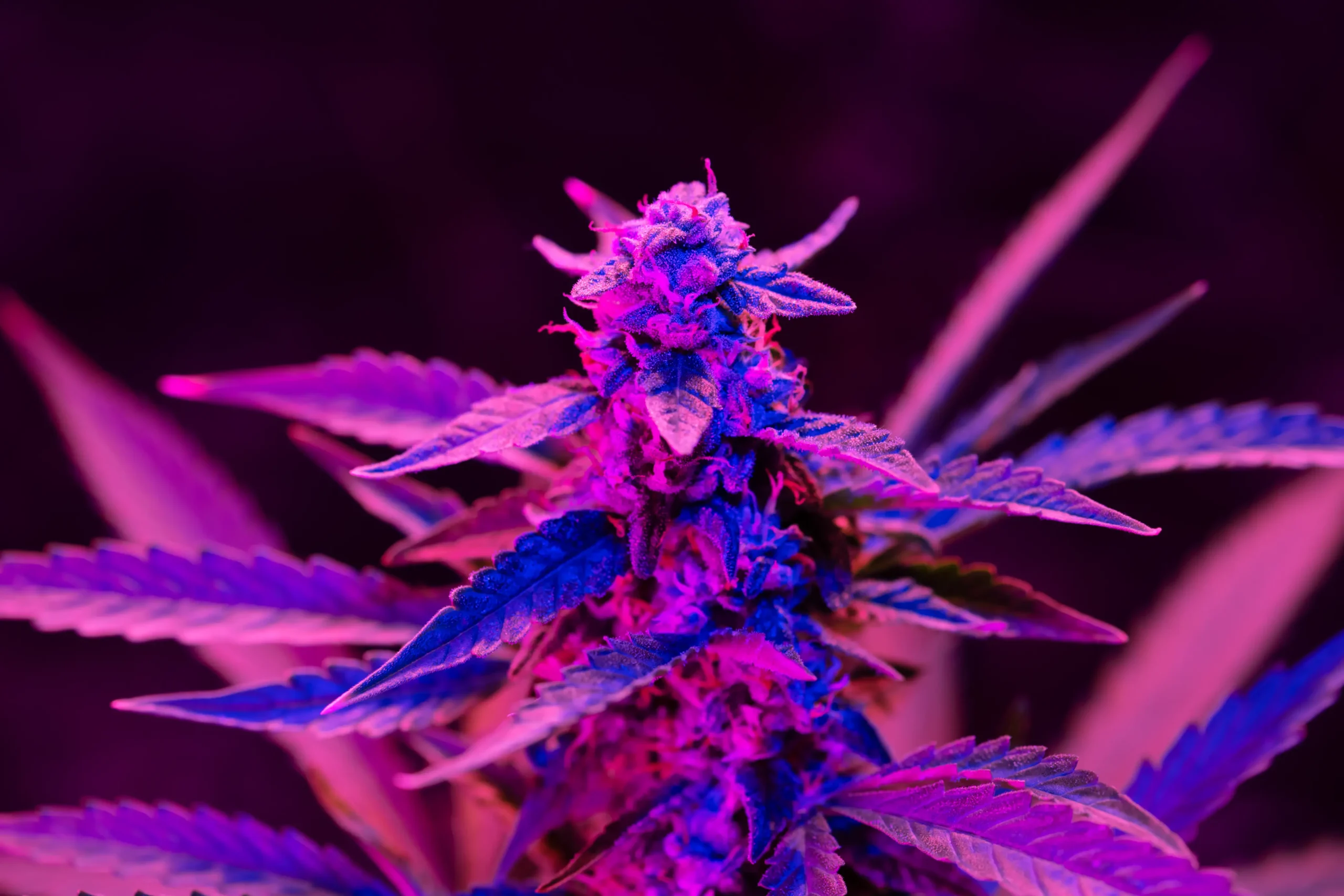
Mako Haze
WEEDTH STRAIN LIBRARY | CULTIVATION | BUD QUALITY | FLAVOR
Mako Haze is a long-flowering sativa that punishes impatience more than complexity. The plant is not necessarily fragile, but its ten-to-thirteen-week bloom creates more opportunities for small management errors to accumulate. A canopy that is slightly too tall in week two can become awkward by week five. A few shaded lower branches that seem harmless early can spend another month consuming water and nutrients while producing little premium flower. A support system that feels unnecessary during stretch can become urgent once the long laterals begin carrying sticky flower. The strain's fast, energetic effect can arrive almost instantly, yet the plant itself demands the opposite attitude from the grower: slow planning and sustained consistency. Its Haze heritage explains the long internodes, prolonged transition and lemon-pine-wood aromatic backbone. The central task is not to make it flower faster. It is to keep the whole system efficient for long enough that the last weeks actually improve the flower instead of merely extending the calendar.
Strain Features
| Feature | Details |
|---|---|
| Strain Type | Sativa-dominant Haze hybrid, commonly described around 75% sativa |
| Genetic Profile | Haze crossed with a New Zealand-derived hybrid commonly called Kiwi Green |
| THC | Common historical reports place strong examples around the high teens to low 20s |
| CBD | Usually low |
| Flowering Time | Approximately 10-13 weeks indoors |
| Outdoor Harvest | Outdoor finish requires a long, warm autumn; timing is later and less forgiving than short-season hybrids |
| Dominant Terpene Pattern | Published terpene lab data are sparse; sensory reports repeatedly emphasize lemon, pine, earth, wood and occasional savory/cheese notes |
| Flavor / Aroma | Lemon peel, dry pine, wood, earth, faint savory funk and classic Haze spice |
| Effect Character | Fast, forceful cerebral acceleration with energy, focus and euphoria; high doses can become spacey or mentally intense |
| Grow Difficulty | Moderate to difficult; long flowering, stretch and support requirements make it more demanding than average hybrids |
| Plant Height / Shape | Tall, long-internode architecture with substantial transition stretch |
| Primary Grow Question | How do you keep a 10-13 week Haze canopy efficient all the way to maturity instead of spending the last month supporting weak lower growth and fighting a tangled plant? |
Genetic Lineage
The genetic description most consistently associated with Mako Haze is Haze crossed with a New Zealand-derived hybrid commonly called Kiwi Green. That background explains much of the plant's behavior, but it should not be treated as a guarantee that every seed or clone carrying the name will express identically. Cannabis cultivars are living selections, and older lines in particular can show meaningful differences after years of reproduction and preservation.
In cultivation terms, the lineage matters because it helps explain the plant's recurring cultivation pattern. Vegetative growth is not always explosive at first, but internodes lengthen rapidly once the plant is established. The plant rewards growers who plan branch destinations early. Strong stretch continues long enough to make late corrections disruptive. Set the final canopy geometry before flower rather than assuming stretch ends after a few days. The same ancestry also appears in the sensory profile: Lemon peel, dry pine, wood, earth, faint savory funk and classic Haze spice. These are more useful inheritance clues than a simple indica-sativa percentage because they tell the grower what will actually need to be managed in the room or garden.
A Mako Haze keeper should justify the calendar. Compare the plants by final stretch, branch strength, resin, flower quality in the lower canopy and cured lemon-pine clarity. I would favor the expression that finishes toward the shorter end of the range without losing the distinctive energetic effect, because every saved week has real value in a flowering room.
Effect Breakdown
Fast Acceleration
Mako Haze tends to announce itself quickly. The first phase is bright and cerebral, with users often describing energy, elevated mood and a sense of mental acceleration. At a low dose, that speed can feel clean and useful. The body remains light enough that movement and conversation still feel natural rather than interrupted by a heavy physical effect.
The Productive Window
At a moderate dose, that clarity becomes more expansive. Fast, forceful cerebral acceleration with energy, focus and euphoria; high doses can become spacey or mentally intense The distinction between useful stimulation and mental intensity is important. A user who enjoys fast sativas may experience focus and creative momentum, while an anxiety-sensitive user can experience the same speed as restlessness or racing thought.
Spacey High-Dose Territory
Mako Haze does not usually collapse into a classic indica finish. As the peak softens, the body can loosen and the mental edge becomes less urgent, but the after-effect often remains awake rather than sleepy. Heavy use can create fatigue simply because the cerebral phase is long. That is different from being inherently sedative.
The Long Comedown
Tolerance changes Mako Haze mainly by changing how manageable the speed feels. Experienced sativa users may find a modest dose functional for hours, while low-tolerance users can find the same onset intense. Starting with less is especially sensible because the long effect gives little benefit to stacking more before the first dose is fully understood.
Flavor & Aroma Profile
Lemon-Pine Haze Top Notes
The recognizable sensory target for Mako Haze is lemon peel, dry pine, wood, earth, faint savory funk and classic haze spice. The important point is separation between layers. Good flower should not smell like a generic mixture of earth and chlorophyll. It should present at least one clear top note before the heavier base aroma arrives.
The Savory and Woody Layer
When a cured flower is opened, the first volatile impression should still show the cultivar's defining aromatic identity. Keep the bright lemon and pine notes from being flattened into dry woody Haze. Late heat and rapid drying are the main enemies of clarity. Breaking or grinding the flower increases the resin surface and usually exposes deeper spice, wood or fuel. A phenotype that smells expressive only when crushed may still be good, but the strongest aromatic keepers announce themselves before that step.
How It Tastes
Mako Haze usually reads brighter on the first draw than on the finish. Lemon and pine appear quickly, then the exhale carries dry wood, haze spice and a resinous undertone. The best flower keeps the citrus present without becoming sugary. If the cured sample tastes mostly woody, the late plant or the drying room likely held too much heat.
What a Long Cure Can and Cannot Do
Mako Haze needs cure time because a long-flowering plant can still taste green when rushed after harvest. The bright lemon should remain visible while the sharper plant odor recedes and wood-spice develops underneath. I would not wait for the profile to become 'sweet.' The goal is clarity between citrus, pine and the drier haze base.
Dominant Terpenes
| Evidence | What Repeats | Interpretation |
|---|---|---|
| Cultivar-specific lab consensus | Sparse and not strong enough for a fixed dominant-terpene list | Use batch-specific laboratory data when available rather than assuming a universal ranking. |
| Recurring sensory pattern | Lemon, pine, earth, dry wood and occasional savory notes | These recurring aromas define the practical flavor target more reliably than an invented terpene hierarchy. |
| Phenotype and environment | Likely to shift the volatile profile | Long flowering, harvest timing and drying conditions can change which aroma layers remain most obvious. |
The recurring terpene picture for Mako Haze is best treated as a pattern rather than a fixed chemical recipe. Published terpene lab data are sparse; sensory reports repeatedly emphasize lemon, pine, earth, wood and occasional savory/cheese notes. Cannabis terpene ratios move with genotype, environment, harvest timing and post-harvest handling, so one laboratory sample should not be used to promise that every flower carrying the name will smell or feel the same.
Terpene discussion is most useful here as a way to describe Mako Haze's lemon-pine structure. Those volatile compounds help explain aroma, but they do not turn the strain into a predictable stimulant for every user. Its fast cerebral effects are better described from recurring consumer reports, with dose and tolerance kept separate from terpene speculation.
With Mako Haze, protecting aroma begins before harvest because the plant may spend thirteen weeks under flower-room heat. If late temperatures rise, lemon can soften into generic dry wood before the crop is even cut. Maintain a stable finish, harvest by actual maturity and keep the dry cool enough that the citrus-pine layer survives the long cycle.
Indoor vs. Outdoor Growing
| Aspect | Indoor Grow | Outdoor Grow |
|---|---|---|
| Plant architecture | Indoors, the room must be designed around flower duration and stretch. A shallow, wide canopy and early flip usually outperform a tall vegged plant that needs emergency bending in week three. | Outdoors, the limiting factor is season length. In climates without a reliably warm late autumn, the genetics may still be healthy but the flowers can be forced to finish before their best resin and aroma development. |
| Transition and stretch | Indoors, assume the canopy will keep changing well beyond the first days of 12/12. Leave open screen area and set final branch lanes before stems become stiff. | Outdoors, the stretch itself is usable if there is space, but every extra vertical meter increases support needs during a flowering period that may extend deep into autumn. |
| Flower character | Long indoor flower runs can become resinous and surprisingly substantial when they remain in the productive light zone; lower shaded sites rarely justify thirteen weeks of room time. | Outdoor sun can develop the long branches fully, but the flowers still need enough warm season to mature. Large plants are valuable only where late weather allows the resinous finish to complete. |
| Root-zone demand | The long indoor cycle rewards stable irrigation and low salt accumulation. Repeated saturation or drought has more weeks to reduce vigor than it would in a short-flowering hybrid. | Outdoor roots may access large soil volumes, but late-season watering should follow cooler weather and slower plant demand. A long finish does not mean the root zone should remain wet for longer. |
| Primary risk | Indoors, management fatigue is the risk: too much lower growth, support added late, or irrigation drift over ten to thirteen weeks. | Outdoors, season length is the decisive risk. A healthy plant can still be harvested below its flavor and resin ceiling if cold rain arrives before the long Haze finish is complete. |
| Best quality strategy | Top or bend early, then use a wide screen with fewer dominant branches. Repeated high-stress work late in stretch adds recovery time to an already long cultivar. | Yield comes from maintaining productive surface area for many weeks. Keep the upper canopy evenly lit, strip only genuinely unproductive lowers and support long branches before they sag into shade. |
The indoor-versus-outdoor decision for Mako Haze is not simply control versus free sunlight. The better environment depends on which trait the grower wants to exploit. Indoors, the room must be designed around flower duration and stretch. A shallow, wide canopy and early flip usually outperform a tall vegged plant that needs emergency bending in week three. Outdoors, the limiting factor is season length. In climates without a reliably warm late autumn, the genetics may still be healthy but the flowers can be forced to finish before their best resin and aroma development.
Indoors, Mako Haze is an exercise in reserving future space. I would enter flower with empty screen area and headroom because the canopy keeps evolving after a shorter hybrid would already be stacking. Long laterals should be assigned lanes early. Weak shoots beneath the light plane are expensive here because they remain in the room consuming resources for many extra weeks.
Outdoors, Mako Haze can use strong sun beautifully, but the long finish becomes the deciding constraint. The site needs enough season for resin to mature and enough access to support long branches through weather. A warm, stable autumn can reward the plant; a short wet season can turn the final month into a compromise no amount of early vigor can fix.
Strain-Specific Grow Guidance
The cultivation question that should guide the entire run is simple: How do you keep a 10-13 week Haze canopy efficient all the way to maturity instead of spending the last month supporting weak lower growth and fighting a tangled plant?
Read the plant before you train it
Vegetative growth is not always explosive at first, but internodes lengthen rapidly once the plant is established. The plant rewards growers who plan branch destinations early. The first useful decision is not which fashionable technique to apply. It is whether the plant is expressing strong apical dominance, strong laterals or a mixed frame. That observation determines how much topping is actually necessary. Top or bend early, then use a wide screen with fewer dominant branches. Repeated high-stress work late in stretch adds recovery time to an already long cultivar.
Plan the flowering transition early
Strong stretch continues long enough to make late corrections disruptive. Set the final canopy geometry before flower rather than assuming stretch ends after a few days. The correct flip point therefore depends on available height, branch count and how much horizontal space has already been filled. A crowded plant that enters flower with no empty canopy area has no place to put its transition growth.
Build a productive flower zone
Flowers develop on long runs of stem and can become surprisingly resinous and substantial for a Haze-leaning plant. Branch support is often needed before the final swelling phase. The goal is a layer of branches that remain illuminated and accessible from the beginning of flower to harvest. Small inward shoots that never reach that layer should be removed before they become a permanent humidity and labor cost.
Root zone and irrigation
A large root system and active canopy can drink strongly under intense light. Keep irrigation responsive to container mass and transpiration, because repeated saturation can slow a plant that already has a long clock. Watering should follow plant demand, container mass, weather and root oxygen rather than a memorized calendar. Large leaves and fast transpiration do not justify keeping the medium permanently wet.
Nutrition without forcing the plant
Long flowering tempts growers to keep feeding heavily. A better approach is consistency: avoid early starvation, but do not carry high nitrogen deep into the cycle when the plant should be finishing flower tissue. Strong growth can tempt the grower to raise concentration repeatedly, but the best signal is balanced leaf color and uninterrupted flower development. If leaves become excessively dark, tips burn or clawing appears, adding more fertilizer is not a bud-boosting strategy.
Air movement must reach the vulnerable zone
Build support before the flowers demand it
The biggest risk is management fatigue. Long flowering exposes the plant to more irrigation mistakes, pest cycles, canopy shading and support failures than an eight-week hybrid. Fans or outdoor wind moving only above the canopy do not guarantee that flower interiors are dry. Inspect the actual zone where large flowers touch leaves, support netting or neighboring branches.
Support before the plant asks for it
Yield comes from maintaining productive surface area for many weeks. Keep the upper canopy evenly lit, strip only genuinely unproductive lowers and support long branches before they sag into shade. Install support while branches are still easy to position. Late ties placed after a branch has already folded can damage resinous flowers and force neighboring tops into shade.
Harvest by maturity, not reputation
Do not let impatience set the harvest date. Wait for bract swelling, resin maturity and a settled lemon-pine-incense aroma instead of chopping while the flowers still look narrow and actively building. Calendar estimates are planning tools, not harvest commands. Compare several flowers across the canopy and, when phenotype differences are obvious, be willing to harvest in stages.
What to change on the second run
The most useful Mako Haze record is a calendar linked to canopy behavior. Note when stretch actually slows, when branch support becomes necessary, when irrigation demand begins to decline and when lemon aroma peaks. A second run can then shorten veg, remove weak lower sites earlier and reserve support for the branches that truly carry weight.
Manage the long clock
A 10-13 week cultivar needs a stable system more than aggressive stimulation. Small pest populations, slight salt buildup or weak support can become major problems simply because there is so much time for them to compound. Keep the room serviceable for the entire cycle and avoid techniques that add recovery time late.
Giving the Stretch Somewhere to Go
During the first part of flowering, Mako Haze should be judged by structure before flower size. Strong stretch continues long enough to make late corrections disruptive. Set the final canopy geometry before flower rather than assuming stretch ends after a few days. The grower should keep positioning stems only while they remain flexible, then allow the selected tips to establish their final flower lanes. Remove weak interior shoots that have no realistic route to productive light. Heavy defoliation is unnecessary unless large leaves are physically sealing the center. The goal is to enter true flower formation with every retained branch assigned useful space.
Managing a Long Mid-Flower
Mid-flower is when irrigation and support begin to matter more than additional training. Flowers develop on long runs of stem and can become surprisingly resinous and substantial for a Haze-leaning plant. Branch support is often needed before the final swelling phase. Watch the relationship between branch angle and flower weight. If branches are already leaning before final swelling, add support now rather than waiting. Nutrition should remain consistent, with attention to tip burn, clawing and premature pale leaves. A healthy mid-cycle Mako Haze should be building resin and bract mass without producing a large amount of new leafy interior growth.
Deciding When a Haze Is Actually Finished
In the final weeks, the question changes from making the plant larger to finishing the flower already present. Do not let impatience set the harvest date. Wait for bract swelling, resin maturity and a settled lemon-pine-incense aroma instead of chopping while the flowers still look narrow and actively building. Reduce unnecessary handling because mature resin heads are fragile. Keep airflow moving through the canopy rather than directly blasting the flowers. Irrigation may change as transpiration slows, so do not keep applying the same volume only because it was correct in mid-flower. Stable finishing conditions usually preserve more aroma than a last-minute stress experiment.
When a Healthy Canopy Becomes Too Deep
A Mako Haze can remain green and vigorous for many weeks while the lower half quietly becomes inefficient. Because the flowering cycle is long, small shaded shoots have more time to consume resources without ever becoming premium flower. The solution is not a late cleanup after resin has formed. It is deciding early which laterals have a real path into the productive light zone, then letting the retained Haze branches mature without constant structural correction.
If Lemon and Pine Fade
If Mako Haze smells excellent at chop but generic after a week of drying, suspect post-harvest environment before blaming genetics. Keep the bright lemon and pine notes from being flattened into dry woody Haze. Late heat and rapid drying are the main enemies of clarity. Warm rooms, strong direct air and very low humidity strip volatile compounds fastest from the outside of the flower. Once that upper aromatic layer is gone, the remaining profile usually feels heavier and less distinctive. Slower drying in darkness and careful moisture equalization during cure protect the cultivar's identity more reliably than trying to alter finished flower.
Choosing a Long-Cycle Keeper
For Mako Haze, I would keep the phenotype that justifies the long cycle. It should combine manageable stretch, strong laterals, substantial resin and a cured lemon-pine profile that remains vivid after drying. A plant that takes thirteen weeks but produces generic woody flower has not earned the space simply because it is Haze-like.
Making the Second Long Run Easier
On the second run, use the known stretch to reduce veg and preassign every major lateral. If the first canopy needed constant late bending, the problem was set before the flip. If lower sites stayed thin, remove them earlier. If lemon faded while waiting for the last small flowers, test a staged harvest rather than extending the whole plant.
Planning for the Last Month Before the Flip
Mako Haze should be planned backward from the end of flowering. A ten-to-thirteen-week bloom means the room, container, support system and canopy cannot be merely adequate for the first six weeks. They have to remain workable for the final month as well. Before the flip, I would decide how many vertical flower lanes the light can support and remove the weak shoots that will never reach them. The goal is not to make the plant small. It is to prevent the long Haze stretch from converting every lateral into a competing top. A screen can help, but it needs empty space available during transition. Filling the screen completely in veg leaves nowhere to place the new growth. Once stretch slows, I would stop major bending and build support around the branches that have proved productive. Irrigation should also be designed for a long cycle. Root-zone salts, chronic saturation or repeated drought that might be tolerated in a quick eight-week plant can accumulate into a larger problem over thirteen weeks. Consistency is the real advanced technique with Mako Haze. The plant should arrive at the final weeks with healthy roots, accessible branches and enough leaf function to finish resin and bract development without needing rescue measures.
Weedth Bud Flavor Tips
Harvest the aroma, not just the trichomes
Do not let impatience set the harvest date. Wait for bract swelling, resin maturity and a settled lemon-pine-incense aroma instead of chopping while the flowers still look narrow and actively building. Resin maturity remains important, but flavor quality also depends on when the plant's volatile profile is most complete. If the defining aroma is already fading while the plant is being held solely for more amber trichomes, the grower is trading flavor for a heavier finish.
Indoor flavor preservation
Keep the bright lemon and pine notes from being flattened into dry woody Haze. Late heat and rapid drying are the main enemies of clarity. Keep late-flower heat under control and avoid blasting flowers with direct fan airflow. The goal is healthy air exchange around flowers, not dehydration on the plant.
Outdoor flavor preservation
Outdoor Mako Haze is often harvested later than compact hybrids, so cool mornings and dew are realistic. Cut after surface moisture has cleared when possible, and give long branches enough room in the drying area that air can move around each one. Do not compensate for a damp harvest with hot or direct airflow; the lemon-pine profile is too easy to flatten.
Drying speed matters more than a magic number
For Mako Haze, a gradual dry is especially valuable because its defining top notes are easier to lose than to recreate. Keep the bright lemon and pine notes from being flattened into dry woody Haze. Late heat and rapid drying are the main enemies of clarity. A dry that races through the first days can make the exterior crisp while stems and dense flower interiors still hold moisture. That mismatch creates both flavor loss and uneven cure.
Cure for separation and smoothness
Mako Haze cure should reveal whether the long finish was worthwhile. As green odor fades, lemon and pine should remain on top of dry wood and spice. Keep different harvest zones separate if maturity varied across the canopy. The jar that retains brightness after several weeks identifies the better maturity window for the next run.
Storage after the cure
Mako Haze deserves storage that protects the citrus edge. Smaller sealed portions reduce the number of times the whole harvest meets warm room air. Darkness and stable cool temperature matter because the heavier woody base will remain long after the volatile lemon has begun to fade.
Holding Lemon and Pine Through a Long Finish
A long flowering period creates two flavor risks for Mako Haze. The first is holding the plant past its best aromatic window because the grower is waiting for every small lower flower to look finished. The second is losing the bright lemon-pine character during a hot, rapid dry after weeks of patient cultivation. I would evaluate maturity by the best exposed flowers first, then compare lower zones separately. If the canopy has developed unevenly, a staged harvest can be more sensible than forcing the top flowers to remain on the plant while the lowest sites catch up. After harvest, the flower should dry slowly enough that the citrus and pine remain recognizable when the outer surface no longer feels fresh. Direct fan pressure is especially wasteful here because the top notes are the part of the profile that disappear fastest. The cure should reveal deeper wood and haze spice underneath the citrus rather than replacing it. If the jar becomes mostly earthy within the first week, the problem is more likely post-harvest speed than a lack of aroma genetics. Mako Haze asks for patience twice: once to finish the long bloom and again to let that finished flower dry without stripping away the reason the long cycle was worthwhile.
Weedth Bud Boost Tips
Choose premium flower percentage over raw branch count
Yield comes from maintaining productive surface area for many weeks. Keep the upper canopy evenly lit, strip only genuinely unproductive lowers and support long branches before they sag into shade. A crowded canopy can increase the number of flower sites while decreasing the percentage that finish as dense, aromatic and easy-to-dry buds. Weedth's preferred metric is quality yield: usable premium flower per unit of space, not the largest possible wet number.
Use training that matches the architecture
Top or bend early, then use a wide screen with fewer dominant branches. Repeated high-stress work late in stretch adds recovery time to an already long cultivar. If a technique creates more branch tips than the light or sun footprint can support, it has reduced efficiency rather than increased yield.
Keep the root system ahead of the canopy
A large root system and active canopy can drink strongly under intense light. Keep irrigation responsive to container mass and transpiration, because repeated saturation can slow a plant that already has a long clock. Root volume, drainage and oxygen determine how much canopy the plant can support without repeated wilt or saturation. Container size should be chosen from expected final plant size, not from a generic strain chart.
Feed for uninterrupted flower building
Long flowering tempts growers to keep feeding heavily. A better approach is consistency: avoid early starvation, but do not carry high nitrogen deep into the cycle when the plant should be finishing flower tissue. A stable moderate program usually beats cycles of deficiency followed by heavy correction. Avoid treating PK products, carbohydrates or any single additive as a genetic yield switch. Flower mass comes primarily from healthy photosynthesis, root function, light capture and time.
Support final swelling
Mako Haze branches can carry weight for a long time before the final swell makes their weakness obvious. Install support when the long laterals are still separated. Once they lean into each other, the canopy becomes harder to inspect and light distribution worsens. Support here protects the final month of resin development as much as it prevents snapped stems.
Second-run optimization
After a Mako Haze harvest, compare quality by vertical zone. If the upper canopy is excellent and the lower third remains airy after a thirteen-week commitment, remove that lower zone earlier next time. A long flowering cultivar should earn its footprint with premium flower, not with a large total count of small sites.
Medical Uses & Benefits
The energetic profile is often reported as useful for low mood and fatigue, but high doses can feel intense. Anxiety-sensitive users should treat its fast cerebral onset cautiously. These patterns come primarily from user reports and from the overall cannabinoid-terpene profile, not from controlled clinical trials on Mako Haze itself.
Mako Haze is most often discussed medically in relation to mood, fatigue or stress because the reported effect is quick and cerebral. The same speed can be a drawback for people who are sensitive to THC or prone to racing thoughts. It should not be described as a clinical stimulant or antidepressant. The responsible description is that some users report functional relief while others may find the intensity counterproductive.
Lemon and pine aromas may suggest recurring terpene families, but those compounds are better treated as sensory markers than as a medical formula. Laboratory research on isolated terpenes cannot tell a reader exactly how a long-flowering Mako Haze sample will affect them. Cannabinoid strength, phenotype, dose and personal tolerance remain more important than trying to infer treatment value from aroma alone.
Ideal User Profile
Best for experienced growers with vertical room or strong canopy discipline, and for consumers who want a fast, energetic old-school Haze experience rather than a sedative hybrid. It is a better match for someone who values the cultivar's characteristic progression and flavor than for a shopper selecting only by THC percentage.
Mako Haze is usually chosen for its quick cerebral energy. A small amount can feel sharp, social and task-oriented, while repeated dosing may become mentally intense and eventually tiring. It is better suited to users who enjoy a long bright peak than to those seeking immediate evening heaviness.
Mako Haze belongs with growers who can afford a long flowering room commitment. Height alone is manageable; the harder requirement is keeping the environment, root zone and canopy stable for up to thirteen weeks. If the schedule or outdoor season cannot support that, choosing a shorter cultivar is more rational than rushing this one.
Grower Notes and Feedback
Grower reports around Mako Haze are most useful when they describe behavior instead of just yield. Repeated observations include 10-13 week flower, fast effect onset, long sativa frame, sticky resinous flowers. Those traits explain why two gardens can report different weights while agreeing on the overall personality of the plant.
The most common first-run mistake is to react too late to structure. Strong stretch continues long enough to make late corrections disruptive. Set the final canopy geometry before flower rather than assuming stretch ends after a few days. By the time a canopy looks obviously crowded, the plant may already have committed energy to branches that will remain shaded. Early simplification is less stressful than late correction.
Another recurring lesson is that finish quality matters more than early visual excitement. Do not let impatience set the harvest date. Wait for bract swelling, resin maturity and a settled lemon-pine-incense aroma instead of chopping while the flowers still look narrow and actively building. Flowers can look large before they have completed resin and aroma development, and an early harvest often exaggerates green or sharp flavors.
Record Mako Haze by actual stretch, finish length, branch strength and cured citrus clarity. A slightly shorter phenotype may be much more efficient if it keeps the resin and effect, while a very tall plant may be worth the work only if the flower quality clearly exceeds it. Long-cycle selection should reward what justifies the extra weeks.
Trim day shows whether the Mako Haze canopy was too deep. Long branches can carry many small sites, and they are easy to leave because each looks potentially productive during stretch. If much of the harvest becomes airy lower flower, reduce those sites in the next cycle and concentrate the plant's long flowering investment in fewer illuminated lanes.
Second-Run Efficiency in a Long Haze Cycle
The best improvement on a second Mako Haze run is usually removing work that did not produce premium flower. Because the plant remains in bloom so long, every unnecessary branch has weeks to consume irrigation, occupy space and complicate airflow. I would map the first run by canopy depth. Which tops finished strongly? Which laterals needed repeated support? Which lower sites stayed airy despite thirteen weeks of light exposure? That information should determine branch count on the next cycle. Veg can often be shorter once stretch is understood. Support can be installed earlier once the final branch angles are known. Irrigation can be tapered more intelligently once the late-cycle drinking pattern has been observed. I would also keep aroma notes from several points near harvest. If lemon and pine peak before the heaviest amber development, that may be the better quality window for the chosen phenotype. If the plant continues adding clean resin and flower mass without losing brightness, the longer finish may be justified. The point is to stop treating thirteen weeks as a fixed endurance test. A documented second run should make the long cycle feel controlled, with fewer weak sites and a clearer reason for every extra day in the flowering room.
Weedth Editor's Note
How I would judge the finished flower
I would grow Mako Haze only when I can give it the entire cycle without impatience. My plan would be an open screen, fewer committed laterals and early support. I would watch the lemon-pine aroma as closely as the trichomes near the end. If the plant is mature and brightness is starting to fade, I would not keep it under the lights merely to reach an arbitrary week number.
For flavor, I would protect the cultivar's defining aromatic layers rather than chase the last possible grams. Keep the bright lemon and pine notes from being flattened into dry woody Haze. Late heat and rapid drying are the main enemies of clarity. I would rather give up a small amount of theoretical late weight than hold the plant in a hot room after the aroma has peaked. The same logic applies to drying. A slow, controlled finish is part of cultivation, not an afterthought.
A second Mako Haze run should feel shorter operationally even though the genetics take the same time. Once I know the stretch and drinking pattern, I can reduce veg, remove useless lower sites earlier and stop making corrective moves deep into flower. The long cycle becomes much easier when the canopy is designed for it from the beginning.
Weedth Score
Growing Experience 7.6/10 The score reflects how naturally the plant's main challenge can be managed. How do you keep a 10-13 week Haze canopy efficient all the way to maturity instead of spending the last month supporting weak lower growth and fighting a tangled plant? It is rewarding, but the rating leaves room for the real work required by its architecture and finish.
Bud Structure & Visual Appeal 8.5/10 Well-grown flower should express the cultivar's natural architecture rather than an artificial density target. Flowers develop on long runs of stem and can become surprisingly resinous and substantial for a Haze-leaning plant. Branch support is often needed before the final swelling phase. The deduction, where present, reflects phenotype variation or the fact that visual density is not always the cultivar's strongest quality metric.
Aroma Complexity 8.7/10 The aromatic ceiling is high when harvest and drying protect the cultivar's defining layers. Keep the bright lemon and pine notes from being flattened into dry woody Haze. Late heat and rapid drying are the main enemies of clarity. Poor drying can flatten the profile, so this rating assumes careful post-harvest work rather than rushed finishing.
Flavor & Smoothness 8.6/10 The palate can show lemon peel, dry pine, wood, earth, faint savory funk and classic haze spice. Smoothness depends strongly on harvest maturity and moisture management, which is why the cultivar is not scored on genetics alone.
Effects & High Experience 9.1/10 The effect has a recognizable progression. Fast, forceful cerebral acceleration with energy, focus and euphoria; high doses can become spacey or mentally intense The score rewards that distinct character while recognizing that dose sensitivity can make the experience less universal.
Overall Satisfaction & Recommendation 8.5/10 Overall satisfaction balances cultivation usefulness, flower quality, flavor identity and the likelihood that a grower would want to run a selected keeper again. It is intentionally not inflated to a perfect score simply because the cultivar has history or strong fans.
I would grow it again only with enough room to let the long cycle finish properly, because rushing this plant defeats the reason to choose it.
FAQ
Is Mako Haze actually easy to grow?
The answer is environment-dependent. Moderate to difficult; long flowering, stretch and support requirements make it more demanding than average hybrids. The plant can be vigorous and healthy while still creating management work through height, branch count, flowering duration or late flower density. A beginner with the right space may do well, while an experienced grower in the wrong room can still struggle.
How much does Mako Haze stretch after flowering begins?
Strong stretch continues long enough to make late corrections disruptive. Set the final canopy geometry before flower rather than assuming stretch ends after a few days. Treat that as a planning description rather than a guaranteed multiplier. Phenotype, light intensity, container size, veg duration and temperature all influence final stretch.
What flowering time should I plan for with Mako Haze?
A practical planning range is Approximately 10-13 weeks indoors. Do not use the first day of the estimate as an automatic harvest date. The plant is ready when flower structure, resin and aroma agree.
What is the biggest quality risk with Mako Haze?
The biggest risk is management fatigue. Long flowering exposes the plant to more irrigation mistakes, pest cycles, canopy shading and support failures than an eight-week hybrid. That risk is more relevant than chasing a universal EC, PPFD or humidity number because it follows the cultivar's actual architecture.
Which training method suits Mako Haze best?
Top or bend early, then use a wide screen with fewer dominant branches. Repeated high-stress work late in stretch adds recovery time to an already long cultivar. A screen is useful only when it improves light distribution or branch support. It should not be filled so densely that the cultivar's weak point becomes worse.
How should I feed Mako Haze?
Long flowering tempts growers to keep feeding heavily. A better approach is consistency: avoid early starvation, but do not carry high nitrogen deep into the cycle when the plant should be finishing flower tissue. Exact nutrient concentration should be adjusted to water quality, medium, light level and plant response. There is no strain-specific bottle dose that remains correct in every garden.
How do I get the best flavor from Mako Haze?
Keep the bright lemon and pine notes from being flattened into dry woody Haze. Late heat and rapid drying are the main enemies of clarity. Harvest mature flower, avoid late heat, dry gradually in darkness and cure only after internal moisture has equalized. The defining top notes are easier to lose than to recreate.
Is Mako Haze better indoors or outdoors?
Indoors, the room must be designed around flower duration and stretch. A shallow, wide canopy and early flip usually outperform a tall vegged plant that needs emergency bending in week three. Outdoors, the limiting factor is season length. In climates without a reliably warm late autumn, the genetics may still be healthy but the flowers can be forced to finish before their best resin and aroma development. The best choice is the environment that controls the cultivar's main limitation while still giving its strongest trait room to express.
Should I harvest Mako Haze in stages?
Staged harvest can be useful when upper flowers mature noticeably ahead of lower or interior sites. Do not let impatience set the harvest date. Wait for bract swelling, resin maturity and a settled lemon-pine-incense aroma instead of chopping while the flowers still look narrow and actively building. If the canopy is uniform, one harvest is simpler; if maturity is clearly uneven, forcing everything onto one date can reduce either top quality or lower-flower maturity.
What should I change on a second run of Mako Haze?
For Mako Haze, the best second-run data are time-based: when stretch stopped, when support was needed, when water demand changed and when lemon aroma peaked. Those dates guide the next cycle far better than adding another bloom product to a plant that mainly needs consistent management over time.
Similar Strains
Mako Haze is best compared with long-flowering cerebral cultivars where the main tradeoff is room commitment versus flavor and effect. The strains below share stretch, Haze character or energetic use, but differ in flowering length, branch density and how much patience they demand.
Super Silver Haze
Shares long Haze flowering and citrus-spice energy, but often has a more familiar incense profile.
Neville’s Haze
Even more extreme in long-flower sativa character and usually less forgiving indoors.
Kali Mist
Comparable clear energy and long structure, with a different aromatic emphasis.
Jack Herer
Offers energetic hybrid balance with a shorter, more manageable flowering profile.
Golden Tiger
Both reward patient sativa growers, but Golden Tiger is typically more tropical, longer and more intense.
Share this article
A quick overview of the topics covered in this article.
Follow us
Latest articles
September 9, 2026
September 9, 2026
September 9, 2026