
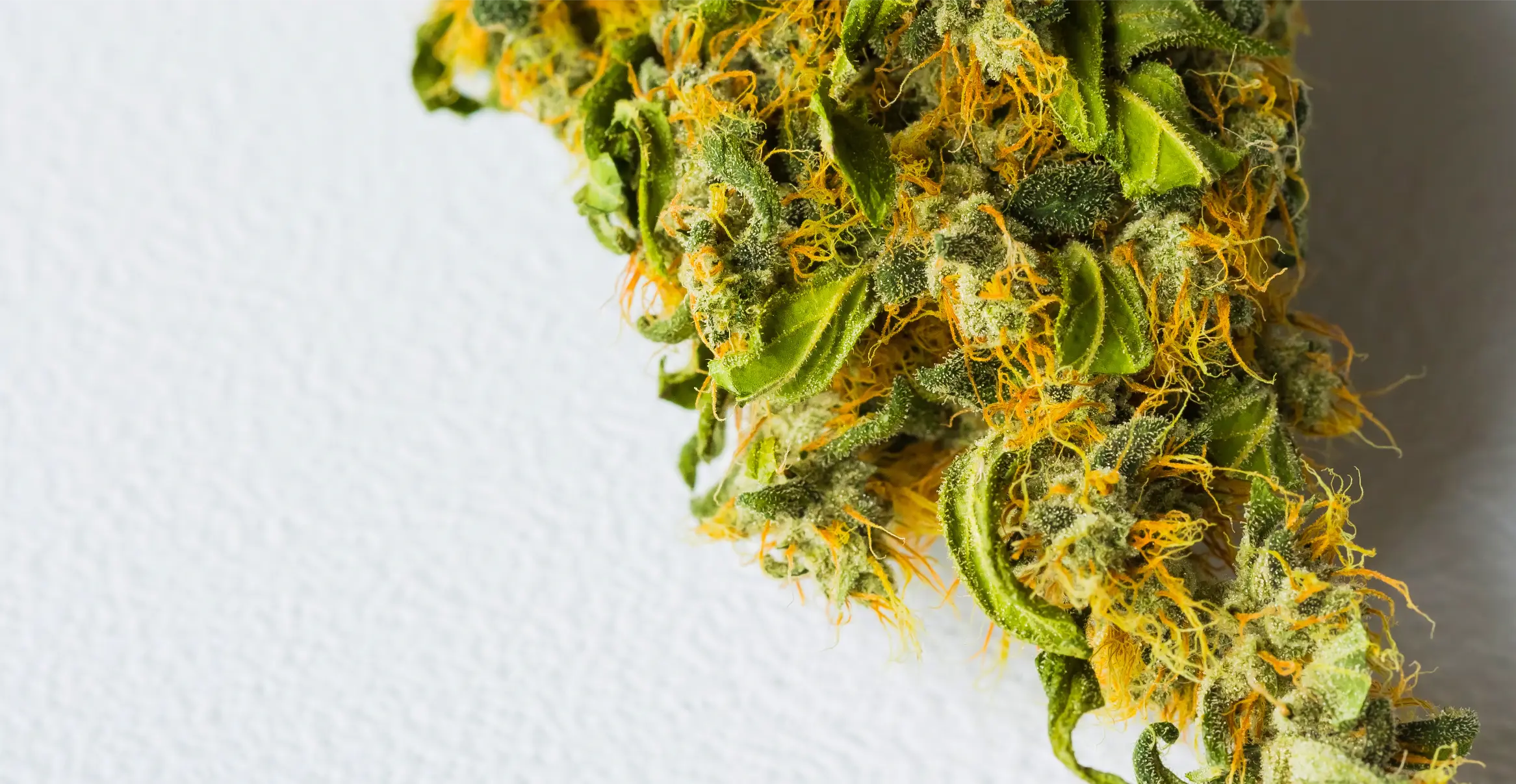
Mazar
WEEDTH STRAIN LIBRARY | CULTIVATION, BUD QUALITY & FLAVOR
Mazar-I-Sharif is not most useful when described as a neat commercial 'indica.' It is better understood as a northern Afghan hash-plant population associated with the Balkh region, where farmers historically selected large resinous plants for traditional resin collection rather than for uniform indoor bag appeal. That distinction explains the apparent contradiction in its reputation: very broad leaves and a heavy body effect can coexist with outdoor plants that become extraordinarily tall and wide. Broadleaf does not automatically mean small, and this cultivar is one of the clearest reminders of that.
The grower's main problem is therefore scale. A healthy outdoor Mazar-I-Sharif can create enough branch length, leaf area and late flower mass that support, spacing and autumn moisture become more important than any single nutrient choice. The plant may tolerate heat, cool nights and a wide environmental range, but large resinous flowers still become vulnerable when rain persists and air cannot reach the interior. The best run is not necessarily the largest plant. It is the largest plant the grower can still inspect, support, finish and dry correctly.
Mazar-I-Sharif should also be treated as a population rather than a single locked phenotype. Preserved accessions can differ in height, flower time, coloration, aroma and the balance between central dominance and lateral branching. Dark green, red, purple-black or nearly black late-season tones have all been described. Aromas range from earthy floral resin and dry spice to sweeter melon-like notes. That diversity is not a reason to discard the name. It is the reason phenotype documentation matters so much when growing landrace-derived material.
The finished flower usually rewards people who like old Afghan resin character more than bright modern candy. Earth, dried flowers, pepper, warm spice and hash-like depth form the base, while better phenotypes can add a surprising sweet melon or soft fruit note. The effect tends to become physically heavy with dose, often encouraging relaxation, appetite and sleepiness. Cultivation and post-harvest work should protect that resin depth without turning dense, field-grown flowers into a drying-room moisture problem.
Strain Features
| Feature | Mazar-I-Sharif Profile |
|---|---|
| Strain Type | Northern Afghan broadleaf / hash-plant landrace population |
| Regional Identity | Associated with Mazar-i-Sharif and the wider Balkh region of northern Afghanistan |
| Genetic Profile | Landrace-derived population rather than a single standardized modern clone; meaningful phenotype variation is expected |
| THC | Potent examples are common, but exact percentage varies widely by accession, selection and testing |
| CBD | Usually not the defining cannabinoid in modern preserved material; exact levels are accession-dependent |
| Effect Character | Relaxing and physically heavy at moderate-to-high dose, often with appetite and sleepiness later |
| Flavor / Aroma | Earth, dry spice, floral resin, hash, pepper; some expressions add sweet melon or soft fruit |
| Recurring Terpene Pattern | Myrcene, caryophyllene and linalool are reported in some modern samples, but no single chemotype defines the entire population |
| Flowering Time | Often around 9-10 weeks in adapted indoor selections; regional and preserved accessions can vary substantially |
| Outdoor Harvest | Late autumn in many traditional expressions; actual finish depends strongly on latitude and accession |
| Plant Height | Potentially very large outdoors, with traditional reports of multi-meter plants under unrestricted conditions |
| Leaf Morphology | Very broad, dark leaves with a classic Afghan broadleaf appearance |
| Flower Structure | Large resinous clusters that can become dense enough to demand late-season airflow and careful drying |
| Color Expression | Dark green through red, purple and near-black tones can appear in some phenotypes, especially as plants mature |
| Grow Difficulty | Moderate outdoors where space is available; advanced indoors if running unselected tall material |
| Main Grow Risk | Allowing a giant plant to build more late-season wet flower than the site, support system or drying room can safely handle |
| Best Use | Outdoor or greenhouse phenotype selection, preservation work and resin-focused cultivation |
Central grower question: How large should I actually let this Afghan broadleaf plant become before size begins to compromise airflow, support, harvest access and post-harvest quality?
Genetic Lineage
A regional population, not a modern two-parent formula
Mazar-I-Sharif takes its name from a geographic region rather than a laboratory-style cross. Northern Afghanistan has a long tradition of resin-focused cannabis agriculture, and plants from the area were selected in fields where useful traits included vigor, resin production, seasonal adaptation and the ability to provide material for traditional hash making. That history produces a broader gene pool than a tightly inbred clone line.
Because of this, lineage descriptions that reduce Mazar-I-Sharif to a fixed percentage of indica and sativa are less informative than the regional phenotype. The plants are strongly broadleaf in appearance, yet some can grow far taller than the compact indoor stereotype associated with the word indica. Their height reflects field agriculture and root opportunity, not tropical narrow-leaf ancestry.
Do not confuse the landrace with later hybrids carrying the Mazar name
Modern cannabis naming creates another complication. Several later hybrids use 'Mazar' in their names or were built with Afghan material from the region. Those crosses can be shorter, faster and more uniform than a preserved Mazar-I-Sharif population. A grow report about a compact Mazar hybrid should not automatically be used to describe an unselected regional accession.
For Weedth-style cultivation, the safe approach is to state which identity is being discussed. This profile focuses on Mazar-I-Sharif as northern Afghan landrace-derived material, while acknowledging that available preserved lines have undergone different amounts of selection outside their original region.
What the regional ancestry means in the garden
The broad leaves and strong stems reflect a plant capable of building a large photosynthetic canopy. In fertile ground, a plant can become both tall and wide. Lower branches may remain productive when they receive real sun rather than being automatically relegated to larf. This changes outdoor pruning logic: the grower can preserve more lower framework than in a cramped indoor tent, provided branch spacing remains open enough to inspect flowers later.
Cool nights and seasonal temperature movement are not necessarily a problem for the plant, but a long wet autumn is different from a cool dry one. The original regional climate contains strong sun and significant seasonal variation. A preserved plant may tolerate temperature swings while still losing flowers to persistent rain if the modern site has poor airflow. Adaptation should not be turned into a claim of immunity.
Phenotype variation is part of the preservation value
Growers may see differences in final height, flowering onset, aroma and coloration within a population. Some plants remain more compact and finish relatively early. Others stretch into enormous field structures and take longer to mature. Sweet melon-like phenotypes can sit beside earthier, more floral or peppery individuals. If the goal is preservation, that diversity should be documented rather than immediately narrowed to one commercial-looking plant.
If the goal is a repeatable home garden, selection can be stricter. Keep the plant that finishes in the local season, holds branches well, produces the preferred resin aroma and dries without excessive internal moisture. A phenotype that is spectacular in Afghanistan may not be the practical keeper in a rainy northern garden.
Effect Breakdown
The opening: calm arrives before full heaviness
At a modest dose, Mazar-I-Sharif is often reported as mentally calming rather than immediately incapacitating. The first phase can soften tension and narrow attention toward the present moment. Some users notice a gentle mood lift or a warm, settled feeling before the body effect becomes dominant. This is different from the fast, sparkling stimulation of a Thai-derived sativa.
The mental space is usually less busy. Conversation may remain easy, music can feel immersive and physical comfort becomes more noticeable. For experienced users, a small amount may fit a quiet evening without instantly ending activity.
The body phase: dose reveals the Afghan side
With a moderate-to-large amount, physical relaxation becomes the center of the experience. Limbs can feel heavy, posture loosens and the desire to sit or lie down increases. Appetite is commonly reported with this style of flower. Pain may feel less intrusive for some users, although a strain name is not clinical evidence of analgesic treatment.
This phase can be comfortable and grounding, but it also makes the cultivar poorly suited to tasks that need fast reaction or sustained physical coordination. The heavier the dose, the less useful it becomes as a daytime flower.
Late session: appetite, quiet and sleepiness
The late phase is where sleepy reports become most consistent. The mental activity that remains tends to be slow and inward rather than stimulating. A user who wants an evening transition may appreciate that progression. Someone who needs to stay socially sharp may find the same effect too flattening after the peak.
High doses can also create dizziness, dry mouth, dry eyes or anxiety, particularly in people who are inexperienced with THC. A calming reputation should never be interpreted as a guarantee against uncomfortable reactions.
Chemotype and phenotype can change the balance
Because Mazar-I-Sharif is not a single standardized clone, one plant may feel heavier than another. Harvest maturity also matters. A fully mature, resin-rich phenotype harvested toward the later end of its preferred window often feels more physically weighted than an earlier harvest from the same genetic family. The practical recommendation is to record the effect of each individual plant when phenotype hunting rather than assuming all seeds produce the same experience.
Flavor & Aroma Profile
The resinous Afghan base
The core aroma is earthy, warm and resinous. It can resemble dry soil, old wood, pepper and the dense aromatic quality associated with traditional hash. This is not simply 'dirt.' Well-finished flowers can have a layered dry sweetness under the earth, with floral resin and spice becoming stronger as the bud is broken apart.
Caryophyllene-like pepper and myrcene-like herb often make sense of the base. A soft floral tone can appear in phenotypes associated with linalool-rich samples. In the jar, the profile tends to feel deeper and lower-pitched than bright citrus or tropical strains.
The sweet-melon phenotype
Some Mazar-I-Sharif accessions are noted for a surprisingly sweet melon or ripe-fruit edge. That note does not turn the flower into a modern candy cultivar. It usually sits above earth and spice, almost like fresh melon rind over dry resin. When present, it is an excellent phenotype marker because it is more distinctive than generic Afghan earth.
The sweet fraction is also easier to lose in a hot dry. Growers who want to preserve it should avoid leaving harvested branches in sun, hot vehicles or warm sheds before they reach the controlled drying space. Field-grown plants can be enormous, so logistics are part of flavor preservation.
Smoke, vapor and aftertaste
Combustion generally deepens the hash, earth and pepper side. The inhale can be dense and resinous, while the exhale may leave warm spice and a slightly floral coating. A well-cured sweet phenotype may reveal melon more clearly in the first part of the inhale than in the smoke aroma itself.
Vapor usually separates the volatile sweetness and floral notes from the heavier resin base more clearly. Harshness is often a post-harvest issue. Thick outdoor flowers that are dried too quickly outside but remain wet in the core can cure unevenly, while over-dried small flowers lose nuance. Sorting by size before final cure improves consistency.
How cure changes the profile
The first week after drying may still contain a raw plant edge. Over several weeks, earth becomes cleaner, spice rounds out and the resin character can resemble finished hash more than fresh vegetation. The sweet phenotypes often become easier to identify after that initial green note fades. A mature cure should increase integration and smoothness, not create a new flavor that was absent from the plant.
Dominant Terpenes
Modern samples associated with Mazar-I-Sharif often report myrcene, caryophyllene and linalool among the more prominent terpenes. That pattern fits recurring descriptions of earth, spice and floral resin. Because landrace-derived populations contain substantial chemical diversity, it would be misleading to present those three as a universal formula. Phenotype and environment can shift the profile.
| Terpene / Pattern | Aroma Role | Cultivar Meaning |
|---|---|---|
| Myrcene | Earth, musk, ripe herb | Supports the deep herbal base. It is often associated with relaxing cannabis profiles, but terpene concentration alone cannot predict the strength of body sedation. |
| Caryophyllene | Black pepper, dry spice, woody warmth | A strong sensory match for the peppery hash-like edge. It can interact with CB2 receptors, but that does not establish a specific medical effect for the cultivar. |
| Linalool | Soft flowers, lavender-like sweetness | Can help explain floral phenotypes and the softer aromatic side of some samples. Its biological relevance remains separate from a guaranteed subjective strain effect. |
| Variable minor fruit terpenes | Melon, soft fruit, sweet rind | Sweet-melon expressions likely involve a broader mixture of minor volatile compounds. The exact chemistry is not standardized across the population. |
The cultivation implication is that resinous earth and pepper are relatively durable, while delicate melon and floral notes require gentler heat management and slower post-harvest handling. A jar can remain pungent after a rough dry while still losing the most interesting top notes.
Indoor vs. Outdoor Growing
| Aspect | Indoor | Outdoor / Greenhouse |
|---|---|---|
| Plant Scale | Requires selected compact material, short veg and strong training; unselected field types can overwhelm a room | Natural strength. Large root volume can produce multi-meter plants with broad productive frameworks |
| Canopy Density | Broad leaves can create deep shade; selective leaf and branch management is important | Wide spacing between plants lets lower branches remain productive and improves inspection access |
| Flowering | Adapted selections may finish around 9-10 weeks, but population variation is real | Late-autumn timing can be excellent in dry climates and risky in regions with early rain |
| Humidity Risk | Dense resinous flowers need air moving through the plant, not only across the top | Large flower mass plus rain is the key risk; branch spacing and site exposure matter more than claims of genetic resistance |
| Training | Topping and spreading can reduce central height; strong structure tolerates early work | Structural topping, cages and wide support are useful before branches become woody and heavy |
| Root Volume | Large containers help but also increase final size, so match pot to ceiling | Deep ground or very large containers unlock the full field phenotype |
| Yield Quality | Can be high per plant, but excessive leaf and shade reduce premium indoor flower percentage | Potentially enormous, yet drying capacity becomes a hard limit on how much flower can be finished safely |
| Best Fit | Grower selecting a manageable phenotype or preserving a smaller accession | Dry or semi-dry outdoor regions, greenhouse work and landrace preservation |
Mazar-I-Sharif reveals its regional logic outdoors. Sun can penetrate a broad three-dimensional plant from many angles, root volume can support major biomass and cool nights are less threatening than they are to fragile tropical genetics. Indoors, the grower is translating a field plant into a flat artificial canopy. That can work, but it requires selection and discipline.
The outdoor advantage disappears in persistent autumn rain. A huge plant may look healthy from the aisle while moisture remains trapped inside dense flowers. The best site is one with full sun, moving air, drainage and enough access to inspect every major branch. A remote corner that can grow a giant plant but cannot be checked after storms is not an ideal site for quality flower.
Strain-Specific Grow Guidance
Decide whether you are preserving a population or optimizing a crop
Do not let the stretch make the decisions
This decision changes everything. A preservation run should keep broader diversity, which means accepting variation in height, flower time and aroma. Record each plant carefully and avoid discarding every unusual phenotype simply because it does not match a commercial indoor shape. An optimization run can be stricter: remove plants that clearly cannot finish in the local season or fit the available space, and clone the most practical individuals where legal and appropriate.
For a first grow, label every plant from the beginning. Record first flower date, stretch, branch angle, leaf width, aroma, resin timing and final maturity. Landrace-derived material teaches more when observations remain attached to the individual plant.
Indoor architecture: broad leaves make shade before height becomes obvious
A young Mazar-I-Sharif can look compact because leaves are broad and internodes may be moderate. The problem is not always dramatic early stretch. The problem can be a thick solar canopy that shades lower branches while the plant continues building mass. One early topping and outward low-stress training can expose the center before the stems become thick and woody.
Do not wait until late flower to solve a dark interior with aggressive defoliation. Remove only the largest leaves that repeatedly block major sites and thin inward-growing branches that have no path to light. The broadleaf canopy still needs enough healthy leaf area to support large resinous flowers.
Outdoor structure: control leverage before flower weight arrives
In ground, the plant can develop long side branches and a substantial central framework. Strong stems are an advantage, but a multi-meter branch carrying wet autumn flower acts like a lever in wind. Install a cage, stakes or a wide support net while the branches are still easy to position. Support should distribute load rather than tie every branch tightly to one central stake.
After topping, allow several primary leaders to build a broad bowl or candelabra shape. This makes inspection easier and separates major flower zones. A giant untouched central tree can be impressive, but the interior becomes difficult to inspect for caterpillar damage, trapped leaves and early botrytis.
Feeding: large appetite does not justify dark, overfed foliage
A large Afghan field plant can use significant nutrition simply because it builds so much biomass. That should not be translated into an instruction to feed every indoor plant heavily. In fertile living soil, many expressions need little additional nitrogen once the medium is established. In containers or inert media, increase nutrition in response to actual growth and leaf color.
Late nitrogen is especially easy to overdo because broad leaves can stay very dark. Excessively lush foliage around dense flowers increases shade and moisture while delaying the natural late-season fade. A plant that remains healthy but gradually lightens as maturity approaches is not automatically deficient.
Watering and drainage for giant root systems
Outdoor size requires water, but Afghan ancestry should not be interpreted as tolerance for a permanently wet root zone. Deep, well-drained soil is ideal. Water thoroughly enough to reach the active root profile and then allow the surface and upper root zone to re-aerate. Repeated shallow watering encourages a shallow root mat that becomes more vulnerable to heat and wind.
In large containers, check moisture at depth. The surface can look dry while a heavy lower zone remains saturated. This becomes more important late in season when nights cool and plant water demand drops. Continuing midsummer irrigation volume into cool autumn can keep the root zone wetter than the plant needs and add humidity around already dense flowers.
Airflow must reach the flower-bearing structure
The canopy can be enormous, so 'good airflow' must be translated into geometry. Major branches should not lie against one another. Remove dead interior leaves promptly. Keep lower vegetation from forming a humid skirt at soil level. Indoors, use circulation that moves leaves in the center of the plant as well as the top surface.
Outdoors, natural wind helps but cannot dry the inside of a flower that has been soaked repeatedly. After heavy rain, inspect the densest tops and branch junctions. Early botrytis often begins where damaged tissue or trapped dead material provides an entry point. Removing a small infected area early is better than discovering a hollow brown center at harvest.
Pest pressure: big plants hide problems
A three-meter plant can host caterpillars, mites or other pests without obvious whole-plant symptoms. The issue is scale rather than a unique genetic weakness. Inspect flower sites from multiple sides, especially after insect activity increases late in summer. Caterpillar feeding is particularly dangerous because damaged flower tissue can become a starting point for rot.
Avoid late broad-spectrum sprays on mature resinous flowers. Preventive garden hygiene, physical inspection and appropriately timed integrated pest management earlier in the cycle protect quality better than emergency treatment close to harvest.
Read maturity across the whole population
Do not force every plant to harvest on the same day because they share a name. Some expressions will finish sooner and some later. Watch the pace of new pistil production, calyx swelling, resin clarity, aroma maturity and the condition of representative flowers. A dark-colored plant is not automatically ripe, and a green plant is not automatically immature.
For resin-focused use, full gland maturity matters. Harvesting too early can leave aroma thin and the effect less physically developed. Waiting too long in wet weather can sacrifice entire flowers. The correct date is an interaction between plant maturity and environmental risk, not a calendar trophy.
Trim and harvest logistics should be designed before the crop is cut
Large Afghan leaves make harvest labor obvious, and resinous sugar leaves can be worth separating for lawful secondary processing where permitted. The more important point is workflow. Whole giant branches can hold enormous moisture and overwhelm a small drying room. Consider dividing the harvest by branch size and plant maturity rather than cutting the entire garden at once.
Clean cutting tools frequently because resin buildup becomes substantial. Handle flowers by stem whenever possible. The trichomes are the crop. Repeatedly grabbing dense tops to move them around a crowded room damages the very resin the genetics were selected to produce.
Field advice: If one plant can produce more wet flower than your drying space can control, the plant is already too large for a quality-focused harvest. Drying capacity belongs in the outdoor size calculation from day one.
Weedth Bud Flavor Tips
Harvest the aroma, not only the biomass
Mazar-I-Sharif can keep adding bulk late, but the grower should track aroma quality as well as flower size. A sweet-melon phenotype may smell brightest before the plant becomes deeply overripe. An earth-and-hash phenotype may gain depth later. There is no universal day when every expression peaks. Smell representative flowers through the last weeks and note whether the distinctive top note is strengthening, stable or beginning to flatten.
Avoid deliberate late stress marketed as a flavor trick. Severe drought, excessive cold or extreme light can reduce plant function at the exact time resin is maturing. Natural cool nights may produce beautiful color, but color is not a substitute for healthy finish.
Dense outdoor flowers need a moisture-aware dry
The largest colas can feel dry on the surface while remaining wet deep inside. Hanging them in a cool dark space with gentle air exchange allows moisture to move outward gradually. Direct fan blast creates the worst combination: dry crust outside, wet core inside. Split unusually massive branches into manageable sections if that is necessary for even airflow.
Smaller flowers should not be forced to follow the same drying timeline as huge tops. Sorting by size prevents one group from becoming brittle while the other still carries excess internal moisture. This simple step often does more for smoothness than any late-flower additive.
Preserve melon and floral notes by controlling heat
The deepest earth and pepper will survive rough treatment longer than the sweet and floral fraction. Keep harvested material out of sun and hot sheds. Outdoor growers often lose quality in the hours between cutting and hanging because the harvest sits in warm piles while labor catches up. Plan enough hands, hanging space and airflow before the first branch comes down.
Once cured, store cool, dark and airtight. Frequent opening of a large bulk container slowly strips volatile top notes and introduces humidity swings. Working jars protect the main supply.
Let the cure reveal the resin character
Fresh dried flower may smell vegetal even when the living plant was rich and spicy. A few weeks of stable cure can clean the earth, deepen the hash-like base and reveal soft sweetness. Do not interpret a quiet first week as a reason to add fruit peels or aromatic materials to the container. Those additions introduce moisture and contamination risk without recreating lost plant terpenes.
The most satisfying Mazar cure is often not the loudest in the room. It is the jar where earth, flower, warm spice and resin feel integrated and the smoke no longer carries the sharp green edge of rushed post-harvest handling.
Weedth Bud Boost Tips
Quality yield begins with plant spacing
Outdoor growers can increase premium flower percentage by giving each plant enough horizontal room that sun reaches the side branches. Crowding giant broadleaf plants together creates impressive total biomass while turning interior flowers into shaded, humid secondary material. Fewer well-spaced plants can produce more usable high-grade flower than a dense wall of overlapping canopies.
Indoors, the same principle applies at smaller scale. A Mazar canopy that is packed leaf-to-leaf wastes lower growth. Thin the architecture early, not the flower late.
Top for access and support, not because topping is automatically higher yielding
One or two structural toppings can divide a huge central plant into several manageable leaders. The advantage is access, light distribution and storm resistance. Repeated topping can create too many branch junctions and a dense interior if the plant is already highly lateral. Stop when the framework matches the available footprint.
Outdoors, bending leaders outward while still flexible increases solar exposure and lowers the center of gravity. Later, support those leaders rather than continuing high-stress manipulation once flowers are forming.
Use root volume deliberately
More root volume generally means a larger potential plant, which is not automatically the same as better yield efficiency. In ground, deep amended soil can support enormous biomass. In containers, choose volume according to how large a plant you can manage. An oversized pot given a long veg can turn a modest garden plan into a late-season structural project.
The best root zone is not the richest possible mix. It is one that drains, remains aerated and provides steady nutrition without forcing excessive leafy growth.
Prioritize the flower zones you can keep dry
Late in vegetative growth and early flower, identify interior shoots that will create small flowers inside a wet canopy. Removing them can reduce raw weight while increasing premium percentage and lowering rot risk. This is exactly the kind of yield-versus-quality tradeoff Weedth should make explicit: a few grams of shaded flower are not worth creating a humid interior around a kilogram-class outdoor plant.
Keep strong outer lower branches if they receive direct sun. Landrace field architecture can make them genuinely productive. The goal is not a generic lollipop. It is selective removal based on light and airflow.
Support before the final swell
Resinous Afghan flowers can add meaningful weight late. Install support before the branch bends permanently. A broad cage or horizontal net distributes load and preserves flower orientation. Emergency tying after a storm is less precise and usually requires more handling of mature resin.
After rain, support prevents wet branches from collapsing onto neighboring flowers. That simple separation can be a bigger quality booster than any supplemental product.
Harvest in stages when maturity or drying capacity demands it
A large plant does not have to be harvested in one event. Tops may mature before shaded lower branches, and the drying room may not safely handle the entire plant at once. Staged harvest can improve maturity consistency and moisture control. It also gives the grower a chance to compare effect and flavor from different windows on the same phenotype.
The tradeoff is labor and additional days of garden exposure. Use staged harvest when it solves a real maturity or drying problem, not as a ritual.
Medical Uses & Benefits
Reported relaxation and sleep support
The heavy physical profile makes Mazar-I-Sharif-type flower a common candidate for evening use. Users report relaxation, reduced subjective tension and sleepiness at higher doses. Those effects may be useful to people who use cannabis to unwind or who find physical rest difficult, but the strain has not been clinically validated as a treatment for insomnia.
Dose is central. A small amount may simply feel calming, while a larger amount can impair coordination and produce significant sedation. Users should not combine that impairment with driving or other safety-sensitive activity.
Pain and physical discomfort
THC-rich, physically relaxing cannabis may make aches or pain feel less intrusive for some users. Caryophyllene and other terpenes are also studied for biological activity, but it is not scientifically sound to translate a terpene label into a disease-treatment claim. Patient response can vary widely.
People seeking medical benefit should evaluate the tested cannabinoid profile of the actual product and consult appropriate healthcare guidance where needed. A landrace name cannot substitute for standardized dosing.
Appetite and nausea reports
Increased appetite is commonly associated with the heavier phase of the effect and appears in modern user reports. Some people also use THC for nausea, though high doses can have the opposite effect in susceptible individuals and chronic heavy use can create cannabinoid hyperemesis syndrome. Responsible use requires acknowledging both sides.
Anxiety considerations
The calming body effect can help some users feel less tense, but high-THC cannabis can still worsen anxiety, confusion or dizziness. Sensitive users should start low. A balanced or CBD-rich cultivar may be a better choice when anxiety is the primary symptom and strong intoxication is unwanted.
Ideal User Profile
The evening user who values body calm
Mazar-I-Sharif suits an experienced user who prefers a physically grounded effect and does not need to remain highly active. Quiet evenings, food, music and pre-sleep relaxation fit the profile better than a busy morning. The flavor preference is equally specific: resin, earth, spice and floral hash character rather than bright tropical candy.
A lower-dose user may still find it social, but the strain's reputation is not built on energetic functionality. Those who dislike appetite stimulation or heavy limbs may prefer a more uplifting hybrid.
The grower who has real outdoor space
For cultivation, the ideal grower has room and enjoys observing population variation. A sunny, well-drained site with airflow, strong support and a realistic late-autumn finish can show the genetics at their best. The grower should also have sufficient drying space; otherwise the plant's greatest strength becomes a quality risk.
Indoor preservation is possible, but a small first-time tent is not the obvious environment for unselected landrace material. A selected compact phenotype or a smaller plant count is much easier to manage.
Who should choose something else
Growers in persistently wet autumn climates should think carefully unless they have greenhouse protection and active ventilation. Users who want bright daytime energy or minimal intoxication should also look elsewhere. The strain's identity is resinous, substantial and physically weighted.
Grower Notes and Feedback
The 'indica means short' expectation fails quickly
A repeated surprise in descriptions of northern Afghan field material is sheer plant size. Broad leaves encourage the assumption of a squat bush, yet fertile ground can produce plants measured in meters. This is not contradictory. Indoor marketing categories compress a much wider natural range of cannabis architecture.
Growers who plan based on leaf width alone may underestimate spacing and support. Final size depends heavily on root volume, planting date and selection.
Color varies more than a product photo suggests
Dark foliage, red tones and purple-to-black late-season coloration are all reported, but not every plant changes dramatically. Temperature, maturity and genotype interact. A green plant can be completely healthy and authentic. Trying to force color through excessive cold is unnecessary and can reduce metabolic activity late in flower.
When color matters for selection, record it alongside aroma, finish and plant health rather than treating it as the only quality trait.
Aroma can move from melon to hash across siblings
Population diversity becomes especially obvious at harvest. One plant can show a sweet fruit rind, another dry floral resin and another peppery earth. Growers who keep everything under one jar label lose valuable information. Dry and cure phenotypes separately on the first run so the best aroma is not averaged into the group.
That separation also reveals which flowers dry safely. A denser phenotype may need more time and lower humidity risk than an open sibling.
Huge yield reports need context
Traditional and modern reports describe very large outdoor harvests, but numbers from one environment should not be treated as guaranteed yield. A multi-meter plant in deep ground under intense sun is a different biological system from a container plant on a small patio. More importantly, wet biomass is not the same as finished premium flower.
Experienced growers often become more conservative about plant size after one oversized harvest because trimming, inspection and drying become the true bottlenecks.
The resin is the reason to stay patient
Mazar-I-Sharif's cultural identity is tied to resin production. Growers repeatedly value the sticky sugar leaves and hash-like aroma as much as flower density. That makes rough late-season handling especially wasteful. Support branches, use clean tools and keep flowers from rubbing together during harvest.
A patient cure often turns a rustic-looking outdoor bud into a much more refined product. The transformation is not cosmetic. Harsh green notes recede and the deep floral-spice resin becomes clearer.
Weedth Editor's Note
The tradeoff I would plan around
I think the biggest mistake with Mazar-I-Sharif is admiring size for too long. A giant Afghan field plant is impressive, but there is a point where another half meter of growth creates more problems than value. I would decide how I plan to support and dry the plant before I decide how long to let it vegetate.
I would also keep the first run separated by phenotype all the way through cure. With a population like this, the plant that looks ordinary at week six can become the best jar after harvest. Aroma, finish date and drying behavior matter too much to collapse every seed into one average description.
Outdoors, I would prioritize branch spacing and access over a perfectly symmetrical shape. I want to be able to put my hand and my eyes around every major top after rain. If the center becomes a dark wall of broad leaves, I would open it before flower density makes that job risky.
What attracts me most is the resin character rather than a modern bag-appeal score. Earth, floral hash, pepper and the occasional sweet-melon note give the flower a sense of place. I would rather preserve that depth with a controlled dry than chase maximum compactness under stressful conditions.
I would recommend Mazar-I-Sharif to a grower who enjoys landrace variability and has enough space to respect it. I would not sell it as a perfectly uniform beginner plant. The work is in selection and scale, and that is also where the strain becomes interesting.
Weedth Score
Growing Experience – 8.0/10
Hardy and vigorous, but size, population variation and late-season moisture management require planning.
Bud Structure & Visual Appeal – 8.3/10
Large resinous Afghan flowers and dramatic dark phenotypes can be beautiful, though uniform commercial density is not guaranteed.
Aroma Complexity – 8.8/10
Earth, hash, spice, florals and occasional melon create substantial phenotype diversity and depth.
Flavor & Smoothness – 8.6/10
Excellent after a controlled cure. Dense outdoor tops punish rushed drying and can become harsh when moisture is uneven.
Effects & High Experience – 8.5/10
A satisfying heavy evening profile for users who want physical calm, with less appeal for daytime functionality.
Overall Satisfaction & Recommendation – 8.5/10
A strong choice for landrace-focused growers, outdoor space and resin enthusiasts; less suitable when uniformity and speed are the main goals.
Personal closer: I would keep Mazar-I-Sharif for the combination of field-scale structure and old Afghan resin character, but only at a size I can still finish with care.
FAQ
Is Mazar-I-Sharif the same as modern Mazar hybrids?
No. This profile refers to northern Afghan landrace-derived material associated with the Mazar-i-Sharif region. Later hybrids that use Mazar in the name may contain additional genetics and can be more compact or uniform. Always verify the specific lineage you are growing.
Why is my Mazar-I-Sharif plant so tall if it is an indica?
Broadleaf morphology does not guarantee short stature. Traditional Afghan field plants can become very large when given a long season, fertile soil and unrestricted roots. The 'indica equals short' rule is an indoor simplification, not a law of plant biology.
How much space should I give it outdoors?
More than a compact hybrid. Exact spacing depends on planting date, root volume and phenotype, but plan for broad lateral development and access between plants. If neighboring canopies will overlap by mid-summer, premium flower quality and inspection become harder.
Does Mazar-I-Sharif resist cold?
It can tolerate meaningful temperature variation and cool nights, but cold tolerance does not equal tolerance for prolonged wet flowers. A cool dry finish can be workable; persistent rain plus dense mature flowers remains a botrytis risk.
Why is one plant purple and another green?
Phenotype variation is expected in landrace-derived populations. Temperature and maturity also influence color. Green siblings are not automatically inferior. Select on the total package: finish, resin, aroma, structure and health.
Should I top Mazar-I-Sharif?
Topping is useful when it solves a real size or support problem. Outdoors, one or two structural toppings can create several manageable leaders. Indoors, topping plus low-stress spreading helps open broadleaf shade. Repeated topping can create too many crowded branches.
Is mold a major concern?
The plant itself can be hardy, but large dense resinous flowers are physically capable of trapping moisture. Risk increases with persistent rain, overlapping branches, caterpillar damage and poor drying. Manage the geometry and weather rather than relying on a resistance label.
What does it taste like?
Expect an earthy, hash-like and spicy base, often with floral resin. Some phenotypes add sweet melon or soft fruit. A slow cure usually makes the profile cleaner and more integrated.
When should I harvest?
Harvest each phenotype when its own flowers are mature. Use calyx swelling, slowing fresh pistil production, resin maturity and aroma as combined signals. If severe wet weather is approaching, protecting sound flowers can justify harvesting a slightly earlier plant rather than losing it to rot.
Is it beginner-friendly?
The plant can be robust, but unselected material can become huge and variable. A beginner with outdoor space and a dry finish can learn a great deal from it. A small indoor tent is a more difficult starting point.
Similar Strains
Hindu Kush
Similar through regional Afghan-Pakistani mountain ancestry, broad leaves and resinous earthy-spice character. Hindu Kush is generally more compact and easier to fit indoors, while Mazar-I-Sharif can show much larger field scale and broader population variation.
Deep Chunk
A useful comparison for dense broadleaf Afghan morphology and hash-oriented resin. Deep Chunk is typically more compact and heavily inbred in expression, while Mazar-I-Sharif preserves more field-scale variation and can grow dramatically larger.
Hash Plant
Comparable for resin production, earthy hash flavor and evening body effects. Hash Plant is usually more standardized for indoor cultivation and shorter flowering, making it easier for growers who want Afghan resin character without landrace-scale variation.
Northern Lights
Similar in the broad family of Afghan-influenced relaxing genetics and resinous buds. Northern Lights is more compact, faster and exceptionally suited to indoor rooms, while Mazar-I-Sharif is the more interesting choice for outdoor scale and population selection.
Afghan Kush
Both emphasize dry earth, spice, physical relaxation and traditional hash-region ancestry. Afghan Kush often presents a more familiar compact Kush silhouette, while Mazar-I-Sharif can be a much larger field plant with sweeter or more floral phenotypes.
Black Domina
A modernized alternative for growers who enjoy dark color, resin and heavy evening effects. Black Domina tends to be more compact and uniform, while Mazar-I-Sharif offers more genetic diversity and a more explicitly regional cultivation story.
Share this article
A quick overview of the topics covered in this article.
Follow us
Latest articles
September 9, 2026
September 9, 2026
September 9, 2026