
Moroccan Peaches
Moroccan Peaches – Strain Profile & Grow Guide
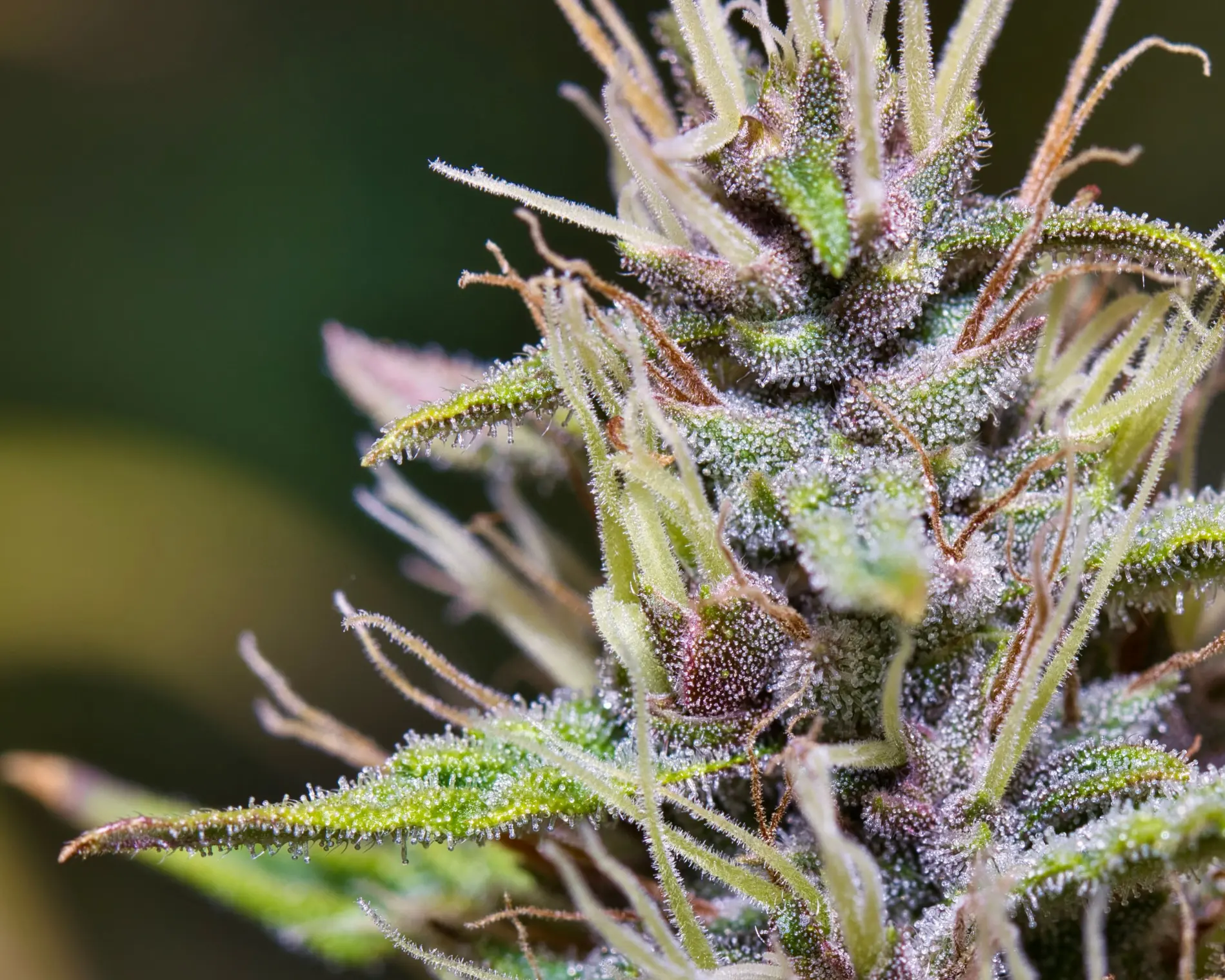
Moroccan Peaches is built around a flavor that is difficult to fake with a name alone. Strong flower can smell like peach skin, apricot flesh, pink candy, lemon oil and vanilla cream, followed by onion, garlic, incense and diesel. The ripe-fruit layer is bright enough to feel almost acidic, yet the base remains savory and resinous. This combination is one reason the cultivar is valued in both flower and resin-focused gardens. The trichomes can be abundant and aromatic, but the plant is not automatically a high-quality resin producer simply because it looks frosty. Harvest maturity, head structure and post-harvest handling determine whether the peach survives.
The most consistently documented lineage combines Spanish Barbara with Lemon Tree Skorange. The family brings together peach and body from the Barbara side with citrus, skunk, fuel and upward energy from the Lemon Tree Skorange side. The result is generally a balanced hybrid, although individual expressions may grow more like a vigorous citrus plant or finish with a heavier, fruit-musky body effect.
Moroccan Peaches is a cultivar where purpose should shape cultivation. A grower aiming for cured flower may allow additional maturity so the peach, lemon, cream and savory base become integrated. A grower prioritizing fresh aromatic resin may choose a slightly earlier point, while the peach is vivid and the trichome heads are mature but not weathered. Neither objective is automatically superior. The mistake is using one harvest rule for every part of the plant and every intended product.
Strain Features
| Feature | Details |
|---|---|
| Strain Type | Balanced hybrid with expression-dependent lean |
| Genetic Profile | Spanish Barbara x Lemon Tree Skorange |
| Broader Family | Barbara Bud, Lemon Tree and Skorange-related genetics contribute to the background |
| THC | Commonly reported from the high teens into the mid-20% range; batch dependent |
| CBD | Usually very low |
| Dominant Terpenes | Beta-caryophyllene, limonene and humulene are frequently associated with the profile; myrcene and linalool may vary |
| Signature Aroma | Peach, apricot, lemon, vanilla cream, floral incense, onion, garlic and diesel |
| Effect Character | Immediate euphoria and creativity followed by a smooth full-body relaxation |
| Flowering Time | Commonly around 8.5 to 10 weeks |
| Stretch | Moderate, with taller expressions possible outdoors or in large root zones |
| Plant Shape | Medium indoors, potentially tall outdoors, with productive lateral branches |
| Flower Structure | Frosty green buds with bright pistils and medium-to-high density |
| Resin Character | Often valued for large aromatic trichomes and strong fresh-frozen potential |
| Yield Character | Moderate to good, with quality and resin often more important than maximum biomass |
| Main Grow Risk | Harvesting all branches at one date even when aroma and trichome maturity differ |
| Flavor Risk | Hot late flower and fast drying remove peach before lemon, garlic and diesel |
| Grow Difficulty | Intermediate |
Genetic Lineage
Moroccan Peaches is most consistently documented as Spanish Barbara crossed with Lemon Tree Skorange. Spanish Barbara is connected to a Barbara Bud line and is associated with peach, ripe fruit, physical depth and resin. Its history is less publicly detailed than many commercial parents, so exact claims beyond the recurring Barbara connection should remain cautious.
Lemon Tree Skorange brings a more transparent citrus family. Lemon Tree is associated with lemon peel, Sour Diesel-style fuel, skunk, active branching and an uplifting effect. Skorange contributes orange-citrus intensity, resin and additional hybrid vigor. Together, they create a parent that can push bright acidic fruit above a pungent base.
The cross explains the cultivar’s unusual peach identity. Peach aroma is rarely created by one dominant terpene. It likely depends on a combination of limonene, minor fruit esters, floral compounds and sulfur-containing volatiles. The Barbara side supplies ripe stone fruit, while the Lemon Tree Skorange side adds acidity and fuel that keep the peach from tasting like simple candy.
Plant structure can vary. Some expressions remain medium with a balanced branch arrangement and manageable stretch. Others grow taller, especially outdoors, and may show longer citrus-influenced internodes. The taller plants can produce more flower, but they may also finish less uniformly. Lower branches continue developing after the sun-exposed tops reach aromatic maturity.
Aroma variation follows a similar pattern. One phenotype may smell like peach rings, vanilla and apricot. Another may carry lemon, garlic, onion and diesel with peach only in the background. Both may produce valuable resin. For flower selection, the ideal cut usually retains a recognizable stone-fruit note after cure. For resin selection, the trichome structure and fresh aroma may be equally important.
The lineage also shapes the effect. The citrus side tends to create a fast euphoric opening. The Barbara influence adds body relaxation and a smoother finish. The strain can feel creative and social early, then more physically settled without an abrupt crash.
Trichome expression deserves separate attention. Moroccan Peaches is often selected for aromatic resin, but visible frost alone does not explain performance. Some phenotypes carry larger, more easily separated heads, while others produce a dense white coating that looks impressive but behaves differently during processing. The grower should evaluate head size, stalk strength, aroma released by gentle contact and the proportion of mature heads across the flower rather than assuming the whitest plant is automatically the best.
The genetic blend may also create different calyx shapes. Fruit-forward expressions can form rounded bracts with bright pistils and a relatively open surface. Savory citrus expressions may stack more tightly along the stem. The first shape often dries more evenly. The second can carry heavier resin and greater density but requires closer humidity management.
Effect Breakdown
Immediate sensory brightness
Moroccan Peaches often produces a quick head change. Mood can rise, colors and music may feel more vivid and conversation can become easier. The effect is commonly described as euphoric, uplifted and creative. At a moderate dose, the user may feel active without the sharp pressure of a pure long-flowering sativa.
The flavor contributes to the perception. Bright peach and lemon can make the first minutes feel lighter than the potency actually is. Experienced users may find the onset clean and motivating. Sensitive users may feel mentally overstimulated if they consume too much quickly.
A smooth body transition
Physical relaxation develops gradually. The body may feel warm or tingly, while the mind remains positive and engaged. The strain can suit an afternoon walk, art, music or a social evening where movement is still desirable.
The middle phase is often the cultivar’s strongest point. It does not necessarily force sedation, but it removes some of the urgency from the cerebral opening. Appetite may increase, especially in fruit-heavy batches.
Greater maturity and dose create more weight
At higher doses, the experience becomes heavier and more inward. Attention may narrow, and the user may prefer a familiar environment. Late-harvest batches can produce stronger physical calm than earlier harvests.
Dry mouth and dry eyes are common. Anxiety can occur when the dose exceeds tolerance, particularly because the onset is quick. The strain should be approached as potent even when the flavor feels soft and friendly.
The late phase is usually smoother than the onset. A user who remains active may experience a balanced creative session, while someone who sits down may notice the physical relaxation more quickly. This setting-dependent character is one reason reports can describe the same batch as energetic and calming.
Flavor & Aroma Profile
Moroccan Peaches is one of the clearest stone-fruit profiles when grown and finished well. The intact jar may suggest ripe peach, apricot, pink candy and vanilla. The fruit is not always sugary. Strong examples can resemble the slightly fuzzy skin and acidic flesh of a fresh peach.
Breaking the flower changes the profile. Lemon oil, floral incense, onion, garlic and diesel emerge beneath the fruit. Some phenotypes add mango, sour citrus or a savory spice note. The contrast between peach and onion may sound unpleasant in theory, but in the flower it creates depth and prevents the aroma from becoming simple.
The inhale is usually fruit-led. Peach, apricot and lemon reach the palate first. A creamy or vanilla middle can soften the acidity. The exhale becomes more savory, with diesel, garlic and pepper appearing behind the fruit. A good sample leaves a peach-lemon aftertaste rather than a generic sugary coating.
The cultivar’s aroma can change dramatically after harvest. Fresh flowers may smell intensely peachy. During early drying, lemon and green plant notes can become stronger. In cure, peach returns if the flower has not been overheated. Garlic and diesel usually remain visible throughout.
Over-drying is easy to misread. The jar may still smell loud because diesel and onion survive. The smoke, however, loses the ripe fruit and becomes sharper. A complete batch should taste more complex than it smells from a distance.
Vapor at lower temperatures can emphasize peach, apricot, vanilla and floral incense. Higher temperatures reveal lemon peel, pepper, garlic and fuel. This layered response makes the cultivar especially interesting for sensory-focused users.
Dominant Terpenes
Published terpene descriptions frequently point to beta-caryophyllene, limonene and humulene, while myrcene, linalool and other minor compounds vary by phenotype and batch.
Beta-caryophyllene supports pepper, dry spice and the warm savory base. It helps connect peach sweetness to garlic and diesel.
Limonene is central to lemon oil, citrus acidity and the bright euphoric opening. It also lifts the peach aroma, making it feel fresh rather than syrupy.
Humulene contributes herbs, dry wood and a slightly bitter edge. In savory phenotypes, it may support onion, incense and spice.
Myrcene can add ripe tropical depth and physical relaxation. Higher-myrcene batches may feel heavier and more musky.
Linalool may contribute vanilla, floral cream and a softer aromatic texture.
The peach identity likely depends on minor esters and sulfur compounds that are not fully represented by a standard terpene panel. A laboratory list can help explain the structure, but it cannot predict whether the flower will smell distinctly like peach.
Indoor vs. Outdoor Growing
| Decision Point | Indoor Growing | Outdoor Growing |
|---|---|---|
| Plant Size | Medium plants can be shaped into an even canopy | Can become tall and broad with unrestricted roots |
| Flower Uniformity | Light and support can be controlled for a consistent finish | Tops and lowers may reach aromatic maturity at different times |
| Resin Protection | Stable climate preserves delicate trichome aroma | Wind, dust, rain and heat influence resin quality |
| Flavor | Controlled temperature protects peach and vanilla | Sun can deepen complexity, but hot finishing weather strips stone fruit |
| Harvest Strategy | Staged harvest or separate product goals are easy to manage | Weather may limit the ability to wait for lower branches |
| Support | A net keeps branches separated and supports late weight | Cages or ties are useful on tall productive plants |
| Best Fit | Growers focused on controlled flower or resin quality | Warm, dry climates with a long season and a protected harvest period |
Indoor cultivation makes it easier to decide what the harvest is for. The grower can take selected tops for fresh aromatic material and leave lower branches for cured flower. Climate control also helps preserve peach during the final weeks.
Outdoors, the cultivar can express substantial vigor and complex sun-grown flavor. Taller plants require early support and a wide footprint. The main challenge is uneven maturity. Upper flowers receive more sun and often peak earlier, while protected lower branches remain active.
Outdoor resin quality depends on more than visible trichomes. Dust, wind, rain and heat can damage or contaminate the heads. A protected site with clean airflow is more valuable than maximum exposure.
Strain-Specific Grow Guidance
Establish the purpose before the plant is in late flower
Moroccan Peaches may be grown for cured flower, fresh aromatic resin or a combination. The target should influence canopy depth, harvest timing and post-harvest handling. A very deep canopy can provide processing material, but it complicates uniform flower maturity.
A flower-focused run should prioritize an even upper zone and removal of shaded lower sites. A resin-focused run may keep more well-lit secondary flowers, provided they develop mature trichomes and remain clean.
Vegetative structure
One early topping or main-stem bend usually creates enough dominant branches. Allow the plant to recover fully. The side branches can be spread into an open shape rather than forced into a perfectly flat grid.
Taller expressions should be flipped earlier. Compact plants can enter flower with more canopy fill. In mixed seed populations, separate plants by vigor before the light change.
Transition stretch
Moderate stretch is common, but the citrus side can produce taller plants. Leave open screen space and vertical capacity. Continue tucking until small flower clusters become visible, then stop manipulating the stems aggressively.
The plant may continue adding lateral length after the central stretch appears complete. Check the edges of the canopy, where branches can overlap and shade each other.
Flowering development from week to week
During the first two weeks after the flip, the plant uses its citrus vigor to complete branch placement. This is the final practical window for tucking and major lower cleanup. By the third week, flower sites become defined and the grower can see which branches will create useful tops and which will remain shaded.
Build support before the flowers demand it
Weeks four and five are often deceptive. Resin and fruit aroma can become obvious before the flowers carry their final mass. The plant may smell ripe while the calyxes are still small. Avoid interpreting aroma strength as harvest progress. Continue monitoring water demand and branch support.
During weeks six through eight, the peach profile usually gains depth and the savory layer becomes clearer. This is when flower density and trichome maturity begin separating between upper and lower sites. The grower should inspect more than the top cola. A bright upper flower may be ready for one purpose while the lower canopy still needs time.
The final period is about choosing the target rather than chasing a calendar. Flower intended for a vivid peach profile may be harvested before a heavier, more amber body effect develops. Later flower can gain density and deeper garlic-diesel character. The decision should be deliberate.
Canopy depth and lower growth
Moroccan Peaches can produce resin on secondary flowers, which creates a temptation to keep too much lower growth. The decision should depend on intended use. For premium flower, remove sites that will not receive strong light. For processing, keep only the secondary sites that remain airy and mature at a similar rate.
A dense lower zone increases humidity and makes pest inspection more difficult. Clean branch junctions and remove weak inward growth before the flowers become sticky.
Feeding and root-zone behavior
The cultivar generally responds to moderate, balanced nutrition. It should not be assumed to require heavy feeding because it produces strong resin. Excess nitrogen delays flower definition and keeps the canopy too leafy.
Watch water use during the transition from stretch to bulking. If demand slows, adjust irrigation and feed strength. A wet salty medium can reduce aroma and create dull leaf posture without an immediate dramatic deficiency.
A well-aerated root zone supports the plant’s resin and fruit expression. Repeated saturation can mute growth and increase the chance of late canopy humidity.
Temperature and aroma
Peach is highly vulnerable to heat. Late-flower canopy temperature should remain stable, particularly during the middle of the light period. Tops closest to the fixture may look frosty while losing fruit.
Outdoor plants should not be left through a heat wave merely to gain more amber trichomes. The grower should compare aroma each day. When peach begins fading into plain lemon and diesel, the harvest window may be closing.
Humidity and flower health
The flowers can become dense enough to hold moisture, though not every phenotype forms rock-hard colas. Lower humidity gradually before maximum swell. Keep branches separated and inspect the stem-facing side of top flowers.
Bright orange pistils and green buds can make small areas of discoloration visible, but dense resin may hide the texture. A healthy flower remains firm and aromatic. Soft brown internal tissue requires immediate action.
Outdoor site details
Outdoor Moroccan Peaches benefits from morning sun and open air. A site that remains shaded and wet through the morning may protect the plant from heat but holds dew around the trichomes and dense flower sections. A balanced site receives early light, moving air and some protection from the harshest late-afternoon heat.
Root-zone temperature also matters. Large dark containers exposed to sun can become hot enough to reduce water and nutrient function even while the canopy looks vigorous. Mulch, light-colored outer covers or partial container shading can keep the roots more stable without shading the flowers.
As harvest approaches, inspect for dust, insects and weather damage. Resin-focused material is less forgiving of contamination because the trichome heads are part of the final product. Clean preventive cultivation is more valuable than trying to correct dirty flowers after harvest.
Support and handling
Install support before the flowers become sticky. A first net can guide the canopy. A second level or individual ties can keep heavy tops upright and prevent contact.
Handle resinous branches minimally. The cultivar’s value may depend on intact trichome heads, especially when fresh material is intended for processing. Repeated repositioning late in bloom removes resin and can bruise the flower.
Harvest window
Common flowering estimates fall between about eight and a half and ten weeks. The plant should be judged by purpose and phenotype. A peach-bright upper branch may peak before a lower branch with more savory aroma.
For cured flower, wait for full calyx expansion, a stable peach-lemon-gas aroma and mostly cloudy trichomes on calyx tissue. For fresh aromatic resin, evaluate trichome head maturity, clarity and aroma before extensive amber develops.
Staged harvest is often the most rational approach. It allows the grower to protect the best top-note material while giving later branches time to finish.
Weedth Bud Flavor Tips
The first flavor goal is preserving peach. The second is keeping it connected to lemon, cream and savory gas. A drying process that leaves only fruit can feel thin. A process that leaves only diesel has removed the cultivar’s identity.
Harvested branches should be moved into shade and darkness quickly. Outdoor material should not remain in bins under the sun. Heat accumulates rapidly inside stacked branches and removes volatile fruit before the drying room is reached.
Sort the harvest by intended use. Fresh material for resin should be handled cold and gently according to the chosen process. Flower material should be divided by branch thickness and hung with enough space to avoid trapped moisture.
Indirect airflow is essential. Peach and apricot disappear under direct fan pressure. The room should circulate air around the branches, not across them.
During cure, lemon and diesel may dominate first. Peach often becomes rounder after moisture equalizes. Vanilla and cream can also become clearer. Use separate containers for early and late harvest sections so the grower can compare maturity honestly.
For flower, trim timing should follow room conditions. In a dry environment, keeping some resinous leaf around the bud can slow surface moisture loss. In a humid environment, removing more leaf may be necessary to prevent stagnant moisture. The cultivar should not be wet-trimmed heavily by habit simply because it carries dense resin.
The aroma should be evaluated at several stages: intact jar, broken flower, inhale and exhale. Some phenotypes smell peachy in the jar but taste mainly lemon and gas. Others appear quieter until ground, then release ripe apricot. Keeper selection should include the full sensory sequence.
Do not add fruit peels or flavoring material to storage containers. They introduce moisture and microbial risk without restoring the plant’s original volatile chemistry.
Weedth Bud Boost Tips
The cultivar’s best yield strategy depends on the final product. For premium flower, keep a shallow canopy and remove weak lower growth. For resin, preserve more clean secondary sites without allowing the plant to become humid or shaded.
Indoors, several strong tops spread across an open screen are preferable to one central cola. Uniform light supports consistent trichome maturity and makes staged harvest easier.
Outdoors, large root volume can produce a tall plant. Early topping, wide branch angles and a support cage convert that size into accessible flower. Keep the center open enough that every main branch can be inspected.
Resin quality is not improved by damaging stress. Severe drought, excessive light or late nutrient concentration can reduce aroma even if the plant produces visible frost. Stable growth and clean maturation preserve more useful trichomes.
Harvest timing adds weight. The final calyx swell can be significant. The grower must balance this against peach loss. A staged harvest can capture both a brighter top section and a heavier lower section rather than forcing a compromise.
Post-harvest yield should also be considered. Dense flowers that dry unevenly may lose usable weight to mold or harsh over-drying. Sorting branches and controlling moisture protect the actual finished harvest.
Medical Uses & Benefits
Consumers commonly report choosing Moroccan Peaches for low mood, stress, fatigue and physical tension. The fast euphoric phase may feel creative and socially open. The later body relaxation can make the strain useful for calm evenings.
Some users report headache or anxiety relief, while others experience anxiety at higher doses. These reports are subjective and do not establish treatment. THC can produce dose-dependent anxiety, and low CBD offers limited buffering.
Dry mouth and dry eyes are common. High doses may reduce concentration or create sleepiness. People using cannabis for a diagnosed condition should seek qualified medical guidance and evaluate verified product chemistry.
Ideal User Profile
Moroccan Peaches suits experienced users who value distinct fruit rather than simple sweetness. It is well matched to creative afternoons, music, social evenings and relaxed sensory activities.
Growers should choose it when they are interested in flavor preservation, trichome quality and harvest decisions. It is especially rewarding for cultivators who can separate flower and resin goals.
It is less suitable for very hot finishing environments, rushed drying rooms or users who react poorly to rapid THC onset. Growers seeking only maximum dry weight may also find the cultivar less straightforward than heavier commercial plants.
Grower Notes and Feedback
The most consistent reports identify Spanish Barbara x Lemon Tree Skorange as the lineage and peach, lemon and savory gas as the sensory fingerprint. The cultivar is repeatedly valued for resin quality, including fresh aromatic processing.
Growth information is less uniform. Plants are commonly described as medium indoors and taller outdoors, with moderate difficulty. Training is useful, but there is no strong evidence that the cultivar requires extreme techniques. The more important issue is flower and trichome preservation.
Yield is usually described as moderate to good. This aligns with a cultivar selected for flavor and resin rather than maximum commercial weight. High-quality flower depends on even light and mature upper sites.
The effect is commonly described as euphoric, uplifted, creative and later relaxing. Anxiety remains possible at high doses. The balanced progression appears more consistent than a fixed indica-sativa percentage.
Growers should expect phenotype variation in the savory layer. Some plants carry onion and garlic. Others show cleaner peach, lemon and vanilla. Keeper selection should include both cured flower and, where relevant, resin behavior.
A recurring practical issue is the difference between visual resin and usable resin. Growers report that some frosty plants do not deliver the same aromatic return as less visually dramatic siblings. This supports testing small samples separately and keeping accurate plant labels through harvest.
Another common observation is that upper flowers can mature significantly ahead of the interior. Plants grown under strong direct light may need staged harvest even when the canopy height is uniform. The maturity difference comes from light exposure and flower position, not only branch height.
Drying feedback emphasizes the vulnerability of peach. Fast-dried flower can remain citrusy and pungent but lose the ripe stone-fruit identity. A slower controlled process is repeatedly associated with a rounder peach-cream flavor and smoother smoke.
Weedth Editor's Note
The tradeoff I would plan around
Moroccan Peaches creates a harvest decision that cannot be solved by one trichome photograph.
Picture a plant near the end of flowering. The top branches receive the strongest light and smell like fresh peach skin with lemon oil. Their calyxes are swollen, and the trichome heads are mostly cloudy. Lower branches are healthy and resinous, but their aroma is creamier, greener and less defined. Waiting another week for the entire plant may increase lower weight, yet the top peach note could begin fading.
I would not force the whole plant into one answer. I would harvest the aromatic top section first and keep it separate. Some of that material could be reserved for fresh processing if the trichome structure is suitable. The lower branches would remain under stable light for several more days until their calyxes and aroma mature.
After drying and cure, the two harvests would teach more than a single jar. The earlier tops might retain brighter peach, lemon and creativity. The later flowers might show more garlic, vanilla, body weight and density. Neither result is wrong. The comparison reveals which harvest point matches the intended use.
I would also resist the temptation to choose the loudest fresh flower as the keeper. Some plants smell intensely peachy while alive and lose it during drying. A slightly quieter plant may hold peach after cure and produce more stable resin. Selection should include the complete journey from live plant to stored flower.
The cultivar’s value is choice. It can be grown as beautiful flower, aromatic fresh material or both. The grower who decides the goal early can shape the canopy and harvest accordingly. The grower who waits until day sixty-five to decide may end up compromising every section of the plant.
I would make that decision visible in the room. Branches intended for the earliest aromatic harvest could be tagged during week six. Lower branches intended for cured flower could be supported separately so removing the tops does not collapse the plant. If a small test wash or resin sample is part of the evaluation, it should remain linked to the exact branch and phenotype. Without that record, a strong result cannot be repeated.
This is also one of the few cultivars where I would accept two different expressions from the same run. A peach-bright cut may be the better flower plant. A louder savory cut with stronger trichome behavior may be the better resin plant. Selection does not always have to produce one winner when the intended uses are different.
My keeper would be the expression where peach remains recognizable after lemon, garlic and diesel arrive. That balance is more important than the highest number, the darkest color or the largest top.
Weedth Score
Growing Experience – 8.3/10: The plant is manageable and responsive, but purpose-driven harvest and aroma protection require attention.
Bud Structure & Visual Appeal – 9.0/10: Frosty green flowers, bright pistils and strong resin create excellent visual quality.
Aroma Complexity – 9.5/10: Peach, apricot, lemon, vanilla, incense, onion, garlic and diesel form a rare and memorable profile.
Flavor & Smoothness – 9.0/10: Properly finished flower preserves vivid stone fruit and a savory exhale. Heat and fast drying cause major losses.
Effects & High Experience – 8.7/10: Euphoric and creative at first, then smoothly relaxing. High doses can become anxious or heavy.
Overall Satisfaction & Recommendation – 9.0/10: A strong recommendation for flavor and resin-focused growers willing to make selective harvest decisions.
I would keep it for the moment fresh peach turns into lemon-garlic gas without disappearing.
FAQ
What is Moroccan Peaches' lineage?
The most consistently documented lineage is Spanish Barbara crossed with Lemon Tree Skorange.
Is Moroccan Peaches indica or sativa?
It is generally described as a balanced hybrid. The effect often begins bright and creative before becoming physically relaxing.
How long does Moroccan Peaches flower?
A common range is approximately eight and a half to ten weeks. The exact harvest should follow calyx and trichome maturity rather than a fixed day.
How much does Moroccan Peaches stretch?
Moderate stretch is common indoors. Outdoor plants or citrus-leaning expressions may become taller and require more support.
Is Moroccan Peaches good for resin production?
Selected expressions can produce abundant aromatic trichomes and are valued for fresh processing. Actual return depends on the cut, maturity, head structure and handling.
Why does my Moroccan Peaches smell like onion or garlic?
Savory sulfurous notes are part of the cultivar’s profile. They come from the lineage and minor volatile compounds, not necessarily from a problem.
How can growers preserve the peach aroma?
Control late heat, harvest when the fruit remains vivid, use indirect drying airflow and cure in small containers. Avoid direct sun on harvested branches.
Is staged harvest useful with Moroccan Peaches?
Yes. Upper flowers may reach aromatic maturity before lower branches. Staged harvest can preserve peach while allowing later sections to finish.
Is Moroccan Peaches suitable outdoors?
Yes in warm, dry climates with a long enough season. Large plants need support, privacy and a protected finishing period.
What is the main grow mistake?
Treating the entire plant as one uniform harvest and allowing the brightest top notes to fade while waiting for immature lower branches.
Similar Strains
Lemon Tree: Shares lemon oil, diesel and active hybrid growth, but lacks the same ripe peach and creamy resin focus.
Papaya: Provides tropical fruit, resin and body relaxation, with more musk and less acidic lemon.
Peach Rings: Matches stone-fruit sweetness, but is usually candy-like and less savory.
Trop Cherry: Offers vivid fruit, color and creative energy, replacing peach with orange and sour cherry.
Strawberry Guava: Shares fruit-rich resin and processing potential, with more strawberry, guava and papaya musk.
Share this article
A quick overview of the topics covered in this article.
Follow us
Latest articles
September 9, 2026
September 9, 2026
September 9, 2026