
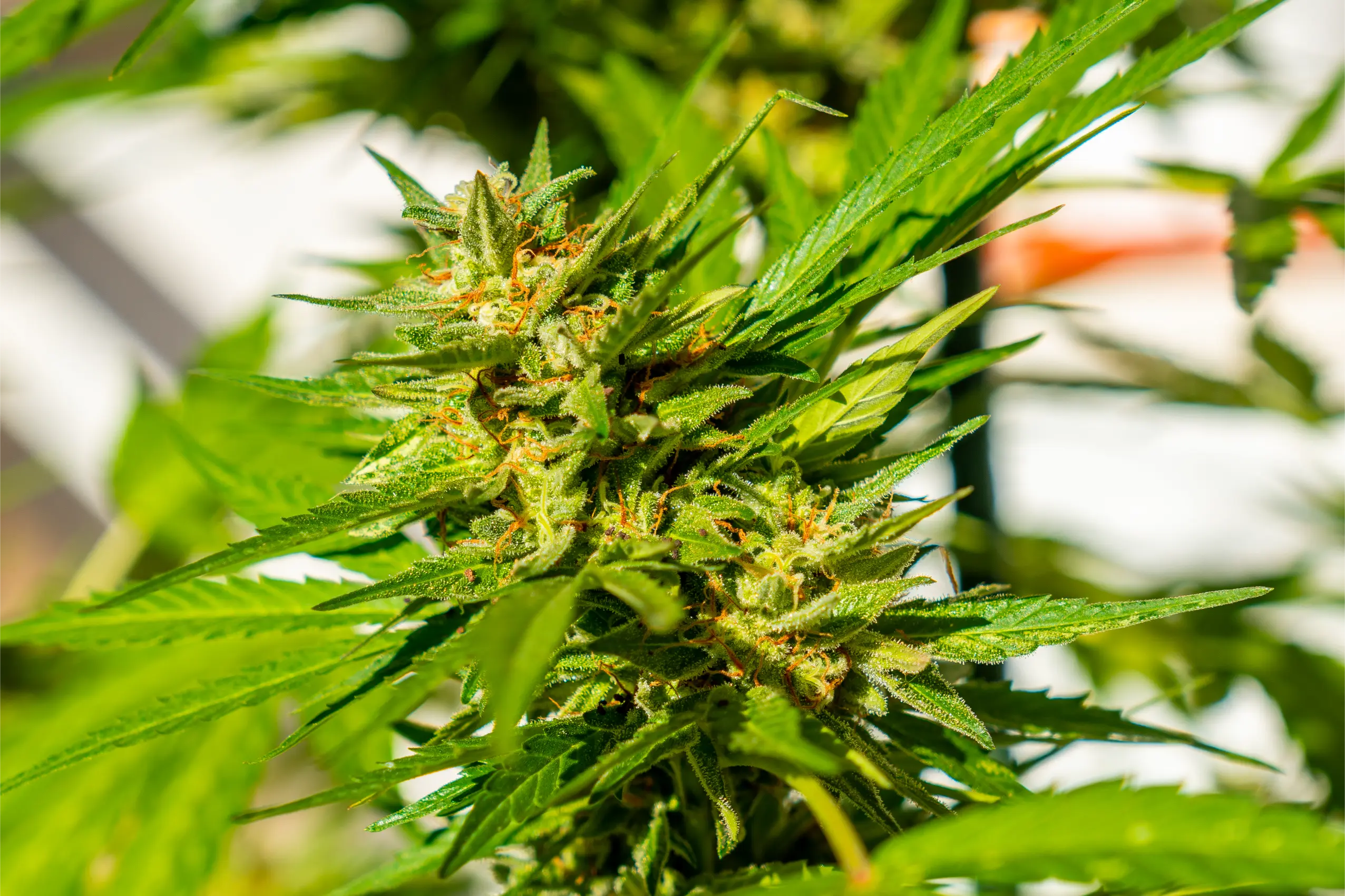
Orient Express
Weedth Strain Library
Orient Express is an Asian landrace-derived hybrid that compresses the height and flowering demands of a tropical sativa into a more manageable plant while preserving earthy forest, floral, spice, and clear daytime effects. This profile focuses on what the strain actually asks from a grower: structure, flowering behavior, environmental fit, flavor preservation, realistic risk, and the decisions that separate an average harvest from a strong one.
Strain Features
| Feature | Details |
|---|---|
| Type | Sativa-dominant hybrid, roughly 60/40 in many descriptions |
| Genetic identity | Vietnam Black x China Yunnan. The pairing combines a tropical Southeast Asian sativa with a shorter Yunnan indica line, producing a compact sativa-dominant F1 that is much easier to manage indoors than the tropical parent alone. |
| THC | commonly reported in the mid-teens, with stronger selections reaching higher |
| CBD | usually very low |
| Indoor flowering | about 9 weeks, with an 8-10 week practical range |
| Typical height | compact to medium for a sativa-dominant plant, with good branching |
| Yield tendency | good to high when the root zone and mid-flower nutrition stay stable |
| Grow difficulty | Intermediate; easier than a tropical landrace but still responsive to environment and feeding balance |
| Primary effects | clear, warm, social, mentally smooth, gently uplifting with limited heaviness at moderate doses |
| Flavor & aroma | damp forest floor, earth, floral herbs, spice, subtle citrus, wood and occasional incense-like depth |
| Main cultivation issue | underfeeding a strong, productive plant can reduce flower building, while excessive late feeding can muddy flavor; balance matters more than minimalism or aggression |
| Best grower fit | Growers who can observe phenotype behavior and adjust canopy, airflow, feeding, and harvest timing instead of following one fixed calendar. |
Genetic Lineage
Orient Express's genetic story matters because it explains the plant's behavior more accurately than a simple indica/sativa label. Vietnam Black x China Yunnan. The pairing combines a tropical Southeast Asian sativa with a shorter Yunnan indica line, producing a compact sativa-dominant F1 that is much easier to manage indoors than the tropical parent alone. In practical cultivation terms, that ancestry shows up in the way the plant builds branches, responds to the flip, sets flowers, and expresses aroma under a stable environment.
The lineage should also be treated with the caution that older cannabis names deserve. Commercial circulation, clone exchange, seed reproduction, and informal naming have created versions that do not always behave identically. For Orient Express, a grower should use the commonly accepted lineage as a reference point, then judge the actual plant by morphology, aroma, flowering rhythm, and resin development. That approach protects the grower from forcing a mismatched phenotype into expectations borrowed from a description on paper.
What I would expect from a convincing Orient Express expression is a combination of its documented family traits and its own recognizable identity. The most useful genetic clues are not slogans. They are repeatable features such as compact for its tropical ancestry, with useful branching and a strong ability to fill a modest indoor footprint without becoming a pure-sativa tower. Those clues become especially valuable when comparing multiple plants from seed or verifying whether a clone still resembles the cultivar it is supposed to represent.
Effect Breakdown
The effect profile of Orient Express is best understood as a sequence rather than a single adjective. Reports most often describe it as clear, warm, social, mentally smooth, gently uplifting with limited heaviness at moderate doses. The first phase is usually the easiest part to identify because the shift in attention and mood arrives before the deeper physical component has fully developed.
During the onset, experienced users often notice a change in mental pace first. The environment can feel more interesting, music may become more detailed, conversation can become easier, and repetitive tasks may feel less dull. That does not mean the strain is universally functional. Dose remains decisive. A small amount can preserve direction and social ease while a larger amount can make the same mental stimulation distracting, internally focused, or simply too strong.
At the peak, Orient Express tends to show the balance that separates it from a one-dimensional stimulant or sedative. The mind and body no longer move independently. Mental tone, sensory detail, and physical relaxation begin to overlap. This is also the point where tolerance differences become obvious. Experienced consumers may remain productive, while newer users can find that the same dose changes coordination, short-term memory, or motivation more than expected.
The late phase is often softer and more body-centered than the first 20 to 40 minutes. For many users, this is where Orient Express becomes useful for unwinding rather than initiating activity. The transition is not identical for every phenotype, harvest window, or dose. Earlier-harvested flower with a brighter terpene profile can feel more active, while later material with more mature resin often feels heavier and longer lasting.
Negative effects are still possible. Dry mouth and dry eyes are common with THC-rich flower. Anxiety, racing thoughts, dizziness, or an uncomfortable sense of heaviness can appear when the dose exceeds personal tolerance. The safest interpretation of strain effects is therefore probabilistic: the profile describes tendencies, not a guaranteed response.
Remember: Effect reports describe tendencies, not medical outcomes. Dose, tolerance, individual biology and harvest chemistry can change the experience substantially.
Flavor & Aroma Profile
The sensory identity of Orient Express is one of the strongest reasons to grow it carefully. Its profile is commonly described as damp forest floor, earth, floral herbs, spice, subtle citrus, wood and occasional incense-like depth. Good flower should not smell like a single flavoring. The best examples unfold in layers: volatile top notes appear first, heavier earth or spice develops as the flower is broken apart, and the exhale leaves a different impression from the dry jar aroma.
Aroma quality depends as much on cultivation and post-harvest handling as on genetics. High root-zone stress, excessive late nitrogen, repeated drought, hot canopy conditions, and harvesting before the plant has finished building resin can all flatten Orient Express's identity. A grower may still produce potent flower under those conditions, but potency without aromatic separation is not the same as quality.
The inhale should feel coherent with the dry aroma. When Orient Express is dried slowly and cured patiently, the sharper notes tend to become smoother while the deeper parts of the profile become easier to recognize. When it is dried too quickly, the cultivar can lose the volatile notes first and leave behind a generic grassy, woody, or bitter impression that hides the genetic character.
The exhale is where I pay closest attention. Strong Orient Express should leave a recognizable aftertaste rather than disappearing immediately. A lingering resin note, a clean aromatic echo, and relatively low harshness are better indicators of finish quality than an extremely loud jar smell by itself.
Dominant Terpenes
Terpene dominance is not fixed across every Orient Express plant or harvest. Phenotype, environment, maturity, drying, storage, and laboratory method can all change the measured order. The following compounds are the most useful working profile for understanding the cultivar's reported aroma, not a promise that every sample will test in the same sequence.
| Terpene | Flavor / Aroma Role | Why It Matters in This Profile |
|---|---|---|
| Myrcene | earth, herbs and damp forest | documented as prominent in at least one analyzed outdoor sample and fits the cultivar’s deep organic aroma |
| Alpha-pinene | pine and fresh resinous wood | adds clarity and a high, clean forest note |
| Beta-pinene | green pine and herbs | extends the conifer-like freshness |
| Nerolidol | woody floral depth | contributes a soft, lingering floral-wood layer |
| Beta-caryophyllene | pepper and dry spice | supports the warm spicy finish |
For growers, terpene preservation starts before harvest. Stable leaf temperature, a healthy but not overfed root zone, good airflow, and enough time for the plant to finish are the foundation. After cutting, low heat and controlled drying matter more than trying to manufacture aroma with additives. Orient Express should smell like itself because the plant expressed and retained its chemistry, not because the grower tried to force a flavor onto it.
Indoor vs. Outdoor Growing
Orient Express can produce high-quality flower both indoors and outdoors, but the two environments expose different strengths and weaknesses. Indoor cultivation offers tighter control over the exact problems that define this strain. Outdoor cultivation can produce larger plants and deeper environmental expression, but the season must actually match the cultivar rather than merely being warm during summer.
For indoor growers, Orient Express is unusually manageable for a cultivar with tropical ancestry. The goal is to use its useful lateral branching to fill a modest footprint without allowing the transition stretch to create a layered, shaded canopy. The room should be planned around the final flowering footprint rather than the compact appearance of the plant in late vegetative growth. Outdoors, it is better suited to warm-temperate or Mediterranean-like conditions that provide enough season for an early-to-mid autumn finish without prolonged cold rain.
| Aspect | Indoor Grow | Outdoor Grow |
|---|---|---|
| Plant control | compact for its tropical ancestry, with useful branching and a strong ability to fill a modest indoor footprint without becoming a pure-sativa tower. Indoor training can shape this into a consistent canopy. | Natural root volume and sun can amplify vigor. Spacing should account for the mature footprint rather than the size of the transplant. |
| Stretch | moderate; enough to use a screen well, but usually more controllable than long equatorial genetics | Outdoor stretch is less about ceiling height and more about branch support, wind exposure, and keeping the center open. |
| Nutritional balance risk | underfeeding a strong, productive plant can reduce flower building, while excessive late feeding can muddy flavor; balance matters more than minimalism or aggression. Controlled dehumidification and air movement make indoor prevention easier. | well suited to warm-temperate and Mediterranean-like conditions with enough season to reach early-to-mid autumn maturity |
| Feeding | can appreciate a stronger nutritional program than many delicate sativas, especially through early and mid flower, but should still finish cleanly | Native soil quality and container volume change nutrient demand. Avoid assuming that large outdoor size always means aggressive feeding. |
| Harvest control | look for resin maturity and a shift from green forest aroma toward fuller earth, flower and spice; do not rush simply because the plant is relatively compact | Outdoor harvest may need to be staged if weather pressure and branch maturity do not align. |
| Best advantage | Precision. Light, irrigation, humidity, and canopy geometry can all be adjusted quickly. | Root volume, sunlight and natural day-night variation can produce exceptional aromatic depth when the season is suitable. |
Strain-Specific Grow Guidance
This is the section where Orient Express should stop being treated like generic cannabis. Its management should follow its own architecture, transition speed, flower density and aromatic goals.
Architecture and the first training decision
Orient Express stays relatively compact for its tropical ancestry, with useful lateral branching and a strong ability to fill a modest indoor footprint without becoming a pure-sativa tower. The first training decision should preserve the productive pattern rather than fight it. Top or bend early and build a broad canopy; screens work especially well when lateral branches are guided before transition hardens them. The goal is not to make every cultivar look identical. It is to distribute light, air and branch load in a way that lets this plant finish its own structure efficiently.
Stretch and transition management
Expect moderate; enough to use a screen well, but usually more controllable than long equatorial genetics. That means the flowering flip should be treated as a space-management decision. Keep enough empty volume above and around the plant for the transition. A common mistake is filling the canopy perfectly in vegetative growth and then discovering that every new flowering centimeter has nowhere useful to go.
Leaf removal without stripping the plant
Defoliation should solve a specific problem: blocked flowering sites, trapped humidity, or poor interior airflow. I would not strip Orient Express simply because a schedule says to remove leaves on a certain day. Large healthy leaves are part of the plant's energy system. Remove the leaves that create a measurable canopy problem and leave the rest until the plant proves they are unnecessary.
Root zone and feeding behavior
Orient Express can appreciate a stronger nutritional program than many delicate sativas, especially through early and mid flower, but it should still finish cleanly. Feed changes should follow whole-plant evidence, runoff or solution behavior where relevant, and the speed of new growth. Fast vertical growth can temporarily lighten tops without indicating a true deficiency. Overcorrecting that moment can create excess nitrogen just as flowering needs to become cleaner.
Nutritional balance and late-flower finish
Dense flowers change the airflow plan
The central cultivation risk is nutritional imbalance. Underfeeding a strong, productive plant can reduce flower building, while excessive late feeding can muddy flavor; balance matters more than minimalism or aggression. Airflow should move through the plant, not just over the top of it. That usually requires both branch spacing and selective interior cleanup. By late flower, humidity control is a quality tool because it lets the grower keep the plant to proper maturity instead of cutting early out of fear.
Branch support and load
Support should be installed before it looks necessary. As flowers gain mass, branches become less flexible and resin makes handling messy. A screen, soft ties, stakes, or a combination can keep Orient Express's flower sites separated and properly exposed. Support also prevents one leaning branch from pressing flowers together and creating a hidden moisture pocket.
Flowering timeline and harvest reading
The working flowering window is about 9 weeks, with an 8-10 week practical range. Calendar estimates help plan the room but should not decide the harvest alone. Watch bract swelling, trichome maturity on actual flower tissue, pistil behavior, whole-plant water demand, and the aromatic change described for this cultivar. Look for resin maturity and a shift from green forest aroma toward fuller earth, flower and spice; do not rush simply because the plant is relatively compact.
Failure mode to watch
The failure pattern I would watch most closely is nutritional imbalance carried too far in either direction. Underfeeding can reduce flower building, while excessive late feeding can muddy flavor and delay a clean finish. The earliest warning is usually structural or environmental before it becomes visible flower damage. Crowded tops, leaves that remain wet-feeling in still air, or branches pressing together are reasons to improve the canopy before symptoms appear.
Phenotype selection
The defining grower value is the compression of tropical sativa character into a shorter, faster plant. If an individual behaves like a very tall, extremely long-flowering equatorial type, it may not represent the compact expression most growers expect from this cultivar.
Second-run optimization
The second run should not repeat the first run automatically. Record stretch, final plant width, feed strength, water use, aroma development, branch failures and harvest timing. Then change only the variables that clearly limited the first crop. Orient Express becomes much easier to dial in when the grower treats the first run as data instead of as a pass-or-fail event.
Use the hybrid compression
The plant’s advantage is that it can express tropical character without consuming an entire room. Train laterals outward early so that the compact structure becomes canopy area rather than a single central spear.
Do not starve it because it looks exotic
Orient Express can be more nutrient-capable than delicate equatorial plants. Watch plant color and flowering pace, then feed according to demand rather than stereotype.
Back off before flavor gets muddy
Strong early nutrition can support yield, but the late cycle should become cleaner. Heavy late nitrogen works against the earthy-floral definition that makes the cultivar distinctive.
Protect the forest profile during cure
Earthy cultivars are often dried too warm because growers assume the aroma is robust. The floral and pine details are actually delicate and need the same slow handling as fruitier strains.
Choose clarity over raw potency
A keeper should not be selected only by the strongest effect. The best expression balances clear social energy, manageable structure, resin, and the unusual wet-forest aromatic identity.
| Stage | Main Task | Main Mistake to Avoid |
|---|---|---|
| Late vegetative | Confirm plant width and phenotype. Prepare support before the flip. Top or bend early and build a broad canopy; screens work especially well when lateral branches are guided before transition hardens them. | Overfilling the room before stretch. |
| Transition week 1 | Allow the expected moderate; enough to use a screen well, but usually more controllable than long equatorial genetics movement while keeping tops separated. | Reacting to normal stretch with heavy feeding. |
| Transition weeks 2-3 | Finish canopy positioning and remove clearly unproductive interior shoots. | Late high-stress training on stiffening flower stems. |
| Early flower | Keep nutrition stable and watch the root zone rather than chasing leaf color. | Letting interior humidity rise as leaf mass peaks. |
| Mid flower | Protect airflow, support branches, and avoid major structural changes. | Excess nitrogen or crowded flower contact. |
| Late flower | Shift attention from growth to finish quality. Watch underfeeding a strong, productive plant can reduce flower building, while excessive late feeding can muddy flavor; balance matters more than minimalism or aggression. | Cutting early because flowers look large or colorful. |
| Harvest window | Look for resin maturity and a shift from green forest aroma toward fuller earth, flower and spice; do not rush simply because the plant is relatively compact. | Using pistil color or advertised day count as the only maturity signal. |
Weedth Bud Flavor Tips
Bud flavor is won by keeping the plant healthy enough to finish. For Orient Express, I would prioritize the cultivar's natural profile – damp forest floor, earth, floral herbs, spice, subtle citrus, wood and occasional incense-like depth – over any attempt to create sweetness with heavy additives. A clean root zone, stable irrigation, and controlled canopy temperature produce a stronger sensory result than last-minute flavor tricks.
Indoor flavor strategy starts with leaf temperature and airflow. Strong light is useful only while the plant can process it without chronic stress. If the top flowers are constantly hot, the most volatile aromatic compounds are the first quality layer at risk. Keep the canopy productive, not punished.
Outdoor flavor strategy is mostly about site fit and harvest timing. Orient Express is well suited to warm-temperate and Mediterranean-like conditions with enough season to reach early-to-mid autumn maturity. A plant that must be harvested early because of persistent rain will often have less developed flavor than the same genetics finished under a dry, sunny autumn.
Drying should be slow enough that the outside of the flower does not become crisp while the center remains wet. Air exchange matters, but direct hard airflow across hanging flower is counterproductive. Darkness and moderate temperature protect volatile compounds while moisture equalizes through the tissue.
Cure should be used to stabilize and reveal Orient Express, not to rescue badly dried flower. During the first weeks, the aroma should become cleaner and more separated. If the jar repeatedly smells sharply of ammonia or wet vegetation, the material is too moist and needs safer moisture correction rather than being sealed again and ignored.
My flavor target is not maximum loudness on day one. It is a flower that still smells recognizably like Orient Express weeks later, tastes consistent from first draw to finish, and leaves a clean aromatic aftertaste. That requires patience more than products.
Pro Tip: For Orient Express, preserve the plant's own aromatic direction – damp forest floor, earth, floral herbs, spice, subtle citrus, wood and occasional incense-like depth – instead of trying to create flavor with late additives.
Weedth Bud Boost Tips
Yield improvement for Orient Express starts with usable canopy area. Top or bend early and build a broad canopy; screens work especially well when lateral branches are guided before transition hardens them. A larger plant is not automatically a more productive plant if the lower half lives in shade. The most efficient run turns branch count into evenly lit flowering sites while preserving enough interior airflow for late flower.
For indoor production, a screen can be useful when the strain's branching supports it. Fill the screen during late vegetative growth and early transition, then stop weaving once flower stems stiffen. The objective is even top height, not endless manipulation. Removing clearly unproductive lower shoots after stretch can redirect labor and airflow toward sites that are capable of finishing dense flower.
For outdoor production, yield is often limited by root volume, site sun, branch breakage, and seasonal finish rather than by lack of fertilizer. Wide early training can create a broad plant with multiple supported leaders. In windy sites, mechanical support may increase real harvest weight more effectively than additional nutrition because it prevents late-season structural loss.
Nutrition should support photosynthesis without creating unnecessary leaf mass. Orient Express can appreciate a stronger nutritional program than many delicate sativas, especially through early and mid flower, but should still finish cleanly. The grower should resist the idea that every increase in input creates an increase in flower. Once the plant's actual demand is met, excess salts or nitrogen can reduce root efficiency and make the canopy harder to finish cleanly.
Carbon dioxide enrichment only makes sense in a genuinely controlled environment with enough light, temperature management, nutrition, and plant health to use the extra carbon. It is not a shortcut for poor canopy geometry or weak roots. For most small rooms, correcting light distribution and environmental stability first provides a better return.
The final yield decision is harvest timing. Cutting Orient Express before flowers have completed swelling sacrifices both weight and flavor. Waiting too long under deteriorating environmental conditions can sacrifice quality to disease or over-maturity. The best crop comes from maximizing healthy finish, not from chasing the last possible gram regardless of risk.
Medical Uses & Benefits
Users often describe a calm, clear daytime effect and may choose it when they want to reduce stress without heavy sedation. Evidence is largely experiential, and potency can still be uncomfortable for sensitive users. These patterns are useful for understanding why people seek the strain, but they should not be presented as proof that Orient Express treats a disease. Cannabis responses vary with dose, tolerance, individual biology, product chemistry, and route of administration.
The effect sequence matters for practical use. A cultivar that begins with mental stimulation may be a poor choice for someone who becomes anxious when attention speeds up, even if the later phase is relaxing. Conversely, a user who wants daytime function may prefer a smaller amount precisely because the heavy phase is less pronounced at that dose.
People using cannabis alongside prescription medication, during pregnancy, or for a diagnosed medical condition should discuss use with a qualified health professional. Driving, operating machinery, or making safety-critical decisions while impaired is inappropriate regardless of strain reputation.
From a terpene perspective, the aromatic compounds help explain flavor and may contribute to the overall experience, but terpene names should not be converted into treatment promises. The most responsible way to describe Orient Express is to combine reported user patterns with clear uncertainty.
Ideal User Profile
Orient Express best fits people who like old-school sativa clarity, earthy-floral flavor, conversation, reading, music, walking, and daytime use without the extreme duration or height of a tropical landrace. The profile is particularly attractive to users who care about how the experience develops over time rather than only about the highest THC number available.
Time of day depends on dose and the specific expression. The same Orient Express that feels functional in a small amount can become much more immersive when consumed heavily. New users should not assume that a reputation for clarity, happiness, or relaxation guarantees an easy experience.
Flavor-oriented consumers are also a natural fit. A well-grown cultivar should offer a recognizable aromatic identity before combustion or vaporization, a related but not identical flavor on the inhale, and a clean finish. People who buy only by potency percentage may miss what makes an older or more nuanced cultivar worth keeping.
The least suitable user is someone who needs absolute predictability from a large dose. Cannabis chemistry and individual response do not work that way. The better approach is to start conservatively, learn the personal response, and then decide whether the cultivar belongs in a daytime, social, creative, or evening routine.
Grower Notes and Feedback
Grower feedback around Orient Express is most useful when it describes behavior instead of only final yield. The recurring cultivation themes are compact for its tropical ancestry, with useful branching and a strong ability to fill a modest indoor footprint without becoming a pure-sativa tower; a stretch pattern described as moderate; enough to use a screen well, but usually more controllable than long equatorial genetics; and the need to watch underfeeding a strong, productive plant can reduce flower building, while excessive late feeding can muddy flavor; balance matters more than minimalism or aggression. Those details are actionable because they affect plant count, training, airflow, and harvest planning.
Reports should still be read critically. One grower may call Orient Express easy because the environment already matches the plant, while another may call it difficult because the same canopy sits in higher humidity or lower light. Difficulty ratings therefore describe the amount of attention the cultivar usually demands, not a fixed property of the genetics.
Phenotype variation is another reason reports conflict. The defining grower value is the compression of tropical sativa character into a shorter, faster plant. If an individual behaves like a very tall, extremely long-flowering equatorial type, it may not represent the compact expression most growers expect from this cultivar. When two credible growers describe different heights or flowering times, both observations may be real. The job is to identify which expression is in the room and manage that plant rather than arguing with the calendar.
The most transferable feedback is simple: record what happens. Note the day stretch slows, when aroma becomes obvious, how quickly the pot dries, where branches need support, and what the trichomes look like when the preferred effect is reached. Those records make the next Orient Express run substantially more predictable.
Weedth Editor's Note
What matters after the headline numbers
Orient Express is one of those plants where I resist the urge to treat “sativa” as a synonym for “feed lightly.” A healthy, productive plant can use real nutrition through the first half of flower. The trick is knowing when to stop pushing. I want the final weeks to smell like damp earth, flowers and spice, not like a plant that is still carrying excess nitrogen into harvest.
I also pay attention to how the flower smells after the first week of drying, not just at harvest. With Orient Express, damp forest floor, earth, floral herbs, spice, subtle citrus, wood and occasional incense-like depth should become cleaner as excess plant moisture leaves. If the profile collapses into plain grass, I look first at drying speed and canopy stress rather than assuming the genetics failed.
My general rule is to change one major variable at a time. Cannabis growers often create confusion by changing feed strength, irrigation frequency, light intensity and humidity in the same week. A strain becomes understandable only when the grower can connect a plant response to a specific decision.
Would I grow Orient Express again? Yes, if the goal matches what it does well. I would not choose it to satisfy every possible grow style. I would choose it when I want its particular combination of structure, aroma, effect, and learning value. That is a much better reason to keep a cultivar than reputation alone.
Weedth Score
Growing Experience 8.6/10 A rewarding run when underfeeding a strong, productive plant can reduce flower building, while excessive late feeding can muddy flavor; balance matters more than minimalism or aggression is managed early rather than reactively.
Bud Structure & Visual Appeal 8.5/10 The flowers reflect the cultivar's identity well when light distribution and branch support stay even.
Aroma Complexity 9.1/10 The profile of damp forest floor, earth, floral herbs, spice, subtle citrus, wood and occasional incense-like depth gives the cultivar a clear sensory fingerprint.
Flavor & Smoothness 8.9/10 Best when drying is controlled and cure is allowed to smooth the sharper edges without erasing volatile top notes.
Effects & High Experience 8.7/10 The progression toward clear, warm, social, mentally smooth, gently uplifting with limited heaviness at moderate doses gives the experience more dimension than a simple potency score.
Overall Satisfaction & Recommendation 8.8/10 Worth keeping for growers and consumers who value distinctive behavior and finish quality rather than uniform commercial sameness.
Overall: 8.8/10. I would keep Orient Express for the traits it expresses clearly, not because it tries to be every kind of cannabis at once.
FAQ
Is Orient Express easy to grow?
It is best described as intermediate; easier than a tropical landrace but still responsive to environment and feeding balance. The grow becomes much easier when the cultivator plans for compact for its tropical ancestry, with useful branching and a strong ability to fill a modest indoor footprint without becoming a pure-sativa tower and handles the main risk – underfeeding a strong, productive plant can reduce flower building, while excessive late feeding can muddy flavor; balance matters more than minimalism or aggression – before late flower.
How long does Orient Express flower indoors?
A practical working range is about 9 weeks, with an 8-10 week practical range. Individual phenotypes can finish outside the center of that range, so trichomes, bract swelling, aroma and overall plant maturity should confirm the date.
How much does Orient Express stretch?
The useful expectation is moderate; enough to use a screen well, but usually more controllable than long equatorial genetics. Start flowering with enough vertical and horizontal reserve that the transition does not force emergency bending late.
What training method suits Orient Express?
Top or bend early and build a broad canopy; screens work especially well when lateral branches are guided before transition hardens them. The best method is the one that creates equal light and branch separation without repeatedly stressing the plant.
What is the biggest late-flower risk?
Underfeeding a strong, productive plant can reduce flower building, while excessive late feeding can muddy flavor; balance matters more than minimalism or aggression. Prevention comes from canopy spacing, airflow, environmental control and not letting heavy branches collapse into each other.
How should Orient Express be fed?
Can appreciate a stronger nutritional program than many delicate sativas, especially through early and mid flower, but should still finish cleanly. Feed decisions should follow plant demand and root-zone behavior rather than a generic strain chart.
What should good Orient Express smell and taste like?
Expect a profile around damp forest floor, earth, floral herbs, spice, subtle citrus, wood and occasional incense-like depth. The exact balance varies by phenotype and cure, but flower that smells only grassy or generically sweet has probably lost part of its character.
Should Orient Express be harvested exactly on the advertised week?
No. The calendar is a planning tool. Look for resin maturity and a shift from green forest aroma toward fuller earth, flower and spice; do not rush simply because the plant is relatively compact. Use several maturity signals together before cutting.
Is Orient Express better indoors or outdoors?
Both can work. Indoors is especially useful when the goal is to manage Orient Express's nutrition, branching, and transition stretch precisely. Outdoors, it is better matched to warm-temperate or Mediterranean-like conditions with enough season for an early-to-mid autumn finish without prolonged cold rain.
How can I preserve Orient Express's flavor during drying?
Avoid heat, hard direct airflow and a race to make the outside of the flower crisp. Dry evenly in darkness with controlled air exchange, then cure only after internal moisture has equalized enough for safe storage.
Who should be cautious with Orient Express?
People with low THC tolerance, a history of cannabis-related anxiety, or anyone who needs unimpaired coordination should start very conservatively or avoid use. The strain profile describes common tendencies, not a guaranteed reaction.
What should I change on a second run?
Change the variable that clearly limited the first run. If stretch created uneven light, adjust veg duration or training. If aroma was weak, examine canopy stress, harvest timing and drying before adding more products.
Similar Strains
The closest comparisons to Orient Express depend on what the reader wants to preserve: genetics, effect progression, flavor, or grow behavior. These are not substitutes. Each one overlaps with a specific part of the profile while remaining meaningfully different.
Panama Red
It shares old-school tropical sativa clarity but usually demands more height and flowering patience.
Colombian Gold
It is another classic sativa reference with earthy herbal character and a more extended structure.
Malawi Gold
It offers a stronger tropical sativa direction with much greater stretch and intensity.
Kali Mist
It is a useful modern comparison for clear daytime effects and sativa-focused canopy management.
Nepal Kush
It is not similar in effect, but relevant for growers interested in regional Asian genetics and resin-focused traditional lineages.
Orient Express earns its place when the goal is its own combination of damp forest floor, earth, floral herbs, spice, subtle citrus, wood and occasional incense-like depth, clear, warm, social, mentally smooth, gently uplifting with limited heaviness at moderate doses, and the cultivation behavior described throughout this guide. Similar strains can reproduce pieces of that experience, but they do not make the original redundant.
Additional Grower Field Notes
Run-to-Run Diagnostic Notes
A repeat grow of Orient Express should begin with the previous harvest record open beside the new plant. Compare the day stretch accelerated, the day stretch stopped, the time between irrigations, the first clear aromatic signal, and the location of the densest flowers. Those observations tell you whether the new plant is behaving like the previous expression. If the plant is drinking faster but growing more slowly, investigate the root zone before increasing feed. If stretch is stronger, create more canopy space before the next flip rather than trying to bend hardened branches later. If aroma appears later than expected, check plant stress and maturity before assuming the genetics have changed.
Quality Control Before Harvest
Before harvesting Orient Express, inspect flowers from several canopy zones. A top cola under maximum light can mature differently from a side branch and very differently from shaded lower material. Look for consistency in gland development, flower firmness, aroma and final water demand. Open the canopy and inspect the interior for trapped moisture or discolored tissue. Smell individual branches rather than only the room. A sour or musty note that exists in one dense pocket is an environmental warning, not part of the cultivar's intended profile. Staged harvest is acceptable when the plant is clearly uneven. Protecting clean flower is more important than cutting every branch on one ceremonial date.
After-Dry Evaluation
The first serious evaluation of Orient Express should happen only after the flower has dried evenly enough to reveal its structure. Record whether the aroma became clearer or flatter, whether the outside dried faster than the center, whether small flowers retained more top notes than the largest colas, and whether harshness decreases after a short cure. These observations feed directly back into the next cultivation cycle. If the best-smelling flowers came from a cooler side of the room, canopy temperature may have been too high elsewhere. If lower flowers taste greener, light distribution or harvest staging may need improvement. Post-harvest quality is cultivation data, not a separate topic.
Keeper Selection
When selecting a keeper from multiple Orient Express plants, I would not rank them by one number. I would score architecture, ease of training, resistance to the main environmental risk, flower spacing, resin, aroma intensity, aroma complexity, finish speed and the actual cured experience. A plant that yields slightly less but finishes cleaner and retains a much stronger damp forest floor, earth, floral herbs, spice, subtle citrus, wood and occasional incense-like depth profile may be more valuable than the heaviest plant. The keeper should also fit the room. A phenotype that requires constant rescue from the ceiling or humidity may be genetically impressive but operationally inefficient for a small garden.
What Not to Optimize
Do not optimize Orient Express toward a generic picture of commercial flower if doing so erases the traits that make the cultivar worth growing. Denser is not always better. Darker green is not always healthier. More fertilizer is not automatically more yield. More amber trichomes are not automatically more mature in the way you want. The useful target is a plant that reaches full resin expression with intact aroma, clean tissue, manageable structure and an effect profile that matches the reason you selected the strain in the first place. Good cultivation amplifies identity rather than forcing every cultivar into the same finish.
Environmental Decision Hierarchy
When Orient Express looks stressed, change variables in a logical order. First confirm irrigation and root-zone oxygen. Second confirm temperature and humidity at canopy level rather than across the room. Third inspect light stress and physical crowding. Only then make a major nutritional correction unless there is clear evidence of a feed problem. This hierarchy prevents a common cycle in which a grower responds to environmental stress with more fertilizer, creates root stress, then responds to the root stress with more flushing and pH changes. Stable diagnosis protects both yield and terpene quality.
Harvest Preference and Effect
The preferred harvest window for Orient Express should reflect the desired experience as well as visible maturity. Within a healthy mature window, slightly earlier resin can preserve a brighter, more active character while later maturity may deepen body weight and soften mental speed. The difference is not unlimited, and harvesting truly immature flower is not a legitimate way to create an energetic effect. The plant must still complete flower formation. Use the mature window to fine-tune the profile, then record which date, trichome balance and aroma produced the result you preferred.
Share this article
A quick overview of the topics covered in this article.
Follow us
Latest articles
September 9, 2026
September 9, 2026
September 9, 2026