Panama
Weedth Strain Library | Cultivation behavior, bud quality, flavor and harvest depth
Panama is best understood through the way its genetics shape the entire grow, not through a single THC number or a generic indica-sativa label. Its tall, powerful and highly branched sativa that can also build a heavy main cola creates a cultivation rhythm that is noticeably different from many modern commercial hybrids. The plant's central challenge is supporting and ventilating a pure sativa that produces much denser, heavier flowers than its leaf shape suggests. Growers who recognize that early can spend the second half of the cycle improving flower quality instead of correcting avoidable structural or environmental problems.
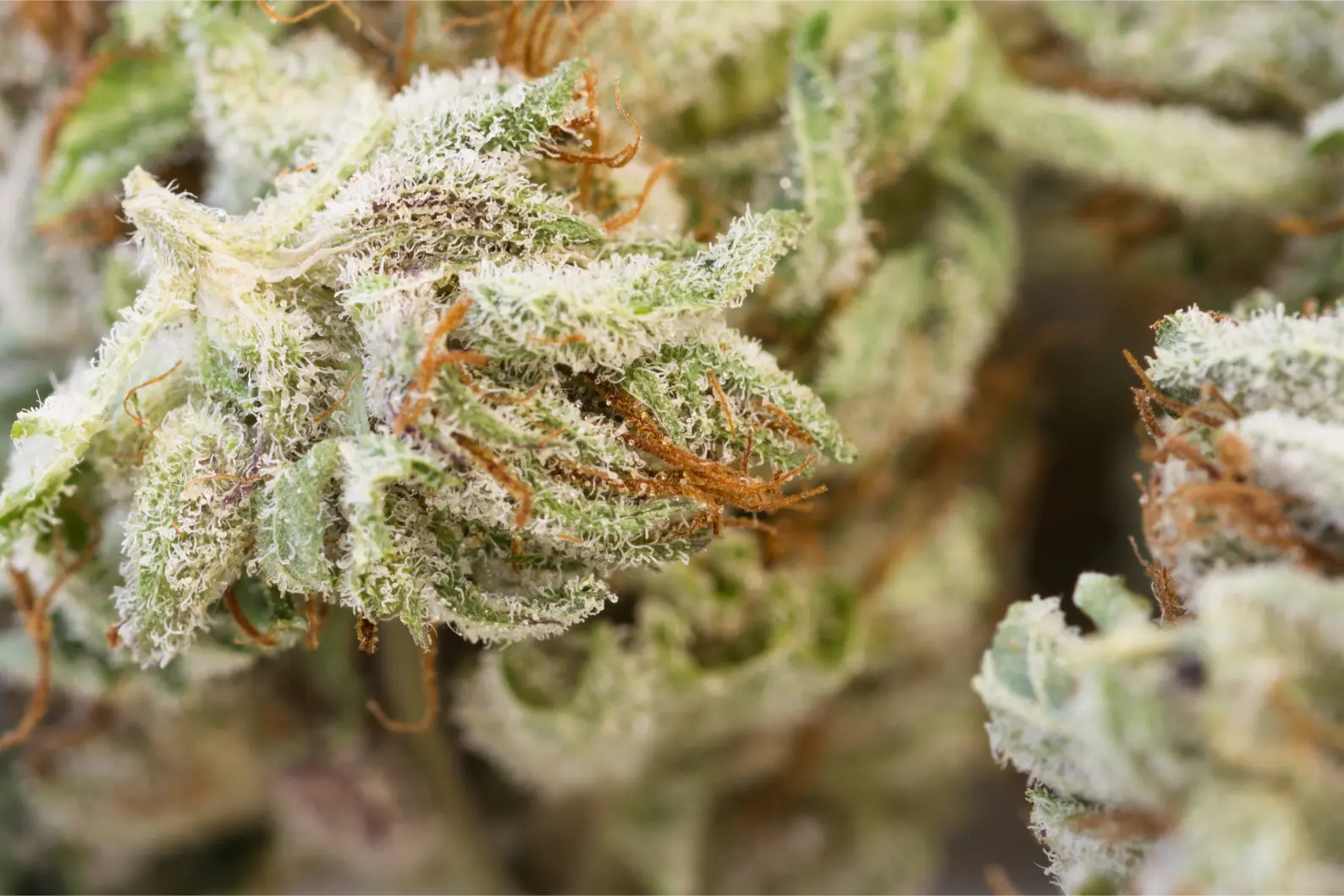
The profile below treats Panama as a complete cultivation subject. That means genetics, effects and aroma are connected to morphology, stretch, feeding, climate response, flower density, harvest timing and post-harvest handling. The quality target is specific: large resinous flowers that stay aerated and intact, with mature red or pink pistils where genetically expressed and a clear lemon-vanilla-incense nose. Yield matters, but the cultivar makes more sense when aroma clarity, trichome condition, bract maturity and the final texture of the dried flower are judged alongside grams.
Published reference data generally places the cultivar at around 21% in published reference testing, with phenotype variation THC with 9-12 weeks of indoor flowering. Those numbers are useful starting points, not guarantees. Phenotype, light, root volume, temperature, maturity and post-harvest handling can change both the laboratory result and the experience in the jar. For that reason, every numeric range in this guide should be read as a practical reference rather than a promise.
Strain Fingerprint: Supporting and ventilating a pure sativa that produces much denser, heavier flowers than its leaf shape suggests. Quality target: large resinous flowers that stay aerated and intact, with mature red or pink pistils where genetically expressed and a clear lemon-vanilla-incense nose.
Strain Features
| Feature | Details |
|---|---|
| Type | semi-stabilized pure Panamanian sativa hybrid |
| Genetic background | worked combination of three Panamanian sativa lines associated with classic Panama Red-type traits |
| Indica / Sativa | 100% sativa |
| THC | around 21% in published reference testing, with phenotype variation |
| CBD | negligible |
| CBG | can reach roughly 3% in some reference data |
| Indoor flowering | 9-12 weeks |
| Outdoor harvest | around the third week of October in suitable Northern Hemisphere climates |
| Yield potential | High |
| Plant structure | tall, powerful and highly branched sativa that can also build a heavy main cola |
| Flowering stretch | strong, but more controllable than many equatorial sativas when trained early |
| Grow difficulty | Moderate |
| Climate | thrives in warm conditions and handles heat well; mild autumns are preferable because the flowers can become unexpectedly large and dense |
| Resistance | average powdery-mildew resistance, average-high botrytis tolerance and good heat tolerance |
| Feeding tendency | can accept unusually strong nutrition for a pure sativa when light and roots justify it |
| Aroma | lemon, vanilla and incense, with sweeter strawberry notes in some phenotypes |
| Flavor | lemon-incense, vanilla sweetness, resinous wood and occasional strawberry |
| Effect | very powerful, psychedelic and long-lasting; red phenotypes tend to feel denser and heavier while green expressions are often cleaner and more energetic |
The feature table shows why Panama should not be managed by category alone. A grower who sees only '100% sativa' misses the more useful signals: strong, but more controllable than many equatorial sativas when trained early; can accept unusually strong nutrition for a pure sativa when light and roots justify it; and a finish that rewards separate red and green phenotypes by trichome maturity and effect goal; do not force a single harvest date across visually different expressions. Those details influence plant count, flip height, pruning, irrigation frequency, late-flower humidity and even the way the crop should be dried.
Difficulty is listed as Moderate, but the number of decisions is not the same as fragility. Some cultivars are difficult because they are weak. Panama is more accurately judged by how well the grower understands its growth pattern. Once the canopy, feed level and maturation pattern are anticipated, the plant becomes far more predictable.
Genetic Lineage
Panama is rooted in worked combination of three Panamanian sativa lines associated with classic Panama Red-type traits. That background matters because the plant retains structural and sensory traits that are easier to understand when the lineage is treated as horticultural history rather than marketing. The genetic story explains why the cultivar behaves as tall, powerful and highly branched sativa that can also build a heavy main cola and why its aroma commonly moves toward lemon, vanilla and incense, with sweeter strawberry notes in some phenotypes.
Genetic labels should still be handled carefully. A strain name can survive longer than a single seed population, and different preservations or later selections may not be chemically identical. In practice, the useful approach is to identify the recurring phenotype pattern: red/pink-pistil expressions and greener expressions differ not only visually but often in effect density and aromatic tone. That repeated pattern is more valuable to a grower than pretending every seed will express one exact height, terpene ratio or harvest day.
The lineage also provides a clue to environmental preference. thrives in warm conditions and handles heat well; mild autumns are preferable because the flowers can become unexpectedly large and dense. This does not mean the plant is immune to stress. It means the genetic background gives the grower a wider workable range before serious quality loss begins. Inside that range, the highest-grade results still come from stable root-zone oxygen, balanced mineral nutrition, adequate light and a late-flower environment that protects trichomes.
For selection work, the cultivar is most useful when the keeper decision is based on the complete plant. Aroma alone can hide weak structure. Color alone can hide mediocre resin. Fast flowering alone can hide an unfinished effect. A stronger selection combines the traits that define the line with practical garden behavior: branch strength, flower distribution, resistance, bud-to-leaf ratio, aroma persistence after drying and the quality of the effect after cure.
Effect Breakdown
Initial onset
The high rises quickly and can feel brighter than the flower density suggests. Energy, sensory acuity and mental momentum increase. The exact strength depends heavily on dose and tolerance, so the most useful description is the direction of the experience rather than a promise that every user will feel the same sequence.
Middle phase
The experience becomes distinctly psychedelic and long-ranging. Green phenotypes often remain cleaner and more active, while red expressions can feel deeper and more physically anchored. The exact strength depends heavily on dose and tolerance, so the most useful description is the direction of the experience rather than a promise that every user will feel the same sequence.
Late phase
The effect can persist for hours. Overconsumption may produce mental intensity or heaviness long after a lighter cultivar would have faded. The exact strength depends heavily on dose and tolerance, so the most useful description is the direction of the experience rather than a promise that every user will feel the same sequence.
The overall effect is best summarized as very powerful, psychedelic and long-lasting; red phenotypes tend to feel denser and heavier while green expressions are often cleaner and more energetic. That profile also explains why harvest timing matters. Earlier harvests with too many clear glands can feel thin, restless or short-lived. A very late harvest can soften the brighter traits and increase physical heaviness. The target window described in the grow sections aims to preserve the cultivar's characteristic balance instead of simply maximizing amber trichomes.
The costly mistake to avoid with Panama
Cannabis effects vary by dose, tolerance, individual physiology and setting. THC percentage alone does not predict whether an experience will feel comfortable, creative, anxious, sedating or clear.
Flavor & Aroma Profile
Fresh flowers and properly cured buds should be evaluated separately. During late bloom, Panama commonly presents lemon, vanilla and incense, with sweeter strawberry notes in some phenotypes. The living plant can smell sharper and greener because moisture, chlorophyll and fresh plant volatiles sit on top of the final bouquet. After a controlled dry, the cleaner expression should move closer to lemon-incense, vanilla sweetness, resinous wood and occasional strawberry.
The strain's aromatic identity depends on contrast. The most interesting samples are not simply 'loud.' They have a top note, a middle and a base. In Panama, the top is the fastest volatile part of the profile and is therefore the first thing lost to heat, direct fan exposure or an excessively fast dry. The deeper resinous, woody or hash-like notes survive abuse better, which is why badly handled flower can smell generic even when the plant was aromatic before harvest.
Flavor should also be judged across inhale, mid-palate and finish. The first draw often emphasizes the lightest sweet, citrus, floral or fruit compounds. As vapor or smoke moves across the palate, the heavier woody, spicy, creamy or resinous traits become more obvious. A clean cure removes the harsh green layer that otherwise makes those stages difficult to distinguish.
The grower's quality goal is not to manufacture a flavor that genetics do not contain. It is to avoid losing what the plant already built. For Panama, that means protecting the profile described as lemon, vanilla and incense, with sweeter strawberry notes in some phenotypes through late flower and then drying slowly enough that the jar still shows those details after several weeks.
Weedth Grower Note: For Panama, aroma intensity is less useful than aroma separation. A bud that clearly shows several layers is usually a better quality indicator than a single overwhelming generic smell.
Dominant Terpenes
| Terpene / Status | Flavor & Aroma Role | Interpretation |
|---|---|---|
| Terpinolene | floral herb, sweet citrus and pine | reported as the largest monoterpene fraction and central to the bright incense-citrus identity |
| Alpha-pinene | pine and rosemary-like freshness | supports clarity in the aroma and gives the lemon-incense profile a dry green edge |
| Beta-pinene | green pine and woody freshness | reinforces the sharper top notes |
| Limonene | citrus peel and sweet lemon | helps explain the unmistakable lemon side of many phenotypes |
| Guaiol | dry wood, floral wood and resin | reported as the main sesquiterpene and likely relevant to the incense-like base |
The terpene pattern helps explain why Panama cannot be reduced to THC. Terpenes influence aroma directly and may also shape the subjective character of the experience, although individual effects are more complex than one-terpene-one-effect claims suggest. The useful horticultural point is simpler: these compounds are volatile, so late-flower heat, rough handling and hot drying can measurably reduce the sensory quality of the finished bud.
Terpene expression is also phenotype- and environment-dependent. Two healthy plants with the same strain name can differ in relative terpene abundance, especially when they come from seed rather than one clone. Light spectrum, canopy temperature, root stress, mineral balance and harvest maturity all influence the final chemical profile. The table should therefore be read as the most relevant aromatic framework, not a fixed formula.
For the grower, the practical translation is to treat large resinous flowers that stay aerated and intact, with mature red or pink pistils where genetically expressed and a clear lemon-vanilla-incense nose as a measurable quality goal. Smell the flowers repeatedly late in bloom, note which aromatic layer rises or disappears after hot days, and compare the first dried sample with the four-week cure. That record is more useful for the next run than memorizing a terpene chart.
Indoor vs. Outdoor Growing
| Aspect | Indoor | Outdoor |
|---|---|---|
| Height & shape | strong early pruning response, large lateral yield potential, high nutrient capacity and the need for a robust trellis before late flower weight arrives | warm, bright sites with a mild autumn give the best combination of size and maturity; wet late seasons increase risk because the flowers can be very dense |
| Flowering / season | 9-12 weeks under controlled photoperiod | around the third week of October in suitable Northern Hemisphere climates |
| Climate control | Indoor control makes it easier to support and ventilate a pure sativa that produces much denser, heavier flowers than its leaf shape suggests. | thrives in warm conditions and handles heat well; mild autumns are preferable because the flowers can become unexpectedly large and dense |
| Feeding | can accept unusually strong nutrition for a pure sativa when light and roots justify it | Use the same genetic tendency, but adjust concentration for root volume, rainfall and soil fertility. |
| Main quality risk | Crowding, heat at canopy, overfeeding or uneven light. | Weather exposure, branch breakage, rain or a season that ends before the phenotype is fully mature. |
| Best advantage | Precise maturity, terpene protection and canopy control. | Root volume, sunlight, natural branching and expression of climate-adapted traits. |
Indoors, Panama gives the grower control over the variables that most directly affect bud quality: temperature, root-zone moisture, light distribution and humidity. The trade-off is physical space. A plant that is naturally tall, powerful and highly branched sativa that can also build a heavy main cola must be shaped around ceiling height and fixture distance rather than around the size it would choose outdoors.
Outdoors, the same genotype interacts with wind, soil volume, night temperature and the length of autumn. The cultivar's reference climate can be summarized as thrives in warm conditions and handles heat well; mild autumns are preferable because the flowers can become unexpectedly large and dense. That is an advantage, not a guarantee. Site selection still determines whether morning dew dries quickly, whether roots stay aerated after rain and whether late flowers receive enough direct sun to finish.
The best environment is therefore the one that lets the grower solve the strain's main problem consistently. Indoor versus outdoor is not a ranking. It is a trade-off between control and scale. An indoor gardener can shape every square meter precisely, while an outdoor gardener can exploit natural root volume and sunlight but has less control over late-season weather.
Decision Point: If your environment makes it difficult to support and ventilate a pure sativa that produces much denser, heavier flowers than its leaf shape suggests, choose the setting where you can control that issue most reliably. That single decision often matters more than a small difference in theoretical yield.
Strain-Specific Grow Guidance
The central cultivation question is supporting and ventilating a pure sativa that produces much denser, heavier flowers than its leaf shape suggests. That sentence should guide nearly every major decision in the grow. Panama has tall, powerful and highly branched sativa that can also build a heavy main cola; it stretches strong, but more controllable than many equatorial sativas when trained early; and it can accept unusually strong nutrition for a pure sativa when light and roots justify it. Those traits create a predictable set of opportunities and failure points.
High feed capacity
High feed capacity is a strain-specific decision point for Panama. Unlike many old tropical sativas, Panama can respond positively to substantial nutrition when light, roots and temperature are all strong. Increase feed based on plant demand and runoff behavior rather than using a weak-sativa assumption.
The reason is quality, not cosmetic plant management. The extra nutrient capacity is useful only while the plant is actively converting it into flower mass. If the grower waits until late flower to correct the problem, the plant may still finish, but the lost light, damaged roots, excess leaf mass or trapped humidity cannot be fully recovered in the final week.
On a second run, record the plant response for three to five days after making this adjustment. Panama is best dialed in by reading the phenotype rather than forcing every plant toward the same target. The repeatable goal is large resinous flowers that stay aerated and intact, with mature red or pink pistils where genetically expressed and a clear lemon-vanilla-incense nose.
Powdery mildew awareness
One place where Panama separates itself from a generic grow schedule is powdery mildew awareness. Botrytis tolerance is relatively useful, but powdery mildew resistance is less exceptional. Keep leaf surfaces dry, maintain air exchange and avoid a late canopy packed with soft nitrogen-rich leaves.
The reason is quality, not cosmetic plant management. Preventing mildew preserves both resin and the appearance of the large flowers. If the grower waits until late flower to correct the problem, the plant may still finish, but the lost light, damaged roots, excess leaf mass or trapped humidity cannot be fully recovered in the final week.
On a second run, record the plant response for three to five days after making this adjustment. Panama is best dialed in by reading the phenotype rather than forcing every plant toward the same target. The repeatable goal is large resinous flowers that stay aerated and intact, with mature red or pink pistils where genetically expressed and a clear lemon-vanilla-incense nose.
Pruning response
Watch pruning response early rather than treating it as a late correction. Panama reacts vigorously to pruning and can distribute yield across many lateral branches. Top or train early, then use the resulting branch network to build a broad, supported canopy.
The reason is quality, not cosmetic plant management. Late aggressive pruning is less useful once the plant has committed to heavy flower production. If the grower waits until late flower to correct the problem, the plant may still finish, but the lost light, damaged roots, excess leaf mass or trapped humidity cannot be fully recovered in the final week.
On a second run, record the plant response for three to five days after making this adjustment. Panama is best dialed in by reading the phenotype rather than forcing every plant toward the same target. The repeatable goal is large resinous flowers that stay aerated and intact, with mature red or pink pistils where genetically expressed and a clear lemon-vanilla-incense nose.
Main cola versus screen
For this cultivar, main cola versus screen has a direct connection to final bud quality. The plant can perform with a strong main cola or under a broad screen. Choose based on space and humidity: a screen improves distribution, while a large central cola demands more attention to airflow.
The reason is quality, not cosmetic plant management. Architecture should be selected for environment, not ideology. If the grower waits until late flower to correct the problem, the plant may still finish, but the lost light, damaged roots, excess leaf mass or trapped humidity cannot be fully recovered in the final week.
On a second run, record the plant response for three to five days after making this adjustment. Panama is best dialed in by reading the phenotype rather than forcing every plant toward the same target. The repeatable goal is large resinous flowers that stay aerated and intact, with mature red or pink pistils where genetically expressed and a clear lemon-vanilla-incense nose.
Flower density
Flower density is a strain-specific decision point for Panama. The sativa leaves can mislead growers into expecting airy buds, yet mature flowers can be large and dense. Lower humidity in late bloom and move air through the flower zone without blasting trichomes directly.
The reason is quality, not cosmetic plant management. Treat the crop like a high-mass flower producer once swelling begins. If the grower waits until late flower to correct the problem, the plant may still finish, but the lost light, damaged roots, excess leaf mass or trapped humidity cannot be fully recovered in the final week.
On a second run, record the plant response for three to five days after making this adjustment. Panama is best dialed in by reading the phenotype rather than forcing every plant toward the same target. The repeatable goal is large resinous flowers that stay aerated and intact, with mature red or pink pistils where genetically expressed and a clear lemon-vanilla-incense nose.
Support timing
One place where Panama separates itself from a generic grow schedule is support timing. Branch weight increases noticeably in the second half of flowering. Install trellis or stakes before colas are heavy enough to bend stems.
The reason is quality, not cosmetic plant management. Early support prevents late handling damage and keeps flower surfaces separated. If the grower waits until late flower to correct the problem, the plant may still finish, but the lost light, damaged roots, excess leaf mass or trapped humidity cannot be fully recovered in the final week.
On a second run, record the plant response for three to five days after making this adjustment. Panama is best dialed in by reading the phenotype rather than forcing every plant toward the same target. The repeatable goal is large resinous flowers that stay aerated and intact, with mature red or pink pistils where genetically expressed and a clear lemon-vanilla-incense nose.
Phenotype harvest
Watch phenotype harvest early rather than treating it as a late correction. Red and green expressions can mature and feel different. Track trichomes and new pistil production per plant, and harvest in waves if necessary.
The reason is quality, not cosmetic plant management. A phenotype-specific harvest preserves the clean energetic side of green plants and the fuller density of red plants. If the grower waits until late flower to correct the problem, the plant may still finish, but the lost light, damaged roots, excess leaf mass or trapped humidity cannot be fully recovered in the final week.
On a second run, record the plant response for three to five days after making this adjustment. Panama is best dialed in by reading the phenotype rather than forcing every plant toward the same target. The repeatable goal is large resinous flowers that stay aerated and intact, with mature red or pink pistils where genetically expressed and a clear lemon-vanilla-incense nose.
Cure development
For this cultivar, cure development has a direct connection to final bud quality. Lemon and incense appear early, while vanilla and sweeter details can become clearer after cure. Use a slow dry and allow several weeks of stable curing before judging the final aromatic balance.
The reason is quality, not cosmetic plant management. A rushed sample can make Panama seem sharper and less layered than it becomes. If the grower waits until late flower to correct the problem, the plant may still finish, but the lost light, damaged roots, excess leaf mass or trapped humidity cannot be fully recovered in the final week.
On a second run, record the plant response for three to five days after making this adjustment. Panama is best dialed in by reading the phenotype rather than forcing every plant toward the same target. The repeatable goal is large resinous flowers that stay aerated and intact, with mature red or pink pistils where genetically expressed and a clear lemon-vanilla-incense nose.
Morphology and plant count
Because tall, powerful and highly branched sativa that can also build a heavy main cola, plant count should be based on the final footprint rather than seedling size. Crowding several small plants can look efficient in veg and become inefficient after transition. Leave enough horizontal room for leaves to move and for air to pass through the flower zone.
From a Weedth quality perspective, the question is whether this choice improves bud density, resin preservation, aroma clarity or harvest uniformity. If it does not improve one of those outcomes, it is probably unnecessary intervention. Panama responds best when the grower removes specific limitations and then lets the plant express its own architecture.
Transition planning
The expected stretch is strong, but more controllable than many equatorial sativas when trained early. Use that forecast when choosing flip height. A common mistake is to wait until the vegetative canopy already fills the available vertical space, then discover that the plant continues building stems for several weeks. Early planning keeps the brightest flowers at useful light intensity without emergency supercropping.
From a Weedth quality perspective, the question is whether this choice improves bud density, resin preservation, aroma clarity or harvest uniformity. If it does not improve one of those outcomes, it is probably unnecessary intervention. Panama responds best when the grower removes specific limitations and then lets the plant express its own architecture.
Water and oxygen
high biomass and vigorous flowering can create substantial demand, but saturated media still limits oxygen and nutrient efficiency. The root zone should be fully wetted when irrigated and then allowed to regain air. Constant small sips can keep a large volume of medium chronically wet, while extreme dry-backs can concentrate salts and interrupt calcium movement. The best rhythm is repeatable and tied to plant demand.
From a Weedth quality perspective, the question is whether this choice improves bud density, resin preservation, aroma clarity or harvest uniformity. If it does not improve one of those outcomes, it is probably unnecessary intervention. Panama responds best when the grower removes specific limitations and then lets the plant express its own architecture.
Nutrition and finish
can accept unusually strong nutrition for a pure sativa when light and roots justify it. Watch leaf tips, clawing, internode softness and the rate of late green growth. A plant that stays aggressively vegetative in bloom often produces more leaf, slower maturation and less distinct cured flavor. The finish should look metabolically mature, not artificially green.
From a Weedth quality perspective, the question is whether this choice improves bud density, resin preservation, aroma clarity or harvest uniformity. If it does not improve one of those outcomes, it is probably unnecessary intervention. Panama responds best when the grower removes specific limitations and then lets the plant express its own architecture.
Flower-site economy
Not every branch deserves to survive simply because it is healthy. Keep lower growth that can receive enough light to build real flowers and remove shoots that remain permanently shaded. Panama should finish with a clear relationship between leaf area and flower mass, not a forest of weak interior sites.
From a Weedth quality perspective, the question is whether this choice improves bud density, resin preservation, aroma clarity or harvest uniformity. If it does not improve one of those outcomes, it is probably unnecessary intervention. Panama responds best when the grower removes specific limitations and then lets the plant express its own architecture.
Environmental stability
Stable temperature and humidity matter more than chasing one perfect number. Sudden heat spikes, repeated nighttime saturation or direct fan stress can damage terpene quality before the leaves show dramatic symptoms. The closer harvest gets, the more conservative environmental changes should become.
From a Weedth quality perspective, the question is whether this choice improves bud density, resin preservation, aroma clarity or harvest uniformity. If it does not improve one of those outcomes, it is probably unnecessary intervention. Panama responds best when the grower removes specific limitations and then lets the plant express its own architecture.
Harvest decision
separate red and green phenotypes by trichome maturity and effect goal; do not force a single harvest date across visually different expressions. Combine trichome observation with whole-flower maturity. Resin glands can look ready on exposed sugar leaves before inner bracts are fully mature. Check multiple flower positions and use the plant's slowing pistil production and swelling bracts as supporting evidence.
From a Weedth quality perspective, the question is whether this choice improves bud density, resin preservation, aroma clarity or harvest uniformity. If it does not improve one of those outcomes, it is probably unnecessary intervention. Panama responds best when the grower removes specific limitations and then lets the plant express its own architecture.
Master Advice: On the next run, change only one major variable at a time. Panama has enough phenotype character that simultaneous changes in feed, pruning, temperature and irrigation can make it impossible to learn what actually improved the flowers.
Weedth Bud Flavor Tips
Late-flower heat control
Protect lemon, vanilla and incense, with sweeter strawberry notes in some phenotypes by keeping canopy heat under control as resin matures. The last weeks are a poor time to chase maximum room temperature for faster metabolism. For Panama, the practical target is large resinous flowers that stay aerated and intact, with mature red or pink pistils where genetically expressed and a clear lemon-vanilla-incense nose.
The strain-specific reason is that the most desirable notes are not equally durable. Deeper resin, wood or hash tones usually survive mishandling better than bright fruit, floral, citrus or spice details. A careful post-harvest process keeps the profile layered instead of leaving only the heaviest background note.
Harvest handling
Cut and move branches gently. Trichome heads are the storage structures for much of the aroma and cannabinoids, so rough stacking and repeated squeezing are quality losses. For Panama, the practical target is large resinous flowers that stay aerated and intact, with mature red or pink pistils where genetically expressed and a clear lemon-vanilla-incense nose.
Drying speed
Aim for a slow, even dry in darkness with gentle room air exchange. Direct fan blast can dry the outside while inner moisture remains high, producing uneven texture and muted aroma. For Panama, the practical target is large resinous flowers that stay aerated and intact, with mature red or pink pistils where genetically expressed and a clear lemon-vanilla-incense nose.
The strain-specific reason is that the most desirable notes are not equally durable. Deeper resin, wood or hash tones usually survive mishandling better than bright fruit, floral, citrus or spice details. A careful post-harvest process keeps the profile layered instead of leaving only the heaviest background note.
Whole branch versus small branch
Use branch size to control drying speed. Large branches slow drying in an arid room, while smaller sections can be safer when humidity is high. The method should fit the environment. For Panama, the practical target is large resinous flowers that stay aerated and intact, with mature red or pink pistils where genetically expressed and a clear lemon-vanilla-incense nose.
Trim strategy
Do not over-trim wet flower simply to make it look finished. Sugar leaves can protect resin during drying, and a final dry trim often preserves trichomes better. For Panama, the practical target is large resinous flowers that stay aerated and intact, with mature red or pink pistils where genetically expressed and a clear lemon-vanilla-incense nose.
Cure development
The first jar smell is not the final verdict. lemon-incense, vanilla sweetness, resinous wood and occasional strawberry often becomes clearer after moisture equalizes and the fresh green odor falls away. For Panama, the practical target is large resinous flowers that stay aerated and intact, with mature red or pink pistils where genetically expressed and a clear lemon-vanilla-incense nose.
The strain-specific reason is that the most desirable notes are not equally durable. Deeper resin, wood or hash tones usually survive mishandling better than bright fruit, floral, citrus or spice details. A careful post-harvest process keeps the profile layered instead of leaving only the heaviest background note.
Storage
After cure, keep flower cool, dark and relatively stable. Repeated heat cycles and frequent long jar openings gradually remove the most volatile aromatic layer. For Panama, the practical target is large resinous flowers that stay aerated and intact, with mature red or pink pistils where genetically expressed and a clear lemon-vanilla-incense nose.
Pro Tip: Keep a small reference jar from the best-smelling plant and open it as little as possible. Compare that jar with the daily-use jar after a month. The difference is a practical lesson in how much aroma is lost through repeated oxygen and handling.
Weedth Bud Boost Tips
Bud boosting for Panama should begin with the architecture the plant already wants to make. The goal is not to apply every high-yield technique. The goal is to remove the specific limitations that keep this cultivar from converting light and root capacity into mature flowers. In this case, the key limitation is supporting and ventilating a pure sativa that produces much denser, heavier flowers than its leaf shape suggests.
Canopy efficiency
Use training that matches tall, powerful and highly branched sativa that can also build a heavy main cola. Expose productive sites and keep branches at similar light intensity without creating a dense mat.
For Panama, judge the intervention by the flowers two weeks later. Better bud boosting means improved flower mass without sacrificing aroma clarity, trichome condition or maturity. A technique that adds grams but produces wetter, leafier or less aromatic buds is not automatically an improvement.
Root volume
Give the root system enough volume to support the intended plant size. A large canopy in a small, unstable root zone cannot maintain late-flower water and mineral demand.
For Panama, judge the intervention by the flowers two weeks later. Better bud boosting means improved flower mass without sacrificing aroma clarity, trichome condition or maturity. A technique that adds grams but produces wetter, leafier or less aromatic buds is not automatically an improvement.
Light before supplements
Increase usable canopy light before adding more fertilizer. If the plant is already light-limited, extra mineral strength usually increases leaf problems more than flower mass.
For Panama, judge the intervention by the flowers two weeks later. Better bud boosting means improved flower mass without sacrificing aroma clarity, trichome condition or maturity. A technique that adds grams but produces wetter, leafier or less aromatic buds is not automatically an improvement.
Selective lower cleanup
Remove permanently shaded shoots after stretch so the plant finishes fewer but more useful flower sites.
For Panama, judge the intervention by the flowers two weeks later. Better bud boosting means improved flower mass without sacrificing aroma clarity, trichome condition or maturity. A technique that adds grams but produces wetter, leafier or less aromatic buds is not automatically an improvement.
Support before weight
Install netting or stakes before branches are heavy. Late support work knocks resin and changes light angles at the worst time.
For Panama, judge the intervention by the flowers two weeks later. Better bud boosting means improved flower mass without sacrificing aroma clarity, trichome condition or maturity. A technique that adds grams but produces wetter, leafier or less aromatic buds is not automatically an improvement.
CO2 only in balanced rooms
Carbon dioxide can increase photosynthetic potential only when light, temperature, roots and nutrition are already adequate. It is not a correction for weak basic conditions.
For Panama, judge the intervention by the flowers two weeks later. Better bud boosting means improved flower mass without sacrificing aroma clarity, trichome condition or maturity. A technique that adds grams but produces wetter, leafier or less aromatic buds is not automatically an improvement.
Late-flower restraint
Do not confuse final swelling with a need for aggressive feeding. The plant should be allowed to ripen, not forced to maintain vegetative green tissue.
For Panama, judge the intervention by the flowers two weeks later. Better bud boosting means improved flower mass without sacrificing aroma clarity, trichome condition or maturity. A technique that adds grams but produces wetter, leafier or less aromatic buds is not automatically an improvement.
Remember: Yield and quality are linked through environment. A stable root zone, even canopy and healthy late-flower climate usually outperform a collection of last-minute boosters.
Medical Uses & Benefits
Medical discussion around cannabis should remain cautious. A strain profile can describe commonly reported subjective effects and connect them with known cannabinoid or terpene characteristics, but it cannot diagnose disease or promise treatment. Responses vary substantially with dose, tolerance, medication use and individual physiology.
Fatigue And Low Drive
The energetic green-phenotype style may appeal to experienced consumers seeking subjective activation.
Mood And Engagement
The strong positive cerebral effect can temporarily increase interest and engagement, though intensity may be excessive for anxiety-prone users.
Pain Distraction
Potent psychoactivity may make discomfort less dominant for some people, but Panama is not a predictable body-relief cultivar.
Appetite And Sensory Enhancement
Food, music and sensory experiences may become more vivid, which can indirectly affect appetite or enjoyment.
Published reference testing places Panama around 21% THC, with meaningful phenotype variation, so dose matters. Higher-THC material can worsen anxiety, dizziness, rapid heart rate or cognitive impairment in some users. Anyone using cannabis for a medical reason should consider professional medical advice, especially when taking other medications or managing a psychiatric, cardiovascular or neurological condition.
The strain's effect profile is very powerful, psychedelic and long-lasting; red phenotypes tend to feel denser and heavier while green expressions are often cleaner and more energetic. That makes it more suitable for some goals than others. A consumer looking for strong physical sedation may evaluate it differently from someone who wants daytime function. Medical usefulness is therefore better framed as fit between the experienced effect and the individual's needs, not as a universal list of conditions.
Ideal User Profile
Panama best suits a consumer who actually wants very powerful, psychedelic and long-lasting; red phenotypes tend to feel denser and heavier while green expressions are often cleaner and more energetic. That sounds obvious, but many disappointing experiences come from choosing a strain by reputation or THC percentage while ignoring the direction of the high. The cultivar's strength is its specific mental and physical progression, not the fact that it belongs to a famous genetic family.
For lower-tolerance users, the safest approach is a small initial dose and enough time to judge the full onset before taking more. Energetic or psychedelic cultivars can become less functional at high dose even when a moderate amount feels creative and clear. People prone to THC-related anxiety should be especially conservative.
Time of use should match the effect progression. The high rises quickly and can feel brighter than the flower density suggests. Energy, sensory acuity and mental momentum increase. The effect can persist for hours. Overconsumption may produce mental intensity or heaviness long after a lighter cultivar would have faded. That pattern suggests whether the cultivar is better placed earlier in the day, late afternoon or evening for a particular consumer.
Flavor-focused users are also part of the ideal audience. A properly handled sample should show lemon-incense, vanilla sweetness, resinous wood and occasional strawberry. Consumers who care only about maximum potency may overlook the reason this cultivar is interesting, while people who value aroma development, genetic character and a distinctive effect progression are more likely to appreciate it.
Grower Notes and Feedback
Grower feedback around Panama becomes most useful when it is translated into repeatable observations. The common thread is not a single yield number. It is the plant's tendency to be tall, powerful and highly branched sativa that can also build a heavy main cola, to stretch strong, but more controllable than many equatorial sativas when trained early, and to respond best to can accept unusually strong nutrition for a pure sativa when light and roots justify it. Those details consistently explain why one garden finds the strain simple while another finds it unpredictable.
Field note: High feed capacity
Growers repeatedly benefit from noticing this early: Unlike many old tropical sativas, Panama can respond positively to substantial nutrition when light, roots and temperature are all strong. Increase feed based on plant demand and runoff behavior rather than using a weak-sativa assumption. The extra nutrient capacity is useful only while the plant is actively converting it into flower mass.
Field note: Powdery mildew awareness
Growers repeatedly benefit from noticing this early: Botrytis tolerance is relatively useful, but powdery mildew resistance is less exceptional. Keep leaf surfaces dry, maintain air exchange and avoid a late canopy packed with soft nitrogen-rich leaves. Preventing mildew preserves both resin and the appearance of the large flowers.
Field note: Pruning response
Growers repeatedly benefit from noticing this early: Panama reacts vigorously to pruning and can distribute yield across many lateral branches. Top or train early, then use the resulting branch network to build a broad, supported canopy. Late aggressive pruning is less useful once the plant has committed to heavy flower production.
Field note: Main cola versus screen
Growers repeatedly benefit from noticing this early: The plant can perform with a strong main cola or under a broad screen. Choose based on space and humidity: a screen improves distribution, while a large central cola demands more attention to airflow. Architecture should be selected for environment, not ideology.
Field note: Flower density
Growers repeatedly benefit from noticing this early: The sativa leaves can mislead growers into expecting airy buds, yet mature flowers can be large and dense. Lower humidity in late bloom and move air through the flower zone without blasting trichomes directly. Treat the crop like a high-mass flower producer once swelling begins.
Field note: Support timing
Growers repeatedly benefit from noticing this early: Branch weight increases noticeably in the second half of flowering. Install trellis or stakes before colas are heavy enough to bend stems. Early support prevents late handling damage and keeps flower surfaces separated.
Another recurring lesson is phenotype tracking. red/pink-pistil expressions and greener expressions differ not only visually but often in effect density and aromatic tone. Keeping plants labeled through drying and cure matters because the best-looking plant at harvest is not always the best-smelling jar a month later. A simple record of stretch, finish day, aroma before harvest, dry weight and cured flavor makes the second run far more efficient.
The strongest feedback is usually conservative. Growers rarely need a secret technique to make a good cultivar work. They need to avoid the cultivar's predictable mistakes, then allow the genetics to finish. That is why airflow, irrigation rhythm, branch support, maturity and drying appear repeatedly in this guide.
Weedth Editor's Note
Where Panama earns its space
This note uses a first-person editorial grower perspective synthesized from the cultivation behavior and grower observations described in this profile. It is not presented as a claim that one individual personally produced every observation.
What draws me to Panama is not a headline number. It is the way the plant tells you what it wants once the structure becomes obvious. Panama behaves like a sativa in vigor but like a heavy-yield hybrid when the flowers swell. The second half of bloom should be managed around support, airflow and ripening rather than around more vegetative growth.
If I were setting up the first run, I would build the room around one question: how do I support and ventilate a pure sativa that produces much denser, heavier flowers than its leaf shape suggests? I would keep the plant count conservative, label every phenotype, and resist the urge to make several aggressive changes at once. I want to see the natural branch pattern before I decide how hard to train it.
I would also keep feeding disciplined. The useful reference here is can accept unusually strong nutrition for a pure sativa when light and roots justify it. It is easy to mistake dark leaves and rapid growth for quality, but I care more about how the plant enters the last third of flower. I want mature tissue, active roots and flowers that are still swelling without a mass of soft green leaf covering the resin.
The harvest decision would be phenotype-specific. separate red and green phenotypes by trichome maturity and effect goal; do not force a single harvest date across visually different expressions. I would check several flowers, not one top under the brightest light, and I would look at bract swelling and new pistil production alongside gland color. If two plants are clearly maturing at different speeds, I would harvest them on different days rather than protecting a convenient schedule.
Post-harvest is where I would be most patient. The reason to grow Panama is partly the profile of lemon, vanilla and incense, with sweeter strawberry notes in some phenotypes. A hot dry can erase the exact top notes that make the strain worth keeping. I would rather wait longer for a controlled dry and discover a layered jar than finish quickly and end up with generic sweetness, earth or hay.
After cure, my keeper decision would come down to the complete package: plant behavior, finished flower texture, resin, aroma persistence and effect. large resinous flowers that stay aerated and intact, with mature red or pink pistils where genetically expressed and a clear lemon-vanilla-incense nose is a better target than maximum color or maximum raw yield. On a second run, I would clone the best plant and change one variable at a time so the improvement is measurable.
My final view is that Panama rewards attention to identity. It should not be forced to imitate the newest dense commercial hybrid. Its value comes from the traits that make it different, and the grow becomes more successful when those traits guide the method.
Weedth Score
Growing Experience 8.7 vigorous and responsive but needs support and airflow
Bud Structure & Visual Appeal 9.2 large dense resinous sativa flowers
Aroma Complexity 9.3 lemon, vanilla, incense and strawberry phenotypes
Flavor & Smoothness 9.1 deepens noticeably in cure
Effects & High Experience 9.5 very powerful and long-lasting
Overall Satisfaction & Recommendation 9.2 high-yield pure-sativa experience
Overall average: 9.2/10. The score is not a claim of universal superiority. It reflects how completely Panama delivers its own identity when the grow is handled well. A cultivar can score lower in raw yield and still be exceptional for aroma or effect, and the reverse is also true.
Personal Closer: Panama earns its place through character. Grow it for the plant it is, protect the cure, and the final jar explains why the genetics are worth preserving.
FAQ
Is Panama beginner-friendly?
Panama is better described as an intermediate grow than a beginner strain, although a careful first-time sativa grower can succeed with enough space. The main difficulty is supporting and ventilating a pure sativa that produces much denser, heavier flowers than its leaf shape suggests. Plan for strong but controllable stretch and respect its unusually high nutrient capacity without assuming it needs maximum feed at every stage.
How long does Panama flower?
Indoor flowering is generally 9-12 weeks. Outdoors, reference maturity is around the third week of October in suitable Northern Hemisphere climates. Phenotype and environment can shift the date, so use flower maturity rather than the calendar alone.
How much does Panama stretch?
The expected pattern is strong, but more controllable than many equatorial sativas when trained early. This should influence flip height, trellis timing and plant count. Training is easier before the stretch becomes structural.
Does Panama need heavy feeding?
Usually, the best reference is: can accept unusually strong nutrition for a pure sativa when light and roots justify it. Feeding should follow plant demand, root health and light intensity. Darker leaves are not automatically better flowers.
Is Panama good outdoors?
Its climate profile is thrives in warm conditions and handles heat well; mild autumns are preferable because the flowers can become unexpectedly large and dense. Outdoor success still depends on whether the site receives enough sun, whether morning moisture dries quickly and whether the season is long enough for the selected phenotype.
What is the biggest grow mistake?
The most strain-specific mistake is supporting and ventilating a pure sativa that produces much denser, heavier flowers than its leaf shape suggests. Solving that issue early protects both yield and flower quality.
When should Panama be harvested?
separate red and green phenotypes by trichome maturity and effect goal; do not force a single harvest date across visually different expressions. Check several buds at different canopy positions and combine trichome color with bract swelling and slowing pistil production.
What does Panama smell and taste like?
The aroma is commonly described as lemon, vanilla and incense, with sweeter strawberry notes in some phenotypes. A proper cure should translate that toward lemon-incense, vanilla sweetness, resinous wood and occasional strawberry. Hot drying can erase the lightest notes.
Is Panama mold resistant?
The reference resistance is average powdery-mildew resistance, average-high botrytis tolerance and good heat tolerance. Resistance is a margin of safety, not immunity. Dense or crowded flower can still develop problems when humidity remains high.
Who is Panama best for?
It best suits consumers looking for very powerful, psychedelic and long-lasting; red phenotypes tend to feel denser and heavier while green expressions are often cleaner and more energetic. Dose and tolerance matter, and sensitive users should start conservatively.
Similar Strains
Panama Red
the closest historical reference for red-pistil Panamanian sativa character
Punto Rojo
shares old Central/South American sativa energy and long branching
Acapulco Gold
another classic American sativa with clear cerebral lift
Golden Tiger
a much longer and more intense tropical-sativa alternative
Destroyer
another refined tropical sativa requiring canopy management
Tikal
shares Central American genetics and fruit-incense sativa character
These comparisons are intended to help growers and consumers identify which part of Panama they actually value. Someone drawn to the aroma may prefer a different alternative than someone drawn to flowering speed, climate tolerance or effect. Similarity is therefore multidimensional, not a claim that the strains are interchangeable.
Share this article
A quick overview of the topics covered in this article.
Follow us
Latest articles
September 9, 2026
September 9, 2026
September 9, 2026