
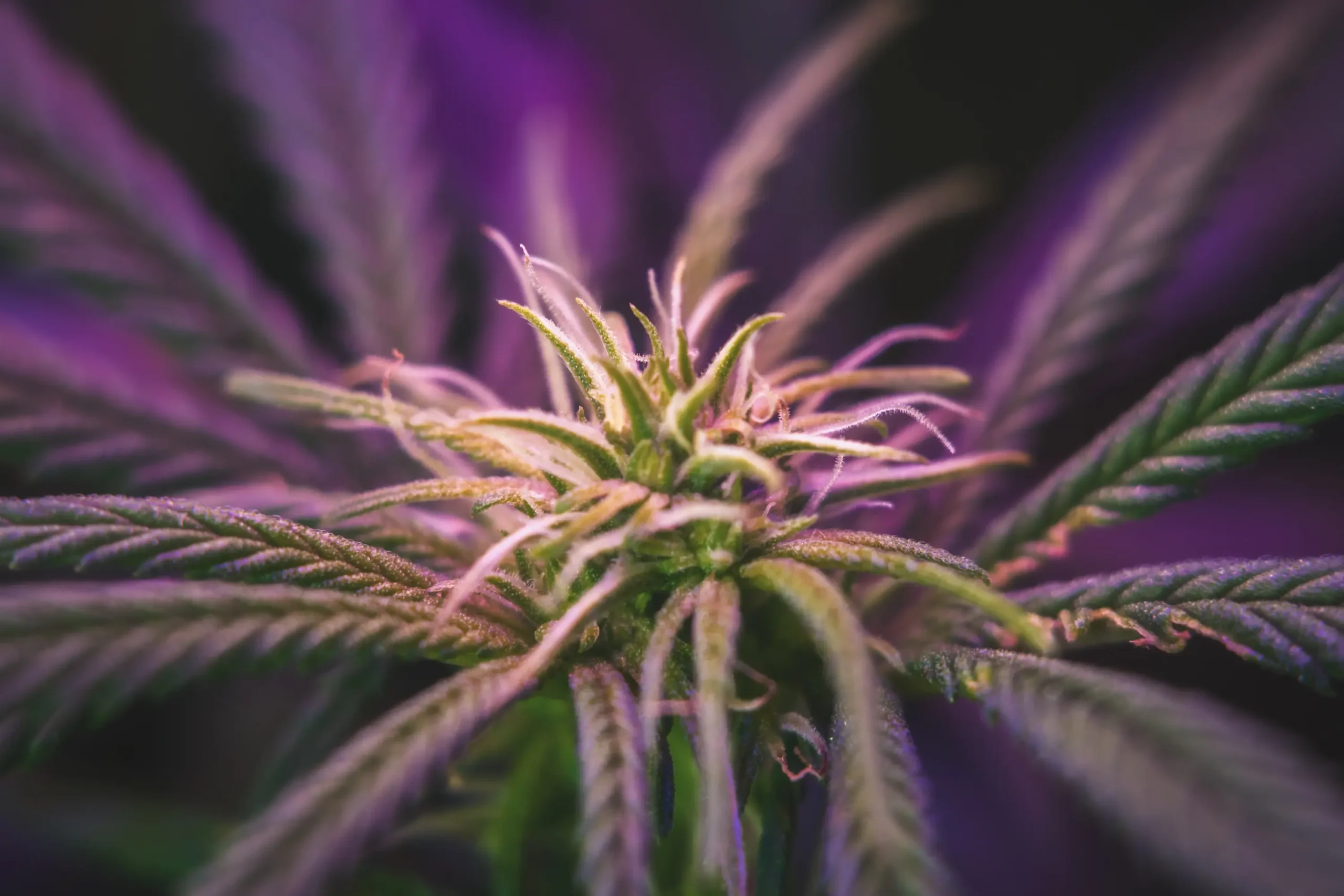
Pennywise
Pennywise is fundamentally different from most strain profiles because the most important grow question is not yield, stretch, or even flavor. It is chemotype verification. The cultivar was developed around a balanced THC:CBD target, commonly near 1:1, but seed-derived plants can vary. A visually perfect Pennywise plant is not automatically a balanced-cannabinoid plant unless the finished flower is actually tested.
The lineage combines Harlequin with Jack the Ripper. That pairing creates an unusual mix: CBD-rich breeding intent, relatively mild psychoactivity, pepper, coffee, lemon, bubblegum, and several reported phenotypes with different bud shapes and sensory expression.
Cultivation descriptions generally place Pennywise at short-to-medium height with limited stretch and a flowering window around eight to nine weeks. One early topping is usually enough. That makes the physical plant relatively manageable, but phenotype tracking and chemotype selection add a layer of complexity that ordinary high-THC cultivars do not have.
The central cultivation question is: how can a grower produce a healthy, open Pennywise canopy while preserving separate phenotype identities long enough to test and select the desired cannabinoid ratio? This requires careful labeling, separate harvest handling, clone retention before flowering, and avoiding the common mistake of choosing a mother only from appearance or aroma.
Flavor is darker and more grounded than many CBD-associated strains: black pepper, wood, coffee, herbs, lemon, and occasional bubblegum sweetness. The effect is usually calmer and less intoxicating than a high-THC cultivar when the balanced chemotype is present, but a strain name alone cannot guarantee the final ratio.
Strain Features
| Feature | Details |
|---|---|
| Strain Type | CBD-rich indica-leaning hybrid |
| Genetic Profile | Harlequin x Jack the Ripper |
| Target Cannabinoid Profile | Often selected toward roughly 1:1 THC:CBD, but individual plants can vary |
| THC | Common balanced examples fall in a moderate range |
| CBD | Common balanced examples can match THC at a similar moderate level |
| Phenotype Count | Four main phenotypes are widely described |
| Dominant Terpenes | Myrcene, terpinolene, pinene, beta-caryophyllene, and limonene may appear depending on phenotype |
| Flavor / Aroma | Pepper, wood, coffee, herbs, lemon, bubblegum, mild sweetness |
| Effect Character | Relaxed, focused, calm, mildly euphoric, sleepy at larger doses for some users |
| Flowering Time | Usually about 8 to 9 weeks |
| Grow Difficulty | Easy to moderate physically; advanced selection requires testing |
| Stretch | Limited to moderate |
| Plant Architecture | Short-to-medium, compact, dense medium-sized buds |
| Training Compatibility | One early topping, LST, light SCROG, minimal aggressive pruning |
| Bud Shape | Phenotypes may produce finger-like or rounder flowers |
| Chemotype Verification | Laboratory testing is the only reliable way to confirm cannabinoid ratio |
| Mold Risk | Moderate when compact plants become too dense |
| Best Time of Use | Daytime to evening depending on cannabinoid ratio and dose |
Genetic Lineage
Pennywise combines Harlequin with Jack the Ripper. The intention behind the cross was not merely a new flavor profile but a CBD-rich balanced chemotype.
Harlequin contributes the CBD-oriented side and a more controlled psychoactive profile. Jack the Ripper contributes citrus, vigor, resin, and a brighter mental component.
Four main phenotypes are widely described, with differences in bud shape and aroma. Coffee, pepper, lemon, and bubblegum can shift in prominence from plant to plant.
The key scientific point is that phenotype and chemotype are related but not interchangeable. A plant can look like a familiar Pennywise phenotype without having the exact expected THC:CBD ratio.
Keeper selection should therefore preserve clones from each candidate until chemical testing and cured-flower evaluation are complete. Destroying the backup plant before results arrive defeats the main reason to grow a balanced cultivar carefully.
Effect Breakdown
Balanced Pennywise flower is generally reported as calmer and less intoxicating than high-THC cannabis. The user may notice relaxation and mental quiet without the same degree of cognitive disruption.
Focus is commonly reported, especially at moderate doses. The experience can feel grounded enough for daytime use for some adults, although impairment remains possible and individual response varies.
Physical relaxation usually develops without the heavy body pressure of strong indicas. More THC-dominant plants within the broader population can feel noticeably more intoxicating.
Sleepiness can appear at larger doses, particularly later in the session. This is not universal and should not be attributed to CBD alone.
Dry mouth, dry eyes, and dizziness remain possible. CBD can modify the subjective THC experience, but it does not guarantee absence of anxiety or impairment.
Because actual ratios vary, the most responsible effect description begins with testing. A verified balanced plant and an untested seedling carrying the same name should not be treated as chemically identical.
The presence of CBD may soften some subjective THC effects for some users, but this interaction is not identical in every person. A balanced result can still feel clearly intoxicating.
The effect is ratio-sensitive. A 1:1 plant, a CBD-dominant plant, and a THC-dominant sister from the same broader line should not be expected to produce the same experience.
Because the cultivar is often chosen by people seeking predictability, dose consistency matters. Using flower from a tested clone is more informative than switching between untested seed phenotypes carrying the same name.
Flavor & Aroma Profile
Pennywise is usually peppery before it is sweet. Black pepper, dry wood, herbs, and coffee-like bitterness form the darker base.
Lemon and bubblegum can appear as brighter accents, especially in specific phenotypes. Some plants are noticeably sweeter while others remain almost entirely spicy and woody.
The coffee description is a sensory impression rather than one single molecule. Roasted, earthy, woody, and bitter notes combine into that perception.
On inhale, mild sweetness or lemon may appear first. Pepper and herbs take over quickly. The exhale often becomes woody, earthy, and coffee-like.
Compact buds can dry unevenly if the canopy or harvest is too dense. A stale or grassy cure can make the naturally dark flavor feel harsher than it should.
The best Pennywise flower is clean and layered. The pepper-coffee profile should feel deliberate rather than rough, and any lemon or bubblegum should remain visible after storage.
Coffee-heavy phenotypes can seem less sweet but may cure into a richer, more persistent profile. Lemon or bubblegum plants can smell brighter early but should be judged after storage for stability.
Because the cannabinoid target is important, flavor should not be ignored. A verified chemotype that is unpleasant to consume may reduce real-world consistency if the user avoids it or doses irregularly.
Dominant Terpenes
| Terpene | Aroma Role | Cultivar Relevance | Scientific Caution |
|---|---|---|---|
| Myrcene | Earth, herbs, musk | Commonly reported and supports the grounded herbal background | Does not independently determine relaxation |
| Terpinolene | Herbal, floral, fresh | Can reflect the Jack the Ripper side in brighter phenotypes | Not dominant in every plant |
| Pinene | Pine, dry herbs | Can sharpen woody or fresh phenotypes | Concentration varies |
| Beta-caryophyllene | Pepper, spice, wood | Strongly consistent with the peppery identity | CB2 activity does not prove strain-specific therapeutic outcomes |
| Limonene | Lemon peel | Supports brighter citrus phenotypes | Does not guarantee stimulation |
Pennywise phenotype variation makes one universal terpene table unrealistic. Coffee-heavy, lemon-heavy, and bubblegum-accented plants can all sit within the broader cultivar.
The cannabinoid ratio matters more to effect prediction than the terpene list. Laboratory testing should guide any claim about balanced THC and CBD.
Indoor vs. Outdoor Growing
| Decision Point | Indoor | Outdoor |
|---|---|---|
| Primary Challenge | Preserving phenotype identity and chemotype verification while keeping a compact canopy open | Keeping separate plants labeled and supported through an outdoor test crop |
| Stretch | Limited to moderate | Usually easy to accommodate |
| Training | One early topping is often enough; light LST works well | Early topping can widen the plant without overcomplicating it |
| Flowering Duration | About 8 to 9 weeks | Practical for many temperate climates |
| Chemotype Selection | Indoor clone retention makes controlled testing easier | Outdoor seed plants require careful labels and backup clones if selection matters |
| Bud Density | Compact medium-dense flowers need normal airflow | Rain and late humidity still matter |
| Flavor Control | Stable drying helps preserve pepper, coffee, lemon, and sweetness | Outdoor heat can flatten brighter notes |
| Best Fit | Growers interested in CBD-rich chemotype selection and repeatable clones | Growers with enough legal space to separate phenotypes and finish them cleanly |
Pennywise is physically manageable indoors. Limited stretch and short-to-medium height make it easier to fit than Haze or Diesel cultivars.
The challenge is organizational. Every seed plant should remain clearly labeled from veg through cure, and a backup clone should be retained if cannabinoid testing will determine the keeper.
Outdoors, the plant can be straightforward to grow, but phenotype mixing becomes easier when branches or harvested flower are handled together. Separate harvest zones and containers preserve the integrity of later testing.
Because the cultivar's identity depends heavily on chemotype, accurate labeling is more important here than on an ordinary flavor-only phenotype hunt.
Indoor selection has another advantage: candidates can be exposed to nearly identical light, irrigation, and temperature. This makes chemistry and phenotype comparisons more meaningful because environmental variation is reduced.
Outdoor selection can still be valuable, especially for vigor and climate adaptation, but a cannabinoid comparison between plants in very different microclimates should be interpreted more cautiously.
Strain-Specific Grow Guidance
Clone Candidates Before the Flowering Test
If the goal is a verified balanced keeper, take and label backup clones before flowering. The original plant can then be harvested and tested without losing the genotype.
Do not select a permanent mother only from leaf shape, color, or smell. Those traits cannot confirm THC:CBD ratio.
Use One Early Topping Rather Than Repeated High-Stress Training
Pennywise generally has limited stretch, and one early topping is commonly sufficient to create several productive branches.
Repeated topping can make a compact plant unnecessarily dense. Use LST to spread the existing leaders instead.
Leave More Air Than a Short Plant Seems to Need
Compact plants can become humid because every branch stays close to the center. Short height does not eliminate canopy crowding.
Keep enough space between primary branches that mature buds remain visible and reachable.
Do Not Judge Chemotype From Phenotype
A round-bud phenotype, purple leaf, lemon aroma, or coffee aroma cannot verify CBD content.
Physical phenotype is useful for grow selection; laboratory cannabinoid analysis is required for chemical selection.
Keep Each Phenotype Separate Through Harvest and Cure
Mixing branches from multiple seed plants destroys the ability to connect test results and flavor evaluation to a genotype.
Label drying branches and curing containers with the same plant ID used during veg.
Use Moderate Feeding and Stable Roots
Pennywise does not require extreme nutrient concentration to express a balanced chemotype. Feed a complete program according to plant demand.
Overfeeding can darken the compact canopy and create more leaf around medium-dense flowers without improving cannabinoid balance.
Avoid Overwatering a Short-to-Medium Plant
A compact canopy can dry containers more slowly than a tall vigorous sativa, especially early in veg.
Use actual dryback rather than watering on a calendar. Root oxygen supports every later selection trait.
Watch the Interior After Topping
Topping can create several branches at almost the same height, which is useful for yield but can compress the center.
Redirect inward shoots and remove only those that remain permanently shaded.
Do Not Chase Purple Color
Some Pennywise phenotypes can show purple or dark coloration, but pigment is not proof of CBD, potency, or quality.
Keep the environment healthy and allow color to express naturally rather than forcing cold stress.
Harvest Every Candidate at Comparable Maturity
Chemotype and flavor comparisons are easier to interpret when plants are harvested at similar biological maturity.
Use full calyx development, mature flower trichomes, reduced fresh pistils, and complete aroma rather than harvesting one candidate early simply because it looks different.
Test Before Final Keeper Selection
The ideal workflow is phenotype notes, harvest, cure, cannabinoid test, sensory evaluation, and then keeper choice.
A plant may have the best 1:1 ratio but poor structure, while another has excellent flavor but a less balanced ratio. The grower should decide which trait is actually the project goal.
Chemotype Selection Requires a Chain of Identity From Seed to Jar
The plant ID used in veg should follow the same genotype through clone label, flowering plant, drying branch, curing container, and laboratory result. If any link in that chain is lost, the test result becomes much less useful for keeper selection.
This sounds administrative, but it is cultivation-specific for Pennywise. Chemistry is one of the main reasons the cultivar is being grown, so traceability is part of the grow method.
Keep a Backup Clone Alive Until Testing Is Complete
A plant cannot be recreated from dried flower. If a candidate is harvested before a backup clone is safely established, a desirable balanced chemotype can be lost permanently.
Maintain the clone until both cannabinoid results and cured-flower quality have been evaluated. Only then should weaker candidates be discarded.
Do Not Compare Cannabinoid Ratios From Unequal Maturity
Harvest maturity can influence cannabinoid measurements and sensory quality. Candidates intended for comparison should be finished to similar biological maturity whenever possible.
A plant cut significantly early should not be ranked directly against a fully mature sister as if genetics were the only variable.
Phenotype Notes Should Include Structure, Not Just Aroma
Do not let the stretch make the decisions
Record internode spacing, branch angle, stretch, bud shape, color, and finish time for each candidate. This identifies whether the chemically desirable plant is also practical to grow again.
A balanced chemotype that requires constant support or creates excessive humidity may still be kept, but the tradeoff should be understood clearly.
Compact Plants Can Hide Watering Problems
Short-to-medium Pennywise plants may not dry large containers as quickly as vigorous sativas, especially before roots fill the medium. A fixed irrigation schedule can create chronic saturation.
Use dryback and plant demand. Stable roots are more important to chemotype expression than repeatedly changing nutrient strength.
Keep the Selection Environment as Consistent as Possible
When several candidates are being compared, avoid unnecessary differences in nutrition, light exposure, irrigation timing, and container volume. The more consistent the environment, the easier it is to interpret which traits are genetic.
Real plant-specific problems should still be corrected, but routine variation makes cannabinoid, yield, and flavor comparisons harder to trust.
The Best Keeper May Not Be the Most Perfect 1:1 Number
A grower may value a near-balanced ratio, excellent structure, flavor, and yield more than an exact mathematical 1:1 result from a weaker plant. The selection goal should be defined before test results arrive.
For a medical user requiring a narrow cannabinoid target, chemistry may dominate the decision. For a general balanced-flower project, the overall combination may matter more.
Testing the Final Cured Flower Is More Useful Than Guessing From the Live Plant
Cannabinoid and terpene impressions during late flower are informative but incomplete. The material actually consumed is dried and cured flower.
If resources allow, test the finished product from the same labeled batch used for sensory evaluation so chemistry and user experience refer to the same material.
A chemotype trial should also preserve a representative sample from each candidate after cure. If a laboratory result seems surprising, the retained flower allows the grower to recheck labeling, repeat analysis when appropriate, and compare the sensory experience with the reported chemistry.
Do not let the desire for perfect analytical consistency turn the grow into an overcontrolled plant. Pennywise still needs normal horticultural judgment. A clone can be chemically desirable and still require improved spacing, irrigation, or harvest timing on the next cycle.
Weedth Bud Flavor Tips
Pennywise's pepper and coffee base survives rough drying more easily than lemon and bubblegum. Protect the brighter phenotypes with a cool even dry.
Do not mix phenotypes during drying. Flavor comparison is impossible once branches are combined.
Compact buds should dry evenly rather than developing a dry shell around a moist center.
During cure, coffee and wood should become smoother while lemon or bubblegum accents become easier to identify.
Use separate small evaluation jars for each phenotype. This preserves the main crop while allowing repeated comparison.
Do not assume the plant with the most pleasant flavor is also the most balanced chemotype. Sensory quality and cannabinoid ratio are separate selection criteria.
Store cool and airtight after testing. Balanced cannabinoid flower deserves the same terpene preservation as high-THC flower.
A pepper-forward plant can feel harsh if dried too quickly, even when the chemistry is ideal. The dark flavor profile benefits from slow moisture equalization so spice reads as aromatic rather than abrasive.
If laboratory testing is planned, keep the tested jar sealed and clearly labeled. Do not mix leftover flower from different candidates after results arrive, because that destroys the value of the chemical record.
Cured aroma can help distinguish phenotypes after the visual differences become less obvious. Coffee, lemon, and bubblegum expressions should remain traceable to their original plant IDs.
Testing and curing should not be rushed into the same day. Allow the flower to stabilize enough that the sensory profile represents the product the user will actually consume, then connect the result to that exact labeled batch.
Pepper and coffee can become sharper as flower becomes too dry. A balanced chemotype should still receive careful moisture preservation so the lower-intoxication goal is paired with a pleasant and repeatable consumption experience.
Weedth Bud Boost Tips
Pennywise quality yield begins with a simple open structure. One topping and light branch spreading are often enough.
Do not create so many tops that the compact plant becomes a humidity ball. Medium-dense flowers need access to moving air.
Retain clones before testing so a desirable chemotype can actually be reproduced.
Compare dry premium flower per phenotype rather than wet plant size.
A moderate-yield plant with the desired cannabinoid ratio may be more valuable than a heavier plant that tests outside the target.
Uniform maturity improves the usefulness of cannabinoid comparisons between candidates.
For Pennywise, the most important 'boost' is selection accuracy: healthy structure, verified chemistry, and preserved flavor together.
A clone library is a yield tool as well as a selection tool. Once the desirable genotype is known, future rooms can be filled with structurally predictable plants instead of a mixed seed population.
Uniform clones allow a more efficient plant count because stretch and width are known in advance. This improves canopy consistency without changing the chemistry target.
If a selected chemotype consistently produces dense central humidity, reduce branch count or plant count rather than discarding the keeper immediately. Structure can often be optimized on the second run.
Medical Uses & Benefits
Pennywise is widely used by consumers seeking a more CBD-rich cannabis experience, but specific disease-treatment claims should be approached carefully. User reports commonly mention relaxation, stress relief, pain distraction, and a calmer psychoactive profile.
A near-balanced THC:CBD ratio may feel less intoxicating than high-THC flower for some users, but it still can impair memory, coordination, and driving.
CBD has clinically established uses in specific prescription contexts, yet that does not mean Pennywise flower is proven to treat epilepsy, cancer, PTSD, arthritis, or other conditions.
The exact cannabinoid content of an untested plant is unknown. Medical decision-making should not rely on the strain name alone.
People taking medications should discuss cannabinoid use with a qualified healthcare professional because CBD and THC can interact with drug metabolism.
For therapeutic consistency, laboratory-tested cannabinoid content is far more useful than cultivar reputation.
For users who need predictable cannabinoid exposure, a tested repeat clone is more useful than repeatedly buying or growing unrelated plants with the same strain name. Consistency comes from measured chemistry and repeatable material, not from branding.
CBD-rich cannabis can still produce side effects and drug interactions. Lower subjective intoxication should not be confused with absence of pharmacological activity.
Ideal User Profile
Pennywise suits users who deliberately want a CBD-rich or balanced THC:CBD profile rather than maximum intoxication.
It may fit daytime or evening use depending on the tested ratio, dose, and individual sensitivity.
Flavor preference should include pepper, wood, coffee, herbs, lemon, and mild bubblegum.
For growers, it is ideal for people interested in phenotype and chemotype selection, clone retention, and accurate labeling.
It is less suitable for growers who do not plan to test chemistry but still want to make precise claims about cannabinoid ratio.
Grower Notes and Feedback
Four main phenotypes are commonly described, with differences in flower shape and aroma. This is one of the cultivar's most consistent selection themes.
Short-to-medium growth and limited stretch make Pennywise physically easier than many sativa-dominant CBD cultivars.
A flowering window around eight to nine weeks is common, which keeps phenotype trials relatively practical.
One early topping is often sufficient. Repeated high-stress training can create unnecessary density.
The most important uncertainty is chemical. Even within a cultivar selected for balance, individual seed plants should be tested if the ratio matters.
A professional grow journal should connect plant ID, phenotype notes, cured flavor, cannabinoid results, and clone label so the keeper decision can be reproduced.
Pennywise demonstrates why strain names are especially weak predictors when a grower needs a specific cannabinoid outcome. The name identifies a breeding population, not a laboratory certificate.
A serious selection run should be evaluated in two stages: first horticulture and sensory quality, then chemistry. Neither stage should replace the other.
Four-phenotype descriptions are useful for orientation but should not become rigid boxes. Seed populations can show intermediate expressions, so every candidate deserves its own notes.
Selection can also reveal that cannabinoid ratio and flowering time do not move together. A faster phenotype is not automatically more or less balanced than a slower one, so the grower should avoid using finish speed as a chemistry shortcut.
The same caution applies to purple coloration and bud shape. These traits are useful for identifying a clone after it has been characterized, but they cannot replace the original test used to establish its chemotype.
For a long-term mother, stability across repeated clone runs matters. A desirable tested plant should reproduce similar structure, flavor, and cannabinoid profile under comparable conditions before the grower treats one result as permanent truth.
A repeat selection cycle should use the same tested clone before assuming a cannabinoid result is perfectly fixed across every environment. Genetics set the potential, while maturity and growing conditions can influence measured concentrations. The practical goal is repeatable chemistry within a useful range, not false precision from one sample.
Weedth Editor's Note
Where Pennywise earns its space
I would treat Pennywise as a selection project first and a production crop second. If I wanted a real balanced keeper, every candidate would be cloned before flowering and labeled through cure.
I would keep the canopy simple because the plant does not need complicated training. One topping and enough branch spacing would let me focus on the information that actually matters.
I would never write '1:1' on a jar because the seed packet or strain name suggested it. That label would come only after testing.
Flavor would still matter. A technically balanced plant that tastes rough and grows poorly may not be the best long-term keeper if another candidate offers a better overall combination.
The plant I would keep would have verified useful chemistry, manageable compact structure, and a clean pepper-coffee profile with enough lemon or sweetness to stay interesting.
I would photograph every candidate with its plant ID visible before harvest. That simple record reduces the chance that a visually interesting phenotype becomes disconnected from its test result.
I would keep backup clones longer than feels necessary. Losing the best chemotype because I cleaned up the clone tray too early would be the most avoidable mistake in this entire profile.
Pennywise is one of the few strains where laboratory data would directly change how I write the final jar label. I would treat that verification as part of cultivation, not as an optional extra.
If two candidates test similarly, I would choose the one with the cleaner structure and better cured flavor. Once chemistry is acceptable, repeatability becomes the next priority.
I would keep the analytical goal written down before germination. If I want a balanced 1:1 plant, I should not change the goal after harvest simply because a high-THC phenotype looks prettier or yields more.
The strongest Pennywise project is one where the grow journal, clone labels, cure jars, and laboratory result all point to the same genotype without ambiguity.
For me, that repeatability would matter more than chasing the single highest CBD result from an otherwise inconsistent plant.
Weedth Score
Growing Experience 8.5/10 The plant is physically manageable, while serious chemotype selection adds an advanced analytical layer.
Bud Structure & Visual Appeal 8.0/10 Compact medium-sized flowers can be attractive, with phenotype-dependent shape and color.
Aroma Complexity 8.4/10 Pepper, coffee, wood, herbs, lemon, and bubblegum create unusual range.
Flavor & Smoothness 8.3/10 Best phenotypes are distinctive and smooth when cured carefully.
Effects & High Experience 8.5/10 Verified balanced flower can provide a gentler, calmer experience than high-THC cultivars.
Overall Satisfaction & Recommendation 8.6/10 Especially valuable for growers who care about CBD-rich selection and laboratory-verified consistency.
Personal closer: I would not call a Pennywise keeper successful until its chemistry, structure, and cured flavor all agree with the reason I chose to grow it.
FAQ
What is Pennywise's lineage?
Pennywise is Harlequin crossed with Jack the Ripper.
Is Pennywise always 1:1 THC to CBD?
No. The cultivar was selected toward a balanced ratio, but individual plants can vary. Testing is required to confirm the actual chemotype.
How many Pennywise phenotypes are there?
Four main phenotypes are widely described, with differences in flower shape and aroma.
How long does Pennywise flower?
About eight to nine weeks is common.
How much does Pennywise stretch?
Usually limited to moderate, making it easier to contain than tall sativas.
Does Pennywise respond well to topping?
Yes, but one early topping is often enough.
Should Pennywise be heavily trained?
Usually no. A simple open multi-branch structure is more useful than repeated high-stress training.
Why should I clone Pennywise before flowering?
If testing identifies a desirable cannabinoid ratio, a retained clone allows the exact genotype to be preserved.
Can I tell CBD content from leaf shape or purple color?
No. Morphology cannot confirm cannabinoid ratio.
Is Pennywise a heavy feeder?
It generally does not require extreme feeding. Use a stable complete program based on actual plant demand.
Is Pennywise prone to mold?
Compact medium-dense flowers can develop problems if branches are crowded or humidity remains high.
When should Pennywise be harvested?
Harvest candidates at comparable biological maturity using calyx development, flower trichomes, pistil slowdown, and complete aroma.
Can Pennywise grow outdoors?
Yes in suitable climates, provided phenotypes are labeled and the finish remains dry enough.
Is Pennywise suitable for beginners?
The plant itself is manageable, but chemotype selection is more advanced if a verified ratio is the goal.
Is Pennywise non-intoxicating?
No. Balanced flower can still contain meaningful THC and can impair the user.
Similar Strains
Harlequin: The CBD-rich parent comparison with a more sativa-leaning structure and similarly functional reputation.
Cannatonic: Another classic balanced-cannabinoid cultivar where testing and chemotype selection matter.
ACDC: A CBD-forward option with much lower psychoactivity in many tested expressions.
Jack the Ripper: Provides the brighter citrus and energetic parent side with substantially higher THC dominance.
Harle-Tsu: A CBD-focused comparison with different lineage and usually less intoxicating emphasis.
Sour Tsunami: Another CBD-oriented cultivar valued more for cannabinoid profile than maximum THC.
Share this article
A quick overview of the topics covered in this article.
Follow us
Latest articles
August 15, 2026
August 15, 2026
August 15, 2026
August 15, 2026