
Purple Haze
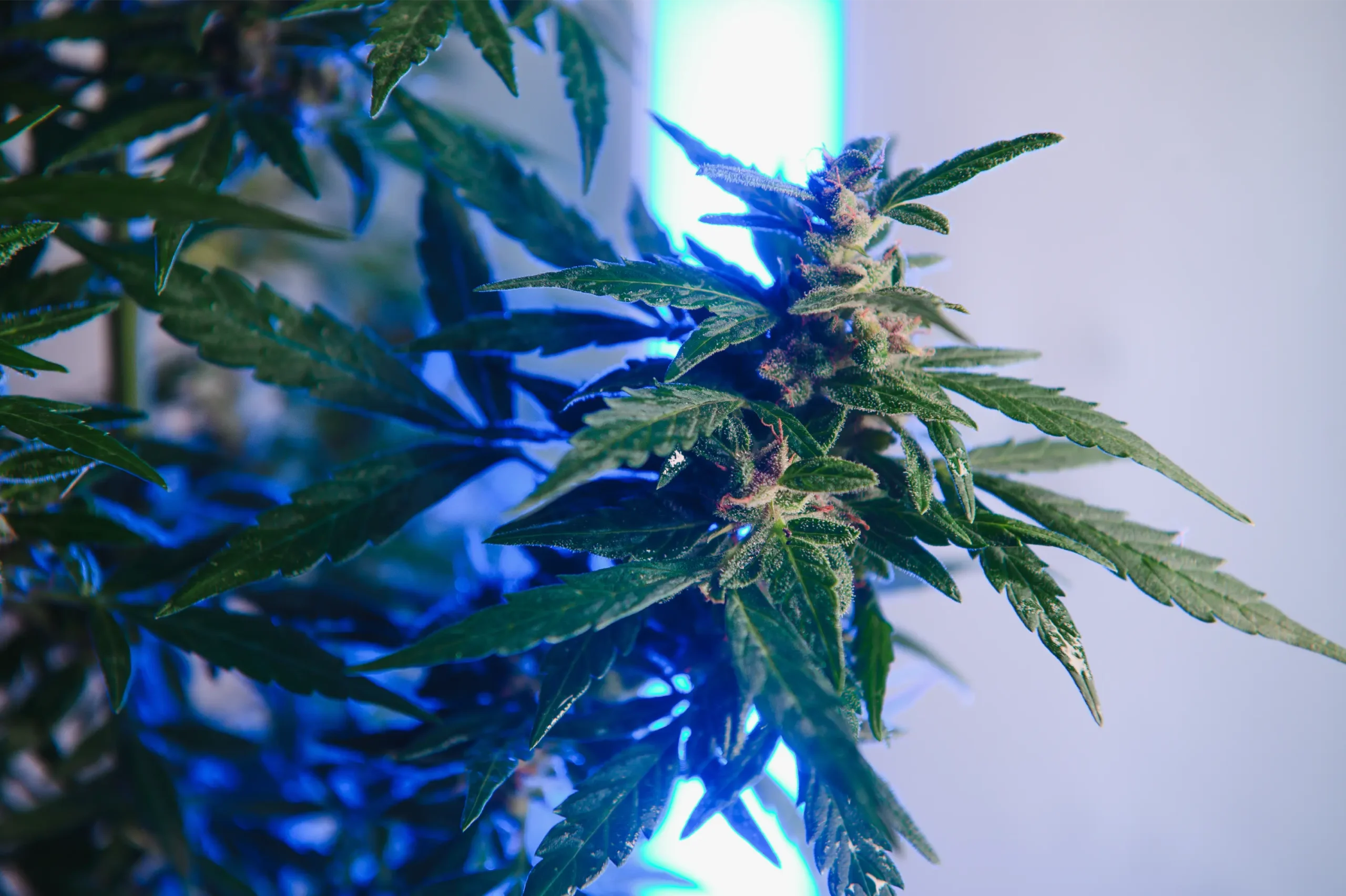
Purple Haze is one of the clearest examples of a strain whose name can mislead the grower. The plant is associated with purple color, yet not every phenotype turns deeply violet. It is associated with Haze, yet modern versions can finish much faster than classic long Haze lines. It is also often described as easy, but the plant can stretch hard during the first flowering weeks and later carry flowers heavy enough to bend relatively slender branches.
The most commonly repeated lineage is Purple Thai crossed with Haze, though modern plants sold under the name are not one globally standardized clone. That matters because flowering length, color, bud density, and aroma can vary. A realistic grower should expect a sativa-leaning plant with noticeable stretch, floral-berry aroma, and a roughly nine-to-twelve-week window depending on the line rather than one fixed eight-week promise.
The central cultivation question is: how can a grower control Purple Haze's first-wave stretch and support its long branches without overmanaging the plant or using cold stress simply to chase purple color? The best strategy is early topping or LST, a partially open canopy at flip, enough late support, and harvest decisions based on actual flower maturity rather than pigmentation.
Purple color is biologically meaningful but not magical. Cannabis anthocyanin accumulation is genetically controlled and temperature-sensitive, yet stronger purple expression does not automatically mean higher cannabinoid content, better flavor, or greater maturity. The grower should treat color as one phenotype trait among many.
The aroma is more delicate than the name's cultural reputation suggests: lavender, violet, berry, sweet earth, pepper, herbs, and mild citrus. The best cured flower keeps floral sweetness present through the exhale rather than drying into dusty earth and spice.
Strain Features
| Feature | Details |
|---|---|
| Strain Type | Sativa-dominant Haze-family hybrid |
| Genetic Profile | Most commonly described as Purple Thai x Haze; modern versions vary |
| THC | Usually moderate to strong, depending on line and environment |
| CBD | Usually low |
| Dominant Terpenes | Myrcene, beta-caryophyllene, limonene commonly recur in modern samples |
| Flavor / Aroma | Lavender, violet, sweet berry, earth, pepper, herbs, mild citrus |
| Effect Character | Creative, euphoric, giggly, energetic, dreamy, mentally stimulating |
| Flowering Time | Commonly around 9 to 12 weeks depending on the line |
| Stretch | Moderate to strong, often most obvious during the first three flowering weeks |
| Plant Architecture | Tall-to-medium sativa frame with longer branches and relatively narrow leaves |
| Bud Structure | Elongated medium-density flowers; some lines finish denser than classic Haze |
| Branch Strength | Can require support once long colas gain weight |
| Color Expression | Purple pigmentation is phenotype and environment dependent, not guaranteed |
| Training Compatibility | Topping, LST, open SCROG, selective pruning |
| Outdoor Climate | Prefers abundant sun and enough season length for a sativa finish |
| Best Time of Use | Daytime to early evening |
Genetic Lineage
Purple Haze is usually traced to Purple Thai and Haze, which explains why the cultivar combines Southeast Asian-style floral spice with the tall, cerebral Haze growth pattern.
The Purple Thai side contributes berry, floral, and pigmentation tendencies. Haze influence contributes stretch, open branching, and the energetic mental character.
Modern material under the name can vary widely because Purple Haze is not one universally preserved clone. Some plants are clearly long and Haze-dominant, while others finish more quickly and build denser flowers.
That variation should influence expectations. A plant that finishes in nine weeks and a plant that needs twelve are not necessarily mislabeled, but they should not be managed from the same calendar.
A useful keeper combines predictable stretch with strong floral aroma and branch strength. Purple color can be desirable, but it should not outrank flavor stability, maturity, or the ability to finish cleanly.
Effect Breakdown
At a light dose, Purple Haze is usually mentally bright. Mood lifts quickly and the user may feel more interested in conversation, music, or visual detail.
As the effect builds, creativity and a dreamy associative quality become more obvious. The user can feel stimulated without the sharp physical restlessness of some modern high-THC sativas.
Moderate doses often bring laughter and social ease. Focus can still be useful for creative tasks, but linear work may become less reliable as the experience becomes more imaginative.
Higher doses can push the same dreamy quality toward distraction or anxiety. The body usually remains lighter than the mind, which can make overstimulation feel more noticeable.
A mild physical relaxation may appear later, but strong couch-lock is not the main finish. The effect typically remains daytime-friendly for experienced users.
Dry mouth and dry eyes are common. Dizziness or paranoia can occur when potency or dose is underestimated, particularly in more Haze-dominant expressions.
Flavor & Aroma Profile
Purple Haze is best understood as a floral strain first and a berry strain second. Lavender and violet-like aromas often sit above sweet earth and gentle fruit.
Breaking the flower usually exposes more pepper, dry herbs, and Haze-like spice. A strongly floral jar can become earthier once the interior resin is disturbed.
On inhale, sweet berry and flowers can lead. The middle becomes herbal and slightly citrusy. The exhale tends to carry pepper, earth, and a lingering perfume-like note.
The flower should remain smooth enough that the floral character feels aromatic rather than soapy. A harsh fast dry can turn violet and lavender into generic dry plant taste.
Color can psychologically bias flavor expectations. A very purple flower is not automatically more floral than a greener phenotype, so keeper selection should be done blind to color when possible.
During a good cure, raw sweetness becomes less obvious while floral detail becomes cleaner. The best Purple Haze still tastes like flowers and berry after the green moisture is gone.
The berry note can vary from fresh red fruit to darker grape-like sweetness. The floral layer usually decides whether the profile feels like Purple Haze rather than a generic berry hybrid.
Some more Haze-leaning plants carry dry incense or metallic spice beneath the flowers. That secondary note can become clearer after cure and should not be mistaken for harshness when the smoke itself remains smooth.
A very purple phenotype can still be relatively plain in flavor. Visual color and aroma complexity should be scored separately during keeper selection.
Dominant Terpenes
| Terpene | Aroma Role | Cultivar Relevance | Scientific Caution |
|---|---|---|---|
| Myrcene | Earth, herbs, ripe fruit | Often supports the earthy base beneath floral sweetness | Does not independently create sedation |
| Beta-caryophyllene | Pepper, spice, wood | Matches the peppery Haze finish | CB2 activity does not prove strain-specific medical benefits |
| Limonene | Citrus peel | Can brighten berry and floral phenotypes | Does not guarantee euphoria |
| Floral minor volatiles | Lavender, violet, perfume-like flowers | Likely contribute strongly to the cultivar's signature aroma | Exact compounds and ratios vary among modern lines |
Purple Haze's sensory identity cannot be explained by three headline terpenes alone. Floral and berry character often depends on minor volatile compounds and their ratios.
The strain's creative effect should not be assigned to limonene or any single terpene. Dose, THC, tolerance, and the complete chemotype are more important.
Indoor vs. Outdoor Growing
| Decision Point | Indoor | Outdoor |
|---|---|---|
| Primary Challenge | Managing first-three-week stretch and branch support without overpacking a Haze-style canopy | Providing enough season length while allowing natural color and full maturity |
| Stretch | Moderate to strong, often concentrated early in flower | Height is less restrictive outdoors |
| Training | Early topping, LST, open SCROG | Early topping and broad support work well |
| Color | Can be observed under stable conditions without intentional cold stress | Cooler nights may increase pigmentation, but quality should remain the priority |
| Flower Duration | Usually 9 to 12 weeks depending on line | Late phenotypes need a sufficiently long autumn |
| Branch Support | Often useful as long colas gain weight | Stakes or cage support help in wind |
| Flavor Control | Indoor temperature stability helps preserve floral notes | Hot dry conditions can flatten lavender before leaves show severe stress |
| Best Fit | Growers comfortable with sativa stretch and phenotype variation | Sunny climates with enough late-season time |
Purple Haze can be productive indoors when the plant is flipped before the canopy is completely full. The first three weeks often add enough height and width to close remaining gaps.
A Haze-influenced plant does not need to be flattened into a rigid carpet. Slight height tiers can work when each branch has its own light and airflow lane.
Outdoors, the plant can become larger and easier to manage structurally, but a long-finishing phenotype still needs autumn weather that stays usable.
Color should never determine the environment. Cool nights can influence anthocyanin accumulation, but the crop should not be stressed severely for cosmetic purple tones.
Strain-Specific Grow Guidance
Use the First Three Weeks as the Main Height-Control Window
Purple Haze often stretches hardest during the transition. The grower should finish branch placement during this period rather than waiting until colas begin hardening.
Record the selected clone's stretch timeline because modern versions can differ enough that the second run should be based on the plant, not the name.
Top Early Enough for Slender Branches to Thicken
One early topping can distribute vertical vigor across several leaders.
Give those branches enough vegetative recovery to increase stem diameter. A thin late-created top may need much more support once flower weight builds.
Use an Open Screen, Not a Packed Haze Mat
A loose SCROG can turn long branches into productive lanes without destroying airflow.
Leave hand access and visible gaps. A screen that is completely full at the flip will usually be too crowded later.
Do Not Strip Narrow-Leaved Plants Aggressively
Purple Haze usually transmits light through the canopy better than a broad-leaf indica.
Remove weak inward shoots and genuine blockers, but avoid repeated full defoliation simply because the cultivar is tall.
Expect Useful Lower Flowers on Exposed Laterals
Long branches can produce mature flowers well below the top when side light reaches them.
Judge lower sites after stretch rather than removing everything by a fixed distance from the pot.
Feed Moderately and Watch the Haze Response
A tall fast plant can look hungry because it is building a lot of tissue, but excessive nitrogen can keep internodes long and foliage too dark.
Increase nutrition only when the plant's water use, color, and root health support the change.
Do Not Chase Purple With Severe Cold
Cannabis pigmentation has a genetic basis, and lower temperatures can influence anthocyanin accumulation, but purple color is not proof of greater potency or maturity.
Keep root and canopy function healthy. Record natural color instead of manufacturing it through stress.
Support the Longest Leaders Before Final Swell
Purple Haze can build colas heavy enough to bend relatively slender stems.
A loose upper net or soft ties should hold each branch in place without pulling neighboring flowers together.
Watch the Hottest Tops for Stress-Related Foxtailing
Some Haze-influenced flowers naturally keep stacking late.
Heat is more convincing when the tallest tops alone develop elongated new calyxes together with bleaching, reduced aroma, or leaf stress.
Let Late Pistil Production Finish Naturally
Growers often underestimate Haze flowering length because the plant still looks fresh in weeks when a faster hybrid would be done.
Do not cut simply because many hairs have darkened. Calyx maturity and flower trichomes are more useful than pistil color alone.
Harvest From Aroma and Flower Completion, Not Color
Purple flowers can be immature and green flowers can be ready.
Use completed calyx development, mature trichomes on the flower, reduced new pistils, and a full lavender-berry-earth aroma to define the harvest window.
Use Natural Pigmentation as a Phenotype Marker, Not a Goal
If one plant colors early while another remains green under the same environment, that difference is useful genetic information.
Do not let the stretch make the decisions
Record the color alongside flowering time, aroma, stretch, and branch strength. The value of pigmentation is greatest when it helps identify a repeatable phenotype rather than when it is treated as a score by itself.
Long Branches Need Support Before the Flower Becomes Heavy
Haze-influenced stems can remain relatively slender even when the flowers become denser than expected.
Add a second support layer before the branches start leaning. A branch that collapses inward shades neighboring buds and creates flower contact exactly when late airflow matters most.
Do Not Let a Strong Stretch Become a Deep Indoor Canopy
A tall plant can look open from above while still carrying a long vertical column of increasingly shaded flower below.
After stretch, evaluate how deep useful light actually reaches. Remove the sites below that line rather than keeping every long branch intact simply because the plant is sativa-dominant.
Avoid Constantly Correcting a Healthy Haze
Purple Haze can be vigorous and resilient enough that growers keep training simply because the plant keeps recovering.
Once the canopy is balanced and the flowering branches are established, repeated bending and pruning add labor without necessarily improving flower quality.
Use Late Water Demand as a Maturity Clue, Not a Harvest Rule
Some plants slow water use as flower growth settles, but a slower pot does not automatically mean the plant is ready to cut.
Combine changing dryback with calyx development, aroma, and flower trichomes rather than treating irrigation slowdown as a single maturity signal.
Weedth Bud Flavor Tips
Lavender, violet, and berry are the most delicate notes. Earth and pepper survive rough handling much longer.
A floral strain should be dried cool enough that perfume-like top notes remain visible instead of becoming flat dry herbs.
Avoid direct fan air on elongated flowers. The outer calyxes can crisp before deeper sections have equalized.
If a purple and a green phenotype smell different, cure them separately. Color and flavor should be evaluated independently.
During cure, raw sweetness should become smoother while violet and berry become clearer, not disappear.
Do not use flavored additives or scented storage materials to intensify the floral character. Authentic aroma must come from the flower itself.
Cool airtight storage helps a delicate floral profile remain distinct long after the initial cure.
Lavender-heavy flower can become perfumey if dried too quickly, while a slower controlled dry allows the floral note to integrate with berry and earth.
If the outer flower smells floral but the interior becomes peppery when broken apart, the plant may have a naturally layered profile rather than inconsistent terpene preservation.
A cure of several weeks often clarifies the difference between violet-like aroma and ordinary herbal sweetness. Keeper decisions made immediately after drying can miss that evolution.
Do not store highly pigmented flower in bright light simply to display its color. Light exposure is a quality loss, not a benefit.
A strong floral phenotype should remain recognizable after several weeks in storage. If violet and lavender fade rapidly while earth remains, the grower should review drying temperature, storage exposure, and how often the container is opened.
Vapor evaluation can sometimes separate the floral and berry layers more clearly than heavy smoke, which is useful when two phenotypes are close in aroma but different in smoothness.
Weedth Bud Boost Tips
The biggest yield improvement is turning early stretch into horizontal branch lanes before the stems become rigid.
Do not create excessive top count. A few strong supported Haze leaders can carry substantial flower.
Keep productive lower branches where the open canopy gives them real light. Remove only permanently shaded growth.
A slightly shorter phenotype can be more valuable indoors when its floral quality matches a taller sister.
Support timing matters because branches that lean out of the light during the last weeks lose quality even when they do not break.
Outdoor yield should be judged after seasonal risk. A later purple phenotype is not necessarily better if local weather consistently damages it.
Purple Haze quality yield is a supported, open field of mature floral sativa buds, not the darkest color or the tallest plant.
If the first cycle proves the plant stretches strongly, shorten vegetative time on the clone run rather than relying on more aggressive flower-stage training.
Branch support can improve premium yield by keeping every long cola upright in the intended light lane through the final swell.
When a greener phenotype clearly outperforms a purple one in flavor or density, keep the better flower. Color should never become a reason to preserve an inferior plant.
A selected clone that colors naturally without cold stress is useful if the visual trait matters, but the production decision should still be based on dry premium yield and cured aroma.
Indoor growers should compare premium flower per week of room occupancy. A slightly faster phenotype can be more practical when it retains the same floral effect and aroma.
Medical Uses & Benefits
Purple Haze is commonly chosen for mood elevation, daytime energy, creativity, and stress distraction. These are user-reported patterns rather than clinical proof.
The relatively light body effect may appeal to people who want to remain active rather than sedated.
Higher doses can increase anxiety, mental distraction, or dizziness in sensitive users.
Dry mouth and dry eyes are common.
Most modern Purple Haze flower is THC-dominant and should not be presented as a low-intoxication medical option.
Anyone using cannabis for a diagnosed condition or alongside prescription medication should consult a qualified healthcare professional.
Ideal User Profile
Purple Haze suits users who enjoy energetic cerebral effects and floral berry flavor rather than heavy fuel or deep body sedation.
It fits social activity, music, creative work, and daytime relaxation at moderate doses.
For growers, it is a good fit for people willing to manage early stretch and support long branches.
It is less suitable for growers who choose it primarily for guaranteed purple color, because pigmentation can vary.
A phenotype hunter can get real value from comparing finish time, branch strength, color, and cured floral aroma separately.
Grower Notes and Feedback
A common surprise is how strongly some Purple Haze plants move during the first three flowering weeks despite later finishing at a manageable height.
Growers also frequently discover that color is inconsistent. Some plants turn deeply purple while others remain largely green without any obvious quality penalty.
Long, relatively slender branches can need support once colas swell, especially in more Haze-dominant expressions.
Modern flowering estimates range from fast nine-week lines to plants that behave much more like classic Haze and continue longer.
The cultivar is often described as resilient, but easy vegetative growth should not encourage the grower to ignore late support and maturity.
A second run should record stretch, natural color expression, support timing, and how much lavender remains after cure. Those traits matter more than generic yield claims.
Growers often disagree about flowering length because modern Purple Haze material is not uniform. That disagreement should be expected rather than resolved into one absolute week count.
A second common surprise is that some examples build considerably denser flowers than classic Haze expectations, yet still retain long branches and late pistil production.
The plant can be forgiving in veg while becoming less forgiving after the canopy fills. Ease of early growth should not be confused with freedom from late structural management.
Purple Haze also rewards separate top and side-branch evaluation after cure. If side flowers preserve more berry and lavender than the highest colas, the canopy was probably too hot or too vertically stretched for even quality.
Another useful clone metric is the week when support first becomes necessary. Installing the second support layer before that point on the next run reduces late handling and keeps long Haze branches in their intended light lanes.
A mature Purple Haze canopy should still be easy to read from above and from the side. If every cola has merged into a single wall, the plant has lost the airflow and inspection advantages that normally make a Haze-style structure manageable.
Weedth Editor's Note
What matters after the headline numbers
I think growers sometimes chase the wrong target with Purple Haze. Purple color is interesting, but it is not the reason I would give a Haze-style plant valuable flowering space.
I would focus first on branch control. If the plant is still being aggressively bent after real flowers have formed, I would consider the initial canopy plan too late.
I would let pigmentation happen under a healthy environment rather than using cold as a cosmetic tool.
After harvest, I would compare the floral quality of the purple and greener plants without looking at the labels. That would keep color from biasing the keeper decision.
The plant I would keep would have predictable stretch, enough stem strength for its colas, and a lavender-berry flavor that survives the cure.
If I had to choose between deeper purple and stronger violet flavor, I would take the flavor without hesitation.
I would also preserve a clone from any plant that combines Haze energy with unusually strong branch structure. Structural reliability can make the difference between an enjoyable second run and another month of tying branches.
The ideal Purple Haze should look interesting, but it should still be worth growing with the lights turned off and the photos hidden. Aroma, effect, and canopy behavior have to carry the decision.
On a repeat run, I would compare the cured top flowers with the cured middle branches. If the flavor remains equally floral deeper in the plant, I would preserve that productive depth rather than copying a generic lollipop line.
Weedth Score
Growing Experience 8.0/10 Generally vigorous and workable, with stretch, support, and line variation requiring attention.
Bud Structure & Visual Appeal 8.8/10 Elongated resinous flowers can be striking, especially when natural anthocyanin color appears.
Aroma Complexity 9.0/10 Lavender, violet, berry, earth, pepper, and herbs create a distinctive floral profile.
Flavor & Smoothness 8.7/10 Excellent when the floral layer is preserved through drying.
Effects & High Experience 8.9/10 Creative, euphoric, dreamy stimulation makes it a strong daytime sativa.
Overall Satisfaction & Recommendation 8.6/10 A rewarding Haze-family cultivar when flavor and structure matter more than guaranteed purple color.
Personal closer: I would keep the Purple Haze that tastes unmistakably floral after cure, even if a more colorful sister wins the harvest photographs.
FAQ
What is Purple Haze's lineage?
The most commonly repeated lineage is Purple Thai crossed with Haze, although modern plants under the name can vary.
How long does Purple Haze flower?
Many modern lines finish around nine to twelve weeks, with Haze-dominant expressions sometimes taking longer.
How much does Purple Haze stretch?
Moderate-to-strong stretch is common, especially during the first three flowering weeks.
Why isn't my Purple Haze turning purple?
Pigmentation is phenotype and environment dependent. Green flower can still be fully mature and high quality.
Should I lower temperatures to make Purple Haze purple?
Cooler conditions can influence anthocyanin expression, but severe cold should not be used simply to manufacture color.
Does Purple Haze respond well to topping?
Yes. Early topping can distribute Haze vigor into several easier-to-support leaders.
Is SCROG good for Purple Haze?
Yes, particularly a loose open screen with room for transition stretch.
Does Purple Haze need support?
Long relatively slender branches can benefit from a second net or soft ties late in flower.
Should I heavily defoliate Purple Haze?
Usually no. Narrower leaves already allow useful penetration, so target real blockers and weak interior growth.
Why does Purple Haze keep making white pistils late?
Haze-influenced flowers can keep adding fresh calyxes late. Judge maturity from the whole flower rather than pistils alone.
Is Purple Haze a heavy feeder?
Moderate feeding is usually safer than assuming a tall plant needs aggressive concentration.
When should Purple Haze be harvested?
Use complete calyx development, mature flower trichomes, reduced fresh pistils, and a full lavender-berry-earth aroma.
Can Purple Haze grow outdoors?
Yes in sunny climates with enough season length for the selected phenotype.
Is Purple Haze beginner-friendly?
It can be forgiving in general growth, but stretch and support are easier with some canopy experience.
Is Purple Haze good for daytime use?
Many users describe it as creative, euphoric, giggly, and mentally stimulating.
Similar Strains
Super Silver Haze: A longer modern Haze hybrid with stronger incense-citrus aroma and more demanding flowering time.
Strawberry Cough: A fruitier sativa with similarly social uplift but less floral violet character.
Purple Urkle: A much shorter purple cultivar with heavier body effects and grape-earth flavor.
Panama Red: A longer heirloom sativa with more tea-pepper-citrus flavor and similar cerebral energy.
Blue Dream: A more forgiving sativa-dominant hybrid with berry aroma and less dramatic stretch.
Maui Wowie: A tropical daytime sativa with easier flavor and less emphasis on purple pigmentation.
Share this article
A quick overview of the topics covered in this article.
Follow us
Latest articles
August 15, 2026
August 15, 2026
August 15, 2026
August 15, 2026