
The Menthol
The Menthol – Strain Profile & Grow Guide
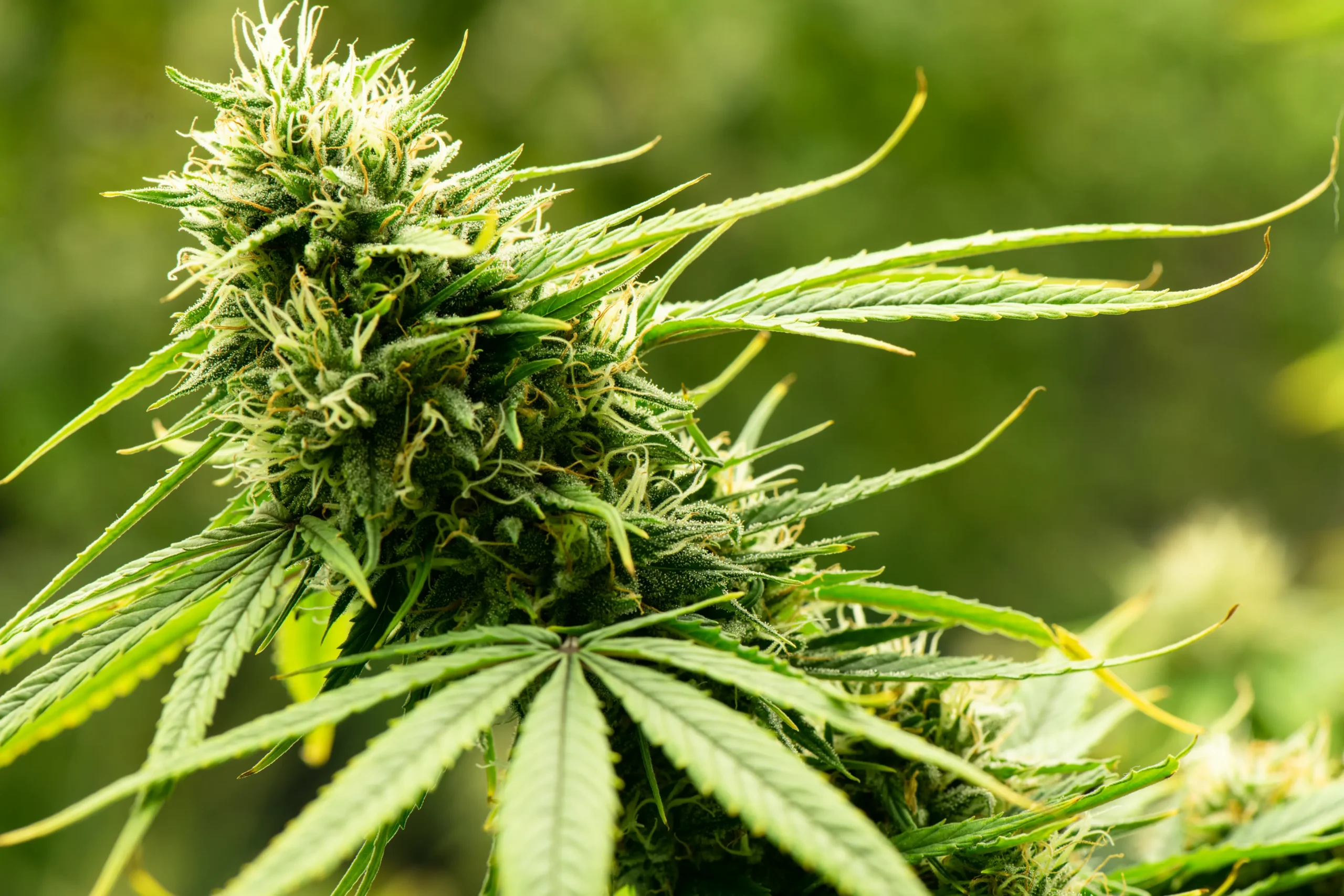
The Menthol is a modern resin hybrid whose name describes only the first layer of its aroma. Strong expressions can smell like peppermint balm, cool cream, eucalyptus, wet stone, white fuel, vanilla, pepper, and chemical gas. The sensation is colder than a typical mint strain, yet it is not clean in a simple or medicinal way. Beneath the cooling top note sits a dense mixture of earth, diesel, dough, and floral perfume that becomes clearer after the flower has cured.
Its documented lineage combines Gelato 45 with White Diesel, High Octane, and Jet Fuel G6. That genetic stack brings together dessert density, fuel, vigorous hybrid growth, and a distinctive herbal-cooling profile. The Menthol has also become an influential parent because it can transmit trichome density, yield, mildew tolerance, and mint-gas aroma into very different crosses. As a standalone cultivar, however, it should not be judged only as breeding material. A good cut can produce visually exceptional flower with a deep, physically calming effect and enough mental clarity to avoid feeling flat.
The plant is usually described as medium to vigorous with tight internodal spacing and strong flower production. Some selections remain relatively compact and easy to control. Others stretch more than the dense vegetative structure suggests. The main challenge is the relationship between node spacing and airflow. The plant can carry many flower sites close together, so a canopy that looks organized from above may contain a crowded interior where leaves, small branches, and developing buds remain in contact.
The central cultivation problem is not convincing The Menthol to make resin. Healthy plants can become heavily coated. The harder task is preserving the cool mint, cream, and perfume notes while finishing a dense canopy without stagnant humidity or late mineral harshness. The cultivar responds well to decisive early structure, but it does not benefit from constant manipulation. Once the main branch lanes are established, stability becomes more valuable than additional training.
Strain Features
| Feature | Details |
|---|---|
| Strain Type | Balanced to indica-leaning hybrid |
| Genetic Profile | Gelato 45 x White Diesel x High Octane x Jet Fuel G6 |
| THC | Commonly reported in the low-to-upper 20% range; selected batches may test higher |
| CBD | Usually very low |
| Dominant Terpenes | Beta-caryophyllene, limonene, myrcene, and linalool are frequently reported, with strong minor mint and fuel volatiles |
| Flavor and Aroma | Peppermint balm, menthol, cool cream, eucalyptus, vanilla, diesel, pepper, earth, and perfume |
| Effect Character | Strong mental impact followed by warm physical relaxation, calm focus, and possible late heaviness |
| Flowering Time | Approximately 8 to 9.5 weeks, depending on the selected cut |
| Stretch | Medium, with some taller expressions |
| Plant Architecture | Vigorous hybrid with tight internodes, active laterals, and a tendency to build a dense central canopy |
| Bud Structure | Chunky, glistening, highly resinous, and often dark green to purple |
| Yield Potential | Medium to high when the canopy remains open and evenly lit |
| Grow Difficulty | Intermediate |
| Primary Quality Risk | Interior congestion, late humidity, and loss of cooling top notes during a warm or rapid dry |
Genetic Lineage
The Menthol's ancestry is more useful when read as a sequence of structural and aromatic contributions. Gelato 45 provides dense flower, cream, sweet dough, color, and a polished modern resin profile. It also helps explain why certain cuts remain manageable in height while still producing visually heavy flowers.
White Diesel contributes sharper fuel, herbal pungency, and hybrid vigor. Diesel influence can open the plant during transition and create longer branch movement than the vegetative frame suggests. It also gives the aroma a clean chemical edge that prevents the cream from becoming overly soft.
High Octane strengthens gas, earth, potency, and physical weight. It can also bring thick stems and a more forceful late effect. Jet Fuel G6 adds additional fuel, citrus brightness, and mental energy. The combination creates a cultivar that can feel calm without becoming immediately dull.
The cooling character is not explained by one dominant terpene alone. The Menthol's aroma may involve minor compounds that create a balm-like, eucalyptus, or cold-herbal sensation. This is important because a laboratory result with ordinary major terpenes can still produce a flower that smells unusually minty. Conversely, a sample with high limonene or caryophyllene does not automatically express the full Menthol identity.
Phenotype variation commonly appears in three broad directions. The first is mint-cream dominant, with dense flower and a smooth, almost dessert-like finish. The second is gas-forward, sharper, taller, and more chemically pungent. The third adds perfume, floral soap, or earthy herbal notes. All can be valid, but the best keeper depends on the garden. A compact mint-cream cut may be ideal for flower, while a vigorous gas-heavy cut may offer more yield or processing value.
The cultivar's influence in later crosses can create confusion because consumers may recognize its traits without having experienced the original plant. The standalone flower should show more than generic mint. It should combine cooling sensation, fuel, resin, and a layered finish that remains clear after cure.
Effect Breakdown
Immediate pressure and sensory cooling
The Menthol often begins with a fast mental shift. The user may feel a pressure behind the eyes, brighter sensory awareness, and a clean separation from the previous mood. The cooling flavor can make the onset feel smooth, but the potency may develop quickly.
At a moderate dose, the first phase can be focused, calm, and slightly euphoric. Conversation remains possible, and music or visual detail may feel more engaging. The effect is not typically as playful as a fruit-candy strain. It is more controlled and inward, with a sense of mental space.
Physical warmth behind a cold flavor
The body effect contrasts with the aroma. While the palate feels cool, the muscles often feel warm and heavy. Tension drops through the shoulders and limbs, and the user may become physically still without losing awareness.
This makes the cultivar useful for late afternoon or evening when the goal is to slow down without immediately sleeping. A gas-dominant phenotype can feel more forceful and sedating, while a cream-mint expression may remain smoother and more balanced.
The late phase
After the main euphoric period, The Menthol can become heavier. Appetite may increase, concentration may narrow, and a seated activity becomes more appealing. High doses can produce drowsiness, mental fog, or a strong desire to remain in one place.
The cultivar is potent enough that inexperienced users may find the transition abrupt. The cool inhale can encourage larger consumption because it does not feel harsh. Dose should be based on strength, not smoothness.
Negative effects
Dry mouth and dry eyes are common. Sensitive users may experience anxiety, dizziness, or a temporary increase in heart awareness. A very strong gas phenotype can feel mentally intense before the body relaxation arrives. Starting low and waiting is especially important with concentrated forms.
Flavor & Aroma Profile
The Menthol's jar aroma often opens with peppermint balm and cold herbal cream. This is not the sugary mint of candy. It can resemble a medicinal rub, eucalyptus leaf, spearmint, or a cool vapor released from crushed herbs. Underneath that layer are vanilla, diesel, black pepper, damp earth, and a faint sweet dough note.
Surface aroma and interior aroma
The untouched flower may smell clean, cool, and creamy. Breaking it releases sharper gas, ammonia-like edges, and pepper. Some cuts reveal perfume or floral soap from the interior. Others become almost entirely fuel-dominant once disturbed.
This difference matters during phenotype selection. A plant that smells beautifully minty in the room may cure into simple diesel. Another that seems earthy while alive may develop a deep peppermint-cream profile after several weeks.
Inhale
The inhale can feel smooth and cooling. Peppermint, cream, vanilla, and light citrus arrive first. The sensation may create the impression of opening the airways even though inhaled smoke or vapor can still irritate sensitive lungs.
Exhale
The exhale is heavier. Fuel, pepper, earth, and chemical gas become more obvious. A high-quality cure allows the cooling note to remain present through the finish. Poorly dried flower often begins minty and ends hot, mineral, and flat.
Why The Menthol becomes harsh
Late salt accumulation is one common cause. The cultivar already carries pepper, chemical gas, and high resin. Excessive feeding near maturity can turn those natural traits into rough smoke. Rapid drying creates a similar problem by removing cream and perfume while leaving the durable gas.
Color and aroma
Purple or black tones may appear under cooler late conditions, but color does not define the profile. Some greener cuts retain stronger menthol. Keeper decisions should prioritize cured aroma, smoothness, structure, and effect.
Dominant Terpenes
| Terpene or Volatile Group | Likely Role in The Menthol |
|---|---|
| Beta-Caryophyllene | Provides pepper, dry spice, and part of the heavy gas base |
| Limonene | Adds citrus brightness and prevents the cooling profile from feeling dull |
| Myrcene | Supports earth, body relaxation, and a softer late phase |
| Linalool | May contribute perfume, floral cream, and emotional calm |
| Pinene | Can add fresh herbal sharpness and a cleaner mint impression |
| Minor Cooling Volatiles | Likely contribute strongly to peppermint balm, eucalyptus, and cold-herbal character |
The major terpene list should be treated as a broad map. The sensation that gives The Menthol its name may depend on compounds present in very small quantities. This explains why two samples with similar headline terpene percentages can smell very different.
From a cultivation perspective, the most fragile portion is the cool, perfumed top layer. Pepper and gas survive abuse more easily. The grower should judge post-harvest success by whether the cooling note remains through the exhale, not simply whether the jar still smells strong.
Indoor vs. Outdoor Growing
| Decision Point | Indoor Growing | Outdoor Growing |
|---|---|---|
| Canopy Shape | Tight internodes require planned branch lanes | Early topping and wide spacing prevent a closed central shrub |
| Stretch | Easier to control with an open screen | Large root volume may increase transition movement |
| Humidity | Environmental control protects dense resinous flower | Dry late-season weather is strongly preferred |
| Mildew Pressure | Selected cuts show useful tolerance, but airflow remains necessary | Open-air conditions help, though leaf contact and dew still matter |
| Flavor | Stable temperatures preserve peppermint and cream | Hot finishes can leave mostly earth and gas |
| Support | A second net holds heavy clustered flowers | Cages and soft ties should be installed before late weight |
| Best Fit | Intermediate growers focused on resin, flavor, and premium flower | Warm, dry climates with strong sun and a protected finish |
Indoors, The Menthol can be highly productive because its tight internodes place many flower sites within the light zone. The same geometry can become a problem. If every lateral is preserved, the plant builds a thick wall of leaves and buds that is difficult to inspect from the stem side.
A screen works well when it is used to separate branches rather than maximize occupation. The plant does not need every square filled before the flip. Medium stretch can complete the canopy. The first net should organize branch lanes, while a second layer should carry the flowers without pulling them together.
Outdoors, the cultivar can form a broad, vigorous plant with heavy lateral production. Sunlight can deepen gas and herbal complexity, but the dense flower structure requires a dry finish. Cooler nights may increase color, while repeated morning moisture can remain hidden inside clustered tops.
Mildew tolerance reported in selected lines is useful but should not become complacency. Resistance reduces risk; it does not remove the need for sanitation, airflow, and inspection.
Strain-Specific Grow Guidance
Decide the branch map before the internodes close
The Menthol can produce abundant side growth close to the main stems. One early topping is usually enough to create the primary framework. Spread the selected branches and remove weak inward-facing shoots before they become buried beneath larger leaves.
A branch should earn its place by reaching the productive plane and maintaining a clear air channel. Keeping every shoot because it appears vigorous creates more small flower and less access.
Flip with visible gaps
Medium stretch is common, but some gas-heavy cuts travel farther. Enter flower with open spaces between the tops. Continue tucking during early transition, then allow the branches to rise once the stems begin stiffening.
The plant may appear short enough to justify a longer vegetative phase. Tight node spacing can hide how much biomass already exists. Judge canopy volume, not only height.
Use defoliation to remove contact, not to chase exposure
Remove leaves that overlap heavily, press against developing flowers, or close the central air path. Preserve exposed leaves that support the major tops. The plant can tolerate thinning, but severe stripping may slow a cultivar that is already investing heavily in resin.
A useful mid-flower check is to look horizontally through the canopy. If no light or air path can be seen between branches, the structure is too closed even if the top view looks even.
Keep irrigation proportional to root-zone use
Do not let the stretch make the decisions
Vigorous plants may drink aggressively during stretch, then slow as dense flowers harden. Continue measuring container weight and recovery. Do not keep the week-four schedule through week eight if demand has declined.
A large container can remain wet beneath a compact plant. Symptoms may resemble nutrient deficiency because the roots cannot access oxygen efficiently. More feed does not solve saturation.
Feed for resin quality, not leaf darkness
The Menthol can support moderate to strong nutrition under good light, but prolonged nitrogen creates a dark, crowded canopy. Transition the feed as flower set becomes established. Watch tip burn, clawing, and decreasing water use.
Late mineral buildup exaggerates pepper and chemical harshness. The plant already has enough intensity. A cleaner finish protects cream, perfume, and mint.
Keep the canopy temperature stable
The cooling aromatic layer is vulnerable to heat. Upper colas placed too close to the light may keep density while losing nuance. Leaf-edge curl, bleaching, or rapid aroma change are warnings that quality is being traded for intensity.
Outdoor plants should not be left in strong direct sun after cutting. Move branches into shade immediately.
Support clusters before they merge
Dense flowers can lean into one another during the final swell. Install support while the branches are still easy to move. The objective is to hold each cola in its own air space, not simply prevent breakage.
Inspect for mildew and rot separately
Powdery mildew appears on leaf and flower surfaces, while bud rot begins inside dense tissue. A plant described as mildew-tolerant can still develop internal decay under wet conditions. Inspect the stem-facing side of major flowers and any point where leaves remain trapped against the bud.
Harvest after the cooling note stabilizes
The Menthol can look complete before its aroma has integrated. Follow calyx swelling, slowing pistil production, trichomes on calyx tissue, and water demand. A mature plant should smell less green and show a clearer relationship between mint, cream, and gas.
An early harvest can preserve sharper mental energy and cold herbs. Additional maturity increases body weight and dark fuel. Waiting too long may flatten perfume and cream.
Manage clones and mothers by density, not only vigor
A mother plant that produces fast shoots is not automatically the easiest production cut. The Menthol's tight internodes can create clones with several competing tips close to the base. Select cuttings from clean, well-lit branches with visible node separation. A cutting taken from a buried interior shoot may root successfully yet carry the same crowded architecture into the next cycle.
When maintaining a mother, remove weak inner growth regularly and rotate the plant so the future cut sites receive balanced light. A neglected mother can produce soft, elongated cuttings near the center and compact, hard cuttings near the perimeter. This variation makes the next room appear genetically inconsistent when the real difference began on the mother.
Rooted clones should be sorted by development rather than planted on one date simply because they came from the same plant. A smaller cutting in a large container can remain wet too long. A vigorous cutting may need earlier topping. Uniformity is created through selection and timing, not by pretending every clone began equally.
Read the stem rub and flower aroma as separate signals
Vegetative stem rub can reveal mint, earth, or fuel, but it does not reliably predict the finished flower. Some plants show strong peppermint on the stem and cure into ordinary gas. Others smell mild in vegetative growth and develop a complex perfume-menthol profile late.
Use stem aroma as one note in the record, then compare it with week-three flower smell, late-flower resin aroma, and cured jar character. The relationship between these stages is more useful than any single test. A keeper that retains its identity through all stages is easier to reproduce.
Distinguish natural dark color from root stress
The Menthol can carry deep green, purple, or almost black tones. Color should be read alongside posture, growth rate, and water use. A healthy dark plant continues to expand flowers and drinks predictably. A stressed dark plant may claw, remain wet, or stop building new calyx tissue.
Increasing light or feed because a dark plant looks slow can worsen the problem. Check roots and temperature first. Pigmentation is not a substitute for plant-health diagnosis.
Plan harvest labor before the final week
Heavy trichome coverage makes the plant slow to handle cleanly. Scissors gum up, flowers adhere to gloves, and branches can stick together. Prepare separate tools, labeled drying zones, and enough hanging space before cutting. Rushing the harvest because the resin is difficult to manage increases physical damage and mixes phenotypes that should remain separate.
The densest tops should be placed where they receive the most open room circulation. Smaller branches can be grouped elsewhere and removed earlier. A written harvest map prevents the drying room from becoming a pile of unlabeled mint and gas.
Compare the top and side-canopy aroma before selecting the cut
A single plant can produce two different aromatic impressions when the upper canopy runs warmer than the sides. Top flowers may become sharper, more gaseous, and less creamy, while side branches retain peppermint and perfume. This does not always mean the plant has unstable genetics. It may reveal an environmental gradient.
Before rejecting a cut, compare flowers from several canopy positions. If the side flower carries the desired profile, improve height control and temperature uniformity on the next run. If every position cures into plain fuel, the phenotype itself is probably the limiting factor.
Keep records that describe the plant, not only the room
Room averages hide useful information. Record each plant's stretch, water interval, branch count, aroma direction, and harvest date. A note such as "room finished in 63 days" is less useful than knowing which plant needed 58 days and which one needed 68.
The Menthol can look uniform from a distance because many plants share dark color and heavy frost. Individual records prevent visual similarity from erasing important structural differences.
Weedth Bud Flavor Tips
Separate the densest flowers before drying
Large clustered tops can remain wet inside after the surface feels ready. Divide connected flowers or hang medium branches with enough space. This protects against internal moisture without using direct wind.
Keep air moving around the branches
The room should exchange air and prevent stagnant pockets. Fans should not strike the flower continuously. Direct air removes peppermint and perfume before the gas disappears.
Slow the first moisture loss
The exterior should not become brittle in the first days. If small side flowers are drying faster than the main tops, remove or relocate them separately rather than changing the entire room for one size class.
Cure through the sharp stage
Freshly dried The Menthol may smell chemical, grassy, or almost medicinal. During the early cure, cream and mint often become clearer while raw fuel softens. Do not judge smoothness from the first week.
Store by phenotype
Keep mint-cream, gas-heavy, and perfume-forward plants separate. The cure can reorder the aroma dramatically. Mixing them removes the ability to identify the best expression.
Minimize handling
Heavy trichome coverage makes the flower visually attractive but physically vulnerable. Rough trimming, squeezing, and overfilled containers remove resin and compress the structure.
Preserve temperature after cure
Warm storage continues to remove the cooling layer. Use cool, dark, stable conditions and smaller containers for long-term material.
Weedth Bud Boost Tips
Build a limited number of strong lanes
The Menthol does not lack flower sites. Premium yield improves when the best branches receive light and air from base to tip. Remove secondary shoots that remain trapped beneath the canopy.
Use the second net as quality control
A support layer keeps flowers separated and maintains light position. It also reduces handling near harvest. Install it before the branches lean.
Protect root oxygen during rapid growth
Strong vegetative vigor can encourage frequent irrigation. A well-aerated medium and correct dryback support more useful growth than constant saturation.
Do not trade aroma for maximum light
The top of the intensity range is only productive when temperature, water, and carbon supply remain balanced. A cooler, evenly lit canopy often produces better flower than a hot center with visually larger but flatter-smelling tops.
Preserve enough leaf area for the final swell
Selective defoliation improves the environment. Complete stripping limits late photosynthesis and can reduce flower expansion. Keep healthy exposed leaves.
Grade yield by finished quality
Dense frosty lowers may still cure leafy or weak. The useful yield is clean, mature, flavorful flower. Remove sites that cannot reach that standard before they consume time and resources.
Test resin behavior separately
The Menthol can be attractive for processing, but visual frost is not the same as usable return. Test labeled samples from different phenotypes and maturity points.
Medical Uses & Benefits
The Menthol is commonly chosen for evening stress, physical tension, low mood, and situations where the user wants mental quiet without immediate sleep. The opening can feel focused and emotionally clear, while the body effect gradually becomes warmer and heavier.
Users sometimes report relief from mild pain, muscle tightness, or appetite loss. The strong sensory profile may also help redirect attention away from discomfort. These are subjective experiences and do not establish treatment.
High THC and very low CBD can be difficult for sensitive consumers. Anxiety, dizziness, and excessive sedation are possible. The cool flavor may feel gentle, but it does not reduce psychoactive strength.
The cultivar may suit late afternoon or evening better than early morning. More mature flower or gas-heavy phenotypes can become strongly sedating. Cream-mint cuts may remain functional longer.
Medical use should be discussed with a qualified professional, especially when the user takes other medications or has a history of panic, cardiovascular concerns, or severe mental health symptoms.
Ideal User Profile
The Menthol suits experienced consumers who enjoy mint, herbal balm, cream, and fuel. It is a strong alternative for users who find fruit-candy profiles too simple or sweet. The effect works well for quiet creative activity, music, conversation, and evening decompression.
It is less suitable for low-tolerance users or anyone expecting a mild mint strain. The potency can arrive quickly, and the later physical phase may be stronger than the smooth inhale suggests.
Growers should choose The Menthol when premium resin, dense flower, and unusual aroma matter more than the simplest possible canopy. It fits indoor gardens with good humidity control and outdoor gardens with a dry finish.
The cultivar is especially interesting for phenotype hunters. Mint-cream, gas, perfume, and structural differences can be meaningful. A grower who labels and cures each plant separately gains far more value than one who combines the harvest immediately.
Beginners may succeed with a known compact cut, but seed-grown plants are better suited to an attentive intermediate grower. Tight internodes require early decisions, and late corrections can damage sticky flower.
Grower Notes and Feedback
Growers frequently describe The Menthol as easy to cultivate once the canopy is organized. Vigorous growth, high yield potential, and useful mildew tolerance are recurring positives. The main work is structural rather than nutritional.
Tight internodes can create misleading density. A plant may appear to have excellent site count while many branches remain too close to mature cleanly. Early thinning improves the flower-to-leaf ratio and reduces late labor.
Stretch is usually medium, but selected cuts can move more strongly. A gas-dominant plant may open during transition, while a mint-cream plant remains shorter and denser. Uniform plant height before the flip does not guarantee uniform behavior afterward.
Aroma often changes during cure. Fresh flower may smell like sharp fuel and medicinal herbs. After several weeks, peppermint, vanilla, and perfume can become clearer. Keeper selection should wait.
Dark color and heavy frost are common in premium examples, but neither guarantees a complete flavor. Some visually dramatic plants cure into ordinary gas. The quieter green plant may carry the most distinctive cooling exhale.
Resistance reports should be interpreted carefully. A cultivar can show useful tolerance to powdery mildew while still becoming vulnerable under high humidity, leaf contact, and poor sanitation. Resistance is a management advantage, not a substitute for management.
Weedth Editor's Note
The tradeoff I would plan around
A six-plant Menthol run can look uniform for the first month and then divide into three different cultivars after the flip. Two plants remain compact and begin stacking dense golf-ball flowers. Two stretch upward and fill the unused screen space with gas-heavy tops. The last pair stay medium but produce so many close lateral shoots that the center becomes impossible to see through.
The first instinct is to treat the compact plants as ideal and correct the taller ones. That can be the wrong priority. The tall gas-forward plants may have the cleanest internodal separation and the healthiest interior. The compact mint-cream plants may need more leaf removal because their flowers form close to the stem. The crowded medium plants may require entire weak branches to be removed rather than another round of leaf stripping.
In one realistic room plan, the grower keeps all six plants at the same irrigation frequency because their height is similar. By mid-flower, the compact plants remain wet longer and begin showing heavy leaf posture. The taller plants continue drinking quickly. Instead of raising feed to correct the pale compact plants, the containers are allowed a longer interval and the central air path is reopened. Leaf angle improves without additional nutrition.
At harvest, the tallest plant is not the keeper. It yields well but cures into straight fuel. One compact plant retains peppermint cream and perfume, while a medium plant produces the best combination of mint, earth, and smooth body effect. The next run uses fewer branches on the compact cut, a slightly earlier flip for the medium cut, and separate irrigation timing.
The useful lesson is that The Menthol should be managed by canopy density and root demand, not by height alone. Its best expression often appears after the grower stops trying to make every plant look identical.
Weedth Score
Growing Experience 8.6/10 Vigorous and productive, with tight internodes and phenotype-specific spacing to manage
Bud Structure and Visual Appeal 9.4/10 Chunky, dark, glistening flower with exceptional trichome coverage
Aroma Complexity 9.3/10 Peppermint balm, cream, perfume, fuel, pepper, and earth create a rare profile
Flavor and Smoothness 8.8/10 Cooling and layered after cure; late salts and rapid drying can make it sharp
Effects and High Experience 8.7/10 Calm mental impact and warm body relaxation with strong dose-dependent heaviness
Overall Satisfaction and Recommendation 9.0/10 A premium modern cultivar for resin and flavor-focused growers
The Menthol is worth keeping when the cooling note remains present through the exhale. I would reject a visually perfect plant that cures into ordinary gas and keep the less dramatic flower that preserves mint, cream, and perfume.
FAQ
What is The Menthol's lineage?
The Menthol is documented as Gelato 45 crossed with a line combining White Diesel, High Octane, and Jet Fuel G6.
How long does The Menthol flower?
Most reports place it around 8 to 9.5 weeks. The exact cut and environment determine whether the plant finishes closer to the early or late side.
How much does The Menthol stretch?
Medium stretch is common, but gas-heavy expressions may grow taller. Leave space in the screen on the first run.
Does The Menthol respond well to topping?
Yes. One early topping and branch spreading usually create enough main sites. Repeated topping can worsen the already tight interior.
Is The Menthol resistant to powdery mildew?
Selected lines are reported to show useful tolerance, but no cultivar is immune. Airflow, sanitation, leaf spacing, and humidity control remain necessary.
Why does my flower smell like fuel but not mint?
Phenotype is the first explanation. High canopy heat, early harvest, rapid drying, and insufficient cure can also suppress the cooling layer.
Does The Menthol need heavy feeding?
It can support productive nutrition under strong light and healthy roots, but excess nitrogen and late salts reduce airflow and smoothness. Read the plant rather than assuming a fixed high demand.
Is The Menthol suitable outdoors?
Yes in warm, dry climates with enough airflow and a protected finish. Dense flowers are less suitable for repeated late-season rain.
When should the canopy be defoliated?
Make the main structural cleanup during late vegetative growth and early transition. Use a smaller mid-flower pass only where leaves close air paths or press against buds.
Why are the buds touching even though the branches are supported?
Support may be pulling the branches inward or the screen may be overfilled. The goal is separate flower lanes, not only upright stems.
Is The Menthol a daytime strain?
Moderate doses can feel calm and focused, but the physical phase often becomes heavier. Late afternoon or evening is a safer fit for most users.
How should keeper phenotypes be selected?
Evaluate structure, irrigation behavior, mildew tolerance, cured mint retention, smoothness, and effect. Do not select by frost or color alone.
Similar Strains
Kush Mints shares cooling herbs, gas, dense resin, and a heavy body phase, but usually has a more direct mint-cookie profile.
Pave offers pear, menthol, cream, and OG gas with a more open branch structure in many cuts.
Pink Certz carries mint, grape, and fuel with organized flower spacing and a sweeter fruit layer.
Blue Zushi combines mint, blue fruit, and dense flower, often with a heavier and more colorful finish.
Marshmallow OG shares cream, gas, and high resin while leaning more toward vanilla, pine, and toasted sweetness.
Share this article
A quick overview of the topics covered in this article.
Follow us
Latest articles
August 21, 2026
August 21, 2026
August 21, 2026
August 21, 2026