
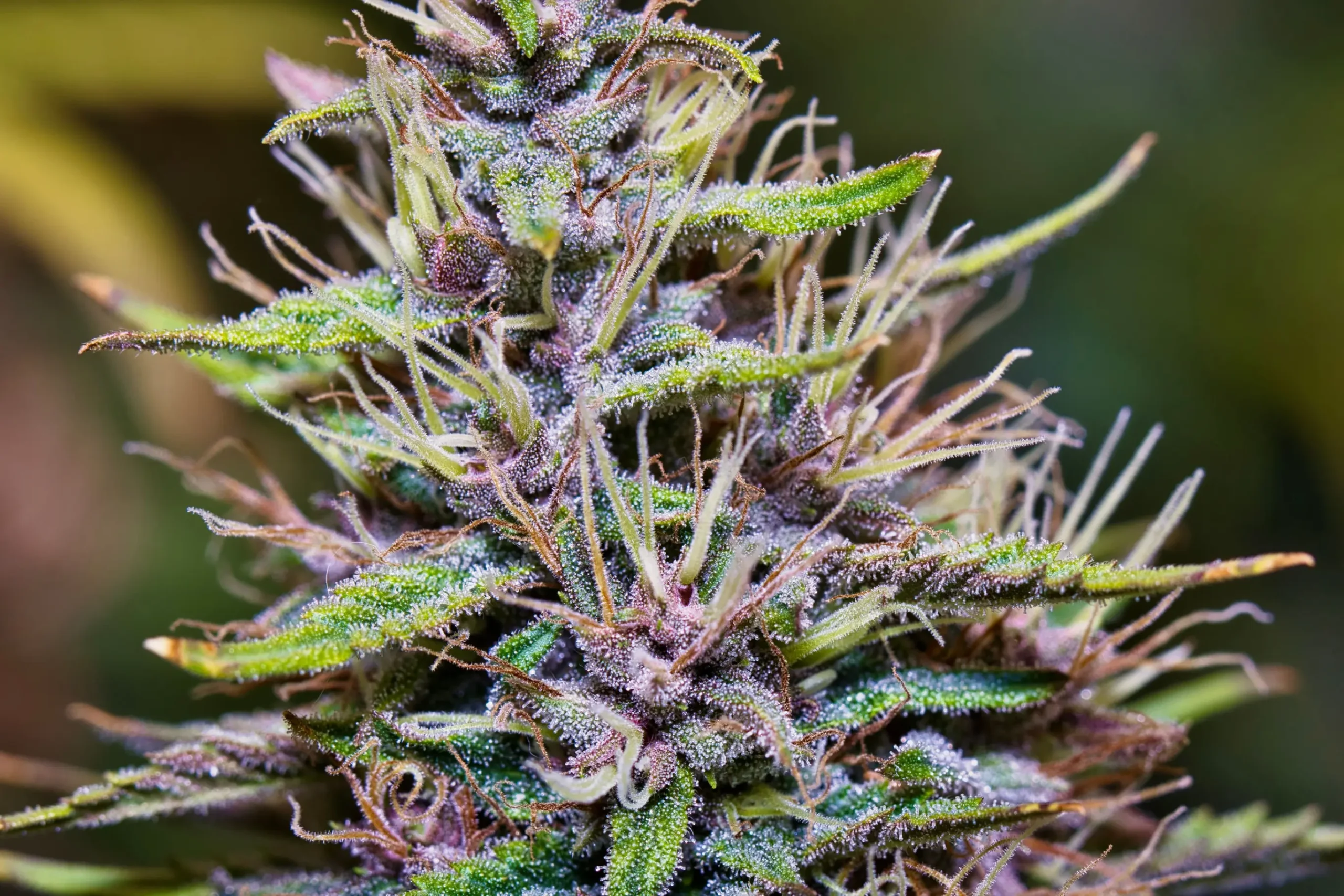
Venus
Venus is a balanced production hybrid with a tall indoor profile, sweet skunk aroma and a practical growth pattern built for efficient flower rooms. Its commonly reported lineage combines Pure Power Plant with Top 44, bringing together energetic South African-influenced vigor and the compact, fast-flowering traits of an old indoor production line. The result is not a modern dessert cultivar. It is a structured, high-output skunk with long easy-to-trim buds and a soothing but wakeful effect. Its production value rises when branch count, irrigation demand and drying capacity are planned together instead of treated as separate late-cycle problems.
The cultivar's most useful grow trait is its candelabra architecture. A central frame supports several strong upper arms, while the weakest lower branches contribute little and should be removed early. Venus can tolerate stronger nutrient concentration than many flavor-focused hybrids, but that tolerance is not permission to feed blindly. The strain reaches its best quality when high production is balanced with root oxygen, canopy separation and a controlled late-flower finish that preserves sweet pine and skunk rather than leaving the flower harsh and mineral-heavy.
Strain Features
| Feature | Details |
|---|---|
| Strain Type | Balanced hybrid, often described near 50% sativa and 50% indica |
| Commonly Reported Lineage | Pure Power Plant x Top 44 |
| Typical THC | Commonly moderate to high, depending on phenotype and environment |
| CBD | Usually low |
| Effect Direction | Active and mentally pleasant with steady physical calm |
| Aroma | Sweet skunk, pine, earth, herbs, spice and light citrus |
| Flavor | Sweet resin, skunk, fresh wood, pepper and a clean herbal finish |
| Flowering Time | About 8 to 10 weeks indoors |
| Outdoor Harvest | Commonly October in suitable climates |
| Height | Medium to tall indoors, especially after a longer veg |
| Stretch | Moderate |
| Growth Shape | Candelabra structure with several strong upper limbs and weaker lower branches |
| Branching | Moderate, with best production concentrated in the upper frame |
| Yield | High when pruned and run in a structured canopy |
| Feeding | Moderate to strong tolerance, particularly in active hydroponic systems |
| Preferred Systems | Adapts to soil, coco and hydro; hydro can increase volume and resin density |
| Training | Lower-branch removal, upper-arm selection, topping or SOG-style staking |
| Bud Structure | Long, resinous, relatively easy-to-trim flowers |
| Mold Risk | Moderate in dense upper flowers; airflow still required |
| Grow Difficulty | Moderate |
| Best Use Time | Daytime through early evening |
Venus is often discussed as a high-EC cultivar. That description should be interpreted carefully. A healthy plant under strong light, warm roots and active hydroponics may use a concentrated solution efficiently. The same EC in cool soil or a low-light tent can cause salt stress. Nutrient tolerance depends on the whole environment.
Genetic Lineage
The Pure Power Plant side contributes vigor, upright growth and an energetic mental direction. It is associated with South African and indoor-adapted European genetics, creating fast photosynthetic response and a clear-headed effect. Pure Power Plant-family profiles often carry skunk, earth, pine and light citrus.
Top 44 contributes fast flowering, lower branching, dense flower and a deeper skunky body effect. It is an old indoor-production type selected for speed and compact efficiency. In Venus, this side helps control the more expansive growth of Pure Power Plant and adds physical calm.
The cross creates a plant that is neither a compact single-cola indica nor a fully open sativa. It grows upward, but the productive area is concentrated in several upper limbs. This is why the candelabra model works so well. The weakest bottom branches can be removed without sacrificing the plant's natural strength.
The Production Expression
The most common practical phenotype forms a central stem with four to six strong upper branches. Internodes are moderate and the plant responds quickly to bright light. Flowers form along the upper limbs in long, easy-to-access clusters. This expression is ideal for a structured SOG or narrow multi-top room.
The Taller Expression
Some plants lean more toward the Pure Power Plant side. They stretch farther, show narrower leaves and produce more open lateral growth. These plants need an earlier flip and more horizontal space. Their effect may feel clearer and their aroma may carry more pine and citrus.
The Denser Expression
Other plants lean toward Top 44. They remain shorter, branch less and build heavier upper flowers. They are simpler to keep level, but their dense tops require closer humidity control. The aroma can be more pungent, skunky and earthy.
Because Venus is an older production hybrid, modern examples may not all trace to one identical preserved line. The best way to evaluate a plant is through its architecture, flower speed, sweet skunk aroma and balanced wakeful effect rather than relying on the name alone.
Effect Breakdown
Initial Stage: Clear and Social
Venus usually begins with a smooth mental lift rather than a dramatic rush. Mood becomes lighter and conversation feels easier. The effect can support social activity, music, light work or a walk.
The strain is not normally described as intensely psychedelic. Its value is functional pleasure. The user feels clearly altered, but the mind often remains organized enough for familiar tasks.
Middle Stage: Balanced Mind and Body
As the effect develops, physical tension begins to soften. The body feels steady and comfortable while the mind stays awake. This is the point where the cultivar's 50/50 character is easiest to recognize.
At moderate doses, the user may remain productive. At higher doses, focus becomes less precise and the body feels heavier. The plant's skunk background can produce more relaxation than the first fifteen minutes suggest.
Late Stage: Soothing Without Immediate Sleep
The finish is generally calm. Appetite may increase and the desire for demanding activity decreases, but many users do not experience immediate couch-lock. The strain can work in the early evening when a user wants to unwind without ending the day.
Overconsumption
Too much can cause dry mouth, dizziness, heavy eyes and a loss of short-term focus. The balanced effect is not the same as low potency. Users with low tolerance should begin with a small amount.
Flavor & Aroma Profile
Venus belongs to the sweet-skunk category. Its aroma is pungent enough to feel old-school, but a sugary resin note softens the sharper side.
Living Plant
In early flower, the plant may smell green, piney and slightly sour. As resin develops, sweetness and skunk become stronger. The room can take on a mixture of fresh wood, crushed herbs and warm sugar.
Dry Flower
Freshly dried buds often lead with skunk and pine. The sweet layer may seem faint until moisture equalizes in cure. A properly dried flower should smell clean and resinous, not like wet hay or ammonia.
Cured Aroma
After several weeks, sweet skunk becomes more defined. Earth, black pepper and a light citrus edge appear underneath. Some expressions show a mild incense or floral note.
Inhale
The inhale is usually smooth and lightly sweet. Pine, herbs and soft citrus arrive before the heavier skunk.
Exhale
The exhale is deeper. Skunk, pepper, earth and resin remain on the palate. A good cure produces a clean finish. Excess salts or a rushed dry can make the same profile feel rough and metallic.
Flavor Versus Yield
Venus can produce high biomass, but large flowers should not be allowed to dry in a hot crowded room. A production cultivar still needs post-harvest space. If branches are stacked tightly, the outer surfaces dry while interiors remain wet, damaging both safety and flavor.
Dominant Terpenes
Direct laboratory profiles for Venus are limited and may differ between modern samples. The parent profiles and reported aroma support a pattern centered on myrcene, beta-caryophyllene and pinene, with limonene, humulene and terpinolene possible in secondary roles.
Myrcene
Myrcene contributes herbal musk, earth and a subtle sweet fruit quality. It supports the soothing body phase and helps round the sharper skunk aroma.
Beta-Caryophyllene
Beta-caryophyllene adds pepper, spice and dry wood. It is especially noticeable on the exhale and fits the deeper Top 44 side of the profile.
Pinene
Pinene supports the fresh pine-tree note associated with the Pure Power Plant side. It also complements the awake, functional mental effect.
Limonene
Limonene may contribute light citrus and brightness. It is more likely to stand out in taller, more energetic expressions.
Humulene
Humulene adds woody bitterness and dry herbal depth. It can make the skunk profile feel more mature and less sugary.
Terpinolene
Terpinolene may appear in small-to-moderate amounts, contributing mixed herbs, flowers and light citrus. It would be consistent with a more active sativa-facing phenotype.
The section should not be read as a guaranteed lab result. Cultivar names do not reliably predict one chemical formula. Testing the actual flower is the only way to confirm dominance.
Indoor vs. Outdoor Growing
| Factor | Indoor | Outdoor |
|---|---|---|
| Best Use | Structured production room or tent | Warm-season garden with enough time to finish in October |
| Plant Shape | Upright candelabra with selected upper limbs | Taller shrub with more natural branching |
| Height | Around medium to tall, depending on flip size | Taller with a long vegetative season |
| Training | Lower cleanup, upper-limb selection, topping or supported SOG | Early topping, branch selection and strong staking |
| Yield | High under strong even light | High in warm, sunny conditions |
| Feeding | Can tolerate stronger EC when roots and light support it | Moderate feeding in fertile, well-drained soil |
| Main Risk | Overfeeding, uneven canopy and crowded drying space | Rain, wind and slow October finish |
| Mold | Controlled through airflow and late RH management | Greater risk in wet autumn conditions |
| Flavor | Clean sweet skunk with precise drying | More earth and pine, with weather variability |
| Difficulty | Moderate | Moderate to difficult outside warm regions |
Indoor Suitability
Venus was shaped for indoor productivity. The plant's upper limbs can be arranged in a repeated pattern, making room management efficient. A uniform crop allows the grower to use strong light without constantly adjusting for extreme height differences.
Hydroponic systems can increase growth speed and flower volume, but they also make nutrient mistakes happen quickly. Soil offers more buffering and may produce a rounder aroma. Coco sits between the two, combining irrigation control with a forgiving root environment when managed correctly.
Outdoor Suitability
The plant can grow outdoors in temperate and warm climates, but it needs enough autumn to finish. October rain is the main limitation. A site with morning sun and moving air is better than a sheltered humid corner.
Outdoor Venus should be supported before flowers become heavy. The upper arms can catch wind like levers. A cage or multiple stakes protects the branch junctions.
Strain-Specific Grow Guidance
Build the Five-Limb Frame
A productive Venus plant can be organized around approximately five main upper limbs. This is not a rigid number, but it reflects the cultivar's natural architecture.
Begin by identifying the strongest upper branches in veg. Remove weak bottom shoots that remain thin and shaded. If topping, allow the new leaders to develop before flowering. The finished plant should resemble an open candelabra rather than a crowded Christmas tree.
The selected limbs can be tied outward slightly, giving each a separate column of light. They do not need to be flattened as aggressively as a wide SCROG cultivar. Venus performs well with a more vertical framework.
SOG Density
A high-density SOG can work because the plant's productive area is concentrated near the top. However, plant count must match container size and airflow. Too many large root balls create irrigation and humidity problems.
In a compact SOG, use short veg, narrow plants and one to five main flowering arms. In a lower-density room, veg longer and allow the full candelabra to develop.
Feeding and EC
Venus can use stronger nutrient concentration under the correct conditions. The key phrase is under the correct conditions. Strong light, active roots, warm but not hot leaf temperature and frequent irrigation increase demand. Low light, cool roots or a saturated medium reduce it.
Increase EC gradually. Watch leaf tips, color, petiole posture and runoff trends. A slight tip response may show that the upper limit is near. Dark clawed leaves, brittle edges and slowed drinking mean the plant is overfed.
Do not maintain peak EC through the final weeks. Nutrient demand falls as vegetative growth slows. A gradual taper supports maturation and a cleaner finished profile.
Root-Zone Oxygen
High nutrient concentration requires oxygen. In hydro, maintain strong aeration and stable solution temperature. In coco, avoid stagnant runoff and salt accumulation. In soil, use structural aeration and allow meaningful dryback.
A Venus plant in a wet oxygen-poor medium may show deficiency symptoms even when the nutrient solution is strong. Adding more feed worsens the root problem.
Vegetative Schedule
Week 1 after establishment: Focus on roots and steady growth. Do not rush high EC.
Early veg: Select the central frame and strongest upper branches. Remove only clearly weak bottom shoots.
Mid veg: Top or shape the plant if a multi-arm structure is desired. Begin gentle staking.
Late veg: Finalize four to six productive limbs. Clean the lowest interior and install support.
Flowering Schedule
Weeks 1 to 2: Moderate stretch. Continue gentle positioning. Maintain enough nitrogen for healthy transition, but avoid dark soft growth.
Week 3: Complete lower cleanup. Flower clusters begin forming along the upper limbs.
Weeks 4 to 5: Buds lengthen and resin increases. Irrigation demand may peak. Keep airflow moving between arms.
Weeks 6 to 7: Flowers become denser. Reduce humidity and inspect branch support. Sweet skunk aroma intensifies.
Weeks 8 to 10: Plants finish according to phenotype. Taper nutrition, monitor trichomes and avoid late overwatering.
Light Use
Venus can convert strong light into yield, but the plant must be level enough to use it. Upper arms should finish at similar height. If one branch dominates, bend it early or place it toward the edge of the fixture.
High light increases water and nutrient demand. Do not change intensity without adjusting irrigation and environment. A sudden increase can produce pale tops, curled leaves and reduced aroma.
Temperature
The cultivar grows well in normal indoor temperatures. Warm conditions support metabolism, but excessive canopy heat reduces sweet and pine notes. Keep the final weeks cooler than the peak vegetative period.
Night temperature should not collapse. Large day-night swings can slow root activity and create moisture on flowers.
Humidity and Airflow
The open candelabra structure is useful because air can move between the upper arms. Preserve that advantage. Do not allow neighboring plants to interlock.
As flowers lengthen, air must move under and through the canopy. Direct fan pressure on buds can cause uneven drying and wind damage. Oscillating or indirect airflow is preferable.
Defoliation
Venus does not require full stripping. Remove lower leaves that are shaded and selected fans that block the interior. Keep healthy upper leaves that feed the long flowers.
Dense flowers change the airflow plan
A practical schedule is one cleanup before flip and another at the end of stretch. After that, remove only damaged leaves or those creating a clear humidity pocket.
Support
Stake the selected upper limbs before they need help. Early staking guides shape and avoids crushing mature flowers with late ties. Use soft ties and leave space for stem growth.
Common Problems
Overfeeding: Dark leaves, clawing, burnt tips, reduced aroma and slow drinking. Reduce EC and confirm root health.
Underfilled canopy: Too few selected arms or a flip that occurred before the frame was developed. Extend veg next cycle rather than forcing late stretch.
Crowded upper zone: Plants placed too closely. Remove weak inward branches and improve spacing.
Harsh finished flower: High late EC, fast drying, heat or insufficient cure. Review the entire finish rather than blaming one nutrient.
Uneven maturity: Tall and short phenotypes mixed without canopy adjustment. Use risers and plant-specific harvest dates.
Choosing Between a Five-Arm Plant and a Single-Column Crop
Venus can be run in two very different ways. The first is a multi-arm plant with four to six selected leaders. The second is a narrow, short-vegged column used at higher plant density. The correct method depends on legal plant count, room access, irrigation style and available veg time.
A five-arm plant uses fewer plants and gives the grower more control over individual branches. It needs additional vegetative time, a larger root zone and enough horizontal room for the arms to separate. This method is well suited to hand-watered soil or coco gardens where each plant can be inspected closely.
A single-column or narrow SOG crop shortens veg and creates a repeated canopy. It works best with uniform plant material and automated irrigation. The crop can be efficient, but the grower must maintain airflow between plants and avoid allowing lower branches to create a humid understory.
Neither method is automatically higher yielding. A well-filled light footprint is the real objective. The multi-arm method fills space with fewer root zones. The SOG method fills it with more plants and less branch development.
Interpreting EC Movement
In a drain-to-waste or recirculating system, the direction of EC change tells more than the input number alone. If root-zone EC rises rapidly while the plant drinks heavily, the solution may be too concentrated or the irrigation volume too low. If EC falls and leaf color becomes pale during peak growth, the plant may be using nutrients faster than they are supplied.
Runoff should not be interpreted without context. A single reading after a dry period can be misleading. Track trends across several irrigations and compare them with plant posture, tip condition and water use.
In soil, electrical conductivity is less directly controlled, but the same principle applies. Repeated strong feeding without adequate dryback can create salt accumulation. A plant that suddenly slows drinking after weeks of strong nutrition should be checked for root-zone concentration before more fertilizer is added.
Watering by Growth Stage
During early veg, the root system occupies only part of the container. Water a suitable zone around the roots rather than saturating a large pot repeatedly. As the canopy expands, increase irrigation volume and wet the full root zone.
During stretch and early flower, demand often rises quickly. The selected upper limbs create substantial leaf area, and a well-lit plant may need more frequent irrigation. This is the period when inconsistent watering can create uneven branch growth.
During late flower, water use may decline. Continue checking container weight and runoff instead of following the mid-flower schedule automatically. Overwatering a finishing plant can reduce root oxygen and increase room humidity.
Managing a Mixed-Height Venus Room
Even a relatively stable cultivar can produce some height variation. Group plants by vigor before the flip. Put taller plants at the edge of the room, where branches can be bent outward. Raise shorter plants on stable platforms so their tops meet the common canopy.
Do not allow one tall plant to control fixture height for the entire room. If a branch escapes, bend or reposition it during early stretch. After stems harden, a soft tie to the side is safer than a severe crush close to the flower.
The candelabra structure makes plant rotation possible during veg, but once branches are tied and flowers form, repeated rotation can change light exposure and cause leaning. Finalize plant orientation before the end of stretch.
Flower Density and Microclimate Checks
Long flowers can look open from the side while holding moisture at the stem. Inspect the base of the largest colas and the points where two flowers touch. These areas are more informative than the dry outer tip.
A handheld humidity reading in the room does not measure the flower interior. Use room data together with physical inspection, airflow observation and the plant's overnight moisture behavior. If leaves remain wet-looking or flowers feel cool and soft in the morning, air exchange may be insufficient.
Avoid excessive leaf removal as a humidity solution. Removing a few blocking leaves can help, but the major controls are plant spacing, room dehumidification and air movement.
Nutrient Taper Without Starving the Plant
A taper means matching declining demand, not forcing a dramatic deficiency. Reduce concentration gradually as fresh vegetative growth slows. Healthy leaves should continue supporting the flowers through final swelling.
An abrupt switch to plain water too early can create rapid yellowing and stop production. A plant that has accumulated excess salts may benefit from lower-strength balanced irrigation, but the goal is root-zone stability rather than a ritual.
Finished smoothness depends on drying, curing, combustion temperature and total plant health. A final water-only period cannot repair flower that was overfed, heat-stressed or dried too quickly.
Harvest Labor Planning
Venus can produce enough flower to overwhelm a small trimming and drying setup. Estimate branch count before harvest. Prepare clean scissors, hanging positions, labels and containers in advance.
Because the buds are relatively easy to trim, dry trimming can preserve aroma and reduce wet handling when the drying room is controlled. In a humid environment, removing large fan leaves and selected sugar leaves at harvest may improve drying safety.
Keep flowers from different phenotypes separate. A taller pine-forward plant and a denser skunk-forward plant may finish at different times and deserve different cure notes.
Recordkeeping for the Next Cycle
Track flip height, final height, selected limb count, peak EC, irrigation frequency, harvest day and dry weight. The most useful efficiency number is not grams per plant alone. Compare grams per unit of canopy area, premium-flower percentage and days of veg.
A plant that yields slightly less but finishes earlier with easier trimming may be more efficient across a year. A high-yield plant with weak aroma may be less valuable for a flavor-focused library. Records turn Venus from a generic production strain into a cultivar that can be refined for a specific room.
Keep notes on aroma at three points: late flower, end of drying and four weeks into cure. This reveals whether the room preserved the sweet top note or whether the profile collapsed into generic skunk. It also helps separate genetic weakness from post-harvest loss. Repeatable quality begins when the grower can identify exactly where the aroma changed and correct that stage during the next carefully documented cycle under the same light, medium and irrigation system whenever possible for a much more accurate direct comparison.
Harvest Timing
Venus should be harvested after the long flowers have finished swelling and the resin is mostly cloudy. A small amount of amber supports a balanced effect. A later harvest produces more body weight but can reduce the bright pine and sweet top note.
Check multiple sections of each plant. Upper tips can mature before lower flowers. Do not use sugar-leaf trichomes as the only guide.
Weedth Bud Flavor Tips
Finish With Lower Nutrient Pressure
The cultivar can handle high EC, but flavor is not improved by carrying maximum concentration to harvest. Taper gradually as demand falls. The plant should remain healthy while beginning a natural finish.
Sort Long Flowers Before Drying
Long buds create different moisture zones. The narrow tip dries first, while the base near the stem stays wet. Separate very large branch sections at natural joints and hang them with enough space.
Drying Conditions
Use darkness, moderate temperature and stable humidity. Keep air moving around the room, not directly at the flowers. A slow dry preserves sweet pine and skunk while reducing harsh green flavor.
Cure Development
The first two weeks may emphasize pungent skunk. Sweet resin, pine and spice become more integrated after three to six weeks. Keep flowers whole and use small airtight containers.
Outdoor Flavor
Outdoor flower may show more earth, wood and herb. Harvest after dew dries, inspect for insects and move the crop into controlled conditions immediately. Sunlight on cut flowers rapidly damages aroma.
Weedth Bud Boost Tips
Indoor Yield Plan
Choose the upper-arm count before flowering. Four to six well-lit limbs can outperform many weak branches. Use a narrow support net or individual stakes to keep each arm vertical and separated.
High EC can increase production only when light, CO2, temperature and root oxygen are sufficient. Increase one variable at a time and record the response.
Remove low-value growth after stretch. This directs labor and drying space toward flowers that receive useful light.
Hydroponic Strategy
Hydro can produce fast growth and dense resin, but solution stability is essential. Monitor EC drift, pH, temperature and dissolved oxygen. A rapidly rising EC can indicate that the plant is drinking water faster than nutrients.
Soil Strategy
In soil, use a rich but aerated mix. Avoid combining multiple high-nitrogen amendments. Top-dress based on plant demand and allow the medium to breathe.
Outdoor Yield Plan
Start early, build a strong upper frame and protect it from wind. Give full sun and enough root space. Keep the center open and prepare rain cover before autumn.
Post-Harvest Capacity
A high-yield plant requires enough drying room. Do not produce more dense flower than the environment can dry safely. Bud boost planning includes racks, containers, airflow and time.
Medical Uses & Benefits
Venus is commonly associated with stress relief, low mood, fatigue and mild physical discomfort. The awake mental effect may help users stay engaged, while the body phase reduces tension.
It may suit daytime symptom management better than a heavy indica. High doses can still impair focus and cause dizziness. The strain is THC-dominant and should not be treated as a high-CBD product.
Consumer reports are not clinical evidence. People using cannabis for pain, anxiety, depression or other conditions should consult a qualified professional and consider medication interactions.
Ideal User Profile
Venus suits users who prefer classic skunk, pine and herb over modern candy flavor. It works well for social afternoons, music, light projects and early evening relaxation.
The balanced effect is attractive to people who want to feel cannabis clearly without immediate sedation. It is less suitable for users seeking a strong sleep aid or a completely racy sativa.
For growers, Venus fits someone interested in efficient canopy architecture and measurable production. It rewards disciplined pruning, root-zone management and environmental control.
Grower Notes and Feedback
Growers often appreciate how easily the upper structure can be organized. The plant does not need endless training. Selecting the productive limbs early simplifies the entire cycle.
High nutrient tolerance is frequently discussed, but the best growers still increase concentration gradually. Venus can look strong while salts accumulate. Runoff and drinking behavior are more useful than reputation.
The long buds are relatively easy to trim because the calyx-to-leaf ratio is favorable. This reduces harvest labor, especially when the lower canopy was cleaned early.
The sweet-skunk aroma becomes more refined after cure. Fresh flower can smell aggressively pungent. Several weeks later, pine and sugar become clearer.
Weedth Editor's Note
Where Venus earns its space
I would grow Venus around a clear structural plan. I would select five strong upper limbs, remove the weak bottom growth and keep the plant narrow enough that air could move between every flowering arm.
I would not chase the highest possible EC from the first week. I would build root mass, raise nutrition gradually and watch drinking rate. The cultivar can use strong feed, but only when the rest of the room supports it.
For flavor, I would taper the finish and reserve enough drying space for the long flowers. Production strains are often judged by weight, yet the difference between average and memorable Venus is the quality of the finish.
I would recommend it to an intermediate grower who likes organized rooms and classic skunk. It is less about exotic tricks and more about executing basic cultivation very well.
Weedth Score
Growing Experience 8.5/10 Structured, productive and responsive when root-zone conditions are controlled.
Bud Structure & Visual Appeal 8.4/10 Long resinous flowers with a practical high calyx-to-leaf ratio.
Aroma Complexity 8.2/10 Sweet skunk, pine, earth and spice create a classic profile.
Flavor & Smoothness 8.3/10 Clean and satisfying after a proper taper, dry and cure.
Effects & High Experience 8.4/10 Soothing but wakeful, useful across several times of day.
Overall Satisfaction & Recommendation 8.4/10 A reliable production hybrid with real craft potential.
Venus is at its best when high output is treated as a reason for more precision, not less.
FAQ
What is Venus cannabis?
Venus is a balanced hybrid commonly described as Pure Power Plant crossed with Top 44.
Is Venus a sativa or indica?
It is usually described near a 50/50 balance, though individual plants can lean taller and more energetic or shorter and denser.
How long does Venus flower?
Most plants finish in about eight to ten weeks indoors. Outdoor harvest commonly falls in October.
Is Venus a heavy feeder?
It can tolerate stronger nutrient concentration than many cultivars, but feeding must match light, root oxygen, temperature and plant demand.
What does high EC tolerance mean?
It means a healthy plant under strong conditions may use a concentrated solution without immediate burn. It does not mean every Venus plant should receive high EC.
What training method works best?
Select several strong upper limbs, remove weak lower branches and support the upper frame. Topping and a narrow SOG-style structure both work.
Is Venus suitable for hydroponics?
Yes. Hydro can increase growth speed and flower volume, provided pH, EC, oxygen and solution temperature remain stable.
Can Venus be grown in soil?
Yes. Use an aerated mix and moderate feeding. Soil may produce a rounder sweet-skunk profile.
Does Venus stretch?
Stretch is usually moderate. Taller phenotypes need an earlier flip and more vertical space.
Is it mold resistant?
The open frame helps airflow, but dense upper flowers still require lower late-flower humidity and regular inspection.
When should Venus be harvested?
Harvest after full swelling when calyx trichomes are mostly cloudy. More amber creates a heavier effect.
Is Venus good for beginners?
A beginner can grow it on moderate nutrition. High-EC strategies are better left until the grower understands root-zone and environmental control.
Similar Strains
Power Plant: Shares energetic production traits, pine-skunk aroma and high yield with a more sativa-facing effect.
Skunk #1: Offers a classic sweet skunk profile, strong adaptability and balanced effects.
Super Skunk: A heavier, denser option with stronger physical relaxation and a more pungent finish.
Wonder Woman: Another high-yield production hybrid with Top 44 influence, compact growth and dense flowers.
White Russian: Combines resin, skunk and balanced effects with a more compact, frosty flower structure.
Northern Lights: A shorter, calmer alternative with easier height control and a pine-earth profile.
Share this article
A quick overview of the topics covered in this article.
Follow us
Latest articles
September 9, 2026
September 9, 2026
September 9, 2026