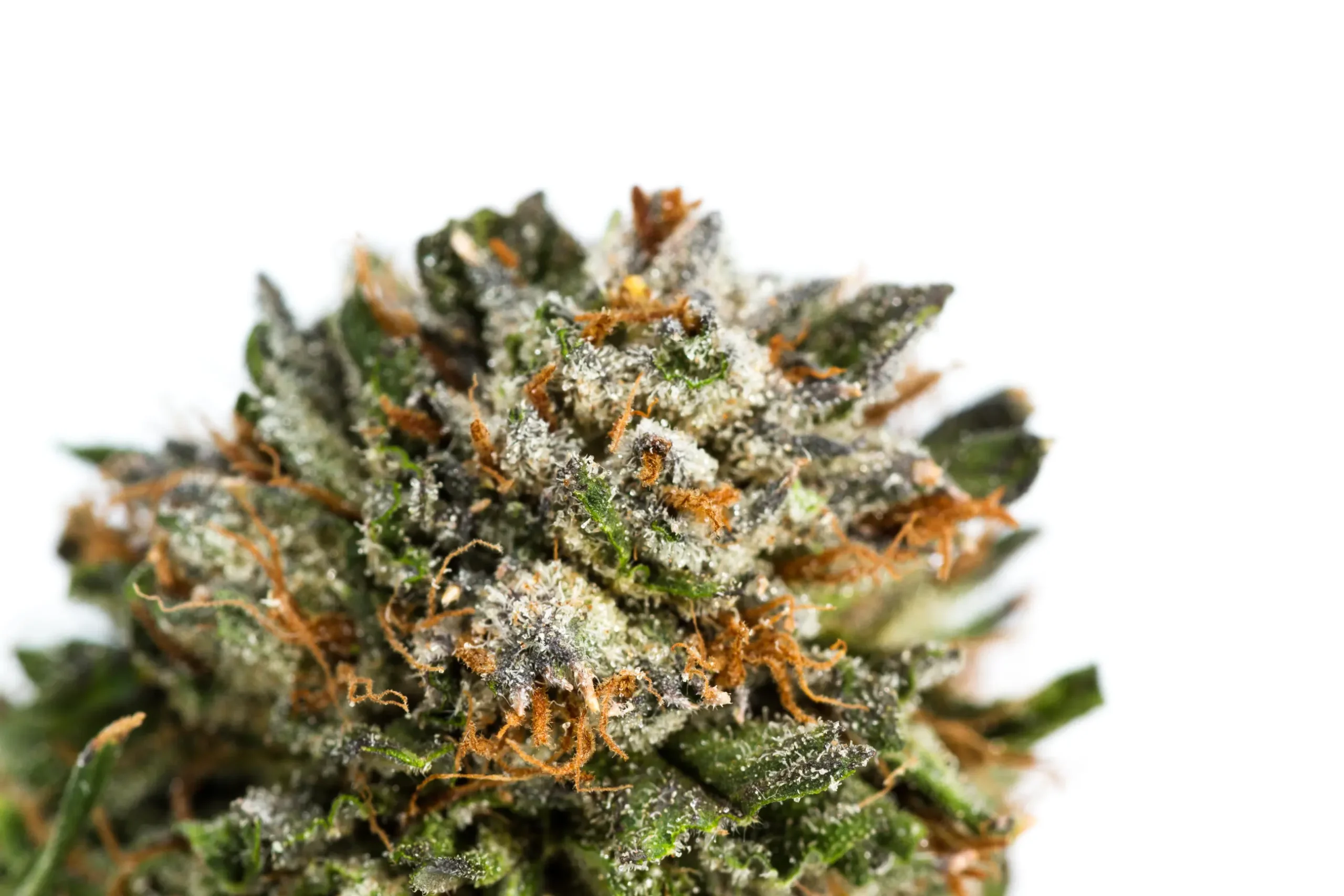
Area 41
Area 41 – Strain Profile & Grow Guide
Cultivation, bud quality, flavor preservation, effects, and practical grow strategy
Area 41 is a fuel-forward modern hybrid built around sharp lemon peel, creamy berry, roasted nut, cedar, earth, ammonia, and deep gas, with an alert euphoric beginning that gradually settles into a calm and weighty body effect. It belongs to the modern group of cultivars in which flavor and visual quality are inseparable from cultivation discipline. The plant can produce impressive flower without an exotic feeding program, but the best version depends on canopy balance, stable root-zone conditions, controlled late-flower humidity, and a careful dry. A high THC number alone does not explain why the strain is memorable. Its value is in the way aroma, texture, resin, and effect develop together.
The documented lineage is Lemon Fuel OG x Gelato 41. That background gives the plant a recognizable direction, yet phenotype variation still matters. One plant may lean toward the brighter, faster, or more aromatic parent, while another may stay shorter, denser, darker, or more physically calming. For that reason, every figure in this guide should be treated as a working range rather than a promise. Observe the individual plant first and use the cultivar description as a map, not a rigid recipe.
For growers, the central task is to understand the strain’s architecture before the flowering stretch ends. Compact-to-medium hybrid growth with broad leaves, tight-to-medium internodes, a strong central axis, sturdy lateral branches, and dense golf-ball-to-spear-shaped flowers. The main risks are clone identity confusion, shaded interior growth, hidden flower moisture, excessive late nitrogen, hot top colas, strong odor leakage, and terpene loss during a fast dry. These are manageable problems, but they become expensive when noticed late. The following profile focuses on how to prevent those losses while preserving the cultivar’s defining aroma of sour lemon peel, creamy berry, roasted hazelnut, cedar, pine, damp earth, ammonia, black pepper, and penetrating fuel.
Area 41 potency can be underestimated during its quick talkative opening. The heavier body phase develops after the sensory lift and pressure release, so a fresh batch should be sampled once and allowed to complete that transition before more is added.
Weedth Grower Note: The defining challenge is not simply growing the plant to harvest. It is preserving sour lemon peel, creamy berry, roasted hazelnut, cedar, pine, damp earth, ammonia, black pepper, and penetrating fuel while preventing clone identity confusion, shaded interior growth, hidden flower moisture, excessive late nitrogen, hot top colas, strong odor leakage, and terpene loss during a fast dry.
Strain Features
| Feature | Details |
|---|---|
| Type | Indica-leaning hybrid with a mentally bright opening |
| Genetic profile | commonly expressed as an indica-leaning hybrid, though the early effect can feel balanced or slightly uplifting |
| Lineage | Lemon Fuel OG x Gelato 41 |
| THC | commonly reported around 20-27% THC, with stronger selected batches testing above that range |
| CBD | usually below 1%; minor CBG may appear in mature flower |
| Indoor flowering time | a practical working range of approximately 56-63 days indoors, with some dense cuts benefiting from a full nine weeks |
| Outdoor harvest | late September to early October in the Northern Hemisphere where autumn remains dry and bright |
| Yield potential | medium, with premium quality improving when the canopy is kept open rather than overfilled |
| Height | short to medium indoors, with a compact but broad frame and stronger extension under high root vigor |
| Grow difficulty | Moderate because clone variation, dense flowers, strong odor, and limited standardized grow data require observation rather than recipe-based cultivation |
| Plant structure | compact-to-medium hybrid growth with broad leaves, tight-to-medium internodes, a strong central axis, sturdy lateral branches, and dense golf-ball-to-spear-shaped flowers |
| Stretch | usually about 1.3-1.7x, although vigorous root zones can push selected cuts farther |
| Aroma | sour lemon peel, creamy berry, roasted hazelnut, cedar, pine, damp earth, ammonia, black pepper, and penetrating fuel |
| Flavor | sharp lemon and creamy berry on the inhale with cedar, nutty earth, pepper, and a long chemical-fuel finish |
| Primary cultivation concern | clone identity confusion, shaded interior growth, hidden flower moisture, excessive late nitrogen, hot top colas, strong odor leakage, and terpene loss during a fast dry |
| Best training direction | top once after establishment, spread six to eight main branches, remove weak interior shoots before the third week of flower, and install support before the dense tops lean |
Genetic Lineage
The lineage of Area 41 is best understood as a combination of structural and sensory inheritance rather than a simple family-tree label. Lemon Fuel OG contributes the sharp citrus, cedar, pine, ammonia, and penetrating fuel side of the profile. Gelato 41 contributes cream, berry sweetness, dense resinous flower, darker coloration, and a smoother physical finish. Public cultivation data is limited because the best-known expression has circulated mainly as a selected cut rather than a broadly standardized seed line. That makes source verification and direct observation more important than relying on one fixed number. These parent traits do not appear in equal proportions in every plant. A grower may find one phenotype that emphasizes fruit and color, another that emphasizes fuel and density, and a third that sits between them.
The most useful lineage clue for cultivation is the relationship between internodal spacing and flower density. Compact-to-medium hybrid growth with broad leaves, tight-to-medium internodes, a strong central axis, sturdy lateral branches, and dense golf-ball-to-spear-shaped flowers. This means the plant can create a productive canopy, but only when the grower prevents strong branches from shading weaker interior sites. The genetics provide the capacity for yield; the final architecture determines how much of that capacity becomes premium flower rather than lower-grade material.
Lineage also explains the effect progression. The early phase tends to show a quick euphoric lift, sharper sensory attention, talkativeness, and a strong release of mental pressure. The middle becomes focused conversation, creative absorption, warm body tingling, and a calm confidence that can still support low-demand activity. The finish develops into heavier physical relaxation, slower thought, appetite, and a settled state that may become sleepy at larger doses. That sequence is more informative than a simple indica or sativa percentage because it describes how the experience changes over time.
Area 41 identity deserves stricter verification than a name tag. A credible cut should connect compact broad-leaf morphology and dense greasy flowers with sour lemon, creamy berry, roasted hazelnut, cedar and fuel. When structure and cured aroma do not support each other, treat the label as unresolved.
Before keeping an Area 41 mother, flower several clones under the same conditions and compare stretch, central-leaf density, hidden moisture, support demand and cured lemon-nut-fuel separation. The useful mother is the cut that repeats its identity and finishes cleanly, not merely the one with the loudest vegetative stem rub.
Effect Breakdown
Initial emotional shift
The opening of Area 41 is commonly described as a quick euphoric lift, sharper sensory attention, talkativeness, and a strong release of mental pressure. The effect may arrive within minutes when inhaled, but the full direction is not always clear immediately. A cautious user should wait before redosing because the physical side can build after the mental change has already appeared.
Area 41 often releases mental pressure through a brief period of talkativeness and sharper sensory attention. That relief can feel social at a modest dose, while a larger amount slows the conversation and shifts the same looseness into appetite, physical calm and distance from unfinished tasks.
Mostly cloudy Area 41 flower tends to preserve sour-lemon brightness and the faster euphoric opening. A little more amber strengthens the intended physical landing, but holding the plant after lemon and creamy berry begin to fade gives up aromatic identity for weight.
Mental and sensory phase
As the initial rise settles, the experience becomes focused conversation, creative absorption, warm body tingling, and a calm confidence that can still support low-demand activity. Sensory details often become more noticeable. Food may taste richer, background sounds may separate more clearly, and repetitive activities may feel easier to stay with. This is not the same as reliable productivity. Complex work, driving, and safety-sensitive tasks should be avoided.
The early focus is conversational and sensory rather than deeply productive. Area 41 can sharpen music, taste and social detail before thought slows, making it a better fit for an unhurried evening than work requiring sustained switching or precise follow-through.
Strong Area 41 samples can become hazy after an initially lucid lift. Dry mouth, appetite, head pressure or brief dizziness are more likely when the dose is increased before the physical phase appears. A measured first sample suits the delayed heaviness better than rapid consumption.
Physical development and late phase
The late phase is defined by heavier physical relaxation, slower thought, appetite, and a settled state that may become sleepy at larger doses. Muscle tone may soften through the shoulders and back before the legs feel heavier. The body effect can outlast the strongest mental change, which is why the strain may seem manageable at first and then become more sedating an hour later.
A small dose may support conversation or a relaxed sensory activity while preserving some lemon-fuel brightness. A larger dose brings slower thought, appetite and heavier body relaxation, moving Area 41 decisively away from daytime function.
Experienced consumers may feel socially comfortable on Area 41 while reaction time and coordination are already changing. The smooth transition from lift to calm should not be mistaken for preserved judgment.
Area 41 usually fades through the body: sensory sharpness recedes, appetite remains and muscle tone stays softened. A large late dose can leave residual heaviness, so timing should be based on the full tail rather than the quick onset.
Important: Effects are dose-dependent and can vary substantially between batches. Start low and allow time for the physical phase to develop.
Flavor & Aroma Profile
Live plant and jar aroma
The live plant usually develops a layered aroma built around sour lemon peel, creamy berry, roasted hazelnut, cedar, pine, damp earth, ammonia, black pepper, and penetrating fuel. Early flower may reveal only the brightest or most generic part of the profile. The defining secondary notes often emerge after the middle of bloom, when resin heads become abundant and the calyxes begin to swell.
Use stem rub to mark Area 41 candidates leaning toward lemon-berry, cedar-nut or sharper ammonia-fuel, then verify those directions after cure. The cut that smells loudest in veg may not retain the layered profile once dense flowers are dry.
A cured Area 41 jar should open with sour lemon, reveal creamy berry and roasted hazelnut after air exchange, then leave cedar, pepper, ammonia and fuel. If only chemical earth remains, heat, harvest timing or the cut itself has removed the contrast.
Inhale, exhale, and aftertaste
The expected flavor is sharp lemon and creamy berry on the inhale with cedar, nutty earth, pepper, and a long chemical-fuel finish. On the inhale, the most volatile notes arrive first. On the exhale, heavier sesquiterpenes and roasted, earthy, woody, or peppery elements become more noticeable. A clean vaporizer at moderate temperature often separates these layers better than combustion.
Area 41 smoothness deteriorates when late nitrogen keeps the smoke green, salt pressure sharpens ammonia and pepper, or a hot dry strips lemon before solvent has softened. A penetrating smell is not enough if the exhale lacks cream and roasted-nut depth.
The aftertaste should move from lemon and berry cream into cedar, hazelnut and peppered fuel without becoming bitter or mineral. Judge that sequence after several weeks of cure, when sharp solvent has had time to integrate.
Why the profile can disappear
Sour-lemon monoterpenes are the fragile part of Area 41, while its dense greasy flowers hold internal moisture. Large-branch hanging and indirect circulation protect citrus without sealing a wet center or turning the exterior brittle.
For Area 41, the most important flavor risk is linked to clone identity confusion, shaded interior growth, hidden flower moisture, excessive late nitrogen, hot top colas, strong odor leakage, and terpene loss during a fast dry. Preventing that problem during bloom is easier than trying to repair flavor after harvest. Mold, heat stress, and root-zone imbalance can change aroma before the plant is cut.
After Area 41 reaches stable cure, divide it into small airtight containers kept cool and dark. A separate working jar protects the main reserve and makes the movement from sharp solvent toward creamy berry and nutty cedar easier to observe.
Dominant Terpenes
Area 41 commonly points toward limonene, beta-caryophyllene and myrcene, but cut and environment can change their order. Percentages require laboratory confirmation; the horticultural benchmark is retained lemon brightness over pepper, earth and fuel.
Limonene
Limonene is relevant to Area 41 because it contributes lemon peel, citrus brightness, and the alert euphoric opening. Terpene dominance can change among phenotypes and laboratories, so the profile should be treated as a common direction rather than a fixed chemical fingerprint.
Area 41 aroma can be compared directly across cured clone runs, but no single terpene guarantees its talkative onset or heavy finish. THC, harvest maturity, dose and tolerance remain stronger explanations for the individual experience than an isolated terpene claim.
Beta-caryophyllene
Beta-caryophyllene is relevant to Area 41 because it contributes pepper, dry fuel, cedar, and the warmer body phase. Terpene dominance can change among phenotypes and laboratories, so the profile should be treated as a common direction rather than a fixed chemical fingerprint.
The sensory role is easier to verify than a precise effect claim. Aroma can be smelled and compared directly, while human effects are shaped by dose, THC, minor cannabinoids, tolerance, and expectation. Terpenes may influence the experience, but they should not be treated as a guaranteed medical mechanism in a single flower sample.
Myrcene
Myrcene is relevant to Area 41 because it contributes earth, ripe fruit depth, and progressive physical relaxation. Terpene dominance can change among phenotypes and laboratories, so the profile should be treated as a common direction rather than a fixed chemical fingerprint.
The sensory role is easier to verify than a precise effect claim. Aroma can be smelled and compared directly, while human effects are shaped by dose, THC, minor cannabinoids, tolerance, and expectation. Terpenes may influence the experience, but they should not be treated as a guaranteed medical mechanism in a single flower sample.
Pinene and humulene
Pinene and humulene is relevant to Area 41 because it contributes pine, wood, herbal dryness, and the old-school fuel structure that may appear in selected cuts. Terpene dominance can change among phenotypes and laboratories, so the profile should be treated as a common direction rather than a fixed chemical fingerprint.
The sensory role is easier to verify than a precise effect claim. Aroma can be smelled and compared directly, while human effects are shaped by dose, THC, minor cannabinoids, tolerance, and expectation. Terpenes may influence the experience, but they should not be treated as a guaranteed medical mechanism in a single flower sample.
Indoor vs. Outdoor Growing
| Factor | Indoor | Outdoor |
|---|---|---|
| Size | short to medium indoors, with a compact but broad frame and stronger extension under high root vigor | Larger root volume can create a wide multi-branch plant |
| Finish | a practical working range of approximately 56-63 days indoors, with some dense cuts benefiting from a full nine weeks | late September to early October in the Northern Hemisphere where autumn remains dry and bright |
| Main advantage | Environmental control and repeatable quality | Root volume, sunlight, and higher per-plant yield |
| Main risk | clone identity confusion, shaded interior growth, hidden flower moisture, excessive late nitrogen, hot top colas, strong odor leakage, and terpene loss during a fast dry | Weather, insects, branch damage, and late moisture |
| Best strategy | top once after establishment, spread six to eight main branches, remove weak interior shoots before the third week of flower, and install support before the dense tops lean | Open structure, early support, and weather planning |
Indoor structure
Indoors, Area 41 usually finishes as a short to medium indoors, with a compact but broad frame and stronger extension under high root vigor plant. Its stretch is usually about 1.3-1.7x, although vigorous root zones can push selected cuts farther. The main objective is to create an even canopy before vertical growth stops. A net is useful, but branches should not be woven so tightly that removal at harvest becomes destructive.
Indoor climate
Indoor success depends on keep late-flower humidity controlled and move air through the compact center because dense resinous flowers can hide internal moisture. Air should move above, below, and through the canopy without blasting one flower continuously. Strong extraction is more valuable than a fan pointed directly at the buds.
Indoor nutrition
The cultivar’s feeding direction is moderate feeding with stable calcium and magnesium; avoid heavy nitrogen after stretch because dark leathery leaves and delayed fade reduce lemon-fuel clarity. Irrigation runoff, leaf color, and tip condition should guide adjustment. A predetermined high-strength recipe is less reliable than observing how quickly the plant uses water and how the new growth develops.
Outdoor structure
Outdoors, the plant benefits from unrestricted root volume and direct sun. Expected timing is late September to early October in the Northern Hemisphere where autumn remains dry and bright. Give branches enough space to move in wind and enough support to prevent the final flowers from folding them downward.
Outdoor climate
The best outdoor Area 41 site receives morning sun, steady crosswind and a dry autumn finish. Its compact center and greasy dense tops gain more from rapid dew removal than from extreme summer heat that may erase lemon and creamy berry.
Outdoor pest pressure
Area 41’s penetrating lemon-ammonia-fuel odor is difficult to conceal outdoors. Inspect flower interiors and branch joints before resin makes handling difficult; caterpillar injury inside a compact top can invite rot while mites and aphids quietly reduce the vigor needed for a clean finish.
Greenhouse use
A greenhouse keeps rain off Area 41 but can make its broad-leaf center and dense tops wetter overnight. Side ventilation, roof exhaust and active air through the lower canopy are necessary; a closed house without humidity control can be riskier than open air.
Which environment fits best
Choose indoors when flavor consistency, security, and climate control are the priorities. Choose outdoors when root volume, plant size, and lower energy use matter more. Area 41 can perform in both, but the grower must solve different problems: canopy density indoors and weather uncertainty outdoors.
Strain-Specific Grow Guidance
Vegetative structure and plant selection
Area 41 begins with compact-to-medium hybrid growth with broad leaves, tight-to-medium internodes, a strong central axis, sturdy lateral branches, and dense golf-ball-to-spear-shaped flowers. Select plants for vigor, symmetrical branching, clean leaf development, and a root system that fills the container without circling excessively. Do not choose only by early aroma. Weak structure becomes expensive once flowers gain weight.
The natural branching pattern is side branches are sturdy and productive but the center becomes shaded quickly when every shoot is retained. If growing from seed, expect some variation. Label every plant and preserve clones before flowering when possible. A keeper should be judged after cure, not only by photographs at harvest.
Allow Area 41 to establish active roots before topping once. A recently transplanted or rootbound cut can rebuild uneven arms, making it harder to create the six-to-eight-branch canopy needed to keep broad leaves and dense flowers separated.
Training and canopy design
The preferred training direction is: top once after establishment, spread six to eight main branches, remove weak interior shoots before the third week of flower, and install support before the dense tops lean. The purpose is not to create the flattest possible plant. The purpose is to distribute strong flower sites across the available light while preserving airflow and branch strength.
Spread Area 41 laterals while stems are flexible, moving them over several sessions into distinct lanes. A damaged joint may heal, but it becomes a failure point once greasy golf-ball and spear flowers add weight.
Complete Area 41 topping and firm bending before or during the earliest transition. After stretch, limit intervention to selective broad-leaf removal and support so the plant directs energy into swelling bracts rather than repairing late damage.
Transition and stretch management
Plan for a stretch of usually about 1.3-1.7x, although vigorous root zones can push selected cuts farther. The flip height should reflect the available vertical space, container size, light distance, and phenotype. A plant with healthy roots and high light can stretch more strongly than a stressed plant described in an online grow report.
Build support before the flowers demand it
During the first two flowering weeks, guide Area 41 branches into open spaces and remove only interior shoots that cannot reach useful light. Gradual cleanup keeps enough leaf for production without allowing the compact center to become a permanent shaded pocket.
By the end of week three, the Area 41 canopy should be final: six to eight supported arms, visible center lanes and no dense top resting against another. From then on, climate and stable irrigation matter more than further shape creation.
Root zone, watering, and nutrition
The cultivar’s watering preference is that it prefers complete irrigation followed by a measured dryback; prolonged saturation slows the compact root zone, while severe drought can harden flowers and stall late swell. Choose a medium with enough air capacity to recover after full irrigation. Container size should match the intended vegetative period; a long veg in a small pot creates root restriction before the plant reaches its productive phase.
Feeding should follow this direction: moderate feeding with stable calcium and magnesium; avoid heavy nitrogen after stretch because dark leathery leaves and delayed fade reduce lemon-fuel clarity. Watch the newest leaves, not only the oldest fans. Dark glossy foliage, clawing, burnt tips, or slowed water use indicate that more fertilizer is unlikely to improve yield.
Calcium and magnesium supply must be considered in relation to water source and medium. Do not add supplements automatically when the base nutrient and water already provide enough. Excess ions can create the same symptoms growers try to correct with more feed.
Measure root-zone pH and electrical conductivity when the plant’s behavior changes unexpectedly. A deficiency pattern caused by lockout will not improve when more of the same nutrient is added. Correct the environment first.
Light, temperature, and humidity
The lighting strategy is to responds to strong even light after acclimation, but hot upper flowers quickly lose lemon brightness and can develop harsh woody aroma. Increase intensity in steps and watch leaf angle, edge curl, bleaching, and water demand. More light only improves production when roots, carbon dioxide, temperature, and nutrition can support the extra photosynthesis.
Humidity management should follow this rule: keep late-flower humidity controlled and move air through the compact center because dense resinous flowers can hide internal moisture. Dense cannabis flowers can maintain much higher humidity internally than the room reading suggests. That is why a safe ambient number does not guarantee a safe flower interior.
Keep night temperature from falling so sharply that relative humidity spikes for hours. The lights-off period is often when condensation and mold risk increase. Dehumidification and air exchange should be sized for transpiration, not chosen only by room volume.
Flower development and support
The finished flowers are expected to be dense lime, olive, and purple flowers with swollen bracts, orange pistils, and a thick greasy trichome layer. Support should be installed before the branches lean. Adding stakes or a second net late can damage trichomes and compress flowers against each other.
The middle of flowering is the time to inspect density, spacing, and moisture. Look inside the largest flowers with clean hands or tools. A sweet or musty smell that differs from the cultivar’s normal aroma deserves immediate investigation.
Do not confuse foxtailing from genetics with heat stress. Genetic foxtails develop evenly and remain resinous. Heat-related foxtails often appear closest to the light, with pale tops, rising leaf edges, or stalled aroma.
Pest and disease prevention
The main strain-specific risks are clone identity confusion, shaded interior growth, hidden flower moisture, excessive late nitrogen, hot top colas, strong odor leakage, and terpene loss during a fast dry. Prevention begins before flowering. Clean the space, inspect incoming plants, remove dead material, and avoid carrying outdoor tools directly into an indoor room.
Once flowers become dense, spraying should be avoided unless a legal and crop-safe intervention is absolutely necessary. Biological prevention and early detection are better than applying residues to mature inflorescences.
Stress inspection should include the lower nodes and interior branches. Sensitive modern hybrids can express isolated reproductive structures after light leaks, severe drought, root damage, or repeated high-stress training. Remove affected tissue, correct the stress, and evaluate whether the plant remains suitable to finish.
Harvest timing
The expected flowering window is a practical working range of approximately 56-63 days indoors, with some dense cuts benefiting from a full nine weeks. Calendar age is only a checkpoint. The actual harvest decision is: wait for full bract swelling and mostly cloudy trichomes; a small amber fraction keeps the lemon-fuel onset while adding the intended physical calm.
Check trichomes on calyxes rather than sugar leaves. Sugar-leaf trichomes often turn amber earlier and can make a plant appear more mature than the flower itself. Examine several canopy levels because top and lower flowers may not finish together.
A staged harvest can improve uniformity when lower sites remain clearly behind. Remove mature tops, restore light to the middle, and allow the remaining flowers several days to finish. This works best when plant health is still strong and weather or room scheduling allows it.
Master Advice: Build the grow around compact-to-medium hybrid growth with broad leaves, tight-to-medium internodes, a strong central axis, sturdy lateral branches, and dense golf-ball-to-spear-shaped flowers and a stretch of usually about 1.3-1.7x, although vigorous root zones can push selected cuts farther. Do not wait until late flower to solve spacing and support.
Weedth Bud Flavor Tips
Indoor flavor priorities
Indoors, the key is to prevent heat and excessive nitrogen from flattening Area 41’s profile. Responds to strong even light after acclimation, but hot upper flowers quickly lose lemon brightness and can develop harsh woody aroma. Keep the canopy uniform so top flowers do not experience a different temperature and stress level from the middle.
Reduce late nitrogen gradually rather than starving the plant. A healthy fade is not the same as forced deficiency. The goal is mature flower with clean combustion and defined aroma, not yellow leaves at any cost.
Avoid foliar products once flowers are established. Even products considered natural can leave aroma, residue, or microbial risk on resinous surfaces.
Outdoor flavor priorities
Outdoors, harvest timing should consider daily heat and incoming weather. Cutting in the cool morning after surface moisture has evaporated can reduce handling heat without trapping dew inside the flowers.
If rain is expected near maturity, compare the risk of early harvest with the risk of rot. A slightly early but clean crop may retain more usable flavor than a fully mature crop damaged by moisture. Use covers only when they do not trap humidity around the plant.
Keep harvested branches shaded and move them into the drying environment quickly. Direct sun on cut flower accelerates volatile loss and wilting.
Drying strategy
The cultivar-specific drying direction is: dry cool, dark, and gradually with gentle air exchange because lemon, cream, and ammonia-like top notes flatten quickly when the flower surface hardens too fast. Use darkness, cool temperature, gentle air exchange, and enough spacing that branches do not touch. Direct fan air should move around the crop, not at it.
Large and small flowers do not dry at the same speed. Sort or hang them so that inspection is easy. Do not seal the whole harvest based on the feel of one small branch.
The common stem-snap test is only one clue. The outside of a flower can feel dry while moisture remains in the center. Small containers with hygrometers can be used as a short conditioning test before the entire crop is sealed.
Curing and storage
The recommended cure is: four to eight weeks integrates sharp lemon and solvent into creamy berry, roasted nut, cedar, pepper, and smoother fuel. Early in cure, open containers as needed to release excess moisture and refresh the headspace. As moisture stabilizes, reduce the frequency of opening.
Do not add fruit peel or other organic material to change aroma. It introduces uncontrolled moisture and microbes while masking the cultivar’s real profile. If flower is overdried, humidity control should be gradual and sanitary.
For long storage, use small airtight containers in a cool, dark place. Handle flowers by the stem where possible. Repeated grinding, squeezing, and container movement knocks trichome heads away from the surface.
Weedth Bud Boost Tips
Yield starts with architecture
The most reliable yield method is the cultivar’s preferred training approach: top once after establishment, spread six to eight main branches, remove weak interior shoots before the third week of flower, and install support before the dense tops lean. Yield comes from productive surface area, not from the number of techniques used. A well-spaced canopy with ten strong tops can outperform a stressed plant with twenty weak tops.
Count the branches that can reach the productive light zone. Remove shoots that will remain shaded and thin. Direct resources toward sites that can form mature flowers. This also reduces trimming time and humidity risk.
A second support layer can protect yield late in bloom. Branches that fall below the light receive less energy and can split at the joint. Support preserves both quantity and flower shape.
Light and canopy efficiency
Use strong, uniform light according to this cultivar direction: responds to strong even light after acclimation, but hot upper flowers quickly lose lemon brightness and can develop harsh woody aroma. Measure intensity at multiple points rather than trusting the fixture setting. Edge plants and center plants should not live in completely different environments.
Lower-canopy lighting can improve middle flower when used carefully, but it does not replace pruning and spacing. Additional light also adds heat and energy cost. The first priority is an efficient top canopy.
Clean reflective surfaces and maintain fixture distance. A small loss of usable light across an entire cycle can reduce flower density without creating an obvious visual problem.
Root volume and irrigation
Root health should follow the cultivar’s water preference: prefers complete irrigation followed by a measured dryback; prolonged saturation slows the compact root zone, while severe drought can harden flowers and stall late swell. Choose a container that supports the intended plant size. An oversized wet container can be as damaging as a rootbound small one.
Irrigate thoroughly enough to wet the active root zone, then allow an appropriate dryback. Frequent small splashes can leave the lower medium dry and concentrate salts near the top.
Automated irrigation can improve consistency, but emitters must be checked. A blocked line can create a stressed phenotype that is mistakenly blamed on genetics.
Nutrition without excess
Follow the strain’s feeding direction: moderate feeding with stable calcium and magnesium; avoid heavy nitrogen after stretch because dark leathery leaves and delayed fade reduce lemon-fuel clarity. The plant needs complete nutrition, not constant escalation. Increased fertilizer does not automatically increase cannabinoid or terpene production.
During mid-flower bulking, monitor water use and leaf condition. If water demand is rising and leaves remain healthy, a small feed increase may be useful. If water use drops, reduce stress before adding nutrients.
A late-flower taper should be based on plant maturity and medium, not a fixed myth. The objective is stable ripening and clean post-harvest quality.
Outdoor yield strategy
Outdoors, early root establishment and branch support create more value than late bloom additives. Prepare the site, improve drainage, and install support before the plant becomes difficult to access.
Open the center enough for sunlight and air, but preserve leaf area around productive branches. Excessive stripping outdoors can expose flower to heat and reduce the plant’s ability to buffer stress.
Inspect after storms. Re-tie branches, remove damaged tissue with clean tools, and dry trapped water from dense flower zones using natural airflow or gentle fans where legal and practical.
Remember: The cleanest yield increase comes from better light distribution, root health, and climate consistency. More additives cannot repair poor architecture.
Medical Uses & Benefits
Users most often consider Area 41 for reported use for stress, low mood, mild pain, appetite changes, and evening tension, while high potency and sharp onset may be uncomfortable for anxiety-sensitive users. These are reported uses, not guaranteed treatments. Cannabis can reduce symptoms for one person and worsen them for another, especially when THC dose is high.
The onset of a quick euphoric lift, sharper sensory attention, talkativeness, and a strong release of mental pressure may be helpful when stress or low mood is the main problem. The later development into heavier physical relaxation, slower thought, appetite, and a settled state that may become sleepy at larger doses may suit evening discomfort and physical tension. The same progression can be inconvenient for anyone who needs sustained alertness.
Pain relief is usually described as partial rather than anesthetic. The strain may change attention, muscle tone, and emotional response to discomfort. Severe, new, or unexplained pain requires medical evaluation rather than self-treatment.
For sleep, timing matters. Taking a potent strain immediately before bed can feel mentally active for some users, even when the late phase is sedating. An earlier evening dose may allow the initial mental effects to settle before bedtime.
Anxiety response is dose-dependent. A small dose may feel calming, while a large dose can increase heart awareness, dizziness, or repetitive thought. Users with panic history should be especially conservative and consider lower-THC options.
Dry mouth, dry eyes, appetite changes, slowed reaction time, and short-term memory impairment are common cannabis effects. Combining cannabis with alcohol or other sedatives can increase impairment.
Medical patients should consider medication interactions, cardiovascular conditions, pregnancy, age, and mental-health history. Professional guidance is appropriate when cannabis is used alongside prescription treatment.
The safest therapeutic approach is repeatable dosing. Use the same preparation, measure the amount, keep notes, and avoid judging benefit from one unusually strong or weak batch.
Ideal User Profile
The ideal user is intermediate and experienced consumers who enjoy citrus fuel and growers comfortable with cut verification, compact canopy thinning, humidity control, and careful drying. The strain suits someone who values a changing experience rather than a single flat effect. The early phase and late phase may feel different enough that timing matters.
For low-tolerance users, one inhalation may be sufficient. Wait at least several minutes before adding more. Edible forms require much longer onset time and should be dosed even more conservatively.
Time of day should match the finish. A cultivar that begins cheerful can still become physically heavy. Users should plan the full two-to-three-hour window rather than judging only the first fifteen minutes.
The best activities are low-risk and sensory: music, conversation, film, a meal, light stretching, or a familiar creative hobby. Driving, machinery, important financial decisions, and unfamiliar physical environments are poor matches.
Flavor-focused users should compare flower through a clean vaporizer at moderate temperature. Combustion can emphasize pepper and char while hiding delicate fruit, cream, or floral notes.
Growers considering this strain should be comfortable with its main cultivation issue: clone identity confusion, shaded interior growth, hidden flower moisture, excessive late nitrogen, hot top colas, strong odor leakage, and terpene loss during a fast dry. A grower who can manage that issue will usually find the rest of the cycle straightforward.
Grower Notes and Feedback
Grower reports on Area 41 tend to agree on its central identity: a fuel-forward modern hybrid built around sharp lemon peel, creamy berry, roasted nut, cedar, earth, ammonia, and deep gas, with an alert euphoric beginning that gradually settles into a calm and weighty body effect. The most consistent praise concerns resin, aroma, and the finished effect. The most consistent problems are linked to clone identity confusion, shaded interior growth, hidden flower moisture, excessive late nitrogen, hot top colas, strong odor leakage, and terpene loss during a fast dry.
Plant-to-plant variation should be expected. Stretch may range around usually about 1.3-1.7x, although vigorous root zones can push selected cuts farther, and flowering may fall within a practical working range of approximately 56-63 days indoors, with some dense cuts benefiting from a full nine weeks. Keep records rather than forcing every phenotype onto one schedule.
A common mistake is reacting to one unusual leaf by changing the entire feed program. Stress leaves can appear after transplanting, drought, root restriction, or rapid environmental change. Correct the cause and watch new growth before making several simultaneous adjustments.
The feeding consensus is best summarized as: moderate feeding with stable calcium and magnesium; avoid heavy nitrogen after stretch because dark leathery leaves and delayed fade reduce lemon-fuel clarity. Growers who maintain stable root conditions usually report better flavor than growers who chase maximum electrical conductivity.
The expected bud structure is dense lime, olive, and purple flowers with swollen bracts, orange pistils, and a thick greasy trichome layer. That density is attractive but changes airflow and drying behavior. The plant should be supported and inspected before the flowers become difficult to move.
Harvest timing should follow this direction: wait for full bract swelling and mostly cloudy trichomes; a small amber fraction keeps the lemon-fuel onset while adding the intended physical calm. Growers who cut only by calendar often miss either the late flavor development or the preferred effect balance.
Post-harvest quality depends on this rule: dry cool, dark, and gradually with gentle air exchange because lemon, cream, and ammonia-like top notes flatten quickly when the flower surface hardens too fast. A fast dry can make a visually excellent crop taste ordinary. A slow but stagnant dry can create microbial risk. Air exchange and temperature should work together.
The strongest keeper is usually the plant that repeats. One spectacular harvest under perfect conditions is less useful than a phenotype that clones easily, tolerates small mistakes, finishes on schedule, and keeps its aroma after two months of storage.
Weedth Experience
Proving the cut before optimizing the room
With Area 41, I would not build a permanent mother program around the label alone. I would first ask whether the plant actually combines compact broad-leaf structure, greasy golf-ball-to-spear flowers and the strange aromatic sequence of sour lemon, creamy berry, roasted hazelnut, cedar and fuel. If that identity does not repeat after cure, changing the room will not turn an uncertain cut into the profile I intended to grow.
Once the cut proves itself, I would treat it as a compact-airflow project. The 1.3-1.7x stretch is manageable, but vigorous roots can make one selection rise above the rest. One topping, six to eight well-spaced arms and a clean interior would give Area 41 enough production surface without building the shaded center its broad leaves naturally want to create.
The leaf texture that tells me to stop feeding
I would keep calcium and magnesium stable relative to the water and medium, then resist the urge to push nitrogen after stretch. Area 41 can look impressive with dark leathery leaves while the flowers are quietly becoming harder to ripen and ventilate. The moment leaf texture becomes thick, glossy and slow to fade, I would read that as a quality limit rather than a sign of strength.
Temperature would be watched at the top flowers, not only in the room average. The sour-lemon and creamy-berry notes sit above cedar, ammonia, pepper and fuel; a hot canopy can leave the heavy base intact while removing the aromatic contrast. I would accept slightly less intensity before accepting a jar that smells like generic chemical earth.
A dense flower judged from the inside
By mid flower I would inspect the back and center of the largest tops. Their greasy surface and tight bracts can hide moisture even when outer leaves move. Support would be installed early enough to hold branches apart, because two dense Area 41 flowers touching each other create a microclimate that no wall-mounted sensor can describe.
I would harvest after full bract swelling with mostly cloudy calyx resin and a small amber fraction. That window should preserve the quick lemon-fuel lift while allowing the intended physical calm to arrive later. If schedules permit, a dried test branch would help me decide whether another few days add roasted-nut depth or merely soften the brighter opening.
Four to eight weeks of cure should transform sharp solvent into a more integrated sequence of lemon, berry cream, hazelnut, cedar and peppered fuel. My keeper would be the cut that repeats that sequence while remaining easy to ventilate and support. Area 41 is most persuasive when clone identity, room behavior and finished aroma all confirm one another.
Weedth Score
Growing Experience 8.5/10 Rewarding when clone identity confusion, shaded interior growth, hidden flower moisture, excessive late nitrogen, hot top colas, strong odor leakage, and terpene loss during a fast dry are managed early.
Bud Structure & Visual Appeal 9.4/10 Dense lime, olive, and purple flowers with swollen bracts, orange pistils, and a thick greasy trichome layer.
Aroma Complexity 9.6/10 Layered profile of sour lemon peel, creamy berry, roasted hazelnut, cedar, pine, damp earth, ammonia, black pepper, and penetrating fuel.
Flavor & Smoothness 9.3/10 Best after four to eight weeks integrates sharp lemon and solvent into creamy berry, roasted nut, cedar, pepper, and smoother fuel and a slow dry.
Effects & High Experience 9.2/10 Moves from a quick euphoric lift, sharper sensory attention, talkativeness, and a strong release of mental pressure toward heavier physical relaxation, slower thought, appetite, and a settled state that may become sleepy at larger doses.
Overall Satisfaction & Recommendation 9.3/10 A strong choice for intermediate and experienced consumers who enjoy citrus fuel and growers comfortable with cut verification, compact canopy thinning, humidity control, and careful drying.
Personal Closer: Area 41 earns its place through character rather than one exaggerated number. The best flowers are structured, expressive, and worth the patience required to cure them properly.
FAQ
Is Area 41 easy to grow?
It is best described as moderate because clone variation, dense flowers, strong odor, and limited standardized grow data require observation rather than recipe-based cultivation. The plant is manageable when the grower plans for usually about 1.3-1.7x, although vigorous root zones can push selected cuts farther stretch and addresses clone identity confusion, shaded interior growth, hidden flower moisture, excessive late nitrogen, hot top colas, strong odor leakage, and terpene loss during a fast dry. Beginners can succeed by keeping the root zone stable and avoiding aggressive late training.
The first run should prioritize cut verification and interior airflow. A stable compact plant is manageable; an uncertain, heavily leafed cut pushed by a generic recipe is where the difficulty rises quickly.
How long does it flower?
The working indoor window is a practical working range of approximately 56-63 days indoors, with some dense cuts benefiting from a full nine weeks. Phenotype, light level, root health, and desired effect can move the harvest several days. Use trichomes on the calyxes and flower swelling to confirm maturity.
Dense cuts may use the full ninth week. Confirm with swollen bracts, calyx trichomes and slowing water demand rather than assuming every clone carrying the name shares an identical day count.
How much does it stretch?
Expect usually about 1.3-1.7x, although vigorous root zones can push selected cuts farther. Plants with more vigorous roots or brighter-parent expression can exceed the average. Flip height should leave room for the light, support net, and safe airflow above the canopy.
Record actual stretch for the verified cut. Compact plants need enough vegetative width before the flip, while vigorous selections should be directed outward early so the broad leaves do not close the center.
What yield can growers expect?
Yield potential is medium, with premium quality improving when the canopy is kept open rather than overfilled. A realistic result depends on plant count, veg time, light, container size, and canopy efficiency. The strain should be judged by premium usable flower rather than total wet branch weight.
Dry, trimmed premium yield is the useful measure. Wet weight, untrimmed branch weight, and total plant biomass can make comparisons misleading. Record container size, veg duration, canopy area, and lighting so future cycles can be compared fairly.
What does it smell and taste like?
The aroma centers on sour lemon peel, creamy berry, roasted hazelnut, cedar, pine, damp earth, ammonia, black pepper, and penetrating fuel. The flavor is sharp lemon and creamy berry on the inhale with cedar, nutty earth, pepper, and a long chemical-fuel finish. A slow dry and several weeks of cure are required before the full profile can be judged.
Evaluate aroma after stable moisture: sour lemon and creamy berry should remain distinct from roasted hazelnut, cedar, ammonia, pepper and fuel instead of collapsing into sharp chemical earth.
Which terpenes are most common?
Commonly reported or expected dominant terpenes include Limonene, Beta-caryophyllene, Myrcene. Minor terpenes and the order of dominance vary by phenotype, environment, harvest, and laboratory method.
Terpene order varies by cut, but limonene brightness, caryophyllene-style pepper and a myrcene-supported earthy base should be interpreted alongside the cured sensory profile rather than treated as a guaranteed formula.
Is it better indoors or outdoors?
Both are possible. Indoors provides control over keep late-flower humidity controlled and move air through the compact center because dense resinous flowers can hide internal moisture and protects flavor consistency. Outdoors can increase root volume and yield but requires a suitable harvest window around late September to early October in the Northern Hemisphere where autumn remains dry and bright and protection from prolonged rain.
Indoor control usually suits Area 41 best. Outdoors, the compact center and dense tops require a dry, bright finish with enough morning sun to remove dew before moisture settles between bracts.
What training method works best?
The preferred direction is to top once after establishment, spread six to eight main branches, remove weak interior shoots before the third week of flower, and install support before the dense tops lean. Training should create open productive sites, not simply maximize the number of branches. Finish major work before the stretch is complete.
One topping followed by six to eight open arms is a stronger default than repeated cutting. Stop major work by week three and use the support net to maintain space between finished tops.
Does it need heavy feeding?
Its feeding direction is moderate feeding with stable calcium and magnesium; avoid heavy nitrogen after stretch because dark leathery leaves and delayed fade reduce lemon-fuel clarity. Heavy feeding is not automatically better. Stable irrigation, correct pH, and complete nutrition are more important than high concentration.
When leaves show stress, check pH, root-zone EC, irrigation frequency, and temperature before increasing fertilizer. Several different problems create similar yellowing or spotting patterns.
What humidity is safest in late flower?
Use the cultivar rule that keep late-flower humidity controlled and move air through the compact center because dense resinous flowers can hide internal moisture. Exact room targets depend on temperature, airflow, flower size, and local disease pressure. Inspect inside dense flowers because internal humidity can exceed the room reading.
Inspect the compact center and the back of dense flowers as humidity rises. Area 41 can hide internal wetness while the outer canopy still looks dry and healthy.
When should it be harvested for the best flavor?
Follow this cue: wait for full bract swelling and mostly cloudy trichomes; a small amber fraction keeps the lemon-fuel onset while adding the intended physical calm. Flavor usually improves when calyxes are fully swollen and the aroma has moved from sharp or green toward an integrated mature profile.
Mostly cloudy resin with a small amber fraction preserves lemon-fuel lift and adds physical calm. More amber may suit evening use, but it should not come at the cost of faded citrus and berry cream.
How long should it cure?
A useful target is four to eight weeks integrates sharp lemon and solvent into creamy berry, roasted nut, cedar, pepper, and smoother fuel. The flower may be smokeable sooner, but aroma complexity and smoothness continue to improve when moisture is stable and storage remains cool and dark.
Four weeks begins to integrate solvent and nutty earth; six to eight weeks better reveals creamy berry, cedar and smoother fuel. Keep the main reserve closed while testing from a smaller jar.
Who should avoid it?
People who are pregnant, underage, driving, operating machinery, sensitive to THC, or advised against cannabis by a clinician should avoid it. High-THC flower can also be uncomfortable for users with panic sensitivity or certain cardiovascular and psychiatric conditions.
THC-sensitive consumers and people prone to panic should be cautious because the bright talkative onset can become slower, heavier and sleepier after the initial confidence has developed.
Can it be used during the day?
That depends on dose and tolerance. The onset may involve a quick euphoric lift, sharper sensory attention, talkativeness, and a strong release of mental pressure, but the finish can become heavier physical relaxation, slower thought, appetite, and a settled state that may become sleepy at larger doses. A low dose may be functional for some users, while a larger dose is better reserved for evening.
A deliberately small dose may fit daytime use for tolerant consumers, but Area 41 is better treated as an evening hybrid when the settled physical phase and appetite can unfold without obligations.
What is the biggest mistake growers make?
The biggest mistake is ignoring clone identity confusion, shaded interior growth, hidden flower moisture, excessive late nitrogen, hot top colas, strong odor leakage, and terpene loss during a fast dry. These problems are easier to prevent early than to correct after the flowers have become dense and resinous.
The biggest mistake is optimizing an unverified cut, then allowing broad interior leaf and dense greasy tops to hide moisture while heat and late nitrogen erase lemon-fuel clarity.
Similar Strains
Gelato 41
Gelato 41 is relevant because of cream, berry, dense resin, and a euphoric-to-relaxed effect progression. It is not an exact substitute. Compare the effect progression, flowering behavior, and cured aroma rather than choosing only from the family name.
Growers moving from Area 41 to Gelato 41 should keep the same disciplined approach to canopy airflow, root-zone stability, harvest maturity, and slow drying, then adjust stretch and feeding after observing the individual plant.
Alien OG
Alien OG is relevant because of lemon, pine, fuel, potency, and a strong physical finish. It is not an exact substitute. Compare the effect progression, flowering behavior, and cured aroma rather than choosing only from the family name.
Growers moving from Area 41 to Alien OG should keep the same disciplined approach to canopy airflow, root-zone stability, harvest maturity, and slow drying, then adjust stretch and feeding after observing the individual plant.
Permanent Marker
Permanent Marker is relevant because of sweet chemical gas, dense flower, and long-lasting potency. It is not an exact substitute. Compare the effect progression, flowering behavior, and cured aroma rather than choosing only from the family name.
Growers moving from Area 41 to Permanent Marker should keep the same disciplined approach to canopy airflow, root-zone stability, harvest maturity, and slow drying, then adjust stretch and feeding after observing the individual plant.
Sherbacio
Sherbacio is relevant because of cream, citrus, nutty gas, and colorful dense flowers. It is not an exact substitute. Compare the effect progression, flowering behavior, and cured aroma rather than choosing only from the family name.
Growers moving from Area 41 to Sherbacio should keep the same disciplined approach to canopy airflow, root-zone stability, harvest maturity, and slow drying, then adjust stretch and feeding after observing the individual plant.
Lemon Cherry Gelato
Lemon Cherry Gelato is relevant because of citrus fruit, cream, gas, and modern dessert structure. It is not an exact substitute. Compare the effect progression, flowering behavior, and cured aroma rather than choosing only from the family name.
Growers moving from Area 41 to Lemon Cherry Gelato should keep the same disciplined approach to canopy airflow, root-zone stability, harvest maturity, and slow drying, then adjust stretch and feeding after observing the individual plant.
OG Kush
OG Kush is relevant because of lemon-pine fuel, compact growth, and reliable body calm. It is not an exact substitute. Compare the effect progression, flowering behavior, and cured aroma rather than choosing only from the family name.
Growers moving from Area 41 to OG Kush should keep the same disciplined approach to canopy airflow, root-zone stability, harvest maturity, and slow drying, then adjust stretch and feeding after observing the individual plant.
Share this article
A quick overview of the topics covered in this article.
Follow us
Latest articles
September 9, 2026
September 9, 2026

September 9, 2026