
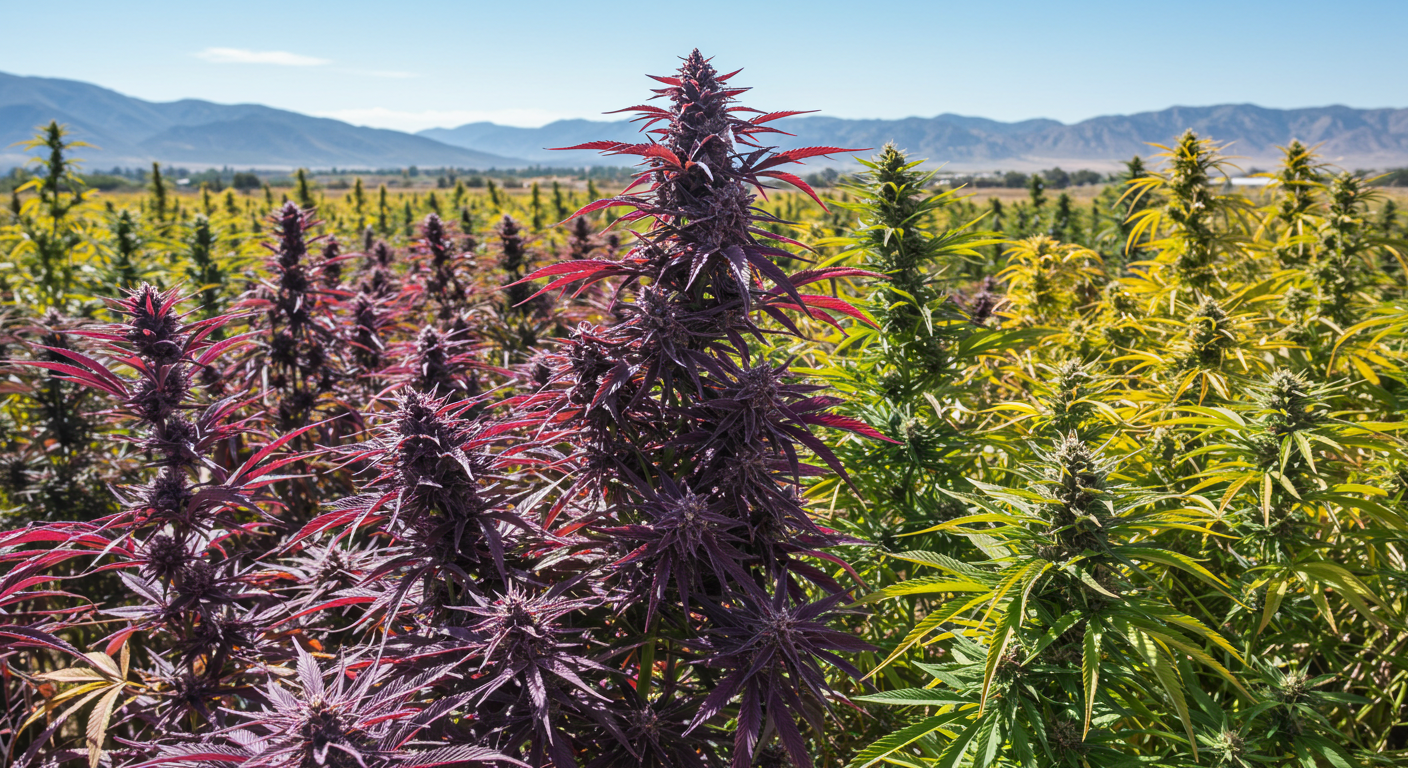
Cannabis Terminology: Strain, Cultivar, Chemovar, Phenotype, and Seed Line
Cannabis terminology becomes confusing because several words are often used as if they describe the same thing. They do not. Strain, cultivar, chemovar, phenotype, genotype, clone, and seed line describe different layers of identity. One may refer to a commercial name, another to cultivated plant material, another to chemical composition, another to the observable expression of one plant, and another to a population reproduced through seed.
The practical problem is not choosing the most scientific-sounding word. It is knowing what information each term can actually support. A cultivar name does not automatically prove one genotype. A phenotype is not a seed line. A chemovar is not simply a renamed strain. A clone can preserve a genotype while still expressing differently in another environment. A seed packet can carry one line name while producing several visibly different siblings.
This resource is a terminology and identity guide. It does not replace a complete genetics-selection, breeding, strain-profile, or cultivation guide. For a broader introduction to cannabis identity, see What Is a Cannabis Strain?. For general cultivation decisions after genetics are selected, continue with Cannabis Grow Basics.
Build the Cannabis Identity Stack Before You Trust a Label
The easiest way to understand cannabis terminology is to stop asking which single word is correct and instead ask which layer of identity you are trying to describe. A commercial name, a breeding population, an individual genotype, a visible phenotype, and a laboratory chemical profile are related, but they are not interchangeable.
Consider a packet of seeds sold under one familiar name. The packet may represent a sexually reproduced seed line. Each seed develops into an individual genotype. Each genotype expresses a phenotype under a particular environment. One exceptional plant may be selected and maintained as a clone. The harvested flower from that clone can be analyzed chemically and grouped by cannabinoid or broader metabolite profile. The market may call all of these things the same “strain,” but biologically they are different objects.
Identity is layered
Name identifies what someone calls the material. Cultivar or line describes cultivated genetic material or a maintained population. Genotype describes inherited genetic information. Phenotype describes observable expression. Clone or cut describes vegetatively propagated material from a selected genotype. Chemovar describes material classified through a reproducible chemical profile. One layer can inform another, but none automatically proves all the others.
Strain, Cultivar, Chemovar, Seed, and Phenotype
These terms answer different questions. Strain is the most common vernacular label in cannabis culture and commerce. Cultivar is a horticultural term for selected cultivated plant material with distinguishing characters, although commercial cannabis usage is often looser than formal cultivated-plant nomenclature. Chemovar organizes material by chemical profile. Seed is a propagule, not a genetic category by itself. Phenotype is the observable expression of an individual under its genetics and environment.
If you remember only one principle, use this: a word should not be allowed to predict more than the evidence behind it. A name can identify a catalog entry without proving genetic uniformity. A laboratory report can describe the submitted sample without proving that every future seed with the same name will produce the same chemistry. A photograph can document one phenotype without defining the whole population.
| Term | Best practical meaning | What it can support | What it cannot prove by itself |
|---|---|---|---|
| Strain | Common cannabis name or market identity | Useful communication when source context is preserved | Formal cultivar status, one genotype, uniform chemistry, or authenticity across sellers |
| Cultivar | Selected cultivated plant material distinguished by traits | A more appropriate horticultural identity term when material is actually defined and maintained | That every commercial cannabis use of the word meets formal distinctness, uniformity, and stability standards |
| Chemovar | Cultivated material classified by a reproducible chemical profile | Comparison of cannabinoid, terpene, or broader metabolite patterns when sampling is controlled | One exact genotype, one effect profile, or chemistry that never shifts with environment and sampling |
| Phenotype | Observable expression of an individual | Plant height, branch habit, flowering timing, color, aroma, disease response, and other measured traits | That the same expression will appear in every sibling or every environment |
| Genotype | The inherited genetic constitution of an individual | Genetic identity and inherited potential | Exact final phenotype without environmental context |
| Clone / cut | Vegetatively propagated copy of a selected plant | Preservation of the selected genotype when identity is maintained | Identical final growth, yield, aroma, or chemistry in every environment |
| Seed line | A population maintained and reproduced through seed | Lineage continuity and population-level traits when documented | One fixed genotype or clone-like uniformity |
Use the noun that matches the evidence you actually possess
If all you know is the commercial name, call it the named material or strain in ordinary communication and preserve the source. If you have a documented selected cultivated line with repeatable traits, cultivar may be appropriate. If you are discussing a laboratory-defined chemical grouping, chemovar or chemotype may be more informative. If you selected one plant from a seed population, call it a selection, individual, phenotype, or clone depending on what you actually mean.
This prevents a common documentation error: turning a weak identity claim into a strong one through vocabulary alone. Changing the word from “strain” to “cultivar” does not make unknown material more genetically stable. Calling flower a “chemovar” does not create chemical reproducibility unless samples were measured consistently. Scientific-sounding language should increase precision, not disguise missing provenance.
Remember: Better terminology does not repair poor traceability. The strongest identity record combines the right term with source, lot, parentage, propagation method, dates, and measured observations.
Separate Strain From Cultivar Without Pretending the Market Is Standardized
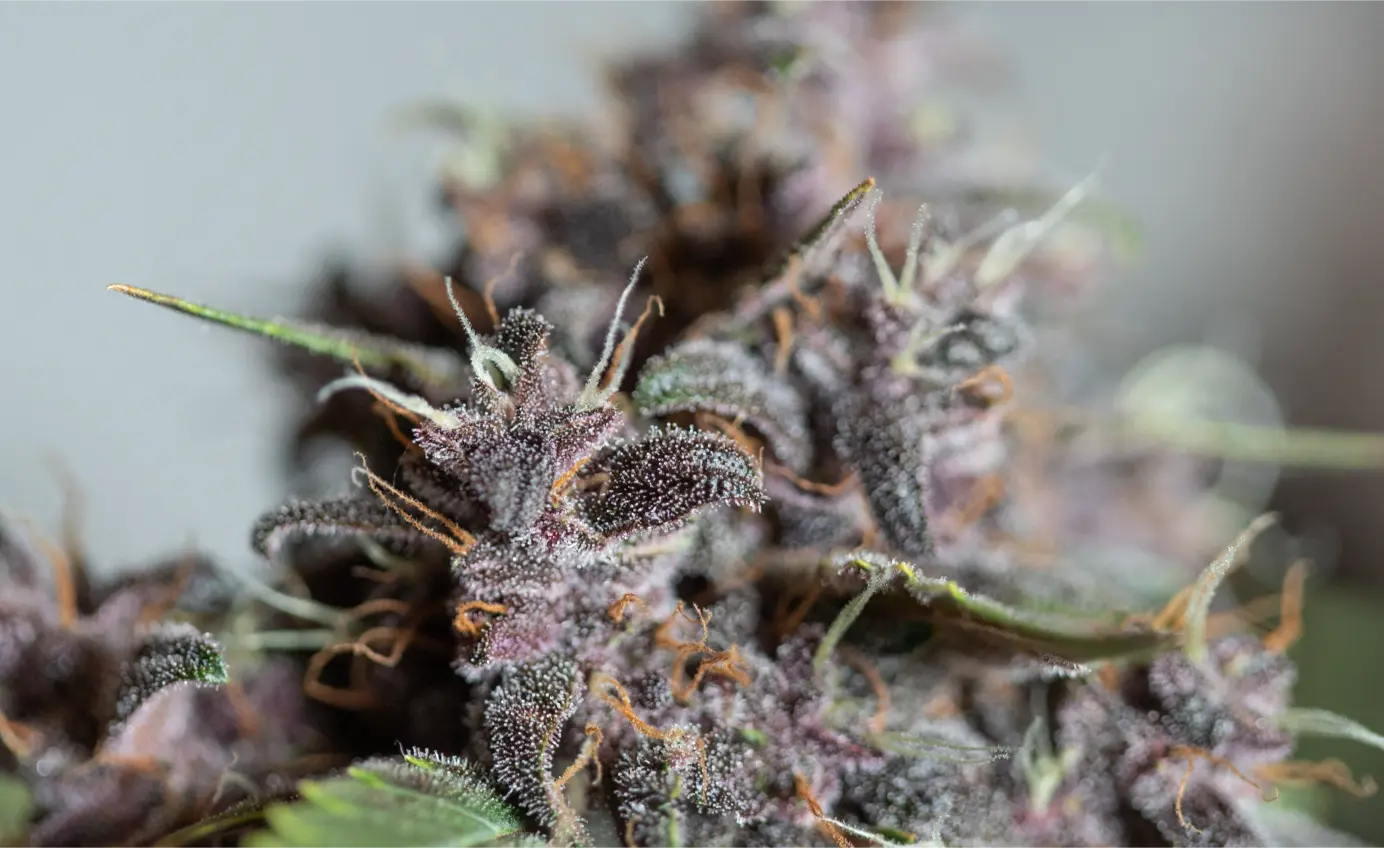
“Strain” is deeply established in cannabis culture. Growers, retailers, patients, consumers, and publishers use it to refer to named cannabis types. That makes it useful as everyday language. The problem begins when the word is treated as if every item carrying one strain name is a scientifically standardized genetic entity.
Genetic studies have repeatedly found that samples sold under identical cannabis names can be genetically inconsistent, while some samples with different names can be surprisingly similar. Research has also shown that broad sativa, indica, and hybrid labels do not reliably reproduce genome-wide genetic relationships. The practical conclusion is not that every cannabis name is meaningless. It is that name alone is weak identity evidence.
What Is a Cannabis Cultivar and Is It Different from a Strain?
In horticulture, cultivar is a contraction of “cultivated variety.” Formal cultivated-plant nomenclature describes a cultivar as an assemblage selected for particular characters that is distinct, sufficiently uniform, and stable in those characters when propagated appropriately. This is a much more structured concept than a market nickname.
Cannabis complicates the distinction because commercial language does not always follow formal horticultural practice. A seller may call a named seed population a cultivar even when the source provides no evidence of uniformity or stability. Another source may call one clone a strain. A scientific paper may use cultivar for material supplied under a named commercial identity because that is the best available description, even when the broader market lacks centralized naming control.
For Weedth, the useful approach is neither to ban the word strain nor to pretend every cultivar label is formally certified. Use strain when discussing the common market or cultural name. Use cultivar when discussing cultivated material as a horticultural identity, especially when the source, propagation method, distinguishing traits, and consistency are documented. When formal status is uncertain, state the uncertainty instead of upgrading the claim.
Preserve the source with the name
Record where the seed, clone, or flower came from, the lot or mother identifier if available, and the date. “Name + source” is more informative than the name alone.
Assume a famous name guarantees one plant identity
Different suppliers can distribute genetically or chemically different material under the same commercial name.
Why cultivar is not automatically a stronger claim in cannabis commerce
The formal cultivar concept includes selection and repeatable distinguishing traits. In a tightly documented crop system, that can support stable identity. Cannabis has a history of informal breeding, prohibition-era exchange, clone renaming, undocumented outcrossing, seed reproduction under famous clone names, and regional naming practices. The word cultivar may therefore be scientifically preferable in context while the specific material remains poorly documented.
Ask what the source actually maintains. Is the item a clone-only selection? A seed-reproduced line? An F1 population? An S1 derived from a clone? A backcross? A broad open-pollinated population? A mixed retail flower label? These are not equivalent even if all are sold beneath one cultivar name.
Cultivar is not the same as botanical variety
Another source of confusion is the word variety. In formal botanical nomenclature, variety can be a taxonomic rank below species. Cultivar belongs to cultivated-plant nomenclature and refers to selected cultivated material. In everyday agriculture and seed commerce, however, variety and cultivar are often used more loosely and sometimes interchangeably.
For cannabis records, avoid writing a Latin-style botanical variety name unless you are actually referring to a formal taxonomic rank. A named cultivated cannabis line, clone, or seed population is better described through its cultivar, line, selection, clone, or commercial name as the evidence allows. This avoids turning a horticultural identity into a taxonomic claim.
Clone-only material and seed-reproduced material need different identity rules
A clone-only selection can remain one genotype because it is propagated vegetatively. Its identity depends on maintaining the propagation chain, avoiding mix-ups, and monitoring plant health. A seed-reproduced cultivar or line is maintained through sexual reproduction, so its identity is population-based rather than clone-based. Uniformity can be high, moderate, or low depending on the breeding system.
This difference changes how you verify a name. For clone-only material, the strongest question is whether the cutting really traces back to the selected mother or verified clone. For seed material, the stronger questions are which parents produced the lot, what generation it represents, how the population was selected, and how much variation was observed. Applying clone logic to seed lines is one of the easiest ways to make a cannabis identity record misleading.
A strain profile should describe the identity uncertainty, not hide it
When Weedth writes about a historical or commercially widespread strain, the useful editorial task is to distinguish the stable core of the record from variable details. Parentage may be well documented while THC percentage varies widely. A clone may have a recognizable historical identity while seed reproductions under the same name create broader variation. Flowering time may differ between sources, environments, and selected cuts.
That is why a credible profile should avoid presenting one exact potency, yield, flowering week, or terpene percentage as if every plant with that name must match it. The name is a navigation tool. Source-specific evidence and plant observations determine how precise the claims can become.
“If two seed packs have the same strain name, are they basically the same genetics?”
Question sent by: Ethan Brooks, via email.
Not necessarily. The name is the starting point, not proof of identity. Compare the producer, parentage, generation, reproduction method, lot, and documented traits. Two sources can use the same name for related material, derived material, or genetically different material. If traceability matters, keep the two sources separate in your records until evidence shows they should be treated as equivalent.
Use Chemovar and Chemotype for Chemistry, Not as Genetic Shortcuts
Cannabis chemistry varies across cultivars, genotypes, plant organs, developmental stages, environments, cultivation systems, harvest timing, processing, storage, and laboratory methods. This is why chemical classification can add information that a name alone does not provide. It is also why chemical terminology must be used carefully.
Chemotype is commonly used for a chemically distinguishable type within a species. In cannabis, classic chemotype systems often group plants according to the relative dominance of THC, CBD, or other major cannabinoids. Chemovar is often used for cultivated plant material characterized by a reproducible chemical profile, increasingly including multiple cannabinoids and terpenes rather than only one major compound.
Cultivar and chemovar answer different identity questions
A cultivar describes cultivated plant material selected and maintained for distinguishing characters. A chemovar organizes cultivated material according to chemical identity. One cultivar may show chemical variation across environments or phenotypes, and similar chemovar groupings can occur in genetically different material. Chemical classification is powerful, but it is not a substitute for genetic provenance.
Chemotype and chemovar overlap, but they are not automatically synonyms
In cannabis writing, chemotype and chemovar are often used interchangeably, especially when the discussion is limited to THC:CBD dominance. A more careful distinction is useful. Chemotype describes a chemical type or recurring chemical phenotype within a species. Chemovar places chemical identity into the context of cultivated material and traceability. A chemovar may be defined through a chemotypic pattern, but the terms do not have to describe exactly the same level of identity.
For example, many genetically different plants can fall into a broad THC-dominant chemotype. That grouping is useful, but it would be too coarse to imply they are one chemovar. A narrower chemovar classification might require a reproducible profile across several cannabinoids and terpenes under standardized sampling. The exact boundary depends on the analytical framework being used, which is why the method should be stated whenever chemical identity matters.
Chemical classification should describe recurrence, not one unusual sample
A chemical outlier can be interesting without defining a new chemovar. One branch may have received more light, one plant may have matured later, one sample may contain more leaf material, or one laboratory may report compounds differently. Before a chemical difference becomes an identity claim, look for recurrence under comparable sampling and repeated measurements.
This is especially important in seed populations. If five siblings produce five related but distinct terpene profiles, the line may contain several chemical expressions. Selecting one sibling and preserving it as a clone can make that one chemistry easier to reproduce, but the original seed line still contains broader variation unless breeding narrows it.
Do not reduce chemovar to THC percentage
Grouping material only as THC-dominant, balanced THC:CBD, or CBD-dominant can be useful for broad cannabinoid classification. It does not capture the full chemical diversity of cannabis. Modern analytical work commonly considers a larger chemical fingerprint, which may include minor cannabinoids and dominant terpenes, and research continues to explore metabolomic classification beyond these familiar compounds.
For cultivation records, this means one laboratory number should not be made to carry an entire identity. A 22% THC result describes the tested sample under the laboratory’s method. It does not tell you that every sibling will test at 22%, that every harvest from the clone will repeat that value, or that another source with the same name shares the same broader chemistry.
Chemovar assignment depends on sampling discipline
Chemical classification becomes misleading when samples are not comparable. A top flower harvested later may differ from a shaded lower flower. The same genotype can produce different concentrations under different light, nutrient, temperature, stress, and harvest conditions. Post-harvest drying and storage can change measured chemistry again.
Before calling two plants different chemovars, ask whether the chemical difference is reproducible and whether sampling was standardized. Plant organ, maturity, position, handling, analytical method, and reporting basis should be comparable. A one-time difference caused by sample position or harvest timing is not strong evidence of a stable chemical identity.
| Evidence | What it supports | What it does not support alone |
|---|---|---|
| One potency label | The reported measurement or claim for one product or batch | A stable chemovar across future seeds or harvests |
| Repeated cannabinoid ratios | A more credible chemotype pattern | Full terpene identity or genetic identity |
| Repeated cannabinoid + terpene profiles under controlled sampling | Stronger chemovar characterization | That environment cannot change quantitative expression |
| Genetic fingerprint | Genetic relatedness or identity evidence | Exact future chemical concentration in every environment |
| Same commercial name | A market-label relationship | Any of the above without supporting evidence |
Chemovar is useful when chemistry is the question
If the question is whether two harvests have comparable cannabinoid and terpene profiles, chemovar language may be much more useful than sativa, indica, or a colorful strain name. If the question is whether two plants share one clone identity, chemistry alone is weaker than verified propagation records and genetic evidence. If the question is whether a seed line will breed true for a trait, neither a strain name nor a single chemovar profile is enough.
Important: Chemical similarity and genetic identity are related questions, not the same question. Use chemical data to describe chemistry and lineage data to describe lineage.
Separate Genotype, Phenotype, Clone, and Expression
Phenotype is one of the most misused words in cannabis growing. Growers often say “this is the purple phenotype” or “I found a tall pheno,” which can be useful shorthand. Scientifically, phenotype is broader: it means the observable traits of an organism, produced through the interaction between its genotype and its environment.
Height, branch angle, internode spacing, leaf morphology, flowering time, color, aroma, disease symptoms, water-use pattern, resin production, and chemical composition can all be phenotypic traits. Some are strongly heritable. Some are highly plastic. Many sit between those extremes.
Genotype is inherited information; phenotype is what you observe
A genotype carries inherited genetic information. A phenotype is how traits are expressed under actual conditions. This is why two genetically different siblings can look similar in one environment, and why one clone can look different when grown under different light, root volume, temperature, irrigation, or stress.
The genotype sets possibilities and constraints. The environment influences expression. Management is part of that environment. When you train a branch, restrict roots, change photoperiod, expose the plant to drought, or alter nutrient supply, you can change phenotype without changing the underlying genotype.
A phenotype is not automatically a stable breeding line
Finding one attractive plant in a seed population does not mean the seed line is now stable for that plant’s traits. The selected plant is one individual genotype expressing a phenotype. You can preserve that exact genotype vegetatively as a clone, but reproducing the same appearance from seed requires breeding evidence that the relevant traits transmit predictably.
This distinction matters when numbered selections circulate. A name such as “Cultivar #7” may refer to one selected plant from a population. If that selection is maintained as a clone, the number can identify a specific genotype. If seeds are later produced from that clone through selfing, crossing, or backcrossing, the descendants are related to the selection but are not automatically identical to it.
“I found the best phenotype in a pack. Are seeds from that plant the same phenotype?”
Question sent by: Olivia Carter, via contact form.
No. The selected plant is one genotype expressing a phenotype. Seeds produced from that plant contain recombined genetics unless the reproductive structure is unusually constrained, and even selfed seed is not a packet of clones. Keep the original selection as a clone if exact genotype preservation is the goal, and record descendants under their actual breeding generation.
Clone preserves genotype, not identical performance
Vegetative propagation can preserve a selected genotype. That is why clone-only cultivars can remain recognizable for years when identity is maintained carefully. But genetically identical cuttings do not erase the environment. One cutting can remain compact under intense light while another stretches in shade. Root restriction, plant health, mother age, propagation condition, pathogens, and environmental stress can all change growth and chemistry.
When comparing clone performance, keep the identity fixed and measure the environment. If the same clone changes, the difference is phenotypic expression, health status, measurement variation, or an identity problem that needs investigation. Do not create a new cultivar name every time the environment changes the plant’s appearance.
Environmental plasticity does not mean genetics are irrelevant
Because phenotype changes with environment, growers sometimes swing too far and conclude that genetics do not matter. That is also incorrect. Genotype influences the range of possible flowering times, architecture, cannabinoid pathways, pigmentation, disease responses, and many other traits. Environment changes where within that range the plant lands and can modify the magnitude of expression.
A useful comparison therefore needs either shared genetics across environments or multiple genotypes grown in the same environment. If both genetics and environment change at the same time, you cannot confidently assign the difference to either one. This is why common-garden trials, replicated cultivar trials, and clone comparisons are much more informative than comparing two unrelated plants grown by different people.
A new-looking phenotype is not automatically a mutation
One clone looking shorter, paler, later, or more aromatic than another does not automatically mean the genotype mutated. Before using mutation language, check environment, health, root condition, pests, pathogens, nutrition, light, maturity, and labeling. Somatic mutation can occur, but ordinary phenotypic plasticity and plant-health differences are much more common explanations for one-off changes in a garden.
Phenotype hunting is population evaluation
When growers germinate several seeds from one line and compare individuals, they are sampling a population. The more variable the line, the more different expressions may appear. A small sample can miss rare traits or create false confidence about uniformity. One packet can show mostly similar plants while a larger population reveals meaningful segregation.
Record each plant separately. Use plant IDs rather than vague descriptions such as “the good one.” Measure the traits that matter: first flower, final height, branch angle, disease response, flower density, aroma, chemical results where available, and maturity date. A phenotype record becomes useful only when it can be connected back to the seed lot and growing conditions.
Treat a Seed Line as a Population, Not One Fixed Plant
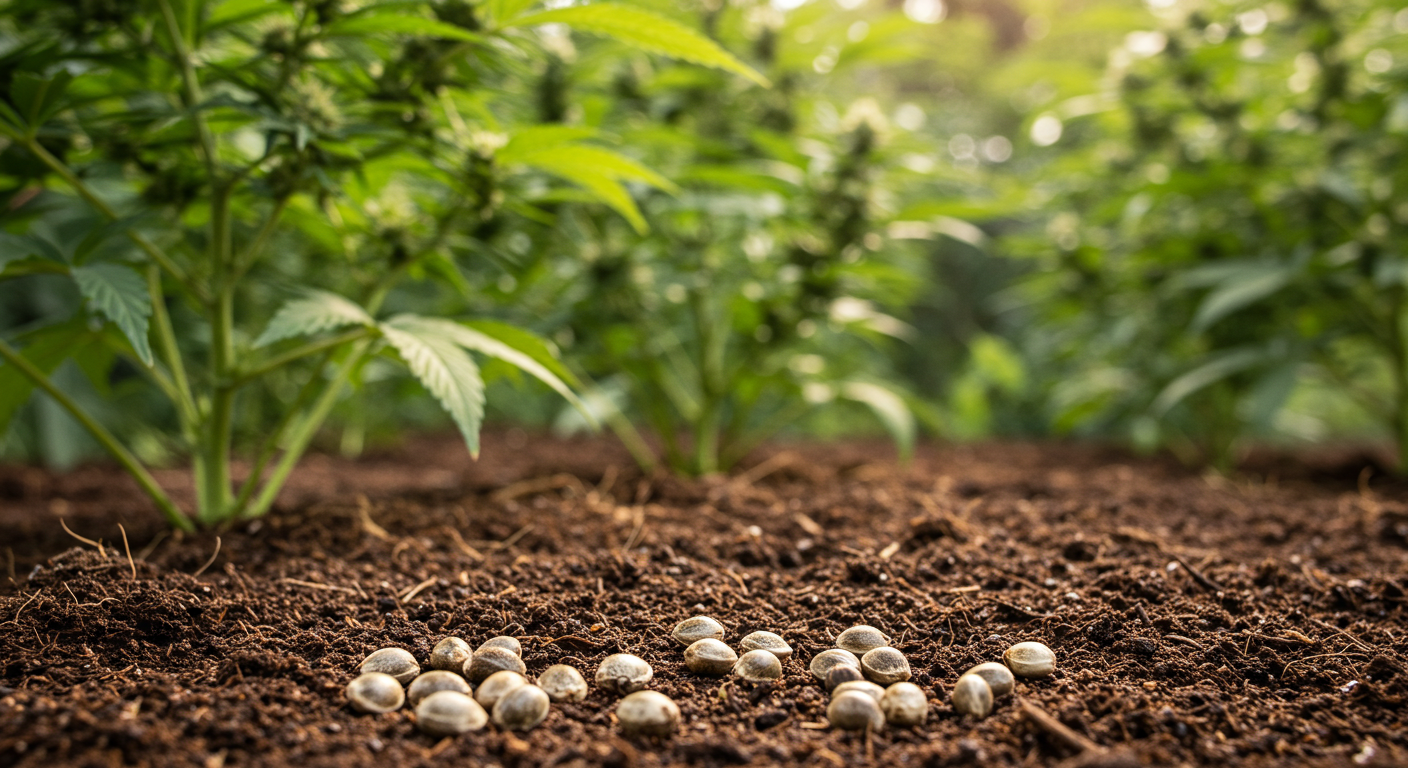
A seed line is a practical way to describe genetic material that is maintained and reproduced through seed across a recognizable breeding history. It is not a formal taxonomic rank, and the term is not standardized enough to tell you the amount of uniformity by itself. The critical point is that a seed line is a population. Ordinary sexual reproduction creates genetically different offspring.
This is the opposite of clone logic. A clone line can preserve one selected genotype. A seed line preserves ancestry and selected population characteristics while allowing some degree of genetic segregation. The amount of variation depends on parent homozygosity, generation, population size, mating design, selection, bottlenecks, selfing, inbreeding, outcrossing, and how carefully the line is maintained.
A seed is not a cultivar, phenotype, or chemovar by itself
One seed is a reproductive unit containing one embryo. Before germination, it carries genotype but has not yet expressed the full phenotype you will evaluate in the garden. A pack of seeds may belong to one named line, but each seed can represent a different genotype. The eventual chemical profile cannot be fully known from the seed’s appearance.
This sounds obvious, but it corrects several common statements. A pack does not contain ten copies of the advertised photograph. A famous clone crossed to another parent does not produce seeds that are the famous clone. Seeds made by selfing a clone are descendants of that genotype, not vegetative copies of it.
F1, F2, S1, BX, and IBL describe breeding history, not quality grades
Generation labels can be useful when they are used accurately. An F1 generally describes the first filial generation from a particular parental cross. An F2 describes a subsequent filial generation derived from the F1 population. S1 commonly describes first-generation selfed progeny from one selected genotype. BX or BC identifies a backcross toward a recurrent parent or related source. IBL means inbred line, but cannabis commerce has no universal generation number at which a line automatically becomes an IBL.
None of these abbreviations independently proves quality, potency, yield, uniformity, disease resistance, or authenticity. A textbook F1 between two highly homozygous inbred parents can be very uniform. A commercial cannabis “F1” made from two heterozygous hybrid parents can show substantial segregation. The letters describe the breeding event more reliably than the outcome.
| Label | What it usually describes | Do not assume |
|---|---|---|
| F1 | First filial generation of a defined cross | Uniformity unless parental structure supports it |
| F2 | Next filial generation derived from the F1 population | That all traits are stabilized |
| S1 | First selfed generation from one selected genotype | Clone identity or zero segregation |
| BX / BC | Backcross toward a recurrent parent or source | Perfect recreation of that parent |
| IBL | Line developed through repeated inbreeding or related breeding | A universal generation threshold or fixation of every trait |
| Stabilized | Claim of increased consistency for selected traits | That the seller has tested every relevant trait or every environment |
Landrace, heirloom, hybrid, and inbred line describe different histories
These labels often appear beside seed-line terminology, but they should not be merged. Landrace usually refers to a historically localized cultivated population shaped by long-term selection and environment, although the word is often overused commercially. Heirloom generally implies a maintained older lineage outside its original regional context. Hybrid describes ancestry created by crossing genetically different material. Inbred line describes material developed through repeated related mating or selfing to increase homozygosity and consistency.
None of these words independently tells you how many phenotypes will appear in one packet. A hybrid can be highly uniform or highly variable depending on the parents. A landrace population can contain substantial diversity. An inbred line can be consistent for selected traits while retaining variation elsewhere. Read the historical label together with the breeding record.
Seed lot identity matters even within the same named line
A seed line can change over time through selection, genetic drift, bottlenecks, accidental pollen, or deliberate introduction of new material. That means a 2026 lot and a much older lot carrying the same line name may not be equivalent. The producer may also maintain several parent groups or reproduction batches.
Record the lot or batch whenever it is available. If one lot performs unusually well outdoors or shows unexpected variation, that observation should stay attached to that lot until later evidence shows the conclusion applies to the line more broadly.
Population size changes what “stable” looks like
A breeder can evaluate five plants and see little variation simply because the sample was small. Another grower may germinate fifty and reveal recessive traits, different flowering times, or several plant architectures. Uniformity claims become more credible when the source explains population size, generations, selection targets, and what variation was actually observed.
For the buyer, the useful question is not “Is this line stable?” but “Stable for which traits, based on how many plants and under what conditions?” A line can be consistent for sex expression and cannabinoid ratio while still varying in height. It can be consistent in flowering time while showing several aroma directions. Stability is trait-specific.
“Does F5 mean the seeds should all be almost identical?”
Question sent by: MapleGrower, via Facebook page.
No. F5 tells you where the population sits in a documented filial sequence if the label is being used conventionally. Uniformity still depends on the starting parents, mating and selection method, population size, and which traits were selected. Ask for the traits the breeder reports as consistent instead of treating the generation number as a universal quality score.
Read Parentage, Generation, Stability, and Seller Claims With Evidence
Terminology becomes most useful when you apply it to claims. A seller page may list a strain name, two parents, a generation marker, indica/sativa percentages, flowering weeks, potency, terpene notes, mold resistance, and a photograph. Each item has a different evidence burden. Treating the whole page as one equally reliable block is a mistake.
Build an evidence ladder. At the bottom is the unverified name or marketing phrase. Above it is documented parentage and propagation method. Better still are generation records, population size, repeated field observations, source-specific photographs, batch chemistry, genetic fingerprinting, and independent trials. The strongest claim is the one supported by a method appropriate to the question.
Parentage describes ancestry, not every descendant
A parentage statement such as Parent A x Parent B is useful if the parents are themselves identified and the pollination was controlled. It tells you the intended ancestry of the offspring population. It does not mean each descendant expresses a perfect 50:50 visible blend, nor does it prove the parents were authentic without source records.
Parentage becomes stronger when it includes selected parent IDs, clone identities, generations, direction of the cross, and the breeder’s records. It becomes weaker when names are repeated from another catalog without provenance.
“Stable” should always be followed by “for what?”
Stability is not a single switch. A line may breed predictably for flowering time but segregate for color. It may show consistent cannabinoid class while varying in terpene balance. It may be visually uniform indoors but separate into different stress responses outdoors. Ask which traits were selection targets and which traits remained variable.
The same principle applies to “true-breeding.” In genetics, true-breeding is meaningful in relation to specified traits and reproduction. A claim that a cannabis line is simply “true-breeding” for everything is stronger than most evidence can support.
Photographs document a phenotype, not the population
A catalog photograph can show flower shape, color, resin, and architecture of one selected plant under one environment. It cannot establish average performance, frequency of that expression, chemical consistency, or finish time across the whole line. If a source shows only the most attractive individual, treat the image as an example rather than a population summary.
Laboratory reports are batch evidence
A laboratory report is useful when you know which plant or batch was sampled, how mature it was, and what the method measured. It becomes misleading when one exceptional result is presented as the fixed potency or terpene profile of every future plant carrying the name.
For a clone, repeated reports across several grows can build confidence about the likely chemical range under comparable conditions. For a seed line, multiple sibling results provide much stronger population information than one selected top result.
Do not turn a commercial label into a biological guarantee
Terms such as elite, heirloom, landrace, stable, F1, IBL, medicinal, sativa, indica, mold resistant, and high terpene can be informative only when the source defines what was measured or documented. The adjective is not the evidence.
Marketing words need operational definitions
Words such as “elite,” “worked,” “original,” “authentic,” “heritage,” “proven,” and “selected” can describe real breeding work, but they are not measurements. If the claim matters to your decision, translate it into something testable. “Selected for mold resistance” should lead to questions about which disease, how plants were challenged, how many individuals were evaluated, and whether the result held across environments. “Stable” should lead to trait-by-trait uniformity data. “Original” should lead to provenance.
The goal is not to interrogate every catalog like a laboratory audit. It is to scale your skepticism to the consequence of being wrong. If you are buying one plant for curiosity, limited documentation may be acceptable. If the material will anchor a breeding project, compliance-sensitive crop, or multi-season outdoor plan, weak provenance becomes a much larger risk.
A seller’s name can be useful even when it is not formal nomenclature
Do not confuse skepticism with uselessness. Commercial names help people find, discuss, and preserve material. A long-standing name attached to a verified clone can carry substantial historical information. A consistent producer may build reliable source-specific meaning around a line even when the wider market uses the same name inconsistently.
The correct response is to keep the source attached. Instead of recording only “Cultivar X,” record “Cultivar X, Source A, Lot 2026-04” or “Cultivar X, verified Cut B.” This preserves the practical value of the name without pretending the entire market shares one standardized identity.
Use terminology to route the next question
If the label says cultivar, ask how the material is maintained and what traits are consistent. If it says chemovar, ask for comparable chemical data. If it says phenotype #4, ask whether that is a clone, a selected seed plant, or a name applied to descendants. If it says F1, ask what the parents were and how uniform they were. If it says clone-only, ask how identity and health were maintained.
This is the real value of vocabulary. The word should tell you which evidence to request next.
Use the Right Term in Buying Decisions, Grow Records, and Future Comparisons
Terminology becomes practical when it improves decisions. A grow record should let you answer three questions months or years later: what material did I actually receive, what happened to this individual plant, and how confidently can I generalize the result?
Start with a source record. Save the seller page or source description, purchase or acquisition date, seed pack or clone label, lot number, parentage, generation, claimed chemotype, and any source-specific flowering or disease notes. Do not overwrite the original wording. If a source calls something R1 or “stabilized,” preserve that claim exactly, then add your interpretation separately.
Give every seed-grown plant an individual ID
A seed line should not be recorded as one plant. Give each seedling an ID tied to the pack and lot. For example, LineName-LotA-01, LineName-LotA-02, and LineName-LotA-03. This simple step prevents one selected phenotype from becoming confused with the whole line.
Record phenotype traits at meaningful checkpoints: seedling vigor, sex expression where relevant, first flower, stretch, final height, architecture, disease response, aroma, maturity, harvest date, and laboratory results if available. Note environmental events that could explain deviations, such as heatwave, root restriction, pest damage, transplant stress, or prolonged rain.
Give selected clones their own identity
If one plant is selected and propagated, create a clone ID that points back to the original seed plant. Do not silently rename the clone as if it were the entire seed line. A clear record could read: LineName-LotA-07 selected clone, maintained as Cut A. If the clone later receives a working nickname, keep the original lineage relationship attached.
If you self or cross that clone, the descendants receive new generation records. They are derived from the clone but not identical to it.
Record chemical results as sample results
Attach lab data to the exact plant, clone, batch, harvest date, and sample where possible. Avoid writing “Cultivar X = 24% THC” in a master genetics record after one test. Write “Cut A, harvest 2026-10-02, top-flower composite, lab result 24%” or whatever the actual report supports.
Over time, repeated results can define a useful range. That range is more honest and more predictive than one promotional maximum.
Use terminology to prevent bad buying decisions
When buying or acquiring material, decide what level of predictability you need. If you need one known plant behavior, a verified clone may offer stronger genotype continuity than seed. If you want variation to select from, a seed line may be desirable. If chemical compliance matters, source-specific chemotype evidence becomes critical. If outdoor finish timing matters, field records from comparable latitude and climate matter more than the strain name.
For outdoor cultivar selection specifically, continue with the broader Outdoor Grow Comprehensive Guide and use climate, flowering, disease pressure, and finish-window evidence rather than terminology alone.
| Your question | Most useful identity layer | Evidence to request |
|---|---|---|
| Will these seeds produce similar plants? | Seed line / generation | Parent structure, generation, population observations, trait-specific uniformity |
| Is this the same selected plant? | Clone / genotype | Propagation chain, mother identity, genetic verification when necessary |
| Will it finish outdoors in my climate? | Cultivar or line performance | Comparable field flowering and finish records |
| What chemistry did this harvest produce? | Chemovar / batch chemistry | Laboratory profile with controlled sample identity |
| Why does one sibling look different? | Phenotype + environment | Individual plant records and environmental notes |
| Does this famous strain name prove authenticity? | Provenance | Source chain, parentage, lot, clone history, or genetic evidence |
Build a one-line identity card for every accession
A useful identity card can fit on one line: name | source | propagation type | lot or mother ID | parentage/generation | acquisition date. Add chemical and phenotype records underneath rather than cramming every claim into the name. This structure works for a seed packet, clone, preserved selection, or harvested batch.
If information is unknown, write unknown. An explicit blank is safer than filling the gap from memory or copying a claim from another source that happens to use the same name. Cannabis records become unreliable when missing provenance is silently reconstructed years later.
Final cannabis terminology checklist
- I know whether the material is seed-reproduced, clone-propagated, or only a commercial flower label.
- I do not use strain name alone as proof of genetic identity.
- I use cultivar as a horticultural identity term without pretending every commercial use meets formal cultivar standards.
- I use chemovar or chemotype when the question is chemical classification and the sampling supports it.
- I understand that phenotype is observable expression influenced by both genotype and environment.
- I treat a selected phenotype as one individual unless it is preserved as a verified clone.
- I treat a seed line as a population rather than a packet of identical plants.
- I read F1, F2, S1, BX, and IBL as breeding-history information, not automatic quality grades.
- I attach lab reports to the actual plant or batch tested instead of the name in general.
- I preserve source, lot, dates, parentage, generation, and plant IDs so future comparisons remain traceable.
Good cannabis terminology should make your records more precise, not more complicated. Use the simplest term that matches what you can prove. Keep commercial names for navigation, horticultural terms for cultivated material, chemical terms for chemistry, genetic terms for inheritance, and phenotype terms for what the individual actually expressed.
Once those layers are separated, many common cannabis arguments disappear. The question stops being “Is strain or cultivar the correct word?” and becomes more useful: What exactly am I describing, and what evidence supports that level of identity?
Share this article
A quick overview of the topics covered in this article.
Follow us
Latest articles

September 4, 2026
September 4, 2026
September 4, 2026
September 4, 2026