
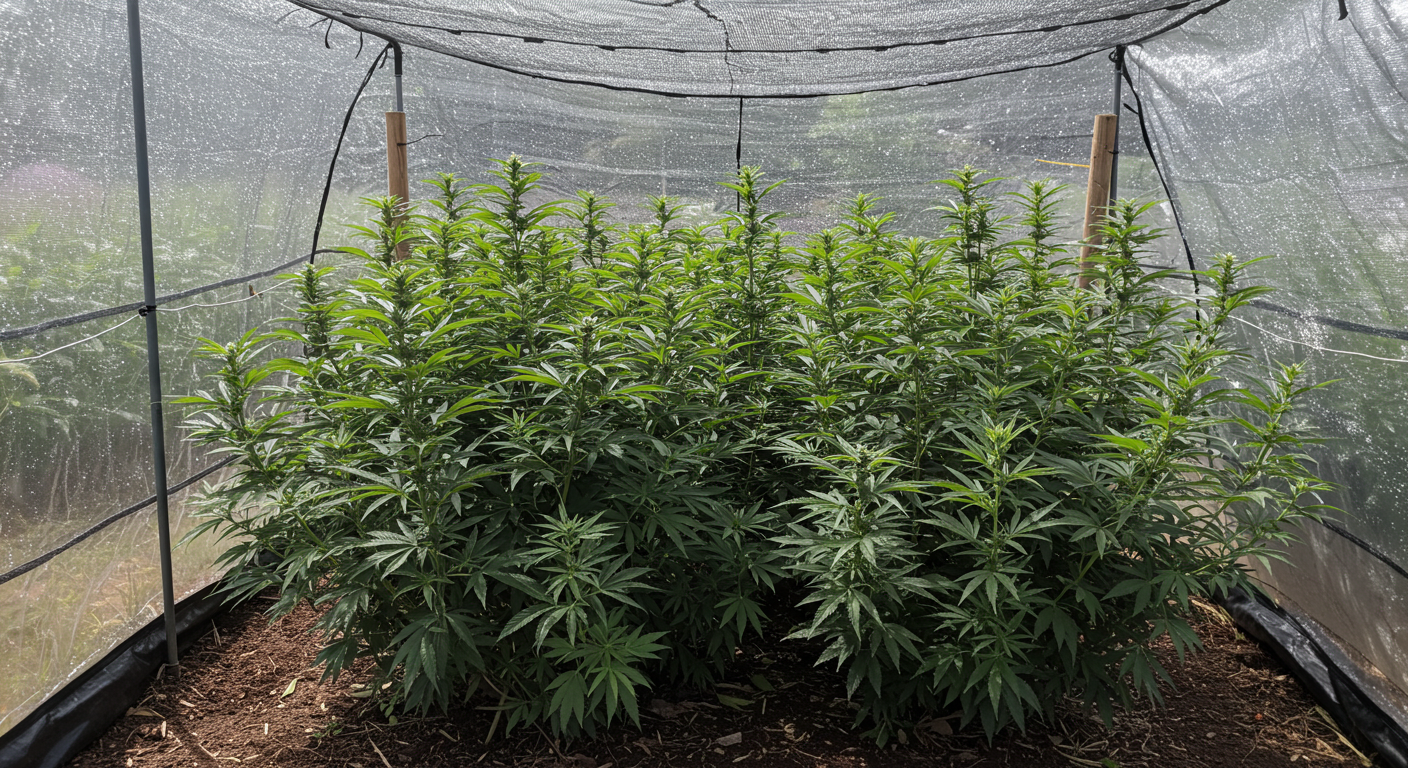
Heatwave Response for Outdoor Cannabis
A heatwave changes several parts of an outdoor cannabis garden at once. Air temperature rises, the atmosphere can pull water from leaves faster, containers heat more quickly, irrigation demand changes, and strong afternoon sun can add a radiant heat load that is not obvious from the weather forecast alone. The correct response is therefore not simply to water more.
The most reliable heatwave plan is to measure what is actually becoming limiting before you intervene. A plant that droops at 3 p.m. may have a genuinely dry root zone, but it may also be temporarily reducing water loss while the root zone still contains adequate moisture. Another plant may look similar because one emitter clogged, a dark container overheated, or salts accumulated as water use increased. Those situations need different corrections.
This resource focuses on the event itself: how to prepare before the hottest period, what to measure during the heatwave, how to use irrigation and temporary shade without creating new problems, how to distinguish common failure modes, and how to verify recovery when temperatures ease. For broader outdoor site selection, seasonal planning, soil, security, and climate decisions, use the Outdoor Grow Comprehensive Guide rather than trying to turn one heatwave article into a complete outdoor manual.
Confirm the Heatwave Risk Before You Change the Garden
A heatwave response should begin before the garden looks damaged. The useful question is not whether the forecast contains a large number. It is whether the coming combination of temperature, sun, dry air, wind, warm nights, root-zone capacity, and plant stage is likely to exceed what the garden has recently been handling.
Cannabis does not have one universal outdoor temperature at which every cultivar suddenly becomes heat stressed. Controlled research has found meaningful genotype differences in photosynthetic temperature response. Different drug-type plants in one study reached their highest photosynthetic rates at different temperatures, and their loss of photosynthesis at 40°C also varied. That is useful evidence for a practical conclusion: the plant, its recent acclimation, and the rest of the environment matter as much as the forecast maximum.
Separate a hot day from a heatwave response problem
One unusually warm afternoon may require little more than observation if the root zone is stable and the plant recovers normally after sunset. A heatwave is more operationally important because the stress repeats. Soil or substrate may start each day with less water. Containers can retain heat into the evening. Night temperatures may stay high enough that respiration remains elevated, while the next morning arrives before the plant has fully recovered.
Look at the hourly forecast rather than only the daily maximum. Record the expected high, the number of consecutive hot days, the overnight minimum, relative humidity, wind, cloud cover, and whether a dry wind is expected during the peak period. A 38°C afternoon followed by a cool night can create a different recovery opportunity from several days of 34°C heat with nights remaining unusually warm.
Do not create a universal cannabis heat cutoff
Numbers are useful when they describe your site, but they become misleading when they are treated as biological laws. A leaf in full afternoon sun can be warmer than nearby shaded air. A plant beside a heat-reflecting wall may experience more radiant load than one only a few meters away. A well-rooted plant in cool native ground may tolerate a hot afternoon differently from a small plant in a black container standing on concrete.
Instead of asking, “Is 35°C too hot for cannabis?” ask a better set of questions: Is canopy temperature climbing sharply above the recent baseline? Is the root zone drying faster than the irrigation system can replace water? Are leaves staying wilted into the evening? Are flowers or upper leaves developing bleaching, scorching, abnormal growth, or persistent curling? Is the same cultivar recovering normally in one location but not another?
Field Advice: Use the forecast as the trigger to inspect the garden. Use measurements at the plant to decide what to change.
Plant stage changes the cost of heat stress
Young plants with small root systems can run out of accessible water quickly, especially after transplanting. Large vegetative plants usually have more root capacity but also a much larger leaf area moving water. Flowering plants add another concern. Controlled medical cannabis research has shown that elevated air temperature during reproductive growth can reduce cannabinoid concentration and alter inflorescence development, although the magnitude of the response is genotype dependent.
This does not mean an outdoor flower is damaged every time the thermometer reaches the temperatures used in a controlled chamber study. It means prolonged high temperature during flowering deserves more attention than a simple cosmetic leaf response. Late-flowering plants also have dense tissues that you do not want to repeatedly soak with emergency foliar sprays, and large branches may be difficult to move under temporary shade at the last minute.
Define your trigger before the first extreme afternoon
A practical trigger combines forecast severity with site history. If your garden has already logged several normal hot days, use those records as the baseline. For example, note the afternoon temperature and RH, root-zone moisture before and after the hot period, irrigation volume, visible plant response, and evening recovery. When the forecast is substantially hotter, drier, windier, longer, or warmer at night than those baseline days, move from routine care into heatwave mode.
Heatwave mode does not mean changing everything. It means checking the variables that fail first at your site and preparing the backup systems before they are needed.
Measure the Load: Canopy Heat, Root-Zone Moisture, VPD, Wind, and Water Reserve
Heatwave management becomes much more accurate when you stop treating “temperature” as the only measurement. A cannabis plant exchanges heat and water with the air, sunlight, soil or substrate, container, and surrounding surfaces. A useful field check therefore combines a small set of measurements rather than chasing a single perfect number.
Measure air where the canopy actually lives
Place a shaded temperature and RH sensor near canopy height, away from direct solar radiation and hot surfaces. A sensor baking in direct sunlight can report the temperature of the sensor body rather than the surrounding air. If one part of the garden is beside masonry, a fence, or reflected afternoon sun, compare it with a reference location instead of assuming the entire garden is experiencing the same load.
The measurement interval should be short enough to show the peak and the recovery curve. Even a simple logger recording every 10 to 15 minutes can reveal whether the site peaks for one hour or remains near its maximum for most of the afternoon. That duration matters because plant stress is a function of intensity and exposure time, not just the highest reading.
Vapor Pressure Deficit (VPD)
VPD describes the drying demand of the air by combining temperature and humidity. During a hot, dry afternoon, a high VPD can increase the pull for water from leaves even when the root zone still contains moisture. Outdoors, use VPD as one part of the heat-load picture alongside wind, sunlight, root-zone moisture, and actual plant response.
Use VPD to explain demand, not to create a rigid outdoor target
VPD is useful because 35°C at humid coastal conditions and 35°C in very dry inland air do not create the same evaporative demand. Wind can amplify the difference further by continually replacing the humid boundary layer near the leaf with drier air. During a dry heatwave, this helps explain why leaves may lose water faster than roots can replace it even when irrigation volume seemed adequate on cooler days.
Outdoor growers should be careful with indoor VPD charts. An indoor chart assumes a controlled environment in which light, airflow, root-zone moisture, and temperature can be managed with much greater precision. Outdoors, direct sun, intermittent cloud, gusting wind, and rapidly changing humidity complicate the relationship. Use VPD to compare one outdoor period with another, not as a reason to force the garden toward a single number.
Check the root zone before you respond to wilt
Midday droop is one of the easiest heatwave symptoms to misread. Plants can wilt temporarily because transpirational demand is greater than the rate of water replacement, even when the root zone remains moist. University extension guidance for hot weather makes the same practical point for garden plants: check soil moisture rather than using wilt alone as a watering command.
Use the method appropriate to your grow system. In containers, compare weight when practical, inspect moisture below the surface, or use a calibrated moisture sensor you have already learned to interpret. In native ground or large beds, check more than the top few centimeters because the surface can look dry while the main root zone remains moist. If drip irrigation is used, check both near and between emitters so you do not confuse a wet spot around one emitter with complete root-zone coverage.
“My plant wilts every afternoon but the pot still feels heavy. Should I water anyway?”
Question sent by: RootZoneRick, via email.
Not automatically. A heavy container suggests that water is still present, so first check moisture deeper in the root zone and watch whether the plant recovers as the sun weakens. Adding more water to an already wet, hot root zone can reduce aeration without solving the atmospheric heat load. If moisture is adequate, focus on container temperature, radiant heat, wind, and temporary afternoon protection instead.
Measure container and root-zone heat separately from air temperature
Containers deserve special attention because they have much less thermal mass than the ground. Dark pots exposed to direct sun can absorb strong radiant heat, while fabric pots can lose water rapidly through their sides. A container on concrete or stone also receives heat from below and from reflected surfaces. Two plants in the same air temperature can therefore have very different root-zone conditions.
Use a probe at representative root depth if you have one, or compare the shaded side of the container with the sun-facing side using the same measurement method. The goal is not to chase a universal root temperature. It is to identify whether the root zone is becoming progressively hotter during the heatwave and whether that increase corresponds with poor water uptake, persistent wilt, or slower recovery.
Measure irrigation capacity, not just irrigation timing
A heatwave can expose an irrigation system that was barely adequate under normal weather. Time how long your system takes to deliver a measured volume. Check emitter output at the far end of the line. Look for pressure changes, clogged emitters, kinked tubing, empty reservoirs, and timers that do not run as programmed. If a large plant consumes water faster during heat but the emitter output does not change, the irrigation schedule may need adjustment. If the emitter itself has failed, increasing the timer for the entire garden can overwater every other plant while the affected plant remains dry.
For hand-watered gardens, calculate how much water is physically available before the heatwave begins. This matters even more at remote sites. A plan that depends on a second irrigation visit is not a real plan if you cannot reach the garden during the hottest day.
Record wind and reflected heat
Hot wind can increase water loss and physically stress leaves at the same time. Reflected heat from light-colored walls, glass, metal, gravel, concrete, and paved surfaces can make an apparently sunny garden much harsher than an open field at the same weather-station temperature. Walk the site in the afternoon. Note where you feel reflected heat, where containers receive direct western sun, and where wind accelerates through gaps.
These observations tell you where temporary shade or wind filtering can have the highest value. They also prevent the common mistake of shading the whole garden when only one exposed edge is creating the extreme load.
Prepare the Garden Before the Hottest Hours Arrive
The safest heatwave intervention is usually the one completed before the plant is already in severe stress. Preparation does not require a major redesign. It means making sure water can reach the root zone, reducing avoidable heat gains, and postponing nonessential work that would increase stress during the hottest period.
Start the event with a correctly hydrated root zone
If the root zone genuinely needs water, irrigate early enough that moisture can distribute before peak heat. Deep, complete wetting is more useful than repeated shallow sips that only darken the surface. In containers, water in passes if the medium has become hydrophobic so the first application does not simply channel down one side. In ground, verify that the wetted zone actually overlaps the active roots.
Do not saturate the root zone “for insurance.” Roots still require oxygen. A heatwave increases water demand, but it does not repeal the basic relationship between water and air in soil or substrate. If the medium remains waterlogged, the plant can show stress even while standing in excess water.
Refresh mulch without burying a wet stem
A clean mulch layer can reduce direct solar heating of the soil surface and slow evaporation. Use material appropriate to the garden and keep it away from direct contact with a persistently wet stem base. The purpose is to buffer temperature and surface drying, not to create a saturated layer that never breathes.
In containers, the same principle can be applied by shading the pot itself, placing it inside a larger light-colored outer container with an air gap, or moving it away from a heat-reflecting wall when legal access and plant size make that practical. Protecting the root zone can sometimes reduce heat stress more effectively than shading healthy leaves for the entire day.
Stage temporary shade before it is needed
Temporary shade can reduce peak radiant load, especially on newly transplanted plants, small containers, or sites with severe late-afternoon exposure. But shade cloth is not a universal cannabis prescription. General horticultural extension sources may recommend specific shade percentages for vegetables or landscape plants, yet those values should not be copied into cannabis as an ideal target.
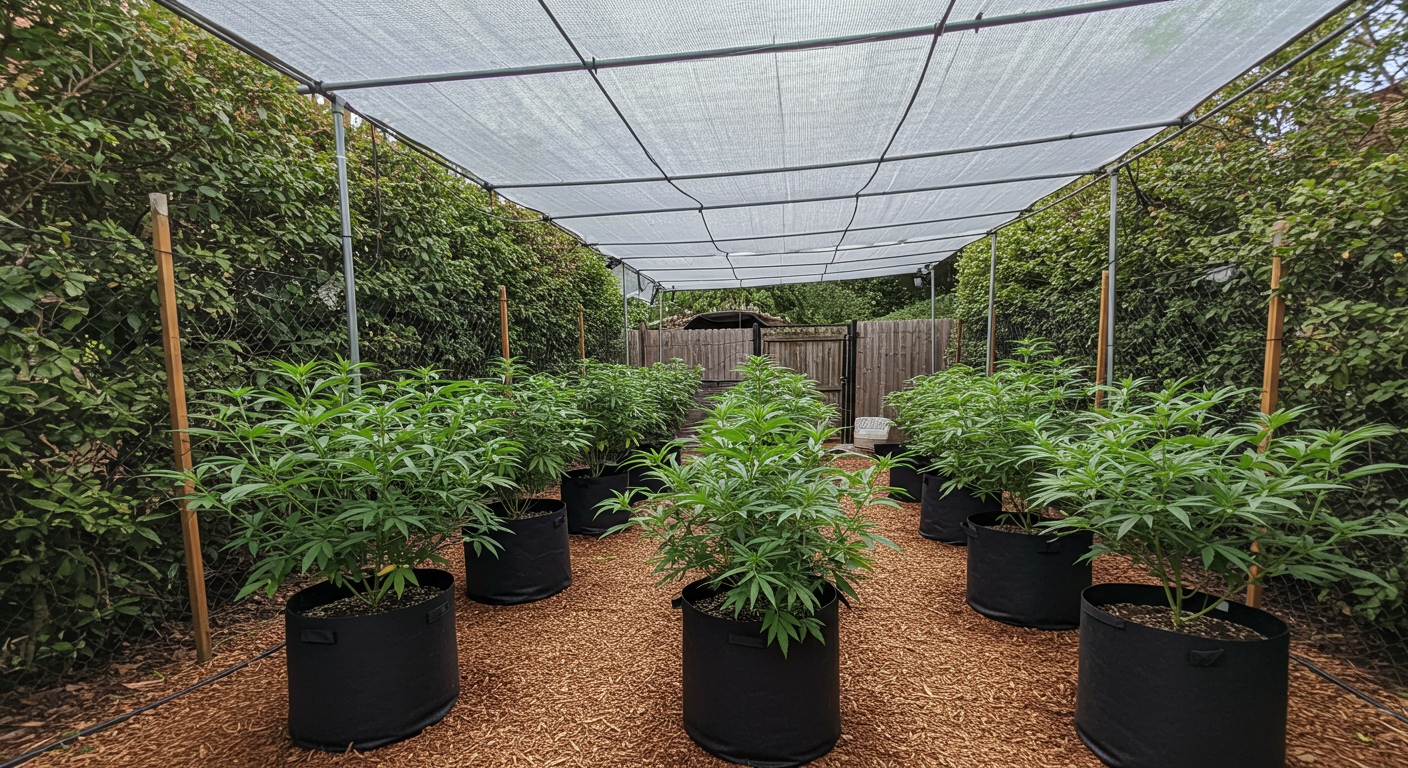
Build the frame, check the anchors, and confirm the shadow path before the heatwave. The shade should reduce the most punishing part of the day without trapping hot air around the canopy. A low tarp that blocks airflow can replace radiant stress with stagnant heat. A large solid sheet can also become a wind load during thunderstorms or gust fronts.
Postpone avoidable stress work
Heavy pruning, aggressive defoliation, major training, root disturbance, transplanting, and high-salt feeding are poor companions for an already difficult heatwave. Pruning can suddenly expose previously shaded tissue to direct sun. Transplanting temporarily reduces root function. Strong fertilization can increase root-zone salinity at a time when water uptake is already under pressure.
If an operation can wait until conditions moderate, let it wait. Essential work is different. Removing a broken branch, fixing a failed irrigation line, or correcting a dry root zone may be necessary. The principle is to stop adding optional stress while the weather is already supplying plenty.
Prepare water, shade, sensors, and irrigation backups before peak heat
Use the cool part of the day to test emitters, hydrate a genuinely dry root zone, secure temporary shade, and record baseline measurements.
Changing irrigation, feeding, pruning, and shade all at once
Multiple simultaneous changes make it difficult to identify what helped and can turn a temporary heat response into root-zone or canopy stress.
Check the water source itself
Long hoses left in full sun can contain very warm standing water. Reservoirs can also heat significantly if exposed. Flush stagnant hot water from a sun-heated hose before irrigating the root zone and keep reservoirs shaded where practical. Avoid dramatic temperature shocks in either direction. The useful goal is simply to avoid delivering obviously overheated water from equipment that has been baking in the sun.
If source water has elevated EC or salinity, a heatwave can make that limitation more visible because the garden uses more water and salts can concentrate as the medium dries. Do not solve every heat symptom with stronger fertilizer. Keep source-water chemistry and nutrient strength separate in your records.
Do not use ice or extreme temperature shock as a root-zone rescue
A heatwave response should reduce stress, not create a sudden thermal shock. Do not pack ice against roots, stems, or containers and do not pour ice-cold water into a hot root zone. Shade the container, correct moisture, reduce radiant load, and let temperature move back toward normal conditions gradually.
Run Irrigation and Temporary Shade Through the Heatwave
Once the event begins, the garden needs a repeatable daily rhythm. The best rhythm is usually built around early measurement, targeted irrigation, observation during the peak period, and a recovery check after the sun weakens. It should not require constant manipulation.
Use morning irrigation as the main correction window
Early irrigation gives the root zone time to absorb and distribute water before the most demanding part of the day. It also gives you a clean baseline. Record how much water was applied, where it was applied, and whether runoff occurred. If the medium drains unusually fast and is dry again much earlier than expected, that tells you more than the clock does.
Plants in small containers may genuinely require more frequent irrigation during an extreme event, while large in-ground plants may not. Do not copy a schedule such as “water twice a day” from another garden. Recheck the root zone. If moisture has fallen below the normal working range and the plant still has hours of high demand ahead, a second targeted irrigation may be justified. If the root zone remains wet, adding water is not the correct response.
Use temporary shade to reduce the peak, not to erase the day
A temporary shade system should have a specific job. It might protect a container garden from the final three hours of intense western sun, reduce reflection from a wall, or help a recently established plant through an exceptional event. Once the heatwave passes, remove or reduce the temporary intervention so the plant returns to its normal light environment.
Observe how the plant behaves under the shade rather than assuming more shade is always safer. If the canopy remains hot because the cloth is too close and airflow is poor, redesign the setup. If a plant that normally recovers by late afternoon remains soft and weak under heavy shade, recheck the root zone and irrigation instead of simply adding another layer.
“Can I leave shade cloth up for the whole summer once the forecast turns hot?”
Question sent by: Austin Brooks, via email.
Temporary heatwave shade and permanent light management are different decisions. Use shade to solve a measured peak-load problem, then reassess when the extreme weather ends. Leaving an emergency shade layer in place can reduce daily light unnecessarily and may change airflow. If your site needs permanent summer modification, evaluate that as a separate site-design decision rather than treating emergency shade as permanent infrastructure by default.
Protect containers from sidewall heating
Container gardens often fail from the side before they fail from the top. Sunlight striking the pot wall can create a hot root-zone boundary, and the plant cannot move its roots away from the container. Shade the container body where possible, keep it off heat-storing pavement, and make sure the method does not block drainage.
If several containers are grouped, leave enough space for air movement and irrigation access. Crowding pots into a dark enclosed corner to keep them shaded can create stagnant air and make inspection harder. The solution should lower radiant root-zone load without creating a new environmental problem.
Do not mist dense flowers as a routine cooling method
Evaporative cooling can sound attractive during extreme heat, but repeatedly wetting flowering cannabis creates a different risk, especially inside dense inflorescences that dry slowly. Avoid routine foliar misting of mature flowers simply to make the canopy feel cooler. Water belongs in the root zone unless a specific foliar application has a justified purpose and appropriate conditions.
If foliage is accidentally wet, give the canopy open airflow and time to dry. Do not combine wet flowers, a low shade enclosure, and stagnant afternoon air.
Use the hottest hour as a diagnostic checkpoint
The peak period is when you learn whether the morning preparation worked. Check the same plants in the same order. Record canopy response, root-zone moisture, emitter function, container heat, and whether the shade structure is stable. A short consistent inspection is more useful than repeatedly touching leaves and changing settings every 20 minutes.

Photograph representative leaves and flower tops from the same angle if the heatwave lasts several days. This makes progression easier to see. You may notice that one cultivar curls leaves but recovers each evening, while another develops persistent marginal scorch. Those are different response patterns and they should not be managed from the same symptom alone.
Remember: The purpose of heatwave management is not to keep the plant visually perfect at the hottest minute. It is to keep water supply, root function, canopy temperature, and recovery within a range the plant can sustain until normal weather returns.
Diagnose Wilting, Root-Zone Heat, Salt Stress, and Irrigation Failure
Heatwave symptoms overlap. Wilt can mean dry roots, hot roots, hydraulic limitation, damaged roots, or simply a temporary midday response. Leaf-edge burn can come from intense radiation, high root-zone salinity, chronic drought, or a previous nutrient problem that became more visible during stress. Diagnosis must therefore compare the symptom with moisture, location, timing, and recovery.
| Symptom | Possible Cause | How to Confirm | Corrective Action | Prevention |
|---|---|---|---|---|
| Afternoon wilt with moist root zone | Atmospheric demand temporarily exceeds water replacement | Root zone remains moist; plant improves as sun and VPD fall | Reduce peak radiant load if needed and keep monitoring; do not automatically add water | Increase root-zone buffering, plan temporary shade for exceptional events, and track recovery |
| Wilt with dry root zone | Actual water deficit or insufficient irrigation volume | Moisture is low through the active root zone; container is light or sensor/hand check confirms drying | Rewet thoroughly using a method that distributes water evenly | Increase irrigation capacity or frequency based on measured heatwave demand |
| One plant collapses while neighbors remain stable | Emitter clog, kink, local dry channel, damaged roots, or container-specific heating | Compare emitter output, root-zone moisture, container exposure, and plant history | Correct the local failure rather than increasing irrigation for the whole garden | Run catch tests, inspect lines, and map the hottest container positions before heat events |
| Wet medium plus persistent wilt | Overwatering, low root-zone oxygen, root damage, or extreme root-zone heat | Medium stays saturated; wilt does not follow normal dry-down pattern | Stop automatic extra watering, improve drainage/aeration conditions, and reduce root-zone heat | Use moisture-based irrigation decisions rather than wilt alone |
| Burnt margins or tip injury during repeated high-demand irrigation | Salt accumulation, strong feed, drought concentration, or sun/heat injury | Compare input EC, root-zone EC where your method supports it, moisture history, and injury location | Separate salinity from heat before changing feed; correct water balance first | Track source water and feeding strength, avoid unnecessary concentration during heat |
| Upper leaves bleach or scorch only on exposed side | Radiant heat and intense sunlight, often amplified by reflected surfaces | Damage follows exposure pattern rather than the whole plant | Reduce exceptional peak exposure temporarily and protect newly exposed tissue | Avoid heavy pruning before heat and map reflected afternoon sun |
| New irregular flower growth during prolonged heat | Heat-related disruption, genetic foxtailing, or normal cultivar expression | Compare timing with heat event, previous flower structure, cultivar history, and unaffected flowers | Stabilize environment and avoid making harvest decisions from shape alone | Protect flowering plants from repeated extreme canopy heat and keep photographic records |
Use recovery timing as part of the diagnosis
A plant that wilts during the peak but regains turgor as the evening cools is giving different information from one that remains collapsed overnight. Recovery suggests the hydraulic system was temporarily under pressure but still functioning. Failure to recover calls for a deeper root-zone check, especially if neighboring plants improved.
Do not wait several days to investigate a plant that remains wilted in wet soil. Heat can reveal root problems that were already developing. If the root system cannot take up water, continuing to pour water onto the medium may worsen the oxygen problem.
Separate salinity from simple drought
Heatwaves often increase irrigation frequency. If every irrigation carries fertilizer or mineral-rich source water, salts may accumulate faster than expected, especially in containers with limited leaching. A plant can then show scorched margins or poor water uptake even though the medium is wet.
Do not diagnose salt stress from a burnt tip alone. Review the feed history, source-water EC, runoff or root-zone EC using a consistent sampling method, and how much dry-back occurred between irrigations. If the plant was simply too dry, a major nutrient correction may create a second problem.
Check for irrigation uniformity before changing the whole schedule
Heat makes small irrigation differences visible. One emitter delivering 20 percent less than its neighbors may have been harmless during mild weather and become a serious deficit during three extreme days. Catch and compare output from several emitters. Inspect filters and line ends. In hand-watered containers, check whether water is channeling down the side rather than rewetting the full volume.
This is also why heatwave notes matter. If the same corner of a raised bed dries first during every event, that is not random. It may have shallower soil, more afternoon sun, stronger wind, or lower irrigation coverage. Fix the recurring site problem instead of treating each event as new.
Do not use feeding as a first-aid response to heat
Leaves can become paler or less vigorous during prolonged stress because growth and metabolism have slowed. That does not automatically mean the plant suddenly needs a stronger nutrient solution. General extension guidance for extreme heat commonly advises minimizing fertilization because additional salts can increase root-zone stress.
“Should I increase nutrients because the plant looks pale during the heatwave?”
Question sent by: SoilCheckDaily, via Facebook page.
Usually not as a first response. Check root-zone moisture, irrigation function, source water, and existing feed strength first. Heat can slow growth and disturb water uptake, while stronger feeding raises the salt load. Stabilize water and temperature conditions, then reassess nutrition after the plant has had time to recover.
Do not stack emergency corrections
A heat-stressed plant does not benefit from simultaneous heavy watering, strong nutrients, foliar sprays, aggressive pruning, and deep shade. Make the smallest correction supported by measurement, allow time for response, and then recheck.
Use the Night and the First Cool Day for Recovery
The heatwave response does not end when the sun sets. Evening and early morning tell you whether the plant is recovering, whether the root zone is still holding too much water, and whether the next day requires the same intervention or a smaller one.
Check whether the plant actually recovers after sunset
Walk the garden after the radiant load has dropped. Compare leaf posture, flower position, and overall turgor with the hottest part of the day. If the plant looks substantially better and the root zone is still appropriately moist, avoid the urge to add an automatic evening irrigation simply because the day was hot.
If the plant remains wilted, inspect the root zone again. Compare it with a healthy plant in the same medium. Persistent wilt with a dry root zone indicates a different problem from persistent wilt in saturated media. If a drip line failed, repair it before the next morning rather than trying to compensate with a larger garden-wide irrigation cycle.
Warm nights can limit recovery
Cool nights help plants shed heat and reduce atmospheric demand. During some heatwaves, nights remain unusually warm. Plant respiration rises with temperature, and cannabis research has shown increased dark respiration as temperature rises. That means several hot nights in a row can add cumulative stress even when daytime irrigation appears adequate.
Record overnight minimums. If the garden is not getting its normal nighttime cooling, treat the next day more conservatively. Check moisture earlier, keep emergency shade ready, and avoid optional canopy work. The repeated event is often more damaging than one isolated maximum.
Return temporary shade toward normal as soon as the event passes
Emergency shade should not quietly become the new environment. Once the forecast and local measurements return toward the normal seasonal range, remove or reduce temporary shade in a way that does not abruptly expose tender new growth to an extreme contrast. If the cloth only covered the harsh afternoon window for a few days, returning to normal may be simple. If heavy shade remained for longer, reintroduce full exposure more gradually.
Inspect supports and anchors before storage. A shade frame damaged by wind is not ready for the next event simply because it survived this one.
Do not “catch up” with maximum feeding
When growth resumes, it can be tempting to compensate for several slow days with a strong feeding. Resist that impulse. Resume the normal program based on the plant, medium, and measured root-zone condition. Damaged leaves will not become green again because of an aggressive nutrient dose, and recovering roots benefit from stability more than from a concentration spike.
Inspect flowers for heat-related changes
During flowering, compare the same representative flower tops you photographed before and during the event. Look for bleaching, dry exposed tissue, persistent fox-tail-like growth, accelerated stigma browning, or areas where shade structures rubbed against flowers. Do not declare maturity from stress damage. A heat event can change appearance without meaning the flower has completed normal maturation.
Controlled research showing abnormal inflorescence development under elevated temperature is a reason to monitor structure, not a reason to assume every outdoor foxtail is caused by heat. Genetics, light intensity, developmental stage, and previous flower architecture still matter.
Define recovery with measurements
A successful recovery is more than leaves standing upright for one morning. Root-zone moisture should return to its normal dry-back pattern. Irrigation demand should move toward the pre-heatwave baseline. The plant should recover each evening, new injury should stop progressing, and temporary shade should no longer be needed for the same normal weather that the plant handled before the event.
If those conditions do not return after temperatures moderate, the heatwave may have exposed a deeper problem. Recheck roots, irrigation uniformity, salinity, pests, disease, and container condition rather than continuing heatwave interventions indefinitely.
Commission a Repeatable Heatwave Response Plan
A good heatwave procedure can be repeated by someone other than the person who invented it. It defines when heatwave mode begins, which measurements are taken, what actions are allowed, what conditions trigger a second intervention, and how the garden returns to normal operation.
Run a rehearsal before the most severe event
Choose a normal hot day and test the process. Confirm that sensors are readable, moisture checks are consistent, emitters deliver expected volumes, temporary shade can be deployed safely, and water reserves are actually available. Time how long it takes to shade the vulnerable area and how long a full irrigation cycle takes.
A rehearsal often reveals simple failures: shade cloth that cannot be anchored in afternoon wind, a hose that does not reach the far bed, a timer with the wrong program, an empty storage tank, a moisture sensor installed in an unrepresentative spot, or a container that is much hotter than expected beside a wall.
Establish a normal hot-day baseline
Before a true heatwave, record at least one ordinary hot day. Include morning root-zone moisture, irrigation volume, afternoon temperature and RH, approximate VPD if you use it, canopy response, evening recovery, and the next morning’s moisture. This gives you a local reference.
The value of the baseline is not precision for its own sake. It helps you recognize when the system has changed. If a container that normally loses a certain amount of water is suddenly almost dry by noon, either the weather load changed sharply or the irrigation/root-zone system is no longer behaving normally.
Use pass, caution, and fail criteria
| Heatwave response status | What it means and what to do |
|---|---|
| Pass | The root zone stays within its normal working moisture range, emitters perform correctly, temporary shade remains stable, plants recover after the peak period, and no new injury progresses. Continue the measured routine without adding interventions. |
| Caution | Dry-back is faster than expected, one zone runs hotter, afternoon wilt lasts longer, or irrigation reserve is becoming tight. Correct the specific limiting factor and increase monitoring before the next peak. |
| Fail | Plants remain wilted overnight, irrigation cannot meet demand, the root zone is saturated and plants still decline, shade structures are unsafe, severe scorch progresses, or water supply is unreliable. Stop relying on the current routine and redesign the failed component. |
Build a water-failure backup
Heatwaves are when pumps, timers, pressure regulators, reservoirs, and human schedules are least forgiving. Keep enough emergency water to bridge a realistic failure period for the size of the garden. Know how water will be delivered if the normal system fails. If the grow is remote, include travel time and access restrictions in the reserve calculation.
Test the backup. A stored barrel is not useful if there is no pump, hose, gravity head, or practical way to move the water to the plants. A generator or electrical pump also adds safety, fuel, and fire considerations that must comply with local rules.
Keep the response safe for the grower
The plant does not require you to work in dangerous midday heat. Stage labor for early morning or evening when possible. Follow local heat advisories, hydration guidance, fire restrictions, water restrictions, and electrical safety requirements. Shade frames should not block emergency access, create sharp hazards, or become unsecured sails in gusty weather.
Home-grow laws can also regulate visibility, plant location, enclosure, and access. A temporary shade structure should not be used to bypass local requirements. Verify the rules that apply to the property before turning an emergency weather response into a permanent structure.
Use this sequence before, during, and after extreme heat
- Read the hourly forecast, including overnight minimum, RH, wind, cloud, and heatwave duration.
- Compare the forecast with your normal hot-day baseline rather than relying on one universal cannabis temperature.
- Check root-zone moisture before changing irrigation.
- Inspect emitters, filters, timers, hoses, pumps, reservoirs, and backup water supply.
- Record canopy-height temperature and RH with a shaded sensor.
- Check exposed containers and reflected-heat zones separately.
- Correct genuinely dry root zones before peak heat without saturating already wet media.
- Stage temporary shade only where the measured radiant load justifies it.
- Keep shade high enough for airflow and secure enough for wind.
- Postpone heavy pruning, transplanting, aggressive training, and unnecessary high-salt feeding.
- Inspect again during the hottest period without automatically watering wilted plants.
- If a second irrigation is considered, confirm that the active root zone has actually dried enough to need it.
- Do not routinely mist dense flowers for cooling.
- Check evening recovery and overnight minimum temperature.
- Reduce extra irrigation and remove temporary shade as normal weather returns.
- Record damage, recovery time, water use, irrigation failures, and which interventions actually helped.
- Change the response plan before the next event if the garden reached a caution or fail condition.
What a successful heatwave response looks like
The best outcome is not zero visible stress. An outdoor plant may curl or soften temporarily during the most demanding hour and still complete the event without lasting injury. Success means the root zone stayed functional, water reached the full root system, the canopy recovered, new damage stopped progressing, and emergency interventions could be removed when the weather normalized.
The final test is repeatability. If you can explain why you watered, why you shaded, what you measured, and what evidence showed recovery, the heatwave has improved the garden’s operating plan. If the response was a series of guesses, use the records from this event to make the next one more controlled.
Share this article
A quick overview of the topics covered in this article.
- Confirm the Heatwave Risk Before You Change the Garden
- Measure the Load: Canopy Heat, Root-Zone Moisture, VPD, Wind, and Water Reserve
- Prepare the Garden Before the Hottest Hours Arrive
- Run Irrigation and Temporary Shade Through the Heatwave
- Diagnose Wilting, Root-Zone Heat, Salt Stress, and Irrigation Failure
- Use the Night and the First Cool Day for Recovery
- Commission a Repeatable Heatwave Response Plan
Follow us
Latest articles

September 4, 2026
September 4, 2026
September 4, 2026
September 4, 2026