
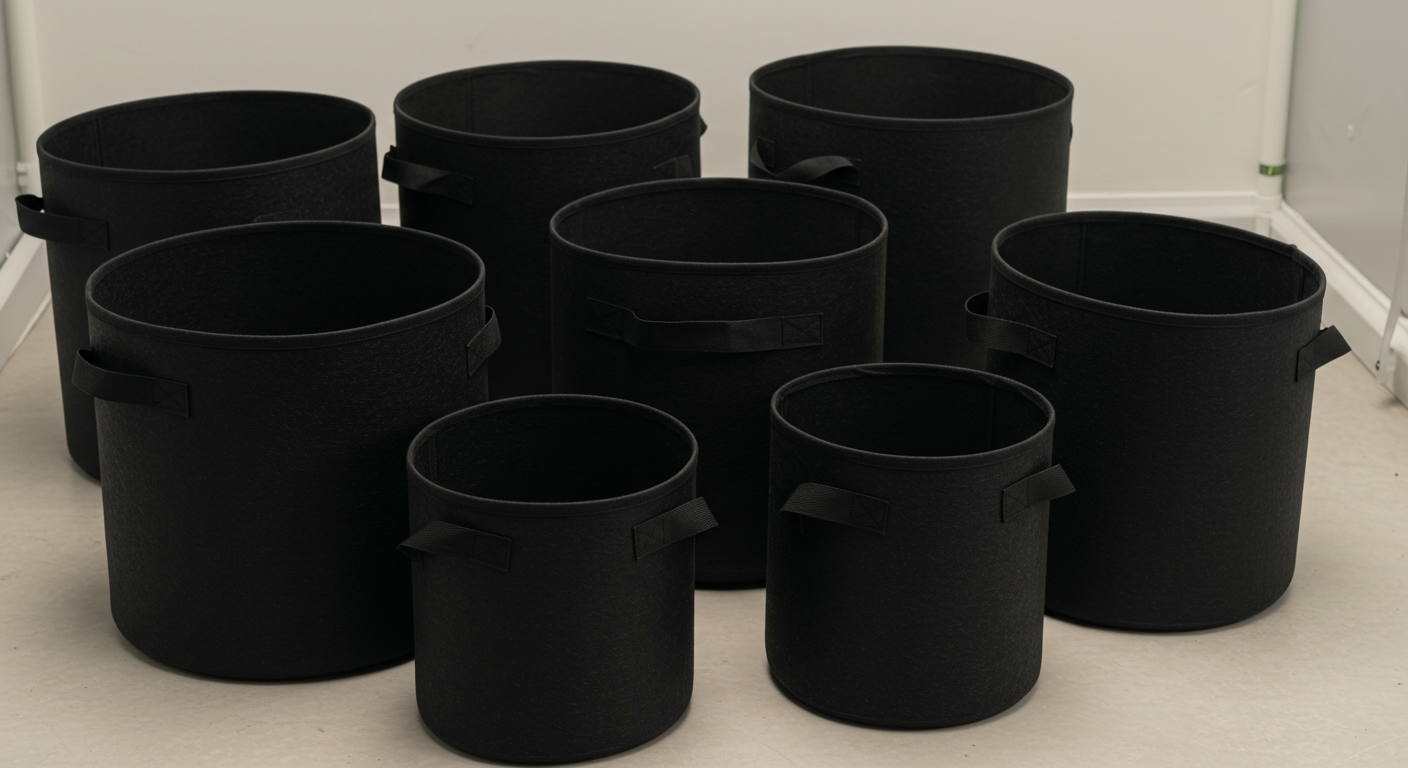
Outdoor Cannabis Container Size Explained
Outdoor cannabis container size is not a direct formula for plant size. A larger pot gives roots access to more substrate, water, nutrients, and thermal buffering, but it also becomes heavier, more expensive to fill, harder to move, and potentially slower to dry when the plant is still small. A smaller pot can keep a plant compact and mobile, yet it gives the grower less room for missed irrigations, heat waves, salt accumulation, and root restriction.
The practical question is therefore not, “What is the biggest pot I can buy?” It is, “What container volume can support the plant I intend to finish under the irrigation, climate, medium, and management system I can actually maintain?” For many seasonal outdoor plants, roughly 38 L / 10 gal and upward is a useful planning zone, while smaller or much larger containers can also work when the rest of the system is designed around them. These are planning brackets, not biological thresholds.
This resource focuses only on outdoor container sizing. For the broader choice of container material, drainage design, cleaning, and transplant strategy, use Containers and Pots Basics. For outdoor site planning beyond the pot itself, continue with Outdoor Basics.
Resource Navigation
In This Resource
- What Outdoor Container Size Actually Changes
- Use Container-Size Brackets as Planning Tools, Not Rules
- Match Volume to Water Storage and Dry-Back
- Container Geometry and Material Change the Meaning of Volume
- Choose Outdoor Pot Size With a Repeatable Framework
- Recognize Containers That Are Too Small or Too Large for the System
- Recalculate the Choice for Heat, Wind, Rain, and Irrigation
- Verify the Container Choice During the Season
What Outdoor Container Size Actually Changes
Container volume defines the maximum physical root-zone volume available inside the pot. That boundary changes more than the amount of root that can physically fit. It changes how much water the medium can store, how much nutrient reserve can exist between irrigations, how rapidly salts can concentrate, how strongly the root zone responds to weather, and how forgiving the system is when irrigation is delayed.
Usable substrate volume matters more than the number printed on the pot
Usable substrate volume is the actual amount of growing medium held at the intended fill line. Trade-size labels, taper, raised bases, headspace, reservoirs, and different pot geometries can make two containers with the same advertised gallon size hold different amounts of medium.
Root volume can influence whole-plant growth
Plant research across many species shows that severe root-volume restriction can suppress shoot growth, leaf area, and total biomass even when nutrition and irrigation are managed carefully. A broad meta-analysis of pot experiments found a strong average biomass response to larger rooting volume, but that result should not be converted into a cannabis yield equation. Species, plant age, substrate, irrigation, nutrition, and experimental design all affect the response.
For outdoor cannabis, the useful lesson is simpler: a container can become a real growth constraint when the plant’s root system, water demand, and nutrient demand repeatedly exceed what that root zone can buffer. The important word is repeatedly. A vigorous plant does not need a transplant just because roots reach the wall. Roots are expected to reach the wall in a container.
Remember: Pot size does not create plant potential by itself. It removes or adds one constraint within a larger system.
More volume usually increases the water and nutrient buffer
A larger pot contains more medium, so it can usually hold a larger absolute quantity of plant-available water after drainage. It can also hold a larger total nutrient pool when the medium and fertility program are appropriate. Outdoors, this extra buffer is valuable because transpiration demand can change sharply with heat, wind, canopy size, and flowering stage.
That does not mean a large pot should be kept saturated. The medium still needs air-filled pore space after irrigation. Container volume helps only when the medium has suitable structure and the irrigation event wets it evenly without leaving it chronically waterlogged.
More volume increases weight and reduces mobility
The same 75 L / 20 gal pot that gives a plant a larger root buffer may become impossible to move safely once it contains wet medium and a tall canopy. That matters outdoors. Containers are often chosen partly because they can be moved away from severe wind, hail, construction, visibility, or an unfavorable microclimate. At some point, increasing volume removes that mobility advantage.
Think about the finished system, not the empty pot in the store. Include wet substrate weight, plant mass, staking, trellis attachments, irrigation lines, and the width of the mature canopy. A container that theoretically rolls on a dolly may no longer move once the plant is tied into a fixed support structure.
“If bigger pots usually give roots more room, why not put every outdoor plant straight into the largest container I can afford?”
Question sent by: CedarLaneGrower, via email.
Because root volume is only one part of the system. A huge container filled with a slow, water-retentive mix can stay wet for too long around a young plant. It also costs more to fill, becomes difficult to move, and can encourage a larger canopy than the site, support system, or irrigation plan can handle. Choose enough volume to avoid repeated root-zone limitation without creating new management problems.
Use Container-Size Brackets as Planning Tools, Not Rules
There is no research-based universal gallon size for outdoor cannabis. Cultivars differ, seasons differ, and the same plant can behave differently in a hand-watered organic mix than in a frequently fertigated soilless medium. A size chart is useful only when it is presented as a starting bracket and accompanied by the variables that can move the choice up or down.
The brackets below are therefore editorial planning ranges, not promises of yield or maximum plant height. They are meant to help a grower ask the next question.
| Usable Container Volume | Outdoor Role It May Fit | Main Advantage | Main Limitation to Watch |
|---|---|---|---|
| About 11–19 L / 3–5 gal | Compact patio plant, short vegetative period, temporary outdoor stage, or deliberately small final plant | Low medium cost and good mobility | Fast dry-back, limited buffer, root restriction, and greater irrigation dependence as canopy expands |
| About 19–38 L / 5–10 gal | Moderate patio or small seasonal plant where size control and mobility still matter | More buffer without becoming extremely heavy | May still require frequent irrigation in heat or wind, especially in porous containers |
| About 38–76 L / 10–20 gal | Common planning zone for a moderate seasonal outdoor plant | Meaningful increase in root space and water reserve | Weight, heat exposure, medium cost, and reduced mobility |
| About 76–190 L / 20–50 gal | Longer-season plant with a larger planned canopy and reliable irrigation | Stronger moisture and nutrient buffer with more root volume | Large wet mass, difficult relocation, greater fill cost, and potentially slow early dry-back |
| About 190 L / 50 gal and upward | Very large outdoor plant, long-season biological soil system, or semi-permanent container garden | Large root-zone reserve and slower resource swings when the mix is well built | Behaves more like fixed infrastructure; irrigation distribution, soil uniformity, support, and long-term fertility become major design issues |
Important: These ranges are not cannabis performance thresholds. A well-irrigated plant in a smaller inert medium and a hand-watered plant in a biologically active soil can require very different volumes for the same canopy size.
Small containers can be a deliberate size-control tool
A smaller final container is not automatically a mistake. If the goal is a compact plant, easy movement, limited canopy, short season, or a patio setup with strict space constraints, a smaller root zone may fit the plan. The tradeoff is that the grower accepts a narrower margin for irrigation error and usually more frequent monitoring.
Do not confuse deliberate root-zone limitation with neglect. If a small container is part of the plan, the grower still needs to keep the medium evenly wetted, prevent salt accumulation, keep roots within a tolerable temperature range, and recognize when the plant has exceeded the service capacity of that pot.
Large containers are most useful when the rest of the system can exploit them
A 100 L / 26 gal root zone has little value if only the upper few centimeters ever receive irrigation. It also has little value if the mix is so dense that the lower half remains oxygen-poor. Larger pots magnify whatever medium and irrigation system you put inside them. Good structure and even wetting become more important, not less.
Field Advice: When moving to a much larger outdoor pot, design the irrigation pattern at the same time. More substrate is useful only if roots can colonize it and water can reach it evenly.
Living soil often benefits from more volume for a different reason
Low-input or biologically managed soil systems may use larger containers because the goal is not only unrestricted root growth. More soil can provide greater moisture stability, more habitat, more organic nutrient reserve, and a larger buffer against rapid chemistry changes. That does not make large containers self-correcting. Excess compost, poor aeration, salt accumulation, or persistent saturation can still make a large living-soil container fail.
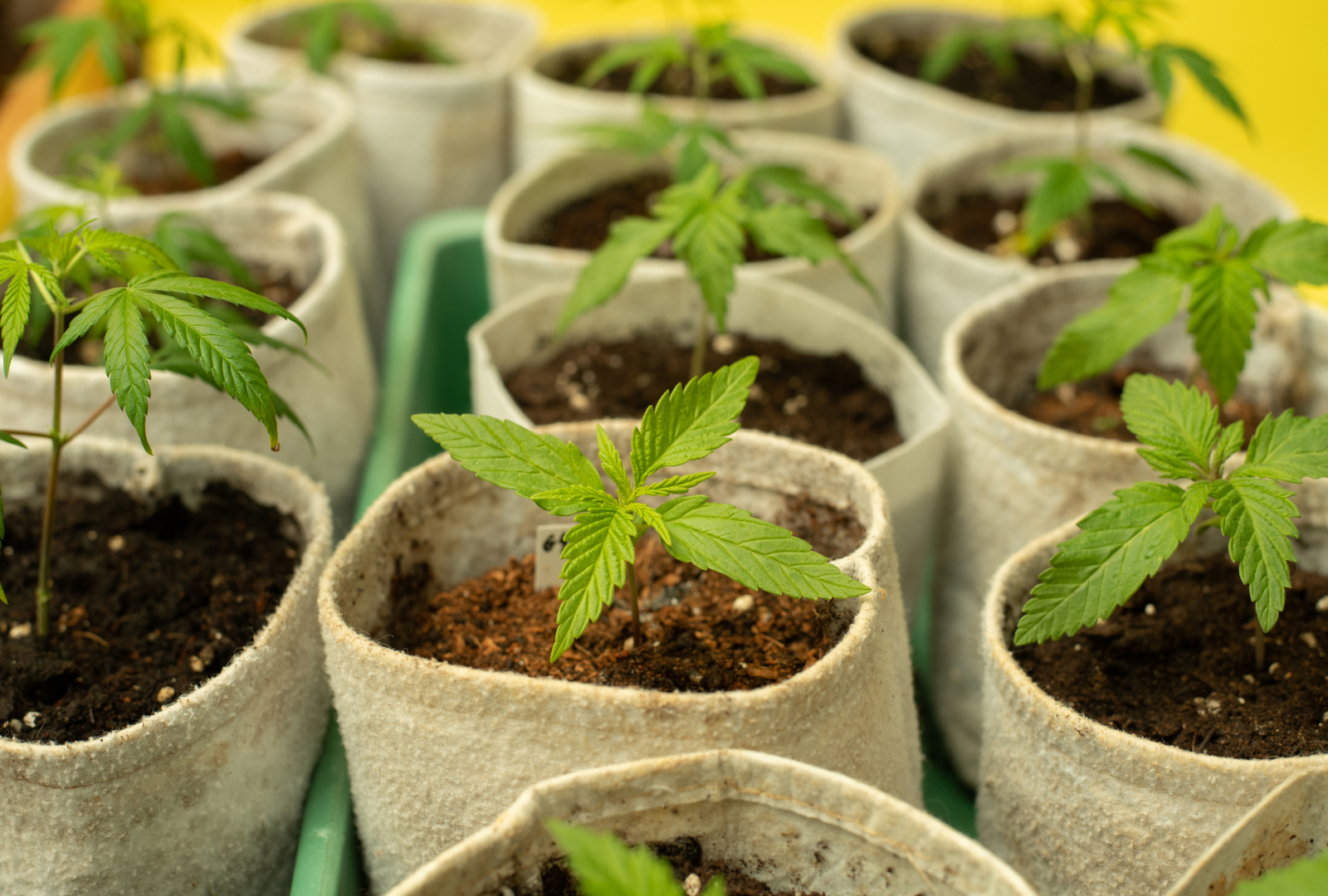
Match Volume to Water Storage and Dry-Back
Outdoors, container size is often an irrigation decision disguised as a root-growth decision. A plant that fits physically into a pot can still overwhelm its water reserve on a hot afternoon. The larger the canopy becomes relative to the usable substrate volume, the faster the wet-to-dry cycle can accelerate.
A small container has a short service interval
Think of the pot as a reservoir with a biological user attached to it. The service interval is the time between a thorough irrigation and the point at which the plant begins to experience an unacceptable water deficit. A smaller reservoir generally reaches that point sooner under the same conditions.
Outdoor conditions can shorten the interval quickly. Direct sun warms the container. Wind increases canopy transpiration and evaporation from porous pot walls. A large plant can draw far more water in midsummer than it did a month earlier. The result is that a container that was easy to manage in spring can become a twice-daily responsibility during a hot, windy period.
Dry-back is the change in root-zone water content between irrigations
Dry-back is not simply the top of the pot becoming dry. It describes how the usable root zone loses water after irrigation. A useful dry-back restores air to pore spaces without allowing a large share of active roots to remain severely dry for too long.
A large container can stay wet too long when the plant is still small
Oversizing creates a different problem. If a small transplant occupies only a small fraction of a large pot, the total medium may lose water slowly because the plant is not yet drawing strongly from most of it. In a dense or highly water-retentive mix, repeatedly saturating the entire container can keep lower zones wet for too long.
This is why “bigger is safer” is incomplete. More volume increases storage, but the correct amount of stored water depends on root occupancy, medium porosity, evaporation, container material, and climate. During early establishment in a large final pot, irrigation should expand with the active root zone instead of automatically soaking every liter on a fixed calendar.
Increase the wetted area as roots colonize the pot
Use observations of root-zone moisture, plant size, and dry-back to widen and deepen irrigation coverage over time.
Flood a huge container on a calendar because the pot is huge
A small root system may not use the stored water quickly enough, especially in a dense or cool medium.
Important: A container is a hydraulic environment, not just a root box. Volume, medium structure, drainage, and irrigation must be evaluated together.
Container size cannot rescue an unsuitable mix
A fast-draining, high-porosity mix in a large pot can still dry quickly. A dense mineral or compost-heavy mix in a smaller pot can stay wet for too long. Water behavior comes from the interaction of particle size, pore continuity, organic matter, compaction, container height, drainage openings, root occupancy, and irrigation.
Do not respond to chronic wetness by simply moving into a smaller pot, and do not respond to rapid drying by automatically moving into a giant one. First determine whether the medium itself is creating the problem.
Master Advice: Size the root zone and the irrigation system together. The useful container is the one you can wet thoroughly, allow to re-aerate, and rewater before severe stress becomes routine.
Uneven wetting can make a large pot behave like a much smaller one
If irrigation repeatedly wets only one narrow column, roots may concentrate there while the rest of the medium remains comparatively dry. Water can also bypass a dry root ball through shrinkage gaps or preferential channels. In either case, the advertised container volume exaggerates the volume the plant is actually using.
Check moisture at several positions, not only beside the stem. In large outdoor pots, inspect near the center, midway to the wall, and near the perimeter. Where practical, compare upper and lower depths as well. The goal is not identical moisture everywhere; it is evidence that a substantial, connected volume is participating in the wet-to-dry cycle.
“My 20-gallon outdoor pot drains almost immediately, but the plant still wilts by late afternoon. Does that mean I need a 30-gallon pot?”
Question sent by: Patrick Sullivan, via contact form.
Not necessarily. First verify that the existing pot is wetting evenly. Immediate drainage can mean a very porous mix, but it can also mean water is bypassing dry zones through channels or wall gaps. Check moisture in several parts of the root ball after irrigation, then compare morning and afternoon moisture. Increase volume only after you know the current volume is genuinely being used.
Container Geometry and Material Change the Meaning of Volume
Two containers labeled 20 gallons are not hydraulically identical. Height, width, taper, wall porosity, drainage pattern, color, and exposure all change how the medium behaves. This is why choosing only by gallon number can produce very different outdoor results.
Height changes the air-water balance inside a container
In container substrates, a wetter zone can remain near the bottom after gravitational drainage. The approximate height of this perched saturated zone is driven mainly by the substrate’s pore structure rather than by total container height. That means the same wet layer occupies a larger fraction of a shallow container than of a taller one.
This does not mean every tall pot is automatically better. Very narrow deep pots may be unstable outdoors, difficult to wet evenly, or poorly matched to a broad support system. The useful lesson is that equal volume does not mean equal water behavior.
Do not add a gravel layer to “improve” a large pot’s drainage
A coarse bottom layer does not create a drain. It reduces usable medium volume and can move the wetter interface upward. Use a suitable medium through the container and keep actual drainage openings clear.
Wide containers can improve stability but require broad irrigation coverage
A broad pot lowers the center of gravity and can create a wider rooting footprint, useful for outdoor plants carrying large canopies. It also spreads the medium across a larger surface area. More exposed surface can increase evaporation, and a single emitter near the stem may not wet the outer root zone adequately.
If the plant is staked or trellised, consider where anchors will go before choosing the pot. A narrow pot supporting a wide sail-like canopy can tip even when root volume is technically adequate.
Fabric and porous containers usually trade water retention for aeration and evaporative loss
Fabric pots and other porous designs allow more exchange through the sidewall than conventional nonporous plastic. They can reduce persistent circling at the wall and increase evaporative cooling, but that also increases water demand. In a windy outdoor site, the side of a fabric container becomes part of the evaporating surface.
A rigid plastic pot loses less water through its wall and may be easier to keep evenly moist, but direct solar heating can become a serious root-zone issue when dark plastic is exposed to intense sun. The correct size therefore depends partly on the material. A 38 L / 10 gal fabric pot and a 38 L / 10 gal black plastic pot do not necessarily have the same irrigation or temperature behavior.
Pro Tip: When comparing pot sizes, keep material constant. Changing both volume and material at the same time makes it harder to learn which factor actually fixed the problem.
Field Advice: When comparing two outdoor pots of equal volume, note their height, width, wall material, color, and drainage pattern. “20 gallons” may be the least informative difference between them.
Dark containers can turn size into a heat-management problem
A larger dark pot has more medium and more thermal mass, but it also presents a large solar-absorbing surface. Horticultural research has shown that exterior pot color and shielding can substantially change substrate temperature. The hottest zone is often near the sun-exposed wall, exactly where container roots may accumulate.
Pot size therefore cannot be separated from placement. A black container shaded at the sides while the canopy remains in full sun can behave differently from the same pot sitting on hot pavement with the western wall fully exposed. For a deeper treatment of this problem, see Cannabis Root Heat Stress: The Black Pot “Root Oven” Effect.
Measure the container environment you actually have
Compare root-zone temperature, moisture loss, and wind exposure in the real location before assuming a larger size will solve stress.
Use gallon size as a substitute for heat management
A large sun-baked container can still expose roots near the wall to damaging temperature swings.
Choose Outdoor Pot Size With a Repeatable Framework
A useful sizing method starts with constraints and works toward volume. This prevents the common mistake of choosing a popular pot size first and then trying to force the whole grow around it.
Step 1: Define the intended final canopy
Decide whether the plant is meant to remain compact, fill a modest patio footprint, or develop into a large seasonal specimen. Include height limits, neighbor visibility, wind exposure, branch-support needs, and local rules where applicable. Do not size roots for a plant that the site cannot safely support above ground.
Step 2: Define the season and vegetative opportunity
A plant moved outside late in the season has less time to build a huge root system than an early-established long-season plant. Photoperiod response, transplant date, climate, and cultivar maturity all affect how long the plant can keep expanding before flowering dominates.
Avoid converting this into a rigid “weeks of veg = gallons” formula. Outdoor growth rate is not constant. Cool spring weather, transplant stress, cloud cover, heat, drought, nutrient limitations, training, and genetics can change canopy development dramatically.
Remember: Final root-zone demand comes from the plant you actually grow, not the date printed on the calendar.
Step 3: Classify the medium by water behavior
Ask whether the final mix is coarse and fast, balanced, or dense and highly water-retentive. A smaller volume of frequently fertigated coco or another inert medium can support a plant very differently from the same volume of hand-watered living soil. Likewise, a large dense mix can hold more water than a young root system can use.
Use the container only after you understand what will fill it. Straight native garden soil is usually a poor choice in a conventional pot because container geometry changes drainage and aeration. Use a medium designed for container behavior.
Step 4: Calculate your realistic irrigation capacity
Ask how often the plant can be inspected and watered during the hottest part of the season. If the answer is once every morning, do not intentionally build a system that repeatedly requires a second irrigation by late afternoon. If automated irrigation is reliable and monitored, a smaller or more porous root zone may be manageable.
Plan for failure as well as normal operation. What happens if one emitter clogs? What happens during a two-day heat event? What happens if you are away from the garden for a day? The correct pot size gives the plant enough buffer for the level of supervision available.
Do not size a container around your easiest week
Use the hottest, driest realistic period and the largest expected canopy as the stress test. A pot that is effortless in May may be undersized for August.
Step 5: Set the mobility ceiling
Decide whether the plant must remain movable. If yes, define how it will move before choosing the pot. One person lifting it, two people carrying it, a wheeled platform, forklift access, or no movement at all are very different design constraints.
Remember that wet medium is heavy. A container that is manageable when half-filled at transplant can become fixed infrastructure after irrigation, root growth, staking, and canopy expansion.
Step 6: Check container heat and wind exposure
If the site is a hot balcony, reflective terrace, asphalt edge, rooftop, or windy patio, increase the importance of water buffer and thermal protection. If the pot is shaded at the root zone and sheltered from drying wind, the same volume may perform with a longer service interval.
Step 7: Choose the smallest volume that passes the whole plan with margin
The goal is not minimalism. It is avoiding unnecessary volume while maintaining enough reserve for peak demand, root development, and realistic irrigation. If two sizes both appear workable, the larger one usually gives more buffer, while the smaller one preserves more mobility and uses less medium. Let the site decide which advantage matters more.
| Decision Variable | Usually Pushes Size Smaller | Usually Pushes Size Larger |
|---|---|---|
| Planned canopy | Compact plant, short training footprint | Large seasonal canopy with long vegetative opportunity |
| Medium and feeding | High-frequency fertigated, well-aerated soilless system | Hand-watered soil or biological system that benefits from greater buffering |
| Irrigation access | Reliable automation or frequent inspection | Limited watering opportunities and need for longer reserve |
| Climate | Cooler, sheltered, lower evaporative demand | Hot, dry, windy conditions with rapid water loss |
| Mobility | Plant must remain movable | Plant can become effectively permanent |
| Root-zone heat | Well-shaded, thermally buffered container location | More volume may buffer temperature, but sidewall shading is still required in intense sun |
| Grower experience | Grower can manage frequent irrigation and diagnose dry-back quickly | Grower benefits from a wider moisture-management margin, provided the mix is not too wet |
Weedth Verdict: The best outdoor container size is the smallest root zone that still gives the planned plant enough water, root space, and management margin during peak demand.
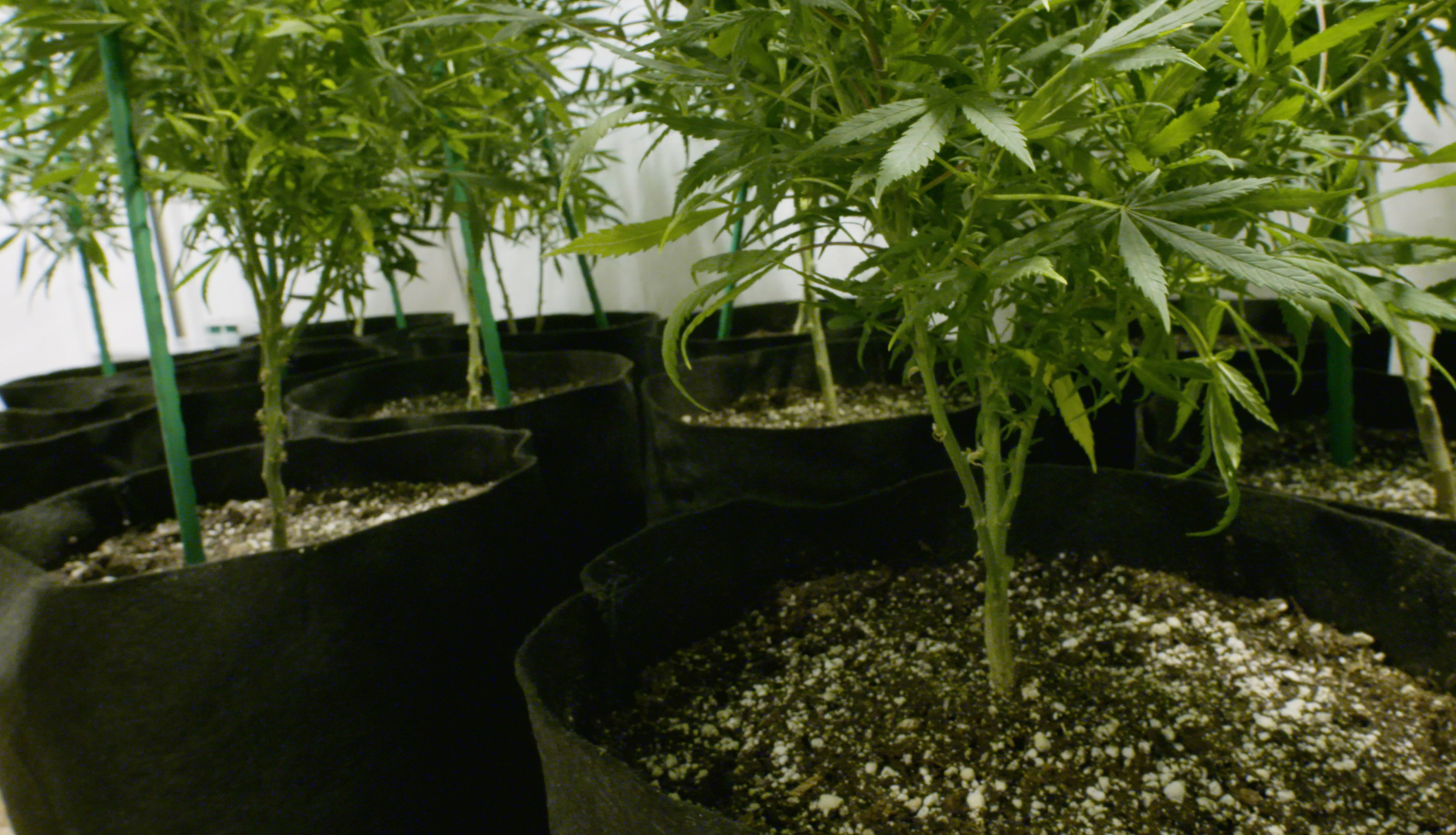
Recognize Containers That Are Too Small or Too Large for the System
There is no single visual sign that proves a pot is the wrong size. Diagnosis should combine water behavior, growth trend, root distribution, irrigation frequency, and environmental conditions. Several symptoms that growers blame on “root-bound plants” can also come from heat, salinity, poor wetting, nutrient imbalance, or root disease.
Signs the root zone may be functionally too small
A container becomes functionally undersized when the plant repeatedly outruns the water, nutrient, or physical root-space buffer despite otherwise sound management. Common patterns include increasingly rapid dry-back, a root ball that is densely occupied throughout, reduced growth after environmental and nutritional causes have been excluded, repeated wilt before the next reasonable irrigation window, and difficulty rewetting because the pot has become a dense mass of roots and channels.
Roots at the drainage holes alone do not prove this. Healthy roots commonly reach drainage openings long before the pot becomes unusable.
Look for a pattern of capacity failure
Combine dry-back speed, irrigation demand, root density, growth trend, and rewetting behavior before deciding the pot is too small.
Transplant because one root appeared at a drainage hole
A root finding the bottom is normal. The decision depends on whether the whole system has lost adequate buffer.
Very frequent watering can be a size problem or a medium problem
If a plant needs water extremely often, first check whether the full root zone is actually wet after irrigation. A hydrophobic or channelled mix can create apparent “small pot” behavior inside a large container. Also check whether fabric walls, strong wind, black-pot heat, or an excessively coarse substrate are accelerating water loss.
Only after those factors are controlled does increasing volume become a clean test of whether the root-zone reserve was too small.
Signs a large container is being managed as if the plant were already large
Oversizing is usually not a problem because the pot is physically large. The problem is how the large pot is watered and filled. A small plant in a huge volume can develop poorly if the entire medium is kept saturated for long periods, especially when the mix is dense, temperatures are cool, or drainage is restricted.
Watch for persistently wet lower zones, algae or fungus-gnat-favorable moisture at the surface, weak dry-back, sour or anaerobic odor, and root decline. These are not proof that the container itself is too big. They are evidence that the root-zone system is staying too wet relative to current plant demand.
Do not diagnose an oversized pot from slow growth alone
Slow growth can come from cold weather, transplant stress, root disease, low light, nutrient imbalance, salinity, poor aeration, or genetics. Check the root-zone moisture pattern before blaming volume.
Salt accumulation can make a physically adequate pot function poorly
All container roots depend on the chemistry of a limited medium volume. Repeated fertilizer application without appropriate drainage or monitoring can increase soluble salts. As roots occupy more of the pot and water use rises, concentration changes can happen quickly.
Do not automatically solve this with aggressive flushing. First identify whether salinity is actually elevated and consider the fertilizer program, water quality, medium, drainage, and crop stage. A larger pot dilutes some short-term swings but does not correct a poorly managed fertility system.
“My outdoor plant stopped stretching and the pot is full of roots. Should I transplant during flowering?”
Question sent by: Jessica Parker, via Facebook page.
First confirm that the pot is actually limiting the plant. Flowering naturally changes growth pattern, and heat, irrigation, nutrition, or root-zone problems can also reduce extension growth. A late transplant adds disturbance and may not be worthwhile if the plant can still be watered and fed predictably. Consider transplanting only when the existing root zone has a clear capacity problem and the benefit outweighs the disruption.
| Observation | Possible Size-Related Explanation | Important Look-Alikes | Next Check |
|---|---|---|---|
| Pot dries much faster than earlier in the season | Canopy has outgrown the available water buffer | Hydrophobic channels, hotter weather, fabric-wall evaporation, emitter failure | Check moisture distribution immediately after irrigation and again near the next watering |
| Roots visible at drainage holes | Roots have reached the container boundary | Normal root exploration | Assess whole-root-ball density and irrigation service interval before acting |
| Plant wilts in afternoon but recovers later | Water reserve may be too small for peak demand | Root-zone heat, high VPD, temporary midday response, disease, poor water delivery | Compare root-zone moisture and temperature before and during wilt |
| Large pot remains wet for many days | Current plant demand is low relative to stored water | Dense mix, blocked drainage, cool weather, root decline | Check moisture at depth and inspect drainage and medium structure |
| Growth slows despite regular feeding | Severe root-volume restriction is possible | Salt buildup, pH issue, heat, low light, flowering transition, pest or disease | Review root density, EC where appropriate, irrigation history, and environmental trend |
Recalculate the Choice for Heat, Wind, Rain, and Irrigation
An outdoor pot is exposed to weather from every side. This makes container size a moving target. The size that works in a humid, mild coastal garden may be frustratingly small in a hot inland climate. The same pot can also move from forgiving to demanding as the canopy doubles in area.
Heat increases the value of water buffer but does not replace thermal protection
More medium can slow some temperature and moisture swings, but a huge black pot in direct western sun can still develop a dangerously hot wall zone. Shade or shield the container sides where necessary, separate pots from heat-radiating surfaces, and measure the root-zone temperature rather than assuming volume protects it.
Safety Note: Do not improvise reflective wraps in ways that create electrical, fire, trip, or sharp-edge hazards around irrigation lines and outdoor equipment. Root-zone cooling should not create a new physical hazard.
Wind can make a moderate pot behave smaller
Wind increases leaf-level water loss and can also increase evaporation from fabric or porous walls. It simultaneously increases the need for physical stability. A larger, heavier pot may therefore improve both water buffering and resistance to tipping in an exposed site.
However, a large pot does not replace proper staking or support. Once the canopy is broad, wind load acts on the plant as a lever. Stabilize the canopy and container as a system.
Rain can expose the opposite problem
During prolonged rain, the advantage of a large water reserve disappears. What matters is how quickly the root zone can drain and re-aerate. A large pot full of poorly structured medium can remain wet long after the weather improves.
Do not drill random side holes or remove large amounts of medium as an emergency response without understanding the cause. First confirm that existing drainage openings are functional and that the pot is not sitting in standing water. If rain is a recurring seasonal feature, solve the medium and placement problem before the next cycle.
Size for both drought and rainfall
The container must store enough water for hot periods while still returning air to the root zone after irrigation or prolonged rain.
Choose volume from summer drought alone
A giant, slow-draining pot can become difficult during cool wet periods even if it is convenient during heat.
Automated irrigation changes the useful lower limit
Reliable, monitored irrigation can make smaller root zones practical because water and nutrients can be replenished more frequently. This is common in intensive soilless horticulture. The container still needs enough volume to support root health and provide a failure margin, but it does not need to store the same amount of water as a pot that is hand-watered once a day.
Automation does not eliminate risk. Emitters clog, pressure changes, timers fail, animals disturb lines, and reservoirs empty. A very small root zone can move from adequate to severe water deficit quickly when delivery stops.
Field Advice: The smaller the root-zone reserve, the more important irrigation redundancy becomes.
Use Transplanting to Change Capacity Before the System Fails
Outdoor plants do not have to spend their whole life in one container. Staged transplanting can make moisture management easier while the root system is small, then add volume before peak seasonal demand. The advantage is control. The disadvantage is another handling event and the possibility of delaying growth if the transplant is poorly timed or executed.
Transplant before the current pot becomes an emergency
The best timing is usually before the plant is repeatedly wilting, channeling water, or forming a very dense circling root mass. Look for a trend toward faster dry-back, broad root occupancy, and increasing irrigation demand rather than waiting for a crisis.
When moving to the final outdoor pot, preserve the root ball, maintain compatible media around the transplant, and water the interface deliberately. A highly dry root ball placed inside a wet outer mix can remain difficult to rewet. A very wet root ball placed inside a dry coarse mix can lose water differently from its surroundings.
Pro Tip: After up-potting, check both the old root ball and the new outer medium. For the first days, they can behave like two different containers inside one pot.
Remember: Up-potting should increase usable root-zone capacity. It should not bury a poorly wetted, compacted, or unhealthy root ball inside more medium.
Starting directly in a large final pot can work
Direct-to-final-pot growing avoids transplant disturbance and can be useful when the life cycle is short or when transplanting later would be inconvenient. The management challenge is irrigation. The young plant initially uses only a small portion of the final root zone, so the grower should avoid keeping the entire volume saturated merely because it is available.
As roots spread, increase the wetted footprint. The goal is a continuous transition from a small actively rooted zone to broad use of the final container.
Late-season transplanting should solve a real problem
A bigger container late in flowering does not automatically translate into more flower. If the plant can still be watered reliably, remains healthy, and has already completed most structural growth, the benefit of moving may be small. If the existing root zone is repeatedly failing to supply water or has become physically degraded, transplanting may still be justified, but the decision should be evidence-based.
Tip: Do not transplant because a calendar says it is time. Transplant because the current container is approaching a measured capacity limit and the plant still has enough season left to use the added root zone.
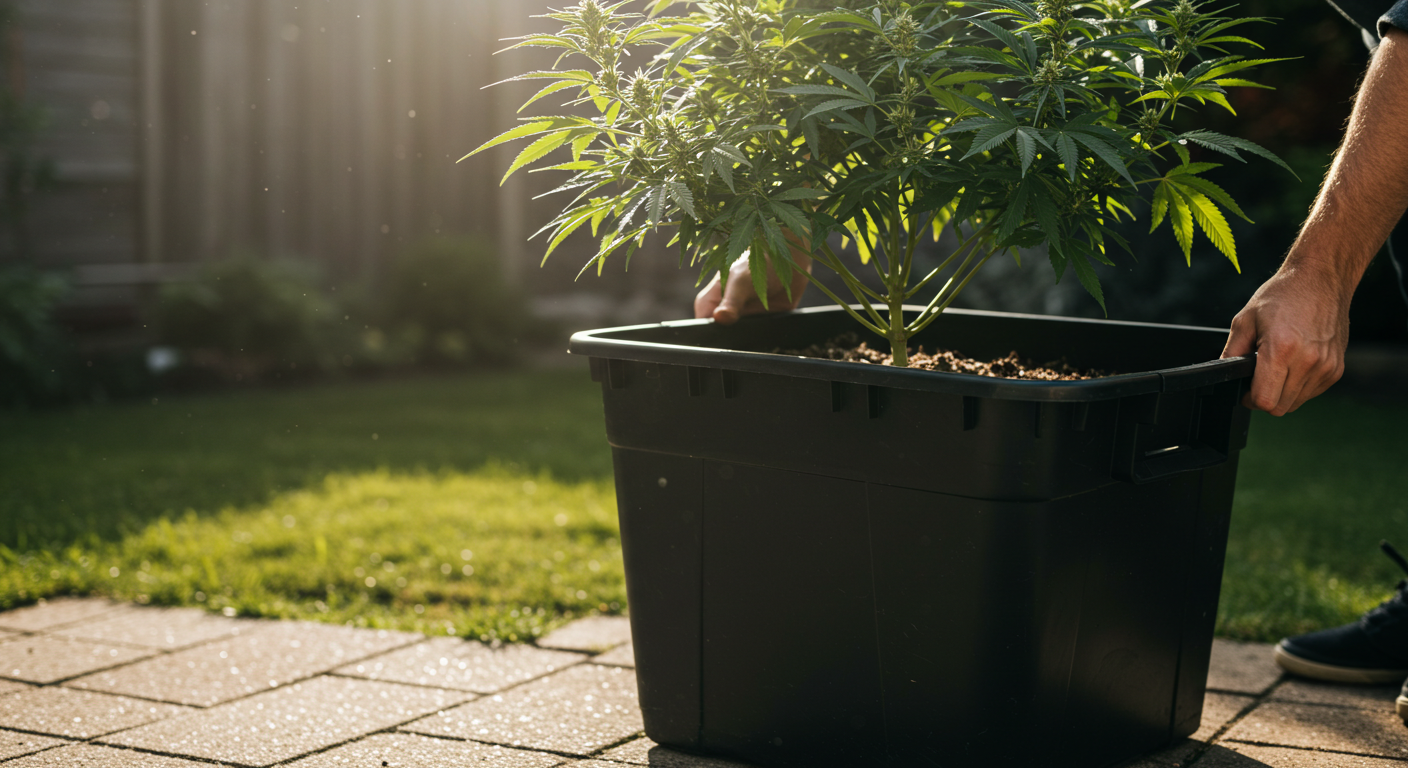
Verify the Container Choice During the Season
The most useful container-size recommendation is one you can test. Record how the system behaves rather than judging success only at harvest. The goal is to learn whether the pot provided adequate reserve without creating chronic wetness, excessive heat, or unnecessary maintenance.
Establish a baseline after the final transplant
For the first stable week after establishment, record irrigation volume or duration, the approximate time until the next irrigation, midday plant posture, and moisture at more than one point in the pot. If possible, note root-zone temperature during the warmest afternoon. This becomes the baseline against which midsummer behavior can be compared.
Recheck when the canopy expands or weather changes
Container demand can change faster than the pot itself. Reassess after a major growth surge, the start of sustained hot weather, installation of a larger canopy support, or any period in which irrigation frequency suddenly changes.
| Checkpoint | What to Record | What a Good Fit Looks Like | Reason to Reassess Size or System |
|---|---|---|---|
| First week after final transplant | Moisture pattern, irrigation amount, drainage, plant recovery | Root ball and surrounding medium begin to behave as one connected zone | Outer medium remains saturated while root ball dries, or water bypasses the root ball |
| After strong vegetative expansion | Dry-back interval, root-zone occupancy indicators, daily water demand | Irrigation remains practical and the whole pot rewets predictably | Demand accelerates beyond the available service interval |
| First sustained heat or wind event | Morning vs afternoon moisture, wilt pattern, root-zone temperature | Plant reaches the next planned irrigation without repeated severe stress | Root zone becomes severely dry or excessively hot before irrigation is possible |
| Prolonged rain period | Drainage time, lower-zone moisture, plant posture after rain stops | Air returns to the root zone in a reasonable period | Lower medium remains persistently saturated or develops odor/root decline |
| Early flowering | Water demand, container stability, support load, salt trend where monitored | The system remains predictable as canopy demand peaks | Pot is unstable, irrigation becomes unsustainable, or root-zone chemistry is becoming difficult to manage |
| End of cycle | Root distribution, unused wet zones, circling, substrate structure | Roots used much of the volume without severe binding or large anaerobic zones | Large unused zones suggest oversizing/poor irrigation; extreme root density suggests insufficient reserve |
Use the end-of-cycle root ball as evidence for the next grow
After harvest, inspect the root system before discarding the medium. Was the full volume colonized? Were roots concentrated only around emitters? Did they circle heavily along rigid walls? Was the lower medium still wet while the upper zone was dry? Did the mix collapse or compact?
Those observations can improve the next size decision more than a generic chart. If a 38 L / 10 gal pot was densely occupied and required an unrealistic irrigation frequency, move the next comparable plant upward in volume or improve water delivery. If a 95 L / 25 gal pot retained a large, poorly rooted lower zone all season, more volume was not the missing factor.
Before You Commit to an Outdoor Container Size
- Define the intended final canopy instead of sizing by cultivar label alone.
- Estimate the longest realistic vegetative opportunity and season length.
- Know whether the medium is fast, balanced, or highly water-retentive.
- Size for the hottest and windiest realistic irrigation week, not spring weather.
- Decide whether the finished plant must remain movable.
- Account for pot material, color, wall porosity, height, width, and drainage.
- Confirm that irrigation can wet a substantial connected root-zone volume.
- Leave enough water reserve for realistic irrigation failures without keeping roots chronically wet.
- Plan canopy support and container stability before the plant becomes top-heavy.
- Recheck the decision as the canopy expands and again during the first major heat event.
- Inspect the root ball at the end of the cycle and use that evidence to adjust next season’s volume.
Frequently Asked Questions About Outdoor Cannabis Container Size
What is a good outdoor cannabis pot size?
There is no universal size. Roughly 38 L / 10 gal and upward is a common planning zone for seasonal outdoor plants, but compact plants can finish in less and large long-season plants may benefit from much more. Climate, medium, irrigation frequency, final canopy, and mobility matter more than the number alone.
Is a 5-gallon pot too small for outdoor cannabis?
Not automatically. About 19 L / 5 gal can support a deliberately compact outdoor plant, especially with reliable irrigation and an appropriate medium. It becomes limiting when water demand, root density, or nutrient-management needs repeatedly exceed what that volume can support.
Is a 20-gallon pot enough for a large outdoor plant?
About 76 L / 20 gal provides substantially more root-zone buffer than smaller patio pots, but “large” has no fixed biological meaning. A long-season plant with a very broad canopy can still outgrow the practical water reserve of that container, while a moderate plant may never use the full volume.
Can an outdoor pot be too big?
The physical size is rarely the direct problem. Trouble develops when a small plant sits in a large, slow, saturated medium or when the extra volume creates weight, irrigation, cost, or mobility problems. A large pot needs a medium and watering pattern that match current root occupancy.
Do fabric pots need to be larger than plastic pots?
There is no fixed conversion. Fabric walls can increase evaporation and often shorten the irrigation interval outdoors, so a grower may choose more volume for additional water buffer. But medium, wind, humidity, sun exposure, and irrigation frequency can matter more than material alone.
Does a larger pot always increase cannabis yield?
No. Severe root restriction can reduce plant growth, but yield is also controlled by genetics, light, season length, water, nutrition, root health, canopy management, disease pressure, and harvest timing. Once root-zone capacity is no longer a major limitation, adding more unused medium does not guarantee more flower.
Should autoflowers always start in their final outdoor pot?
Starting in the final container can avoid a poorly timed transplant during a short life cycle, but it is not a universal biological requirement. The tradeoff is that a very young plant in a large final pot needs careful moisture management. Skilled growers can also transplant healthy plants with minimal interruption.
How do I know whether to go one size larger next season?
Use your records. If the plant repeatedly exhausted the water reserve before you could irrigate, densely occupied nearly the entire root ball, stayed healthy otherwise, and would have benefited from more canopy growth, more volume is reasonable. If large areas remained unused or chronically wet, solve irrigation or medium behavior before adding size.
Choose the Pot That Still Works on the Hardest Day
Outdoor cannabis container size should be chosen from the plant’s expected demand and the grower’s ability to service that demand. Small pots provide mobility and tighter size control but reduce the margin for heat, wind, irrigation delay, and root restriction. Larger pots increase root volume and buffering but add weight, cost, slower early dry-back, and a larger irrigation footprint.
The most reliable choice is not the largest number on a chart. It is the container that remains predictable when the canopy is mature, the weather is hot, the irrigation system is under its greatest load, and the root zone still needs both water and oxygen. Choose enough volume to prevent capacity failure, then verify that the plant actually uses the volume you provided.
Share this article
A quick overview of the topics covered in this article.
Follow us
Latest articles
September 3, 2026
September 3, 2026
September 3, 2026
September 3, 2026