
Long-Term Nutrition for Cannabis Mother Plants: Longevity Physiology, Low-EC Maintenance, and Root-Bound Rejuvenation
In nature, cannabis is an obligate annual plant biologically hardwired to complete its lifecycle from seed to senescence within a single six-month seasonal window. In modern commercial and craft cultivation, elite mother plants (stock plants) are artificially maintained in a perpetual vegetative state under 18-to-24-hour photoperiods for six months to several years. Forcing an annual organism to behave as an indeterminate perennial introduces complex physiological failure points that standard vegetative fertility schedules cannot resolve. Over extended lifespans, conventional high-nitrogen, high-EC feeding programs cause severe stem lignification (woody branches that produce poor-striking cuttings), chronic secondary mineral salt accumulation, severe root compaction (pot-bound hypoxia), and declining meristematic vigor frequently misdiagnosed as “genetic drift.” Maintaining high cutting productivity and rapid adventitious rooting requires an agronomically distinct nutritional regimen: operating at a conservative maintenance electrical conductivity (EC) of 1.0 to 1.4 dS/m, balancing tissue carbohydrate-to-nitrogen (C:N) ratios, moderating potassium to prevent calcium antagonism, and executing periodic root-zone renovation. This comprehensive manual details the longevity physiology of cannabis mother plants, outlines diagnostic root-zone metrics, provides structured multi-month feeding schedules, and establishes clinical root-pruning protocols to maintain elite mother stock indefinitely.
The Perennialized Annual: Longevity Physiology in Cannabis Mother Plants
To successfully manage mother plant nutrition across multiple years, cultivators must confront a fundamental biological contradiction: cannabis is an annual species possessing no natural evolutionary adaptations for perennial survival. In true perennial woody plants (such as fruit trees or grapevines), specialized dormancy cycles, secondary xylem growth rings, and robust root storage organs (rhizomes or tubers) allow the plant to store starch during dormancy and purge metabolic wastes. Cannabis lacks these physiological adaptations.
When a cannabis mother is maintained under continuous vegetative photoperiods (18/6 or 24/0), its vascular cambium continuously produces secondary xylem and phloem, but without the environmental cue to flower, the plant deposits massive quantities of lignin and cellulose within the stem cell walls. Lignin is a complex, hydrophobic aromatic polymer that cross-links plant polysaccharides, transforming pliable green herbaceous stems into rigid, woody branches. While structural rigidity is desirable in an outdoor tree, it is disastrous in a cannabis mother plant. Highly lignified stems contain compressed vascular bundles, reduced parenchymal tissue, and suppressed responsiveness to endogenous rooting hormones (auxins). Cuttings harvested from woody, over-fertilized mothers exhibit prolonged rooting times (16 to 24 days instead of 8 to 10 days), high failure rates, and poor early vegetative branching.
Furthermore, an aged mother plant develops a high ratio of non-photosynthetic structural biomass (thick woody main stems, knuckle knots from repeated pruning, and dead core roots) relative to active, light-harvesting fan leaves. This elevated non-photosynthetic tissue mass acts as a continuous metabolic respiratory sink, consuming vast quantities of ATP and carbohydrates simply to sustain basal cell maintenance. If the nutritional program is not calibrated to support this altered source-sink dynamic, the plant enters chronic cellular senescence.
Hormonal Homeostasis: Auxin-to-Cytokinin Ratio Disruption
The physiological aging of mother plants is intimately governed by the balance between two primary phytohormones: auxins (synthesized in developing shoot apical meristems and transported downward via basipetal polar transport through PIN-formed efflux carriers) and cytokinins (synthesized in active, dividing root tips and transported upward through the xylem). In a juvenile, vigorous cannabis plant, robust root growth produces high concentrations of zeatin and isopentenyl adenine (cytokinins), which suppress apical dominance, stimulate active lateral branching, and prevent leaf chlorophyll breakdown.
As a mother plant matures and becomes root-bound, active root tip division declines by 60% to 80%. Cytokinin production plummets. Simultaneously, constant mechanical harvesting of upper shoots repeatedly severs the primary sites of auxin synthesis. This dual hormonal collapse leaves the aged mother plant in a state of endocrine paralysis. The remaining shoot meristems produce thin, spindly, rubbery stems that lack the vascular infrastructure to transport water and dissolved minerals efficiently. Understanding this hormonal feedback loop is crucial: nutrient adjustments must be paired with strategic pruning to continuously stimulate new juvenile root and shoot meristems.
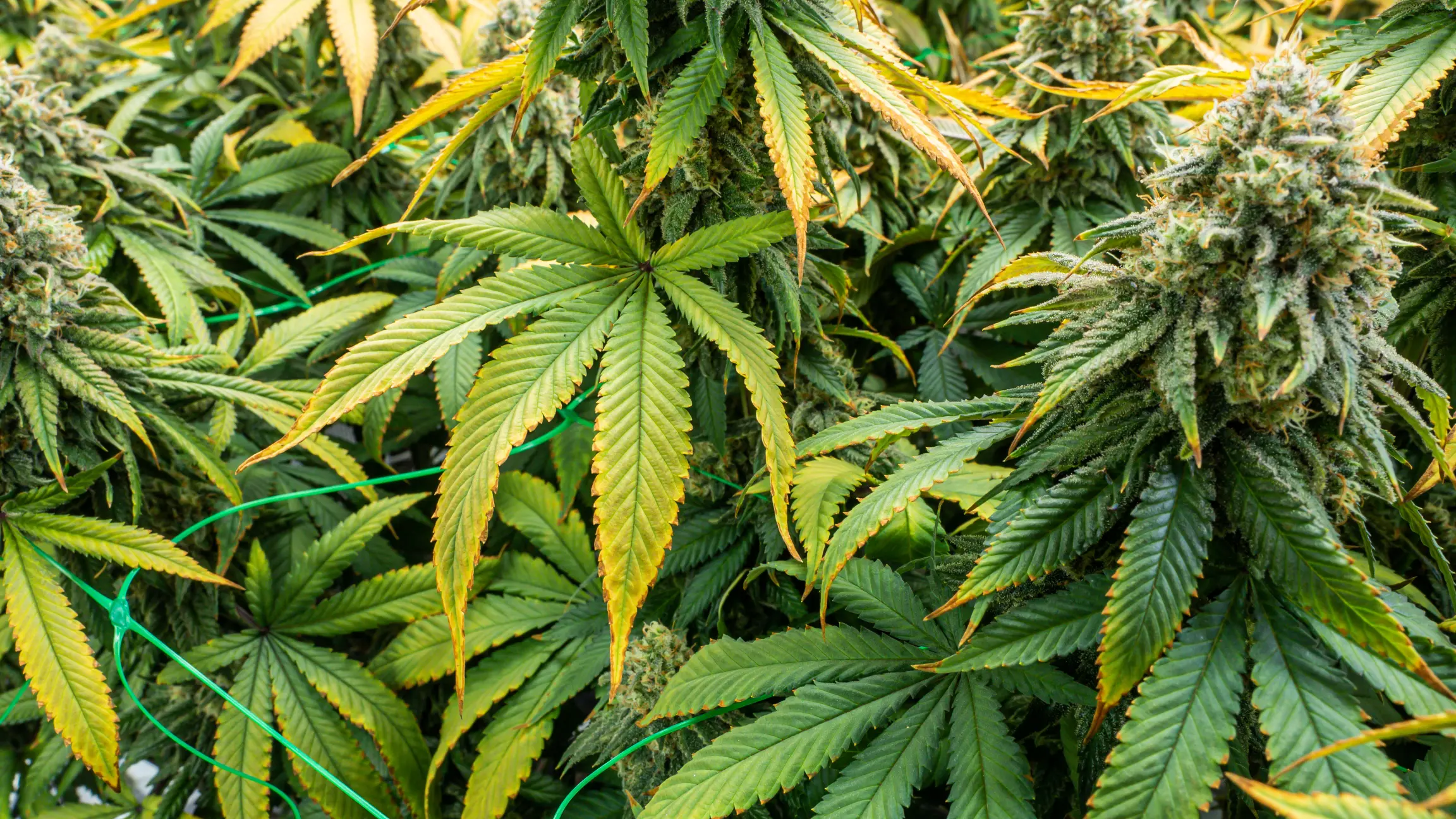
Maintaining vigorous, indeterminate vegetative growth in an annual species requires precision low-EC fertility to prevent woody stem lignification and root-zone salt accumulation.
The Carbohydrate-to-Nitrogen (C:N) Balance: Cutting Rooting Velocity
The quality of a cannabis cutting is determined before it is ever severed from the donor mother plant. The primary physiological metric governing adventitious root initiation is the internal Carbohydrate-to-Nitrogen (C:N) ratio within the terminal stem tissues.
A common mistake in commercial nurseries is treating mother plants like rapid-growth production vegetative plants, pumping them with high-nitrogen fertilizers (input EC 2.0 to 2.4 dS/m with elemental N exceeding 160 to 180 mg/L). High root-zone nitrogen availability forces the mother plant to synthesize abundant amino acids, proteins, and chlorophyll. While this produces fast-growing, dark green, lush foliage, it drives the internal C:N ratio dangerously low. The plant converts its soluble carbohydrates (sucrose, glucose, and fructose) into proteinaceous growth as quickly as they are produced through photosynthesis, leaving virtually zero reserve starch stored in the stem tissues.
When a cutting with a low C:N ratio is harvested and inserted into a propagation plug, it has no stored energy reserves to fuel the energetically expensive process of dedifferentiating cortical cells into adventitious root primordia. The cutting quickly exhausts its internal sugars, lower leaves turn yellow and drop within 5 days, and the severed stem base frequently rots before root vascularization can occur.
Conversely, a moderately high C:N ratio – achieved by moderating nitrogen fertility (input N held at 90 to 110 mg/L) under moderate PPFD (300 to 450 μmol/m2/s) – encourages the mother plant to accumulate starch reserves in stem cortical parenchyma while maintaining firm, flexible, non-woody vascular tissue. When severed, these carbohydrate-rich cuttings utilize their stored starches to power rapid root strike within 7 to 10 days, retaining dark green foliar integrity throughout the dome phase.
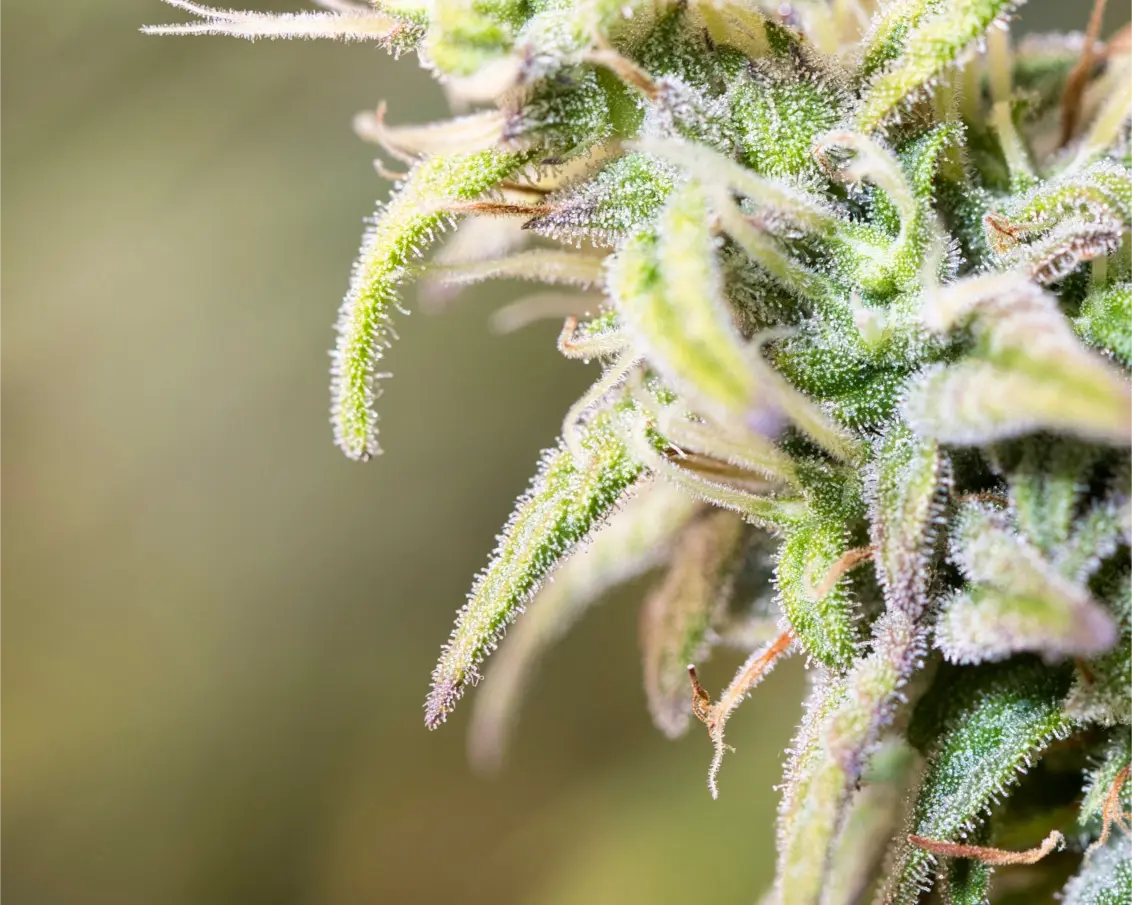
Balancing internal tissue carbohydrate-to-nitrogen ratios in vegetative mother stock produces flexible, semi-firm cuttings with high adventitious rooting velocity.
The Low-EC Continuous Fertility Regimen: 1.0 to 1.4 dS/m Calibration
The central guiding principle of long-term mother plant fertility is maintenance feeding rather than forced biomass accumulation. Unlike production vegetative rooms where the objective is to build maximum canopy volume in the shortest possible timeframe, the goal in the mother room is to harvest healthy, uniform, vigorous cuttings on a predictable schedule while keeping the mother plant healthy and compact.
Feeding mother plants at high electrical conductivities (>1.8 dS/m) forces rapid, uncontrollable canopy expansion, requiring constant aggressive pruning that creates large wound sites, promotes pathogen infection, and accelerates root binding. Running an input EC of 1.0 to 1.4 dS/m in soilless substrates (coco coir, rockwool, or peat-perlite) satisfies baseline nutrient requirements while keeping cell division steady and controlled.
The elemental mineral balance for long-term mother maintenance should follow these precise parameters:
- Nitrogen (N): 90 to 110 ppm. Maintain at least 90% of total nitrogen in the nitrate (NO3–) form, keeping ammoniacal nitrogen (NH4+) below 10 ppm. High ammonium accelerates stem elongation, lowers root-zone pH, and softens stem tissues, reducing cutting shelf-life.
- Phosphorus (P): 25 to 35 ppm. Phosphorus demands in purely vegetative mother stock are exceptionally low. Elevated phosphorus provides zero agronomic benefit, suppresses mycorrhizal colonization, and precipitates with calcium and iron in long-term substrates.
- Potassium (K): 90 to 120 ppm. Potassium should be moderated to prevent cation competition with calcium and magnesium. A 1:1 ratio between nitrogen and potassium maintains tight internodal spacing and firm stem caliber.
- Calcium (Ca): 90 to 110 ppm. High calcium availability is non-negotiable for mother plants. Calcium is required to synthesize calcium pectate in middle lamella cell walls and activate cell division in shoot apical meristems. Strong calcium nutrition ensures that harvested cuttings possess robust, tear-resistant cell walls that resist desiccation under propagation domes.
- Magnesium (Mg): 40 to 50 ppm. Sustains core chlorophyll synthesis and activates RuBisCO enzymes without antagonistic competition from excessive potassium.
- Micronutrient Chelation: Maintain iron (Fe) at 2.5 to 3.5 ppm, ideally chelated with DTPA or EDDHA to guarantee solubility across long-term substrate pH drifts. Boron (B) should be held at 0.3 to 0.5 ppm to ensure continuous auxin transport from apical shoots.
Chronic Substrate Aging: Managing Multi-Month Salt Creep and Bicarbonate Drift
In standard crop cycles, containers are emptied, cleaned, and refilled every 10 to 14 weeks. In a mother plant maintained in a 5-to-15-gallon container for 12 months, the root-zone substrate undergoes profound physical and chemical degradation that never occurs in short-cycle crops.
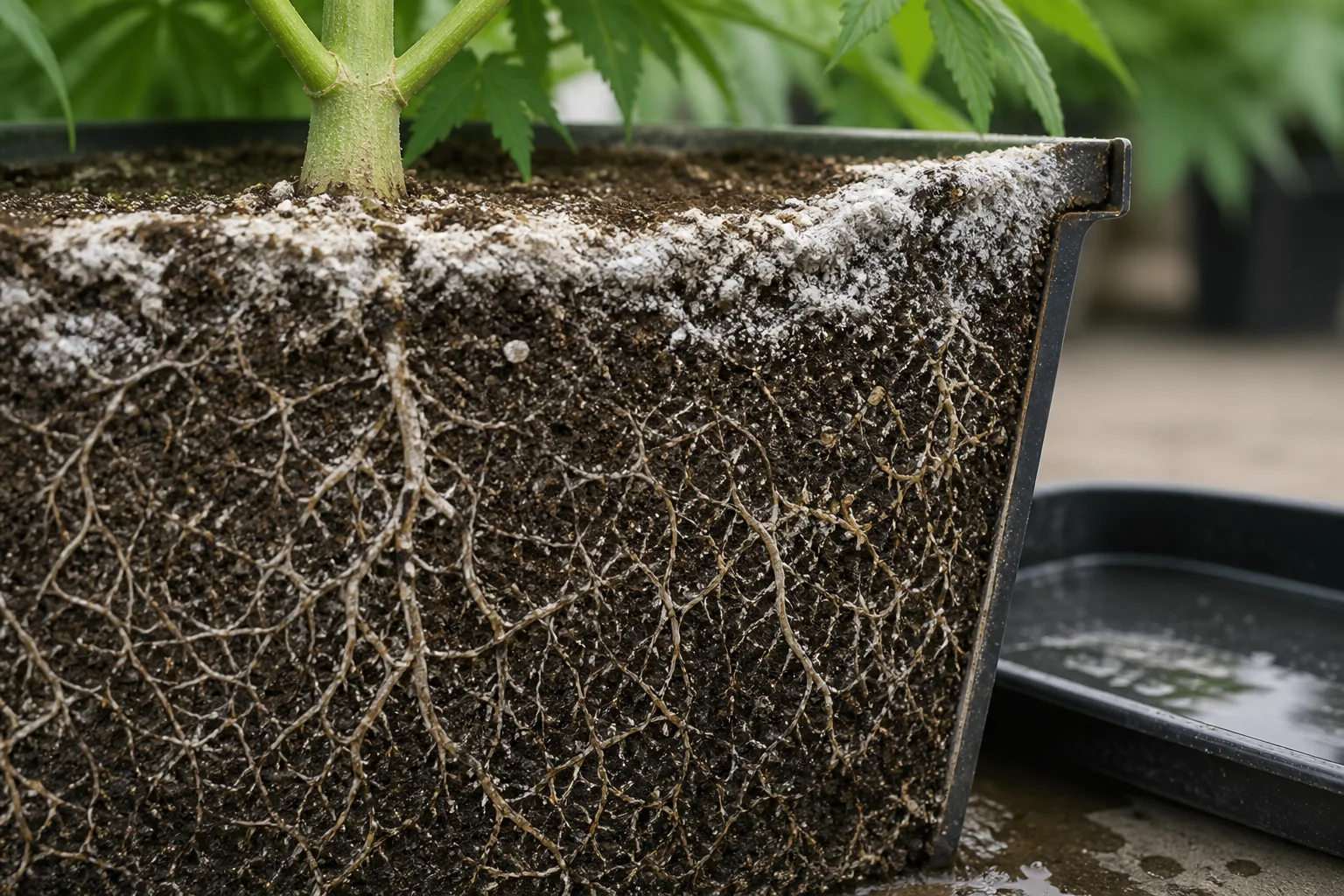
Months of continuous fertigation in static containers result in insidious secondary mineral salt accumulation in the lower root zone, suppressing active ion uptake.
1. The Mechanics of Chronic Salt Creep
Every fertigation event delivers dissolved mineral salts. Even when irrigating to achieve a standard 15% to 20% leaching fraction, water evaporates continuously from the upper substrate surface, and plant roots actively exclude secondary non-essential or luxury ions (such as sodium, chloride, and excess sulfate). Over 6 to 12 months, these excluded ions crystallize within micro-pores and along container sidewalls.
This phenomenon, known as chronic salt creep, causes a steady upward drift in root-zone pore water electrical conductivity. A mother plant receiving 1.2 dS/m input feed may eventually experience a root-zone pore water EC exceeding 4.0 to 5.5 dS/m in the lower third of the root ball. This extreme localized salinity creates chronic osmotic drought, killing delicate root hairs and forcing the plant to rely exclusively on upper, younger roots. Above ground, the mother begins displaying random, confusing foliar symptoms: marginal necrosis, interveinal chlorosis, and stunted new shoots that fail to respond to standard fertilizer adjustments.
2. Substrate Compaction and Carbonate Accumulation
Organic substrates (such as sphagnum peat moss and coco coir) naturally decompose over time under continuous moisture and microbial action. Peat fibers break down into fine particulate silt, while coco pith particles collapse, dramatically reducing the container’s air-filled porosity (AFP). A fresh soilless mix boasting 20% to 25% air-filled porosity may degrade to less than 8% to 10% AFP after eight months of continuous fertigation.
Simultaneously, if the facility utilizes municipal tap water or well water containing calcium bicarbonate (alkalinity > 80 mg/L CaCO3), bicarbonate ions continuously react with substrate particles, neutralizing natural acidity and driving root-zone pH steadily upward toward 6.8 to 7.4. This alkaline drift causes the complete precipitation of iron, manganese, and zinc, locking out essential micronutrients and leaving the mother plant chronically chlorotic.
Cultivator Inquiry: Declining Clone Rooting Vigor and “Genetic Drift”
Why are our mother plant cuttings taking 18 days to root instead of 9?
Question sent by: Samantha Reyes, via email.
“We maintain several award-winning mother plants in 10-gallon smart pots with coco coir. For the first six months, their cuttings struck roots aggressively within 8 to 10 days with a 98% success rate. Over the past four months, however, cuttings from these exact same mothers take 16 to 20 days to show roots, the cutting stems are woody and hollow, and our strike rate has dropped below 75%. Our production team claims the cultivar is suffering from irreversible genetic drift and needs to be replaced from tissue culture. Is genetic drift real, or is our mother plant suffering from a nutritional and root-zone issue?”
Samantha, what you are experiencing is 99% guaranteed to be physiological and nutritional senescence coupled with severe root-bound hypoxia, not genetic drift. The term “genetic drift” is widely misused in the cannabis industry as a catch-all excuse for declining plant performance. In botanical reality, somatic point mutations occurring in vegetative meristems are exceptionally rare; an elite clone does not spontaneously mutate its entire genome and lose its rooting capacity over 14 months.
What has actually drifted is the physical and chemical microenvironment inside your 10-gallon containers. Over 14 months, three distinct physiological failures have occurred:
- Root-Bound Hypoxia: The root system has completely saturated the pot volume. Roots have circled, thickened, and suberized, forming a dense, impenetrable root mat. The air-filled porosity of your coco has collapsed, depriving root cells of dissolved oxygen and causing chronic root rot in the container core.
- Vascular Lignification: Constant pruning combined with standard vegetative feeding has driven the mother’s vascular cambium to deposit thick layers of lignin. Your cuttings are woody rather than herbaceous; their parenchymal cells cannot easily revert to meristematic activity to form adventitious root primordia.
- Alkaline and Salt Accumulation: Your root zone has accumulated months of residual mineral salts and bicarbonate alkalinity, creating chronic nutrient lockout and depressing the carbohydrate-to-nitrogen ratio.
You can completely restore this mother plant to pristine health and return your rooting velocity to 8 days by executing a mechanical root pruning and substrate renovation. Shave the outer 30% of the root ball, wash the core with fresh conditioned solution, repot into fresh buffered media, and step down your input EC to 1.1 dS/m. Within 21 days, the mother will flush with soft, juvenile, hormone-rich herbaceous shoots that root just as vigorously as they did on Day 1.
Root-Bound Hypoxia: Mechanical Root Pruning and Container Renovation
In containerized horticulture, a root system that outgrows its container experiences root-bound hypoxia. Roots circle the perimeter of the pot, forming a dense, fibrous mat that physically blocks water drainage channels. Gravitational water becomes trapped in perched water tables, driving dissolved oxygen concentrations below 2.0 mg/L.
Under hypoxic stress, root tips cease synthesizing cytokinins, the primary plant hormones manufactured in active root meristems and translocated upward to stimulate lateral shoot branching and delay foliar senescence. Simultaneously, stressed roots over-produce ethylene, accelerating leaf yellowing, petiole epinasty (downward leaf drooping), and stem lignification. No amount of fertilizer adjustment can fix a root-bound mother; the physical root mass must be surgically renovated.
Air-Pruning Containers vs Traditional Rigid Plastic Pots
Container geometry and wall permeability exert a profound influence on root architecture and mother plant longevity. In traditional smooth-walled rigid plastic containers, root tips encounter the impenetrable plastic barrier and are deflected horizontally. Driven by geotropic and thigmotropic responses, the roots begin circling the container circumference, forming a dense, tangled, outer root cage that strangles interior media channels. As the outer root cage suberizes and thickens, it forms an impermeable barrier that blocks gas exchange, creating a stagnant, anaerobic zone in the core of the pot.
Cultivators can prevent this pathological root architecture by housing mother plants exclusively in breathable fabric containers or contoured air-pruning pots (such as Air-Pots or slotted nursery containers). When an active root tip approaches the porous sidewall of a fabric container, it is exposed to ambient air with lower relative humidity. The root tip naturally dehydrates and ceases longitudinal elongation (a process known as air-pruning). This apical desiccation triggers an immediate hormonal response within the plant: the loss of the apical root tip stimulates the activation of lateral root primordia further back along the root axis.
Instead of a few thick, circled, woody roots, the container becomes completely populated by a hyper-branched network of thousands of fine, fibrous, highly active secondary and tertiary root hairs. This vastly increases the functional root surface area, maximizes oxygen diffusion into the rhizosphere, and extends the operational window between necessary mechanical root-pruning interventions from 4 months to 8 to 10 months.
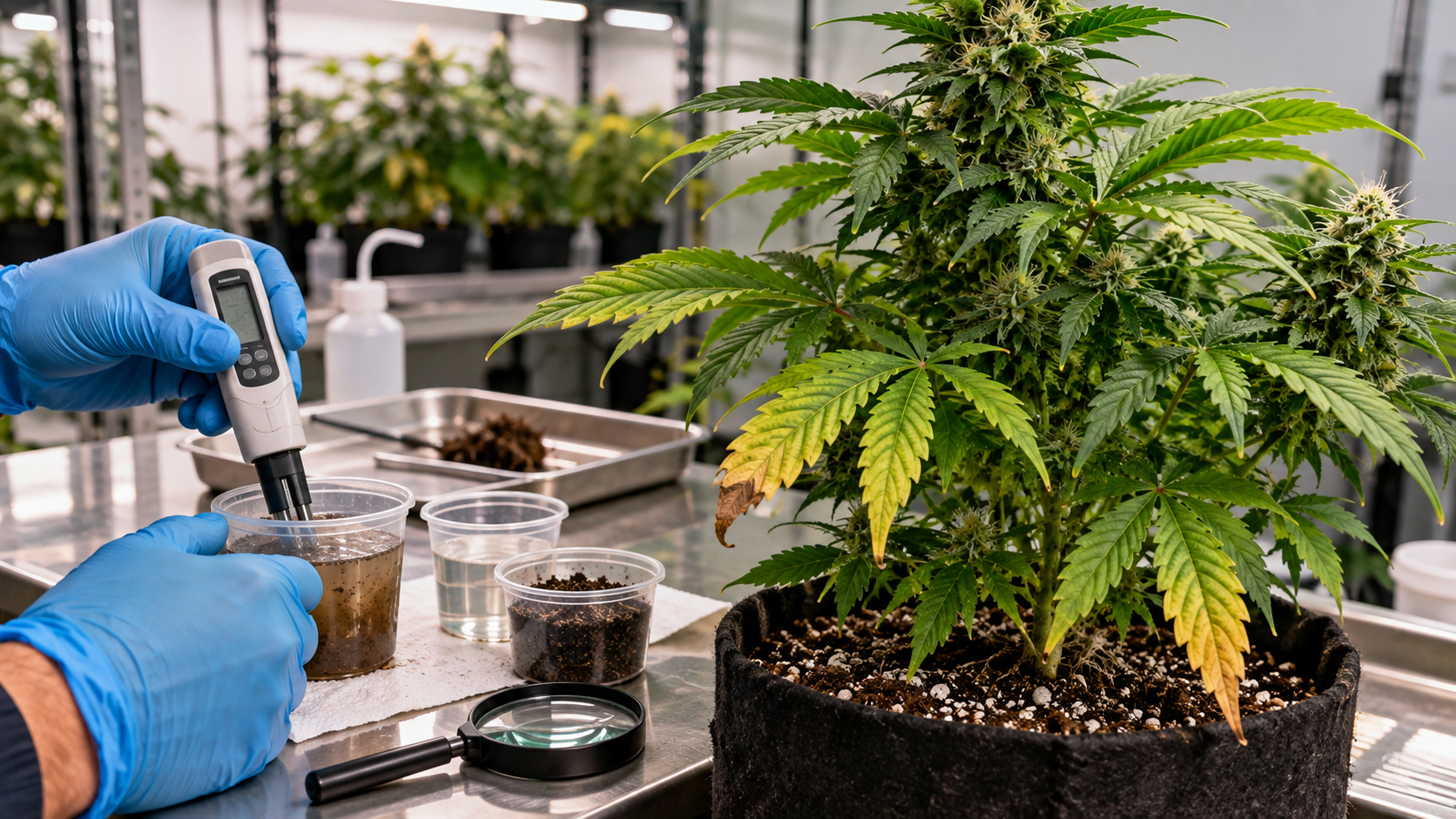
Periodic mechanical root pruning and media replenishment restore root hydraulic conductivity, preventing chronic micronutrient lockouts in mature stock.
Long-Term Mother Plant Nutritional Benchmark Matrix
The following clinical parameter matrix defines standard baseline feeding benchmarks across the three distinct phases of mother plant lifecycle management in soilless substrates under 18/6 photoperiods (PPFD 350 to 450 μmol/m2/s, room temp 24 to 26 °C, VPD 0.9 to 1.1 kPa):
| Mother Management Phase | Target Input EC (dS/m) | Input pH | Target Runoff EC (dS/m) | Elemental N Target (ppm) | Elemental Ca:Mg Target | Agronomic Objective |
|---|---|---|---|---|---|---|
| Maintenance Holding Phase | 1.0 – 1.2 | 5.8 – 6.0 | 1.1 – 1.4 | 85 – 100 | 2.2:1 (90 ppm Ca / 40 ppm Mg) | Steady, compact growth; minimal pruning required; high carbohydrate storage in stem cortex. |
| Pre-Cutting Production Boost (10 days before cutting harvest) |
1.3 – 1.5 | 5.7 – 5.9 | 1.3 – 1.6 | 110 – 125 | 2.5:1 (105 ppm Ca / 42 ppm Mg) | Stimulate active apical shoot extension; ensure new shoots possess ample cell turgor and active auxin transport. |
| Post-Pruning Rejuvenation (Days 1 to 14 post root-prune) |
0.8 – 1.0 | 5.8 – 6.0 | 0.9 – 1.2 | 70 – 85 | 2:1 (70 ppm Ca / 35 ppm Mg) | Gentle osmotic environment to encourage rapid regeneration of root hairs into fresh surrounding media. |
Diagnostic Pitfalls: Lignification vs Deficiencies vs Pathogen Crashes
When an aged mother plant displays foliar chlorosis or stunted shoot growth, cultivators frequently misdiagnose the underlying pathology. Deploying the wrong remedial action exacerbates the decline:
- Pitfall 1: Treating Root-Bound Chlorosis as Nitrogen Deficiency. When lower leaves on a mature mother turn pale yellow, growers often double their nitrogen feeding. If the root system is pot-bound and hypoxic, root respiration is stalled; adding more nitrate ions simply increases root-zone osmotic pressure, burning remaining root hairs and triggering rapid leaf drop. Always verify leachate EC before adding fertilizer.
- Pitfall 2: Confusing Woody Lignification with Boron Deficiency. Severely lignified stems become brittle and develop hollow pith cores that can be mistaken for boron deficiency. If tissue tests reveal adequate boron (>25 ppm in dry leaf tissue), the hollow stems are caused by past high-ammonium feeding combined with physical age. The remedy is stem head-back pruning to force new juvenile basal shoots.
- Pitfall 3: Ignoring Substrate Drainage Acidification. Over months of fertigation, decomposing organic matter and nitrification reactions can drive leachate pH down below 5.2. At this extreme acidity, calcium, magnesium, and phosphorus become locked out, while manganese reaches toxic solubility. Regular leachate pH testing catches this acidification before systemic chlorosis appears.
Standard Operating Procedure: Mother Plant Rejuvenation and Root Shaving
Every cannabis mother plant maintained in a container should undergo mechanical root pruning every four to six months. This procedure resets the biological clock, eliminates aged, dead roots, removes accumulated salt crusts, and stimulates a massive flush of juvenile vegetative growth:
Phase 1: Pre-Pruning Foliar Head-Back
Three days prior to root pruning, reduce the mother plant’s canopy biomass by 30% to 40%. Prune out thick woody interior branches, remove weak lower undergrowth, and head back upper terminal branches. Reducing canopy foliage decreases transpirational water demand, preventing catastrophic wilting once root surface area is surgically reduced.
Phase 2: Surgical Root Shaving (The Box Cut)
Allow the container to dry back to approximately 40% volumetric water content so the root ball holds its structural shape. Carefully extract the root ball from the container:
- Using a sterile, serrated stainless steel soil knife or horticultural saw, slice off the bottom 2 inches (5 cm) of the root ball, removing the dense, circled mat of dead bottom roots.
- Shave 1.5 to 2 inches (3.5 to 5 cm) from all four sides of the root ball perimeter, transforming a round root ball into a clean, square block. This removes 25% to 35% of the total root volume, excising circling, lignified roots and opening fresh, severed root vascular channels to the exterior.
- Gently rake the outer 1 cm of the remaining root block with a sterile root claw or fork to tease open compacted root hairs.
Phase 3: Substrate Repotting and Beneficial Inoculation
Place 2 inches of fresh, pre-buffered coco coir or peat potting mix into the bottom of the original cleaned container (or an air-pruning fabric pot). Position the shaved root block centrally, and backfill the perimeter with fresh media. Settle the fresh media by hand without compacting it excessively.
Phase 4: Recovery Fertigation
Administer a comprehensive settling fertigation event: mix a mild nutrient solution at 0.8 to 1.0 dS/m EC at pH 5.8 containing beneficial biological inoculants (Bacillus amyloliquefaciens and mycorrhizal spores) and a light dose of kelp extract (containing natural cytokinins to trigger lateral root branching). Keep the plant under reduced lighting intensity (PPFD 200 μmol/m2/s) for 72 hours. Within 10 to 14 days, vigorous white root tips will completely populate the fresh media, and the mother plant will produce an abundance of high-striking, herbaceous cuttings.
Microclimate Management During Surgical Recovery
Atmospheric vapor pressure deficit (VPD) must be carefully controlled during the initial two-week post-pruning recovery window. Because 30% of the root system has been excised, the mother plant possesses significantly reduced hydraulic root conductance. If the room VPD is maintained at aggressive production levels (1.2 to 1.4 kPa), the atmospheric transpirational pull will exceed the compromised root system’s water uptake capacity, resulting in severe daytime turgor loss, wilting, and stomatal closure.
During Days 1 through 7 following root pruning, adjust room humidity upward to 65% to 70%, lowering room VPD to a gentle 0.7 to 0.9 kPa. Maintain ambient room temperature at 24 °C to 25 °C, and avoid heavy oscillating air currents blowing directly onto the foliage. This low-stress atmospheric microclimate allows stomata to remain open for carbon dioxide assimilation without inducing hydraulic tension in damaged xylem vessels. Once new vegetative shoot extension is visibly confirmed at Day 10, progressively step the room VPD back up to standard vegetative holding levels (1.0 to 1.1 kPa).
Mother Plant Management Standard Operating Checklist
Enforce these clinical standards across all mother plant and genetic preservation rooms:
- Mother plant input electrical conductivity is maintained strictly between 1.0 and 1.4 dS/m during maintenance holding.
- Total nitrogen input is capped at 90 to 110 ppm, with at least 90% supplied as nitrate (NO3–).
- Substrate leachate volume, ECout, and pHout are tested bi-weekly on representative sentinel mother stock.
- Leachate EC is prevented from exceeding input EC by more than 0.5 dS/m; periodic corrective leaching is executed as needed.
- PPFD over mother stock is held at 350 to 450 μmol/m2/s to prevent excessive woody carbohydrate depletion.
- Heavy commercial bloom boosters or high-phosphorus formulas are strictly prohibited in the mother nursery.
- Mechanical root pruning (shaving 30% of the root ball) is scheduled every 4 to 6 months for containerized stock.
- Canopy pruning is executed regularly to maintain herbaceous, non-woody terminal shoot development.
- Air-pruning fabric containers or slotted root-pruning pots are utilized to prevent circling root compaction.
- Mother plants are retired and refreshed from newly struck, vigorous clonal progeny every 12 to 18 months.
Scientific References
- Caplan, D., Stemeroff, J., & Zheng, Y. (2018). Vegetative propagation of cannabis (Cannabis sativa L.) through stem cuttings. Canadian Journal of Plant Science, 98(5), 1125-1132.
- Marschner, H. (2012). Marschner’s Mineral Nutrition of Higher Plants (3rd ed.). Academic Press, London.
- Raviv, M., & Lieth, J. H. (2008). Soilless Culture: Theory and Practice. Elsevier Science, Amsterdam.
- Saloner, A., & Bernstein, N. (2020). Response of medical cannabis to nitrogen: Macronutrient uptake, biomass accumulation, and physiological functioning. Industrial Crops and Products, 158, 112995.
- Taiz, L., Zeiger, E., Møller, I. M., & Murphy, A. (2015). Plant Physiology and Development (6th ed.). Sinauer Associates, Sunderland, MA.
- Zheng, Y. (2021). Handbook of Cannabis Production in Controlled Environments. CRC Press, Boca Raton, FL.
Share this article
A quick overview of the topics covered in this article.
- The Perennialized Annual: Longevity Physiology in Cannabis Mother Plants
- The Carbohydrate-to-Nitrogen (C:N) Balance: Cutting Rooting Velocity
- The Low-EC Continuous Fertility Regimen: 1.0 to 1.4 dS/m Calibration
- Chronic Substrate Aging: Managing Multi-Month Salt Creep and Bicarbonate Drift
- Cultivator Inquiry: Declining Clone Rooting Vigor and “Genetic Drift”
- Root-Bound Hypoxia: Mechanical Root Pruning and Container Renovation
- Long-Term Mother Plant Nutritional Benchmark Matrix
- Diagnostic Pitfalls: Lignification vs Deficiencies vs Pathogen Crashes
- Standard Operating Procedure: Mother Plant Rejuvenation and Root Shaving
- Mother Plant Management Standard Operating Checklist
- Scientific References
Follow us
Latest articles
November 3, 2026
November 3, 2026
November 3, 2026
November 3, 2026