Should You Water Cannabis Until Runoff? Salt Accumulation, Leaching Fractions, and Medium Dynamics
Few agronomic questions in cannabis cultivation divide growers as sharply as whether plants should be watered until liquid drains freely from the bottom of the container. In retail grow shops and online cultivation forums, growers are frequently told that watering without runoff is a guaranteed recipe for toxic salt accumulation and root burn. Conversely, proponents of organic living soil argue with equal passion that watering to runoff washes away valuable microbial populations, leaches soluble humic fractions, and starves the soil food web. The reality is that both perspectives are biologically accurate within their specific agronomic contexts. The question Should you water cannabis until runoff? cannot be answered with a simplistic yes or no: the correct practice depends fundamentally on the cultivation medium (inert soilless substrates vs biological living soils), the fertilizer chemistry (soluble synthetic mineral salts vs slow-release organic amendments), source-water alkalinity, container drainage geometry, and targeted root-zone electrical conductivity (EC). In synthetic coco coir and rockwool fertigation, achieving a calculated leaching fraction of 10% to 20% is a thermodynamic necessity to prevent osmotic drought and nutrient crystallization. In organic living soil, routine heavy runoff is a destructive failure of moisture management that depletes the biological soil matrix. This guide delivers a comprehensive, data-driven analysis of runoff mechanics, leaching fraction math, diagnostic leachate testing, and medium-specific irrigation protocols.
The Core Hydrologic Question: Leaching Fractions, Salt Dynamics, and Osmotic Pressure
To understand why runoff matters, cultivators must examine the physical chemistry of the root-zone interstitial solution. When cannabis absorbs water and dissolved nutrients from a containerized substrate, fluid uptake is governed by the mass-balance principles of plant transpiration and selective ion absorption:
- Differential Water and Ion Absorption: Higher plants transpire vast quantities of pure water through stomatal evaporation to cool leaf tissues and maintain turgor pressure. While root membrane transport proteins (such as AKT1 potassium channels and NRT nitrate transporters) actively absorb mineral ions, cannabis roots transpire water molecules at a rate substantially faster than they absorb mineral solutes. Consequently, as the plant drinks capillary water throughout the photoperiod, unabsorbed mineral ions remain behind in the substrate micropores, becoming progressively more concentrated.
- The Leaching Fraction (LF) Equation: In agricultural engineering, the leaching fraction represents the proportion of applied irrigation water that percolates completely through the root zone and discharges as drainage leachate. It is expressed mathematically as: LF = (Volume of Leachate / Volume of Applied Water) × 100. If a cultivator applies 2.0 liters of fertigation solution to a 5-gallon container and collects 300 mL of drainage runoff, the leaching fraction is exactly 15% (300 / 2,000 × 100).
- Osmotic Potential and Reverse Osmotic Drought: Total substrate water potential (Ψt) is the sum of matric potential and osmotic potential (Ψs). Dissolved mineral salts exert negative osmotic pressure. When a cultivator repeatedly waters with zero runoff in a synthetic fertilizer program, residual fertilizer salts accumulate, driving substrate pore-water EC from a healthy 2.0 dS/m up to 5.0, 7.0, or even 10.0+ dS/m. At this extreme concentration, the negative osmotic potential of the substrate solution exceeds the internal water potential of root cortical cells. Water is physically pulled out of root cells into the hypertonic medium, producing crispy necrotic leaf margins, severe clawing, and acute physiological drought even when the pot is completely soaked.
In synthetic fertigation, delivering controlled runoff functions as a hydraulic reset: the fresh incoming nutrient solution displaces the concentrated, stale pore water, flushing accumulated mineral residues out the drainage holes and re-establishing optimal osmotic pressure for active nutrient absorption.
The Electrical Conductivity Mass-Balance Differential Equation
In commercial closed-loop and drain-to-waste agronomy, substrate salinity dynamics are modeled using mass-balance differential equations. The steady-state electrical conductivity of the root-zone pore water (ECsw) is fundamentally determined by the relationship between input fertilizer conductivity (ECi), plant transpirational water extraction, and the leaching fraction (LF):
When a cannabis plant transpires water rapidly during peak flowering, it extracts pure water molecules while leaving behind unabsorbed mineral ions. If the leaching fraction approaches zero (LF → 0), the concentration of non-absorbed mineral solutes in the rhizosphere increases asymptotically with every irrigation event, doubling or tripling in concentration within days. Conversely, mathematical modeling demonstrates that when a facility maintains a consistent leaching fraction of 15% to 20% (LF = 0.15 to 0.20), the pore-water electrical conductivity stabilizes at an equilibrium point only 10% to 25% above the input reservoir EC. This quantitative mathematical relationship proves that runoff is not wasted fertilizer; it is the physical thermodynamic mechanism that prevents substrate solution EC from escalating into root-destroying salinity.
The Engineering Math: Calculating Irrigation Volume for Target Runoff
To eliminate guessing in commercial fertigation, agricultural engineers calculate required irrigation volume based on the plant actual transpirational consumption and targeted leaching fraction: Irrigation Volume = Transpired Volume / (1 – Target LF). For example, if a mature flowering plant in a 5-gallon pot transpires 2.5 liters of water daily, and your target leaching fraction is 15% (0.15), calculate: 2.5 / (1 – 0.15) = 2.5 / 0.85 = 2.94 liters of total feed. Delivering 2.94 liters guarantees exactly 2.5 liters consumed by the plant and 440 mL of clean, salt-clearing drainage runoff.
Cultivation Mediums and System Dynamics: Soilless vs. Living Soil vs. Hydroponics
The decision to water until runoff is dictated entirely by the biological and physical properties of the growing medium. Applying a uniform runoff rule across different cultivation formats leads to immediate crop failure:
1. Drain-to-Waste Coco Coir and Rockwool (10% to 20% Runoff Mandatory)
Horticultural coco coir and rockwool are classified as inert, soilless hydroponic substrates. They possess virtually zero native mineral fertility and zero biological buffering capacity. Furthermore, raw coconut coir possesses a high Cation Exchange Capacity (CEC) naturally saturated with sodium (Na+) and potassium (K+) ions. When synthetic fertilizers are applied, coco colloids actively absorb calcium and magnesium while releasing potassium into solution.
In drain-to-waste coco and rockwool cultivation, watering until achieving 10% to 20% runoff is non-negotiable. If coco is irrigated without runoff, potassium levels surge rapidly while calcium locks out, creating severe marginal necrosis and vascular collapse within 7 to 10 days. Delivering daily leaching runoff flushes displaced cations, resets root-zone EC to match the input reservoir, and replenishes oxygen throughout the fibrous matrix.
2. Living Organic Soil and No-Till Beds (0% to 5% Runoff Target)
Living organic soil operates on an entirely different biological paradigm. Unlike hydroponics, where plants are fed dissolved ionic salts, living soil relies on an intricate rhizosphere food web: beneficial bacteria, saprophytic fungi, endomycorrhizae, protozoa, and nematodes that mineralize insoluble organic matter (worm castings, bone meal, kelp meal, compost) into bioavailable plant nutrition on demand.
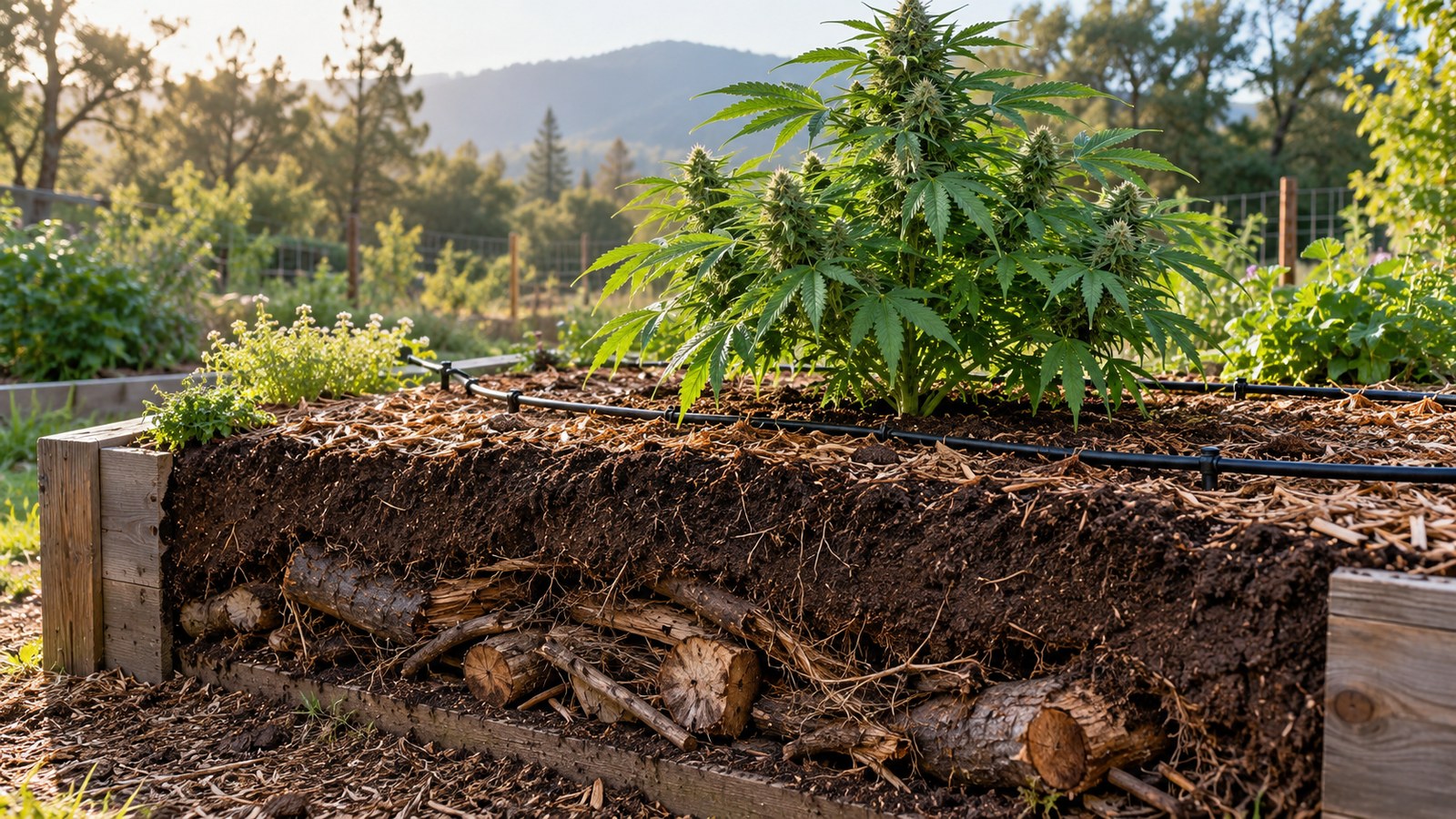
In living organic soil, watering to heavy runoff is highly destructive. Water-soluble biological components: including beneficial fulvic acids, humic compounds, active enzymes, and soluble microbial metabolites: are leached out of the container with every heavy runoff event, depleting the biological fertility built over months. Furthermore, organic soils have higher clay and silt fractions with lower air-filled porosity (12% to 18% AFP). Saturating living soil until water pours out of drainage saucers creates prolonged anaerobic zones, killing aerobic fungal hyphae and breeding root rot. Living soil should be watered slowly and evenly with zero to maximum 5% runoff, maintaining steady capillary moisture without flushing.
3. Peat-Based Potting Mixes (Pro-Mix, Sunshine Mix, Ocean Forest)
Sphagnum peat moss mixes represent a hybrid category. Peat has a high total porosity (75% to 82%) and an acidic natural pH buffered with dolomitic limestone. The runoff strategy in peat depends strictly on your fertilizer input:
- Synthetic Liquid Nutrients in Peat: If feeding concentrated liquid bottled mineral fertilizers (salts), treat peat like hydroponics: water until achieving 10% to 15% runoff to prevent salt crusting and fertilizer burn.
- Organic Top-Dresses and Dry Amendments in Peat: If top-dressing with organic meals and microbial teas, treat peat like living soil: deliver minimal to zero runoff (0% to 5%) to keep biological nutrition inside the pot.
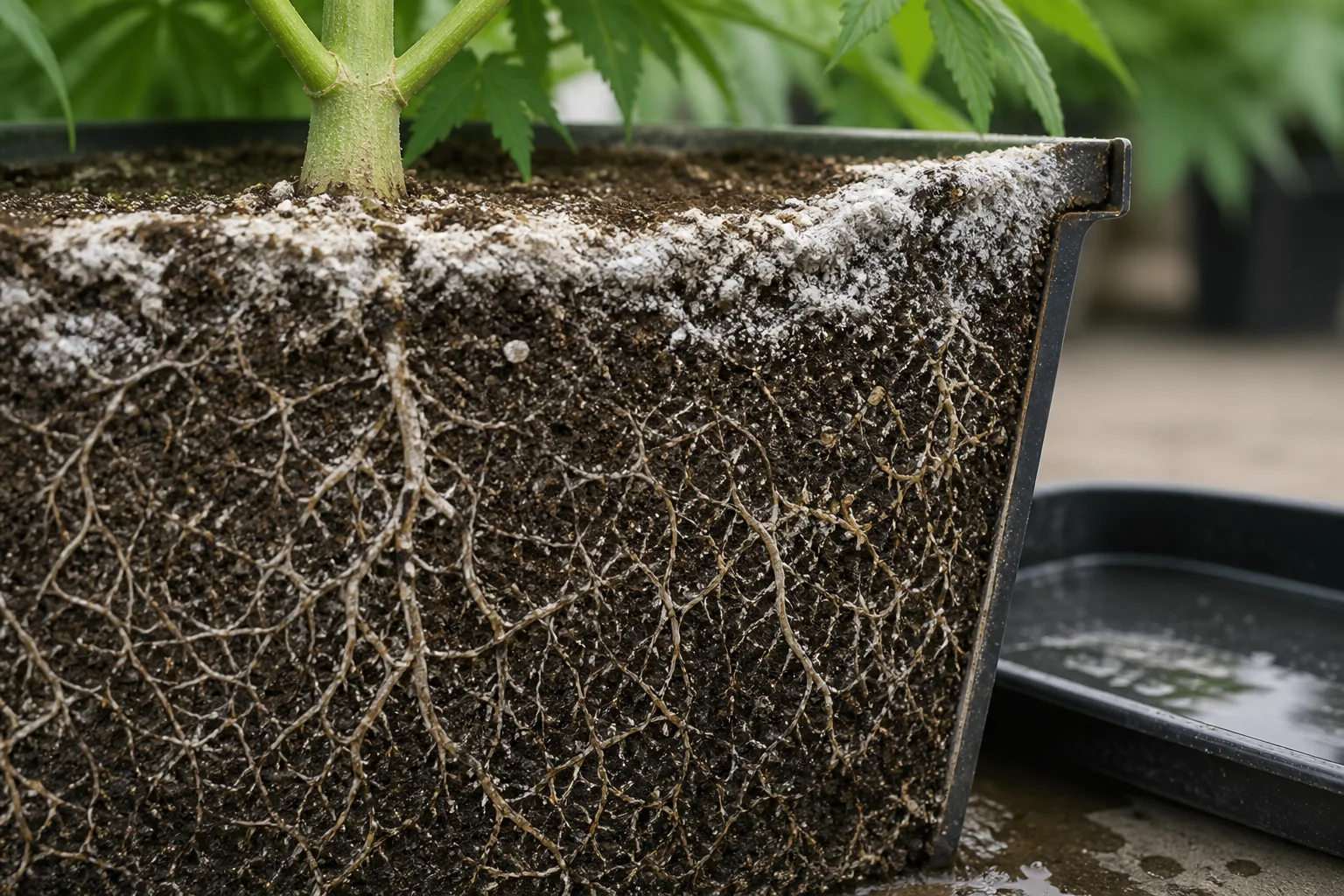
Substrate mineral salt accumulation resulting from inadequate leaching fractions in synthetic fertigation programs.
Repeatable Testing and Diagnostic Procedure: The Pour-Through Leachate Protocol
Runoff is not merely waste drainage; it is the most valuable diagnostic window into the hidden chemical environment of the root zone. Testing leachate electrical conductivity and pH allows cultivators to audit root health with laboratory precision:
1. The Standardized Pour-Through Collection Protocol
To obtain scientifically valid runoff measurements, follow this standardized four-step procedure:
- Step 1: Deep Saucer Evacuation: Before initiating an irrigation event, completely clean and dry the plant drainage saucer or collection tray using a wet-vac. Never test runoff that mixes with old, evaporated fertilizer crusts from previous days.
- Step 2: Slow, Multi-Pass Irrigation: Apply your accurately calibrated nutrient solution slowly in two or three circular passes around the root perimeter until the container reaches full container capacity and free drainage commences.
- Step 3: The 30-Minute Leachate Extraction: Allow the container to drain freely for 20 to 30 minutes. Collect the first 100 to 200 mL of leachate that emerges from the drainage holes in a clean glass beaker. This initial effluent represents the true interstitial pore water displaced from the core root zone.
- Step 4: Temperature-Compensated Meter Auditing: Test the collected leachate immediately using a laboratory-grade, double-junction pH electrode and a temperature-compensated conductivity meter calibrated in fresh buffer solutions. Compare the runoff EC and pH directly against your input reservoir numbers.
| Cultivation Medium | Fertilizer Chemistry | Target Leaching Fraction (%) | Acceptable Runoff EC Delta (vs Input) | Primary Biological Failure Risk of Incorrect Runoff |
|---|---|---|---|---|
| Coco Coir / Perlite | Synthetic Soluble Salts | 10% – 20% Runoff | +0.2 to +0.5 dS/m max | Zero runoff causes potassium toxicity and calcium lockout. |
| Horticultural Rockwool | Precision Dry Mineral Salts | 15% – 25% Runoff | +0.1 to +0.4 dS/m max | Low runoff causes severe slab salt crystallization and root burn. |
| Peat-Perlite Mix | Liquid Bottled Mineral Lines | 10% – 15% Runoff | +0.3 to +0.6 dS/m max | Zero runoff concentrates salts; heavy runoff causes cold waterlogging. |
| Living Organic Soil | Organic Amendments / Compost | 0% – 5% Runoff | Not applicable (do not track EC) | Heavy runoff leaches humic acids, biology, and fertility. |
| Outdoor In-Ground Soil | Organic Mineral Blends | 0% Runoff (infinite depth) | Not applicable (pore water tests) | Overwatering causes perched water tables and anaerobic rot. |
The comparative matrix above establishes clear baseline targets across distinct growing formats. However, when runoff measurements deviate significantly from established tolerances, growers frequently panic and execute aggressive corrective actions that exacerbate root stress. Understanding how to interpret and respond to abnormal leachate data is essential to maintaining root health.
My runoff EC is 3.8 dS/m while my input is 2.0 dS/m in coco coir. Should I flush with plain RO water until runoff EC drops?
Question sent by: Tyler Brooks, via email.
“I tested my runoff today in 3-gallon coco pots and the EC came out at 3.8 dS/m, almost double my 2.0 dS/m input! Leaf tips are starting to yellow and curl. Should I pour 5 gallons of pure reverse osmosis water through each pot to flush all the salts out immediately?”
Flushing an active coco coir root zone with pure, unbuffered reverse osmosis (RO) water is a catastrophic mistake that will dramatically worsen your crop health through acute osmotic shock and calcium stripping.
First, pure RO water has zero dissolved mineral solutes (0.0 dS/m EC). When you pour gallons of pure water through a root zone operating at 3.8 dS/m, you create an instantaneous, violent osmotic gradient. Water rushes into root cells with extreme velocity, causing root cortical cell membranes to swell, rupture, and lyse (osmotic lysis). Second, coco coir particles possess a strong cation exchange capacity that holds calcium and magnesium. Pure RO water strips the calcium buffer clean off the coco colloids. When you resume feeding, the unbuffered coco will aggressively strip all calcium from your nutrient solution, causing catastrophic calcium deficiency and bud rot within 48 hours.
The correct agronomic remediation protocol is buffered displacement fertigation: formulate your standard nutrient solution at half-strength (1.2 to 1.4 dS/m EC) with full calcium and magnesium buffering (minimum 120 ppm Ca) adjusted to pH 5.8 to 6.0. Irrigate your pots slowly with a generous 30% to 40% leaching volume. The incoming balanced solution will gently displace the concentrated 3.8 dS/m pore water without shocking root membranes or stripping the cation exchange complex. Within two feeding cycles, your runoff EC will glide smoothly back down to 2.2 dS/m.
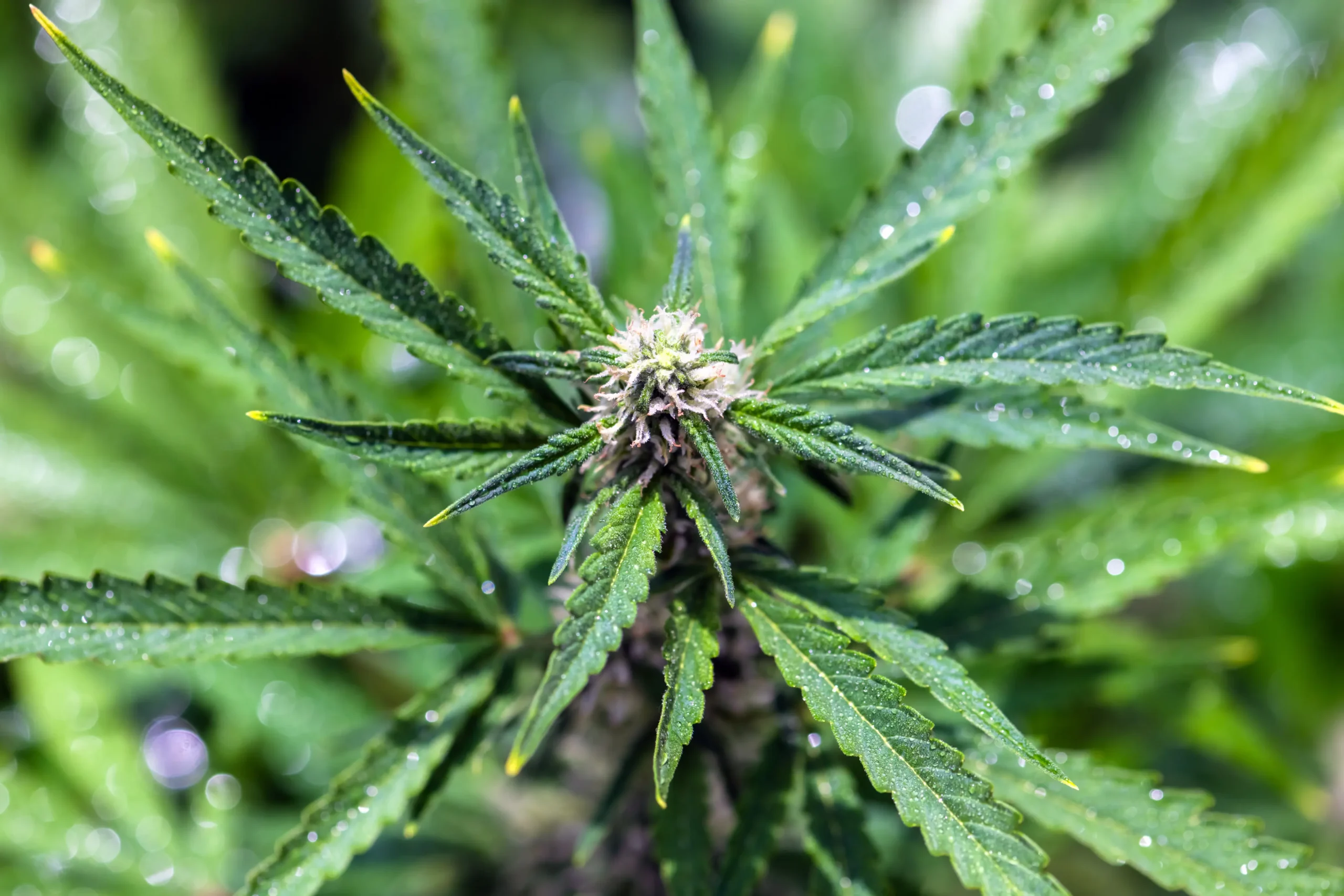
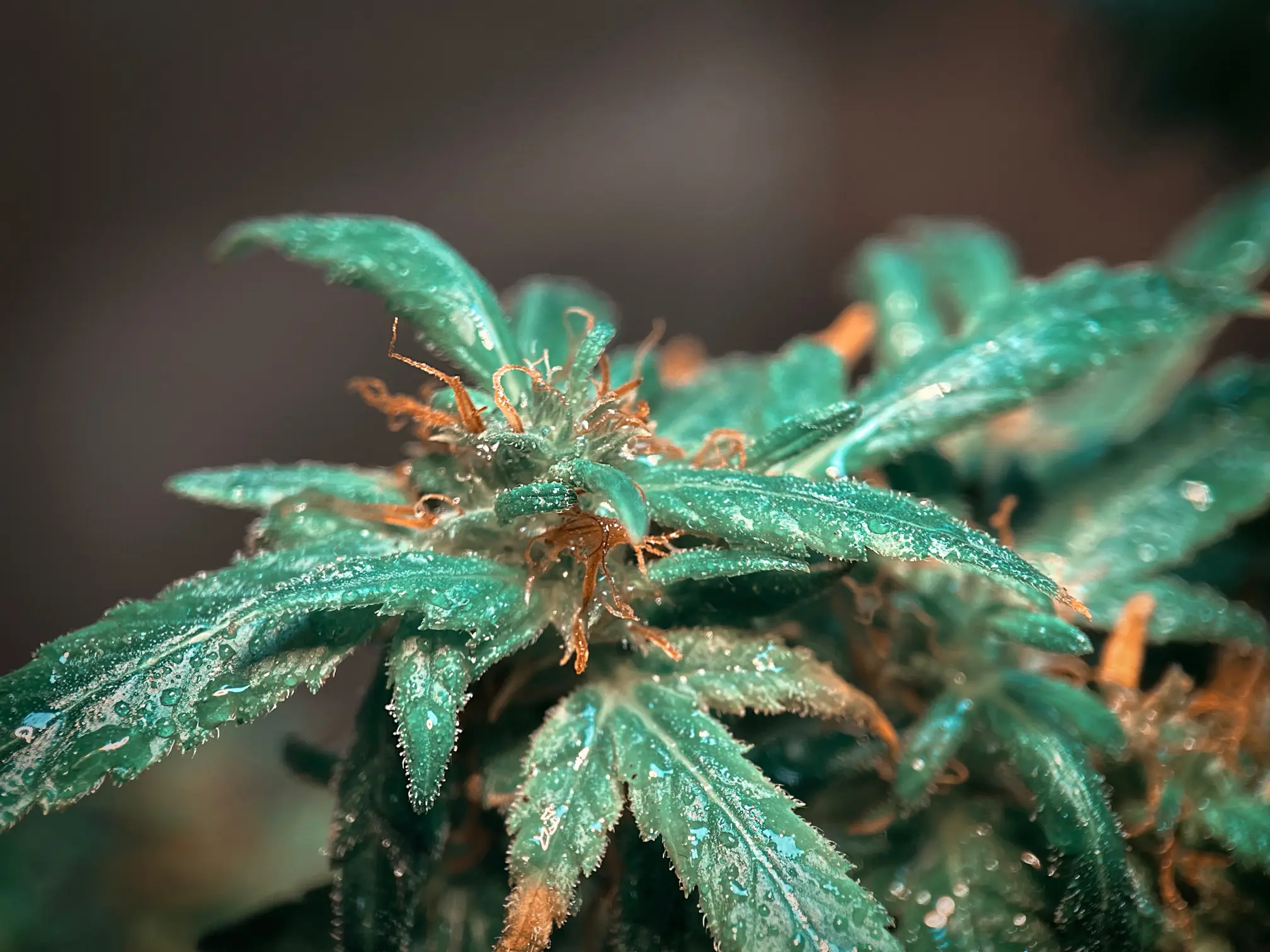
Healthy leaf margins and cellular turgor sustained through balanced runoff and root-zone osmotic stability.
Decoupling Source-Water Chemistry from Fertilizer Accumulation
When analyzing high runoff electrical conductivity, cultivators must differentiate between unabsorbed fertilizer salts and accumulated non-nutrient minerals originating from municipal tap water or unpurified well water:
- The Sodium and Chloride Hazard: Municipal tap water frequently contains 40 to 100+ ppm of sodium (Na+) and chloride (Cl–). Unlike nitrogen and potassium, which cannabis consumes in large masses, cannabis root hairs actively exclude sodium across the endodermis via SOS1 (Salt Overly Sensitive) transport pumps. Consequently, while water and fertilizer are consumed, sodium ions accumulate in the substrate micropores. Over an 8-week flowering period with zero runoff, sodium accumulation alone can push root-zone EC past 4.0 dS/m, displacing potassium and inducing toxic marginal leaf necrosis. In operations utilizing tap water, achieving a 15% to 20% leaching fraction is vital to purge rejected sodium ions.
- Bicarbonate Alkalinity and Substrate pH Creep: Hard well water carries high concentrations of dissolved calcium and magnesium bicarbonates (Ca[HCO3]2). Bicarbonates act as a powerful chemical buffer that neutralizes root-zone acidity. Even if a grower adjusts their input reservoir to pH 5.8, un-leached bicarbonates accumulating in the medium steadily drive substrate pH upward to 6.8, 7.2, or higher. At this alkaline threshold, micronutrients like iron (Fe), manganese (Mn), and zinc (Zn) precipitate into insoluble hydroxides, producing severe upper-canopy interveinal chlorosis that cannot be fixed by adding more fertilizer. Regular leaching runoff flushes residual bicarbonate ions, preserving root-zone pH stability.
Boron, Heavy Metals, and Trace Ion Accumulation in Zero-Runoff Systems
Beyond primary macronutrients, zero-runoff or low-leaching irrigation creates extreme risks of trace element toxicity. Micronutrients such as boron (B), zinc (Zn), and copper (Cu) possess remarkably narrow sufficiency ranges in cannabis tissue. In commercial production, foliar boron levels between 30 and 75 ppm represent optimal cell wall integrity and meristem development; however, once tissue boron climbs above 90 to 100 ppm, severe toxicity manifests as cupped, brittle leaves with scorched, cupped margins.
Because boron exists primarily as uncharged boric acid [B(OH)3] in acidic substrate solution, it is not held strongly by cation exchange sites. If a cultivator waters without runoff, residual trace minerals present in fertilizer blends and municipal water sources continuously accumulate. Without regular leaching fractions to evacuate surplus unabsorbed trace ions, the rhizosphere steadily transitions into trace metal toxicity, which is frequently misdiagnosed as light bleaching or viral infection. Maintaining a disciplined leaching fraction ensures that trace element concentrations remain safely anchored within physiological bounds.
| Leachate Diagnostic Condition | Biological Root-Zone Cause | Canopy Visual Symptoms | Immediate Agronomic Corrective Action |
|---|---|---|---|
| High Runoff EC (>+1.0 dS/m above input) | Insufficient leaching volume; excessive input EC; under-watering dry-backs. | Crispy dark brown leaf tips, marginal clawing, stunted calyxes. | Increase leaching fraction to 25% – 30% using 70% strength balanced feed. |
| Low Runoff EC (>0.5 dS/m below input) | Plant under-fertilized; extreme vegetative uptake outstripping supply. | General lower-canopy pale yellowing (chlorosis), weak thin stems. | Increase input fertilizer concentration by 15% – 20%; reduce runoff to 10%. |
| High Runoff pH (>0.8 units above input) | Bicarbonate accumulation; excessive nitrate uptake releasing OH- ions. | Interveinal chlorosis on new growth (iron and manganese lockout). | Flush with 20% runoff at pH 5.6; acidify input with phosphoric/citric acid. |
| Low Runoff pH (>0.8 units below input) | Ammonium-N toxicity; root anaerobic decay releasing H+ protons. | Bronzing patches on leaves, root rot, foul sulfur smell from base. | Reduce ammonium fraction; elevate pot on air grate; flush with pH 6.2 feed. |
| Immediate Runoff on Dry Pot (Light Weight) | Hydrophobic perimeter channeling; water racing down pot edges. | Canopy wilting hours after watering; core root ball remains dry. | Execute multi-pass re-wetting protocol using natural organic yucca wetting agent. |
The Operational Mandate: The 20-Minute Saucer Evacuation Rule
Allowing containerized cannabis plants to sit in stagnant drainage runoff inside saucers or flood trays completely undermines the purpose of leaching. When drainage water pools beneath a container, the substrate base re-absorbs the effluent through capillary wicking within 30 to 60 minutes. The plant pulls the concentrated, toxic waste salts right back into the root core. Furthermore, standing water seals the bottom drainage holes, transforming the lower third of the pot into an oxygen-depleted, anaerobic swamp that suffocates taproots and breeds fungus gnat larvae. Always evacuate drainage saucers completely within 20 minutes of irrigation using a wet-vac, dedicated suction wand, or automated condensate removal pump.
The physiological dangers of allowing runoff to stand beneath containers cannot be overstated. When growers leave pots submerged in drainage saucers, they inadvertently trigger the exact root rot conditions they were attempting to prevent. Common grower inquiries routinely focus on post-drainage handling protocols.
If I let my potted plants sit in their runoff in the saucer, will they drink it back up without harming anything?
Question sent by: Camille Laurent, via email.
“I have 12 five-gallon pots in a grow tent with plastic saucers underneath. When I water to runoff, about an inch of water collects in each saucer. By the next morning, the saucers are completely dry because the plants drank it back up. Is there any harm in letting them drink the saucer water, or do I really have to vacuum it out every single day?”
Letting your plants “drink back” their drainage runoff is one of the most self-defeating habits in container cultivation. You must vacuum or empty that saucer water every single time.
Think about what runoff actually is: it is the contaminated, unabsorbed, high-EC effluent that you deliberately washed out of the medium to protect your roots from toxic mineral accumulation. When the pot sits submerged in that saucer, capillary suction pulls that high-salt water right back into the root core. Over several weeks, the salt concentration in your pots compounds exponentially, leading to severe nutrient lockout, leaf tip scorch, and stunted flower development.
Even worse than salt accumulation is root hypoxia. When the container base sits in standing water, the perched water table at the bottom of the pot cannot drain. The lower 2 to 3 inches of your root system becomes 100% waterlogged and anaerobic within two hours. Aerobic root hairs suffocate, rot, and turn brown, creating the ideal entry vector for Pythium root rot. Furthermore, standing stagnant water creates a breeding ground for fungus gnat larvae. Invest in a $40 bucket-head wet-vac or elevate your pots on wire pot elevators above the saucers so pots never touch drainage water.
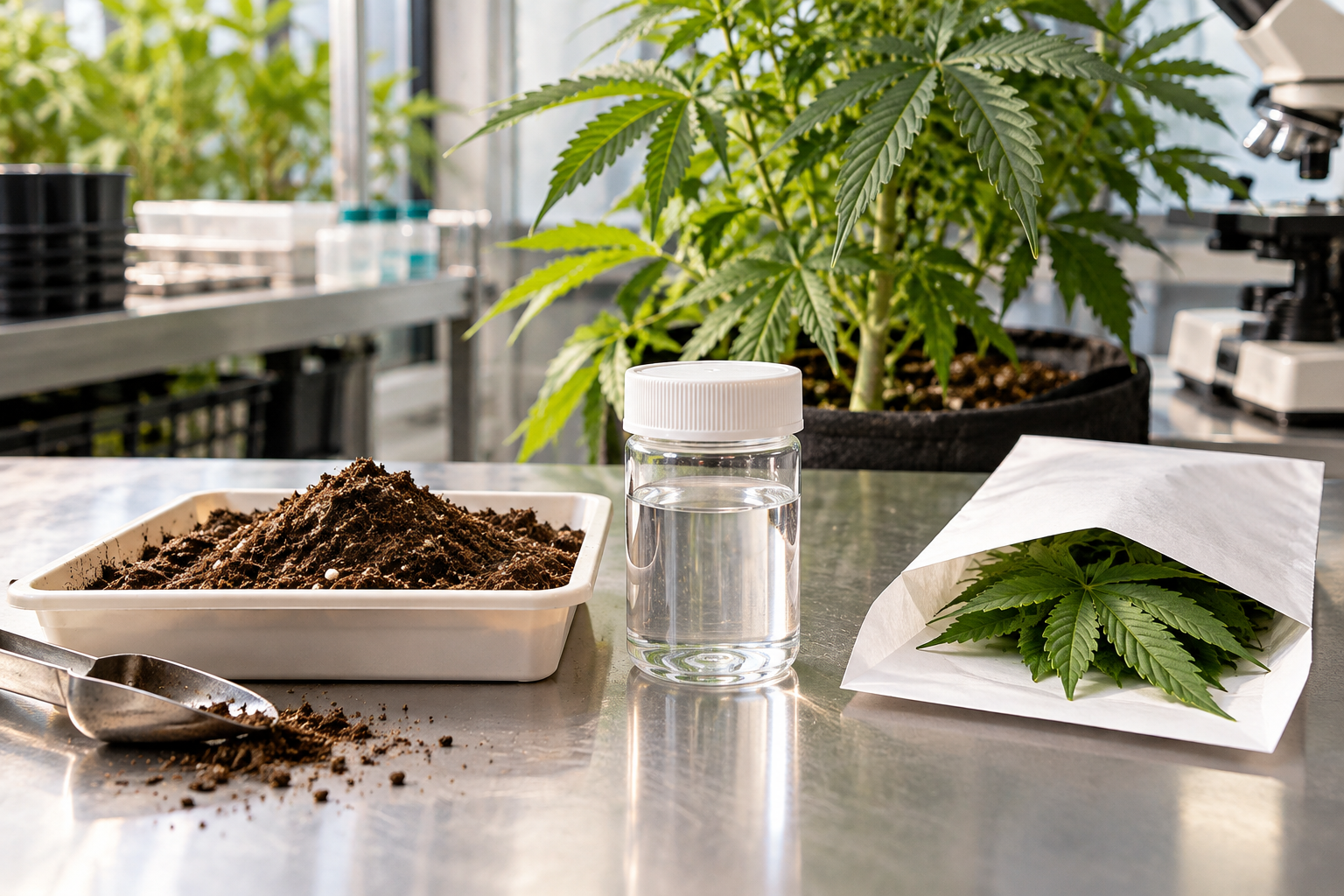
Laboratory and digital instrumentation used to analyze input versus leachate electrical conductivity and pH.
Systematic Remediation Protocol: Stabilizing Root-Zone EC and Restoring Balance
When runoff measurements indicate severe chemical imbalance, or when false runoff occurs due to hydrophobic channeling, cultivators must execute a disciplined recovery protocol:
1. Identifying and Resolving False Runoff (Perimeter Channeling)
If a peat or soil container discharges heavy runoff within ten seconds of pouring, yet the pot feels remarkably light when lifted, the plant is suffering from hydrophobic perimeter channeling. Organic colloids have dried past their critical moisture threshold and pulled away from the pot wall. Water takes the path of least resistance, rushing down the container wall and out the drainage holes without penetrating the central root core. To fix this, do not pour more plain water; apply a natural wetting agent (yucca extract) in slow, divided passes (15 minutes apart) to break surface tension and restore capillary percolation.
2. The Three-Step Root-Zone Reset Protocol for Extreme Runoff EC
If leachate testing reveals that runoff EC exceeds input by more than 1.5 dS/m (e.g., input 2.0 dS/m, runoff 3.5+ dS/m), execute this three-step reset:
- Step 1: Formulate Buffered Low-EC Displacement Solution: Mix your standard complete nutrient recipe at 60% of baseline EC (e.g., 1.2 dS/m) ensuring full calcium (minimum 120 ppm) and magnesium (minimum 50 ppm) concentrations, adjusted to pH 5.8 to 6.0. Never use unbuffered RO water.
- Step 2: Execute High-Volume Displacement Watering: Apply the displacement solution slowly in multiple concentric passes, targeting a 30% to 40% leaching fraction. Allow effluent to drain continuously into an evacuated tray, siphoning or vacuuming runoff immediately.
- Step 3: Monitor Effluent Convergence: Test the EC of the final 100 mL of drainage. It should register within ±0.3 dS/m of your displacement feed. Resume standard feeding at normal volume during the next scheduled irrigation event.
The 1:2 and 1:5 Substrate Laboratory Extraction Protocols
In large organic living soil beds, no-till containers, or outdoor raised beds where extracting free leaching runoff is undesirable or physically impossible, cultivators should deploy standardized laboratory slurry extraction methods to audit root-zone salinity:
- Core Sample Collection: Extract a 100-gram core sample of substrate from the active root zone (5 to 15 cm depth), removing large root fragments and coarse perlite chunks.
- The 1:2 Dilution Slurry: Measure exactly one part volume of moist substrate and combine with two parts volume of pure deionized reverse osmosis water (e.g., 50 mL of medium mixed with 100 mL of RO water) in a clean glass beaker.
- Equilibration and Filtration: Agitate the mixture vigorously for 10 minutes and allow it to stand for 30 minutes to permit ionic equilibrium between solid colloids and the water solution. Filter the supernatant through a paper coffee filter or Whatman No. 2 filter paper.
- Measurement and Saturated Paste Conversion: Measure the electrical conductivity and pH of the filtered liquid. In soil and soilless media, the 1:2 dilution EC correlates closely with standard saturated paste extract (ECe) via the standard empirical formula: ECe ≈ 2.2 × EC1:2. A 1:2 extraction reading of 0.8 dS/m indicates an actual root-zone pore-water salinity of approximately 1.76 dS/m, confirming a healthy, non-toxic root environment without generating container runoff.
Cannabis Runoff and Leaching Standard Operating Checklist
Audit these critical operational checkpoints before and during every fertigation cycle to ensure flawless root-zone hydrology:
- Soilless hydroponic systems (coco, rockwool) maintain a strict 10% to 20% daily leaching fraction to clear unabsorbed salts.
- Living organic soil containers are watered with minimal to zero runoff (0% to 5%) to preserve soluble biology and humates.
- Drainage saucers and collection trays are cleaned and completely evacuated within 20 minutes; standing water is never re-absorbed.
- Leachate EC and pH are audited weekly in synthetic programs using fresh, temperature-compensated digital meters.
- High-runoff EC is remediated using buffered low-strength nutrient feeds (1.2 dS/m); pure unbuffered RO flushes are strictly avoided.
- Municipal tap water containing elevated sodium (>50 ppm Na) is managed with higher leaching fractions to purge rejected ions.
- Containers are elevated on wire grids or pot elevators to break perched water tables and allow unobstructed drainage.
- False runoff caused by perimeter channeling is diagnosed via pot weight and remediated using natural yucca wetting agents.
- Runoff pH is monitored to detect early root-zone acidification from ammonium toxicity or alkalinization from bicarbonates.
- Irrigation water is applied slowly in multiple circular passes to ensure 100% volumetric saturation across the entire root profile.
Scientific References
- Bugbee, B. (2004). Nutrient management in recirculating hydroponic culture. Acta Horticulturae, 648, 99-112.
- Handreck, K. A., & Black, N. D. (2002). Growing Media for Ornamental Plants and Turf (3rd ed.). UNSW Press, Sydney.
- Marschner, H. (2012). Marschner’s Mineral Nutrition of Higher Plants (3rd ed.). Academic Press, London.
- Sonneveld, C., & Voogt, W. (2009). Plant Nutrition of Greenhouse Crops. Springer, Dordrecht, Netherlands.
- Taiz, L., Zeiger, E., Møller, I. M., & Murphy, A. (2015). Plant Physiology and Development (6th ed.). Sinauer Associates, Sunderland, MA.
- Zheng, Y. (2021). Handbook of Cannabis Production in Controlled Environments. CRC Press, Boca Raton, FL.
Share this article
A quick overview of the topics covered in this article.