
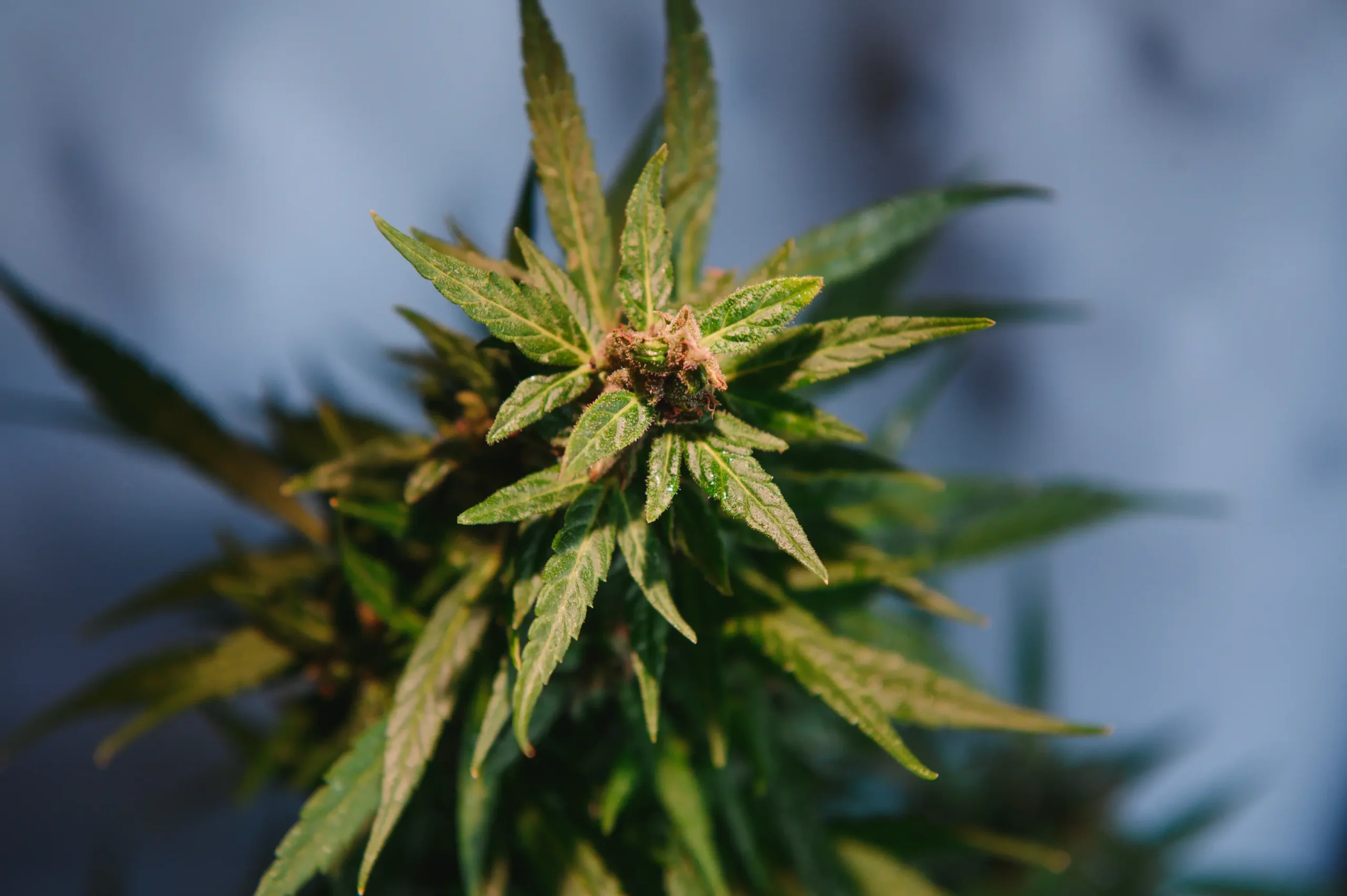
Animal Cookies
Animal Cookies does not behave like a simple dessert hybrid. Its name suggests sweetness and comfort, but the plant often reveals its Fire OG influence through sharper stretch, thinner branch angles, stronger fuel and a longer, more demanding finish than the cookie aroma initially implies. The most convincing flowers combine vanilla, cherry skin, nutmeg, ginger, sour dough and burnt sugar with an earthy fuel base. They are usually dense, resin-heavy and visually polished, yet that appearance is only part of the cultivar's value. A successful run must preserve the aromatic contrast between sweet cookie and dry OG while preventing compact flowers from turning the late canopy into a humidity trap.
The word "Animal Cookies" is also used for more than one kind of planting material. The original form is widely treated as a clone-only selection from GSC and Fire OG. Seed reproductions and backcrossed versions may carry the same name while displaying different height, feeding behavior, branch strength and aroma. Some plants remain compact and GSC-like. Others stretch strongly and reveal more Fire OG structure. This is why reports range from a manageable medium plant to a cultivar that doubles or even triples during the first part of flowering. The contradiction is not solved by choosing one attractive number. It is solved by treating the exact expression as part of the cultivation problem.
Animal Cookies is at its best when the grower makes decisions before the flowers become too dense to handle. Early branch selection matters more than late defoliation. A moderate root-zone program is often safer than heavy feeding, especially in tighter, darker phenotypes. Support must be installed before the branches visibly fail. Harvest timing should follow calyx expansion and aroma maturity, not the first heavy coating of trichomes. The central challenge is to produce a clean, evenly matured canopy without flattening the plant's cookie sweetness under excess nitrogen, heat or an impatient dry.
Strain Features
| Feature | Details |
|---|---|
| Strain Type | Indica-leaning hybrid, although selected expressions may show a surprisingly active flowering stretch |
| Genetic Profile | GSC x Fire OG |
| Naming and Availability | The original is commonly treated as clone-only; seed reproductions and backcrossed versions may behave differently |
| THC | Commonly reported in the high teens through upper 20% range; laboratory results vary by batch |
| CBD | Usually very low |
| Dominant Terpenes | Beta-caryophyllene, limonene and myrcene are recurring; humulene and linalool may shape selected samples |
| Flavor and Aroma | Vanilla cookie, cherry skin, nutmeg, ginger, sour dough, earth, pepper and OG fuel |
| Effect Character | Euphoric and emotionally warm at first, followed by substantial physical relaxation and possible sedation |
| Flowering Time | Usually about 9 to 10 weeks; some seed expressions may finish earlier or later |
| Stretch | Moderate in compact expressions, strong in Fire OG-leaning plants; twofold stretch is possible |
| Plant Shape | Medium frame, strong lateral potential, dark foliage and dense flower sites |
| Branch Strength | Variable; some plants hold themselves well, while thinner OG-leaning branches require early support |
| Bud Density | High, especially in the upper and middle canopy |
| Yield Character | Moderate to good, with quality often depending more on uniform maturity than maximum site count |
| Training Compatibility | Responds to topping, low-stress training and a screen when recovery time is respected |
| Feeding Behavior | Often performs best on moderate nutrition; some expressions react poorly to prolonged high nitrogen |
| Main Grow Risk | Misjudging stretch or feed demand, then entering late flower with a dark, crowded and humid canopy |
| Best Use Time | Late afternoon or evening for most users |
| Grow Difficulty | Intermediate, especially when the exact cut or seed expression is unknown |
Genetic Lineage
Animal Cookies combines two highly influential genetic families. GSC contributes dense flowers, sweet dough, resin, dark coloration and an effect that can feel mentally euphoric before settling into the body. Fire OG contributes the sharper side of the cultivar: fuel, pepper, sour citrus, increased vertical movement and a heavier physical finish. The cross is often described as an attempt to retain the sensory appeal of GSC while improving vigor, yield and potency through an OG-influenced parent.
That summary is useful, but it does not explain why growers report different plants under the same name. The original selection is commonly described as clone-only. Once a clone-only cultivar becomes popular, seed-based versions often appear through backcrossing, selfing or recreation. Those versions may be legitimate descendants, but they do not guarantee the same architecture. A grower receiving a verified clone can plan around a more repeatable plant. A grower starting seeds should expect a phenotype hunt rather than a single uniform answer.
The GSC-leaning expression usually shows tighter internodes, darker broad leaves and a compact flower-building pattern. It can remain relatively manageable during vegetative growth and then produce hard, rounded or short spear-shaped buds. Its aroma often emphasizes vanilla, dough, cherry, spice and a soft earthy sweetness. This plant may look attractive early, yet it can become too leafy if nitrogen remains high. Because the internodes are short, a small amount of excess vegetative growth can create a large increase in humidity around the developing flowers.
The Fire OG-leaning expression presents a different set of decisions. Internodes may be longer, branches may rise more quickly and the first three weeks after the flip can transform a moderate plant into a tall canopy. The aroma tends to become sharper, with fuel, sour citrus, pine, pepper and burnt rubber pushing through the sweetness. These plants may need stronger support because the branches can remain relatively narrow while the flowers harden. They also tend to make the harvest window more important. Cutting early can preserve a brighter head effect, but it may leave the OG side thin and the cookie side underdeveloped.
Between those extremes are balanced expressions that many growers consider the most complete. They combine medium stretch with sturdy enough laterals, dense resinous flowers and a flavor that does not allow either parent to dominate completely. The jar opens with sweet spice and cookie dough, then the broken flower releases fuel and sour earth. The effect begins warm and euphoric, but the body phase remains strong enough to justify the indica-leaning description.
The practical genetic lesson is simple: do not make the entire room plan from the strain name. Observe how quickly each plant fills the distance between nodes, how the side branches respond after topping and whether new leaves remain broad and dark or become narrower and more upright. Those details predict the correct flip height more accurately than an indica percentage. They also tell the grower whether to prioritize center thinning, height control or branch support.
Effect Breakdown
Animal Cookies is often described as a heavy strain, but the heaviness is not always the first thing the user notices. At a modest dose, the initial change can be emotionally bright. Mood lifts, tension becomes less dominant and ordinary conversation may feel warmer or more humorous. The mental effect is not usually a crisp productivity boost. It is closer to a softening of mental friction, with thoughts becoming easier to enjoy even when they are not more organized.
The next phase depends strongly on dose and tolerance. At a light dose, the user may remain social, creative and physically comfortable for a considerable period. Music, food and familiar surroundings can feel more immersive. Attention may narrow around one activity, but the person does not necessarily feel sedated. This is the range in which Animal Cookies can still function as a late-afternoon hybrid for experienced users.
At a moderate dose, the effect begins moving downward through the body. Shoulders release, the jaw relaxes and the user becomes more aware of warmth in the limbs. The physical calm is usually heavier than the first mental phase suggests. Appetite may rise, especially as the cookie and spice aroma makes food more appealing. The strain can still be socially pleasant, but motivation becomes less reliable. A task that seemed interesting during the first twenty minutes may be abandoned in favor of sitting, listening or eating.
A large dose changes the identity of the experience. The Fire OG and GSC combination can become deeply sedating, mentally foggy and physically immobilizing. Short-term memory may feel less reliable, and the user may lose track of a conversation or repeat a thought. This is not a strain that should be judged only by a cheerful first impression. The body effect can continue strengthening after the user believes the peak has arrived.
Sensitive users may experience anxiety during the transition between the cerebral opening and the heavier body phase. The problem is often dose rather than the cultivar's general character. A rapid series of inhalations can create a strong mental rise before relaxation catches up. Starting slowly gives the effect time to reveal its direction. Dry mouth, dry eyes, dizziness and heavy eyelids are commonly reported unwanted effects.
Harvest maturity can also change the balance. Flower cut at the earlier end of the normal window often feels brighter, slightly sharper and more mentally active. Fully mature flower tends to produce a deeper, rounder body effect with stronger appetite and sleepiness. That does not mean amber trichomes create one guaranteed result, but it explains why two well-grown batches can feel different even when the name is the same.
Flavor & Aroma Profile
Animal Cookies is not a pure sugar-cookie strain. The sweetness is interrupted by ginger, black pepper, sour cherry, earth and fuel. That interruption is what gives the cultivar depth. A one-dimensional vanilla sample may be pleasant, but it misses the tension created by the Fire OG side.
In a freshly opened container, the first impression may be sweet dough, vanilla and a dry bakery spice resembling nutmeg or cinnamon. A cherry-like note can appear as fruit skin rather than candy syrup. Some samples suggest graham cracker, toasted sugar or lightly burnt pastry edges. The sweetness is rarely soft for long. As the flower is broken apart, sharper fuel and pepper rise quickly, often accompanied by damp soil, pine and sour citrus.
The texture of the aroma changes with resin maturity. Earlier flower may smell brighter and more floral, with cleaner cherry and citrus. Mature flower becomes heavier, darker and more savory. The fuel can resemble heated rubber, solvent or an old wooden spice cabinet. In certain phenotypes, ginger and pepper remain so prominent that the strain smells almost dry despite the sweet background.
On inhalation, the cream and dough usually appear more clearly than they do in the room aroma. The smoke or vapor can begin with vanilla, soft cherry and warm spice. The middle of the palate introduces earth and nutty dough. The exhale becomes sharper, with pepper, fuel and sour wood coating the mouth. A well-finished batch leaves a sweet-spiced aftertaste rather than a raw chemical bite.
The difference between average and excellent Animal Cookies often appears after the exhale. Average flower presents sweetness on the nose and generic gas in the mouth. Excellent flower keeps the vanilla, cherry and baking spice intact through the fuel. That persistence depends on genetics, but cultivation and drying determine whether the plant is allowed to express it.
Late nitrogen excess is particularly damaging to flavor clarity. A dark, leafy plant can produce impressive-looking buds that retain a green, vegetal edge after drying. The sweetness then feels muted and the smoke becomes hotter. This problem is not corrected by a long cure if the flowers entered harvest with excessive nutrient stress or underdeveloped tissue.
Heat creates a different kind of loss. The volatile cherry, citrus and vanilla-like notes fade first, while pepper, earth and fuel remain. The jar may still smell strong, leading the grower to believe flavor was preserved, but the profile becomes narrower. The flower tastes pungent without tasting complete.
The cure usually changes Animal Cookies in stages. During the first week after drying, the flower may smell sharp, doughy and slightly grassy. Over the next several weeks, the spice becomes clearer and the cherry may reappear behind the fuel. A longer cure can smooth the smoke, but excessive oxygen exposure gradually removes the brighter top notes. Smaller storage containers help preserve the distinction between sweet and sour layers.
Dominant Terpenes
Animal Cookies does not produce one universal terpene order. Laboratory samples and grow reports vary, which is expected from a cultivar circulating through clones, reproductions and different environments. Beta-caryophyllene, limonene and myrcene appear frequently, while humulene, linalool and minor compounds help explain the bakery spice, floral softness and fuel.
Beta-caryophyllene gives the profile much of its pepper, ginger and dry spice. In Animal Cookies, it connects the sweet dough to the Fire OG fuel. Without that warm spice, the flower can taste flat and sugary. It may also contribute to the physically grounded character reported by users, although subjective effects cannot be assigned to one terpene with certainty.
Limonene adds brightness. It may appear as sour cherry skin, lemon peel or a clean lift in the vanilla rather than obvious lemon candy. Limonene-rich expressions often smell more open and lively during early cure. They may also feel more euphoric at the beginning, but dose and cannabinoid content remain major variables.
Myrcene supports damp earth, ripe fruit and a heavier physical finish. In darker, more sedating examples, myrcene can deepen the cherry into a jam-like tone and make the fuel feel softer. Myrcene is also relatively vulnerable during drying and storage, so its apparent dominance can change after harvest.
Humulene reinforces wood, hops and dry pastry spice. It helps create the impression of toasted dough, nutmeg or a bitter bakery crust. The humulene-caryophyllene relationship can make the aroma feel savory even when vanilla remains strong.
Linalool may contribute floral cream and a gentler aromatic edge in selected samples. It is not always prominent, but when present it can soften the transition between sour fruit and fuel. Minor sulfur compounds and other trace volatiles likely contribute to the sharp OG funk that cannot be explained by the major terpenes alone.
For the grower, the important point is that Animal Cookies depends on balance. Preserving only the loudest fuel compounds produces an incomplete result. The cultivation and drying plan should protect the more delicate fruit, cream and spice that sit above the durable earthy base.
Indoor vs. Outdoor Growing
| Decision Point | Indoor Growing | Outdoor Growing |
|---|---|---|
| Best reason to choose the environment | Precise control over stretch, late humidity and drying readiness | More root space, stronger branching and potentially greater plant mass |
| Main structural challenge | Unknown cuts can outgrow a filled screen during transition | Seed expressions may separate into very different heights and widths |
| Flower density | Dense upper flowers can be monitored and protected with controlled humidity | Thick colas face rain, dew and slower internal drying near autumn |
| Training | Topping, low-stress training and a screen allow expression-specific shaping | Early topping and wide branch angles create a broad supported shrub |
| Feeding | Easier to separate compact sensitive plants from taller hungry plants | Rich soil can remain nitrogen-heavy too long if not planned carefully |
| Support | A second net prevents thin branches from leaning into neighboring colas | Stakes, cages or soft ties should be installed before flowers gain weight |
| Flavor potential | Stable temperatures preserve vanilla, cherry and spice | Sun may deepen earth and resin, but heat can remove delicate sweet notes |
| Harvest control | The plant can complete nine to ten weeks without weather pressure | Outdoor suitability improves in warm, dry climates with a dependable finish |
| Mold risk | Manageable when the interior is cleaned before flowers become dense | Higher where autumn humidity, rain or poor plant spacing trap moisture |
| Best fit | Intermediate growers with control over canopy height and airflow | Growers in dry regions who can support and inspect dense flowers |
Indoors, Animal Cookies benefits from observation. The environment itself does not make the cultivar easy, but it allows the grower to respond to the exact expression. A compact plant can be vegged longer and placed closer. A Fire OG-leaning plant can be flipped earlier and given more screen area. Different irrigation or feeding zones can be created when one phenotype remains dark and another uses nutrients rapidly.
The indoor room also protects the final weeks, which are important for flavor. Dense flowers need time to swell, but they should not be left in a humid canopy simply to chase maximum amber. Lowering humidity before the flowers become fully hard, separating touching colas and checking the stem-facing side of the buds are more important than waiting for visible problems.
Outdoors, Animal Cookies can produce a broad, productive plant when started early and given adequate root space. Natural sun may strengthen the earthy, spicy and pine side of the profile. The challenge is timing. Nine to ten weeks of flowering can push harvest into weather that is less predictable in cooler regions. A plant may look healthy from the outside while the center of a dense cola remains wet after rain.
Outdoor growers should avoid building one enormous central flower. Several separated main branches are easier to support, inspect and dry. Pruning for airflow should happen before flowering is advanced. Removing leaves late, after repeated rain has already entered the flowers, does not solve moisture inside the bud.
Strain-Specific Grow Guidance
Start by Identifying the Expression
The first useful decision occurs before heavy training. Observe the distance between nodes, the speed of lateral growth and the leaf shape. A compact plant with dark broad leaves is likely to create more interior density. A taller plant with narrower leaves and faster upward movement is likely to require an earlier flip and stronger support.
Do not group visibly different plants under one canopy plan simply because the label is the same. If possible, keep compact and stretch-prone expressions in separate areas of the screen. The more uniform the canopy is at the end of transition, the easier it becomes to manage feeding, light distance and harvest timing.
Use Topping to Test Recovery, Not to Create Maximum Branch Count
Animal Cookies generally responds well to one early topping when the plant is healthy. The response reveals useful information. A vigorous Fire OG-leaning plant quickly pushes several laterals and may need no additional high-stress training. A compact GSC-leaning plant may recover more slowly and benefit from gentle branch spreading instead of another cut.
Repeated topping can create too many interior shoots. Dense flowers do not need a dense branch network. The most productive plant is often the one with six to ten strong branches arranged clearly rather than twenty uneven tops competing for the same light.
Plan the Flip Around Stretch Range, Not a Single Number
A known clone can be flipped according to past records. An unfamiliar seed expression should enter flower with conservative canopy fill. Leaving unused space is safer than assuming a compact finish and discovering a twofold stretch in week three.
Continue tucking while stems remain flexible. Once flower clusters become established, the screen should shift from a shaping tool to a support structure. Late aggressive bending can split hollow branches or press resinous flowers against the net.
Clean the Interior Before It Looks Valuable
Animal Cookies often produces early resin on small inner sites. This can make the grower hesitate during pruning. The presence of trichomes does not mean the site will become dense or mature evenly. Weak shoots below the productive zone consume resources and reduce airflow.
Remove those sites before the third week of flowering. A clean lower zone gives irrigation access, improves air movement and simplifies harvest. It also prevents the plant from producing a large volume of small, attractive but underdeveloped flower.
Defoliate According to Leaf Overlap
The cultivar benefits from selective defoliation, especially in compact expressions. Remove leaves that cover several flower sites, press against developing buds or close the center of the plant. Do not remove leaves only because a calendar says it is defoliation day.
A measured pass near the end of stretch is often enough. A second lighter pass may be needed if the canopy closes during mid-flower. Severe stripping can slow a sensitive plant, reduce late calyx swelling and increase light stress on exposed tops.
Respect Moderate Feeding
Reports disagree about whether Animal Cookies is a heavy feeder. Part of that disagreement comes from different versions. Some vigorous plants use nutrients quickly. Other expressions remain dark at relatively modest strength. A universal aggressive feed schedule is therefore risky.
Watch the whole pattern. Dark glossy leaves, downward claws, slow water use and continued leaf growth after flower set suggest excess nitrogen. Pale new growth on a rapidly drinking plant may indicate genuine demand, but root-zone pH, salt accumulation and irrigation frequency should be checked before increasing concentration.
Separate Overwatering From Hunger
Use container weight, surface condition and the speed of plant recovery after irrigation. A plant that remains heavy and limp for a long period likely needs more oxygen or a longer interval, not additional nutrients. A vigorous plant that becomes light quickly and lifts after watering may need more frequent irrigation without necessarily needing stronger feed.
Support the Plant Before Week Six
The branches may look adequate through early flower. Weight increases rapidly later, especially where dense buds stack near the tips. A branch that leans can pull neighboring colas together and create a hidden humidity pocket.
Install a second net, stakes or soft ties before the flowers become hard and sticky. Support should hold the branch in its natural position rather than squeezing the flower against another surface. Outdoors, branch cages are easier to install before flowering than after the plant is wide and brittle.
Lower Humidity Before Maximum Density
Dense flowers change the airflow plan
Animal Cookies does not need to show visible mold before the environment is adjusted. The risk increases as the bracts swell and internal air movement decreases. Reduce late-flower humidity in advance, maintain circulation below and above the canopy and avoid allowing tops to touch.
Inspect the largest flowers by looking near the stem and beneath surrounding leaves. Early warning signs include a single wilted sugar leaf, soft tissue, an unusual stale smell or discoloration hidden under the outer bracts. Removing one affected section early is better than discovering the problem during trimming.
Interpret the Harvest Window Through Aroma and Calyxes
The first heavy frost is not the finish line. Wait for calyx expansion, a clear reduction in new white pistils and mostly cloudy trichomes on calyx tissue. Check more than the topmost flowers because light intensity can make the canopy mature unevenly.
For a brighter, more social effect, the earlier side of the mature window may be preferred. For heavier evening use, a little more time can deepen the body phase. Flavor should remain part of the decision. If cherry and spice are beginning to disappear under heavy earth, the plant may be moving beyond the grower's preferred balance.
Weedth Bud Flavor Tips
Animal Cookies should be dried according to flower size, not according to a fixed number of days. Medium branches with several separated buds often provide a useful balance. Whole-plant drying may be too slow in a humid room, while individually cut buds may dry so quickly that cherry, vanilla and limonene-rich top notes disappear.
Remove large fan leaves before drying, but avoid an unnecessarily aggressive wet trim in a dry environment. Sugar leaves can slow surface moisture loss and protect trichomes. In a humid room, more leaf removal may be justified. The correct decision depends on whether the priority is preventing stagnation or preventing case-hardening.
Direct fan air is especially damaging. The outer flower becomes crisp while the core remains wet, creating harsh smoke and unstable curing. Air should circulate around the branches rather than strike them. Dense buds should not touch each other during hanging.
During cure, the aroma may shift from sharp dough and fuel toward cherry, vanilla and warm spice. This development takes time, but cure cannot recreate compounds lost to heat or overdrying. Containers should be filled loosely enough that the flowers are not compressed. Use several smaller containers instead of one large jar that is opened repeatedly.
Flavor-focused growers should compare phenotypes after at least several weeks of cure. The loudest plant in the room may not be the most complete in the jar. Keep notes on which expression retains sweet spice, which becomes mostly fuel and which offers the smoothest smoke. Those observations are more useful for keeper selection than color alone.
Weedth Bud Boost Tips
The most reliable way to increase premium yield is to reduce the number of weak flower sites. Animal Cookies can frost almost every part of the plant, which creates the illusion that all sites deserve to remain. Concentrating the canopy into strong, evenly lit branches produces more mature weight and less larf.
A screen works well when it is used to distribute branches, not to force maximum density. Leave space between future colas. The plant should complete the canopy during transition rather than entering flower as a solid wall.
Strong light can improve density, but only if the root zone and climate can support the increased demand. Excess intensity over a dark, overfed plant creates top stress and faster water use without improving lower maturity. Light should be raised or redistributed when the upper flowers bleach, foxtail from heat or mature far ahead of the middle canopy.
Outdoors, root volume and branch support determine the practical yield ceiling. Large plants should be shaped early into several main arms. A wide open center allows sunlight into the middle and gives wind a path through the plant. Storm support should be installed before the branches become heavy.
Avoid relying on extreme late bloom products. Dense flower is already part of the genetic package. Root health, stable photosynthesis, complete flowering time and a controlled dry preserve more usable weight than aggressive late salts. A clean harvest that retains aroma is more valuable than heavier flower that tastes hot and green.
Medical Uses & Benefits
Users commonly report choosing Animal Cookies for evening stress, physical tension, appetite loss and difficulty settling down. The early euphoric phase may improve mood or make social interaction easier, while the later body effect can support rest.
Some people report relief from pain or insomnia, but these experiences should not be treated as proof that the cultivar treats a disease. High-THC cannabis can produce different responses according to dose, tolerance and individual physiology. The same strain that feels calming at a small dose may increase anxiety at a larger one.
Animal Cookies contains very little CBD in most tested batches, so it offers limited buffering for THC-sensitive users. People prone to dizziness, panic or heavy sedation should begin with a small amount and allow the delayed body phase to develop before consuming more.
Ideal User Profile
Animal Cookies suits experienced consumers who enjoy dessert flavors but do not want sweetness without depth. The ideal user appreciates vanilla and cherry backed by pepper, earth and OG fuel. They are comfortable with a strong effect that can begin socially and end physically heavy.
The strain is usually best in the late afternoon or evening. It can fit a relaxed dinner, music session, familiar movie or low-pressure conversation. It is less appropriate before demanding work, driving or tasks that require consistent short-term memory.
For growers, Animal Cookies fits people who enjoy plant observation and selection. A verified clone can be predictable, but seed versions may require separate treatment. The grower should be comfortable pruning early, supporting branches and protecting dense flowers from late humidity.
Grower Notes and Feedback
The most consistent feedback is that Animal Cookies looks easier than it finishes. Vegetative growth may appear controlled, especially in compact expressions. The difficulty arrives during transition, when side branches rise, internodes close and the center becomes darker. Growers who wait until mid-flower to clean the plant often remove more tissue than they would have needed to remove earlier.
Feeding reports vary sharply. Some growers describe vigorous plants with fast water use and strong appetite. Others report that the cultivar stays dark and performs better on a lighter program. These differences reinforce the need to identify the exact expression rather than copying a single schedule.
Flower appearance is usually a strength. Dense green buds may develop purple tips or darker bracts beneath a heavy white resin layer. The calyx-to-leaf ratio can be good, but compact phenotypes may retain enough small leaf material to make trimming slow. The trim is often resinous and worth handling carefully.
Branch strength is another point of disagreement. Some plants carry weight well. Others lean dramatically in the final weeks. The difference often follows structure: longer Fire OG-like branches need more help than compact cookie-like arms. Support remains a low-cost precaution even when the plant appears strong.
Growers frequently praise the cured effect more than raw potency numbers. Well-finished Animal Cookies can feel complete, with a clear emotional change followed by a strong body phase. Poorly finished flower may feel blunt and taste mostly earthy. The cure therefore influences whether the cultivar feels refined or merely strong.
Weedth Editor's Note
The decision I would not postpone
The Animal Cookies scenario that teaches the most begins with two plants entering flower at the same height. One carries broad, dark leaves and short internodes. The other has slightly narrower leaves, more distance between nodes and faster side branches. They fit under one screen, so it is tempting to treat them as one crop.
By the end of the second flowering week, the room has divided itself. The compact plant has filled every opening near its center but barely moved upward. The taller plant has crossed the screen and started building a second layer. I would stop trying to preserve visual symmetry at that point. The mistake would be bending the tall plant repeatedly while leaving the compact center untouched. Instead, I would open the compact plant, remove its weakest inner shoots and give the taller plant a separate support path.
The next decision would be feeding. The compact plant would likely remain dark and drink more slowly. The taller plant might use water faster and show a lighter upper canopy. One reservoir strength would not automatically serve both. I would reduce concentration for the compact expression and adjust irrigation frequency for the vigorous one rather than increasing nutrients across the room.
At week six, the visual winner might be the compact plant. Its flowers would look rounder, darker and more finished. The taller plant could appear less dense even though its calyxes are still expanding. This is where an early harvest decision becomes dangerous. I would check the middle canopy and follow aroma development. If the taller plant is moving from sour fuel into cherry spice, I would give it time. If the compact plant has stopped producing fresh pistils and its cookie aroma is stable, I would not force both to finish on the same day.
Drying would create the final comparison. I would hang the dense compact branches with more spacing and divide any oversized tops. The longer branches could remain in larger sections because air can move around their spear-shaped flowers more easily. Treating every branch identically would either overdry the open flowers or leave the compact ones wet inside.
The keeper decision would come after the cure. The compact plant might win on color and density, but the taller one might retain more cherry, ginger and fuel. Animal Cookies is a cultivar where the most photogenic plant is not always the most complete. I would keep the expression that balances structure, flavor and effect, even if it was not the easiest plant in the room.
Weedth Score
Growing Experience 8.2/10 Responsive and rewarding, but clone versus seed variation can change stretch, feeding and support needs
Bud Structure & Visual Appeal 9.3/10 Dense, colorful and heavily frosted, with premium bag appeal when humidity is controlled
Aroma Complexity 9.1/10 Vanilla, cherry, ginger, dough, pepper, earth and fuel create a layered profile
Flavor & Smoothness 8.6/10 Excellent after a controlled dry; heat and excess nitrogen can flatten the sweeter notes
Effects & High Experience 8.8/10 Euphoric and emotionally warm at first, then deeply relaxing and potentially sedating
Overall Satisfaction & Recommendation 8.8/10 A strong connoisseur cultivar for growers willing to manage variation and dense flowers
Animal Cookies stays memorable when the cookie sweetness survives beside the Fire OG fuel. That balance is worth more than the darkest color or the highest number on a label.
FAQ
Is Animal Cookies the same as Animal Crackers?
The names are often used interchangeably, although products carrying either name may come from different clones or seed reproductions. Verify the actual lineage and source history when consistency matters.
How much does Animal Cookies stretch?
A compact expression may show moderate stretch, while Fire OG-leaning plants can double or more. The safest first-run approach is to leave unused canopy and vertical space.
Does Animal Cookies need heavy feeding?
Not necessarily. Some vigorous plants use nutrients quickly, but compact expressions often remain dark at moderate strength. Plant response should guide the program rather than the strain's reputation.
Does Animal Cookies respond well to topping?
Yes, one early topping usually works well. Repeated topping can create too many inner shoots, especially in compact plants with short internodes.
Is a trellis necessary?
A trellis is strongly recommended. It helps distribute transition growth and supports branches when the dense flowers become heavy.
Why are the lower buds frosty but still soft?
Animal Cookies can produce trichomes on shaded sites before those sites receive enough light to build density. Early lower pruning raises the percentage of fully mature flower.
Why did the vanilla and cherry disappear after drying?
High temperature, direct airflow, rapid drying and repeated oxygen exposure remove delicate top notes before earth and fuel. Overfeeding late can also create a greener, harsher finish.
When should Animal Cookies be harvested?
Use calyx swelling, slower fresh-pistil production and mostly cloudy trichomes on calyx tissue. Check the middle canopy, not only the brightest top flowers.
Is Animal Cookies suitable outdoors?
It can perform well in warm, dry climates with a dependable autumn. Dense flowers make repeated rain and high humidity risky near harvest.
Is Animal Cookies beginner-friendly?
A verified, manageable clone can be grown by an attentive beginner, but unknown seed expressions and dense late flowers make it better suited to an intermediate grower.
Similar Strains
Animal Mints shares dense resinous flowers, cookie sweetness and a powerful body effect. It usually adds a clearer mint profile and can be even more physically heavy.
Fire OG explains the sharper fuel, stretch and late body pressure in Animal Cookies. It is generally less sweet and more openly OG-like.
Girl Scout Cookies (GSC) provides the dough, spice, color and euphoric body balance. It may be lower yielding and less structurally vigorous depending on the cut.
Apple Fritter carries Animal Cookies influence and offers a similarly dense, potent flower style with more apple pastry and a brighter fruit layer.
Zookies combines Animal Cookies with GG4, increasing glue-like resin, earthy diesel and hybrid vigor while retaining cookie sweetness.
Share this article
A quick overview of the topics covered in this article.
Follow us
Latest articles
September 10, 2026
September 10, 2026
September 10, 2026