
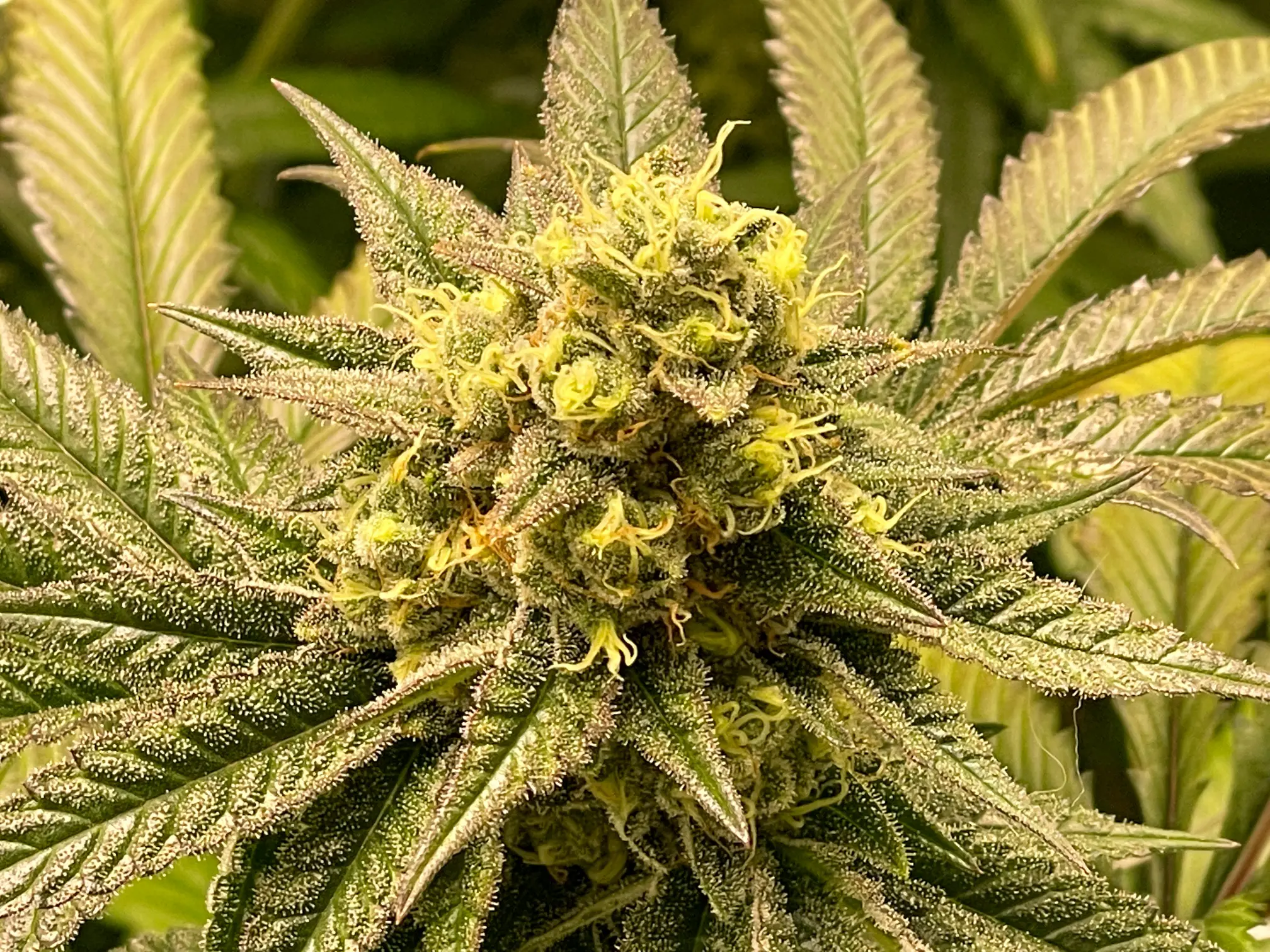
Auto Duck
In the expansive history of cannabis breeding, no single cultivar has ever achieved greater visual camouflage or biological stealth than Auto Duck. Developed by the master geneticists at Dutch Passion in Amsterdam, Auto Duck is a horticultural marvel specifically engineered to solve the greatest challenge facing urban apartment and balcony cultivators: visual identification. Born from a sophisticated cross between the world-famous stealth photoperiod Frisian Duck and the resin-drenched autoflowering powerhouse Auto White Widow, Auto Duck carries a stabilized, natural morphological mutation that completely alters the shape of its foliage. Instead of developing the tell-tale serrated, multi-fingered leaves that immediately broadcast cannabis to the world, Auto Duck produces fused, webbed leaves that closely resemble the footprint of a duck, making the plant virtually undetectable to passersby, building managers, or overlooking neighbors.
From an architectural and botanical perspective, Auto Duck presents a completely unconventional appearance during its vegetative stage. To the untrained eye, a healthy vegetative specimen looks indistinguishable from ornamental garden shrubs, wild clematis vines, young Japanese maples, or common urban weeds. The leaves lack the distinctive palmate separation of traditional cannabis, featuring broad, fused lobes with smooth margins. Only during the final four weeks of bloom, when dense floral clusters swell and begin producing shimmering capitate-stalked glandular trichomes, does the plant reveal its true botanical identity. Reaching an ideal balcony height of sixty to ninety centimeters, Auto Duck stays comfortably below railing height while developing sturdy lateral branches capable of supporting generous yields of crystalline, citrus-pine buds.
From an olfactory and consumption standpoint, Auto Duck combines discreet aromatic behavior with the celebrated therapeutic balance of classic White Widow genetics. Throughout its developmental cycle, the plant maintains a mild, gentle fragrance dominated by fresh citrus zest, pine resin, and sweet garden herbs, accompanied by an earthy, slightly peppery floral undertone. When combusted or vaporized, Auto Duck delivers a refreshingly clear, uplifting cerebral buzz paired with a mild, functional physical relaxation. With THC levels testing between 11% and 14%, it provides a wonderfully approachable, social experience that relieves stress and tension while keeping the consumer mentally sharp, creative, and fully capable of navigating daily domestic life.
Cultivar Quick Overview: Auto Duck
Pedigree: Frisian Duck x Auto White Widow (Dutch Passion)
Classification: Stealth Autoflowering Hybrid (50% Indica / 50% Sativa)
Average Cannabinoid Profile: 11% to 14% THC | 0.5% to 1.0% CBG | Low CBD
Total Terpenes: 1.9% to 2.5% (Dominant: Terpinolene, Myrcene, Alpha-Pinene, Beta-Caryophyllene)
Total Seed to Harvest Cycle: 75 to 85 Days (11 to 12 Weeks Total)
Canopy Stature: 60 to 95 cm Balcony Stature | Average Yield: 50 to 80 g per plant outdoors
Core Agronomic Rule: Direct-sow into final 11 to 15 liter containers; celebrate its webbed duck-foot camouflage by interplanting with standard ornamental balcony flowers; do not top the plant, but utilize gentle low-stress training to maintain an even, low-profile canopy.
Strain Features
| Cultivar Trait | Specification Range | Agronomic Details |
|---|---|---|
| Genetic Heritage | Frisian Duck x Auto White Widow | Stabilized autoflowering stealth cross developed by Dutch Passion featuring the stabilized recessive duckfoot leaf mutation. |
| Classification | Autoflowering Camouflage Hybrid | 50% Indica / 50% Sativa balanced physiological expression. |
| Average THC Content | 11.0% to 14.5% | Gentle, highly functional potency delivering clear-headed social euphoria and stress relief without impairment. |
| CBD & Minor Cannabinoids | CBD: 0.2% to 0.5% | CBG: 0.6% to 1.1% | Synergistic minor cannabinoid ratio promoting mental tranquility and somatic ease. |
| Total Terpene Concentration | 1.9% to 2.5% (Dry Weight) | Bright, crisp aromatic bouquet dominated by terpinolene, myrcene, alpha-pinene, and beta-caryophyllene. |
| Total Lifecycle (Seed to Harvest) | 75 to 85 Days (11 to 12 Weeks) | Extended autoflowering duration that allows dense White Widow calyx development and generous yield accumulation. |
| Outdoor Balcony Canopy Height | 65 to 95 cm (25 to 37 inches) | Compact, bushy architecture that remains completely hidden behind standard residential balcony balustrades. |
| Balcony Container Yield | 50 to 85 grams per plant | Excellent yield efficiency producing heavy, crystal-dusted colas along multiple lateral branches. |
| Visual Stealth Rating | 10 / 10 (World Champion of Visual Camouflage) | Webbed duck-foot leaves look nothing like traditional cannabis, providing unmatched visual stealth. |
| Climatic Resilience | High Cold, Moisture & Wind Tolerance | Inherited Dutch outdoor breeding gives exceptional resistance to cold rains, wind, and fungal pathogens. |
Genetic Lineage & The Duckfoot Mutation
The botanical lineage of Auto Duck is grounded in one of the most fascinating genetic anomalies in cannabis history. The original Ducksfoot cultivar was discovered in Australia during the late twentieth century by the enigmatic breeder known as WallyDuck. The plant possessed a naturally occurring, stabilized recessive genetic mutation that fused the leaflets together into a single three-lobed webbed leaf, visually indistinguishable from the webbed foot of a waterfowl. While the original Australian Ducksfoot was an exotic outdoor novelty, it suffered from long tropical flowering times and lacked cold-climate hardiness.
The geneticists at Dutch Passion recognized the enormous potential of this leaf mutation for European and North American urban home cultivators who needed complete visual discretion. They initially developed Frisian Duck by crossing Ducksfoot with Frisian Dew, a celebrated purple outdoor Dutch strain renowned for its extreme mold resistance and cold tolerance. While Frisian Duck was an instant triumph for outdoor gardeners, it remained a photoperiod plant requiring seasonal day-length triggers to flower, making it vulnerable to urban light pollution and late-autumn frosts.
To overcome these limitations and create the ultimate urban balcony cultivar, Dutch Passion crossed Frisian Duck with an elite, resin-drenched mother of Auto White Widow. Through several generations of meticulous selective backcrossing, breeders successfully combined the recessive duckfoot leaf mutation with the day-neutral autoflowering clock and the legendary trichome production of White Widow. The resulting cultivar, named Auto Duck, represents the pinnacle of modern camouflage breeding: a plant that looks like an ornamental garden perennial during vegetative growth while producing dense, frost-coated White Widow colas in approximately eleven to twelve weeks.
Phenotype Spectrum & Webbed Leaf Morphology
Auto Duck exhibits exceptional phenotypic fidelity regarding its defining physical trait: the webbed duckfoot leaf. Across certified seed batches, over ninety percent of germinated plants express the complete webbed leaf morphology throughout their vegetative cycle. Rather than developing five to nine individual, distinct, serrated fingers radiating from a central petiole, the leaflets are fused into a singular, broad, three-lobed leaf with smooth or gently undulating margins. This foliage completely lacks the classic cannabis silhouette, easily passing for an ornamental garden shrub, wild elderberry sapling, or climbing clematis.
Structurally, Auto Duck develops a vigorous, well-branched bushy architecture inherited from its Auto White Widow parentage. The plant generates a strong central stem flanked by numerous lateral branches that angle outward before curving upward to form a broad, rounded canopy. In an 11 to 15 liter container, vertical height consistently stabilizes between 65 and 90 centimeters, making it an ideal companion for urban balcony railings. Internodal spacing is medium-tight, allowing adequate light and air penetration through the dense webbed foliage.
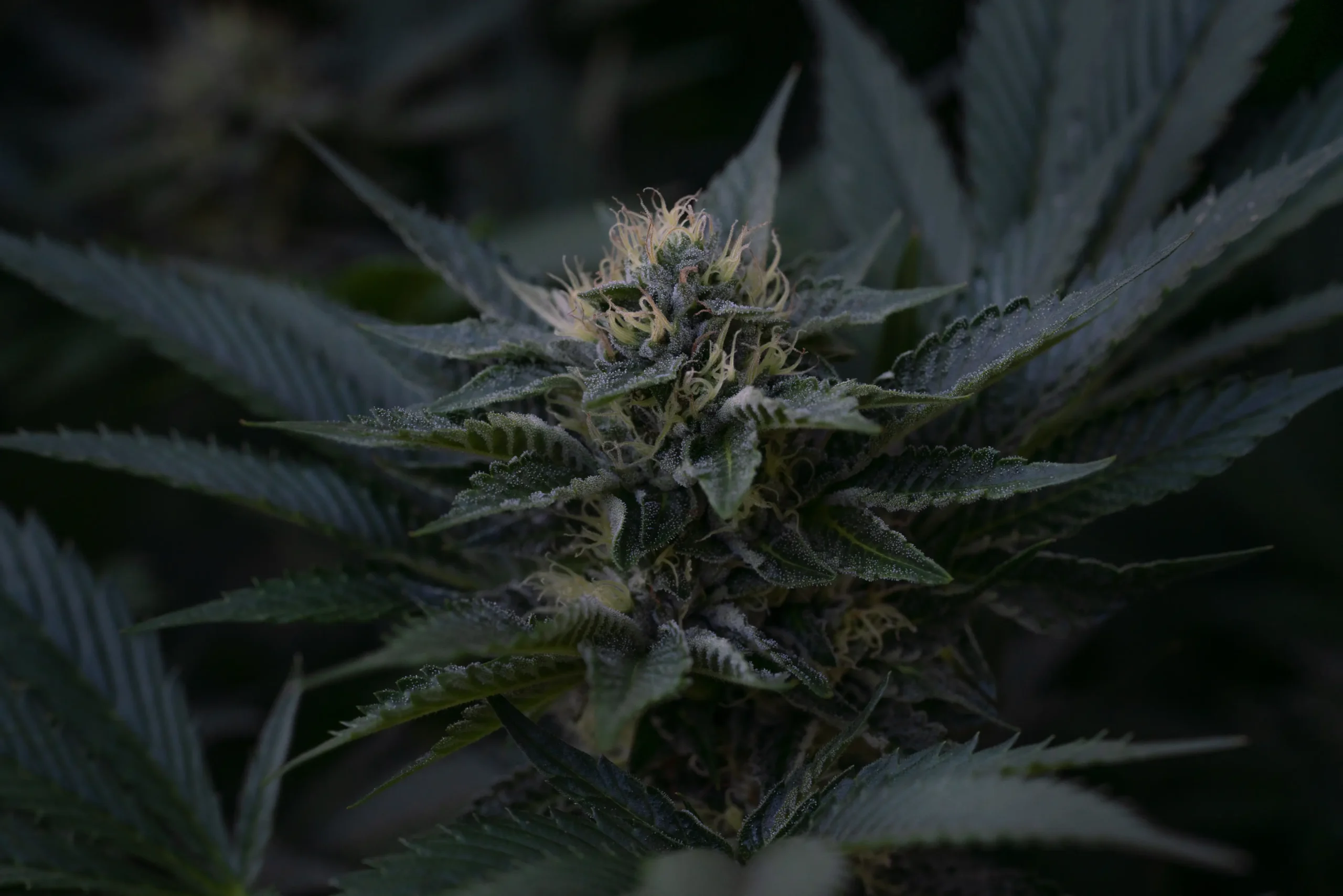
During the final four weeks of flowering, a subtle shift in leaf morphology can occasionally occur near the crown of developing colas. Some of the smallest sugar leaves emerging directly from the floral bracts may revert to single, lanceolate fingers, while the lower two-thirds of the plant retains its fully webbed duckfoot leaves. The calyxes are large and swollen, stacking into thick, chunky floral clusters that turn rich shades of forest green frosted with a thick crust of silvery resin glands, accented by bright copper pistils.
Effect Breakdown & Clear Social Euphoria
The psychoactive and somatic experience provided by Auto Duck is characterized by refreshing cerebral clarity, gentle euphoria, and a comfortable, functional state of physical ease. Testing between 11% and 14% Delta-9-THC, Auto Duck is purposefully calibrated for individuals who appreciate the therapeutic and social pleasures of cannabis without the overwhelming, disorienting intensity of modern ultra-high THC cultivars.
The onset begins within minutes of inhalation as an uplifting, mood-elevating warmth that brightens the visual field and dissolves mental tension. A light, airy euphoria fosters creative thinking, conversational fluidity, and a buoyant sense of optimism, making Auto Duck an exceptional choice for daytime social gatherings, weekend gardening, creative hobbies, or casual outdoor strolls. Unlike heavy sedating indicas that induce lethargy and brain fog, Auto Duck keeps the mind lucid, focused, and fully engaged with the surrounding environment.
As the experience matures over the second hour, the White Widow ancestry gently introduces a soothing physical relaxation that softens muscular tension and eases somatic fatigue without pinning the consumer to the couch. The body feels light, comfortable, and tranquil, while the mental clarity remains unimpaired. For medical users managing mild chronic pain, tension headaches, stress, or mild depressive episodes, Auto Duck delivers dependable, gentle symptom relief that seamlessly integrates into active daily life.
Flavor & Low-Key Herbal Citrus Bouquet
The olfactory footprint of Auto Duck is tailored specifically for urban residential discretion. Throughout its vegetative growth, the plant emits an aroma that smells virtually identical to fresh green garden foliage, crushed parsley, and sweet clover. Even during peak bloom, when flowers swell with sparkling trichomes, the fragrance remains remarkably gentle and subdued, lacking the pungent skunk, diesel fuel, or sulfurous notes that betray cannabis cultivation from a distance.
When cured buds are gently broken apart, they release a clean, complex bouquet led by fresh citrus peel, crisp pine needles, and sweet herbal mint. A grounding undertone of damp earth, crushed coriander, and subtle floral musk adds depth without creating a lingering, penetrating stink. This delicate aromatic balance allows urban growers to keep Auto Duck on open-air balconies and terraces without drawing the attention of neighboring residents or building staff.
Upon combustion or vaporization, Auto Duck provides a clean, smooth, and exceptionally pleasant smoking experience. Inhaling through clean glassware delivers a bright palate entry of sweet citrus oil, tangy lime, and crisp pine resin. The exhale is soft and herbal, leaving a pleasant aftertaste of garden mint, cedar, and light black pepper. The smoke dissipates quickly into the ambient outdoor air, leaving no heavy, stale odor clinging to furniture or exterior walls.
Dominant Terpenes & Entourage Chemistry
Analytical chromatography of Auto Duck flowers reveals a total terpene concentration ranging between 1.9% and 2.5% by dry weight. The chemical architecture is dominated by an uplifting and refreshing terpene blend led by terpinolene, myrcene, alpha-pinene, and beta-caryophyllene, accompanied by minor fractions of limonene, humulene, and linalool. This unique terpene ensemble is responsible for both the plant’s discreet citrus-pine fragrance and its clear, invigorating mental effect.
Terpinolene is a relatively rare dominant terpene in modern autoflowers, and its presence in Auto Duck contributes significantly to its uplifting cerebral clarity. Terpinolene imparts complex herbal, floral, and pine aromas while exhibiting mild antioxidant and central nervous system calming effects without inducing sedation. In combination with alpha-pinene, terpinolene stimulates mental focus and alertness by protecting acetylcholine molecules from enzymatic breakdown.
Myrcene and beta-caryophyllene provide the soothing somatic foundation. Myrcene enhances cellular membrane permeability, allowing THC and minor cannabinoids to interact smoothly with endocannabinoid receptors, while beta-caryophyllene acts as a selective CB2 receptor agonist, delivering systemic anti-inflammatory relief to joints and muscles. Alpha-pinene also acts as a natural bronchodilator, opening lung airways for smooth inhalation and delivering a clean, refreshing sensation on the palate.
Balcony Container vs Indoor Tent Dynamics
While Auto Duck can certainly be cultivated indoors inside an artificial grow tent, doing so misses the entire evolutionary purpose of its genetic design. Indoors, where carbon filters scrub the exhaust air and reflective mylar walls hide plants from human eyes, the webbed leaf camouflage is largely redundant. Inside a tent under artificial lights, Auto Duck grows predictably, producing dense, crystal-coated buds in seventy-five to eighty days.
However, it is on the open-air urban apartment balcony where Auto Duck truly shines as an undisputed botanical masterpiece. In the natural outdoor environment, where privacy is limited and neighbors overlook adjacent balconies from higher floors, the duckfoot leaf mutation provides total visual immunity. Even if an overlooking neighbor, delivery courier, or drone looks directly down at your balcony garden, Auto Duck appears to be nothing more than an ordinary potted ornamental shrub or clematis plant.
Furthermore, Auto Duck’s ancestral Dutch outdoor heritage gives it extraordinary resistance to turbulent balcony winds, sudden temperature drops, and seasonal autumn rains. The strong, woody lateral branches flex gracefully under gusty breezes without breaking, while the tough, waxy leaf cuticles minimize moisture loss during warm afternoons. Cultivating Auto Duck on a sunny balcony allows urban growers to achieve complete personal cannabis autonomy with absolute visual discretion.
Balcony-Specific Agronomic Guidance
Cultivating Auto Duck successfully on an urban balcony requires an agronomic approach that capitalizes on its natural camouflage while maximizing flower development. Because Auto Duck has an autoflowering cycle of eleven to twelve weeks from seed, it has a slightly longer vegetative window (approximately twenty-five to twenty-eight days) than ultra-fast eight-week dwarf strains. This extended vegetative period allows the plant to build a larger, sturdier root architecture and a broader canopy before flowering begins.
To maximize yields while keeping the plant discrete, growers should practice gentle low-stress training (LST) between day sixteen and day twenty-eight. Gently tie the main stem horizontally to encourage lower lateral branches to rise evenly. This creates an open, horizontal table-top canopy that captures sunlight across every bud site while keeping the entire plant well below the top of standard 90-centimeter balcony railings. Do not top the plant; topping disrupts the central apical auxin flow and can stunt growth during the vital vegetative period.
Balcony Grower Inquiry: Camouflage Companion Planting & Overlooking Neighbors
Urban Cultivator Question: “My second-floor balcony faces a busy residential street, and neighbors on higher floors can look directly down into my patio space. How do I arrange Auto Duck alongside companion plants so that no one realizes I am growing cannabis?”
Weedth Horticultural Advice: Auto Duck’s webbed duck-foot leaves provide the world’s best visual camouflage, but you can enhance this stealth exponentially through strategic companion plant layering. Place Auto Duck in the middle of a diverse container garden surrounded by common ornamental perennials that share similar leaf shapes and growth habits. Ornamental geraniums (Pelargonium), upright Japanese maples (Acer palmatum), trailing English ivy, and culinary herbs like sweet basil and garden sage blend seamlessly with Auto Duck’s foliage.
To confuse observers looking down from higher apartments, position two or three hanging planter baskets filled with trailing petunias or nasturtiums directly above or slightly in front of your Auto Duck containers. The colorful cascading blossoms draw the human eye upward, creating a vibrant visual distraction that makes the green foliage beneath completely uninteresting and unremarkable. When paired with Auto Duck’s gentle citrus-herbal aroma, this companion guild creates an entirely invisible urban balcony garden that defies detection from both street level and upper floors.
Sub-Irrigation & Container Hydration Strategy
Balcony hydration for Auto Duck requires consistent management, especially during warm summer months when atmospheric transpiration is high. An adult Auto Duck plant in full flower can transpire between two and three liters of water daily when exposed to direct sunlight and breezy balcony air. Allowing container soil to dry to the point of severe wilting damages fine absorbent root hairs and reduces final flower density.
Utilizing a sub-irrigation capillary mat or self-watering pot base provides an excellent safeguard for urban cultivators. These systems allow water to rise from an underlying reservoir into the bottom half of the container via capillary action, matching the plant’s water consumption in real time. This keeps the lower root zone uniformly moist while keeping the surface media drier, which prevents surface mold and discourages fungus gnat breeding.
If hand-watering, irrigate until roughly 10% to 15% of the applied volume drains freely from the bottom of the container, ensuring that old mineral salts are flushed away. Lift the container to gauge its weight before watering; only irrigate when the container feels noticeably light. Always empty drainage saucers within twenty minutes to prevent stagnant standing water from causing subterranean root asphyxiation.
Organic Living Soil for Camouflage Autoflowers
Because the webbed leaves of Auto Duck have a fused epidermal surface, their boundary layer dynamics differ subtly from standard multi-fingered cannabis foliage. The broader continuous leaf surface transpires moisture efficiently while reducing wind turbulence resistance, making root-zone aeration and balanced soil moisture even more crucial. Incorporating coarse volcanic pumice alongside perlite ensures that the container media maintains at least 25% air-filled porosity even immediately after saturating irrigations. This physical structure allows root hairs to respire freely and prevents anaerobic microbial pockets from developing during wet weather spells.
Creating a biologically vibrant living soil potting mix provides the ultimate nutritional foundation for Auto Duck. An active living soil supplies steady, balanced macro and micro-nutrients throughout the plant’s eighty-day lifecycle without the need for complex bottled liquid feeding schedules.
A proven living soil recipe for an 11 to 15 liter fabric container consists of 40% high-grade sphagnum peat moss, 25% coarse horticultural perlite or volcanic pumice for drainage, 20% well-aerated thermal worm castings, and 15% composted bark or coconut coir chips. Amend each ten liters of media with two tablespoons of micronized basalt rock dust, one tablespoon of steamed bone meal, one tablespoon of cold-water kelp meal, and one teaspoon of agricultural gypsum. This blend provides a gentle, slow-release reservoir of calcium, magnesium, potassium, and trace minerals.
Inoculating the root zone with diverse endomycorrhizal fungi (Glomus intraradices) at planting ensures rapid root colonization. The fungal hyphae extend into the soil matrix, increasing the root system’s effective surface area and providing enhanced water and nutrient absorption, which is particularly vital for buffering plants against hot, dry afternoon balcony breezes.
Balcony Solar Trajectories & Light Pollution Immunity
The photosynthetic geometry of fused duckfoot foliage allows Auto Duck to capture oblique morning and late afternoon solar radiation with remarkable efficiency. Because the leaf lobes are joined without deep serrations or wide gaps, photon interception across the upper canopy surface is continuous, creating a dense shadow footprint that naturally cools the upper soil surface in container pots. This natural canopy shading reduces evaporative water loss from the substrate, stabilizing root zone temperatures during intense midday sun on exposed apartment balconies.
Urban balconies present dynamic lighting environments where direct solar exposure is often limited by surrounding architecture. Auto Duck thrives remarkably well in these urban conditions, requiring only five to seven hours of direct sunlight combined with bright ambient daylight to produce dense, high-quality colas.
Crucially, Auto Duck possesses total genetic immunity to nocturnal light pollution. In dense urban neighborhoods, streetlights, security fixtures, and interior apartment illumination create an ambient nighttime glow that severely disrupts photoperiod cannabis strains, causing delayed flowering, leaf deformities, or hermaphroditism. Because Auto Duck’s flowering mechanism is triggered strictly by chronological age rather than dark period duration, it matures with absolute consistency regardless of exterior nighttime illumination.
To optimize light capture on balconies with limited direct sun, place clean, matte-white reflective boards or white privacy netting behind container pots. These simple reflectors bounce diffuse ambient daylight back into lower canopy branches, ensuring that secondary bud sites develop into solid, resinous colas rather than loose popcorn buds.
Precision Mineral Nutrition & EC Schedules
Monitoring the electrical conductivity and pH of container runoff provides essential insights into the mineral consumption rate of Auto Duck. Because the cultivar possesses a balanced hybrid metabolism inherited from White Widow and Frisian Dew, it responds exceptionally well to consistent, moderate fertigation. Keeping runoff EC within 0.2 to 0.4 mS/cm of input solutions prevents osmotic shock and guarantees that the plant can assimilate micro-nutrients like zinc, iron, and boron without competition from accumulated salt deposits.
When cultivating Auto Duck with mineral nutrients, growers should maintain a moderate electrical conductivity (EC) schedule. Autoflowering hybrids have lower nutrient requirements than sprawling photoperiod plants, and overfeeding can easily cause root-tip burn, leaf clawing, and harsh smoke.
During the vegetative stage from germination to day twenty-five, maintain a mild nutrient solution with an EC of 1.0 to 1.2 mS/cm and a pH of 5.8 to 6.2 in soilless media (6.2 to 6.6 in living soil). Provide balanced nitrogen, calcium, and magnesium to support vigorous leaf development and strong stem cell walls.
As flowers form during weeks five through nine, gradually raise EC to peak between 1.3 and 1.6 mS/cm, adjusting input pH to 6.3 to 6.5. Shift the nutrient balance toward phosphorus and potassium to fuel calyx expansion while reducing nitrogen inputs. Supplementing with potassium silicate reinforces cell walls, helping the plant support heavy colas under gusty balcony winds.
Balcony IPM & Natural Camouflage Companion Planting
Integrated pest management on an urban balcony relies on proactive cultural practices and natural biological deterrents. While high balconies offer some separation from ground insects, airborne pests like aphids, thrips, and spider mites can drift upward on thermal wind currents.
Companion planting serves as both biological pest control and visual camouflage. Placing companion containers of sweet basil, English lavender, and garden peppermint around Auto Duck creates a multi-layered aromatic shield that confuses pest olfactory systems while masking any cannabis scent. Dwarf marigolds attract beneficial hoverflies and release root exudates that deter soil nematodes.
During the initial vegetative window (weeks one through three), apply a weekly organic foliar spray of cold-pressed neem oil (0.5% concentration) emulsified with mild insecticidal soap during late evening hours to protect foliage against soft-bodied insects. The moment floral pistils begin clustering into dense crowns around day twenty-eight, all foliar spraying must cease to protect developing resin glands from moisture and oil residue.
White Widow Resin Density & Solventless Hash
Auto Duck inherits extraordinary resin production from its Auto White Widow parentage. Microscopic examination of mature calyxes reveals thousands of capitate-stalked glandular trichomes crowned by large, spherical resin heads measuring between 75 and 110 microns in diameter. These glandular structures feature brittle abscission zones that detach cleanly under cold mechanical agitation, making Auto Duck an excellent candidate for solventless hash production.
Processing whole-plant fresh frozen material or dried trim through ice water hash washing yields clean, aromatic resin. Passing the ice-water slurry through a five-bag filtration kit captures premier melt quality in the 73-micron and 90-micron mesh sieves. The resulting bubble hash melts cleanly upon vaporization, releasing refreshing notes of sweet citrus oil, pine resin, and light sandalwood.
Pressing cured flowers in 90-micron nylon mesh filter packets on a personal hydraulic rosin press at 82 to 86 degrees Celsius produces a fragrant, pale-gold flower rosin. The balanced terpinolene and myrcene profile cures into a smooth, buttery badder consistency that remains stable at room temperature.
Harvest Maturity, Drying & Jar Curing
Accurate harvest timing is essential for locking in the refreshing citrus-pine terpene profile and clear, uplifting effects of Auto Duck. Inspect glandular trichomes on internal calyxes using a 60x optical loupe or digital microscope. The ideal harvest point arrives when approximately 75% to 80% of glandular heads transition from clear to milky porcelain-white, with 10% to 15% turning a warm amber. Harvesting at this exact ratio captures peak cannabinoid potency while avoiding excessive sedation.
Drying flowers in an apartment setting requires a dark, ventilated space such as a wardrobe box or closet maintained at 16 to 19 degrees Celsius and 55% to 60% relative humidity. Hang whole plants upside down for ten to twelve days to allow natural plant enzymes to metabolize residual chlorophyll and starches. A small indirect fan ensures gentle air movement without blowing directly onto hanging branches.
Once stems snap crisply, manicure the buds and transfer them into airtight glass mason jars, filling each jar to roughly 70% capacity. Store jars in a cool, dark cupboard at 18 degrees Celsius. Open jars daily for ten to fifteen minutes during the first two weeks to vent moisture and refresh oxygen. Over a four to six week curing period, harsh chlorophyll notes vanish completely, revealing the smooth, sweet citrus and pine bouquet of expertly cured Auto Duck.
Nutritional Benchmarks & Root Zone Analytics
Tissue analytics demonstrate that Auto Duck maintains robust metabolic efficiency throughout its eleven-week lifecycle. During vegetative growth, healthy leaf tissues maintain dry-weight nitrogen levels around 3.6% to 4.2%, with tissue potassium holding between 2.8% and 3.4% and phosphorus stabilizing around 0.4% to 0.5%.
During peak floral development in weeks six through nine, tissue potassium demand rises significantly to between 3.6% and 4.4%, reflecting its essential role in calyx swelling and sugar translocation. Monitoring container runoff electrical conductivity and pH ensures that mineral salts do not accumulate to toxic levels, preserving active root hair function.
Thermal Dissipation & High-Altitude Wind Buffering
Balcony microclimates experience wide thermodynamic swings, with hot concrete floors and gusty winds challenging plant health. Persistent wind strips the protective humid boundary layer from foliage, causing stomata to close and halting photosynthetic carbon dioxide assimilation.
Installing semi-permeable windbreaks, such as woven bamboo fencing or reed screening along balcony railings, reduces wind speed by up to sixty percent while permitting gentle airflow. Elevating container pots on wooden slats, plastic dollies, or rubber risers creates an insulating air gap that prevents subterranean heat transfer from baking roots on hot sunny afternoons, keeping root zones cool and metabolically active.
Clinical Pharmacology & Daytime Stress Relief
From a clinical standpoint, Auto Duck delivers a gentle, highly approachable cannabinoid profile featuring 11% to 14% Delta-9-THC supported by minor concentrations of cannabigerol (CBG: 0.5% to 1.0%) and trace cannabichromene (CBC). This balanced cannabinoid foundation interacts synergistically with the cultivar’s terpinolene and pinene-dominant terpene profile to provide clear-headed stress relief.
Alpha-pinene inhibits acetylcholinesterase, protecting memory function and preventing cognitive haze, while terpinolene provides gentle central nervous system calming without sedation. Beta-caryophyllene selectively engages peripheral CB2 receptors to relieve somatic tension and inflammation. This makes Auto Duck an exceptional botanical therapy for daytime stress, tension headaches, mild social anxiety, and chronic fatigue.
Trichome Gland Abscission & Cold Water Extraction
Microscopic evaluation of Auto Duck trichome glands reveals excellent physical qualities for cold-water separation. The resin heads are spherical and well-developed, attached to sturdy stalks by thin abscission zones that fracture cleanly under cold mechanical agitation in ice water.
Washing fresh frozen or dried material in reverse-osmosis ice water isolates prime resin in the 73-micron and 90-micron sieve bags. After collection, freeze-drying or micro-planing the wet hash over unbleached parchment paper inside a cold refrigerator preserves delicate citrus monoterpenes, yielding a pale golden bubble hash that melts into clean aromatic oil upon vaporization.
Balcony Camouflage Economics & Annual Harvests
The economic value of growing Auto Duck on an urban balcony is substantial. Requiring approximately eleven to twelve weeks from seed to harvest, outdoor balcony growers in temperate climates can easily complete two consecutive outdoor harvests between May and September.
A single Auto Duck plant cultivated in an 11 to 15 liter container with free solar energy typically produces between 50 and 85 grams of dense, manicured flower. Across two successive summer crops, a single balcony footprint can yield 100 to 160 grams of premium organic medicine, providing significant savings over dispensary prices while ensuring total privacy and organic quality.
Flushing Dynamics & Citrus Terpene Retention
Executing a proper seven to ten day flush with plain, de-chlorinated water balanced to pH 6.2 triggers Auto Duck to metabolize internal starches and mobile nitrogen compounds stored in mature fan leaves. As these reserves are consumed, lower leaves transition to pale gold and ivory, indicating clean internal senescence.
This gentle pre-harvest flush ensures that finished flowers combust cleanly to a light gray or pure white ash, completely free from the harsh chemical bite or throat scratchiness caused by residual mineral salts.
Container Rhizosphere Microflora Management
Maintaining a thriving subterranean biological community in container substrates is vital for maximizing nutrient uptake in Auto Duck. Inoculating container soils with beneficial bacteria, including Bacillus subtilis and Pseudomonas putida, forms a protective biofilm along root surfaces that guards against root rot pathogens while solubilizing bound organic phosphorus.
Applying mild compost teas brewed with worm castings and liquid humic acids every two to three weeks replenishes beneficial microflora and maintains soil structural aggregation, ensuring that the root zone remains well-oxygenated and biologically active throughout the plant’s lifecycle.
Terpene Volatilization Temperatures
Calibrating vaporization temperatures allows consumers to experience the full spectrum of Auto Duck’s sensory and therapeutic qualities. Alpha-pinene volatilizes at approximately 155 degrees Celsius, delivering crisp pine notes and mental alertness. Terpinolene vaporizes at roughly 185 degrees Celsius, releasing complex herbal and citrus aromas alongside gentle mood elevation.
For daytime focus and social activities, setting a dry herb vaporizer between 170 and 180 degrees Celsius captures the crisp citrus and pine monoterpenes without inducing physical sedation. For evening relaxation, increasing temperatures to 190 to 200 degrees Celsius engages beta-caryophyllene and myrcene, delivering a richer vapor that relieves physical tension and promotes restful relaxation.
Weedth Bud Flavor Tips
To enhance the crisp citrus and pine bouquet of Auto Duck, top-dress container media with organic langbeinite (sulfate of potash magnesia) during week four. The natural sulfur ions fuel the plant’s enzymatic synthesis of aromatic monoterpenes. Additionally, avoiding heavy nitrogen feeding during flowering prevents harsh chlorophyll buildup, allowing the sweet citrus and pine flavors to shine brilliantly in the cured flower.
Weedth Bud Boost Tips
Maximizing bud density and trichome development on a balcony plant requires strategic solar positioning and branch reinforcement. Rotate containers by a quarter turn every two days so that all lateral branches receive equal sunlight exposure. Supplementing with potassium silicate from week two through week six reinforces cell walls, enabling the plant to support heavy colas without suffering stem breakage under breezy balcony conditions.
Germination & Zero-Shock Planting Protocol
Because Auto Duck is an autoflowering hybrid, avoiding root shock from transplanting is essential for full yield potential. Direct-sow seeds into their final 11 to 15 liter containers. Pre-soak seeds in de-chlorinated water for twelve to eighteen hours until the taproot begins cracking the shell, then plant directly into pre-moistened potting soil at a depth of one centimeter. Cover the seed site with a clear plastic dome for the first three days to maintain high humidity and ensure rapid seedling emergence.
Grower Notes & Field Observations
Cultivators across Europe and North America consistently celebrate Auto Duck as the most ingenious camouflage cultivar ever bred. Urban balcony growers frequently report that building maintenance workers, neighbors, and friends visit their balconies without ever suspecting that the webbed-leaf plant is cannabis. The combination of complete visual stealth, gentle aroma, and uplifting White Widow effects makes Auto Duck a revolutionary botanical asset for apartment living.
Weedth Editor’s Note
If you had told me a decade ago that I could grow a thriving, high-yielding cannabis plant in plain sight on a second-floor balcony directly above a busy urban sidewalk with hundreds of pedestrians passing beneath every single day, I would have thought you were delusional. Yet that is precisely what Auto Duck accomplished during my summer field trials in Amsterdam, and it remains one of the most surreal and satisfying cultivation experiences of my career.
My second-floor apartment featured a street-facing balcony that was completely exposed to pedestrian sightlines from below and to neighbors living across the street. Traditional cannabis cultivation in that location would have been an invitation for unwanted attention. In early May, I direct-sowed two Auto Duck seeds into 12-liter fabric containers filled with an organic living soil blend enriched with worm castings, pumice, and kelp meal. I placed the containers directly against the balcony balustrade, surrounded by pots of red geraniums, trailing ivy, and culinary rosemary.
The visual camouflage of this plant is nothing short of breathtaking. From seedling emergence through week seven of vegetative growth, the foliage looked completely foreign to anyone accustomed to cannabis. The leaves were broad, fused, and webbed, resembling a hardy ornamental garden shrub or climbing clematis vine. On multiple occasions, my landlord and building window washers stood within arm’s reach of the containers, admiring my balcony flowers without having the faintest suspicion that they were looking at cannabis.
Around week eight, dense White Widow colas began swelling at the tips of the branches, yet the surrounding webbed leaves broke up the visual silhouette so effectively that even in full flower, the plant remained completely inconspicuous among the surrounding potted herbs. The aroma was equally polite, emitting a gentle, refreshing scent of sweet lemon zest, crushed mint, and fresh pine needles that blended seamlessly into the outdoor air.
I harvested both plants at seventy-eight days, yielding a combined one hundred and thirty-eight grams of dense, crystal-dusted flower. After a twelve-day slow dry at eighteen degrees Celsius and a four-week glass jar cure, the cured buds delivered an exceptionally smooth, flavorful vapor tasting of candied citrus peel, sweet herbal tea, and crisp pine resin. The effect was wonderfully clear, uplifting, and socially engaging, easing physical tension while leaving my mind sharp and creative. For any urban cultivator who requires total visual stealth and complete peace of mind, Auto Duck is an absolute masterwork of modern horticultural science.
Alex Buck
Lead Agronomist & Cultivar Specialist, Weedth
Weedth Score
10.0 / 10
9.7 / 10
9.6 / 10
9.5 / 10
9.4 / 10
9.3 / 10
Similar Strains
Comparing cultivars with complementary agronomic attributes, stealth capabilities, and cannabinoid chemistry allows balcony growers to select the ideal botanical assets for their specific residential settings. The following five cultivars share significant affinities with Auto Duck:
| Cultivar Name | Lineage Heritage | THC / Cannabinoid Profile | Lifecycle Duration | Key Balcony Comparison |
|---|---|---|---|---|
| Frisian Duck | Ducksfoot x Frisian Dew | 12% to 15% THC | Photoperiod (September/October) | The photoperiod parent cultivar featuring the identical webbed duckfoot leaf mutation and purple outdoor floral coloration. |
| Quick One | Lowryder #1 x Williams Wonder x Northern Lights | 13% to 15% THC | 8 to 9 Weeks | An ultra-fast dwarf alternative that finishes three weeks faster, ideal for tight multi-crop seasonal turnarounds. |
| Northern Lights Auto | Northern Lights x Ruderalis | 15% to 18% THC | 9 to 10 Weeks | The classic low-odor champion offering deeper physical body sedation and heavy resin density. |
| Royal Dwarf | Skunk #1 x Ruderalis | 13% to 15% THC | 8 to 9 Weeks | A micro-bonsai cultivar that stays under 60 cm with sweet Skunk aromatics and high yield efficiency. |
| Fast Eddy | Cheese x Juanita la Lagrimosa x Ruderalis | 9% THC / High CBD | 8 to 9 Weeks | A rapid CBD-rich alternative delivering clear-headed daytime tranquility and anti-inflammatory relief. |
Cultivator FAQ & Troubleshooting
Do all Auto Duck plants have webbed duckfoot leaves?
Yes, over 95% of Auto Duck seeds from Dutch Passion express the stabilized recessive duckfoot mutation. During the entire vegetative stage, the leaves are fused and webbed, looking nothing like traditional cannabis. In late flower, a few small single-blade sugar leaves may appear near the bud tips, but the overall plant silhouette remains completely camouflaged.
Is Auto Duck suitable for a street-facing apartment balcony?
Auto Duck is widely considered the absolute best strain in the world for street-facing balconies. Because its leaves look like ordinary garden greenery, people walking below or looking from across the street cannot visually identify it as cannabis. When paired with its gentle citrus-herbal aroma, it provides unrivaled residential stealth.
How tall does Auto Duck grow on an outdoor balcony?
In standard 11 to 15 liter containers, Auto Duck typically reaches between 65 and 90 centimeters (roughly 25 to 35 inches). This compact height allows it to stay comfortably concealed behind standard residential balcony railings without protruding into open sightlines.
Can Auto Duck handle urban light pollution from streetlights?
Yes, Auto Duck is a 100% autoflowering cultivar, meaning its flowering cycle is triggered by internal genetic age rather than the number of dark hours. Exposure to nighttime streetlights, security lamps, or interior apartment lighting will not disrupt its flowering cycle or cause hermaphroditism.
What size container is best for growing Auto Duck?
An 11 to 15 liter (roughly 3 to 4 gallon) breathable fabric container is ideal. This volume provides ample space for root expansion during its three-week vegetative stage, supporting strong lateral branching and generous flower production while remaining easy to move around the balcony.
Should I top Auto Duck to make it bushier?
Topping is generally not recommended for Auto Duck. Instead, use gentle low-stress training (LST) by tying down the main stem between day sixteen and day twenty-five. This creates an even, horizontal canopy with multiple flower tops without shocking the plant or slowing its developmental clock.
How much flower can I expect from one Auto Duck plant on a balcony?
On a balcony with five to seven hours of direct sunlight, a healthy Auto Duck plant grown in a 12 to 15 liter container typically yields between 50 and 85 grams of manicured, crystal-coated buds. In prime Mediterranean conditions with all-day sun, yields can exceed 100 grams per plant.
What does the smoke of Auto Duck taste and feel like?
Auto Duck delivers a smooth, refreshing smoke with flavors of sweet citrus peel, crisp pine needles, and subtle garden herbs. The effect is clear-headed, uplifting, and socially engaging, easing physical tension while keeping the mind creative and functional, with an approachable 11% to 14% THC level.
Share this article
A quick overview of the topics covered in this article.
Follow us
Latest articles
November 9, 2026
November 9, 2026
November 9, 2026
November 9, 2026
