Bahama Mama
Bahama Mama – Strain Profile & Grow Guide
Bahama Mama is a sativa-leaning tropical hybrid known for passionfruit, banana, mango, pineapple, floral citrus, and dark candy gas. The cultivar is most consistently documented as Black Banana crossed with Tropicana Cookies. That combination produces a plant that can look compact and dark while delivering an effect that feels energetic, focused, and socially bright. It is not a long-flowering tropical sativa in the traditional sense. Many expressions finish near sixty days, making the strain attractive to growers who want vivid fruit and color without a twelve-week bloom.
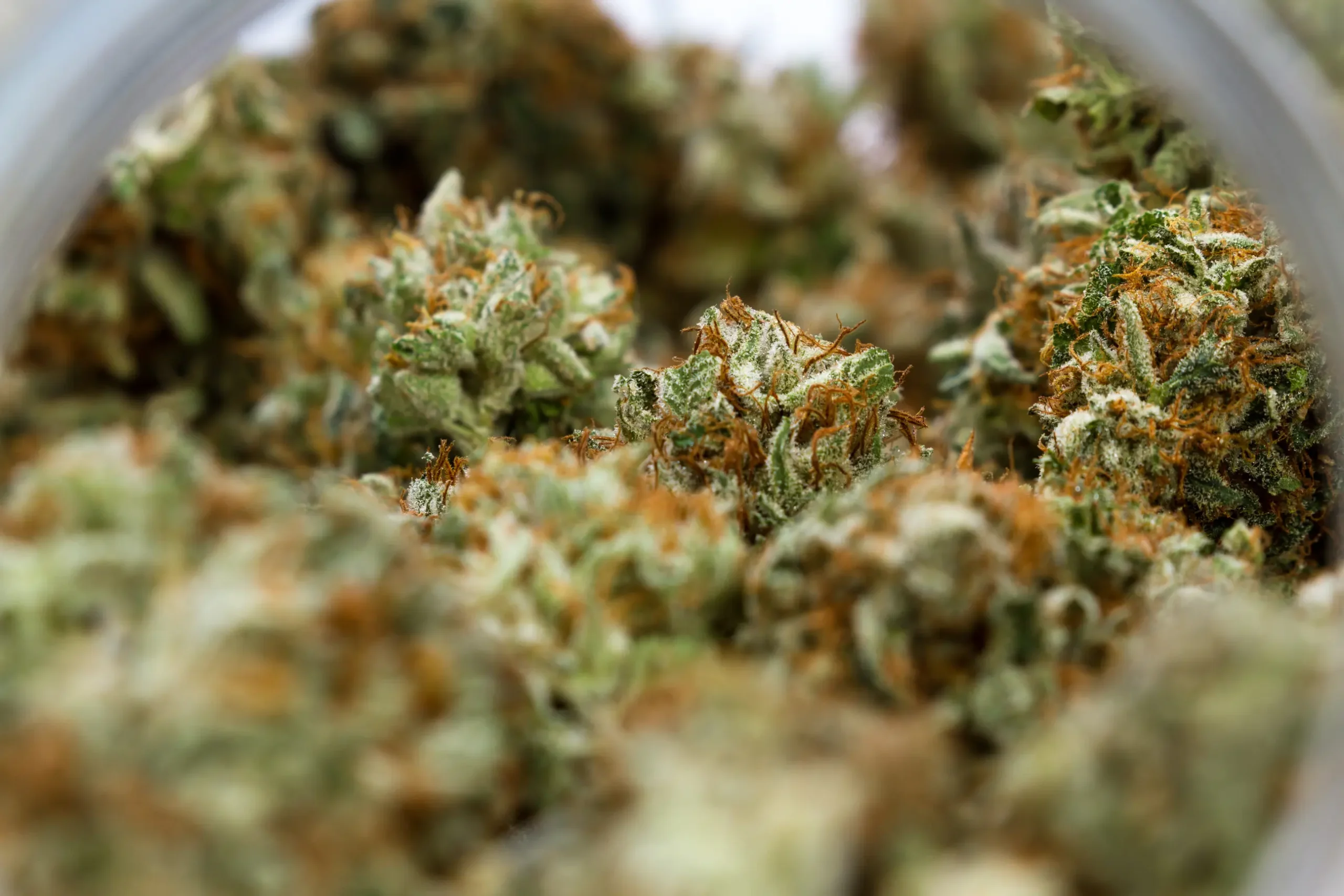
The plant often develops medium-sized, heavily frosted flowers with dark green, red, and purple foliage. Selected phenotypes show a low leaf-to-flower ratio, which simplifies trimming and exposes the flower structure clearly. Other plants may be more temperamental early, slow to establish, or sensitive to abrupt stress. Grow reports do not support treating every Bahama Mama seed as identical. The line is better handled as a small phenotype search than as a uniform production cultivar on the first run.
Its fast flowering and low leaf count can create a misleading sense of simplicity. A sparse-looking plant may not need more nitrogen. A colorful plant may not be mature. A sixty-day target may be realistic, but fruit aroma and calyx development still determine quality. The strain can produce excellent tropical flower when the grower avoids forcing vegetative mass and gives each branch enough air.
The central cultivation question is how to preserve the passionfruit-banana profile while allowing a relatively lean canopy to complete dense, resinous flowers. Bahama Mama does not always need heavy defoliation, aggressive feeding, or a long vegetative phase. Its best results often come from protecting the plant's natural flower-to-leaf advantage, supporting the major branches, and harvesting after the tropical aroma has moved from sharp and perfumed to ripe and integrated.
Strain Features
| Feature | Details |
|---|---|
| Strain Type | Sativa-leaning hybrid |
| Genetic Profile | Black Banana x Tropicana Cookies |
| THC | Commonly reported from the high teens into the upper 20% range; unusually high claims should be treated as batch-specific |
| CBD | Usually very low |
| CBG | Some tested flower shows measurable CBG near 1%, but this is not universal |
| Dominant Terpenes | Limonene, beta-caryophyllene, and linalool are frequently reported; myrcene may be important in some samples |
| Flavor and Aroma | Passionfruit, banana, mango, pineapple, orange, floral candy, berries, pepper, and light gas |
| Effect Character | Quick mental lift, focus, energy, sociability, and a gentle relaxing body undertone |
| Flowering Time | Commonly near 56 to 63 days, with many descriptions clustering around 60 days |
| Stretch | Moderate, with cut-dependent variation |
| Plant Architecture | Medium height, branching hybrid, often with a relatively low leaf-to-flower ratio |
| Bud Structure | Medium-sized, frosted, colorful flowers with dark green, red, and purple potential |
| Yield Potential | Medium to medium-high, depending on phenotype and early establishment |
| Grow Difficulty | Intermediate because of phenotype and stress variation |
| Primary Quality Risk | Overcorrecting a naturally lean plant, then harvesting by color or calendar before the tropical profile is complete |
Genetic Lineage
Black Banana contributes sweet banana, dark fruit, potency, color, and a heavier base. It also helps explain why the plant can show indica-like flower density even though the effect and branching behavior lean more active. Certain phenotypes inherit a darker appearance and a creamier banana note.
Tropicana Cookies contributes orange, tropical fruit, vivid pigmentation, resin, and a more cerebral effect. It can also create floral perfume and a citrus-peel sharpness that keeps the banana from becoming overly soft. The parent is associated with strong color, but its deeper contribution is aromatic brightness.
The cross can separate into banana-dominant, citrus-tropical, and dark-candy phenotypes. Banana-forward plants may smell creamy and ripe, with a more relaxing finish. Tropicana-leaning plants can emphasize passionfruit, orange, floral candy, and stronger mental energy. Balanced plants combine banana and exotic fruit over pepper and gas.
Structural variation matters as much as aroma. Some plants establish slowly, then accelerate during late vegetative growth. Others remain lean and produce fewer leaves than expected. A grower accustomed to lush broad-leaf hybrids may interpret this low leaf count as weakness and overfeed the plant. In selected Bahama Mama expressions, sparse foliage is part of the favorable flower-to-leaf ratio.
The cultivar's identity has been used as a parent in later lines, so commercial flower may vary. The most reliable profile remains tropical fruit, color, fast flowering, and an energizing effect. Exact phenotype behavior should be documented from the plant in front of the grower.
Keeper selection should include stability. Any plant that reacts poorly to ordinary environmental variation or shows unwanted reproductive stress should be removed from the breeding or mother program, regardless of color and aroma. A beautiful tropical phenotype is only useful when it can complete the cycle cleanly.
Effect Breakdown
Quick ignition
Bahama Mama commonly produces a fast mental lift. The user may feel awake, interested, and ready to begin a task. Conversation becomes easier, and mood can shift before much physical effect appears.
The onset is often described as energetic rather than racy. A moderate dose can support routine work, creative projects, errands, or social activity. The bright tropical flavor reinforces the sense of movement.
Focus and sensory color
During the middle phase, attention may narrow pleasantly. Music, color, food, and conversation can feel more vivid. Some users report clear focus, while others experience a looser creative flow. The difference depends on dose and sensitivity.
A Tropicana-leaning phenotype may feel more mentally active. Banana-heavy flower may carry a warmer body undertone and a slightly softer pace.
Physical balance
The body effect is generally supportive rather than dominant. Tension may decrease without strong couch-lock. This allows the strain to remain usable through the day for experienced consumers.
Higher doses can change that balance. The body becomes heavier, appetite rises, and the mental clarity may give way to distraction or tiredness. The plant is not universally stimulating.
Negative effects
Dry eyes and dry mouth are common. Sensitive users may experience paranoia, headache, or anxiety, particularly when potency is high or the setting is stressful. Because the onset is quick, the user should wait before taking more.
The strain is often selected for daytime use, but low-tolerance consumers should not assume that fruit flavor equals low strength.
Flavor & Aroma Profile
Bahama Mama's strongest identity is tropical fruit with floral lift. Passionfruit and banana are the most frequently repeated notes, but mango, pineapple, orange, berries, and candy can appear. The base is usually peppery, earthy, or lightly gaseous.
Passionfruit as the top note
Passionfruit can smell sharp, tart, and perfumed. It gives the jar an exotic quality that separates the cultivar from ordinary orange hybrids. In the best examples, the note remains visible after grinding and through the exhale.
Banana and creamy fruit
Black Banana influence adds ripe banana, banana peel, and sometimes a soft creamy impression. This layer becomes clearer in more mature flower and after cure. Early-cut plants may smell tropical but taste thin.
Mango, pineapple, and orange
Tropicana influence can widen the profile into mango, pineapple, orange peel, and floral citrus. Some jars resemble mixed tropical juice rather than one fruit. A little bitterness from rind or pepper keeps the sweetness from becoming flat.
Floral and candy notes
Purple, red, and dark phenotypes may add perfume, berry candy, or sweet flowers. These notes can be strong in the room and then disappear during a fast dry. They should be protected as carefully as the fruit.
Gas and spice
When the flower is broken, light gas, pepper, and earth usually appear. A more pungent phenotype may have dark fruit over fuel. This base provides depth and helps the exhale last.
The risk of a hot finish
High canopy temperature simplifies Bahama Mama quickly. Passionfruit and floral candy fade, leaving orange rind, pepper, and general gas. Outdoor plants should be protected from extreme late heat, and indoor tops should not be pushed into light stress for color or density.
Dominant Terpenes
| Terpene or Volatile Group | Likely Role in Bahama Mama |
|---|---|
| Limonene | Supports citrus, passionfruit brightness, and the energetic mental opening |
| Beta-Caryophyllene | Adds pepper, dry spice, and a stable base beneath the fruit |
| Linalool | May contribute floral perfume, candy softness, and emotional calm |
| Myrcene | Can deepen banana, mango, and the relaxing body undertone |
| Pinene | May add fresh herbal sharpness and clearer focus in selected samples |
| Fruit Esters and Minor Volatiles | Likely shape passionfruit, banana, mango, pineapple, and candy aroma more directly than the major terpenes alone |
Laboratory batches vary. One sample may be limonene-dominant, while another shows more caryophyllene or linalool. The cultivar should be recognized through the combined tropical-floral profile and effect rather than one fixed percentage.
The most volatile fraction is the exotic fruit and perfume. Pepper and gas survive poor handling more easily. Flavor-focused growers should use the survival of passionfruit and banana as the post-harvest quality test.
Indoor vs. Outdoor Growing
| Decision Point | Indoor Growing | Outdoor Growing |
|---|---|---|
| Early Establishment | Easier to monitor slow or uneven seedlings individually | Weather and cool soil may exaggerate slow early growth |
| Canopy Shape | Moderate stretch fits an open screen | Early topping creates a broad plant with good sun exposure |
| Leaf Density | Low leaf phenotypes need only selective thinning | Natural airflow can work well if branches remain separated |
| Flowering Speed | Commonly near 60 days under stable light | Outdoor timing depends on seasonal transition and local climate |
| Color | Stable nights can reveal red and purple tones | Cool nights may deepen color, but weather risk increases |
| Flavor | Controlled heat protects passionfruit and banana | Full sun can deepen fruit, while hot harvest weather can flatten it |
| Best Fit | Growers who can separate phenotypes and avoid overfeeding | Warm, dry regions with good autumn sun and low rain |
Indoors, the cultivar's moderate height and fast finish are useful. A partially open screen allows the branches to spread without creating unnecessary vegetative time. The grower should avoid forcing a sparse phenotype to look like a leafy cultivar.
Low leaf-to-flower ratio can make the room look less full. This is not necessarily lost yield. Flower mass may develop directly on the main branches without a large amount of fan-leaf material. Light distribution should be judged at the flower plane.
Outdoors, Bahama Mama can benefit from strong sun and a broad structure. The relatively fast finish may help avoid deep autumn weather. Early establishment should be protected from cold soil, wind, and inconsistent watering.
The cultivar is often described as performing well outdoors, but dense colorful flowers still require dry conditions. Morning moisture should be removed by sun and airflow. Rain late in bloom can remain hidden inside dark tops.
Strain-Specific Grow Guidance
Give slow seedlings time before increasing inputs
Some Bahama Mama plants can establish slowly. A seedling that grows cautiously does not automatically need stronger nutrition. Check root-zone temperature, oxygen, moisture, and light distance before adding feed.
Overwatering is especially common when the top remains small. Use a modest wetting zone around the developing roots rather than saturating a large container repeatedly.
Use one early structural decision
Top once or bend the main stem after the plant is healthy. Then observe the lateral response. The cultivar usually does not need repeated topping to create a useful canopy.
A naturally sparse phenotype should not be cut repeatedly in an attempt to force leaf density. Preserve the strongest branches and allow the plant to express its favorable ratio.
Fill the screen according to actual stretch
Moderate stretch is common. Leave open space at flip and continue light positioning through transition. A Tropicana-leaning plant may travel farther than a compact banana expression.
If several phenotypes share a room, keep containers movable until the stretch pattern becomes clear. A short plant can be raised rather than over-vegetated.
Do not defoliate a plant that is already open
Selected Bahama Mama plants carry few large leaves. Removing too many reduces photosynthetic capacity and exposes flowers to stress. Defoliate only where leaves block multiple sites, close the center, or press against buds.
The low leaf count is an advantage. Protect it rather than applying a standard schedule designed for a dense Cookies canopy.
Transition nitrogen early enough
Dark green color can be attractive, but excessive nitrogen delays clean flowering and adds unnecessary foliage. Shift the nutrition as flower set begins.
A naturally red or purple late canopy may fade differently from a green plant. Do not attempt to restore every color change with more nitrogen.
Maintain steady irrigation through fast flower formation
Build support before the flowers demand it
The plant can move from moderate demand to active flowering quickly. Avoid repeated severe dryback during the first half of bloom. Stable water availability supports branch extension and calyx set.
Near maturity, water use may decline sharply. Reduce frequency instead of keeping the mid-bloom rhythm. This protects roots and late humidity.
Support the main branches, not every small shoot
Use a net or soft ties to hold the principal colas in separate lanes. A low-leaf plant may look structurally light, but resinous flowers can still pull branches outward.
Outdoors, a simple cage installed early is easier than tying individual mature branches after they lean.
Inspect colored flowers carefully
Red and purple tissue can make early decay harder to identify. Look at the stem side, trapped sugar leaves, and points of contact. A change in texture or a dead inner leaf deserves inspection.
Watch for reproductive stress
Some grow reports describe sensitivity or inconsistent stability in related lines. Inspect flowering plants regularly after major stress, light interruption, or severe pruning. Remove unwanted reproductive tissue and do not keep unstable plants as mothers.
Stability varies by plant, so include it directly in phenotype selection rather than treating vivid color or exceptional aroma as proof of repeatability. A keeper should move through ordinary pruning, photoperiod transition, and minor environmental fluctuation without creating avoidable reproductive risk.
Harvest by calyx and aroma, not color
The flowers may become dark and frosty before complete maturity. Wait for full calyx expansion, reduced fresh pistils, and mostly cloudy trichomes on calyx tissue.
The tropical aroma should smell ripe rather than sharp and perfumed. Earlier harvest emphasizes energy and citrus. More maturity strengthens banana, body calm, and dark fruit.
Use staged harvest when upper color develops first
Top flowers may mature earlier under strong light. Removing them can allow lower branches additional time without overmaturing the entire plant. Label the sections and compare flavor after cure.
Protect the early root zone from cold and excess water
Bahama Mama can establish slowly when the medium is cool or repeatedly saturated. Tropical lineage does not mean the seedling wants a hot root zone, but it does benefit from stable warmth and oxygen. Cold wet conditions reduce root expansion and can make the first leaves appear weak or twisted.
Use smaller irrigation events during early growth and expand the wet area as the roots develop. A seedling in a large container should not receive the full-container volume on every watering. The objective is to encourage outward root exploration without leaving the lower medium anaerobic.
Read low leaf count as an efficiency trait
A phenotype with fewer fan leaves may still intercept enough light because the leaves are well positioned and the flower sites are exposed. Measure node development, branch strength, water use, and flower formation before deciding the plant is underperforming.
Trying to force leaf volume with nitrogen can reduce the cultivar's natural efficiency. The result may be more trim, more humidity, and less fruit clarity. A lean plant that converts light directly into flower can outperform a lush plant after drying and trimming.
Use aroma development to schedule the last two weeks
Bahama Mama often changes from floral citrus to ripe tropical fruit near maturity. Track the aroma every few days without repeatedly squeezing the same flower. A sharp orange-perfume note may deepen into passionfruit and banana as the calyxes swell.
If the aroma begins fading while the upper leaves show heat stress, reduce canopy temperature rather than harvesting immediately. The plant may still need time, but the environment must stop removing the most volatile compounds.
Design outdoor support for wind movement
A broad Bahama Mama should be supported without becoming rigid. Branches need enough movement to strengthen, but heavy flowers should not whip against one another. Use a cage with soft ties that limit extreme travel while allowing small natural motion.
After storms, inspect the joints where laterals meet the main stem. A branch can split internally without falling. Early repair and support may save the flower, while an unnoticed crack can become an entry point for moisture and decay.
Separate stability testing from production stress
A keeper candidate should be observed under normal, well-managed conditions first. Deliberately stressing an unproven plant to test stability can ruin the production run and confuse the result. Record how the plant responds to ordinary pruning, photoperiod transition, heat variation, and irrigation recovery.
If unwanted reproductive growth appears without a clear severe trigger, do not keep the plant simply because the aroma is exceptional. Repeatability and garden safety are part of quality. Stable siblings may offer slightly less color while being much more valuable over multiple cycles.
Evaluate trimmed yield, not visual canopy fullness
Bahama Mama can challenge the assumption that the fullest plant is the highest yielder. Weigh or compare dried trimmed flower by phenotype. Record trim volume and the percentage of small lower buds. A sparse plant with a high premium percentage may be more efficient than a lush plant with greater wet biomass.
This measurement is especially useful for indoor planning. Plant count, vegetative time, and labor should be based on final usable flower rather than how full the room looked in week three.
Treat the final fade as a phenotype trait
Some Bahama Mama plants fade into red, purple, and dark green while remaining active. Others stay lighter or greener. Compare the fade with water use and calyx expansion. A colorful plant that continues swelling is healthy. A plant that stops drinking and loses leaf function rapidly may be finishing under stress.
Avoid copying the same late feed reduction across every phenotype. The goal is a clean natural finish, not identical leaf color.
Use trim labor as part of the keeper score
A low-leaf plant can save hours of harvest work and reduce trichome handling. Record how long each plant takes to trim and how much material is removed. This matters for both personal and larger gardens.
The phenotype with slightly lower total weight may be more valuable when it produces a higher premium percentage and requires less labor. Weedth's quality standard should include the entire path from canopy to cured jar.
Compare fruit retention after storage
Some tropical flowers smell excellent at two weeks and fade quickly by the second month. Store small labeled samples and compare them later. A keeper should retain passionfruit, banana, or mango rather than becoming generic sweet gas.
Longer storage also reveals whether the smoke remains smooth. Aroma durability is part of cultivar quality, especially for a strain selected primarily for fruit.
Compare upper and lower canopy maturity directly
Bahama Mama can color most strongly at the top while lower flowers quietly reach structural maturity first in cooler air. Compare calyx size, pistil activity, and trichomes from several positions instead of using one top flower as the room sample. A staged harvest is justified when the difference is clear, but not simply because the top is darker.
When the lower branches are kept, maintain airflow and reduce unnecessary irrigation rather than treating them like a full plant in peak bulking. The remaining section usually drinks less after the upper canopy is removed.
Field Advice: Keep one labeled branch from each phenotype for a longer cure comparison. Tropical cultivars can change substantially between week two and week eight, and the plant that smells loudest first is not always the one that retains fruit longest. Revisit each sample after the early cure has settled, then again after ordinary storage. The final keeper should preserve passionfruit, banana, or mango without becoming generic sweet gas, while its smoke remains smooth and its effect stays recognizable. Aroma durability, structural repeatability, and post-harvest consistency belong in the same decision because a cultivar has to remain useful beyond the first exciting jar.
Weedth Bud Flavor Tips
Keep passionfruit away from heat
Passionfruit, floral candy, and mango are fragile. Control the upper canopy and move outdoor harvests into shade immediately.
Do not over-dry low-leaf branches
A sparse branch has less leaf protection and may lose moisture quickly. Check it separately from denser material. Remove small branches from the room when ready rather than waiting for the largest colas.
Use indirect air
Direct airflow strips perfume and tropical fruit. Fans should mix the room and prevent stagnant pockets without blowing continuously on flowers.
Let banana develop during cure
Freshly dried flower may emphasize orange and sharp tropical notes. Banana and cream can become clearer after several weeks. Do not judge the final profile immediately.
Store different color phenotypes separately
The darkest plant is not always the fruitiest. Separate storage reveals whether color correlates with aroma in the actual population.
Avoid excessive jar opening
Every opening exchanges aromatic air. Use smaller containers and open only as required for moisture control.
Evaluate the exhale
A loud jar can still produce weak flavor. The keeper should carry passionfruit, banana, or tropical candy through the exhale rather than ending in generic pepper.
Weedth Bud Boost Tips
Preserve the natural flower-to-leaf ratio
Do not add vegetative time and nitrogen simply to make the canopy look fuller. The cultivar can direct a high percentage of biomass into flower when allowed to remain open.
Use moderate plant count
A branchy medium plant can occupy useful width. Too many plants reduce air space and hide phenotype differences. A moderate count with movable containers is easier on the first run.
Keep the productive zone shallow
Remove weak lowers before the fast flowering cycle advances. Resinous small buds still reduce premium percentage and complicate drying.
Support color with health, not stress
Do not use extreme cold or drought to force purple. Healthy expression produces better aroma and usable weight than stressed pigmentation.
Maintain even light rather than one hot center
Tropical aroma survives better under a stable canopy. Raise short plants or reposition branches instead of pushing the central tops too hard.
Select for stability and repeatability
A spectacular phenotype that reacts poorly to ordinary conditions may not be the best long-term keeper. Yield, aroma, structure, and reproductive stability should be considered together.
Test the fast finish honestly
Run small comparisons at different maturity points. The earliest cut may feel energetic but taste thin. A few extra days may improve both weight and banana depth.
Medical Uses & Benefits
Bahama Mama is commonly chosen for fatigue, low mood, stress, and situations where the user wants to remain active. The quick mental lift may support motivation, social engagement, and short creative tasks.
The gentle body undertone can reduce physical tension without immediate sedation. Some users report relief from anxiety or depression-related symptoms, while others experience paranoia at higher doses. Individual response is important.
The strain may support appetite as the effect develops, especially in banana-heavy phenotypes. It is not usually selected as a strong sleep cultivar, though larger doses can become tiring later.
Dry eyes, dry mouth, headache, and anxiety are possible. Very low CBD means sensitive users should begin with a small dose.
Reported benefits do not establish treatment for fatigue, depression, anxiety, stress, or any other condition. Medical use should be discussed with a qualified professional.
Ideal User Profile
Bahama Mama suits experienced consumers who want tropical fruit, color, and mental energy without the long sharp arc of a classic Haze. It fits daytime recreation, creative work, social settings, and outdoor activities.
It is especially appealing to flavor chasers who enjoy passionfruit, banana, mango, pineapple, and floral citrus. Users who prefer heavy earth or savory gas may find the profile too bright.
Growers should choose it when they want a relatively fast sativa-leaning hybrid and can observe phenotypes individually. The plant is suitable for indoor, greenhouse, and dry outdoor environments.
It is less suitable for growers who respond to every sparse canopy with more feed or aggressive training. The cultivar may naturally carry fewer leaves.
Intermediate growers will gain the most from its phenotype variation. A stable known clone can be easier, but a seed run should be treated as a selection project.
Grower Notes and Feedback
Flowering time is consistently described near sixty days, commonly within a 56-to-63-day range. Individual plants should still be harvested by maturity.
Growers often mention colorful, frosted medium-sized flowers. Dark green, red, and purple foliage can create strong visual appeal without requiring extreme cold.
A favorable leaf-to-flower ratio is reported in selected plants. Some growers describe very little trim material and no need for heavy defoliation.
Early growth can be temperamental in certain seed runs. Slow establishment, germination inconsistency, or stress sensitivity should be recorded rather than generalized to every plant.
Aroma descriptions repeatedly return to passionfruit, banana, mango, pineapple, tropical candy, and flowers. The strongest top notes depend heavily on drying temperature.
The effect is commonly energetic, uplifted, and focused, but some users become sleepy or anxious. Phenotype and dose explain part of the variation.
Stability should be evaluated in every keeper hunt. Any plant showing unwanted reproductive response under ordinary conditions should be excluded from the mother program.
Weedth Editor's Note
What this cultivar asks from the room
The most interesting Bahama Mama plant in a mixed room may be the one that looks least impressive in vegetative growth. Imagine three plants entering the flip at similar height. Plant A is lush, symmetrical, and dark green. Plant B is slightly taller with long petioles and an orange stem rub. Plant C is sparse, slow, and carries so few leaves that it appears underfed.
The first reaction is to increase Plant C's nutrition. The root zone is healthy, the new growth is not damaged, and water use is steady, so the feed remains unchanged. During the second week of flower, Plant C begins building flowers directly along the branches while Plants A and B continue producing more leaf.
By day 35, Plant A has the fullest canopy but needs significant interior cleanup. Plant B stretches and develops a strong orange-floral aroma. Plant C remains open and shows dark berry-purple flowers with very little leaf around them. It requires almost no defoliation.
At harvest, Plant A produces the highest wet weight but the most trim. Plant B has the brightest daytime effect. Plant C yields slightly less total mass, yet nearly all of it is premium flower, and the cured jar carries passionfruit, banana peel, and floral candy through the exhale.
The next run changes the definition of a productive plant. Plant C receives a little more vegetative width but not more nitrogen. Plant B is flipped earlier. Plant A is given fewer branches and a cleaner center. The room becomes easier because each phenotype is allowed to express its real advantage.
Bahama Mama is a useful reminder that leaf volume and flower potential are not the same measurement. A lean plant can be efficient, flavorful, and easier to finish than the lush plant beside it.
Weedth Score
Growing Experience 8.1/10 Fast and potentially efficient, with early establishment and phenotype stability to evaluate
Bud Structure and Visual Appeal 9.2/10 Frosted, colorful, and often favorable in flower-to-leaf ratio
Aroma Complexity 9.2/10 Passionfruit, banana, mango, pineapple, flowers, pepper, and gas create vivid depth
Flavor and Smoothness 8.7/10 Excellent when tropical notes survive; low-leaf branches can over-dry quickly
Effects and High Experience 8.7/10 Energetic, focused, and uplifted with a gentle relaxing base
Overall Satisfaction and Recommendation 8.8/10 A strong fast tropical cultivar for growers who value efficiency and phenotype observation
Bahama Mama is most successful when the grower stops trying to make it look like another strain. I would keep the open plant that turns its limited leaf mass into ripe tropical flower.
FAQ
What is Bahama Mama's lineage?
Bahama Mama is most consistently documented as Black Banana crossed with Tropicana Cookies.
How long does Bahama Mama flower?
Most descriptions place it near 60 days, commonly within a 56-to-63-day range.
How much does Bahama Mama stretch?
Moderate stretch is common, though Tropicana-leaning phenotypes may move farther than compact banana-heavy plants.
Does Bahama Mama need heavy defoliation?
Not always. Selected plants have a low leaf-to-flower ratio and need only selective thinning. Defoliate by contact and airflow, not by schedule.
Why does my Bahama Mama look sparse?
Sparse foliage can be a phenotype trait rather than a deficiency. Check root health, new growth, and water use before increasing nutrition.
Is Bahama Mama suitable for beginners?
A stable known cut may be manageable, but seed-grown variation and stress sensitivity make it better for attentive intermediate growers.
Why did the passionfruit aroma disappear?
Late heat, direct drying airflow, very low humidity, or over-drying low-leaf branches can remove tropical top notes.
Is Bahama Mama prone to intersex stress?
Some grow reports describe sensitivity in related seed populations. Inspect plants after stress and exclude unstable individuals from keeper programs. This should not be generalized to every plant.
Is Bahama Mama good outdoors?
Yes in warm, dry climates. Its relatively fast finish is useful, but colored dense flowers still need protection from late rain and morning moisture.
Does Bahama Mama need heavy feeding?
No universal heavy-feed requirement is supported. Moderate balanced nutrition and plant observation are safer than forcing leaf density.
Is Bahama Mama a daytime strain?
It is commonly daytime-friendly because of its energetic and focused opening. Larger doses or banana-heavy phenotypes may become more relaxing later.
How should a keeper be selected?
Consider stability, cured tropical aroma, flower-to-leaf ratio, structure, effect, and actual premium yield. Do not select by color or total wet weight alone.
Similar Strains
Tropicana Cookies shares vivid color, orange-tropical aroma, and an uplifting effect, but usually carries less banana and a more citrus-dominant profile.
Mimosa provides tropical citrus and daytime energy with a brighter orange character and less dark fruit.
Strawberry Banana offers sweet fruit, resin, and a relaxing finish, with more strawberry cream and less passionfruit.
Forbidden Fruit matches dark color and tropical richness, but is usually heavier and more grapefruit-cherry dominant.
Share this article
A quick overview of the topics covered in this article.
Follow us
Latest articles
September 9, 2026
September 9, 2026
September 9, 2026