

Beneficial Microbes in Cannabis Root Zones: Rhizobacteria, Fungal Inoculants, and Nutrient Cycling
The root zone of high-performance cannabis is not merely an anchor for stalks or an inert reservoir for chemical salt solutions; it is an active, living ecosystem governed by complex biochemical interactions between plant epidermal cells and billions of specialized microorganisms. In commercial horticulture and living organic cultivation alike, establishing and maintaining populations of Plant Growth-Promoting Rhizobacteria (PGPR), beneficial fungal inoculants, and biological nutrient-cycling guilds fundamentally transforms root morphology, nutrient assimilation kinetics, and systemic immune defenses. Without a diverse and resilient microbial community, cannabis plants must expend substantial metabolic energy synthesizing protective enzymes, chelating oxidized minerals, and fighting opportunistic soil-borne pathogens. Conversely, when the rhizosphere is densely colonized by symbiotic bacteria and fungi, roots benefit from increased surface area, enzymatic mineralization of bound elements, and active competitive exclusion of virulent fungal pathogens like Pythium, Fusarium, and Phytophthora.
Rhizosphere Dynamics: Root Exudates, Colonization, and Nutrient Mineralization
The term “rhizosphere” describes the narrow cylindrical zone of soil or soilless substrate directly influenced by root secretions and associated microbial communities, typically extending only 1 to 3 millimeters from the epidermal surface of root hairs. Plants do not absorb nutrients in a biological vacuum. Through a sophisticated physiological process known as rhizodeposition, cannabis roots actively discharge between 15% and 30% of their total daily net fixed photosynthates into the surrounding substrate. This complex chemical cocktail consists of low-molecular-weight organic acids (such as citrate, malate, oxalate, and succinate), neutral sugars (glucose, fructose, ribose), amino acids, phenolic compounds, and high-molecular-weight mucilage.
Far from being a wasteful metabolic loss, rhizodeposition is an evolutionary signaling mechanism designed to recruit, nourish, and direct specialized microbial guilds. The root cap continuously sloughs off living border cells and secretes polysaccharide mucilage, lubricating the advancing root tip through substrate pore matrices while creating an ideal protective biofilm environment for bacterial attachment. Specialized bacterial strains detect specific organic acid exudates through chemotaxis, swimming toward the elongation zone where cell wall permeability allows rapid resource exchange.
Agronomic Principle: The Carbon-for-Mineral Trade Economy
Cannabis plants invest massive amounts of carbon into root exudates because microorganisms possess metabolic capabilities that plant root cells completely lack. Plant roots cannot synthesize phytases, phosphatases, or cellulases in quantities sufficient to cleave organically bound phosphorus or mineralize complex humus. By trading photosynthetic carbohydrates for microbially mobilized orthophosphate, chelated trace minerals, and synthesized phytohormones like indole-3-acetic acid (IAA), the plant achieves exponential resource uptake efficiency per unit of vascular expenditure.
Bacterial Colonization and Biofilm Architecture
Plant Growth-Promoting Rhizobacteria (PGPR) primarily belong to the genera Bacillus, Pseudomonas, Azospirillum, Streptomyces, and Rhizobium. Upon reaching the rhizoplane (the physical exterior surface of the root epidermis), pioneer bacterial cells anchor themselves using extracellular appendages such as flagella and pili. Once attached, these bacteria initiate quorum sensing – chemical cell-to-cell communication driven by acyl-homoserine lactones (AHLs) or autoinducing peptides. As the local bacterial population density surpasses a critical threshold, quorum sensing triggers the collective expression of genes responsible for producing Extracellular Polymeric Substances (EPS).
The resulting biofilm is a hydrated matrix of polysaccharides, structural proteins, and extracellular DNA that encases the bacterial colony. This biofilm functions as a micro-environmental buffer: it retains moisture during rapid substrate dry-backs, buffers against sudden swings in root-zone electrical conductivity (EC), and prevents harmful chemical oxidants or synthetic heavy metals from contacting root cortical cells directly. Furthermore, within this protected matrix, bacteria continuously release secondary metabolites, including lipopeptides (such as surfactin, iturin, and fengycin) that possess potent antifungal activity against encroaching pathogens.
Enzymatic Mineralization and Iron Siderophores
In mineral and organic substrates, a significant fraction of vital nutrients remains insoluble and unavailable for root absorption. Phosphorus, for example, rapidly binds with calcium at alkaline pH or precipitates with iron and aluminum at acidic pH, forming insoluble mineral phosphates. Phosphate-solubilizing bacteria (PSB), notably Bacillus subtilis and Pseudomonas fluorescens, secrete low-molecular-weight organic acids that lower the micro-pH immediately surrounding root hairs, chelating cations and freeing monobasic orthophosphate (H2PO4–) for immediate plant uptake.
Similarly, iron in oxidized ferric forms (Fe3+) is virtually insoluble in aerated substrates above pH 6.0. Beneficial bacteria synthesize and secrete siderophores – low-molecular-weight iron-chelating ligands that possess an exceptionally high affinity for ferric iron. These siderophores scavenge trace iron molecules from mineral particles, outcompeting pathogenic fungi for essential micronutrients and delivering bioavailable iron directly to plant root uptake channels through specialized bacterial receptor pathways.
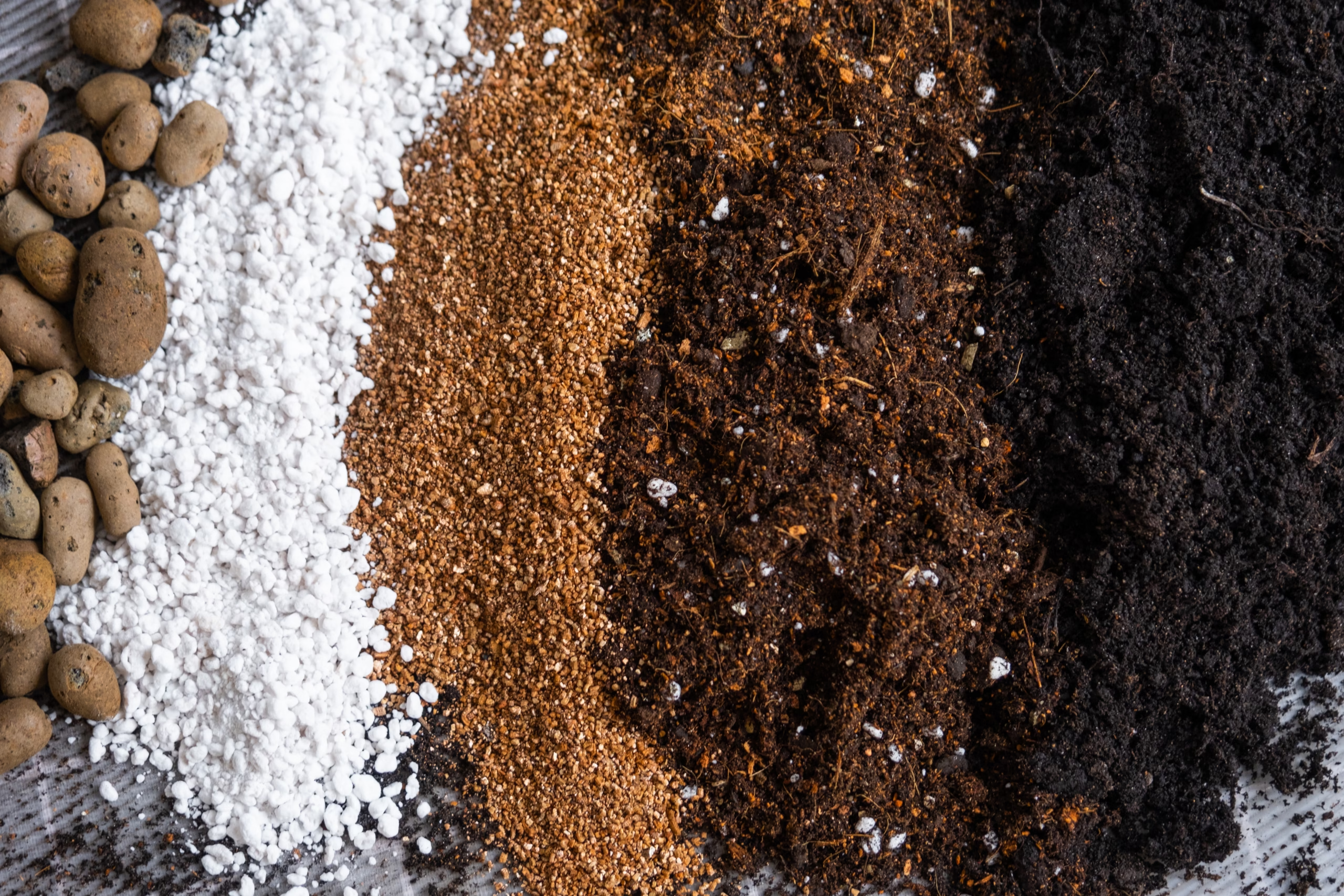
Physical substrate blending incorporating sphagnum peat, perlite, and organic amendments to create porous microbial habitats.
Water and Oxygen Behavior: Pore Space, Saturation, and Dissolved Oxygen Kinetics
The metabolic performance, species richness, and longevity of beneficial root-zone microorganisms are strictly governed by the physical balance of moisture and oxygen within the growing substrate. Beneficial bacteria and mycorrhizal fungi are predominantly obligate aerobes: they depend on molecular dissolved oxygen (O2) as the terminal electron acceptor in aerobic cellular respiration. When root-zone oxygenation is maintained, aerobic respiration yields 36 to 38 adenosine triphosphate (ATP) molecules per glucose molecule metabolized, driving rapid biomass growth, root colonization, and nutrient cycling.
Substrate moisture physics dictates oxygen availability through the geometric configuration of macropores and micropores. Macropores (pores greater than 75 micrometers in diameter) are responsible for gravitational drainage and gas exchange. Immediately following a thorough irrigation event, water drains rapidly from macropores under the pull of gravity, allowing fresh atmospheric air containing approximately 21% O2 to replenish the container pore network. Micropores (pores smaller than 30 micrometers), by contrast, hold capillary water tightly against gravitational pull, serving as the liquid reservoir from which plant roots and microflora draw hydration.
Hypoxia, Dissolved Oxygen Thresholds, and Pathogen Shifts
Oxygen diffuses approximately 10,000 times slower through liquid water than through open air pore spaces. Consequently, when a cannabis container remains saturated at field capacity without adequate drainage or dry-back, microbial respiration rapidly depletes the dissolved oxygen (DO) content of the stagnant pore water. In healthy, well-aerated irrigation water, dissolved oxygen levels measure between 8.0 and 10.0 mg/L (ppm) at standard root-zone temperatures (20 °C to 22 °C). However, if container media remains saturated for more than 12 to 24 continuous hours, active root respiration and bacterial metabolism cause DO levels to plummet below 3.0 mg/L, inducing severe root-zone hypoxia.
Under hypoxic and anoxic conditions (DO < 2.0 mg/L), obligate aerobic bacteria enter dormancy, sporulate, or lyse. In contrast, opportunistic water-mold oomycetes such as Pythium ultimum, Phytophthora nicotianae, and facultative anaerobic bacteria proliferate explosively. Pythium produces motile biflagellate zoospores that actively navigate through continuous film water toward hypoxic root tips, attracted by excessive ethanol and amino acid leakage from suffocating plant cells. Within hours, zoospores encyst, penetrate epidermal walls, and cause catastrophic root rot and vascular collapse.
Substrate Temperature and the Q10 Biological Coefficient
Microbial enzymatic reaction rates correlate directly with root-zone temperature, following the biological Q10 temperature coefficient principle: for every 10 °C rise in media temperature, metabolic reaction velocity roughly doubles, up to a thermal optimum. For the majority of beneficial cannabis rhizosphere organisms, the physiological sweet spot resides between 20 °C and 23 °C (68 °F to 74 °F). If container temperatures drop below 17 °C, microbial enzyme systems stall, nitrification ceases, and root colonization rates plummet. Conversely, if root-zone temperatures exceed 26 °C, two compounding crises occur: the physical solubility of dissolved oxygen in water decreases sharply, while microbial oxygen demand doubles, rapidly tipping the root zone into acute oxygen starvation.
Can beneficial bacteria survive high electrical conductivity synthetic fertigation in coco coir?
Question sent by: Marcus Vance, via email.
“I run a commercial automated drip setup in 100% coco coir with synthetic mineral salts fed at 2.4 dS/m EC. Sales reps tell me adding Bacillus and Trichoderma is a complete waste of money because mineral salts immediately kill bacteria through osmotic shock. Is this true, or can inoculants survive synthetic mineral programs?”
Beneficial inoculants can indeed survive and provide substantial agronomic benefits in synthetic coco coir systems, provided the grower understands bacterial biology and salinity thresholds. Endospore-forming bacteria such as Bacillus subtilis and Bacillus amyloliquefaciens possess extreme osmotic tolerance: their thick peptidoglycan cell walls and ability to synthesize intracellular osmoprotectants (like proline and betaine) allow vegetative cells to remain metabolically active up to 2.8 dS/m EC, and their dehydrated endospores can survive solutions exceeding 6.0 dS/m without structural degradation.
However, unlike living soil beds where microbes sustain themselves through complex organic food webs, inert coco coir lacks a self-sustaining carbon matrix. In high-EC synthetic setups, beneficial bacteria act as functional biocatalysts: they secrete root-shielding biofilms, outcompete Pythium for root space, and chelate trace minerals. Because frequent runoff fertigation washes unattached planktonic cells out of the pot, synthetic coco growers must apply fresh microbial inoculations every 7 to 14 days rather than assuming a single initial dose will permanently colonize the container.
How to Measure Microbial Activity, Biomass, and Population Ratios
Historically, cannabis growers relied on vague intuition or the earthy scent of container runoff to evaluate root-zone biological vitality. Today, commercial crop production utilizes rigorous agronomic testing methodologies to quantify microbial biomass, identify dominant taxonomic guilds, and evaluate true biological cycling velocity.
1. Microscopic Direct Counts and microBIOMETER Assays
Direct counting via optical phase-contrast microscopy allows trained agronomists to observe living nematodes, protozoa, bacterial morphotypes, and active fungal hyphae in real time. Modern digital spectrophotometric assays, such as the microBIOMETER membrane extraction test, quantify total microbial biomass carbon (μg C/g) and determine the exact Fungal-to-Bacterial (F:B) ratio from a 0.5-gram substrate core sample within ten minutes. A healthy living organic soil or compost-amended coco bed should register total microbial biomass between 400 and 800 μg C/g.
2. Fluorescein Diacetate (FDA) Hydrolysis Assay
The Fluorescein Diacetate (FDA) hydrolysis assay measures the total enzymatic cleavage activity of ubiquitous intracellular and extracellular enzymes, including proteases, lipases, and esterases produced by active soil microflora. Colorless FDA is added to a substrate suspension; active microbial enzymes cleave the molecule into fluorescein, a bright yellow-green fluorescent compound measured spectrophotometrically at 490 nm. High FDA absorbance readings confirm high biological metabolic turnover and rapid organic nutrient mineralization, whereas low readings warn of biological dormancy or microbial death caused by toxic chemical residues or excessive drought.
3. Quantitative Real-Time PCR (qPCR) Metagenomic Profiling
For precise species-level identification and quantitative tracking of specific inoculants, commercial facilities submit root and substrate cores for quantitative real-time PCR (qPCR) and 16S rRNA / ITS gene amplicon sequencing. High-throughput qPCR tracks exact gene copy numbers per gram of root tissue, allowing growers to verify whether an expensive commercial Trichoderma harzianum or Bacillus velezensis inoculant has successfully colonized root cortical tissues or was outcompeted by native baseline flora.
Biomass Optimization: The Stage-Specific Fungal-to-Bacterial (F:B) Balance
Different development phases of cannabis require distinct microbial community balances. In the vegetative stage, rapid vegetative leaf expansion and stalk elongation depend on fast nitrogen cycling; a bacterial-dominated root zone with an F:B ratio between 0.5:1 and 0.8:1 favors rapid ammonification and nitrification, keeping nitrate abundant. During generative flowering, however, excess free nitrate induces leafiness and delays bud maturation; shifting the root zone toward fungal dominance with an F:B ratio between 1.0:1 and 1.5:1 stabilizes organic nitrogen into complex fungal biomass while optimizing fungal phosphatase enzymes that mobilize rock phosphate and micronutrients.
Microbial Inoculation Kinetics: Biofilm Formation and Root Colonization Phases
When beneficial bacterial and fungal inoculants enter the rhizosphere, they do not instantly alter plant nutrition; rather, they must establish competitive niche exclusion against indigenous microflora through a coordinated four-phase colonization process. First, planktonic bacterial cells detect plant root exudates – such as malate, citrate, and glucose – via chemotaxis, swimming toward active root elongation zones. Second, upon contacting root epidermal cell walls, bacteria synthesize extracellular polymeric substances (EPS) composed of polysaccharides, structural proteins, and extracellular DNA. This slimy EPS matrix forms a robust biological biofilm that firmly anchors the colony to root hairs, protecting both roots and microbes from toxic salt shocks, desiccation, and chemical fluctuations.
Third, once biofilm density reaches critical thresholds, bacteria activate quorum-sensing gene expression, up-regulating the synthesis of organic acid exudates that dissolve insoluble minerals while releasing volatile organic compounds (VOCs) that trigger Induced Systemic Resistance (ISR) throughout the canopy. Finally, established colonies maintain continuous cross-talk with root cells, exchanging mobilized orthophosphate and bio-available nitrogen for photosynthetic carbon exudates. Cultivators must protect this newly established biofilm during the first 72 hours following inoculation by avoiding harsh chemical flushes, extreme dry-backs, or concentrated mineral salt spikes.

In-situ root-zone diagnostic testing to monitor pH and electrical conductivity buffering within biologically active substrates.
Substrate and System Tradeoffs: Living Soil, Peat, Coco, Rockwool, and Hydroponics
Microbial viability, colonization stability, and inoculant selection vary dramatically across different cultivation mediums and irrigation delivery methods. Choosing an inoculant requires aligning microbial biology with the physical substrate architecture:
Living Organic Soil (Raised Beds and Large Containers)
Living organic soil provides the ideal biological sanctuary. Composed of peat or coir, high-grade aerobic compost, worm castings, aeration aggregates (pumice, perlite), and diverse mineral rock dusts, living soil contains an abundance of indigenous carbon food sources. In these systems, inoculated microbes form a complete soil food web: bacteria and fungi immobilize nutrients in their bodies, while bacterivorous protozoa (amoebae, flagellates, ciliates) and beneficial nematodes graze on them, excreting plant-available ionic ammonium (NH4+) and orthophosphate directly into the rhizosphere. Inoculant survival is exceptionally high, requiring only maintenance top-dressings and compost tea drenches.
Peat-Based Soilless Media and Coco Coir
Sphagnum peat moss possesses natural humic compounds and high cation exchange capacity (CEC), providing a hospitable medium for fungal and bacterial establishment, though its naturally acidic pH (3.5 to 4.5) requires extensive dolomitic limestone buffering to prevent microbial stalling. Coco coir, derived from coconut husks, possesses excellent physical aeration (10% to 15% air-filled porosity at container capacity) and natural lignin content, making it an outstanding host for Trichoderma species, which naturally degrade cellulose and lignin. However, coco contains minimal indigenous carbon nutrients for bacteria; consequently, PGPR bacteria in coco coir require supplemental prebiotic inputs (humic and fulvic acids) and regular replenishment.
Rockwool and Inert Hydroponic Systems (DWC and NFT)
Inert substrates like rockwool, perlite, and water-based hydroponics (Deep Water Culture, Nutrient Film Technique) present the most hostile environments for biological colonization. Rockwool fibers possess zero CEC, zero organic matter, and an initial alkaline surface pH that must be conditioned with acid before use. In recirculating water systems, unanchored bacteria form floating biofilm slimes that clog emitter orifices and coat dissolved oxygen sensor probes. In these sterile or semi-sterile hydroponic architectures, growers must select specialized, endospore-forming Bacillus biocontrol strains formulated specifically for hydroponic drip systems, avoiding raw unfiltered compost teas or insoluble fungal amendments that cause catastrophic mechanical failure.
Can I add blackstrap molasses to my hydro reservoir to feed beneficial root microbes?
Question sent by: Elena Rostova, via email.
“I run an automated recirculating hydro system with a 100-gallon reservoir. I added beneficial bacteria and dumped in two cups of organic blackstrap molasses to give them a sugar boost. Within 48 hours, my reservoir turned cloudy, smelled like sour wine, and my plant roots turned brown and slimy. What went wrong?”
Adding simple unrefined sugars like molasses directly into an inert hydroponic or recirculating reservoir is one of the most destructive mistakes a grower can make. In living soil or peat beds, a massive diversity of soil microfauna, fungal networks, and mineral particles buffers and slowly processes simple sugars. In an aqueous hydroponic reservoir, however, dissolved simple carbohydrates (sucrose, glucose, fructose) trigger an immediate, uncontrolled population explosion of fast-growing heterotrophic opportunistic bacteria.
As billions of these bacteria reproduce exponentially, their collective cellular respiration consumes every trace of dissolved oxygen in the water within hours, dropping DO levels from 9.0 mg/L down to absolute zero (anoxia). Deprived of oxygen, plant root cells suffocate, die, and slough off their epidermal layers, turning brown and translucent. Meanwhile, anaerobic bacteria initiate fermentation of the remaining sugars, producing acetic acid, alcohol, and foul-smelling volatile fatty acids that rapidly crater reservoir pH and rot root systems. In hydroponic reservoirs, never feed simple sugars; feed microbes exclusively with purified fulvic acids, bio-safe kelp extracts, or formulated microbial biostimulants that do not deplete dissolved oxygen.
Failure Modes, Pathogen Look-Alikes, and Microbial Die-Off Hazards
Diagnosing root-zone biological problems requires separating true microbial activity from opportunistic pathogen attacks and chemical sterilization errors:
1. Anaerobic Souring and Hydrogen Sulfide Toxicity
When heavy, over-compacted substrates remain waterlogged without sufficient dry-back, obligate anaerobic bacteria belonging to the genus Desulfovibrio reduce sulfate ions (SO42-) into hydrogen sulfide gas (H2S). Hydrogen sulfide is a potent metabolic poison that binds irreversibly to cytochrome c oxidase in root mitochondria, terminating cellular ATP production. Roots turn gray or jet-black, emit a pungent rotten-egg odor, and collapse. Inexperienced growers frequently confuse anaerobic souring with nitrogen deficiency because the upper canopy turns pale yellow as nitrogen uptake shuts down completely.
2. Osmotic Plasmolysis from Mineral Fertilizer Spikes
Applying concentrated mineral fertilizers with an EC exceeding 3.0 dS/m in the root zone creates an extreme hyperosmotic gradient. Water is pulled out of both root cells and bacterial cytoplasm into the surrounding soil solution. Non-spore-forming beneficial bacteria undergo plasmolysis – their plasma membranes pull away from their cell walls, causing cellular collapse and death. If heavy mineral feedings are administered without adequate runoff fractions, salt crusts form around root tips, obliterating the biological biofilm shield and exposing damaged tissue to fungal infection.
3. Chemical Sterilant Misuse: H2O2, Chlorine, and Chloramines
Many municipal water supplies contain chloramines (monochloramine, NH2Cl) as a secondary disinfectant. Unlike free chlorine, which outgasses within 24 hours of standing aeration, chloramines are stable chemical bonds that remain in tap water for weeks. Chloramines pass through standard carbon block filters unless specialized catalytic carbon filters are installed. Irrigating living microbial root zones with chloraminated tap water steadily oxidizes microbial membranes, killing beneficial bacteria and mycorrhizal fungi. Similarly, dumping hydrogen peroxide (H2O2) or hypochlorous acid (HOCl) into a living root zone to “kill algae” or “oxygenate roots” completely sterilizes the biological ecosystem, creating a biological vacuum that virulent pathogens quickly colonize.
4. Beneficial Predatory Nematodes vs Root-Knot Pest Nematodes
Growers scouting root systems with hand lenses often panic upon spotting microscopic roundworms, assuming all nematodes are crop pests. In reality, beneficial entomopathogenic nematodes (such as Steinernema feltiae and Heterorhabditis bacteriophora) hunt and consume fungus gnat larvae, thrips pupae, and root aphids without ever attacking plant tissue. In stark contrast, parasitic root-knot nematodes (Meloidogyne spp.) inject secretions into root vascular cylinders, causing swollen galls, root stunting, and profound nutrient lockout. Distinguishing between beneficial predators and pathogenic parasites requires microscopic examination of the mouthparts: predatory nematodes possess tooth-like denticles or open buccal cavities, whereas parasitic nematodes possess a sharp hollow hypodermic needle (stylet) used to puncture plant cells.

Vegetative cannabis thriving in microbially fortified organic potting medium under full spectrum high-intensity lighting.
Major Beneficial Microbial Guilds for Cannabis Root Zones
In high-performance cannabis cultivation, managing root microbiology requires treating the subterranean root zone as a multi-trophic bio-reactor. Rather than relying on single-strain bacterial or fungal amendments, commercial biological programs integrate complementary microbial guilds that occupy distinct ecological niches across the rhizosphere. Free-living Plant Growth-Promoting Rhizobacteria (PGPR) rapidly metabolize simple root exudates in the active rhizosphere zone, solubilizing locked rock phosphate and secreting auxin biostimulants. Simultaneously, arbuscular mycorrhizal fungi extend extensive extra-radical hyphal networks feet beyond the physical root zone, mining distant soil micropores for immobile phosphorus and micronutrients.
Furthermore, predatory biocontrol fungi such as Trichoderma actively protect root cortical cells through mycoparasitic competitive exclusion, while biological nitrogen fixers supply ammonium directly to plant roots. When designing a multi-guild biological inoculant program, facility managers must understand the environmental tolerance boundaries, salinity thresholds, and operational modes of each functional group to prevent antagonistic chemical interactions. The following reference table outlines the primary functional groups of beneficial microorganisms utilized in commercial cannabis agronomy, comparing their physiological mechanisms, target benefits, and operational environmental tolerances:
| Organism Guild | Representative Species | Primary Mode of Action | Target Benefit | Optimal Temp Range | Salinity Tolerance |
|---|---|---|---|---|---|
| Endospore Bacilli (PGPR) | Bacillus subtilis, B. amyloliquefaciens | Surfactin and iturin secretion; bio-competitive root shielding; phosphorus solubilization. | Suppression of Pythium/Fusarium; root branching; orthophosphate release. | 20 °C to 28 °C | High (up to 3.0 dS/m EC) |
| Fluorescent Pseudomonads | Pseudomonas putida, P. fluorescens | Pyoverdine siderophore synthesis; rapid motility; 1-aminocyclopropane-1-carboxylate (ACC) deaminase. | Iron chelation; mitigation of drought/salinity stress; ethylene reduction. | 18 °C to 24 °C | Moderate (up to 2.2 dS/m EC) |
| Biocontrol Fungi | Trichoderma harzianum, T. virens | Mycoparasitism; chitinase and glucanase secretion; induced systemic resistance (ISR). | Parasitizes pathogenic fungi; accelerates lignin/cellulose breakdown. | 20 °C to 26 °C | Moderate (up to 2.0 dS/m EC) |
| Arbuscular Mycorrhizae (AMF) | Rhizophagus irregularis (Glomus intraradices) | Cortical cell penetration; extensive extraradical hyphal web synthesis; glomalin secretion. | Expands root absorbing surface 10x-50x; primary driver of active P and Zn uptake. | 21 °C to 25 °C | Low to Moderate (inhibited by free P > 35 ppm) |
| Actinobacteria | Streptomyces lydicus, S. griseoviridis | Filamentous bacterial growth; broad-spectrum antibiotic synthesis; organic matter humification. | Suppresses fungal root rots; assists deep lignin breakdown in living soil beds. | 22 °C to 28 °C | High (up to 2.8 dS/m EC) |
| Free-Living Diazotrophs | Azospirillum brasilense, Azotobacter chroococcum | Nitrogenase enzyme complex; converts atmospheric N2 gas into bioavailable NH4+. | Supplementary non-fertilizer nitrogen supply; secretes auxins and gibberellins. | 20 °C to 26 °C | Low to Moderate (inhibited by heavy mineral N) |
Correction Strategy: Rebuilding Root-Zone Equilibrium as an Ecological System
When a cannabis crop exhibits signs of root stagnation, biological collapse, or pathogen infection, inexperienced operators often respond by pouring a dozen different bottled additives into the root zone simultaneously. This chaotic approach creates chemical shock, unbalances substrate pH, and accelerates microbial die-off. Restoring rhizosphere equilibrium requires a disciplined, ecological succession workflow:
Phase 1: Substrate Environmental and Chemical De-Stressing
Before introducing fresh biological inoculants, the physical and chemical environment must be restored to physiological tolerances. Test PourThru runoff to determine whether accumulated mineral salts or extreme pH shifts are inhibiting biological life. If substrate EC exceeds 2.5 dS/m or pH drifts outside 5.8 to 6.5, perform a gentle corrective leach using conditioned, dechlorinated water containing a low-concentration balanced electrolyte feed (1.0 to 1.2 dS/m EC) buffered to pH 6.0. Never flush with pure 0.0 EC reverse osmosis water, as severe hypoosmotic shock bursts remaining microbial cell membranes and lyses root hairs.
Simultaneously, evaluate substrate moisture kinetics. If the root zone is waterlogged, elevate ambient room airflow, verify pot drainage holes are clear of obstructions, and allow the container to dry back until 15% to 20% volumetric water content (VWC) is reached. Re-establishing oxygen-filled macropores is the single most powerful intervention to halt anaerobic pathogen proliferation.
Phase 2: Introducing Pioneer Microbial Inoculants
Once substrate pore spaces contain fresh atmospheric oxygen and salinity is restored below 2.0 dS/m, introduce a concentrated consortium of pioneer biocontrol bacteria. Apply a clean liquid drench containing verified, endospore-forming Bacillus subtilis, Bacillus amyloliquefaciens, and Trichoderma harzianum. These fast-colonizing species immediately establish biofilms along healthy root surfaces, enzymatically breaking down dead cortical debris and physically occupying the rhizoplane to prevent lingering Pythium or Fusarium zoospores from finding infection sites.
Phase 3: Targeted Prebiotic Nourishment
To sustain newly introduced microbial populations without triggering heterotrophic oxygen crashes, supply high-quality prebiotic biostimulants:
- Humic and Fulvic Acids: Complex polycyclic aromatic humates provide physical adsorption surfaces for bacterial colonies, chelate micronutrients, and stimulate microbial cellular respiration without promoting rapid bacterial fermentation blooms. Apply pharmaceutical-grade fulvic acid at 0.5 to 1.0 mL/L.
- Cold-Water Ascophyllum Nodosum (Kelp): Provides complex polysaccharides (alginates, fucoidan, laminarin), trace minerals, and natural cytokinins. Laminarin specifically triggers induced systemic resistance (ISR) pathways in both cannabis roots and symbiotic fungal hyphae. Apply kelp meal or liquid extract at conservative dosages (0.5 to 1.0 mL/L).
- Amino-Acid and Yucca Extract: Natural non-ionic yucca saponins act as biological wetting agents, reducing the surface tension of water, eliminating hydrophobic dry channels in peat/coco substrates, and distributing microbial inoculants evenly throughout the entire root ball.
Root-Zone Microbial Inoculation and Maintenance Checklist
Follow this standardized agronomic checklist when preparing substrates, transplanting clones, and managing biological root health throughout the cultivation cycle:
- Source water is verified completely free of municipal chloramines and free chlorine using catalytic carbon filtration or ascorbic acid quenching.
- Substrate temperature is continuously maintained between 20 °C and 23 °C (68 °F to 74 °F); temperatures exceeding 26 °C are strictly avoided.
- Dissolved oxygen (DO) in reservoir irrigation water is measured above 8.0 mg/L before introducing microbial amendments.
- Fabric aeration containers or air-pruning plastic pots are selected to maximize lateral oxygen diffusion into the root zone.
- Mycorrhizal fungal spores (Rhizophagus irregularis) are placed in direct physical contact with bare clone/seedling roots during transplanting.
- Simple unrefined sugars (molasses, dextrose) are kept out of recirculating hydroponic and automated drip systems to prevent dissolved oxygen crashes.
- Substrate dry-back of 15% to 20% volumetric water content is enforced between irrigation events to maintain oxygen-filled macropores.
- Root-zone PourThru EC is kept below 2.5 dS/m to prevent hyperosmotic plasmolysis of beneficial bacterial cell walls.
- Chemical sterilants (hydrogen peroxide, sodium hypochlorite, ozone) are completely separated from biologically inoculated grow cycles.
- Biocontrol PGPR (Bacillus and Trichoderma) are re-inoculated every 10 to 14 days in soilless coco and peat media to maintain protective biofilms.
Scientific References
- Bais, H. P., Weir, T. L., Perry, L. G., Gilroy, S., & Vivanco, J. M. (2006). The role of root exudates in rhizosphere interactions with plants and other organisms. Annual Review of Plant Biology, 57, 233-266.
- Bernstein, N., Gorelick, J., Zerahia, R., & Koch, S. (2019). Impact of environmental conditions and nutrient availability on secondary metabolite production in medical cannabis. Industrial Crops and Products, 138, 111467.
- Comeau, D., Bencheqroun, S. K., Badawi, M., Hanson, A., & Novinscak, A. (2020). Comparative genomics and phenotypic characterization of Plant Growth-Promoting Rhizobacteria isolated from Cannabis sativa. Frontiers in Microbiology, 11, 2807.
- Lugtenberg, B., & Kamilova, F. (2009). Plant-growth-promoting rhizobacteria. Annual Review of Microbiology, 63, 541-556.
- Marschner, H. (2012). Marschner’s Mineral Nutrition of Higher Plants (3rd ed.). Academic Press, London.
- Taiz, L., Zeiger, E., Møller, I. M., & Murphy, A. (2015). Plant Physiology and Development (6th ed.). Sinauer Associates, Sunderland, MA.
- Whipps, J. M. (2001). Microbial interactions and biocontrol in the rhizosphere. Journal of Experimental Botany, 52(suppl_1), 487-511.
- Zheng, Y. (2021). Handbook of Cannabis Production in Controlled Environments. CRC Press, Boca Raton, FL.
Share this article
A quick overview of the topics covered in this article.