
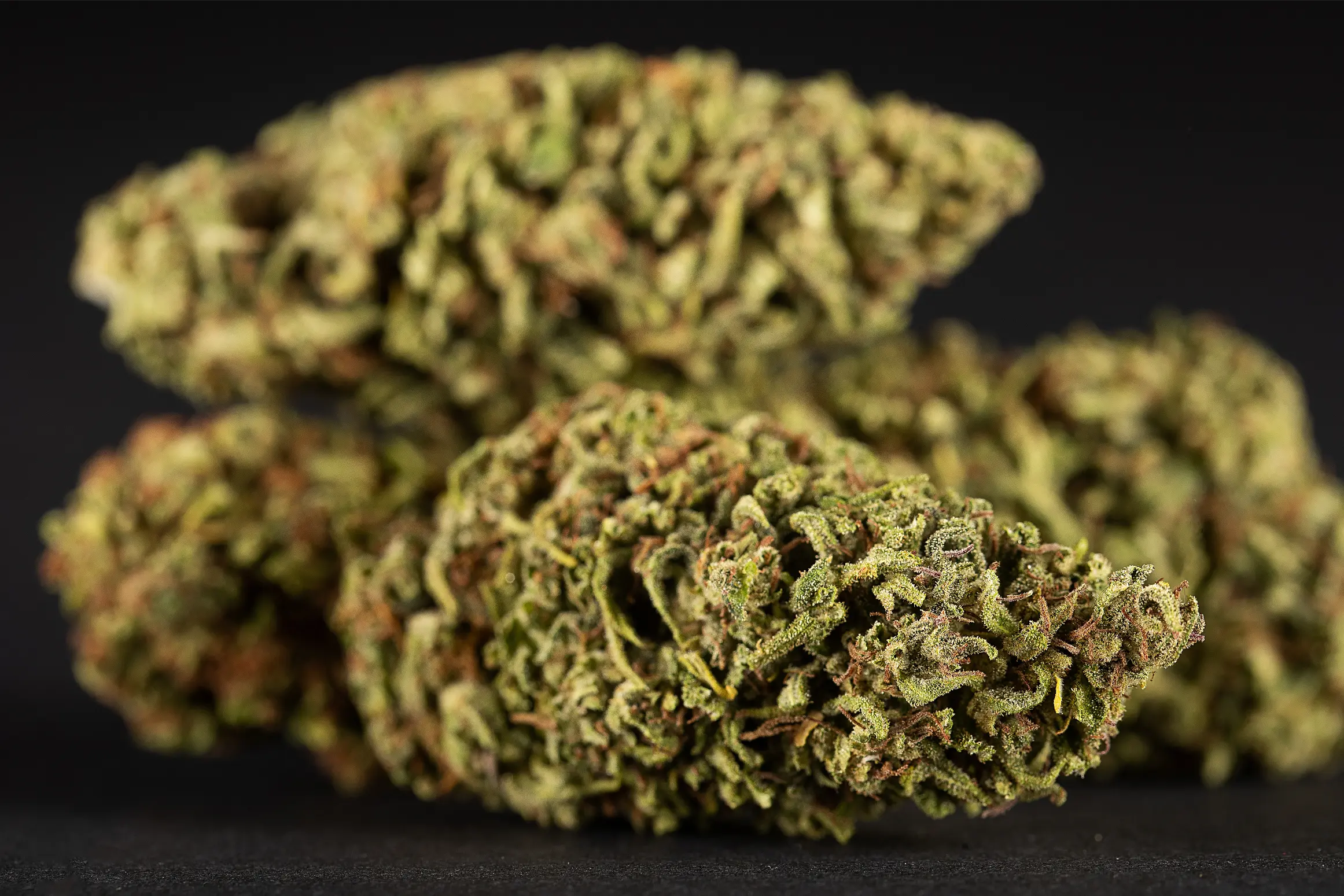
Big Bud
Big Bud is one of the clearest examples of a cultivar whose name can become a cultivation trap. Growers hear "Big Bud" and naturally focus on flower size, then treat every decision as a way to make the colas even larger. The more important question is whether those large flowers remain structurally supported, adequately lit, dry enough inside, and mature enough to taste like more than generic heavy cannabis.
The historical lineage is usually described as a combination of Northern Lights, Afghani, and Skunk #1, although individual modern versions do not always present the ancestry identically. The recurring horticultural identity is more reliable: indica-dominant growth, medium height, broad leaves, unusually large flowering mass, relatively few leaves around mature buds, and a flowering cycle that often falls around seven to nine weeks.
Big Bud's central grow problem is mechanical before it is nutritional. The plant can create more flower weight than some branches comfortably support. Heavy colas can lean, twist, or split junctions late in flower, especially when a wide branch has been trained far from the central stem. The best yield strategy therefore begins with branch selection and support, not with a late attempt to force additional flower mass.
The second problem is hidden moisture. A cultivar selected for very large flowers naturally creates larger internal zones where air exchange is limited. Room humidity can look acceptable while the center of a heavy cola remains moist. This makes Big Bud a strain where the difference between theoretical yield and usable quality yield becomes extremely important.
Flavor is usually earthy, spicy, sweet, herbal, and lightly fruity, sometimes with woody or skunky notes. It is less exotic than many modern dessert cultivars, which means post-harvest cleanliness matters even more. If the crop is harvested immature or dried too aggressively, there are no extreme candy or fuel notes to hide the mistake. Well-finished Big Bud should taste rounded and classic, not merely large.
Strain Features
| Feature | Details |
|---|---|
| Strain Type | Indica-dominant high-yield hybrid |
| Genetic Profile | Commonly described as Northern Lights × Afghani × Skunk #1; exact modern lineages vary |
| THC | Usually moderate to strong rather than extreme by current standards |
| CBD | Generally low |
| Dominant Terpenes | Myrcene, beta-caryophyllene, pinene, and limonene are commonly reported across different examples |
| Flavor / Aroma | Earth, spice, sweet herbs, mild fruit, wood, skunk |
| Effect Character | Happy and euphoric at first, then deeply relaxed, hungry, and potentially sleepy |
| Flowering Time | Commonly about 7 to 9 weeks |
| Outdoor Harvest | Often late September to early October in suitable Northern Hemisphere climates |
| Grow Difficulty | Easy to moderate |
| Stretch | Low to moderate |
| Plant Architecture | Medium-sized, broad-leafed, strong central and lateral flower production |
| Bud Density | Very large and often dense |
| Leaf-to-Bud Ratio | Often favorable, with relatively few leaves around mature top flowers |
| Training Compatibility | SOG, topping, LST, selective SCROG, and branch support |
| Branch Support | Frequently necessary because flower weight can exceed branch strength |
| Mold Risk | Moderate to high when oversized flowers remain humid |
| Best Time of Use | Late afternoon through nighttime |
Genetic Lineage
Big Bud is historically associated with Northern Lights, Afghani, and Skunk #1 ancestry. Some modern versions simplify the lineage to Northern Lights and Skunk #1, while others retain the Afghan component explicitly. This variation should be acknowledged rather than hidden behind one rigid pedigree.
The Northern Lights and Afghan side explain the compact-to-medium height, broad leaves, quick flowering, strong body effect, and ability to form dense heavy flowers. Skunk #1 contributes vigor, branch productivity, aroma, and enough hybrid influence to prevent the plant from behaving like an extremely slow compact hash plant.
The cultivar was selected around production traits long before modern boutique breeding made color and dessert flavor dominant selection goals. That historical purpose is visible in the plant: large flowers, useful indoor efficiency, manageable height, and strong response to high-light flowering conditions.
Yield selection does not mean every Big Bud plant is structurally identical. Some carry stronger central-cola dominance, while others produce several heavy side branches. The grow method should adapt to whether the plant naturally concentrates mass vertically or distributes it across the canopy.
For keeper selection, the most useful plant is not simply the one with the largest single cola. A phenotype that distributes weight across several supported branches, dries more evenly, and preserves flavor can be more valuable over repeated runs.
Effect Breakdown
Big Bud usually begins with a pleasant euphoric shift rather than an immediate sedating wall. Mood can lift, conversation can remain easy, and the first phase may feel lighter than the dense flower appearance suggests.
As the dose settles, the body effect becomes more prominent. Muscles relax, appetite may increase, and the desire to remain physically active begins to decline.
At a moderate dose, experienced users can often remain social and comfortable. At higher doses, the strain becomes much more classically indica-like, with heavy limbs, reduced motivation, and sleepiness.
The effect is generally less psychedelic than potent modern OG or Haze cultivars. Its appeal is a straightforward transition from happiness into physical calm.
Dry mouth and dry eyes are common. Dizziness can occur with larger doses, particularly in users who underestimate the potency because the high begins smoothly.
The overall profile suits evening use best. The cultivar can be pleasant before dinner or a film, but the late phase often favors rest.
Potency varies substantially among modern Big Bud lines, which is another reason the cultivar should not be judged only by historical THC numbers. The effect identity is more stable than the exact percentage: positive mood, physical relaxation, appetite, and a tendency toward sleep as the dose rises.
Users seeking a highly cerebral or psychedelic experience may find the cultivar straightforward. That simplicity is part of its appeal for people who want predictable evening relaxation rather than a complicated mental arc.
Flavor & Aroma Profile
Big Bud usually smells earthy and sweet before it smells exotic. Dry herbs, mild fruit, spice, wood, and a gentle skunky background build around the earthy core.
Some phenotypes carry more fruit or sweetness, while others lean toward wood, spice, and hash-like earth. The profile is old-school and relatively broad rather than narrowly defined by one modern candy or gas note.
On inhale, mild sweetness and herbs often lead. The mid-palate becomes earthy and woody. The exhale carries spice, skunk, and a slightly fruity or peppery finish depending on phenotype.
Large flowers can create a misleading aroma during drying. The outside may smell ready while moisture is still moving from the center. If the bud is sealed too early, the flavor can become stale, sour, or grassy.
A hot fast dry creates the opposite problem. The surface becomes brittle, the sweet herbal notes disappear, and the flower tastes like dry earth and smoke.
The best Big Bud does not need an exotic flavor claim. It should taste clean, mature, mildly sweet, and rounded enough that the grower's focus on yield did not erase quality.
Dominant Terpenes
| Terpene | Aroma Role | Cultivar Relevance | Scientific Caution |
|---|---|---|---|
| Myrcene | Earth, herbs, musk | Fits the cultivar's classic earthy base and appears often in indica-dominant samples | Does not independently create sedation |
| Beta-caryophyllene | Pepper, spice, wood | Supports the spicy woody finish | CB2 activity does not prove strain-specific medical benefits |
| Pinene | Pine, resin, fresh herbs | Can sharpen greener or woodier phenotypes | Often secondary and line dependent |
| Limonene | Citrus peel, light sweetness | May contribute to brighter fruit notes in some phenotypes | Not universally prominent |
Big Bud's aromatic identity is less chemically standardized than the name might imply. Modern versions can differ substantially, so terpene rankings should be treated as sample-specific rather than universal.
The practical flavor center remains earth, herbs, spice, mild fruit, and wood. Terpenes are useful for explaining those notes but should not be used to predict one exact psychoactive response.
Indoor vs. Outdoor Growing
| Decision Point | Indoor | Outdoor |
|---|---|---|
| Primary Challenge | Supporting oversized flower while keeping the canopy accessible and dry | Protecting large colas from rain, wind, and prolonged humidity |
| Plant Size | Medium and easy to contain | Can become much larger with root space |
| Training | SOG is efficient; topping and light SCROG work with branchier phenotypes | Early topping and wide support cages are useful |
| Flower Weight | High, making support planning essential | Wind plus wet bud weight can cause branch failure |
| Humidity | Indoor control strongly protects the large flower mass | Late-season moisture can reduce usable yield dramatically |
| Feeding | Strong growth can use substantial nutrition, but overfeeding still reduces quality | Large root zones can support demand but native soil varies |
| Drying | Controlled environment helps huge buds dry evenly | Large outdoor colas may need to be separated before drying |
| Best Fit | Growers prioritizing weight but willing to manage support and post-harvest carefully | Warm dry climates with enough space and structural support |
Big Bud is naturally suited to indoor production because the plant's high flower-to-space ratio can be used without exposing the mature buds to weather. The grower can also install support systems before the flowers become too heavy.
SOG makes sense for central-cola-dominant plants because the cultivar can create large top flowers without a long vegetative period. A branchier phenotype can justify topping and a light screen, but overfilling the canopy defeats the quality advantage.
Outdoors, Big Bud can produce very large harvests, but the difference between dry and wet climates is decisive. A huge cola is impressive only until rain adds weight and moisture to the center.
Greenhouse cultivation can protect against direct rainfall, yet humidity must still be actively moved. A roof does not solve internal bud moisture by itself.
Indoor growers should also consider ceiling access for support hardware. The plant may remain medium height, but the support system has to carry substantial lateral and vertical flower weight. A strong trellis installed early is easier than adding individual ties through a mature canopy.
Outdoor plants should be inspected after every significant rain or wind event. The issue is not only mold. Mechanical damage at branch junctions can remain hidden until a heavy limb begins tearing farther under continued flower weight.
Strain-Specific Grow Guidance
Build Branch Strength Before Chasing Flower Count
Big Bud's final weight can exceed what a thin late-created branch can safely carry. The vegetative goal should therefore be several mature strong leaders rather than a maximum number of fresh shoots.
If topping, perform it early enough that the new branches thicken before flowering. Repeated late topping can create many weak leaders that look productive but require excessive support later.
Choose SOG When the Plant Wants a Central Column
Central-dominant Big Bud phenotypes are efficient in SOG because the grower can use many simple plants instead of forcing one plant into a huge horizontal frame.
This reduces vegetative time and creates a more uniform harvest. The main requirement is enough plant spacing that the oversized tops do not touch each other.
Use SCROG Only When the Lateral Structure Justifies It
Branchier phenotypes can respond well to a loose screen. The net should distribute heavy side branches and later support them.
A tightly packed screen is a poor match for giant flowers. Leave enough open space that mature colas can expand without forming one continuous humid surface.
Remove Weak Lower Sites After Stretch
The cultivar's yield potential can encourage growers to keep every possible bud site. Deeply shaded lower flowers rarely reach the same density as the top and consume trim time.
Remove the shoots that remain buried after stretch. Keep strong side branches that reach the canopy or receive clear side light.
Install Support Before the Plant Looks Like It Needs It
Build support before the flowers demand it
Branch support is one of the defining Big Bud cultivation tasks. Stakes, trellis, cages, or soft ties should be installed before the colas become too heavy to reposition safely.
Support should preserve the natural branch angle and keep flowers separated. Pulling several heavy tops together solves breakage while creating a humidity problem.
Expect Wet Flower to Become Much Heavier Outdoors
Rain adds temporary mass to already heavy colas. Outdoor branches that hold themselves easily in dry weather can split after a storm.
Wide cages and perimeter stakes provide better mechanical support than one central pole because they keep the plant open while distributing weight.
Feed the Plant, Not the Yield Reputation
Big Bud is often grown in high-input systems, but high yield genetics do not make nutrient toxicity impossible. Increase nutrition only when roots, water use, and leaf condition support the decision.
Excess nitrogen can increase leaf mass around the buds and reduce the clean bud-to-leaf ratio that makes the cultivar attractive.
Keep the Root Zone Aerated Through Peak Flower Filling
A large flowering mass can drink strongly, but the medium still needs oxygen between irrigations. Chronic saturation slows roots and makes nutrient demand harder to interpret.
As flower weight increases, monitor water use instead of assuming demand always rises. Cooler late conditions can reduce transpiration even while the buds continue maturing.
Use Light Distribution to Build Weight Along the Whole Cola
Big Bud is not improved by overexposing the highest surface while the lower half remains shaded. Branch spacing lets light reach the sides and lower sections of each major flower.
A slightly shallower canopy with more even side light can create more usable dense flower than a deeper canopy with impressive but isolated top tips.
Treat Humidity as an Internal-Bud Problem
Huge buds create internal microclimates. The center near the stem can remain wet longer than the surface, especially after lights-out or outdoor dew.
Inspect sugar-leaf bases and hidden tissue. A leaf that suddenly browns or pulls free easily can indicate a problem inside the flower before the outside looks damaged.
Harvest When Flower Mass and Maturity Have Converged
The cultivar may continue adding weight late enough that an early harvest sacrifices one of its main advantages. Wait for full calyx development, mature flower trichomes, reduced fresh pistils, and a complete earthy-sweet aroma.
Do not extend the crop indefinitely in humid conditions simply to chase the last possible weight. Usable clean flower matters more than theoretical maximum mass.
Large Flowers Need a Different Harvest Logistics Plan
Big Bud can produce individual flowers large enough that harvest handling becomes part of cultivation planning. The grower should know where the branches will be hung, whether the drying space can hold them without touching, and whether the largest colas will be divided.
A crop can be grown perfectly and then lose quality because oversized wet branches are stacked too close together after cutting. Drying capacity should scale with the expected harvest, not with an average cultivar.
Branch Failure Often Begins at Junctions, Not in the Middle of the Stem
Heavy side branches create leverage where they meet the main stem. A branch can look thick and healthy yet split at the junction once flower weight increases.
Support near the branch's natural angle is more effective than tying only the tip. The goal is to reduce leverage while keeping the cola positioned in light and air.
Do Not Use Extreme PK to Manufacture the Name
The cultivar's reputation for huge buds makes it especially vulnerable to aggressive bloom-booster culture. There is no reason to assume excessive phosphorus or potassium will improve a plant that already has adequate nutrition.
Overconcentration can reduce root function, alter nutrient balance, and make irrigation harder to manage. Big Bud's flower size is genetic; nutrition should support healthy expression rather than chase a label.
Wide Leaves Can Hide Weak Mid-Canopy Flower
Big Bud may have a favorable bud-to-leaf ratio at harvest while still carrying broad fan leaves in growth. Those leaves can shade several lower sites at once.
Selective removal or repositioning of true blockers can improve mid-canopy development, but aggressive stripping is unnecessary. Branch spacing is the more durable solution.
A Staged Harvest Can Make Sense on Uneven Large Plants
If the upper colas are fully mature while productive lower branches clearly remain behind, a staged harvest can protect top quality and allow the lower plant more time.
This should be based on real maturity differences, not on a few fresh pistils. When the canopy is even, one coherent harvest is usually easier to dry and cure consistently.
Outdoor Weather Risk Scales With Flower Size
A small amount of rain on a modest bud can evaporate quickly. The same rain inside an enormous Big Bud cola can remain around the stem and internal calyxes for much longer.
This is why outdoor success depends on dry finishing weather more than general plant toughness. Disease risk rises with the physical architecture of the flower.
Flower Size Changes Airflow Requirements Before Mold Is Visible
Big Bud's large flower mass changes how air has to move through the room. Fans aimed only across the canopy may leave the sides and backs of oversized colas in slower air. The grower should be able to feel gentle circulation around the branch framework rather than only above it.
This matters especially after lights-out, when temperature falls and relative humidity rises. Air movement cannot replace humidity control, but it reduces stagnant microclimates around the largest flowers.
Do Not Judge Yield Before Removing Water and Low-Grade Flower
Wet-weight comparisons exaggerate the value of the largest and most moisture-retentive flowers. A fair comparison between phenotypes should use dry usable flower after damaged material and weak lowers are removed.
This often changes keeper rankings. A slightly smaller plant with more uniform dense buds can outperform a giant phenotype once drying losses and lower-grade material are accounted for.
The Second Run Should Reduce Emergency Support
A first Big Bud grow often reveals exactly where the structure fails: one lateral bends, one junction splits, or one oversized top requires an improvised tie. Those failures are useful data.
On the next run, adjust branch count, tie position, or support height before flower weight arrives. The goal is not to prove the plant can survive a giant cola. It is to make the same yield structurally predictable.
Weedth Bud Flavor Tips
Big Bud's sweet and fruity details are more fragile than its earthy herbal base. Protect those top notes with a controlled dry rather than assuming a high-yield strain does not need connoisseur post-harvest handling.
Oversized colas should be divided if the drying room cannot remove internal moisture safely. Keeping a giant bud intact for appearance is not worth an uneven cure or microbial risk.
Avoid hot drying. Large flowers already release moisture slowly from the center, so overheating the surface makes the moisture gradient worse.
Air should circulate around the hanging branches without blowing continuously at one flower. Direct fan air creates crisp exteriors and muted sweetness.
During cure, the green plant edge should decline while earth, spice, fruit, and herbs become cleaner. A stale sour smell or cool wet center indicates the flower was sealed too early.
If phenotypes differ in fruit and spice, cure them separately. A mixed jar prevents useful keeper evaluation.
Store the final crop cool and airtight. High-yield flower often stays in storage longer simply because there is more of it, which makes storage stability especially important.
The cultivar's moderate aroma intensity makes clean combustion or vapor especially important during phenotype comparison. Harshness can easily overpower the subtle fruit and spice that distinguish a good plant.
Large buds should not be squeezed repeatedly to judge dryness. Compressing a partially dried dense flower can damage trichomes and push moist inner tissue against the surface.
When storage begins, use multiple containers if the harvest is large. One frequently opened jar exposes less of the crop to repeated oxygen and humidity changes.
Big Bud's understated aroma benefits from patient evaluation. A jar that seems merely earthy immediately after drying may reveal more sweetness, pepper, and mild fruit once internal moisture stabilizes and green plant odors fall away.
Because the harvest can be large, avoid placing all flower in one oversized container during cure. Smaller batches make moisture easier to monitor and prevent one wet section from affecting the entire crop.
Weedth Bud Boost Tips
The most important Big Bud yield technique is mechanical preparation. Strong branches plus early support protect more finished weight than any late additive.
Use plant count strategically. SOG can produce efficient central flowers with short veg, while fewer topped plants need more time to build branch strength.
Do not retain weak lower sites simply because every gram seems valuable. Removing low-value growth can increase the proportion of large mature flower.
Keep major colas physically separated. Crowding does not increase usable yield when it creates soft inner buds or moisture damage.
Outdoors, wide spacing and strong cages allow the cultivar to exploit root volume without becoming a tangled heavy bush.
Feed according to actual demand and avoid excessive nitrogen late. Big Bud's genetics create flower weight; nutrition only supports the plant's ability to express it.
The correct Big Bud target is the highest clean dry weight the plant can structurally support and safely finish, not the largest wet cola photograph.
Uniform plant height matters in SOG because Big Bud's main flowers can become so large that a few taller plants dominate the light field. Starting with similar clones or grouping similar phenotypes improves canopy efficiency.
A larger cola is not useful if its inner section remains soft or immature. Side lighting and physical spacing can increase the percentage of the flower that reaches full density.
Post-harvest loss should be counted when evaluating yield. A phenotype that produces slightly less raw weight but dries safely and consistently may deliver more usable flower than the most oversized plant.
Medical Uses & Benefits
Big Bud is commonly chosen by users seeking relaxation, appetite stimulation, stress relief, sleep, and physical comfort. These are user-reported patterns rather than clinical proof.
The gradual shift from happy mood into heavier body calm may appeal to users who want an evening strain without an abrupt sedating onset.
Appetite can become strong, particularly as the dose increases. This can be useful for some users and inconvenient for others.
Higher doses may promote sleepiness, but dizziness, dry mouth, and dry eyes are also common limitations.
Most modern Big Bud is THC-dominant and should not be treated as a low-intoxication medical option.
People using cannabis for a diagnosed condition or with prescription medications should discuss use with a qualified healthcare professional.
Ideal User Profile
Big Bud suits growers and consumers who appreciate classic indica-dominant cannabis without needing exotic modern flavor. The cultivar's strength is production efficiency and comfortable evening effects.
It fits users who enjoy earth, spice, herbs, mild fruit, and a relaxed body finish.
For growers, it is especially appealing when branch support, drying space, and humidity control are already part of the plan.
It is less suitable for growers who cannot physically support the late flowers or who live in a persistently wet outdoor climate.
Consumers seeking extremely high modern THC or loud candy flavor may find Big Bud traditional rather than dramatic.
Grower Notes and Feedback
The most consistent grower observation is exactly what the name suggests: flower size can become exceptional. Multiple cultivation descriptions also warn that branches may need tying or staking.
Flowering-time reports commonly fall between roughly seven and nine weeks, which makes the cultivar efficient relative to the amount of flower it can produce.
Plant height is usually medium rather than extreme, which is why SOG and indoor production are frequently associated with Big Bud.
Broad leaves and large colas can still create canopy shade. The plant should not be assumed to produce premium lower flower simply because total yield is high.
Flavor descriptions are generally earthy, fruity, sweet, spicy, and herbal. This relative subtlety makes careful drying more important than growers sometimes expect.
The cultivar's commercial reputation can create pressure to maximize raw weight. Experienced growers usually get better finished quality by accepting slightly fewer but better-supported flower sites.
Growers often remember Big Bud for one exceptional main cola, but repeatability matters more than a single dramatic flower. The most useful phenotype distributes weight across branches the support system can manage.
The cultivar can be forgiving enough that structural mistakes still produce a harvest. That does not mean the mistakes are free. Poor support and weak lower-light management show up later as broken branches, mixed-grade flower, and difficult drying.
Another recurring lesson is that the cultivar's easy reputation applies more to basic plant survival than to perfect flower management. Producing large buds is relatively straightforward; producing large buds that remain clean, evenly mature, and easy to dry is the more advanced part.
Growers who focus on dry premium yield rather than the largest cola usually end up with a more repeatable production strategy.
Weedth Editor's Note
What this cultivar asks from the room
Big Bud is one of the strains where I would install support before I felt clever for doing it. Waiting until the plant bends is already late.
I would decide between SOG and a wider trained plant early. If I have many uniform plants, I would keep each one simple. If I have fewer plants, I would top early and make sure the new branches have time to thicken.
I would also refuse to keep every lower bud site just because the cultivar is famous for yield. The best Big Bud harvest should contain a high percentage of properly dense flower, not a mountain of mixed-grade material.
Drying is where I would be most cautious. A giant cola can feel dry on the outside and remain unsafe inside. I would split it before I risked an uneven cure.
The keeper for me would be the plant that carries exceptional weight without needing constant rescue and whose finished flower still tastes sweet, earthy, and clean after storage.
I would measure Big Bud success after drying, not before. Wet flower weight rewards exactly the moisture and oversized structure that can become a post-harvest liability.
If I had to choose between a slightly smaller supported plant and a giant plant that forces emergency ties every week, I would choose the first one. Predictable quality is a better production trait than one spectacular photograph.
I would keep a simple harvest note for each major branch: whether it needed emergency support, whether the center dried evenly, and how much premium flower it produced. That information would show which branches were truly productive rather than merely large.
On the next cycle I would remove any structural pattern that repeatedly produced difficult oversized colas. Big Bud becomes better when the plant is engineered for repeatable quality, not when every branch competes for the largest single flower.
Weedth Score
Growing Experience 8.4/10 Generally forgiving and productive, with the main challenge being mechanical support and humidity inside huge flowers.
Bud Structure & Visual Appeal 8.8/10 Massive dense colas create dramatic classic bag appeal even without modern exotic color.
Aroma Complexity 7.7/10 Earth, spice, herbs, fruit, and wood are pleasant but usually less complex than boutique dessert or gas cultivars.
Flavor & Smoothness 8.0/10 Clean and satisfying when dried properly; oversized flowers make post-harvest execution important.
Effects & High Experience 8.1/10 Reliable happy-to-relaxed evening effects without needing extreme potency.
Overall Satisfaction & Recommendation 8.4/10 An excellent production-focused classic when support and drying are treated as core parts of cultivation.
Personal closer: I would keep the Big Bud that carries its own weight, dries evenly, and still tastes sweet and spicy after cure, not the plant that produces one absurdly large but difficult cola.
FAQ
What is Big Bud's lineage?
It is commonly associated with Northern Lights, Afghani, and Skunk #1 ancestry, although modern versions do not always list the parents identically.
How long does Big Bud flower?
Roughly seven to nine weeks is a common range.
How tall does Big Bud grow?
It is generally medium-sized and more manageable than long sativas.
Does Big Bud respond well to topping?
Yes, especially when grown as fewer larger plants. Top early enough that the new branches can thicken before flower.
Is Big Bud good for SOG?
Yes. Central-dominant plants can produce large main flowers with relatively short vegetative time.
Is SCROG good for Big Bud?
It can be, particularly with branchy phenotypes, but the screen should remain open because the final flowers become very large.
Does Big Bud need branch support?
Very often. Heavy colas can bend or split branches late in flower.
Is Big Bud a heavy feeder?
It can use strong nutrition when vigorous, but high-yield genetics do not justify feeding beyond actual plant demand.
Is Big Bud prone to mold?
Large dense flowers create a meaningful humidity risk, especially outdoors after rain or indoors in a crowded canopy.
Why are my Big Bud lower flowers small?
The canopy may be too deep. Remove shoots that remain permanently shaded after stretch.
When should Big Bud be harvested?
Wait for full calyx development, mature flower trichomes, reduced fresh pistils, and a complete earthy-sweet aroma.
How should giant Big Bud colas be dried?
Divide oversized flowers into manageable branch sections when necessary so internal moisture can leave evenly.
Can Big Bud grow outdoors?
Yes, and it can become highly productive in warm dry climates. Structural support and autumn weather are important.
Is Big Bud good for sleep?
Many users report strong evening relaxation and sleepiness at larger doses.
Is Big Bud suitable for beginners?
Yes if the grower plans support and pays attention to moisture inside the flowers.
Similar Strains
Critical Mass: The closest quality-yield comparison, with extremely heavy flowers and an even stronger emphasis on mold prevention.
Northern Lights: A compact fast parent-line comparison with less extreme flower size and more predictable structure.
Afghan Kush: Shares the dense indica base and earthy effect with lower raw-yield emphasis.
Super Skunk: Offers compact high-yield growth with stronger pungent skunk aroma.
White Rhino: A resin-heavy compact producer with dense flowers and more pronounced pine-sweet character.
Skunk #1: Provides vigorous hybrid production with lighter individual flower mass and more open structure.
Share this article
A quick overview of the topics covered in this article.
Follow us
Latest articles
September 9, 2026
September 9, 2026
September 9, 2026