
Black Jack
Black Jack needs a definition before it needs a grow plan. The name has been used for more than one cultivar, and that matters because growers can otherwise combine conflicting descriptions as if they belonged to one plant. This profile focuses on the widely documented Black Jack built from Black Domina and Jack Herer, a hybrid known for thick calyxes, heavy trichome coverage, an aromatic terpinolene-led profile, and an effect that can feel mentally active before physical relaxation settles underneath it.
That pairing creates a plant with two very different structural influences. Black Domina is associated with compact indica growth, dense resinous flowers, and a darker physical effect. Jack Herer brings more vertical vigor, longer branching, pine-citrus-herbal aromatics, and a clearer mental lift. The useful cultivation story is not that Black Jack sits perfectly halfway between them. It is that individual plants can lean differently, which makes phenotype observation more important than forcing every seed plant through the same training routine.
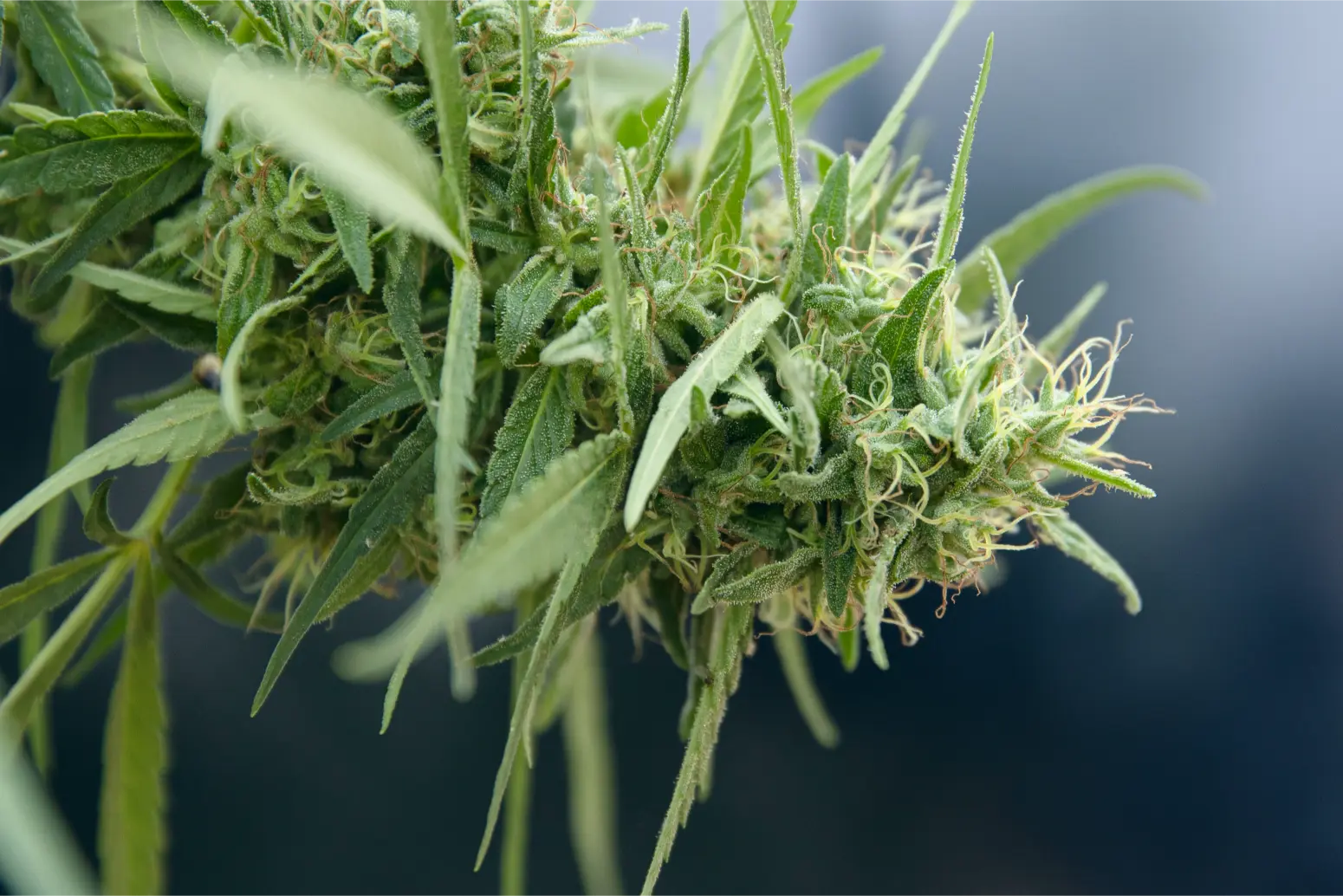
Most descriptions place the Black Domina x Jack Herer version around nine weeks of flowering, with enough vigor to become substantial outdoors and enough compactness in some expressions to remain practical indoors. The finished flowers are commonly described as thick, heavily frosted, and built from large swollen calyxes. Those buds can look physically dense even when the plant carrying them has a more open Jack-style frame.
The central cultivation question is how to manage Black Jack when one plant can lean toward taller Jack-style vigor and another toward stockier Black Domina structure without overtraining one expression or overcrowding the other. The first grow should therefore be treated as a reading exercise. Observe internode length, branch angle, stretch, flower density, and final aroma before deciding what the cultivar "needs." The second clone run is where Black Jack becomes easy to optimize.
Flavor follows the same hybrid logic. Pepper, pine, tobacco-like herbs, citrus, flowers, and a funky terpinolene brightness can all appear, with some plants showing darker spice and others carrying more fresh Jack-like lift. The effect is similarly layered: uplift and focus can arrive first, followed by a comfortable body calm that can become heavier at larger doses. Black Jack is not a strain that benefits from being reduced to either "sativa" or "indica." Its value is the tension between the two.
Strain Features
| Feature | Details |
|---|---|
| Strain Type | Balanced to slightly sativa-leaning hybrid, depending on expression |
| Genetic Profile | This profile covers the widely documented Black Domina x Jack Herer version |
| Name Ambiguity | Other cultivars have circulated under the Black Jack / Blackjack name, so lineage should be verified when possible |
| THC | Commonly moderate to strong; exact results vary by phenotype and batch |
| CBD | Usually low |
| Dominant Terpenes | Terpinolene, beta-caryophyllene and ocimene recur in tested modern examples; other profiles vary |
| Flavor / Aroma | Pepper, pine, tobacco-like herbs, citrus, flowers, resin and mild sweetness |
| Effect Character | Uplifted and focused at first, then relaxed and physically settled; long-lasting in many reports |
| Flowering Time | Commonly around 9 weeks indoors |
| Stretch | Phenotype-dependent, from moderate to more pronounced Jack-style vertical growth |
| Plant Architecture | Can range from stockier indica-leaning plants to taller, branchier expressions |
| Bud Structure | Thick flowers with large calyxes and heavy trichome coverage |
| Resin Production | High; frost is one of the most consistent visual traits |
| Training Compatibility | Early topping, LST and adaptable canopy shaping; technique should follow phenotype |
| Outdoor Potential | Can become large and productive where season and space allow |
| Primary Grow Risk | Applying one fixed canopy strategy to phenotypes with meaningfully different stretch and branch density |
| Best Time of Use | Daytime to early evening depending on dose and phenotype |
Genetic Lineage
The Black Jack covered here combines Black Domina with Jack Herer. That sounds simple until the plant is grown. Black Domina is a compact resin-oriented indica family cultivar, while Jack Herer carries more complex sativa-dominant vigor and a bright pine-citrus-spice identity. The cross therefore inherits a broad range of possible plant shapes even when the finished flower remains recognizably frosty.
The name itself requires caution. Another unrelated Black Jack lineage has also circulated historically, so not every description found under the name belongs to the Black Domina x Jack Herer cultivar. A serious grower should verify the stated parentage of the material in hand before using a guide like this to predict structure. The article's cultivation advice is built specifically around the Black Domina and Jack Herer combination.
From Black Domina, the hybrid can inherit shorter spacing, darker foliage, a denser floral build, and an ability to produce thick resinous flowers on relatively compact branches. From Jack Herer it can inherit more stretch, longer lateral reach, a brighter terpene profile, and a mental effect that stays active longer before the body phase becomes dominant.
The most important consequence is phenotype direction. A taller plant with more open internodes should not be managed like a squat plant merely because both carry the same strain name. The taller expression may benefit from earlier height control and more branch redirection. The stockier expression may need more attention to interior density and vegetative development.
Flower structure can be more consistent than plant silhouette. Large calyxes and a heavy trichome coat are recurring traits, which gives Black Jack strong visual identity even when branch architecture changes. This is why the cultivar can be attractive for phenotype selection: the grower can search for a plant that keeps the resin and flavor while choosing the architecture that best fits the available room.
The best keeper is therefore not necessarily the most Jack-like or the most Domina-like. It is the expression that combines a useful stretch profile, strong calyx development, a distinctive cured aroma, and an effect that matches the grower's reason for keeping the plant.
Effect Breakdown
Black Jack often feels more balanced over time than it looks on paper. The first phase can be distinctly mental. Users report uplift, focus, conversational ease, and a light creative push, especially at lower doses. The Jack Herer side is easiest to recognize here because the experience feels engaged rather than immediately heavy.
At a moderate dose, the head effect remains present while the body starts to loosen. This transition is one of the cultivar's more useful qualities. The user can feel clearly high and physically relaxed without the session necessarily becoming inactive. Some people describe a long, steady plateau rather than a sharp peak followed by a crash.
The exact balance can vary with phenotype. A brighter, terpinolene-forward plant may feel more mentally active and daytime-friendly. A darker, more Black Domina-leaning expression can bring physical heaviness earlier. This is one reason contradictory user descriptions should not be forced into one absolute effect sequence.
Higher doses usually expose the relaxing side more strongly. The focus that felt useful at first can become less precise, the eyes can feel heavy, and the body may prefer sitting to moving. Black Jack is not normally described as a pure knockout indica, but large doses can move the experience well beyond a productive daytime level.
Dry mouth and dry eyes are common negative effects. Anxiety or dizziness are possible, particularly in high-THC batches or in users sensitive to active sativa-style effects. The cultivar's balanced reputation should not be interpreted as a guarantee against overconsumption.
The late phase tends to be comfortable and long. Rather than ending with an abrupt energy drop, the experience often settles into relaxed contentment. This makes Black Jack flexible for afternoon or early-evening use, with the dose deciding whether the session remains engaged or becomes more physically passive.
Flavor & Aroma Profile
Black Jack's aroma is less obvious from the name than from the genetics. The Jack side contributes pine, citrus, herbs, and a fresh terpinolene-associated brightness. Black Domina adds pepper, wood, darker resin, and a tobacco-like dry depth. The overlap can smell unusual because the bright and dark notes arrive at the same time rather than in separate layers.
A cured jar may begin with floral-funky terpinolene and pine. Breaking the bud often exposes more pepper, resin, and dry herbs. Some batches show a petroleum-like or oily edge, while others stay sweeter and more floral. These differences should be treated as phenotype and post-harvest variation rather than as proof that one batch is wrong.
The large calyx structure can trap a surprising amount of aroma inside the flower. A bud that seems only moderately fragrant from the outside may become much louder when it is broken apart. That makes grinder aroma especially useful for comparing keeper plants.
On inhale, pine and a light sweet citrus can appear first. The center of the flavor becomes more herbal and peppery. The exhale can leave dry spice, tobacco-like herbs, resin, and a slightly floral or oily aftertaste. In a well-finished batch the complexity feels layered; in a rushed batch the same profile can feel simply harsh and peppery.
The strain's aromatic quality often depends on keeping the terpinolene-led upper layer intact. If flower is dried too warm or stored with excessive air exposure, the bright floral-funky note can fade while caryophyllene-style pepper and wood remain. The bud can still smell strong but lose the quality that distinguishes it from a generic dark hybrid.
Phenotype selection should happen after cure. One plant may be louder in the room but become simpler after drying, while another can develop a richer pine-floral-spice balance after several weeks. Black Jack is a good example of why live-flower aroma and final palate should be scored separately.
Dominant Terpenes
| Terpene | Aroma Role | Cultivar Relevance | Scientific Caution |
|---|---|---|---|
| Terpinolene | Floral herbs, fresh fruit, resinous brightness | Frequently prominent in tested Black Jack flower and consistent with Jack-family aromatic character | Does not by itself prove energizing or focusing effects |
| Beta-caryophyllene | Pepper, dry wood, spice | Strong match for the darker spicy finish | CB2 receptor activity does not establish strain-specific medical efficacy |
| Ocimene | Sweet herbs, flowers, light tropical character | Appears prominently in some tested modern examples and may brighten the profile | It is not universal across every Black Jack phenotype |
| Pinene | Pine resin, fresh wood | Consistent with the Jack-derived pine note found in many descriptions | Does not guarantee alertness or reverse THC impairment |
| Myrcene | Earth, herbs, musk | May be more noticeable in darker, more physically relaxing expressions | Its presence does not automatically make the strain sedating |
Black Jack should not be assigned one universal terpene order because the cultivar name covers more than one lineage historically and the targeted Black Domina x Jack Herer version itself can vary by phenotype. Terpinolene, caryophyllene, and ocimene provide a useful modern reference, but they are not a genetic certificate.
The sensory profile also includes more than headline terpenes. Tobacco-like dryness, oily funk, citrus, and resin can come from combinations of minor volatiles that are not obvious from a three-compound laboratory summary.
The effects should therefore be described from observed user patterns and cannabinoid context rather than from terpene determinism. Aroma is where the terpene data are most useful and defensible.
Indoor vs. Outdoor Growing
| Decision Point | Indoor Growing | Outdoor Growing |
|---|---|---|
| Main Challenge | Reading phenotype stretch early enough to choose the right canopy strategy | Controlling final plant size and supporting long branches without creating a dense interior |
| Plant Size | Stockier expressions are easy to contain; Jack-leaning plants can become tall without early training | Can become large, branchy and highly productive with long vegetative growth |
| Stretch | Moderate to strong depending on phenotype | Less restrictive vertically, but long branches still need spacing |
| Flowering Time | Around 9 weeks is common | Needs enough autumn to complete a roughly nine-week floral cycle |
| Flower Structure | Thick, large-calyx buds need space around main tops | Resinous flowers benefit from a dry, ventilated finish |
| Training | Adaptive: early topping and LST, with more height control for Jack-leaning plants | Early topping and broad structural support help distribute size |
| Support | Useful when large calyx-heavy flowers begin loading laterals | Stakes or cages often become important on large plants |
| Flavor Control | Stable indoor temperature helps preserve floral-pine-terpinolene character | Full sun can produce expressive resin, but heat and rain are harder to manage |
| Best Fit | Growers willing to observe phenotype before committing to one rigid method | Growers with space who can support a large hybrid and provide a dry finish |
Black Jack is particularly interesting indoors because phenotype differences become impossible to ignore. Two seed plants in the same room can require different levels of height management. The solution is not to abandon uniformity. It is to organize the room around actual structure once the differences appear.
A stockier plant can be allowed more vegetative size and a denser set of leaders because its stretch is less likely to create a ceiling problem. A Jack-leaning plant should enter flower smaller or be spread more aggressively so its longer branches use horizontal space. The first seed run may therefore look less uniform than a production clone room, and that is acceptable.
Outdoors, those differences are easier to absorb. Both expressions can become substantial plants if given enough root volume, but the taller phenotype may produce much longer lever arms that need support in wind or late flower. The advantage is that open sun can reach branches that would be shaded indoors.
The outdoor risk is not simply size. Thick resinous flowers still need a relatively dry finishing period. A large plant that grows beautifully all summer can lose quality if late branches overlap or flowers stay wet. The best outdoor shape is broad and readable, not merely tall.
Strain-Specific Grow Guidance
Identify the phenotype before choosing the training intensity
Black Jack is a poor candidate for automatic training by calendar. During early vegetative growth, observe internode spacing, the angle of the first strong laterals, leaf width, and how aggressively the main stem outpaces the sides. Those clues help show whether the plant is moving toward a taller Jack-style expression or a more compact Domina-style plant.
If the plant is already long between nodes and vertically assertive, top or bend early enough that the new leaders can recover before the flip. If it stays compact and broad, the same aggressive intervention may create more tops than the interior can support.
Use the first flowering weeks as a measurement period
Record height at the flip and again once the strongest transition growth slows. Black Jack's actual stretch is more useful than any strain-database number because phenotype variation is central to the cultivar.
On the next clone cycle, that measured behavior should determine veg duration. A known tall clone can be flipped earlier and trained less dramatically because the grower already knows where it will finish. A known stocky clone can be built wider before flowering.
Preserve large-calyx flower space
Black Jack can produce thick flowers with visibly swollen calyxes. As those flowers expand, the canopy takes up more physical volume even after stem stretch has ended. Leave more horizontal reserve than the branch tips seem to require at the beginning of bloom.
This is especially important in a screen. A trellis should keep the main flowers separated. If every opening is occupied before the buds gain their final width, the screen becomes a device for forcing resinous tops into contact.
Clean the interior according to light, not genetics
The stockier phenotype may need more lower and interior cleanup because close branches create shade. A taller phenotype can sometimes mature useful secondary flowers deeper down the branch because its internodes are more open.
Wait until stretch clarifies the light map. Remove the growth that remains permanently buried, but preserve exposed lower laterals that are actually producing dense calyxes. One lollipopping rule will not fit both expressions equally well.
Keep feeding decisions separate from hybrid vigor
Black Jack can grow strongly, but vigor does not prove high nutrient requirement. Some phenotypes may tolerate a rich program while others remain healthy at moderate input. Use leaf color, tip condition, water demand, and root-zone behavior as the evidence.
More feed is not automatically more quality
General cannabis research does not support the idea that extra potassium or increasingly aggressive bloom feeding automatically creates more flower. With a resin-heavy cultivar, excessive late fertility can simply leave more leaf around the buds and complicate the finish.
Follow irrigation demand through the transition
The Jack-leaning plant may dry its container much faster during stretch than a compact sister. In a mixed seed room, one irrigation schedule can therefore overwater one plant while under-serving another.
Where practical, group plants by water use or adjust the outlier individually. Once a keeper clone is selected, irrigation becomes far more predictable. The goal of the seed run is learning the plant, not proving that every phenotype can survive one schedule.
Protect the terpinolene-rich canopy from excess heat
The brightest Black Jack aromas are vulnerable to a hot upper canopy. If the tallest plant is also the most Jack-like and citrus-floral, it may place its most delicate flower exactly where temperature and light stress are highest.
Compare aroma from the upper and middle zones. If the tops become flatter, more peppery, or less floral than cooler buds, reduce the local heat load before concluding that the phenotype lacks complexity.
Install support before swollen flowers change branch angles
Large calyxes can add significant weight quickly. A branch that appears stable in mid flower can begin leaning late, and once sticky flowers are already close together, correcting that lean becomes inconvenient.
Use soft ties, stakes, or a loose net to preserve each flower lane. Support should follow the natural branch direction rather than pulling several laterals toward the center.
Treat late foxtailing carefully
Jack-influenced genetics can produce elongated calyx stacking, and not every pointed top is heat damage. The distinction is pattern. If the entire plant develops similar structure under healthy conditions, it may be genetic. If only the closest tops begin making thin fresh growth alongside bleaching or aroma loss, local stress is more likely.
Avoid using appearance alone to diagnose. Compare canopy zones and overall plant health before changing the environment dramatically.
Harvest the phenotype, not the room
A mixed Black Jack seed run may not finish every plant on the same day. The stockier expression and the taller expression can differ enough that one room-wide harvest date sacrifices maturity on one side or overextends the other.
Use complete calyx development, mature flower trichomes, reduced fresh pistil production, and full aromatic expression. If the plant is being kept as a clone, document the actual harvest window so the next cycle can be scheduled with much more precision.
Weedth Bud Flavor Tips
Black Jack's flavor preservation begins by deciding which side of the profile deserves protection. Pepper, dry herbs, and resin are persistent. Floral terpinolene, fresh pine, and sweet citrus are more easily lost. A batch can remain strong-smelling while becoming much less distinctive.
Indoors, keep the tallest tops from becoming a separate climate. A Jack-leaning phenotype that stretches above its sisters can spend the last weeks closer to the fixture, so level the canopy or reduce local intensity before those flowers begin losing the bright aromatic layer.
Outdoor plants should be spaced so wind moves through the branch system without damaging it. Large resinous flowers need drying opportunities after dew or rain, but direct exposure to extreme heat can also flatten the volatile upper profile.
During drying, large calyx clusters can lose moisture unevenly. The outside may feel ready while the thicker interior remains soft. Dry by branch density rather than assuming the entire plant reaches the same point simultaneously.
A slow, controlled cure tends to clarify the hybrid character. The first week can smell more herbal and peppery. As the flower stabilizes, pine, floral funk, and citrus can become easier to identify. A good cure should reveal complexity rather than merely reduce harshness.
Keep clearly different phenotypes separate. The more Jack-like plant may cure into bright pine and citrus, while the compact plant may become darker and more tobacco-spice dominant. Mixing them makes both the sensory evaluation and the keeper decision less useful.
Avoid excessive handling. Black Jack's trichome coverage is part of the cultivar's appeal, and repeated squeezing of cured flower transfers both resin and aroma to hands, containers, and trimming surfaces.
The best flower is not necessarily the loudest jar. Exceptional Black Jack keeps a layered progression from fresh floral-pine aroma into pepper, herbs, and resin on the palate without becoming harsh or one-dimensional.
Weedth Bud Boost Tips
The most important production improvement is phenotype-specific canopy planning. A tall Black Jack plant should not be forced through the same veg duration as a stocky sister. Once the keeper is chosen, plant count and flip size can be designed around one predictable architecture.
For taller expressions, yield often improves when height is redirected into a few long, well-lit laterals rather than repeatedly topped into a dense bush. For stockier expressions, an extra early topping can spread the plant and expose more large-calyx sites.
Do not chase maximum top count. The flower itself becomes thick, and the canopy needs enough empty volume to accommodate that expansion. Fewer separated resinous tops can produce more premium dry flower than a packed screen full of smaller buds.
Support is part of yield. A branch that slowly drops below the main light zone in the last two weeks can lose density and quality even if it never snaps. Install the support early enough that the flower finishes where the branch was originally positioned.
Root volume should be matched to phenotype. A tall outdoor expression can use substantial root space and become very large, while a compact indoor clone may be more efficient in a moderate container that dries predictably. Bigger is useful only when the canopy can use it.
Keep the highest-quality lower flowers if the Jack structure exposes them. Remove the lower sites that repeatedly cure leafy or pale. A selected clone should determine productive canopy depth, not a universal pruning rule.
Cured quality should be part of the yield score. A phenotype that produces slightly less raw weight but retains stronger pine-floral flavor and easier trim can be the better long-term production plant.
Black Jack quality yield is a canopy designed for the actual phenotype, with thick resinous flowers kept separate, supported, and aromatic from top to bottom.
Medical Uses & Benefits
Black Jack is commonly chosen for stress relief, mood elevation, focus, and physical relaxation. The hybrid progression makes it attractive to users who want a mental lift without remaining physically tense. These are user-reported patterns, not clinical evidence that the strain treats a medical condition.
At lower doses, the more active side may be useful to people who prefer daytime symptom relief without immediate sedation. Users report that the experience can remain focused and socially comfortable before the body relaxation becomes stronger.
Pain and tension relief are also reported, particularly as the later physical phase develops. It is more responsible to describe this as subjective relief and altered pain perception rather than as a strain-specific analgesic effect.
Phenotype and dose matter. A very Jack-leaning plant may be too mentally stimulating for an anxious user, while a darker expression may feel more calming. The strain name does not guarantee one exact therapeutic balance.
Dry mouth, dry eyes, dizziness, or anxiety can occur. Low CBD in most examples means the flower should be treated as primarily THC-driven. Anyone using cannabis for a diagnosed condition or alongside medication should consult a qualified healthcare professional.
Ideal User Profile
Black Jack suits someone who likes hybrid effects that remain mentally interesting while the body gradually relaxes. It works well for an afternoon creative session, social time, music, gaming, or an early evening when the user wants to stay engaged without carrying the day's tension.
Terpinolene and Jack-family flavor fans are a strong sensory match. Pine, flowers, herbs, pepper, and citrus are more central than candy or cream. Users who dislike floral-funky terpenes may find the profile unusual.
For growers, the ideal person is observant rather than technique-obsessed. Black Jack rewards someone willing to look at the actual seed plant before deciding how many times to top it, when to flip it, or how aggressively to clean the lower canopy.
The cultivar is less ideal for a grower who needs every seed plant to behave identically in a tightly scheduled room. Once a keeper clone is selected, uniformity improves dramatically, but the first population can show meaningful structural differences.
It is also not the first choice for a user who wants immediate sleep. Larger doses can become relaxing, but the early mental phase can remain active enough that a heavier indica is more predictable for bedtime.
Grower Notes and Feedback
A recurring theme is that Black Jack looks more resinous than many growers expect from a plant with active hybrid effects. The flowers can become very frosty and sticky, with the calyx structure doing much of the visual work rather than only dense leaf coverage.
Growers also report that cleaning the lower interior matters. This is consistent with the cross: a vigorous Jack-influenced plant can create plenty of shoots, while the final flowers become thick enough that weak interior sites are not worth keeping merely for total bud count.
Effect reviews support the balanced description. Some users feel a clear cerebral push, others notice relaxation nearly as strongly, and many describe both. That spread is easier to understand when phenotype variation is acknowledged rather than when one effect label is treated as absolute.
Aroma is similarly variable. Terpinolene funk, pine, spice, and floral notes recur, but some batches show a darker petroleum or tobacco character. Cured evaluation is the better keeper test because fresh aroma can change substantially during the first weeks after drying.
Outdoor reports and cultivation descriptions indicate that the plant can become large under unrestricted root and light conditions. This makes branch support and spacing more important than the indoor medium-height label might suggest.
The main first-run lesson is to stop thinking of Black Jack as one predetermined shape. Once the grower knows whether the selected clone is tall, compact, thirsty, aromatic, and early or late within the range, the cultivar becomes far more straightforward.
The most useful notes are phenotype ID, flip height, final height, branch angle, support date, the depth of premium lower flower, final aroma after cure, and whether the effect remains balanced or leans strongly toward one parent.
Weedth Editor's Note
Where Black Jack earns its space
I would not commit Black Jack to a rigid training schedule before the plant tells me which parent is leading its structure. That is the fastest way to make a simple hybrid unnecessarily difficult.
A tall plant would get horizontal space and an earlier flip. A compact plant would get more vegetative footprint and more attention to the center. I would rather let those two plants look different in the first run than force them into false uniformity.
The large calyxes are the trait I would protect most in flower. They give the cultivar its visual identity and create a lot of resin, but they also mean late branches need space and support. Once those flowers are sticky, I want to touch them as little as possible.
After cure, I would choose the keeper by the balance between fresh terpinolene-pine character and darker peppery depth. The ideal Black Jack should taste like both sides of the cross instead of becoming either generic Jack or generic indica.
For me, the strain becomes much more interesting on the second run. The first crop discovers the plant. The clone run is where its actual grow style can be refined without guessing.
Weedth Score
Growing Experience 8.2/10 Vigorous and adaptable, but phenotype-dependent stretch makes the first seed run less uniform than the eventual clone run.
Bud Structure & Visual Appeal 9.1/10 Large calyxes and heavy trichome coverage give the cultivar excellent visual identity.
Aroma Complexity 8.9/10 Terpinolene, pine, flowers, pepper, tobacco-like herbs and citrus create unusual depth.
Flavor & Smoothness 8.6/10 Layered and distinctive after a good cure, though the peppery profile can become harsh if dried poorly.
Effects & High Experience 8.7/10 A useful blend of uplift, focus and relaxation with phenotype and dose deciding the balance.
Overall Satisfaction & Recommendation 8.7/10 Especially rewarding for growers who enjoy phenotype selection and resin-heavy hybrid flower.
Personal closer: I would keep the Black Jack that lets me taste the bright Jack side and the dark Domina side in the same cured flower while still fitting the room without constant correction.
FAQ
Which Black Jack strain does this guide cover?
This profile covers the widely documented Black Domina x Jack Herer cultivar. Another unrelated lineage has also circulated under the Black Jack or Blackjack name, so the stated parentage of the material should be verified whenever possible.
Is Black Jack an indica or a sativa?
It is a hybrid and can express both sides strongly. Some plants are taller and more Jack-like, while others stay stockier and show more indica structure.
How long does Black Jack flower?
Around nine weeks is a common indoor reference. Individual phenotypes can finish slightly earlier or later, so harvest should follow flower maturity.
How much does Black Jack stretch?
Stretch is phenotype-dependent. Jack-leaning plants can move strongly after the flip, while compact expressions may stay much closer to their vegetative height.
Should Black Jack be topped?
Usually yes if the plant is healthy and the grower wants multiple leaders, but the intensity should follow structure. A tall phenotype may need one early top plus LST, while a compact plant can tolerate a different canopy plan.
Is Black Jack good for SCROG?
Yes, especially for taller expressions. Keep the screen open enough for thick mature flowers and stop forcing branches through the net once they become resinous.
Does Black Jack need heavy defoliation?
No. Use selective removal to open real airflow lanes and remove permanently shaded interior growth after stretch. The ideal amount depends on phenotype density.
Is Black Jack a heavy feeder?
There is no strong reason to treat every phenotype as a heavy feeder. Use actual plant demand, water use, and leaf condition to guide nutrient strength.
Why does my Black Jack look much taller than another plant with the same name?
Phenotype variation is expected from the Black Domina x Jack Herer combination, and name ambiguity in the wider market can add even more variation. Verify lineage and record the actual plant behavior.
Why does Black Jack smell like pepper or tobacco instead of citrus?
The darker side of the profile can emphasize caryophyllene-style spice, dry herbs, resin, and tobacco-like notes. Phenotype and post-harvest handling determine how much bright pine and citrus remain above that base.
Does Black Jack need branch support?
Often yes once thick calyx-heavy flowers gain weight. Support is most useful when installed before sticky buds begin leaning into each other.
Is Black Jack prone to mold?
It is not defined by extreme mold sensitivity, but dense mature flowers can still hold internal humidity when the canopy is crowded. Keep main tops separated and inspect contact points.
When should Black Jack be harvested?
Use completed calyx swelling, mature flower trichomes, a substantial slowdown in fresh pistils, and fully developed aroma. In a mixed seed run, different phenotypes may not be ready on the same day.
Is Black Jack good outdoors?
Yes where there is enough space and a reasonably dry finish. Jack-leaning expressions can become large and need structural support.
Is Black Jack a daytime strain?
Lower and moderate doses can be focused and uplifting, while higher doses become more relaxing. Time of use depends on phenotype, dose, and tolerance.
Similar Strains
Jack Herer: The clearest reference for Black Jack's pine, citrus, terpinolene character and focused mental lift, with generally more obvious sativa structure.
Black Domina: The opposite parental reference, offering a shorter, darker, more physically heavy grow and a more compact flower style.
White Widow: A similarly resin-heavy classic hybrid with a balanced head-to-body progression, but a different pine-earth-spice profile and more uniform historical identity.
Cinderella 99: A faster, more sativa-focused option for growers who like the active Jack side but want fruitier flavor and less indica weight.
G13: A compact resinous alternative for people who prefer the heavier side of Black Jack's experience and less floral terpinolene expression.
Clementine: A brighter daytime option for growers who enjoy terpinolene and active effects but want sharper orange-lemon flavor and a more consistently sativa direction.
Share this article
A quick overview of the topics covered in this article.
Follow us
Latest articles
September 9, 2026
September 9, 2026

September 9, 2026