
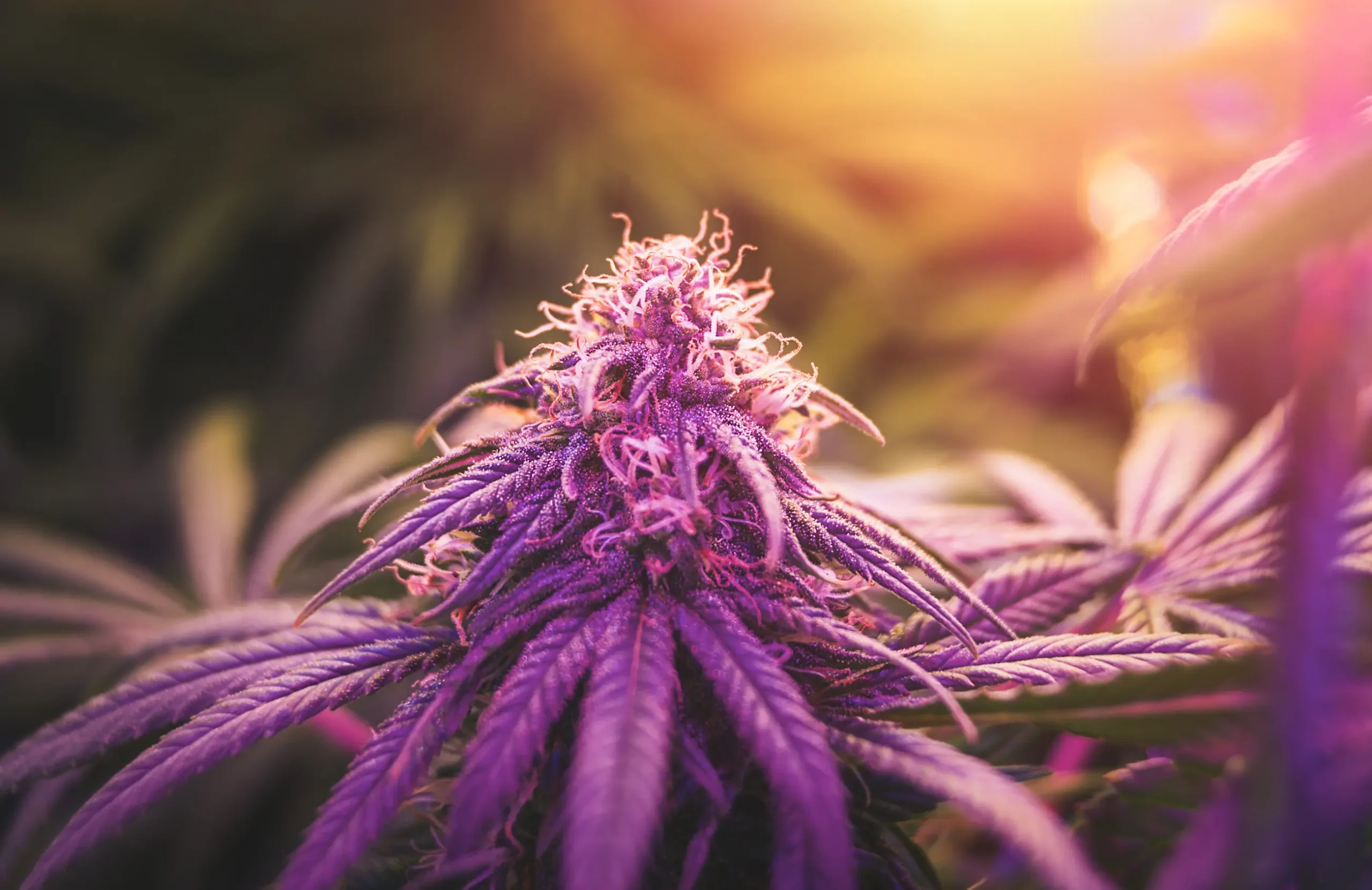
Black Lime Reserve
Black Lime Reserve – Strain Profile & Grow Guide
Black Lime Reserve belongs to a different aromatic era than the soft cream and candy hybrids that dominate many modern menus. Its core is tart lime rind, crushed black pepper, pine sap, old fuel, dark soil and an almost asphalt-like musk. Sweetness exists, but it is rarely the first impression. The flower often smells dry, greasy and mineral, then reveals citrus oil after the bud is broken apart. This is a cultivar for growers and users who value sharpness, resin texture and a deep physical effect over dessert simplicity.
Its genetic history is complicated, and simplified descriptions do not always agree on the exact crossing order. The recurring family includes Woodman Canyon Oil Can material, Lime Afghani or Lime Shocker-type citrus genetics, Northern Lights, Purple Kush and a Chemdawg reserve line. Those influences explain why Black Lime Reserve can show broad leaves and a compact frame while still carrying chemical fuel, lime zest and a more animated initial effect than a heavy Kush label would suggest.
In the grow room, the plant often appears sturdy and self-contained. It tends to build strong lateral branches, tight-to-moderate internodes and dense flowers without the extreme post-flip rise of a long sativa. That apparent simplicity can encourage overconfidence. The broad canopy may look able to tolerate a hard defoliation, and the early resin can make the flowers seem mature before the calyxes have fully expanded. Both decisions can reduce quality. Black Lime Reserve performs best when the grower preserves enough leaf to power late swelling, opens only the areas that genuinely trap air and waits for the lime, pepper and fuel to become integrated rather than harvesting on frost alone.
Strain Features
| Feature | Details |
|---|---|
| Strain Type | Indica-dominant hybrid |
| Genetic Profile | Complex reserve line commonly associated with Woodman Canyon Oil Can, lime-focused Afghani material, Northern Lights, Purple Kush and Chemdawg reserve genetics |
| Lineage Certainty | The family components are consistent across records, but the exact crossing order is not always documented identically |
| THC | Commonly reported from the upper teens into the mid-20% range; batch variation is significant |
| CBD | Usually very low |
| Dominant Terpenes | Beta-caryophyllene, limonene, pinene and myrcene are frequently associated with the profile |
| Signature Aroma | Tart lime peel, black pepper, pine, wet fuel, asphalt, cellar musk and dark earth |
| Effect Character | Brief uplift and sensory sharpening followed by a strong tingly body relaxation |
| Flowering Time | Commonly 8 to 9.5 weeks, with reports clustering near 58 to 68 days |
| Stretch | Low to moderate in many expressions |
| Plant Shape | Medium, broad and laterally strong with relatively tight internodes |
| Flower Structure | Dense lime-green to dark purple spears with greasy resin |
| Yield Character | Moderate to good, with quality and resin usually more notable than extreme biomass |
| Feeding Behavior | Generally prefers moderate, consistent nutrition over aggressive early feeding |
| Primary Grow Risk | Over-defoliating a compact canopy, then exposing dense flowers to excess heat and light |
| Mold Risk | Moderate in late flower because calyxes become hard and closely stacked |
| Grow Difficulty | Intermediate |
Genetic Lineage
Black Lime Reserve is best approached as a preserved family rather than a simple two-parent cross. The repeated building blocks are old fuel genetics, lime-forward Afghani material, Northern Lights, Purple Kush and Chemdawg reserve stock. The exact pedigree can be written differently depending on the record, but the plant consistently expresses traits that make sense within this group.
The Oil Can and Chemdawg side contributes chemical fuel, metal, asphalt, wet garage and a forceful resin aroma. This is not the bright gasoline of a thin-leaf diesel cultivar. It is heavier, darker and often mixed with pepper or cellar musk. The lime-focused Afghani material adds tart citrus rind and compact flower formation. Northern Lights and Purple Kush reinforce broad leaves, body relaxation, sturdy branching and the possibility of dark coloration late in bloom.
This blended ancestry produces a plant that can look like a straightforward indica while carrying more aromatic movement than expected. The first smell may be pepper and pine. Lime appears after the flower is disturbed. Fuel deepens during cure. Some phenotypes add garlic, sweet basement musk or a bitter tonic-water quality. Others are cleaner and more citrus-led. The most desirable expression depends on the grower’s purpose. Flower-focused selection usually favors a cut where lime remains distinct after cure. Resin-focused selection may favor the greasiest plant even when its aroma is darker and less obviously citrus.
Structural variation is usually narrower than aromatic variation. Many plants remain medium in height, recover well from one topping and build a broad frame. Some stretch closer to double, particularly when roots are unrestricted or the plant enters flower under warm, highly vegetative conditions. The compact expressions may not need much training, but they require interior management because leaves and flower sites stack closely.
The lineage also creates an interesting harvest curve. Resin often appears early and feels oily rather than dusty. The calyxes can be firm by the middle of flowering, which gives the impression that the cultivar is finishing quickly. During the final two weeks, however, the bracts continue swelling and the aroma changes from sharp green lime to peppered citrus fuel. Cutting before that transition preserves brightness but may leave the smoke thin and the body effect incomplete.
Effect Breakdown
Black Lime Reserve is often labeled relaxing, but the experience is not a flat descent into sedation. It usually begins with a brief period of mental elevation. Colors, sound and conversation may feel slightly sharper. The user can feel happy, talkative or curious without the racing quality of a strong daytime sativa.
That opening does not last indefinitely. A tingle often begins behind the eyes or through the shoulders, then spreads into the limbs. Physical tension drops and the user becomes more aware of body weight. The transition can feel especially pleasant after activity because it does not always remove mental clarity immediately.
At a moderate dose, the strain sits in a useful middle ground. The user may remain social and engaged while feeling physically settled. Appetite can increase. Tasks that require movement are still possible, but the desire to slow down becomes stronger.
A larger dose changes the experience substantially. The body effect can become couch-heavy and sleepy. Short-term memory may soften, and the user may prefer one familiar activity rather than switching between tasks. Dry mouth, dry eyes and occasional headache are reported. Some users experience dizziness when standing quickly, particularly if they have consumed more than intended.
The effect can also differ by phenotype. A lime-pine expression may feel brighter and more talkative at first. A dark pepper-Kush expression often feels heavier from the beginning. These differences are one reason strain percentages are less useful than batch chemistry and dose.
Flavor & Aroma Profile
Black Lime Reserve is built around contrast between volatile citrus and durable dark aromatics. The lime does not usually smell like sweet candy. It resembles the bitter green part of fresh peel, crushed leaves and acidic oil. When the flower is broken apart, the citrus becomes sharper and may suggest tonic water, sour rind or lime pith.
Black pepper sits close to the citrus. It can feel dry and almost dusty in the jar, then become warm on the exhale. Pine appears as resin, bark and forest floor rather than a simple fresh-needle note. Together, lime, pepper and pine create the top and middle structure of the profile.
The base is where the cultivar becomes distinctive. Old fuel, damp concrete, asphalt, cellar musk and dark earth can all appear. Some phenotypes add garlic or fermented fruit. The aroma may feel less immediately attractive than a sweet dessert strain, but it becomes more interesting as the layers separate.
On inhalation, lime and pine usually arrive first. The smoke can feel bright at the front of the mouth, followed by pepper and an earthy bitterness. The exhale carries fuel and dark wood. A well-cured sample leaves a long citrus-pepper aftertaste with a faint oily coating.
The flower should not taste burnt, mineral or sharply salty. Those qualities can come from excess late nutrition or uneven drying. The cultivar’s natural fuel is deep and aromatic, not simply harsh. A slow cure softens the asphalt edge and allows lime to return after the initial pepper-heavy stage.
Cool vapor can emphasize citrus and pine. Higher temperatures reveal pepper, fuel and soil. The cultivar is therefore useful for users who enjoy comparing different sensory layers rather than seeking one dominant sweet note.
Dominant Terpenes
Black Lime Reserve laboratory profiles vary, and the old reserve-style lineage is not represented by one standardized chemotype. The recurring aroma suggests a combination of beta-caryophyllene, limonene, pinene and myrcene, with humulene and minor sulfurous or fuel-like compounds influencing individual cuts.
Beta-caryophyllene is central to the black-pepper impression. It gives the aroma warmth and dryness and supports the heavier physical character.
Limonene shapes tart lime peel and acidic brightness. Its sensory expression is more bitter and rind-like than candy-sweet because it sits beside pine, earth and pepper.
Pinene reinforces conifer resin, forest freshness and a sharper mental opening. In pine-forward phenotypes, it can remain noticeable well into the aftertaste.
Myrcene adds damp earth, musk and a ripe heaviness. Higher-myrcene batches may feel more physically sedating and less bright.
Humulene can contribute dry wood, hops and cellar-like bitterness. It helps explain why some examples feel savory and old-fashioned rather than fruity.
The asphalt, fuel and garlic impressions likely involve minor volatile compounds that are not fully described by the main terpene list. This is why a basic laboratory panel may look ordinary while the flower smells unique.
Indoor vs. Outdoor Growing
| Decision Point | Indoor Growing | Outdoor Growing |
|---|---|---|
| Plant Size | Compact-to-medium plants fit well in controlled rooms | Can become broad and substantial with long vegetative growth |
| Stretch | Usually manageable with one topping and an open canopy | Root freedom may increase lateral spread and final height |
| Flower Density | Indoor humidity control protects hard late flowers | Autumn rain and dew can remain inside dense spears |
| Flavor | Stable temperature helps preserve lime oil | Sun can deepen pine and earth, while heat can strip citrus |
| Feeding | Easier to monitor moderate nutrient demand | Rich native soil may keep nitrogen too high into bloom |
| Support | Sturdy branches often need only late assistance | Storms and large flowers justify early staking |
| Harvest | Full maturity can be reached without weather pressure | Early October conditions may determine whether the last swell is possible |
| Best Fit | Growers focused on resin texture and terpene precision | Temperate, dry sites with airflow and a dependable autumn |
Indoor rooms make it easier to balance density and citrus preservation. The plant’s moderate height suits tents, but the broad leaves and close flower sites can make a small footprint feel crowded. A compact plant should not be interpreted as permission to reduce spacing. The flowers require room around their sides, not just above them.
Outdoors, Black Lime Reserve can become a sturdy shrub with thick lateral branches. It tolerates natural light well and may develop stronger pine, earth and dark color. The finishing climate matters. Repeated moisture near harvest can become trapped inside dense flowers, especially where leaves remain pressed against the buds.
The cultivar’s aroma carries differently outdoors. Lime may be strongest close to the plant, while fuel and pepper travel farther on the wind. Privacy and odor planning remain relevant even when the plant is not a towering sativa.
Strain-Specific Grow Guidance
Early growth and plant selection
Young Black Lime Reserve plants often show broad leaves, a sturdy central stem and rapid side-branch development. The best early selection signs are not the widest leaves or the darkest color. Look for even branch spacing, quick recovery after transplanting and a root system that allows the container to dry predictably.
A plant that remains extremely dark while drinking slowly may be carrying too much nitrogen or sitting in a wet root zone. The cultivar’s naturally deep color can hide this problem. Leaf posture and growth rate are more useful than color alone.
Training should preserve its natural strength
One topping is usually enough. Cut early enough that the plant can rebuild a symmetrical frame before flowering. Low-stress spreading can then create four to eight main branches. Repeated topping may produce too many short inner shoots because the internodes are already close.
Do not let the stretch make the decisions
A screen is useful, but Black Lime Reserve does not always need aggressive weaving. The branches can be placed into separate lanes and allowed to rise. The plant’s moderate stretch should finish the structure rather than being flattened continuously.
The defoliation decision
This cultivar invites over-defoliation. Broad leaves overlap, and the grower may believe a hard strip is necessary. The better approach is selective removal based on function.
Remove leaves that block several flower sites, press against a developing cola or close the center of the plant. Keep leaves that are healthy, well-positioned and not creating contact. The remaining leaf surface supports late calyx swelling and helps the plant regulate water during the final weeks.
A hard strip can expose the upper flowers to more heat and light than they need. The result may be smaller bracts, faster surface drying and reduced lime aroma even when the room temperature appears acceptable.
Nutrition and root-zone management
Black Lime Reserve generally responds better to moderate consistent nutrition than to aggressive early feeding. The broad leaves can accumulate nitrogen quickly. Early tip burn, very dark color and slowed water use suggest the root zone is carrying more salts than the plant can process.
During transition, reduce the vegetative emphasis gradually. The plant should remain healthy, but it does not need to stay glossy and dark throughout bloom. A natural late fade can improve visibility inside the canopy and often accompanies cleaner flavor.
The medium should drain well. Compact above-ground growth can lead growers to use a container that is too large, leaving the root zone wet for long periods. Choose container volume based on the actual vegetative duration and irrigation system rather than the strain’s reputation for yield.
Watering behavior
The plant may drink actively through stretch, then slow as vertical growth ends. Do not continue the same frequency automatically. Watch the time required for the container to lose weight and the way leaves recover after irrigation.
Repeated wetness increases canopy humidity and reduces root oxygen. Severe late dryback is also undesirable because it can concentrate salts and make the oily resin feel brittle. The goal is a consistent rhythm with enough air returning to the medium between irrigations.
Light and temperature
Black Lime Reserve can produce dense flowers under strong light, but the lime fraction is sensitive to a hot flower surface. More intensity is useful only when leaf posture, room temperature and irrigation demand remain stable.
The top of the canopy should not feel noticeably warmer than the lower branches. If the highest flowers lose lime while shaded flowers retain it, the issue may be heat or excessive intensity rather than genetics.
Cooler nights can reveal purple color, but extreme cold should not be used as a cosmetic technique. Sudden cold slows water uptake and can create wet root conditions. Color is secondary to plant function.
Flower development and airflow
Resin can become visible early, sometimes before the buds have gained substantial size. By the middle of bloom, the flowers may already feel hard. This is the point when airflow planning becomes important, not the point when the room should be considered nearly finished.
Keep space between colas and inspect where sugar leaves fold into the flower. The dense bracts can trap moisture near the stem. A fan moving above the canopy does not guarantee air exchange inside the plant.
Support
Branches are generally sturdy, but the final swell can pull outer laterals down. A low support net or individual soft ties may be enough. The objective is to prevent leaning and flower contact, not to force the plant into a rigid shape.
Outdoor branches should be supported before storms and before the flowers become heavy. Ties installed late can rub against resinous buds and create damaged areas.
Harvest timing
Most expressions finish between roughly eight and nine and a half weeks. Early resin, dark color and hard buds can create a false finish. Look for calyx expansion, reduced production of fresh white pistils and mostly cloudy trichomes on the calyxes.
A lime-forward phenotype may peak slightly earlier, when the citrus remains vivid. A pepper-Kush phenotype can benefit from more maturity, which deepens body relaxation and fuel. The plant should be harvested when the chosen aromatic balance is strongest, not when a calendar reaches a fixed day.
Weedth Bud Flavor Tips
Black Lime Reserve should be dried to protect acidic citrus without trapping moisture inside its dense flowers. The process begins at harvest. Cut branches only after surface water has disappeared. Move outdoor material into shade immediately. Sunlight on cut flowers warms the resin and strips lime oil quickly.
Sort the harvest by flower density. Thick spear-shaped tops may need to be separated into medium branches. Small side branches should not be hung beside massive colas and expected to finish simultaneously. Uneven sizing produces either over-dried small flowers or under-dried large ones.
Indirect circulation is essential. Direct fan pressure can make the outer calyxes crisp while the center remains soft. This reduces lime and creates an unstable cure. The drying room should exchange air throughout the space without making the branches swing continuously.
During the first weeks of cure, pepper and cellar musk may dominate. Lime often returns as moisture equalizes. The grower should distinguish this normal evolution from actual terpene loss. If the flower becomes brittle and smells only of dry earth, the citrus was probably removed during drying rather than hidden temporarily.
Long-term storage should be cool, dark and divided into smaller containers. The lime top note fades with repeated oxygen exposure. Avoid opening the entire harvest whenever a small amount is needed.
A light dry trim often suits the cultivar. Sugar leaves can hold substantial resin, and aggressive trimming removes aromatic surface area. The final shape should be clean without being polished into a hard featureless nug.
Weedth Bud Boost Tips
The architecture favors a limited number of strong colas. Indoors, topping once and spreading the main branches produces a higher percentage of dense premium flower than repeated topping. The canopy should be wide enough that each spear has light along its full length.
Lower growth should be removed before the flowers become resinous. Black Lime Reserve may produce hard-looking small buds inside the canopy, but they often lack the mature lime-fuel profile. Directing resources toward the main branches improves both weight and sensory quality.
The timing of that cleanup matters. Removing every lower branch before stretch is visible can leave unused light beneath a slower broad phenotype. Waiting until the flowers are already greasy wastes several weeks on sites that never become firm. The more reliable window comes after the final branch hierarchy is obvious but before lower calyxes begin serious stacking. At that point, branches can be judged by their actual route to the productive zone rather than by their temporary size.
Outdoor yield responds to root volume and early branch development. Start support while the plant is still flexible. A broad shrub with several independent arms handles wind and moisture better than a single dense center.
The cultivar does not require extreme nutrient strength to build hard flowers. Yield is more likely to be limited by lost leaf function, wet roots or poor light distribution than by insufficient late bloom products. Moderate feeding protects both resin texture and smoothness.
Allow the last swell to finish. Early harvest sacrifices bract size and resin maturity. At the same time, do not extend flowering so far that lime becomes dull and the plant remains in a wet late-season environment. Yield and flavor peak together only within a relatively narrow window.
For resin-focused harvests, evaluate the texture of the trichomes and the maturity of the aroma, not just visible frost. Greasy resin can be abundant before the plant is ready. A mature flower should carry lime, pepper and fuel through handling rather than smelling green or incomplete.
Medical Uses & Benefits
Consumers commonly report using Black Lime Reserve for stress, physical tension, appetite and evening relaxation. The early uplift may improve mood or sociability before the body effect becomes stronger. Some users describe a pronounced tingle that makes the strain feel physically immersive.
The heavier late phase may suit people who prefer nighttime cannabis, but the cultivar should not be presented as treating insomnia, pain, anxiety or migraine. Individual response varies, and current evidence for whole-flower cultivars is limited.
High THC can cause dizziness, dry mouth, dry eyes, headache or anxiety. The initial mental lift may feel uncomfortable to users who expect immediate sedation. Dose, tolerance and batch chemistry matter more than the indica label.
People using cannabis alongside medications or for a diagnosed condition should seek qualified medical advice. A strain name cannot predict interactions or therapeutic outcome.
Ideal User Profile
Black Lime Reserve suits experienced users who enjoy tart citrus, pepper, pine and dark fuel rather than sweet dessert profiles. It is well matched to late afternoons and evenings when a short period of uplift can transition into physical calm.
Growers should choose it when they appreciate resin texture, old-school complexity and a compact plant that still requires thoughtful leaf management. It can fit smaller indoor spaces, but it is not a plant to crowd.
The cultivar is less suitable for people seeking a bright all-day strain, users sensitive to heavy body effects or growers who dry flowers rapidly in warm conditions.
The garden also benefits from early pest inspection. Broad leaves and tight branch junctions create protected areas for mites and aphids during vegetative growth. Late sprays are undesirable around greasy flowers, so prevention, clean tools and regular inspection of leaf undersides are more useful than relying on a reputation for toughness.
It also suits growers who enjoy comparing small differences between phenotypes. The loudest plant in early flower may not be the best after cure. A quieter lime-pine expression can gain depth over several weeks, while an early pepper-heavy plant may remain one-dimensional. Keeping separate jars and written notes is worth the effort with this family.
Grower Notes and Feedback
The most consistent cultivation reports describe a medium plant with broad leaves, sturdy lateral branching and an eight-to-nine-week finish. Resin begins early and can feel greasy. Flowers harden quickly, then continue swelling late.
Reports differ on whether the strain is easy or moderately demanding. Both descriptions can be true. The plant is structurally manageable and does not usually require extreme training. The difficulty lies in reading a dark compact canopy correctly. Overwatering, excess nitrogen and hidden humidity are easy to miss because the plant can remain visually impressive.
Lime intensity also varies. Some growers describe sharp sour peel and pine. Others find black pepper, garlic, asphalt or basement musk more dominant. A cure of several weeks often changes the hierarchy. Fresh flower may be citrus-led, while cured flower becomes deeper and more fuel-heavy.
Yield is generally described as moderate to good rather than extraordinary. The cultivar’s value comes from dense premium flower and resin, not from filling every lower branch with usable buds. Growers who remove weak interior sites usually report better uniformity.
Outdoor feedback emphasizes early support and a dry finish. The plant can tolerate a temperate season, but dense late flowers should not be left through repeated rain merely to gain a few more days.
Weedth Editor's Note
The tradeoff I would plan around
Black Lime Reserve creates a specific temptation: the plant looks so broad and dense that a heavy leaf strip feels intelligent.
Picture two equally strong branches on the same plant at the end of stretch. One side is thinned aggressively. Every large fan leaf around the top three nodes is removed, leaving the flowers fully exposed. The other side receives a narrower cleanup. Leaves touching the inner flower sites are removed, but healthy outward-facing leaves remain.
For the first week, the stripped side looks better. Light reaches every calyx. The buds appear cleaner and easier to photograph. The less-stripped side still looks slightly busy.
By late flower, the comparison changes. The exposed colas can run warmer, especially during the middle of the light period. Their sugar leaves may curl upward, and the lime aroma can become thinner. The selectively thinned side often maintains stronger leaf posture and a more oily citrus smell. It may not look as dramatically open, but air still moves through the branch because the specific contact points were removed.
My choice would be the second approach. I want Black Lime Reserve to remain functional through the final swell. I do not need direct light on every side of every flower. I need enough leaf to power the dense bracts, enough space to prevent moisture pockets and enough temperature control to keep lime oil alive.
This comparison also changes how I would judge the plant at harvest. The stripped side may appear more finished because the exposed flowers are drier and darker. The protected side may continue swelling for several days. Cutting both together would create an unfair phenotype judgment when the difference came from canopy treatment.
I would also resist the urge to select the darkest plant automatically. Near-black flowers and wet frost are compelling, but my keeper would need to retain tart lime after the pepper and asphalt settle. A dark phenotype that cures into pure earth may be visually excellent but incomplete for the purpose of this cultivar.
The strongest lesson is restraint. Black Lime Reserve does not need to be forced open, overfed or made colder for color. It needs the grower to recognize which parts of its natural density are productive and which parts create risk. That distinction is more valuable than any universal defoliation schedule.
Weedth Score
Growing Experience – 8.3/10: The plant is sturdy, manageable and compatible with basic training. The deduction reflects the need to read a dark compact canopy carefully and avoid unnecessary stripping.
Bud Structure & Visual Appeal – 9.2/10: Dense spears, dark color and greasy resin create outstanding bag appeal. The flowers can become difficult to dry evenly.
Aroma Complexity – 9.4/10: Tart lime, black pepper, pine, asphalt, cellar musk and fuel form a profile that feels specific and mature rather than fashionable.
Flavor & Smoothness – 8.5/10: The lime-pepper exhale can be excellent after a clean cure. Excess nutrients or rapid drying make the smoke noticeably rougher.
Effects & High Experience – 8.7/10: A useful brief uplift transitions into deep physical relaxation. High doses can become sleepy and disorienting.
Overall Satisfaction & Recommendation – 8.8/10: A strong recommendation for growers and users who value old-school citrus fuel, resin and body effect over maximum yield.
I would return to it for the bitter lime peel and black-pepper finish, not for the darkest photograph in the room.
FAQ
What is the exact lineage of Black Lime Reserve?
Available records agree on a complex family involving Woodman Canyon Oil Can material, lime-focused Afghani genetics, Northern Lights, Purple Kush and a Chemdawg reserve line. The precise crossing order is not documented consistently, so the lineage should be presented as a family rather than false certainty.
How long does Black Lime Reserve flower?
Most reports place the cultivar between about 58 and 68 days, or roughly eight to nine and a half weeks. The exact cut should be judged by calyx swelling and mature aroma.
Does Black Lime Reserve stretch heavily?
Usually not. Low-to-moderate stretch is common, though vigorous plants may approach double their pre-flip height. The broad canopy often creates more concern than vertical height.
Should Black Lime Reserve be heavily defoliated?
No. Selective defoliation is safer. Remove leaves and shoots that create contact, shade several sites or block the center. Preserve healthy leaves that support late flower development.
Is Black Lime Reserve prone to mold?
Its dense flowers can hold moisture, especially where sugar leaves fold into the cola. Late humidity, branch spacing and internal inspection are important.
Why does my Black Lime smell more like pepper than lime?
Phenotype and cure both influence the balance. Lime can fade under heat or rapid drying, while pepper and earth remain. Some expressions are naturally darker and less citrus-forward.
Is Black Lime Reserve a heavy feeder?
It generally performs well with moderate consistent nutrition. Broad dark leaves can accumulate excess nitrogen, so aggressive feeding is unnecessary.
When is the best harvest window for flavor?
Harvest when lime, pepper and fuel are integrated and the calyxes are fully swollen. Cutting too early can leave the smoke thin. Waiting too long may dull the citrus.
Can Black Lime Reserve be grown outdoors?
Yes, especially in temperate or warm dry climates. The plant needs a dependable autumn because dense flowers are vulnerable to repeated rain and dew.
Does the strain need branch support?
The branches are usually sturdy, but outer laterals can lean during the final swell. Light support or a low net helps keep flowers separated.
Similar Strains
Purple Kush: Shares dark color, broad structure and deep body relaxation. It is usually sweeter and less lime-fuel focused.
Northern Lights: Provides compact growth, reliability and physical calm, but has a softer earthy-pine aroma and less chemical citrus.
Chem 91: Matches old fuel, metal and pungency. It grows taller and feels more mentally intense, with less Kush-like density.
Black Diamond: Offers dark berry-earth flower and evening effects. It is fruitier and less peppery than Black Lime Reserve.
Lemon Tree: Shares sharp citrus and fuel, but stretches more and presents fresh lemon rather than bitter lime, pepper and cellar musk.
Share this article
A quick overview of the topics covered in this article.
Follow us
Latest articles
September 9, 2026
September 9, 2026
September 9, 2026