
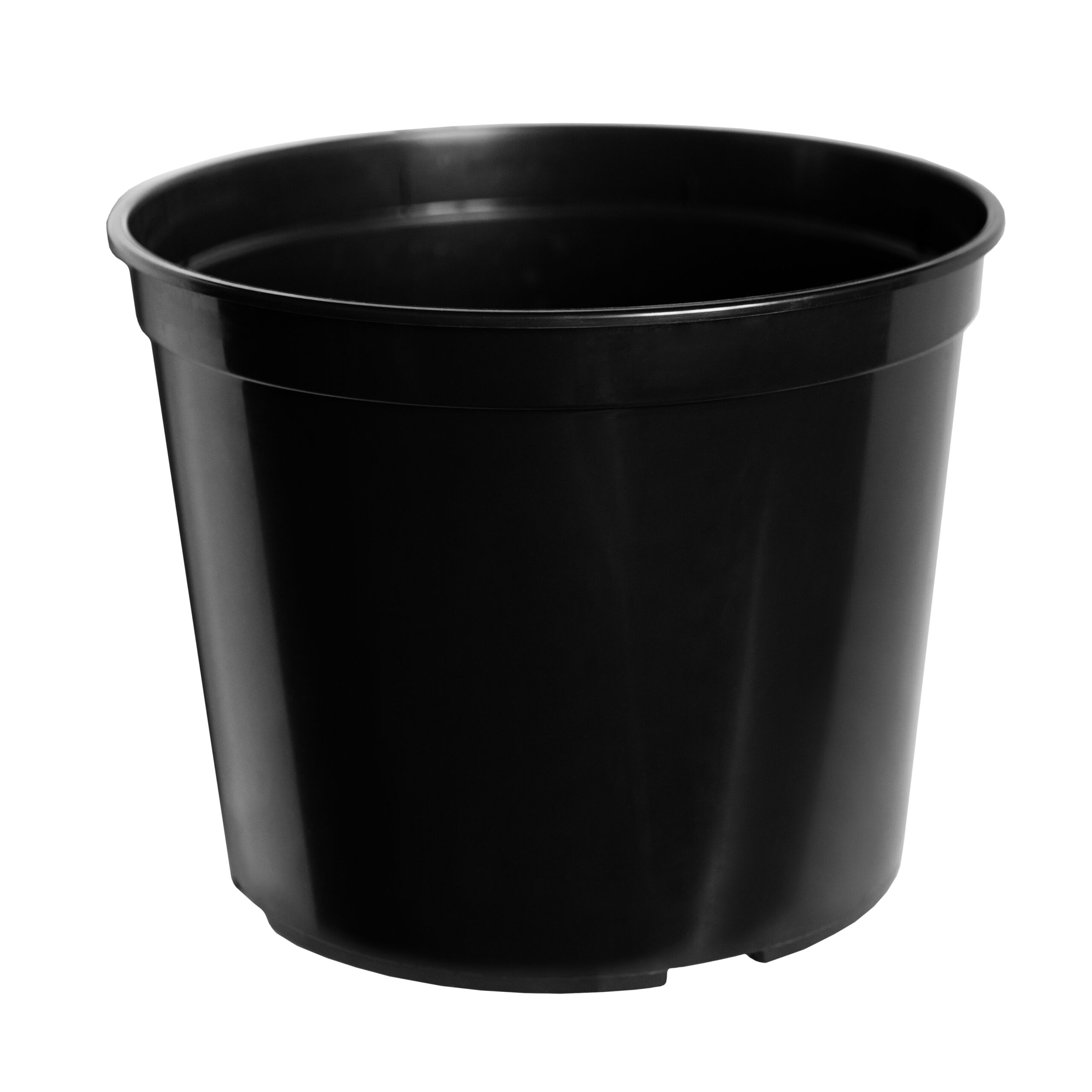
Black Pots, Root Temperature, and Summer Heat
A black container can become much hotter than the surrounding air when strong sunlight strikes its exposed wall, and that heat can move into the outer root zone. The risk is real, but the useful question is not whether every black pot is automatically dangerous. The useful question is how hot the root zone actually becomes, how long the heat lasts, which part of the root ball is affected, and whether the plant is still able to maintain water uptake and root function.
Container research across nursery crops consistently shows that black plastic pots can produce higher root-zone temperatures than white or otherwise protected containers under strong solar exposure. The effect changes with pot size, wall exposure, substrate moisture, irrigation timing, spacing, wind, surface temperature, sun angle, and climate. That variability is exactly why this resource does not give one universal cannabis danger temperature or assume that a hot pot wall proves the entire root ball is equally hot.
If you need the broader container framework first, use Containers and Pots Basics. For general outdoor site and weather planning, continue with Outdoor Basics. This page stays focused on black containers, root-zone temperature, summer heat, measurement, and corrective decisions.
Resource Navigation
In This Resource
- Why Black Pots Can Heat the Root Zone
- What High Root-Zone Temperature Changes
- Measure the Root Zone Instead of Guessing
- Identify the Conditions That Raise Summer Risk
- Separate Root Heat From Look-Alike Problems
- Correct the Heat Load in the Right Order
- Verify That the Root Zone Is Actually Cooler
- Make the Summer Container Decision
Why Black Pots Can Heat the Root Zone
The main heat source outdoors is solar radiation. A dark surface absorbs more incoming radiation than a light reflective surface under otherwise similar conditions. A black plastic container exposed to direct sun therefore becomes a heat-collecting surface. The warmed wall transfers energy to the substrate immediately behind it while the substrate also receives heat from warm air, the top surface, and any hot floor or patio beneath the pot.
Root-zone temperature
Root-zone temperature is the temperature within the medium occupied by active roots. In a container it is not necessarily uniform. The sun-facing wall, shaded wall, center, surface, and lower root zone can all be at different temperatures at the same moment.
This unevenness matters. Nursery experiments have found the hottest root-zone region near the container wall receiving the strongest solar exposure. In one black-versus-white container study, temperature sensors were deliberately placed in north, south, east, and west quadrants because the root ball did not behave as one uniform block. The most exposed quadrants accumulated more time above high-temperature thresholds.
Black plastic does not need to be a thick heat-storage material to create a hot root edge
It is more accurate to say that black plastic absorbs solar radiation and transfers heat into the adjacent substrate than to say that it simply “traps” heat. A nursery pot wall is usually thin and has little thermal mass by itself. The problem develops because the wall is continuously receiving radiant energy while the containerized substrate has limited volume and limited ability to escape the heat compared with deep ground soil.
That distinction improves the solution. If incoming radiation is the main driver, blocking or reflecting that radiation can reduce the load before it reaches the root ball. If the hottest part of the system is a concrete slab, changing the wall color alone may not fully solve the problem. If the medium is extremely dry, its thermal and water behavior will differ from a well-watered root zone. The diagnosis has to identify the main heat path.
Important: A black container is a risk factor, not a diagnosis. Measure the root zone under the conditions that worry you before assuming color is the only cause of the plant’s symptoms.
Container size changes how fast the temperature can swing
Small containers have less substrate mass and usually change temperature more quickly than large containers. Larger volumes can buffer short swings better, although a large black wall still presents a substantial solar-absorbing surface. The important point is that container volume modifies the temperature curve; it does not make a dark pot immune to direct afternoon sun.
This is one reason a planning rule based only on pot color is weak. A small black nursery pot on hot paving, a large black fabric bag on soil, and a large rigid black container shaded by its own canopy are different thermal systems even if all three look black from across the garden.
Field Advice: When you compare containers, compare them at the same plant stage and similar root-zone moisture. A half-empty dry pot and a fully irrigated pot are not a fair thermal comparison.
Think in heat pathways
Separate direct sun on the sidewall, hot ground beneath the pot, hot ambient air, dry substrate, and reflected radiation from nearby walls or paving.
Blame color for every summer wilt
Drought, undersized containers, root disease, salt stress, poor irrigation coverage, and damaged roots can produce similar canopy symptoms.
What High Root-Zone Temperature Changes
Roots are living, respiring tissue. Temperature changes respiration, membrane stability, enzyme activity, water uptake, nutrient transport, microbial activity, and the balance between oxygen supply and oxygen demand. At moderate temperatures those processes can remain efficient. As root-zone temperature rises beyond the range a particular species and root system can tolerate, the same processes become less efficient or directly damaging.
Container horticulture research provides strong evidence that prolonged supraoptimal root-zone temperature can reduce root growth and alter whole-plant performance. Studies in several nursery species have recorded root injury and poorer root coverage near the hottest container quadrants. The exact temperature and exposure duration required for damage vary by species, developmental stage, acclimation, root hydration, and experimental conditions.
Do not convert ornamental-crop heat thresholds into universal cannabis cutoffs
Values such as 35, 38, 40, or 45°C appear in container-crop literature because researchers needed experimental thresholds. Cannabis-specific outdoor root-zone injury thresholds are not established well enough to turn those numbers into a universal home-grow rule.
High root temperature can increase respiratory demand
Respiration generally accelerates as living tissue warms within its biological range. That means hot roots can demand more oxygen and carbohydrate at the same time that other stress processes are becoming more difficult. This is one reason root heat can reduce growth before the canopy shows dramatic tissue burn. The plant may still look green while the root system is operating less efficiently.
Warm water holds less dissolved oxygen, but container soil is not a hydroponic reservoir
The statement “warm water holds less oxygen” is true, but it is often applied too loosely to container soil. Roots in soil and soilless media obtain oxygen mainly through air-filled pores, not only from dissolved oxygen in irrigation water. When the root zone is wet and poorly aerated, rising temperature can become especially problematic because root respiration increases while gas diffusion through water-filled pores remains slow.
This creates an important interaction: high temperature and prolonged saturation can be more damaging together than either condition considered alone. A well-structured, freely draining medium may tolerate a hot afternoon better than a compact root ball that is both hot and oxygen-limited.
Remember: Root heat and overwatering are separate mechanisms that can reinforce each other. Fixing only the temperature will not rescue a chronically saturated medium.
Water uptake can become less reliable even when the pot is still moist
During a hot day the canopy may be losing water rapidly while the root system is simultaneously exposed to high substrate temperature. If root function falls behind canopy demand, leaves can wilt even though the medium is not bone dry. This is easy to misread as a simple watering shortage.
Cannabis and hemp research on drought and high air temperature confirms that the crop can reduce stomatal conductance and change water use under stress, with meaningful genotype differences. Those studies do not isolate black-pot root heat, but they support a broader caution: canopy water status is the result of both atmospheric demand and root-zone supply. A hot container can disturb the supply side of that equation.
“My plant wilts every afternoon but the pot is still moist. Could the roots be too hot?”
Question sent by: Felix Keller, via email.
Yes, root-zone heat is one possible explanation, but do not diagnose it from wilt alone. Measure substrate temperature in the sun-facing outer root zone and in a shaded reference point, check moisture at more than one depth, and inspect whether the plant recovers after the heat load falls. If the medium is wet and hot while neighboring cooler pots remain functional, root temperature becomes a stronger suspect.
Nutrient symptoms can be secondary to root stress
A stressed root system may absorb water and minerals less effectively. Leaves can then develop chlorosis, marginal damage, slowed growth, or other symptoms that resemble a feeding problem. The wrong response is to immediately increase fertilizer without checking the root zone. More salts in a stressed, rapidly drying container can create a second problem on top of the first.
Temperature can also affect controlled-release fertilizer behavior in container systems. Current USDA nursery research is examining how hotter black containers alter fertilizer release, uptake, and leaching. That work is especially relevant when a cannabis grower uses coated controlled-release fertilizer, but it should not be generalized to every organic amendment or liquid feeding program.
Pro Tip: When a deficiency-like symptom appears during a heatwave, log root-zone temperature, irrigation history, and EC behavior before changing the feeding rate.
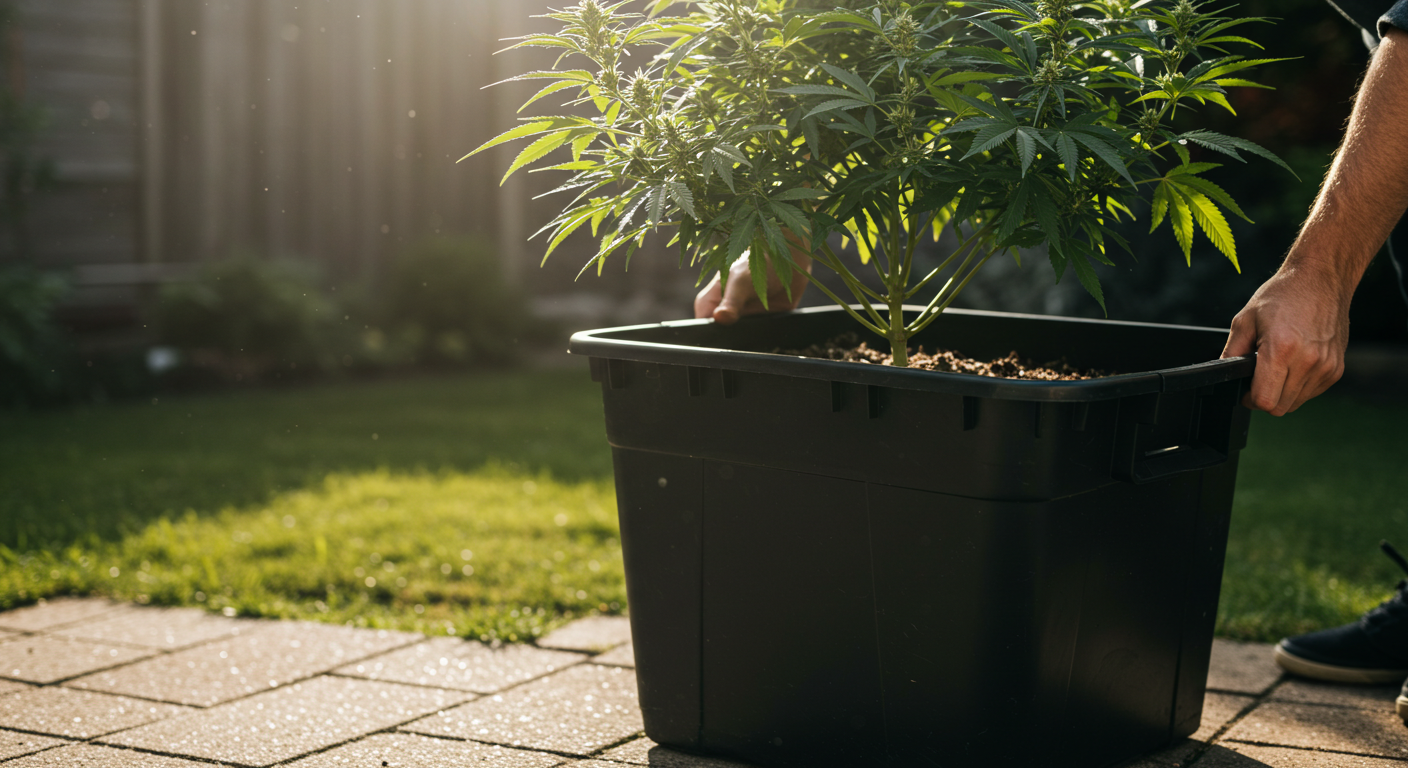
Measure the Root Zone Instead of Guessing
The most useful improvement you can make to a black-pot heat diagnosis is to measure temperature where the roots actually live. Air temperature from a weather app is not enough. A black pot can be hotter than the air in direct sun, while a shaded root zone may remain much closer to ambient conditions. The difference can also change sharply over the course of one afternoon.
Use at least two measurement points
A single probe in the center of the pot can miss the hottest zone near the wall. Nursery researchers often place sensors near different container quadrants because solar exposure is directional. For a practical home comparison, use one measurement near the sun-exposed outer root zone and a second measurement deeper or on the shaded side as a reference.
For a rigid pot, a useful starting position is several centimeters inside the substrate rather than touching the plastic wall itself. You want the temperature of the root environment, not the temperature of the plastic surface. If the container is large, a third center measurement can show how far the heat front penetrates.
Paired temperature measurement
A paired measurement compares a suspected hot location with a reference location at the same time. The comparison is often more useful than one isolated temperature because it shows whether the container treatment, sun exposure, or placement is actually changing the root-zone environment.
Build a one-day summer temperature profile
Choose a clear hot day that represents the condition you are trying to manage. Record air temperature and root-zone readings before strong sun reaches the pot, then repeat around late morning, solar noon, mid-afternoon, late afternoon, and after the direct sun leaves the container. If possible, a data logger that records every 10 to 30 minutes is much better because short peaks and heat duration become visible.
| Checkpoint | What to Record | What It Helps You Separate |
|---|---|---|
| Early morning | Air temperature, outer root-zone temperature, center or shaded-side temperature, moisture condition | Starting baseline before major solar heating |
| Late morning | Same points plus sun direction and pot-surface exposure | How quickly the container begins diverging from ambient conditions |
| Mid-afternoon | Peak-period temperatures, plant posture, pot mass or moisture reading | Whether root heat overlaps maximum atmospheric demand |
| After pot shade begins | Cooling rate at the same sensor points | Whether heat dissipates quickly or remains stored in the root ball and surrounding surface |
| Evening | Recovery of root-zone temperature and canopy posture | Whether the stress is a short daytime excursion or a prolonged thermal load |
Do not use an infrared thermometer as the only root measurement
An infrared thermometer is excellent for comparing the external pot surface, nearby paving, mulch surface, and reflective covers. It does not directly tell you the temperature several centimeters inside the root ball. Use it to map external heat sources, then use a probe or logger in the medium to measure the root zone.
Field Advice: Surface temperature is the heat-source clue. Substrate temperature is the root-response clue. Measure both when the cause is uncertain.
Compare a protected pot with an exposed pot when possible
If you have two similar containers, create a simple paired trial. Leave one black pot exposed and shade only the wall of the other without shading its canopy. Keep irrigation and measurement positions as comparable as possible. Record both through the same hot afternoon. The goal is not to publish a scientific paper. The goal is to see whether wall protection produces a repeatable thermal difference in your actual garden.
Measure the same locations before and after a change
Keep probe depth, side of the pot, time window, and irrigation condition as consistent as practical so the comparison means something.
Chase one dramatic number
Duration, location, plant response, moisture, and repeatability matter more than one isolated peak from an uncertain measurement point.
Identify the Conditions That Raise Summer Risk
Black pots are most vulnerable when several heat-loading factors overlap. Direct sun is the obvious one, but spacing, floor material, container volume, irrigation status, canopy shade, and local wind can either amplify or moderate the final root-zone temperature.
Direct afternoon sun on the sidewall
A low western sun can strike the side of a container directly during some of the hottest hours of the day. The canopy may shade the top surface while the outer wall remains fully exposed. This is why a pot that seems protected at noon can develop its strongest sidewall heating later in the afternoon.
Mark which wall receives the strongest direct sun. That becomes the first sensor position and the first place to test shading or a reflective outer barrier.
Container spacing can change exposure
Research with black nursery pots has shown that pots packed closely together can have different thermal exposure from isolated spaced pots. Neighboring containers shade portions of one another. Once pots are spaced apart, more sidewall area can receive direct radiation. This is useful evidence because it shows that color does not act alone; exposure geometry changes the result.
Do not solve this by packing mature cannabis plants tightly together. Dense plant spacing can reduce airflow, increase canopy humidity, complicate inspection, and create disease problems. Use the spacing evidence to understand the mechanism, then protect the pot wall without sacrificing canopy airflow.
Remember: Pot-wall shade and canopy crowding are not the same intervention. Shade the container without creating a stagnant plant canopy.
Hot paving can add heat from below and around the pot
Concrete, stone, tile, asphalt, and dark deck surfaces can reach temperatures far above the weather-station air reading in full sun. A pot sitting directly on that surface receives conductive heat at the base and longwave radiation from the hot surroundings. Walls and railings can add reflected solar energy as well.
Use an infrared thermometer to compare the floor under the pot, nearby shaded floor, and the outer wall. If the ground surface remains extremely hot even after you shade the pot wall, a riser or insulating platform may be part of the solution.
“My balcony pot is shaded on one side, but the root zone still gets hot. What should I check next?”
Question sent by: NorthWindow, via contact form.
Check the floor and surrounding surfaces. Sun-heated tile, concrete, masonry, and glass can keep loading the container even after one wall is shaded. Compare the pot base, sun-facing side, shaded side, and center of the medium. If the floor is the strongest heat source, create an air gap or insulating platform and measure again.
Dry substrate can remove part of the evaporative buffer
Water has high heat capacity and evaporation removes heat. A well-watered container therefore behaves differently from one that has dried severely. This does not mean you should keep cannabis saturated during heat. It means that chronic under-irrigation can combine water stress and heat stress while reducing some of the cooling associated with moisture loss.
Use Cannabis Watering Basics to separate adequate hydration from chronic saturation. The goal during summer is a root zone that remains sufficiently hydrated while still restoring air after irrigation.
Very small pots have less thermal and water reserve
Small root zones can change temperature and moisture more quickly. A large canopy in a small black pot therefore faces two overlapping constraints: limited water reserve and limited thermal buffering. Moving to a more appropriate container volume can improve the system, but only if the larger container is irrigated correctly and does not become a chronically wet oversized root zone.
Fabric and light-colored pots change the risk, but do not erase summer heat
Light-colored plastic can reduce solar absorption at the wall. Fabric can lose heat through evaporation when moisture and airflow allow it. Air-pruning containers expose more of the root edge to air. Each design changes the energy and moisture balance, but none of them creates a climate-proof root zone.
A black fabric pot, for example, can still absorb radiation while also drying rapidly through its wall. In a dry windy climate that may exchange a heat problem for an irrigation problem. The container decision should therefore be made with the full water-and-temperature system in mind.
| Summer Condition | What It Does to the Root Zone | What to Measure | First Practical Response |
|---|---|---|---|
| Direct sun on black wall | Raises radiant heat absorption at exposed side | Sun-side substrate vs shaded-side substrate | Shade or reflect the container wall |
| Hot concrete or tile | Adds heat at base and from surrounding surfaces | Floor surface, lower root zone, shaded reference floor | Elevate or insulate the pot base |
| Small pot, large canopy | Reduces water reserve and thermal buffering | Daily dry-back, root-zone temperature, irrigation frequency | Reassess container volume and irrigation capacity |
| Hot, dry wind | Raises canopy demand and evaporation from porous pots | Pot mass, moisture pattern, leaf posture, wind exposure | Improve irrigation coverage and reduce unnecessary wall exposure |
| Wet, dense medium | Combines high root temperature with limited air-filled porosity | Moisture at depth, drainage time, root smell/condition if accessible | Correct saturation and structure, not temperature alone |
| Reflective wall or neighboring glazing | Can increase radiation load from unexpected direction | Pot-surface temperatures around full circumference | Change placement or add targeted shielding |
Master Advice: The most dangerous summer setup is often not one bad variable. It is a small, dark, exposed container on a hot surface with limited irrigation reserve during peak canopy demand.
Separate Root Heat From Look-Alike Problems
Root heat rarely arrives with a label. The canopy may droop, growth may slow, leaf edges may dry, or the plant may appear hungry despite fertilizer. Those symptoms overlap with drought, overwatering, root disease, salinity, undersized containers, damaged roots, and atmospheric heat stress. A good diagnosis separates these mechanisms before treatment.
Atmospheric heat stress can occur while the root zone remains acceptable
A cannabis canopy exposed to high air temperature, intense radiation, low humidity, and wind can wilt even in a protected root zone. If shaded and exposed pots show similar root-zone temperatures but both canopies struggle during peak atmospheric demand, the primary problem may be aboveground heat and water balance rather than container color.
Drought can look almost identical at first
A severely dry root ball can produce midday wilt, slow growth, leaf damage, and poor nutrient transport. The distinction is that the root-zone moisture record shows inadequate available water. Heat may still be contributing, but the first correction is restoring complete, even hydration rather than merely wrapping the pot.
Overwatering and hot roots can occur at the same time
It is possible for a black pot to be both hot and too wet. This situation is especially confusing because the plant may wilt while the grower sees moist soil and assumes water cannot be the problem. The issue may be oxygen limitation, impaired roots, or root disease rather than insufficient water volume.
Do not keep adding water to a hot, saturated root zone simply because the leaves are drooping
Check moisture at depth and confirm drainage. If the root zone is already saturated, additional irrigation can extend oxygen limitation even while surface cooling briefly improves.
Salt stress can intensify when a hot pot dries quickly
As water leaves the root zone, dissolved salts remain behind unless they are taken up, chemically retained, or leached out. Rapid summer dry-back can therefore concentrate salts in some fertilizer programs. A plant can show marginal leaf injury or reduced water uptake while the grower incorrectly assumes the pot simply needs more nutrients.
Monitor source water, feeding EC where relevant, runoff or substrate EC using a method appropriate to the medium, and the pattern of dry-back. Do not use heavy flushing as an automatic heat treatment. The correction should match the actual salt problem.
Root disease needs its own evidence
Warm, wet, oxygen-limited conditions can favor some root pathogens, but heat alone does not diagnose Pythium, Fusarium, or any other disease. Look for persistent root discoloration, soft or sloughing tissue, poor new-root development, abnormal odor, crown symptoms, recurring collapse, or laboratory confirmation where the crop value justifies it.
Do not use a universal root-zone temperature such as 24°C as a disease threshold. Pathogen biology, host susceptibility, moisture, oxygen, inoculum, medium, and temperature interact. A warm healthy root zone and a warm diseased root zone are not the same thing.
Important: Heat stress can make roots less resilient, but “hot roots = root rot” is not a valid diagnosis.
| Observation | Root Heat Becomes More Likely When | Important Look-Alike | Next Check |
|---|---|---|---|
| Midday wilt | Sun-side root zone is substantially hotter than shaded reference and plant recovers as pot cools | Drought or atmospheric heat | Measure moisture and paired root temperatures |
| Deficiency-like leaves | Symptoms begin during repeated hot-pot episodes without clear feeding change | pH, EC, true nutrient shortage | Check root environment before raising fertilizer |
| Slow growth | Hot exposed pots lag comparable protected pots over repeated hot periods | Root restriction, low light, disease | Run a protected-vs-exposed comparison |
| Roots sparse on one side | Damage aligns with repeatedly sun-exposed wall | Uneven irrigation or physical damage | Compare root distribution at transplant or harvest |
| Wet pot plus wilt | Root zone is both hot and slow to restore air | Overwatering or root disease | Check drainage, odor, root condition, and recovery after cooling |
| Rapid pot-weight loss | Heat and exposure raise evaporation while canopy demand is high | Undersized container or porous-wall evaporation | Separate plant water use from container evaporation |
Change one major variable when the plant is stable enough
Shade the pot wall, keep the irrigation decision rule consistent, and remeasure. A cleaner test makes cause and effect easier to see.
Shade, flush, fertilize, transplant, and spray all at once
Multiple simultaneous corrections can hide the real cause and add unnecessary stress unless the plant faces an immediate safety problem.
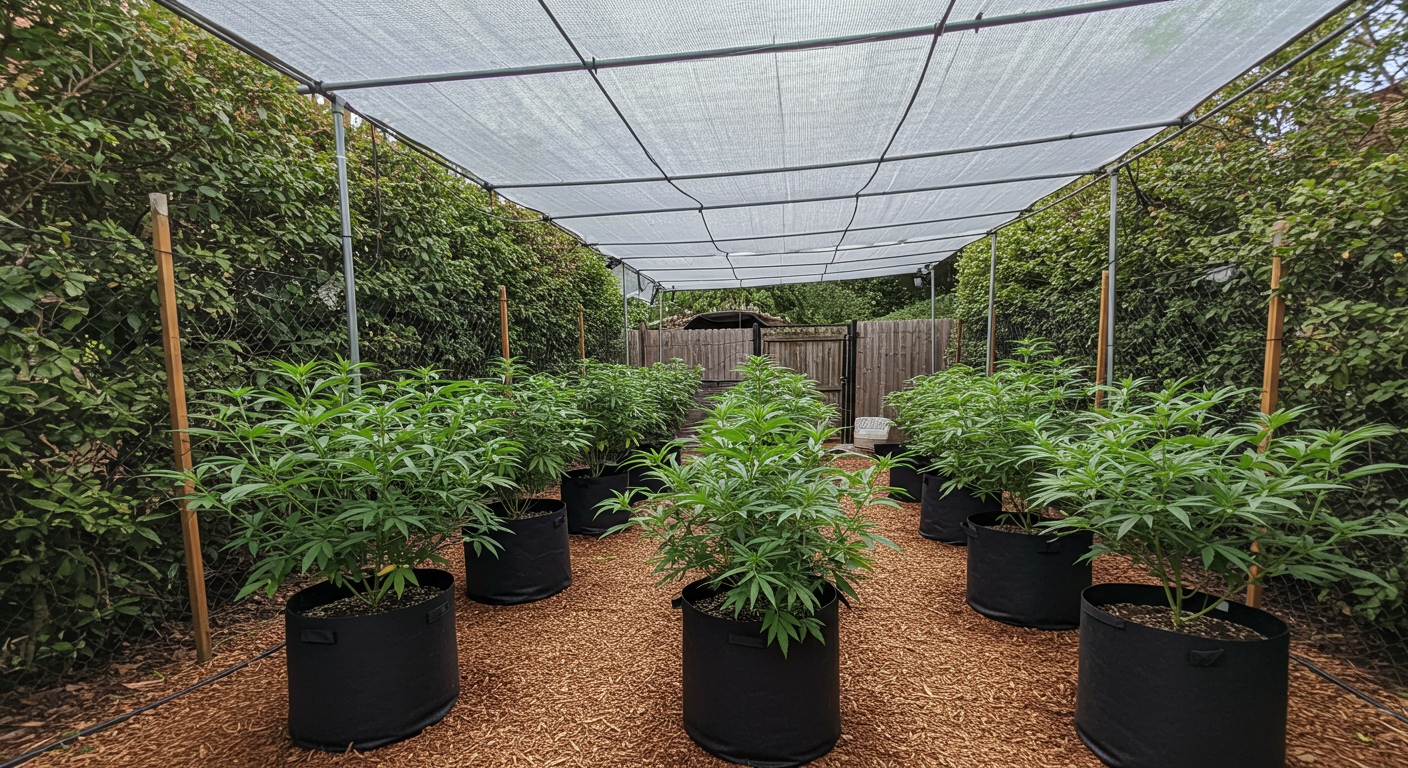
Correct the Heat Load in the Right Order
The best correction is usually the one that reduces incoming heat without creating a new root-zone problem. Start with the heat source. If direct solar radiation on the black wall is driving the temperature spike, blocking that radiation is more efficient than repeatedly trying to cool the substrate after it has already heated.
First, shade the container wall without shading the productive canopy
A simple external shield on the sun-facing side can interrupt direct radiation. The shield should allow air movement and should not trap the pot inside a sealed hot sleeve. It can be a light-colored rigid panel, a ventilated outer cover, or another stable barrier placed far enough from the wall to create a small air gap.
Nursery shade research has shown that reducing radiation load can reduce substrate temperature and root injury, although the exact shading system and crop differ from cannabis. The mechanism is transferable: less radiant energy reaching the container means less energy available to heat the root ball.
Tip: Shade the pot first, then measure. You do not need to shade the whole plant to test whether sidewall radiation is the problem.
Second, consider a lighter outer surface
White containers repeatedly run cooler than black containers in nursery research under strong sun. If replacing the pot is practical, a light-colored rigid container can reduce absorbed radiation. If replacement is not practical during an established grow, a ventilated light-colored outer sleeve or shield can serve the same basic purpose without disturbing the root ball.
Be cautious with improvised wraps. A material that reflects sunlight but also seals the pot tightly, blocks drainage, traps water, or degrades into the medium can create a new problem. The correction should change the thermal boundary without compromising irrigation or sanitation.
Third, isolate the pot from excessively hot surfaces
If measurements show that concrete, tile, asphalt, or a metal platform is contributing significant heat, create a safe air gap or use an insulating riser suitable for the finished wet weight of the container. The support must be stable and must not block drainage holes.
Large wet containers can be extremely heavy
Do not place mature container plants on improvised shelves, unstable blocks, balcony furniture, or platforms with unknown load capacity. Confirm the structure can safely support the wet container, plant, support system, people, and irrigation equipment.
Fourth, improve irrigation timing without turning water into a coolant addiction
Irrigation can temporarily moderate substrate temperature because water carries heat and evaporation removes energy. A 2025 container study found that cyclic irrigation reduced peak temperature in black pots during hot afternoons, although pot color had a stronger cooling effect overall in that experiment. This is useful evidence, but it does not mean cannabis should be watered repeatedly simply to cool the pot.
Every irrigation still has to respect root-zone moisture and oxygen. If the medium is already adequately wet, another cooling irrigation may be the wrong choice. If the plant genuinely needs water, irrigating before the most demanding part of the day can improve both hydration and thermal buffering. Use the plant and medium to decide, not the thermometer alone.
Pro Tip: If pot shading produces the same cooling benefit as extra irrigation, the shading solution usually carries less risk of chronic saturation.
Do not use ice water as a routine heat treatment
There is no need to shock a hot root zone with near-freezing irrigation water. The root system is already managing a thermal gradient. Use irrigation water appropriate to the crop and system, and reduce the environmental heat load instead of creating abrupt temperature swings. The exact best irrigation-water temperature depends on the growing system and ambient conditions, so avoid a universal cannabis number.
Mulch can buffer the top surface but does not shade a hot sidewall
A suitable mulch can reduce direct solar heating and evaporation from the top of the medium. It can be useful in large outdoor containers and biologically managed soils. It does not protect a black west-facing wall that remains fully exposed to afternoon sun. Treat top-surface heating and sidewall heating as separate pathways.
Mulch also changes moisture retention. If the medium is already staying wet too long, adding a thick moisture-conserving layer solely for cooling can make the irrigation problem worse.
Do not bury drainage holes or create a hidden reservoir around the pot
Partial burial can moderate container temperature by coupling the root zone to surrounding soil, but it also changes drainage, pest exposure, mobility, and sanitation. A rigid pot sunk into poorly drained ground can collect water around its lower holes. A fabric bag buried in soil stops behaving like a fully air-exposed fabric container.
If the goal is the thermal stability of the ground, an in-ground planting or properly designed raised bed may be a cleaner system than improvising a half-buried production pot. Use Cannabis Soil and Growing Media for the broader root-zone design context.
“Should I transplant out of a black pot during a heatwave if the roots are already stressed?”
Question sent by: Kevin Walker, via Facebook page.
Not automatically. If the pot still has adequate volume and the main problem is solar heating, shading or shielding the container may reduce heat immediately without disturbing the root ball. Transplant when the current volume is also a genuine limitation or when the container system cannot be made workable. If you do transplant, avoid adding severe root disturbance during the hottest part of the day.
Master Advice: Reduce radiant heat first, correct the water system second, and transplant only when the container itself is part of the underlying limitation.
Verify That the Root Zone Is Actually Cooler
A correction is not complete when the pot looks better. It is complete when the root-zone data and plant response improve. Use the same measurement points you established before the intervention and compare another suitably hot day.
Repeat the paired measurement after shading or shielding
Place the probe at the same depth and side of the pot. Compare the protected sun-facing root zone with the previous exposed condition and with the shaded-side or center reference. A useful correction should reduce the temperature difference or shorten the duration of the hot excursion.
Check whether irrigation demand became more manageable
If protecting the pot wall reduces unnecessary evaporation or root stress, the dry-back pattern may become more stable. Record irrigation volume and interval for several days before and after the change. Do not expect identical water use because weather and canopy growth continue changing, but look for a meaningful trend.
Recheck the plant after 24 hours, 3 days, and 1 to 2 weeks
The same timeline used for many Weedth troubleshooting resources works well here because it separates immediate thermal response from slower root recovery.
| Recheck | What to Observe | What Improvement Looks Like | What Means Reassess |
|---|---|---|---|
| Next hot period / within 24 hours | Paired root temperatures, midday wilt, moisture distribution | Lower protected-side temperature and less severe stress under similar weather | No thermal change despite shielding, suggesting another heat path or diagnosis |
| About 3 days | Irrigation interval, recovery speed, new leaf posture, EC behavior where relevant | More stable water demand and less repeated afternoon collapse | Persistent wilt while root zone is cool enough to shift suspicion elsewhere |
| 1 to 2 weeks | New growth, root-zone consistency, recurring symptoms, disease evidence | Normalizing new growth and reduced recurrence during hot conditions | Continued decline, root disease signs, severe root restriction, or unresolved saturation |
| Transplant or harvest inspection | Root distribution around circumference and depth | Healthy roots occupying the container without a clear dead hot-side zone | Sparse, dead, or damaged roots repeatedly concentrated on exposed side |
Field Advice: Keep photos or a simple root-zone map at the end of the cycle. A recurring dead or sparse southwest-facing root quadrant is far more informative than a vague memory that the pot “felt hot” in July.
Use a Pass / Investigate / Change System
A simple decision system can keep summer management from becoming reactive.
Pass: Root-zone temperatures stay reasonably close between exposed and protected points, the plant maintains water uptake, and no repeated heat-linked symptoms occur. Keep monitoring during stronger heatwaves.
Investigate: The exposed wall repeatedly runs substantially hotter than the reference or the plant shows recurring afternoon stress. Add wall protection and repeat the paired test.
Change the system: The root zone remains excessively hot despite reasonable shielding, irrigation becomes impractical, roots show repeated damage, or the container is also too small. Move to a cooler container setup, larger appropriate volume, raised bed, or in-ground system where legal and suitable.
Weedth Verdict: The goal is not to achieve one perfect temperature number. The goal is to remove repeated, measurable root-zone heat loading that is impairing the plant or making irrigation unreliable.
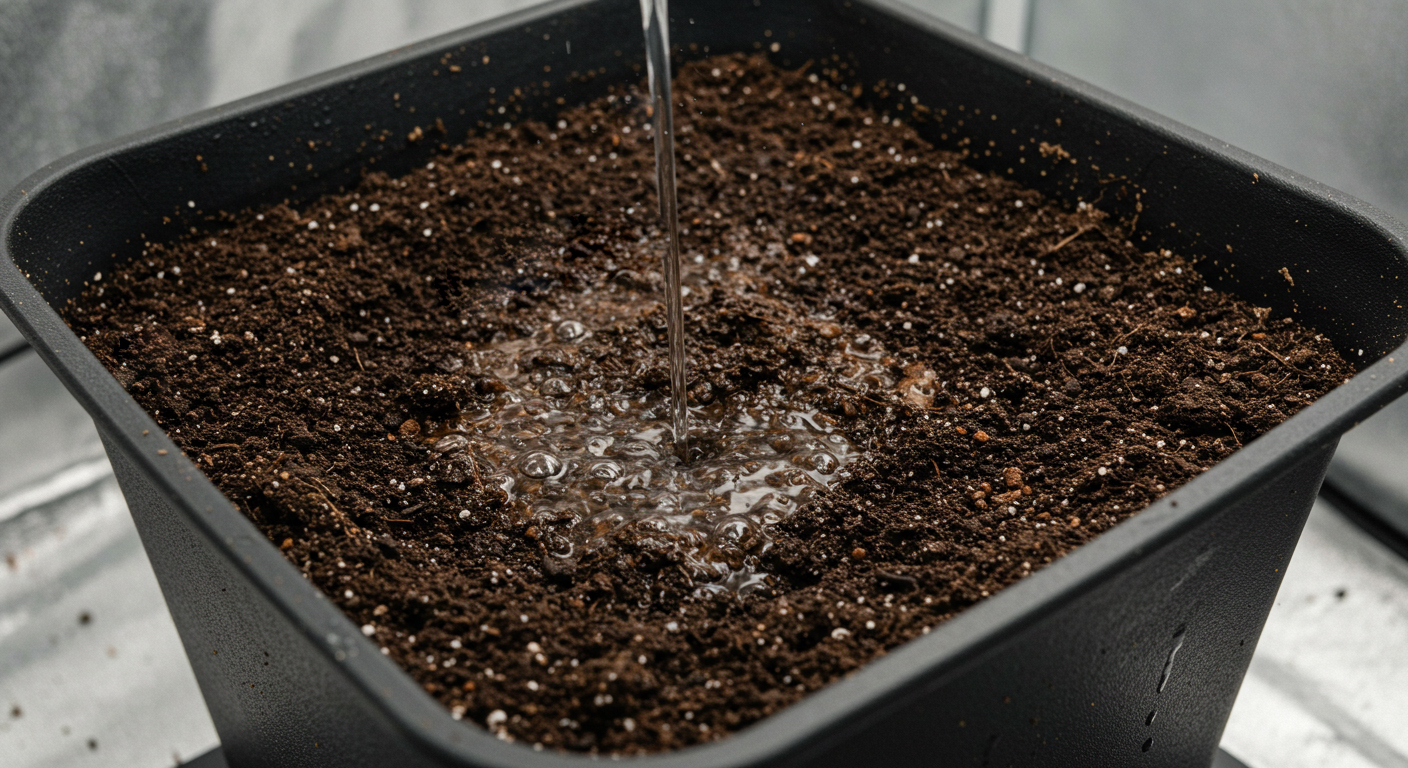
Common Black-Pot Heat Mistakes
Mistake: using air temperature as root temperature
A forecast of 32°C does not mean the sun-facing root zone is 32°C. It may be cooler, similar, or substantially hotter depending on radiation and the container system. Measure the medium.
Mistake: touching the pot wall and diagnosing root death
A wall that feels hot is a useful warning. Human touch is not a calibrated root-zone measurement and cannot tell you temperature duration several centimeters inside the substrate.
Mistake: assuming black is always bad in every season
Dark containers can warm faster in cool conditions, which is not automatically harmful. The problem is excessive heat exposure during warm, high-radiation conditions. A summer resource should not become a universal rule against black containers in every climate and season.
Remember: A thermal property can be useful in one season and risky in another. Manage the actual root-zone condition rather than the color in isolation.
Mistake: wrapping the pot in a sealed reflective layer
A reflective cover can reduce radiation, but a sealed wrap can block drainage, trap moisture, prevent airflow around porous walls, and complicate inspection. Use a ventilated shield with a clear drainage path.
Mistake: watering repeatedly only because the thermometer is high
Watering can cool the substrate temporarily, but the root zone still needs oxygen. If the pot is already wet, repeated irrigation may exchange heat stress for saturation stress.
Mistake: using hydrogen peroxide as a routine summer root tonic
Hydrogen peroxide is not a substitute for correcting heat, drainage, or disease diagnosis. It is reactive, can damage biological communities and plant tissue at inappropriate concentrations, and there is no universal cannabis black-pot rescue dose. Do not build the summer heat plan around it.
Mistake: assuming an autoflower is uniquely doomed after one hot afternoon
Autoflowering changes flowering regulation, not the fundamental physics of root heat. Stress can reduce growth in any cannabis plant, and short-cycle plants may have less calendar time to recover from setbacks, but there is not adequate evidence to claim that one root-heat event automatically forces irreversible early flowering.
Important: Avoid converting plausible grower observations into biological rules unless controlled cannabis evidence supports them.
Mistake: treating cultivar labels as thermal protection
A seller calling a cultivar “heat tolerant” does not make an overheated root zone irrelevant. Aboveground heat adaptation and container-root thermal tolerance are not necessarily the same trait. If a cultivar performs well in hot air but still grows in an exposed black pot, continue measuring the root zone.
Build a measurable summer routine
Know the hot side, log temperature during peak exposure, track irrigation, shade the wall when needed, and verify the result.
Build the plan from internet danger numbers
Species, pot volume, sensor position, exposure duration, moisture, and local climate change what a temperature reading means.
Make the Summer Container Decision From Measurements
A black pot does not need to be discarded simply because summer arrived. If the root zone stays within a workable thermal pattern, irrigation remains reliable, and the plant continues healthy growth, monitoring may be enough. If the sun-facing root zone repeatedly heats far above the shaded reference and the plant shows matching stress, the container needs protection.
The first-choice correction is usually simple: reduce direct radiation on the container wall and isolate the pot from unnecessarily hot surfaces. Then remeasure. If that does not create a workable root zone, reconsider pot material, container size, placement, irrigation design, or the entire above-ground container system.
Before the next heatwave
- Identify which side of the black pot receives the strongest direct sun.
- Measure substrate temperature near that side and at a shaded or central reference point.
- Record root-zone moisture at the same time so heat and drought are not confused.
- Check whether concrete, tile, asphalt, walls, or glazing are adding heat.
- Confirm the container volume can buffer the current canopy and irrigation schedule.
- Shade or reflect the pot wall without blocking drainage or airflow.
- Elevate the container only on a stable surface rated for the wet load.
- Do not add cooling irrigations when the root zone is already saturated.
- Repeat the same temperature measurements after the correction.
- Reassess after 24 hours, 3 days, and 1 to 2 weeks for plant recovery and recurring symptoms.
For broader root-zone design, medium structure, and outdoor container planning, use Cannabis Soil and Growing Media and Containers and Pots Basics. The summer decision remains simple: do not fear the pot color blindly, and do not ignore it blindly. Measure the root zone, reduce the heat pathway that is actually active, and verify the result under the next comparable hot condition.
Frequently Asked Questions About Black Pots and Root Temperature
Are black pots always too hot for outdoor cannabis?
No. Risk depends on solar exposure, climate, pot size, substrate moisture, placement, irrigation, and how much of the wall is shaded. Black pots can become substantially hotter than light-colored pots under direct sun, but the correct decision comes from root-zone measurement rather than color alone.
Is a white pot automatically safe in extreme summer heat?
No. A white wall can reduce absorbed solar radiation, but a small pot on hot concrete can still overheat and dry rapidly. Light color reduces one heat pathway. It does not eliminate high air temperature, hot ground, drought, or undersized-container risk.
What temperature is too hot for cannabis roots?
There is not enough cannabis-specific outdoor root-zone research to give one universal injury threshold. Container-crop literature shows increasing physiological disruption and root injury as root-zone temperature rises and exposure lengthens, but thresholds vary by species and conditions. Use comparative measurements, duration, plant response, and repeated observations instead of one imported number.
Can I cool a black pot with more frequent watering?
Sometimes irrigation can temporarily lower substrate temperature, and controlled container research has demonstrated cooling from cyclic irrigation. But watering should still be based on root-zone moisture and oxygen needs. If the medium is already wet, shade or reflect the pot rather than repeatedly saturating it.
Does mulch solve black-pot root heat?
Mulch can reduce top-surface heating and evaporation. It does not block direct radiation striking an exposed sidewall. If the hot zone is near the west-facing wall, use sidewall protection as well.
Should I switch from black plastic to fabric?
Fabric can reduce some rigid-wall solar heating through evaporation and air exposure, but it may dry much faster in hot, windy weather. Choose the material that works with your irrigation capacity. A lighter-colored rigid pot or shaded black pot may be easier than fabric in some climates.
Share this article
A quick overview of the topics covered in this article.
Follow us
Latest articles
September 3, 2026
September 3, 2026
September 3, 2026

September 3, 2026