
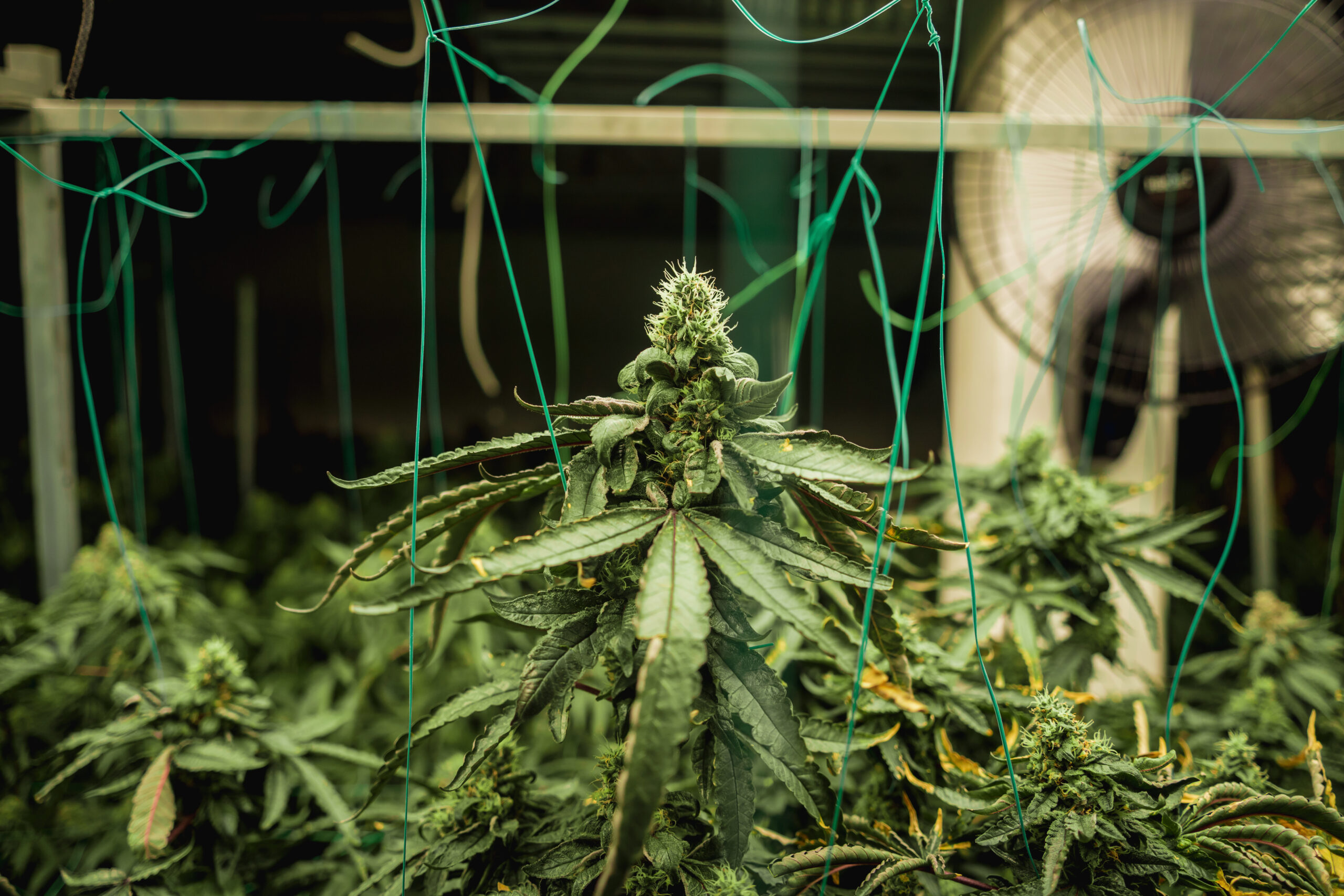
Breeder Flowering Weeks vs Outdoor Harvest Date
A breeder’s flowering-time claim and an outdoor harvest date answer two different questions. Flowering weeks describe an elapsed duration measured from a stated or implied starting point. An outdoor harvest date is a calendar outcome created by genetics, actual flowering onset, latitude, twilight, weather, plant health, and the maturity standard you use. Treating those two values as interchangeable is one of the fastest ways to build a false harvest deadline.
If a seed listing says “8–9 weeks,” the first question is not “Which date is nine weeks from today?” The first question is “Eight to nine weeks from what?” Some listings are based on indoor production after the light schedule was changed. Some begin counting after visible flower formation. Some give a broad commercial maturity estimate without defining the starting event. An outdoor plant does not receive an instant indoor-style photoperiod switch, so the same duration cannot be dropped onto a calendar without interpretation.
The practical method is simple in principle: identify what the source claim actually measures, save the original listing, mark your plant’s real outdoor flowering transition, build a provisional finish range, then let repeated maturity observations and current weather either confirm or move that range. The breeder number is useful as prior information. It is not a harvest command.
This resource stays focused on translating flowering-week claims into an outdoor decision. It does not repeat the full outdoor growing system. For site selection, soil, irrigation, weather protection, cultivar planning, and the broader season, use the Outdoor Grow Comprehensive Guide.
In This Resource
- What Breeder Flowering Weeks Actually Measure
- Why Indoor Flowering Duration Does Not Equal an Outdoor Date
- Translate the Listing Into a Provisional Outdoor Window
- Replace Calendar Math With the Plant’s Real Flowering Onset
- Verify the Date With Flower Maturity, Not the Calendar Alone
- Diagnose Why the Plant Is Running Earlier or Later Than Expected
- Turn This Season Into Better Local Evidence for the Next One
What Breeder Flowering Weeks Actually Measure
The first job is to identify the clock’s starting event
“Eight weeks of flowering” sounds precise because it contains a number. It is only precise if the starting event is also defined. A duration without a start marker is incomplete data.
In controlled cannabis research, flowering duration can be measured from the moment a treatment begins. For example, published photoperiod studies have described commercial maturity as a number of days after a defined 12-hour photoperiod was imposed. That is a clean experimental clock because the start time is known. A retail listing may use a similar production convention without explaining it.
| Listing phrase | What it may mean | What you still need to know |
|---|---|---|
| 8–9 weeks flowering | Elapsed flowering duration under the producer’s usual system | When the count starts, indoor or outdoor context, genotype or population, and maturity standard |
| 56–63 days | The same type of duration expressed in days | Whether day 1 means photoperiod change, first flower, or another milestone |
| Late September | A calendar-style outdoor finish estimate | Latitude, climate, year, source material, and how “finish” was judged |
| October harvest | A broad outdoor season label | Early, mid, or late October and whether the claim was tested locally |
| Seed to harvest | Total life-cycle duration, more common in autoflower descriptions | Germination assumptions, environment, transplant stress, and maturity standard |
Before you use any number, copy the exact phrase into your grow record. Do not rewrite “8–9 weeks flowering” as “harvest September 28” yet. Preserve the original wording because the ambiguity itself is important evidence.
Key Term
Flowering Duration
The elapsed time between a defined reproductive starting point and a defined maturity endpoint. The duration is only comparable between sources when both the starting event and the maturity endpoint are reasonably similar.
A commercial maturity range is not a universal biological constant
Even when the source is careful, a flowering range usually describes performance under particular production conditions. Temperature, light, root-zone health, plant stress, relative humidity, and genotype can change developmental speed. Research on cannabis and hemp repeatedly shows meaningful differences among cultivars in flowering initiation and maturity.
This does not make breeder information useless. It changes how you use it. A documented 60–70-day flowering range is stronger than no information at all. It becomes much stronger after you know the environment behind it. A range from repeated runs of the same clone is not equivalent to a broad estimate applied to a variable seed population.
The endpoint matters as much as the starting point
Two sources can start their flowering clock on the same day and still report different durations because they define “finished” differently. One producer may harvest when the crop is commercially acceptable and still carrying some fresh stigma growth. Another may wait for a later visual maturity stage. A research trial may use a predefined combination of stigma color, trichome state, senescence, or chemical sampling. The number of weeks is therefore partly a statement about the endpoint.
This is especially important when you compare a breeder range with your own garden. If you prefer a later maturity point than the source, your local interval may consistently run longer without meaning the genetics are unusually slow. If you harvest earlier because autumn disease pressure is rising, your local interval may be shorter even though the plant could have continued developing.
Write down your endpoint in plain language. “Harvested when upper and mid-canopy flowers showed advanced stigma transition, stable flower swelling, mostly mature bract trichomes, and weather risk was rising” is more useful next year than “harvested at week nine.” The description lets you remember what week nine actually meant.
Ask whether the claim belongs to a clone, a seed line, or a marketing name
A clone can provide a relatively stable genetic reference when identity is maintained. A seed line can contain more plant-to-plant variation, depending on how it was bred and how uniform the population is. A commercial name can also be reused across sources that are not genetically identical.
That distinction matters outdoors because finish timing is exactly the kind of trait that can expose variation. If three plants from one seed pack begin flowering on different dates or mature at different rates, averaging them into one “week nine” label can hide the information you actually need.
Grower Question
Question sent by: Ethan Brooks, via email.
“The listing says 8–9 weeks. Does that mean I should harvest exactly nine weeks after I see the first white hairs outside?”
Weedth answer: No. First determine what the listing’s eight to nine weeks are counted from. A few isolated preflowers are not necessarily the same starting point used by the source. Mark a repeatable whole-plant flowering transition, use the listing as a provisional duration range, then verify late flower with the plant itself.
Do not confuse precision of formatting with precision of evidence
“63 days” looks more authoritative than “about nine weeks,” but both may describe the same uncertain estimate. Likewise, “September 25” is not automatically better evidence than “late September.” A single exact date can be false precision if the source does not tell you where, when, and how the crop was grown.
Give more weight to context than formatting. A range supported by several seasons at a similar latitude is usually more useful outdoors than an exact number with no environmental context.
Why Indoor Flowering Duration Does Not Equal an Outdoor Date
Indoor growers can create a sharp photoperiod event; outdoors the transition is gradual
In a controlled indoor room, the grower can change the light schedule on one known day. That creates a convenient reference point for tracking elapsed time. Outdoors, day length changes a little each day. Photoperiod-sensitive cannabis perceives a seasonal signal rather than an instant timer change.
Research on Cannabis sativa shows that critical photoperiod is cultivar dependent. Some cultivars can initiate flowering under day lengths longer than the familiar 12-hour indoor schedule. Hemp research has also shown that small photoperiod differences near a cultivar’s threshold can alter flowering initiation by several days. There is no single outdoor calendar day when every photoperiod cultivar receives the same biological “flip.”
Latitude changes when the flowering signal develops
Latitude changes the seasonal day-length curve. Two gardens on the same calendar date can have different day lengths and twilight periods. The same photoperiod-sensitive genetics can therefore enter strong reproductive growth at different times in different regions.
That is why adding breeder weeks to a generic date such as August 1 is weak planning. You first need a plant-specific flowering-onset marker. Only then does the breeder duration become useful as a comparison range.
Twilight and artificial night light can move the effective signal
Sunset time is not identical to biologically effective darkness. Controlled hemp research found civil twilight bright enough to influence flowering in the material tested. More recent cannabis research also supports the broader principle that relatively low night light can affect flowering in sensitive cultivars.
For this resource, you do not need to convert twilight into a universal number of flowering hours. You need to recognize that the plant experiences the actual light environment, not the day-length value printed in a weather app. A streetlight, security light, greenhouse light leak, or bright neighboring property can also change the local night environment.
Remember: An indoor flowering-week claim may begin after a clean lighting event. An outdoor plant may spend days or weeks moving through the threshold region before the reproductive transition becomes obvious.
Outdoor development happens under a changing light and temperature environment
Indoor flowering cycles often keep temperature, root-zone conditions, irrigation, and light intensity within a relatively narrow operating range. Outdoors, the plant usually enters later flower while the environment is changing in the opposite direction: days shorten, solar angle falls, nights cool, storms may become more frequent, and morning drying can slow.
These changes do not create a simple “add seven days for cold weather” correction. They change the probability that the crop will continue developing cleanly. A cool, cloudy, wet finish can progress differently from a warm, bright, dry one. High humidity has even delayed cannabis flowering development substantially in controlled research, demonstrating that environmental conditions can alter phenological timing.
An outdoor harvest month is also not a universal replacement for flowering weeks
A listing that says “late September” seems more useful outdoors, but it still needs context. Late September at one latitude can correspond to a different photoperiod, night temperature, disease pressure, and frost probability than late September somewhere else. A source may also be describing one selected phenotype, one production region, or one commercial season.
Use the outdoor month as a second clue, not as a command. If the source gives both “8–9 weeks” and “late September,” save both. When your plant starts flowering, you can check whether the duration-based window and the calendar-style claim point to roughly the same period.
Warning
Do not manufacture an outdoor date from an undefined week count
If you cannot identify the starting point behind a flowering-week claim, treat the number as low-confidence planning information. Do not convert it into a precise harvest date simply because the arithmetic is easy.
Translate the Listing Into a Provisional Outdoor Window
Step 1: save the exact listing before the page changes
Save the product page, screenshot the flowering information, record the date you accessed it, and photograph the seed pack or label. Retail pages change. Descriptions are copied between sellers. A later version may use different wording, different flowering weeks, or a different outdoor month.
At minimum, preserve the cultivar or line name, source, pack or lot information if available, parentage, generation marker, flowering duration, outdoor harvest claim, climate claim, and any notes about phenotype variation. Keep claims as claims. Do not rewrite “mold resistant” as “confirmed mold resistant.”
Step 2: classify the time claim before calculating anything
| Claim type | Use it for | Do not use it for |
|---|---|---|
| Indoor flowering weeks | Starting duration prior after outdoor flowering begins | Direct calendar-date prediction before onset |
| Outdoor harvest month | Broad seasonal comparison | Universal date across latitudes and climates |
| Local outdoor trial date | Stronger evidence when location and material are comparable | Guarantee that every seed phenotype finishes the same day |
| Your previous clone record | High-value site-specific prior | Proof for unrelated genetics or a changed site |
| Your previous seed-line range | Expected population variation | Assumption that every future seed matches the average |
Step 3: define a flowering-onset marker you can repeat
Do not let “I noticed a pistil” become the start of the clock one year and “the tops were clearly flowering” become the start the next year. Pick a field marker and use it consistently.
A practical home-garden marker is the point when multiple active shoot tips show repeated new floral clusters and the reproductive pattern continues at the next inspection. Controlled research often uses defined stigma or inflorescence criteria. You do not need laboratory precision, but you do need a marker that distinguishes isolated preflowers from a whole-plant transition.
Step 4: add the source duration as a range, not a deadline
If the breeder claim is 8–10 weeks and your repeatable flowering-onset date is August 12, the arithmetic can create a first provisional window around early to late October. That is only a starting model. The correct notation is not “harvest October 7.” It is closer to “source prior suggests early-to-late October, confidence medium/low until maturity observations agree.”
If the source also says “late September,” the two claims conflict. Do not choose the nicer answer. Record the conflict. It may indicate that the flowering weeks were measured from a later visible stage, that the outdoor claim came from another latitude, or that the listing combines data from different production contexts.
When two listing claims disagree, preserve both instead of averaging them
A common seed listing combines an indoor flowering range with an outdoor month. If the two point to different dates in your garden, do not split the difference and call that the answer. They may have been produced from different trials, different phenotypes, or different reference clocks. Averaging two incompatible assumptions only hides the uncertainty.
Instead, keep a two-column note. Column one asks what the duration claim predicts after your observed flowering onset. Column two asks what the calendar-style outdoor claim predicts in your location. If both converge, confidence rises. If they separate by two or three weeks, lower confidence and let the current plant’s development decide which prior is behaving more plausibly.
This is also where source quality becomes useful. A detailed outdoor note tied to a known region and repeated seasons may deserve more weight than a generic “late September” sentence copied across several reseller pages. A clearly defined indoor duration may still be more useful than a vague outdoor month if you can align its starting point with your own flowering record.
Step 5: assign a confidence grade to the provisional window
| Confidence | Evidence pattern | How to use it |
|---|---|---|
| Low | Undefined seller week count, no outdoor location, seed population with unknown variation | Use only for rough seasonal preparation |
| Moderate | Clear duration definition plus believable outdoor history from a similar climate | Build a provisional window and inspect closely as it approaches |
| High | Same verified clone or well-characterized line, same site, several local seasons with consistent onset and finish records | Use a narrower starting window, while still checking current-season health and weather |
The grade should be allowed to change. If a supposedly reliable clone starts flowering two weeks later than usual after a major environmental change, confidence drops until you understand why.
Grower Question
Question sent by: Olivia Carter, via contact form.
“My seed page says late September, but the plant still has lots of fresh white stigmas at the end of September. Which one should I trust?”
Weedth answer: Trust neither clue alone. The listing gives you a prior. Fresh stigma production can indicate continuing floral development, but stigma color by itself is not a universal harvest test. Check whether flowering started later than the listing assumed, whether the plant matches the documented material, and whether repeated flower-maturity observations support waiting.
Replace Calendar Math With the Plant’s Real Flowering Onset

Record onset as a date range when the transition is gradual
Outdoor flowering does not always give you one clean day. If the plant was borderline on August 8, clearly reproductive on August 11, and unmistakably flowering by August 14, write “onset window: August 8–14” rather than inventing false precision.
You can then calculate the breeder-duration range from both ends. This naturally creates a wider provisional harvest window. As flower development continues, later evidence can narrow it.
Track different plants separately when they do not behave the same
Seed-grown plants from the same named line can differ. Research on cannabis and hemp has documented source-dependent and genotype-dependent variation in flowering traits. If Plant A starts strong flowering a week before Plant B, do not force them into one shared clock because the package has one name.
Give each plant an identifier. Record onset, flower structure, health, and eventual finish separately. If several plants cluster tightly, you can summarize the line afterward. The individual records should come first.
Do not restart the clock every time the flowers look different
Once you have marked a defensible transition, keep that reference. Flower development can accelerate, slow, stretch, or produce new pistils later. Those changes should update your maturity assessment, not erase the original flowering-onset record.
This is especially important when late heat, high humidity, stress, or renewed vegetative growth changes the appearance of the tops. If you keep redefining “week one,” the breeder comparison becomes impossible to evaluate.
Watch for light pollution before blaming the breeder
If flowering is unexpectedly late on one side of the garden, inspect the night environment. Security lights, porch lights, streetlights, greenhouse lighting, and repeated bright illumination can interfere with photoperiod-sensitive flowering depending on intensity, spectrum, duration, and cultivar sensitivity.
Do not assume every nearby light is strong enough to matter. Map the pattern. Compare the exposed side with a darker part of the same garden. If the flowering delay follows the night-light pattern, you have a stronger diagnostic lead than “this breeder lies about flowering time.”
Separate flowering initiation from the speed of flower maturation
A cultivar can start flowering near the expected date and still finish later than the listing. Another can initiate later but progress quickly once reproductive growth is established. These are different traits.
That is why a useful record contains at least two time variables: when strong flowering began and how long the plant took to reach the harvest state you actually selected. The breeder week count speaks more directly to the second variable only when your start marker resembles theirs.
Field Advice: When a crop is “running late,” first ask whether it started late or whether it is maturing slowly. Those lead to different explanations.
Verify the Date With Flower Maturity, Not the Calendar Alone

Use the calendar to tell you when to inspect more closely
The strongest use of breeder weeks is to increase inspection frequency as the expected range approaches. If an 8–10-week source prior points to early October, that is when you should already have representative flower sites selected, photographs from the same locations, and a weather plan ready.
The date does not prove readiness. It tells you when readiness becomes more plausible.
Follow the same representative flowers over time
Pick several flowers that represent the plant rather than only the sunniest top. Include an upper flower, a mid-canopy flower, and a representative branch from another side when practical. Photograph or inspect the same locations repeatedly.
Watch for continuing calyx/bract expansion, fresh stigma production, stigma color progression, glandular-trichome development on flower tissue, senescence, and any new stress or disease. The trend matters more than one snapshot.
Stigma color is useful, but genotype changes the relationship
A 2025 study evaluating 25 cannabis genotypes found that most reached peak cannabinoid concentration in later stigma-color stages, but several peaked earlier. That supports stigma transition as a useful field clue while also showing why “wait until X percent amber/brown” should not be treated as a universal law.
Use stigma progression as one layer. If the source week count says the plant should be close and the same representative flowers are showing advanced, stable maturity progression across repeated checks, confidence rises. If the plant is still producing substantial fresh floral growth, the calendar alone is weak evidence for harvest.
Trichome appearance is also genotype- and stress-sensitive
Glandular trichomes change as flowers age, and genotype affects trichome development and senescence. Research has also documented that environmental stress can complicate visual interpretation. Premature browning or damaged glandular heads should not automatically be read as ideal maturity.
Inspect flower bracts rather than relying only on exposed sugar leaves. Use similar magnification, lighting, and sampling locations each time. A consistent method lets you compare the plant to itself, which is more useful than chasing a universal internet percentage.
Do not let one maturity cue overrule obvious plant-health problems
Bud rot, contaminated flood exposure, storm damage, severe branch splitting, or a rapidly closing frost window are not “maturity cues.” They are risk variables. A plant can be biologically a little early while operationally becoming unsafe to leave outside.
Conversely, one night of cool weather or a single rain forecast does not automatically mean harvest. Separate actual crop maturity from seasonal risk, then make the tradeoff explicitly.
Do
- Use breeder weeks as an inspection trigger and starting prior.
- Track repeated flower sites over time.
- Compare stigma, trichome, flower-development, and plant-health trends together.
- Keep weather risk in a separate decision column.
Avoid
- Harvesting because the calendar reached “week 8.”
- Using one exposed sugar leaf as the whole-plant maturity test.
- Applying one amber-trichome or brown-stigma percentage to every genotype.
- Calling stress-induced discoloration proof of maturity.
Use a three-part final check: source prior, plant evidence, seasonal risk
| Evidence layer | Question | What raises confidence? |
|---|---|---|
| Source prior | Is the plant inside the plausible duration or outdoor calendar range? | Clear source context and local history |
| Plant evidence | Do repeated representative flowers show converging maturity? | Stable progression across several observations |
| Seasonal risk | Is waiting still likely to improve the crop without unacceptable risk? | Healthy plant, manageable rain/frost/storm outlook, good inspection access |
When all three align, the decision becomes easier. When they conflict, do not hide the conflict with a calendar rule. Write down what disagrees and decide which evidence is strongest.
Diagnose Why the Plant Is Running Earlier or Later Than Expected
First possibility: the listing’s clock started somewhere else
This is the most basic explanation and should be checked before inventing biological problems. A producer may count from an indoor photoperiod change while you counted from obvious outdoor flowers. Another source may count from first visible pistils. A difference of one or two weeks can appear simply because the two clocks are not aligned.
Second possibility: the source material is not genetically equivalent
Cannabis names are not always stable genetic identifiers. Plants sold under the same cultivar name from different sources can show genetic and flowering differences. Seed populations can also segregate. If one plant behaves outside the listed range while its siblings do not, phenotype variation becomes a stronger explanation.
Grower Question
Question sent by: MapleGrower, via Facebook page.
“Two seeds from the same pack started flowering about a week apart. Should I count both from the first plant’s date?”
Weedth answer: Track them separately. The package identifies the source population, not a guarantee that every seed will enter and complete flowering on the same schedule. Record each plant’s onset and finish. The spread itself becomes useful information about the line.
Third possibility: photoperiod or night light delayed initiation
If the plant entered flowering later than expected, review latitude, seasonal day length, twilight, and artificial night lighting. The breeder weeks may still describe the duration after flowering begins reasonably well even when the calendar date shifts because initiation occurred later.
Fourth possibility: the environment slowed reproductive development
Extreme humidity, low light, cool conditions, severe drought, root stress, and disease can alter normal development. A 2025 controlled study reported a major flowering delay under very high relative humidity in the genotype tested. That does not mean every humid outdoor garden adds three weeks. It proves the broader point that flowering speed is not isolated from environment.
When the plant is late, look for the environmental mechanism instead of adding fertilizer or forcing harvest. Is the root zone saturated? Has late-season light collapsed? Is the canopy diseased? Did heat or drought cause abnormal flower development? Solve diagnosis before interpreting the calendar.
Fifth possibility: your maturity standard differs from the source’s standard
The breeder may call the crop commercially mature when it reaches a marketable state that is earlier or later than the point you prefer. Research on cannabis harvest maturity shows that cannabinoid concentration, visual stigma transition, trichome development, and biomass do not necessarily peak in perfect synchrony.
That means two careful growers can record different finish dates for the same clone without either being fraudulent. The useful question is whether each defined the endpoint consistently.
Sixth possibility: the plant is producing new late flowers rather than remaining globally immature
Late-season foxtailing or renewed pistil production can make a mostly mature plant look younger at the newest growth points. Heat, genotype, and environmental changes can contribute. Do not let a small amount of fresh tissue reset the entire plant’s maturity assessment.
Compare older representative flower tissue with the newest protruding growth. If most of the plant has stabilized while a few tops keep extending, record that pattern rather than treating every new white stigma as proof that the whole plant needs several more weeks.
Use a mismatch audit in the same order every time
When the plant misses the expected window, diagnose in a fixed order rather than jumping to the most dramatic explanation. Start with the record itself: was the breeder clock defined correctly, and did you mark flowering onset consistently? Next check identity and population variation. Then check photoperiod and night-light exposure. Only after those should you move into environmental stress, disease, root-zone problems, and maturity-standard differences.
This order prevents a common error: treating a bookkeeping mismatch as a cultivation problem. If you began counting from first preflowers while the source counted from an indoor 12-hour switch, no fertilizer, pruning change, or environmental correction can make the two clocks comparable. Fix the reference first.
| Audit order | Question | Typical evidence |
|---|---|---|
| 1. Clock definition | Are we counting the same interval? | Listing wording, saved screenshots, onset notes |
| 2. Plant identity | Is this material equivalent to the source material? | Pack/lot, clone history, sibling variation |
| 3. Flowering signal | Did latitude, twilight, or night light move initiation? | Day-length history, night-light map, onset pattern |
| 4. Plant health | Did the environment slow or distort development? | Root-zone, humidity, disease, light, drought records |
| 5. Endpoint | Are you defining “ready” later or earlier than the source? | Maturity photos, harvest criteria, forced-harvest notes |
Seventh possibility: you are comparing an autoflower clock with a photoperiod clock
Autoflower and photoperiod listings may use different timing conventions. An autoflower listing can emphasize total seed-to-harvest duration, while a photoperiod listing often emphasizes flowering duration after induction. Do not compare “10 weeks seed to harvest” with “9 weeks flowering” as if the numbers describe the same interval.
Warning
Do not correct a timing mismatch with a random input
If the plant is late, do not automatically increase nutrients, remove healthy leaves, drought-stress the plant, or manipulate the root zone in an attempt to “speed up” maturity. First identify whether the mismatch comes from the clock definition, genetics, flowering onset, environment, health, or the maturity endpoint.
Turn This Season Into Better Local Evidence for the Next One
Keep the original claim beside the observed result
At the end of the season, do not overwrite the listing with your final date. Keep both. Your record should let you see what the source predicted, how you interpreted it, and what the plant actually did.
| Record | Example entry | Why it matters |
|---|---|---|
| Source flowering claim | 8–9 weeks flowering | Preserves original duration language |
| Source outdoor claim | Late September | Preserves calendar-style estimate |
| Flowering-onset window | August 10–13 | Defines your local clock |
| First serious maturity inspection | September 24 | Shows when close verification began |
| Actual harvest window | October 6–9 | Creates local finish evidence |
| Weather constraints | Rain Oct 2–4, cold nights after Oct 8 | Separates biology from forced timing |
| Plant identifier | Plant B / seed 2 of 5 | Prevents population variation from disappearing into an average |
Calculate your local difference after harvest, not before
Once the crop is finished, compare the source duration with your observed flowering-to-harvest interval. If the source said 56–63 days and your consistently defined local interval was 66–72 days, record that difference. One season does not prove a universal correction factor, but it gives you a better starting prior next year.
If the same clone repeats a similar offset over several seasons, your local record becomes far more useful than the generic listing. If seed plants vary widely, preserve the range instead of manufacturing an average that no individual plant represents.
Record forced harvests separately from normal maturity
A plant harvested early because of severe mold, wildfire contamination, storm damage, theft risk, or an approaching freeze does not provide a normal maturity endpoint. Mark it as “forced harvest” and record why. Otherwise, next year’s notes may incorrectly teach you that the genetics naturally finish on that earlier date.
Keep photographs from fixed relative positions
Photographs are particularly useful when they are comparable. Photograph representative flowers under similar lighting and magnification at the same relative positions each week. Include the date and plant identifier in the file name or record.
Next season, the visual sequence helps you recognize whether the crop is developmentally ahead or behind the previous year before the calendar reaches the final week.
Version the source, because the source itself can change
Keep the access date and a local copy or screenshot of the listing. If the seller later changes “8–9 weeks” to “9–10 weeks,” you want to know which version informed your planting decision. The same applies when an outdoor harvest description changes from “late September” to “early October” or when a reseller edits parentage or generation language.
A simple file name such as cultivar-source-2026-02-14-listing.png is enough. The goal is not legal evidence. It is traceability for your own horticultural record. Without version control, you may compare your crop with a claim that did not exist when you bought the seed.
Build a local correction only after repeated comparable seasons
One season can teach you that the original claim was a poor fit for your site, but it cannot prove a universal correction. A cool wet year and a warm dry year may produce different finish behavior. Before you decide that a line is “always ten days later here,” look for repeated performance under reasonably comparable identity and management.
For a clone, two or three local seasons can begin to produce a useful site-specific prior. For seed-grown material, you may need to preserve a wider population range. If the genetics change, the correction resets. Local evidence is powerful only when you keep the comparison honest.
Use a short post-season audit
Post-Season Audit
- Did the breeder’s flowering weeks define a clear starting point?
- Was the outdoor harvest month consistent with the actual latitude and season?
- When did this plant enter repeatable whole-plant flowering?
- How many days passed from that marker to the chosen harvest state?
- Did different plants from the same seed line separate meaningfully?
- Which maturity observations agreed with the final decision?
- Was harvest biologically chosen or forced by weather, disease, contamination, access, or security?
- What local range should replace the generic prior next season?
The practical decision: keep the weeks, but stop treating them as the date
Breeder flowering weeks remain useful when you preserve what they actually are: a duration estimate from a particular reference system. Outdoor harvest date remains useful when you treat it as the outcome of your local plant, your local season, and a defined maturity decision.
The workflow is therefore not “breeder says nine weeks, so harvest on day 63.” It is: save the claim, define its clock, mark real outdoor flowering onset, build a provisional window, inspect representative flowers as that window approaches, account for weather risk separately, then document what actually happened. Your first season tests the listing. Your later seasons can build local evidence that is much more valuable.
Master Advice: Use breeder weeks to know when to pay closer attention. Use the plant and the season to decide when to harvest.
Share this article
A quick overview of the topics covered in this article.
Follow us
Latest articles

September 4, 2026
September 4, 2026
September 4, 2026
September 4, 2026