
Pythium Root Rot on Cannabis: Diagnosis, Containment, and Prevention
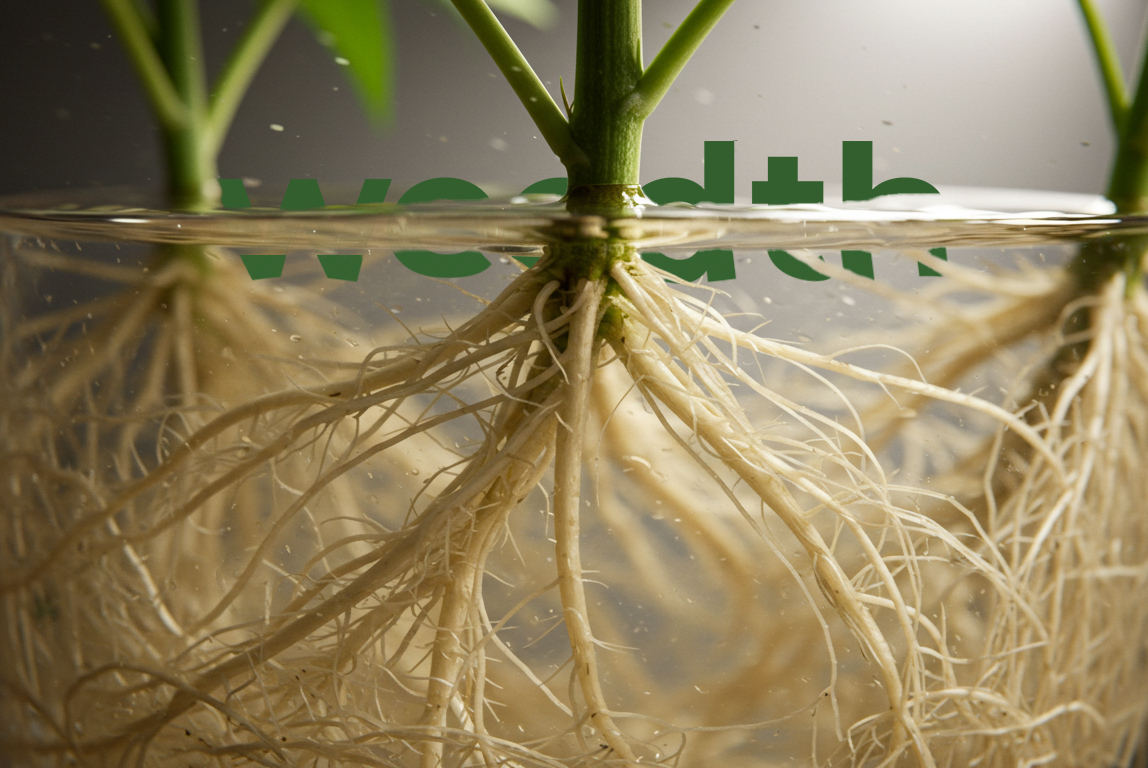
Pythium root rot can begin below the surface while the canopy still looks almost normal. A cutting may stall, a vegetative plant may use less water, or a flowering plant may wilt even though moisture is available. When roots are finally inspected, they may be brown, reduced, soft, or stripped of their outer tissue.
Those findings justify concern, but they do not identify Pythium by themselves. Waterlogging, low root-zone oxygen, high soluble salts, heat, cold, physical injury, Fusarium, and other root pathogens can produce overlapping symptoms. The practical task is to recognize progressive root and crown decay, contain any shared water pathway, preserve useful evidence, and obtain an appropriate diagnosis when the result will change crop-level decisions.
If the immediate question is whether a wet root zone is simply overwatered or affected by disease, begin with Root Rot vs. Overwatering. Use this guide when Pythium is a serious candidate and you need a more specific diagnostic and containment workflow.
What Pythium Root Rot Is
Pythium is a group of fungus-like organisms called oomycetes, often described as water molds. Several species have been shown to cause root and crown rot on cannabis. Cannabis studies have recovered species including Pythium myriotylum, Pythium dissotocum, Pythium aphanidermatum, and organisms now placed in the related genus Globisporangium. Different species and isolates can progress at different rates and respond differently to environmental conditions.
The disease can destroy fine roots, move through larger roots, and extend into crown tissue at the stem base. Damaged roots absorb water and nutrients poorly, so the canopy may display wilting, yellowing, stunting, leaf curl, slow growth, or collapse. These aboveground symptoms reflect lost root function. They are not unique visual signatures of Pythium.
Pythium root rot
Root and crown decay caused by a pathogenic Pythium or closely related oomycete. Confirmation requires more than brown roots or a wet growing medium.
Pythium deserves special attention in hydroponic and subirrigated systems because some species produce motile zoospores that can move in water. A shared reservoir, flood table, return line, splash pathway, or contaminated irrigation source can connect many plants. Disease can also enter through infected propagation material, contaminated media, reused equipment, plant debris, and other sources of inoculum.
Important: Pythium is not a synonym for every case of root rot. Fusarium and other pathogens can damage cannabis roots and crowns, while oxygen stress can injure roots without an infectious organism.
Several Pythium species can affect cannabis
A greenhouse study of 140 diseased cannabis plants recovered multiple Pythium species from root and crown rot cases. Selected isolates caused browning, decay, stunting, and plant mortality in pathogenicity testing. Root wounding and prolonged saturation increased disease development under the study conditions.
This does not create one universal temperature, moisture threshold, or disease timeline for every grow. Species, isolate, plant stage, cultivar, root injury, irrigation system, and environmental history can all influence the outcome. A temperature associated with one species in one experiment should not be treated as a universal cannabis set point.
Infection and low oxygen can occur together
Persistent saturation reduces the air available to roots and can weaken root function before a pathogen is confirmed. The same wet environment may also favor infection and waterborne spread. A plant can therefore have both an abiotic oxygen problem and an infectious disease problem.
Correcting irrigation and aeration is still necessary, but it does not remove established inoculum from diseased tissue or a contaminated shared system. This is why recovery must be judged by progression, new root growth, crop pattern, and, when appropriate, laboratory evidence.
How to Identify a Pythium-Compatible Pattern
Begin with the crop pattern before disturbing the roots. Record whether the decline follows one propagation batch, one reservoir, a flood table, an irrigation line, a cultivar, a transplant event, or the wettest part of the grow. Photograph the whole plant, the root zone, accessible roots, and a healthy comparison from the same system.
Canopy symptoms are an alert, not a diagnosis
Possible aboveground symptoms include slow growth, reduced water use, yellow lower leaves, darker or curled upper foliage, wilting in moist media, and sudden collapse in advanced cases. Young cuttings may fail to establish or decline after transplant. When seeds, seedlings, or newly rooted cuttings collapse at the stem base, use the Cannabis Damping-Off guide to compare pre-emergence loss, post-emergence collapse, and propagation-stage look-alikes. Larger plants may carry substantial root damage before the canopy shows a clear problem.
Those symptoms should lead to root and crown inspection. They should not lead directly to a Pythium treatment. Nutrient availability problems, excess salts, cold roots, irrigation failure, HLVd, physical damage, and several pathogens can create the same canopy response.
Root tissue integrity carries more weight than color
Healthy active roots are generally firm and retain fine branching, although normal color varies with the medium, nutrient program, root age, and staining inputs. Pythium-compatible damage may begin at root tips or appear as localized brown lesions before expanding through the root system.
Concern rises when roots are water-soaked, soft, easily broken, or losing their outer cortex. In advanced decay, the outer tissue can slip away and leave a thin central strand. Fine feeder roots may disappear, root mass may be reduced, and new root growth may stop. Compare suspect roots with healthy roots grown in the same system rather than relying on a generic color chart.
Warning: Do not diagnose Pythium from brown roots alone. Organic nutrients, humic inputs, media particles, age, low oxygen, and chemical injury can change root color without proving an oomycete infection.
Inspect the crown and lower stem
Pythium can extend from roots into the crown. Look for soft or sunken tissue at the medium line, a dark lesion, loss of structural firmness, or decay moving upward from the root zone. Internal browning can occur, but cutting into a plant you intend to keep creates a wound and may destroy diagnostic evidence. Sectioning is most appropriate on material already selected for removal or laboratory submission.
A firm crown does not exclude early root disease. A soft, expanding crown lesion increases urgency because the plant has less intact tissue through which water can move and may be carrying a larger inoculum source.
Smell cannot identify the organism
A sour, stagnant, or decomposing odor indicates an unfavorable root zone, but it can result from anaerobic conditions, dead roots, decomposing organic matter, mixed microbes, or advanced disease. The absence of odor does not prove that roots are healthy. Use smell only as one observation within the larger pattern.
Grower question: The roots are brown and the plant is drooping. Does that prove Pythium?
No. Inspect texture, fine-root loss, crown condition, moisture history, water use, and the pattern across the grow. Firm stained roots in a correcting root zone are different from soft tissue that continues to decay. Laboratory confirmation becomes valuable when the answer will change sanitation, crop removal, or system-treatment decisions.
Question sent by: TylerB420, via email.
Laboratory diagnosis protects consequential decisions
Plant diagnostic laboratories may combine microscopy, isolation on selective media, and molecular methods to identify oomycetes. The appropriate sample depends on the suspected organism and laboratory protocol. Contact the laboratory before collecting, then submit representative tissue that includes the transition between healthy and diseased roots or crown tissue when requested.
A generic positive result also needs interpretation. Detection establishes that an organism was found in the submitted sample, but the crop pattern, tissue damage, and test method determine how strongly that result explains the disease. When species-level identity matters, ask what the method can distinguish and whether mixed infections were assessed.
Field Advice: Preserve an untreated sample before adding oxidizers, biologicals, fungicides, or other root-zone products. Panic treatments can alter the organism population and make the original cause harder to recover.
Pythium Look-Alikes
Pythium cannot be separated reliably from every root problem by canopy appearance. Build a differential diagnosis that includes infectious and noninfectious causes, then choose the next observation or test that best separates them.
| What you find | Possible explanation | Best next check |
|---|---|---|
| Wet medium, droop, firm roots, no expanding crown lesion | Overwatering or low root-zone oxygen without confirmed infection | Track drying, drainage, water use, and plant response after the irrigation error is corrected |
| Brown or tan roots that remain firm | Nutrient staining, media staining, age, or early stress | Compare with healthy plants receiving the same inputs and inspect new root tips |
| Soft roots, cortex sloughing, reduced root mass, progressive wilt | Pythium or another root-rot pathogen | Contain shared water, inspect the crown, and obtain laboratory diagnosis when consequential |
| Crown and internal stem discoloration with vascular decline | Fusarium or another crown and vascular pathogen | Submit crown, stem, and root tissue using the laboratory’s protocol |
| Burned root tips, high measured root-zone conductivity, firm surviving tissue | Salt or fertilizer injury | Verify input and root-zone measurements with a method appropriate to the system |
| Small root system after transplant with torn or compressed tissue | Mechanical injury or establishment stress | Review transplant timing, handling, moisture distribution, and whether decay is progressing |
| Larvae at the medium surface and damaged young roots | Fungus gnat feeding, possibly alongside wet conditions or disease | Identify larvae, monitor adults, and inspect roots for both feeding injury and decay |
| Weak rooting across one clone line without clear decay | Propagation quality, genetics, HLVd, or systemic stress | Compare clone sources and consider molecular testing when stock decisions are involved |
Fusarium is an important differential
Fusarium species have caused root, crown, pith, and vascular disease in cannabis. Root browning, yellowing, stunting, and wilt can overlap with Pythium. Internal crown or stem discoloration may strengthen concern about Fusarium, but mixed infections and atypical cases are possible. The organism should be identified when the result changes treatment or sanitation. Use the Fusarium on Cannabis guide to compare vascular wilt, crown rot, pith necrosis, and stem canker patterns.
Overwatering is a condition, not a pathogen name
A persistently wet root zone can injure roots without Pythium. It can also create conditions that support a Pythium outbreak when inoculum is present. Improvement after drainage and aeration correction supports a strong abiotic component, but it does not prove the system is pathogen-free. Progressive soft decay, crown involvement, or spread through a shared pathway deserves escalation.
Do: Combine crop pattern, root texture, crown condition, irrigation history, physical evidence, and an appropriate test.
Avoid: Calling every wet, brown, or weak root system Pythium from appearance alone.
How Disease Develops and Spreads
Pythium disease develops when a susceptible root system, a pathogenic organism, a favorable root-zone environment, and enough time overlap. Removing one factor can reduce disease pressure, but established infection may persist after the visible environmental problem has been corrected.
Water can connect plants
Motile zoospores produced by some Pythium species can move through water. Recirculating nutrient solution, shared reservoirs, flood-and-drain tables, drainage channels, splash, and contaminated irrigation sources can therefore become epidemiological pathways. A clean-looking solution is not proof that it is free of inoculum.
Map which plants share water and the direction in which water moves. Include return lines, filters, pumps, chillers, manifolds, emitters, trays, and any place where roots or debris enter the system. In drain-to-waste production, confirm that runoff cannot enter another container or splash onto clean equipment.
Propagation material can carry risk forward
Cannabis is commonly propagated from cuttings. Research has recovered root pathogens from commercially sourced rooted cuttings, demonstrating that a plant can enter production with an infection that becomes more visible after transfer. Poor rooting, repeated failure within one propagation batch, or decline that follows a stock line should not be blamed automatically on the receiving room.
Incoming plants need a defined inspection and separation process. Inspect roots when practical, record the source and batch, and prevent new material from immediately sharing water with established clean stock.
Saturation and injury increase vulnerability
Prolonged saturation limits root aeration and can favor waterborne disease. Root wounding during transplant, compression, pruning, pest feeding, salt injury, and temperature stress can create vulnerable tissue. In cannabis pathogenicity work, prolonged saturation and root wounding enhanced Pythium disease development.
This does not mean every transplant wound or wet irrigation event causes disease. The pathogen must be present. The finding supports a prevention rule: minimize unnecessary root injury and avoid irrigation practices that keep the root zone saturated beyond what the plant and medium can use.
There is no single Pythium temperature rule
Different Pythium and Globisporangium species have different temperature relationships. Some important cannabis isolates have been associated with warm production conditions, while related species can be favored at cooler temperatures. Temperature also changes plant water use, root respiration, and dissolved oxygen in solution.
Do not diagnose the species or declare a system safe from one temperature reading. Use temperature records to explain when disease accelerated and to identify stress conditions, then combine them with tissue and laboratory evidence.
What to Do When You Find Suspect Root Rot
The first response should protect healthy plants and diagnostic evidence. Do not begin by pouring several products into the root zone. The immediate priorities are containment, documentation, inspection, correction of obvious physical failures, and a decision about testing or removal.
1. Stop shared movement where practical
Prevent suspect drainage from entering clean containers. In a recirculating system, identify every plant and component connected to the same solution. If the design allows safe isolation without causing an irrigation failure, separate the suspect unit or zone while the risk is assessed.
Work with clean plants first and suspect plants last. Dedicate or clean tools, gloves, trays, and measuring devices before moving back into a clean area. Do not move exposed roots, wet media, or plant debris across benches.
2. Document the untreated pattern
Photograph the whole crop area, the whole plant, the crown, accessible roots, and a healthy comparison. Record propagation source, cultivar, plant stage, first symptom date, irrigation events, reservoir or water source, root-zone temperature, relevant pH and conductivity records, recent transplanting, and any product applications.
Mark every affected plant on a simple map. A pattern that follows one water loop or clone batch carries different implications from one damaged root ball in one oversized container.
3. Inspect without spreading debris
Examine roots over a surface that can be contained and cleaned. Avoid rinsing suspect roots into a shared sink, drain, or production water system. Look for the boundary between firm and decayed tissue, loss of fine roots, cortex sloughing, crown lesions, and whether decay is localized or extensive.
4. Correct verified physical failures
Remove standing runoff, clear blocked drainage, restore failed pumps or aeration, and stop unnecessary irrigation. Correct solution circulation or an equipment failure using the normal safe operating procedure for the system. Do not force-dry roots with intense heat or direct high-velocity air.
Physical correction is necessary whether the final diagnosis is Pythium, another pathogen, or oxygen stress. It does not replace containment when infectious disease remains plausible.
5. Decide whether to test, hold, or remove
Testing becomes more valuable when multiple plants are affected, valuable stock is involved, the problem returns, the system shares water, or pathogen identity will change a product or sanitation decision. A severely collapsed plant with extensive crown rot and little functional root tissue may present more risk than recovery value.
Warning: Do not return runoff, rinse water, cut roots, or removed media from a suspect plant to a clean reservoir or growing area.
Grower question: If I add more air to the reservoir, will it cure Pythium?
No. Restoring circulation and oxygen can correct an important stress and help surviving roots function, but it does not prove that infected tissue or system inoculum has been eliminated. Track new root growth and disease spread, investigate the water pathway, and use testing when the crop-level decision warrants it.
Question sent by: ScrogMaster, via contact form.
Soil, Coco, and Hydroponic Response
The same disease principle applies across systems, but the first useful measurements and containment options differ. Avoid importing a soil dry-back rule into deep-water culture or treating a recirculating reservoir like an isolated hand-watered pot.
| System | Inspect first | Containment priority | Common mistake |
|---|---|---|---|
| Soil or peat container | Moisture at depth, drainage, pot size, root-ball integrity, crown, standing runoff | Keep suspect drainage and tools away from other containers | Watering again because wilt resembles drought |
| Coco or soilless substrate | Emitter delivery, drainage, root-zone measurements, salt trend, root tips, propagation plug | Trace shared irrigation and prevent return-flow contamination | Assuming frequent irrigation is safe regardless of root development and drainage |
| Recirculating hydroponics | Root integrity, reservoir and solution path, pump function, circulation, temperature, biofilm, dissolved oxygen where relevant | Treat the connected water path as part of the disease investigation | Cleaning only the visible roots while leaving the reservoir and plumbing unexamined |
| Outdoor ground or bed | Rainfall, drainage profile, perched water, crown, low areas, soil structure | Prevent movement of contaminated wet soil and tools | Applying a disease product without correcting the hydraulic problem |
Containers with soil or peat-based media
Check whether the lower root ball remains saturated while the surface appears dry. Confirm that drainage openings are functional and that the container is not holding runoff. A small plant in a large volume can leave much of the medium wet for an extended period.
Transplanting a diseased plant is not automatically a rescue. It can tear the remaining roots and move contaminated material. Consider it only when the existing physical root zone cannot be corrected in place, enough healthy root tissue remains, and the handling risk is justified.
Coco and other high-frequency irrigation systems
Coco can support frequent irrigation when root development, container geometry, drainage, and environmental demand are aligned. That does not make prolonged saturation harmless. Verify actual emitter delivery, root-zone drainage, the condition of the original propagation plug, and whether the plant is using solution between events.
A plant can have wet and dry zones at the same time. Fast drainage from one channel does not prove that the full root volume is evenly aerated. Compare affected and healthy containers on the same irrigation zone.
Recirculating hydroponics
Hydroponic roots are designed to remain in solution or receive frequent water, so drying the system is not a valid general remedy. Inspect circulation, aeration, solution temperature, suspended debris, biofilm, dead root material, and every connected component. If one plant is confirmed with Pythium, the shared reservoir and return path belong in the investigation.
Water treatment methods such as filtration, ultraviolet treatment, heat, ozone, or chemical disinfection are engineering decisions, not interchangeable home remedies. Performance depends on water clarity, contact time, dose, system design, organism, worker safety, crop tolerance, and local rules. Use a validated protocol for the actual system.
Outdoor soil and beds
After heavy rain or flooding, the main correction may be hydraulic rather than chemical. Inspect where water enters, where it accumulates, and whether dense subsoil or a perched layer prevents drainage. Protect soil structure, avoid working saturated soil, and change future site or bed design when the root zone cannot regain air reliably.
Control Options and Their Limits
Established necrotic roots cannot be restored. A successful program protects surviving and new roots, reduces inoculum movement, corrects the favorable environment, and prevents additional plants from becoming affected. The earlier those steps occur, the more realistic recovery becomes.
Sanitation must include the water pathway
Remove plant debris and failed roots without carrying them through clean zones. Clean equipment before applying an appropriate disinfectant because organic material can reduce treatment performance. Include reservoirs, lines, emitters, flood tables, trays, filters, pumps, tools, benches, and reusable containers as relevant.
A sanitation method must match the surface, material, target organism, concentration, contact time, and worker-safety requirements. Do not mix cleaning or disinfecting chemicals unless the label explicitly directs it. Never mix bleach with acids or ammonia.
Biological controls are primarily protective
Research has evaluated microbial biological control organisms against cannabis root pathogens, with some preventive programs reducing disease under defined experimental conditions. Results depend on the organism, formulation, timing, substrate, pathogen pressure, and production system.
A beneficial microbe does not rebuild a destroyed root system. Adding multiple incompatible biological and oxidizing products can also defeat the intended program. If a biological approach is lawful and appropriate, follow its label and judge performance by healthy new roots and reduced disease progression.
Fungicide results do not create a universal cannabis treatment
Pythium is an oomycete, so a product aimed at true fungi may not control it. Laboratory sensitivity of an isolate to an active ingredient does not establish that the product is registered, safe, effective in the crop system, or appropriate near harvest. Resistance can also vary among species, facilities, and histories of product use.
Cannabis pesticide rules differ by jurisdiction, license type, crop stage, and intended use. Before any application, verify the exact product label and current local requirements. Consider worker exposure, residues, water discharge, beneficial organisms, resistance management, and whether the pathogen has actually been identified.
Do: Match any control to the confirmed or strongly supported organism, crop, system, label, and local law.
Avoid: Using ornamental-crop recommendations, internet reservoir recipes, or one laboratory sensitivity result as permission to treat cannabis.
Oxidizers and improvised reservoir treatments can injure roots
Hydrogen peroxide and other oxidizing products are often suggested as instant root-rot cures. Concentration, formulation, organic load, exposure time, water chemistry, and root condition all affect the outcome. A dose strong enough to suppress microbes may also damage living roots or disrupt a biological program.
Do not improvise a concentration or combine products. If an oxidizing treatment is part of a validated, lawful sanitation program, separate system disinfection from unsupported attempts to sterilize a living root zone.
Grower question: The plant has a few new white roots after treatment. Is the system clean now?
New roots are evidence that the plant retains recovery capacity, not proof that inoculum is gone. Continue checking the same roots, crown, water pathway, and neighboring plants. A successful response stops progression and prevents new cases while healthy roots and shoots resume growth.
Question sent by: CannaNerd91, via Facebook page.
Prevention and Verification
Prevention works best as a chain of barriers. No single input compensates for infected stock, damaged roots, persistent saturation, contaminated water, and poor sanitation occurring together.
Build a clean-start system
- Inspect incoming cuttings and keep propagation batches traceable.
- Separate new material from established clean stock before sharing water or tools.
- Use media, containers, and equipment with a known handling history.
- Keep hose ends, tools, and clean media away from floors and contaminated runoff.
- Remove old roots and crop debris from reusable water and bench systems.
- Verify the irrigation source when repeated cases point toward waterborne introduction.
Manage the root environment, not a calendar
Match irrigation to plant size, root development, container volume, medium structure, drainage, and current environmental demand. Confirm actual moisture and water use rather than repeating a fixed schedule after transplant, pruning, weather change, or equipment adjustment.
In hydroponics, verify pump operation, circulation, aeration, and solution temperature with appropriate instruments and maintenance records. Do not assume a bubbling surface proves that all roots receive adequate oxygen or that the water path is sanitary.
Reinspect the same evidence
Old brown roots and damaged leaves may not return to a healthy appearance. Mark accessible root areas and crown lesions, then photograph them from the same angle. Track whether the lesion expands, whether new root tips remain firm, whether water use stabilizes, and whether additional plants become affected.
| Checkpoint | What to record | Evidence of improvement | Reason to escalate |
|---|---|---|---|
| Initial finding | Crop map, root and crown condition, shared water, irrigation history, measurements, untreated photos | A clear containment and sampling plan | Rapid collapse, crown failure, or multiple connected plants |
| Early recheck | Drainage, circulation, progression, water use, new cases | Verified physical failures corrected and no immediate spread | Decay advances despite correction or another plant develops symptoms |
| Recovery period | New root tips, new shoot growth, crown stability, irrigation behavior | Firm new roots, stable crown tissue, resumed growth, no new cases | No functional root recovery, repeated wilt, or unresolved shared-system risk |
| End of cycle | Final root inspection, affected zones, system components, sanitation record | The next crop begins with corrected infrastructure and a documented clean-start process | The same pattern returns, indicating an unresolved source or pathway |
Master Advice: Judge success by halted progression, clean new roots, stable water use, and absence of new cases. Do not judge it by whether dead roots turn white.
Pythium response checklist
- Record the whole-crop pattern before treating.
- Photograph the plant, crown, roots, and a healthy comparison.
- Trace propagation, irrigation, runoff, reservoir, and tool connections.
- Separate suspect water and debris from clean root zones.
- Inspect root texture and tissue integrity, not color alone.
- Check the crown for soft, sunken, or expanding lesions.
- Correct blocked drainage, standing water, failed circulation, and unnecessary irrigation.
- Preserve a representative untreated sample when testing is justified.
- Use the laboratory’s sampling and packaging instructions.
- Match any treatment to the organism, crop, system, label, and jurisdiction.
- Reinspect marked roots, crown tissue, water use, and nearby plants.
- Remove plants that cannot recover safely or that maintain unacceptable system risk.
Pythium management is strongest when diagnosis and prevention remain connected. Root appearance starts the investigation, but crop pattern, tissue integrity, water movement, laboratory support, and measured reinspection determine whether the explanation survives scrutiny.
Share this article
A quick overview of the topics covered in this article.
Follow us
Latest articles
October 19, 2026
October 19, 2026
October 19, 2026
October 19, 2026
