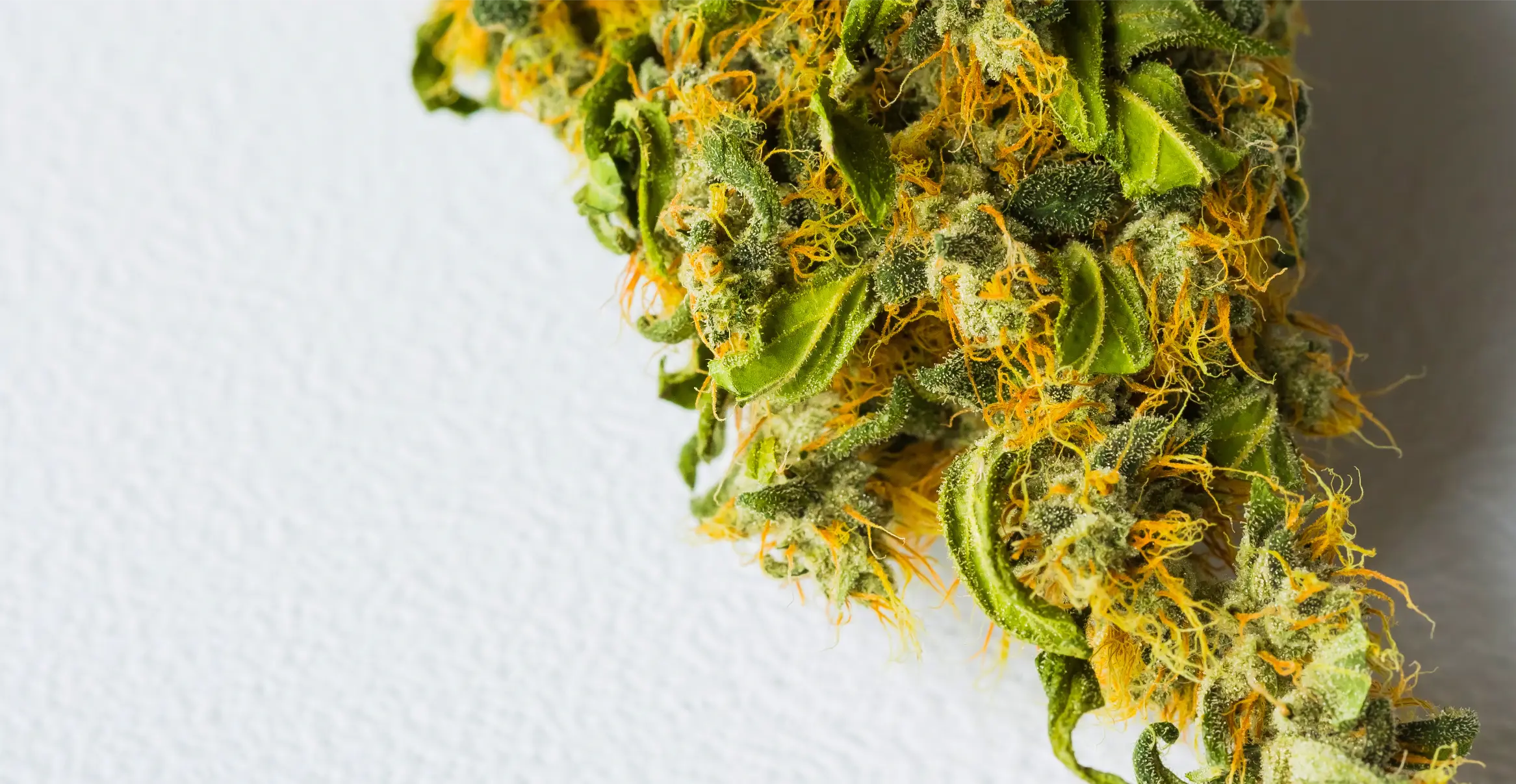
Chocolope
Chocolope is easy to misunderstand because its most famous trait is described with a food word. The name suggests a dessert strain, yet the plant behaves far more like an old-school tropical sativa than a compact modern sweet hybrid. It grows upward before it grows dense, sends long branches beyond the footprint a grower expected, and often needs most of its flowering cycle before the cocoa and coffee character becomes clear. The chocolate note is real in strong expressions, but it is usually dry, roasted, and earthy rather than sugary. Think cocoa powder, coffee grounds, toasted nuts, and incense with melon or honeyed fruit underneath, not chocolate syrup.
Its genetics were built to capture the flavor and mental character associated with Chocolate Thai while shortening the extremely long flowering cycle that made old tropical lines difficult indoors. Cannalope Haze adds faster flower development, fuller calyx formation, sweeter fruit, and more practical yield. The result is still a tall, sativa-dominant plant, but one that can finish in a realistic indoor schedule when the phenotype is selected well and the canopy is planned before the stretch begins.
The central cultivation problem is not simply height. The real challenge is turning Chocolope's long, flexible growth into a shallow productive canopy without stripping away the branches that carry its yield. Growers who flip too late often spend early flower bending runaway tops and raising lights. Growers who keep every lower shoot end up with a large harvest on paper but too much airy, late-maturing flower. The best plants are shaped early, allowed enough space to extend, and supported before the spear-like colas gain weight.
Flavor quality creates a second decision. Chocolope can finish with a memorable coffee-cocoa aroma, but the darker notes are surrounded by more volatile citrus, floral, green-fruit, and Haze-like compounds. Heat near the canopy, a rushed harvest, or a warm rapid dry can remove those brighter layers and leave only generic earth and pepper. A good cure does not manufacture chocolate flavor. It reveals the roasted and nutty character that was already present by allowing harsh green notes to settle without exhausting the flower's remaining aromatics.
For consumers, Chocolope usually begins as a bright cerebral strain. Moderate use can feel energetic, social, imaginative, and focused. Higher doses may become dreamier and less organized, with racing associations, short-term memory slips, or anxiety in sensitive users. This dose-dependent shift is as important as the sativa label. Chocolope can help a day feel more interesting, but it can also make a simple task branch into five unfinished ideas when the dose moves beyond the functional window.
Strain Features
| Feature | Details |
|---|---|
| Strain Type | Sativa-dominant hybrid, often described as near-sativa in growth and effect. |
| Genetic Profile | Commonly reported around 90-95% sativa influence, although modern versions and phenotypes vary. |
| Lineage | Chocolate Thai x Cannalope Haze. |
| THC | Frequently reported in the high teens to low twenties; individual batches can fall outside that range. |
| CBD | Usually low, commonly below 1%. |
| Dominant Terpenes | Terpinolene, myrcene, ocimene, limonene, and beta-caryophyllene recur across reports, but the order is batch-dependent. |
| Flavor and Aroma | Cocoa powder, coffee, toasted nuts, chestnut, earth, incense, melon, honey, citrus peel, and mild spice. |
| Effect Character | Energetic and euphoric at lower doses; creative, social, and focused for many users; dreamier or anxious when overused. |
| Flowering Time | Commonly 9-10 weeks indoors. Faster plants may finish near 8-9 weeks, while Thai-leaning expressions can require 10-11 weeks or longer. |
| Outdoor Harvest | Usually October in the Northern Hemisphere. Best suited to regions with a warm and comparatively dry autumn. |
| Plant Architecture | Tall, open, long-branched, and flexible with strong early-flower extension. |
| Stretch | High. Untrained plants can multiply their pre-flip height and exceed indoor headroom quickly. |
| Bud Structure | Elongated spears with swollen calyxes. Upper flowers can become hefty, while shaded lower sites tend to stay airy. |
| Training Compatibility | Very good for early topping, LST, SCROG, selective supercropping, and lower-growth removal. |
| Feeding Behavior | Usually performs best with light-to-moderate feeding and a controlled nitrogen transition. |
| Mold Risk | Moderate. The open frame helps airflow, but large finished colas can still trap moisture in wet conditions. |
| Odor Intensity | Moderate to strong in late flower and drying, with coffee, earth, sweet fruit, and Haze-like pungency. |
| Grow Difficulty | Moderate. The plant is vigorous and resilient, but height, support, harvest timing, and flavor preservation demand planning. |
| Best Time of Use | Morning to afternoon for tolerant users; early evening can suit those who experience its calmer, dreamier side. |
Genetic Lineage
Chocolope is most consistently documented as a cross between Chocolate Thai and Cannalope Haze. It was also circulated under the working name D-Line, and some catalogs use Chocolate Haze as a loose synonym. Those aliases can create confusion because other chocolate-named strains and Haze crosses are not necessarily the same cultivar. The useful identifying point is the parent combination: a Thai-derived chocolate line paired with a faster, sweeter Haze hybrid.
Chocolate Thai contributes the part of Chocolope that growers cannot fake with feeding or curing. Its influence appears in the narrow leaflets, long internodes, upward drive, flexible branches, cerebral high, and the dry roasted aroma that can resemble cocoa husk, coffee, wood, or incense. Tropical Thai ancestry also explains why some phenotypes appear slow during the first half of bloom. They may spend several weeks extending and forming widely spaced flower clusters before calyx swelling becomes obvious.
Cannalope Haze changes the practical equation. It shortens the flowering cycle compared with a pure tropical line, improves calyx size, adds sweetness, and helps the branches carry more usable flower. Its fruit contribution is often described as melon, cantaloupe, honey, or sweet citrus. In fruit-forward phenotypes, this side of the cross can be more obvious than chocolate. The flower may smell like coffee only after it is broken apart, while the jar opens with sweet fruit and Haze.
The pairing also explains Chocolope's unusual relationship with density. It is not normally a compact golf-ball producer. The flowers build along extended branch sections and can connect into long spears. When light is even, those spears become surprisingly heavy. When the canopy is too deep, the same genetic habit produces long stems covered with small, separated buds. The difference between a productive spear and airy lower flower is often light distribution rather than a total absence of yield potential.
Phenotype variation remains meaningful. Some plants are tall and distinctly Thai-leaning, with long internodes, narrow flowers, and a stronger incense-coffee profile. Others are more manageable, stack faster, and express melon, honey, citrus, or sweet nuts. Flowering time, branch strength, and terpene dominance can vary with the cut. A grower selecting a keeper should compare cured aroma and usable canopy efficiency, not simply the fastest plant or the largest wet harvest.
Chocolope's historical value lies in making an older flavor family more practical. It does not reproduce every trait associated with long-flowering Thai cannabis, nor should it. Its identity comes from the compromise: enough tropical structure and cerebral character to remain distinctive, with enough hybrid vigor and flower mass to justify indoor space.
Effect Breakdown
The Useful Dose Feels Fast, Bright, and Social
At a restrained dose, Chocolope commonly produces a quick mental lift. The change may begin as increased interest rather than raw stimulation. Conversation feels easier to follow, music becomes more detailed, and an ordinary task can seem worth starting. Many users describe energy, focus, happiness, and creativity, but the focus is often curiosity-driven rather than rigid. It can help someone enter a project, yet it may also encourage exploration beyond the original plan.
The emotional tone is usually positive. Stress can feel less immediate, and social hesitation may decrease. Chocolope is often chosen for writing, drawing, music, gaming, walking, cleaning, or collaborative work because it adds momentum without the immediate body heaviness of an indica-dominant cultivar. A small amount can feel more like mental daylight than intoxication, particularly for experienced users.
Moderate Use Becomes Dreamier Than the Name "Energy Strain" Suggests
As the dose increases, the effect often becomes more expansive. Ideas connect quickly, sensory attention widens, and the user may feel highly engaged with one subject while becoming less aware of time. This is the stage where Chocolope's Haze character becomes clearer. It can remain uplifting while becoming spacey, meditative, or mentally cinematic.
The body usually stays light, but not every batch feels purely stimulating. Some users report a soft physical relaxation beneath the cerebral activity. That combination can make Chocolope suitable for an early evening film, long conversation, or music session even though it is generally classed as a daytime strain. The plant's harvest maturity and the consumer's tolerance both influence whether the later phase feels functional or dreamy.
Higher Doses Can Turn Mental Speed Into Friction
Chocolope is not automatically gentle because it tastes like coffee and nuts. At a high dose, fast associations can become racing thoughts. Short-term memory may become unreliable, and the user may start several actions without finishing any of them. Sensitive consumers sometimes report anxiety, a stronger awareness of heartbeat, dry mouth, dry eyes, dizziness, or paranoia.
This risk is particularly relevant for people who already feel overstimulated. A busy environment, strong caffeine intake, lack of sleep, or an unfamiliar social setting can make the experience less comfortable. The strain's best functional effects are usually found below the dose where mental intensity becomes the main event.
Duration and Finish
The main cerebral period commonly lasts for several hours, though the sharpest lift may settle earlier. The comedown is often smoother than the onset. Appetite can increase, physical tension may become less noticeable, and the user may feel pleasantly tired after the mental energy fades.
Chocolope is not a reliable sleep strain. Some people can use it in the evening because the late phase feels calm, while others remain mentally active long after the body has relaxed. Anyone testing it near bedtime should use a smaller dose and allow enough time for the cerebral phase to resolve.
Flavor & Aroma Profile
Roasted Notes, Not Chocolate Candy
The name creates an expectation that can work against the strain. Chocolope rarely smells like a sweet chocolate bar. Its chocolate character is usually drier and more botanical: cocoa powder, cacao husk, roasted coffee, toasted grain, chestnut, or the bitter edge of dark chocolate. These notes sit on an earthy Haze base and may be subtle until the flower is broken apart.
A mature jar often opens with coffee and sweet earth. Grinding releases more volatile detail. Depending on the phenotype, melon rind, honey, citrus peel, green fruit, flowers, pepper, or incense may rise above the roasted base. The best examples feel layered because the fruit and Haze notes keep the chocolate side from becoming muddy.
The Cannalope Side Can Lead the Aroma
Fruit-forward Chocolope can surprise growers who expected a dark cocoa profile. Some plants smell more like cantaloupe, sweet citrus, honey, or ripe green fruit, with coffee appearing only on the exhale. These expressions are still consistent with the cross. Cannalope Haze was not added merely to shorten flowering. It also contributes sweetness and aromatic lift.
In a mixed seed population, the loudest living plant may be the fruit phenotype rather than the deepest chocolate phenotype. Keeper selection should therefore match the grower's goal. Someone seeking the most historically recognizable profile may prefer dry coffee and incense. Someone prioritizing immediate jar appeal may prefer the sweeter melon-citrus plant.
How the Flavor Moves Across the Palate
The inhale is often sweeter than the aroma suggests. Honey, mild vanilla, melon, or soft citrus may appear first. The middle of the palate becomes nuttier and earthier, with coffee or cocoa building as the vapor or smoke expands. The exhale commonly carries dry spice, wood, incense, and a roasted aftertaste that can linger longer than the fruit.
Vapor tends to reveal the green-fruit, floral, and citrus side more clearly. Combustion strengthens coffee, toast, earth, and pepper. Poorly cured flower may feel sharp and grassy, while over-dried flower can taste thin because the bright notes are gone before the roasted base has had time to become smooth.
Cure Evolution
Freshly dried Chocolope can smell confusing. Sweet hay, sharp herbs, coffee, and fruit may compete without forming one clear profile. During a controlled early cure, the green edge should recede and the cocoa-coffee layer becomes easier to separate from earth and spice.
A longer cure can improve smoothness and deepen the nutty finish, but it does not automatically make the flower more chocolate-like. If the phenotype lacks roasted aromatics, time will not invent them. If heat removed the melon, citrus, and floral top notes during drying, the cure will mainly expose a flatter earthy profile. Well-finished Chocolope tastes more organized, not artificially sweeter.
Dominant Terpenes
| Terpene | Likely Role in Chocolope |
|---|---|
| Terpinolene | Often associated with the sharp Haze side of the profile: fresh herbs, pine, flowers, citrus, and a slightly sweet resinous quality. It may lead some batches but is nearly absent in others. |
| Myrcene | Adds musk, earth, ripe fruit, and herbal depth. Its presence can make the aroma feel rounder and may help explain why some Chocolope feels calmer than a purely stimulating sativa. |
| Ocimene | Supports sweet green fruit, flowers, and tropical lift. It fits the melon and fresh-fruit expressions often linked to the Cannalope side. |
| Limonene | Contributes lemon peel, sweet citrus, and brightness. Some tested batches place limonene high in the profile, while others show only modest amounts. |
| Beta-Caryophyllene | Provides pepper, dry wood, spice, and part of the roasted impression. It has been studied for biological activity through CB2 receptors, though cultivar effects cannot be predicted from one terpene. |
| Humulene and Minor Terpenes | Humulene, pinene, linalool, bisabolol, farnesene, and related compounds may add hops, wood, pine, floral softness, or sweet green fruit depending on the batch. |
Available chemical profiles do not support one fixed Chocolope terpene ranking. Some databases describe terpinolene, myrcene, and ocimene as the leading pattern. Other tested flower places beta-caryophyllene, myrcene, and limonene ahead of terpinolene. Aggregated lab data can also show limonene or caryophyllene near the top. This variation is credible because several cuts, growing environments, harvest windows, and post-harvest methods circulate under the same cultivar name.
The chocolate and coffee impression should not be reduced to one terpene. Aroma perception is produced by a mixture of major and minor volatile compounds, their ratios, and the way they change during drying. Two batches with similar dominant-terpene labels can smell completely different. For Chocolope, batch-specific aroma and laboratory data are more useful than assuming that the name guarantees one chemical formula.
Terpenes describe aroma more reliably than subjective effect. It is reasonable to say that terpinolene and limonene help shape a bright aromatic profile or that caryophyllene contributes pepper. It is less responsible to claim that one compound guarantees focus, creativity, sedation, or anxiety relief. Those outcomes depend on dose, THC level, other cannabinoids, the full volatile profile, and the individual user.
Indoor vs. Outdoor Growing
| Decision Factor | Indoor | Outdoor |
|---|---|---|
| Height and Shape | Height is the main limitation. Early topping and a partially filled screen are usually more efficient than allowing several upright leaders. | Plants can become tall and broad with long lateral limbs. The open frame uses sunlight well but requires space and structural support. |
| Stretch | Strong and sometimes prolonged. Flip timing must account for container height, fixture clearance, and the distance needed above the final colas. | Less restrictive unless privacy, wind, or greenhouse height is limited. Early shaping still improves access and storm resistance. |
| Flowering Window | A controlled room allows 9-10 weeks or longer for slower phenotypes without autumn weather pressure. | Best in a long warm season. Cool rain before maturity can force an early harvest and flatten the flavor. |
| Canopy Efficiency | SCROG is highly useful when branches are separated rather than overpacked. Lower shoots should be judged after stretch. | Full sun can develop long productive sections of branch. Interior shade still creates airy flowers on very large plants. |
| Feeding and Root Zone | Light-to-moderate feeding is easier to control. Small containers can dry rapidly once the canopy expands. | Large root volume supports exceptional size, but irrigation demand rises sharply in heat and wind. |
| Bud Quality | Indoor control can protect citrus, floral, and melon notes and prevent the tallest tops from overheating. | Sun can deepen earth, coffee, and resin, but hot dry weather may reduce the brightest aromatics. |
| Moisture Risk | The open plant structure helps, but mature spear colas still need air movement through the canopy. | Late rain, dew, and flowers touching after storms are the main concerns. Large colas should be inspected internally. |
| Best Fit | Growers willing to train early and dedicate vertical space to a high-quality sativa canopy. | Growers with a warm dry autumn, generous spacing, and support for long flowering branches. |
Indoor cultivation offers the better chance of reproducing Chocolope's full coffee-fruit profile because the grower controls the two periods where quality is most vulnerable: late flower and drying. The tradeoff is room efficiency. A plant flipped too late can force the light upward, reduce intensity across the rest of the canopy, and create a forest of bent tops. Chocolope belongs indoors when the grower is prepared to shape it before the problem appears.
Outdoor cultivation gives the plant what its architecture naturally wants: uninterrupted sun, broad spacing, and enough root volume to support long branches. In a suitable climate, the plant can produce large spears without the lower canopy becoming useless. The limitation is season length. Chocolope is not the best choice for a region where autumn rain regularly arrives before mid-October. An unfinished outdoor plant may smell green and citrusy but never reach the deeper roasted maturity that defines the cultivar.
Greenhouse cultivation can extend the season, but a roof is not enough. A large sativa under cover can create its own humid microclimate. Side ventilation, branch spacing, and the ability to move air through the canopy matter as much as keeping rain off the flowers.
Strain-Specific Grow Guidance
Build the Flowering Shape Before the Stretch Begins
Chocolope rewards early structure and punishes delayed decisions. During vegetative growth it may look open enough to manage naturally. The branches are flexible, the narrow leaves allow light through, and the footprint may not seem crowded. After the flowering transition, those same branches gain length quickly and occupy space above and beyond the original canopy.
The correct flip point is usually earlier than the visual fullness expected from an indica-dominant plant. A screen that appears only partly occupied can fill during stretch. Waiting until every opening contains a top often produces more branches than the room can illuminate. Empty canopy space at the flip is not wasted space with Chocolope. It is space reserved for the plant's next stage of growth.
Apical Growth and Lateral Potential
Untopped Chocolope tends to express strong vertical leadership. The main stem rises quickly, and secondary branches may remain lower until they receive direct light. Those side branches are not weak by nature. Once the top is removed or lowered, several laterals can accelerate and become productive flowering arms.
This is why one early topping often improves indoor efficiency. It divides the vertical drive before the stem becomes thick and gives the grower several flexible branches to spread across the canopy. A second topping can work in a long vegetative cycle, but repeated topping is not automatically better. Too many leaders create a high-maintenance screen and increase the proportion of small interior flower.
Outdoor plants can tolerate more primary branches because the sun moves and the root zone is larger. Even outdoors, the best structure is not an untouched central tower. A broad plant with several well-spaced limbs is easier to support, inspect, and protect from wind.
SCROG, LST, and Selective Supercropping
SCROG is one of the most logical methods for Chocolope because the plant produces length that can be redirected horizontally. The screen should guide strong branches into separate zones and keep the top height even. It should not become a storage grid for every shoot the plant produces.
Low-stress training works best before the flowering stems harden. Gradually pulling branches outward allows the lower nodes to receive enough light to become useful. Once stretch is underway, continue positioning only while the branches move without splitting.
Selective supercropping can correct one or two tops that escape the canopy. It is most useful early in flower, when a stem can still be softened and laid into an open area. Repeated crushing across the entire plant is a sign that the flip was too late. Chocolope can recover from bending, but recovery is not free. Every late wound adds support work and handling near developing flowers.
Canopy Depth Determines Whether the Yield Is Premium or Airy
Chocolope can carry flowers along long sections of branch, which encourages growers to keep a deep canopy. This works only when light reaches those sections. In an indoor room, the lower third commonly finishes later and stays looser than the upper zone.
Do not remove all lower growth before stretch. Some branches that appear secondary can rise into excellent positions. Wait until the transition reveals which shoots have reached the productive plane, then remove the ones trapped below it. The goal is a defined flowering zone with enough depth to use the sativa structure without maintaining a second shaded crop underneath.
A useful branch has direct light, space around its flowers, and a path to the support net. An unproductive branch remains vertical inside the plant, carries many small sites, and never reaches the top. Keeping that branch may increase wet weight, but it reduces trim efficiency and delays the point when the entire harvest can be dried evenly.
Defoliation Should Improve Access, Not Change the Plant Into a Bare Frame
The narrow leaf morphology already allows more light movement than a broad-leaf indica canopy. Chocolope usually needs less dramatic defoliation than a dense Kush. Remove leaves that overlap heavily, block several valuable sites, restrict air through the screen, or hide damaged tissue. Leave enough healthy leaf area to support a long flowering cycle.
Aggressive stripping can make the plant look controlled while weakening its ability to finish. The cultivar may need ten weeks or more after the flip, and the final calyx swelling depends on sustained photosynthesis. Defoliation should solve crowding in specific zones rather than become a fixed calendar event.
Root Zone, Water Use, and Container Consequences
A trained Chocolope can produce a large canopy from a relatively small floor area. The root zone must support that canopy through a long bloom. Containers that seem adequate in vegetative growth can begin drying much faster after stretch, particularly in coco or other highly aerated media.
The plant should receive a complete irrigation followed by an appropriate dryback for the medium. Repeated severe wilting interrupts flower development and can increase stress on long branches. Constant saturation creates the opposite problem by limiting oxygen and slowing nutrient uptake.
Water use may rise sharply during the first weeks of flower, then stabilize as stretch slows. A later decline in demand can signal maturation, root-zone stress, or environmental change. It should not be interpreted in isolation. Compare water use with leaf posture, substrate condition, and continued calyx growth.
Feeding: Moderate Strength, Careful Nitrogen
Recurring grow guidance describes Chocolope as comfortable with light-to-moderate feeding. Its high yield potential can tempt growers to raise nutrient strength early, but the plant's sativa structure does not require dark, heavy foliage to produce large flowers.
Excess nitrogen during transition is especially unhelpful. It can extend soft vegetative growth, increase internodal length, produce more leaf around the flower sites, and delay the point when the plant commits fully to bloom. Very dark leaves, hooked tips, and continued leaf production after stretch should prompt the grower to reassess the balance rather than add more bloom products.
Stable nutrition is more important than aggressive peak feeding. Chocolope must remain healthy for many weeks. Root damage or salt accumulation in the middle of flower can reduce the late swelling that converts long branch structure into real yield. A moderate program that the plant can use consistently is safer than repeated corrections between excess and deficiency.
Light, Heat, and Foxtailing
The plant's vertical habit creates uneven light exposure if the canopy is not flattened. Tall tops may bleach or foxtail while lower flowers remain underdeveloped. Raising the light to protect one dominant branch reduces intensity across the entire room, so structural correction should come before fixture compromise.
Some Chocolope phenotypes naturally build elongated calyx towers. Not every pointed flower is stress foxtailing. New pale growth concentrated only on the hottest tops, combined with leaf-edge stress or reduced aroma, suggests environmental pressure. Similar growth distributed across the plant and continuing with healthy resin may simply be genetic flower structure.
Heat matters for flavor even when the plant continues to gain weight. The highest colas can remain visually impressive while losing citrus, floral, and melon notes. A mature Chocolope room should smell layered, not merely hot, earthy, and green. If the aroma becomes flatter as the tops approach the fixture, canopy temperature is likely compromising quality.
Humidity, Mold, and the False Security of an Open Sativa
Chocolope's open branches and narrow leaves improve air movement compared with a compact indica. That advantage can lead to overconfidence. By late flower, the upper spears may be thick enough to trap moisture around the main stem and between connected calyx clusters.
Air movement should pass through the canopy and beneath the screen rather than only ripple the top leaves. Colas that lean together after watering or support failure create humid contact points. Outdoors, rain and dew can remain inside a long flower even after the surface appears dry.
Inspect mature colas by gently opening the structure near the stem. A dead sugar leaf, brown tissue, unusual softness, or sour odor can reveal internal decay before the exterior collapses. The cultivar may show reasonable mold resistance under normal conditions, but no large flowering structure is safe in persistent moisture.
Branch Support and Late Flower Weight
The branches begin flexible and can look too thin to carry the final harvest. They often support themselves through early flower, then lean quickly once the calyxes connect into long spears. A screen installed for training can serve as the first support layer, but the tallest plants may need a second layer or individual ties.
Build support before the flowers demand it
Support should preserve spacing. Pulling every branch inward around one stake creates a dense bouquet and removes the airflow advantage of the open structure. Keep colas separated, support the branch below the flower, and avoid tying directly around swelling bud tissue.
Outdoor plants need support that can handle wind from several directions. A perimeter cage or wide frame is often more effective than a single central stake. The greatest force develops at the ends of long branches, especially after rain adds water weight.
Flower Development and the Real Finish
Chocolope may look unimpressive beside a fast indica during the first half of flower. The internodes remain visible, the buds appear separated, and the plant continues allocating energy to extension. Later, calyxes swell and the gaps along the upper branch begin to close.
Resin often becomes obvious before the flower is fully mature. A frosty sugar leaf can mislead a grower into harvesting while the calyxes are still small and the aroma remains mostly green fruit and herbs. The deeper coffee, cocoa, and incense character usually becomes clearer as the flowers complete their final swell.
Use several harvest signals together: calyx enlargement, reduced production of fresh pistils, pistil recession, mature trichomes on calyx tissue, full aromatic depth, and a visible slowdown in new flower formation. Thai-leaning plants may continue pushing fresh pistils late, so trichomes and overall flower maturity matter more than expecting every pistil to darken.
An early harvest tends to produce a sharper, faster, more nervous cerebral effect with brighter green-fruit flavor. A fully mature harvest usually adds body, smoother euphoria, stronger roasted notes, and better flower weight. Waiting too long can mute the citrus and increase foxtailing or environmental risk. The ideal window is reached when the coffee-cocoa base is clear but the fruit and Haze brightness have not faded.
Grower Note: Chocolope should not be judged by the week number alone. A fast expression may be complete near nine weeks, while a taller Thai-leaning plant may still be adding its best calyx mass. Harvest the plant in front of you, not the shortest catalog estimate.
Trimming and Post-Harvest Structure
Well-lit Chocolope usually has a favorable calyx-to-leaf ratio. The narrow sugar leaves are easier to remove than the broad leaves embedded in many compact hybrids. Lower airy branches are the main source of time-consuming trim, which is another reason to define the productive zone before late flower.
Large spears should be evaluated before hanging. If the branch is clean, the room is dry, and flowers remain separated, larger sections can help slow moisture loss. If outdoor colas are damp, touching, or unusually thick near the stem, divide them into safer sections. Drying architecture should follow flower density and room conditions, not a universal preference for whole-plant hanging.
Weedth Bud Flavor Tips
Harvest for the Full Aroma, Not the Brightest Citrus Alone
Chocolope's flavor develops in layers. Early flower often smells sweet, green, and citrusy. The coffee, cocoa, nut, and incense side becomes more complete later. Harvesting only for a vivid top note can produce an energetic effect but a shallow palate.
The target is not maximum amber trichomes. It is aromatic balance. When the roasted base is clear, calyxes are swollen, and the fruit still smells alive, the plant is near its strongest flavor window. Waiting until the bright aroma has become dull may increase heaviness without improving taste.
Protect the Tallest Flowers From Heat
The tops closest to the light are often the first flowers a grower wants to display, yet they are also the most exposed to heat and intense radiation. Chocolope can continue producing resin while the volatile fruit and floral notes weaken. Keep the canopy even enough that aroma quality does not depend on one cooler corner of the room.
Outdoor plants face the same problem during hot harvest weather. Adequate root moisture and healthy leaf function help the plant tolerate heat, but they do not make terpenes invulnerable. If a late heat wave arrives, protect the root zone, avoid unnecessary handling, and move harvested branches into the drying environment promptly.
Drying Must Preserve Contrast
Chocolope loses character when it dries too fast. The melon, citrus, floral, and sweet-herbal notes are more volatile than the earthy base. A warm rapid dry can leave buds that still smell strong but taste mostly like pepper, toast, and generic soil.
Use a dark, cool, clean drying space with gentle whole-room air movement. Do not direct a fan at the flowers. The outside of a long cola can become crisp while the interior near the stem remains moist. That uneven condition damages aroma and creates a curing risk.
Controlled drying research shows that terpene retention is sensitive to method and that different cultivars may require different conditions. The practical lesson is not to chase one rigid number. It is to avoid heat, overdrying, stagnant wet centers, and large environmental swings. Chocolope should reach cure with its fruit still detectable and its roasted base not yet harsh.
The Cure Should Clarify Cocoa, Coffee, and Nuts
During the first sealed periods, moisture redistributes from the center of the buds. Monitor large spears carefully and return them to open drying if they soften excessively. Curing containers are not a safe place to finish wet flower.
Over several weeks, the raw green edge should decrease. Coffee becomes smoother, cocoa becomes easier to distinguish from earth, and the sweet melon or honey note settles into the background. A good cure also softens the peppery exhale without erasing it.
Do not add fruit peel, flavoring material, or other organic matter to force sweetness. Those additions can introduce moisture and contamination while covering the cultivar's real aroma. Chocolope's appeal is the relationship between roasted, fruity, and Haze-like notes, not an artificial chocolate scent.
Storage
Store the cured flower in a cool, dark, airtight environment and divide the harvest into smaller containers. Repeatedly opening one large jar exposes the entire crop to oxygen and allows the most volatile notes to escape.
Avoid crushing the elongated buds. Their exposed ridges carry resin, and compression damages both trichomes and presentation. Chocolope can retain its coffee-earth base for a long time, but the citrus, melon, and floral detail declines first. Freshness is part of the flavor profile.
Weedth Bud Boost Tips
Indoor: Use the Stretch as Productive Branch Length
The most effective indoor yield strategy is to spread a limited number of strong branches before flowering and let the stretch complete the canopy. This approach uses Chocolope's natural length without allowing it to become a collection of vertical poles.
One early topping, gradual LST, and a screen with visible open space at the flip are usually more useful than repeated topping. The screen should be filled during transition. After stretch, remove shoots that remain below the productive zone and support the spears before they lean.
This method may produce fewer total bud sites than retaining every branch, but the usable yield is higher. The flowers mature more evenly, trimming is faster, and the drying room receives fewer wet, leafy lower buds. Quality yield is measured by finished flower worth curing, not by the weight of every small site cut from the plant.
Veg Time and Plant Count
Chocolope does not need a long vegetative period to become large indoors. A small number of plants can fill substantial space because each plant expands during flower. Extending veg is useful only when the room has enough width and the branches can be placed without overlap.
A higher plant count with a shorter veg can work, but the cultivar's branching habit makes a tightly packed single-cola method less forgiving than it appears. Plants still need lateral space and airflow. A uniform group of selected clones is better suited to dense planting than variable seed-grown plants.
When growing unfamiliar phenotypes, use fewer plants and preserve access around them. Height and finish time can differ enough that a packed room becomes difficult to manage.
Root Volume and Irrigation Support the Final Swell
A large canopy in a restricted container can still yield well if irrigation is frequent and controlled, but the margin for error becomes small. Severe drybacks during late bulking reduce the advantage of the plant's long productive branches.
Choose root volume according to the intended canopy, not the height of the plant in early veg. The root zone must support the flowering mass after stretch, when water demand and branch load are greatest. Good drainage and oxygenation matter more than simply choosing the largest pot available.
Do Not Chase Density With Excess Nitrogen or Extreme Light
Chocolope flower becomes heavier through mature calyx development, not by forcing the plant to stay dark green. Excess nitrogen can create longer, leafier flowers and delay ripening. Similarly, extreme light on an uneven canopy often produces stressed foxtails on the tallest tops while doing little for shaded lower branches.
Improve density by maintaining healthy roots, moderate nutrition, stable temperature, and even light through the weeks when the calyxes connect. The plant needs time and continuity more than aggressive supplements. Traditional claims about heavy bloom boosters automatically creating larger buds are not strong enough to replace observation of the plant.
Outdoor: Build a Wide, Serviceable Plant
Outdoors, the highest-quality yield comes from a plant that can be inspected and supported. Top early, spread major limbs outward, and leave walking or working space around the canopy. Chocolope can become large enough that the interior is impossible to reach if it is allowed to grow as one continuous mass.
Large root volume and full sun can produce long, heavy spears. Support should be installed before autumn storms. A perimeter frame or cage distributes load better than tying every branch to the main stem.
Outdoor lower branches can be more productive than indoor lowers because the sun changes angle. Do not remove them automatically. Keep branches that receive direct light and have enough distance from the soil. Remove interior shoots that remain shaded, rub against other stems, or create inaccessible pockets.
Weather-Aware Harvesting
A staged harvest can be useful when upper flowers are fully mature and lower sun-exposed branches still need time. It is less useful when rain, cold, pests, or plant decline are already threatening the crop.
If severe wet weather is approaching near maturity, preserving clean flower may be better than waiting for the deepest possible coffee note. Inspect the densest spears, harvest damaged or mature sections first, and do not place wet outdoor branches into a crowded drying room.
Medical Uses & Benefits
Chocolope is commonly chosen by consumers seeking daytime relief from stress, low mood, and fatigue. These uses are based largely on reported experience rather than proof that the cultivar treats a medical condition. The profile is usually THC-driven and contains little CBD, so dose remains the most important safety variable.
For stress connected to low motivation or emotional heaviness, the early euphoric phase may make activity feel easier to begin. Social withdrawal can lessen, and repetitive negative thoughts may feel less dominant. The same cerebral intensity can work against people whose stress presents as panic, racing thoughts, or strong sensitivity to bodily sensations.
Low mood is another frequently reported reason for use. Chocolope's combination of interest, energy, humor, and sensory engagement may provide temporary emotional relief. It should not be presented as a treatment for depression, and it can be counterproductive when a high dose produces anxiety or disorganization.
Some users choose it for fatigue because the strain rarely begins with heavy physical sedation. A small amount may support walking, light chores, creative work, or social activity. It is less appropriate when fatigue is caused by sleep deprivation and the person needs rest rather than stimulation.
Mild pain and muscle tension may feel less intrusive as the later physical relaxation appears. Chocolope is not usually the first choice for severe pain or strong nighttime sedation. Its value is more often functional distraction and mood improvement than a heavy numbing body effect.
Appetite can increase during the later phase, and some users report relief from nausea. Responses vary, and high THC can worsen dizziness or nausea in sensitive people. Anyone using cannabis for a medical purpose should consider individual tolerance, medication interactions, and professional guidance where appropriate.
Important: Chocolope may feel helpful for stress at a low dose and uncomfortable at a high dose. A cultivar reputation cannot predict an individual response to THC.
Ideal User Profile
Chocolope best suits an experienced or moderately tolerant consumer who wants a session to add movement, conversation, and imagination rather than end the day immediately. The ideal user enjoys mentally active cannabis and can recognize the point where a productive dose becomes a scattered one.
It is a strong fit for people who value old-school flavor. The roasted coffee, cocoa, nut, earth, and incense profile is very different from modern candy and cream strains. Consumers who expect sweet chocolate may be disappointed, while those who enjoy dry, complex, Haze-like flower may find it unusually satisfying.
The strain works naturally with music, writing, visual art, casual social settings, walking, and tasks that benefit from curiosity. It is less suited to driving, detailed financial work, high-pressure meetings, or any activity where a short-term memory lapse has consequences.
People prone to anxiety should approach carefully. A familiar setting, low dose, and minimal additional stimulation improve the chance of a comfortable experience. Chocolope is also a questionable bedtime choice for anyone whose mind remains active after THC.
For growers, the ideal profile is someone who enjoys training sativas and is willing to give the cultivar enough flowering time. A low ceiling, crowded plant count, or short wet outdoor season works against its strengths. The plant is vigorous enough for a careful beginner, but the best flowers usually come from a grower who understands flip timing, canopy depth, and post-harvest aroma preservation.
Grower Notes and Feedback
One recurring pattern in grow reports is that Chocolope grows larger than expected even when the vegetative plant looks manageable. Height becomes the obvious issue, but sideways branch travel can be just as disruptive. A top placed near the edge of a screen may continue beyond the light footprint unless it is redirected early.
Growers frequently describe the cultivar as resilient and comparatively easy for a sativa. That assessment makes sense when plant health is the standard. Chocolope generally grows with vigor, tolerates topping, and can recover from bending. Producing a level canopy of mature aromatic spears is more demanding than simply keeping the plant healthy.
Feeding reports tend to support restraint. Many successful runs use light or moderate nutrition. Plants pushed hard can become dark, leafy, and more difficult to finish. The cultivar's visual size should not be interpreted as proof that it wants an aggressive nutrient concentration.
Another common surprise is late weight gain. The flowers may look open during the middle of bloom and then become substantially heavier as the calyxes connect. This makes premature harvest one of the easiest ways to lose both yield and flavor.
Growers disagree about mold resistance because the answer changes with flower structure and climate. The open plant frame performs well in ordinary humidity and some phenotypes resist problems better than dense indicas. Large finished spears can still rot after rain or in stagnant indoor air. Both observations can be true.
Aroma reports show two broad directions. Coffee-cocoa phenotypes carry dry roasted notes, earth, spice, and incense. Fruit-forward plants emphasize melon, honey, citrus, and sweet herbs with coffee in the background. Many growers consider cured aroma more useful for selection than living-plant smell because green fruit can dominate before drying.
Trim quality is generally favorable when the lower canopy has been managed. Upper flowers often show a strong calyx-to-leaf ratio. Plants allowed to flower every interior shoot create much more work and reduce the impression that Chocolope is easy to trim.
The effect also creates disagreement. Most users find it energetic and uplifting, but some describe a relaxed or meditative sativa. Dose, harvest maturity, and phenotype offer a reasonable explanation. Earlier and brighter flower tends to feel sharper. Fully mature flower can carry more body and a dreamier finish.
Weedth Editor's Note
Where Chocolope earns its space
I think the mistake with Chocolope is trying to make it behave like a compact hybrid. The plant becomes easier when its stretch is treated as the source of the canopy rather than a defect that needs to be eliminated. I would rather flip a smaller plant into open screen space than flip a finished-looking vegetative canopy and spend three weeks folding branches back on themselves.
The second misunderstanding is flavor. I would not select a keeper because the flower smells the sweetest before harvest. Chocolope's best identity appears after drying, when cocoa, coffee, nuts, earth, fruit, and incense separate into recognizable layers. A plant that smells like loud melon in the room may become excellent, but it is not automatically the most classic expression.
I value the cultivar because it offers something different from modern dessert cannabis. Its chocolate note is not sugary, and the effect is not a simple blast of energy. Good flower feels bright at first, then increasingly dreamy. That complexity makes it interesting, but it also means the strain is not as predictable as a basic daytime label suggests.
As a grow plant, I would call it forgiving in health and demanding in planning. It can survive a grower's mistakes, yet the final room may still be inefficient if the flip was late or every lower branch was retained. Chocolope does not need constant intervention. It needs a few correct interventions at the right time.
My priorities on a second run would be straightforward: top once early, keep fewer primary branches, leave more empty screen at the flip, reduce nitrogen sooner, and support the longest spears before they lean. I would also separate phenotypes during harvest rather than assuming they share one finish date.
The yield is worthwhile when the canopy is level. The flavor is worthwhile when the plant is mature and the dry stays cool. Neither strength is automatic. Average Chocolope can be tall, airy, and vaguely earthy. Excellent Chocolope has long filled calyx stacks, a clean roasted aroma, bright fruit around the edges, and a cerebral effect that feels active without immediately becoming chaotic.
I would recommend it to growers who enjoy sativa structure and care about flavor history. I would not choose it for a crowded low-ceiling tent or a wet short-season garden. The plant is not difficult because it is fragile. It is difficult because it keeps growing into every decision the cultivator postponed.
Weedth Score
Growing Experience 7.8/10 Vigorous, resilient, and responsive to training. Deductions reflect strong stretch, long branches, variable finish time, and the need for early structural planning.
Bud Structure & Visual Appeal 8.2/10 Elongated, resinous spears can become impressive and heavy. Shaded lower flowers remain airy, and some phenotypes lack the compact presentation favored by modern markets.
Aroma Complexity 8.9/10 Coffee, cocoa, nuts, earth, melon, honey, citrus, flowers, and incense create a distinctive old-school profile. Expression varies meaningfully between phenotypes.
Flavor & Smoothness 8.5/10 Excellent when harvested mature and dried cool. The roasted aftertaste is memorable, but rapid drying can strip the brighter notes and leave the smoke earthy or sharp.
Effects & High Experience 8.6/10 Energetic, social, creative, and euphoric at a useful dose, with a dreamier second phase. Anxiety and disorganization reduce its suitability for sensitive users.
Overall Satisfaction & Recommendation 8.4/10 A rewarding sativa for growers with space and patience, especially those seeking coffee-cocoa flavor rather than modern candy sweetness.
Personal line: I would keep the plant whose cured flower still carries sweet fruit above a dry coffee finish, not simply the one that stretched the least.
FAQ
Is Chocolope a sativa or an indica?
Chocolope is a sativa-dominant hybrid and is often described as near-sativa in both growth and effect. Its tall frame, narrow leaves, strong stretch, long branches, cerebral high, and longer flowering behavior reflect the Chocolate Thai and Haze side of the lineage. Some mature batches develop a calm body finish, but that does not make the cultivar indica-dominant.
What is the difference between Chocolope, D-Line, and Chocolate Haze?
D-Line is an older working name commonly associated with Chocolope. Chocolate Haze is sometimes used as an informal alternative, but it is also used for other chocolate and Haze crosses. The safest way to identify Chocolope is the Chocolate Thai x Cannalope Haze lineage rather than relying on a chocolate-themed name alone.
How much does Chocolope stretch after flowering begins?
Strong stretch is normal. An untrained plant can multiply its pre-flip height, and some phenotypes continue extending longer than a compact hybrid. The exact increase depends on phenotype, vegetative size, root volume, nitrogen level, light competition, and training. Indoor growers should leave open canopy space at the flip and continue positioning branches during early flower.
Is Chocolope suitable for a small grow tent?
It can be grown in a small tent, but the plant must be topped, trained, and flowered early. Calculate available height after subtracting the container, light fixture, required light distance, and support net. A short tent is not forgiving if the grower waits for a full vegetative canopy before changing the light cycle.
Does Chocolope respond well to SCROG?
Yes. SCROG is one of the best ways to convert its long branches into an even flowering plane. The screen should be only partly occupied before flowering so the stretch can fill the remaining area. Retain strong branches that reach useful light and remove shoots that remain below the productive zone after stretch.
Should Chocolope be topped more than once?
One early topping is often enough to create several productive branches. A second topping can help when the vegetative period is long and the grower has substantial horizontal space. Repeated topping can create too many leaders and an overcrowded screen. The number of tops should match the light footprint rather than a fixed technique schedule.
Does Chocolope need heavy feeding?
No. Recurring grow guidance favors light-to-moderate feeding. Excess nitrogen during transition can lengthen stretch, increase leafiness, and delay flower maturity. Increase nutrition only when plant color, growth, water use, and root-zone behavior indicate that the current supply is insufficient.
Why are my Chocolope buds airy?
Airy flowers can result from a Thai-leaning phenotype, an overly deep canopy, weak lower light, excessive nitrogen, high temperature, root stress, or early harvest. The upper branches may still become hefty if they receive even light and enough time. Define a productive canopy and allow the calyxes to complete their late swelling before judging density.
Is Chocolope prone to foxtailing?
Some phenotypes naturally produce pointed, elongated calyx structures. Environmental foxtailing is more likely when fresh pale growth appears mainly on the hottest tops and is accompanied by bleaching, leaf-edge stress, or reduced aroma. Keep the canopy level and prevent dominant branches from entering a high-heat zone near the light.
Is Chocolope resistant to mold?
The open sativa frame and narrower flowers can provide better airflow than a compact indica, and many reports describe reasonable resistance. Large mature spears can still trap moisture, particularly after rain or when branches lean together. Mold resistance should be treated as an advantage under good conditions, not immunity.
When should Chocolope be harvested for the best flavor?
Harvest when calyxes are swollen, fresh pistil production has slowed, trichomes on calyx tissue are mature, and the aroma shows both roasted depth and remaining fruit or Haze brightness. An early harvest can taste green and sharp. An excessively late harvest may lose citrus and melon detail and produce a heavier effect.
Why does my Chocolope smell more like melon than chocolate?
Cannalope Haze contributes sweet melon, honey, citrus, and green-fruit aromatics. Some phenotypes express that side strongly and show coffee or cocoa only after grinding or on the exhale. Other plants are more roasted and earthy. Both can be legitimate expressions of the cross.
How long should Chocolope cure?
Several weeks of controlled curing usually improve smoothness and make the cocoa, coffee, nut, and incense notes easier to distinguish. The exact time depends on how the flower was dried and its final moisture. Curing cannot restore volatile aromatics lost to heat or over-drying.
Can Chocolope finish outdoors in a cool or wet climate?
It is a risky choice where autumn rain or frost arrives early. Many plants finish in October, and slower phenotypes may need additional time. A protected structure can help, but it must be well ventilated. Growers in short seasons should prioritize a proven faster cut or choose a cultivar with an earlier outdoor finish.
Is Chocolope beginner-friendly?
It is beginner-friendly in the sense that it grows vigorously and usually tolerates basic training. It is not beginner-proof. Height, screen timing, moderate feeding, support, and a long enough flowering window still matter. A beginner with adequate space and a willingness to train can succeed more easily than a beginner in a low, crowded tent.
Similar Strains
Chocolate Thai
Chocolate Thai is the closest choice for someone seeking the deeper genetic source of Chocolope's cocoa, coffee, incense, and soaring cerebral character. It is usually taller, less dense, and much slower to finish. Chocolope is the more practical indoor interpretation, while Chocolate Thai offers a more uncompromising tropical structure.
Cannalope Haze
Cannalope Haze contributes the sweet melon, honey, citrus, faster flower development, and fuller calyx structure found in Chocolope. It generally places fruit ahead of roasted coffee. Choose it when the Cannalope side of Chocolope is more appealing than the darker Chocolate Thai side.
Amnesia Haze
Amnesia Haze offers a similar tall, trainable canopy and bright cerebral effect. Its flavor moves toward lemon peel, herbs, pepper, and incense rather than cocoa and nuts. It can also require a longer flowering cycle and stronger control of stretch.
Super Silver Haze
Super Silver Haze shares Haze-driven energy, strong early-flower extension, resinous spears, and a social creative high. Its aroma is more metallic, citrusy, spicy, and skunky. It suits growers who enjoy Chocolope's effect and architecture but want a sharper classic Haze profile.
Moby Dick
Moby Dick is a useful grow-style alternative for cultivators seeking vigorous sativa-dominant growth and high yield. It often forms larger, firmer flowers and carries lemon, pine, and floral notes. Chocolope is usually more distinctive in roasted flavor and may feel dreamier.
Tangie
Tangie matches Chocolope in social energy, creativity, and strong citrus-fruit expression. It replaces coffee and cocoa with orange peel and tangerine sweetness. Choose Tangie when the desired effect is similar but the flavor goal is bright citrus rather than roasted depth.
Share this article
A quick overview of the topics covered in this article.
Follow us
Latest articles
September 9, 2026
September 9, 2026
September 9, 2026