
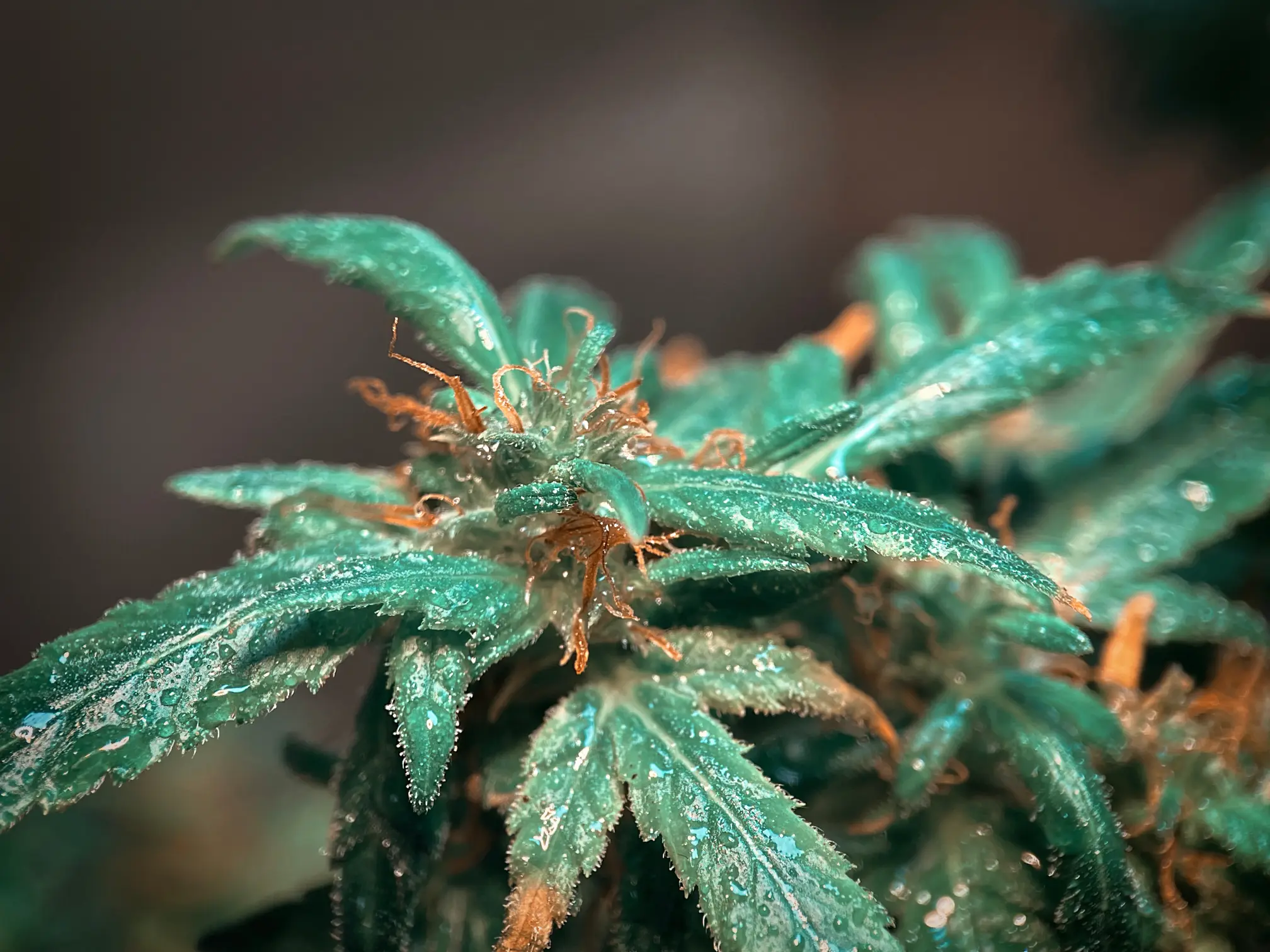
Clementine
Clementine is a citrus strain in the literal sense. The name is not a loose marketing association with sweetness. Good flower can smell like crushed tangerine peel, fresh orange oil, lemon zest, and the bitter-sweet white pith that clings to the inside of the rind. That sensory clarity is the main reason the cultivar deserves more attention than a generic description of "energetic sativa." It is also the part of the plant that can be damaged most easily by poor canopy control and a careless finish.
The commonly documented lineage is Tangie crossed with Lemon Skunk. That pairing explains why Clementine tends to stay on the bright side of the spectrum in both aroma and effect. Tangie contributes the orange-forward terpene identity and sativa-style vigor, while Lemon Skunk reinforces citrus and adds a sharper, herbal-skunky foundation. Modern laboratory profiles frequently show terpinolene at or near the front of the terpene profile, with myrcene and pinene recurring behind it, but exact rankings vary by sample.
The plant is usually described as sativa-dominant, vigorous, resinous, and reasonably fast for a cultivar with this much sativa character. Available grow data commonly place flowering in roughly the eight-to-ten-week range, with some examples finishing around the low-to-mid sixties in days. The missing piece in many strain summaries is how that speed should change the grow plan. Clementine can spend the first part of flower adding meaningful height and branch length, then shift quickly into resinous citrus-scented colas. The grower needs to spend the stretch horizontally before the plant becomes a vertical stack of hot citrus-sensitive tops.
That is the central cultivation problem for this profile. Clementine does not need to be kept artificially short, and it does not need a complicated training program. It needs a readable canopy. When the main leaders are spread early, the plant can use its vigor without producing a deep shaded interior. When the room is allowed to become too vertical, the brightest-smelling flowers often end up closest to the light and heat source, exactly where the most volatile orange and lemon notes are easiest to flatten.
Clementine's effect follows the same bright direction. Users most often report focus, energy, uplift, creativity, and a clean daytime mood. At low and moderate doses it can feel unusually active without becoming physically heavy. At higher doses the speed of the effect can become the weakness: anxiety, mental overactivity, or paranoia are possible, especially for THC-sensitive users. This is a cultivar that is best when intensity remains useful rather than when potency becomes the only goal.
Strain Features
| Feature | Details |
|---|---|
| Strain Type | Sativa-dominant hybrid |
| Genetic Profile | Tangie x Lemon Skunk |
| THC | Commonly moderate to strong, with meaningful variation among modern batches |
| CBD | Usually low |
| Dominant Terpenes | Terpinolene commonly leads; myrcene and pinene recur often |
| Flavor / Aroma | Tangerine peel, orange oil, lemon zest, sweet citrus, herbs, light skunk and pine |
| Effect Character | Focused, energetic, uplifted, creative and social; can become racy at higher doses |
| Flowering Time | Commonly about 8 to 10 weeks indoors, with many examples near 55 to 65 days |
| Stretch | Moderate to strong in many expressions; exact multiplier is line and environment dependent |
| Plant Architecture | Sativa-leaning, vigorous, medium to tall, with active lateral growth |
| Flower Structure | Resinous green colas that can become moderately dense without losing all sativa shape |
| Training Compatibility | Early topping, LST, open SCROG, selective lower cleanup |
| Odor Intensity | Strong citrus becomes obvious in flower and drying |
| Flavor Vulnerability | Bright orange and lemon top notes are sensitive to late heat, rapid drying and repeated air exposure |
| Grow Difficulty | Moderate; vigor is forgiving, but canopy height and terpene preservation need planning |
| Best Time of Use | Morning through afternoon for most users |
Genetic Lineage
Clementine comes from Tangie and Lemon Skunk, a pairing that makes more sense when the parents are viewed through plant behavior rather than simply through flavor names. Tangie is known for orange-peel aromatics, daytime effects, and sativa-leaning growth. Lemon Skunk contributes sharper citrus, a skunky-herbal base, and enough structural density to keep the cross from behaving like a very long tropical sativa.
The result is usually a plant that carries sativa energy without requiring an extreme flowering commitment. That matters indoors. Clementine can grow with enough vertical enthusiasm to punish a late flip, yet it often finishes before classic Haze cultivars would be halfway through their final phase. The transition therefore feels compressed: the grower has a relatively short period in which to redirect the stretch before flowering sites become resinous and less convenient to manipulate.
The citrus identity is inherited from both sides, which is one reason it tends to remain recognizable across different versions of the cultivar. What changes more is the balance around the citrus. One plant may be almost pure tangerine and sweet orange. Another can add pine, herbs, skunk, or a sharper lemon-cleaner note. Terpene testing also changes from batch to batch even when terpinolene remains prominent.
Modern Clementine should not be described as one identical phenotype. Height, final density, orange-to-lemon balance, and flowering length can shift. The useful recurring traits are vigorous sativa-dominant growth, an activating effect, a strong citrus center, and a flowering period shorter than the plant's energetic morphology might lead a grower to expect.
The lineage also explains why Clementine became useful as breeding material for later citrus cultivars. It carries a distinct sensory signal strong enough to survive into descendants, yet the plant itself remains practical enough for indoor selection. For the home grower, that makes phenotype hunting worthwhile when several plants are available: the keeper should be selected not only for the loudest live orange aroma, but for how well that aroma survives harvest, cure, and storage.
Effect Breakdown
Clementine is most convincing at the beginning of the day or during the part of the afternoon when a user wants to remain engaged. The first phase is typically mental: mood lifts, attention feels more active, and ideas can connect quickly. People often describe the experience as focused or creative rather than dreamy. The distinction matters because the strain does not usually produce the floaty, detached quality associated with some long-flowering Haze lines.
At a light dose, the effect can feel almost clean enough to forget that the flower may be potent. Conversation becomes easier, music and movement can feel more interesting, and routine activity can gain momentum. This is why Clementine has such a strong daytime reputation. It is not that impairment disappears. It is that sedation does not dominate the experience.
A moderate dose intensifies the same direction. The user may feel more euphoric, talkative, and mentally energetic, with a light physical looseness underneath. Appetite can appear, but the body usually remains secondary. This is the dose range where Clementine can be useful for creative leisure, outdoor activity, social situations, or tasks that benefit from enthusiasm rather than exact precision.
The weakness appears when stimulation crosses the user's tolerance line. Higher doses can make the mind move faster than the body wants, and user reports include anxiety, paranoia, or nervous overfocus. Someone who is comfortable with a heavy evening indica can still find Clementine surprisingly intense because the problem is not sedation. It is acceleration.
The late phase usually settles rather than crashes. Physical relaxation becomes more noticeable as the head effect declines, but strong couch-lock is not the defining finish. The cultivar is therefore a poor choice for someone whose main goal is immediate sleep, and a strong choice for someone who wants cannabis to leave the day open rather than close it.
Flavor & Aroma Profile
Clementine's sensory identity begins before the flower is broken. A good jar should release a bright orange smell with enough sharpness to suggest peel rather than orange candy. The sweetness is present, but it is held in place by the bitter-green character of citrus rind and the herbal background inherited from its parents.
When the flower is broken or ground, the aroma usually becomes more complex. Tangerine oil can turn into lemon zest, pine, fresh herbs, and a light skunky edge. The best examples have a slightly volatile quality, almost as if citrus oil has been expressed directly from the skin of the fruit. That quality is also the reason warm flower can lose its identity quickly.
On inhale, sweet orange and tangerine are usually the easiest notes to recognize. The middle can move toward lemon, herbs, and a faint floral character. On exhale, the flavor dries out: pine, pepper, and a small amount of skunk keep the profile from becoming dessert-like. The lingering aftertaste should still feel citrusy rather than only woody.
Phenotype differences often show up in the ratio between orange and lemon. A Tangie-leaning plant may smell softer, sweeter, and more mandarin-like, while a sharper expression can resemble lemon peel and green herbs. Neither is automatically better. The more useful question is which plant keeps its identity after several weeks in a sealed jar.
Average Clementine is easy to recognize because it still smells broadly citrusy. Excellent Clementine is harder to confuse with another strain because the top note stays specific. It smells like peel and oil rather than generic lemon cleaner, and the citrus remains visible on the palate after the smoke or vapor has warmed.
The mature cure should not erase freshness. Raw green plant odor should disappear, but the flower should not become darker and earthier with every week. When the cure is working, the skunk and herb notes become smoother while the orange stays bright.
Dominant Terpenes
| Terpene | Aroma Role | Cultivar Relevance | Scientific Caution |
|---|---|---|---|
| Terpinolene | Sweet herbs, flowers, citrus-like freshness and fruit | Frequently reported as the leading terpene in Clementine samples and fits the bright daytime sensory profile | Terpinolene does not by itself explain energy, focus or anxiety |
| Myrcene | Earth, herbs, ripe fruit | Adds depth under the sharp citrus and appears regularly in tested flower | Its presence does not automatically make a cultivar sedating |
| Pinene | Pine needles, resin, fresh herbs | Supports the dry pine edge that appears after the orange top note | Does not guarantee focus or protect against THC-related memory effects |
| Limonene | Citrus peel | May strengthen the lemon-orange impression in some samples | Exact concentration and ranking vary; citrus aroma is not produced by limonene alone |
Clementine is a useful example of why terpene rankings should not be treated as a complete flavor map. Terpinolene can be analytically prominent, yet users identify the flower as orange, citrus, and lemon rather than simply floral-herbal. Minor volatile compounds and the proportions between terpenes shape that more specific fruit impression.
The profile also varies by batch. Terpinolene, myrcene, and pinene recur often enough to be useful reference points, but the exact order should not be presented as genetically fixed. Cultivation temperature, harvest maturity, drying, and the selected phenotype all change what reaches the final jar.
The effect section should stay separate from terpene mythology. Clementine is commonly energetic and focused, but the most defensible explanation is the complete chemotype combined with dose and tolerance. The terpene section is strongest when it explains why the flower smells and tastes the way it does.
Indoor vs. Outdoor Growing
| Decision Point | Indoor Growing | Outdoor Growing |
|---|---|---|
| Main Challenge | Managing vigorous vertical growth without stacking the most aromatic tops too close to the light | Finishing bright citrus flower without late heat, rain or prolonged humidity flattening quality |
| Plant Size | Medium to tall unless trained early | Can become a large, branchy plant with enough root space and season |
| Stretch | Often meaningful during early flower; exact amount varies | Height is easier to absorb, but branch spread still needs support and sun access |
| Flowering Window | Commonly 8 to 10 weeks | Best where the season remains warm and reasonably dry through finish |
| Training | Early topping, LST and an open SCROG work well | Early topping and broad branch spacing help light penetration and airflow |
| Flavor Control | Stable canopy temperature gives the grower strong control over citrus preservation | Full sun can build excellent aroma, but excessive late heat and wet weather are harder to correct |
| Bud Density | Moderate to dense enough that a crowded canopy can hold humidity | Flowers need airflow after rain or dew even though the plant is sativa-leaning |
| Support | Useful if long laterals begin carrying substantial flower | Stakes or a broad cage can keep branches separated under wind and weight |
| Best Fit | Rooms with enough headroom to redirect stretch early | Warm, sunny sites with a dry finishing period |
Indoors, Clementine's main advantage is that the grower can protect aroma very precisely. The plant can be kept below the hottest part of the light field, humidity can be controlled as the flowers become denser, and the harvest can be timed without weather pressure. The disadvantage is that its vigorous transition can make a small room feel full quickly.
The mistake is to solve that problem with repeated late stress. Clementine is easier when the height decision is made before flower. Top early if needed, spread the leaders, and flip with some empty horizontal room remaining. The plant can use the transition to complete the canopy instead of creating a vertical emergency.
Outdoors, the cultivar can express more of its natural branch length and root vigor. That often makes structure simpler, but flavor becomes more dependent on climate. A very hot final period can dull the same volatile citrus notes that make the plant worth growing, while wet weather can force a compromise between full maturity and flower safety.
The better environment depends on the grower's priority. Indoor is stronger for preserving a precise orange-lemon profile and maintaining a uniform clone. Outdoor is attractive when the climate offers long sun, moving air, and a dry finish. A humid autumn location removes much of the advantage of letting a sativa-leaning plant grow large.
Strain-Specific Grow Guidance
Shape the transition before it happens
Clementine has enough sativa vigor that the flowering stretch should be planned rather than reacted to. The exact multiplier is not consistent enough to publish as one universal number, but the recurring pattern is clear: plants can gain meaningful height and branch length after the photoperiod change.
If ceiling space is limited, make the last major height correction before flower. An early topping can create several leaders, while LST can move them outward into their final lanes. The goal is not a perfectly flat canopy. It is a canopy where the fastest branch has somewhere to go without being forced into a hard bend after flower sites are already resinous.
Keep the center readable
Clementine can carry a sativa silhouette while still building enough foliage and flower to shade its center. This is especially true when several vigorous laterals converge after topping. Open the branch angles early so the grower can still see and reach the inner stem network once flowers begin to stack.
Do not let the stretch make the decisions
After the stretch settles, remove weak interior shoots that remain permanently shaded. Do not automatically strip all lower growth. A long sativa-leaning branch can produce useful secondary flowers if side light actually reaches them. The productive depth should be judged from the room, not from a generic lollipopping line.
Use defoliation as a correction, not a style
Clementine does not need to be made leafless to taste citrusy or yield well. Remove fan leaves when they permanently close an airflow window, lie against a flower, or block a clearly productive site that cannot be repositioned.
Repeated heavy defoliation can create unnecessary recovery during a flowering cycle that is not especially long. The plant's vigor makes it capable of replacing foliage, but replacement growth is not the same thing as improved flower quality.
Let vigor decide feeding, not the sativa label
A fast-growing plant can use substantial nutrition, especially while it is building stems and leaves, but there is no reason to assume Clementine needs an extreme feeding program. Increase concentration only when root health, water use, and leaf condition show that the current level is limiting.
Excess nitrogen is particularly unhelpful when it keeps the plant producing soft dark foliage deep into flower. A citrus cultivar is not improved by carrying more leaf around the colas. The cleaner finish is a healthy canopy that remains functional without being forced to look permanently vegetative.
Watch the root zone when stretch ends
During transition, a vigorous Clementine can dry its medium quickly. That rhythm may slow once vertical expansion finishes and flower becomes the main sink. Continue irrigating from actual dryback rather than from the schedule that worked during the fastest growth.
This is a useful second-run measurement. Record how long the selected clone takes to dry its root zone before the flip, during peak stretch, and in late flower. A predictable irrigation curve is one of the easiest ways to make a vigorous cultivar feel simple.
Protect the highest citrus flowers from local heat
Clementine's most aromatic tops are often also the flowers closest to the fixture. The first sign of excess local stress may be sensory rather than visual. If the upper flowers lose their orange definition while cooler side buds still smell sharp and oily, the canopy is telling the grower that quality is being lost before severe bleaching appears.
Reduce the local heat load, improve canopy uniformity, or create more distance rather than assuming the plant needs a supplement. The bright citrus layer is too valuable to use as an expendable part of a maximum-light strategy.
Do not let sativa structure hide dense flower microclimates
Narrower leaves and open branch angles can make Clementine look safer from humidity than a squat indica, yet individual mature flowers can still become dense. Cannabis inflorescences can hold more humidity internally than room sensors indicate.
Keep major tops physically separated. Air movement should pass through the flower zone, not simply move the leaves at the top of the room. A sudden localized sugar-leaf death or soft area inside one mature cola deserves inspection even when surrounding foliage looks healthy.
Support the laterals before they lean into each other
A long lateral may carry its own weight for most of the cycle and begin to sag only when the last weeks add flower mass. Install soft support before this point if the selected plant shows weak angles. The purpose is not merely to prevent snapping. It is to keep each aromatic top in its own light and airflow lane.
Outdoor Clementine benefits from the same principle. A broad cage or perimeter stakes can preserve the open architecture under wind and late weight without tying the whole plant into a dense bundle.
Harvest for citrus definition and biological maturity together
A fast citrus plant can tempt the grower to cut as soon as the room smells strong. Aroma intensity is not maturity. Wait for the calyxes to complete their swell, for fresh pistil production to slow substantially, and for trichomes on the actual flower to show a mature population.
At the same time, do not assume later is always better. Once the flower is biologically mature, an unnecessarily extended hot finish can trade bright orange for a darker herbal profile. The best harvest window is the point where the plant is fully developed and the citrus still feels fresh rather than cooked.
Weedth Bud Flavor Tips
Clementine's quality is easiest to understand by asking what disappears first. Orange peel, lemon zest, and the high, oily citrus note are fragile. Pine, herbs, and skunk persist much longer. A poorly handled batch can therefore remain loud while losing the exact flavor that gave the cultivar its identity.
Indoors, keep the last part of flower thermally calm. The goal is not to chill the plant but to avoid a hot upper canopy where volatile citrus is constantly exposed to stress. If the room must run warmer, keep the canopy even so one group of tops is not receiving a very different microclimate from the rest.
Outdoors, harvest timing should consider weather rather than color alone. A few extra days of perfect dry weather can improve maturity; a week of rain or extreme heat can do the opposite. Clementine is a flavor cultivar, so the grower should protect the sensory ceiling rather than chase the latest possible date regardless of conditions.
During drying, direct moving air should never be aimed at the flowers. The plant's bright aromatics are especially vulnerable to a rapid surface dry. Controlled, even moisture loss is more valuable than hitting an arbitrary number of days.
The cure should make the skunky-herbal base smoother without muting the orange. If the jar becomes increasingly grassy, the flower was probably sealed too wet. If it becomes only pine and dry herb, the crop probably lost too much moisture or experienced too much warm air earlier.
A useful keeper test is to open a small evaluation jar after several weeks and compare it with a jar that has remained closed. Clementine should survive storage with a recognizable citrus peel note. A plant that smells extraordinary alive but becomes generic quickly may not be the best long-term clone.
Handling also matters. Resinous citrus flowers should not be repeatedly squeezed to judge stickiness. Trichomes and volatile oils belong on the flower, not on the gloves. Gentle trimming and minimal jar agitation help preserve both visual frost and aroma.
The difference between average and exceptional Clementine is clarity. Average flower smells sweet and citrusy. Exceptional flower makes the user think specifically of fresh tangerine oil, lemon zest, and green rind before the underlying pine and herbs arrive.
Weedth Bud Boost Tips
Clementine's production potential comes from vigor, so the first yield decision is how much of that vigor is converted into useful horizontal canopy. A well-spread plant can carry many productive flowers without needing a long vegetative period.
One early topping is often enough. Repeated topping can create more branches than the flowering area can support, especially when the plant continues to stretch. Add tops only when each new leader can occupy its own light lane.
A loose SCROG works when the screen is used as a map rather than a carpet. Leave openings during the flip and let transition growth fill them. Stop tucking once flower development makes branches less flexible and the screen is doing more harm than organization.
After stretch, remove weak inner shoots that will never receive useful light. This is where quality yield improves: fewer leafy lower flowers, more consistent maturity, and less trim work. Do not remove exposed lower branches merely because they began below a fixed height.
Light should be increased only while the plant remains thermally comfortable and the citrus profile stays intact. A brighter fixture is not a bud boost if the hottest flowers lose their defining aroma.
Outdoors, the cultivar can make a large plant, but maximum size is not always the most efficient goal. A huge canopy creates more support work and can expose late flowers to uneven sun and moisture. A broad, open plant with good access may produce a higher percentage of premium flower than an oversized bush.
The second run should be simpler than the first. Use the keeper clone's measured stretch to choose flip height, its known branch strength to plan support, and its cured flavor to decide how much late heat it can tolerate before quality begins to slide.
Clementine quality yield is not simply more citrus-scented biomass. It is a high percentage of mature, well-lit flowers that still taste sharply orange and lemon after the cure.
Medical Uses & Benefits
Clementine is most often used by people seeking an uplifting daytime experience rather than heavy sedation. User reports commonly mention mood improvement, focus, energy, stress distraction, and relief from fatigue. These are subjective experiences and should not be presented as evidence that the cultivar treats a disease.
The activating profile can be useful for users who find heavy body strains inconvenient during the day. A modest dose may make activity feel easier while leaving the user less physically slowed than a Kush-style cultivar.
Pain and stress relief are also reported, but the tradeoff is important. A user who benefits from mental activation may find the same stimulation uncomfortable if anxiety is already high. Clementine should not be described as universally calming simply because some users choose it for stress.
Higher THC batches can cause anxiety, paranoia, dry mouth, dry eyes, or dizziness. The risk is especially relevant to a cultivar whose typical effect already leans energetic and focused.
Low CBD means most examples should be treated as THC-dominant rather than as balanced medical flower. Anyone using cannabis for a diagnosed condition, or combining it with prescription medication, should consult a qualified healthcare professional.
Ideal User Profile
Clementine is for the person who wants cannabis to open the day rather than close it. It fits morning or afternoon leisure, creative work, social plans, a walk, a workout, or a task that benefits from enthusiasm without heavy body sedation.
Citrus chasers are the obvious sensory audience. Someone who likes Tangie, Lemon Skunk, orange peel, and terpinolene-rich flower will understand the appeal immediately. The flower is bright, aromatic, and easy to recognize when it has been finished well.
For growers, it suits people who are comfortable making early canopy decisions. The plant is not unusually delicate, but it rewards a grower who can predict space rather than repeatedly correct height later. A small room with no vertical reserve is possible only if the training is done early.
It is less suitable for users who want immediate sleep or for THC-sensitive consumers who frequently experience racing thoughts. It is also a questionable outdoor choice where the finishing season is persistently wet, because the cultivar's strongest reason to grow it is flavor quality, not merely completing a large plant.
The best match is a grower-consumer who values an expressive terpene profile and wants a cultivar that remains active and useful at moderate doses without requiring the marathon flowering time of a classic Haze.
Grower Notes and Feedback
Across grow descriptions, Clementine is generally treated as vigorous rather than fragile. The practical difficulty comes from managing what healthy growth does to limited indoor space. Plants that are allowed to become tall before the flip can continue moving upward long enough to make the upper canopy difficult to keep even.
Growers commonly praise the speed relative to the sativa effect. A roughly eight-to-ten-week flowering window makes it possible to run an activating citrus cultivar without committing the room to a very long cycle. That efficiency is one of the strain's strongest horticultural advantages.
The smell can become intense before the buds look fully mature. This is another recurring surprise with terpene-forward cultivars. A room can smell finished while the calyxes are still building. Harvest should remain tied to biological maturity rather than to odor alone.
Another real-world pattern is variation in how sweet the citrus becomes. Some plants are almost pure orange; others show more lemon, pine, skunk, or herbal material. That is not necessarily a sign of poor authenticity. It is a reason to keep phenotypes labeled through cure.
Training reports generally support topping and branch spreading, but there is little reason to turn that into a fixed high-stress routine. The plant's vigor provides enough branch material. The grower usually gets more value from organizing those branches than from repeatedly creating new ones.
Post-harvest quality separates successful runs sharply. Clementine can remain aromatic even after a poor dry, but the difference between loud and precise is obvious. A warm, quick batch often keeps generic citrus and pine while losing the fresh tangerine peel that makes the strain special.
The most useful second-run notes are flip size, final height, the week stretch stopped, which canopy zone preserved the strongest orange, branch support timing, and how the aroma changed after a month in storage.
Weedth Editor's Note
The tradeoff I would plan around
I would judge Clementine from the nose backward. If the finished jar does not still smell like fresh citrus peel, I would not consider the grow fully successful even if the yield and frost were excellent.
That priority changes how I would run the plant. I would flip with more vertical reserve than I think I need, spread the fastest leaders early, and stop manipulating the canopy once the flower is established. The final weeks should be about preserving what the plant has already built, not trying to force another round of growth.
I would also keep the highest and coolest side flowers separate during the first evaluation. If the side branch tastes more orange than the top cola, the environment has given me a direct instruction for the next cycle.
Clementine is one of the cultivars where I would accept a small reduction in theoretical yield for better terpene retention. The plant is already productive enough that sacrificing flavor to squeeze every last gram from a hot canopy does not make sense.
The keeper I would want is not simply the tallest or loudest seed plant. It is the clone that stays manageable, finishes on time, and preserves a specific tangerine-lemon identity after weeks in the jar.
Weedth Score
Growing Experience 8.3/10 Vigorous and reasonably fast, but indoor stretch and late terpene protection require active canopy planning.
Bud Structure & Visual Appeal 8.5/10 Resinous green colas can look excellent, though the cultivar is more memorable for aroma than for extreme color or density.
Aroma Complexity 9.3/10 Fresh orange peel, tangerine oil, lemon, herbs and pine create one of the clearest citrus identities in the strain library.
Flavor & Smoothness 9.0/10 Excellent when dried gently; bright citrus can flatten quickly if the crop runs hot or dries too fast.
Effects & High Experience 8.8/10 Focused, energetic and uplifting at useful doses, with a real anxiety tradeoff for sensitive users.
Overall Satisfaction & Recommendation 8.8/10 A strong daytime citrus cultivar for growers who value aroma precision and practical flowering speed.
Personal closer: I would run Clementine again for the moment a cured jar still smells like a freshly opened tangerine rather than for the size of the plant that produced it.
FAQ
What is Clementine's lineage?
The most consistently documented lineage is Tangie crossed with Lemon Skunk. That pairing explains the combination of orange-forward aroma, sharp lemon-herbal notes, sativa-dominant growth, and activating effects.
How long does Clementine flower indoors?
Available cultivation data commonly place the cultivar around eight to ten weeks, with many examples finishing near the 55-to-65-day range. The exact keeper clone should still be harvested from maturity rather than from a fixed calendar day.
How much does Clementine stretch after the flip?
Meaningful stretch is common because the plant is sativa-dominant, but a universal multiplier is not well supported. Leave vertical reserve and record the actual clone's transition behavior on the first run.
Is Clementine good for a small grow tent?
It can be, but only when topping or LST is done before flowering and the plant is flipped with headroom remaining. An untrained mature plant can become inconvenient in a low space.
Does Clementine respond well to topping?
Yes. One early topping can distribute vigor into several manageable leaders. Repeated topping is useful only if the room has enough horizontal space for the additional branches.
Is SCROG a good method for Clementine?
A loose SCROG is useful for turning stretch into width. Avoid filling every square before the flip because the plant can continue expanding during transition.
Should I heavily defoliate Clementine?
Usually no. Use selective defoliation after stretch to open airflow and productive sites, while preserving healthy exposed foliage.
Is Clementine a heavy feeder?
It can grow vigorously and use a solid nutrient supply, but high appetite should be proven by plant response rather than assumed from the sativa label. Overfeeding can leave the canopy too dark and leafy without improving citrus quality.
Why is my Clementine losing its orange smell late in flower?
Local canopy heat is a common suspect when the upper flowers lose definition before cooler side buds. Late stress and excessive light intensity can flatten the most volatile citrus notes even while the plant remains visually healthy.
Why does my Clementine smell more like pine or herbs than orange?
Phenotype variation is real, and the surrounding terpene profile can shift. Drying and storage can also remove the brighter orange layer first, leaving pine and herbs more dominant.
Is Clementine prone to mold?
It is not defined as an unusually mold-prone strain, but mature colas can become dense enough to hold internal humidity when the canopy is crowded. Keep major tops separated and avoid stagnant late-flower conditions.
When should Clementine be harvested for the best flavor?
Wait for full calyx development and mature flower trichomes while the citrus remains fresh and distinct. Strong odor alone is not a maturity signal, and unnecessarily extending a hot finish can reduce aromatic clarity.
Does Clementine need branch support?
Some long laterals benefit from support late in flower. The support should keep them in separate light lanes rather than pull multiple colas together.
Is Clementine good outdoors?
Yes in warm, sunny climates with a reasonably dry finishing period. Outdoor space suits its vigorous structure, but persistent late rain can reduce the benefit of growing a terpene-focused cultivar large.
Is Clementine a good daytime strain?
For many users, yes. Focus, energy and uplift are commonly reported. High doses can become anxious or over-stimulating, so daytime usefulness depends heavily on dose and tolerance.
Similar Strains
Tangie: The closest genetic and sensory reference. Tangie usually pushes even harder toward tangerine peel and can be more obviously stretchy, while Clementine adds Lemon Skunk sharpness.
Lemon Skunk: Shares the lemon-herbal side of the lineage but tends to be skunkier and less purely orange in the finished flower.
Mimosa: A Clementine descendant that keeps bright citrus while adding sweeter fruit and a somewhat more modern hybrid body effect.
Super Lemon Haze: A useful alternative for users who want even more lemon and Haze character, but it normally asks for a longer and more vertical grow.
Tropicana Cookies: Another citrus-led cultivar with strong orange character, but with darker color potential and a sweeter cookie-style background.
Jack Herer: Similar daytime clarity and terpinolene-rich freshness, with more pine, spice and incense and less direct orange fruit.
Share this article
A quick overview of the topics covered in this article.
Follow us
Latest articles
September 9, 2026
September 9, 2026
September 9, 2026