Death Star
Death Star is a compact plant with a loud finish. The classic line combines Sensi Star and Sour Diesel, and the result is usually shorter and stouter than the Diesel name might suggest. It builds dense resinous flowers on a relatively controlled frame, then releases an odor that can move from skunk and fuel to sweet earth, pepper, and citrus depending on phenotype.
Historically, the original cultivar is associated with a clone line from Ohio rather than a broad seed population. That matters because modern plants sold or shared under the same name can differ. Some preserve the short stout shape and deep skunk-diesel aroma closely, while others lean fruitier or taller. A serious profile should therefore describe the recurring clone identity without pretending every modern Death Star plant is genetically identical.
For growers, the main cultivation question is how to exploit Death Star's compact, dense-flowering frame without turning that compactness into a sealed, overfed, humidity-prone canopy. The plant can work beautifully in SOG because it does not need a huge vegetative period to build a useful flowering column. It can also be trained into several branches. The problem appears when every branch and fan leaf is retained simply because height is not a concern.
The short structure also changes feeding logic. Death Star is often described as preferring moderate fertilizer rather than an aggressively heavy schedule. A compact plant with dense leaves can look dark and healthy while excess nitrogen quietly increases internal shading and delays the clean finish. The best crop usually comes from steady nutrition, a breathable lower plant, and enough support to keep heavy tops separated.
Flavor quality depends on preserving the cultivar's pungent chemistry without reducing it to harsh skunk. Good flower carries diesel, earth, pepper, sour citrus, and a sweet or creamy undertone. The cultivar does not need to smell pleasant in a conventional sense. It needs to smell distinct.
Strain Features
| Feature | Details |
|---|---|
| Strain Type | Indica-dominant hybrid |
| Genetic Profile | Sensi Star × Sour Diesel |
| Historical Form | Classic identity is associated with a clone-only Ohio line; modern recreations can vary |
| THC | Commonly reported in the high teens to mid-20% range |
| CBD | Usually very low |
| Dominant Terpenes | Beta-caryophyllene, myrcene, and limonene recur often |
| Flavor / Aroma | Skunk, diesel, pungent earth, pepper, sour citrus, sweet musk |
| Effect Character | Euphoric opening followed by deep relaxation, tingling, appetite, and possible sleepiness |
| Flowering Time | Approximately 9 weeks is a useful center; many reports place maturity near 60 to 65 days |
| Grow Difficulty | Easy to moderate |
| Stretch | Low to moderate in classic compact expressions |
| Plant Architecture | Short, stout, branchy, suited to compact indoor production |
| Bud Density | Dense to very dense |
| Training Compatibility | SOG is natural; multi-branch training also works |
| Feeding Behavior | Often performs best on moderate, steady nutrition |
| Mold Risk | Moderate if dense tops or inner foliage remain humid |
| Odor Intensity | Very strong |
| Best Time of Use | Evening and nighttime |
Genetic Lineage
Death Star combines Sensi Star with Sour Diesel. The Sensi Star side helps explain the compact plant, dense resinous flowers, and physically heavy finish. Sour Diesel contributes the fuel, sour citrus, mental lift, and a degree of branch extension without fully turning the plant into a tall sativa structure.
The original Death Star story is tied to a clone that circulated regionally for years. That makes the cultivar different from a broad seed line with a predictable range of sibling phenotypes. Modern seed recreations may resemble the original but should not automatically be treated as exact copies.
Phenotype reports often divide roughly into pungent diesel-skunk expressions and sweeter or fruitier ones. Both can be potent and dense, but the diesel-dominant plants usually carry the strongest historical identity.
The inheritance also explains why SOG works so well. Death Star does not need a huge branching framework to produce dense flower. A strong central axis with a few productive sides can convert limited indoor space into a high percentage of usable bud.
Sensi Star's influence is especially visible in how efficiently Death Star packs flower onto a compact frame. The buds often appear broader and denser than the plant's vegetative silhouette would predict. That inheritance is one reason a grower should not judge final potential only by height or branch length.
Sour Diesel contributes more than odor. It also helps explain the brighter mental opening and the fact that some Death Star plants develop more branch extension than a classic pure indica. The hybrid works because the Diesel influence adds movement without removing the compact production style.
Because clone histories are difficult to document perfectly, a modern grower should use phenotype evidence. Short internodes, pungent sour fuel, dense resin, and the characteristic heavy finish together provide a stronger picture than one label on a seed packet.
Originating in the Midwest during the early 2000s, Death Star is an elite, award-winning indica-dominant hybrid bred by Team Death Star. Created by pollinating the legendary, terpene-rich Amsterdam powerhouse Sensi Star (a resin-coated indica classic from Paradise Seeds) with an elite cut of Sour Diesel (ECSD, famed for its piercing kerosene fuel and sour skunk bite), Death Star unites two of the most influential cannabis cultivars of the 1990s into a devastating, pungent medicinal strain.
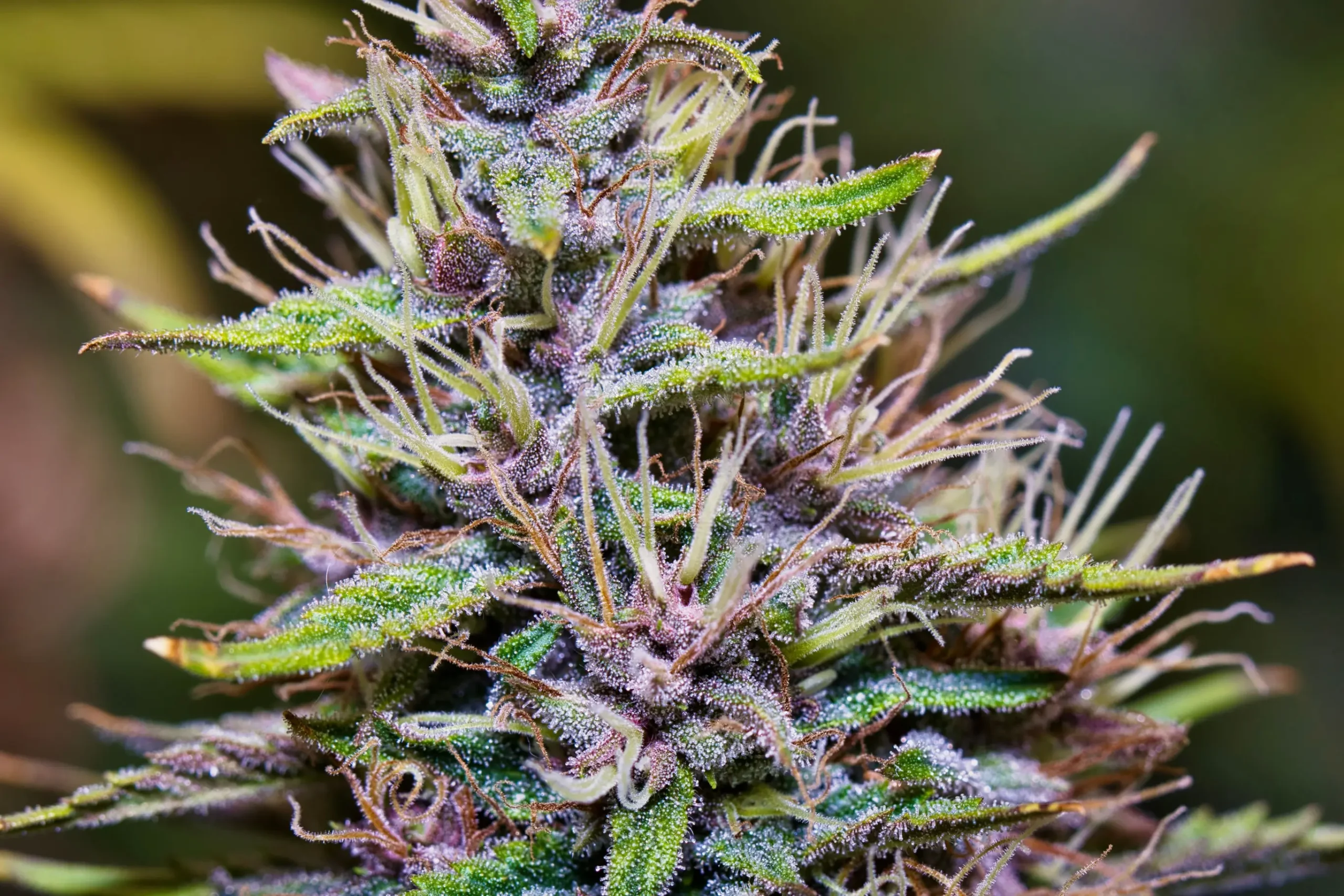
The genetic architecture of Death Star showcases the stout, broad-leafed structure of its Sensi Star mother alongside the extended calyx spacing and sharp chemical profile of Sour Diesel. The cultivar develops dense, golf-ball-sized floral clusters with extraordinarily thick trichome coverage that extends onto primary fan leaf stems, making it a coveted favorite for craft growers and concentrate extractors alike.
Effect Breakdown
Death Star usually begins with a noticeable mood lift rather than instant sleep. The first phase can feel euphoric, tingly, and mentally pleasant, sometimes with enough clarity for music, conversation, or a film.
The body effect then deepens steadily. Shoulders soften, appetite often increases, and stillness becomes more attractive. Moderate doses can remain social. Higher doses pull the user toward the couch and eventually sleep.
The strain's strength is the transition. It offers enough Sour Diesel influence to avoid feeling completely flat at the beginning, yet the Sensi Star side gives the experience a heavy endpoint.
High doses can produce dizziness, dry mouth, dry eyes, or anxious mental pressure in sensitive users. It is generally better treated as an evening strain even when the first phase feels upbeat.
The cultivar is also strongly associated with odor and expectation. Users sometimes interpret a very pungent batch as more potent than it is. The actual experience still depends on cannabinoids, dose, tolerance, and the specific plant.
Consuming authentic Death Star produces an unforgettable, creeping somatic stone that starts as a gentle cerebral hum before escalating into deep, all-encompassing physical sedation. In the initial minutes post-inhalation, a soothing sensation of peace settles over the brow, washing away mental tension, daily irritations, and situational anxiety. As the high matures past the thirty-minute mark, the heavyweight Sensi Star genetics take full control, anchoring the body to the couch and inducing profound muscle relaxation.
| Phase & Time Window | Mental & Emotional State | Physical & Somatic Sensation | Ideal Setting & Pairing |
|---|---|---|---|
| The Sour Spark (0 to 15 Minutes) | Mild cerebral uplift, mood elevation, pleasant sensory shift | Warm tingling at the crown, tension release in neck and jaw | Evening unwind, casual conversation, dim ambient lighting |
| The Creeping Orbit (15 to 45 Minutes) | Dreamy mental detachment, peaceful silence, stress dissolution | Heavy limb sensation, torso relaxation, slowing breath rate | Watching a sci-fi film, listening to immersive music |
| The Superlaser Couchlock (45 to 120 Minutes) | Profound cognitive stillness, contented tranquility, strong appetite surge | Total somatic couchlock, deep chronic pain relief, heavy eyelids | Late-night lounging, comfort snacking, restorative stretching |
| The Deep Slumber (120+ Minutes) | Drowsy mental surrender, tranquil stillness, sleep onset | Complete muscular ease, prolonged restorative rest | Bedtime routine, total darkness, uninterrupted overnight sleep |
Testing with reliable THC concentrations between 22% and 27%, Death Star is highly valued across the medical cannabis community for its exceptional efficacy in alleviating chronic pain, severe muscular spasms, fibromyalgia, migraines, and persistent insomnia.
Flavor & Aroma Profile
Death Star's aroma is unapologetically pungent. Skunk and diesel usually lead, with earth, pepper, and sour citrus underneath. Some examples carry a sweet or creamy note that softens the fuel. Others smell almost industrial.
The grinder is where the cultivar often becomes much louder. Breaking dense buds exposes resin and releases sour fuel, pepper, and musky sweetness that may be muted in the closed jar.
On the inhale, the flavor can begin with earthy sweetness or citrus. The exhale becomes peppery, skunky, and diesel-heavy. The aftertaste often stays on the tongue as dry spice and fuel.
Fruity phenotypes should not automatically be dismissed. Historical grow information acknowledges fruitier expressions. The useful question is whether the cured flower remains distinctive and resinous rather than whether every plant smells identical.
A rushed dry exaggerates Death Star's rough side. The skunk remains, but citrus and sweetness disappear, leaving hot, harsh earth. Slow even drying lets the unpleasant and pleasant parts stay in balance.
The sweet side of Death Star is easiest to notice when the bud is not overdried. When moisture falls too low, the palate shifts toward dry pepper and burnt skunk. A correctly cured sample often reveals a soft sweetness behind the fuel that makes the smoke feel fuller.
Some users compare the darker expression to roasted, bitter, or almost coffee-like pungency. That description reflects the heavy volatile mix and smoke character rather than a literal coffee terpene. It is useful sensory language when kept grounded.
The best flower should remain recognizable from the first inhale to the aftertaste. If the jar smells powerful but the smoke becomes generic charcoal and earth, post-harvest quality is the likely weak link.
Phenotype comparison is particularly useful with Death Star because the fruity side can be mistaken for poor authenticity. A sweeter plant can still show the compact structure, resin density, and heavy effect associated with the cultivar. The better question is whether the aroma remains complex and pungent after cure.
Smoke smoothness is also a strong post-harvest indicator. Death Star can be naturally thick and pungent, but a scratchy green finish usually reflects drying or immature flower rather than a requirement of the genetics.
The aromatic profile of Death Star is notorious for its sharp, offensive pungency. Cracking open a cured nug releases a potent wave of sour diesel fuel, skunky rubber, pungent allium, metallic earth, and sweet pine resin. The fusion of Sensi Star’s sweet metallic musk with Sour Diesel’s caustic kerosene creates a complex sensory experience that effortlessly penetrates sealed containers.
| Aroma Layer & Tier | Dominant Fragrance Notes | Sensory Perception & Volatiles | Combustion / Vapor Translation |
|---|---|---|---|
| Top Sour Fuel | Sour kerosene, fresh diesel fuel, citrus rind, ammonia | Pungent, nose-pricking volatile hydrocarbons from Sour Diesel lineage | Tart, zesty sour fuel coating the tongue on inhale |
| Mid Skunk & Rubber | Roadkill skunk, burnt bicycle rubber, pungent allium | Deep savory funk driven by potent sulfur compounds and caryophyllene | Thick, pungent skunky smoke expanding in the chest |
| Base Metallic Earth | Damp loam, sweet hashish, metallic musk, pine needles | Warm, grounded earthy baseline inherited from the Sensi Star parent | Rich earthy hash and sweet herbal pine on the exhale |
| Linger & Finish | Sweet fuel tang, peppery rubber, pine resin | Enduring oily coating that remains on the palate for twenty minutes | Lingering sour diesel and spicy peppery aftertaste |
When consumed via water pipe or dry herb vaporizer, the smoke is dense and expansive, delivering a sharp sour kerosene hit on the inhale followed by a rich, sweet, peppery hashish finish that leaves the mouth tingling with savory richness.
Dominant Terpenes
| Terpene | Aroma Role | Cultivar Relevance | Scientific Caution |
|---|---|---|---|
| Beta-caryophyllene | Pepper, spice, wood | Fits the peppery pungent finish and is commonly prominent | CB2 interaction does not establish strain-specific treatment effects |
| Myrcene | Earth, musk, herbs | Supports the heavy earthy base and often appears in relaxing batches | Does not independently cause couch-lock |
| Limonene | Citrus peel | Explains sour lemon brightness in some examples | Often secondary and phenotype dependent |
| Humulene / minor woody terpenes | Dry herbs, wood | Can deepen the dark roasted or skunky impression | Minor terpene presence varies widely |
Death Star is a good example of why terpene tables do not capture the whole odor. Skunk and fuel aromas can involve volatile compounds beyond the usual headline terpenes. The sensory profile should therefore be described from the flower itself, not reduced to three molecules.
The recurring caryophyllene-myrcene-limonene pattern is still useful for explaining pepper, earth, and citrus, but it should not be treated as a guaranteed hierarchy.
Chemical analyses of Death Star highlight a dominant presence of Myrcene, providing deep sedative properties and earthy, herbal nuances. Beta-Caryophyllene forms the secondary pillar, contributing sharp cracked-pepper spice and engaging peripheral CB2 receptors for systemic comfort. Limonene introduces bright citrus notes that highlight the sour fuel profile, while significant concentrations of Alpha-Pinene and Humulene lend fresh pine needles, wood resin, and anti-inflammatory support.
Indoor vs. Outdoor Growing
| Decision Point | Indoor | Outdoor |
|---|---|---|
| Architecture | Compact frame is efficient for SOG and small rooms | Can become a broad sturdy bush with more veg time |
| Stretch | Usually manageable | Less important outdoors, though seed recreations may vary |
| Flower Density | Easy to build dense top flower under even light | Dense outdoor tops need dry weather late |
| Canopy Risk | Interior leaves and branches can pack together quickly | Broad plants need spacing between branch masses |
| Feeding | Moderate steady feeding is easier to control | Large roots increase demand but do not justify automatic heavy feed |
| Odor | Strong filtration is important | Odor can carry far from the plant |
| Best Fit | Growers wanting dense compact indoor production | Dry, private sites with good autumn airflow |
Indoor production is where Death Star's compact nature is most useful. SOG can take advantage of short plants and dense tops without requiring repeated training.
A multi-branch plant also works, but canopy density needs to be monitored early. Short internodes mean the plant can become too full before the grower notices a height problem.
Outdoors, odor and flower density become bigger concerns than size. A dry finish is important because dense top flowers can hold moisture after dew or rain.
Indoor Death Star is especially efficient where vertical space is limited. A grower can keep lights relatively close to a uniform canopy without spending weeks controlling tall stretch. The tradeoff is that plant count and spacing become more important because compact plants can crowd each other horizontally.
Greenhouse cultivation deserves caution. A roof protects dense buds from direct rain, but humidity can remain high after sunset. Without active air exchange, a greenhouse can be more dangerous for compact Death Star colas than an open outdoor site.
Outdoor plants benefit from early structural opening. Once the branch framework hardens, trying to create space by late pruning can expose inner tissues suddenly and stress a plant already carrying flower.
Grown outdoors, Death Star performs best in warm, dry continental or Mediterranean climates with long sunny autumns, such as the Rogue Valley of southern Oregon, the Okanagan Valley in British Columbia, and California interior valleys. The cultivar produces thick, robust branches capable of supporting dense colas without excessive staking.
However, because the floral clusters form rock-hard, ultra-dense nuggets, outdoor cultivators must remain vigilant against late-season rains and early morning dew. To protect against botrytis, position plants where they receive direct early morning sun to burn off moisture, prune inner lower foliage aggressively in late summer, and consider overhead hoop-house shelter for late September and October ripening.
Strain-Specific Grow Guidance
| Stage of Growth | Day / Week Timeline | Target Temperature & RH | Target PPFD & Photoperiod | Target EC & Runoff pH | Specific Agronomic Tasks |
|---|---|---|---|---|---|
| Rooting & Clones | Days 1 to 14 | 75°F to 78°F | 70% to 75% RH | 180 to 250 µmol/m²/s | 18/6 light | 0.8 to 1.1 EC | 6.2 to 6.5 pH | Rapid rooting in aeroponic cloner or rockwool plugs, mild vitamin B drench |
| Early Vegetative | Weeks 3 to 4 | 76°F to 80°F | 62% to 68% RH | 400 to 550 µmol/m²/s | 18/6 light | 1.3 to 1.6 EC | 6.2 to 6.5 pH | Top above the 5th node, install first trellis tier, foliar kelp spray |
| Late Vegetative | Weeks 5 to 6 | 76°F to 80°F | 55% to 62% RH | 600 to 750 µmol/m²/s | 18/6 light | 1.6 to 1.9 EC | 6.3 to 6.6 pH | Low-stress training to spread dense branches, defoliate lower inward leaves |
| Bloom Initiation | Weeks 7 to 8 (Bloom 1 to 2) | 75°F to 79°F | 52% to 58% RH | 750 to 850 µmol/m²/s | 12/12 light | 1.9 to 2.2 EC | 6.3 to 6.6 pH | Manage moderate 1.5x stretch, tuck branches, supply bioavailable calcium |
| Peak Floral Bulking | Weeks 9 to 11 (Bloom 3 to 5) | 73°F to 77°F | 46% to 52% RH | 850 to 950 µmol/m²/s | 12/12 light | 2.1 to 2.4 EC | 6.4 to 6.7 pH | Perform Day 21 defoliation, provide organic PK bloom fertilizer, increase airflow |
| Resin Hardening | Weeks 12 to 13 (Bloom 6 to 7) | 70°F to 74°F | 40% to 45% RH | 750 to 850 µmol/m²/s | 12/12 light | 1.5 to 1.8 EC | 6.4 to 6.8 pH | Inspect ultra-dense colas for mold, maintain high VPD, lower night temps to 64°F |
| Flush & Harvest | Weeks 14 to 15 (Bloom 8 to 9) | 65°F to 70°F | 38% to 42% RH | 500 to 650 µmol/m²/s | 12/12 light | 0.3 to 0.6 EC | 6.3 to 6.7 pH | Flush with clean RO water, harvest when trichomes show 20% to 30% amber |
Choose SOG or Multi-Branch Early
Death Star can be grown efficiently as a central-column plant in SOG or topped into several productive branches. Decide early because the two systems need different vegetative timing.
SOG plants should be kept simple. Multi-branch plants need enough recovery after topping for laterals to establish before the flip.
Keep the Interior Smaller Than the Exterior
The classic compact shape can hide too much internal growth. Remove shoots pointing directly into the center and leaves that remain permanently layered over one another.
Do not strip the plant bare. The goal is a visible central airflow path and separated flower sites.
Use Moderate Feeding as the Baseline
Death Star is repeatedly described as performing well with moderate fertilizer. Begin from a stable level and increase only when water use and growth justify it.
Excess nitrogen makes an already compact plant darker and leafier, which increases shading and can delay the clean transition into flower.
Let the Flowering Column Stay Simple
In SOG, the top half of the plant should carry most of the premium flower. Weak lowers can be removed after stretch.
Trying to keep every small branch often increases trim labor without adding much quality weight.
Support Dense Tops Before They Lean Together
Even a short plant can need support because dense colas become heavy. Stakes or a loose trellis keep flowers upright and separated.
Support is especially useful for multi-branch plants where tops can lean inward and touch.
Humidity Control Starts Inside the Bud Zone
Dense Death Star flowers create small humid spaces around stems and sugar leaves. Room RH is not the whole story.
Inspect the base of sugar leaves and internal flower contact points. A suddenly dying leaf can be an early warning of internal damage.
Harvest by Density, Resin, and Aroma
A useful target is around nine weeks, but the plant should decide the exact date. Wait for swollen calyxes, mature trichomes on the flower, and a full skunk-diesel aroma.
An earlier cut can preserve more mental lift and citrus. Later maturity usually deepens body weight and darkens the flavor toward earth and spice.
Vegetative Vigor Should Not Be Confused With a Need for Long Veg
Death Star's compact structure means the grower can build useful flower sites without creating a large plant. A long vegetative period is only worthwhile when the production model requires a wide multi-branch canopy. In SOG, excessive veg simply creates more lower growth that must later be removed.
The decision should be based on plant count and footprint. A single plant occupying a large area needs time to develop several strong branches. A dense SOG needs only enough root and stem maturity to support one main flowering column and a few productive sides.
Use Topping to Change Shape, Not to Chase a Number of Tops
A topped Death Star plant can become an efficient multi-branch bush, but repeated topping can make the short internodes too dense. After the first cut, watch how quickly the laterals separate. If four to six branches already occupy the available space, additional cuts usually create smaller competing shoots rather than better flower.
Low-stress ties are useful for opening those branches, especially near the center. The ideal shape resembles a low open bowl rather than a solid dome. That allows light and air to reach the branch junctions where compact plants otherwise remain shaded.
SOG Works Because the Plant Does Not Need to Become Complicated
Dense flowers change the airflow plan
Death Star's natural SOG suitability is not merely a yield claim. It solves the cultivar's main structural weakness. By keeping each plant simple, the grower reduces interior humidity, avoids excessive branching, and creates a uniform harvest zone.
Uniformity matters at drying as well. Similar-sized tops dry more consistently than a harvest containing a few huge colas and many tiny lower buds. This makes post-harvest handling easier and improves the percentage of flower that reaches the same cure condition.
Fan Leaves Can Hide a Humidity Problem Before Buds Are Large
Broad leaves overlapping inside a compact plant can hold a humid boundary layer even in early flower. If several leaves lie directly on one another, remove or reposition the one that contributes least to productive light capture. This is more useful than waiting until dense flowers already surround the contact point.
Avoid complete leaf stripping. Death Star's short structure does not need to look sparse. The target is simply to prevent the center from becoming sealed.
Odor Control Is Part of Grow Planning
Death Star can become pungent before the flowers are visually impressive. Indoor growers should have odor management functioning before late flower rather than adding it after the room becomes difficult to contain.
Outdoor odor is a different issue. Strong skunk and diesel can travel beyond the immediate garden, so privacy and local law should be considered before choosing the site. Odor intensity is a cultivar trait, not a sign that the plant needs more or less nutrition.
Do Not Let Strong Resin Encourage a Premature Harvest
Death Star can become frosty early enough that the plant looks ready before the calyxes have finished swelling. Resin coverage is not the same thing as complete maturity. The final weight and deeper body effect often arrive after the visual frost is already obvious.
Harvest should follow a combination of flower trichomes, calyx swelling, aroma, and the slowdown in new pistil production. If the plant is healthy and still gaining density, a few extra days may contribute more than an early cut chosen only because the buds look sticky.
Outdoor Branches Need Air After Rain, Not Just Sun
A short stout outdoor plant can trap water in the center after rainfall because the branches are close together. The grower should be able to see through the plant from more than one direction. If the interior remains dark and wet long after the outer leaves dry, it is too dense.
Support systems should keep heavy branches apart rather than pulling them inward. A wide cage or perimeter stakes preserve spacing better than tying every branch toward one central pole.
Light Penetration Should Be Solved Structurally
Death Star does not usually need extreme light intensity to produce dense top flower. The more useful question is whether the side and lower parts of each flowering column receive enough light to mature. A compact canopy with overlapping leaves can waste strong light by absorbing it at the very top.
Spacing between plants, selective leaf removal, and a shallow productive zone improve lower-bud quality without forcing the upper leaves into unnecessary stress. If the tops are already healthy and dense, more intensity is not automatically a better solution.
Late-Flower Irrigation Often Needs to Change
As the plant stops building new vegetative tissue and the room becomes cooler or more humid, water demand can change. Continuing the exact same irrigation frequency used during peak stretch can leave the root zone wetter for longer.
Watch container weight and plant demand rather than following a fixed calendar. A predictable dryback helps preserve root oxygen and reduces the chance that a compact late-flower plant stays chronically wet.
Managing Extreme Bud Density: The floral colas of Death Star swell into rock-hard, crystalline boulders during weeks six through nine of bloom. While highly desirable for commercial bag appeal, this density creates an internal microclimate susceptible to mold. Maintain high air movement directly through the canopy using oscillating fans positioned above and beneath the plants, and reduce night humidity below 45% during the final twenty days of flower.
Balancing Vegetative Growth: Because of its strong indica lineage, Death Star can exhibit slower vegetative development than pure sativas. Allow extra vegetative time (an additional seven to ten days) to establish a comprehensive root system and thick stem infrastructure before flipping to a 12/12 photoperiod.
Silica Fortification & Cell Wall Lignification: Supplying bioavailable monosilicic acid at a concentration of forty to sixty parts per million throughout the vegetative cycle dramatically improves mechanical stem strength for Death Star. Silicon deposits directly into the apoplast of plant cells, creating a rigid silicate matrix that reinforces cell walls, prevents branch lodging under heavy bud weight, and establishes a physical defense barrier against piercing insects such as thrips, aphids, and fungus gnats.
Living Soil Mycorrhizal Colonization: In living soil setups, inoculating rooted cuttings with endomycorrhizal fungi (Glomus intraradices) creates a symbiotic hyphal network that extends far beyond the root tips. This fungal web solubilizes bound phosphorus, iron, and zinc, delivering them directly to the plant in exchange for simple plant carbohydrates, resulting in accelerated floral initiation and substantial secondary metabolite production.
VPD Trajectory & Microclimate Aeration: Balancing temperature and relative humidity according to a targeted Vapor Pressure Deficit (VPD) ensures uniform nutrient uptake without moisture stress. Maintain a vegetative VPD between 0.9 and 1.1 kPa (78°F to 81°F and 62% to 68% relative humidity). Upon transition to peak flower, systematically elevate VPD to 1.35 to 1.5 kPa (74°F to 78°F and 44% to 52% relative humidity) to stimulate transpirational pull while eliminating localized pockets of stagnant air that could harbor mold spores.
Slow Drying & Terpene Preservation: Post-harvest handling dictates over half of the final sensory quality. Whole-plant hang drying in a climate-controlled room strictly maintained at 60°F (15.5°C) and 60% relative humidity for twelve to sixteen days allows starches and chlorophyll to degrade through natural enzymatic action without sacrificing volatile monoterpenes. Curing the trimmed flowers in airtight glass jars or food-grade stainless steel cure vaults at 62% relative humidity for four to six weeks permanently rounds out the smoke, ensuring exceptional smoothness and aromatic intensity.
How do you prevent botrytis and internal bud rot in Death Star during the final three weeks of bloom when the buds get so dense?
Question sent by: Garrett Holbrook, via Instagram
Because Death Star produces some of the densest, most compact floral clusters in the cannabis world, botrytis prevention requires strict environmental management during late bloom. First, execute a thorough defoliation on Day 21 and Day 42 of flower, removing large internal fan leaves that block air channels through the center of the plant. Second, lower your relative humidity to 42% to 45% during weeks six through nine, ensuring your VPD stays between 1.35 and 1.5 kPa. Finally, ensure multiple oscillating fans generate turbulent air currents both above and below the canopy, and inspect the interior stems of your largest colas weekly with a sterile loupe.
Weedth Bud Flavor Tips
Death Star's best flavor depends on preserving sour citrus and sweetness inside a profile that naturally leans skunky and heavy. Those brighter details disappear faster than the fuel.
Avoid harvesting while the flowers still smell mainly green. Dense buds need full aromatic maturity before cutting.
Dry large tops evenly. If the outside crisps while the center remains wet, the cure becomes uneven and the smoke turns harsh.
Do not point fans directly at the buds. Strong air exchange is useful, but surface stripping is not.
During cure, expect skunk and earth to remain obvious while pepper, citrus, and sweetness become cleaner. A long cure cannot repair hot-dry terpene loss.
Store small amounts separately when possible so one frequently opened container does not expose the entire harvest.
Death Star's sulfurous skunk character can be intense enough to mask post-harvest mistakes, but harshness should not be mistaken for authenticity. Well-finished flower still carries sweetness and sour citrus beneath the pungency.
The drying room should smell strong without feeling hot. If the room becomes warmer because many dense flowers were loaded at once, the grower may need more environmental capacity rather than more direct fan speed.
Cure evaluation should be done after the flower has stabilized, not on the first day it enters a container. A phenotype that initially smells almost too skunky may become more balanced as pepper, citrus, and sweet earth separate over several weeks.
Monoterpene Preservation via Gentle Curing: The pungent skunk, sweet metallic rubber, and sour kerosene bouquet of Death Star is rich in volatile monoterpenes like myrcene and limonene that evaporate readily at temperatures exceeding 65°F. Storing cured colas in airtight, UV-opaque glass containers at a steady 58°F to 60°F prevents photo-oxidation and decarboxylation, ensuring the cured flower retains its intense, offensive skunky fuel stench for months of connoisseur storage.
Weedth Bud Boost Tips
Death Star's yield advantage comes from density, not from building a huge plant. Keep the productive flower zone concentrated.
SOG is a rational strategy because it matches the compact architecture and limits the need for long vegetative time.
If topping, retain only strong laterals that can reach even light. A bush full of short internal branches lowers premium bud percentage.
Moderate feeding is usually enough. Pushing a dark compact plant harder can create more leaf than flower.
A support net protects quality by preventing dense colas from collapsing into each other.
Outdoors, space plants widely enough that the interior dries after dew. A slightly smaller open plant often produces more usable flower than an oversized dense bush.
Do not chase extreme biomass. Death Star is at its best when most harvested buds are dense, mature, clean, and pungent.
Death Star's dense flower makes branch diameter and support more important than maximizing node count. A branch that is thick enough to hold its top and still remain separated from neighboring flowers is more valuable than several weak shoots carrying smaller buds.
In SOG, consistent plant size creates a more efficient light field. Large differences between plants cause taller tops to dominate while shorter plants remain shaded. Selecting uniform clones or grouping similar plants improves usable yield.
For multi-branch plants, remove branches that cross through the center. Crossing branches create shade, rubbing damage, and difficult harvest access, all without increasing the productive footprint.
Plant count should also be matched to access. A dense room of compact Death Star plants can look efficient until the back row becomes impossible to inspect. Leaving enough space to reach the center of the crop protects more flower than squeezing in one extra plant.
At harvest, divide quality by position. If the upper half repeatedly produces excellent dense buds while the bottom remains leafy, the next run should concentrate the productive zone rather than trying to improve weak lowers with more feed or light.
Targeted Potassium and Phosphorus Bulking Regimen: During floral weeks four through seven, Death Star’s rock-hard calyx clusters absorb massive quantities of potassium and phosphorus to support dense tissue development. Supplementing organic living soil with micronized langbeinite (potassium magnesium sulfate) and soft rock phosphate delivers a steady supply of essential minerals without spiking substrate electrical conductivity. This balanced fertility plan prevents premature leaf yellowing while maximizing floral mass and resin gland density.
Silica Fortification for Heavy Cola Branch Architecture: Death Star’s thick, compact buds place intense mechanical stress on lateral branches during late flower. Drenching with bioavailable potassium silicate throughout vegetative growth and early bloom hardens the xylem and phloem vessels, building thick, woody stems capable of bearing heavy colas without branch failure or the need for excessive staking.
Secondary Terpene Synergy in Neurological Calming: Beyond its dominant myrcene and beta-caryophyllene concentrations, Death Star contains notable trace levels of nerolidol, bisabolol, and camphene. This secondary terpene ensemble synergizes directly with central nervous system GABA receptors, producing anxiolytic and muscle-relaxing effects that smooth the intense sedative impact of its 25% THC payload. Connoisseurs describe this phenomenon as a heavy, protective blanket that calms mental chatter while insulating the body from external sensory stress.
Post-Cure Glass Vault Aeration Dynamics: During long-term storage in glass mason jars or stainless steel cure containers, Death Star buds continue to undergo slow moisture equilibration and chlorophyll breakdown. Maintaining a relative humidity between 60% and 62% at a cool 58°F prevents trichome head brittleness. Curing beyond the fourth week softens the sharp sour kerosene edges into a rich, sweet diesel and roasted hash profile that burns flawlessly down to pure white ash.
Medical Uses & Benefits
Users commonly report choosing Death Star for stress, pain, appetite, and sleep. These are experience reports, not clinical proof that the strain treats a disease.
The strong physical phase can make pain and tension less intrusive for some users, while the initial euphoria may improve mood.
Sleep is a natural use case at higher doses, but the early cerebral lift means the effect is not always immediately sedating.
The cultivar is usually THC-dominant and may worsen anxiety or dizziness in sensitive users. Low CBD means there is little buffer against high intoxication.
Medical use should be discussed with a qualified healthcare professional, especially alongside prescription medication.
For users seeking sleep, timing matters. Because the euphoric phase may appear before full sedation, consuming the strain shortly before the intended rest period can make more sense than waiting until already in bed.
People sensitive to appetite stimulation should also be aware that hunger can become pronounced. A medical use profile should include this as both a possible benefit and an inconvenience depending on the individual.
Analgesic Efficacy in Spasticity and Nocturnal Restlessness: In clinical medical cannabis practice, Death Star has established a sterling reputation for treating severe musculoskeletal spasticity, chronic lumbar strain, and nocturnal muscle cramps. The dense presence of myrcene enhances the permeability of the blood-brain barrier, allowing high concentrations of THC and minor cannabinoids like CBG to saturate central nervous system pain pathways rapidly. This dual central and peripheral relaxation relieves involuntary muscle twitches and promotes steady, deep restorative sleep.
Stress Decompression and Somatic Downregulation: Chronic psychological stress and sympathetic nervous system overdrive lead to elevated evening cortisol levels and sleep onset latency. Death Star’s heavy, soothing cannabinoid profile induces rapid downregulation of the sympathetic nervous system, shifting the body into a restorative parasympathetic state. This transition allows patients battling chronic anxiety, insomnia, and hyper-vigilance to experience tranquil mental stillness and uncompromised sleep quality.
Ideal User Profile
Death Star suits users who want old-school pungency and a heavy evening finish. It is particularly appealing to people who enjoy diesel, skunk, pepper, and earth.
Experienced users may enjoy the euphoric opening before the body effect deepens. Beginners should start low because the late phase can become much heavier than the first few minutes suggest.
It fits dinner, films, quiet social settings, and sleep preparation better than demanding work or exercise.
People seeking bright fruit, dessert flavors, or daytime clarity will usually find better options elsewhere.
Death Star is also a strong fit for people who prefer cannabis with a pronounced aroma identity. Someone who dislikes skunk or diesel may find even well-grown flower unpleasant, regardless of effect quality.
For growers using their own harvest, the cultivar makes sense when odor control and nighttime consumption are acceptable parts of the project. It is less practical where discretion is the dominant requirement.
Grower Notes and Feedback
Growers repeatedly describe the original style as short and stout, which is why SOG remains one of the most logical ways to run it.
Phenotype reports include both diesel-heavy and fruitier expressions. This should be treated as real variation rather than evidence that one grow is wrong.
Moderate feeding appears repeatedly in cultivation descriptions, making aggressive fertilizer a poor default.
Odor is a major practical issue. Even small plants can produce a strong skunk-fuel smell during late flower and drying.
The original clone history creates uncertainty around modern seed versions. Growers should evaluate the plant they have rather than assume every Death Star label represents the same cut.
Grower discussions around old Death Star cuts often emphasize that the original clone had a specific compact shape and pungent character. Modern plants carrying the name may be excellent, but they should be evaluated as their own expressions rather than assumed identical.
A second recurring theme is nostalgia around odor and effect. That makes keeper selection vulnerable to expectation bias. The grower is better served by comparing cured aroma, structure, and effect directly across plants rather than choosing the one that most closely matches a memory from years ago.
Death Star's compactness can also make environmental mistakes look cultivar-specific. A chronically wet root zone, low airflow, or excessive nitrogen may produce an unusually slow, leafy plant that does not resemble the classic cut. Before rejecting a phenotype, correct the obvious environmental limitations and judge the plant through a complete healthy cycle.
Strategic De-leafing for Rock-Hard Colas: Death Star puts out broad, thick solar fan leaves that can choke airflow through the center of the plant. A heavy defoliation at Day 21 of flower followed by a targeted touch-up at Day 42 opens up the inner canopy to light penetration while preventing localized pockets of trapped humidity.
Extended Cold Curing: Due to the heavy concentration of volatile sulfur compounds and pungent diesel monoterpenes, Death Star reaches its sensory peak after an extended cure. Maintain sealed curing jars at 62% relative humidity in a dark 60°F environment for a minimum of four to six weeks to allow the sour kerosene and metallic skunk aromatics to harmonize fully.
Vegetative Root Density & Mycorrhizal Symbiosis: Because Death Star exhibits a slow, deliberate vegetative pace inherited from its Sensi Star maternal lineage, establishing an extensive root system early is essential. Inoculating root plugs with active mycorrhizal fungi and watering with organic humic acid stimulates rapid lateral root branching. This expansive biological foundation allows the plant to absorb high concentrations of phosphorus and potassium required during the rapid floral swelling phase in weeks four through seven.
Combating High-Density Microclimates: The golf-ball-sized colas of Death Star possess some of the tightest calyx packing in the cannabis kingdom. Standard oscillating fan arrangements often fail to penetrate the interior of these rock-hard clusters. Setting up dedicated under-canopy floor blowers angled upward creates a continuous vertical airflow column, removing trapped transpiration moisture from beneath the flower clusters and protecting against late-season botrytis.
Weedth Editor’s Note
Growing Death Star in my indoor living soil setup has always been an exercise in old-school horticultural satisfaction. I planted four vigorous cuts into ten-gallon fabric smart pots filled with a living organic soil amended with composted cow manure, worm castings, fish bone meal, and greensand. Under high-performance full-spectrum LEDs delivering 850 µmol/m²/s, the plants developed thick, woody stems and dark, emerald-green foliage with a natural squat, bushy silhouette.
During the nine-week flowering cycle, the flowers developed into rock-hard, golf-ball-sized nuggets encrusted with an astonishingly thick layer of frosty trichomes. By day fifty-five, touching a flower cluster left my fingers coated in a sticky, grease-like resin that smelled intensely of sour kerosene, skunk spray, and sweet metallic rubber. I kept daytime temperatures steady at 75°F and night temperatures at 65°F, driving relative humidity down to 42% in late flower to protect the dense colas from moisture buildup.
I harvested the crop at day sixty-three of bloom, when twenty-five percent of the glandular trichomes showed deep amber heads. The plants were whole-plant hung in a drying room strictly regulated at 60°F and 60% relative humidity for fourteen days. After a five-week cure in sealed glass jars, the resulting buds were dense, sticky, and radiated a devastating sour fuel funk that commanded instant respect.
A friendly word of caution to home growers: Death Star is exceptionally pungent. Its sour skunk and diesel odor will easily overwhelm standard hobby-grade carbon filters during weeks seven and eight of flower, so verify your ventilation and filtration before blooming this heavy hitter.
Weedth Score
Aroma & Terpene Intensity: 9.7 / 10
An aggressive, sour skunky fuel and sweet rubber funk that fills the entire room within seconds of opening the jar.
Flavor & Smoke Quality: 9.5 / 10
Dense, velvety smoke delivering sour diesel fuel and peppery hashish on the palate, burning down to a clean, light gray ash.
Potency & Sedative Impact: 9.8 / 10
A heavyweight indica-dominant punch testing between 22% and 27% THC, delivering deep somatic couchlock and tranquil relief.
Bud Density & Bag Appeal: 9.7 / 10
Rock-hard, crystal-coated calyx clusters with vibrant orange pistils and thick, sticky resin heads that set the standard for top-tier bag appeal.
Overall Weedth Score: 9.68 / 10. Death Star is an iconic midwestern legend uniting Sensi Star and Sour Diesel, offering legendary fuel-skunk aromatics and devastating physical relaxation.
FAQ
Similar Strains
Sensi Star: The legendary maternal parent of Death Star, famous for its rock-hard crystal buds, metallic lemon-pine aroma, and powerful indica body stone.
Sour Diesel: The celebrated East Coast sativa-dominant patriarch, renowned for its pungent sour kerosene aroma, electric cerebral buzz, and expansive smoke.
Motorbreath: An ultra-heavy cross of Chem D and SFV OG, delivering an intoxicating fuel-forward profile and crushing physical sedation similar to Death Star.
Starfighter: A potent cross of Alien Tahoe OG and Lemon Alien Dawg, combining dense resin-drenched colas with heavy skunky pine aromatics and deep physical ease.
Share this article
A quick overview of the topics covered in this article.
Follow us
Latest articles
November 5, 2026
November 5, 2026
November 5, 2026

November 5, 2026