
Destroyer
WEEDTH STRAIN LIBRARY | CULTIVATION, BUD QUALITY & FLAVOR
Destroyer is a pure-sativa hybrid built around Meao Thai genetics combined with an early, stable Mexican and Colombian sativa line. Its name suggests brute force, but the plant itself is better described as long, light, fast-moving architecture. Narrow leaves, long internodes, strong vertical growth and unusually long side branches give Destroyer the classic geometry of a tropical sativa. It can stretch several times its pre-flower height, yet it also forms a large number of useful lateral flower sites when those branches are kept in the light.
The defining cultivation lesson is simple: do not feed the stretch. Destroyer is repeatedly associated with low nutrient requirements, especially low nitrogen during flowering. A grower who interprets its pale, narrow-leaf appearance as weakness and responds with aggressive nitrogen can create excessive elongation, soft stems and delayed floral focus. The better plant is not the darkest plant. It is the one that remains vigorous while moving cleanly from extension into flower building.
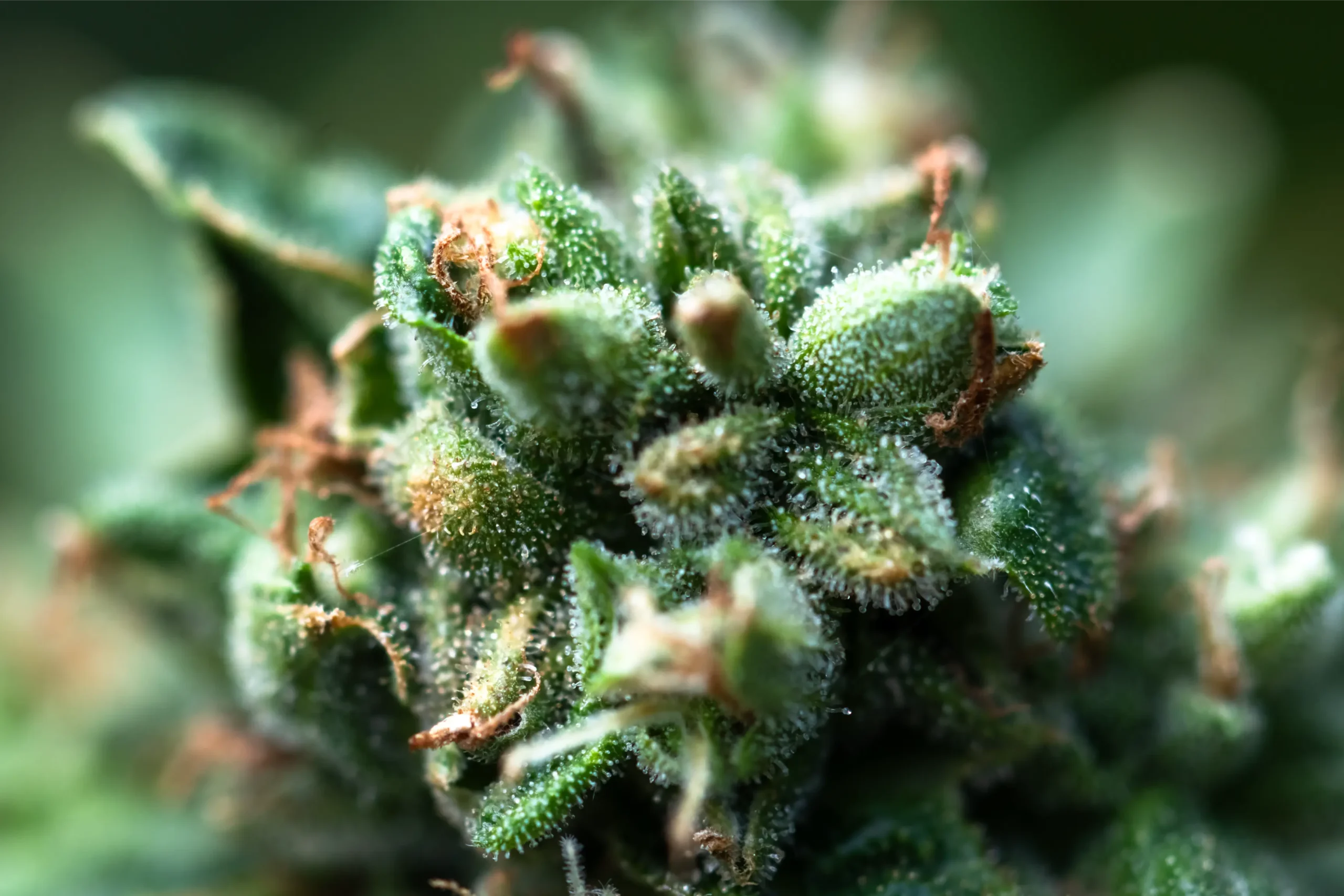
Destroyer can flower more quickly than many tropical sativas, but its finish is variable. Historical cultivation descriptions place flowering broadly around 8-12 weeks, with many indoor reports clustering closer to 10-13 weeks depending on phenotype and conditions. That variability matters. Some plants show a more domesticated Mexico/Colombia influence and finish earlier. Thai-leaning individuals can stretch longer and ask for more patience. The flower itself is made of many small bracts with heavy trichome coverage, producing an elegant resin-to-leaf ratio rather than a dense modern "golf ball" bud.
Strain Features
| Feature | Details |
|---|---|
| Type | 100% sativa, landrace-influenced hybrid |
| Genetics | Meao Thai x early stable Mexican/Colombian sativa |
| THC | Commonly described as high, but reliable modern lab ranges vary; individual phenotype testing is more useful than a fixed number |
| CBD | Usually low in THC-dominant expressions |
| Indoor Flowering | Approximately 8-12 weeks historically, with many grower reports closer to 10-13 weeks |
| Outdoor Finish | Often late October to early November in suitable Northern Hemisphere climates |
| Growth Habit | Lanky, narrow-leaf, Christmas-tree to open multi-branch sativa |
| Stretch | Very high; several-fold height increase is possible |
| Side Branching | Extremely long, vigorous laterals that can become major yield branches |
| Yield | Medium-high outdoors; indoor yield depends heavily on canopy training and usable light distribution |
| Bud Structure | Numerous small bracts, elongated flowers, high trichome coverage, often excellent bud-to-leaf ratio |
| Aroma | Fruit, lavender, flowers, citrus, spice, dry wood and occasional incense-like depth |
| Terpene Certainty | No single standardized cultivar-wide lab profile is reliable enough to call fixed; floral/citrus aroma may involve terpinolene, limonene, linalool, myrcene and caryophyllene depending on phenotype |
| Feeding | Light feeder, particularly sensitive to excessive nitrogen during bloom |
| Flower Climate | Prefers a relatively dry flowering environment |
| Training | Excellent candidate for SCROG, horizontal training and early topping |
| Support | Usually needed because long side branches can become heavy late in flower |
| Difficulty | Advanced indoors; moderate-to-advanced outdoors in a long warm season |
| Main Grow Risk | Uncontrolled stretch combined with overfeeding and insufficient branch support |
| Effect Style | Alert, energetic, cerebral and long-lasting, with potential nervousness at excessive doses |
Destroyer is a strain where a simple number such as flowering time or yield can mislead the grower. The plant is highly dependent on structure. An untrained plant may devote a large amount of energy to stems that grow beyond the best light zone. A trained plant can convert those same stems into a broad set of flowering branches. The difference between an average and excellent harvest is therefore largely architectural.
Genetic Lineage
The Meao Thai side is the dominant identity. Thai tropical cannabis is associated with long seasons, narrow leaflets, substantial stretch and strongly cerebral effects. Bringing those traits into a more manageable indoor line required combining them with a faster sativa rather than a heavy indica. Destroyer therefore remains a true sativa in both plant form and effect.
The Mexican/Colombian component contributes earlier flowering and productivity without erasing the tropical shape. This is an important distinction. Many "tamed" sativa hybrids use broad-leaf indica genetics to shorten flowering and reduce height. Destroyer instead uses other sativa ancestry to preserve the clear, energetic character while improving finish time. That is why the plant can still look wild and lanky even when it completes flowering much earlier than a pure Thai landrace.
The selection history emphasized adaptation. The Thai mother was difficult to acclimate, so the earlier American sativa line was introduced to create a plant that could perform more reliably. The result is not compact, but it is considerably more practical than an uncompromised equatorial Thai. This genetic goal is visible in the flowering window: some plants can finish in roughly two and a half months, while others retain enough Thai influence to continue toward three months or more.
The flowers are also genetically distinctive. Rather than making a few massive compact calyx clusters, Destroyer can produce many small bracts with dense resin coverage. This gives mature buds a glittering, almost wet appearance. It also improves airflow through the flower compared with some modern dense hybrids, though the plant still benefits from dry late-flower conditions.
Phenotype selection should focus on the relationship between stretch and final flower quality. A very tall plant is not automatically the most authentic or the best. The keeper is often the one that preserves the bright, energetic effect and floral-fruit complexity while finishing in a manageable time with strong lateral bud development.
Effect Breakdown
Destroyer's effect is usually described as active rather than relaxing. It can create a strong sense of wakefulness, mental speed and engagement without the immediate body heaviness associated with many hybrids. That makes it attractive to experienced sativa users, but it also creates a clear warning for people who are prone to nervousness.
Fast mental lift
The early phase often feels clean and upward. Mood can improve, conversation becomes easier, and sensory attention increases. A modest amount may feel focused enough for music, creative work or an outdoor activity. The body usually remains light, which can make the user underestimate the strength.
Peak alertness
At peak intensity, Destroyer can become very energetic. Some users describe a clear, bright mental space while others notice restlessness, rapid thought or a desire to keep moving. This is where dose and setting determine whether the experience is enjoyable. A calm task can channel the energy. A stressful environment can make the same stimulation uncomfortable.
The strain's name sometimes encourages people to expect a narcotic "knockout" effect. The opposite is more accurate. Destroyer is more likely to keep an experienced user mentally awake than to create couch-lock. That makes evening use risky for anyone whose sleep is sensitive to stimulating cannabis.
Long tail with limited sedation
The late phase generally softens without turning heavily sleepy. Mental activity gradually returns toward baseline while a mild physical relaxation may appear. The absence of a heavy crash can be pleasant, but the long duration means an excessive dose can feel drawn out.
Possible negative effects include dry mouth, dry eyes, dizziness, anxiety, fidgetiness and racing thoughts. A person who has a history of uncomfortable reactions to high-THC sativas should approach Destroyer carefully or choose a more balanced cultivar.
Flavor & Aroma Profile
Destroyer's aroma is more delicate than the loud gas or candy profile common in many modern hybrids. The best flowers combine fruit, lavender, fresh flowers, citrus, spice and dry wood. Some samples lean almost perfumed, while others show more herbal or incense-like depth. The aroma is interesting because it remains bright without being simply lemon-dominant.
Lavender and floral sweetness can be most obvious when the flower is gently broken apart. Fruit may resemble light berry, tropical sweetness or citrus rather than a single recognizable fruit. On the exhale, spice and woody notes become more apparent. A good cure makes the profile feel longer on the palate, with floral sweetness arriving first and dry spice lingering later.
Because the flowers can be airy to medium-dense, they may dry faster than thick compact buds. That is an advantage for mold avoidance but a danger for flavor. If every small spear is cut into pieces and placed under strong airflow, the harvest can become dry before the internal moisture has time to equalize. The volatile floral fraction is then lost rapidly.
The visual quality of Destroyer is also tied to resin rather than density. A premium sample should not be judged by whether it feels like a rock. Look for well-formed elongated flowers, abundant intact gland heads, low excess leaf and a clean trim. The small bracts can carry impressive trichome density, giving the flower more apparent frost than its airy structure would suggest.
Harvest maturity changes the flavor. Early-cut flowers tend to be greener, sharper and less integrated. Fully mature flowers show a better connection between fruit, lavender, spice and wood. Waiting too long under high heat can dull the bright side, so the best harvest window is the point where flower development has clearly slowed but the top notes remain vivid.
Dominant Terpenes
Destroyer does not have a sufficiently standardized public laboratory terpene profile to justify presenting one fixed list as universal. Different strain pages often repeat inferred terpene names without showing cultivar-specific assays. A responsible profile should separate confirmed aroma from plausible chemical drivers.
Terpinolene as a plausible bright driver
Terpinolene is common in many energetic sativa profiles and can create floral, citrus, herbal and lightly woody aromas. That matches much of Destroyer's sensory description. It is reasonable to consider terpinolene a likely contributor in some phenotypes, but it should not be described as guaranteed dominance without a lab result from the actual plant.
Linalool and the lavender note
The repeated lavender and floral character makes linalool chemically plausible. Linalool has a distinct floral-lavender aroma and can be present in small amounts that are still sensory-relevant. A phenotype with unusually strong lavender may contain more linalool, but again, aroma is not a quantitative assay.
Limonene and citrus
Citrus notes suggest limonene or related monoterpenes. Some Destroyer flowers show a clearer lemon or orange edge than others. This variation may reflect both phenotype and environmental effects on terpene synthesis and preservation.
Myrcene and fruit-herbal depth
Myrcene can support ripe fruit, herbs and earth. It is common across cannabis chemovars and may help create the softer fruity background in Destroyer. Because myrcene is volatile, it is also one of the compounds most vulnerable to warm drying and storage.
Beta-caryophyllene and dry spice
Caryophyllene is a plausible contributor to the peppery, dry-spice finish found in some samples. It is a heavier sesquiterpene than many bright monoterpenes and may remain noticeable later in curing even as the floral fraction declines.
For the grower, this uncertainty is useful rather than frustrating. It means phenotype selection should use the actual cured flower as evidence. If access to laboratory testing exists, test the keeper. If not, record live aroma, dried aroma and cured aroma rather than copying a generic terpene label from the strain name.
Indoor vs. Outdoor Growing
| Aspect | Indoor Growing | Outdoor Growing |
|---|---|---|
| Main Constraint | Vertical space and light distribution across long laterals | Season length and late-flower weather |
| Stretch | Very high; must be anticipated before the flip | Useful when space is open, but plants can become large and conspicuous |
| Training | SCROG, topping, supercropping of selected stems and horizontal LST | Early topping and wide structural training, then staking/trellis support |
| Feeding | Light, especially with nitrogen | Moderate-to-light fertile soil; avoid rich late-season nitrogen |
| Humidity | Prefer a relatively dry bloom, particularly as resinous spears mature | Open flower shape helps, but prolonged autumn rain remains risky |
| Yield | Can be high if lateral branches remain inside the useful light zone | Medium-high with strong sun and a long season |
| Bud Density | Usually elongated and less compact than modern indica hybrids | Sun can improve branch thickness and flower mass without removing the airy sativa form |
| Flavor | Easy to preserve if temperature and dry rate are controlled | Expressive in strong sun, but late-season forced harvest can reduce complexity |
Indoors, Destroyer rewards a low canopy. The plant may begin flower at only 20-30 cm and still become a much larger plant by the time stretch ends. The exact multiplier varies, but grower reports repeatedly show that several-fold expansion is possible. A grower who flips at the same height used for a compact hybrid can run out of vertical room quickly.
Outdoors, the same vigor becomes easier to accommodate. Long side branches can spread into full sun and form multiple spear-shaped colas. The limiting factor is autumn. A plant that finishes around early November needs a region where wet cold weather does not arrive too early. In marginal climates, a greenhouse or weather-protected structure can reduce rain exposure while preserving natural light.
Strain-Specific Grow Guidance
Flip earlier than instinct suggests
Destroyer should usually enter flowering smaller than the grower initially feels comfortable with. The plant can create size during transition. What looks like an underfilled space on day one can become crowded by week three. If growing from seed, leave even more reserve because phenotype variation can change stretch dramatically.
An early topping can improve control, but do it while the plant has time to recover before the flowering switch. Destroyer responds well to topping and can generate strong new leaders. Repeated topping is less useful because every additional top must eventually be supported and illuminated.
Horizontalize the long side branches
The side branches are not weak secondary growth. They can become major production arms. Pull them outward early and give each one a lane. In a SCROG, place a branch into a new opening rather than letting several tips rise through the same square.
The goal is to turn vertical distance into horizontal flower area. A branch that would have grown 70 cm upward can be redirected across the screen, keeping its future flower sites at a more consistent light distance. This is the core yield technique for Destroyer.
Keep nitrogen intentionally restrained
Historical cultivation notes are unusually clear on this point: Destroyer prefers low nutrient levels, especially low nitrogen in bloom. This should shape the entire feeding plan. A narrow-leaf tropical plant can look lighter than a broad-leaf hybrid even when healthy. Do not use dark green as the target color.
Excess nitrogen can cause long soft stems, delayed flower formation, clawed leaves and excessive leaf production. The correction is not a dramatic flush unless there is real salt buildup. Reduce incoming nitrogen, maintain balanced irrigation, and let the plant use existing reserves while flowering progresses.
General scientific cannabis studies show that nutrient optima differ with cultivar and system. Therefore, avoid transferring a laboratory nitrogen target from another cultivar directly to Destroyer. Start lower, observe, and increase only if growth and leaf condition indicate actual deficiency.
Dry flower conditions are more important than chasing maximum humidity-driven growth
Destroyer prefers a relatively dry bloom. The flower structure has good natural airflow, but long resinous spears still benefit from controlled humidity. In late flower, avoid nighttime humidity spikes and condensation. Good air exchange is more important than constant fan force.
A dehumidifier can be useful in a sealed room, especially during the dark period when transpiration and temperature changes raise relative humidity. Place circulation fans so air moves through branches rather than hammering one section of the canopy.
Give stems support before the flowers look heavy
Long side branches can remain thin while the flower mass increases. By the time a branch visibly leans, it may already be carrying considerable weight. A screen is the easiest support indoors. Outdoor plants benefit from a cage or multiple stakes tied loosely enough that stems can expand.
Support also improves quality because it keeps flowers separated. Two long colas resting against each other create a still, humid contact zone. Holding them apart allows more even drying on the living plant after irrigation or outdoor dew.
Root-zone stability is the hidden challenge of long bloom
Destroyer may finish earlier than extreme Thai landraces, but a 10-12 week flowering cycle is still long. Root-zone stress in week eight can reduce the final resin and aroma even if the plant survives. Use a well-aerated medium, avoid chronic saturation, and monitor salt accumulation.
In coco or hydroponics, regular EC observation is especially helpful because a light-feeding plant can accumulate nutrients if the input is too strong. Rising runoff EC combined with dark or clawed leaves is a stronger signal than a feed-chart week number.
Use light efficiently rather than brutally
A long, open canopy can use strong light, but the highest tops are vulnerable if they approach the fixture. Raise or dim the light before bleaching occurs. It is better to have uniform productive light over the entire screen than an extreme hotspot over one central spear.
Research on indoor cannabis demonstrates that yield can increase with light intensity when other resources remain adequate. That finding supports strong lighting, but it does not justify ignoring heat, carbon dioxide availability, root health or cultivar response. Destroyer's thin leaves and long stems make canopy uniformity particularly important.
Do not over-defoliate an already open plant
Destroyer's narrow leaves create more natural light penetration than a broad-leaf indica. Heavy defoliation can remove valuable photosynthetic surface without solving the main structural problem. Remove shaded interior shoots, damaged leaves and a few leaves that block critical sites. Preserve healthy exposed foliage.
The lower canopy should be cleaned according to light access. A long side branch that has been trained into the screen may produce useful flower from nodes that would be "lower" on an untrained plant. Do not lollipop by fixed height. Lollipop by actual light and airflow.
Watch the phenotype's true finish
Some expressions finish near the early end of the historical window. Others continue. Use trichomes on calyx tissue, calyx swelling, pistil behavior, aroma development and declining new floral growth together. A Thai-leaning phenotype may keep producing some new white pistils even when much of the flower is mature, so a strict "all pistils must darken" rule can lead to over-ripening.
Correct excessive stretch without creating a crisis
Do not let the stretch make the decisions
If the canopy stretches beyond plan, use the least destructive intervention first. Spread flexible branches sideways, adjust the screen, raise the fixture, and lower unnecessary nitrogen. Supercrop only selected dominant stems that cannot be redirected gently. Do not crush every top at once.
Late severe stress can prolong recovery and create uneven flowering. The objective is to restore distance from the light and canopy uniformity, not to make the plant shorter at any cost.
The first three weeks of flower deserve a separate plan
Destroyer is easiest to control when the transition is treated as its own phase instead of simply the beginning of bloom. During the first week, continue guiding branches while they are flexible and remove only obvious weak interior growth. In the second week, identify the leaders that are gaining too much height and spread them into unused space. By the third week, the canopy should be approaching its final map, with most major stems supported and only small corrections still needed.
This staged approach is safer than waiting until the stretch is finished and then trying to repair the entire room. A plant with several-fold expansion can become woody quickly. Early gentle changes preserve vascular flow, while late hard bends create knuckles and recovery time. Destroyer is vigorous enough to survive heavy training, but surviving stress and producing the best flowers are not the same goal.
Diagnose light stress separately from nutrient stress
Thin sativa leaves can show heat and light pressure quickly. If the highest leaves pale, curl upward or lose normal movement while lower leaves remain healthy, check canopy temperature and fixture distance before increasing fertilizer. Nutrient deficiency usually follows a different distribution and is often accompanied by root-zone or older-leaf symptoms. Misdiagnosing light stress as hunger can create both light damage and nutrient excess at the same time.
The long internodes also mean one branch may sit much closer to the fixture than the rest. Correct that branch instead of changing the entire room unnecessarily. Tuck it sideways, lower it with a soft tie, or raise the fixture if several tops are affected. Canopy management should be local when the problem is local.
Outdoor branch architecture should be built for wind
Outdoors, a tall Destroyer can act like a sail. Long laterals loaded with flowers experience strong leverage during wind and rain. Train young branches at wider angles while stems are still flexible, then install a perimeter support before flowers become heavy. A broad cage lets branches move slightly without whipping against each other.
Avoid tying every branch rigidly to one central stake. A single attachment point can concentrate force and split the plant where major branches meet. Multiple loose support points distribute load and preserve airflow. After storms, inspect the branch junctions and flower contact points rather than looking only for fully broken stems. Small creases can become weak areas later.
Keeper selection should include efficiency, not just potency
With seed-grown Destroyer, record how much usable flower each plant produces relative to the area it occupies. One extremely tall phenotype may look impressive but require twice the canopy space for the same harvest as a slightly shorter sister. A useful keeper combines the desired cerebral effect and aroma with a stretch pattern the grower can repeat.
Trim time is another practical metric. High resin and a favorable flower-to-leaf ratio can make one phenotype much more efficient after harvest. When two plants have similar potency, the one that produces mature, easily trimmed flower with strong floral aroma may be a better long-term garden choice than the plant that wins only on raw height or novelty.
Weedth Bud Flavor Tips
Destroyer's floral and lavender character is fragile. The flower can still retain plenty of resin after a fast dry while losing the aroma that makes it worth growing. Post-harvest planning should therefore begin before the chop.
Harvest with intact aroma
Avoid harvesting immediately after a major heat event if the plant can safely remain for a cooler period. Keep mature indoor canopy temperatures controlled. Outdoors, inspect weather and choose a dry harvest window where wet flowers do not have to enter the drying room.
Handle branches by the stems. Destroyer's exposed resin on small bracts can be physically removed by rough handling. Do not pile branches or compress them in bags.
Slow down the dry because the flowers are naturally open
Airy sativa flowers can dry deceptively fast. Hanging larger branches helps preserve internal moisture long enough for a gradual dry. Use a dark room with stable moderate temperature and humidity, and keep fans indirect.
The target is a flower that reaches curing moisture evenly. If the exterior becomes crisp in two days, the environment is too dry or too windy. Rehydrating later does not restore terpenes already lost.
Let the floral profile develop in cure
The first week in a stable curing environment often softens the green plant note. Lavender, fruit and spice become clearer as moisture equalizes. Several weeks later, woody and incense-like details can appear under the floral top.
Keep cured flower whole and in the dark. Research on stored cannabis shows that terpene concentrations decrease over time and that warm storage accelerates chemical change. A cool, stable environment protects the flavor better than frequent opening or display in light.
Weedth Flavor Note: Destroyer should smell elegant, not loud for the sake of loudness. If a subtle floral-fruit profile survives the cure with clear spice underneath, the harvest was handled correctly.
Weedth Bud Boost Tips
Destroyer yield improves when the grower turns its long branches into productive horizontal surface. Heavy feeding is not the solution. The best bud-boosting strategy is structure, support and patience.
Use fewer plants more effectively when plant count is limited
A single Destroyer can fill considerable screen area because the laterals are long. If legal plant-count limits matter, one or two plants can be trained across a broad footprint. This approach requires more veg than a dense SOG but allows each branch to be positioned deliberately.
Use SOG only with a short veg and known behavior
Destroyer has historically been described as suitable for SOG because it can form productive primary flowers, but stretch makes spacing critical. A clone with known behavior is much easier than mixed seed plants. Keep veg short, flower small plants, and avoid a dense plant count that becomes impossible to separate after transition.
Remove branches that will never enter the light field
Every retained lower shoot creates transpiration and consumes resources. If a branch remains far below the screen with no realistic path upward, remove it early. Do not wait until week six to decide it is larf. Early selection creates a cleaner airflow path and concentrates growth in supported flowers.
Maintain a gentle nutrient curve
Do not spike PK simply because flowers look narrow. The architecture is genetic. Adequate phosphorus and potassium are necessary, but controlled research does not support the idea that unlimited bloom salts produce unlimited flower mass. With a light feeder, excess EC can reduce water uptake and compromise the long finish.
Protect photosynthesis late
The plant needs healthy leaves until maturity because much of the final flower development occurs late. Avoid severe fade caused by underfeeding as well as dark excess caused by overfeeding. A gradual natural decline near the end is normal, but a plant that loses most functional leaf area weeks before harvest cannot finish at full potential.
CO2 is optional, not foundational
In a sealed, high-light room, additional CO2 can support higher photosynthetic rates. But Destroyer's more immediate limitations are canopy distance, support and root-zone nutrient concentration. Solve those first. Faster growth in a poorly trained room only creates faster problems.
Skip unproven last-minute stress tricks
There is no need for 48 hours of darkness, intentional drought, stem splitting or aggressive UV-B simply because harvest is approaching. Controlled UV-B research has not shown reliable increases in cannabis yield or cannabinoid concentration. Destroyer already has strong resin genetics. Preserve that resin instead of gambling it on late stress.
Medical Uses & Benefits
Destroyer is best discussed as a strongly stimulating cannabis cultivar rather than a medical remedy. Some experienced adults may prefer this type of effect when they are seeking temporary mood elevation, alertness or engagement. The lack of immediate sedation can be attractive to people who dislike heavy body effects.
However, a stimulating high-THC profile can also worsen anxiety, restlessness and racing thoughts. That makes Destroyer a poor choice for someone whose primary goal is calming panic or preparing for sleep. Individual response is more important than the label "sativa."
Floral terpenes such as linalool, citrus-related compounds such as limonene, and spice-related caryophyllene are widely studied, but a specific Destroyer flower has to be chemically tested before those constituents can be quantified. Even then, terpene research should not be turned into a claim that the flower treats a condition.
Medical cannabis patients should use standardized, tested products and follow local medical guidance. Strain names can describe heritage and expected character, but they do not guarantee a fixed cannabinoid or terpene dose.
Ideal User Profile
Destroyer fits the person who actively enjoys old-school cerebral sativas. The ideal user wants energy, alertness, conversation, creativity or a bright outdoor experience rather than body sedation. They already know their THC tolerance and are comfortable with a high that may feel mentally fast.
Morning or early afternoon use is more logical than late evening for many people. The effect can remain active enough to delay sleep. It is also better suited to low-risk activities than tasks requiring precise judgment or coordination.
Flavor enthusiasts who appreciate flowers, lavender, fruit, citrus and dry spice will understand Destroyer better than users searching for heavy candy or gas. Its elegance is part of the point.
Grower Notes and Feedback
Grow reports often describe stretch around three to four times the pre-flower size, though individual plants can differ. That repeated observation is more useful than any single height number because starting size and container conditions vary. The practical message is to flip early.
Long side branches are another consistent feature. Some growers are surprised by how productive those branches become. A natural Christmas-tree plant can yield acceptably, but a screen exposes far more of the lateral potential to direct light.
Feeding comments are unusually consistent: low fertilizer, especially low nitrogen. Growers who push the plant tend to report more management problems. Those who keep the root zone lean often describe strong vigor anyway. This is a good reminder that genetic vigor and fertilizer concentration are not the same thing.
The flowers can vary from compact enough to surprisingly fluffy. That variation is not necessarily a quality defect. The important traits are resin, maturity, aroma and smoke quality. Destroyer is one of those strains where visual density should not dominate keeper selection.
Support is frequently necessary. Side colas can become thick and heavy while the underlying stem remains long. A second trellis or soft ties near late flower prevents leaning and allows the grower to maintain separation.
The effect after curing is often described as energetic, clear and long. Some users report nervousness at high doses, which fits the cultivation observation that this is a plant selected for strong sativa character rather than universal comfort.
Weedth Editor's Note
The point where this plant reveals itself
The first thing I would write on a Destroyer grow tag is "flip small." I do not want to discover the strain's stretch when the light is already at the ceiling. I want room to guide branches sideways for at least the first part of the transition.
The second note is "do not darken the leaves for aesthetics." Narrow-leaf sativas can make growers nervous because they do not look like thick modern hybrids. I judge Destroyer by growth rate, posture and flower development. If those are good, I do not chase a darker green with nitrogen.
I like this plant under a screen because the side branches finally make sense. Instead of watching long laterals disappear into the edge of the room, I can give each one a lane. When the plant is trained this way, the flowers develop as a field of resinous spears rather than one tall main stem surrounded by shaded secondary growth.
At harvest, I care more about resin maturity and aroma than rock-hard density. Destroyer is not supposed to become a compact indica nug. I want mature small bracts, heavy intact trichomes and a floral-fruit smell that survives drying.
The cure should make the flower more elegant. Lavender, fruit and flowers up front, then spice and dry wood. If I get that progression, I am happy even if the buds are not the hardest flowers in the jar.
For a beginner grower, the stretch makes Destroyer challenging. For someone who has already learned how to use a screen and read nutrient excess, it is a very educational sativa. It teaches the grower to stop equating more fertilizer and more density with more quality.
Weedth Score
Growing Experience – 8.1/10: Vigorous and responsive, but very high stretch and light feeding require discipline. The plant is not fragile; it is simply unforgiving of poor spatial planning.
Bud Structure & Visual Appeal – 8.5/10: Elegant spear flowers, strong trichome coverage and good bud-to-leaf ratio. Density can be variable, which may disappoint growers judging only by compactness.
Aroma Complexity – 9.0/10: Fruit, lavender, flowers, citrus, spice and wood create a refined profile that stands apart from modern dessert hybrids.
Flavor & Smoothness – 8.8/10: Excellent after a slow dry. The delicate floral top is easy to lose, so post-harvest skill matters.
Effects & High Experience – 9.0/10 for sativa enthusiasts: Bright, energetic and long-lasting with limited sedation. High doses can feel nervous or restless.
Overall Satisfaction & Recommendation – 8.8/10: A strong recommendation for experienced growers and consumers who value pure-sativa architecture and cerebral character over speed or dense bag appeal.
"I do not grow Destroyer to make the hardest bud in the room. I grow it to keep the floral electricity intact from branch to jar."
FAQ
Why is Destroyer considered difficult indoors?
The main difficulty is stretch. The plant can expand several times its starting height and produces very long side branches. If it is flipped too large, even a healthy plant becomes difficult to keep inside the useful light zone. Early flowering and horizontal training solve much of the problem.
Is Destroyer a heavy feeder?
No. Historical cultivation notes specifically recommend low nutrient levels, especially low nitrogen during bloom. Excess nitrogen can worsen stretch and keep the plant too vegetative. Feed based on plant response rather than the size of the canopy.
How long does Destroyer really flower?
Expect variation. Historical descriptions place the window around 8-12 weeks, while grow reports frequently extend into roughly 10-13 weeks. Thai-leaning phenotypes may take longer. Use maturity signs on the actual flowers instead of relying on one advertised day count.
How much can it stretch?
Several-fold stretch is realistic. Some grow reports describe roughly three to four times the pre-flower height. Treat that as a planning warning rather than a guaranteed multiplier. The exact result depends on phenotype, veg duration, root volume, light and nutrition.
Does Destroyer work in SCROG?
Very well. Its long laterals can be spread across a screen and become productive flowering arms. The screen also provides late support. Leave empty area at the flip so the plant has space to expand.
Can it be topped?
Yes. It responds well to topping, especially when done early. One structural topping is often enough because the strain already branches strongly. Repeated topping can create more leaders than the grower can support.
Why should flowering humidity be relatively low?
Mature resinous flowers benefit from dry surfaces and good vapor removal. Destroyer's open bud structure provides some protection, but long colas can still hold local moisture. Lower late-flower humidity reduces fungal risk and improves drying of dew or irrigation-related moisture on the plant.
What should the buds look like when mature?
Expect elongated flowers made from many small bracts rather than dense round nuggets. Resin should be abundant, the bracts should be developed, and the plant should show reduced new floral growth. Do not reject a good phenotype only because the buds are not rock hard.
What terpenes dominate Destroyer?
There is not enough standardized cultivar-specific lab data to name one universal dominant terpene with confidence. Floral, lavender, fruit, citrus and spice suggest possible roles for terpinolene, linalool, limonene, myrcene and caryophyllene, but phenotype testing is the only reliable way to know a specific plant.
Is Destroyer good for nighttime use?
Usually not for people who are sensitive to stimulating cannabis. The effect is commonly energetic and alert. Late use can interfere with sleep even after the peak fades.
Is it suitable for a first-time consumer?
A milder cultivar is more appropriate. Destroyer can be mentally fast and long-lasting. Inexperienced or anxiety-prone users may find the intensity uncomfortable.
What is the biggest quality mistake growers make?
Overgrowing the space and then trying to correct it with heavy stress. The second major mistake is overfeeding nitrogen. Both problems are easier to prevent than repair.
Similar Strains
Golden Tiger: Shares Thai ancestry, high stretch, low nitrogen preference and long powerful cerebral effects. Golden Tiger usually flowers longer and brings more Malawi resin and lemon-spice depth.
Zamaldelica: Another pure-sativa hybrid with tropical intensity. Zamaldelica is more aggressively bushy and often expresses carrot, mango and orange, while Destroyer is lankier with floral-lavender-fruit notes.
Kali Mist: A classic narrow-leaf sativa comparison for users who like clear energetic effects and elongated flowers. It is generally more domesticated indoors and has a different genetic background.
Neville's Haze: Similar in extreme stretch, long flowering and electric cerebral character. Neville's Haze typically leans more toward incense, haze spice and very long tropical development.
Panama: A resinous sativa with strong cerebral effects and refined aroma. Panama is often easier to manage and can produce denser flowers with citrus, incense and red-fruit directions.
Super Silver Haze: A practical alternative for growers who want an energetic sativa but need a more predictable indoor plant. It usually finishes faster and is less extreme in stretch.
Share this article
A quick overview of the topics covered in this article.
Follow us
Latest articles
September 9, 2026
September 9, 2026

September 9, 2026