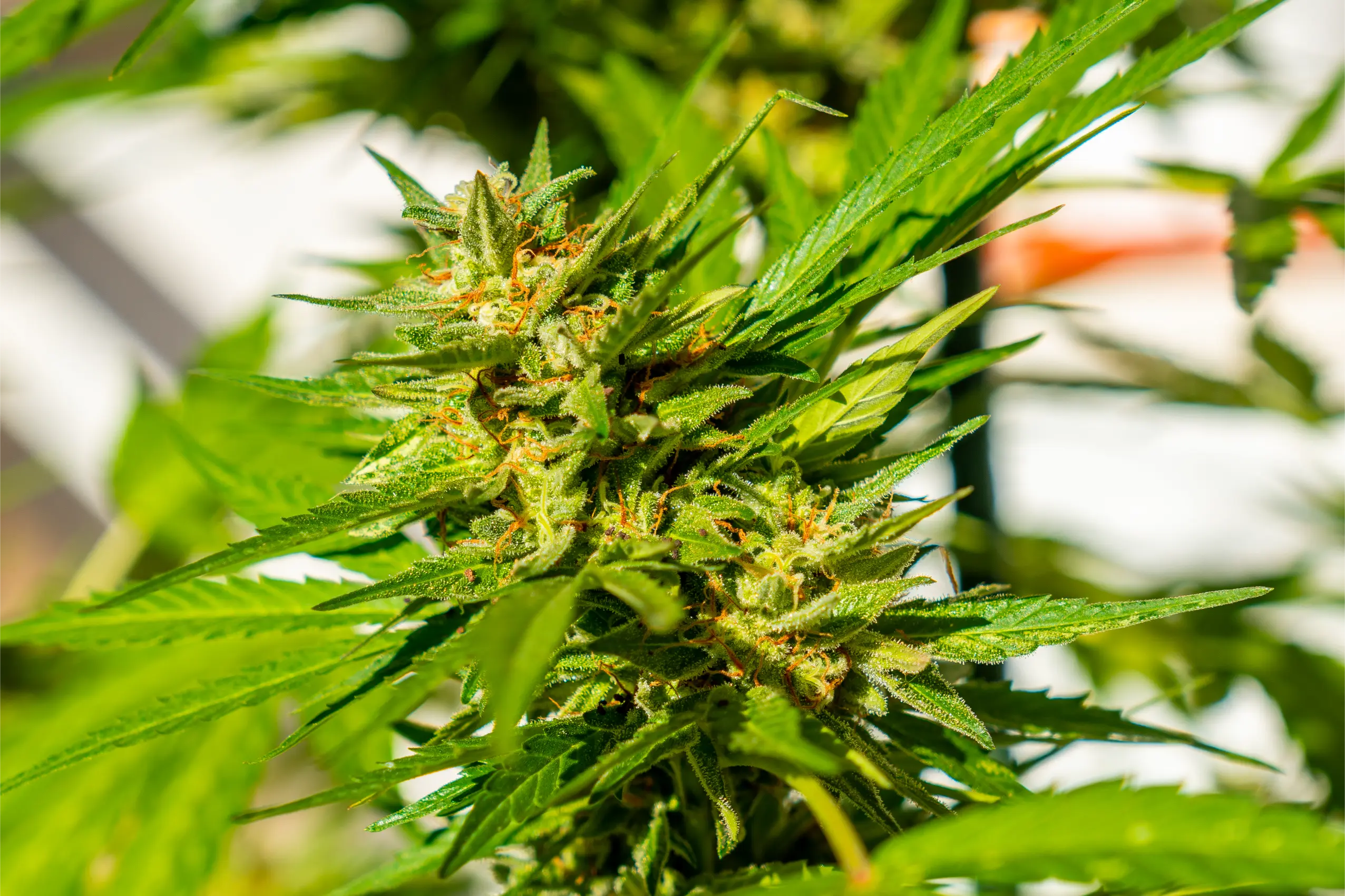
Dirty Taxi
Dirty Taxi – Strain Profile & Grow Guide
Dirty Taxi is often called a sativa-leaning hybrid, yet the experience can become too stony and physically slow for ordinary daytime use. That contradiction begins in the genetics. Chem I-95 contributes metallic diesel, tar, pepper, branching vigor and a fast cerebral impact. GMO contributes garlic, onion, cheese, earth, heavy resin and a body effect that can make time feel slower. The combined flower may smell like a mechanic’s garage beside a fast-food kitchen: hot rubber, skunk, garlic, black pepper, honeyed dough and greasy cheese can all appear in the same jar.
The plant usually behaves more predictably than the aroma. It tends to grow medium-tall with active lateral branching and a useful but meaningful flowering stretch. Some records place the finish near eight and a half weeks, while GMO-leaning plants may require nine to ten weeks or slightly more. A cut that stretches toward double its height can still build dense flowers, which means height management and late humidity control must be planned together.
Dirty Taxi is not difficult because it refuses training. It is difficult because the grower can push it too hard. The plant often accepts strong light, active feeding and an open screen, then reaches a point where additional intensity no longer improves quality. Overpowered tops may harden early, foxtail or lose honey and tar nuance while lower branches in a slightly gentler zone smell more complete. The cultivar rewards a grower who watches the entire plant rather than chasing the appearance of the brightest top.
Strain Features
| Feature | Details |
|---|---|
| Strain Type | Sativa-leaning hybrid with a strong body-heavy late phase |
| Genetic Profile | Chem I-95 x GMO |
| THC | Commonly reported in the mid-to-upper 20% range; some batches test higher |
| CBD | Usually very low |
| Dominant Terpenes | Limonene, beta-caryophyllene and myrcene are frequently reported; humulene and pinene may support the profile |
| Signature Aroma | Tar, skunk, garlic, cheese, black pepper, honey, hot rubber and chemical diesel |
| Effect Character | Fast focus and euphoria followed by slowed perception, physical calm and possible couch-lock |
| Flowering Time | Commonly 8.5 to 10 weeks; GMO-leaning cuts may finish later |
| Stretch | Moderate to strong, often around 1.5 to 2 times in vigorous rooms |
| Plant Shape | Medium-tall with strong lateral branching and a relatively open early frame |
| Flower Structure | Dense resinous colas that can become heavy despite the sativa-leaning label |
| Yield Character | Moderate to high when the canopy is trained early and the lower zone is cleaned |
| Odor Intensity | Extremely strong and persistent during late flower, trimming and drying |
| Support Needs | A trellis is recommended for shape and late flower separation |
| Main Grow Risk | Overdriving light and feed after the plant has reached its useful metabolic limit |
| Grow Difficulty | Intermediate |
Genetic Lineage
Dirty Taxi joins two related but distinct chem families. Chem I-95 contributes the sharp upper register: metallic fuel, electrical heat, pepper, sourness and a quick cerebral strike. It also contributes a more upright plant frame and enough lateral movement to fill a screen. GMO contributes the lower register: garlic, onion, cheese, damp earth, heavy trichomes and a longer physical effect.
The cross can express as a true blend or lean strongly toward one side. A Chem-dominant plant may stretch more, carry narrower leaves and finish with tar, pepper and metal. A GMO-dominant plant may show broader leaves, stronger garlic, slower maturation and heavier flowers. Both can be potent, but they require different harvest decisions.
The lineage explains why public flowering estimates conflict. Some plants can be harvested around 58 to 63 days when the Chem side controls the finish. Others need 63 to 70 days, and selected GMO-heavy cuts may benefit from another week. The correct response is not to choose the most convenient number. It is to identify the cut’s rate of calyx expansion and aroma development.
Branch structure is generally useful. The plant tends to create strong laterals rather than a single weak central stem. Topping can redirect the frame effectively. Once flowering begins, however, the branches may continue extending while the flowers gain density. This combination can create long, heavy colas that need more support than early descriptions suggest.
The lineage also creates a distinctive resin character. Trichome coverage can become heavy and greasy, especially on GMO-leaning plants. The resin may smell stronger after contact, releasing garlic, cheese and fuel that were less obvious on the intact flower. This makes the plant attractive for processing, but the flower itself should still be judged for smoothness and layered flavor.
Early identification can be done without pretending that leaf shape is a genetic test. A plant that begins increasing internode distance before the flip, sends side branches above the main leaf plane and continues reaching after pistils appear is more likely to need the longer Chem-style lane. A plant with heavier petioles, broader leaves and earlier flower clustering may require less height but more attention to inner humidity. These are working observations, not permanent labels, and the grower should update them as flowering develops.
The parent combination also creates a wide maturity curve within one cola. The upper calyxes can harden under strong light while the lower section remains actively swelling. A top-down trichome check may therefore suggest the plant is ready earlier than a side inspection along the branch. Dirty Taxi should be examined across the entire productive length, especially when the grower intends to keep long spears rather than breaking them into smaller flowers.
Effect Breakdown
Why the sativa label can mislead
The opening is often fast, bright and mentally forceful. Focus, talkativeness and euphoria are common descriptions. Music can feel more dimensional, and the user may become interested in conversation or one detailed task. This is the Chem side of the experience.
The problem is duration and intensity. Dirty Taxi does not always stay in an energetic lane. The mental effect can become psychedelic, repetitive or slowed. Some users describe time moving at a reduced speed, as though the brain is processing each moment more heavily.
The body phase arrives before the mind fully settles
Physical relaxation can begin while the mental effect remains active. This creates a strange combination: the user may feel alert inside a body that no longer wants to move quickly. At a moderate dose, the contrast can be enjoyable. The strain suits music, movies, long conversations or creative work without a deadline.
At a higher dose, the body can become heavy and the mental state foggy. Speech may slow. Appetite may rise. The user may remain awake but prefer to stay seated.
Negative effects and dose control
Dry mouth and dry eyes are common. Anxiety can occur because the fast cerebral onset arrives before the body relaxation. A low-tolerance user may interpret the first ten minutes as evidence that more is needed, then become overwhelmed when the second phase develops.
The cultivar is usually better for late afternoon or evening than for the start of a demanding day. A small dose can feel focused. A large one can resemble an indica experience despite the plant’s sativa-leaning classification.
The duration can feel longer than the first burst suggests. Mental intensity may soften before the body heaviness disappears, leaving a slow afterglow. Users should allow the first dose to develop fully before adding more, especially when the flower tests high in THC.
Flavor & Aroma Profile
Dirty Taxi is one of the less polite chem profiles. The intact jar may smell like tar, damp skunk, honey and old fuel. Breaking the flower releases garlic, onion, cheese, black pepper and hot rubber. Some batches add a sweet bread or fast-food sauce quality that makes the aroma feel greasy rather than simply chemical.
Honey is an important secondary note. It may not be obvious in the strongest garlic phenotypes, but it can appear as a dark sweetness between tar and pepper. A complete batch should have some aromatic contrast. Pure ammonia or pure garlic can be powerful, but the honey, skunk and metallic notes make Dirty Taxi more specific.
The inhale often begins earthy and slightly sweet. Pepper develops quickly. The exhale carries garlic, cheese and diesel, sometimes with a tar-like bitterness. The smoke can coat the tongue and remain in the mouth long after the session.
A well-cured sample should feel pungent without tasting burnt. Excessive mineral salts create a hot sensation that is easy to mistake for strong pepper. Natural chem flavor remains aromatic through the nose, while nutrient harshness feels flat and irritating.
The profile changes with maturity. Earlier flower can smell brighter, more metallic and citrus-pepper focused. Later flower becomes heavier, with garlic, cheese and dark earth. Overripe flower may lose honey and feel muddy.
The intact flower and the ground flower should be compared. A jar that smells mostly sweet can release aggressive garlic and pepper after grinding. A jar that opens with skunk and tar may reveal honey on the broken interior. This difference is useful during selection because it shows whether the aroma is carried only on the outer resin or throughout the flower.
Drying also changes the hierarchy. Tar and garlic survive. Honey and subtle skunk sweetness are more fragile. A warm, fast dry leaves an aggressive but less interesting result.
Dominant Terpenes
Laboratory reports commonly identify limonene, beta-caryophyllene and myrcene as leading terpenes. Humulene and pinene may contribute to the herbal, tarry and sharp aspects of the profile.
Limonene adds a high aromatic edge and supports the fast euphoric opening. It may present as sour brightness rather than obvious citrus.
Beta-caryophyllene is central to black pepper, dry spice and the warm fuel base. It connects the aggressive aroma to the physical relaxation.
Myrcene contributes damp earth, skunk and the heavy late phase. Higher-myrcene batches may feel more sedating.
Humulene can add hops, dry herbs and a bitter quality that resembles tar or old wood.
Pinene may reinforce sharp pine and metallic freshness in Chem-dominant expressions.
Garlic, onion, cheese and rubber likely depend on minor sulfurous compounds. Their sensory impact can be much larger than their concentration suggests, which is why a standard terpene panel may not capture the cultivar’s true identity.
Indoor vs. Outdoor Growing
| Decision Point | Indoor Growing | Outdoor Growing |
|---|---|---|
| Stretch | Easier to control with an early flip and an open SCROG | Root freedom can produce a tall, wide plant |
| Branching | Strong laterals can be organized into a level canopy | Early topping creates a broad framework that needs support |
| Flower Density | Indoor humidity control protects long dense colas | A dry autumn is essential because large flowers can trap rain moisture |
| Light | Intensity can be distributed evenly across the canopy | Full sun supports yield, but late heat can simplify flavor |
| Odor | Strong air treatment is required | Garlic, skunk and fuel can travel far downwind |
| Harvest | Chem and GMO-leaning branches can be taken at different times | Weather may force a single harvest before every branch is equally mature |
| Best Fit | Growers with enough ceiling and climate control | Warm, dry sites with privacy, support and a long finishing window |
Indoor cultivation allows the grower to manage the cultivar’s two main contradictions: stretch and density. The plant needs enough open screen area to move, yet the final flowers require separation. A room that controls only height may still become crowded laterally.
Outdoor plants can become large and productive. The strong branches support a broad framework, but the odor is difficult to hide. Late-season weather is the main limitation. A GMO-heavy plant left in repeated rain can develop hidden moisture inside apparently healthy flowers.
Site selection should account for morning moisture. A location that receives strong afternoon sun but remains shaded until late morning may hold dew inside the garlic-heavy colas for several hours. Early light and moving air can be more valuable than maximum heat later in the day. The plant should also be accessible from several sides because the interior needs inspection as it becomes dense.
The outdoor sun may deepen tar, pine and earth. Honey and subtle sweet notes can be lost during a hot finish. Harvested branches should be moved into shade immediately.
Strain-Specific Grow Guidance
Choose the flip height from internode behavior
Dirty Taxi should not be flipped based only on the current plant height. Look at the distance between new nodes and the speed of side-branch growth. A plant with increasingly open nodes is preparing to stretch more than a compact plant of the same height.
In a low room, flip early and allow the screen to finish during transition. In a taller room, the plant can be given more vegetative time, but the branch lanes should remain separate.
Topping and screen design
One early topping works well. The resulting laterals can be spread into a wide pattern. Repeated topping may delay the plant without solving the real problem, which is the length of flower-bearing branches after the flip.
Use the first net to guide the branches. Stop tucking once the flower clusters begin to form. A second net should support the colas and preserve distance, not compress them into a flat layer.
Lower cleanup and interior management
The cultivar can produce numerous side shoots along the main branches. Not all of them will reach useful light. Remove weak lower sites before the plant invests heavily in resin.
The interior should remain open enough to see branch junctions from below. This makes irrigation, inspection and airflow easier. A dense lower zone raises humidity and creates small garlic-heavy flowers that dry unpredictably.
Feeding behavior
Dirty Taxi can appear hungry during transition because it grows quickly. Productive feeding may be appropriate, but the plant should not remain dark and clawed. Excess nitrogen lengthens leafy growth and increases the amount of foliage between dense colas.
After stretch, watch water use. If drinking slows while feed strength remains high, salts can accumulate. Burnt tips, dull leaves and a sharper smoke are likely outcomes. A controlled taper is safer than continuing peak nutrition until harvest.
Irrigation
The plant benefits from consistent root-zone oxygen. A fast-growing canopy can use water aggressively, yet a large container may remain wet after stretch ends. Irrigation frequency should change with plant demand.
A Chem-leaning cut may continue drinking longer than a compact GMO-leaning cut. Separate irrigation where possible. If all plants share one system, avoid letting the thirstiest plant determine the entire room’s schedule.
Mid-flower reassessment
Around the middle of bloom, step back from the room and compare three things: the rate of new pistil production, the amount of daily water use and the distance between neighboring flowers. If pistils are still appearing rapidly and the plant is drinking hard, it is still building. If water use has slowed while the canopy remains dark and tips are burnt, nutrition should be reduced rather than increased. If colas are beginning to touch, support and selective leaf removal should happen before the resin becomes more fragile.
This reassessment is particularly useful because Dirty Taxi can look productive under almost any strong light. The plant may continue stacking while quality begins separating between zones. Aroma and leaf posture should therefore be recorded beside flower size.
Light intensity and canopy temperature
Dirty Taxi can build dense flower under strong light, but the top layer should be evaluated for quality, not just size. Excess intensity may cause upward leaf curl, pale tops or foxtailing. More subtly, it can remove honey and tar nuance while leaving garlic and fuel.
Measure or compare the canopy rather than assuming the fixture setting is correct. The ideal intensity is the highest level the whole plant can use without changing aroma, leaf posture or water demand in a harmful way.
Airflow and humidity
Air should move along the length of the colas and through the spaces between them. Direct fan pressure on one section can dry the flower surface and distort the plant’s growth.
Lower late-flower humidity before the buds reach maximum density. Inspect contact points, stem-facing calyxes and leaves that suddenly die inside a flower. The strong natural odor should not replace visual inspection.
Support
Build support before the flowers demand it
Some descriptions say the plant does not require much support, and strong branches can indeed carry weight well. However, selected GMO-leaning cuts can develop long heavy flowers. A second trellis or soft ties become valuable late.
Support should be installed before branches lean. Once two colas rest together, separating them can remove resin and expose damaged tissue.
Harvest timing
Flowering records range from roughly 58 days to 70 days or more. This difference is best explained by cut variation. Chem-forward expressions may finish earlier. GMO-heavy plants often continue swelling and developing savory aroma later.
Harvest when the calyxes are fully expanded, fresh pistil production has slowed and trichomes on calyx tissue are mostly cloudy. Earlier flower feels more energetic and metallic. Later flower becomes heavier, garlickier and more physically sedating.
Planning a mixed-cut room
When more than one Dirty Taxi expression is present, do not arrange the room only by current height. Place the most open, fast-reaching plants where they can expand sideways without shading compact plants. Give broader GMO-like plants positions with easier access for leaf removal and inspection. This may create a canopy that looks uneven in vegetative growth, but it often becomes more uniform after stretch.
Label branches as well as plants. If one plant contains a tall outer branch and a compact inner branch, their maturity can differ enough to justify separate observation. Simple tags at the net make it easier to record which section held honey, which section leaned toward garlic and which section needed more time.
The room should also have a contingency for the final ten days. If the Chem-leaning tops finish first, they can be removed without leaving unsupported branches behind. If the GMO-heavy plants need longer, airflow and humidity must remain appropriate for dense mature flowers after part of the canopy has been harvested. Planning this before the flip prevents a late compromise between overripe tops and underdeveloped lowers.
Warning signs specific to Dirty Taxi
A room that smells strong is not necessarily mature. Garlic can appear early. Dense-looking tops are not necessarily finished. Strong branches are not guaranteed to remain upright. High light tolerance is not unlimited.
The grower should keep checking plant function after the canopy looks successful. Most quality losses occur because the room continues being pushed after the cultivar has already reached its useful limit.
A simple weekly comparison helps: smell one center top and one edge branch at the same time of day, then note water use and leaf posture. If the center gains density while losing honey and becoming hotter, the room is no longer improving uniformly. That observation is more useful than waiting for visible bleaching.
Weedth Bud Flavor Tips
Dirty Taxi’s flavor should be protected by separating durable and fragile notes. Garlic, pepper and fuel survive rough conditions. Honey, skunk sweetness and metallic brightness do not.
Harvest in darkness or low light when practical, and move outdoor branches out of the sun immediately. Warm cut flowers lose the subtle sweet layer quickly.
Sort branches by diameter. Long colas may need to be divided into medium sections. Smaller branches should be removed from the drying space earlier if they reach the correct moisture state. Forcing them to remain until the largest tops are ready produces brittle flower.
Use indirect circulation. Direct air strips honey and creates a dry outer shell. The jar may still smell powerful, but the smoke becomes sharper and less layered.
During cure, garlic and tar may dominate first. Honey and soft skunk can become clearer later. Avoid opening containers repeatedly for aroma checks. Use small containers and allow enough time for internal moisture to equalize.
Keep flowers from different light zones separate during the first evaluation. The strongest center tops and the gentler edge branches may have different flavor even when they came from the same plant. Mixing them removes the evidence needed to adjust the next run.
The cultivar also benefits from a rest after trimming. Immediately cut surfaces release sharp green and sulfurous aromas that can make the flower seem rougher than it will be after the resin and moisture settle. Judge smoothness after the flower has had time to stabilize.
Trim gently. The flower can carry heavy resin, and rough dry trimming removes trichomes and releases aroma unnecessarily. The finished bud should be clean but not polished at the expense of resin.
Weedth Bud Boost Tips
The most effective yield strategy is a wide open screen with a limited number of long productive branches. Each branch should carry light along its length. A canopy full of short secondary shoots produces more trimming and less premium flower.
Indoors, one topping and early low-stress training are usually sufficient. Use the stretch rather than trying to eliminate it. The plant’s transition growth can finish the canopy if the flip happens before the net is full.
Outdoor plants benefit from early topping, large root volume and a support cage. Remove crossing branches and maintain access to the interior. The final plant should have several independent arms rather than a solid wall of foliage.
Light distribution is a greater yield tool than maximum intensity. Raise or reposition the canopy so no top receives a damaging hotspot. The edge flowers should not be so weak that they remain immature, and the center should not be so strong that it loses flavor.
Nutrition should support sustained growth, but late salts reduce quality. The cultivar’s dense resin does not need to be forced with stress. A healthy plant allowed to finish naturally produces more usable weight than an overdriven plant harvested with burnt leaves and harsh flavor.
Staged harvest can improve both yield and quality when the upper Chem-like branches mature before lower or GMO-heavy sections. Remove ready flowers and allow the remainder to finish under stable conditions.
Medical Uses & Benefits
Consumers report using Dirty Taxi for stress, low mood, fatigue and physical discomfort. A small dose may feel focused and talkative. The later relaxation may reduce physical tension and support evening rest.
The strain can also increase appetite and create a strong sensory shift. These experiences do not demonstrate that it treats anxiety, pain, depression or any other condition.
The rapid THC onset can worsen anxiety, especially at higher doses. Cognitive slowing and sedation may interfere with daytime function. Low CBD provides little protection from THC-related discomfort.
People using cannabis for health reasons should consider measured dose, verified product chemistry and professional advice rather than assuming the sativa label predicts an energizing therapeutic result.
Ideal User Profile
Dirty Taxi suits experienced users who enjoy chem, garlic, tar and pepper but want a more cerebral opening than a pure heavy indica. It fits late afternoons, music sessions, movies and social evenings where the user does not need to remain highly efficient.
Growers should choose it when they have enough ceiling for moderate stretch and can manage high odor. The plant rewards a broad screen, careful light distribution and patient finishing.
It is less suitable for low-tolerance users, morning productivity or rooms where the canopy is already filled before transition.
Grower Notes and Feedback
Grow reports consistently describe a vigorous medium-tall plant with strong laterals and a powerful odor. Flowering estimates vary from a short 58-day finish to 70 days or more. The variation likely reflects Chem-leaning and GMO-leaning cuts.
The aroma descriptions are equally diverse but related: tar, honey, skunk, garlic, cheese, onion, pepper and diesel. These notes form a coherent savory-chemical profile rather than random disagreement.
The plant is often called high yielding. That result depends on early training. An untrained plant can produce one dominant top and uneven side branches. A well-spread canopy uses the long flowering branches more efficiently.
Resistance should be described cautiously. The plant can be vigorous and recover from topping, but dense late flowers still require humidity control. Strong smell does not indicate disease resistance.
Home growers often note that the finished effect is heavier than expected. This should influence harvest timing and user guidance. A batch labeled sativa may still be inappropriate before work or driving.
Another recurring point is that the plant does not always fail visibly when the room is too intense. Leaves can remain green, trichomes can remain heavy and yield can remain acceptable while the honey note disappears. Growers who compare branches from different zones often learn more than growers who evaluate only the best-looking top.
The trim can be sticky and pungent. Small sugar leaves may carry enough resin for secondary use, but leaving excessive leaf around the finished flower increases harshness and makes moisture assessment difficult. A deliberate dry trim is preferable to either polishing the bud aggressively or leaving a thick leafy shell.
Weedth Editor's Note
How I would judge the finished flower
Dirty Taxi can expose the weakness in a grower’s lighting strategy because the plant does not fail dramatically. It keeps growing while the quality separates across the canopy.
Imagine a screen with the center directly under the strongest part of the fixture and the outer branches receiving a gentler level. By week six, the central tops look superior. They are harder, whiter and slightly larger. The edge flowers appear a little less dramatic.
The aroma tells a different story. The center smells mostly of garlic and hot fuel. The outer branches carry tar, honey and pepper in clearer layers. The difference becomes more obvious after drying. The central buds remain potent and dense, but the smoke is sharper. The outer buds taste more complete.
My response would not be to lower the entire room blindly. I would improve distribution. The center can be lowered, the fixture raised, the canopy adjusted or the strongest tops moved outward before the flowers become rigid. The goal is not reduced performance. It is removing the hotspot that makes one section exceed the useful limit.
This scenario changes the meaning of a successful canopy. Uniform height is not enough. Uniform flower temperature and aroma are equally important. A flat screen can still contain several different microclimates.
I would also stop reading garlic intensity as proof of quality. GMO descendants can remain loud under stress. Honey and tar are better indicators of whether the flower kept its full profile. The keeper I want should smell dirty in several directions, not simply louder than every other jar.
At harvest, I would compare branches from different light zones separately. Mixing them before cure hides the lesson. Dirty Taxi is valuable because it makes the relationship between intensity and quality visible. More is useful until it is not.
Weedth Score
Growing Experience – 8.2/10: Vigorous branching and a useful stretch make the plant productive. The grower must manage height, light distribution and late density together.
Bud Structure & Visual Appeal – 9.0/10: Dense resinous colas can look outstanding. GMO-heavy expressions may require more support and drying care.
Aroma Complexity – 9.3/10: Tar, honey, skunk, garlic, cheese, pepper and diesel create a profile with unusual depth.
Flavor & Smoothness – 8.3/10: A clean cure preserves honey and metallic sharpness. Overdriven tops and late salts make the smoke rough.
Effects & High Experience – 8.8/10: Fast cerebral energy develops into a powerful, slowed body experience. It is less functional than the sativa label suggests.
Overall Satisfaction & Recommendation – 8.7/10: A strong recommendation for chem enthusiasts and growers who can evaluate quality beyond raw light intensity.
I would run it again for the moment honey appears between tar and garlic, not simply for the loudest fuel in the room.
FAQ
What is Dirty Taxi's lineage?
Dirty Taxi is most consistently documented as Chem I-95 crossed with GMO.
Is Dirty Taxi really a sativa?
It is often described as sativa-leaning because of its structure and fast cerebral onset. The late body effect can become heavy and sedating, especially at high doses.
How much does Dirty Taxi stretch?
Moderate-to-strong stretch is common, often around 1.5 to 2 times. The exact cut and environment determine the final height.
How long does Dirty Taxi flower?
Records range from about 58 days to 70 days or more. Chem-forward cuts may finish earlier, while GMO-heavy expressions can need additional time.
Does Dirty Taxi need a trellis?
Yes. A first net helps guide the stretch, and a second layer can support long dense colas and keep them separated.
Is Dirty Taxi a heavy feeder?
It can accept productive feeding during vigorous growth, but prolonged high nitrogen and salt buildup reduce flavor and smoothness.
Why does Dirty Taxi smell like honey or fast food?
The profile combines sweet dough, grease, cheese, onion, garlic and chem. Minor sulfur compounds and phenotype variation can create unusual food-like associations.
Is Dirty Taxi prone to mold?
Dense GMO-influenced flowers can hold moisture. Late humidity, cola contact and interior inspection are important.
When should Dirty Taxi be harvested?
Harvest after full calyx swelling and mostly cloudy calyx trichomes. Earlier flower is brighter and more metallic. Later flower is garlickier and heavier.
Is Dirty Taxi suitable for daytime use?
A small dose may feel focused, but the experience can become stony and slow. Many users prefer it later in the day.
Similar Strains
GMO: Shares garlic, onion, resin and a heavy late effect. It often stretches more and flowers longer.
Chem 91: Provides metallic fuel, pepper and cerebral intensity, with less garlic and body weight.
First Class Funk: Matches savory chem and cream, but often has a more controlled plant structure and sweeter finish.
Mule Fuel: Offers dark diesel, mushroom, leather and sedation. It is heavier and less honeyed.
Motorbreath: Shares chemical fuel and evening potency, with more straightforward diesel and less cheese-garlic complexity.
Share this article
A quick overview of the topics covered in this article.
Follow us
Latest articles
September 9, 2026
September 9, 2026
September 9, 2026