
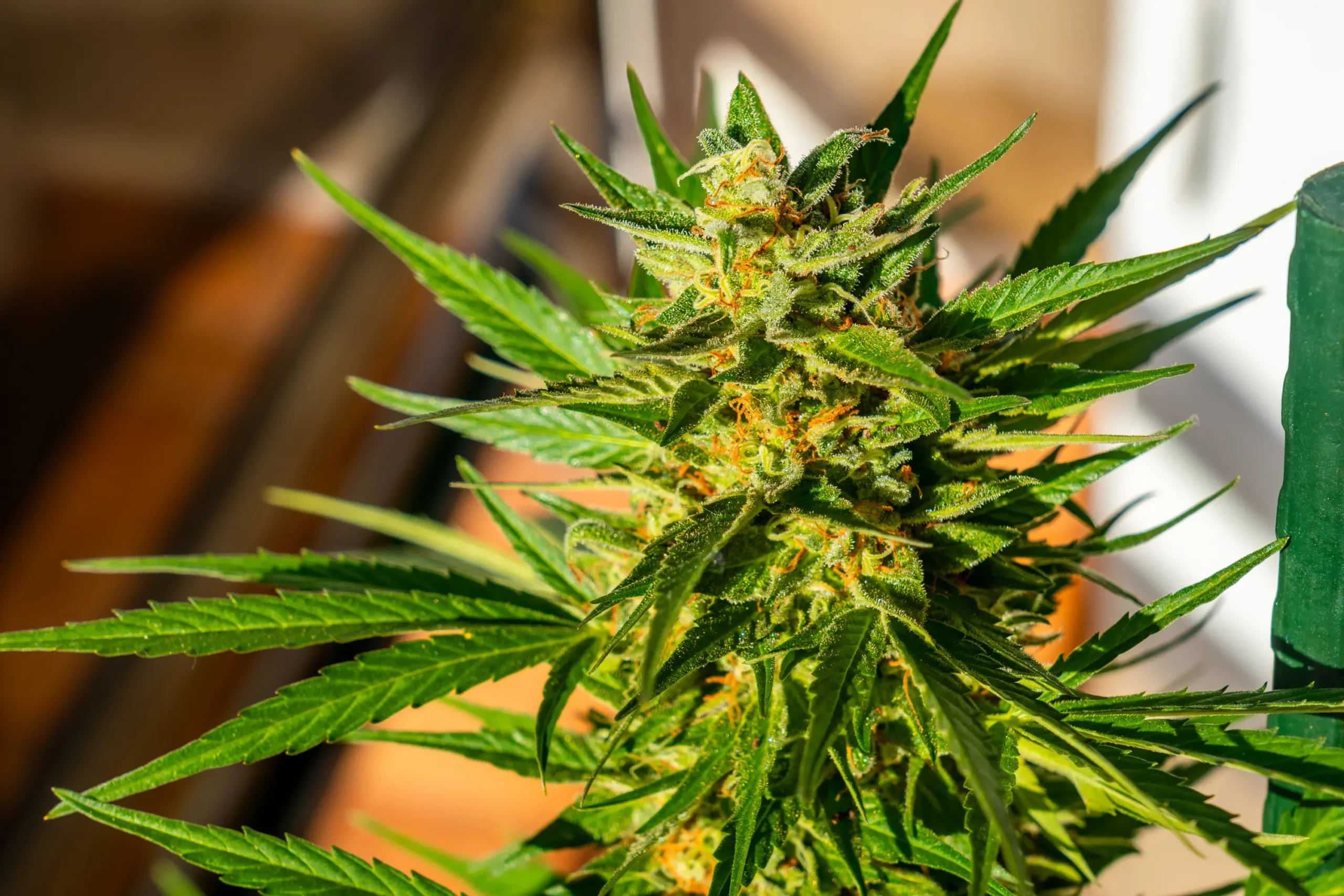
Donny Burger
Donny Burger is a heavy, savory hybrid built from GMO and Han Solo Burger. Its identity is not based on fruit or candy. The cultivar is known for garlic, onion, ammonia, diesel, damp earth, cheese, and pepper, supported by a thick layer of resin and a long-lasting body effect. The plant often develops a sturdy central frame, useful lateral branches, and dense spear-shaped flowers that continue adding weight late in bloom.
Its main cultivation challenge is patience. Donny Burger can look nearly finished before its best flower density, resin maturity, and savory depth have fully developed. Harvesting too early produces strong flower with a sharper, simpler gas profile. Letting the right expression finish properly can add creamy funk, spice, and a more complete physical effect. That longer finish also raises humidity and support demands, so the grower must keep the plant healthy and the flowers dry without overfeeding or forcing an artificial fade.
Strain Features
| Feature | Details |
|---|---|
| Strain Type | Indica-dominant high-potency hybrid |
| Genetic Profile | GMO x Han Solo Burger |
| THC | Commonly reported in the high 20% range, with tested batches varying widely |
| CBD | Usually very low, commonly below 1% |
| Dominant Terpenes | Limonene, beta-caryophyllene, myrcene, with pinene and humulene appearing in some samples |
| Flavor / Aroma | Garlic, onion, ammonia, cheese, diesel, earth, pepper, pine, and faint sweetness |
| Effect Character | Euphoric and giggly at first, then deeply calming, heavy, and often sedating |
| Flowering Time | Commonly 9-11 weeks indoors; some selected expressions need the longer end |
| Outdoor Harvest | Usually mid to late October in the Northern Hemisphere |
| Stretch | Moderate, commonly about 1.5x-2x |
| Plant Architecture | Medium-tall with a sturdy main stem, supportive laterals, and cola-dominant flower formation |
| Bud Density | Dense, resinous, and capable of holding moisture in the largest tops |
| Resin Production | Very high; trimming can be slow because flowers and sugar leaves are extremely sticky |
| Grow Difficulty | Intermediate to advanced due to flowering length, odor, support, and humidity management |
| Main Grow Risk | Cutting early or allowing dense late flowers to remain in stagnant air |
Genetic Lineage
Donny Burger combines GMO with Han Solo Burger. The second parent also carries GMO influence, so the cross reinforces the garlic-diesel, savory, resin-heavy side of the family rather than balancing it with a completely different aromatic direction. This repeated ancestry helps explain why Donny Burger often feels more concentrated and physically heavy than a typical hybrid.
GMO contributes the elongated flower shape, intense garlic-onion funk, strong stretch, long finish, and heavy effect. Han Solo Burger contributes additional OG depth, compact density, earth, pine, and a more supportive plant frame. The result usually grows with enough vertical energy to require training, but it is not necessarily a thin, weak plant. Healthy expressions can build strong lateral arms that carry substantial flowers when supported correctly.
The lineage also explains the cultivar's flowering rhythm. Donny Burger may establish flowers early enough to appear fast, then continue swelling and layering resin well into the later weeks. The calendar can tempt growers to cut once the pistils darken, but pistil color alone is a poor maturity signal for this plant.
Phenotype variation appears in flower length, stretch, finish time, and terpene emphasis. Some plants lean toward sharp ammonia, onion, and diesel. Others show more pine, pepper, cheese, or sweet earthy funk. A useful keeper should combine strong aroma with a manageable finish and branches that can hold the late weight. Potency alone is not enough.
The pedigree of Donny Burger represents a pinnacle of savory, high-potency chem-forward breeding engineered by SkunkMasterFlex of Boston Roots Seed Company. To create this devastating cultivar, breeders crossed the acclaimed modern legend GMO (Garlic Cookies, a Chem D x Girl Scout Cookies selection famed for its pungent allium funk and sky-high resin production) with Han Solo Burger (an elite cross of Larry OG and GMO Cookies). This intentional backcross amplification concentrates the distinctive Chem D and OG Kush terpene expressions while establishing remarkable resin head density and staggering cannabinoid output.
In living soil beds and indoor environments, Donny Burger exhibits vigorous hybrid vigor inherited from its Chem lineage. The vegetative stage showcases sturdy lateral branching and broad, dark forest-green fan leaves that gradually slenderize during the flowering stretch. The genetic architecture demands structured support early in development, as the heavy floral calyxes swell with immense weight during late flower, packing incredible amounts of sulfur-rich glandular trichomes across every bract and sugar leaf.
Effect Breakdown
The first thirty minutes
Donny Burger often begins with a warm mood shift rather than an immediate knockout. Users commonly report euphoria, laughter, and an easier social tone. The mind can feel calm but engaged, especially at a small dose. This early stage is one reason the cultivar can be underestimated. The body heaviness develops later.
The deepening phase
As the experience builds, physical relaxation becomes the dominant feature. Muscles feel heavier, movement slows, and appetite may increase. Mental tension often decreases, but concentration can become less precise. At a moderate dose, the user may remain conversational while clearly preferring a chair, sofa, or quiet environment.
The late phase
At a high dose, Donny Burger can become strongly sedating. The body effect may feel numbing and persistent, with reduced motivation and a greater chance of falling asleep. Experienced users may value this for late-evening decompression. Beginners may find the delayed heaviness stronger than expected.
Common unwanted effects include dry mouth, dry eyes, dizziness, next-day grogginess after large doses, and anxiety if the initial potency is underestimated. The strain is best dosed slowly because its effect can continue increasing after the first pleasant wave.
Consuming authentic Donny Burger delivers an immediate, crushing wave of physical heaviness and intoxicating cerebral decompression. The initial onset is characterized by an expansive warmth that starts behind the eyes and quickly radiates down the spine, melting away somatic tension and mental stress with decisive authority. As the cannabinoid wave crests, conscious racing thoughts dissolve into a tranquil, meditative tranquility, accompanied by profound appetite stimulation and full-body sedation.
| Phase & Time Window | Mental & Emotional State | Physical & Somatic Sensation | Ideal Setting & Pairing |
|---|---|---|---|
| The Chem Flash (0 to 15 Minutes) | Instant cerebral stillness, sensory slowing, release of situational anxiety | Facial warmth, temple tingling, immediate shoulder drop | Evening relaxation, dim lighting, comfortable seating |
| The Savory Drift (15 to 60 Minutes) | Dreamy, contented detachment, quiet introspection, mood elevation | Pervasive heavy limb feeling, deep muscle relaxation, eyelid weight | Listening to vinyl records, ambient films, low-stress socializing |
| The Couchlock Peak (60 to 120 Minutes) | Profound mental calm, reduced executive drive, ravenous appetite surge | Complete somatic sedation, couchlock, relief of chronic discomfort | Late-night comfort dining, restorative stretching, quiet reading |
| The Burger Slumber (120+ Minutes) | Peaceful drowsiness, mental tranquility, gradual transition to sleep | Full-body sleep pressure, prolonged physical ease, slow respiration | Bedtime routine, blackout curtains, restorative overnight sleep |
Due to its extraordinarily potent cannabinoid concentration, which frequently eclipses 28% to 32% THC, novice consumers should approach Donny Burger with extreme moderation. The cultivar provides long-lasting relief for experienced users seeking deep nightly respite from muscular spasms, neuropathic discomfort, and persistent insomnia.
Flavor & Aroma Profile
Donny Burger is a savory cultivar. The central aromatic impression is not a literal hamburger. It is a combination of sulfurous garlic and onion, fermented cheese, ammonia, fuel, damp earth, pine, and pepper. A faint sweet note can appear underneath, especially after cure, but it does not turn the profile into dessert.
Jar aroma
Opening a well-cured jar usually releases gas first. Garlic, onion skin, diesel, and ammonia can fill the room quickly. Some samples also carry a soft cheese-rind or mushroom-like earthiness. The aroma is intense and may be unpleasant to people who prefer fruit-forward cannabis.
Broken flower
Grinding intensifies the sulfurous side. The scent can resemble crushed garlic, sharp cleaning solvent, old cheese, and fuel. Pine and pepper appear around the edges. The most complete samples have a small sweet or creamy note that keeps the aroma from feeling purely harsh.
Inhale and exhale
The inhale is often earthy, peppery, and slightly sweet. The exhale brings garlic, diesel, ammonia, and cheese. Pine may remain in the aftertaste. Proper curing makes the smoke feel dense but integrated. Poor drying can make the sulfur-fuel combination rough, hot, and muddy.
Donny Burger is not a subtle cultivar. Odor control is necessary indoors, and drying can be even louder than flowering. The smell can remain on tools, gloves, and storage containers.
The sensory profile of Donny Burger is unapologetically pungent, complex, and savory. Breaking open a cured colas releases an overwhelming room-filling odor of roasted garlic cloves, caramelized onions, pungent French onion soup broth, rotten funk, and high-octane diesel fuel. This unique savory chem bouquet is driven by rare volatile sulfur compounds (VSCs) working in concert with dense concentrations of beta-caryophyllene, myrcene, and limonene.
| Aroma Layer & Tier | Dominant Fragrance Notes | Sensory Perception & Volatiles | Combustion / Vapor Translation |
|---|---|---|---|
| Top Savory Punch | Fresh minced garlic, chives, shallots, sharp ammonia | Pungent, nose-tingling savory volatile sulfur compounds | Heavy garlic butter and salty umami smoke on inhale |
| Mid Chem Core | Sour kerosene, motor oil, industrial solvent, skunk | Piercing fuel notes derived from concentrated Chemdog ancestry | Pungent diesel coating the palate, lingering chem tang |
| Base Earth & Musk | Damp forest loam, black pepper, aged cheese, cured leather | Warm, peppery grounding notes supported by beta-caryophyllene | Rich earthy hash and savory umami finish on exhale |
| Linger & Finish | Burnt rubber, pickled spices, lingering garlic broth | Persistent resinous film remaining on the tongue for twenty minutes | Spicy peppery tongue tingle, deep roasted allium aftertaste |
On the palate, vaporizing Donny Burger at low temperatures (350°F to 370°F) accentuates the sweet caramelized onion and peppery garlic nuances, while combustion unleashes an intense, thick, fuel-heavy smoke that coats the mouth with savory umami goodness long after the exhale.
Dominant Terpenes
| Terpene | Likely Role in Donny Burger |
|---|---|
| Limonene | Frequently appears among the leading terpenes. It may add brightness and a faint citrus lift beneath the heavier savory profile. |
| Beta-Caryophyllene | Contributes pepper, spice, wood, and part of the dry fuel character. It fits the strain's grounding aromatic base. |
| Myrcene | Adds earth, musk, and herbal depth. It is consistent with the heavy physical character reported by many users, though effect cannot be assigned to one compound. |
| Pinene | Appears in some samples and reinforces pine, resin, and a sharper finish. |
| Humulene | May support the woody, earthy, hop-like background present in some expressions. |
Laboratory results are not perfectly consistent. Some tested batches are limonene-led, others caryophyllene-led, and some references list pinene prominently. That inconsistency should be expected across different cuts and production systems. The stable sensory pattern is more useful: savory sulfur compounds and fuel sit over an earthy-spicy terpene base.
Not all of Donny Burger's garlic, onion, cheese, and ammonia character can be explained by the most common terpene names. Cannabis aroma also involves volatile sulfur compounds and other odor-active molecules that may be present at very low concentrations. This is why two samples with similar terpene labels can smell very different.
Laboratory chemotype screenings confirm Donny Burger as a masterwork of terpene complexity, frequently displaying total terpene concentrations between 2.8% and 4.2%. Beta-Caryophyllene serves as the dominant terpene, providing sharp peppery spice while binding directly to peripheral CB2 receptors to deliver anti-inflammatory benefits. Myrcene constitutes the second most abundant terpene, contributing earthy musk and enhancing blood-brain barrier permeability for faster, deeper cannabinoid absorption. Limonene injects sharp citrus undertones that counterbalance the sulfurous heavy notes, while secondary concentrations of Humulene, Alpha-Pinene, and Linalool provide herbal dryness, bronchial clarity, and subtle floral relaxation.
Indoor vs. Outdoor Growing
| Factor | Indoor Growing | Outdoor Growing |
|---|---|---|
| Flowering Control | Easier to give the plant a full 9-11 week finish | Requires a long, dry autumn and careful weather planning |
| Height | Moderate stretch can be managed with topping and a trellis | Can become large with long branches and substantial root volume |
| Odor | Requires strong odor management in flower and drying | Odor can travel far, especially in still evening air |
| Bud Density | Controlled humidity protects dense spear-shaped colas | Rain and dew can remain trapped inside large late flowers |
| Support | A trellis keeps tops upright and separated | Staking or caging is important before autumn storms |
| Yield | High potential with a level canopy and patient finish | High per-plant potential in warm, long-season areas |
| Flavor | Stable temperature protects complex garlic, gas, cheese, and pine | Full sun can deepen the profile, but heat can make it coarser |
| Main Advantage | Precision over harvest timing and humidity | Larger plant structure and heavier single-plant production |
| Main Limitation | Long bloom occupies valuable indoor space | Late October weather may arrive before the best flavor window |
Indoor cultivation is usually the better match because Donny Burger's quality depends on completing the late flower period safely. A controlled room allows the grower to keep humidity low enough for dense flowers while avoiding excessive heat that strips aroma.
Outdoors, the cultivar performs best in warm regions with a dependable October. It is less suitable for short northern seasons or locations with repeated autumn rain. A greenhouse can extend protection, but only if ventilation is strong. A closed greenhouse with high humidity may be more dangerous than open air.
When grown outdoors, Donny Burger thrives exceptionally well in temperate, dry Mediterranean and continental climates with low late-autumn precipitation. Regions such as the Rogue Valley of southern Oregon, the rain-shadow microclimates of the Okanagan Valley in British Columbia, and California northern interior valleys provide optimal sun exposure and low ambient relative humidity during the critical September and October ripening window.
Because the buds develop into colossal, ultra-dense clusters heavily coated in resin heads, coastal or humid environments require diligent canopy thinning and protective greenhouse or hoop-house coverage to safeguard against autumn botrytis. Preparing deep living soil mounds amended with compost, volcanic basalt, worm castings, and biochar gives outdoor plants the rooting volume needed to yield upwards of 900 to 1,500 grams per plant of grade-A medicinal flower.
Soil Microbiology and Living Rhizosphere Management: In outdoor living soil beds across the Pacific Northwest and northern California, maintaining a biologically active rhizosphere is fundamental to harvesting maximum Donny Burger resin yields. Amending native soils with aged forest leaf mold, thermal compost, and active vermicompost introduces a complex community of beneficial bacteria (Pseudomonas and Bacillus species) that break down organic matter into readily absorbable ionic forms. Mulching the topsoil with four inches of clean barley straw or shredded cedar bark regulates soil temperatures and shields sensitive surface feeder roots from direct solar desiccation.
Strain-Specific Grow Guidance
| Stage of Growth | Day / Week Timeline | Target Temperature & RH | Target PPFD & Photoperiod | Target EC & Runoff pH | Specific Agronomic Tasks |
|---|---|---|---|---|---|
| Seedling / Early Rooting | Days 1 to 14 | 75°F to 78°F | 68% to 75% RH | 200 to 300 µmol/m²/s | 18/6 light | 0.8 to 1.1 EC | 6.2 to 6.5 pH | Gentle microbial inoculation, bottom watering, high humidity dome |
| Early Vegetative | Weeks 3 to 4 | 78°F to 82°F | 62% to 70% RH | 400 to 550 µmol/m²/s | 18/6 light | 1.3 to 1.6 EC | 6.2 to 6.5 pH | Top above the 4th node, install initial trellis support, foliar silica |
| Late Veg & Transition | Weeks 5 to 6 | 76°F to 80°F | 55% to 62% RH | 600 to 750 µmol/m²/s | 18/6 light | 1.6 to 1.9 EC | 6.3 to 6.6 pH | Secondary topping, defoliate lower canopy suckers, tuck into trellis |
| Early Flower (Stretch) | Weeks 7 to 8 (Bloom 1 to 2) | 76°F to 80°F | 52% to 58% RH | 750 to 850 µmol/m²/s | 12/12 light | 1.9 to 2.2 EC | 6.3 to 6.6 pH | Manage 2.5x stretch, install second horizontal trellis, calcium supplementation |
| Mid Flower (Bulking) | Weeks 9 to 11 (Bloom 3 to 5) | 74°F to 78°F | 48% to 54% RH | 850 to 950 µmol/m²/s | 12/12 light | 2.1 to 2.4 EC | 6.4 to 6.7 pH | Day 21 defoliation, provide organic phosphorus top-dressing, boost airflow |
| Late Flower (Ripening) | Weeks 12 to 14 (Bloom 6 to 8) | 70°F to 74°F | 42% to 48% RH | 750 to 850 µmol/m²/s | 12/12 light | 1.4 to 1.8 EC | 6.4 to 6.8 pH | Day 42 lollipop cleanout, monitor trichome heads, drop night temps to 64°F |
| Flushing & Harvest | Weeks 15 to 16 (Bloom 9 to 10) | 66°F to 70°F | 38% to 44% RH | 500 to 650 µmol/m²/s | 12/12 light | 0.3 to 0.6 EC | 6.3 to 6.7 pH | Plain RO water flush, inspect trichome amber ratio (15% to 25%), harvest colas |
Shape the main frame early
Donny Burger commonly produces a strong main stem and useful lateral branches. Topping once during active vegetative growth can distribute the plant's energy and reduce the height of the dominant central top. Follow with branch spreading so each major arm receives light and airflow.
The plant can work in a screen, but the goal should be support and spacing rather than extreme branch count. Too many tops create a thick canopy that becomes difficult to ventilate during the final weeks. Four to eight strong main branches often produce a cleaner result than a crowded network of small shoots.
Expect a controlled but real stretch
A practical planning range is about 1.5x-2x. The stretch generally occurs during the first two to three weeks of flowering. Flip before the room is full. The plant may continue pushing internodes while early flowers are already visible, so do not assume the structure is fixed after the first week.
Remove the weak lower growth
Donny Burger can produce excellent main and upper lateral flowers, but shaded lower shoots often remain small and leafy. Remove weak growth after stretch. This improves the premium flower percentage and reduces the plant material that traps humidity near the base.
Do not over-prune the upper plant. The cultivar needs healthy leaves to sustain a long finish. Focus on nonproductive shoots, damaged leaves, and foliage that creates direct contact between dense flower sites.
Feed for duration, not speed
The plant must remain functional through a relatively long bloom. A strong early feed followed by an abrupt late reduction is less useful than a balanced program that follows actual demand. Avoid excessive nitrogen during transition because it can increase leafiness and delay maturation.
Grow reports support moderate to moderately strong feeding in healthy plants, but not blind high EC. Read leaf tips, color, and irrigation response. Salt buildup can reduce drinking and make the plant appear deficient even when the root zone is overloaded.
Root-zone consistency
Donny Burger benefits from a well-aerated medium and predictable irrigation. Large plants can drink heavily, yet dense containers should not remain saturated. Allow appropriate dryback without repeated severe wilt. Inconsistent root moisture can contribute to nutrient swings and weak support tissue.
Support the colas before they lean
The flowers can become long, dense, and heavy. Use a trellis or branch ties before the final swell. Once the tops are fully resinous, repositioning them can damage trichomes and create contact points that hold moisture.
Grower Note: A support net should separate the colas as well as hold them up. Two flowers pressed together behave like one larger, wetter flower.
Environmental priorities
Dense flowers change the airflow plan
Keep the flowering environment stable, with particular attention to late-flower humidity. The strain's dense flowers and long finish create a prolonged risk window. Air movement should reach the sides of the colas and the interior canopy. Avoid leaving dead leaves trapped against the flowers.
Temperature also affects aroma. High heat can make the profile smell flatter and more aggressively sulfurous, while reducing pine, spice, and subtle sweetness. A cooler stable finish preserves better separation between the layers.
Harvest signals
Donny Burger often needs more time than its appearance suggests. Pistils may darken while trichomes and calyxes are still developing. Look for mostly cloudy trichomes on the bracts, swollen flowers, reduced new pistil production, and a fully developed garlic-diesel-cheese aroma.
Early harvest produces a sharper, more stimulating effect and a simpler fuel profile. A later but not overripe harvest produces deeper body relaxation and more savory complexity. Excessive delay can increase amber trichomes, reduce brightness, and raise mold risk without adding meaningful quality.
Managing the GMO Stretch: Donny Burger inherits a substantial vegetative stretch from its GMO ancestry, regularly expanding up to 2.5 to 3 times its pre-flip height within the first twenty-one days of 12/12 photoperiod. Growers should top plants twice in vegetative development and employ a dual-layer trellis netting system. Weave expanding branches horizontally across the lower trellis grid during bloom weeks one and two to establish an even canopy before vertical calyx development locks in.
Sulfur and Micronutrient Feeding: To maximize the synthesis of Donny Burger’s signature volatile sulfur compounds, ensure adequate bioavailable sulfate in your nutrient formulation during mid-flower. Supplementing with potassium sulfate, Epsom salts (magnesium sulfate), and organic compost teas rich in micronutrients like zinc and iron fuels enzyme activity essential for high terpene accumulation.
Silica Fortification & Cell Wall Lignification: Supplying bioavailable monosilicic acid at a concentration of forty to sixty parts per million throughout the vegetative cycle dramatically improves mechanical stem strength for Donny Burger. Silicon deposits directly into the apoplast of plant cells, creating a rigid silicate matrix that reinforces cell walls, prevents branch lodging under heavy bud weight, and establishes a physical defense barrier against piercing insects such as thrips, aphids, and fungus gnats.
Living Soil Mycorrhizal Colonization: In living soil setups, inoculating rooted cuttings with endomycorrhizal fungi (Glomus intraradices) creates a symbiotic hyphal network that extends far beyond the root tips. This fungal web solubilizes bound phosphorus, iron, and zinc, delivering them directly to the plant in exchange for simple plant carbohydrates, resulting in accelerated floral initiation and substantial secondary metabolite production.
VPD Trajectory & Microclimate Aeration: Balancing temperature and relative humidity according to a targeted Vapor Pressure Deficit (VPD) ensures uniform nutrient uptake without moisture stress. Maintain a vegetative VPD between 0.9 and 1.1 kPa (78°F to 81°F and 62% to 68% relative humidity). Upon transition to peak flower, systematically elevate VPD to 1.35 to 1.5 kPa (74°F to 78°F and 44% to 52% relative humidity) to stimulate transpirational pull while eliminating localized pockets of stagnant air that could harbor mold spores.
Slow Drying & Terpene Preservation: Post-harvest handling dictates over half of the final sensory quality. Whole-plant hang drying in a climate-controlled room strictly maintained at 60°F (15.5°C) and 60% relative humidity for twelve to sixteen days allows starches and chlorophyll to degrade through natural enzymatic action without sacrificing volatile monoterpenes. Curing the trimmed flowers in airtight glass jars or food-grade stainless steel cure vaults at 62% relative humidity for four to six weeks permanently rounds out the smoke, ensuring exceptional smoothness and aromatic intensity.
How can I control the massive stretch of Donny Burger in a small indoor tent without reducing final yield?
Question sent by: Marcus Vance, via contact form
Donny Burger easily stretches up to three times its vegetative height during the first three weeks of 12/12 bloom. To master this in limited vertical space, top your plants twice during late vegetative growth to create eight to twelve primary shoots rather than a single dominant cola. Install your first horizontal trellis netting five inches above the canopy just before flipping to flower, and weave the rapidly extending shoots horizontally through the grid until Day 18 of bloom. Additionally, maintaining a slight negative day-to-night temperature differential (keeping night temperatures equal to or two degrees warmer than day temperatures during weeks one to three) helps suppress stem elongation while preserving bud development.
Weedth Bud Flavor Tips
Preserve the sulfur profile without making it harsh
Donny Burger's strongest odor-active compounds are powerful at very low levels. Excessive heat and rapid drying can distort the balance. The flower may remain loud but become rough, onion-heavy, or chemical. A cool, controlled dry protects the smaller pine, spice, and sweet notes that make the savory profile feel complete.
Do not hang oversized colas as one solid mass in a humid room
The largest tops may need to be divided into smaller branches. This is not a loss of quality. Uneven drying is a greater threat. A dry surface around a wet interior creates mold risk and produces a cure that never stabilizes properly.
Expect the aroma to change during cure
Freshly dried flower can smell aggressively like ammonia and garlic. After moisture equalizes, cheese, earth, pepper, pine, and faint sweetness may become more noticeable. Allow several weeks before judging the final profile.
Avoid over-drying
Very dry Donny Burger loses nuance and can become hot on the throat. The sulfurous notes remain while the supporting terpenes fade, leaving a less pleasant experience. Once the flower reaches stable storage moisture, minimize repeated air exchange and store it cool and dark.
Flavor Tip: The best cure does not make Donny Burger less pungent. It makes the pungency more layered and less abrasive.
Advanced Brix Optimization for Umami Depth: To maximize the mouth-coating umami richness and sweet caramelized onion notes of Donny Burger, monitor the sap Brix levels of petiole tissues during late bloom using an optical refractometer. Sustaining a vegetative and early bloom sap Brix level above 12 degrees indicates healthy carbohydrate synthesis. Applying foliar sprays of fulvic acid chelated with micronized iron and zinc during weeks two through four of flower stimulates rubisco enzyme activity, fueling high sugar accumulation that directly enhances the savory sweetness and terpene intensity of the final harvest.
Vaporization Temperature Calibration: For connoisseurs seeking to dissect the multi-layered terpene architecture of Donny Burger, precision temperature control is essential. Vaporizing at 345°F to 365°F highlights the sweet, delicate allium and lemon zest notes driven by limonene and alpha-pinene. Elevating the temperature to 385°F to 410°F unlocks the heavy, pungent kerosene, black pepper, and roasted garlic sulfur volatiles driven by beta-caryophyllene and humulene, delivering a deeply grounding, narcotic finish.
Weedth Bud Boost Tips
Keep fewer, stronger flowering columns
Donny Burger has enough vigor to fill a canopy, but quality improves when the plant carries a manageable number of well-lit tops. Use topping and low-stress training to create strong columns, then remove thin internal shoots after stretch.
Extend flower health through the final weeks
The cultivar continues adding weight late. Keep irrigation and nutrition steady enough that the plant remains functional. A forced early fade can reduce the final swell and leave the flowers less dense than their genetics allow.
Use support as a yield tool
Branches that remain upright maintain better light exposure and air separation. Support also prevents micro-damage at stem joints. Install the structure early, before the flowers are heavy.
Avoid excessive nitrogen and indiscriminate bloom boosters
High nitrogen can increase leafiness and delay finish. Heavy phosphorus-potassium products are not a substitute for balanced root health and light distribution. Increase inputs only when the plant's demand and runoff behavior support the change.
Protect the premium tops from late humidity
A small reduction in total branch count can produce a larger percentage of usable, clean flower. Overpacking the canopy may increase wet biomass while reducing premium dry yield through larf, trimming waste, and mold loss.
Secondary Metabolite Triggering via UV-A and UV-B Supplementation: In high-performance indoor cultivation environments, introducing supplemental UV-A (365 nm to 385 nm) and low-intensity UV-B (290 nm to 315 nm) lighting during the final four weeks of flower stimulates glandular trichome production as a photoprotective defense mechanism. For Donny Burger, providing two hours of supplemental UV radiation during the midday photoperiod stimulates the phenylpropanoid and terpene synthesis pathways, elevating beta-caryophyllene, myrcene, and volatile sulfur concentrations without damaging delicate floral pistils.
Foliar Chitosan and Systemic Acquired Resistance: Applying a bio-derived chitosan foliar spray (deacetylated chitin sourced from crustacean shells) at a rate of 150 parts per million twice during early vegetative growth activates the plant’s systemic acquired resistance (SAR). The plant senses fungal cell wall components, prompting an immediate surge in phytoalexin and lignified secondary cell wall development. This preventative biological priming provides Donny Burger with substantial resistance to powdery mildew and enhances structural branch thickness.
Humic and Fulvic Acid Mineral Chelation: Incorporating pure Leonardite-derived humic and fulvic acids into root drenches during weeks three through six of flower dramatically enhances the bioavailability of immobile micronutrients such as iron, manganese, and zinc. Fulvic acid’s small molecular weight allows it to penetrate plant root membranes directly, delivering chelated minerals into the cytoplasm where they act as essential cofactors in chlorophyll synthesis and carbohydrate translocation.
Night Temperature Drop and Anthocyanin Expression: While Donny Burger is primarily prized for its lime-green, resin-frosted calyxes, lowering night canopy temperatures to 64°F (17.8°C) during weeks seven through nine encourages the accumulation of striking purple and lavender anthocyanin pigmentation across sugar leaves and calyx edges. This controlled cold stress also slows down monoterpene volatilization, concentrating pungent garlic and fuel aromas within the resin heads.
Microbial Diversity in No-Till Living Soil Beds: Cultivating Donny Burger in multi-cycle no-till living soil containers allows the establishment of complex fungal networks that maximize secondary cannabinoid production. Soil amendments containing malted barley grain powder, crustacean meal, and humic acids provide active food sources for saprophytic fungi and beneficial nematodes. These biological interactions unlock organic minerals, accelerating the development of swollen trichome heads packed with the volatile sulfur compounds that give Donny Burger its celebrated garlic funk.
Low-Stress Canopy Management During Pre-Flower: Because Donny Burger stretches aggressively when flipped to flower, employing low-stress branch tying rather than late structural pinching maintains open vascular channels for uninterrupted water and nutrient transport. Bending the tallest central shoots horizontally across the trellis net stimulates auxin redistribution to lower nodes, resulting in an even canopy of twelve to sixteen uniform, resin-crusted spear colas.
Medical Uses & Benefits
Donny Burger is a very potent THC-dominant strain. Medical discussion should remain focused on reported symptom relief and realistic limitations. Users commonly choose it for evening pain, physical tension, appetite loss, stress, and sleep preparation.
| Reported Need | Why It May Appeal | Limitation |
|---|---|---|
| Physical pain and tension | Strong body relaxation and numbing intoxication | Can significantly impair coordination and alertness |
| Stress | Mental quiet and a heavy calming finish | Large doses may create dizziness or uncomfortable intensity |
| Appetite loss | Hunger is commonly reported in the later phase | Appetite stimulation may be excessive or unwanted |
| Sleep preparation | The late effect can become deeply sedating | The early euphoric phase may delay sleep in some users |
| Low mood | Initial laughter and warmth may temporarily improve mood | Sedation can reduce productivity and motivation |
It is generally better suited to late-day or nighttime use. The strain's low CBD means there is little built-in moderation of a high THC dose. New or medically vulnerable users should start extremely low and seek professional guidance where appropriate.
Donny Burger should not be presented as a cure for pain, insomnia, anxiety, or any medical disorder. Effects vary by dose, product quality, delivery method, tolerance, and individual health.
Clinical Cannabinoid Synergies for Severe Neuropathic Discomfort: Patients contending with intractable peripheral neuropathy, fibromyalgia, or post-surgical nerve hypersensitivity find profound therapeutic efficacy in Donny Burger’s specific chemical composition. The high concentration of THC (frequently exceeding 29%) works in synergy with significant levels of beta-caryophyllene, which binds selectively to peripheral cannabinoid type 2 (CB2) receptors. This mechanism attenuates inflammatory cytokine signaling pathways, decreasing the release of pro-inflammatory interleukins and tumor necrosis factor-alpha (TNF-alpha) in afflicted nerve fibers.
Appetite Stimulation in Oncology and Gastrointestinal Care: The intense umami, allium-rich terpene profile of Donny Burger, combined with rapid cannabinoid receptor type 1 (CB1) activation in the hypothalamus, triggers immediate and reliable orexigenic (appetite-stimulating) signaling. Cancer patients undergoing chemotherapy regimens, individuals with cachexia, or patients dealing with severe inflammatory bowel conditions like Crohn’s disease frequently experience nausea suppression and a restored desire to consume nutrient-dense meals within thirty to forty-five minutes of vaporizing this cultivar.
Ideal User Profile
Donny Burger suits experienced users who enjoy savory, fuel-heavy cannabis and want a substantial physical effect. It is ideal for quiet evenings, heavy relaxation, appetite stimulation, or sleep preparation after the active part of the day is finished.
It also fits consumers who are bored with sweet fruit and dessert profiles. The garlic, onion, cheese, diesel, earth, and pepper combination is distinctive and intentionally aggressive. People who dislike sulfurous aromas may find it unpleasant even when the flower is high quality.
The strain is less suitable for beginners, daytime productivity, anxiety-prone users, or situations requiring coordination. A small dose may remain social and giggly, but the later heaviness can make plans feel much less appealing.
The Seasoned Connoisseur Seeking Uncompromising Heavyweight Relief: Donny Burger is tailored specifically for seasoned cannabis consumers who have developed a substantial tolerance to standard market offerings. Novice users or those sensitive to high THC concentrations should exercise strict moderation, as single moderate doses can induce profound immobility, heavy eyelid pressure, and hours of uninterrupted couchlock. It serves as an ultimate evening sacrament after demanding physical labor or mentally exhausting days.
Grower Notes and Feedback
Growers frequently describe Donny Burger as a plant that rewards waiting. The flowers can appear finished before they have completed their density and resin development. Cutting according to a fixed nine-week schedule may leave quality on the plant.
Another recurring pattern is strong odor. The smell can become difficult to contain during late flower and drying. This should be planned before the crop reaches that stage. Odor-control equipment that is barely adequate in veg will not be adequate at harvest.
Reports on feeding vary. Some plants tolerate strong input, while others show burnt tips and dark leaves under aggressive programs. The safest conclusion is that healthy Donny Burger can be productive, but the cultivar should not be treated as universally nutrient-hungry.
Growers also note the sticky trimming process. The resin coverage is a major quality advantage, but it slows hand work and can damage the flower if handled roughly. Clean tools frequently and keep the room cool enough that the resin remains stable.
Canopy Defoliation and Microclimate Control: Given Donny Burger’s dense floral clustering, an aggressive selective defoliation at Day 21 and Day 42 of flowering is paramount. Removing interior water leaves that shield secondary nodes opens light channels to lower flower sites while preventing moisture microclimates that encourage mildew. High-velocity oscillating fans placed both above and below the canopy ensure turbulent air exchange through the foliage.
Cellar Curing and Terpene Stabilization: Once dried to an internal water activity between 0.60 and 0.64 aw, Donny Burger requires a deliberate, patient glass jar cure. Burping jars twice daily for the first fortnight, followed by weekly venting for an additional month, enables the pungent savory allium notes to meld with the underlying chem fuel, creating an unforgettable connoisseur jar appeal.
Cellular Osmoprotection & Heat Dissipation Protocols: Under intense commercial high-pressure sodium and diode lighting arrays exceeding 950 PPFD, Donny Burger transpires at an elevated rate due to its vigorous Chem heritage. Supplementing with pure glycine betaine and cold-water kelp extract (Ascophyllum nodosum) during weeks two through five of bloom enhances cellular osmoprotection. Glycine betaine serves as a compatible intracellular osmolyte, protecting thylakoid membranes within plant chloroplasts and preventing thermal stress even when canopy surface temperatures reach 82°F under peak illumination.
Sulfur Volatile Precursor Feeding: The signature savory allium funk of Donny Burger, dominated by roasted garlic, pungent shallots, and caramelized onions, relies directly on the plant’s capacity to synthesize volatile sulfur compounds (VSCs). Supplying pure elemental sulfur through living soil amendments, alongside balanced potassium sulfate and Epsom salt (magnesium sulfate) drenches during early to mid-flower, provides the biological building blocks required for cysteine and methionine enzyme synthesis. These amino acids act as direct metabolic precursors to the prenylated mercaptans responsible for the cultivar’s legendary room-filling stench.
Far-Red Photoperiod Sunset Signaling: In indoor controlled environments, implementing a ten-minute far-red (730 nm) lighting pulse immediately following the main photoperiod shutdown rapidly converts active phytochrome (Pfr) into inactive phytochrome (Pr). This natural biological signaling protocol mimics twilight at sunset, accelerating the plant’s nighttime hormone cascade, stimulating auxin translocation, and promoting rapid calyx expansion across secondary branches without inducing excessive stem stretching.
Root-Zone Oxygenation and Substrate Porosity: In soilless coco or living soil containers, Donny Burger’s root network demands high air-filled porosity to support heavy secondary resin head synthesis. Incorporating 30% coarse horticultural pumice, chunky perlite, or rice hulls prevents substrate compaction during repeated heavy irrigations. Maintaining dissolved oxygen levels above 8.5 parts per million in liquid fertigation lines prevents hypoxic root zones, encourages vigorous root hair expansion, and ensures optimal cation uptake across all floral phases.
Cellar Vault Curing & Terpene Retention: Once whole plants have completed their fourteen-day hang-dry at 60°F and 60% relative humidity, the trimmed floral colas must be cured in airtight stainless steel vaults or darkened glass vessels. Regulating the internal container humidity at 62% using two-way humidity regulator packs and venting briefly once daily for the initial three weeks stabilizes volatile monoterpenes like beta-myrcene and limonene while allowing the heavy sesquiterpenes and sulfur volatiles to mature into a velvety, umami-rich bouquet.
Weedth Editor’s Note
Cultivating Donny Burger in my Oregon living soil facility remains one of the most aromatically memorable experiences of my professional growing career. I placed rooted cuttings into seven-gallon fabric pots filled with an artisanal substrate consisting of aged bark compost, coarse Canadian peat moss, pumice, and worm castings, amended with crustacean meal, kelp meal, and volcanic basalt dust. Under full-spectrum LED fixtures dialed to 850 µmol/m²/s during peak bloom, the plants displayed extraordinary vigorous growth, requiring a sturdy two-tier trellis net to support their towering, resin-crusted branches.
Throughout the ten-week flowering run, I strictly maintained daytime temperatures between 75°F and 77°F with a nighttime drop to 66°F, keeping relative humidity locked at 48% to prevent mold in the massive, rock-hard calyx clusters. By day sixty-eight, the glandular trichome heads were swollen to milky perfection with roughly twenty percent deep amber, and brushing against a sugar leaf released a wave of roasted garlic, fuel, and savory broth so intense it lingered on clothing for hours.
I harvested the whole plants and hung them in a dedicated drying cellar strictly regulated at 60°F and 60% relative humidity for fifteen days. The slow dry allowed the moisture gradient to equalize perfectly without sacrificing delicate monoterpenes. After a five-week cure in sealed glass jars with periodic humidity checks, the flowers burned to a pristine white ash, delivering a smoke that is extraordinarily rich, savory, and powerfully sedative.
A crucial caveat for home growers: Donny Burger is not a stealth strain. Its odor penetrates standard carbon scrubbers during late bloom, so high-capacity multi-stage carbon filtration is mandatory. Additionally, the extreme sedative power of the cured buds makes this cultivar suitable strictly for late evening or nighttime consumption.
Weedth Score
Aroma & Terpene Intensity: 9.8 / 10
An unforgettable, room-filling explosion of roasted garlic, pungent French onion soup, kerosene, and savory funk that stands among the most pungent cultivars in modern cannabis.
Flavor & Smoke Quality: 9.6 / 10
Thick, velvety, umami-rich smoke that delivers savory garlic butter and chem fuel on the palate, burning cleanly to a pure light gray ash.
Potency & Cannabinoid Punch: 9.9 / 10
Testing consistently between 28% and 33% THC, delivering deep couchlock, full-body somatic decompression, and tranquil sedation.
Cultivation Uniformity & Resin Density: 9.3 / 10
Vigorous growth with substantial stretch, producing massive resin-drenched calyxes ideal for high-yield flower or premium solventless hash extraction.
Overall Weedth Score: 9.65 / 10. Donny Burger is a modern triumph of savory chem genetics, delivering an outrageous allium funk and devastating potency that make it an indispensable staple for top-shelf connoisseurs and medical patients.
FAQ
Similar Strains
GMO (Garlic Cookies): The legendary maternal parent of Donny Burger, delivering unmatched roasted garlic funk, a lanky ten-to-eleven week flowering profile, and intense long-lasting physical sedation.
Han Solo Burger: The direct paternal cross of Larry OG and GMO Cookies, featuring pine-drenched lemon chem tones layered over heavy savory funk and substantial indica-dominant relaxation.
Chem de la Chem: A Chemdog-dominant hybrid offering pungent industrial fuel, chemical solvent, and peppery garlic notes with a swift, heavy-hitting cerebral and somatic impact.
Garlic Juice: A mouth-watering cross of GMO and Papaya, blending savory allium chem undertones with sweet tropical fruit nectar and deeply calming physical effects.
Share this article
A quick overview of the topics covered in this article.
Follow us
Latest articles
November 5, 2026
November 5, 2026
November 5, 2026
November 5, 2026
