
Duct Tape
Duct Tape – Strain Profile & Grow Guide
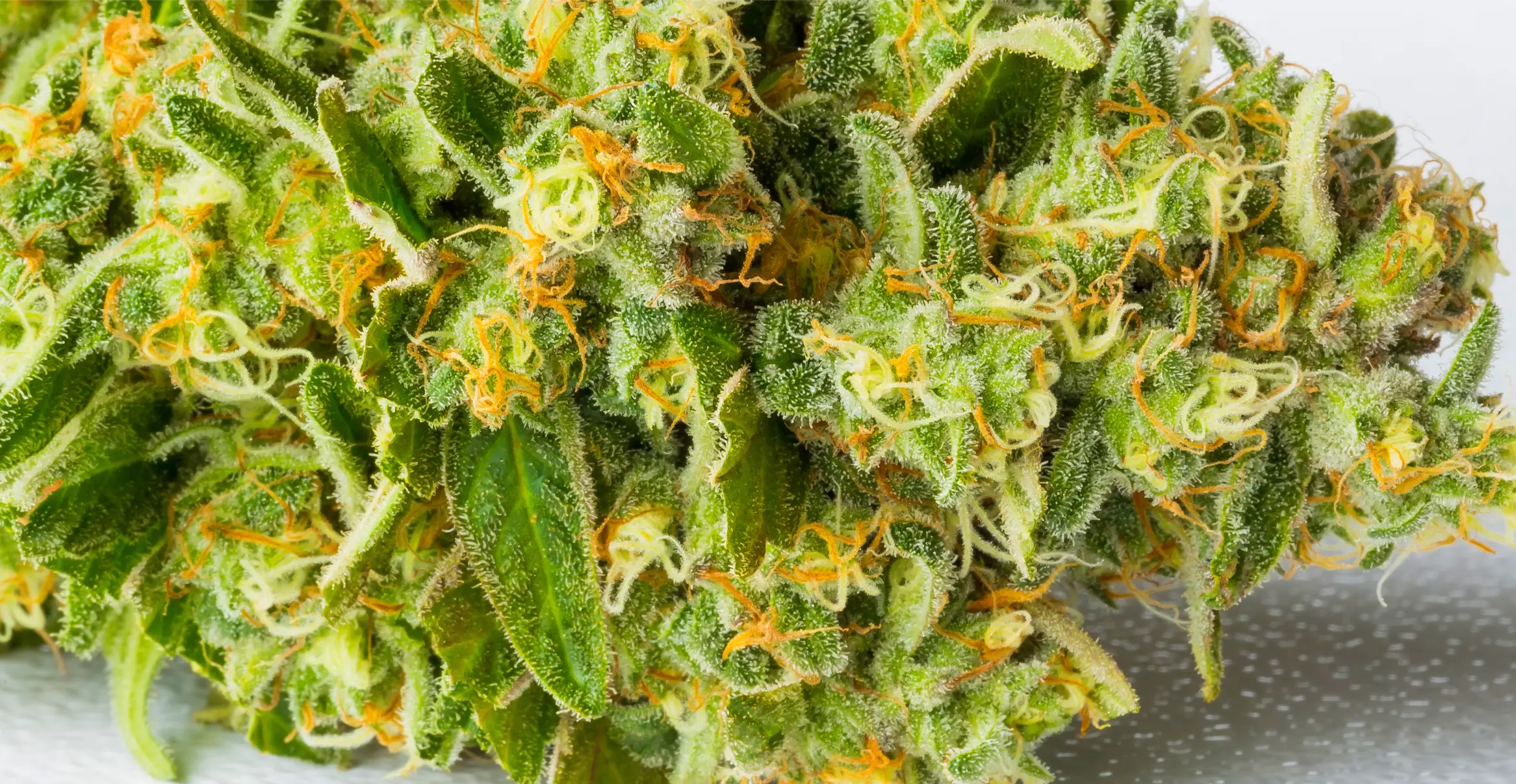
Duct Tape earns its name through texture before aroma. Mature flowers feel unusually adhesive, the sugar leaves often carry enough resin to stick against neighboring buds, and late-flower branches can become difficult to separate without touching trichomes. The cultivar combines Original Glue with Do-Si-Dos, two lines already known for dense resin, strong physical effects, and dark, earthy fuel profiles. The result is not simply a stronger version of either parent. Good Duct Tape brings together chocolate-like chem, nutty dough, incense, pine, pepper, damp earth, and a lingering diesel finish that can remain surprisingly smooth after a patient cure.
For growers, the central challenge is not getting Duct Tape to make resin. Resin arrives readily in healthy expressions. The harder task is building a canopy that can support sticky, weighty flowers without turning the middle of the plant into a humid, inaccessible mass. The branches may remain flexible through transition and then begin leaning abruptly as the flowers harden. A screen installed too late becomes difficult to use because the resinous tops no longer move cleanly through the mesh. A plant left completely natural may finish with an impressive central mass, but the lower interior usually produces less useful flower than the frost initially suggests.
Duct Tape is often described as an indica-leaning hybrid, yet its flowering behavior can feel more vigorous than that label implies. Stretch is usually moderate rather than extreme, but selected expressions can open their internodes considerably during the first part of bloom. The plant tends to reward early topping, horizontal branch placement, a shallow productive zone, and support that is installed before the canopy becomes sticky. It can tolerate an assertive grower, but late corrections are rarely elegant.
The finished quality depends heavily on what happens after harvest. Diesel, pepper, and earth are durable. Chocolate, roasted nuts, incense, and the softer dough notes are easier to lose. Flowers dried under direct airflow may remain loud while becoming one-dimensional. A cooler, slower process allows the aroma to move from raw glue and fuel toward a more complete profile with cocoa, pine, toasted dough, and hash-like spice. Duct Tape can produce excellent bag appeal, but the real standard is whether the cured flower remains layered rather than merely pungent.
Strain Features
| Feature | Details |
|---|---|
| Strain Type | Potent indica-leaning hybrid, although the opening effect can feel mentally bright |
| Genetic Profile | Original Glue x Do-Si-Dos |
| THC | Commonly reported in the low-to-mid 20% range, with stronger batches possible |
| CBD | Usually very low |
| CBG | Some tested batches report measurable CBG, but it is not a fixed cultivar trait |
| Dominant Terpenes | Limonene, beta-caryophyllene, and myrcene are frequently reported; pinene and humulene may be influential |
| Aroma | Diesel, chem, pine, pepper, chocolate, roasted nuts, incense, dough, and damp earth |
| Flavor | Nutty fuel, cocoa, woody spice, pepper, hash, and a dry skunky finish |
| Effect Character | Euphoric mental lift that gradually gives way to deep body relaxation and possible sleepiness |
| Flowering Time | Approximately 8 to 10 weeks; many mature expressions finish near 9 weeks |
| Stretch | Moderate in most cuts, with some taller and more open expressions |
| Plant Architecture | Strong lateral growth, flexible branches, medium internodes, and a canopy that can become crowded after stretch |
| Bud Structure | Dense spade-shaped or rounded flowers with exceptional surface resin |
| Leaf-to-Bud Ratio | Usually manageable on the main flowers, but shaded interior sites can become leafier |
| Grow Difficulty | Intermediate |
| Yield Potential | Moderate to high when the canopy is organized and lower growth is removed early |
| Best Environment | Controlled indoor rooms or dry outdoor climates with dependable late-season weather |
| Primary Quality Risk | Resinous cola contact, hidden humidity, late branch collapse, and loss of chocolate-incense notes during rapid drying |
Genetic Lineage
Duct Tape is most consistently documented as Original Glue crossed with Do-Si-Dos. The parental match explains the cultivar's unusual combination of adhesive resin, chem intensity, nutty dough, and incense. Original Glue contributes vigorous hybrid growth, flexible branches, fuel, chocolate-like chem, and flowers that can become heavy enough to pull the canopy apart. Do-Si-Dos contributes denser flower formation, earthy cookie dough, pepper, hash-like incense, and an even thicker visual coating of trichomes.
The inheritance is easy to recognize in the way the plant changes through flowering. Vegetative growth may appear open and manageable, especially after topping. During transition, side branches rise and the internodes widen enough to create a productive frame. Once flower set becomes established, however, the tops begin connecting. The canopy that looked airy at the flip can become much more solid by the middle of bloom. This is where the cultivar stops behaving like a simple, easy hybrid and starts demanding deliberate spacing.
Not every Duct Tape expression divides the parental traits in the same way. Glue-leaning plants may stretch more, develop longer branches, produce slightly more open flowers, and carry sharper chem, rubber, and chocolate. Do-Si-Dos-leaning plants may stay shorter, form rounder and denser flowers, and emphasize incense, nuts, dough, pepper, and dark earth. Both types can be highly resinous. The practical difference is that the taller expression needs earlier height control, while the compact expression needs more attention inside the canopy.
Aroma selection should not be based only on the live plant. During late flower, almost every healthy expression can smell impressive because the fresh resin is intense. After drying, the separation becomes clearer. Some plants retain cocoa, nuts, and incense. Others cure into straight diesel and pepper. The second group may still be potent and visually excellent, but it offers a narrower experience. For a flavor-focused keeper, the chocolate-incense layer matters because it is the feature that distinguishes Duct Tape from a generic heavy-gas hybrid.
Effect Breakdown
The first fifteen minutes
Duct Tape usually begins more quickly than its heavy flower structure suggests. The first phase can feel euphoric, mentally expansive, and slightly energizing. Music becomes more absorbing, conversation may feel easier, and a sense of physical warmth begins behind the eyes and shoulders. The opening is not normally as sharp as a long-flowering sativa, but it can be stronger and more mentally active than users expect from an indica-leaning cultivar.
This phase is also where dose sensitivity becomes obvious. A moderate amount may feel creative and positive. A larger amount can turn the same mental expansion into distraction, short-term memory problems, or anxious overthinking. The strain is not consistently paranoid, but high potency combined with a rapid onset can challenge low-tolerance users.
The adhesive middle
The name becomes more appropriate as the effect settles. Physical relaxation seems to hold the body in place without immediately switching the mind off. Muscles soften, the urge to move decreases, and sitting becomes more attractive. The user may remain interested in a film, conversation, drawing, gaming, or music, but tasks that require speed and precise organization become less appealing.
This middle phase is often the most balanced part of the experience. The mind remains present while the body becomes comfortable. Some users report appetite and a mild tingle through the limbs. Others notice that physical discomfort becomes less central to their attention. These reports are subjective and do not establish medical treatment, but they help explain why the cultivar is frequently chosen for evening relaxation.
The late weight
Duct Tape tends to become heavier with time rather than ending abruptly. The final phase may bring sleepiness, slowed thinking, and a stronger sense of physical pressure. A dose that seemed functional during the first half hour can become sedating later, especially when the user stops moving. This delayed heaviness is important for anyone planning to use the strain before work, driving, or a demanding social situation.
Dry mouth and dry eyes are common. Higher doses may also cause dizziness or a feeling that the body is heavier than expected. Users who want the euphoric opening without the late sedation should keep the dose conservative and avoid repeated consumption before the first amount has fully developed.
Harvest maturity changes the balance
Earlier harvested flower often emphasizes the cerebral lift, pepper, pine, and sharper fuel. Fully mature flower usually feels rounder and physically deeper, with more pronounced earth, dough, and sleepiness. This is not a precise switch at a fixed trichome percentage. The effect depends on the phenotype, overall chemistry, and user. Still, Duct Tape is a cultivar where a few additional days can meaningfully change the relationship between the head effect and the body finish.
Flavor & Aroma Profile
Duct Tape is best understood as a layered dark profile rather than a single diesel strain. The top notes are pungent and immediate. Freshly opened flower may release glue, fuel, pine cleaner, black pepper, and skunk. Underneath that intensity, good examples show cocoa powder, roasted nuts, toasted dough, coffee grounds, sandalwood, and incense. The profile can feel savory, but it is not usually dominated by garlic or onion. Its sweetness is dry and bakery-like rather than fruity.
In the jar
A properly cured jar often opens with diesel and chocolate. The first impression may resemble a workshop where fuel, rubber, wood, and old coffee meet. As the flower warms in the hand, nutty dough and pepper become clearer. Compact Do-Si-Dos-leaning expressions may show more incense and dark cookie. Taller Glue-leaning expressions may smell sharper, with more chem, pine, and rubber.
When the flower is broken apart
Inhale, exhale, and aftertaste
The inhale is usually smoother and more nutty than the jar aroma predicts. Chocolate, toasted dough, pine, and a mild sweetness may appear before the fuel. The exhale is drier and stronger, carrying pepper, diesel, woody incense, and a skunky finish. Well-cured flower may leave a cocoa or roasted-nut aftertaste. Poorly dried flower leaves hot earth, rough pepper, and mineral harshness instead.
What disappears first
The durable notes are diesel, pepper, earth, and skunk. The vulnerable notes are cocoa, nuts, incense, and the softer cookie dough. Warm drying, very low humidity, or direct air removes the subtle middle of the profile while leaving enough gas to make the flower appear aromatic. This is why Duct Tape can still smell loud and yet taste incomplete.
Dominant Terpenes
Laboratory results differ between cuts and batches, so Duct Tape should not be treated as having one fixed terpene formula. The following compounds appear frequently enough to help explain the recurring aroma structure. Their presence does not allow a precise prediction of the user's experience, and the chocolate, glue, and incense character also depends on minor volatile compounds that are not always included in standard terpene panels.
| Terpene | Likely Role in Duct Tape |
|---|---|
| Limonene | Adds lift to the sharp chem and pine notes and may support the euphoric opening. In this cultivar it rarely smells like obvious lemon candy. |
| Beta-Caryophyllene | Contributes black pepper, dry spice, warm wood, and part of the heavy fuel structure. |
| Myrcene | Reinforces damp earth, musk, soft fruit in some expressions, and the later physical relaxation. |
| Alpha-Pinene | Supports pine cleaner, resinous wood, and a fresher edge within the dark aroma. |
| Humulene | Can contribute hops, dry wood, cocoa-like bitterness, and a savory finish. |
| Linalool | May appear in lower amounts and soften the profile with floral incense or a faint lavender quality. |
The familiar terpene list does not fully explain why Duct Tape can smell like chocolate, glue, or roasted nuts. Those impressions emerge from the interaction of many volatile compounds, curing chemistry, and human sensory interpretation. Growers should therefore focus less on chasing one named terpene and more on preserving the complete aromatic system through temperature control, correct maturity, and a gentle dry.
Indoor vs. Outdoor Growing
| Decision Point | Indoor Growing | Outdoor Growing |
|---|---|---|
| Height Management | Moderate stretch is easy to direct through a screen when the flip occurs before the canopy is full | Long vegetative growth can create a wide plant with heavy branches that need early structural planning |
| Canopy Access | Indoor access makes it easier to remove interior shoots before the resin becomes difficult to handle | Large outdoor plants can hide weak interior flowers and humidity pockets near the main trunk |
| Flower Density | Humidity can be controlled as the flowers become compact and sticky | Rain, dew, and still autumn air increase risk where resinous colas touch |
| Support | A two-layer trellis works well if installed before flower set becomes advanced | Cages, stakes, and soft branch ties should be in place before the plant becomes heavy |
| Aroma Quality | Stable canopy temperatures help retain cocoa, incense, and dough | Full-spectrum sun may deepen earth and pine, but hot finishing weather can simplify the profile |
| Yield Strategy | A shallow, evenly lit screen can produce a high percentage of premium flower | Root volume can create substantial total yield, but pruning and support determine usable quality |
| Harvest Control | Different phenotypes or canopy zones can be harvested separately without weather pressure | Autumn storms may force an earlier cut before full body effect and flavor integration |
| Best Climate | Controlled rooms with strong extraction, moderate humidity, and enough vertical space | Warm, dry regions with dependable late-season weather and privacy for strong odor |
Indoors, Duct Tape is easier to optimize because its main weaknesses are timing problems. The grower must decide when to flip, when to remove lower growth, and when to install support. Controlled humidity makes the dense flowers less risky, and a flat canopy improves both yield and drying uniformity. The main indoor limitation is access. Once the branches are sticky and interlocked, reaching the center without damaging trichomes becomes difficult.
Outdoors, the cultivar can become larger and more structurally impressive. Root volume allows the Glue side to express broad lateral growth, while sunlight can deepen pine, earth, and hash-like aroma. The tradeoff is that the plant may carry many heavy flowers into a period of cooler nights and morning moisture. A large Duct Tape should not be judged only by whether the branches are strong enough to remain upright. The interior must also remain visible enough to inspect.
Strain-Specific Grow Guidance
Build the plant around future access
Duct Tape can produce more tops than the room can comfortably manage once the flowers become sticky. One early topping is usually enough to create a broad frame. Spread the main branches outward and keep a visible route into the center. The objective is not the highest branch count. It is a canopy that can still be inspected, supported, and harvested without pulling mature colas through one another.
Leave unused screen space at the flip. Moderate stretch can finish the canopy during transition, while Glue-leaning expressions may travel farther. Continue gentle tucking while the stems remain flexible, then stop once the flower clusters begin connecting. A screen that is already full in vegetative growth often becomes an inaccessible wall by mid-bloom.
Remove lower growth before frost changes the decision
Duct Tape can cover weak lower sites in trichomes early enough to make them seem worth saving. Resin does not guarantee density, flavor clarity, or efficient drying. Remove branches that cannot reach the productive plane and thin inward-facing shoots before the plant invests heavily in them.
Healthy fan leaves supporting well-positioned tops should remain unless they close an air path or press against a developing flower. The cultivar benefits from selective defoliation, not a bare-stem strategy. The goal is to reduce hidden contact points while preserving enough leaf area for the late swell.
Read irrigation through recovery, not a calendar
Do not let the stretch make the decisions
Established plants can drink actively, especially during stretch, but they do not benefit from continuous saturation. A heavy canopy may remain drooped for hours when root-zone oxygen is poor. Use container weight, leaf angle, and the speed of recovery after irrigation to determine frequency.
Avoid severe repeated dryback during transition because the flexible branches can lose momentum before the screen is complete. Later in flower, declining water use should lead to a slower irrigation rhythm. Continuing the mid-bloom schedule after demand falls raises root-zone and canopy humidity at the same time.
Keep nutrition productive but clean
Some cuts tolerate a substantial feed when light and roots are strong, while others darken and claw under prolonged nitrogen. Transition away from vegetative emphasis as flower set becomes established. A canopy that remains glossy and crowded into late bloom is more difficult to ventilate and often produces a rougher cured result.
Late salt accumulation exaggerates pepper, mineral harshness, and hot smoke. Duct Tape already carries strong resin genetics. Stable uptake and complete maturity are more useful than pushing concentration to force density.
Install support before the resin controls the canopy
Use the first net to shape branches and a second layer to carry flowers. Waiting until the tops lean creates a mechanical problem because neighboring colas can adhere to one another. Moving one flower may bend another branch or remove trichomes from both.
Outdoors, install a broad cage and individual soft ties before the final swell. Support should keep branches separated, not pull everything toward the main stem. Check tie points as the stems expand.
Judge maturity beneath the surface frost
Trichome coverage can look complete before the calyxes have finished swelling. Inspect trichomes on calyx tissue, follow the decline in fresh pistils, and compare the aroma across several days. A mature flower should feel structurally complete and show clearer integration between fuel, cocoa, pine, dough, and incense.
An early cut tends to preserve sharper mental energy and brighter chem. A later cut increases body weight and dark earth, but waiting too far can flatten cocoa and pine into general gas. The best window is normally after full expansion while the softer middle notes remain distinct.
Grade flowers by physical structure before drying
Duct Tape can produce three drying behaviors on the same plant. Exposed side flowers may be compact but small enough to dry evenly. Main tops can hold substantial internal moisture. Shaded lowers often carry more leaf and less calyx mass, so they feel bulky while actually losing moisture faster around the edges. Mixing all three groups on one rack makes a single timeline unreliable.
Sort the harvest by branch diameter, flower size, and leaf content. The densest tops need space rather than direct wind. Leafier lowers should not be left hanging simply because the main colas remain soft. This physical grading protects both safety and flavor, and it also shows whether the canopy produced the premium percentage expected from the grow plan.
Weedth Bud Flavor Tips
Duct Tape does not need help becoming loud. It needs help remaining complex. The flavor plan should protect the softer middle notes that sit between the obvious fuel and earth.
Reduce heat before harvest
During the final weeks, keep the canopy as stable as the environment allows. Sudden heat accelerates the loss of pine, cocoa, and incense. Avoid placing the upper colas so close to the light that their leaf edges bleach or curl. Outdoor harvests should be moved into shade immediately after cutting.
Choose the drying unit by flower size
Whole-plant drying can slow moisture loss, but a large leafy Duct Tape plant may hold too much water around the dense interior flowers. Individual loose buds dry too quickly and expose more resin to handling. Medium branches are often the best compromise. Separate exceptionally large or connected colas so their cores do not remain wet after the surface firms.
Keep air indirect
Direct fan air creates a misleading result. The flower can remain strong-smelling because diesel and pepper survive, yet the chocolate and nutty dough disappear. Air should circulate around the hanging branches and exchange the room, not strike the flowers continuously.
Let the cure move through its awkward phase
Freshly dried Duct Tape may smell sharp, green, or almost metallic. During the first weeks of cure, the aroma can become quieter before reopening. Do not repeatedly expose the flower to air in an attempt to make it smell louder. Correct moisture equalization and time are more useful than constant jar opening.
Divide storage by phenotype and canopy zone
Do not combine every plant or every branch immediately. Store taller Glue-forward expressions separately from compact Do-Si-Dos-forward expressions. Upper and lower canopy flowers may also differ. Separate storage makes it possible to identify which plant retained cocoa, which one cured into incense, and which one became straight gas.
Handle the resin gently
Duct Tape's surface trichomes are part of its aroma and visual identity. Rough dry trimming, repeated squeezing, and overfilled containers remove resin and compress the flowers. Work with clean tools, support the bud rather than pinching it, and avoid long-term storage in one large container that must be opened repeatedly.
Weedth Bud Boost Tips
Use fewer tops more effectively
Duct Tape can produce many branches, but premium yield improves when the main flowers remain separated and evenly lit. A canopy of twelve mature tops can outperform twenty-four crowded sites that finish leafy and uneven. Remove low-value growth before the plant invests heavily in it.
Let the stretch complete the screen
Do not finish the entire screen in vegetative growth. Leave space for the transition. The plant's moderate stretch is useful when it is directed, but wasteful when it forces branches to overlap.
Preserve late photosynthesis without carrying excess leaf mass
Selective defoliation should improve the light and air environment around major flowers. Keep healthy leaves with clear exposure. Remove leaves that press against flowers, block several tops, or close the central air path. A bare plant is not automatically a productive plant.
Support weight before it becomes visible
Branch failure does not always mean a dramatic snap. A slowly leaning top can move away from ideal light and rest against another flower for days. Early support protects yield, airflow, and trichomes at the same time.
Protect the final swell
Duct Tape often adds useful density late. Do not reduce irrigation so aggressively that the plant repeatedly wilts during the final weeks. Do not extend heavy nitrogen into maturity either. Stable roots and a clean finish support the last calyx expansion better than extreme stress.
Evaluate extraction potential separately
If the goal includes resin processing, freeze or process small labeled samples from each phenotype rather than assuming the frostiest flower will perform best. Look at aroma, separation, texture, and return. The best cured-flower plant and the best processing plant may not be the same keeper.
Medical Uses & Benefits
Duct Tape is commonly reported as a strong evening cultivar with a meaningful physical component. Users often choose it when stress and muscle tension occur together, or when a mentally positive opening is preferred before heavier relaxation. These reports describe subjective experiences and do not establish treatment for any medical condition.
Stress and mental overload
The early euphoria may interrupt repetitive thoughts and create emotional distance from a stressful day. As the body effect develops, physical tension can become less noticeable. For some users, this sequence feels more useful than a cultivar that becomes sedating immediately. For others, the potency may increase anxiety before relaxation appears.
Physical discomfort
Users frequently report choosing Duct Tape for generalized aches, soreness, and evening discomfort. The heavy body phase may change how strongly discomfort holds attention. Individual response varies, and severe or persistent pain should be discussed with a qualified health professional.
Sleep preparation
Duct Tape can become sleepy late in the experience, especially at a higher dose or with fully mature flower. The initial mental lift means it may not function as an instant sleep aid for everyone. It is often better suited to the period before bed than to the exact moment a user wants to fall asleep.
Appetite
Appetite can increase during the middle or late phase. This may be useful for users who struggle to eat when stressed, although the effect is inconsistent and should not be treated as a guaranteed medical outcome.
Main cautions
High THC, low CBD, and a strong delayed body effect make careful dosing important. Dry mouth, dry eyes, dizziness, anxiety, and excessive sedation are possible. New users should not judge the strain by the first ten minutes and immediately consume more.
Ideal User Profile
Duct Tape suits an experienced consumer who enjoys heavy fuel but wants more than one-note gas. The ideal user notices the difference between chocolate chem, nutty dough, incense, pine, and pepper, and is willing to let the effect develop rather than expecting a simple immediate knockout.
It fits evening creative work, music, films, quiet social settings, and the period after physical activity. At a moderate dose, the user may remain mentally engaged while the body relaxes. At a larger dose, the same strain can become a stay-at-home experience.
Growers are a better match when they enjoy hands-on canopy work. Duct Tape does not require exotic techniques, but it rewards timely action. The grower should be comfortable topping, cleaning the interior, installing support, checking humidity, and separating phenotypes during drying.
It is less suitable for very low ceilings, persistently wet outdoor climates, or cultivation spaces where the center of the canopy cannot be accessed. Consumers seeking a light daytime strain may also find the late physical weight inconvenient.
Flavor-focused growers should select Duct Tape when dark profiles are welcome. Anyone who dislikes diesel, pepper, skunk, or earthy incense is unlikely to appreciate it simply because chocolate and dough sometimes appear. The cultivar remains fundamentally pungent and fuel-driven.
Grower Notes and Feedback
The most consistent grower observation is that Duct Tape looks easier early than it feels late. Vegetative plants accept training, side branches move easily, and the canopy can appear open. Problems usually begin when the flowers connect and the resin turns every overlap into a moisture and access issue.
Growers also describe meaningful variation in height. Many plants remain manageable with moderate stretch, while others lean toward Original Glue and open more strongly. The difference is large enough to affect plant count. An unknown cut should not be flipped into a fully occupied room.
Resin receives nearly universal praise. Main flowers, sugar leaves, and even smaller sites can appear heavily coated. The visual abundance can make it emotionally difficult to remove weak lower growth. Experienced growers learn that resin coverage and premium flower development are not identical.
Support is another recurring theme. Branches may remain upright through much of mid-flower, then lean in several directions during the final swell. A late net can damage flowers because the sticky tops resist being pulled through the mesh. Early support is less disruptive.
Post-harvest reports separate excellent batches from average ones. Fast-dried flower still smells like gas, so the process may appear successful. After smoking or vaporizing, however, the missing cocoa and incense become obvious. A good Duct Tape cure is not merely smoother. It is more dimensional.
Weedth Editor's Note
The point where this plant reveals itself
The most revealing Duct Tape scenario begins with a room that appears perfectly organized at the end of stretch. The first net is full but not crowded, the tops are level, and every branch still moves easily. The mistake happens a week later when the second support layer is postponed because the branches look strong. By the time the flowers begin leaning, the resin has changed the mechanics of the canopy. Two neighboring colas have adhered along one side, a fan leaf is stuck against a third, and lifting one branch moves the entire cluster.
At that point, every correction costs something. Separating the flowers damages trichomes. Pulling a branch through the upper screen bends a mature stem. Leaving them together protects the resin but creates a humid contact point. The room still looks impressive from above, yet the grower has lost the clean access that should have been designed before the flowers became sticky.
I would use that scene to plan the second run. The number of tops would be reduced slightly. The first net would still shape the canopy, but the second would be installed while the flowers were small enough to move without contact. Branch lanes would remain visible from the aisle. The interior cleanup would happen before the smell became strong enough to make every resinous lower site feel worth saving.
The other lesson appears during drying. The largest connected colas look like the prize, so they are hung intact. Smaller branches dry evenly and begin showing cocoa and incense. The giant tops remain wet inside while their exposed surfaces become firm. When finally separated, they smell powerful but taste sharper, with more pepper and less chocolate. The plant did not fail to produce the subtle aroma. The drying unit was too large to preserve it evenly.
Duct Tape is not difficult because it is fragile. It is difficult because it becomes physically inconvenient at exactly the moment when careful handling matters most. The successful grow is planned around future stickiness. Support, spacing, pruning, and drying decisions must be made before the visible resin convinces the grower that the work is already finished.
My preferred keeper would not necessarily be the tallest or the whitest plant. I would choose the expression that holds cocoa, nuts, incense, and pine beneath the diesel after a month of cure. Straight gas is easy to find. Duct Tape is worth keeping when the dark profile has layers.
One additional detail matters when comparing phenotypes: the strongest-smelling plant on harvest day is not always the strongest after cure. A volatile chem-forward cut can dominate the room while a quieter cocoa-incense cut develops more depth in storage. Labeled jars and equal curing conditions are the only fair comparison.
Weedth Score
Growing Experience 8.4/10 Vigorous and responsive, but late stickiness turns delayed support and overcrowding into real quality problems.
Bud Structure & Visual Appeal 9.3/10 Dense, heavily frosted flowers have exceptional bag appeal, though compact contact points require inspection.
Aroma Complexity 9.2/10 Diesel, chocolate, nuts, incense, pine, pepper, and dough create a distinctive dark profile.
Flavor & Smoothness 8.7/10 Excellent after slow drying and cure; direct airflow leaves a rougher one-dimensional result.
Effects & High Experience 8.8/10 A positive cerebral opening develops into powerful body relaxation and possible sleepiness.
Overall Satisfaction & Recommendation 8.9/10 A premium resin-heavy cultivar for growers who plan support, access, and post-harvest handling early.
Duct Tape loses points because the plant's greatest strength creates its main management problem. Heavy resin makes the flowers beautiful and aromatic, but it also complicates late canopy corrections and drying. The cultivar is strongly recommended for intermediate growers who prefer dark fuel profiles and are willing to organize the room before the branches become difficult to touch.
FAQ
How much does Duct Tape stretch after the flip?
Most expressions show moderate stretch, but taller Original Glue-leaning cuts can open more strongly. Leave unused screen space and avoid flipping an unfamiliar cut into a completely filled canopy. The first run should establish how long the stretch continues and whether the branches rise evenly or remain apex-heavy.
Does Duct Tape respond well to topping?
Yes. One early topping usually produces enough strong lateral branches for an efficient screen. Repeated topping is possible, but it can create too many interior shoots. The correct number of tops is the number that can remain separated and supported once the flowers become sticky.
Is Duct Tape suitable for SCROG?
It is well suited to SCROG when the screen is used to organize branches rather than maximize occupancy. Leave space for transition growth, clean the lower zone, and add a second support layer before the flowers become heavy. A completely full net at the flip often becomes overcrowded.
Is Duct Tape prone to mold or bud rot?
The dense resinous flowers can hold moisture where colas touch leaves or neighboring buds. The cultivar is not automatically fragile, but contact points and an inaccessible interior increase risk. Late humidity control, separation, and stem-side inspection are important.
Why does my Duct Tape smell like diesel but not chocolate?
Phenotype is one reason. Some plants are strongly chem-forward. Late canopy heat, direct drying airflow, rapid moisture loss, and repeated oxygen exposure can also remove cocoa, nuts, and incense while leaving diesel and pepper.
Does Duct Tape need heavy feeding?
No universal heavy-feed requirement is supported. Healthy plants can use a productive program, but excess nitrogen and salt accumulation can create dark leaves, clawing, slow water use, and harsh cured flower. Feed according to plant response and root-zone health.
Is Duct Tape a good outdoor strain?
It can perform very well in a warm, dry climate with enough privacy and structural support. Wet autumns are less suitable because dense sticky flowers are difficult to dry after repeated rain. Outdoor growers should maintain an open center and prepare for branch weight early.
Is Duct Tape good for resin processing?
Many expressions produce abundant resin and can be attractive for processing. Actual performance depends on trichome structure, maturity, and handling, not only visual frost. Test labeled phenotypes separately before selecting a processing keeper.
Similar Strains
Original Glue: The closest choice for growers who want more chem, rubber, chocolate, and vigorous stretch. It is usually more structurally open and can feel more chaotic in flower, while Duct Tape often adds denser cookie-influenced buds and incense.
Do-Si-Dos: Shares nutty dough, pepper, earth, heavy resin, and a strong body finish. It generally stays more compact and presents a darker cookie profile, while Duct Tape adds sharper fuel and more flexible Glue-like branching.
Glookies: Offers resin, chocolate, nuts, and gas with strong hybrid vigor. It can feel brighter and more skunky, while Duct Tape usually develops a heavier incense-and-diesel finish.
Grease Monkey: Similar for sticky flowers, sweet fuel, and late physical relaxation. Grease Monkey often carries more vanilla and sugary earth, while Duct Tape is drier, pepperier, and more incense-driven.
GMO: A useful alternative for users who want a stronger savory chemical profile and a heavier delayed effect. GMO usually stretches more and flowers longer, with garlic and onion replacing Duct Tape's cocoa and nuts.
Peanut Butter Breath: Matches the nutty dough, dense resin, and evening effect but has less sharp diesel. It is often a better choice for users who want savory bakery flavor without Duct Tape's glue and skunk intensity.
Share this article
A quick overview of the topics covered in this article.
Follow us
Latest articles
September 9, 2026
September 9, 2026

September 9, 2026