
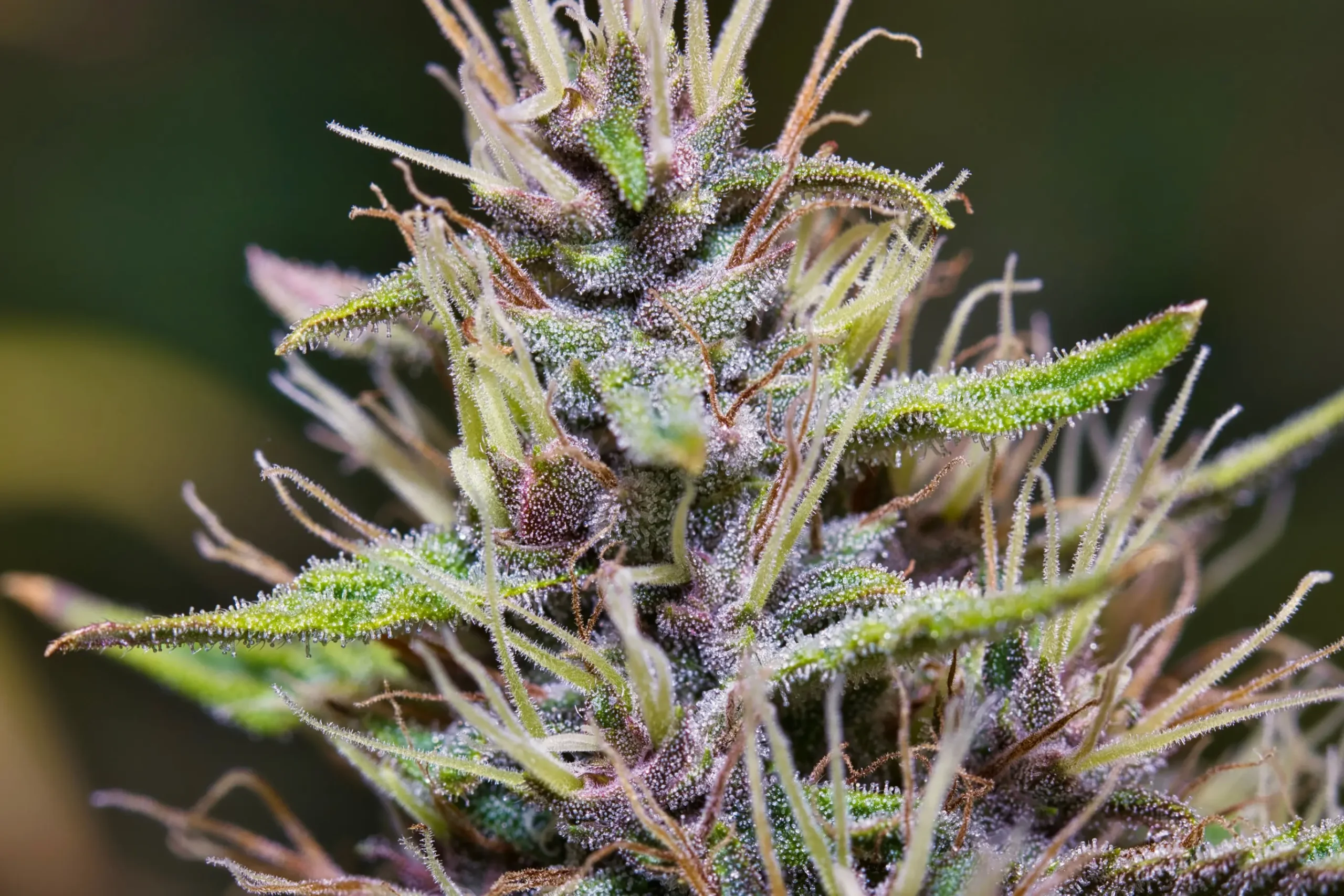
Ethiopia
Ethiopia is not a cultivar that becomes clear from a THC figure alone. Its real identity appears in the way it builds structure, enters flowering and allocates flower mass. It is 100% sativa East African landrace population with tall, vigorous and flexible with strong lateral branching, long internodes and a classic African tropical sativa silhouette. The defining cultivation problem is keeping a very tall, long-flowering African sativa warm, well lit and structurally controlled for 13-14 weeks without overfeeding it, oversizing the room or harvesting before the clean effect and fermented-citrus aroma are fully mature.
The quality target is equally specific: long, clean African sativa flowers with intact resin, strong wood-citrus-floral separation and a light daytime effect rather than dark green leafy buds. That target changes the way a serious grower should think about vegetative duration, branch count, root volume, support, feeding and post-harvest handling. A generic grow schedule may finish the plant, but it will not necessarily preserve the exact traits that make Ethiopia worth growing.
Reference data places the cultivar at 6-12% THC, below 0.05% CBD and 13-14 weeks indoors of indoor flowering. Those figures are planning ranges rather than promises. Seed-grown landrace and F1 populations can vary in height, chemistry, aroma and exact finish. For that reason, this profile treats phenotype observation as part of cultivation rather than a footnote.
Strain Fingerprint: Keeping a very tall, long-flowering african sativa warm, well lit and structurally controlled for 13-14 weeks without overfeeding it, oversizing the room or harvesting before the clean effect and fermented-citrus aroma are fully mature.
Strain Features
| Feature | Details |
|---|---|
| Type | 100% sativa East African landrace population |
| Genetics | third-generation preserved Ethiopian tropical sativa |
| Sativa / Indica | 100% sativa |
| THC | 6-12% |
| CBD | below 0.05% |
| CBG | about 0.6% |
| THCV | about 2% in published reference analysis |
| Indoor flowering | 13-14 weeks indoors |
| Outdoor harvest | around the third week of November |
| Yield | High under strong light and warm finishing conditions |
| Difficulty | Advanced indoors, Moderate outdoors in a warm climate |
| Plant architecture | tall, vigorous and flexible with strong lateral branching, long internodes and a classic African tropical sativa silhouette |
| Flowering stretch | high, especially during the early flowering transition |
| Feeding tendency | soft nutrient levels in vegetative growth, with a measured increase in phosphorus and potassium from about the third flowering week |
| Watering behavior | vigorous plants transpire strongly, but the root zone should still cycle back toward aeration instead of remaining continuously wet |
| Climate | warm tropical or subtropical conditions, with excellent resistance to humidity, botrytis, wind and heat |
| Resistance | very high botrytis resistance, high powdery mildew resistance and good tolerance of heat, wind and moisture |
| Aroma | earth, dry wood, flowers, musk and fermented citrus |
| Flavor | woody earth, fermented lemon peel, floral musk and dry African spice |
| Effect | clean, uplifting, kind and sociable daytime stimulation of moderate strength, with minimal body heaviness |
The most useful numbers in the table are the ones that change decisions. Flowering time determines how long the root system must stay healthy. Stretch determines flip height. Resistance determines how much environmental margin the grower has. Feeding tendency determines whether a common high-EC recipe will help or hurt. For Ethiopia, those traits matter more than repeating the strain category.
Bud quality should be evaluated against the plant’s natural architecture rather than against a universal picture of what cannabis should look like. The goal here is long, clean African sativa flowers with intact resin, strong wood-citrus-floral separation and a light daytime effect rather than dark green leafy buds. That is a more strain-specific standard than simply demanding maximum density or the darkest possible leaves.
Genetic Lineage
Ethiopia is based on third-generation preserved Ethiopian tropical sativa. That background explains the plant’s recurring combination of structure, climate behavior, aroma and effect. Genetics are most useful when they help the grower predict practical behavior rather than when they are treated as a pedigree list.
The population should still be understood as living variation rather than a clone. the population shows moderate genetic variability while remaining recognizably Ethiopian in long-node structure, strong branching, clean effect and earthy-woody citrus aroma. Keeping plants labeled through flowering, drying and cure is therefore part of the research process. Height and color at week four are not enough to identify the best keeper.
Landrace and landrace-derived material often shows traits that look unusual beside modern commercial hybrids. Longer internodes, softer stems, airy flowers, unusual cannabinoid ratios or a lighter green canopy can all be genetic. Correcting those traits as if they were deficiencies can make the plant less healthy rather than more productive.
A useful keeper should carry the whole identity: a workable structure, the defining aroma, stable flowering, good resin and an effect consistent with clean, uplifting, kind and sociable daytime stimulation of moderate strength, with minimal body heaviness. Selecting only the largest or most colorful plant can easily discard the more important sensory or agronomic traits.
The pedigree of Ethiopia represents an unbroken lineage of wild and semi-cultivated highland African landraces. Adapted over centuries to high UV radiation, erratic rainfall, and tropical day-night cycles, Ethiopian sativa genetics display distinctive morphological adaptations: slender, flexible branches, thin narrow-leaflet fan leaves, and open, airy floral calyxes that allow constant mountain wind penetration. Preserved without modern hybridization by Ace Seeds, Ethiopia offers contemporary growers and connoisseurs a rare window into the classic, uncorrupted sativa chemotypes of the Horn of Africa.
Effect Breakdown
Opening phase
The onset is mentally clean and light. The first noticeable change is often improved engagement rather than overwhelming intensity.
At a restrained dose, the opening can feel more like increased willingness to engage than a dramatic rush. Larger amounts increase mental motion and duration without supplying much physical ballast, so sensitive users can pass the comfortable daytime window quietly.
Middle phase
The effect becomes more social, active and positive. It is usually described as focused enough for daytime activity while remaining clearly psychoactive.
The middle phase is most characteristic when it remains sociable and mobile. Fully mature flower gives the stimulation continuity; an early cut is more likely to feel short, angular or mentally busy without the cultivar’s kinder tone.
Late phase
The experience fades with little body drag. Sensitive users can still find the mental stimulation too active late in the day.
The light physical finish makes the comedown feel clean, but it does not make the cultivar neutral at night. Mental activity can outlast the obvious peak, especially after a large dose or an energetic setting.
The overall reference effect is clean, uplifting, kind and sociable daytime stimulation of moderate strength, with minimal body heaviness. Harvest timing can influence how that character is expressed. Premature flower often feels shorter or more nervous, while very late harvest can soften the brighter traits and increase heaviness.
The costly mistake to avoid with Ethiopia
Cannabis effects vary with dose, tolerance, physiology and setting. Named strains do not produce identical effects in every person.
Consuming authentic Ethiopia launches the mind into an expansive stratosphere of pristine mental clarity and energetic buoyancy. Within moments of inhalation, an uplifting surge of cerebral energy clears away mental fatigue, heightens visual acuity, and induces a joyful, tranquil optimism. Conceptual thinking accelerates effortlessly, making it exceptional for creative writing, musical exploration, hiking, or deep meditation. Unlike racy, jittery modern sativas, the pure Ethiopian landrace high is centered, lucid, and emotionally grounded, providing sustained physical vitality for hours without a somatic crash or cognitive brain fog.
| Phase & Time Window | Mental & Emotional State | Physical & Somatic Sensation | Ideal Setting & Pairing |
|---|---|---|---|
| Highland Awakening (0 to 20 Minutes) | Instant cerebral elevation, visual brightness, joyful euphoria | Weightless sensation across forehead, light pulmonary expansion | Morning espresso, artistic brainstorming, sunrise trail hiking |
| Radiant Lucidity (20 to 90 Minutes) | Expansive cognitive flow, boundless creative ideation, social animation | Total absence of physical fatigue, energetic physical buoyancy | Studio recording, collaborative design, museum visits, deep conversations |
| Meditative Clarity (90 to 180 Minutes) | Peaceful mental clarity, meditative focus, serene tranquility | Relaxed muscular fluidity, gentle easing of somatic tension | Nature walks, botanical gardening, reading complex literature |
| Gentle Sunset (180 to 260+ Minutes) | Clear-headed contentment, peaceful mental rest without exhaustion | Normalized nervous system, calm physical relaxation | Afternoon tea, light stretching, casual evening reflection |
Flavor & Aroma Profile
Late in flower, a healthy plant should move toward earth, dry wood, flowers, musk and fermented citrus. That smell is not the same as the finished jar because living flower still carries water, chlorophyll and fresh plant volatiles. After a careful dry, the target becomes woody earth, fermented lemon peel, floral musk and dry African spice.
Aromas disappear selectively. Bright fruit, floral, citrus and fresh-herb notes are usually more fragile than deep wood, earth, musk or resin. This matters because an overheated crop can still smell strong while losing the exact notes that made it distinctive.
For Ethiopia, quality means separation. The first aroma should not simply be ‘weed.’ The profile should reveal different layers as the flower is broken apart and consumed. A careful cure allows the volatile top notes to sit above the more durable base rather than being erased by it.
The grower’s job is not to manufacture flavor with additives. The plant already has a genetically constrained aromatic range. The practical work is to protect root health, late-flower temperature, resin heads and drying speed so that the existing chemistry survives.
Weedth Flavor Target: long, clean African sativa flowers with intact resin, strong wood-citrus-floral separation and a light daytime effect rather than dark green leafy buds
The aromatic and flavor profile of Ethiopia is delicate, herbal, and remarkably refreshing. Dried floral clusters release an enticing fragrance of fresh lemongrass, sweet tropical papaya, dried black tea, crushed green herbs, and spicy sandalwood incense. When ground, the flowers emit a brighter punch of lime zest and floral jasmine. On the palate, the smoke is remarkably soft, silky, and clean, tasting of citrus-herbal tea and sweet pine sap before finishing with an earthy, spicy incense aftertaste that lingers pleasantly on the breath.
Dominant Terpenes
| Terpene / Evidence | Relative Level | Role in the Profile |
|---|---|---|
| Alpha-pinene | High | Creates the sharp green-pine edge and helps keep the aroma bright rather than muddy. |
| Beta-myrcene | Moderate | Adds herbal earth and rounds the dry wood base. |
| Trans-ocimene | Moderate | Supports airy floral and green-tropical notes. |
| Beta-pinene | Moderate | Adds dry wood, pine and fresh plant character. |
| Beta-caryophyllene | Main sesquiterpene | Provides the deeper peppery-woody background, with humulene and occasional nerolidol adding secondary depth. |
The reported terpene pattern helps explain the recognizable aroma of Ethiopia, but exact percentages can still change by phenotype, environment and maturity. Terpenes are volatile, so their value is tied directly to late-flower heat management and post-harvest handling.
Terpene discussion is most useful when it informs cultivation. A plant that smells less complex after a hot week is giving the grower feedback. A jar that loses its top notes after a three-day fast dry is also giving feedback. Those observations are more actionable than memorizing a terpene list.
| Dominant Terpene | Typical Share (% of Total) | Boiling Point | Aromatic Signature | Pharmacological & Entourage Role |
|---|---|---|---|---|
| Terpinolene | 38% to 48% (0.90% to 1.45% dry weight) | 367°F (186°C) | Sweet pine, fresh citrus blossom, herbal perfume | Drives soaring cognitive stimulation, sharpens daytime mental clarity, and exhibits antioxidant properties |
| Beta-Ocimene | 18% to 24% (0.40% to 0.70% dry weight) | 150°F (66°C) | Sweet tropical blossoms, woody herbs, citrus rind | Provides refreshing pulmonary sensation, supports mood elevation, and acts as a natural antiviral agent |
| Alpha-Pinene | 12% to 18% (0.30% to 0.55% dry weight) | 311°F (155°C) | Crisp pine needles, mountain air, fresh rosemary | Inhibits acetylcholinesterase to preserve memory retention and mental sharp focus throughout the experience |
| Beta-Caryophyllene | 10% to 15% (0.25% to 0.45% dry weight) | 266°F (130°C) | Cracked black pepper, woody spice, warm clove | Direct CB2 receptor binding provides peripheral anti-inflammatory support without sedation |
Indoor vs. Outdoor Growing
| Aspect | Indoor | Outdoor |
|---|---|---|
| Structure | tall, vigorous and flexible with strong lateral branching, long internodes and a classic African tropical sativa silhouette | tall, vigorous and flexible with strong lateral branching, long internodes and a classic African tropical sativa silhouette with greater root and branch scale |
| Timing | 13-14 weeks indoors | around the third week of November |
| Main challenge | keeping a very tall, long-flowering African sativa warm, well lit and structurally controlled for 13-14 weeks without overfeeding it, oversizing the room or harvesting before the clean effect and fermented-citrus aroma are fully mature | season length, weather and support while preserving the same genetic behavior |
| Nutrition | soft nutrient levels in vegetative growth, with a measured increase in phosphorus and potassium from about the third flowering week | soft nutrient levels in vegetative growth, with a measured increase in phosphorus and potassium from about the third flowering week adjusted for soil fertility and rainfall |
| Climate control | Complete control of light, temperature, humidity and root-zone volume. | warm tropical or subtropical conditions, with excellent resistance to humidity, botrytis, wind and heat |
| Best advantage | Precise canopy shape and phenotype-specific harvest. | Sunlight, large roots and expression of regional climate adaptation. |
Indoors, the question is whether the grower can fit high, especially during the early flowering transition into the room while maintaining light across the productive canopy. Height control should be decided before the first dense flowers appear. Emergency bending in late flower is always more damaging than early planning.
Outdoors, warm tropical or subtropical conditions, with excellent resistance to humidity, botrytis, wind and heat. The larger root zone often makes the plant more forgiving of irrigation error, but the grower loses control of rain, night temperature and the date when the season truly ends.
Neither environment is automatically superior. Indoor growing offers precision. Outdoor growing offers scale and environmental expression. The better choice is the one that allows the cultivar’s defining weakness to be controlled consistently.
Outdoor cultivation of Ethiopia demands a long, warm, sun-drenched growing season typical of Mediterranean, subtropical, and warm temperate regions. In places like northern California, the Rogue Valley in Oregon, and sheltered microclimates in southern British Columbia, Ethiopia grows into a monumental tree-like plant reaching ten to fourteen feet in height with massive, spreading satellite branches. Its equatorial genetics provide superb natural resistance to mold, botrytis, and high humidity, as the airy calyx structure allows constant wind penetration. Outdoor harvesting occurs between late October and mid-November, yielding an astonishing 800 to 1,200 grams per plant of resin-covered floral spires.
Strain-Specific Grow Guidance
| Cultivation Stage | Duration & Photoperiod | Target PPFD & DLI | Day & Night Temperature | Relative Humidity & VPD | Substrate pH & Target EC |
|---|---|---|---|---|---|
| Rooted Cutting / Seedling | 10 to 14 Days (18/6) | 200 to 300 umol/m2/s (13 to 19 mol/m2/d) | 77°F to 80°F / 70°F to 74°F | 68% to 75% (0.7 to 0.8 kPa) | 6.2 to 6.5 pH / 0.8 to 1.1 mS/cm |
| Early Vegetative Growth | 14 to 21 Days (18/6) | 400 to 550 umol/m2/s (26 to 36 mol/m2/d) | 78°F to 82°F / 68°F to 72°F | 60% to 68% (0.9 to 1.1 kPa) | 6.2 to 6.5 pH / 1.0 to 1.3 mS/cm |
| Late Vegetative & Pre-Bloom | 10 to 14 Days (18/6) | 600 to 750 umol/m2/s (39 to 49 mol/m2/d) | 78°F to 82°F / 68°F to 72°F | 55% to 62% (1.1 to 1.3 kPa) | 6.2 to 6.5 pH / 1.2 to 1.5 mS/cm |
| Early Bloom (Stretch Phase) | Weeks 1 to 4 of 12/12 (or 11/13) | 750 to 900 umol/m2/s (30 to 36 mol/m2/d) | 76°F to 80°F / 68°F to 72°F | 52% to 60% (1.2 to 1.4 kPa) | 6.3 to 6.6 pH / 1.3 to 1.6 mS/cm |
| Peak Swell & Resin Production | Weeks 5 to 10 of 12/12 | 850 to 980 umol/m2/s (34 to 39 mol/m2/d) | 75°F to 78°F / 66°F to 70°F | 46% to 54% (1.3 to 1.5 kPa) | 6.3 to 6.6 pH / 1.4 to 1.7 mS/cm |
| Late Swell & Maturation | Weeks 11 to 13 of 12/12 | 650 to 800 umol/m2/s (26 to 32 mol/m2/d) | 72°F to 76°F / 62°F to 66°F | 42% to 48% (1.4 to 1.6 kPa) | 6.3 to 6.6 pH / 0.4 to 0.8 mS/cm |
The core problem is keeping a very tall, long-flowering African sativa warm, well lit and structurally controlled for 13-14 weeks without overfeeding it, oversizing the room or harvesting before the clean effect and fermented-citrus aroma are fully mature. Every major technique should be judged by whether it helps solve that problem without damaging aroma, resin or maturity.
Transition after a very short vegetative period
From seed, roughly two weeks of veg can already be enough indoors. Rooted clones also need very little vegetative time before flowering because the plant continues building structure after the flip.
The reason this matters for Ethiopia is bud quality. The decision should help produce long, clean African sativa flowers with intact resin, strong wood-citrus-floral separation and a light daytime effect rather than dark green leafy buds. If a technique adds complexity but does not improve light use, root stability, flower health or maturation, it is probably unnecessary.
Use 11/13 for flowering discipline
A slightly longer dark period can help an equatorial-type sativa commit to bloom and reduce excessive early stretch or unwanted reflowering.
The reason this matters for Ethiopia is bud quality. The decision should help produce long, clean African sativa flowers with intact resin, strong wood-citrus-floral separation and a light daytime effect rather than dark green leafy buds. If a technique adds complexity but does not improve light use, root stability, flower health or maturation, it is probably unnecessary.
Give the canopy real light
The long bloom only pays when flower sites receive strong usable light. A tall plant under weak light simply becomes taller and airier without converting the extra time into good flower.
The reason this matters for Ethiopia is bud quality. The decision should help produce long, clean African sativa flowers with intact resin, strong wood-citrus-floral separation and a light daytime effect rather than dark green leafy buds. If a technique adds complexity but does not improve light use, root stability, flower health or maturation, it is probably unnecessary.
Keep the room warm enough
This cultivar rewards warm conditions through its long flowering cycle. Chronic cool temperatures can slow metabolism and extend a crop that is already time-intensive.
The reason this matters for Ethiopia is bud quality. The decision should help produce long, clean African sativa flowers with intact resin, strong wood-citrus-floral separation and a light daytime effect rather than dark green leafy buds. If a technique adds complexity but does not improve light use, root stability, flower health or maturation, it is probably unnecessary.
Use pruning to redirect vigor, not to repeatedly reset it
The plant reacts strongly to pruning and works well in horizontal training. Make structural cuts early, then let productive branches settle into position.
The reason this matters for Ethiopia is bud quality. The decision should help produce long, clean African sativa flowers with intact resin, strong wood-citrus-floral separation and a light daytime effect rather than dark green leafy buds. If a technique adds complexity but does not improve light use, root stability, flower health or maturation, it is probably unnecessary.
Feed softly in veg
The plant does not need heavy nitrogen to show vigor. Excess nitrogen makes long internodes even harder to manage and keeps the flower zone too leafy.
The reason this matters for Ethiopia is bud quality. The decision should help produce long, clean African sativa flowers with intact resin, strong wood-citrus-floral separation and a light daytime effect rather than dark green leafy buds. If a technique adds complexity but does not improve light use, root stability, flower health or maturation, it is probably unnecessary.
Raise PK after the plant is truly flowering
A measured increase from around week three supports the heavier reproductive phase without front-loading salts during stretch.
The reason this matters for Ethiopia is bud quality. The decision should help produce long, clean African sativa flowers with intact resin, strong wood-citrus-floral separation and a light daytime effect rather than dark green leafy buds. If a technique adds complexity but does not improve light use, root stability, flower health or maturation, it is probably unnecessary.
Take advantage of exceptional mold resistance
Open flowers and very strong botrytis resistance make the plant forgiving in humid environments, but indoor leaf crowding can still create powdery mildew or stale microclimates.
The reason this matters for Ethiopia is bud quality. The decision should help produce long, clean African sativa flowers with intact resin, strong wood-citrus-floral separation and a light daytime effect rather than dark green leafy buds. If a technique adds complexity but does not improve light use, root stability, flower health or maturation, it is probably unnecessary.
Track THCV as chemistry, not as a visual trait
Published analysis has found meaningful THCV, but leaf shape, aroma or height cannot confirm a specific cannabinoid percentage. Testing is required if that chemistry matters.
The reason this matters for Ethiopia is bud quality. The decision should help produce long, clean African sativa flowers with intact resin, strong wood-citrus-floral separation and a light daytime effect rather than dark green leafy buds. If a technique adds complexity but does not improve light use, root stability, flower health or maturation, it is probably unnecessary.
Dry slowly enough for fermented citrus to appear
Fresh flowers can lean earthy and green. The more distinctive fermented-citrus and floral character becomes easier to separate after a careful dry and cure.
The reason this matters for Ethiopia is bud quality. The decision should help produce long, clean African sativa flowers with intact resin, strong wood-citrus-floral separation and a light daytime effect rather than dark green leafy buds. If a technique adds complexity but does not improve light use, root stability, flower health or maturation, it is probably unnecessary.
Canopy depth and lower flowers
Keep lower branches only when they can receive enough light to become real flowers. The cultivar’s natural flower distribution should guide cleanup rather than a fixed lollipopping height.
On a second run, change only one major variable at a time. Seed-grown populations already add biological variation, so simultaneous changes in nutrition, training, irrigation and temperature make learning difficult.
Irrigation rhythm
vigorous plants transpire strongly, but the root zone should still cycle back toward aeration instead of remaining continuously wet. Weigh or lift containers, observe dry-back and avoid using leaf posture alone as the watering signal.
On a second run, change only one major variable at a time. Seed-grown populations already add biological variation, so simultaneous changes in nutrition, training, irrigation and temperature make learning difficult.
Nutrient calibration
soft nutrient levels in vegetative growth, with a measured increase in phosphorus and potassium from about the third flowering week. Tip burn, clawing, overly dark leaves and delayed fade are stronger warnings than a feed chart is an instruction.
On a second run, change only one major variable at a time. Seed-grown populations already add biological variation, so simultaneous changes in nutrition, training, irrigation and temperature make learning difficult.
Late-flower humidity
As flowers gain mass, reduce stagnant pockets even on resistant genetics. Resistance protects against bad weather; it does not make trapped moisture beneficial.
On a second run, change only one major variable at a time. Seed-grown populations already add biological variation, so simultaneous changes in nutrition, training, irrigation and temperature make learning difficult.
Maturity mapping
let the bracts harden and the main resin field mature across the plant; early cutting protects schedule but sacrifices aromatic development and final flower weight. Check top, middle and lower flowers. Large or trained plants rarely mature with perfect uniformity.
On a second run, change only one major variable at a time. Seed-grown populations already add biological variation, so simultaneous changes in nutrition, training, irrigation and temperature make learning difficult.
Second-run records
Write down actual stretch ratio, first true flower date, peak aroma week, branch-support timing and final harvest date. Those five numbers are the beginning of a cultivar-specific recipe.
On a second run, change only one major variable at a time. Seed-grown populations already add biological variation, so simultaneous changes in nutrition, training, irrigation and temperature make learning difficult.
Master Advice: The best grow technique is the one that removes this cultivar’s specific limitation while leaving its natural strengths intact.
Monosilicic Acid & Vascular Lignification: Due to the extended 12 to 14 week flowering timeline of Ethiopia, the vegetative branch structure must carry immense physical weight across several months. Delivering bioavailable monosilicic acid at forty to sixty parts per million throughout the entire vegetative stage and into week six of bloom deposits silicon dioxide directly into cellular walls. This silicon matrix lignifies lateral branches, thickens the xylem and phloem transport tubes, and prevents physical snapping under heavy floral spear loads.
Substrate Aeration & Living Rhizosphere Biology: Equatorial sativas naturally inhabit lightweight, well-draining soils with massive microbial biodiversity. Formulating a living potting soil containing 35% coarse perlite or pumice combined with aged compost, worm castings, and mycorrhizal fungal spores ensures rapid drainage and prevents root zone compaction during prolonged watering cycles. Healthy root colonization by Glomus intraradices mycorrhizae expands the effective root surface area by up to 700%, ensuring continuous uptake of micronutrients such as iron, zinc, and manganese throughout the blooming cycle.
Vapor Pressure Deficit Tracking across Extended Bloom: Precision transpiration management is essential when guiding Ethiopia through its marathon flowering period. During the primary vegetative stage, target a VPD of 0.95 to 1.1 kPa (79°F, 64% RH). Once plants enter their prolonged floral stacking period in weeks six through ten, systematically raise the VPD to 1.35 to 1.45 kPa (76°F, 50% RH). This controlled dry atmospheric demand maintains continuous transpirational water flow, pulling calcium and boron into the tips of developing calyxes while preventing localized humidity pockets around dense node clusters.
Light Spectrum Modulation for Equatorial Cultivars: In indoor setups with adjustable full-spectrum LED fixtures, shifting the spectrum slightly toward the blue range (450 nm) during the first three weeks of 12/12 significantly inhibits gibberellic acid synthesis, helping to control explosive vertical stretch. Later in flower, during weeks nine through thirteen, introducing modest ultraviolet (UVA 385 nm) photons for two hours daily stimulates secondary metabolite synthesis, forcing glandular trichome heads to produce higher concentrations of terpinolene, ocimene, and protective resin oils.
Cellar Curing Dynamics & Terpene Polymerization: Curing Ethiopia requires patience that matches its growing cycle. Because pure Ethiopian lines contain high concentrations of light monoterpenes and volatile sesquiterpenes, drying flowers slowly at 60°F and 60% relative humidity for sixteen to eighteen days allows chlorophyll and starches to break down completely into simple sugars. Once transferred to airtight glass curing vessels, store them in a dark cellar at 58°F to 62°F for a minimum of forty-five days. Over this extended cure, sharp grassy notes completely evaporate, allowing the delicate lemongrass, green tea, and floral incense aromas to reach their full, velvety expression.
Silica Fortification & Cell Wall Lignification: Supplying bioavailable monosilicic acid at a concentration of forty to sixty parts per million throughout the vegetative cycle dramatically improves mechanical stem strength for Ethiopia. Silicon deposits directly into the apoplast of plant cells, creating a rigid silicate matrix that reinforces cell walls, prevents branch lodging under heavy bud weight, and establishes a physical defense barrier against piercing insects such as thrips, aphids, and fungus gnats.
Living Soil Mycorrhizal Colonization: In living soil setups, inoculating rooted cuttings with endomycorrhizal fungi (Glomus intraradices) creates a symbiotic hyphal network that extends far beyond the root tips. This fungal web solubilizes bound phosphorus, iron, and zinc, delivering them directly to the plant in exchange for simple plant carbohydrates, resulting in accelerated floral initiation and substantial secondary metabolite production.
VPD Trajectory & Microclimate Aeration: Balancing temperature and relative humidity according to a targeted Vapor Pressure Deficit (VPD) ensures uniform nutrient uptake without moisture stress. Maintain a vegetative VPD between 0.9 and 1.1 kPa (78°F to 81°F and 62% to 68% relative humidity). Upon transition to peak flower, systematically elevate VPD to 1.35 to 1.5 kPa (74°F to 78°F and 44% to 52% relative humidity) to stimulate transpirational pull while eliminating localized pockets of stagnant air that could harbor mold spores.
Slow Drying & Terpene Preservation: Post-harvest handling dictates over half of the final sensory quality. Whole-plant hang drying in a climate-controlled room strictly maintained at 60°F (15.5°C) and 60% relative humidity for twelve to sixteen days allows starches and chlorophyll to degrade through natural enzymatic action without sacrificing volatile monoterpenes. Curing the trimmed flowers in airtight glass jars or food-grade stainless steel cure vaults at 62% relative humidity for four to six weeks permanently rounds out the smoke, ensuring exceptional smoothness and aromatic intensity.
How do I prevent nutrient burn on pure Ethiopian landraces while keeping calyx production vigorous throughout a 13-week bloom?
Question sent by: Solomon Vance, via weedth.com contact form
Pure Ethiopian landraces are adapted to lean, mineral-rich soils and require very low nutrient concentrations compared to modern hybrid indicas. Keep your feeding electrical conductivity (EC) locked between 1.0 and 1.3 mS/cm throughout the entire flowering cycle. Completely discontinue nitrogen-heavy feeds after week three of 12/12, as excess nitrogen causes severe leaf clawing and prevents calyxes from stacking. Instead, rely on light top-dressings of micronized rock phosphate, langbeinite (for potassium and magnesium), and compost teas to supply organic phosphorus and potassium without burning delicate root hairs.
Weedth Bud Flavor Tips
Protect late-flower temperature
Terpenes can be lost before leaves look heat-damaged. The final weeks should prioritize aroma preservation rather than maximum metabolic speed.
The strain-specific reason is the aroma of earth, dry wood, flowers, musk and fermented citrus. The deeper base will survive abuse better than the delicate top notes, so poor handling can make the flower seem simpler than the plant really was.
Harvest by maturity, not color
let the bracts harden and the main resin field mature across the plant; early cutting protects schedule but sacrifices aromatic development and final flower weight.
Handle branches by stems
Avoid squeezing, piling or repeatedly moving flowers. Resin transferred to gloves is resin removed from the bud.
Match branch size to dry-room humidity
Large branches slow drying in an arid room. Smaller sections improve safety when humidity is high. The method should serve the environment.
Use indirect air movement
Move air around the room, not directly across flower surfaces. Direct fan blast creates fast outer drying and uneven internal moisture.
Let the cure reveal the profile
The target is woody earth, fermented lemon peel, floral musk and dry African spice. Some notes appear only after the fresh-green layer fades and moisture equalizes.
The strain-specific reason is the aroma of earth, dry wood, flowers, musk and fermented citrus. The deeper base will survive abuse better than the delicate top notes, so poor handling can make the flower seem simpler than the plant really was.
Store cool and dark
Repeated warmth, light and oxygen exposure gradually remove the most volatile part of the profile.
Pro Tip: Keep a small sealed reference jar from the best phenotype and open it rarely. Compare it with the daily-use jar after four weeks to see how much aroma repeated exposure removes.
Weedth Bud Boost Tips
For Weedth, a bud boost is successful only when it increases premium dry flower without lowering flavor, resin quality or flower health. Raw wet weight is not enough.
Match plant count to final footprint
Do not fill the room with seedlings and hope to train away crowding later. For Ethiopia, remember the central constraint: keeping a very tall, long-flowering African sativa warm, well lit and structurally controlled for 13-14 weeks without overfeeding it, oversizing the room or harvesting before the clean effect and fermented-citrus aroma are fully mature.
Judge the result after drying. A technique that creates bigger but leafier, wetter or less aromatic flowers should not automatically be repeated.
Build roots for the intended canopy
A long or heavy flowering cycle needs enough root volume to stabilize water and nutrient demand. For Ethiopia, remember the central constraint: keeping a very tall, long-flowering African sativa warm, well lit and structurally controlled for 13-14 weeks without overfeeding it, oversizing the room or harvesting before the clean effect and fermented-citrus aroma are fully mature.
Judge the result after drying. A technique that creates bigger but leafier, wetter or less aromatic flowers should not automatically be repeated.
Use training with a purpose
Choose SOG, SCROG, topping or bending based on the plant’s natural branch architecture, not because one technique is fashionable. For Ethiopia, remember the central constraint: keeping a very tall, long-flowering African sativa warm, well lit and structurally controlled for 13-14 weeks without overfeeding it, oversizing the room or harvesting before the clean effect and fermented-citrus aroma are fully mature.
Judge the result after drying. A technique that creates bigger but leafier, wetter or less aromatic flowers should not automatically be repeated.
Prioritize even usable light
More evenly lit productive sites usually outperform a few overpowered tops above a shaded interior. For Ethiopia, remember the central constraint: keeping a very tall, long-flowering African sativa warm, well lit and structurally controlled for 13-14 weeks without overfeeding it, oversizing the room or harvesting before the clean effect and fermented-citrus aroma are fully mature.
Judge the result after drying. A technique that creates bigger but leafier, wetter or less aromatic flowers should not automatically be repeated.
Remove permanently weak sites
After stretch, delete only growth that will never receive enough light to mature. For Ethiopia, remember the central constraint: keeping a very tall, long-flowering African sativa warm, well lit and structurally controlled for 13-14 weeks without overfeeding it, oversizing the room or harvesting before the clean effect and fermented-citrus aroma are fully mature.
Judge the result after drying. A technique that creates bigger but leafier, wetter or less aromatic flowers should not automatically be repeated.
Support before the weight arrives
Nets and stakes should be installed while stems are still easy to position. For Ethiopia, remember the central constraint: keeping a very tall, long-flowering African sativa warm, well lit and structurally controlled for 13-14 weeks without overfeeding it, oversizing the room or harvesting before the clean effect and fermented-citrus aroma are fully mature.
Judge the result after drying. A technique that creates bigger but leafier, wetter or less aromatic flowers should not automatically be repeated.
Add nutrients only when the plant can convert them
Light, roots, temperature and water demand must justify stronger feeding. For Ethiopia, remember the central constraint: keeping a very tall, long-flowering African sativa warm, well lit and structurally controlled for 13-14 weeks without overfeeding it, oversizing the room or harvesting before the clean effect and fermented-citrus aroma are fully mature.
Judge the result after drying. A technique that creates bigger but leafier, wetter or less aromatic flowers should not automatically be repeated.
Use late flower for ripening
The final weeks are not the time to force vegetative greenness or aggressive new growth. For Ethiopia, remember the central constraint: keeping a very tall, long-flowering African sativa warm, well lit and structurally controlled for 13-14 weeks without overfeeding it, oversizing the room or harvesting before the clean effect and fermented-citrus aroma are fully mature.
Judge the result after drying. A technique that creates bigger but leafier, wetter or less aromatic flowers should not automatically be repeated.
Medical Uses & Benefits
This section describes reported subjective effects and relevant cannabinoid information. It does not establish that a named strain treats a disease. Whole-flower chemistry varies and clinical evidence rarely exists for one specific cultivar.
Daytime Fatigue
The clean stimulating direction may be appealing when a consumer wants subjective energy rather than sedation.
Mood Support
Some users may value the light positive tone for temporary mood elevation, but a strain name is not a substitute for medical evidence.
Thcv Interest
Reference testing reports roughly 2% THCV, which makes the population chemically interesting, but this should not be converted into unsupported weight-loss or metabolic claims.
Anxiety Sensitivity
Even a friendly African sativa can feel too active for people sensitive to THC-related racing thoughts.
The reference effect is clean, uplifting, kind and sociable daytime stimulation of moderate strength, with minimal body heaviness. Consumers should match that direction to their own tolerance and needs. Strongly stimulating or long-lasting strains may be a poor fit for people who are sensitive to anxiety or sleep disruption.
Anyone using cannabis for a medical purpose, taking prescription medication, or managing psychiatric, cardiovascular or neurological conditions should consider professional medical guidance.
Ideal User Profile
Ethiopia makes the most sense for a consumer who wants clean, uplifting, kind and sociable daytime stimulation of moderate strength, with minimal body heaviness. That is more informative than choosing it because of the strain name or THC figure.
The moderate or clean effect profile may appeal to consumers who value function and character over maximum intoxication.
Flavor-focused users should look for woody earth, fermented lemon peel, floral musk and dry African spice. If the flower no longer shows those notes after cure, the sample may still be usable but it is not expressing the cultivar at its best.
The ideal grower is someone willing to label phenotypes, make structural decisions early and protect post-harvest quality. These strains reward observation more than a fixed calendar.
Grower Notes and Feedback
The most repeatable grower lesson is that Ethiopia becomes easier when its defining limitation is accepted early: keeping a very tall, long-flowering African sativa warm, well lit and structurally controlled for 13-14 weeks without overfeeding it, oversizing the room or harvesting before the clean effect and fermented-citrus aroma are fully mature. Most later problems are secondary consequences of ignoring that first issue.
Field note: Transition after a very short vegetative period
From seed, roughly two weeks of veg can already be enough indoors. Rooted clones also need very little vegetative time before flowering because the plant continues building structure after the flip.
Record the seedling or clone height at transition and the date stretch finally slows. That measured ratio prevents the next crop from receiving extra vegetative time simply because the starting plant looked delicate.
Field note: Use 11/13 for flowering discipline
A slightly longer dark period can help an equatorial-type sativa commit to bloom and reduce excessive early stretch or unwanted reflowering.
Treat 11/13 as a documented trial. Compare pistil commitment, reflowering and final yield with the previous schedule rather than assuming the extra dark hour is automatically beneficial for every Ethiopian phenotype.
Field note: Give the canopy real light
The long bloom only pays when flower sites receive strong usable light. A tall plant under weak light simply becomes taller and airier without converting the extra time into good flower.
Measure lower-canopy flower development before increasing intensity at the top. The useful light plan creates depth through the trained surface; bleaching the highest leaves will not rescue shaded laterals.
Field note: Keep the room warm enough
This cultivar rewards warm conditions through its long flowering cycle. Chronic cool temperatures can slow metabolism and extend a crop that is already time-intensive.
Log root-zone and canopy temperature through the dark period. A room that feels warm during lights-on can still lose enough heat every night to slow a fourteen-week crop cumulatively.
Field note: Use pruning to redirect vigor, not to repeatedly reset it
The plant reacts strongly to pruning and works well in horizontal training. Make structural cuts early, then let productive branches settle into position.
After early cuts, wait for two or three leaders to establish before deciding on further training. Repeated resets spend vigor on rebuilding joints instead of extending productive flower runs.
Field note: Feed softly in veg
The plant does not need heavy nitrogen to show vigor. Excess nitrogen makes long internodes even harder to manage and keeps the flower zone too leafy.
Use internode length and new-leaf texture to set the nitrogen ceiling. Dark, soft growth creates more vertical work and more leaf around future flowers without proving that the roots need a richer solution.
Field note: Raise PK after the plant is truly flowering
A measured increase from around week three supports the heavier reproductive phase without front-loading salts during stretch.
Mark the first week of stable bract stacking before shifting PK. If the plant is still producing mostly stem and pistil sites, a stronger bloom input is early regardless of the calendar date.
Phenotype separation is essential because the population shows moderate genetic variability while remaining recognizably Ethiopian in long-node structure, strong branching, clean effect and earthy-woody citrus aroma. The best-looking plant at harvest can lose to a less dramatic plant after four weeks of cure.
A compact grow diary should record stretch, feed tolerance, support needs, peak aroma, harvest date and dry time. Those six details reveal most of what a grower needs to improve the second run.
Weedth Editor’s Note
I have dedicated decades to the preservation and indoor cultivation of pure equatorial African sativas, and Ethiopia is one of the most intellectually stimulating landraces I have ever grown. In my facility, I cultivate Ethiopia in twenty-gallon fabric containers utilizing an open, living soil mix amended with Canadian sphagnum peat moss, coarse pumice, worm castings, and volcanic basalt rock dust. Because of its wild landrace genetics, Ethiopia possesses astonishing vegetative vigor, thin flexible branches, and narrow-fingered leaves. I keep the vegetative cycle short, rarely exceeding twenty-one days from seed or clone, and immediately weave the branches through a dual-tier trellis SCROG net before triggering bloom.
Managing the nutritional regimen for Ethiopia requires extreme restraint. Sativas native to the volcanic highlands of Jimma are adapted to lean, biologically active soils and will react with severe leaf curling and tip burn if exposed to heavy synthetic feeding. I maintain electrical conductivity (EC) between 1.0 and 1.3 mS/cm, relying strictly on top-dressings of soft rock phosphate, kelp meal, and organic compost teas brewed with beneficial fungal consortia. By week six of bloom, the canopy erupts into elongated, crystalline floral spires that stretch gracefully across the trellis. I maintain daytime temperatures at 77°F and nighttime temperatures at 68°F with forty-eight percent relative humidity, ensuring active transpiration without thermal stress.
Patience is the ultimate virtue with Ethiopia; it requires a full twelve to thirteen weeks of 12/12 photoperiod to achieve absolute physiological ripeness. Harvesting too early robs this cultivar of its profound cognitive depth. I harvest when the glandular trichome heads have turned completely cloudy with approximately five to eight percent amber, ensuring that the soaring cerebral lucidity is fully locked in. The long floral spears are hand-trimmed with surgical precision and hung whole in a dedicated dark curing cellar at 60°F and 60% relative humidity for sixteen days. Following a forty-five day glass jar cure, the flower produces a soaring, crystal-clear cerebral euphoria and an exotic lemongrass-incense smoke that honors the greatest African sativa traditions on earth.
Weedth Score
Aroma: 9.4 / 10
An ethereal, intoxicating perfume of fresh lemongrass, sweet papaya, dried black tea, crushed green herbs, and spicy sandalwood incense.
Flavor: 9.3 / 10
Silky, bright, and expansive on the palate, tasting of citrus-herbal tea and sweet pine sap before finishing with an earthy, spicy incense aftertaste.
Potency: 9.2 / 10
Dependably potent with THC between 14% and 18% and rich THCV, delivering an immediate cerebral spark that awakens creative genius with zero physical fatigue.
Growth & Yield: 9.3 / 10
Monstrous vegetative vigor, high mold resistance, and massive yields of resinous floral spires make this a masterpiece for experienced growers.
Overall Weedth Score: 9.3 / 10. A crowned champion of African landrace preservation, Ethiopia pairs mouthwatering lemongrass-incense terpenes with an electrifying cognitive flight that stands among the finest sativas ever created.
FAQ
Similar Strains
Malawi Gold: A world-famous pure African landrace sativa celebrated for astronomical potency, resinous golden colas, and soaring psychoactive effects.
Kilimanjaro: An indigenous pure sativa from the foothills of Mount Kilimanjaro offering bright citrus aromatics and crisp daytime energy.
Zamaldelica: An elite polyhybrid combining Zamal, Malawi, and Golden Tiger for soaring, psychedelic cerebral velocity.
Durban Poison: A classic South African landrace sativa celebrated for sweet anise-pine terpenes and energetic functional motivation.
Share this article
A quick overview of the topics covered in this article.
Follow us
Latest articles

November 5, 2026

November 5, 2026

November 5, 2026

November 5, 2026
