
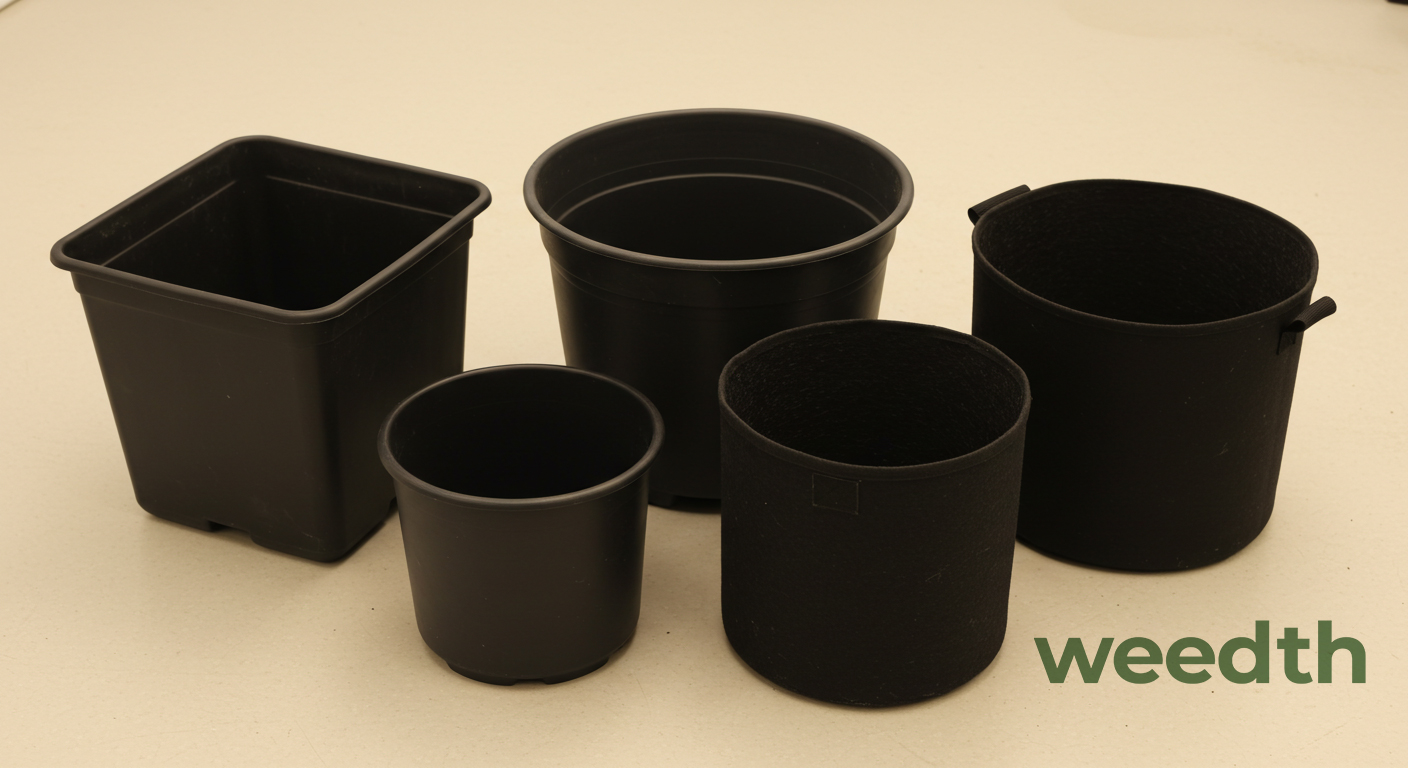
Fabric Pots vs Plastic Pots for Cannabis: Indoor and Outdoor Tradeoffs
Fabric pots and rigid plastic pots can both grow healthy cannabis. The material changes how the root zone exchanges water, heat, and air with the environment, but it does not replace the need for a suitable growing medium, adequate container volume, complete irrigation, drainage, nutrition, and stable root-zone conditions. Fabric usually increases sidewall evaporation and exposure to air, while plastic reduces sidewall water loss and creates a more closed root-zone boundary. Whether that difference helps or hurts depends on the grow system.
Outdoors, a breathable fabric container can cool through evaporation and reduce the severe solar heating associated with some dark plastic containers, but it can also dry rapidly in hot wind and create a demanding irrigation schedule. Indoors, fabric can shorten dry-back under strong airflow, while rigid plastic may be easier to manage when irrigation is manual, room humidity is low, or the medium already has high air-filled porosity. Neither material is universally safer from overwatering or root disease.
This resource compares container material, not container volume. If you are still choosing pot size, use Containers and Pots Basics for the broader container framework. For watering decisions after the material is chosen, continue with Cannabis Watering Basics.
Resource Navigation
In This Resource
- What the Container Wall Actually Changes
- Compare Water Loss, Oxygen, and Dry-Back
- Understand Air Pruning and Root Architecture
- Fabric Pots vs Plastic Pots Outdoors
- Compare the Same Materials Indoors
- Manage Root-Zone Temperature
- Match Irrigation and Nutrition to the Pot
- Make the Final Fabric vs Plastic Decision
What the Container Wall Actually Changes
The most useful way to compare fabric and plastic is to treat the container wall as a boundary condition around the substrate. In rigid plastic, most liquid water and water vapor cannot leave through the sidewall. Water leaves mainly through plant transpiration, evaporation from the upper surface, and drainage from holes. In a porous fabric pot, water and vapor can also move through the wall, so the outer edge of the root ball interacts much more directly with surrounding air.
Sidewall evaporation
Sidewall evaporation is water loss through a porous container wall. It can shorten the interval between irrigations, cool the outer substrate as water evaporates, and create a drier outer root-zone gradient than the same medium in a nonporous container.
This difference is significant because a cannabis container is a small hydraulic system. Root-zone water does not disappear evenly. The top, center, bottom, and outer edge can have different moisture conditions. Changing the wall changes those gradients. A grower who moves the same plant, medium, irrigation volume, and schedule from plastic to fabric may therefore see a very different dry-back pattern without changing anything else.
Fabric is porous, but the entire root ball is not automatically more oxygenated
Fabric walls allow air exchange at the edge and can help the perimeter dry sooner. That does not mean every pore in the middle of a saturated root ball suddenly contains oxygen. Oxygen supply inside the medium still depends on pore structure, water content, diffusion pathways, temperature, root respiration, and how completely excess water can move away.
A compacted, fine, waterlogged mix can remain oxygen-limited in fabric. A well-structured mix in plastic can maintain excellent aeration if the container has adequate drainage and irrigation is timed to root-zone demand. Pot material changes the system; it does not override the physics of the medium.
Important: Do not use a fabric pot as a treatment for a dense or chronically saturated medium. Correct the medium and irrigation problem first.
Plastic reduces sidewall evaporation and increases moisture buffering
The solid wall of a conventional plastic pot can be useful when the grower needs a longer service interval between irrigations. In dry indoor rooms, exposed balconies, hot climates with limited irrigation access, or hand-watered soil systems, retaining sidewall moisture can be an advantage rather than a flaw.
The tradeoff is that the root-zone edge does not receive the same evaporative drying. If the medium is dense, the container is oversized for the plant, temperatures are cool, or the grower irrigates too often, plastic can preserve excessive moisture longer. That is a management risk, not proof that plastic itself causes overwatering.
Tip: If your current plastic system already dries evenly and roots look healthy, changing material without a specific problem to solve may add work rather than improve the crop.
Choose the wall that matches your irrigation capacity
If you can respond to rapid dry-back, fabric may be useful. If irrigation opportunities are limited, plastic may provide a more forgiving moisture buffer.
Choose by material reputation alone
A fashionable container cannot compensate for the wrong volume, a poor medium, inadequate drainage, or unreliable watering.
Compare Water Loss, Oxygen, and Dry-Back Before You Compare Yield
The largest practical difference between fabric and plastic is often irrigation demand. Research on porous horticultural containers consistently shows that permeable sidewalls can increase water loss and shorten irrigation intervals compared with conventional nonporous plastic. The exact magnitude varies with container construction, climate, plant size, spacing, substrate, and whether the porous wall is exposed or enclosed.
Fabric can dry from the top and the sides
In plastic, the outer wall blocks evaporation. In fabric, the edge can lose water directly to surrounding air. Fans indoors and wind outdoors intensify this effect. A fabric pot sitting alone with air around every wall behaves differently from the same bag packed tightly against neighboring bags, wrapped in a cover, or placed inside a nonporous decorative sleeve.
As the edge dries, water can migrate outward from wetter internal regions. This can be helpful when the goal is a predictable wet-to-dry cycle, but it can also leave the outer root zone under-irrigated if watering is concentrated around the stem. Large fabric pots are especially vulnerable to a wet-center/dry-edge pattern when a single emitter or narrow watering stream is used.
“My fabric pot gets light much faster than my plastic pot. Does that prove the fabric plant is drinking more water?”
Question sent by: Joshua Grant, via email.
No. Faster mass loss can come from plant transpiration, sidewall evaporation, surface evaporation, drainage, or a combination of them. Compare plant size and irrigation volume, and weigh or measure both pots through the same interval. If the fabric container loses more mass while the plants transpire similarly, some of that difference is probably container evaporation rather than greater plant water use.
Plastic can stay evenly moist longer, but it can also hide slow dry-back
A rigid pot may feel easier to water because the sidewall is not continuously losing moisture. That can improve consistency when the grower hand-waters once per day or less. It can also make a mistake last longer. If a small root system is surrounded by too much wet substrate, the retained moisture at the wall and lower root zone can extend the time before air returns.
The correct comparison is therefore not “fabric drains better.” Drainage is movement of excess water out of the container. Fabric adds another path for moisture loss, but a bag with no functional bottom drainage sitting in a saturated tray can still remain too wet. Conversely, a plastic pot with open drainage holes and a coarse, stable medium can drain efficiently.
Remember: Evaporation, drainage, and root water uptake are different processes. Faster pot-weight loss does not tell you which process caused it.
Oxygen returns after water leaves connected pores
Roots consume oxygen continuously. After irrigation, many pores temporarily fill with water. As gravity drainage, plant uptake, and evaporation reduce water content, air re-enters the connected pore network. Fabric can accelerate drying near the wall, which can improve aeration there, but it cannot create air-filled porosity where the substrate structure has collapsed.
This distinction matters in high-frequency fertigation systems. A grower may intentionally use a smaller, well-aerated root zone and irrigate several times during the light period. In that system, a rapidly drying fabric container can be manageable. A soil grower using slower biological nutrition and hand watering may prefer a longer moisture buffer. Neither approach is inherently more advanced.
Field Advice: Compare the irrigation interval at peak canopy demand, not when the plant is small. A material that feels easy in early vegetative growth may become difficult once transpiration rises.
Do not let a fabric pot sit continuously in runoff and still expect normal sidewall behavior
Standing water can re-wet the lower fabric, reduce air exposure, increase disease risk, and make the container behave differently from an elevated, freely draining bag. Keep runoff management separate from the choice of container material.
Air Pruning Can Change Root Architecture, but It Is Not a Yield Guarantee
One reason fabric pots are popular is air pruning. When a root tip reaches a sufficiently dry, oxygen-exposed porous wall, the exposed tip can stop elongating. Growth can then continue through lateral roots behind that tip rather than a single root circling repeatedly along a smooth boundary.
Air pruning
Air pruning is the interruption of root-tip growth when a root reaches an air-exposed container boundary. The plant may respond with additional branching behind the stopped tip, producing a different root architecture from the long circling roots often seen in smooth rigid containers.
Plastic encourages roots to follow the wall when residence time is long
Roots naturally explore available space. In a smooth rigid container, a root that reaches the wall cannot grow through it, so it can turn and continue along the boundary. With enough time in a small container, this can produce dense circling roots and a hard root ball. Nursery research across several species has repeatedly identified root circling as a potential consequence of conventional smooth containers.
That does not mean every root touching a plastic wall is damaged. A healthy plant is expected to colonize the full pot. The concern is persistent deformation, a dense circling mat, poor water penetration, or growth restriction after the root system has occupied the available volume for too long.
Fabric does not eliminate root restriction
Air pruning changes what happens at the wall, but it does not create unlimited root volume. A five-gallon fabric bag is still a five-gallon-scale root environment. Once root biomass, canopy demand, and irrigation demand exceed what that volume can support, the plant can still become root-zone limited even if circling roots are less obvious.
Research on air-pruning and alternative nursery containers also shows that altered root architecture does not automatically produce more shoot growth. In a 2024 citrus study, air-pruning containers changed some root traits but did not significantly outperform standard containers in overall growth. Earlier tree-container work likewise found less circling in fabric while aboveground responses varied. Root form is one outcome, not a guaranteed yield multiplier.
Weedth Verdict: Fabric has a defensible root-architecture advantage when the wall is truly air-exposed, but there is not enough cannabis-specific evidence to turn that advantage into a universal yield claim.
Field Advice: At the end of the cycle, inspect the whole root ball. Compare root distribution, circling, dead zones, dry edges, saturated zones, and how much substrate was actually colonized. This evidence is more useful than repeating a material slogan next season.
Use air pruning as one root-management tool
Combine an appropriate fabric pot with adequate volume, complete irrigation, healthy substrate structure, and timely transplanting when staged containers are used.
Assume more fine roots automatically mean more flower
Flower production still depends on genetics, light, season or photoperiod, canopy health, water, nutrition, root-zone temperature, disease pressure, and harvest timing.
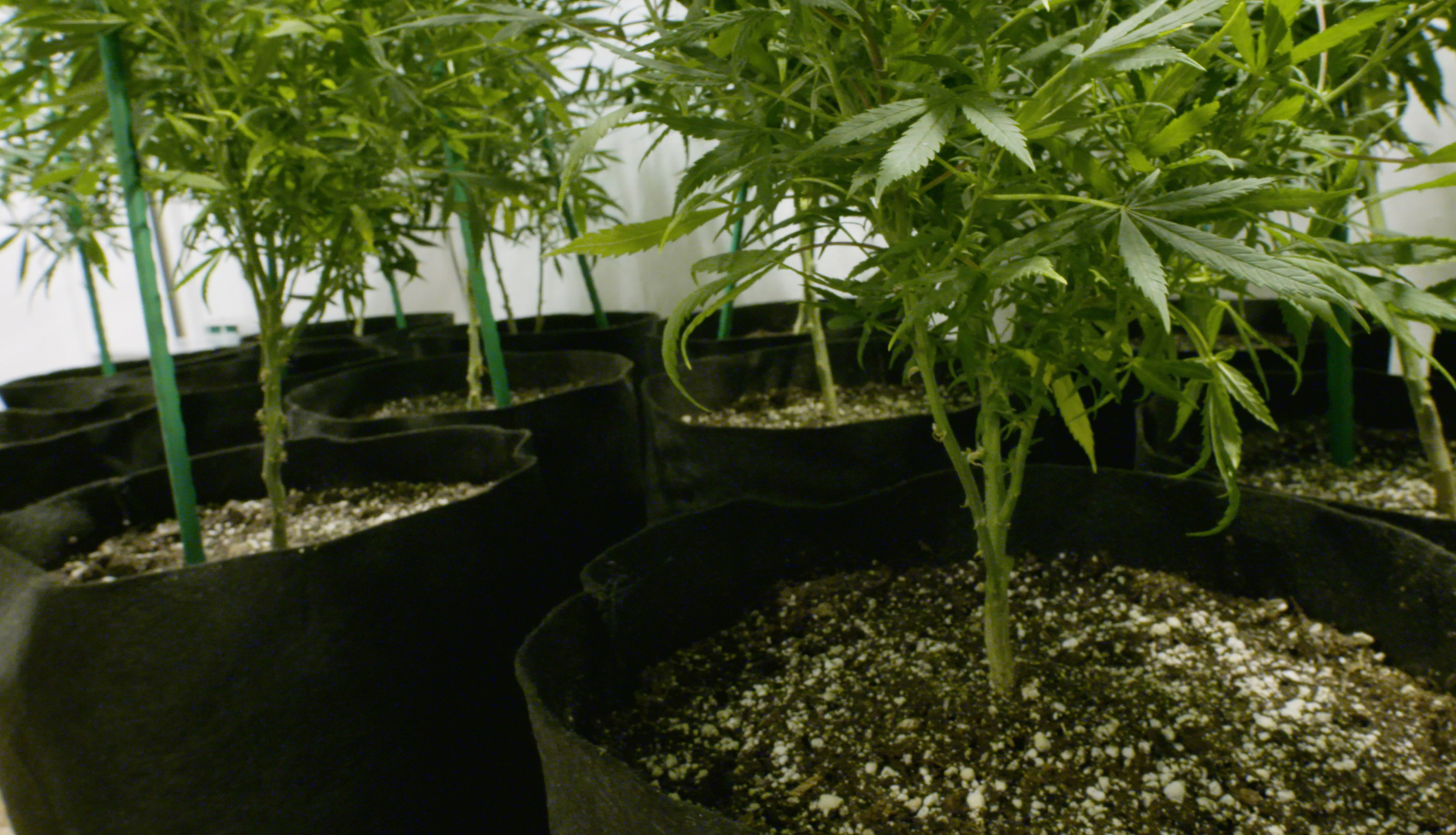
Outdoor Conditions Magnify the Difference Between Fabric and Plastic
Fabric Pots vs Plastic Pots Outdoors
Outdoors, direct solar radiation, wind, rain, large daily temperature swings, and irrigation access make container material more consequential. The same fabric bag that gives a comfortable dry-back rhythm during spring can require much more attention when a mature canopy, hot pavement, low humidity, and persistent wind arrive together.
| Outdoor Factor | Fabric Pot Tendency | Plastic Pot Tendency | Practical Decision |
|---|---|---|---|
| Hot, dry wind | Faster sidewall evaporation and shorter irrigation interval | More moisture retained behind the wall | Favor the option your irrigation system can reliably service |
| Direct afternoon sun | Evaporation can cool the wall when moisture is available | Dark plastic can absorb strong solar heat | Measure root-zone temperature instead of judging by air temperature |
| Repeated heavy rain | Porous sides can help later drying, but cannot prevent saturation from constant rain | Sidewall retains moisture; drainage depends strongly on holes and medium | Prioritize free drainage, elevation, and rain management over material |
| Limited watering access | Higher risk of rapid dry-back during heat and wind | Longer water buffer is often easier to manage | Plastic may be more forgiving when irrigation cannot be frequent |
| Need to move plants | Soft walls and handles can help, but large wet bags deform and become very heavy | Rigid shape can be easier to lift or place on a dolly | Plan finished weight and support before flowering |
| Cold exposure | Porous walls can exchange heat rapidly with cold air | Rigid walls also provide little insulation, though evaporation is lower | Do not treat either material as winter insulation |
Hot wind can turn a breathable advantage into an irrigation liability
Wind removes the humid boundary layer near a wet fabric wall and increases evaporation. A mature outdoor cannabis plant also transpires more on bright, warm, dry days. Those two water-loss pathways can converge, and a pot that stayed comfortably moist for a full day in calm weather may dry much sooner during a hot windy period.
The response should not be an automatic calendar increase. Check root-zone moisture, pot mass, plant response, and the distribution of the wetted zone. If the center remains wet while the perimeter repeatedly dries hard, improve irrigation coverage rather than simply adding more total water to the center.
Pro Tip: A second emitter or a wider hand-watering pattern can solve a dry fabric perimeter more effectively than simply increasing the volume delivered at the stem.
“Fabric pots work well on my patio in spring, but by midsummer the outside edge is dry a few hours after watering. Should I switch to plastic?”
Question sent by: CityLeafNotes, via contact form.
Possibly, but first determine whether the problem is total capacity or irrigation distribution. Shade the container wall from harsh afternoon radiation, reduce wind exposure if practical, widen the wetted area, and measure how quickly the whole root zone loses water. If the service interval is still shorter than you can reliably maintain, plastic or a larger root-zone volume can be the more practical choice.
Rain does not make fabric automatically safe from overwatering
Fabric can dry faster after rain once the weather clears, but during prolonged wet weather both fabric and plastic can remain saturated if water enters faster than the system can lose it. The bottom of a fabric bag can stay very wet when it sits directly on saturated soil, a solid saucer, or a surface that blocks drainage.
Outdoor rain management therefore starts with placement. Elevate containers enough to preserve drainage where needed, keep drainage paths open, avoid low spots that collect water, and use a medium that maintains structure through repeated wetting. Material is only one layer of the response.
Remember: A porous wall helps only when the surrounding environment can accept the water vapor and the container is not sitting in standing water.
Indoors, Airflow and Irrigation Frequency Often Matter More Than Material Reputation
Fabric Pots vs Plastic Pots for Cannabis
Indoors, there is no solar-heated west-facing wall, but the root zone still experiences airflow, radiant energy from lights, floor temperatures, room vapor pressure, and repeated irrigation. Fabric bags exposed to strong circulation fans can lose moisture through the sides much faster than plastic. Plastic pots in a cool, humid room can stay wet longer. The better material is the one that keeps the irrigation interval controllable without creating chronic dry edges or chronic saturation.
Fabric can fit frequent irrigation and high-airflow rooms
When a grower uses a coarse, well-aerated medium, controlled fertigation, reliable runoff capture, and frequent monitoring, faster dry-back can be useful. The container can be re-irrigated before the plant reaches damaging water stress, and the grower can use smaller corrections rather than large rescue irrigations.
But a fabric bag does not make high-frequency irrigation automatically correct. If each event is too large, if drainage water accumulates below the pot, or if the medium compacts over time, repeated wetting can still reduce oxygen. Frequency only works when dose, drainage, and root uptake are matched.
Plastic can fit hand-watered soil and lower-maintenance rooms
Plastic can provide a longer moisture interval that is convenient for growers using peat-based mixes, amended soil, or other media intended to remain evenly moist for longer periods. It is also easier to isolate one variable when learning to water because sidewall evaporation is lower.
The disadvantage appears when the room is cool, the container is too large for the root system, or the grower waters on a fixed schedule. Under those conditions, the lower root zone can remain wet longer than the upper surface suggests. Lifting the pot, using moisture measurements, and checking root-zone response are more reliable than reading the top centimeter alone.
Remember: The top of a plastic pot can look dry while the lower third remains wet. Surface color is not a complete irrigation trigger.
Recalibrate watering after changing pot material
Measure the new wet weight, follow mass loss or moisture at root depth, and record the time to the next irrigation trigger.
Move from plastic to fabric without changing the irrigation model
The same dose and interval may leave the fabric perimeter too dry or may encourage unnecessary rescue watering.
Pro Tip: If you run strong fans at pot level, compare one fabric and one plastic container with the same filled mass and plant size. The difference in daily mass loss can reveal how much the room is amplifying sidewall evaporation.
Container Material, Color, Moisture, and Exposure Work Together to Set Root-Zone Temperature
Black plastic has a documented tendency to absorb solar radiation and develop high substrate temperatures in exposed nursery production. Alternative porous containers have sometimes produced lower average substrate temperatures because of lighter materials, reduced heat absorption, evaporative cooling, or a combination of these effects. That makes temperature a real part of the fabric-vs-plastic decision outdoors.
Fabric can cool through evaporation only while water is available
Evaporation removes heat. A moist porous wall can therefore cool as water changes phase and leaves the container. But the same process consumes the root-zone water reserve. Once the outer medium becomes very dry, the cooling effect weakens and the plant faces water stress. Cooling and water loss are two sides of the same process.
This is why “fabric pots run cooler” cannot be separated from irrigation. A bag that is well hydrated and shaded from the harshest radiation may behave very differently from a small black fabric bag that has dried hard on hot concrete.
Plastic color and solar exposure can matter as much as plastic itself
Not all plastic containers have the same thermal behavior. Dark exposed walls absorb more radiation than light or shielded surfaces. Horticultural studies have shown meaningful substrate-temperature differences among container materials and colors, especially under strong sun. White outer sleeves or other shading systems can reduce heat gain without changing the inner pot material.
Do not diagnose root-zone heat from air temperature alone
A dark plastic wall in direct sun can create a much hotter local root-zone edge than the reported air temperature. Measure substrate temperature in the sun-exposed side and compare it with the center or shaded side before deciding that pot material is harmless.
The broader heat mechanism is covered in Cannabis Root Heat Stress: Black Pot Root Oven Effect. This comparison only needs the decision rule: if outdoor plastic is exposed to intense sun, test the root-zone temperature and use shading, a light outer barrier, spacing, or a different container strategy when the measured heat becomes a recurring stress factor.
Indoor temperature problems usually come from the environment around the pot
Indoors, radiant light, warm floors, heaters, chilled floors, and poor air movement can all change substrate temperature. Fabric can exchange heat more readily with room air, while rigid plastic can slow some evaporative cooling. Neither is insulation. If pots sit directly on a hot or cold slab, the base can experience a different temperature from the upper root zone regardless of wall material.
Field Advice: Measure the root zone where the risk actually occurs. Outdoors that may be the west or southwest side in afternoon sun. Indoors it may be the pot base on a floor or the side facing a strong heat source.
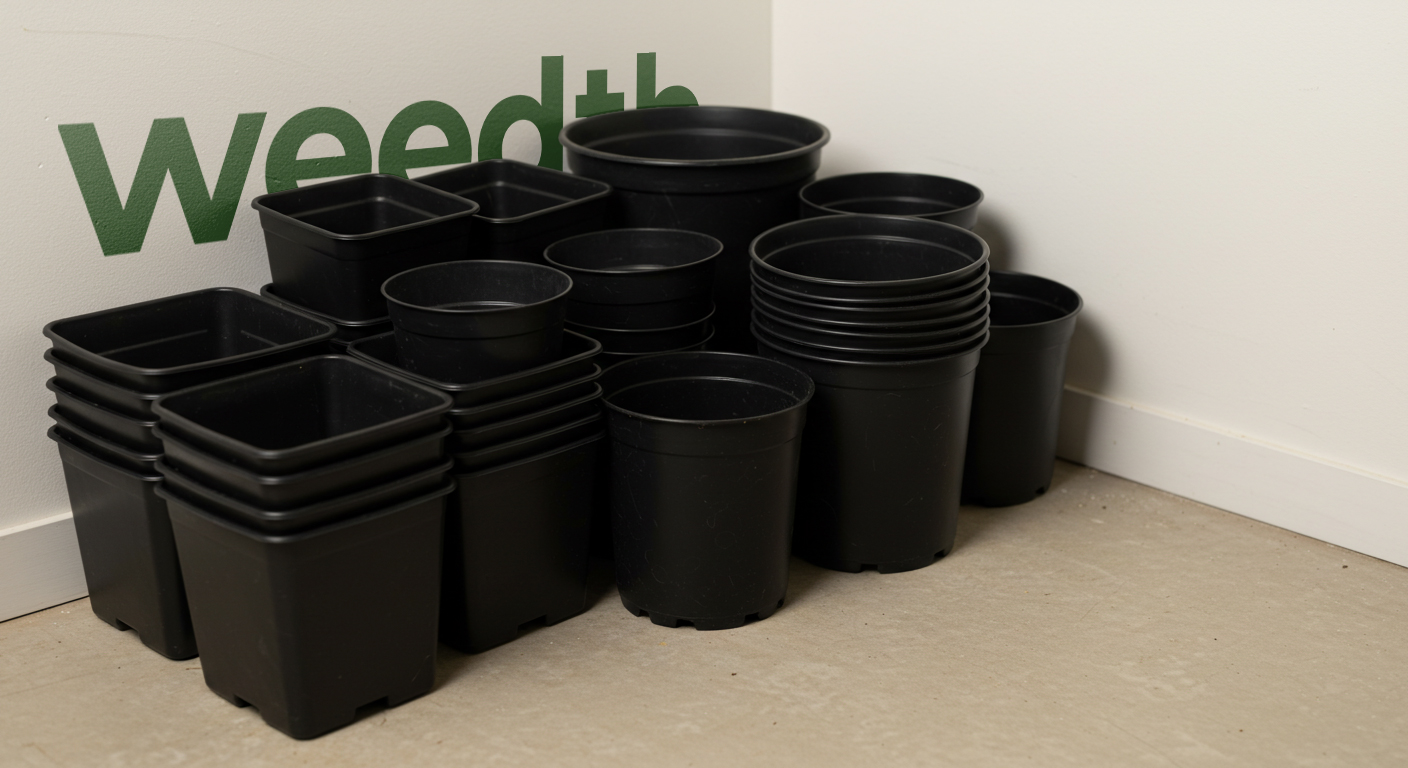
Pot Material Changes Irrigation and Nutrient Management Together
Watering and nutrition are linked because dissolved nutrients move with irrigation water. When fabric increases evaporative loss, part of the water leaving the pot carries no dissolved fertilizer with it. The remaining solution can become more concentrated in drying zones. Plastic reduces sidewall evaporation but may retain water and nutrients longer. These differences can affect salt patterns even when both plants receive the same fertilizer concentration.
Fabric edges can become the first place to show salt concentration
As water evaporates from a porous wall, dissolved salts do not evaporate with it. White crusting can therefore appear on the fabric surface or in the outer medium. Some of that crust may be fertilizer salts; some can come from hard irrigation water. A visible deposit is a reason to review water quality, irrigation completeness, runoff management, and root-zone EC where applicable, not a reason to automatically increase feeding.
A central-only watering pattern can make the problem worse. The center repeatedly receives fresh solution while the perimeter dries and concentrates. Use enough distribution points or hand-watering passes to re-wet the active root zone rather than keeping a permanently dry outer ring.
“There is a white crust on the outside of my fabric pot. Does that mean I should flush the plant?”
Question sent by: Adam Brooks, via Facebook page.
Not from appearance alone. First identify whether the deposit is associated with fertilizer concentration, hard-water minerals, or normal residue from repeated evaporation. Check your water source, root-zone EC if your system uses EC monitoring, irrigation distribution, drainage, and plant symptoms. A large flush can create its own oxygen and nutrient problems when the diagnosis is uncertain.
Plastic can reduce evaporative concentration but still accumulate salts
Less sidewall evaporation does not make plastic salt-proof. Fertilizer can still accumulate when irrigation volumes are too small to wet the whole medium, when runoff is repeatedly reabsorbed, when water quality is poor, or when nutrient strength exceeds plant use. Salt distribution may simply look different because deposits are not appearing through the wall.
For either material, compare irrigation input with plant demand and the medium’s chemistry. Do not make pot material responsible for a nutrient program that is too strong.
Important: A pot material can change where water evaporates, but it does not change the elemental concentration you mixed into the irrigation tank. Diagnose nutrition and water management separately.
Use moisture and nutrient measurements together when the system is intensive
Track irrigation volume, dry-back, runoff or leachate where appropriate, and EC/pH only with methods suited to the medium and feeding system.
Use runoff percentage as a universal target
Soil, living systems, coco, peat, and other media can require different irrigation and nutrient strategies. Pot material does not make one runoff rule universal.
Master Advice: When you change container material, change one variable at a time. Keeping medium, plant size, irrigation water, and monitoring method comparable makes the material effect much easier to interpret.
Sanitation, Reuse, Stability, and Handling Can Decide the Winner Before Root Biology Does
Container choice is also an operational decision. A pot that creates an excellent root environment but cannot be cleaned, moved, supported, labeled, or irrigated reliably may be the wrong choice for the grower’s real workflow.
Rigid plastic is usually easier to scrub, inspect, and disinfect
A smooth nonporous pot is relatively easy to empty and physically clean. Soil particles, roots, algae, and fertilizer deposits are visible and accessible. When reuse is appropriate, the pot can be washed and then sanitized with a method suitable for the crop, material, and local production requirements.
Fabric is more difficult to clean because fine roots and organic debris can lodge in fibers. Reuse is possible for some products, but the process must remove debris before any sanitation step can work effectively. A bag that still contains old roots and biofilm is not clean because it passed through a wash cycle.
Master Advice: If biosecurity matters more than container cost, choose the material you can inspect and decontaminate with confidence rather than the material you hope is clean.
Do not reuse a contaminated pot merely because the material looks intact
If a plant had a serious root disease, pest infestation, or uncertain pathogen problem, treat the container as part of the contamination history. Follow an appropriate sanitation protocol or discard the container when reliable decontamination cannot be verified.
Fabric can be awkward when the plant is large and tied into support
Handles make small and medium fabric bags appear highly portable, but finished wet weight increases quickly. Soft walls can fold or deform while being lifted, disturbing the root ball. Once a mature cannabis plant is tied to stakes, netting, or a fixed trellis, the theoretical mobility of the bag may disappear.
Rigid plastic keeps its shape and often works well with dollies, trays, and standardized spacing. It can also become brittle with age, UV exposure, or repeated handling. Do not evaluate mobility from the empty pot. Evaluate the finished system at maximum expected wet weight and canopy size.
Container stability matters outdoors
A wide fabric bag can sit low and resist tipping, but a tall soft-sided bag can deform on uneven ground. A rigid pot can offer a stable base yet become top-heavy when a large canopy catches wind. Pot geometry, fill level, plant support, and site exposure can matter more than whether the wall is fabric or plastic.
Safety Note: Do not move a large flowering container by pulling on the plant, trellis, or a single fabric handle. Wet media and mature canopies can create loads far beyond what one person can safely control.
Compare Fabric and Plastic With a Repeatable Home-Grow Test
If both materials are legal and practical for your grow, a small controlled comparison is more informative than arguing from product descriptions. The goal is not to run a laboratory experiment. The goal is to discover which container keeps the root zone within your preferred moisture and temperature window using a workload you can sustain.
Keep the comparison genuinely comparable
Use containers with similar usable substrate volume and similar geometry where possible. Fill them with the same batch of medium at comparable density. Use plants of similar size and developmental stage. Place them in representative positions and rotate positions if one location receives systematically different light, fan exposure, or afternoon sun.
Do not compare a 19 L fabric bag full of coarse coco with a 12 L plastic pot full of dense soil and conclude that the material caused the difference. That comparison changes too many variables at once.
| Checkpoint | What to Measure | What the Result Tells You |
|---|---|---|
| Immediately after complete irrigation | Pot mass, irrigation volume, drainage behavior, root-zone temperature | Establishes the wet baseline and whether both pots received comparable wetting |
| Several hours later | Mass loss, edge vs center moisture, wall temperature, plant posture | Shows early evaporation and whether fabric edges are drying disproportionately |
| At the normal irrigation trigger | Elapsed time, pot mass, moisture at multiple depths/positions | Compares service interval rather than calendar time |
| During the hottest or driest realistic day | Peak root-zone temperature, midday moisture, canopy response | Tests the material under the condition most likely to cause failure |
| After repeated irrigation cycles | Salt deposits, wetting uniformity, drainage, root-zone odor, plant growth | Reveals cumulative problems that one watering event cannot show |
| At transplant or harvest | Root distribution, circling, dead zones, unused media, dry pockets | Verifies how the root system actually used the container |
Weighing the container is one of the simplest useful measurements
A basic platform scale can turn vague impressions into evidence. Record the filled wet mass after irrigation and the mass when you normally choose to irrigate again. Repeat through several cycles. You do not need to convert every gram of loss into transpiration because evaporation and drainage are also involved. You only need a consistent indicator of how quickly each root zone moves from wet to your operational trigger.
For very large outdoor pots, weighing may be impractical. In that case, use repeated moisture checks at the same locations and depths, note irrigation volume and time, and compare pot-edge conditions with the center. A moisture sensor is useful only if its readings are repeatable in your medium and the probe is placed consistently.
Pro Tip: Put the measurement points on a simple sketch of the pot. Checking “somewhere near the edge” each day creates noisy data; checking the same edge, center, and lower-zone positions creates a trend.
Record labor as a real performance metric
A fabric pot that requires three careful irrigations on a hot day may produce a perfectly healthy plant, but that system can still be a poor fit for a grower who is away for ten hours. A plastic pot that stays stable with one complete irrigation may be the better choice even if its root architecture is less elegant.
Record how many irrigation events, spot-water corrections, pot moves, cleaning steps, and heat interventions each material requires. The best container is the one that keeps the plant healthy and fits the operating capacity of the grower.
Field Advice: Labor is part of the system. A container that needs constant rescue watering is not a better choice merely because the root ball looks attractive at harvest.
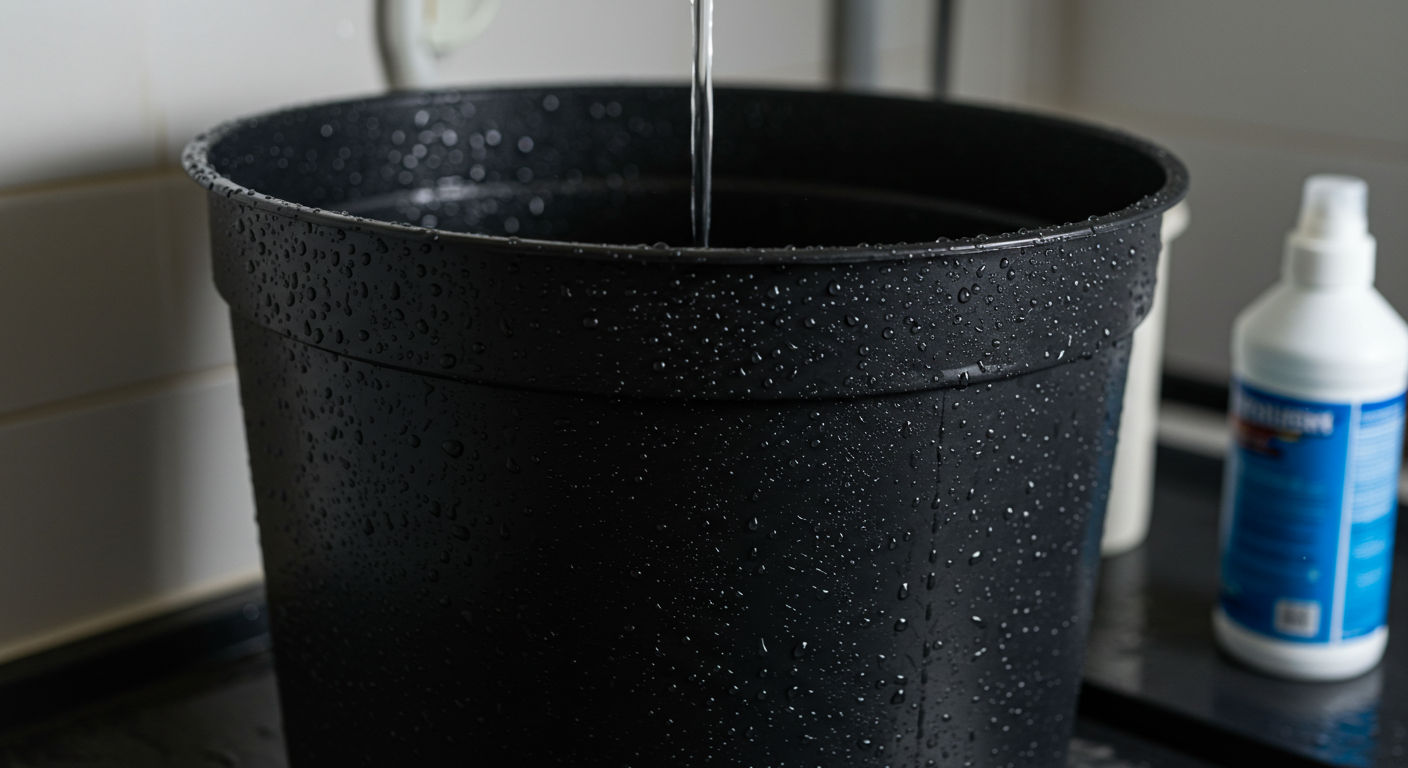
Common Fabric vs Plastic Mistakes Come From Treating One Feature as the Whole System
| Misleading Rule | Why It Fails | Better Check |
|---|---|---|
| Fabric pots cannot be overwatered | The center and lower zone can still remain saturated in a dense medium or standing runoff | Measure moisture at depth and confirm free drainage |
| Plastic pots suffocate roots | Root oxygen is strongly controlled by substrate pore structure and irrigation, not wall material alone | Evaluate air-filled structure, dry-back, and root health |
| More air pruning always means more yield | Root architecture is only one factor controlling whole-plant performance | Compare plant growth, irrigation demand, and final root-ball condition |
| Fabric always runs cooler | Cooling depends on moisture, airflow, radiation, color, pot size, and surface below the pot | Measure actual root-zone temperature |
| Plastic always needs less water | Large canopies, hot media, small pots, and strong transpiration can still create short intervals | Track mass loss and irrigation trigger |
| White crust on fabric means nutrient toxicity | Deposits can reflect fertilizer, hard-water minerals, or repeated evaporation without proving root toxicity | Use water analysis, plant symptoms, and EC where appropriate |
| A root at the fabric wall proves air pruning worked perfectly | Wall exposure and moisture determine whether the tip actually desiccates and branches | Inspect the final root architecture |
Fabric can become functionally nonporous
A fabric bag pushed tightly inside a decorative cachepot, wrapped in impermeable plastic, crowded against another wet bag, or buried with the wall continuously wet will not behave like a freely exposed fabric pot. If air cannot reach the wall, the expected evaporation and air-pruning effect can be reduced.
Plastic can be modified without changing the root-zone material
Growers sometimes assume the only choices are a black nursery pot or a fabric bag. Plastic systems can be shaded, sleeved, elevated, perforated by design, light-colored, or combined with different geometries. The decision is broader than two products.
Changing material mid-cycle can create a new watering problem
A transplant from plastic into fabric often changes both volume and wall behavior at the same time. The old root ball may stay wetter than the new outer medium or the reverse, depending on the media used. Irrigate to integrate the root zones rather than assuming the whole container dries uniformly from day one.
Important: After any transplant, check the old root ball and the new surrounding medium separately until roots have clearly colonized the new volume.
Make the Fabric vs Plastic Decision From the Failure You Most Need to Avoid
The practical choice becomes easier when you stop asking which material is “best” and ask which failure is most costly in your specific grow. If your biggest risk is missed irrigation during hot, dry weather, plastic may provide the longer water buffer you need. If your biggest risk is hot sun on dark pots and you can irrigate reliably, fabric can reduce some thermal and root-circling problems. If your indoor medium already dries very quickly, adding more sidewall evaporation may create work without solving a real problem.
| Your Main Constraint | Fabric May Fit Better When | Plastic May Fit Better When |
|---|---|---|
| Fast dry-back | You can irrigate frequently and want rapid edge drying | You need a longer moisture buffer |
| Root circling | You want an air-exposed wall that can interrupt circling tips | You can transplant on time and inspect roots before severe circling develops |
| Outdoor heat | The bag is well hydrated, exposed to airflow, and irrigation is reliable | The plastic is light-colored or shaded and moisture retention is more valuable |
| Cold or variable weather | You can manage the faster environmental exchange | You prefer slower moisture loss and can keep drainage/aeration healthy |
| Manual cleaning and reuse | You have a reliable fabric-cleaning protocol or treat bags as limited-use items | You value a smooth surface that is easier to scrub and inspect |
| High-frequency fertigation | You can monitor distribution, EC, and dry-back closely | You want to reduce sidewall evaporation between events |
| Low-maintenance soil growing | The climate is mild enough that rapid drying is not a burden | You need the root zone to remain moist longer between hand waterings |
Before You Choose Fabric or Plastic
- Confirm that container volume is adequate for the intended plant and season.
- Know whether the medium is fast-drying, balanced, or strongly water-retentive.
- Decide how often you can realistically irrigate during the hardest week of the grow.
- Consider sidewall airflow from indoor fans or outdoor wind.
- Check whether direct sun will strike dark plastic for hours at a time.
- Plan how runoff will leave the container and where it will go.
- Make sure irrigation can wet the outer root zone, not only the area around the stem.
- Account for finished wet weight, mobility, trellis attachments, and wind stability.
- Decide whether the pot will be reused and how it will be physically cleaned.
- Use a contamination history to decide whether reuse is appropriate at all.
- Recalibrate irrigation whenever you change container material.
- Inspect roots and wetting patterns at the end of the cycle before repeating the same choice.
Frequently Asked Questions About Fabric and Plastic Cannabis Pots
Are fabric pots better than plastic pots for cannabis?
Not universally. Fabric can increase sidewall evaporation, encourage air pruning at exposed walls, and reduce some heat buildup compared with dark nonporous containers. Plastic retains moisture longer, is usually easier to clean, and can be more forgiving when irrigation frequency is limited. The better choice depends on medium, climate, irrigation, container size, and grower workload.
Do fabric pots prevent overwatering?
No. They can dry faster near the wall, but the center and lower root zone can still remain saturated when the medium is dense, the container is oversized, irrigation is excessive, or the pot sits in standing runoff. Overwatering is a root-zone water and oxygen problem, not a material label.
Do fabric pots need more water than plastic?
They often need more frequent irrigation because porous walls create another evaporation pathway. How much more depends on pot construction, air movement, humidity, temperature, plant size, substrate, spacing, and exposure. There is no universal conversion such as “water fabric pots 25 percent more.”
Do fabric pots increase cannabis yield?
There is not strong controlled cannabis evidence supporting a universal yield advantage from fabric over plastic. Horticultural research shows differences in water use, temperature, and root architecture, but aboveground growth responses vary by crop and management. Yield should not be promised from pot material alone.
Are plastic pots bad for cannabis roots?
No. Plastic pots can produce healthy root systems when volume, medium structure, drainage, irrigation, and temperature are managed well. Long residence in an undersized smooth container can increase circling roots, and dark plastic can overheat outdoors, but those are manageable risks rather than automatic failures.
Which pot is better outdoors?
Fabric can be useful where heat and root circling are concerns and irrigation is reliable. Plastic can be easier where wind, low humidity, or limited watering access make water conservation more important. Outdoor site exposure often matters more than a generic material ranking.
Which pot is better indoors?
Fabric often suits growers who can manage faster dry-back and strong airflow. Plastic can suit hand-watered soil, cool rooms, or systems where a longer moisture buffer is valuable. Indoor growers should compare actual dry-back instead of assuming one material is automatically more oxygenated.
Can I put a fabric pot inside a plastic pot?
You can, but doing so changes how the fabric wall behaves. A tight nonporous outer pot reduces sidewall airflow and evaporation, which can also reduce the intended air-pruning effect. If an outer sleeve is used for heat protection or runoff control, leave enough space and drainage to prevent standing water.
Should I switch materials if my plant is drooping?
Not until the cause is identified. Droop can come from excessive moisture, water deficit, root heat, root disease, transplant stress, or other problems. Check root-zone moisture, temperature, drainage, irrigation history, and plant response before blaming the pot.
Choose the Pot You Can Keep Predictable
Fabric and plastic are not opposing levels of grower skill. They are two different ways of defining the root-zone boundary. Fabric exposes more of that boundary to air and evaporation. Plastic closes the sidewall and preserves more moisture. Each changes irrigation timing, temperature behavior, root architecture, cleaning, and workload.
The most reliable decision is the one that remains manageable when conditions are hardest: the mature indoor canopy under full airflow, the hottest outdoor afternoon, the longest realistic interval before you can water, or the wet week when dry-back slows. Choose the material whose failure mode you can measure early and correct before the plant pays for it.
Share this article
A quick overview of the topics covered in this article.
Follow us
Latest articles
September 3, 2026
September 3, 2026
September 3, 2026
September 3, 2026