
Flo
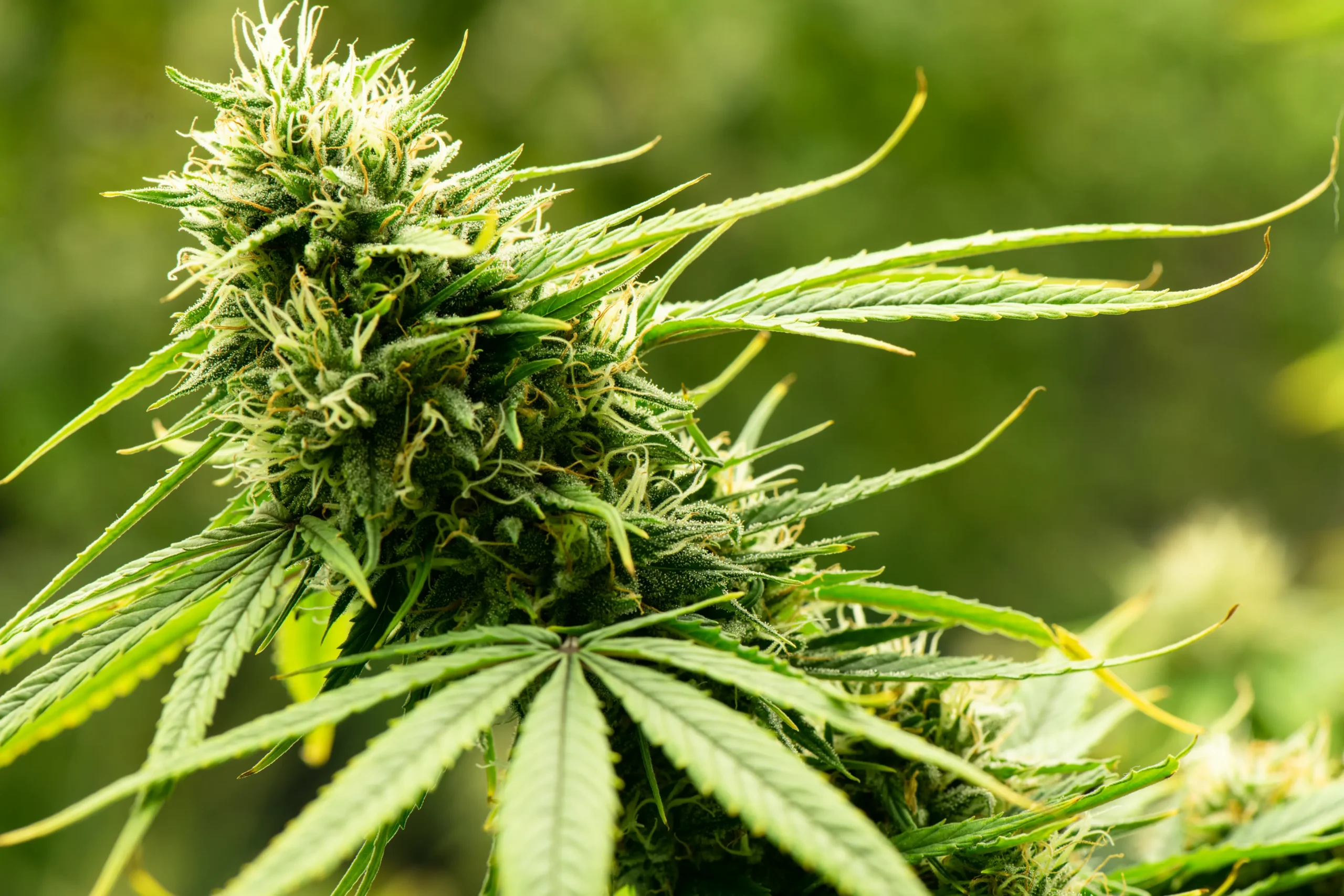
Flo is a rare combination of fast flowering and visibly sativa growth. The plant can become tall and branchy, yet many established descriptions place full indoor maturity near seven weeks. That contrast is the reason Flo deserves a grow guide built around its own behavior rather than generic hybrid advice. A grower who sees narrow leaves and long branches may expect a long Haze-like finish, while a grower who focuses only on the short flowering estimate may underestimate how much horizontal structure the plant can build before those spear-shaped flowers tighten.
The most widely accepted lineage connects Purple Thai with an Afghani indica. The Thai side explains the open branching, floral complexity, purple calyx potential, and clear daytime effect. The Afghani side shortens the flowering cycle and contributes much denser calyx formation than the plant's architecture initially suggests. The finished flower can therefore look like a long sativa spear while behaving more like a compact indica inside the bud, especially as the small calyxes pack together late.
That density changes the central cultivation question. How can a grower use Flo's fast, branchy growth to create an even productive canopy without letting the mature spears become too tight for safe airflow and even drying? The answer is not extreme pruning or aggressive feeding. It is early branch placement, moderate plant density, restrained nutrition, good access through the canopy, and enough patience to distinguish early color from complete maturity.
Flo is also associated with an unusual outdoor claim: under favorable long-season conditions, ripe branches can be harvested selectively while later growth continues to mature. This is best treated as a cultivar-specific possibility rather than a universal promise. The plant's branch-by-branch ripening pattern may allow staged harvests, but the practicality depends on climate, plant health, remaining daylight, and whether repeated cutting creates more quality flower or simply prolongs a declining plant.
The sensory identity is old-school and difficult to reduce to one fruit. Floral musk, dark berry, burgundy-like sweetness, incense, hash, earth, light citrus, and occasional fuel or fermented notes can appear across phenotypes. The effect is usually clearer and more motivational than the flower's purple color might suggest. Flo is not primarily a heavy evening purple strain. Its reputation comes from combining color and resin with a mentally active, long-lasting daytime experience.
Strain Features
| Feature | Details |
|---|---|
| Strain Type | Sativa-leaning hybrid with unusually fast flowering |
| Genetic Profile | Purple Thai x Afghani indica |
| THC | Usually moderate to strong; modern samples and phenotypes vary |
| CBD | Generally low |
| Dominant Terpenes | Limonene, beta-caryophyllene and myrcene recur in tested material; order varies |
| Flavor / Aroma | Floral musk, dark berry, incense, hash, earth, citrus, occasional diesel or fermented fruit |
| Effect Character | Focused, uplifted, creative, clear, long-lasting, lightly relaxing later |
| Flowering Time | Often around 7 weeks indoors, with some plants running longer |
| Outdoor Finish | Commonly begins around early October in suitable climates; staged branch harvest may be possible |
| Stretch | Moderate to strong, expressed through tall branchy growth |
| Plant Architecture | Open, multi-branched, sativa-like frame with long laterals |
| Flower Structure | Long spear-shaped clusters built from small tightly packed calyxes |
| Color Expression | Purple calyxes may deepen with maturity, but color varies |
| Feeding Behavior | Generally better with moderate, steady nutrition than constant high input |
| Training Compatibility | Topping, LST, branch tying, open SCROG and simple multi-branch systems |
| Primary Grow Risk | Underestimating late flower density because the plant looks open and sativa-like |
Genetic Lineage
Flo's commonly accepted parentage combines Purple Thai with an Afghani indica. This is a more useful description than a simple sativa-indica percentage because the two sides remain visible in different stages of the grow. Vegetative structure and early flower resemble the Thai side, while the speed and calyx density reveal the Afghani influence later.
Purple Thai contributes more than color. It helps explain the long branch reach, narrower leaves, floral and musky aroma, and a cerebral effect that can feel focused instead of sleepy. The Afghani side contributes shorter flowering, stronger bud firmness, resin, and a darker hash-like base beneath the floral top notes.
The cross does not eliminate phenotype variation. Some plants lean fruitier and more floral, while others show earth, incense, hash, or a light diesel edge. Plant height and branch spacing can also vary. A first seed run should therefore be treated as a selection cycle rather than proof that every Flo plant will match one old description exactly.
The most valuable keeper is usually the plant that preserves the contradiction that makes Flo special: enough sativa architecture and mental clarity to remain distinctive, but enough Afghani density and speed to make the long branches practical indoors. A plant that becomes too compact can lose the open character, while an excessively tall late phenotype can lose the cultivar's main production advantage.
Because modern versions can differ, clone retention is useful when a specific flower style is found. Once the exact stretch, finishing day, aroma direction, and branch strength are known, Flo becomes much easier to plan than its mixed architecture initially suggests.
Effect Breakdown
A quick, clear mental opening
Flo is usually felt first as a change in attention. The mind becomes brighter and more interested without the heavy pressure or abrupt acceleration associated with some high-potency sativas. At a light dose, this can feel functional, creative, and emotionally positive.
The opening is often described as focused rather than scattered. Music, visual work, conversation, movement, and task-oriented hobbies fit naturally. The effect still represents impairment, even when the user feels organized and alert.
Creativity without immediate body heaviness
At a moderate dose, the mental experience broadens. Ideas connect quickly, ordinary details become more engaging, and the user may feel more social or imaginative. The body remains relatively light during this phase, which separates Flo from grape-flavored indicas that move rapidly into sedation.
The long-lasting quality can be an advantage when the dose is appropriate and a problem when it is not. Redosing early is rarely necessary because the clear phase can continue after the first intensity has settled.
A softer late phase rather than a crash
Physical relaxation usually becomes clearer later. The body settles and the mind becomes less urgent, but Flo does not consistently end in couch-lock. Higher doses can still create dizziness, dry eyes, dry mouth, or anxiety in sensitive users.
The full experience is therefore best suited to daytime or early evening. It offers enough relaxation to feel balanced without erasing the motivational quality that defines the cultivar.
Phenotype and harvest maturity can shift the balance. A brighter floral plant harvested at full but not overextended maturity may feel especially clear, while a darker late-cut expression can carry more physical weight. These differences should be described as tendencies, not guaranteed outcomes.
Flavor & Aroma Profile
From the jar
Flo often opens with flowers, musk, and dark fruit rather than one obvious candy note. The fruit can resemble berry skin, plum, or fermented grapes, while the floral side may feel like dried blossoms rather than fresh perfume.
Some phenotypes show incense, earth, and old hash immediately. Others present a brighter citrus edge before the darker base appears. A faint diesel or wine-cellar quality can emerge in selected plants, especially after the bud is broken apart.
Inside the flower
Grinding exposes the dense calyx structure and usually makes the aroma warmer. Hash, spice, earth, and musk become more obvious, while fruit becomes less sweet and more fermented or burgundy-like. This contrast is one of the cultivar's strongest sensory features.
The mature spear can look open from the outside yet contain tightly packed interior calyxes. Aroma evaluation should therefore include the broken flower, not only the intact jar.
Inhale, exhale and aftertaste
The inhale tends to be floral and lightly sweet. Mid-palate brings dark fruit, earth, and soft citrus. The exhale is drier, with incense, pepper, hash, and a musky aftertaste that can linger longer than the initial fruit.
A rushed dry turns this layered profile into ordinary herbs and earth. A controlled cure lets the floral and burgundy-like notes separate from the Afghani base instead of disappearing behind it.
Flo's flavor is better described as complex than loud. It does not need to smell like modern candy to be memorable. The quality is in the transition from flowers and fruit toward hash and incense, and in whether that transition remains smooth after cure.
Dominant Terpenes
| Terpene | Aroma Role | Cultivar Relevance and Caution |
|---|---|---|
| Limonene | Citrus peel and aromatic brightness | Often reported in modern samples and consistent with brighter phenotypes. Does not guarantee energy or euphoria |
| Beta-caryophyllene | Pepper, dry spice and wood | Supports the hashy, spicy late-palate character. CB2 activity does not establish strain-specific medical effects |
| Myrcene | Earth, musk, herbs and ripe fruit | Fits the darker musky and fermented-fruit base. Does not independently make Flo sedating |
| Minor floral and fermented-fruit volatiles | Flowers, wine-like fruit, incense and musk | Likely important to the cultivar identity beyond the headline terpene list. Exact compounds and ratios vary among plants and batches |
Flo should not be assigned one fixed terpene hierarchy. Tested commercial flower can differ, and the strain's sensory identity depends heavily on minor compounds that may not appear in a simple three-terpene panel.
The clear effect should not be explained as a direct limonene outcome. Terpenes shape aroma with far greater confidence than they predict the subjective high. Dose, THC concentration, tolerance, harvest maturity, and the complete chemotype remain more important.
Indoor vs. Outdoor Growing
| Decision Point | Indoor Growing | Outdoor Growing |
|---|---|---|
| Main Opportunity | A fast sativa-like plant can deliver clear flower without a long room cycle | Long branch development and staged maturity can produce an extended harvest window |
| Main Limitation | Branch reach and late spear density can create hidden crowding | The staged-harvest claim depends heavily on a long healthy autumn |
| Stretch | Moderate to strong and best redirected early | Height is easier to absorb, but plants can become very wide |
| Training | Topping, LST and an open screen suit the branchy frame | Early branch spreading and perimeter support improve sun exposure |
| Flower Density | Tight calyx packing requires real gaps between spears | Rain and dew can remain inside mature clusters despite an open plant |
| Feeding | Moderate, steady input is usually safer than aggressive concentration | Large roots increase total demand but not necessarily solution strength |
| Harvest Strategy | Usually one controlled full-plant harvest by actual maturity | Selective branch harvest may be possible where later flowers can continue safely |
| Best Fit | Growers who want a short cycle but can manage a branchy canopy | Warm, dry, long-season sites or protected greenhouse conditions |
Flo's indoor advantage is unusual. It offers much of the architecture and effect associated with longer sativas while finishing on a timeline closer to many compact hybrids. That advantage disappears if the grower fills the room too densely and then has to fight the branch network during the final weeks.
Outdoors, the plant can express its branch reach more naturally. The famous multi-harvest behavior should be evaluated practically. Selective cutting makes sense only when later branches are still healthy, the weather remains dry, and the remaining flowers have enough light to mature. It should not be treated as a reason to keep a declining plant alive through cold rain.
Indoor control generally produces more repeatable terpene preservation, while outdoor and greenhouse cultivation can show the full branch-by-branch ripening pattern. The better environment depends on whether the grower values scheduling precision or the cultivar's extended outdoor behavior.
Strain-Specific Grow Guidance
Build separate branch lanes before the flip
Flo responds well to topping and gentle bending because its laterals want to extend. The best training starts while stems are flexible and creates several clear lanes rather than a dense circle of branches around the pot.
A screen is useful when it guides each leader into open space. It becomes a liability when every square is filled before the flowers begin tightening. Leave enough room for the diameter of the mature spears, not just the width of young stems.
Use the fast flowering time without rushing vegetative structure
Build support before the flowers demand it
A seven-week flower does not mean the plant should enter bloom weak or underdeveloped. The selected branches need enough diameter to support long buds, and the root zone needs to be established before the plant moves quickly through transition.
The efficient strategy is purposeful veg, not minimal veg. Build the shape, then use the short flowering cycle to save room time.
Expect open architecture and dense flowers at the same time
This is the most important visual contradiction in the cultivar. The spaces between branches can look generous while the calyxes inside each spear pack tightly. Room humidity alone does not describe the moisture inside mature flower.
Research on cannabis inflorescences shows that internal humidity can remain higher than ambient conditions and that enhanced circulation reduces internal humidity and microbial load. Flo should therefore be spaced by mature bud width, not by how open its leaves appear.
Feed moderately and follow water use
Flo is commonly described as preferring moderate nutrition. Excess nitrogen can extend internodes, delay clean transition, and leave more leaf around the spears. The plant should remain healthy without being forced into dark vegetative color throughout flower.
Water use can be rapid during stretch and then change as the plant settles into bud development. Irrigation should follow container dryback rather than a fixed schedule copied from the first two flowering weeks.
Preserve productive middle branches
The open frame and narrow leaves can allow useful light deeper than a broad-leaf indica. Lower growth should be judged from actual exposure after stretch rather than removed by a fixed rule.
Keep laterals that reach their own light lane and produce tight mature calyxes. Remove weak inward shoots that remain shaded and add humidity without meaningful flower.
Do not use purple color as a harvest clock
Flo can deepen in purple as it matures, but pigment is not a substitute for calyx development and flower trichomes. A colorful spear may still be actively producing fresh calyxes.
Use the selected plant's swelling pattern, trichomes on actual bracts, slowing pistil production, and complete floral-hash aroma. Color is useful phenotype information, not a standalone maturity test.
Support the long spears without pulling them together
The branches can carry elongated flowers and may lean late. A loose upper net or individual soft ties should preserve the lanes created earlier.
Support that compresses several spears into one central mass undermines airflow and makes drying more difficult. Hold the branch from below or outward rather than squeezing buds together.
Approach staged outdoor harvest as an experiment
If early branches mature while later sites remain healthy, harvest the ready material cleanly and leave only the parts that still have a realistic path to quality. Record whether the later harvest actually improves total premium flower.
Do not continue simply because repeated harvest is part of Flo's reputation. Late-season light, temperature, rain, and plant decline can erase the theoretical advantage.
Prepare for uneven drying between spear tips and branch junctions
Long flowers can contain lighter tips and much denser sections near branch intersections. Hanging everything as one uniform batch may overdry the tips before the thick areas are safe.
Separate branches by density when necessary and judge internal flower moisture, not only stem snap. The same plant may need more than one drying pace.
Weedth Bud Flavor Tips
Flo's floral and burgundy-like upper notes are the first part of the profile to disappear. Keep the final canopy from running unnecessarily hot, especially when the plant appears visually healthy but the top flowers smell less complex than the side branches.
The plant should be harvested only after the dark fruit, musk, and hash layers have fully developed. Cutting only because the cultivar is described as fast can leave the flower green, thin, and less distinctive.
During drying, avoid direct fan air and do not assume the long spears are airy throughout. Tight interior calyxes can release moisture more slowly than the surface suggests.
A hang dry on separated branches can protect both structure and aroma when room conditions are stable. Large spear sections and smaller side branches can be grouped by density rather than forced through one schedule.
The early cure may smell more herbal than expected. Over several weeks, the floral, fermented-fruit, incense, and hash notes should separate. If only dry earth remains, the loss usually happened through heat, excessive airflow, or over-drying rather than insufficient curing time.
Keep fruity and diesel-leaning phenotypes separate through cure. Flo's internal variation is part of its appeal, and mixing them removes the information needed for keeper selection.
Store whole flowers cool, dark, and airtight once moisture is stable. The profile depends on nuance, and repeated warm oxygen exposure favors the heavier earthy base over the more delicate floral top.
Weedth Bud Boost Tips
The first yield tool is canopy geometry. Flo already wants to branch, so the grower gains more by assigning strong leaders to separate light lanes than by repeatedly topping for maximum tip count.
A selected clone can shorten vegetative planning dramatically because the exact stretch and finishing day become known. The second run should use those measurements to enter flower with the screen partly open and let transition complete the footprint.
Do not strip every lower site. Keep the middle depth that repeatedly produces dense aromatic flower under the actual light. Remove only growth that remains shaded or interferes with airflow.
Moderate nutrition supports the cultivar better than repeated late bloom escalation. Cannabis nutrition research shows cultivar-specific optima rather than a simple relationship where more phosphorus or potassium always increases flower yield.
Support timing improves usable yield by keeping long branches in their intended light lanes through the final swell. Install support before resin makes late handling expensive.
Outdoors, evaluate the staged-harvest concept from dry premium flower, not the number of separate harvest dates. A second or third cut is valuable only when it produces mature clean buds.
Flo quality yield is a field of separated, fully mature spears with clear floral-hash flavor, not maximum branch count or the longest possible harvest season.
Medical Uses & Benefits
Flo is commonly chosen by users seeking mood elevation, daytime focus, creative engagement, and stress distraction without immediate physical sedation. These are user-reported patterns, not proof that the cultivar treats a medical condition.
The clear mental character may appeal to people who find heavy indicas too impairing during the day. Some users report that moderate doses make ordinary tasks or creative work feel easier to approach.
The same cerebral activity can become uncomfortable at higher doses. Anxiety, dizziness, dry mouth, and dry eyes are possible, particularly for users sensitive to stimulating THC effects.
Pain and tension reports exist, but the strain is generally better described as changing attention and mood than as producing a deeply numbing body effect. The later physical relaxation may still help some users unwind.
Most Flo flower is THC-dominant and should not be presented as a non-intoxicating daytime medicine. Feeling focused does not remove impairment.
Anyone using cannabis for a diagnosed condition or alongside prescription medication should consult a qualified healthcare professional.
Ideal User Profile
Flo suits users who want daytime cannabis to feel clear, creative, and emotionally positive rather than heavy. It fits music, visual work, conversation, movement, detailed hobbies, and early-evening social use.
Flavor enthusiasts who appreciate older floral, incense, hash, and dark-fruit profiles are a stronger match than users seeking modern candy or aggressive fuel.
For growers, Flo is ideal for someone who enjoys training branchy plants but does not want a fourteen-week sativa flowering cycle. The plant rewards early structure and then moves quickly once flower is established.
It is less suitable for growers who pack every branch tightly because the open-looking plant can still form dense interior flowers. Wet outdoor climates also reduce the value of its extended branch-ripening behavior.
Users seeking sleep or strong couch-lock should choose a heavier cultivar. Flo's signature is the balance between motivation and gentle late relaxation.
Grower Notes and Feedback
One recurring pattern in grow reports is that Flo looks more sativa than its flowering time suggests. Tall branchy growth creates an expectation of a long finish, yet the calyxes can mature surprisingly quickly once the plant commits to flower.
A common surprise is late bud density. Growers sometimes assume the spear structure will dry like an airy landrace, then discover tightly packed interior calyxes. This explains why some reports specifically warn against hanging large intact colas without checking the center.
Growers frequently disagree about exact finish time. Some plants are ready near seven weeks, while others benefit from additional time. Phenotype and environment should therefore outrank the historical number.
Another recurring theme is phenotype variation in aroma. Floral, fruity, musky, incense-heavy, and light diesel expressions are all reported. The cultivar is more useful as a selection population than as a promise of one exact smell.
Training response is generally positive. The branches bend and spread easily, but that vigor can tempt the grower to retain too many leaders. The best finished canopies usually feel organized rather than maximized.
The outdoor repeat-harvest reputation is real enough to investigate but inconsistent enough to document carefully. The value depends on climate and on whether later buds reach the same quality standard as the first cut.
A second-run notebook should record stretch, branch density, first full aroma week, actual finish, internal drying speed, and whether staged harvest improved usable quality. These details turn Flo from a historical curiosity into a repeatable crop.
Weedth Editor's Note
How I would judge the finished flower
The part of Flo I would watch most closely is not the height. It is the moment those open sativa branches begin carrying flowers denser than the plant's silhouette suggests.
I would top early, spread the main leaders, and then stop adding complexity. Flo already gives enough branches. My job would be to keep the best ones readable and let the short flowering cycle do the rest.
I would also resist harvesting from reputation. Seven weeks is impressive, but I would still wait for the selected plant's calyxes, trichomes, and aroma to agree. A fast strain cut immature is simply an immature strain.
The outdoor multi-harvest idea interests me, but I would treat it like a measured trial. If the second cut lacks density or flavor, I would rather finish once at a higher standard than keep the plant alive for the story.
Flavor is the reason I would grow Flo again. The mix of flowers, dark fruit, incense, and hash feels unlike most modern hybrids, and the clear effect gives that flavor a daytime context instead of the expected purple-strain sedation.
Weedth Score
Growing Experience 8.2/10 Fast flowering and strong training response are major strengths, but branch control and hidden spear density require attention.
Bud Structure & Visual Appeal 8.8/10 Long purple-tinged spears and tight calyx stacking are distinctive, though phenotype consistency varies.
Aroma Complexity 9.1/10 Floral musk, dark fruit, incense, hash, citrus and occasional fuel create unusual old-school depth.
Flavor & Smoothness 8.7/10 Excellent after an even dry and cure, but the floral upper layer is easy to lose.
Effects & High Experience 9.0/10 Clear, focused and creative effects are unusually long-lasting without immediate heaviness.
Overall Satisfaction & Recommendation 8.8/10 A highly distinctive fast sativa-leaning cultivar for growers who value flavor and daytime clarity over raw density.
Personal closer: Flo earns another run when the canopy stays open, the spears finish fully, and the cured flower still carries flowers and dark fruit above the hashy base.
FAQ
What is Flo's lineage?
The most widely accepted lineage is Purple Thai crossed with an Afghani indica.
How long does Flo flower indoors?
Many established descriptions place it near seven weeks, although some phenotypes and environments can require longer. Harvest from plant maturity rather than the historical number alone.
How much does Flo stretch?
It commonly grows tall and branchy with moderate-to-strong transition growth. Early topping and branch tying are useful indoors.
Is Flo suitable for SCROG?
Yes. An open screen works well when it separates leaders and leaves space for mature spear width.
Can Flo be grown in SOG?
Uniform clones can work in a simple SOG, but seed plants may vary more in height and branching. Keep each plant structurally simple.
Is Flo a heavy feeder?
It is generally better suited to moderate, steady nutrition. Excess input can extend internodes and add leaf without improving flower quality.
Why are Flo buds denser than the plant looks?
The plant has an open sativa-like frame, but each spear is built from small tightly packed calyxes. Internal flower humidity can therefore be higher than expected.
Does Flo always turn purple?
No. Purple calyx expression varies by phenotype and environment. Color is not required for quality or maturity.
Can Flo really be harvested multiple times outdoors?
Selective branch harvest may be possible in a long healthy autumn, but it should be treated as a climate-dependent option rather than a guarantee.
When should Flo be harvested?
Use calyx completion, trichomes on the flower, slowing fresh pistils, and a complete floral-dark-fruit-hash aroma. Do not harvest only because seven weeks have passed.
Why did my cured Flo lose its floral smell?
Late canopy heat, direct drying air, over-drying, or repeated warm storage exposure can remove floral and fruit notes while leaving earth and hash.
Is Flo prone to mold?
The plant can look open, but its spears may tighten significantly. Bud contact, internal humidity, and uneven drying are the main concerns.
What kind of effect does Flo produce?
It is commonly described as focused, uplifted, creative, and clear, with lighter physical relaxation later.
Is Flo good for beginners?
A careful beginner can succeed, especially because flowering is fast, but branch training and dense-bud drying reward observation.
Is Flo better indoors or outdoors?
Indoors offers schedule and aroma control. Outdoors or greenhouse cultivation allows greater branch development and may reveal staged maturity when the autumn remains warm and dry.
Similar Strains
Purple Thai: The clearest genetic connection, with longer flowering, more tropical structure, and a similarly floral cerebral character.
Blueberry: Shares part of the same old breeding family and can express purple fruit, but is shorter and more physically relaxing.
Cinderella 99: Another fast-flowering sativa-leaning cultivar with clear effects, though its flavor is brighter tropical citrus rather than floral hash.
Apollo 11: A compact fast cerebral hybrid with high resin and citrus, but less purple and more uniform in structure.
Purple Haze: Offers floral color and daytime energy with a longer, more Haze-dominant growth pattern.
Mendocino Purps: Shares old purple complexity but finishes with a calmer body effect and denser Northern California purple structure.
Share this article
A quick overview of the topics covered in this article.
Follow us
Latest articles
September 9, 2026
September 9, 2026
September 9, 2026