
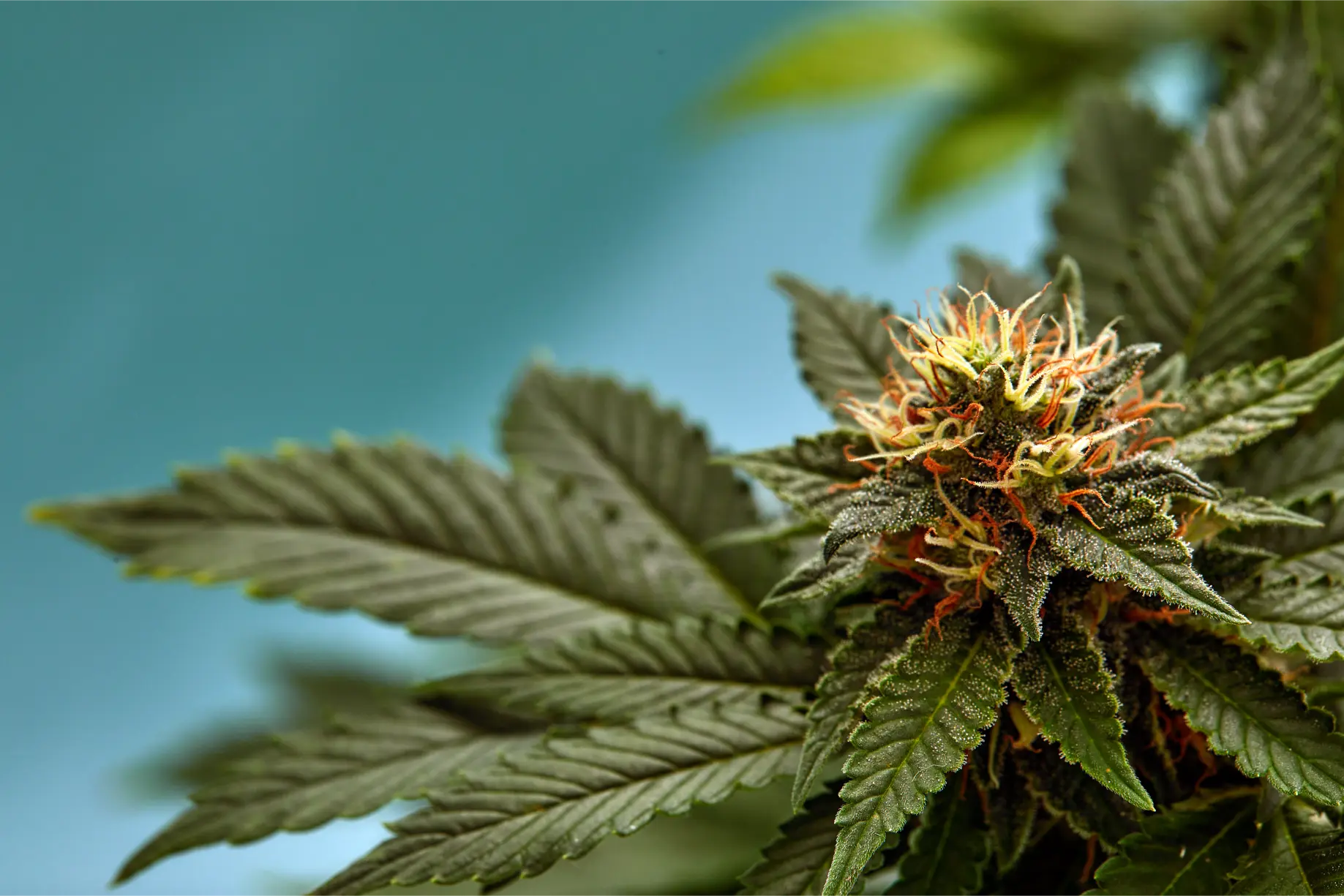
G13
G13 is easier to recognize as a cannabis story than as a single, verifiable modern genotype. The famous account describes a powerful indica removed from a United States government research program and passed into private hands. The problem is that the story has never been substantiated, and the original material was described historically as a cutting rather than a seed line. Modern plants sold as G13 therefore deserve a more careful description: they are attempts to preserve, recreate, or interpret an old indica identity whose exact genetic origin remains uncertain.
That uncertainty does not make the cultivar useless to growers. Across modern descriptions, recurring traits still form a recognizable practical profile: short to medium stature, broad indica-like growth, dense resinous flowers, earthy-pine and woody aroma, and a heavy euphoric effect that tends to become sleepy with dose. Some plants stay quite compact while others stretch more than expected, and flower structure can range from hard rounded buds to slightly more open old-school indica tops. The name is stable; the plant behind the name is not always equally stable.
For Weedth, that makes the central cultivation problem unusually specific. The grower is not only asking how to cultivate G13. The real question is how to evaluate a plant labeled G13 without letting the mythology substitute for observation, while still giving a compact, resin-heavy indica enough structure and airflow to finish dense buds cleanly. The answer begins with phenotype notes, restrained canopy management, careful root-zone control, and a post-harvest evaluation that rewards the actual cured flower rather than the story attached to it.
The strongest G13-style flower usually feels old-school in a good way. The aroma is more resin, pine, dry wood, earth, citrus peel, hash, and sometimes coffee or stone fruit than modern candy. The effect often arrives with a surprisingly clear euphoric head change before the body becomes heavy. Because authenticity is difficult to prove, those sensory and horticultural traits should be treated as evidence of a good plant, not proof that a legendary cutting has been recovered.
Strain Features
| Feature | Details |
|---|---|
| Strain Type | Indica-dominant old-school cultivar identity; modern G13 material varies by source |
| Genetic Profile | Exact ancestry is unverified. Afghan-type indica ancestry is widely associated with the name, but the famous government-lab origin remains an urban legend |
| Lineage Certainty | Low. Historical G13 was described as a clone, while many modern seed versions are recreations, hybrids, or descendants |
| THC | Commonly reported in the high-teens to low-20s in modern flower, but exact potency is batch and line dependent |
| CBD | Usually low in modern THC-focused examples |
| Dominant Terpenes | Myrcene, limonene, beta-caryophyllene are common modern laboratory patterns; pinene appears in some samples |
| Flavor / Aroma | Earth, pine, dry wood, hash, citrus peel, spice; some expressions add coffee, celery-like herbs, or dry fruit |
| Effect Character | Fast euphoria followed by deep physical relaxation, heaviness, and sleepiness at higher doses |
| Flowering Time | Modern G13 lines are commonly placed around 7 to 9 weeks, with some versions running longer |
| Plant Architecture | Usually short to medium, broad, bushy and indica-leaning; exact stretch varies substantially across modern versions |
| Bud Structure | Dense and resinous is the recurring pattern, though some old-school expressions are less rock-hard than modern hybrids |
| Training Compatibility | Early topping, low-stress branch spreading, simple SOG or open multi-top canopies |
| Humidity Risk | Moderate to high once flowers become dense, especially in a crowded compact canopy |
| Phenotype / Authenticity Risk | High. The label does not guarantee the historic clone or one uniform plant |
| Grow Difficulty | Easy to moderate when treated as a compact indica; more difficult when the grower expects one universal G13 behavior |
| Best Time of Use | Evening to nighttime for most users |
Genetic Lineage
G13 has one of the most repeated origin stories in cannabis culture. According to the legend, government agencies collected powerful indica material for research, a superior plant identified as G13 was selected, and a cutting escaped into the private breeding world. The story is memorable because it gives the cultivar a secret-program mythology that perfectly fits the name. It is also poorly documented. Government cannabis research did exist, but that fact does not verify the specific G13 story.
The more useful historical point is that G13 was discussed as a clone rather than a true-breeding seed population. A clone can preserve one genotype very accurately while it remains alive, but it cannot automatically become a seed line without being crossed, selfed, or otherwise reproduced. Every reproductive step changes what 'G13' can mean. This is why current seed versions with the name should not be assumed to be genetically identical to an old cutting simply because the label matches.
Afghan-type indica ancestry is the most persistent genetic theme. It fits the compact stature, broad foliage, dense resin, earthy-pine aroma, and heavy body effect repeatedly associated with G13. However, modern G13 products may include additional genetics introduced during preservation or recreation. Some plants are short, dense, and strongly indica. Others carry more stretch, longer flowering, or brighter citrus and sativa-like expression. Those differences are not small enough to ignore when planning a grow.
For cultivation, the uncertainty changes the correct first-run strategy. A grower should record flip height, stretch duration, branch angle, final density, harvest date, aroma, and effect before deciding that the plant represents a stable house version of G13. If several seed plants are being evaluated, labels should remain attached through drying and cure. The best keeper may be the plant that most closely matches the expected compact resinous profile, but it may also be the plant that simply performs best in the available room.
This is also why G13 descendants and G13 hybrids should not be confused with pure G13. A cross may preserve the name because G13 contributed potency, resin, or compact structure, yet the second parent can change stretch, flavor, and flowering time dramatically. For Weedth, the most honest position is simple: treat G13 as a historically important indica identity with uncertain provenance, and judge the actual plant in front of you with more weight than the legend.
Effect Breakdown
The first part is often more cerebral than the plant looks
Dense old-school indica flower can create an expectation of immediate sedation, but many G13 users describe a quick euphoric shift first. Mood rises, the head feels warm or slightly pressured, and ordinary entertainment can become more absorbing. At a small dose, this can feel surprisingly clear and pleasant rather than narcotic.
That opening is one reason historical G13 acquired such a strong potency reputation. The effect does not always announce itself as simple sleepiness. It can feel mentally forceful while the body is still catching up.
The body effect catches up
As the session develops, the physical side becomes harder to ignore. Shoulders drop, movement feels less urgent, and a heavy behind-the-eyes quality often appears. The user may remain euphoric, but the experience becomes increasingly stationary.
At moderate doses this transition can be excellent for films, music, quiet conversation, or the end of a physically tiring day. At larger doses it can become couch-locking and sleep-oriented. This dose sensitivity is more useful than calling the strain simply 'sedating.'
Higher doses punish impatience
Because G13 is frequently potent and the body effect can build after the first mental wave, redosing too quickly can turn a comfortable evening experience into dizziness, heavy fatigue, or an unpleasant sense of being overmedicated. Dry mouth and dry eyes are common user-reported negatives, and some people report headache or anxiety when potency is underestimated.
Users with low THC tolerance should treat modern G13 flower as potentially strong even when the label's exact genetics are uncertain. The safer expectation is a potent indica-dominant experience, not a guaranteed historical potency percentage.
The late phase usually favors sleep and stillness rather than a second burst of energy. Hunger can increase for some users. Unlike a very foggy narcotic indica, good G13 can retain a pleasant euphoric tone as the body becomes heavy, which is part of its appeal.
The effect profile also reinforces why plant identity matters. A modern G13 seed line that produces a more energetic or less sedating phenotype is not automatically poor quality, but it may not deliver the experience expected from the old cultivar name. That difference belongs in keeper selection just as much as flower density or yield.
Flavor & Aroma Profile
G13 usually lives in an aroma family that predates the current dessert vocabulary. A good jar can smell of dry earth, pine sap, old wood, hash resin, citrus peel, pepper, and warm herbs. Some examples add coffee, celery-like green spice, or a faint dry-fruit sweetness. These secondary notes are useful because they keep the profile from becoming a generic 'earthy indica.'
The intact flower may smell quieter than its reputation suggests. Once a dense bud is broken, resin, pine, and dry spice often become stronger. That difference matters when evaluating a phenotype. A plant does not need to perfume an entire room before grinding in order to have a complex flavor. Conversely, a very loud growing plant can still cure into a flat earthy jar if the bright notes were lost after harvest.
On inhale, citrus and pine are often the cleanest first impressions. The middle becomes woody and resinous. The exhale is usually heavier, with earth, hash, pepper, and a slightly bitter herbal finish. Some modern examples lean sweeter, but candy sweetness is not necessary for the profile to feel complete.
Well-finished G13 should feel dense in flavor without tasting dirty. There is a difference between desirable hashy earth and the dull, wet-plant taste produced by poor drying. A correct cure separates pine from wood and allows small citrus or coffee notes to become easier to notice. An underdried dense bud often collapses those layers into one humid, grassy smell.
Harvest timing also changes the balance. Cutting too early tends to leave the aroma greener and thinner, with less developed resin depth. Waiting for complete flower maturity generally deepens the hash, wood, and body of the profile, but there is no reason to extend a finished plant simply to create more amber trichomes. The selected clone should be harvested when calyx development, trichome maturity, and aroma have stopped meaningfully improving.
The most interesting comparison is not between 'real' and 'fake' G13, because that question is difficult to solve from smell. It is between average G13-style flower and excellent G13-style flower. Average flower is earthy, strong, and sleepy. Excellent flower adds definition: pine is fresh rather than dusty, citrus survives the cure, resin tastes clean, and the heavy effect does not require harsh smoke to feel powerful.
Dominant Terpenes
| Terpene | Aroma / Flavor Role | What It Means Here |
|---|---|---|
| Myrcene | Earth, musk, herbs, ripe-fruit depth | Frequently appears prominently in modern G13 samples and fits the deep earthy base. It should not be used as a one-compound explanation for sedation. |
| Limonene | Citrus peel, brightness | Helps explain orange or lemon accents reported in some modern flower. Its presence does not prove an energizing effect. |
| Beta-caryophyllene | Pepper, dry spice, wood | Fits the hashy peppered background and is common across many indica-leaning cannabis samples. |
| Pinene | Pine resin, fresh wood | Appears in some G13 examples and can sharpen the old-school forest character. It is not universal enough to define every plant. |
Modern laboratory profiles should be read as batch data, not as proof of a single G13 chemotype. The cultivar name spans material with uncertain genetic continuity, so terpene ranking can change substantially between producers and seed lines.
Terpenes explain aroma more reliably than subjective effect. G13's heavy experience is better discussed as the result of cannabinoid potency, dose, tolerance, and the complete volatile profile rather than attributing couch-lock to myrcene alone.
Indoor vs. Outdoor Growing
| Decision Point | Indoor | Outdoor |
|---|---|---|
| Main Advantage | Compact size and dense flower are easy to control when the selected line behaves as expected | Long vegetative time and unrestricted roots can produce a broad, productive indica bush |
| Main Limitation | A short plant can still become too dense in the center, creating hidden humidity around mature buds | Dense flowers face rain, dew, and cool autumn moisture; exact finish date varies among modern G13 lines |
| Height / Stretch | Usually manageable, but first-run seed plants should be given reserve because modern versions differ | Height is rarely the limiting factor; branch width and support matter more |
| Training | One early topping, LST, simple multi-top canopy or SOG with uniform clones | Early topping or natural bush form with perimeter support |
| Flower Density | Easy to inspect if tops are separated; dangerous if the canopy becomes one compact mass | Requires dry finishing weather and inspection after rain or heavy dew |
| Phenotype Control | Best environment for comparing multiple plants under similar conditions | Different soil pockets and microclimates make phenotype comparison less clean |
| Flavor Control | Late canopy heat and dry-room conditions can be controlled closely | Sun and season can produce excellent resin, but weather can force early harvest compromises |
| Best Fit | Growers who want to identify a repeatable house G13 phenotype | Warm, relatively dry regions with enough autumn stability |
G13 is often described as an indoor-friendly indica, and that is a reasonable starting point. The caveat is that the name alone does not guarantee one stretch pattern. If growing from seed, the first cycle should leave more headroom and lateral space than the compact reputation suggests. A clone run can then be planted much more efficiently.
Outdoor G13 can become a sturdy broad plant, but final flower density matters more than summer plant vigor. A large healthy bush can still be a poor outdoor choice if the selected line finishes late into persistent rain. In marginal climates, clean mature flower is more valuable than the biggest possible plant.
Strain-Specific Grow Guidance
Start by learning which G13 you actually have
Do not let the stretch make the decisions
The first run should be treated as characterization. Photograph the plant before flowering, at the end of stretch, and near harvest. Record height, width, internode spacing, leaf width, odor, support needs, finish time, and whether the flowers harden into very dense buds or stay somewhat more open.
This documentation is not bureaucracy. It is the only reliable way to replace a vague historical name with a practical cultivation plan for the exact genetics in the room.
Keep the compact center open before flowers become dense
Many G13-style plants grow with broad leaves and short-to-moderate internodes. Several healthy side branches can therefore converge inside a plant that still looks short from the outside. Once flowers begin swelling, that center can become the highest-risk humidity zone in the canopy.
Use early LST or one topping to create outward branch angles. The goal is not to maximize the number of tops. It is to keep enough physical space that mature buds do not rest against each other or against large fan leaves.
Do not over-veg a plant simply because it stays short
Compact stature can tempt indoor growers to extend vegetative time until the entire floor is green. That often produces more branch depth than the light can finish well. When the selected plant is naturally bushy, flip while there is still visible horizontal reserve.
The correct flip point is easier to establish on the second clone run because final width is known. A shorter veg can improve annual production without reducing premium flower if the first crop proved that the center was overbuilt.
Use pruning to simplify the inside, not to strip the outside
After the stretch settles, identify inward-growing shoots that remain shaded or that will push buds into the center. Removing those sites can improve inspection access and reduce the percentage of small interior flower.
Avoid turning a compact indica into a bare skeleton. Healthy exposed fan leaves still support photosynthesis, and repeated late defoliation around resinous buds increases handling damage without correcting poor branch geometry.
Feed from plant response, not from old potency mythology
A cultivar famous for strength does not automatically need heavy fertilizer. General cannabis nutrition research shows that flower yield responds to nutrient supply within an optimum range and that extreme potassium is not a universal route to larger buds.
With G13, watch water use, leaf color, tip condition, and the speed of dryback. Excess nitrogen is especially unhelpful when it keeps a compact canopy dark and leafy after the plant should be prioritizing flowers.
Keep the root zone oxygenated as water demand changes
A broad indica can develop a dense root mass even when the canopy is not very tall. Early vigorous plants may dry containers quickly, then slow as vertical growth ends and the room becomes cooler later in flower.
Do not keep irrigation frequency fixed because it worked during stretch. Allow the actual medium and root system to determine timing so late flower is not sitting above a chronically saturated root zone.
Treat dense bud microclimate as a separate environment
Research on cannabis inflorescences shows that humidity inside flowers can remain higher than ambient room readings. That matters for a compact cultivar because the outside of the canopy can look dry while interior flowers remain humid.
Air should move through the plant rather than only across the upper leaf surface. Physical branch separation is more effective than trying to solve a touching-cola problem with extreme fan speed.
Support only where the selected plant proves it needs support
Some G13-style plants carry dense flowers on stout branches. Others lean late. Add soft ties or a loose support net before the buds become heavily resinous if the branch angle begins changing under weight.
The best support system preserves the open structure you built earlier. A net that pulls all branches inward defeats the purpose.
Read maturity from flowers, not the legend or the calendar
Seven to nine weeks is a common modern estimate, but the exact plant decides the harvest. Look at trichomes on calyxes rather than sugar leaves, follow calyx swelling, and note whether fresh pistil production has meaningfully slowed.
A G13 plant that is dense and frosty at week seven can still be immature. Frost is a cultivar trait, not a clock. Conversely, a plant that has stopped building new flower does not need extra weeks solely to create a more dramatic amber percentage.
Use the cured jar to finish phenotype selection
If multiple plants were grown, do not choose a mother from visual harvest data alone. Keep jars separate and compare resin feel, smoke smoothness, earth-pine definition, effect progression, and storage stability.
For a name with uncertain authenticity, the cured result is particularly important. A plant that grows beautifully but cures into generic harsh earth may be less valuable than a slightly lower-yielding phenotype with a distinctive old-school resin profile.
Weedth Bud Flavor Tips
G13 flavor is not difficult because it is delicate like tropical fruit. It is difficult because the dark notes can survive while the brighter details disappear. A batch can still smell powerful after the pine and citrus have been lost, leaving only earth, wood, and hash. That makes aroma intensity an incomplete quality test.
Harvest fully mature flower. The resinous appearance can arrive before flavor is complete, particularly in modern lines selected for frost. If the calyxes are still actively building and the aroma remains mostly green, more time may be useful even when the plant already looks impressive.
Dense G13 flowers should dry evenly from the outside toward the center. A fast dry can create a brittle shell around a wetter core, while an overly humid dry can trap grassy aroma and increase microbial risk. The objective is controlled moisture loss, darkness, and gentle air exchange rather than a fixed number of days.
Do not point fans directly at the hanging flowers. A compact cola that spent weeks retaining moisture on the plant can lose its outer aromatics surprisingly quickly once cut. Move room air, not the bud surface.
Cure should make the profile cleaner, not simply stronger. Earth should become less green, pine should separate from dry wood, and any citrus, coffee, or spice note should become easier to recognize. If the jar develops a wet hay or ammonia-like smell, moisture management is wrong and the batch needs immediate attention.
Keep the best phenotype in a small reference jar that is opened rarely. Compare it with a working jar after a month. This simple test shows whether the selected G13 holds its pine-resin character under storage or loses definition quickly.
Avoid flavoring tricks such as citrus peel, scented inserts, fruit products, or terpene sprays. They obscure whether the plant and post-harvest process actually produced the desired profile and can introduce moisture or contamination.
Well-finished G13 should taste like a clean old resinous indica, not like fertilizer, wet plant material, or artificial flavor. The goal is to make the subtle notes survive inside a fundamentally heavy profile.
Weedth Bud Boost Tips
G13 is not a strain that needs twenty different interventions to produce good flower. The most reliable yield improvements come from matching plant number and veg time to the selected clone's real final width, then keeping the flower zone evenly lit and physically separated.
If the clone stays compact, one topping followed by a few outward ties can create enough productive leaders. Repeated topping can make the interior too complex and increase the amount of small shaded flower. A plant with six excellent branches is often more efficient than one with sixteen thin tops.
Uniform clones can suit a simple SOG because the plant's height is usually manageable and dense top flowers can be spaced predictably. Seed plants should not be packed this way on the first run because variable stretch can create uneven light and humidity.
Preserve lower branches only when they reach useful light. Some compact plants produce worthwhile secondary flowers close to the main stems. Others create leafy interior buds that never harden. Use the first harvest to define the productive depth of the exact clone rather than applying a universal lollipop height.
Do not interpret feeding tolerance as a reason to push fertilizer. Quality yield is the amount of clean, mature, aromatic flower after drying and trimming. A plant that accepts more nutrients without burning has not proved that the extra input improves that outcome.
Late support can protect yield when dense tops begin leaning, but branch strength itself should become a selection trait. If two phenotypes taste equally good and one stands without rescue ties, the structurally stronger plant may be the better long-term keeper.
Outdoor growers should judge production after weather losses and drying difficulty. A huge dense G13 bush is not an efficient crop if autumn moisture forces early harvest or causes repeated flower removal.
The most useful second-run change is usually subtraction: fewer interior shoots, less unnecessary veg, earlier branch placement, and a cleaner path through the canopy. G13 quality yield comes from dense resinous flowers that can be inspected, dried, and preserved, not from making the shortest plant as crowded as possible.
Medical Uses & Benefits
G13 is commonly chosen by users seeking physical relaxation, sleep support, stress reduction, and distraction from pain. Those patterns are consistent with its reported heavy body effect, but they remain user experiences rather than proof that the cultivar treats a medical condition.
The early euphoric phase may temporarily improve mood for some users before sedation develops. That can make the strain feel emotionally lighter than a purely dulling nighttime indica.
For pain or muscular tension, the value is often the combination of strong intoxication and reduced attention to physical discomfort. This should not be confused with evidence of a strain-specific analgesic mechanism.
The main limitation is potency. A user seeking mild daytime relief may find G13 too heavy, and high THC can worsen anxiety, dizziness, or cognitive impairment in sensitive individuals. Most modern G13 flower is low in CBD, so there may be little cannabidiol to moderate the subjective experience.
Sleepy effects also depend on dose and the specific version. A modern G13 hybrid with more uplifting genetics may not behave like a classic heavy indica. When medical predictability matters, verified cannabinoid testing and a repeat clone are more useful than the name alone.
Anyone using cannabis for a diagnosed condition, combining it with prescription medication, or managing significant anxiety should discuss use with a qualified healthcare professional.
Ideal User Profile
G13 is best suited to experienced or moderately experienced users who enjoy old-school indica effects and do not need a fashionable dessert flavor to appreciate a flower. The ideal session is usually later in the day, when a powerful transition from euphoria into physical stillness is useful rather than inconvenient.
Flavor-oriented users who like pine, hash, earth, wood, citrus peel, and spice may find the profile more interesting than someone seeking candy, cream, or tropical fruit. The strain is also attractive to cannabis-history enthusiasts, although the mythology should be enjoyed as culture rather than accepted as verified genetics.
For growers, G13 suits people who like compact indoor plants and phenotype evaluation. A first run from seed requires curiosity because exact structure and finish may vary. A selected clone can become much easier and more efficient on the second cycle.
It is a weaker choice for users who need clear daytime functionality, and it is not ideal for a grower who wants genetic provenance to be completely settled. G13 is most satisfying when the actual plant is allowed to earn its reputation.
Grower Notes and Feedback
One recurring theme in G13 discussions is disagreement over authenticity. Some growers insist the historic clone no longer circulates widely, while others work with cuts or seed lines carrying the name. This disagreement should not be resolved by pretending certainty where none exists. It should change how the crop is documented.
The second recurring pattern is compact indica growth with dense flower. Grow reports often describe short plants that produce surprisingly heavy, solid buds. That structure can be very efficient indoors, but it also means the center of the plant deserves more attention than the ceiling.
Not every version behaves the same way. There are reports of G13-related plants with stronger stretch, more open buds, or different flavor. Some of that variation is expected from recreation and hybridization. A grower who sees a taller plant should not automatically diagnose an environmental problem just because the name is associated with indica stature.
Resin is another consistent part of the reputation. Frost can become obvious early enough that the plant looks close to finished before the flower has completed. This visual quality is useful for extraction or bag appeal, but it can encourage premature harvest when the grower confuses trichome abundance with trichome maturity.
The aroma also appears more variable than the simple 'earth and pine' description suggests. Older user reports mention hash, citrus, coffee, herbs, dry fruit, and even unusual green or celery-like notes. That breadth is a reminder to write down the sensory profile instead of forcing every plant into the expected vocabulary.
On the second run, the most useful data are final width, exact stretch, the week branches begin leaning, the dry time of the densest tops, and the cured flavor after several weeks. Once those traits are known, G13 can become a straightforward room plant even if its distant ancestry remains unresolved.
A good G13 grow therefore teaches a useful lesson: genetic uncertainty does not prevent horticultural precision. The grower may never prove the origin story, but the selected clone can still be understood in great detail.
Weedth Editor's Note
The point where this plant reveals itself
The mythology is the least useful part of G13 once the light turns on. I would enjoy the story, but I would not build a cultivation plan around it. I would treat every first-run plant as an unknown compact indica until it proves otherwise.
My biggest concern would be the center of the canopy. A short plant can look easy right up until several dense tops are touching and the only way to inspect them is to move sticky flowers out of the way. I would rather leave a little empty space early than create that problem late.
I would also refuse to select a keeper on frost alone. G13 is supposed to be resinous. That means frost is the baseline, not the winner. The better questions are whether the branch structure is efficient, whether the pine and hash stay clear after cure, and whether the effect has the euphoric-to-heavy progression that makes the cultivar interesting.
If a plant labeled G13 turned out taller, brighter, or less sedating than expected, I would not call it fake based on appearance. I would simply describe what I have and decide whether it deserves another run. That is more useful than trying to solve a forty-year-old legend with leaf shape.
For me, the best G13 would be the plant that makes the history feel almost irrelevant because the flower itself is good enough: compact to grow, dense without being unsafe, resinous, cleanly earthy and piney, and genuinely satisfying at the end of the night.
Weedth Score
Growing Experience 8.0/10 Compact stature and strong flower production can be easy to manage, but modern genetic inconsistency lowers predictability.
Bud Structure & Visual Appeal 8.7/10 Dense resinous old-school indica flowers have strong visual appeal, although modern versions vary.
Aroma Complexity 8.2/10 Earth, pine, wood, hash, citrus and spice can be layered, but some batches are comparatively simple.
Flavor & Smoothness 8.1/10 Very satisfying when cured cleanly, though the profile is less delicate or fruit-driven than many modern cultivars.
Effects & High Experience 8.9/10 The euphoric opening followed by heavy relaxation gives G13 its strongest identity.
Overall Satisfaction & Recommendation 8.4/10 Worth growing for old-school indica character, especially if the actual plant is evaluated instead of the legend.
My final take: I would keep a G13 clone because the cured flower proves itself, not because a label claims it came from a secret laboratory.
FAQ
Is the government origin story of G13 true?
There is no reliable documentation proving the famous story. Government cannabis research existed, but that does not verify that G13 was created as a secret super-strain or stolen from a laboratory. The story is best treated as cannabis folklore.
Is modern G13 genetically identical to the original G13?
That cannot be assumed. Historical G13 was discussed as a clone, while many modern offerings are seed lines, reproductions, or hybrids. A seed version may preserve some G13 traits without being genetically identical to an old cutting.
How tall does G13 grow indoors?
Most modern descriptions place G13 in the short-to-medium range with a bushy indica structure. Exact final height depends on the line, veg time, container, and stretch. First-run seed plants should be given more reserve than a known clone.
How much does G13 stretch after the flip?
Usually less than a long sativa, but reports vary enough that no single multiplier is reliable. Measure the selected plant through the first three flowering weeks and use that information on the clone run.
How long does G13 flower?
Many modern G13 lines are listed around seven to nine weeks. Some versions may take longer. Harvest should follow complete flower maturity rather than a historical week number.
Does G13 respond well to topping?
Yes, compact G13-style plants can respond well to one early topping followed by low-stress branch spreading. Repeated topping can create too many interior shoots on already bushy plants.
Is G13 good for SOG or SCROG?
Uniform clones can work well in SOG because height is manageable. An open SCROG or simple multi-top canopy also works, but a seed population should not be packed tightly until stretch variation is known.
Is G13 a heavy feeder?
Do not assume so. A healthy plant may tolerate substantial nutrition, but fertilizer should follow root health, water use, and leaf condition. High potency is not evidence of high nutrient demand.
Why are my G13 buds not rock hard?
The G13 name covers multiple modern genetic versions, and old-school indica flower can be dense without having the extreme hardness of some newer hybrids. Light distribution, maturity, and environment also influence density.
Is G13 prone to bud rot?
Dense flowers and compact canopy geometry can create local humidity risk. Keep mature tops physically separated, maintain airflow through the plant, and inspect interior flower tissue rather than relying only on room RH.
When should G13 be harvested?
Use calyx development, trichomes on actual flower tissue, reduced fresh pistil production, and a mature resinous pine-earth aroma. Do not harvest simply because the plant looks frosty early.
Why does my G13 smell different from another G13?
Modern G13 material is genetically diverse. Pine, earth, wood, citrus, spice, coffee, hash, and unusual herbal notes can appear in different lines and phenotypes.
Is G13 a daytime strain?
For most users it is better later in the day. The early euphoria can feel clear, but moderate or high doses commonly progress into strong physical relaxation and sleepiness.
Is G13 beginner-friendly to grow?
A compact G13-style plant can be forgiving, but a beginner should avoid assuming the name guarantees one behavior. Give the first run room, keep the canopy open, and learn the specific plant before optimizing density.
What is the most important second-run change with G13?
Use the first run to set plant count and veg time. Once final width, stretch, branch strength, and productive canopy depth are known, the clone run can usually be simpler and more efficient.
Similar Strains
Northern Lights: A more consistently documented old-school indica reference with compact growth, fast flowering, pine-earth flavor, and heavy evening effects. It is easier to predict than modern G13 material.
Hash Plant: Shares the resin-heavy Afghan-style character and deep hashy body effect, but usually has a clearer documented identity and a particularly extraction-friendly reputation.
Afghan Kush: A useful comparison for broad-leaf morphology, earthy hash flavor, and physical sedation. Afghan Kush is more clearly tied to landrace indica ancestry and often feels simpler in aroma.
Romulan: Offers similarly heavy old-school relaxation and pine-resin flavor, but tends to show a more irregular lateral branching pattern that requires different canopy management.
Bubba Kush: Another compact nighttime cultivar with strong body effects. Bubba is slower in vegetative growth and leans toward coffee, earth, and Kush sweetness rather than G13-style pine and dry wood.
White Russian: A 1990s potency benchmark with dense resinous buds and a stronger cerebral opening. It is more genetically documented and usually more sweet-spicy than classic G13.
Share this article
A quick overview of the topics covered in this article.
Follow us
Latest articles
September 10, 2026
September 10, 2026
September 10, 2026