
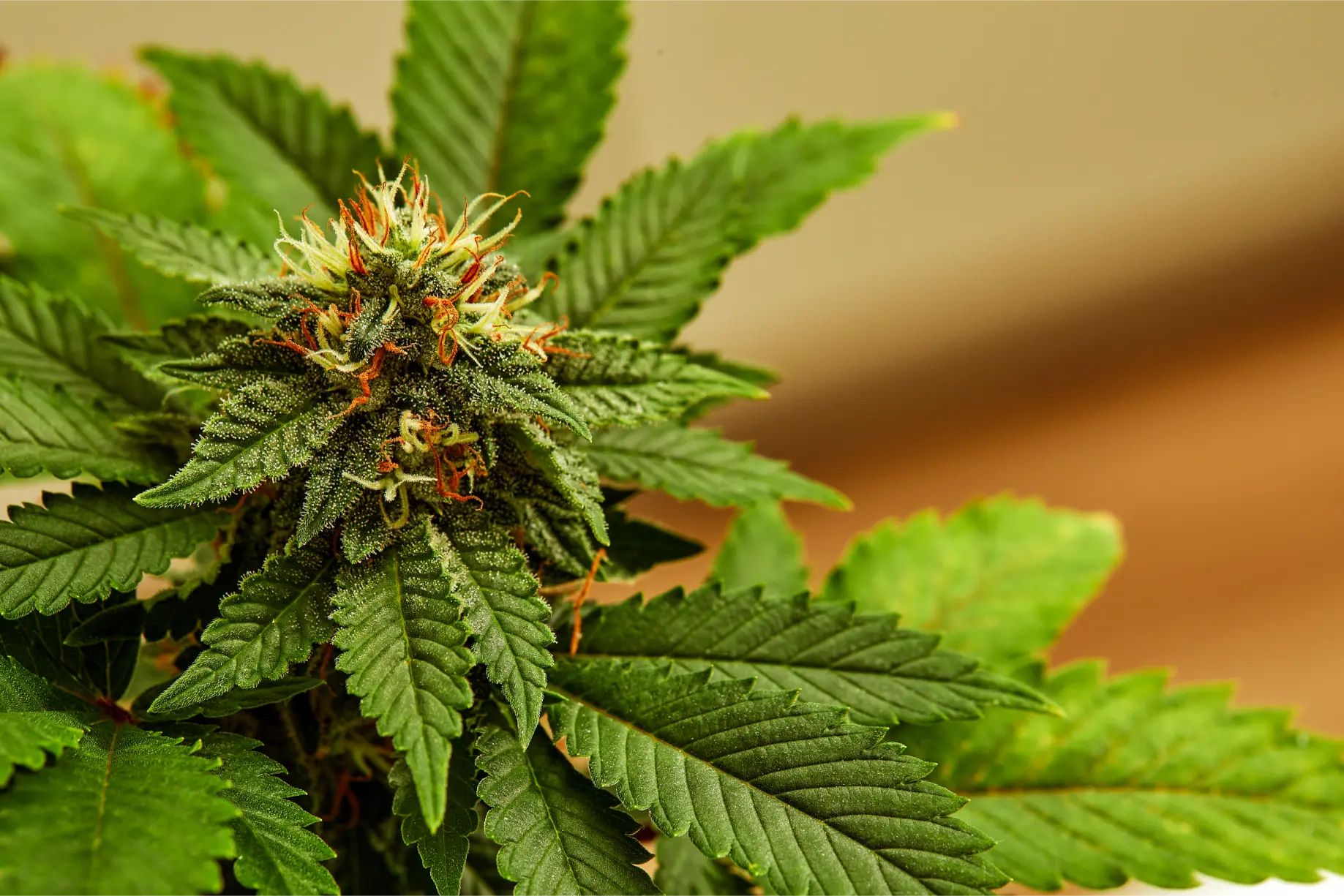
Gelatti
Gelatti is easy to recognize in a photograph and surprisingly easy to misunderstand in a drying room. The flowers are commonly compact, greasy with resin and visually finished before the plant has completed its aromatic development. Sweet cream, apple skin, berries, black pepper, mint and a tart fuel note can all appear in a mature expression, yet the same flower can cure into little more than dry spice and generic gas when it is harvested on appearance or broken into small pieces too early.
That post-harvest sensitivity begins with the way the plant grows. Gelatti usually stays medium in height, builds closely spaced flower sites and produces dense calyx clusters with relatively little empty space inside the upper buds. It is not normally a difficult plant because of uncontrolled height. Its difficulty comes from concentration. Leaves, flowers, resin and moisture all occupy a compact zone. A canopy that looks efficient in week three can become too sealed in week seven, especially if the grower carried high nitrogen through transition or treated every frosty lower site as worth keeping.
The cross between Gelato and Biscotti explains the appeal as well as the management problem. Gelato contributes cream, fruit, color and a euphoric mental lift. Biscotti contributes nutty dough, pepper, minty fuel and heavier flower density. Balanced plants can be exceptionally complete, but the line does not always express those parents in equal measure. Some cuts are sweet and floral with apple or berry on top. Others are darker, more peppery and gas-forward. The central cultivation question is how to keep a tight, resin-rich plant open enough to finish cleanly while protecting the lighter fruit and cream that separate Gelatti from ordinary dessert gas.
A good Gelatti run is therefore not built around one dramatic technique. It is built around several decisions made at the correct time: enough vegetative shaping to create separate tops, a transition feed that does not keep the plant overly leafy, a lower canopy that is cleaned before the buds harden, humidity reduction before the room feels urgent and a dry that respects the difference between a hard exterior and a still-moist flower core.
Strain Features
| Feature | Details |
|---|---|
| Strain Type | Balanced to indica-leaning hybrid |
| Genetic Profile | Gelato x Biscotti |
| THC | Commonly reported in the low-to-upper 20% range; laboratory results vary by cut and batch |
| CBD | Usually very low |
| Dominant Terpenes | Beta-caryophyllene and limonene are recurring; myrcene, linalool and humulene vary by expression |
| Flavor and Aroma | Sweet cream, apple skin, berry, nutty dough, black pepper, mint, earth and tart gas |
| Effect Character | Euphoric and socially warm at first, then physically calm and increasingly heavy with dose |
| Flowering Time | Commonly about 8 to 9 weeks; some expressions benefit from several additional days |
| Stretch | Low to moderate in many cuts, with enough lateral rise to close a partially filled screen |
| Plant Architecture | Medium, compact and branchy with tight-to-moderate internodes |
| Bud Structure | Dense, swollen and greasy with resin, often with dark green or purple tones |
| Bud-to-Leaf Ratio | Usually favorable on the main tops, although the interior can remain leafy if not cleaned early |
| Resin Character | Thick and oily rather than merely dusty, with strong visual coverage and sticky trim |
| Feeding Behavior | Generally prefers steady moderate nutrition; prolonged high nitrogen increases congestion |
| Watering Behavior | Stable when the root zone remains aerated; compact plants can be overwatered in oversized containers |
| Training Compatibility | Good for one topping, low-stress spreading and a lightly filled SCROG |
| Mold Risk | Moderate to high in the densest late flowers when humidity or interior airflow is poor |
| Primary Quality Risk | Harvesting on frost or drying small dense buds too quickly, which removes cream and fruit |
| Grow Difficulty | Intermediate |
Genetic Lineage
Gelatti is commonly documented as Gelato crossed with Biscotti. The name resembles Gelato closely enough that the cultivars are sometimes confused, but the Biscotti influence gives Gelatti a noticeably drier and more savory personality. Gelato is associated with creamy fruit, citrus, floral sweetness, color and a hybrid effect that can remain mentally active. Biscotti is commonly linked with cookie dough, nuts, pepper, fuel, mint and a stronger physical finish. Gelatti sits between those profiles, ideally retaining Gelato's upper aromatic layer while adding Biscotti's density and savory depth.
The Gelato side is easiest to see in the top notes and in selected color expressions. Apple, berry, sweet cream and a soft floral quality may appear before the flower is broken. The mental opening can also feel more sociable and emotionally light than the finished bud structure suggests. Plants leaning in this direction may produce slightly more open side branches and a cleaner separation between the main tops. They can be visually attractive without becoming the darkest plants in the room.
Biscotti influence becomes clearer in the way the calyxes harden. Flowers can form thick, compact clusters with pepper, nutty dough, mint and earthy gas underneath the sweetness. Leaves may remain dark and broad. The body effect arrives sooner, and the flower can feel heavier in the hand. These plants may also create the greatest humidity challenge because their dense structure leaves little margin for late canopy crowding.
A balanced expression is not necessarily a perfect fifty-fifty visual blend. One plant may grow with Biscotti density while preserving more Gelato fruit. Another may show open lateral branching but cure into black pepper and fuel. The phenotype should be evaluated as a complete system: how it grows, how it finishes, how it dries and what remains after several weeks of storage. Selecting only by live aroma can favor a plant whose apple sweetness disappears. Selecting only by frost can favor a plant with spectacular resin but a flat palate.
Gelatti's compactness is often described as predictability, but the word should be used carefully. Most plants are easier to contain than a tall Haze or Chem expression, yet compact does not mean uniform. One cut may barely stretch and require more vegetative fill. Another can rise enough during the first three weeks to crowd a screen that looked open at the flip. A grower working from seed or an unfamiliar clone should still record transition height, branch speed and the point at which flower sites begin to connect.
The lineage also helps explain why lower flowers can be deceptive. Gelato and Biscotti families can both produce resin on sites that have not received enough light to become dense. A lower bud may look white with trichomes while remaining soft, leafy and aromatically immature. That trait makes early lower pruning important. The plant does not need every visible flower site. It needs a limited number of sites that can complete the same maturity curve.
From a grower's perspective, the most useful genetic conclusion is that Gelatti should be managed as a dense dessert-gas hybrid, not as a short plant that can be packed tightly. The parents have already concentrated a great deal of flower and resin into a limited space. The cultivation plan should create breathing room around that concentration rather than attempting to multiply it indefinitely.
Effect Breakdown
Gelatti usually enters through mood before it settles into the body. The first change can feel bright, amused and socially comfortable. Conversation may become easier, music can seem more detailed and familiar activities gain a pleasant sense of importance. The mental effect is not always sharply focused, but it is often clear enough that experienced users remain active at a small dose.
The middle of the experience carries the cultivar's balanced reputation. Physical tension begins to loosen while the initial warmth remains. The user may feel calm without feeling disconnected, which suits a slow dinner, a familiar creative task, gaming or an evening walk. The body effect is noticeable, but it does not necessarily demand stillness yet.
Dose changes Gelatti more than the friendly opening suggests. A second or larger amount can narrow attention and make task switching difficult. The user may remain absorbed in one activity while losing interest in everything else. Appetite becomes more likely, the limbs feel heavier and the mental tone moves from social to inward. This is the point at which the Biscotti side becomes easier to recognize.
At a high dose, the cultivar can become deeply relaxing and mentally foggy. Short-term memory may feel unreliable, conversation can slow and the body may prefer a chair or bed. The effect does not always arrive as a sudden knockout. It may continue building after the user believes the peak has been reached, which makes impatient redosing a common mistake.
The aroma direction can offer a clue, although not a guarantee. Fruit-and-cream expressions are often reported as somewhat brighter and more socially useful. Pepper-and-gas expressions may feel heavier and more physically centered. Harvest maturity can shift the result as well. Earlier mature flower tends to preserve more lift. Additional ripening strengthens the body phase and may increase next-stage drowsiness.
Dry mouth and dry eyes are common. Some sensitive users report dizziness or anxious mental pressure, especially when consuming a strong batch quickly. The cultivar's smooth dessert flavor can hide how much THC has been consumed. A small starting amount gives the effect time to reveal whether the particular batch is balanced, stimulating or sedating.
The late phase is usually quiet. The euphoric edge fades, but physical comfort can remain. Some users become sleepy, while others simply feel less driven. This makes Gelatti better suited to the second half of the day than to situations demanding prolonged precision. It is a flexible evening hybrid at moderate doses and a much heavier strain when pushed.
Flavor & Aroma Profile
The Aroma Before the Flower Is Broken
A mature jar can begin with sweet cream, apple skin and dark berries. The fruit is often restrained rather than candy-like. It resembles the smell released when a firm apple is cut or when berry juice touches pastry, with a faint floral softness around the edges. Underneath sits a dry pepper note that prevents the profile from becoming purely sweet.
Cold flower may smell less intense until it warms in the hand. The resin is oily and can hold aroma close to the surface. When the jar is opened after several hours, cream and fruit may rise first, while fuel becomes more obvious after the flowers have been moved.
Pressure Reveals the Biscotti Side
Breaking or grinding Gelatti changes the balance. Nutty dough, black pepper, mint, earth and tart gas expand rapidly. Some expressions show roasted nuts or cocoa. Others produce a cleaner chemical edge that resembles mint rubbed over fuel. The sweetness remains, but it moves from the center to the background.
This difference between intact and broken flower is a useful quality marker. A complete sample should not lose all fruit as soon as it is handled. The apple or berry layer may become quieter, but it should still appear around the cream and pepper. A plant that becomes one-note gas may be a valid phenotype, yet it expresses less of the cross's potential.
What Reaches the Palate
The inhale is commonly softer than the grinder aroma. Cream, dough and fruit arrive first. The middle of the palate can show apple peel, berry skin and a subtle nutty bitterness. The exhale carries pepper, mint and gas, sometimes with a dry floral aftertaste.
Smoke quality depends heavily on the finish. Gelatti can produce dense flower with a hard surface. If that surface dries too quickly, combustion feels hot even when the jar smells strong. Vapor can reveal more of the apple, cream and floral fraction, while smoke emphasizes pepper and earth. Neither method corrects poor drying.
The Cure Curve
Freshly dried Gelatti may smell loud but disorganized. Gas and pepper can dominate because the denser flower core is still equalizing. During the first weeks of cure, the sharpness softens and the cream becomes easier to recognize. Apple or berry may reappear after seeming absent at trimming.
A mature cure should produce integration, not total sweetness. The cultivar remains peppery and gaseous. The goal is to preserve enough cream and fruit that the exhale has contrast. Overcuring in a warm environment or repeatedly opening the same container gradually removes the lightest notes and leaves the durable earthy base.
Common Flavor Failures
Late heat is one of the quickest ways to simplify Gelatti. The upper buds may remain beautiful, but apple, berry and floral notes decline. Prolonged high nitrogen creates a greener, thicker smoke and can hold the canopy in a leafy state. Harvesting at the first heavy frost produces flower that looks ready while the flavor remains sharp. Cutting dense buds into small pieces immediately after harvest accelerates surface drying and removes the cream.
The strongest Gelatti flower is not the loudest on the first day. It is the sample that still presents fruit, cream, pepper and mint after several weeks, then leaves a smooth dry gas rather than a hot mineral finish.
Dominant Terpenes
Terpene rankings differ across cuts and laboratory batches. The recurring profile is more useful than a claim that one fixed ratio defines every Gelatti plant.
| Terpene or Volatile Group | Likely Role in Gelatti |
|---|---|
| Beta-Caryophyllene | Commonly supplies black pepper, dry spice and the warm edge beneath dough and gas. It likely contributes more reliably to aroma than to any single predicted effect. |
| Limonene | Adds brightness to apple, berry and cream and helps the first mental phase feel less heavy. It may be less obvious as pure lemon than as a lift in the fruit profile. |
| Myrcene | Deepens earth, ripe fruit and the later physical calm in samples where it is prominent. |
| Linalool | Can support floral cream, soft berry and a smoother aromatic bridge between sweetness and mint. |
| Humulene | Reinforces toasted nuts, hops, dry wood and the Biscotti-like savory finish. |
| Minor esters and sulfur-containing compounds | Likely help create apple, berry, dairy and tart-fuel nuances that cannot be explained by the main terpene list alone. |
Terpene names should not be used as a guaranteed effect formula. The same cultivar can feel different according to dose, harvest timing, cannabinoid content and the broader volatile mixture. For the grower, the practical value of the profile is in identifying what is fragile. Limonene-rich brightness, floral cream and fruit are generally easier to lose to heat and oxygen than pepper, earth and fuel.
Indoor vs. Outdoor Growing
| Decision Point | Indoor Growing | Outdoor Growing |
|---|---|---|
| Space Use | Compact-to-medium height suits controlled rooms, but plants should not be packed tightly | Plants can become broader than expected and need lateral space around the center |
| Training | One topping, branch spreading and a lightly filled screen work well | Early topping creates several manageable arms and reduces one oversized central top |
| Flower Density | Humidity can be lowered before the buds become fully hard | Dense flowers need a dry autumn, morning sun and protection from repeated rain |
| Flavor Control | Stable late temperatures help preserve apple, berry and cream | Sun can add complexity, but hot finishes may leave pepper and gas |
| Irrigation | Compact plants in oversized containers can remain wet too long | Larger root zones increase water use, especially during warm flowering weather |
| Support | A net keeps dense tops separated and upright | Stakes or a cage should be installed before flowers add their final weight |
| Harvest Flexibility | Individual tops or phenotypes can be harvested according to maturity | Weather may force a compromise before the most aromatic window |
| Drying | Controlled rooms can match branch size to drying speed | Large outdoor colas may need division to prevent hidden moisture |
| Best Fit | Growers focused on premium flower quality and repeatable climate | Warm, dry regions with dependable late-season airflow |
Indoors, Gelatti's manageable height can encourage a high plant count. That can work only when the grower keeps each plant simple. A room filled with small plants carrying one or two tops may remain more breathable than fewer heavily branched plants whose centers overlap. The decision should follow available access, irrigation method and the ability to remove lower growth before flower set.
The plant does not usually need an extremely long vegetative period. Side branches respond to early spreading and can reach a level canopy efficiently. The risk begins when the screen is filled completely before the flip. Even modest stretch closes gaps, and tight internodes turn leaf overlap into direct contact with future flowers.
Outdoors, Gelatti benefits from sun but asks for a reliable finish. Dense flowers do not tolerate repeated autumn rain well. A site receiving early morning sun dries dew faster. Open exposure is useful, but strong wind can damage loaded branches unless the frame was supported in advance.
Outdoor plants should be shaped for access. A broad plant with several defined arms is easier to inspect than a solid sphere of leaves. The center must remain visible. If the climate is humid, smaller separated colas offer a better quality outcome than one enormous top, even when the total wet weight appears lower.
The indoor versus outdoor decision should therefore be made around the final month, not the first. Gelatti can grow vigorously in either environment. The question is whether the grower can finish and dry its dense resinous flowers without sacrificing the fruit-and-cream layer.
Strain-Specific Grow Guidance
The Compact Illusion
Gelatti often appears naturally efficient in vegetative growth. Branches remain close, leaves fill the space and the plant looks as though it can hold many future tops. That appearance encourages over-retention. The grower keeps every lateral because none seems excessively weak.
The problem becomes visible later. Once flower clusters begin hardening, those closely spaced branches no longer have enough air between them. The correct response is not severe late defoliation. It is earlier branch selection. Decide which laterals can reach the productive layer and remove the rest before they acquire substantial resin.
Establish the Canopy With One Main Intervention
One topping or a deliberate main-stem bend is generally enough. Gelatti does not need a complicated mainline to produce several quality tops. After the initial intervention, use soft ties to widen the strongest branches and allow the plant to regain momentum.
Repeated topping can create a large number of short internal shoots, especially in tight expressions. Those shoots may never develop enough length to separate from one another. A simpler frame often produces better bud-to-leaf ratio and easier trimming.
Use Transition Stretch to Finish the Shape
Low-to-moderate stretch is common, but it should still be included in the plan. Enter flower with a screen that is mostly organized but not sealed. Continue light tucking while stems are flexible. Stop once the flower sites begin to build small connected clusters.
Do not let the stretch make the decisions
If a particular cut stretches more strongly, guide the fastest branches toward unused perimeter space instead of repeatedly bending them back into the center. The final canopy does not need perfect geometric symmetry. It needs consistent light distance and separation.
Prune According to Maturity Potential
A lower Gelatti bud can become frosty while remaining airy. This creates emotional resistance to pruning because the site looks valuable. The correct question is whether it can receive enough light to swell and whether its removal improves airflow to stronger sites.
Clear the weakest lower growth before the end of stretch. In the middle canopy, keep branches with a realistic path to useful light. Do not remove every secondary site automatically, because well-lit middle flowers can become dense. Use location and branch strength rather than a fixed percentage.
Defoliate in Layers, Not in a Single Event
The plant may need selected leaf removal around the end of stretch, followed by a smaller correction if the center closes again. Remove leaves that press against developing flowers, cover several tops or block an air path from below.
Do not strip the entire plant in one session. Gelatti relies on healthy leaves to finish dense flowers, and severe removal can slow a compact plant more than expected. Several modest observations are safer than one dramatic cleanup.
Keep Nitrogen From Extending the Leaf Phase
Gelatti can remain dark under moderate feeding. If nitrogen stays high through transition, leaves continue expanding while calyx development should be taking priority. The result is a heavy canopy, soft inner growth and more moisture near the flowers.
Begin shifting away from vegetative nutrition as the plant commits to bloom. Watch new growth, tip condition and water use. A medium-green plant with active flowers is preferable to a glossy dark plant that drinks slowly and claws downward.
Distinguish Overwatering From Appetite
Compact plants can sit in containers sized for larger, stretchier hybrids. When the root zone remains wet, leaf posture falls and growth slows. The symptoms can be mistaken for underfeeding, especially if lower leaves begin fading from poor root function.
Use container weight and the time required for the plant to recover after irrigation. Improve aeration and frequency before increasing nutrient concentration. Healthy roots create a more reliable reading of the cultivar's actual appetite.
Manage the Bulking Phase Before It Arrives
Gelatti's flowers can tighten quickly in the final third. Lower humidity before they reach maximum density. Air should move through the gaps between branches and leave the room without blowing directly on the resinous surfaces.
Inspect the stem-facing side of the largest flowers. A suddenly wilted sugar leaf, a soft bract or a stale smell deserves immediate attention. Purple tissue can hide early discoloration, so touch and smell are useful alongside visual inspection.
Support Is About Separation as Much as Weight
The branches are often sturdy enough to look self-supporting. A second net or soft ties are still valuable because leaning flowers can rest against each other. Contact creates local humidity and damages resin when the buds are separated later.
Install support before the flowers become greasy. Hold each top in its own lane. The objective is not to squeeze every cola into a flat surface but to maintain air around the sides.
Read Ripeness Below the Frost
Gelatti can develop intense trichome coverage before the calyxes have completed their final expansion. The upper flowers may look white while the middle canopy remains active. Do not choose harvest day from a single bright top.
Check calyx trichomes at several levels, watch for a clear reduction in fresh pistils and note whether the fruit-and-cream aroma has stabilized. If the top is ready but the middle needs time, a staged harvest can protect both. Earlier flower usually feels brighter. A later mature cut strengthens pepper, mint and body relaxation.
Watch for Stress Responses Without Assuming Them
Modern dessert hybrids are sometimes discussed as though they are automatically unstable. Gelatti should not be labeled with a specific stress risk unless the exact cut has shown it. Still, any plant can respond poorly to severe light stress, major temperature swings or repeated late pruning.
Inspect the canopy after disruptions and avoid unnecessary high-stress work once flowers are established. The best prevention is stable cultivation, not fear-driven intervention.
Weedth Bud Flavor Tips
Gelatti should be harvested and divided according to density. Medium branches with several flowers usually dry more evenly than loose individual buds. Very large tops can be separated into shorter branch sections so internal moisture does not remain trapped. The smallest side branches may need to be grouped away from the thickest colas because they will finish sooner.
Direct air is especially damaging to this cultivar. A fan aimed at the branches can preserve loud pepper and gas while removing apple, berry and floral cream. The room should exchange air and circulate it gently around the harvest without moving the flowers constantly.
Trim strategy should follow the drying environment. In a dry room, retaining some sugar leaf protects the surface. In a humid room, removing large leaves and any small leaf pressed tightly against the bud reduces stagnation. The goal is not a universal wet-trim or dry-trim rule. It is even moisture loss through dense flowers.
Do not judge readiness by a crisp outer calyx alone. Open a representative flower and feel the core. Dense Gelatti buds can appear dry while still holding enough internal moisture to create an unstable sealed cure. A brief equalization period in a controlled container can reveal whether the core moisture rises again.
During cure, allow the sharp pepper and mint to soften. Fruit may seem to disappear for several days and then return as moisture equalizes. Open containers only as often as necessary for moisture management. Once stable, repeated burping becomes repeated terpene loss.
Long-term storage should use smaller containers kept cool and dark. Gelatti can retain gas for a long time, which makes the loss of fruit difficult to notice. The quality test is not whether the jar remains loud. It is whether the first inhale still contains cream and apple before the pepper arrives.
Weedth Bud Boost Tips
Gelatti does not need a deep canopy to yield well. Its main flowers can become dense along a relatively short productive zone. Concentrate light and plant energy there. Remove branches that would finish below that zone and give the remaining tops enough lateral space to swell.
Indoors, a screen should be used as an allocation map. Assign each main branch an area and stop adding tops once that area is occupied. A smaller number of complete flowers usually produces a higher premium percentage than many compact buds touching one another.
Strong light can increase density only when temperature, root function and gas exchange remain balanced. If the tops are hot, pale or drinking faster than the roots can recover, additional intensity is not a yield improvement. Gelatti's resin makes stressed flowers look attractive even while flavor declines.
Outdoors, early topping and wide branch angles distribute weight. Remove inner branches that remain shaded after the plant reaches full size. Sun can harden well-exposed flowers, but the center should not be sacrificed to a wall of foliage.
Late nutrition should support continued calyx development without forcing new leaf. Aggressive bloom products are not a substitute for maturity. Salt accumulation can reduce water use, create harsh smoke and interrupt the final swelling phase. A stable plant finishing at its own pace is more valuable than a darker, harder-looking flower produced under stress.
If resin processing is part of the goal, evaluate trichome quality and separation, not only visible frost. Different phenotypes can carry similar coverage with different resin texture and aroma. Harvest material for the intended use, but do not sacrifice flower maturity simply because trichomes appeared early.
Medical Uses & Benefits
Users commonly report choosing Gelatti for evening stress, low mood, physical tension and appetite loss. At a moderate dose, the bright opening may help a person feel more socially comfortable or emotionally lighter before the body effect develops.
The later phase can feel physically calming and may support sleep preparation for experienced users. Reports of pain or anxiety relief are subjective and should not be treated as proof that the cultivar treats a medical condition.
Gelatti is usually THC-dominant with very little CBD. Sensitive users may experience dizziness, anxiety, dry mouth, dry eyes or excessive sedation, especially when the pleasant flavor encourages rapid consumption. Starting with a small amount and allowing time for the body phase to develop reduces the risk of overshooting the desired effect.
Individual response depends on the batch, dose, tolerance and method of use. Tested product information and professional medical guidance remain more useful than a strain name for making health decisions.
Ideal User Profile
Gelatti suits consumers who want dessert flavor with a savory finish. The ideal user enjoys cream and fruit but also appreciates black pepper, mint, nuts and fuel. They are comfortable with an effect that can begin sociably and finish much heavier.
Small-to-moderate doses fit late afternoons, relaxed dinners, music, gaming or familiar creative work. Larger doses are better reserved for evenings when appetite, reduced motivation and sleepiness are acceptable.
For growers, Gelatti fits people who enjoy quality management more than dramatic plant size. The cultivar rewards early pruning, careful humidity control and patient drying. It is less appropriate for a room designed around maximum plant density or for a grower who routinely cuts buds into small pieces to accelerate processing.
A beginner with a stable environment can succeed, but the plant's dense late flower deserves respect. The cultivation steps are not unusually complex. The timing and consistency determine whether the result is average gas or a complete cream-fruit-pepper profile.
Grower Notes and Feedback
Growers frequently describe Gelatti as a medium, manageable plant with an excellent visual finish. Tight internodes and strong resin make the flowers look premium early. That visual progress can create impatience. The plant may still be adding calyx volume after the surface already appears covered.
Training reports generally favor simple methods. One topping, branch spreading and a light screen are more useful than repeated high-stress work. The plant usually has enough lateral growth to form several strong tops without a long vegetative period.
Feeding descriptions are less uniform. Some cuts tolerate productive nutrition, while others remain dark and compact at moderate strength. The common failure is not necessarily severe nutrient burn. It is maintaining too much nitrogen and leaf mass into the stage when airflow becomes most important.
Flower density is consistently one of the cultivar's defining traits. Well-exposed buds can become hard, swollen and greasy. Lower shaded sites may remain small while carrying enough frost to look deceptively valuable. Growers who clean the bottom early generally report easier trimming and more uniform drying.
The aroma can change significantly through cure. Fresh branches may smell floral and sweet. Recently dried flower can lean toward pepper and fuel. Apple, berry and cream often become clearer again after moisture equalization. A batch that is opened frequently or stored warm loses that evolution.
Trim work is usually sticky rather than excessively leafy when the canopy was managed well. Sugar leaves can adhere tightly to the flower, and handling can remove resin from the most exposed surfaces. Clean tools and limited movement protect both appearance and aroma.
Weedth Editor's Note
The tradeoff I would plan around
The Gelatti decision I would use to judge a run would happen after harvest, not under the light. Imagine one plant producing eight main tops. The upper four are dark, hard and visibly finished. The lower four are slightly smaller but still swelling. The easy choice would be to cut the whole plant because the frost looks complete.
I would take the upper branches first and leave the lower canopy for several days. The open plant would receive softer light and continued airflow. That short delay would show whether the middle calyxes still have useful development left or whether the plant has genuinely stopped.
The drying test would be divided again. Two upper branches would remain in medium sections. Another equally dense branch would be cut into individual buds because it seems convenient. Within a few days, the loose buds would feel ready. They would smell strongly of pepper and gas. The branch-dried flowers would take longer and might seem less dramatic at first.
After equalization, the difference would become clear. The loose buds would burn hotter and show less apple. The branch-dried sample would carry cream through the inhale, then move into mint and black pepper. The same plant would demonstrate that speed, not genetics, removed the fruit.
I would use that comparison to redesign the next harvest. The dense tops would be divided only enough to protect the core. Smaller branches would be grouped separately instead of mixed with the main colas. I would also lower late nitrogen earlier if the first run produced leaves pressed tightly against the flowers.
My keeper decision would come after a month. I would not choose the plant with the darkest color alone. I would keep the expression that stays manageable in the room, swells evenly through the middle canopy and still tastes like apple cream before the Biscotti pepper arrives. Gelatti is a cultivar where post-harvest discipline can reveal more genetic quality than another week of aggressive feeding.
Weedth Score
Growing Experience 8.4/10 Manageable height and simple training, with dense late flower requiring timely canopy work
Bud Structure & Visual Appeal 9.4/10 Hard, swollen and greasy with excellent color and trichome contrast
Aroma Complexity 9.0/10 Apple, berry, cream, nuts, pepper, mint and tart gas create clear layers
Flavor & Smoothness 8.8/10 Exceptional after a measured dry; small loose buds lose fruit and become sharp quickly
Effects & High Experience 8.6/10 Socially warm at first, then physically calm and increasingly heavy with dose
Overall Satisfaction & Recommendation 8.9/10 A premium dessert-gas hybrid for growers who treat drying as part of cultivation
Gelatti earns its place when the cream survives the pepper. The frost is immediate, but the complete flavor has to be protected.
FAQ
Is Gelatti the same as Gelato?
No. Gelatti is commonly documented as Gelato crossed with Biscotti. The names are similar, but Gelatti usually carries more pepper, nuts, mint and gas.
How much does Gelatti stretch?
Low-to-moderate stretch is common, although the exact cut matters. A partially filled screen is safer than a completely packed canopy.
Does Gelatti respond well to topping?
Yes. One early topping or main-stem bend usually creates enough strong branches. Repeated topping can overcrowd compact interiors.
Is Gelatti a heavy feeder?
It can accept productive nutrition, but many cuts remain dark at moderate strength. Prolonged high nitrogen creates more leaf mass and a greener finish.
Is Gelatti prone to bud rot?
Dense late flowers can hold moisture, especially where leaves or colas touch. Interior airflow, lower late humidity and direct inspection are important.
Why are my lower Gelatti buds frosty but soft?
Trichome production can occur on sites that do not receive enough light to become dense. Remove weak lower sites early and keep the productive zone shallow.
Why did the apple and cream disappear after drying?
Heat, direct airflow, cutting buds into small pieces and repeated oxygen exposure remove delicate fruit and cream before pepper and gas.
When should Gelatti be harvested?
Use full calyx swelling, reduced fresh-pistil production and mostly cloudy trichomes on calyx tissue. Check several canopy levels rather than one bright top.
Can Gelatti be grown outdoors?
Yes in warm, dry regions with a dependable autumn. Dense flowers make repeated late rain and slow morning drying risky.
Is Gelatti suitable for beginners?
An attentive beginner can manage the plant, but late humidity and drying require more care than its compact height suggests.
Similar Strains
Gelato shares cream, fruit, color and balanced effects. It is usually less peppery and nutty, with a softer gas finish.
Biscotti provides the dry cookie dough, black pepper and fuel. It often feels heavier and more savory, with less apple and floral cream.
Georgia Pie offers dense dessert-gas flower and strong resin, but replaces much of Gelatti's apple-mint character with peach and pastry.
London Pound Cake matches the dense bakery profile and evening relaxation, while leaning toward grape, vanilla and lemon fuel.
Animal Cookies shares compact resinous flower, dough and OG gas. It can show more cherry, ginger and phenotype-dependent stretch.
Share this article
A quick overview of the topics covered in this article.
Follow us
Latest articles
September 9, 2026
September 9, 2026

September 9, 2026