
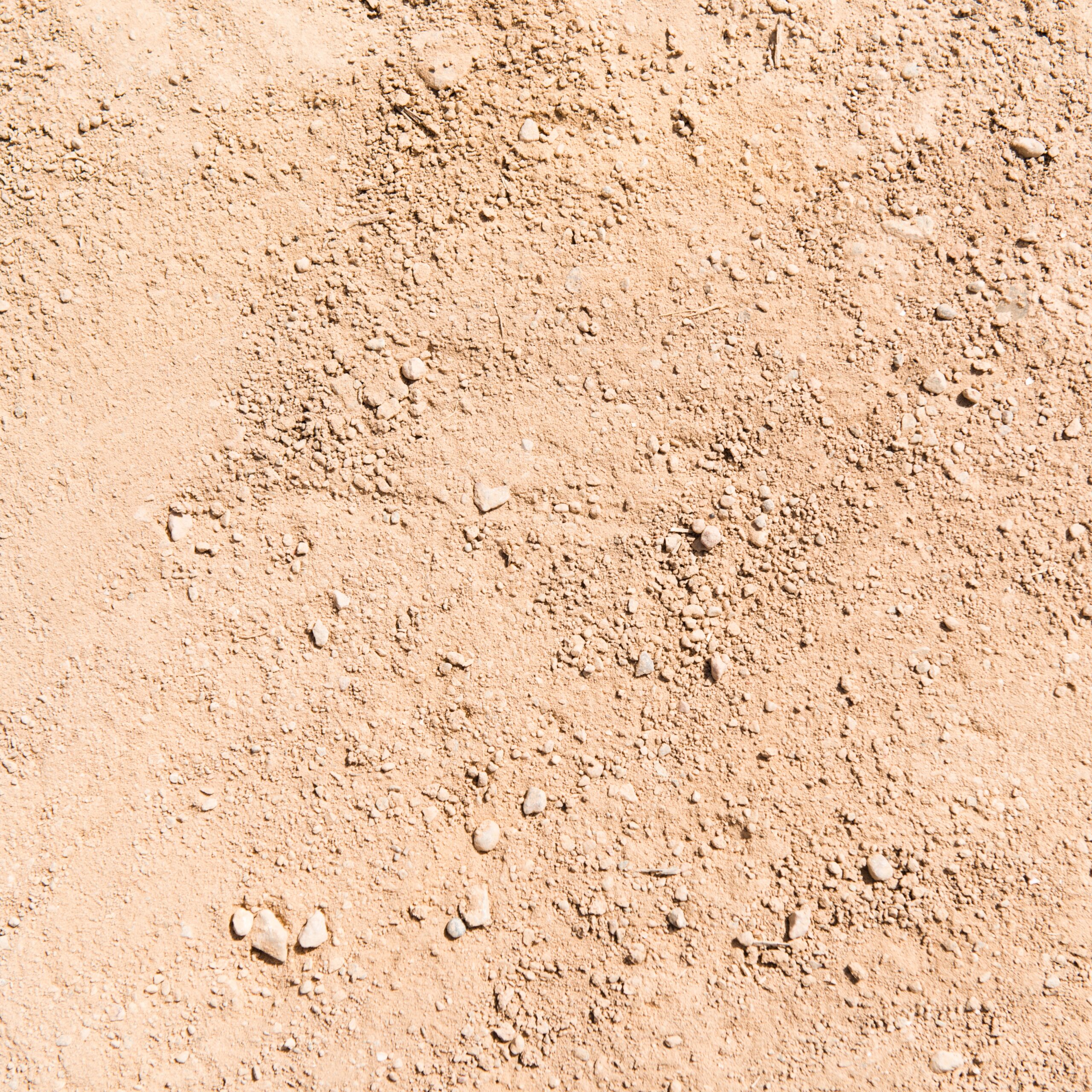
Growing Cannabis in Sandy Soil
Sandy soil can grow healthy cannabis, but it asks the grower to solve a different set of problems than heavy clay. The main advantage is easy gas exchange and rapid drainage. The main weakness is that water and soluble nutrients can move through the root zone quickly enough that the plant experiences repeated dry-downs and uneven fertility even when the surface looks easy to work.
The useful question is not whether sand is “good” or “bad.” It is whether the site has enough water storage, nutrient buffering, rooting depth, organic matter, irrigation reliability, and protection from extreme drying to support the plant through the season. A loamy sand with some organic matter can behave very differently from nearly pure sand. A deep sandy profile above groundwater is different from a thin sandy layer over clay or rock. A coastal sand with salinity concerns is different from an inland garden bed.
This resource focuses on those sandy-soil decisions. Broader questions about soil chemistry, soil biology, outdoor site selection, and general cannabis growing belong in the wider Weedth soil and outdoor guides rather than being repeated here.
Resource Navigation
In This Resource
Can Cannabis Grow Well in Sandy Soil?
Yes. Cannabis can grow in sandy soil when the root zone can stay supplied with water and nutrients long enough for the plant to use them. Sandy texture itself is not a disease and it does not automatically mean poor fertility. The challenge is that coarse particles create large pores and relatively little particle surface area, so water tends to move readily through the profile and there are fewer mineral surfaces available to retain nutrient ions.
Washington State University describes sandy soils as being dominated by large pores, rapid permeability, and limited water-holding capacity. USDA and university irrigation guidance reaches the same practical conclusion: coarse-textured soils usually store less plant-available water than finer soils and therefore respond differently to irrigation. That is useful horticultural background, not a cannabis-specific water target.
For cannabis, the consequence becomes most obvious as the canopy enlarges. A small transplant may seem perfectly comfortable because its water demand is low. A large plant in midsummer can pull water from the same sandy profile much faster, while hot wind and strong solar radiation increase evaporative demand. A site that looked easy in spring can become difficult during flowering if irrigation is not reliable.
Sandy soil
A mineral soil whose behavior is strongly influenced by sand-sized particles. Sand gives the soil a gritty feel and commonly increases permeability, but the exact water and nutrient behavior still depends on the amount of silt, clay, organic matter, structure, depth, and underlying horizons.
Important: Do not diagnose a sandy site from color alone. Dark sand can still have low water storage, while pale sandy loam may hold more water than it appears to. Texture, organic matter, rooting depth, and field behavior matter more than appearance.
Why cannabis roots can like sand at first
Roots need oxygen as well as water. Coarse soil usually drains excess gravitational water readily, leaving air-filled pores after irrigation or rain. That can reduce the prolonged saturation problems associated with poorly structured heavy soil. Roots may penetrate loose sandy ground with little mechanical resistance, and the soil is often workable soon after rainfall.
Those advantages are real, but they are easy to overvalue. Good aeration does not compensate for a root zone that repeatedly runs short of water or loses mobile nutrients beyond rooting depth. The goal is therefore not to slow sandy soil until it behaves like clay. The goal is to create enough moisture reserve and nutrient-retention capacity while preserving the pore continuity that makes the soil easy to root through.
Field Advice: Judge sandy soil during the part of the season when demand is highest, not only when the plant is small. A site that remains moist for two days in cool spring weather may dry much faster beneath a large flowering canopy in midsummer.
Why “excellent drainage” can become a management problem
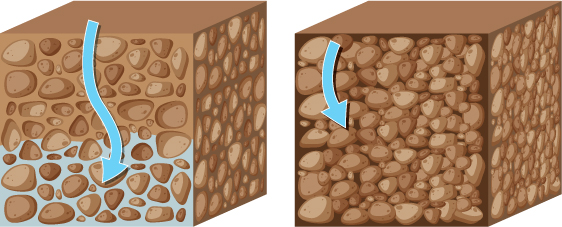
Fast drainage is often advertised as universally desirable. In reality, drainage is useful only until excess water has left the root zone. Once the soil reaches a useful moisture range, continued rapid downward movement can become a loss pathway. Water can pass below the active root system, carrying nitrate and other mobile solutes with it.
University guidance for sandy agricultural soils repeatedly emphasizes this combination: low storage plus rapid drainage creates a narrow irrigation window. The grower may need smaller, better-timed applications rather than long irrigations that exceed the root zone’s storage capacity.
Treat fast drainage as one property
Preserve the aeration advantage while improving water storage, root-zone depth, and nutrient buffering.
Call any fast-draining soil “perfect”
A root zone that empties too quickly can stress the plant and waste irrigation and fertilizer even when standing water is never visible.
What Sandy Soil Changes in the Root Zone
Texture changes the physical architecture of the soil. Sand particles are large compared with silt and clay, so a sand-dominated profile usually contains many macropores. Those large pathways move water quickly and support gas exchange, but they hold less water against gravity than the smaller pores common in finer-textured soils.
Texture also changes chemistry. Sand has much less surface area than clay, and low-organic-matter sandy soils often have relatively low cation exchange capacity. That means the soil has fewer negatively charged exchange sites to retain positively charged nutrients such as potassium, calcium, magnesium, and ammonium. Organic matter can add exchange capacity and water-holding ability, which is why it often has outsized value in sandy ground.
Cation exchange capacity (CEC)
A measure of how many exchange sites a soil has for holding positively charged nutrient ions. Sandy soils are often low in CEC unless they contain meaningful clay or organic matter. CEC does not measure every aspect of fertility, but it helps explain why some sandy soils lose nutrient stability quickly.
Water storage is the main physical limitation
NRCS and university references consistently show lower available water capacity in coarse-textured soils than in many loams and clay loams. The exact amount varies widely, so a single “sand holds X liters” rule is not useful. Grain size distribution, organic matter, compaction, buried layers, rooting depth, and the amount of finer material all change the result.
For a cannabis grower, this means the useful reservoir can be smaller than expected. The top few centimeters may dry rapidly while deeper layers still contain water, or the entire active profile may dry quickly if the sand is deep and coarse. Surface appearance alone therefore makes a weak irrigation trigger.
Remember: Sandy soil can feel dry at the surface soon after watering while useful moisture remains deeper. Check the active root zone, not just the top crust.
Low nutrient buffering changes feeding behavior
In coarse soil with little organic matter, repeated heavy fertilizer applications are a poor match for the root zone. The issue is not simply “sand needs more nutrients.” Some nutrients are retained better than others, while nitrate, sulfate, borate, and other mobile forms can move readily with water. Excess irrigation increases that movement.
A laboratory soil test is therefore more useful than guessing from texture. pH, organic matter, nutrient status, CEC, and soluble salts help determine whether the soil needs fertility correction, organic matter, both, or neither. When the soil is extremely coarse and low in buffering, smaller staged nutrient applications may fit the system better than a large one-time dose.
Do not compensate for leaching with heavier feeding
If irrigation repeatedly pushes water below the root zone, adding more fertilizer can increase nutrient loss and groundwater risk rather than improve plant nutrition. Correct irrigation depth and soil buffering before escalating nutrient concentration.
Root-zone temperature can change faster near the surface
Loose, exposed sandy surfaces can warm quickly in strong sun, especially where organic matter and protective mulch are limited. The effect depends on soil color, moisture, latitude, wind, canopy cover, and site exposure. It should not be converted into one universal cannabis root-temperature threshold.
The practical response is to measure rather than assume. Compare root-zone temperature at similar depth in the exposed row and beneath mulch or canopy cover during the hottest part of the day. If the sandy profile is also drying rapidly, heat and water shortage may arrive together.
Pro Tip: Use mulch as a surface-management tool, not as a substitute for correcting a poor root zone. A moderate organic mulch can reduce evaporation and temperature swings while the soil underneath still needs adequate water storage and fertility.

Water Movement in Sandy Ground: Infiltration, Percolation, and Dry-Back
Sandy soil often accepts water quickly. That is infiltration. After water enters, it can move downward rapidly through connected large pores. That is part of percolation. Drainage describes the broader removal of excess water from the root zone or profile. These processes are related but they are not interchangeable.
A fast infiltration rate can be useful during intense irrigation because runoff is less likely on level, open sand. But once the root zone is near field capacity, additional water may simply move deeper. This is why long irrigation events can be inefficient on coarse soil even though the surface never ponds.
| Observation | What It May Mean in Sandy Soil |
|---|---|
| Water disappears from the surface quickly | Infiltration is fast. This does not prove that the active root zone is storing enough water. |
| Soil is wet immediately after irrigation but dry again soon | The root zone may have low water storage, high plant demand, strong evaporation, or an irrigation pattern that wets too little soil volume. |
| Drainage water or deep moisture appears soon after a long irrigation | The application may be exceeding the storage capacity of the active root zone and pushing water deeper than needed. |
| Some patches remain dry while nearby areas wet normally | Irrigation distribution, preferential flow, very dry hydrophobic zones, buried texture changes, or root distribution may be creating uneven wetting. |
| Plants wilt despite frequent irrigation | Do not assume the answer is more water. Check wetting depth, root-zone volume, emitter placement, salinity, root health, heat, and whether irrigation is bypassing roots. |
“My sandy bed looks dry again by afternoon. Should I just water every day?”
Question sent by: CloudyGarden, via email.
Maybe, but frequency should follow the root zone rather than the calendar. Check moisture at several depths before and after irrigation, then record how long it takes the active rooting zone to move from evenly moist to the point where the plant begins using its reserve. In very coarse soil during hot weather, daily irrigation may be reasonable. In cooler weather or a deeper, amended profile, the same schedule may overapply water and increase leaching.
Preferential flow can make “fast drainage” misleading
Very dry soil can sometimes rewet unevenly. Water may follow old root channels, cracks around buried objects, coarse streaks, or localized pathways while nearby soil remains comparatively dry. Research on soil water repellency also shows that hydrophobic behavior can increase as some soils become very dry, promoting preferential flow rather than uniform matrix wetting.
Sand-based systems are not immune. Oregon State University notes that sand-based turf can develop hydrophobic localized dry spots after severe drying. A cannabis bed is not a sports field, so the management details are not directly transferable, but the mechanism is relevant: water moving quickly through one pathway does not prove the entire root zone has rewetted.
Do not confuse fast bypass flow with successful watering
If irrigation disappears immediately but the plant wilts again quickly, dig or probe several points after watering. Water may be traveling below or beside the root zone instead of rewetting the full volume the plant depends on.
Field Advice: After a representative irrigation, inspect moisture at multiple depths and positions. A single wet spot directly beneath the emitter can hide a dry outer root zone.
Diagnose the Site Before You Amend It
“Sandy” is not a complete diagnosis. Before mixing in compost, biochar, clay-rich topsoil, peat, or any other amendment, identify what the current root zone actually lacks. The most useful first distinction is between a coarse soil that is simply low in water storage and a site that also has low fertility, salinity, contamination, a shallow restrictive layer, poor irrigation water, or extreme pH.
Start with observation, then add measurement. A grower should be able to describe the soil profile, not just the handful collected from the surface.
Map the depth of the sandy layer
Dig several inspection holes across the intended root area. Note whether the coarse texture continues deeply or changes into loam, clay, gravel, fill, hardpan, or a compacted layer. A deep uniform sand profile behaves differently from 20 centimeters of sand over dense clay. In the second case, water may move rapidly through the surface and then slow sharply at the boundary.
Also look for mottling, unusual odors, buried construction debris, roots from existing plants, and evidence of a seasonally high water table. A sandy surface does not guarantee unrestricted drainage through the entire profile.
Important: Always inspect the profile below the surface. A sand cap over a restrictive layer can create a very different water problem from deep, freely draining sand.
Use a simple texture check, then confirm with a lab when the site matters
A moist feel test can separate obviously gritty sand from loamier material, but hand texture is approximate. If the garden is permanent, large, or expensive to establish, laboratory texture and fertility testing can remove a great deal of guesswork. Ask for the laboratory’s own sampling instructions because soil-test methods and sample handling differ.
Useful results may include pH, organic matter, electrical conductivity where relevant, phosphorus, potassium, calcium, magnesium, and CEC. Some laboratories also report texture or estimated texture class. Do not apply lime, sulfur, gypsum, or large nutrient corrections before you know which problem exists.
Master Advice: The best amendment plan begins with a baseline. Without one, a grower cannot tell whether the season improved the soil or simply changed it.
Measure irrigation behavior in the actual bed
Run the irrigation system long enough to represent a normal event. Record the applied volume or runtime. Then check how deeply and widely the soil was wetted. Repeat the check after a known interval, such as later the same day and the next morning. The objective is not to produce a universal “correct” dry-back time. It is to learn the local relationship between irrigation amount, weather, root-zone storage, and plant demand.
If emitters create narrow wet columns in very coarse sand, closer spacing or a different irrigation layout may be more useful than simply increasing runtime. Penn State and other irrigation references note that sandy soils can require closer drip spacing because water spreads less laterally than in finer soils. That is general irrigation guidance, not a fixed cannabis emitter-spacing standard.
“My soil test says low organic matter and low CEC. Can I fix it by adding a huge amount of compost once?”
Question sent by: Greta Neumann, via contact form.
Avoid treating compost as a one-time bulk correction without knowing its maturity, salinity, nutrient content, and how much the soil can accept safely. Compost can improve water and nutrient retention in sandy soil, but large additions may also create excessive nutrient loading, salt problems, uneven decomposition, or a root zone that behaves very differently from the surrounding profile. Build organic matter deliberately and retest rather than chasing one dramatic amendment event.
Collect a baseline before major changes
Use field observations plus a representative laboratory sample so the amendment plan has a measurable starting point.
Amend from texture alone
Sand does not tell you pH, nutrient status, salinity, contamination, organic matter quality, or the depth of the usable root zone.
Choose In-Ground, Raised Bed, or Container From the Site
Sandy native ground is not automatically inferior to a raised bed or container. Deep soil offers enormous root volume and better thermal buffering than a small pot. If irrigation is dependable and the soil can be improved gradually, in-ground cultivation may be entirely practical.
Raised beds and containers become useful when the native sand is extremely coarse, the site has questionable contamination, the root zone is shallow, irrigation cannot wet the profile uniformly, groundwater or salt risk complicates the site, or the grower needs tighter control over the medium. They are management choices, not signs that the native soil “failed.”
In-ground sandy soil
In-ground growing takes advantage of unrestricted rooting depth. Roots can explore a much larger volume than in most home containers, which can partly compensate for low water storage per unit volume. Deep roots may also access moisture that shallow probes miss.
The limitation is that amendments become harder to distribute through the entire future root zone. A small enriched planting hole surrounded by nutrient-poor sand creates a sharp boundary rather than a uniformly improved profile. For a permanent bed, broad-area improvement is generally more useful than creating one isolated pocket.
Pro Tip: If you are improving native sandy ground, think in square meters or square feet of future root zone rather than one narrow planting hole. Roots do not remain inside the hole you dug on transplant day.
Raised beds
A raised bed can increase the proportion of organic-rich growing material in the active root zone while preserving connection to the soil below. It can also make irrigation distribution and amendment incorporation easier. On very deep sand, however, water can still move from the raised material into the underlying profile, so the bed is not a waterproof reservoir.
Do not build a dense, fine-textured layer over coarse sand without considering the hydraulic transition between the two materials. The objective is a continuous root zone with predictable water movement, not a stack of unrelated layers.
Containers
Containers provide the strongest control over media composition but trade away the huge buffering volume of the ground. In full sun they can heat and dry quickly, especially when the plant becomes large. A container mix should be treated as a designed growing medium, not as a place to shovel unknown outdoor sand or soil.
If you choose containers, use clean, known media appropriate for container culture. Do not bring random roadside sand, beach sand, construction sand, forest soil, decorative stones, or unverified outdoor material into indoor-style pots. Those materials can introduce salts, contaminants, pests, pathogens, or unsuitable particle-size distributions.
Do not use beach sand as a soil amendment
Beach or coastal sand may carry salts, shell material, pollutants, or other contaminants, and its particle characteristics are not automatically suitable for a cannabis root zone. Use known horticultural materials and verify the problem you are trying to solve.
| System | Best Fit in a Sandy-Soil Decision |
|---|---|
| Native ground | Best when the site is clean, deep, legally usable, irrigable, and capable of being improved across a broad root zone rather than only in one planting hole. |
| Raised bed | Useful when you need more control over organic matter and water storage but still want roots to explore the ground below. |
| Container | Useful when native soil quality, contamination, salinity, or site variability makes a separate known medium easier to manage. Requires closer attention to heat and irrigation. |

Improve Water and Nutrient Holding Without Destroying the Sandy Structure
The correction goal is not to eliminate sand. The goal is to add the properties sand lacks: more plant-available water, more nutrient-retaining surface area, more biological activity, and a more stable moisture pattern. Organic matter is usually the first category to evaluate because it can improve several of those functions at once.
NRCS reviews and university extension literature consistently connect soil organic matter with higher available water capacity, although the magnitude varies by soil type. Compost can also contribute exchange capacity and nutrients. That does not mean every sandy site needs the same compost percentage or that more is always better.
Compost: useful, but not automatically harmless
Mature, tested compost can improve water and nutrient retention in sandy soil while supporting aggregation and biological activity. The right rate depends on the existing soil, the compost analysis, salinity, phosphorus level, local environmental rules, and how much organic matter is already present.
Repeated heavy compost use can accumulate phosphorus, soluble salts, or other nutrients even in a soil that originally seemed “empty.” Treat compost as an amendment with chemistry, not as inert brown filler. A soil test before and after the season is more reliable than assuming that every additional load improves the bed.
Remember: Organic matter is powerful because it changes both water and nutrient behavior. That is also why its nutrient and salt content must be counted, not ignored.
Biochar: a possible tool, not a universal fix
Biochar can increase water retention and nutrient-holding behavior in some sandy or low-fertility soils, and recent extension reviews note that coarse, low-nutrient soils often show stronger responses than already fertile soils. But biochar properties vary widely with feedstock and production temperature. pH, ash content, surface chemistry, and nutrient content can differ enough that “biochar” is not one standardized amendment.
Use product analysis and a measured reason for adding it. Do not assume an unknown charcoal, fireplace ash, or burned wood residue is equivalent to horticultural biochar.
Field Advice: If an amendment changes pH, salinity, or nutrient supply as well as physical structure, include those effects in the plan. A physical correction can create a chemical problem when only one property is considered.
Fine-textured mineral additions need more caution than their logic suggests
It is tempting to reason that sand lacks fine particles, so adding clay will automatically create loam. Soil texture is not that simple. The final structure depends on particle proportions, mineralogy, aggregation, mixing quality, organic matter, and how the amended volume connects to the surrounding soil.
Large-scale mineral-texture reconstruction is usually harder for a home grower to do predictably than gradual organic-matter improvement or building a known raised-bed medium. If a laboratory or local soil professional recommends a mineral amendment for a specific site, follow that measured plan rather than improvising a sand-plus-clay recipe.
Do not manufacture “loam” by guesswork
Mixing random amounts of clay-rich soil, topsoil, or fine mineral material into sand can create uneven hydraulic behavior and compaction zones. Use measured texture information and a clear amendment objective.
Mulch protects the improved root zone
An organic surface mulch does not change the mineral texture underneath, but it can reduce direct evaporation, moderate surface temperature, limit crusting, and slowly contribute organic material as it decomposes. Keep mulch from being packed tightly against the stem base, and monitor for pests or excessive moisture where climate is humid.
In very dry climates, mulch can be one of the simplest ways to reduce the speed at which a sandy root zone returns to severe surface dryness. It still does not replace adequate irrigation.
| Amendment | Primary Function | Air / Water Effect | Best Use | Caution |
|---|---|---|---|---|
| Mature compost | Add organic matter, exchange capacity, biology, and nutrients | Can increase water retention while preserving workable structure when used appropriately | Broad improvement of low-organic-matter sandy soil | Count salinity, phosphorus, nitrogen, maturity, and application rate |
| Quality organic mulch | Protect soil surface and reduce evaporation | Slows surface dry-down and temperature swings | Established outdoor beds after the root zone is prepared | Do not pack against the stem or let it hide chronic overwatering |
| Characterized horticultural biochar | Add stable carbon and potentially increase retention | Response varies by material and soil | Measured use in coarse, low-fertility soil where product properties are known | pH, ash, nutrient content, and performance vary; unknown charcoal is not equivalent |
| Fine mineral or clay-rich material | Increase fine-particle fraction | Can increase retention but also create dense or uneven zones if misused | Only where texture and amendment design are understood | Do not guess proportions or create abrupt layers |
| Unknown outdoor sand or fill | No reliable horticultural objective | Unpredictable | None without testing and provenance | May contain salts, contaminants, weeds, pathogens, or unsuitable particle sizes |
Improve several root-zone functions together
Build water storage, nutrient buffering, biological activity, and surface protection while keeping the soil aerated.
Turn the bed into a heavy artificial mix
Overcorrecting sand with dense fine material can trade drought stress for poor aeration and uneven water movement.
Irrigation and Feeding Strategy for Sandy Ground
Sandy soil usually rewards precision more than volume. The irrigation event should wet the active root zone deeply enough to support the plant without sending a large fraction of water and dissolved nutrients below it. Because coarse soil can have limited lateral spread, both runtime and emitter layout matter.
Washington State University guidance notes that sandy soils often need more frequent irrigation in smaller amounts than finer soils, while also warning that repeated shallow watering can encourage shallow rooting. Those ideas are not contradictory. The target is to refill the useful rooting volume, then allow an appropriate dry-down, rather than applying tiny surface sips all day or one enormous irrigation that exceeds storage.
Build an irrigation baseline
Choose a representative plant and measure a normal irrigation event. Record the volume delivered, weather conditions, and soil moisture pattern immediately after irrigation. Check the same locations later in the day and the next morning. Repeat during hotter weather as plant demand increases.
Use this record to identify whether irrigation is too shallow, too deep, too localized, or simply too infrequent. If the soil below the active roots is becoming wet while the outer root zone remains dry, increasing total volume may make the pattern worse.
Pro Tip: A catch test or measured emitter output is often more useful than trusting the nominal flow printed on irrigation hardware. Pressure, clogging, slope, and line length can change real delivery.
Change frequency with weather and plant size
Do not lock sandy soil to a calendar such as “water every day.” Demand changes with canopy area, temperature, humidity, wind, solar load, rainfall, root depth, and flowering stage. The same soil that needs frequent midsummer irrigation may need far less water during cloudy weather.
Recent cannabis drought studies reinforce the biological reason for avoiding repeated severe deficits: water limitation can reduce photosynthesis, alter biomass allocation, and change cannabinoid yield or composition in genotype-dependent ways. Those controlled studies do not establish a universal sandy-soil moisture threshold for outdoor cannabis, but they support the practical goal of preventing repeated unmanaged drought cycles.
Important: Do not use wilting as the routine irrigation trigger. By the time repeated visible wilt becomes normal, the plant may already be cycling through avoidable water stress.
Feed the root zone, not the leaching pathway
In low-CEC sandy soil, fertilizer strategy should match the limited buffering capacity. Split applications can reduce the amount of soluble nutrient present during any single irrigation or rain event. The exact program still depends on laboratory soil results, irrigation water, cultivar, plant size, and the nutrient source.
Do not assume runoff or drainage-water EC from a native sandy bed can be interpreted exactly like container-coco runoff. Native soil is spatially variable, and drainage collected from one point may not represent the entire root zone. Use soil and plant testing when a serious nutrient problem needs confirmation.
“Why does irrigation soak in instantly in one part of my sandy bed but bead or run away in another?”
Question sent by: Kevin Marshall, via Facebook page.
First separate distribution from soil behavior. Confirm that both areas receive the same emitter output. Then check whether the dry patch has become water repellent, contains a different layer or organic residue, or is being bypassed by preferential flow. Rewet gradually and compare moisture at depth. If the pattern repeats, treat it as a site-specific wetting problem rather than assuming the entire sandy bed needs more water.
Field Advice: When rain is forecast after fertilization, consider how much water the sandy profile can store. Heavy rainfall immediately after a soluble nutrient application can move mobile nutrients deeper than the crop can use.
Use measured, staged irrigation
Refill the active root zone and adjust frequency as weather and plant demand change.
Solve every dry-looking surface with a longer run
Longer irrigation can increase deep percolation without improving wetting where roots actually need it.
Failure Modes and Look-Alikes in Sandy Soil
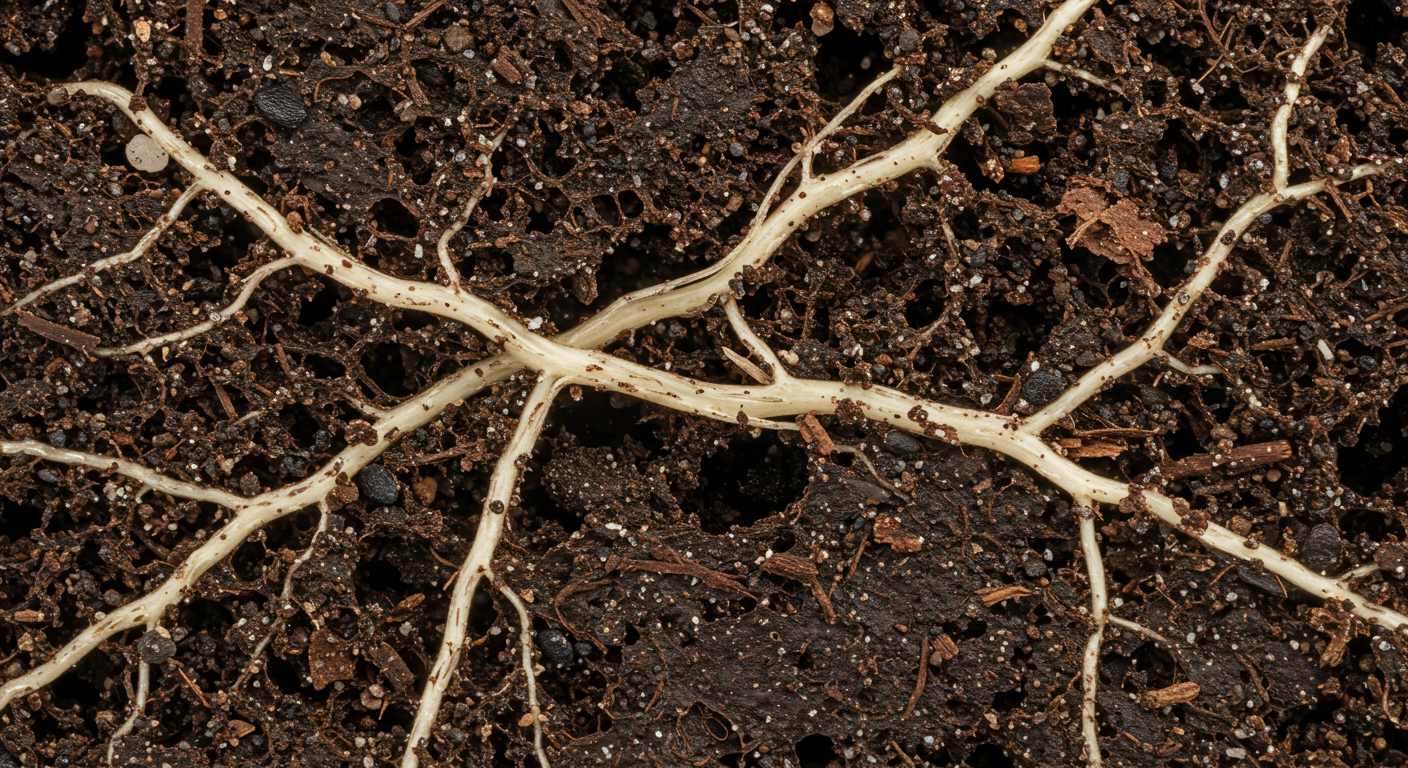
Sandy-soil problems often look like nutrient deficiency or “weak genetics” because the underlying stress can change quickly. A plant may look healthy after irrigation and then fade again as the root zone dries or as mobile nutrients move out of reach. Before changing fertilizer strength, determine whether the root zone is staying physically and chemically stable.
Repeated midday wilt
Midday leaf droop can come from intense atmospheric demand even when soil moisture is not yet critically low, so one hot-afternoon observation is not enough. Compare morning recovery, root-zone moisture, wind, temperature, and the behavior of nearby plants. If the plant repeatedly begins each afternoon with a depleted root zone, irrigation timing or storage capacity needs attention.
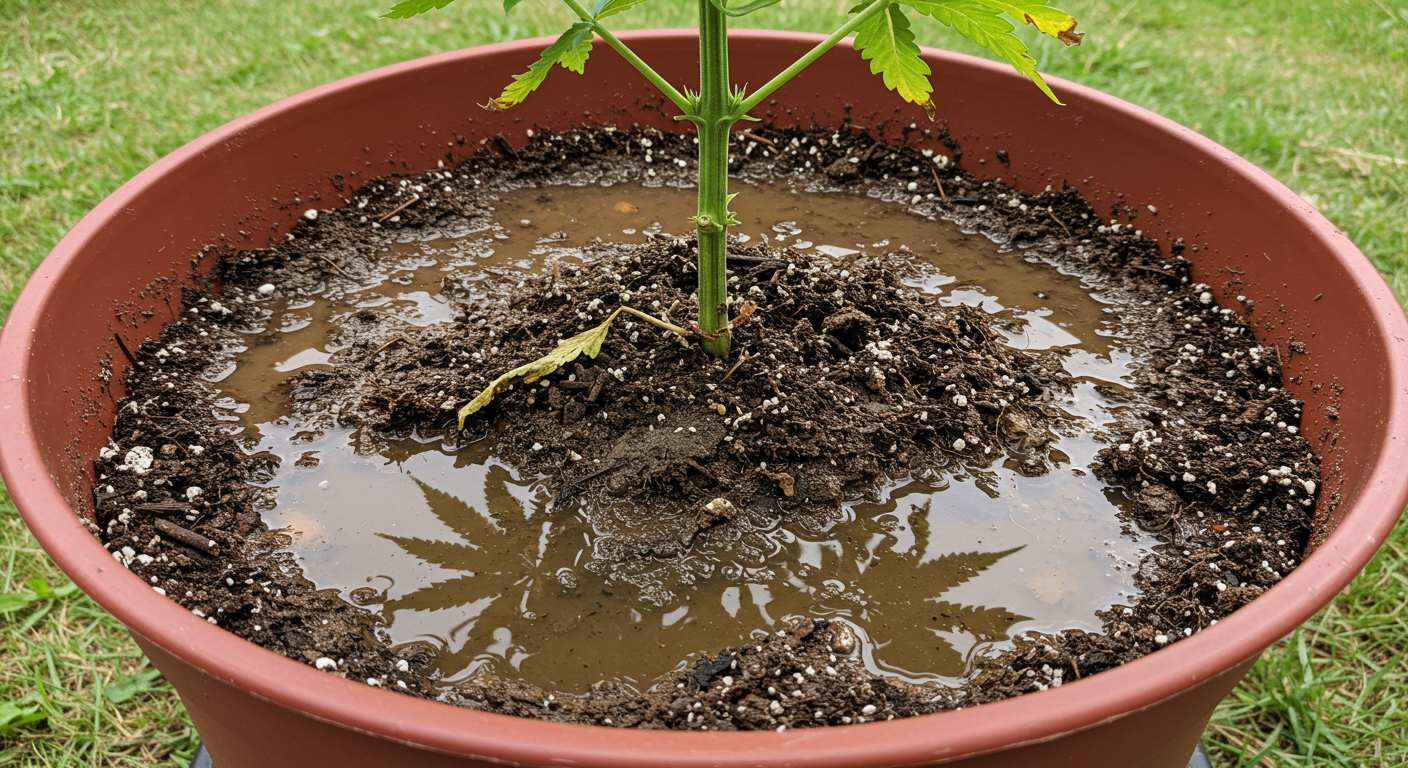
Pale growth after heavy rain or long irrigation
Yellowing after a wet period is sometimes interpreted as “overwatering,” but deep sandy soil may drain quickly enough that oxygen stress is brief. Nutrient movement can be the more relevant issue, especially where nitrate and other mobile nutrients are involved. A soil or tissue test is more reliable than assuming the color proves one mechanism.
Salt stress can still occur in sandy ground
Fast drainage lowers some salt-accumulation risks, but it does not make salinity impossible. Saline irrigation water, coastal influence, repeated fertilizer inputs, poor-quality compost, or a shallow water table can all change the salt balance. Dry climates can concentrate salts near the surface as water evaporates.
If salinity is plausible, measure electrical conductivity with an appropriate laboratory or field method instead of trying to “flush” blindly. Leaching salts requires enough drainage, but excessive leaching also uses water and can move nutrients or contaminants beyond the root zone.
Do not use flushing as a generic sandy-soil treatment
A large volume of water is not automatically restorative. It can move nutrients, salts, and contaminants deeper, and it may waste water without correcting the source of the problem. Confirm salinity or excess fertility before planning a leaching response.
Hydrophobic dry patches
Some very dry sandy or organic-coated soils resist uniform wetting. Water may bead, run across the surface, or disappear down preferred channels while much of the soil remains dry. Before reaching for a wetting agent, first correct obvious irrigation-coverage problems and gradually rewet the zone.
If a wetting agent is genuinely needed, use a horticultural product according to its label and confirm that it is lawful and appropriate for the crop and production system. Household detergent is not an acceptable substitute.
Safety Note: Do not improvise surfactants or chemical soil treatments around a consumable crop. Use products that are legally permitted for the intended use, follow the label, and avoid introducing residues you cannot account for.
Root restriction can imitate sandy-soil drought
A plant in a small container filled with a sandy or highly porous medium may dry rapidly because of limited root-zone volume, not because “sand is bad.” The same plant in deep native ground may behave very differently. Always separate texture from container geometry and total rooting volume.
| Symptom | Possible Cause | How to Confirm | Corrective Action | Prevention |
|---|---|---|---|---|
| Rapid wilt between irrigations | Low water storage, high demand, shallow wetting, or root restriction | Check moisture at several depths and positions before wilt | Adjust irrigation pattern and improve storage where needed | Build a larger, more buffered root zone and track seasonal demand |
| Pale growth after rain | Nutrient leaching, root stress, or unrelated deficiency | Review rainfall, irrigation, soil test, and pattern across plants | Correct confirmed nutrient shortage and irrigation losses | Split mobile nutrient applications and avoid overirrigation |
| Dry patches after watering | Poor distribution, preferential flow, or water repellency | Compare emitter output and inspect wetting pattern | Repair distribution and rewet gradually | Prevent severe dry-down and maintain even surface protection |
| Leaf burn or stalled growth | Salinity, fertilizer concentration, heat, drought, or other stress | Check EC where appropriate, water quality, soil moisture, and weather | Remove the confirmed cause rather than flushing automatically | Test water and amendments and stage fertilizer inputs |
| Good growth early, stress later | Canopy demand has outgrown root-zone storage or irrigation capacity | Compare irrigation demand over time and inspect root-zone depth | Increase effective wetting volume or frequency without deep waste | Design irrigation for mature-plant demand before flowering |
Weedth Verdict: When a sandy-soil plant repeatedly struggles, diagnose the water pattern before the leaf color. Many apparent feeding problems begin with a root zone that is cycling between too dry and freshly irrigated.
Correct the Sandy Soil as a System, Then Verify the Result
The strongest correction usually combines several modest changes rather than one dramatic amendment. Improve the profile’s ability to store water, add organic matter where justified, protect the surface, adjust irrigation distribution, and match nutrient timing to the soil’s limited buffering capacity. Change the few variables most likely to control the problem, then allow enough time to see the response.
Verification matters because sandy soil can look improved immediately after compost or mulch is applied even when deep wetting behavior has barely changed. A successful correction should produce a measurable difference in how the root zone stores and uses water.
Record a pre-correction baseline
Before major changes, record soil-test values, irrigation volume, wetting depth, approximate dry-back behavior, and the weather conditions under which the measurement was taken. Photos of the soil profile and plant canopy can help, but they should support measurements rather than replace them.
Change one major variable at a time when possible
If you add a large compost dose, replace the irrigation system, mulch heavily, and change the feeding program on the same day, you may improve the garden but lose the ability to identify what actually solved the problem. Safety problems may require multiple immediate actions, but routine soil improvement benefits from controlled changes.
Master Advice: A sandy-soil improvement is successful when the root zone becomes more predictable, not simply when it holds water longer. Predictable wetting, dry-back, nutrient response, and plant recovery are the real endpoints.
Recheck after irrigation, after heat, and after heavy rain
Use different events to test different weaknesses. A normal irrigation shows distribution. A hot dry period shows whether storage is adequate. A heavy rain reveals whether the profile leaches aggressively or whether a deeper restrictive layer creates unexpected saturation. Keep the observations linked to dates and weather so next season starts with local evidence.
| Stage / Period | Plant Status | Main Task | Risk / Check |
|---|---|---|---|
| Before amendment | Baseline condition | Map texture, depth, irrigation pattern, pH, organic matter, fertility, and CEC where available | Do not confuse surface appearance with full-profile behavior |
| First irrigations after correction | Root zone adapting | Measure wetting depth and width using the same irrigation volume as the baseline where practical | Watch for water bypass, ponding at a buried layer, or uneven rewetting |
| One to two weeks | Early plant response | Compare dry-back, canopy posture, new growth, and irrigation demand | Do not chase old damaged leaves; evaluate new tissue and root-zone behavior |
| Peak heat or mature canopy | Highest seasonal demand | Recheck whether storage and irrigation capacity still match plant demand | Spring success can hide a midsummer capacity problem |
| After heavy rain | Natural stress test | Inspect deep moisture, nutrient symptoms, runoff, erosion, and any restrictive layer | Heavy rain can expose leaching and profile-boundary problems |
| End of season | Post-crop evidence | Repeat selected soil tests and review irrigation and plant records | Separate one-season weather effects from persistent soil properties |
Tip: If the amended soil holds water longer but plants still dry unevenly, inspect irrigation geometry before adding more organic matter. The new limiting factor may be distribution rather than storage.
Know when to stop amending and change the growing system
Some sites are technically improvable but impractical for a home grower. Extremely coarse fill, contamination uncertainty, saline groundwater, unreliable irrigation, severe erosion, or a shallow unusable profile can make a raised bed or container more rational than years of soil reconstruction.
The decision should be based on measurable constraints, not pride in “fixing” native ground. A controlled raised bed that can be watered evenly is a better root zone than native sand that repeatedly loses water and nutrients faster than you can manage them.
Before You Plant Cannabis in Sandy Soil
- Confirm that cultivation and the site are lawful before investing in soil work.
- Inspect the soil profile at several locations, not only the surface.
- Determine whether the sandy layer is deep or lies over clay, hardpan, gravel, fill, rock, or a high water table.
- Obtain a representative soil test for pH, organic matter, fertility, and CEC where appropriate.
- Check irrigation water quality when salinity or unusual chemistry is plausible.
- Measure how deeply and widely a normal irrigation wets the intended root zone.
- Decide whether native ground, a raised bed, or a container offers the most manageable root zone.
- Use mature, characterized amendments rather than random outdoor materials.
- Count compost and other amendments as nutrient and salt inputs, not only as structure.
- Design irrigation for mature summer demand, not just early-season plant size.
- Record baseline conditions so the correction can be verified later.
- Recheck after heat, heavy rain, and major irrigation changes.
What a Reliable Sandy-Soil Garden Looks Like
A reliable sandy-soil garden does not stop draining quickly. It gains enough buffering that rapid drainage is no longer the dominant problem. Irrigation wets a useful root volume rather than disappearing through narrow channels. The soil retains enough moisture to bridge normal intervals between irrigation events, and nutrient management is staged so mobile fertility is not routinely washed below the root zone.
The best improvements preserve the reason sand can be pleasant to grow in: loose structure, easy root penetration, and strong gas exchange. The goal is not to turn sand into clay. It is to build a deeper, more buffered, more predictable root zone.
When the site remains too coarse, too contaminated, too saline, too shallow, or too difficult to irrigate evenly, use a raised bed or container rather than forcing the native soil to perform a job it cannot reliably do. That is not a compromise. It is a root-zone design decision.
Share this article
A quick overview of the topics covered in this article.
Follow us
Latest articles
September 3, 2026
September 3, 2026
September 3, 2026
September 3, 2026
