
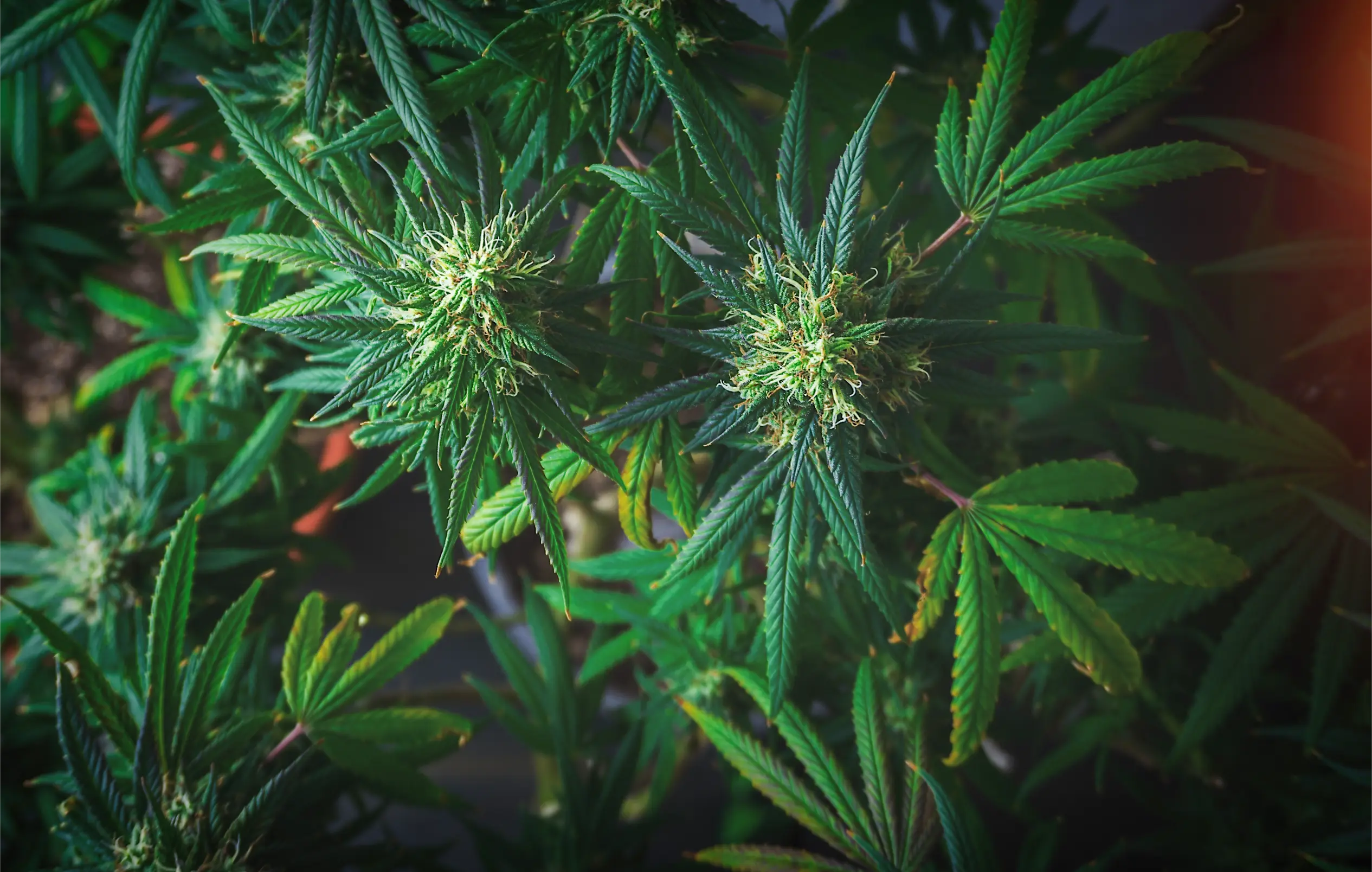
Hashberry
Hashberry – Strain Profile & Grow Guide
WEEDTH STRAIN LIBRARY
Hashberry looks straightforward on a strain list, but it becomes much more interesting once several plants are grown side by side. Historical descriptions repeatedly note meaningful phenotype differences while still identifying the same thick-stemmed, heavy-flowering family. For a grower, that makes observation more important than recipe following. The useful question is: How should a grower manage two noticeably different Hashberry expressions without losing the dense berry-hash quality both can produce? The answer determines how much space to give each plant, how early to support it, and how to protect the berry-mint character that distinguishes good flower from generic hashy indica.
This profile treats Hashberry as a cultivar with its own decision points. The three priorities are cultivation behavior, bud quality and flavor. The article therefore focuses on what the plant does when light, root volume, training, weather and harvest timing change, not only on its name or reported potency.
Strain Features
| Feature | Details |
|---|---|
| Type | indica-dominant hybrid |
| Lineage | California indica selection crossed with Kashmir and North Indian landrace material |
| Flowering Time | roughly 8.5 to 9.5 weeks indoors, commonly around 60 to 65 days |
| Outdoor Finish | late September to early October in suitable northern climates |
| Typical Height | medium-sized with a stout frame and unusually substantial stems |
| Grow Difficulty | easy to moderate |
| Yield Potential | high potential, especially outdoors or under an even indoor canopy |
| Aroma Direction | sweet berries, hash, mint, pepper, earth and occasional honeyed or floral edges |
| Flavor Direction | berry sweetness followed by cool mint, pine, pepper and a dry hash-like finish |
| Plant Structure | medium stature with thick stems, strong branch joints and two frequently discussed expressions: a more compact indica-like plant and a taller, slightly more open phenotype |
| Stretch | phenotype-dependent; the compact expression stretches modestly while the taller expression needs earlier height planning |
| Primary Grow Risk | treating both phenotypes identically; the compact plant can crowd itself while the taller plant can waste light through uneven vertical spacing |
| Best Training Direction | excellent candidate for a broad multi-top plant or a compact SOG-style run, chosen after phenotype direction becomes visible |
The table is a planning summary, not a fixed recipe. The most important line is the primary grow risk: treating both phenotypes identically; the compact plant can crowd itself while the taller plant can waste light through uneven vertical spacing. That risk determines when to thin, support, flip and harvest more strongly than a generic indica or sativa label does.
Genetic Lineage
Two Plants Hiding Under One Name
The most useful way to describe Hashberry genetically is California indica selection crossed with Kashmir and North Indian landrace material. Older cultivation references consistently describe a California indica foundation combined with Kashmir or North Indian landrace genetics. Modern summaries sometimes simplify the pedigree or leave it unknown, so the older landrace-based description is used while acknowledging selection history is not fully public. This matters because lineage is not trivia in a grow guide. It helps explain why the plant shows medium stature with thick stems, strong branch joints and two frequently discussed expressions: a more compact indica-like plant and a taller, slightly more open phenotype, why the stretch is phenotype-dependent; the compact expression stretches modestly while the taller expression needs earlier height planning, and why the flowers tend toward heavy resinous buds with a classic hash-plant feel; some expressions are denser and rounder while others stack longer floral clusters.
For practical cultivation, the inherited traits are more reliable than a decorative pedigree chart. The compact or sturdy side of the family explains the plant's ability to carry real flower weight, while the more expressive side of the ancestry shows up in aroma, branching or effect. A grower should therefore read the actual plant during vegetative growth instead of forcing it into a generic indica or sativa category. When the first strong laterals, internode spacing and leaf posture become clear, the eventual training plan is already visible.
Phenotype variation also deserves attention. Even in a recognized cultivar, seed-grown plants are populations rather than copies. Hashberry should be evaluated for stem strength, internode spacing, branch angle, onset of aroma and the way early flower clusters stack. Those observations are more useful than expecting every plant to match one internet photograph. If two plants express the same lineage differently, the better choice for a keeper depends on the grower's priorities: uniform canopy, distinctive flavor, resin coverage, early finish or total flower mass.
The lineage also frames the flavor expectation. The commonly documented aroma direction includes sweet berries, hash, mint, pepper, earth and occasional honeyed or floral edges. Those notes are not guaranteed in every plant, but they are a better reference point than chasing one single descriptor. The most interesting examples usually have separation between top notes and base notes rather than one flat smell. That distinction becomes important later during harvest and curing, because the brighter notes are normally easier to lose than the heavier earthy, hashy or fuel-like components.
Effect Breakdown
Onset, Peak and Late Phase
The effect profile of Hashberry is best understood as a progression rather than a single label. At a moderate dose, the beginning is typically a quick mental easing that settles into a mellow plateau, then develops a warm body sensation while often leaving the user socially functional. The first minutes therefore matter: users often judge the cultivar by its initial mental tone, but the later body phase can move the experience in a different direction. Potency also changes the balance. A small amount may preserve clarity and social function, while a larger session can amplify body weight, sensory intensity or sleepiness.
Emotionally, the useful distinction is between relief and blunt sedation. Hashberry tends to be most appreciated when the user wants the mood to shift without immediately losing engagement. Depending on tolerance and phenotype, that may mean a brighter, more contented headspace, easier conversation, or simply less mental friction. People who are sensitive to THC should still approach gradually. No strain name can predict individual anxiety response, and the same flower can feel functional at one dose and too strong at another.
Mentally, the cultivar's ancestry helps explain the pattern. The more uplifting part of the family can keep perception active, while the indica-weighted side gradually reduces urgency. That is why descriptions of Hashberry may sound contradictory: focused and relaxed, euphoric and sleepy, social and body-heavy. Those reports can all be true at different points in the same session. A good profile should preserve that timing instead of flattening the experience into one adjective.
Physically, the late phase is often where the cultivar separates itself from a pure daytime sativa. Muscle tension may feel lower, posture becomes looser, and the desire to sit rather than move can increase. Heavy consumption can intensify dry mouth, dizziness or lethargy. For practical use, the safest assumption is that the first twenty minutes do not fully predict the second hour. Users should leave room for the effect to develop before adding more.
The best way to compare phenotypes is to keep dose and method consistent. If one plant seems dramatically more energetic or sedating than another, the difference may come from cannabinoid concentration, terpene balance, harvest maturity or simply dose. A grower evaluating keepers should sample cured flower under similar conditions and record onset, peak character, body load and duration. That turns subjective impressions into useful selection notes rather than vague memory.
Flavor & Aroma Profile
Berry Before Hash
Properly cured Hashberry should not smell like a one-note generic cannabis jar. Its more characteristic bouquet combines sweet berries, hash, mint, pepper, earth and occasional honeyed or floral edges. The jar should show layers. The first impression may be sweet, bright or pungent, but breaking a flower open should reveal the heavier base that was trapped inside the calyx stack. If every aroma collapses into dry grass or flat earth, post-harvest handling has probably hidden the genetic potential.
On the palate, the expected direction is berry sweetness followed by cool mint, pine, pepper and a dry hash-like finish. The inhale and exhale do not have to match. Brighter fruit or citrus can appear early, while hash, wood, spice or fuel often persists longer on the finish. This is exactly why the Weedth approach treats flavor as a cultivation outcome rather than a marketing adjective. Light stress, excessive late nitrogen, a hot dry room or premature jar sealing can all change what the consumer ultimately tastes.
The central flavor target for this cultivar is to protect the berry-mint opening and prevent the cure from flattening everything into generic hash and pepper. That means harvest decisions should not be based on maximum visual fade or the darkest possible trichomes. The best window is the point where the flowers are mature, the resin heads are mostly cloudy, plant water use is declining naturally, and the preferred aroma is still vivid. Waiting longer may increase body heaviness but can also push delicate top notes toward a flatter, heavier profile.
Phenotype matters here as much as technique. One Hashberry plant may emphasize the sweet side while another pushes spice, fuel, hash or pine. Neither is automatically inferior. The keeper should be chosen after drying and curing, not only by sniffing live flowers. Some plants are spectacular in the room and ordinary in the jar; others become more expressive after several weeks of cure. Final selection should reward the flower that remains distinct after storage.
Smoothness is a separate quality from intensity. Strong aroma does not excuse harsh smoke. A mature root zone, restrained late feeding, clean drying conditions and patience in cure generally matter more than any flavor additive. The goal is not to make the plant taste like something artificial. The goal is to remove preventable cultivation noise so the cultivar's own chemistry is easier to perceive.
Dominant Terpenes
Evidence Before Certainty
| Terpene | Flavor / Aroma Role | How to Read It |
|---|---|---|
| Myrcene | berry-earth, herbs and musk | commonly reported in tested samples and consistent with the soft body finish |
| Caryophyllene | pepper and dry spice | supports the peppery hash character and a grounded finish |
| Ocimene | sweet, green and lightly floral notes | appears in some tested material and may help explain the brighter sweet top note |
Terpene data for named cannabis cultivars can vary widely by phenotype, environment and laboratory sample. The compounds below are therefore treated as commonly reported or lineage-consistent contributors rather than a guaranteed fixed recipe for every Hashberry plant.
Myrcene: Berry-earth, herbs and musk. In Hashberry, this compound is most useful as a sensory clue, not as a promise of a specific medical effect. It is commonly reported in tested samples and consistent with the soft body finish. The concentration can change with phenotype, harvest date, drying temperature and storage, so a single lab result should not be mistaken for the permanent chemistry of the cultivar.
Caryophyllene: Pepper and dry spice. In Hashberry, this compound is most useful as a sensory clue, not as a promise of a specific medical effect. It supports the peppery hash character and a grounded finish. The concentration can change with phenotype, harvest date, drying temperature and storage, so a single lab result should not be mistaken for the permanent chemistry of the cultivar.
Ocimene: Sweet, green and lightly floral notes. In Hashberry, this compound is most useful as a sensory clue, not as a promise of a specific medical effect. It appears in some tested material and may help explain the brighter sweet top note. The concentration can change with phenotype, harvest date, drying temperature and storage, so a single lab result should not be mistaken for the permanent chemistry of the cultivar.
For growers, the practical lesson is to protect the whole volatile profile rather than chasing one named terpene. The specific target is to protect the berry-mint opening and prevent the cure from flattening everything into generic hash and pepper. A cool, dark dry, gentle handling and stable storage protect more of the aromatic system than any attempt to force terpene production through extreme stress. Good flavor is the result of healthy flower plus careful preservation.
Indoor vs. Outdoor Growing
Choose the Environment by the Weak Point
| Aspect | Indoor Grow | Outdoor Grow |
|---|---|---|
| Plant Size | Usually medium-sized with a stout frame and unusually substantial stems. Height is managed mainly with flip timing and branch placement. | Can exceed indoor size when roots and sun are unrestricted; branch spread becomes a structural issue. |
| Primary Advantage | Best where canopy height, airflow and harvest timing can be controlled. Plan around phenotype-dependent; the compact expression stretches modestly while the taller expression needs earlier height planning and keep the center open enough to prevent treating both phenotypes identically; the compact plant can crowd itself while the taller plant can waste light through uneven vertical spacing. | Best where the season can reliably reach late September to early October in suitable northern climates with strong sun and a dry enough finish. Root freedom can increase plant size and lateral production. |
| Primary Risk | Self-shading, environmental stagnation or delayed canopy correction. Specific concern: treating both phenotypes identically; the compact plant can crowd itself while the taller plant can waste light through uneven vertical spacing. | Seasonal rain, wind or late humidity during late September to early October in suitable northern climates; support and weather access matter. |
| Training | Excellent candidate for a broad multi-top plant or a compact SOG-style run, chosen after phenotype direction becomes visible | Use wider spacing, early structural shaping and branch support rather than forcing indoor-style density. |
| Quality Strategy | Use even light, clean root oxygen, restrained late nitrogen and a controlled dry to protect the berry-mint opening and prevent the cure from flattening everything into generic hash and pepper. | Use full sun but protect ripening flowers from prolonged wet conditions; harvest by maturity, not approaching bad weather alone. |
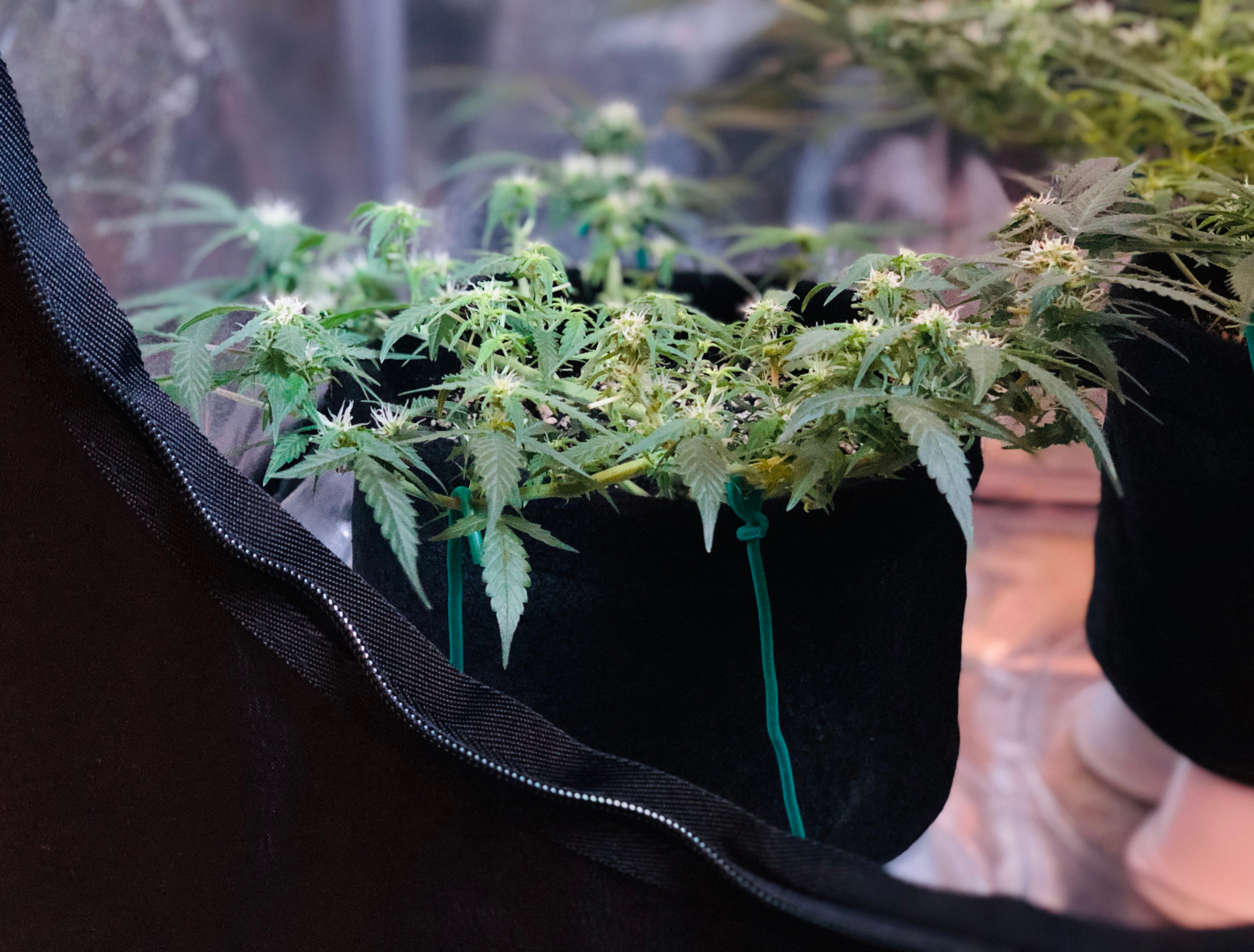
Indoors, Hashberry is easiest when the grower plans around its actual architecture: medium stature with thick stems, strong branch joints and two frequently discussed expressions: a more compact indica-like plant and a taller, slightly more open phenotype. The expected stretch is phenotype-dependent; the compact expression stretches modestly while the taller expression needs earlier height planning. That makes flip height and lateral spacing more important than copying a fixed number of plants per square meter. Under even light, the cultivar can turn a relatively small footprint into a productive canopy, but the grower still has to decide whether the plant wants one dominant center or a broader set of equal tops.
Outdoors, the plant gains from root volume, unrestricted side light and natural airflow. Its outdoor timing is late September to early October in suitable northern climates. The main advantage is that lateral branches can receive useful sun from angles that an indoor fixture cannot reproduce. The main disadvantage is loss of control near harvest. Rain, cold nights, wind or an early seasonal humidity shift can turn otherwise healthy flowers into a quality problem, especially when the cultivar's normal weak point is compounded by weather: treating both phenotypes identically; the compact plant can crowd itself while the taller plant can waste light through uneven vertical spacing.
The environment decision should be made by asking what the cultivar's weakest point is. Indoors, that weak point is often self-shading, humidity concentration or delayed correction after the flip. Outdoors, it is season length and weather at the end. Neither method is automatically better. Indoor cultivation offers repeatability and easier phenotype comparison; outdoor cultivation offers root freedom, sun intensity and potentially larger plants. The correct choice depends on whether the local season matches late September to early October in suitable northern climates and whether the grower can protect ripening flowers from prolonged wet conditions.
Quality can be excellent in either environment if the canopy is open and harvest is clean. Indoor growers should avoid equating density with quality, while outdoor growers should avoid equating size with quality. With Hashberry, the most useful comparison is how much evenly lit, well-aerated flower each environment can finish while still protecting flavor clarity. The specific target is to protect the berry-mint opening and prevent the cure from flattening everything into generic hash and pepper.
Strain-Specific Grow Guidance
The Stem Is Strong, the Bud Is Heavier
Hashberry should be trained around one observation: How should a grower manage two noticeably different Hashberry expressions without losing the dense berry-hash quality both can produce? The plant's basic form is medium stature with thick stems, strong branch joints and two frequently discussed expressions: a more compact indica-like plant and a taller, slightly more open phenotype. During vegetative growth, watch branch angle and internode spacing. A plant that naturally presents several strong laterals should not be forced into a single-cola plan merely because the strain is called indica-dominant. Conversely, a compact plant with one overwhelmingly strong leader may waste time if the grower repeatedly tops it without enough recovery time.
Do not let the stretch make the decisions
Stretch management comes next. The expected behavior is phenotype-dependent; the compact expression stretches modestly while the taller expression needs earlier height planning. The flip should happen while there is still room to correct height, not when the canopy already fills the vertical space. Early flower is a structural phase, not a time to stop paying attention. Branches should be moved while they are flexible, and the final support system should be installed before heavy flowers make repositioning risky.
A practical training direction is this: excellent candidate for a broad multi-top plant or a compact SOG-style run, chosen after phenotype direction becomes visible. The reason is architectural. High-stress techniques are useful only when they solve a real problem such as apical dominance or height. Repeated topping for its own sake can delay a cultivar that already has a favorable branching pattern. Low-stress spreading usually provides more predictable results because it exposes secondary sites without forcing the plant to spend days rebuilding damaged stems.
The root zone should remain boring and stable. Its water and root-zone response is best described this way: thick stems do not mean the root zone wants to stay wet; allow clear oxygen recovery between irrigations. Watering should follow root demand rather than a clock. A heavy pot after the expected dry-back period, drooping leaves with wet media, or slowed new growth are reasons to reduce irrigation frequency. A plant that drinks quickly can still be overwatered if the container has poor gas exchange or the lower root zone never dries enough to re-oxygenate.
Nutrition is equally cultivar-specific. Its feeding response is best described this way: steady moderate feeding works better than chasing maximum EC; vigorous plants can eat well but quality falls when late nitrogen keeps the canopy dark and soft. The safest strategy is to build feeding strength from plant response rather than starting at the highest recommended concentration. Healthy leaves should remain functional without becoming unnaturally dark, rigid or clawed. During flowering, the visual target is continued photosynthesis with a gradual transition toward maturity, not a permanently lush vegetative color.
Flower development is where the biggest mistakes become expensive. The cultivar typically builds heavy resinous buds with a classic hash-plant feel; some expressions are denser and rounder while others stack longer floral clusters. Once calyxes begin swelling, airflow must move through the canopy instead of only across its top. Interior leaves that touch wet flower surfaces, dead petioles trapped inside dense buds, and shaded lower growth should be removed selectively. Aggressive stripping is not the goal. The goal is to remove the specific material that blocks air or light from productive sites.
The major failure mode is treating both phenotypes identically; the compact plant can crowd itself while the taller plant can waste light through uneven vertical spacing. Diagnose it before reacting. If flowers are loose because they never received enough light, extra bloom fertilizer will not fix the problem. If leaves are pale because roots stay wet, stronger feeding can make the root zone worse. If top buds show elongated growth, determine whether it is genetic foxtailing, excessive heat or late-flower stress before changing the entire environment.
Harvest should be based on the whole flower, not a calendar number. Look at trichomes on calyxes rather than sugar leaves, observe whether pistil production has slowed, note whether calyxes are still swelling and smell the live flower at the same time each day. For flavor-first harvests, the preferred window is usually when maturity is clear but the volatile top notes are still vivid. For a heavier late effect, a grower may wait longer, accepting that the flavor balance can also move toward deeper earth, hash or body-oriented notes.
A second run should start with notes from the first. Record stretch ratio, the week flower weight began to pull branches, which lower sites actually became worthwhile, how quickly the root ball dried, where humidity accumulated and how the aroma changed through cure. With Hashberry, those observations matter more than changing five nutrients at once. The best second run is usually simpler: better-timed training, earlier support, cleaner airflow and a more confident harvest window.
Weedth Bud Flavor Tips
Protect the Notes That Disappear First
For Hashberry, flavor preservation begins before harvest. The target is to protect the berry-mint opening and prevent the cure from flattening everything into generic hash and pepper. In the final two weeks, avoid sudden increases in fertilizer strength, extreme drought, prolonged heat or heavy mechanical stress. None of those are proven shortcuts to better terpene production. A healthy plant that reaches natural maturity with intact resin is the better starting point for aromatic flower.
Drying should be slow enough to prevent the outside of the bud from becoming crisp while the center remains wet. Darkness, gentle air exchange and moderate temperature matter more than aggressive fan speed. Air should circulate around hanging material rather than blasting directly into flowers. Dense cultivars may need smaller branch sections; more open cultivars can often be hung in larger pieces. The choice should follow flower density, not a universal rule.
The aroma to watch during drying is the bright portion of sweet berries, hash, mint, pepper, earth and occasional honeyed or floral edges. If that disappears rapidly and is replaced by hot hay, the room is probably too warm or too dry. If the flower smells sour, stagnant or unusually wet, the dry is too slow or air exchange is inadequate. Good drying is not about preserving fresh-cut plant smell. It is about allowing chlorophyll-heavy green notes to recede without losing the cultivar's distinctive volatile character.
Curing should begin only after moisture is reasonably even through the flower. A sealed container is not a place to finish drying dangerously wet buds. Early cure should be monitored closely, then gradually disturbed less often as moisture stabilizes. Hashberry benefits from patience because berry sweetness followed by cool mint, pine, pepper and a dry hash-like finish can separate more clearly after several weeks. The cure is successful when the aroma becomes more defined and the smoke smoother, not simply when time has passed.
Storage should minimize heat, light, oxygen cycling and unnecessary handling. Keep bulk flower in appropriately sized airtight containers rather than opening one large jar constantly. Do not add fruit peels or other organic material to change the aroma; that introduces moisture and contamination risk while masking the cultivar. The goal is preservation, not perfume.
Weedth Bud Boost Tips
Build Yield Before the Flowers Are Heavy
The highest-value yield strategy for Hashberry is to use the unusually strong framework to support many productive tops without over-thickening the center of the plant. This is more reliable than a late bloom additive because yield is largely decided by architecture before flowers become heavy. The grower should create a canopy in which each retained top has enough light, enough air and enough stem support to finish without leaning into neighboring buds.
Light intensity should increase with plant capacity, not ego. A vigorous healthy canopy can use strong light, but the correct target is the highest intensity that the environment, root system and leaf temperature can support without bleaching, tacoing or stalled photosynthesis. Uneven light is often a bigger problem than insufficient maximum light. Level the canopy first, then evaluate intensity.
Root volume should match the chosen plant size. A small SOG plant does not need the same container as a long-vegged multi-stem specimen. More medium is not automatically more yield if it stays wet too long. Conversely, a root-bound plant can force frequent irrigation and unstable nutrition exactly when flower demand peaks. Choose container size from intended vegetative duration and final canopy footprint.
Support is a yield tool because broken or leaning branches lose light efficiency and can trap moisture. Install stakes, netting or a cage before flower weight makes repositioning difficult. In this cultivar, flower development typically produces heavy resinous buds with a classic hash-plant feel; some expressions are denser and rounder while others stack longer floral clusters. Support should hold branches in their intended light lanes rather than squeeze all flowers into one dense plane. The best support system makes inspection easier, not harder.
CO2 enrichment, supplemental light or advanced irrigation control can increase biomass in a well-engineered room, but they do not rescue poor canopy geometry. The order of operations should be plant health, even light, root oxygen, climate control and only then advanced intensification. For this cultivar, maximizing grams while losing flavor clarity would miss the point. The quality target remains to protect the berry-mint opening and prevent the cure from flattening everything into generic hash and pepper.
Medical Uses & Benefits
Reported Use Without Medical Overclaiming
User reports often connect Hashberry with relaxation, stress relief, appetite support and evening discomfort. The cultivar should not be presented as a proven therapy for any medical condition. Cannabis response is highly individual, and strain names are not standardized medicines. Cannabinoid concentration, dose, route of administration, tolerance, other medications and personal sensitivity all change the outcome.
The most defensible way to discuss potential use is through the reported effect pattern. Because a quick mental easing that settles into a mellow plateau, then develops a warm body sensation while often leaving the user socially functional, some consumers may prefer it when they want either daytime functional relief or evening decompression, depending on where the cultivar sits on the stimulating-to-sedating spectrum. A person prone to anxiety should start with a small amount and avoid assuming that a familiar strain name guarantees a familiar response.
Terpenes can contribute aroma and may interact with the overall experience, but individual terpene names should not be used to promise treatment effects. The compounds listed earlier are better understood as part of the sensory and pharmacological context. Medical decisions should be made with a qualified clinician, especially for persistent pain, sleep disorders, mood conditions, pregnancy, heart disease or medication interactions.
For users evaluating cannabis for symptom management, keeping a simple log is more useful than chasing strain hype. Record dose, time, onset, useful effects, unwanted effects and next-day impact. If Hashberry repeatedly produces the desired balance at a modest dose, that observation is meaningful for that individual even if someone else experiences the cultivar differently.
Ideal User Profile
Who Usually Gets the Most From This Profile
In practical terms, this profile is well suited to growers who like old-school indica reliability but still want phenotype hunting, and to consumers who prefer a mellow rather than instantly narcotic finish. The ideal user is not defined by a marketing category but by what they want from the session. People who enjoy the cultivar's dominant direction should appreciate a quick mental easing that settles into a mellow plateau, then develops a warm body sensation while often leaving the user socially functional. Those seeking the opposite result, such as immediate heavy sedation from an energetic phenotype or strong daytime stimulation from a dense indica expression, may be better served elsewhere.
Tolerance matters. Experienced consumers may use a larger dose and experience the later body phase quickly, while occasional users may find a small amount sufficient. New users should treat potency as unknown until the specific batch has been tried. The same cultivar grown and harvested differently can feel meaningfully different.
Time of day should follow the individual effect rather than the strain category printed on a menu. If the first phase feels mentally active, earlier use makes more sense. If the cured flower strongly emphasizes the body-heavy side, evening use may be more comfortable. The best fit is the one that matches the actual phenotype in the jar.
Grower Notes and Feedback
What Repeated Runs Tend to Teach
A common first impression from growers is that Hashberry is easier once its architecture is accepted instead of corrected constantly. Its characteristic structure is medium stature with thick stems, strong branch joints and two frequently discussed expressions: a more compact indica-like plant and a taller, slightly more open phenotype. The first run often becomes more complicated because the grower tries too many techniques at once. One clean topping decision, deliberate branch spacing and timely lower cleanup usually reveal more about the cultivar than an aggressive training experiment.
Another repeated lesson is that stem strength and flower weight are separate variables. Its branching behavior is naturally strong enough to carry multiple heavy sites, but secondary limbs can still lean outward when flowers swell. A branch can look strong in week three and still fold when water content and calyx mass peak later. Support should therefore be planned from predicted flower load, not from how rigid the plant looks in vegetative growth.
Growers also notice that nutrition problems are easy to create by assuming a high-yielding plant must be a heavy feeder. The cultivar's feeding response is better described this way: steady moderate feeding works better than chasing maximum EC; vigorous plants can eat well but quality falls when late nitrogen keeps the canopy dark and soft. When the canopy becomes very dark, clawed or slow to dry, the correct response is often to reduce pressure on the roots rather than adding another supplement. Clean growth creates better flower than impressive nutrient numbers.
Flavor feedback tends to separate average runs from memorable ones. The most successful runs are the ones in which the grower can protect the berry-mint opening and prevent the cure from flattening everything into generic hash and pepper. Fast drying, excessive warmth or late harvesting can leave only the heavier base notes. That is why growers who repeat the cultivar often change post-harvest technique before they change the nutrient program.
The most useful second-run notes are simple: actual stretch, number of productive tops, point of maximum water use, first week branch support became necessary, late-flower humidity behavior, harvest date and cured aroma after thirty days. With those numbers, the next run becomes a controlled refinement rather than a new guess.
Weedth Editor's Note
The point where this plant reveals itself
How I Would Approach the Cultivar
I would approach Hashberry as a plant that rewards observation more than aggression. The feature I would watch first is medium stature with thick stems, strong branch joints and two frequently discussed expressions: a more compact indica-like plant and a taller, slightly more open phenotype. That tells me whether the plant wants a broad canopy, a smaller number of heavy tops, or simply more space around its center. I would rather make one early structural decision and let the plant recover fully than keep cutting and bending it because a training schedule says I should.
The flavor target would guide the second half of the run. I would try to protect the berry-mint opening and prevent the cure from flattening everything into generic hash and pepper. That means I would keep late nitrogen controlled, protect the canopy from prolonged heat, and avoid a harvest decision based only on the calendar. I would inspect calyx trichomes, smell the plant daily near finish and note when the aroma stops becoming more complex. That is usually more informative than waiting for a predetermined percentage of amber.
During drying I would be conservative. If the flowers are dense, I would increase spacing between hanging branches rather than use direct fan pressure. If the flowers are more open, I would preserve larger branch sections so they do not dry too fast. I would rather extend the dry by controlling room conditions than try to repair overdried flower in a jar.
On a second run, I would change only the decisions that clearly limited the first crop. If lower buds were weak, I would clean the lower canopy earlier. If tops leaned, I would install support before the stretch ends. If the aroma cured too earthy or too flat, I would look first at harvest maturity and drying temperature. That approach keeps the cultivar's personality visible instead of burying it under technique.
Weedth Score
Growing Experience 8.9/10 Strong when the grower follows the cultivar's training direction, excellent candidate for a broad multi-top plant or a compact SOG-style run, chosen after phenotype direction becomes visible, and manages treating both phenotypes identically; the compact plant can crowd itself while the taller plant can waste light through uneven vertical spacing.
Bud Structure & Visual Appeal 8.9/10 Heavy resinous buds with a classic hash-plant feel; some expressions are denser and rounder while others stack longer floral clusters.
Aroma Complexity 9.0/10 The profile can express sweet berries, hash, mint, pepper, earth and occasional honeyed or floral edges with meaningful phenotype variation.
Flavor & Smoothness 9.1/10 Best cured examples show berry sweetness followed by cool mint, pine, pepper and a dry hash-like finish without excessive harshness.
Effects & High Experience 8.8/10 The progression is a quick mental easing that settles into a mellow plateau, then develops a warm body sensation while often leaving the user socially functional.
Overall Satisfaction & Recommendation 9.0/10 A distinctive cultivar when the grower protects structure, maturity and aroma instead of chasing only yield.
My overall view is that Hashberry earns its place through a recognizable combination of plant behavior and finished-flower character. I would recommend it most strongly to growers willing to manage its actual weak point, treating both phenotypes identically; the compact plant can crowd itself while the taller plant can waste light through uneven vertical spacing, instead of judging it only by yield or potency.
Personal closer: I would grow Hashberry again because its cultivation problem is specific and worth solving: How should a grower manage two noticeably different Hashberry expressions without losing the dense berry-hash quality both can produce? The payoff is not just more flower. It is a cleaner expression of berry sweetness followed by cool mint, pine, pepper and a dry hash-like finish.
FAQ
Questions Growers Actually Ask About This Cultivar
Is Hashberry easy to grow?
It is best described as easy to moderate. The main challenge is not basic survival but quality control. The grower has to manage treating both phenotypes identically; the compact plant can crowd itself while the taller plant can waste light through uneven vertical spacing. Once that problem is anticipated, the cultivar is considerably easier because its natural structure can be used rather than constantly corrected.
How long does Hashberry flower?
Reports generally place indoor flowering at roughly 8.5 to 9.5 weeks indoors, commonly around 60 to 65 days. Outdoor timing is late September to early October in suitable northern climates. Those are planning ranges, not harvest commands. Individual plants should be finished by calyx maturity, trichome development, slowing water use and the stability of the desired aroma.
How much does Hashberry stretch after the flip?
The typical pattern is phenotype-dependent; the compact expression stretches modestly while the taller expression needs earlier height planning. Phenotype and root vigor can shift that result, so the safest plan is to leave correction space rather than filling the room completely before flowering.
What training method works best for Hashberry?
A practical training direction is this: excellent candidate for a broad multi-top plant or a compact SOG-style run, chosen after phenotype direction becomes visible. The goal is to use the unusually strong framework to support many productive tops without over-thickening the center of the plant. Training should solve a structural problem, not become an automatic sequence of cuts.
Is Hashberry better indoors or outdoors?
Both can work. Indoors provides control and easier phenotype comparison. Outdoors offers more root space and side light but must match the finish window of late September to early October in suitable northern climates. The deciding factor should be whether the local climate can finish the flowers cleanly.
What does Hashberry smell and taste like?
The characteristic direction is sweet berries, hash, mint, pepper, earth and occasional honeyed or floral edges. On the palate, expect berry sweetness followed by cool mint, pine, pepper and a dry hash-like finish. Different phenotypes can emphasize different parts of that range, so keeper selection should happen after cure.
What is the biggest quality risk with Hashberry?
The most important risk is treating both phenotypes identically; the compact plant can crowd itself while the taller plant can waste light through uneven vertical spacing. That can reduce airflow, delay maturity or hide the cultivar's better aroma. It is easier to prevent through canopy design than to repair late.
Does Hashberry need heavy feeding?
The safer description is this: steady moderate feeding works better than chasing maximum EC; vigorous plants can eat well but quality falls when late nitrogen keeps the canopy dark and soft. High yield potential should not be confused with unlimited fertilizer tolerance. Leaf posture, color, runoff or root-zone behavior should guide adjustments.
When should Hashberry be harvested for the best flavor?
Harvest when calyx trichomes are predominantly mature and the desired aroma is still vivid. For this cultivar, the specific goal is to protect the berry-mint opening and prevent the cure from flattening everything into generic hash and pepper. Waiting longer may make the effect heavier but can also flatten the brighter aromatic layer.
What would an experienced grower change on the second run?
I would use the first run's measurements: stretch ratio, productive branch count, peak water demand, support timing, humidity pockets and cured flavor. The second run should be more precise, not more complicated. For Hashberry, the biggest gain usually comes from earlier structural decisions and a more confident harvest window.
Similar Strains
Similar for a Reason, Different Where It Matters
Yumboldt: Shares old indica sweetness and hashy earth, but Yumboldt usually stays more uniformly compact. It is a useful comparison because the overlap is specific, but the difference is equally important. A grower choosing between the two should decide whether the priority is plant architecture, finish time, flavor direction or effect rather than assuming similar ancestry means identical behavior.
Blueberry: Similar berry-forward appeal and relaxed effect, while Hashberry carries more pepper, mint and hash. It is a useful comparison because the overlap is specific, but the difference is equally important. A grower choosing between the two should decide whether the priority is plant architecture, finish time, flavor direction or effect rather than assuming similar ancestry means identical behavior.
Afghan Kush: Similar resin-heavy frame and body relaxation, but Hashberry adds a distinct sweet berry layer. It is a useful comparison because the overlap is specific, but the difference is equally important. A grower choosing between the two should decide whether the priority is plant architecture, finish time, flavor direction or effect rather than assuming similar ancestry means identical behavior.
Mendocino Purps: Shares fruit and old-school California character, while Hashberry is typically sturdier and more hash-spiced. It is a useful comparison because the overlap is specific, but the difference is equally important. A grower choosing between the two should decide whether the priority is plant architecture, finish time, flavor direction or effect rather than assuming similar ancestry means identical behavior.
Northern Lights: Similar easy indoor management and dense flowers, but Hashberry offers more obvious phenotype and flavor variation. It is a useful comparison because the overlap is specific, but the difference is equally important. A grower choosing between the two should decide whether the priority is plant architecture, finish time, flavor direction or effect rather than assuming similar ancestry means identical behavior.
These comparisons are most useful when the reason for similarity is clear. Hashberry should not be replaced by the strain with the closest name or the highest reported THC. Compare the feature that matters to the grow: architecture, finish speed, flavor retention, effect progression or climate fit.
Share this article
A quick overview of the topics covered in this article.
Follow us
Latest articles
September 29, 2026
September 29, 2026
September 29, 2026
September 29, 2026
